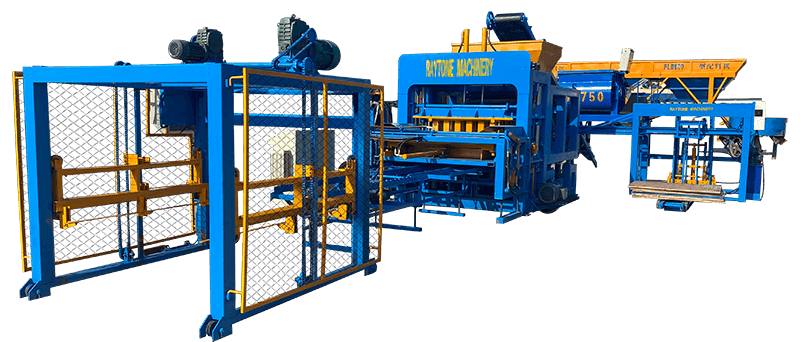






Unplanned downtime costs block manufacturers $800-$2,500 per day in lost production and emergency repairs. A manual block machine producing 3,000 blocks daily loses $150-$300 per breakdown hour, while automatic systems can lose $400-$800 hourly. The difference between profitable operations and constant breakdowns? A structured maintenance program that eliminates 75-85% of unexpected failures.
Manufacturers who implement daily, weekly, and monthly maintenance checklists extend equipment life by 40-60% and cut emergency repair costs by 75%. This isn’t theory—it’s what actually works in dusty, high-production environments where machines run 10-12 hours daily.
The Real Cost of Skipping Maintenance
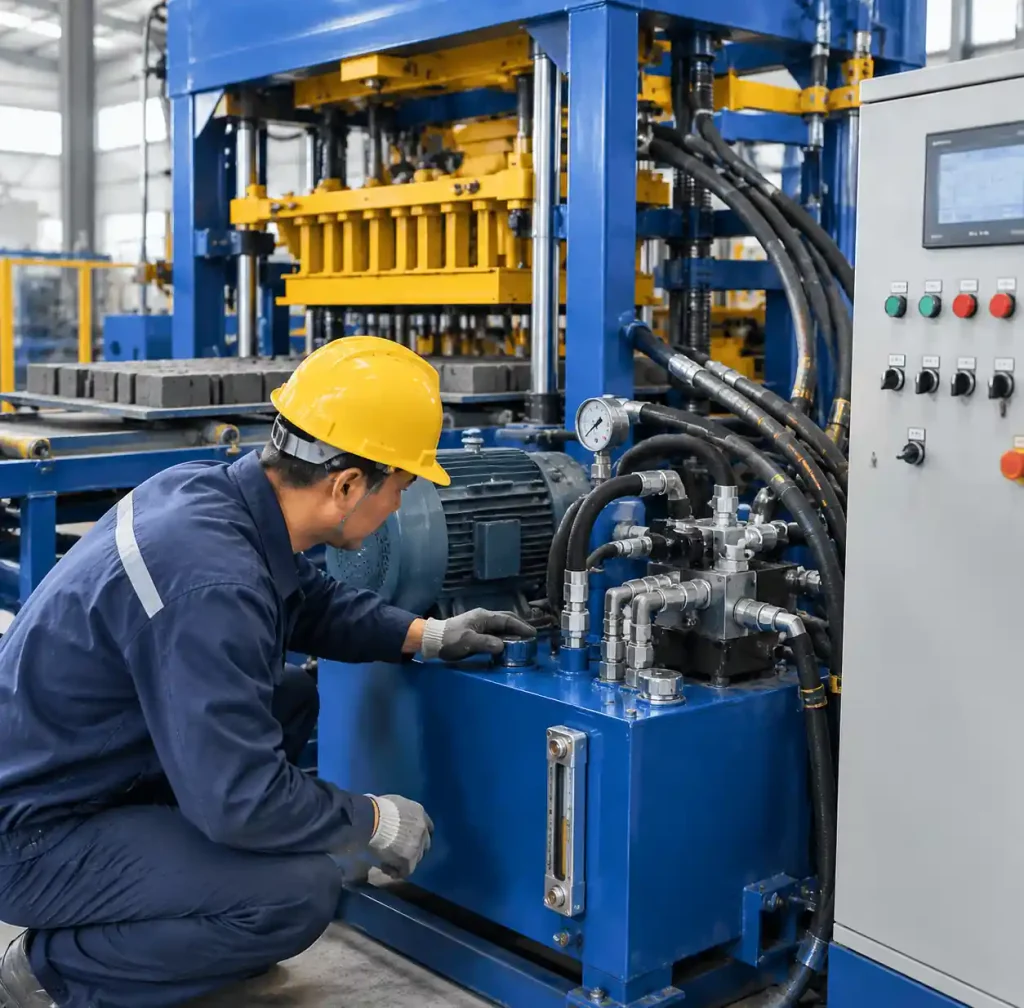
Most operators think maintenance is just an expense. Here’s what the numbers actually show: a $45 hydraulic filter protects $8,000-$15,000 worth of pump and valve components. Spending 15 minutes on daily checks prevents 4-6 hours of unplanned downtime each month. For a semi-automatic block making machine producing 7,000 blocks per shift, that’s 2,300-3,500 blocks saved—worth $350-$700 at typical market prices.
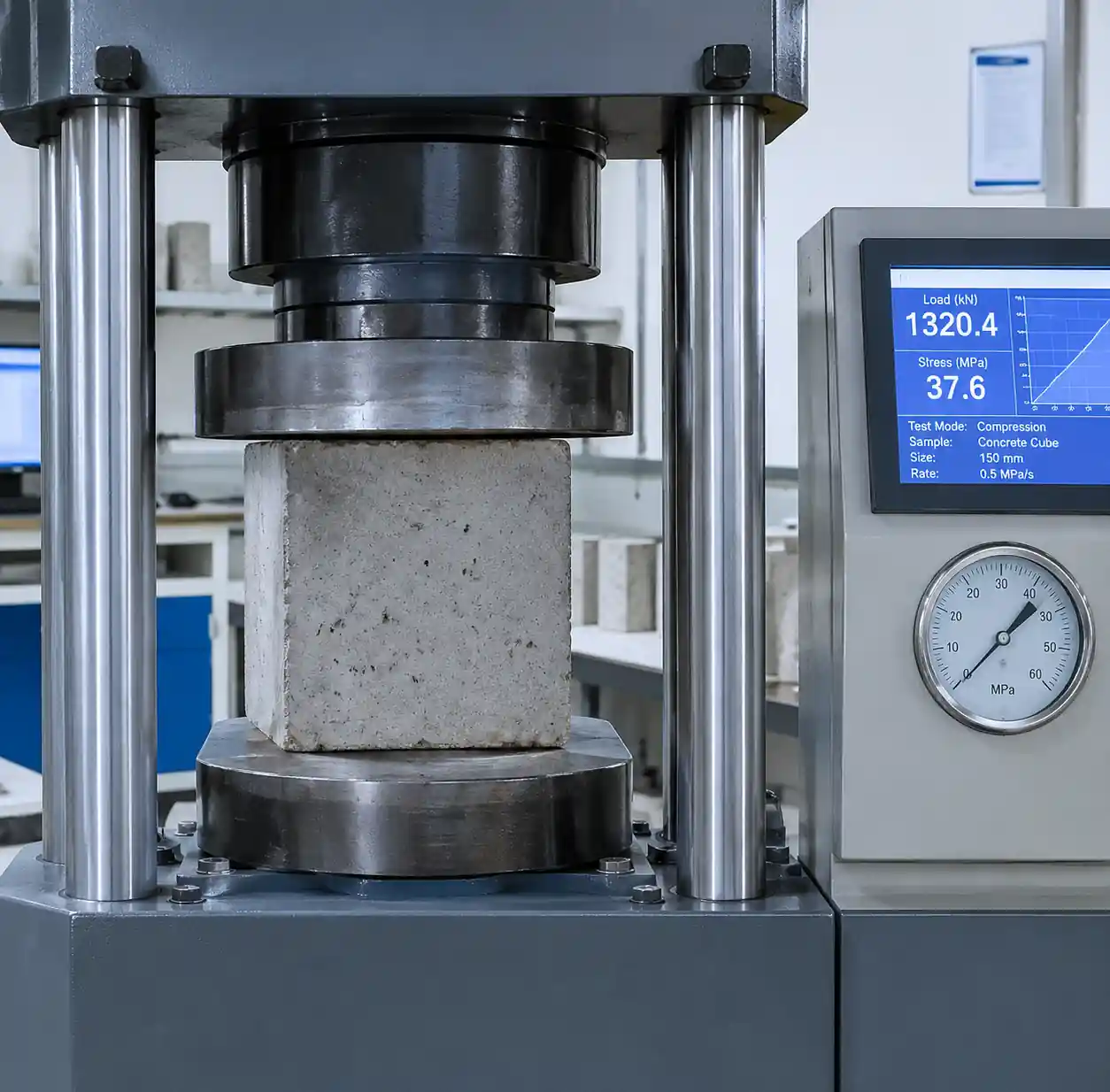
The quality impact is just as significant. Poorly maintained machines produce blocks with 12-18% strength variation, while properly maintained equipment holds variation under 3-5%. That consistency difference determines whether you can bid on structural projects or sell basic fill blocks at lower margins.
The pattern is consistent: every dollar spent on preventive maintenance returns $4-6 in avoided downtime, emergency repairs, and quality waste. Manual machines see 280-400% ROI, while fully automatic systems deliver 400-600% returns because their downtime costs are higher.
Daily Maintenance Checklist (15-20 Minutes)
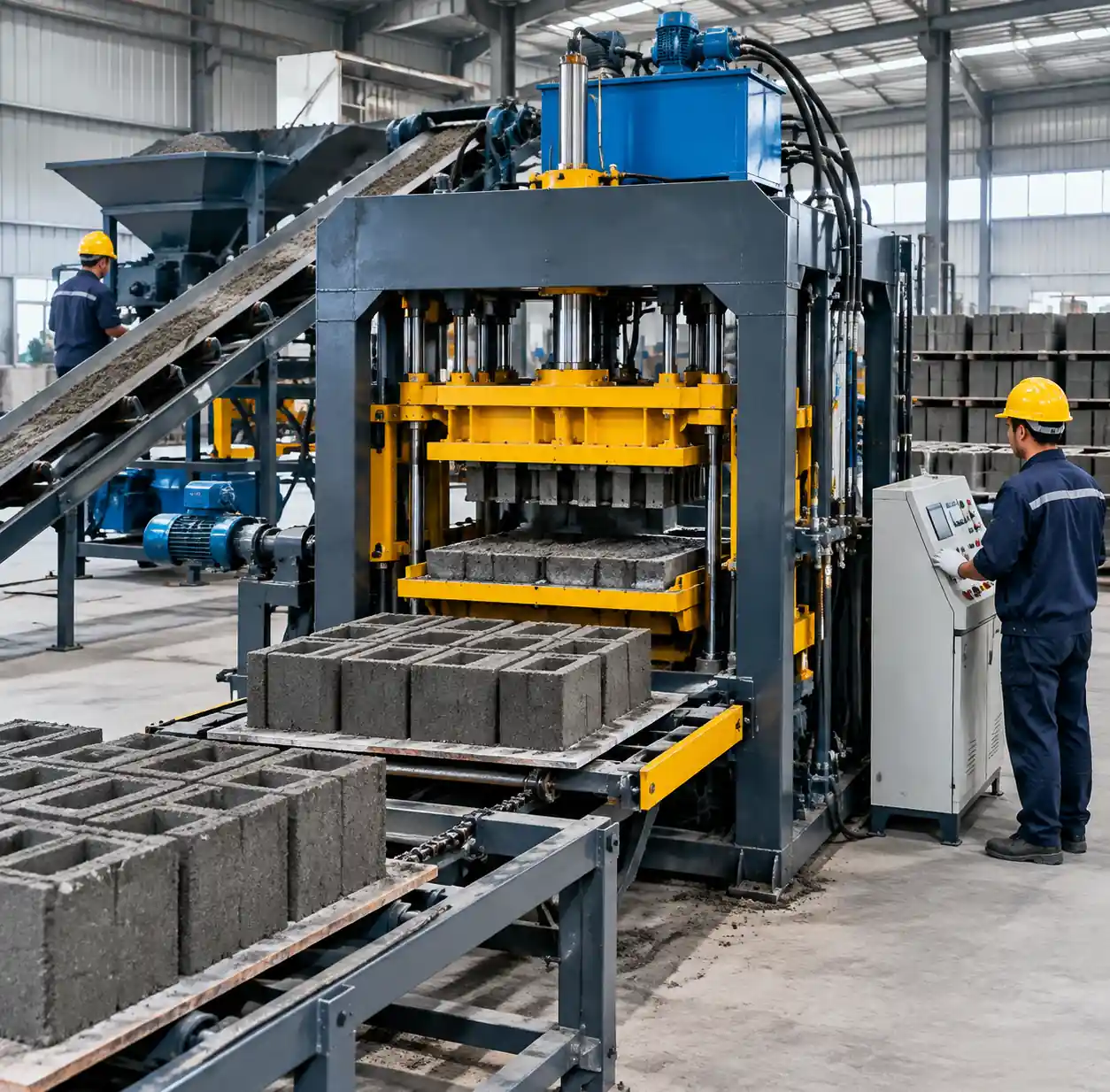
Daily procedures catch developing problems while they’re still minor. Perform these checks before starting production and during the lunch break on high-capacity automatic machines running 12+ hour shifts.
Visual Inspection
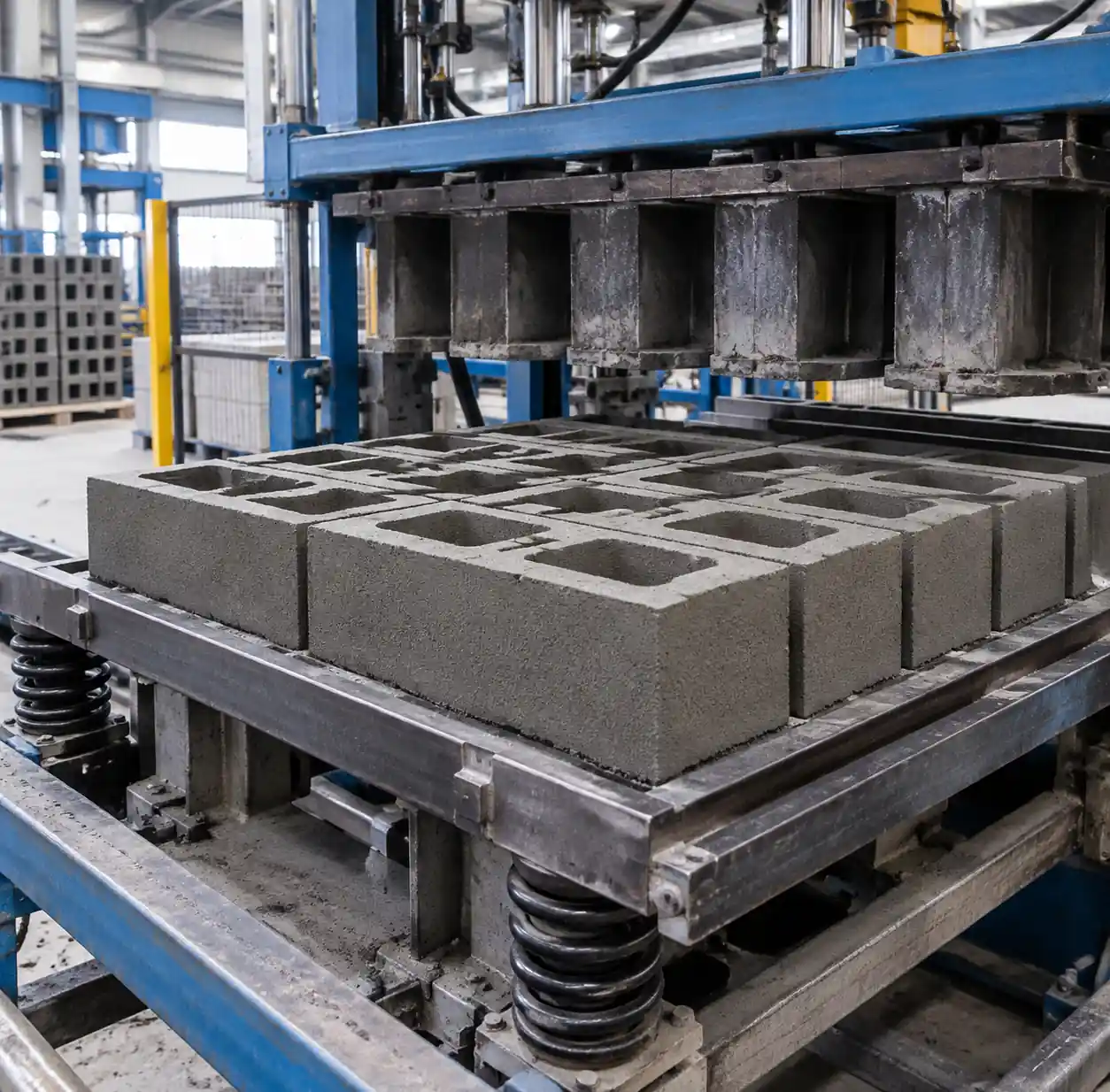
Walk around the machine looking for oil leaks, loose bolts, damaged hydraulic hoses, and concrete buildup. Fresh oil spots indicate seal problems requiring attention within 1-2 days. Concrete residue on molds reduces block quality and increases cycle time by 8-15%.
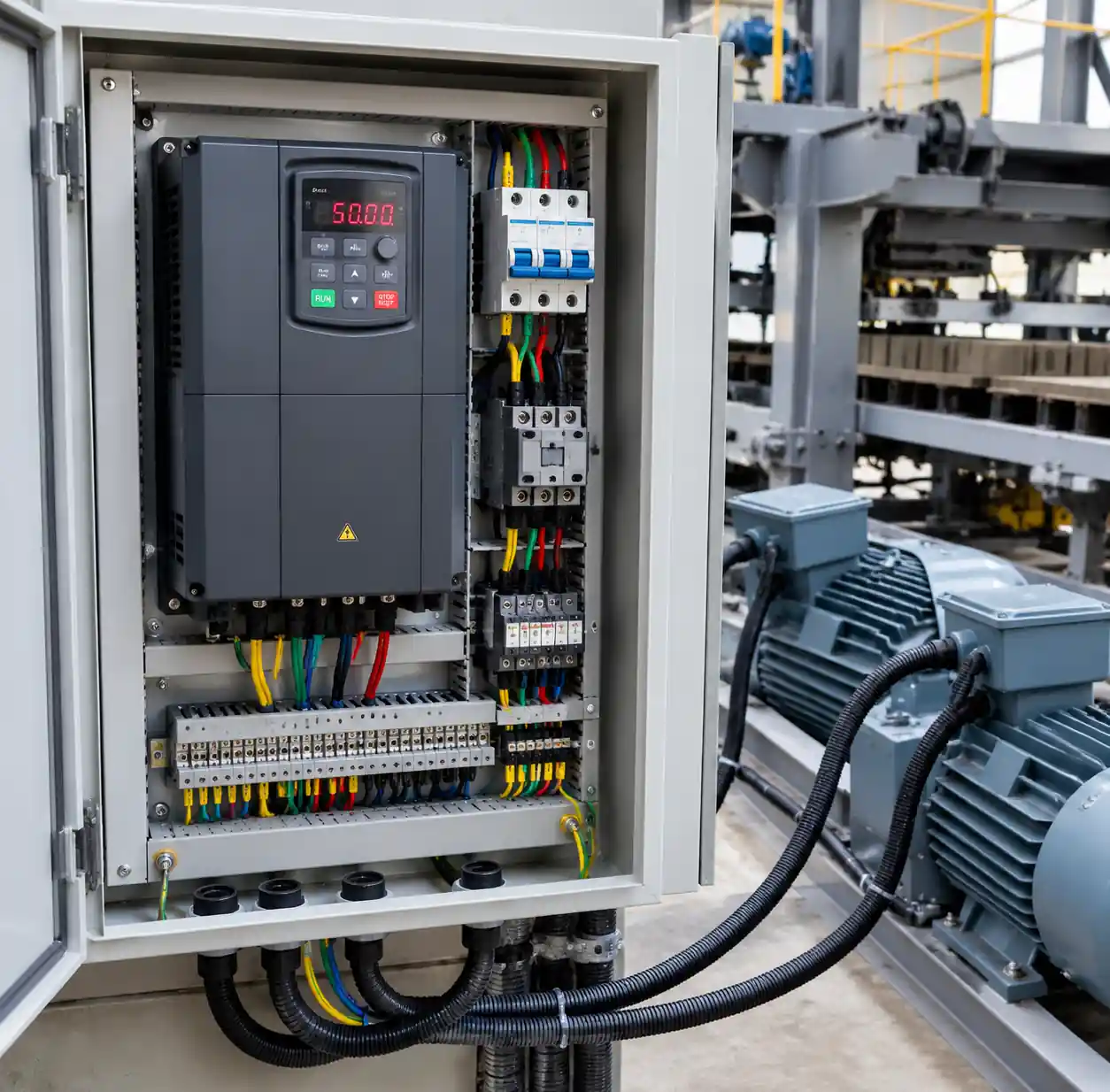
Check electrical connections and control panel indicators. Loose wiring causes intermittent faults that are expensive to diagnose. Indicator lights showing unexpected patterns (pressure warning, temperature alerts) need immediate investigation.
Hydraulic System Check
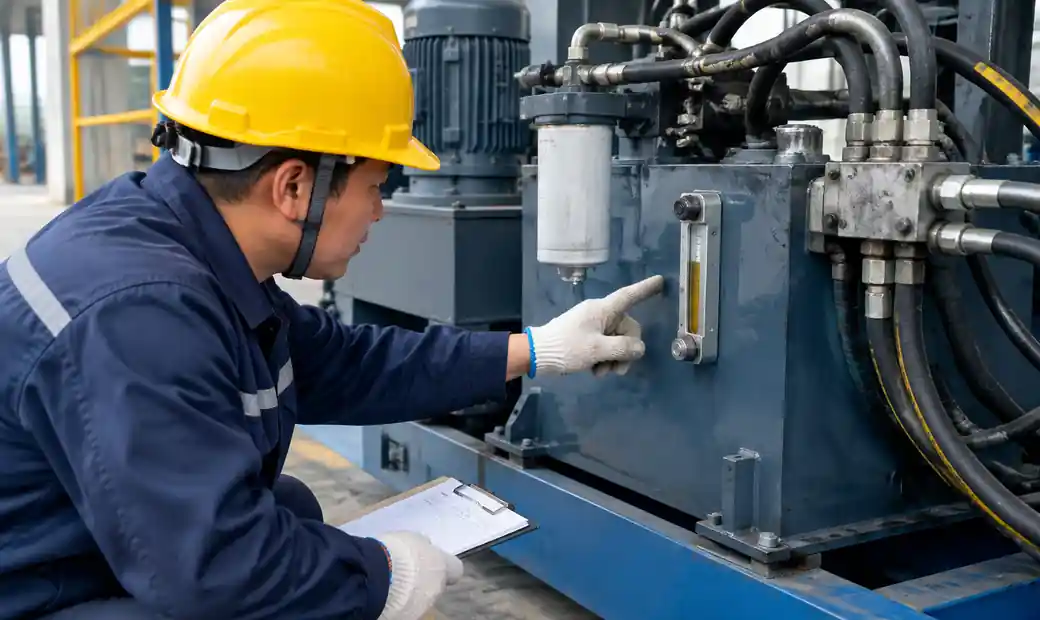
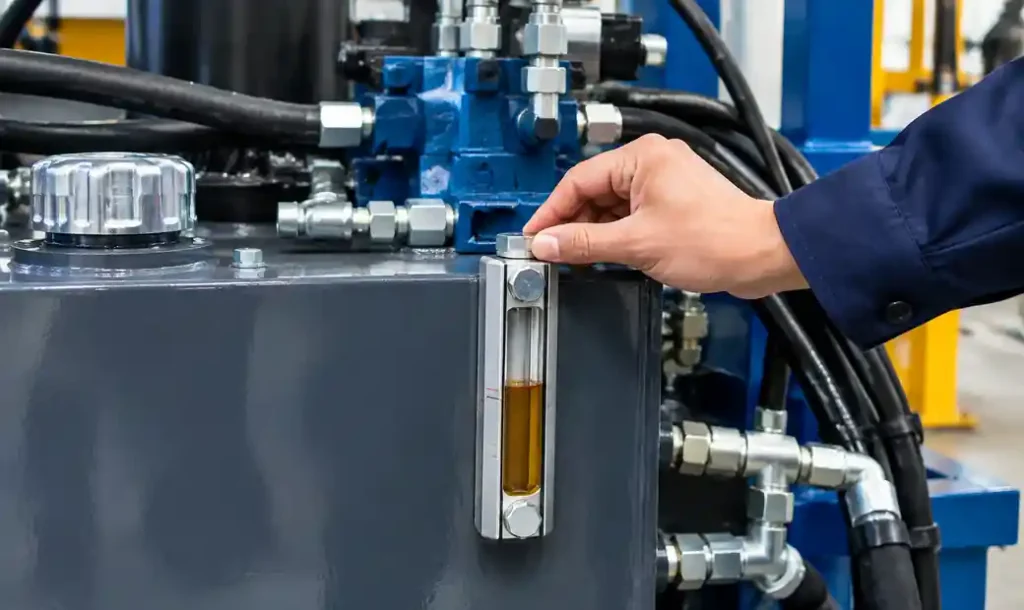
Oil level: Check reservoir before starting. Low oil causes pump cavitation—a whining sound indicating air ingestion that destroys pumps within hours. Oil should appear translucent amber. Cloudy oil means oxidation. Milky appearance indicates water contamination requiring immediate oil change.
Pressure verification: System pressure should reach specification (typically 160-200 bar for automatic block machines) within 2-3 seconds of startup and hold steady. Pressure fluctuations exceeding ±5% signal developing pump wear or valve problems.
Temperature monitoring: Hydraulic pump housing should stay below 65°C. Temperatures exceeding 70°C indicate inadequate cooling or internal leakage.
Mold and Vibration System
Clean molds thoroughly removing all concrete residue. Buildup creates surface defects on blocks and increases demolding force, accelerating wear on stripper plates and guide pins. Use proper release agents—never petroleum-based products that contaminate concrete.
Check vibration motor mounting bolts. Vibration loosens fasteners progressively. Tighten any loose bolts before they cause bearing damage or motor misalignment. Listen for unusual sounds—grinding indicates bearing wear, squealing suggests belt tension problems.
Pontos de lubrificação
Apply grease to guide rails, mold frame hinges, and moving joints per manufacturer specifications. Most semi-automatic machines have 8-12 grease points requiring daily attention. Use lithium-based EP2 grease suitable for concrete production environments.
Avoid over-lubrication which attracts dust and concrete particles. Apply 2-3 pumps per point, not until grease oozes out.
Weekly Maintenance Tasks (45-60 Minutes)
Deep Cleaning
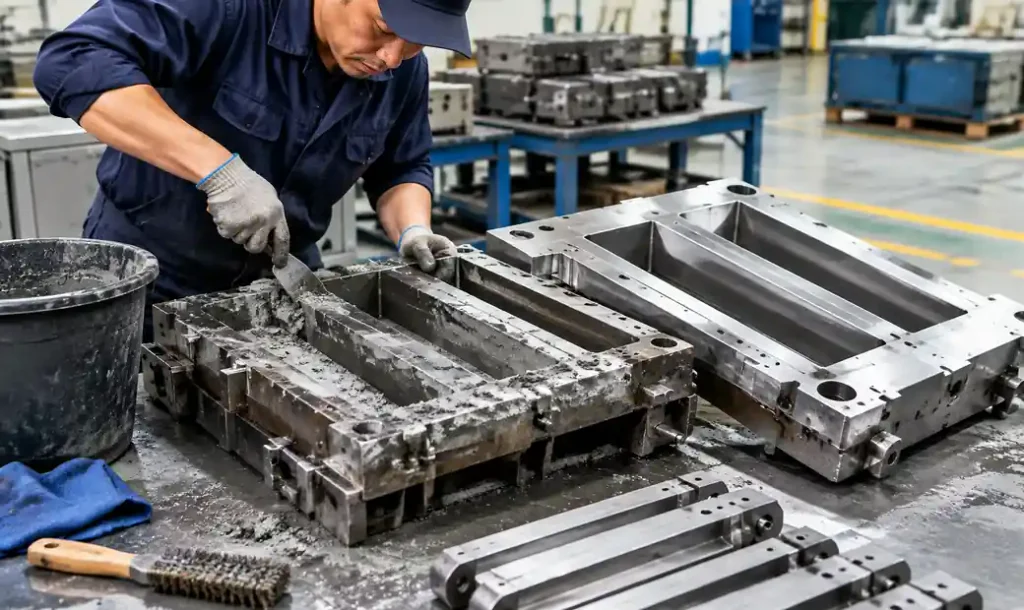
Dismantle molds completely for thorough cleaning. Remove concrete accumulation in corners and cavities that daily cleaning misses. Inspect mold surfaces for wear, cracks, or distortion. Small damage caught early prevents expensive replacements.
Clean the concrete mixer drum and paddles completely. Hardened concrete buildup reduces mixing efficiency by 15-25% and creates uneven batches.
Drive System Inspection
Check tension on all drive chains and V-belts. Loose chains cause uneven loading and accelerated wear. Adjust to manufacturer specifications—typically 10-15mm deflection under moderate finger pressure.
Verify motor mounting and coupling alignment. Misalignment causes bearing failures and excessive vibration.
Electrical System Review
Inspect electrical connections in control panels and junction boxes. Tighten loose terminals. Check wire insulation for damage from vibration, heat, or concrete dust.
Test all limit switches and proximity sensors. These safety devices prevent collisions and coordinate machine cycles.
Filter Service
Replace air filters on pneumatic systems. Clogged air filters reduce cylinder speed and force, increasing cycle times.
Check hydraulic return filters. Most systems use 10-micron filters protecting components from wear particles. Replace when the differential pressure indicator shows red, typically every 500 operating hours, or more frequently in dusty environments.
Monthly Maintenance Schedule (2-3 Hours)
Comprehensive Hydraulic System Service
For high-capacity automatic plants, send oil samples for laboratory analysis monthly. Analysis detects contamination, additive depletion, and wear metals before visible problems appear.
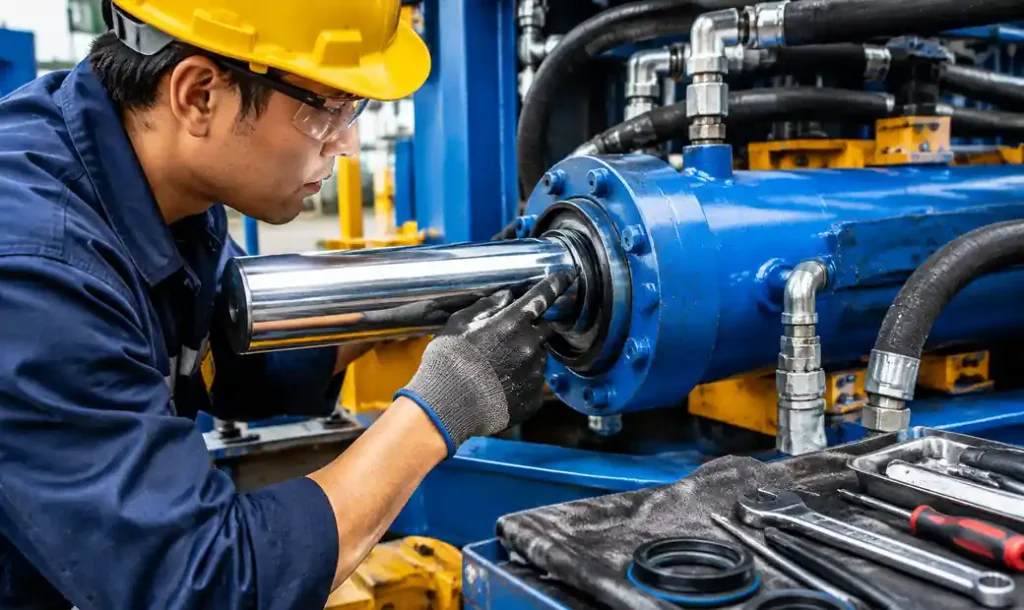
Examine cylinder rod seals for scoring or wear grooves. Replace seals showing damage before they fail completely. Preventive seal replacement costs $50-$150 in materials versus $500-$1,200 for emergency repairs including lost production.
Remove directional control valves and clean with hydraulic fluid. Dirt particles cause valve sticking and erratic operation.
Structural Inspection
Check machine frame and mounting bolts for cracks, distortion, or loosening. Hydraulic forces and vibration stress structural components progressively. Small cracks caught early can be repaired by welding.
Inspect pallet board guides and rails for wear. Worn guides cause pallet misalignment reducing block quality and potentially jamming the production line.
Calibration and Adjustment
Verify actual hydraulic pressure against gauge readings using calibrated test equipment. Pressure gauges drift over time.
Measure and record complete production cycle time. Cycles extending 10-15% beyond specification indicate developing problems—worn pumps, contaminated valves, or cylinder friction.
Measure sample blocks for dimensional accuracy. Variations exceeding ±2mm indicate mold wear or misalignment.
Documentation and Records
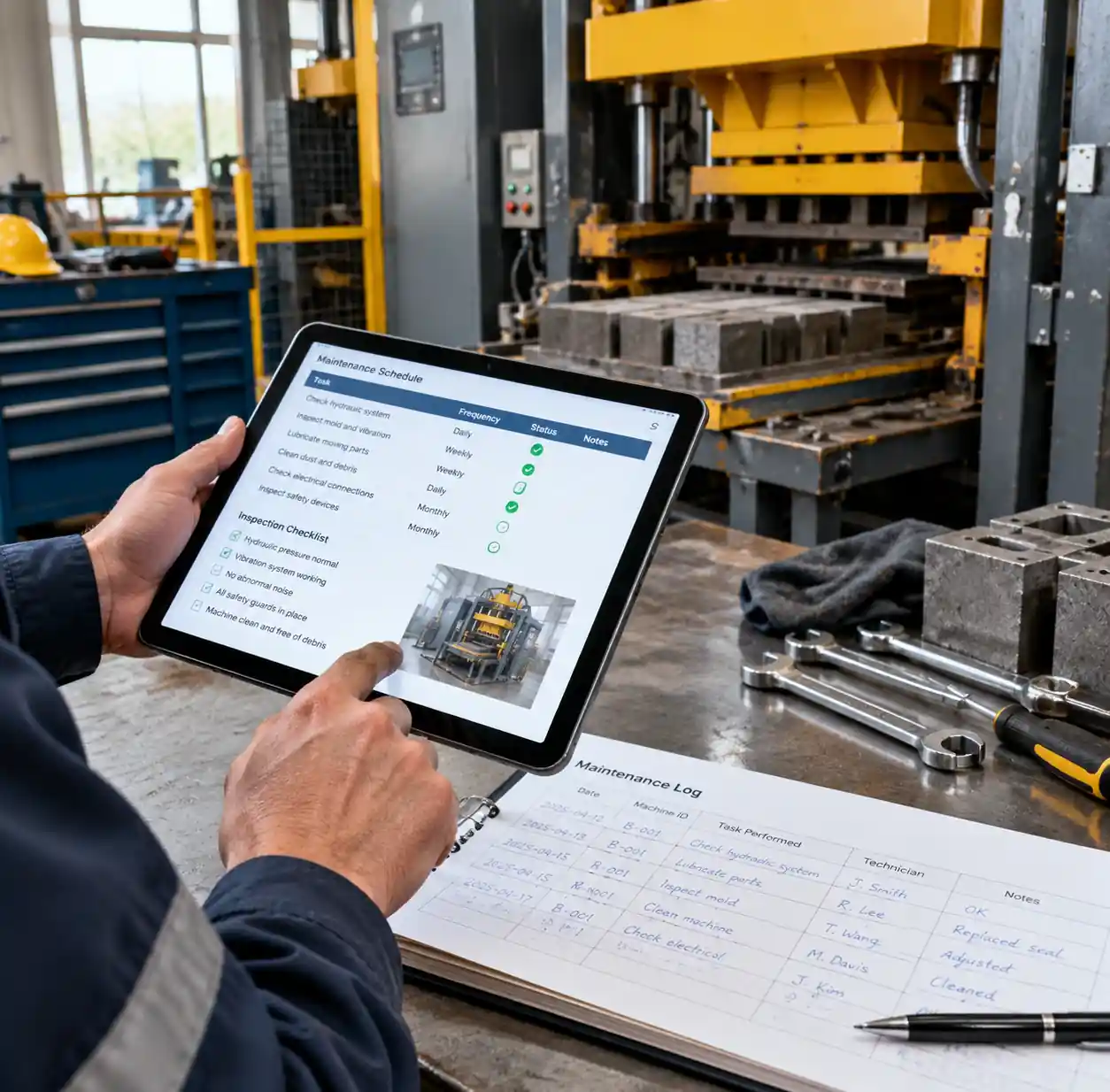
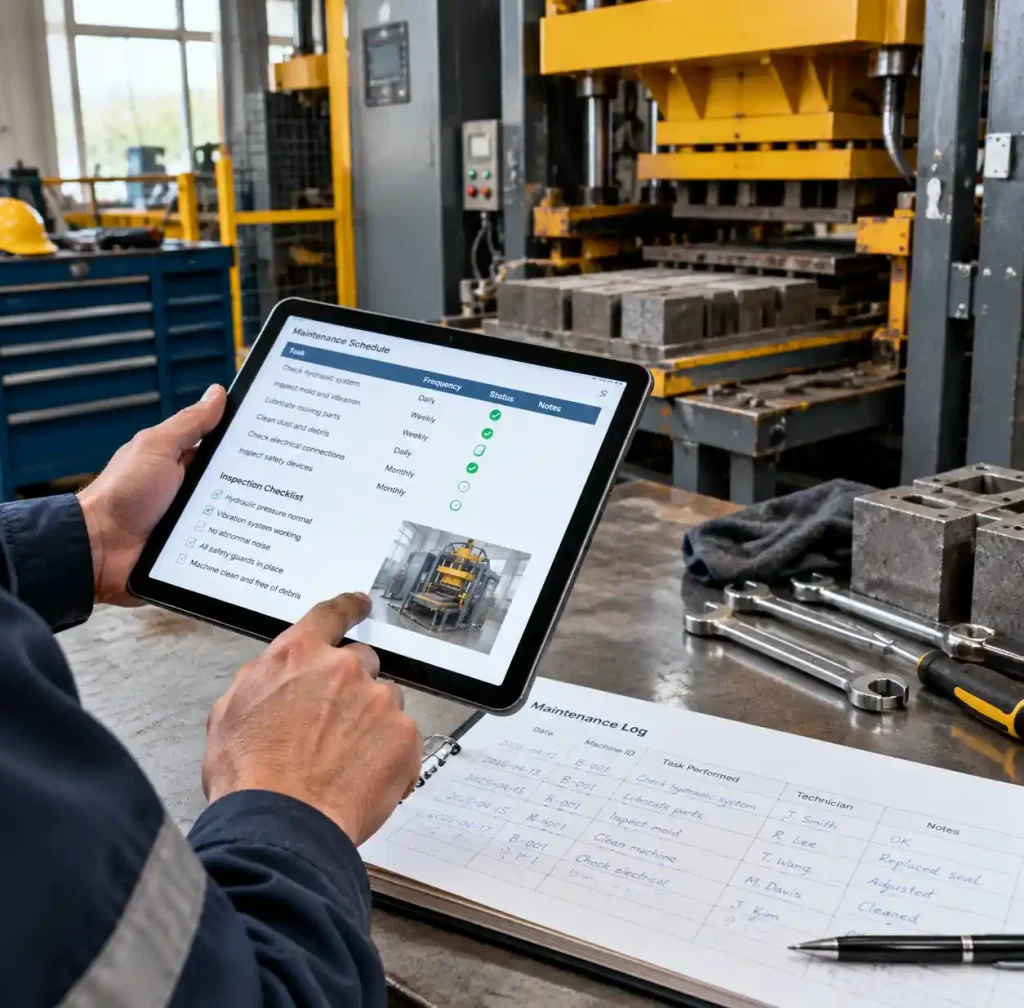
Update maintenance logbook recording: oil level observations, pressure readings, cycle times, repairs performed, parts replaced, and unusual occurrences. This history identifies failure patterns and guides future maintenance scheduling.
Critical Component Maintenance Schedule
| Component | Daily | Weekly | Monthly | Replacement Interval | Critical Warning Signs |
|—|—|—|—|—|
| Hydraulic Oil Level | Check | Top up if needed | Full change | 1,500-2,000 hrs | Low level, foaming, discoloration |
| Hydraulic Filters | Visual check | – | Replace | 500 hrs or indicator | Differential pressure >15 PSI, slow cycles |
| Mold Cleaning | Surface clean | Deep clean | Inspect for damage | Per wear | Concrete buildup, surface defects on blocks |
| Vibration System | Listen/observe | Bolt check | Bearing inspection | 3,000-5,000 hrs | Unusual noise, excessive vibration, hot bearings |
| Drive Chains/Belts | Visual | Tension check | Replace worn | Per elongation/cracks | Noise, jumping teeth, visible wear |
| Cylinder Seals | Leak check | – | Inspect closely | 6,000-10,000 hrs | Visible leaking, pressure drop, slow operation |
| Electrical Connections | Visual | Tighten terminals | Complete inspection | Per damage | Loose wires, burned terminals, intermittent faults |
| Mixer Paddles | Clean | Deep clean | Wear measurement | 8,000-12,000 batches | Mixing time increase, uneven batches, visible wear |
Adapting Maintenance to Your Environment
Cold Climate Operations
Winter operation below 10°C changes everything about hydraulic systems. Oil viscosity increases 50-80%, which means slower machine response and higher energy consumption. Switch to ISO VG 32 hydraulic oil before temperatures drop consistently below 10°C. Always warm up the hydraulic system for 10-15 minutes before starting full production.
Protect water systems aggressively. Drain all mixer water lines and wash systems overnight when freezing is possible.
Hot Weather Challenges
Operating above 35°C accelerates oil breakdown and thins viscosity. Use ISO VG 68 hydraulic oil in consistently hot environments. Monitor oil temperature every shift—if it regularly exceeds 65°C, you need oil coolers.
Hot weather also demands more attention to block curing. Rapid moisture loss creates weak blocks with surface cracks.
Dusty Production Environments
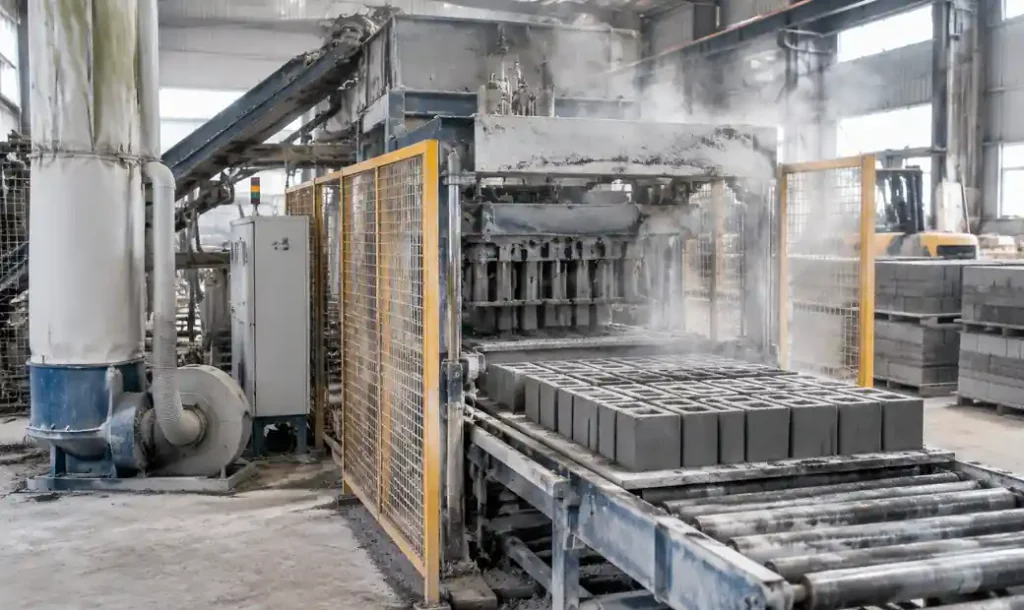
Concrete dust is the enemy of every mechanical system. It’s abrasive, it gets everywhere, and it turns lubricating grease into grinding paste. In high-dust environments, double your air filter change frequency and check hydraulic filters weekly instead of monthly.
Clean electrical control panels monthly. Dust buildup causes short circuits and overheating.
Protect precision surfaces. Cover guide rails and linear bearings when possible. Once dust mixes with grease, wear accelerates dramatically.
Troubleshooting Common Maintenance Issues
Insufficient Compaction Pressure
Symptoms: Weak blocks, low crushing strength, poor surface finish.
Probable causes: Worn hydraulic pump (most common), pressure relief valve set incorrectly, cylinder seal leakage, contaminated control valves.
Diagnostic steps: Measure actual pressure at pump outlet versus cylinder. Pressure loss between these points identifies the problem location.
Extended Cycle Times
Symptoms: Production capacity drops 15-30%, machine seems sluggish.
Probable causes: Clogged hydraulic filters (check first—easiest fix), worn pump, contaminated valves, excessive cylinder friction, undersized or kinked hoses.
Diagnostic steps: Check filter differential pressure immediately. If acceptable, measure cycle time for each movement. The slowest movement indicates the problem area.
Erratic Operation
Symptoms: Machine hesitates, movements vary, intermittent errors.
Probable causes: Contaminated hydraulic oil, air in hydraulic system, faulty sensors, loose electrical connections, control valve sticking.
Diagnostic steps: Check oil cleanliness—contaminated oil is the leading cause. Bleed air from the hydraulic system at high points. Test sensors individually.
Maintenance Cost Analysis and ROI
| Machine Type | Annual Maintenance Cost | Prevented Downtime Value | Annual ROI |
|---|---|---|---|
| Máquina de bloqueio manual | $600-$1,200 | $3,500-$6,000 | 280-400% |
| Semi-Automatic | $1,500-$2,800 | $8,000-$14,000 | 350-500% |
| Fully Automatic | $3,500-$7,000 | $18,000-$35,000 | 400-600% |
These figures include consumables (oil, filters, seals), labor at market rates, and occasional parts replacement. The prevented downtime value assumes 75% reduction in unplanned failures.
Essential Spare Parts to Keep in Stock
Smart spare parts inventory minimizes downtime when failures occur. Stock these critical items based on your machine type and lead times from suppliers.
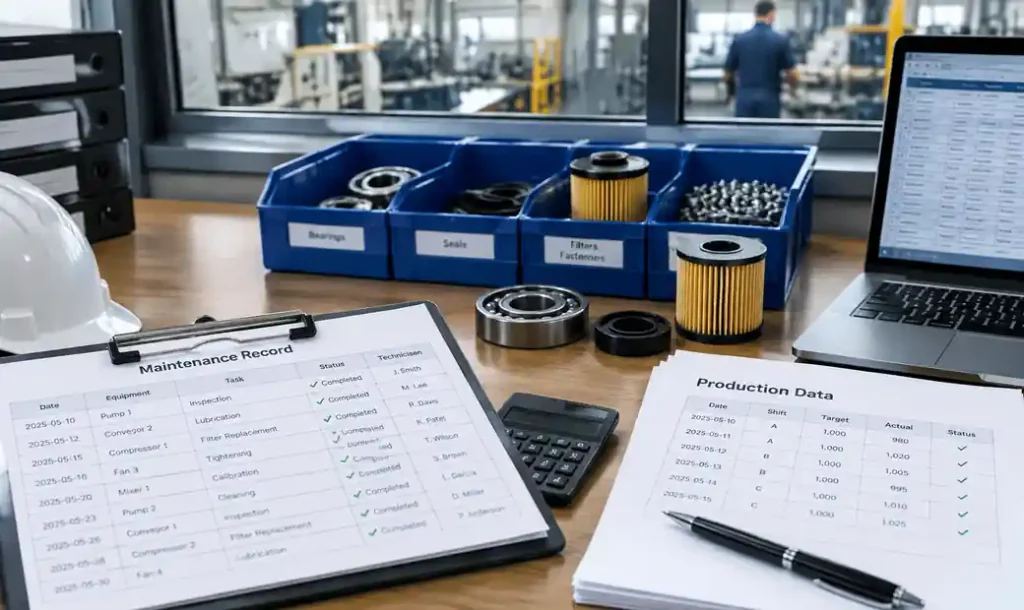
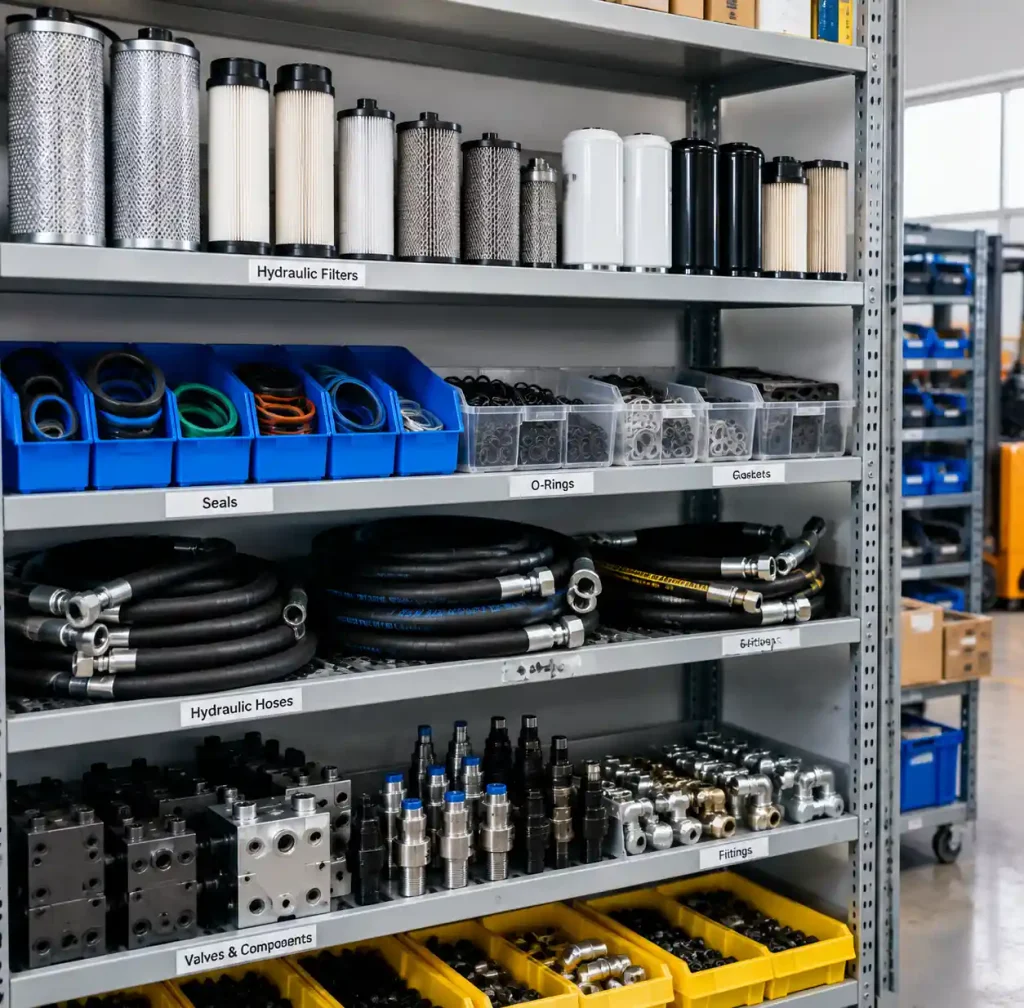
For all machine types, keep on hand: one drum of hydraulic oil matching your specification, 3-4 hydraulic filters, assorted hydraulic hoses in common sizes, O-ring assortment kit, 2-3 tubes of EP2 grease, and backup electrical contactors and relays.
Automatic systems need additional inventory: complete seal kits for main cylinders, proximity sensor sets, control valve solenoids, drive chain spare links, and matched V-belt sets.
Training Operators for Effective Maintenance
The best maintenance program fails if operators don’t execute it properly. Trained operators catch problems 2-3 days earlier than formal inspections.
Focus training on recognition skills first. Teach operators the baseline—what proper hydraulic pressure sounds like, how smooth mold movement should feel, what normal oil temperature looks like.
Train simple corrections: topping up oil correctly, proper mold cleaning technique, adjusting mold release agent application, and knowing when to call maintenance.
Safety must be non-negotiable. Lockout/tagout procedures, proper PPE for maintenance tasks, and safe hydraulic system handling prevent injuries. One accident costs more than years of training investment.
Provide maintenance checklists right at the machine—simple checkboxes marked off each shift. Review these weekly. Repeated issues signal deeper problems needing engineering attention, not just operator fixes.
Maintenance for Supporting Equipment
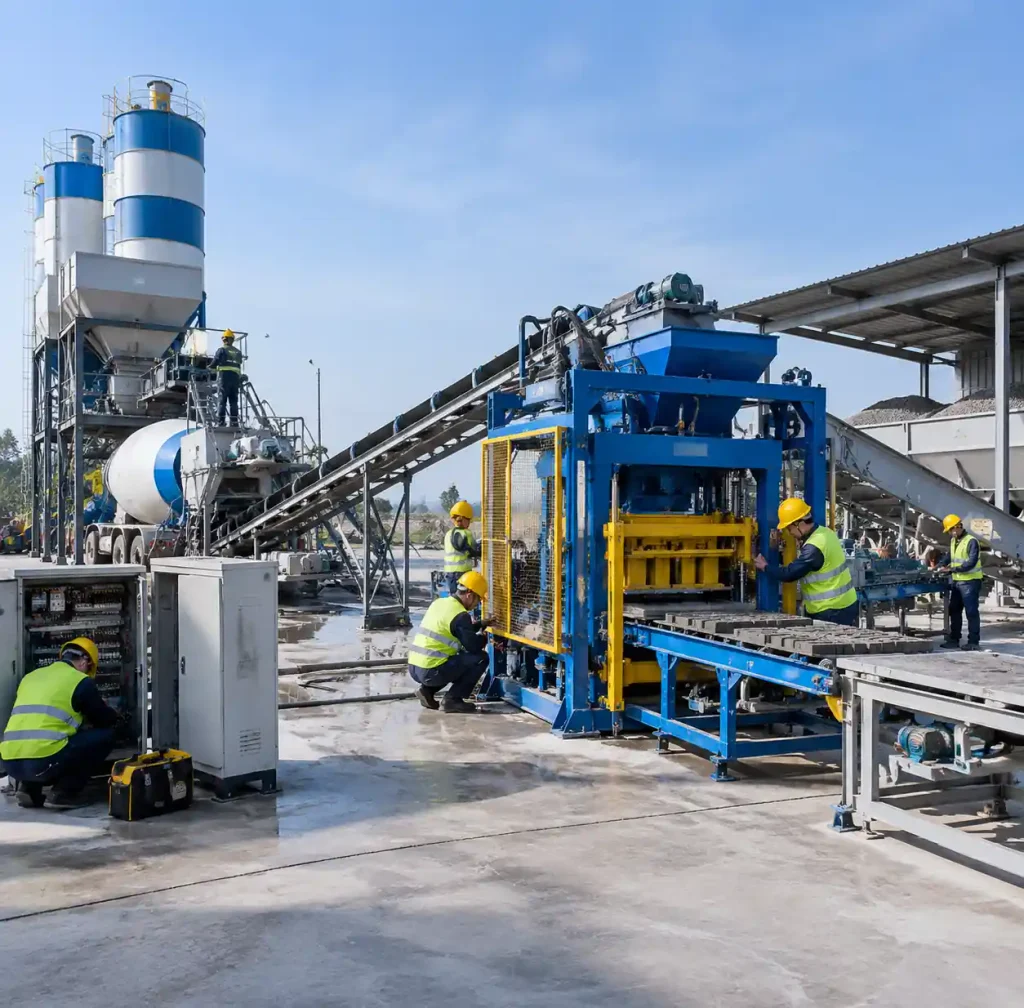
Block machine maintenance doesn’t exist in isolation. Your concrete mixer, batching system, and conveyor systems all need coordinated maintenance.
Clean concrete mixers daily and inspect paddles weekly. Check gearbox oil monthly. Mixer problems create inconsistent concrete that shows up as block quality issues.
Calibrate batching scales monthly. Batch accuracy within ±2% is essential for consistent block strength. Weekly checks of conveyor belts, sensors, and drive motors prevent material handling failures.
Frequently Asked Questions
How long does daily maintenance actually take?
Realistic timing is 15-20 minutes for manual and semi-automatic machines, 25-30 minutes for fully automatic systems. Rushing defeats the purpose—problems missed during quick checks cause hours of downtime later.
Can I skip maintenance during urgent production periods?
Skipping maintenance during rush periods is exactly when failures occur. If time is critically short, prioritize hydraulic oil checks and mold cleaning—the two highest-risk areas.
What maintenance can operators handle versus specialized technicians?
Operators handle daily and most weekly tasks: cleaning, visual inspection, lubrication, filter changes, basic adjustments. Monthly tasks often require specialized skills: hydraulic system service, electrical work, cylinder seal replacement, calibration.
How do I maintain machines running multiple shifts?
Assign maintenance responsibility to the most experienced operator on each shift. Conduct abbreviated checks at shift changes focusing on oil level, pressure, and visual inspection. Schedule comprehensive weekly and monthly tasks during planned downtime.
What’s the most commonly neglected maintenance task?
Thorough mold cleaning. Operators see it as tedious and non-critical. But concrete buildup affects block quality, increases demolding force, and masks developing cracks in molds.
Should older machines follow different maintenance schedules?
Yes. Machines over 12-15 years need more frequent inspection and adjustment as wear accumulates. Increase filter changes from 500 hours to 400 hours. Check hydraulic oil monthly rather than quarterly.
What maintenance records should I keep?
Maintain logbooks recording: date, operator, daily checklist completion, oil level observations, pressure readings, adjustments or repairs performed, cycle time measurements, and unusual observations.
How do maintenance requirements change for diesel-powered machines?
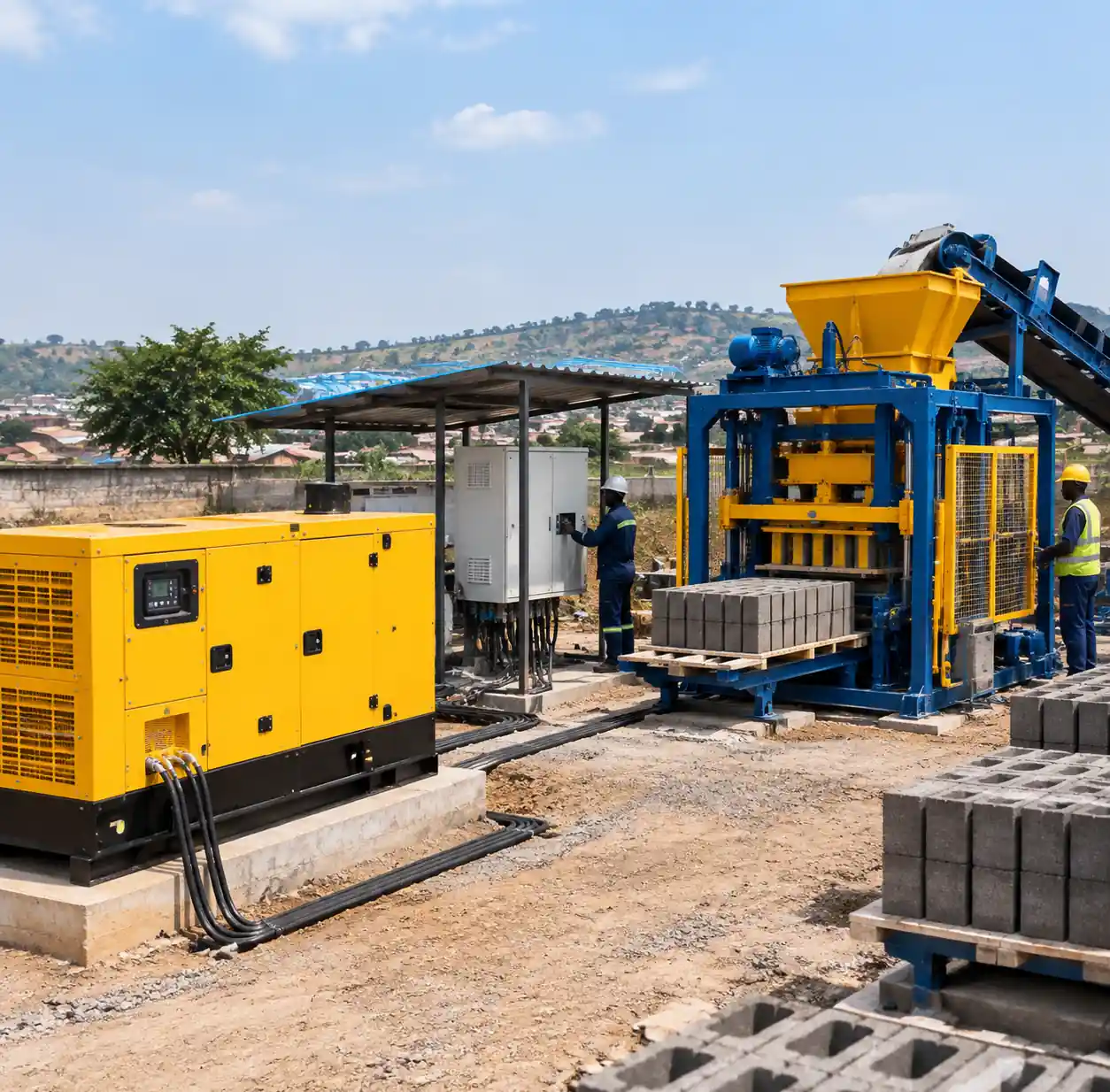
Diesel block machines add engine maintenance to standard checklists: daily oil level checks, weekly air filter cleaning, monthly fuel filter replacement, and oil changes per engine specifications (typically 250-500 hours).
Conclusão
Structured maintenance transforms block machine reliability from unpredictable to consistently dependable. The daily, weekly, and monthly checklists in this guide prevent 75-85% of equipment failures while extending machine life 40-60% beyond typical unmanaged operation.
The economics prove themselves quickly. For manufacturers producing 5,000+ blocks daily, maintenance delivers 400-600% ROI through prevented downtime, avoided emergency repairs, and improved quality consistency.
Start with the daily checklist tomorrow morning. Focus on hydraulic oil level, pressure verification, and thorough mold cleaning—these three tasks alone eliminate the majority of common failures.
Contacto Raytone Block Machinery for customized maintenance protocols, genuine replacement parts, and technical support.