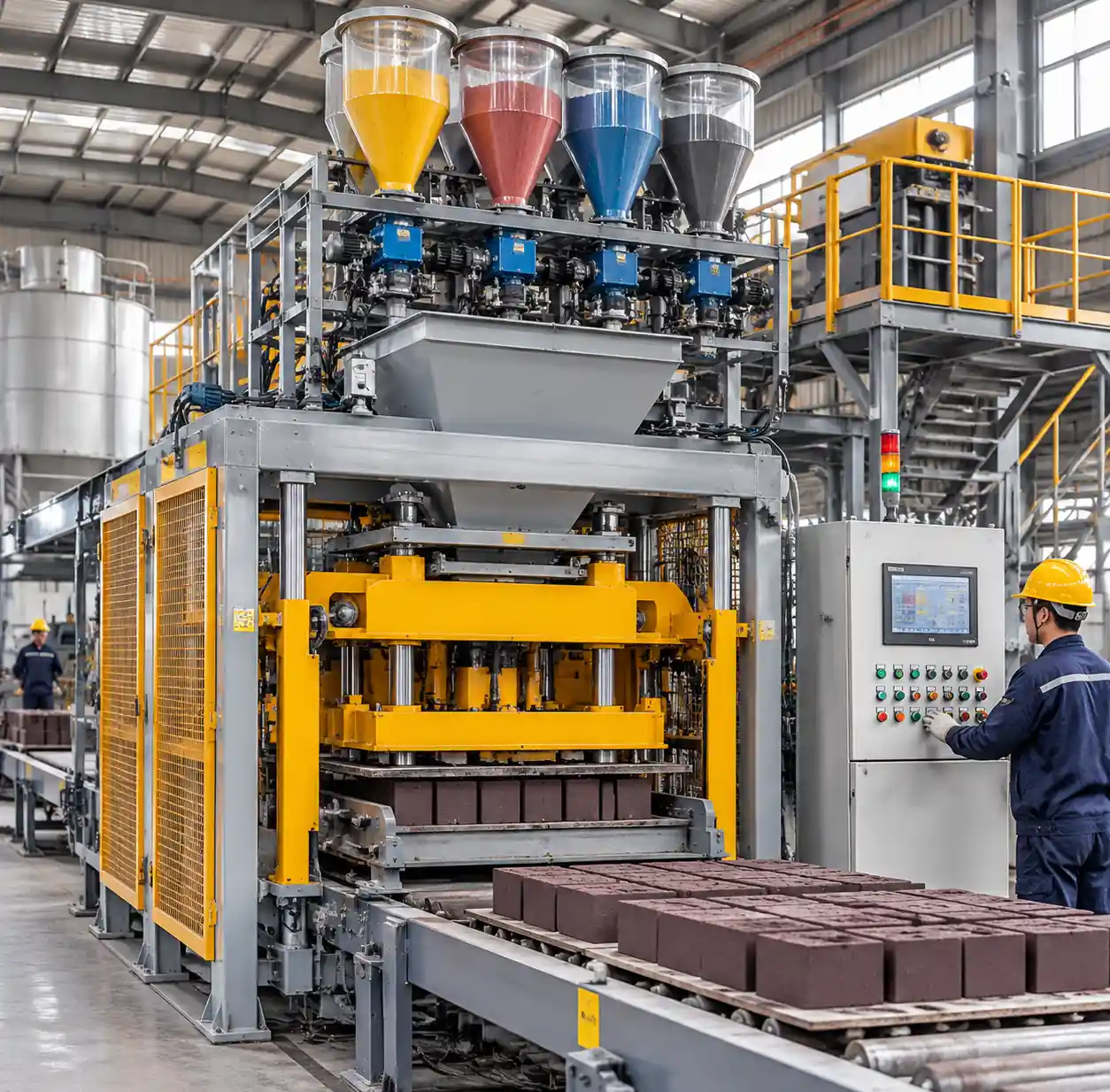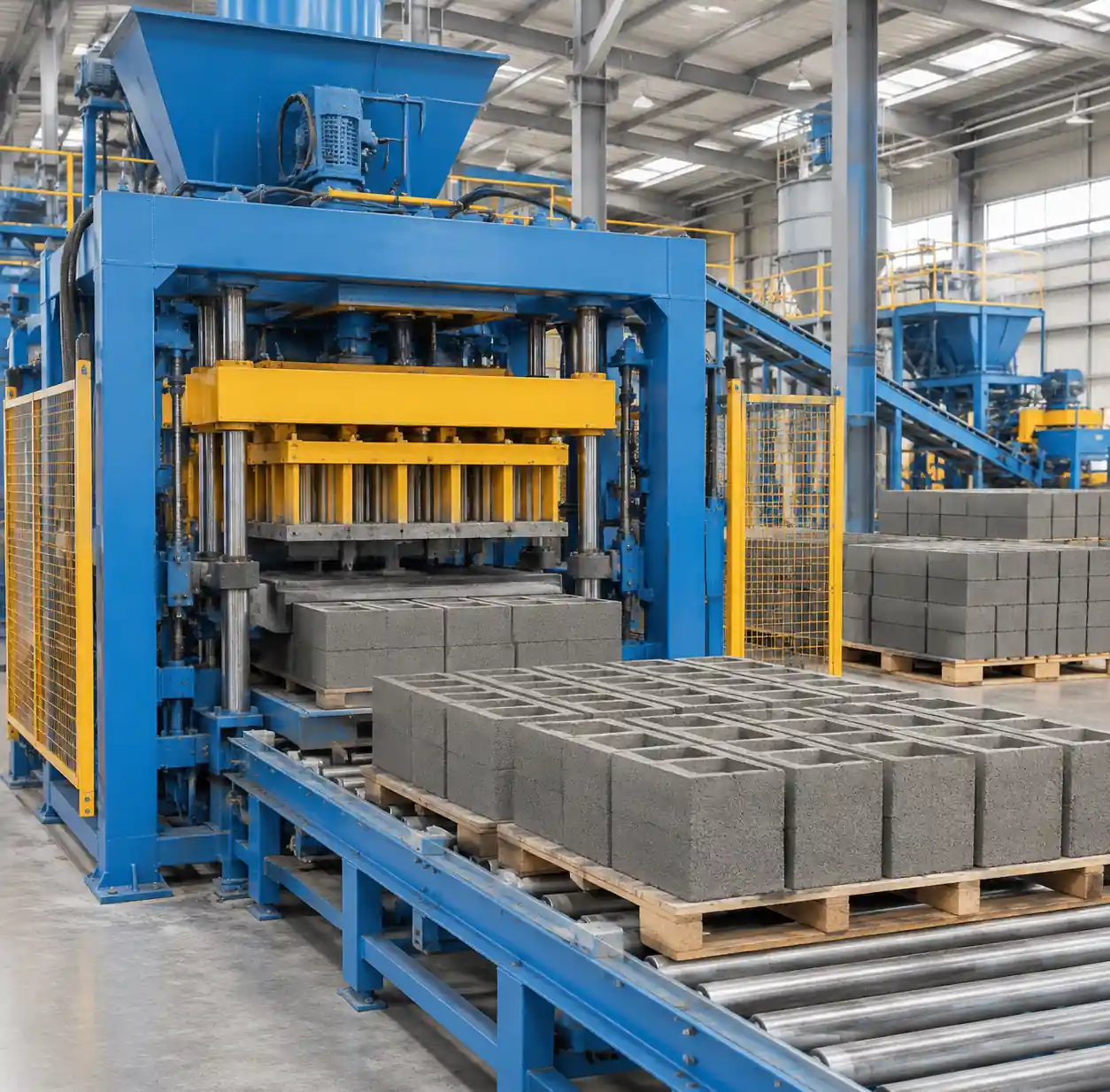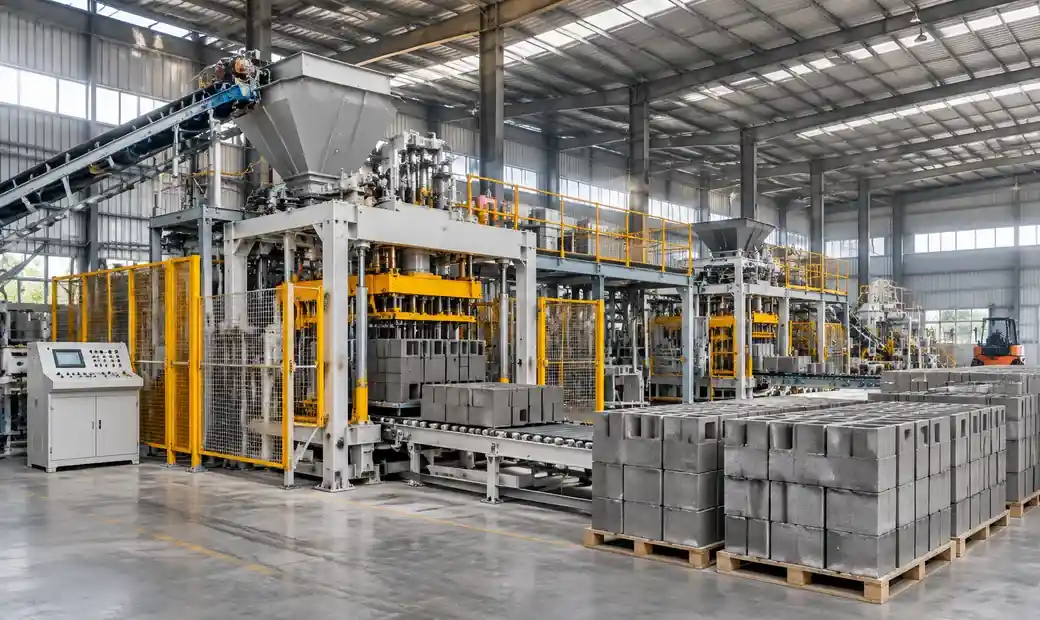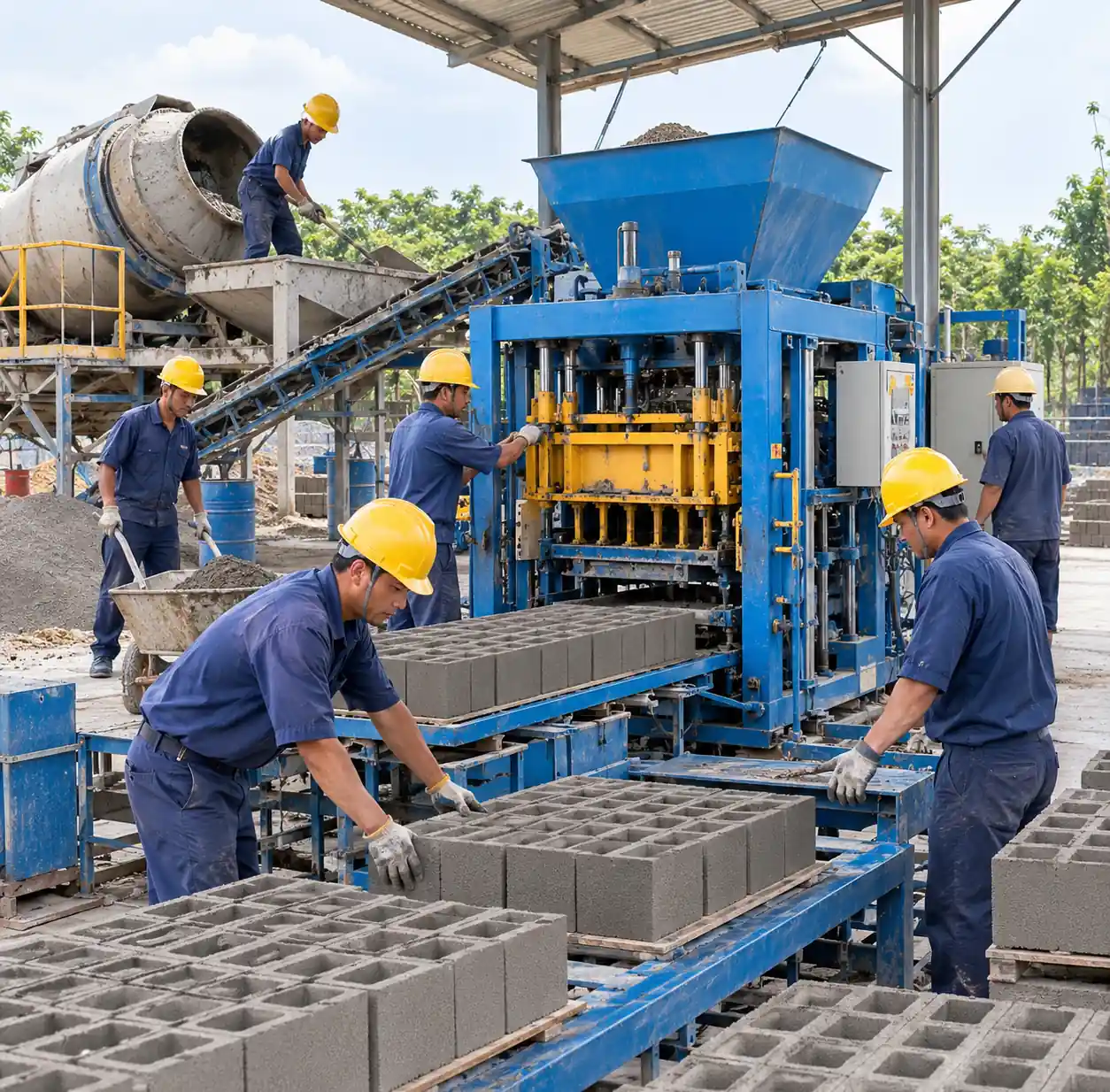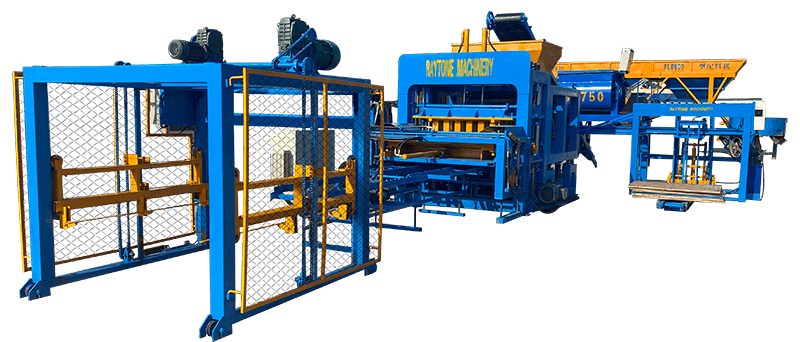
3D printing technology is transforming custom block mold design by reducing costs up to 50-90%, cutting lead times from weeks to days, and enabling complex geometries impossible with traditional machining. Block manufacturers adopting additive manufacturing for mold production achieve unprecedented design flexibility while eliminating the constraints of conventional fabrication methods.
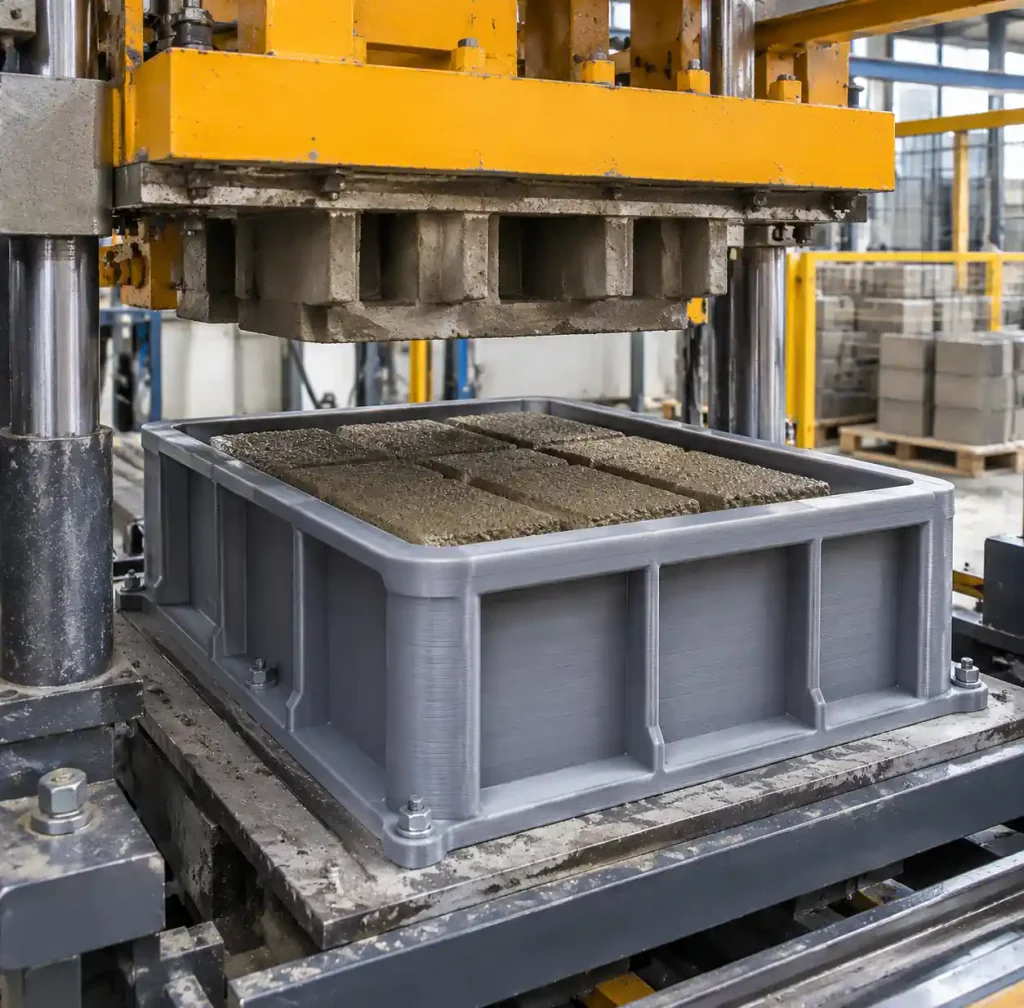
Why 3D Printing Revolutionizes Block Mold Manufacturing
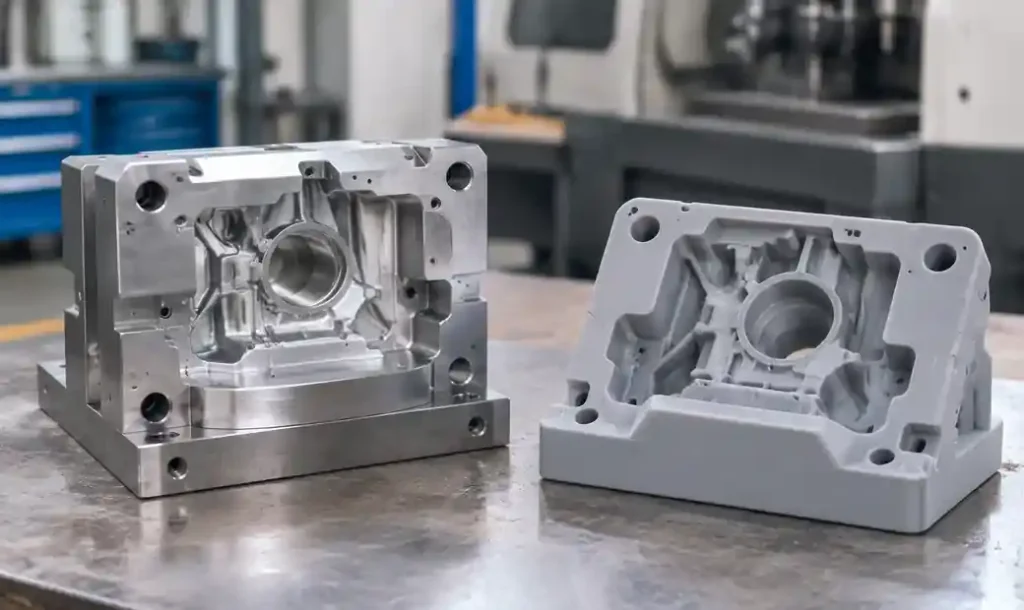
Traditional block mold manufacturing relies on CNC machining, welding, and manual assembly—processes that consume 4-8 weeks for custom designs and cost $15,000-$45,000 per mold set. 3D printing technology delivers the same mold in 2-5 days at $3,000-$15,000, depending on size and complexity.
The technology enables geometric freedom impossible with subtractive manufacturing. Complex internal channels, interlocking features, and decorative surface patterns emerge directly from digital files without tooling restrictions. Studies show additive manufacturing reduces mold production costs by 50-90% compared to traditional machined aluminum while cutting lead times by up to 85%.
For block machine operators targeting architectural markets, 3D printing unlocks custom shapes previously deemed economically unfeasible. A single design iteration that once required $8,000-$12,000 in machining costs now needs only material and print time—enabling rapid prototyping and market testing before committing to full production tooling.
3D Printing Technologies for Block Mold Production
Material Extrusion (FDM/FFF)
Material extrusion builds molds layer by layer using thermoplastic filaments heated to 200-260°C. The process creates prototype molds for 50-200 block production cycles, suitable for design validation and small batch manufacturing.
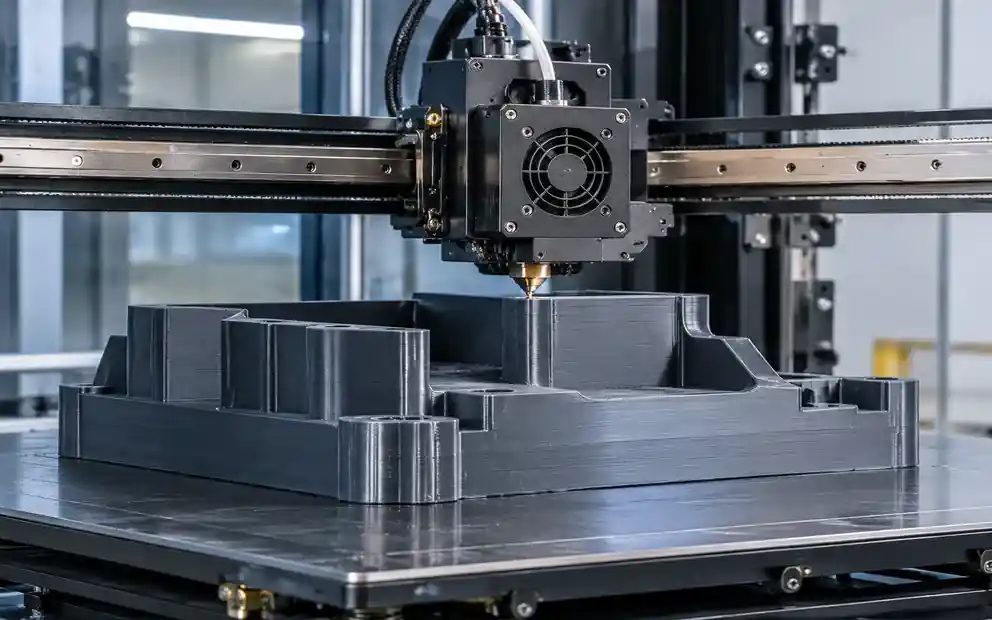
Industrial FDM systems print build volumes up to 1000mm × 1000mm × 1000mm, accommodating standard hollow block molds (390mm × 190mm × 190mm) and paver molds (200mm × 100mm × 60mm). Print resolution ranges from 0.1mm to 0.4mm layer height—adequate for most block surface finishes but requiring post-processing for architectural-grade smoothness.
Material options include ABS ($25-$40/kg), PETG ($30-$50/kg), and nylon composites ($60-$90/kg). Carbon fiber-reinforced nylon withstands compaction pressures up to 12 MPa for 150-250 production cycles before dimensional degradation. Standard thermoplastics limit applications to manual and semi-automatic block machines with pressing forces below 15 MPa.
Polymer Powder Bed Fusion (SLS)
Selective Laser Sintering fuses nylon powder particles using high-powered lasers, creating molds with superior mechanical properties compared to FDM. SLS molds endure 300-600 production cycles in semi-automatic equipment and 150-300 cycles in automatic machines.
The technology eliminates support structures—powder bed material supports overhangs during printing—enabling complex geometries like internal draft angles, undercuts, and intricate decorative patterns. Build chambers reach 550mm × 550mm × 750mm, sufficient for multi-cavity molds producing 2-4 blocks simultaneously.
PA12 nylon powder ($55-$75/kg) delivers tensile strength of 48-50 MPa and flexural modulus of 1,500-1,700 MPa. Glass bead-filled variants increase stiffness to 2,200-2,500 MPa, extending mold life 40-60% in high-pressure applications. Surface finish averages Ra 6-12 microns—smooth enough for exposed block faces without secondary machining.
Metal Additive Manufacturing
Direct Metal Laser Sintering (DMLS) and Electron Beam Melting (EBM) produce steel and aluminum molds matching conventional machined tool durability. Metal 3D printing serves permanent production tooling for 10,000-50,000+ cycles depending on alloy selection and block machine specifications.
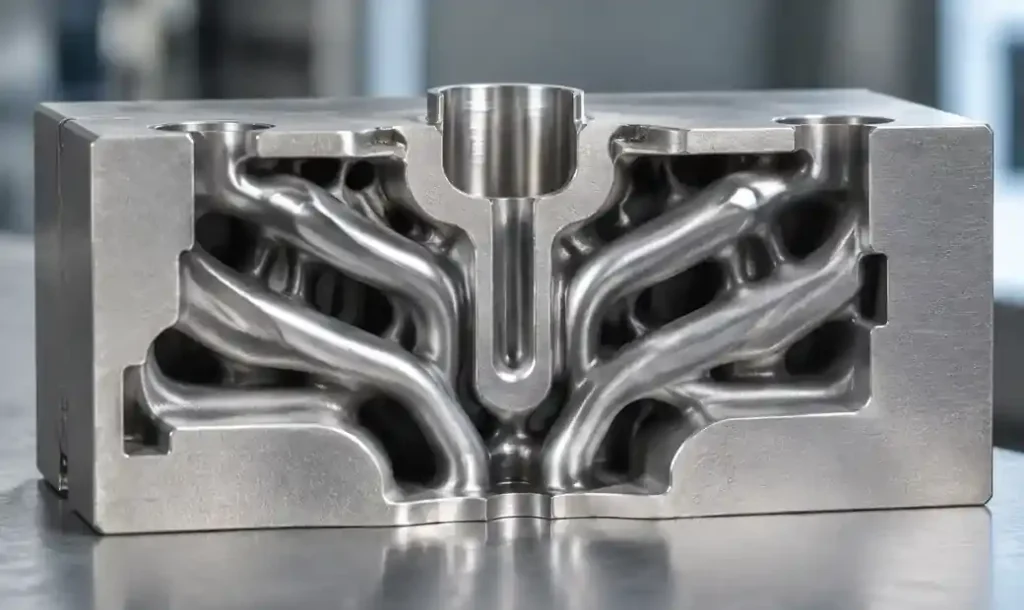
Stainless steel 316L ($85-$120/kg powder) achieves 450-550 MPa tensile strength and 150-200 HB hardness—suitable for interlocking block molds, decorative pavers, and architectural units requiring fine surface detail. Tool steel H13 ($140-$180/kg) reaches 1,800-2,000 MPa after heat treatment, matching conventional mold performance in fully automatic production lines operating at 200-400 tons pressing force.
Build volumes for industrial metal printers range from 250mm × 250mm × 325mm to 800mm × 500mm × 400mm. Large molds require segmented printing and precision welding—a hybrid approach combining 3D printing for complex geometries with conventional machining for critical dimensions and mating surfaces.
The technology’s primary advantage lies in conformal cooling channels. Optimized internal water circuits positioned 8-12mm from mold cavities reduce cooling time 30-50% compared to straight-drilled channels, accelerating block machine cycle times from 20-25 seconds to 14-18 seconds. This throughput gain recovers higher mold costs within 8-14 months of continuous operation.
Comparing 3D Printed vs Traditional Block Molds
| Factor | 3D Printed Polymer Molds | 3D Printed Metal Molds | Traditional Steel Molds |
|---|---|---|---|
| Lead Time | 2-5 days | 5-12 days | 4-8 weeks |
| Initial Cost | $3,000-$8,000 | $12,000-$35,000 | $15,000-$45,000 |
| Production Cycles | 150-600 (pressure dependent) | 10,000-50,000+ | 50,000-200,000+ |
| Design Complexity | Unlimited geometric freedom | Complex geometries + channels | Limited by machining access |
| Modification Cost | $500-$1,500 (reprint) | $3,000-$8,000 | $5,000-$15,000 (machining) |
| Surface Finish | Ra 6-12 microns (SLS) | Ra 3-8 microns (post-machined) | Ra 0.8-3.2 microns |
| Best Application | Prototyping, custom small runs | Medium production, architectural | High-volume standard blocks |
The economic crossover depends on production volume and design complexity. For custom architectural blocks requiring 2,000-10,000 units annually, polymer SLS molds deliver lowest total cost. Standard hollow blocks exceeding 50,000 units yearly justify traditional steel tooling despite higher upfront investment.
Design complexity shifts the equation dramatically. A decorative paver with organic surface patterns requiring 40-60 hours of CNC programming and machining costs $18,000-$28,000 conventionally. The same mold prints in 18-36 hours at $6,000-$12,000 material and machine time—a 55-70% cost reduction before considering design iteration savings.
Design Advantages for Block Machine Applications
Rapid Prototyping and Market Testing
3D printing enables mold prototyping in 2-4 days versus 6-10 weeks for conventional tooling. Block manufacturers test new shapes with actual production equipment and concrete mixes before committing to permanent tooling investment.
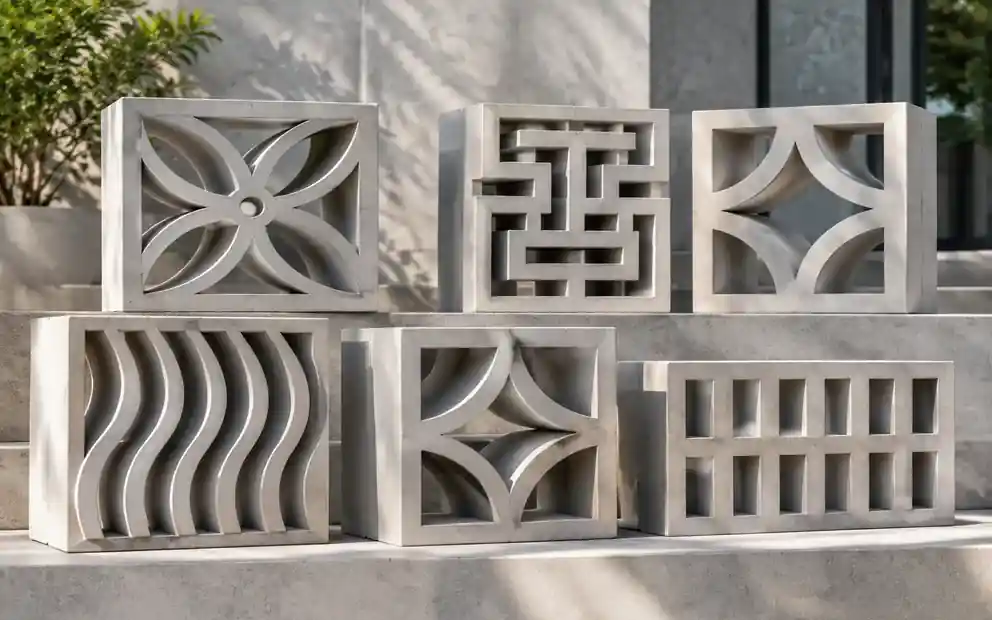
A landscape paver manufacturer developing interlocking patterns prints five design variations in one week, produces 200-unit test batches, and evaluates installation performance with landscape contractors. Traditional prototyping requiring five separate steel molds would cost $75,000-$125,000 and delay market entry 3-4 months. The 3D printing approach costs $15,000-$25,000 and compresses validation to 4-6 weeks.
Design modifications cost 90-95% less with additive manufacturing. Adjusting wall thickness, draft angles, or decorative details requires reprint only—$800-$2,500 compared to $8,000-$15,000 for machining changes to steel molds. This economic freedom encourages iterative refinement and customer-specific customization impossible with traditional tooling economics.
Complex Geometric Capabilities
Additive manufacturing eliminates machining constraints, enabling geometries impossible with conventional methods. Block designs incorporate internal voids, variable wall thickness, and organic surface textures without considering tool access or draft angles.
Architectural screen blocks with intricate perforated patterns print as single-piece molds. Traditional fabrication requires multi-part assemblies with precision alignment pins—increasing cost 60-80% and creating joint lines visible in finished blocks. 3D printed molds produce seamless patterns matching architect specifications exactly.
Variable density blocks optimizing thermal performance use internal lattice structures reducing concrete consumption 20-30% while maintaining structural strength. These geometries require hollow cores with complex internal supports impossible to machine or cast conventionally. The technology transforms lightweight block concepts from theoretical designs to production reality.
Customization Economics
3D printing fundamentally changes block customization economics. Traditional mold manufacturing’s high fixed costs favor long production runs of standard shapes. Additive manufacturing’s low setup costs enable profitable custom orders starting at 500-2,000 blocks.
A builder specifying 1,500 custom decorative units for a boutique hotel facade pays $8,000-$12,000 for a printed mold producing 3-6 blocks per cycle. Traditional steel tooling costing $22,000-$32,000 makes the project economically unfeasible. The technology creates market opportunities in architectural applications, custom landscape products, and specialty industrial blocks previously served only by expensive cast-in-place concrete.
Material Selection for 3D Printed Block Molds
| Material | Tensile Strength | Production Cycles | Cost per kg | Best Application |
|---|---|---|---|---|
| ABS (FDM) | 30-40 MPa | 50-150 | $25-$40 | Prototype molds, manual machines |
| Nylon PA12 (SLS) | 48-50 MPa | 300-600 | $55-$75 | Semi-automatic production |
| Glass-filled Nylon (SLS) | 55-65 MPa | 400-800 | $75-$95 | High-pressure applications |
| Aluminum AlSi10Mg (Metal) | 240-290 MPa | 8,000-15,000 | $65-$95 | Medium production runs |
| Stainless 316L (Metal) | 450-550 MPa | 10,000-30,000 | $85-$120 | Architectural blocks, corrosive mixes |
| Tool Steel H13 (Metal) | 1,800-2,000 MPa | 30,000-50,000+ | $140-$180 | Fully automatic high-volume |
Material selection depends on block machine specifications, production volume, and concrete mix characteristics. Manual and semi-automatic machines operating at 80-150 tons pressing force accommodate high-performance polymers. Fully automatic systems exceeding 200 tons require metal molds or hybrid designs combining 3D printed inserts with machined structural frames.
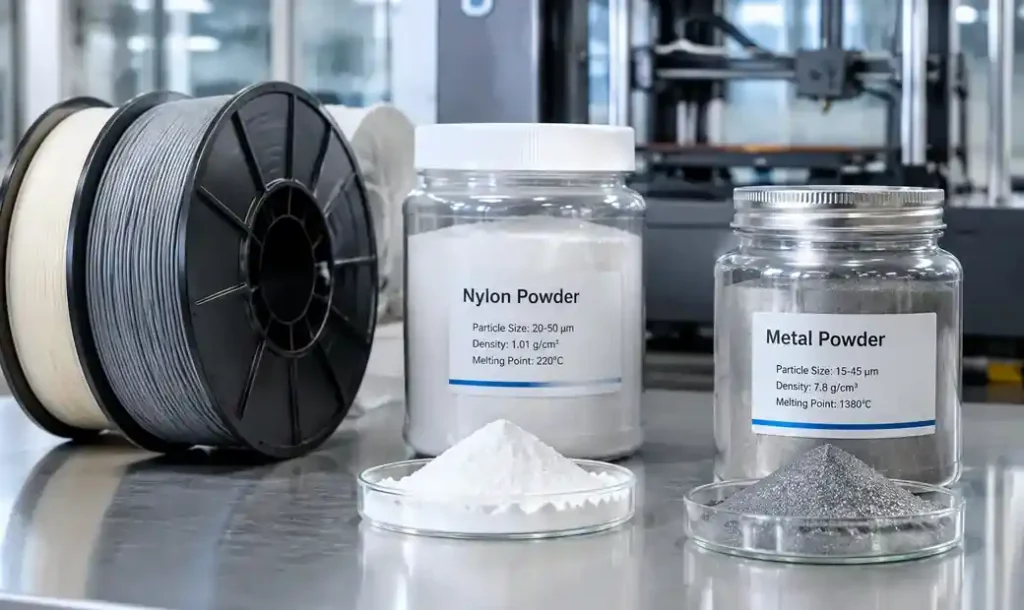
Concrete mix additives affect mold material compatibility. High-silica aggregates and accelerators containing chlorides accelerate polymer degradation 40-60%. These applications benefit from stainless steel or corrosion-resistant coatings extending service life in aggressive chemical environments.
Implementation Strategy for Block Manufacturers
Cost-Benefit Analysis
Calculate total mold cost including design, fabrication, modifications, and lifespan cycles. Compare traditional steel molds’ 50,000-200,000 cycle life against polymer molds’ 300-800 cycles or metal printed molds’ 10,000-50,000 cycles.
For annual production of 15,000 architectural blocks:
- Traditional steel mold: $28,000 ÷ 100,000 potential cycles = $0.28 per block mold cost
- 3D printed SLS mold: $6,500 ÷ 500 cycles × 30 blocks per cycle = 25 molds needed = $162,500 ÷ 15,000 = $10.83 per block
The analysis reveals 3D printing serves low-volume custom production economically, while traditional tooling remains superior for high-volume standard blocks. The crossover occurs at approximately 8,000-12,000 annual units for most block types.
Design complexity shifts economics substantially. Custom blocks requiring extensive CNC programming favor 3D printing regardless of volume. Standard rectangular blocks prefer conventional machining even at lower quantities.
Integrating with Existing Block Machines
3D printed molds integrate with existing block machine frames through adapter plates and mounting systems. Most semi-automatic and automatic machines accept mold boxes with standardized dimensions (typically 1200mm × 800mm footprint for multi-cavity layouts).
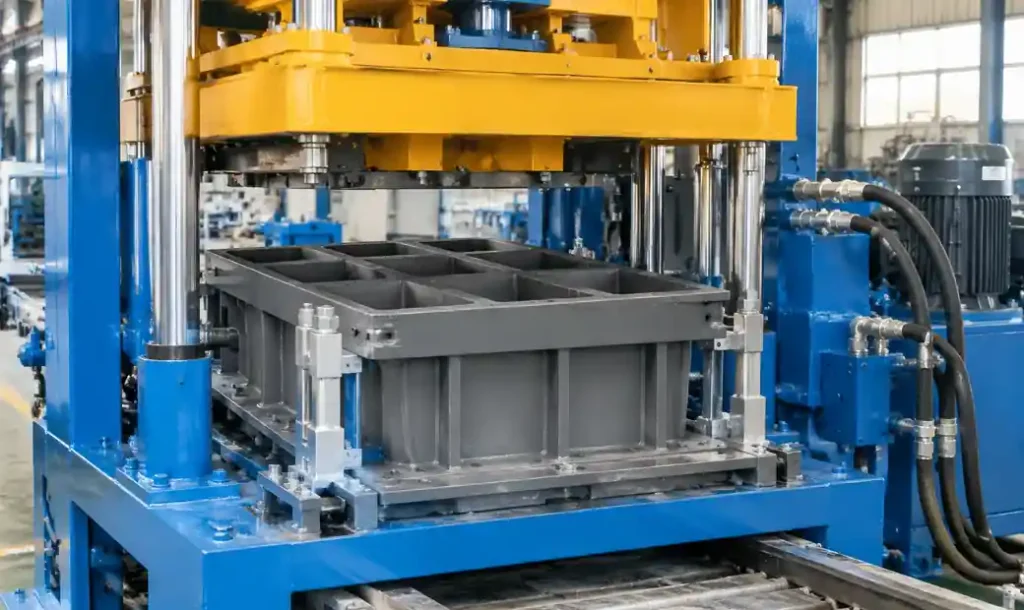
Polymer molds require lower clamping forces than steel equivalents due to higher deflection. Reduce hydraulic pressure 15-25% to prevent mold compression and dimension creep. Metal 3D printed molds use identical settings as conventional steel tooling.
Cooling system adaptation depends on mold design. Polymer molds rely on air cooling between cycles. Metal printed molds with conformal channels require quick-disconnect couplings and flow rates of 8-15 liters per minute maintaining 15-20°C water temperature.
Vibration table settings need optimization for lightweight polymer molds. Reduce frequency 10-15% to prevent mold walking during compaction. Some manufacturers add ballast weights to mold frames achieving dynamic stability equivalent to steel tooling.
Quality Control and Mold Maintenance
3D printed molds require different maintenance protocols than traditional steel tooling. Inspect dimensional accuracy every 50-100 cycles using coordinate measuring machines or precision calipers. Monitor critical dimensions including:
- Cavity depth (±0.5mm tolerance)
- Wall thickness (±0.3mm tolerance)
- Draft angles (±0.5° tolerance)
- Surface flatness (±0.8mm over 400mm span)
Polymer molds degrade through concrete abrasion, compression creep, and UV exposure. Apply release agents every cycle preventing concrete adhesion. Store molds in climate-controlled environments (15-25°C, <60% relative humidity) preventing moisture absorption and thermal expansion.
Metal 3D printed molds require surface treatment similar to conventional steel. Apply corrosion-resistant coatings on molds used with accelerated concrete mixes. Periodic surface polishing maintains release characteristics and prevents buildup in fine details.
Future Developments in Block Mold 3D Printing
Hybrid Manufacturing Systems
Hybrid additive-subtractive systems combine 3D printing with CNC machining in single machines. These platforms build near-net-shape molds additively, then machine critical surfaces to precise tolerances—reducing material waste 60-75% compared to pure subtractive methods while maintaining dimensional accuracy.
The technology suits medium-production block molds requiring 5,000-20,000 cycles. Print structural bulk and cooling channels in 12-24 hours, then machine mating surfaces and cavity details to ±0.05mm tolerance in 4-8 hours. Total fabrication time drops to 2-4 days versus 4-8 weeks conventionally, at costs 30-45% lower than fully machined tooling.
AI-Optimized Mold Design
Machine learning algorithms optimize mold topology for minimal material use, maximum strength, and optimal cooling performance. AI-designed molds reduce weight 25-40% compared to traditional designs while improving thermal management and extending service life.
Software analyzes concrete flow patterns, compaction forces, and thermal gradients during block formation. The system generates organic internal structures distributing loads efficiently and positioning cooling channels for uniform temperature control—designs impossible to conceive manually or manufacture conventionally.
Large-Format 3D Printing
Industrial-scale printers with 2000mm × 2000mm × 1000mm+ build volumes enable single-piece molds for multiple block cavities. Current multi-cavity molds require assembled segments with precision alignment—increasing fabrication cost and creating potential failure points.
Large-format systems print complete 4-cavity or 6-cavity mold boxes as monolithic structures, eliminating assembly labor and alignment errors. The technology particularly benefits paver mold manufacturing where 8-12 cavity layouts maximize production efficiency.
Frequently Asked Questions
How long do 3D printed block molds last?
Service life depends on material and application. Polymer SLS molds produce 300-600 blocks in semi-automatic machines at 120-180 tons pressing force. Metal 3D printed molds achieve 10,000-50,000+ cycles comparable to conventional steel tooling. Glass-filled nylon extends polymer mold life 40-60% in high-wear applications.
Can 3D printed molds produce standard concrete blocks?
Yes. Metal 3D printed molds perform identically to machined steel molds for standard hollow blocks, solid blocks, and pavers. Polymer molds suit manual and semi-automatic production at lower pressing forces. Block strength, density, and dimensional accuracy match specifications with properly designed molds and correct machine settings.
What is the cost difference compared to traditional molds?
3D printed polymer molds cost $3,000-$8,000 versus $15,000-$45,000 for machined steel—a 60-85% reduction. Metal 3D printed molds range $12,000-$35,000, saving 15-35% while enabling complex geometries impossible conventionally. Total cost depends on production volume and design complexity.
How accurate are 3D printed block molds?
SLS polymer molds achieve ±0.2mm dimensional accuracy for cavity dimensions. Metal 3D printed molds reach ±0.1mm after post-machining of critical surfaces. Both technologies meet concrete block industry standards requiring ±2mm on external dimensions. Surface finish ranges from Ra 3-12 microns depending on technology and post-processing.
What materials work best for block machine applications?
Nylon PA12 suits semi-automatic machines producing 5,000-20,000 blocks annually. Stainless steel 316L serves corrosive concrete mixes in medium production. Tool steel H13 matches fully automatic equipment requirements for 30,000+ annual blocks. Material selection balances mold life, pressing force, and production economics.
Can existing block machines use 3D printed molds?
Yes. 3D printed molds integrate with existing block machine frames through adapter plates matching machine manufacturer specifications. Polymer molds may require reduced hydraulic pressure (15-25% lower) and modified vibration settings. Metal printed molds use identical settings as conventional steel tooling without machine modifications.
Conclusão
3D printing technology transforms custom block mold design from expensive, time-consuming fabrication into rapid, cost-effective digital manufacturing. Block producers gain unprecedented design freedom, compress prototyping cycles from months to days, and access custom architectural markets previously economically unfeasible. Polymer additive manufacturing suits low-volume custom production under 10,000 annual units, while metal 3D printing serves medium-volume applications requiring complex geometries or conformal cooling channels.
The technology particularly benefits manufacturers targeting architectural, landscape, and specialty industrial markets where design differentiation and rapid customization create competitive advantages. Traditional steel tooling remains optimal for high-volume standard blocks exceeding 50,000 annual units, but 3D printing’s declining costs and improving material performance continue expanding economically viable applications.
Raytone Block Machinery helps manufacturers integrate 3D printed molds with existing production equipment and develop custom mold designs optimized for additive manufacturing. Our engineering team provides mold design services, material selection guidance, and machine parameter optimization ensuring successful implementation of this transformative technology.
Contact Raytone Block Machinery today for custom mold design consultation, 3D printing integration support, and comprehensive block machine solutions advancing your manufacturing capabilities.
Sources: