





Starting a block production business in Africa requires navigating complex international shipping, customs clearance, and import regulations. Beyond the machine price, shipping logistics, port fees, customs duties, and documentation can add 30-50% to your total investment.
This guide provides practical insights into shipping block making machines from China to African ports in 2026. You’ll learn real container costs, understand customs procedures across major markets, avoid common documentation errors, and calculate total landed costs for informed purchasing decisions.
Understanding Block Machine Shipping Methods
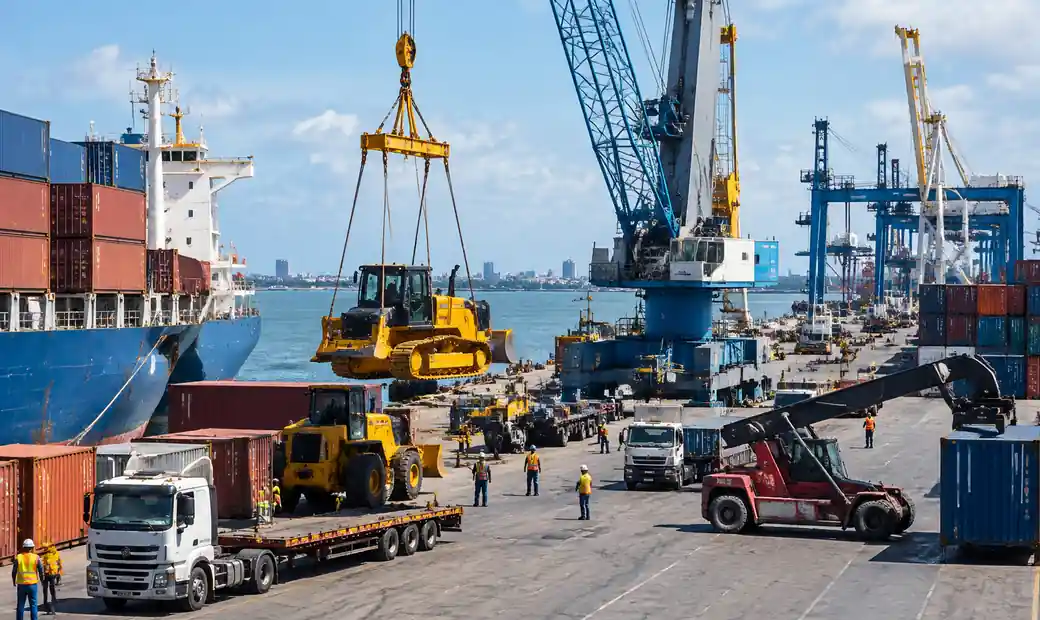
Block machines ship via sea freight in standard containers—the most economical option for heavy industrial equipment. Your shipping method depends on machine size, destination port infrastructure, and budget.
Container Shipping: Standard Practice for Most Machines
20-foot containers (TEU) accommodate manual and semi-automatic machines weighing 1-4 tons. Dimensions: 5.9m × 2.35m × 2.39m interior, 33 cubic meters capacity.
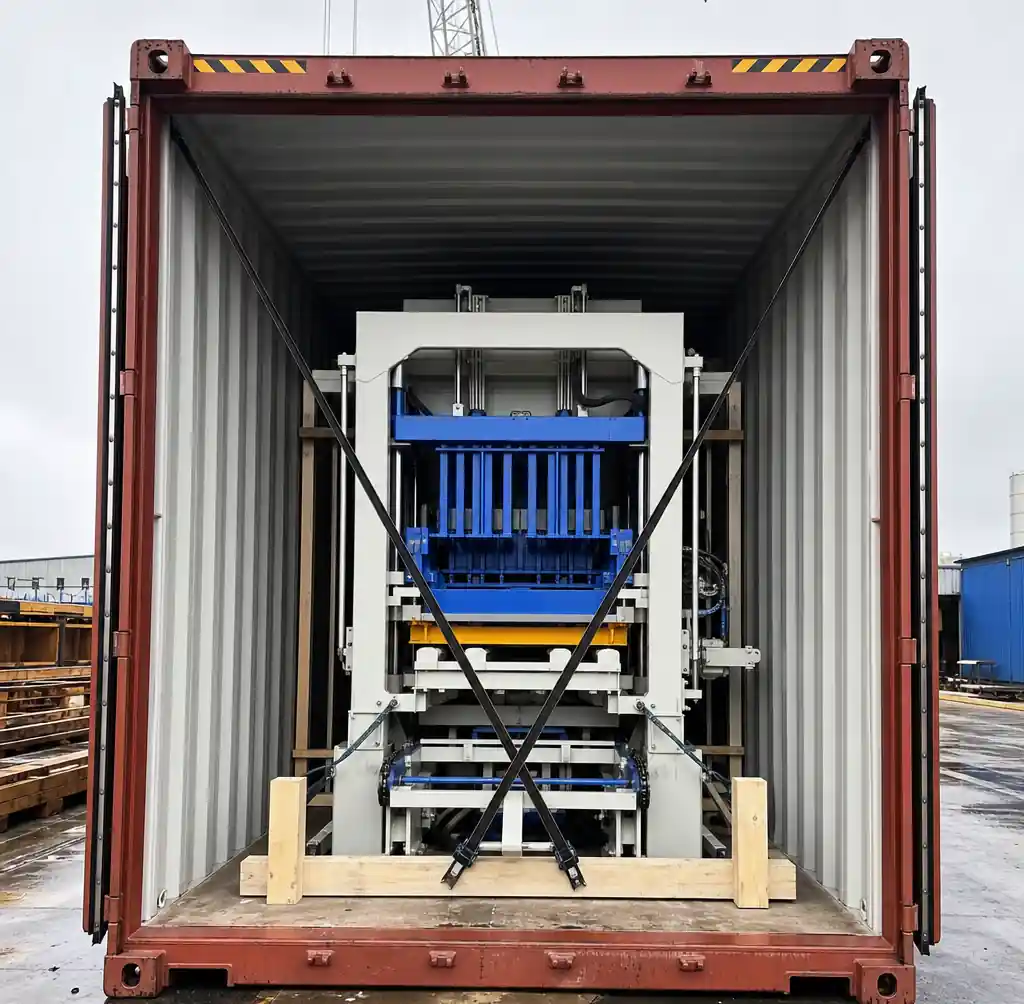
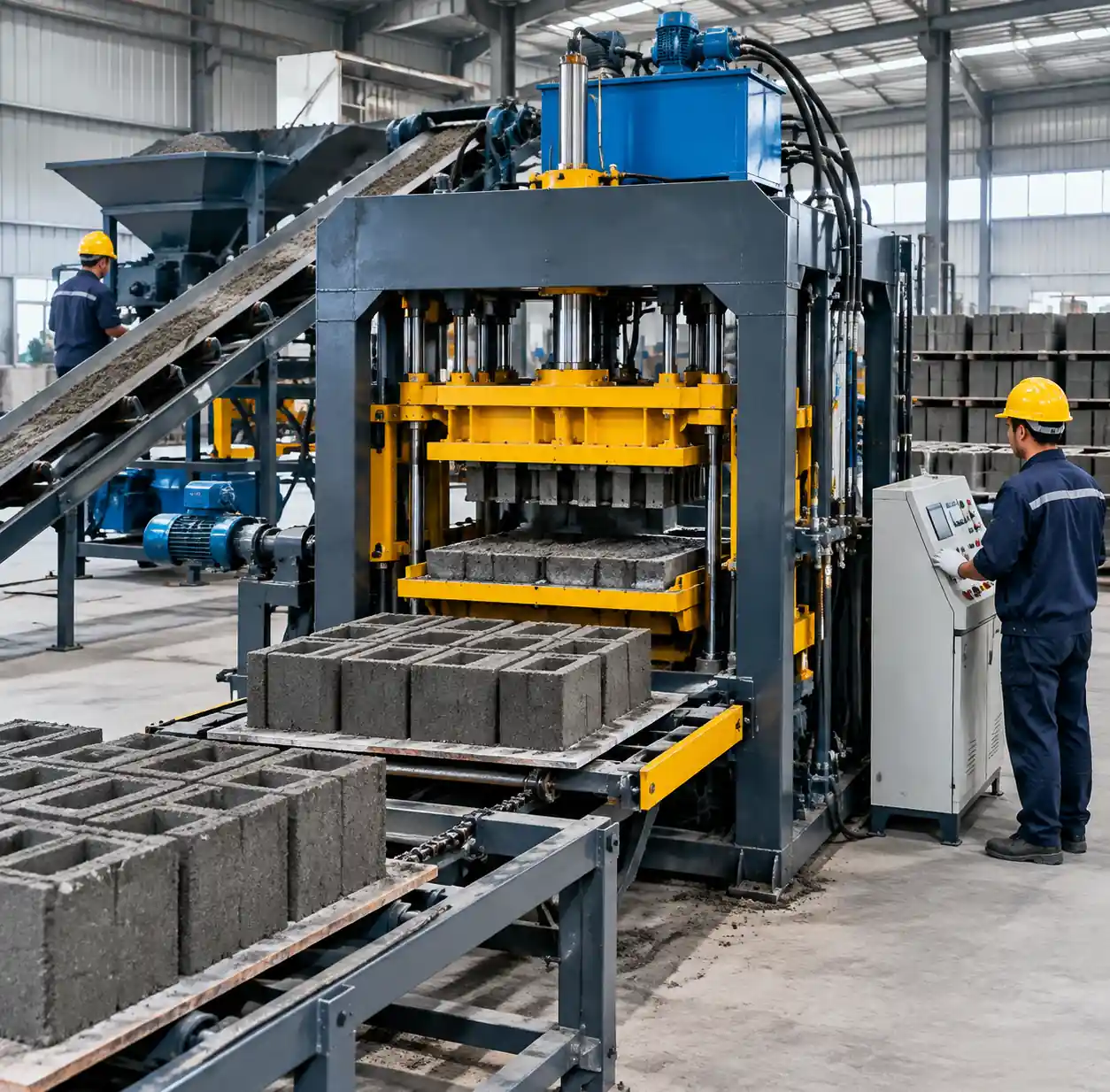
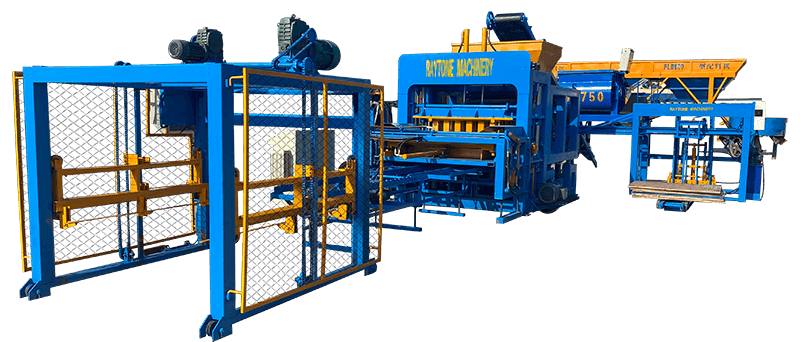
40-foot containers (FEU) handle fully automatic lines and supporting equipment. Dimensions: 12m × 2.35m × 2.39m interior, 67 cubic meters capacity. Most QT6-15 and QT8-15 automatic machines require 40-foot containers.
2026 Container Rates from China:
| Route | 20ft Container | 40ft Container | Transit Time |
|---|---|---|---|
| Qingdao → Mombasa/Dar es Salaam | $1,800-$2,600 | $3,500-$5,200 | 25-32 days |
| Qingdao → Lagos/Tema | $2,100-$3,000 | $4,200-$6,500 | 28-35 days |
| Qingdao → Durban/Maputo | $2,300-$3,400 | $4,800-$7,500 | 30-38 days |
| Qingdao → Djibouti | $2,000-$2,800 | $3,800-$5,500 | 26-33 days |
Rates fluctuate based on peak season (September-November), fuel surcharges, and Red Sea route adjustments. Container shipping from China to South Africa averaged $2,183-$3,245 per 40ft container in early 2026 with 35-44 day transit times.
Landlocked countries face additional inland transport costs. From Mombasa to Kampala (Uganda): $800-$1,500. From Durban to Lusaka (Zambia): $1,200-$2,200. From Lagos to Niamey (Niger): $1,500-$2,800.
LCL vs FCL: Choosing the Right Option
Full Container Load (FCL): Entire container dedicated to your shipment. Cost-effective for manual machines ($3,500-$8,000), semi-automatic machines ($8,000-$18,000), and complete production lines. You control loading, reducing damage risk.
Less than Container Load (LCL): Share container space, pay per cubic meter. Averages $125/m³ from China to Africa. Suitable only for spare parts, molds, or very small equipment. LCL adds 5-10 days for consolidation/deconsolidation.
A QT4-40 manual machine (1.8 tons, 8 cubic meters) costs $1,000 via LCL versus $2,200 FCL—but FCL eliminates consolidation delays and reduces handling damage risk.
Roll-on/Roll-off (RoRo) for Mobile Machines
Mobile block machines like QTM6-25 and QTM10-25 can ship via RoRo when mounted on chassis. Machines drive directly onto vessel, securing to vehicle decks. RoRo rates: $1,200-$2,500 from China to South African ports, $1,500-$3,200 to West African ports.
RoRo works only for self-propelled or towable equipment. Standard stationary machines require container shipping.
Essential Shipping Documentation for African Customs
Proper documentation prevents costly port delays. African customs authorities require specific paperwork before releasing machinery. Missing or incorrect documents cause 7-21 day delays plus storage fees ($50-$150 daily).
Core Shipping Documents
Commercial Invoice: Declares machine value, specifications, seller/buyer details, payment terms. Must match letter of credit terms exactly. Include HS code 8474.80 (machinery for moulding mineral products).
Packing List: Details every item in container—machine components, spare parts, tools, pallets. Lists dimensions, weights, packing method. Customs verifies physical cargo against this document.
Bill of Lading (B/L): Ocean carrier issues this cargo receipt and title document. Three originals typically issued—one for shipper, one for consignee, one for bank (L/C transactions). The person holding original B/L can claim cargo.
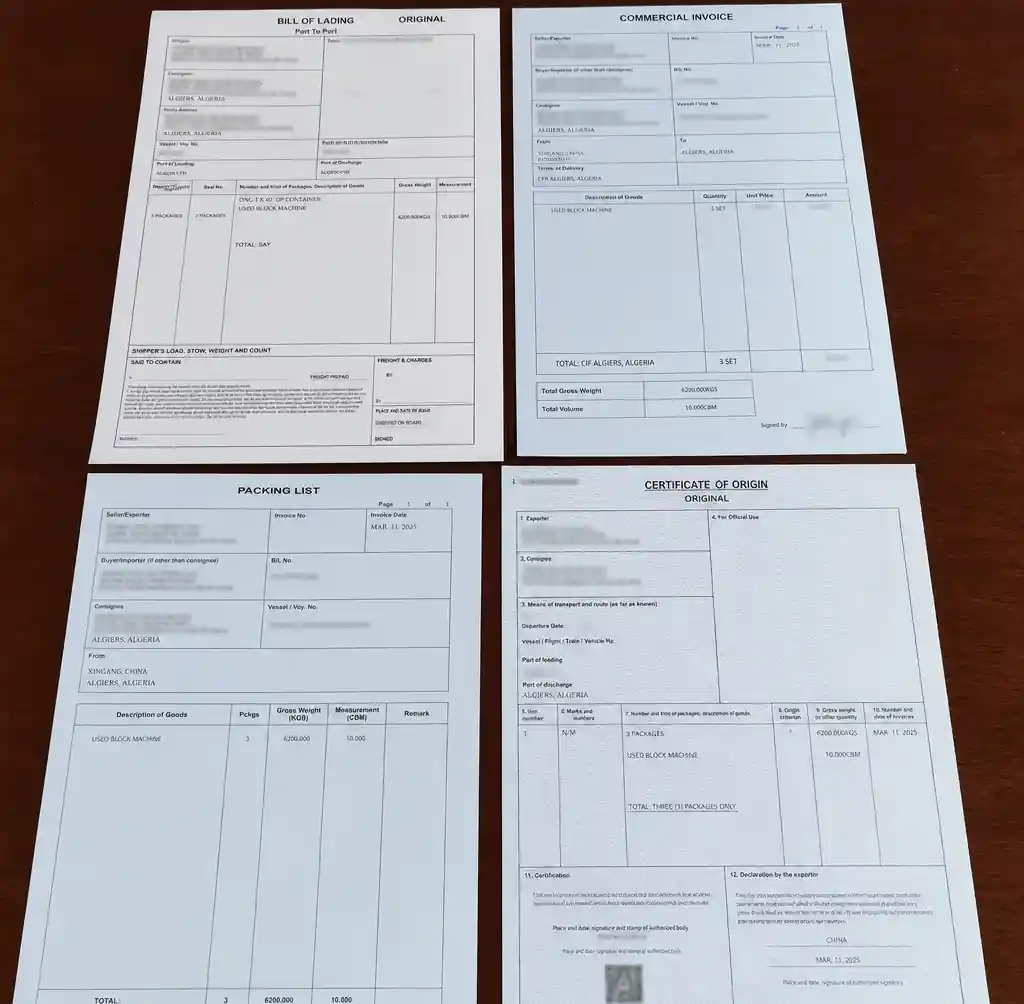
Certificate of Origin: Certifies manufacturing country (China for most block machines). Required for calculating duties under trade agreements. Form E Certificate enables preferential tariffs under China-Africa agreements for qualifying machinery.
Insurance Certificate: Covers loss/damage during transit. Standard coverage: 110% of cargo value. Required by most African banks for L/C transactions. Typical premium: 0.3-0.8% of machine value.
Africa-Specific Requirements
Import License: Ghana, Nigeria (Form M), Tanzania, and Ethiopia require import licenses for industrial machinery. Apply 30-45 days before shipment through your country’s trade ministry or investment authority.
Pre-Shipment Inspection Certificate: Nigeria (SONCAP), Ghana (GCCI), Ivory Coast, and Senegal mandate third-party inspection before shipment. SGS, Intertek, or Bureau Veritas inspect cargo in China, issue certificate. Cost: $300-$800. Processing: 5-7 days.
Standards Compliance Certificate: South Africa requires SABS certification for electrical equipment. Kenya needs KEBS approval for machines above 10 tons. Ethiopia’s ESA issues conformity certificates. Your manufacturer documentation should include CE/ISO certificates facilitating this process.
Pre-Arrival Assessment Report (PAAR): Some Nigerian imports need PAAR from inspection agents before vessel arrival. Speeds customs clearance by pre-assessing duty and verifying documents.
HS Code Classification and Customs Duties
Block making machines classify under HS code 8474.80 – “Machinery for agglomerating, shaping or moulding solid mineral fuels, ceramic paste, unhardened cements, plastering materials or other mineral products in powder or paste form.”
Correct classification determines duty rates, import restrictions, and required permits. Misclassification triggers customs audits, penalties, and shipment holds.
Import Duty Rates by Country (2026)
| Country | Standard Duty | Capital Equipment Rate | VAT/Import Tax | Total Tax Burden |
|---|---|---|---|---|
| Kenya (EAC) | 10% | 0-10% | 16% VAT | 16-26% |
| Tanzania (EAC) | 10% | 0-10% | 18% VAT | 18-28% |
| Uganda (EAC) | 10% | 0-10% | 18% VAT | 18-28% |
| Nigeria | 5-15% | 0% (exemptions available) | 7.5% VAT | 12.5-22.5% |
| Ghana | 10-15% | 5-10% | 12.5% VAT | 17.5-27.5% |
| South Africa | 15% | 0-7.5% (incentives) | 15% VAT | 15-22.5% |
| Ethiopia | 5-10% | 0% (investment incentive) | 15% VAT | 5-25% |
| Mozambique | 7.5% | 2.5-7.5% | 17% VAT | 19.5-24.5% |
East African Community (EAC): Kenya, Tanzania, Uganda, Rwanda, and Burundi apply Common External Tariff. Industrial machinery often qualifies for reduced rates when supporting local manufacturing. Apply through investment authorities for capital equipment exemptions.
Nigeria: ECOWAS Common External Tariff applies. Capital equipment can qualify for 0% duty under industrial development provisions. File exemption application through Nigerian Investment Promotion Commission (NIPC) 45-60 days before import.
Ethiopia: Aggressive manufacturing incentives offer 0% import duty for machinery supporting cement block production. Apply through Ethiopian Investment Commission. Approval: 30-45 days.
South Africa: Department of Trade and Industry offers duty rebates for manufacturing equipment. Schedule 3 rebates eliminate or reduce duties when machinery unavailable locally. Processing: 6-10 weeks.
Additional Port and Customs Fees
Beyond duties and VAT, expect these charges at African ports:
Port Handling Charges: $400-$900 per container (equipment unloading, container yard fees)
Customs Clearance Fees: $300-$800 (document processing, inspection fees)
Customs Broker Fees: $200-$500 (professional clearance service—highly recommended)
Terminal Handling Charges: $150-$400 per container
Documentation Fees: $100-$300 (bill of lading, delivery orders, certificates)
Demurrage/Storage: $50-$150 per day after free period (typically 3-7 days)
Total port and clearance fees: $1,200-$3,000 for standard container.
Navigating Major African Ports
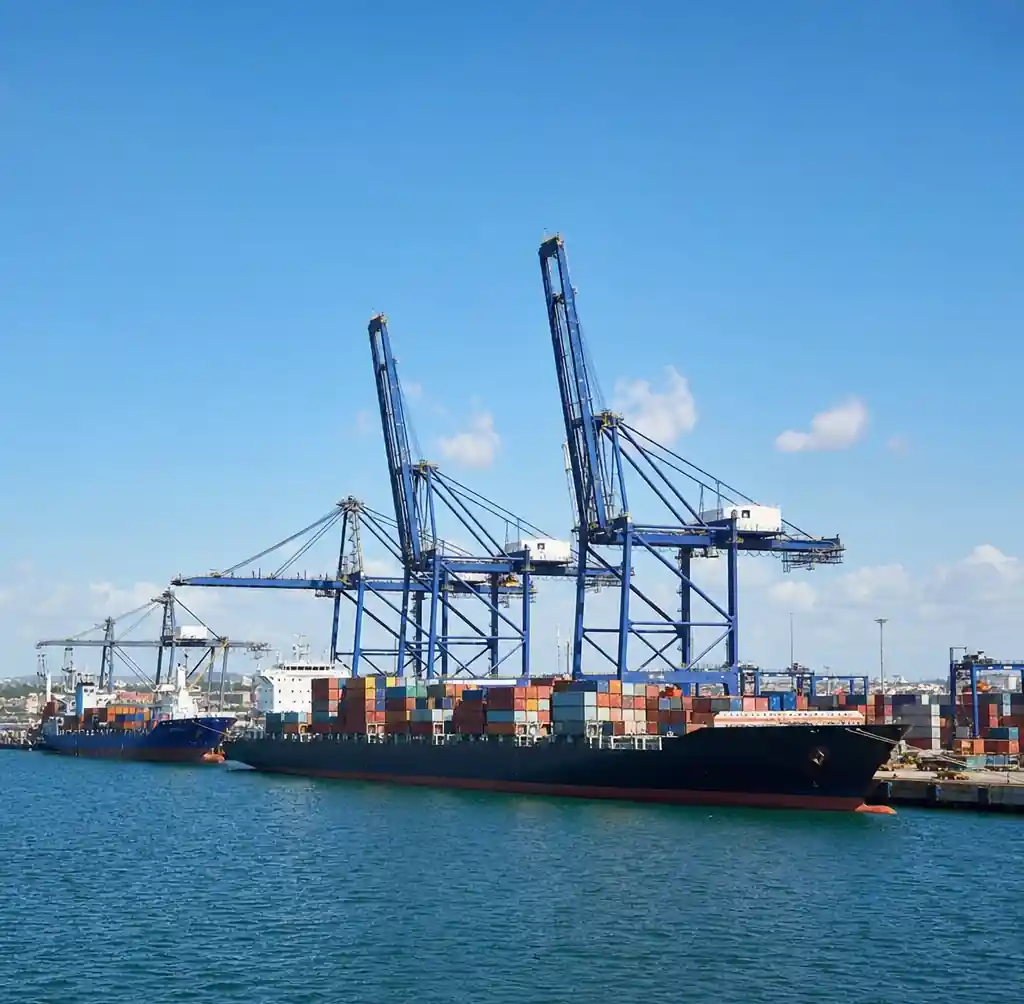
Port choice significantly impacts total costs and clearance time. Infrastructure quality, congestion levels, and customs efficiency vary widely across African ports.
East Africa: Mombasa and Dar es Salaam
Mombasa (Kenya): Largest East African port handling Kenya, Uganda, Rwanda, South Sudan, eastern DRC cargo. Modern container terminals with good equipment handling facilities.
2026 Challenges: Severe congestion since September 2025 with 20+ vessels waiting at anchorage. Berth delays extend 10-14 days beyond scheduled arrival. Kenya Revenue Authority implementing blockchain customs system to reduce paperwork delays.
Clearance Time: 7-12 days with proper documentation, 15-25 days if issues arise.
Best Practices: File electronic customs documents via KRA iTax system before vessel arrival. Use licensed customs broker familiar with machinery imports. Budget extra 5-7 days versus historical averages.
Dar es Salaam (Tanzania): Alternative to Mombasa serving Tanzania, Zambia, Malawi, eastern Zimbabwe. Less congested with improving infrastructure.
Clearance Time: 5-10 days for machinery with complete documentation.
Cost Advantage: Port fees 15-20% lower than Mombasa. Good option for southern Tanzania and Zambia-bound cargo.
West Africa: Lagos and Tema
Lagos (Nigeria): Apapa and Tin Can Island terminals handle most Nigerian machinery imports. High traffic volume, complex customs procedures.
Documentation: Form M (import license), SONCAP certificate, Pre-Arrival Assessment Report mandatory. Start SONCAP process 15-20 days before shipment.
Clearance Time: 10-18 days average. Delays common due to documentation scrutiny and physical inspection requirements.
Challenge: Heavy demurrage costs after 3-day free period. Ensure all documents correct before vessel arrival.
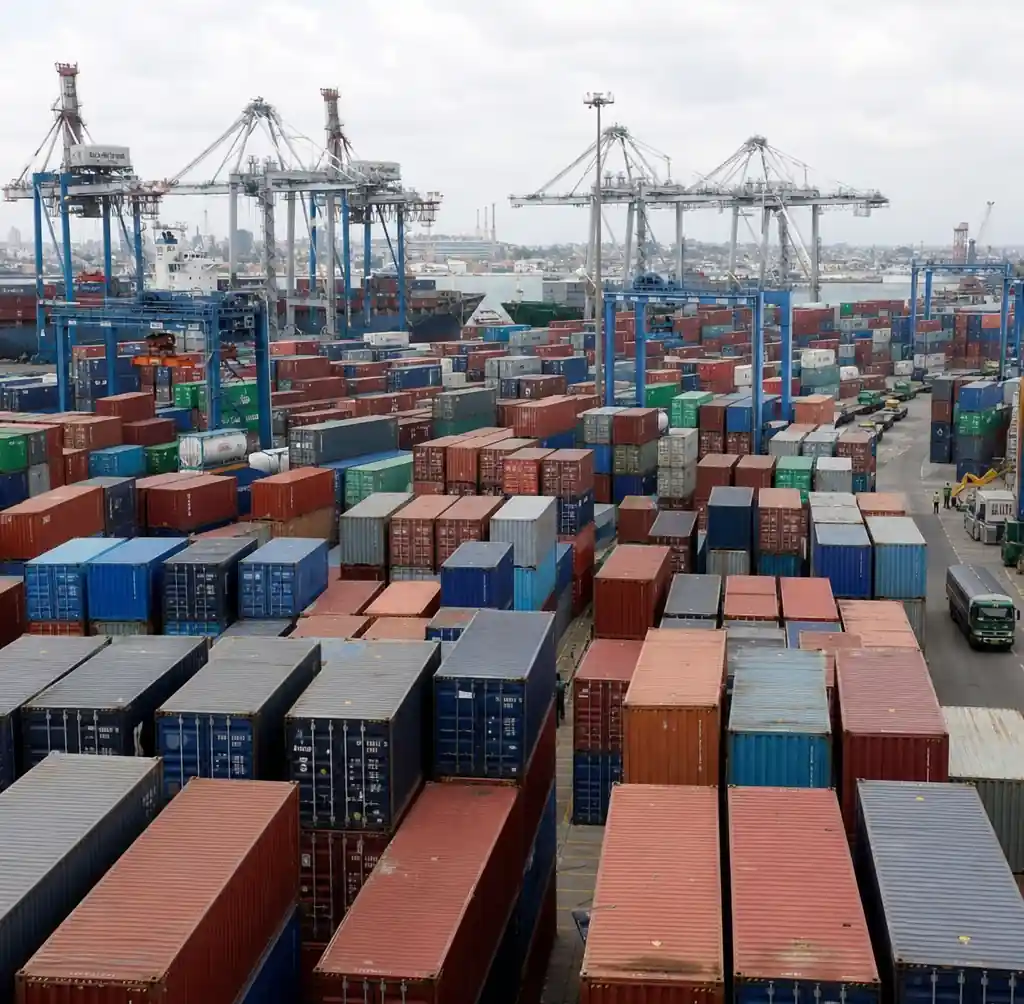
Tema (Ghana): West Africa’s most efficient port. Modern container facilities, relatively smooth customs processes.
Clearance Time: 5-8 days with complete documentation including Ghana Standards Authority approval.
Advantage: Good road connections to Burkina Faso, northern regions. Lower corruption perception versus some regional ports.
Southern Africa: Durban
Durban (South Africa): Africa’s busiest container port, sophisticated infrastructure, handles Botswana, Zimbabwe, southern Zambia, Mozambique cargo.
2026 Status: Performance improving after 2023-2024 operational challenges. Maersk reduced port charges from August 2026. Still recommend padding schedules 2-3 days.
Clearance Time: 5-9 days for machinery with SABS certification and proper customs documentation.
Professional Environment: Strong customs broker infrastructure. Straightforward duty rebate applications through SARS eFiling system.
Djibouti: Horn of Africa Gateway
Djibouti Port: Critical gateway for Ethiopia (landlocked), Somaliland, South Sudan. Modern Chinese-built facilities, free trade zone.
Ethiopia Connection: Addis Ababa-Djibouti Railway provides efficient inland transport. Total transit 2-3 days to Ethiopian capital.
Clearance Time: 4-7 days. Ethiopian customs clearance easier via Djibouti than other routes.
Cost Factor: Competitive port charges, fuel/handling costs favor this route for Ethiopian importers.
Step-by-Step Customs Clearance Process
Understanding the clearance timeline helps plan installation schedules and avoid demurrage charges. Process begins before your block machine arrives.
Pre-Arrival (45-60 Days Before Shipment)
- Apply for Import Permits: Submit applications for import licenses, standards certifications, investment incentives. Nigeria Form M, Ghana import license, duty exemptions where applicable.
- Arrange Pre-Shipment Inspection: Contact SGS, Intertek, or Bureau Veritas in China for SONCAP or other mandatory inspections. Schedule 7-10 days before container loading.
- Secure Financing/Payment: Open letter of credit or arrange telegraphic transfer. Manufacturer ships after receiving 70% balance (standard payment terms).
- Engage Customs Broker: Hire licensed broker at destination port 30 days before arrival. Share all documentation—commercial invoice, packing list, certificates.
During Transit (25-40 Days)
- Receive Shipping Documents: Manufacturer sends original Bill of Lading, commercial invoice, packing list, certificates of origin, insurance certificate via courier (DHL/FedEx).
- Submit Electronic Pre-Clearance: Many African ports offer electronic document submission. File via Kenya iTax, Nigeria Trade Portal, or South Africa SARS eFiling 5-7 days before vessel arrival.
- Arrange Inland Transport: Book trucks for port-to-factory delivery. Manual machines need flatbed truck ($300-$600). Automatic lines may need low-bed trailer ($800-$1,500).
Port Arrival and Clearance (5-15 Days)
- Vessel Docking: Receive arrival notification from shipping line. Container offloaded to port yard within 24-48 hours.
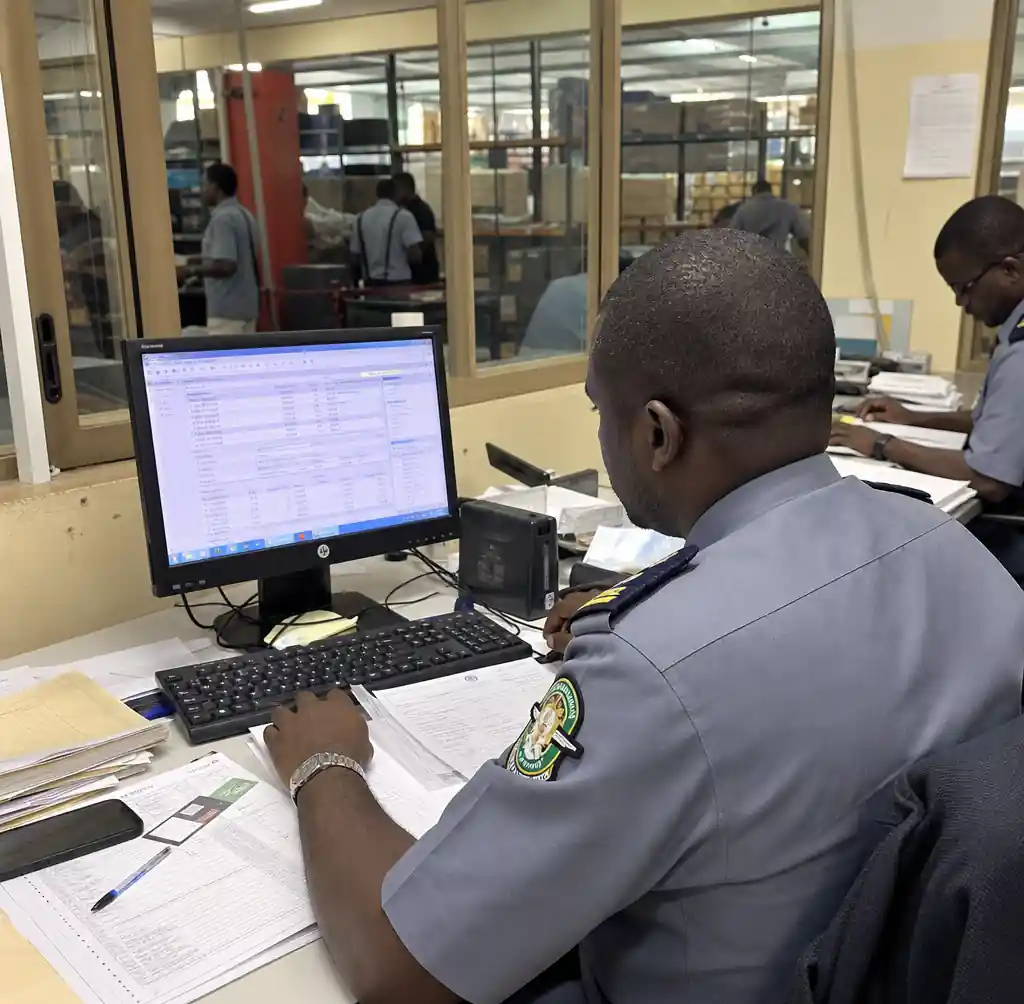
- Customs Declaration: Broker submits customs declaration with HS code, declared value, supporting documents. Customs assigns risk level—green (no inspection), yellow (document check), red (physical inspection).
- Duty Assessment: Customs calculates duties, VAT, fees based on CIF value (Cost + Insurance + Freight). Pay via broker to customs authority.
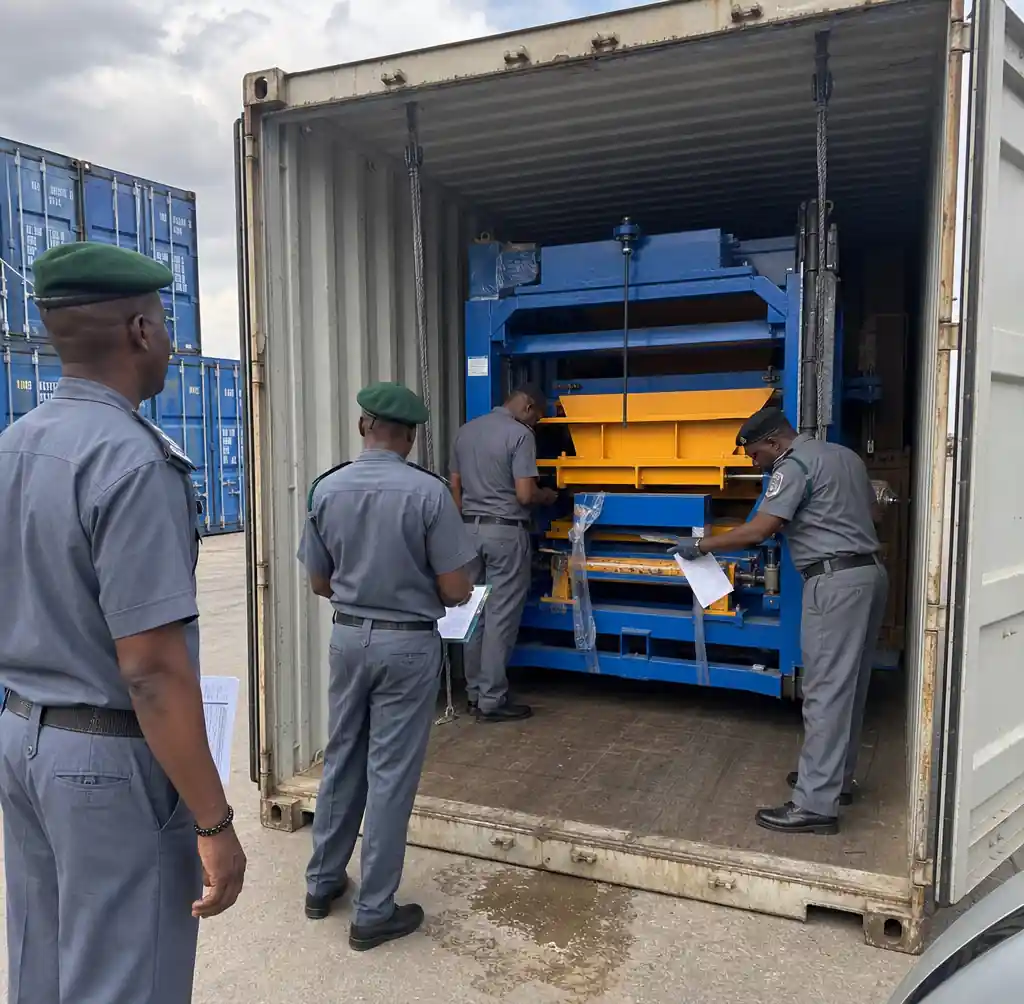
- Physical Inspection (if selected): Customs officers inspect container contents, verify against packing list. Process adds 2-5 days. Be present or ensure broker represents you.
- Release Order: After duty payment and inspection clearance, customs issues release order. Present to terminal to collect container.
- Port Gate-Out: Pay terminal charges, present release documents, container released to your truck.
Post-Clearance (1-3 Days)
- Inland Transport: Haul container to factory site. Typical rates: $200-$800 depending on distance.
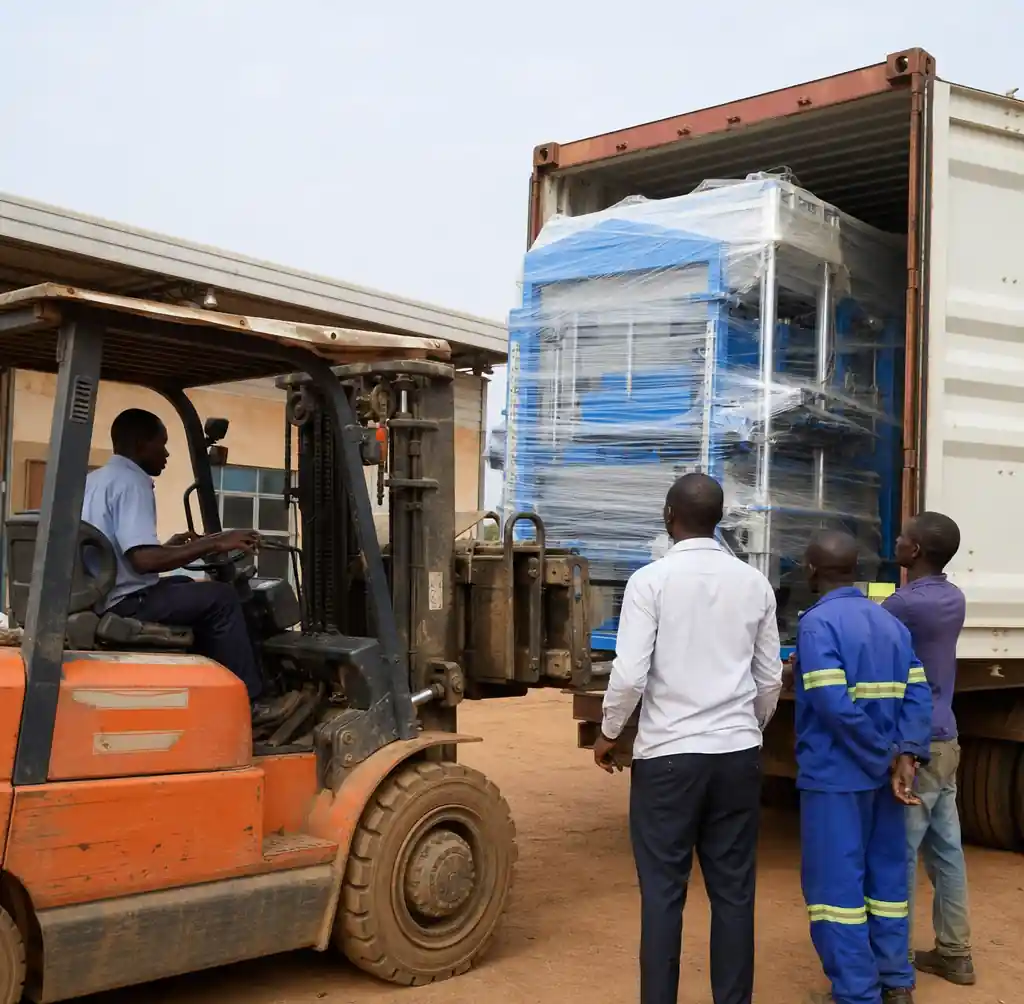
- Container Unpacking: Offload machine using forklift (manual/semi-auto) or crane (automatic lines). Verify no shipping damage.
- Return Empty Container: Return to port within free period (5-7 days) to avoid detention charges ($30-$80/day).
Working with Customs Brokers and Freight Forwarders
Professional logistics support is essential for machinery imports. Experienced brokers navigate complex African customs environments, saving time and money.
Choosing a Reliable Customs Broker
Licensed customs brokers handle documentation, duty payments, inspections, and cargo release. Selection criteria:
Local Licensing: Verify broker holds current customs agent license from revenue authority (KRA, SARS, NCS, GRA).
Machinery Experience: Choose brokers with manufacturing equipment experience. Block machines require proper HS code classification, measurement verification, duty exemption applications.
Port Presence: Broker needs physical office at your destination port for quick response during inspections or documentation issues.
Transparent Fee Structure: Clear pricing—fixed fee or percentage (typically 0.5-1.5% of cargo value). Avoid brokers with hidden charges.
Communication: Responsive via WhatsApp, email, phone. Daily updates during clearance process.
Practical experiences from importers emphasize choosing brokers who prevent warehouse storage fees through timely clearance. Delay costs mount quickly at $50-$150 daily.
Freight Forwarder vs Customs Broker
Freight Forwarder: Arranges international shipping—books vessel space, prepares export documents, coordinates container loading in China, manages ocean freight. Usually handles China-side logistics.
Customs Broker: Handles destination country customs clearance, duty payments, local regulations. Operates in Africa.
Many Chinese machinery manufacturers work with freight forwarders providing door-to-port service. You engage separate customs broker for port-to-door delivery. Some freight forwarders offer end-to-end service through African partners.
Communication Tip: Ship machinery Wednesday or earlier in the week to avoid weekend customs delays at destination ports. Weekend arrivals sit idle until Monday processing.
Calculating Total Landed Cost: Real Example
Understanding complete import costs prevents budget shortfalls. Here’s actual calculation for QT4-24 semi-automatic machine to Lagos, Nigeria.
Machine Specifications:
- Model: QT4-24 Semi-Automatic Block Machine
- FOB Price: $11,000
- Weight: 3.2 tons
- Volume: 12 cubic meters
- Supporting equipment: JS500 mixer ($2,800), 500 pallets ($2,000), 3 mold sets ($1,800)
Shipping Costs (China to Lagos):
- 40ft container freight: $4,800
- Container loading/handling: $150
- Export customs clearance (China): $200
- Documentation fees: $100
- Subtotal Shipping: $5,250
Insurance:
- Cargo value: $17,600 (FOB equipment + freight)
- Insurance premium (0.5%): $88
- Subtotal Insurance: $88
CIF Value: $17,738 (Cost + Insurance + Freight)
Nigerian Import Costs:
- Import duty (10% – no exemption): $1,774
- VAT (7.5% on CIF + duty): $1,463
- SONCAP inspection (done in China): $450
- Port handling charges: $650
- Customs clearance/documentation: $550
- Customs broker fee: $400
- Inland transport (Lagos port to Ibadan): $600
- Subtotal Nigeria Costs: $5,887
Installation and Setup:
- Foundation preparation: $1,200
- Manufacturer technician support: $1,500 (flight, accommodation, allowance for 5 days)
- Subtotal Installation: $2,700
Total Landed and Installed Cost: $26,375
The $11,000 FOB machine became $26,375 fully operational—140% increase. Shipping added 48%, duties/taxes added 30%, installation added 24% beyond FOB price.
Common Mistakes and How to Avoid Them
Years of experience shipping to Africa reveal recurring errors causing delays and extra costs.
Documentation Errors
Mistake: Invoice values don’t match across documents. Commercial invoice shows $12,000, packing list shows $11,500, Bill of Lading shows different weight.
Impact: Automatic red channel selection, physical inspection, 5-10 day delay, potential penalties.
Solution: Triple-check all values consistent across every document. Commercial invoice is master document—all others must match.
Mistake: Missing required certificates (SONCAP, COO, insurance).
Impact: Cargo held until documents provided, $50-$150 daily demurrage, possible container return to origin.
Solution: Confirm exact document requirements with customs broker 45 days before shipment. Create checklist, verify completion before container loads.
Undervaluation Attempts
Mistake: Requesting manufacturer undervalue invoice to reduce duties.
Impact: Customs investigate, apply penalties (100-300% of duty evaded), seize cargo, blacklist importer. African customs access global price databases—they know block machine market values.
Solution: Always declare true value. Duty savings ($500-$2,000) not worth seizure risk on $15,000-$50,000 machine. Pursue legitimate duty exemptions instead.
Poor Port Communication
Mistake: Not monitoring vessel arrival, missing free time deadline, documents not ready.
Impact: Demurrage charges accumulate at $75-$150 daily. 10-day delay costs $750-$1,500.
Solution: Track vessel via shipping line website. Customs broker should notify you 48 hours before arrival. Have all original documents in broker’s hands before docking.
Inadequate Preparation for Inspection
Mistake: Physical inspection scheduled, but importer/broker not present. Container opened without oversight.
Impact: Customs may damage equipment during inspection, claim discrepancies, impose additional scrutiny.
Solution: Attend all physical inspections or ensure trusted broker representative present. Photograph unpacking process. Immediately note any handling damage.
Wrong HS Code Declaration
Mistake: Using generic machinery code instead of specific 8474.80 for block machines.
Impact: Wrong duty rate applied, clearance delayed for reclassification, penalties for incorrect declaration.
Solution: Verify HS code with customs broker before shipping. Include detailed machine description and function in commercial invoice to support classification.
Choosing Between Different Suppliers’ Shipping Terms
Chinese manufacturers offer various shipping terms affecting your responsibility and costs. Understanding Incoterms helps evaluate total expenses.
FOB (Free on Board) – Most Common
Seller Responsibility: Load machine on vessel at Chinese port, handle export customs.
Buyer Responsibility: Ocean freight, insurance, destination customs, inland transport.
When to Choose: You have reliable freight forwarder and customs broker. Want control over shipping/insurance. Can negotiate better freight rates directly.
Typical for: All manual machines, semi-automatic machines, and smaller automatic lines.
CIF (Cost, Insurance, Freight)
Seller Responsibility: Machine cost, ocean freight to destination port, marine insurance.
Buyer Responsibility: Destination port charges, customs duties/clearance, inland transport.
When to Choose: First-time importer without shipping contacts. Simpler budgeting with one quote. Seller has better freight rates through volume.
Watch Out: Insurance may be minimum coverage only. Seller chooses freight forwarder—you have no service control. Verify actual insurance policy terms.
DDU (Delivered Duty Unpaid) or DDP (Delivered Duty Paid)
DDU – Seller Responsibility: Everything to your door except customs duties/taxes.
DDP – Seller Responsibility: Everything including duties and taxes—true door-to-door.
When to Choose: Turnkey solution, no import experience, want certainty. Common for complete production lines above $100,000.
Cost Reality: Sellers add 15-25% margin covering risk and coordination. You pay for convenience. Larger orders justify this premium.
Price Comparison Example
QT4-30 Semi-Automatic Machine to Nairobi:
- FOB Qingdao: $14,000 + arrange everything yourself = $24,500 total
- CIF Mombasa: $18,500 + customs/inland = $25,800 total
- DDP Nairobi: $27,500 delivered and cleared
FOB cheapest if you have logistics expertise. CIF moderate convenience. DDP simplest but 12% cost premium versus FOB.
Timing Your Import: Seasonal Considerations
Shipping schedule impacts costs and transit times. Plan machinery arrival around African seasons and peak shipping periods.
Peak Shipping Season (September-November)
Global shipping peak when retailers stock for year-end holidays drives up container rates 20-30%. Book space 6-8 weeks advance during this period.
Alternative: Ship July-August or December-January for 15-25% lower freight rates and less port congestion.
African Weather Patterns
East Africa (Kenya, Tanzania): Long rains (March-May) can complicate inland transport and site preparation. Short rains (October-December) less disruptive. Best shipping: June-September, January-February.
West Africa (Nigeria, Ghana): Rainy season (April-October) causes road deterioration affecting inland transport. Dry season (November-March) optimal for delivery and installation.
Southern Africa: Summer rains (November-February) may slow construction projects. Port performance generally consistent year-round.
Ethiopia/Horn of Africa: Dry season (October-May) ideal. June-September rains affect unpaved roads in rural areas.
Strategic Timing: Order in May-June, ship in July-August (avoiding peak season premiums), arrive August-September for installation during favorable weather before construction boom.
Insurance and Risk Management
Protecting your investment during ocean transit is critical. Marine insurance covers damage, loss, or delay during international shipping.
Types of Marine Insurance Coverage
Institute Cargo Clauses (ICC) C – Minimum Coverage:
Covers: Fire, vessel sinking, collision, overturning, derailment (rail transport)
Does NOT cover: Water damage, theft, breakage, condensation
Premium: 0.15-0.25% of cargo value
Recommendation: Insufficient for machinery. Avoid unless very limited budget.
Institute Cargo Clauses (ICC) B – Intermediate Coverage:
Covers: ICC-C risks plus earthquake, lightning, washing overboard, sea water damage
Does NOT cover: Theft, non-delivery, breakage from improper loading
Premium: 0.25-0.40% of cargo value
Recommendation: Minimum acceptable level for block machines.
Institute Cargo Clauses (ICC) A – All Risk Coverage:
Covers: All physical loss/damage except war, strikes, inherent vice, delay
Premium: 0.40-0.80% of cargo value
Recommendation: Best protection for machinery above $15,000. Worth the marginal cost.
What to Insure
Insured Value: Typically 110% of CIF value covering cargo plus expected profit margin.
For $20,000 CIF shipment, insure $22,000. If total loss occurs, compensation covers replacement cost plus reasonable profit you’d have earned.
Claims Process: Document any damage immediately with photos before moving cargo. Notify insurance company within 24-48 hours. Surveyor inspects damage. Claims settle 30-60 days with proper documentation.
Installation Support and Technician Visits
Most Chinese manufacturers include installation supervision with machinery purchase. Understanding this service scope prevents misunderstandings.
Standard Installation Package
Included Services:
- Factory technician travels to site (1-2 people)
- Machine assembly and alignment
- Hydraulic system connection and testing
- Electrical wiring guidance
- Equipment calibration
- Trial production (100-200 blocks)
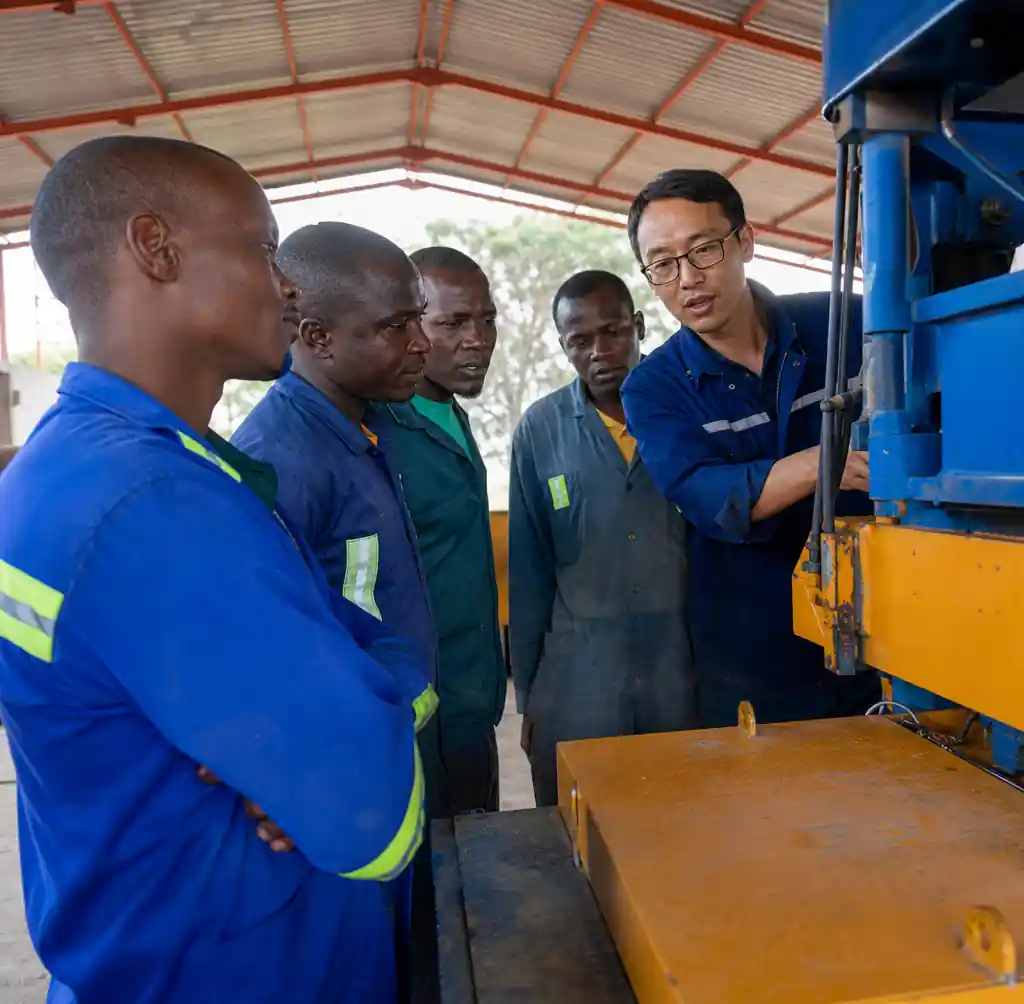
- Operator training (3-5 workers, 2-3 days)
- Production parameter optimization
- Troubleshooting guidance
Duration: 3-5 days (manual/semi-automatic), 7-14 days (automatic lines), 15-25 days (complete plants with batching systems)
Costs You Must Cover
International Travel:
- Round-trip airfare (China to your country): $800-$1,800 per person
- Visa fees: $50-$200
- Airport transfers: $50-$150
Accommodation:
- Hotel: $40-$100 per night per person
- Meals: $30-$60 per day per person
- Total accommodation: $400-$1,200 for typical 5-7 day visit
Local Transportation:
- Site visits: $30-$80 per day
- Emergency equipment purchases: $100-$300
Daily Allowance: Some contracts specify $50-$100 daily allowance for technician.
Total Installation Support Cost: $1,000-$3,500 depending on location, duration, and number of technicians.
Maximizing Technician Visit Value
Preparation Before Arrival:
- Complete foundation (concrete cured 28 days)
- Install electrical supply (verify voltage/amperage)
- Arrange raw materials (cement, sand, aggregate) for test production
- Have tools ready (spanners, levels, lifting equipment)
- Prepare worker team for training
During Visit:
- Take detailed photos/videos of assembly process
- Document all calibration settings and parameters
- Ask about common issues and solutions
- Request written troubleshooting guide
- Train backup operators, not just one person
Poor Preparation Impact: If foundation not ready or power not available, technician waits while you pay accommodation. Costs mount at $150-$250 per idle day.
FAQ: Block Machine Shipping to Africa
How long does shipping take from China to Africa?
Sea freight averages 25-35 days depending on route. East Africa (Mombasa/Dar es Salaam): 25-32 days. West Africa (Lagos/Tema): 28-35 days. Southern Africa (Durban): 30-38 days. Add 5-15 days for customs clearance and 1-3 days for inland transport. Total door-to-door: 35-55 days.
What’s the best Incoterm for first-time machinery importers?
CIF (Cost, Insurance, Freight) provides good balance—manufacturer handles ocean shipping and insurance, you handle customs clearance. Simpler than FOB while maintaining cost visibility. For complete production lines above $80,000, consider DDP if manufacturer has strong local logistics partners.
Can I avoid import duties on block making machines?
Legitimate exemptions exist in many countries for capital equipment supporting manufacturing. Ethiopia offers 0% duty under investment incentives. Nigeria’s ECOWAS provisions allow 0% for qualifying industrial machinery. Kenya/EAC reduced rates for manufacturing equipment. Apply through investment authorities 45-60 days before import. Undervaluation attempts risk cargo seizure and penalties.
Which African port has fastest customs clearance?
Djibouti and Tema (Ghana) consistently clear machinery in 5-8 days with proper documentation. Dar es Salaam processes efficiently in 5-10 days. Durban (South Africa) clears in 5-9 days with SABS certification. Mombasa faces severe congestion in 2026 with 10-14 day delays. Lagos requires 10-18 days due to extensive documentation scrutiny.
Do I need a customs broker or can I clear the machine myself?
Customs broker strongly recommended. African customs procedures are complex with specific documentation requirements, duty calculations, inspection protocols. Brokers cost $200-$500 but prevent costly errors. DIY clearance risks misclassification penalties, extended delays ($50-$150 daily demurrage), and missing duty exemption opportunities worth $1,000-$5,000.
What documents does the manufacturer provide?
Standard package: Commercial Invoice, Packing List, Bill of Lading (3 originals), Certificate of Origin, Quality Certificate, CE/ISO certificates, machine manual, spare parts list. Request additional documents for your destination: Form E Certificate (China-Africa trade preferences), equipment specifications for standards certification, insurance declaration (if you arrange insurance).
How much should I budget beyond the FOB machine price?
Budget 40-60% above FOB for total landed cost. For $15,000 FOB semi-automatic machine: Shipping $3,000-$5,000 (20-33%), duties and taxes $2,500-$4,500 (17-30%), port fees and clearance $1,200-$2,000 (8-13%), installation $1,500-$2,500 (10-17%). Total: $23,200-$28,500. Percentage decreases for expensive automatic lines, increases for landlocked countries.
What insurance coverage should I get?
ICC-A (All Risk) coverage for machinery above $15,000. Premium: 0.4-0.8% of cargo value. Insure 110% of CIF value. Covers physical loss/damage during ocean transit except war and strikes. ICC-B acceptable minimum for budget constraints. Avoid ICC-C—inadequate for mechanical equipment. Verify policy covers port handling and inland transport to your factory.
Conclusion
Successfully shipping block making machines to Africa requires understanding far more than ocean freight rates. The complete import process—documentation, customs procedures, port navigation, duty optimization, and logistics coordination—adds 40-60% to your FOB machine investment and 35-55 days to delivery timelines.
Smart importers start planning 60 days before shipment: securing import licenses, arranging pre-shipment inspections, engaging experienced customs brokers, and applying for legitimate duty exemptions. Proper preparation prevents the costly port delays and demurrage charges that plague unprepared buyers.
Choose your shipping route strategically based on port efficiency, not just proximity. In 2026, Mombasa’s severe congestion makes Dar es Salaam or Djibouti attractive alternatives for East African destinations. Tema and Durban offer more predictable clearance than some regional ports.
Raytone Block Machinery has shipped over 7,000 machines to 100+ countries, including extensive African experience in Ethiopia, Kenya, Nigeria, South Africa, Ghana, Tanzania, and Zambia. We provide detailed shipping guidance, connect you with reliable freight forwarders, supply all required documentation, and offer comprehensive installation support.
Our machines are engineered for challenging African conditions—dust protection, heat resistance, power fluctuation tolerance, and operation with varying raw material quality. From compact manual machines suitable for remote sites to high-capacity automatic production lines for industrial scale, we deliver complete solutions tailored to African markets.
Contact us for detailed quotations including CIF pricing to your nearest port, specific customs documentation for your country, and connections to trusted logistics partners in your region.