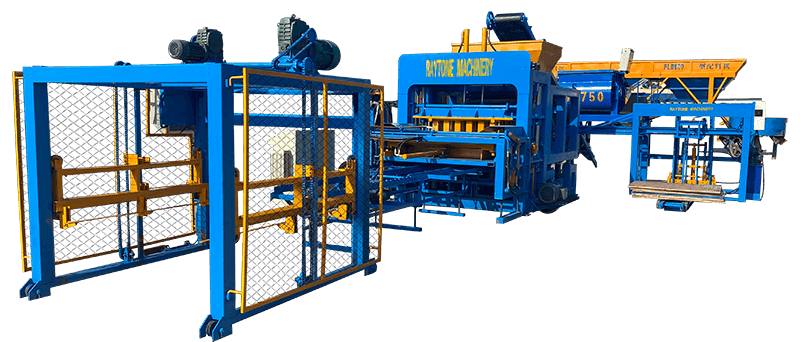






Nigeria’s construction sector grew 3.1% in 2026 following 5.3% growth in 2025, driven by government housing investments and infrastructure projects. Yet cement prices surged from ₦9,500 to ₦10,500-₦11,000 per bag by February 2026, while diesel costs exceed ₦1,400 per liter following subsidy removal. Starting a profitable block making business requires navigating these cost pressures alongside power supply challenges and local competition. This guide provides accurate investment figures, equipment selection criteria, and operational strategies that separate thriving Nigerian block producers from those struggling with losses.
Why Block Making Remains Profitable in 2026
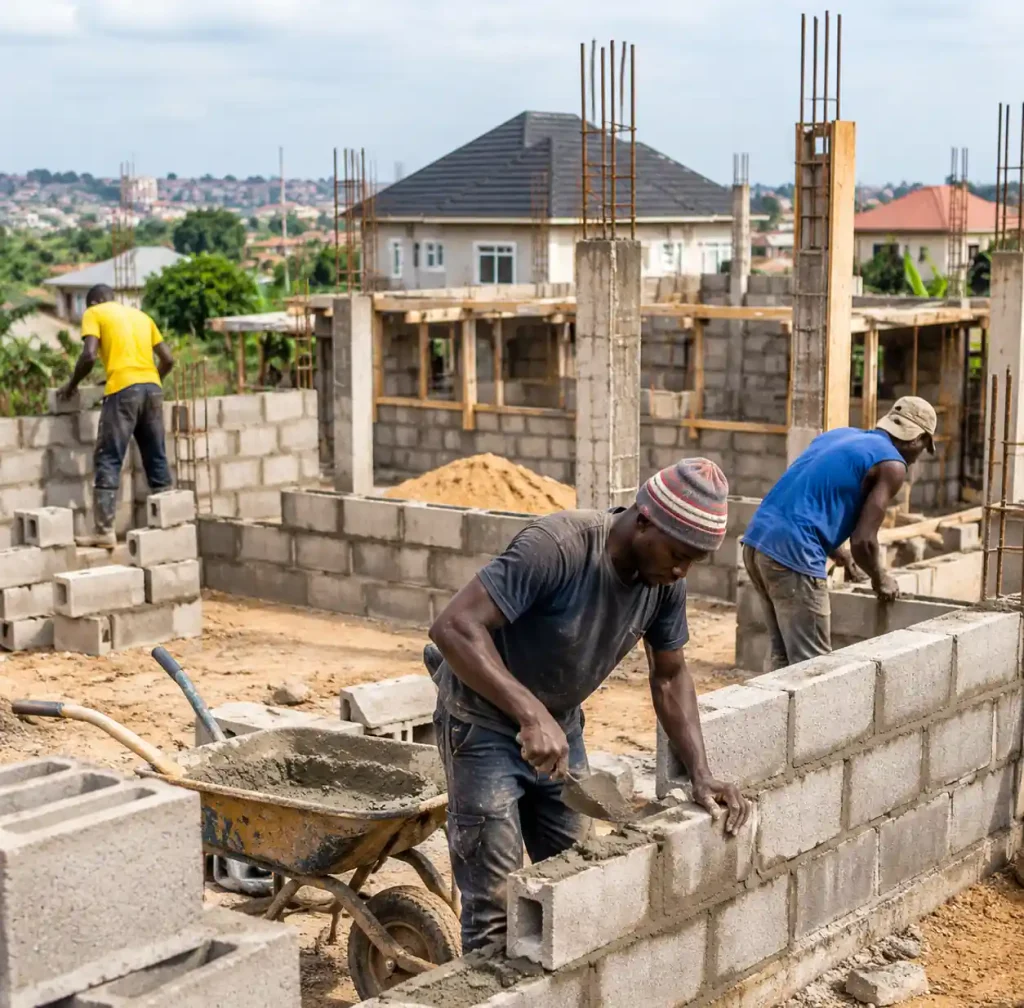
Nigeria’s 22 million unit housing deficit creates sustained demand for concrete blocks, the primary walling material for 85% of construction projects. Government housing initiatives, real estate development in Lagos, Abuja, and Port Harcourt, plus continuous urban expansion ensure quality block producers maintain full order books.
However, success demands managing input cost volatility and power infrastructure limitations that eliminate poorly capitalized operations. Cement price increases added ₦28-₦35 per block to production costs within eight weeks, squeezing margins for producers unable to pass costs to customers with existing price agreements.
Complete Startup Investment Breakdown
Understanding actual costs prevents underestimating working capital requirements. Many startups fail not from lack of demand but insufficient funds to sustain operations through the first 6-8 months while building customer relationships.
| Investment Category | Budget Range (₦) | Budget Range ($) | Notes |
|---|---|---|---|
| Block Making Machine | ₦3,500,000 – ₦9,000,000 | $2,300 – $6,000 | Semi-automatic recommended |
| Land (Rent/Purchase) | ₦500,000 – ₦2,000,000 | $330 – $1,300 | 6-12 months rent minimum |
| Concrete Mixer | ₦800,000 – ₦1,500,000 | $530 – $1,000 | JS500 or JS750 capacity |
| Water Storage & Supply | ₦200,000 – ₦400,000 | $130 – $265 | 2,000-5,000L tanks with pumps |
| Block Pallets (150-200 units) | ₦450,000 – ₦900,000 | $300 – $600 | Wooden or steel pallets |
| Shelter/Roofing | ₦800,000 – ₦1,500,000 | $530 – $1,000 | Three-sided structure |
| Power Backup (Generator) | ₦1,200,000 – ₦2,500,000 | $800 – $1,650 | 15-25 kVA generator |
| Initial Raw Materials | ₦800,000 – ₦1,500,000 | $530 – $1,000 | Cement, sand, granite |
| Tools & Equipment | ₦300,000 – ₦500,000 | $200 – $330 | Wheelbarrows, shovels, tools |
| Registration & Licensing | ₦150,000 – ₦300,000 | $100 – $200 | CAC registration, permits |
| Working Capital | ₦1,000,000 – ₦2,000,000 | $660 – $1,300 | 2-3 months operations |
| TOTAL INVESTMENT | ₦9,700,000 – ₦22,100,000 | $6,400 – $14,600 | Complete setup |
These figures reflect February 2026 market conditions in Lagos, Ogun, and Abuja. Northern states like Kaduna and Kano typically see 10-15% lower costs for land and labor.
Equipment Selection: Matching Machines to Nigerian Conditions
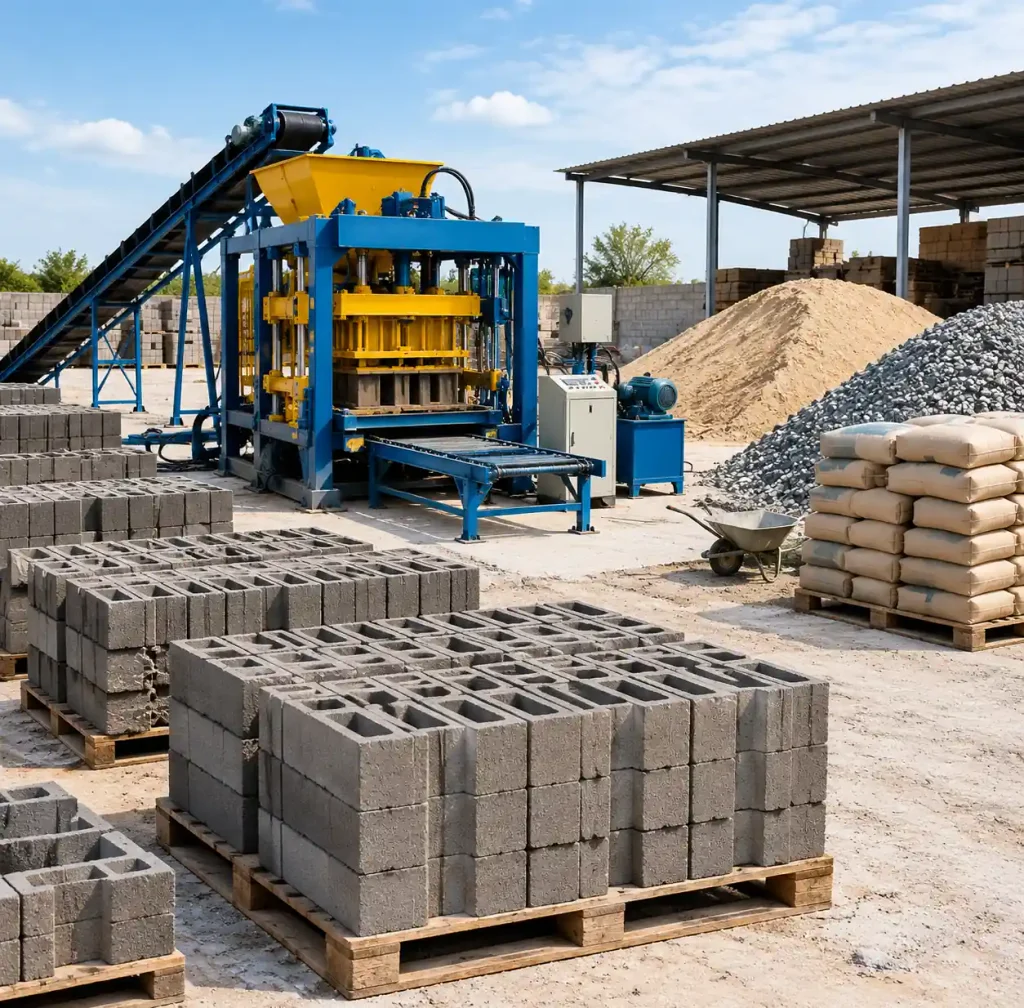
Equipment choice determines production capacity, labor costs, and ability to handle Nigeria’s power infrastructure challenges.
Manual Block Machines: ₦1,500,000 – ₦3,500,000
Manual machines suit rural locations with low-cost labor and unreliable electricity, producing 300-600 blocks per shift with 4-6 workers. The QT4-40 produces 960-1,200 blocks daily, adequate for small operations, but quality varies with operator technique and most producers outgrow manual capacity within 12-18 months.
Semi-Automatic Machines: ₦3,500,000 – ₦9,000,000 (Recommended)
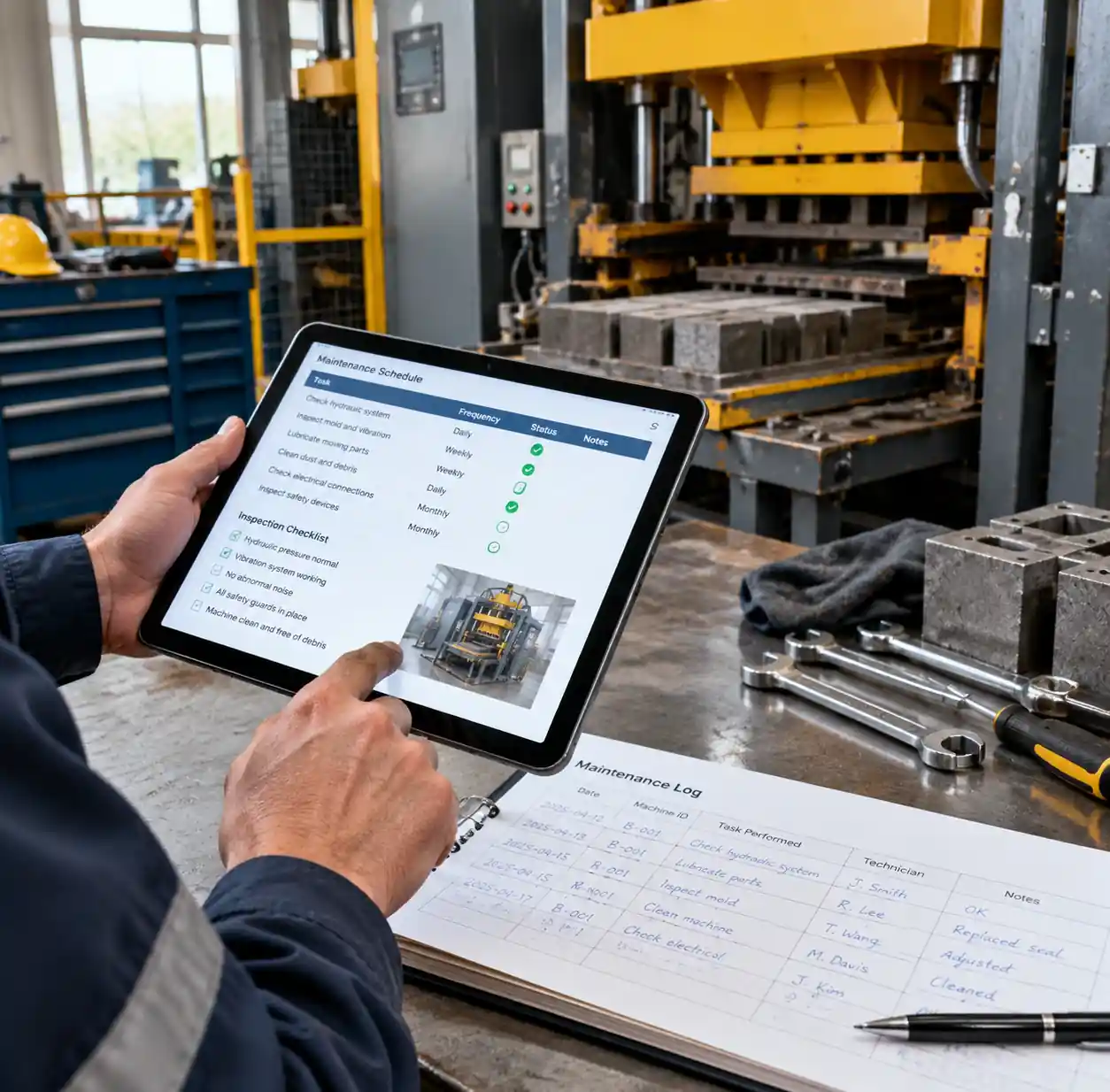
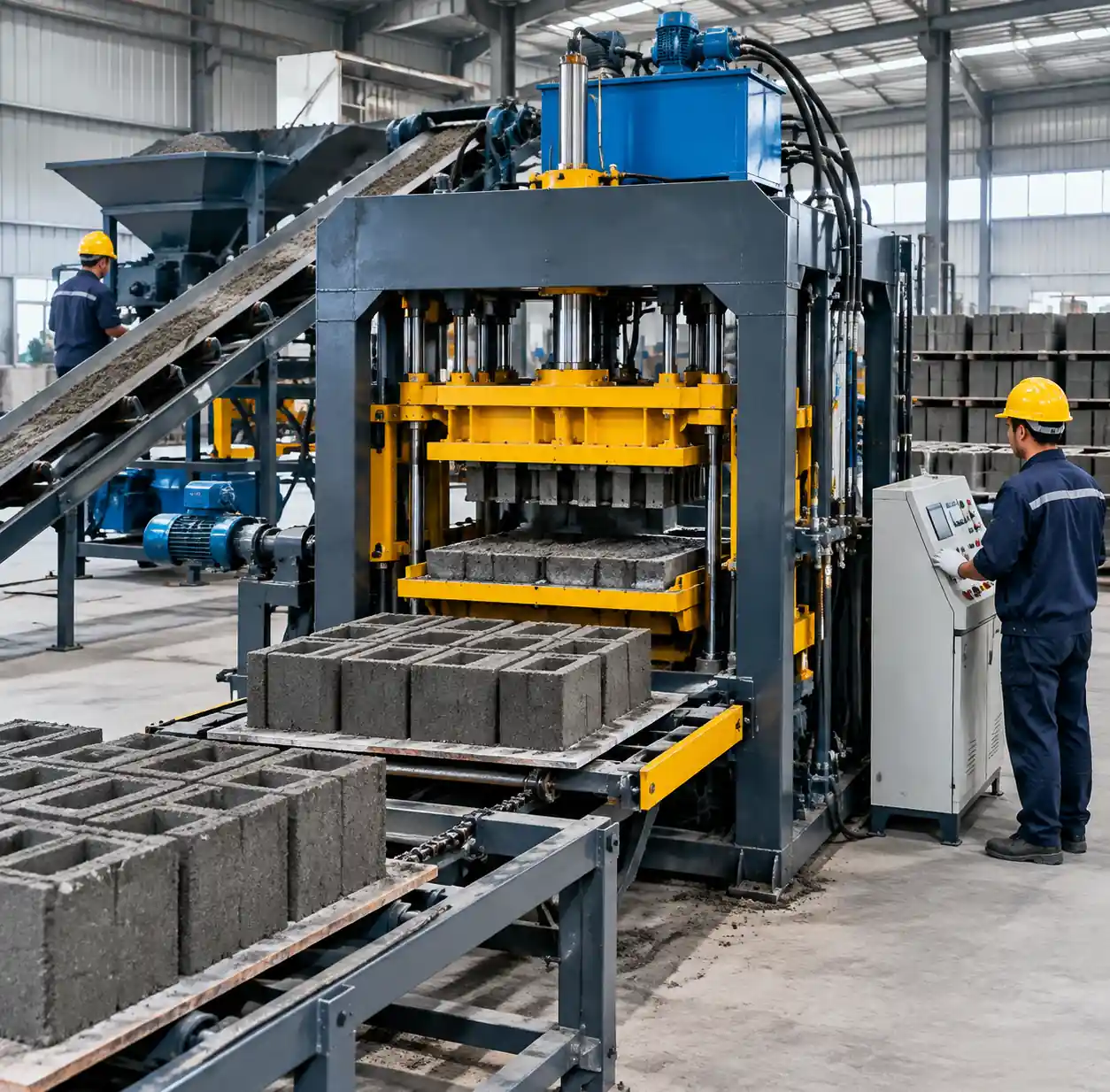
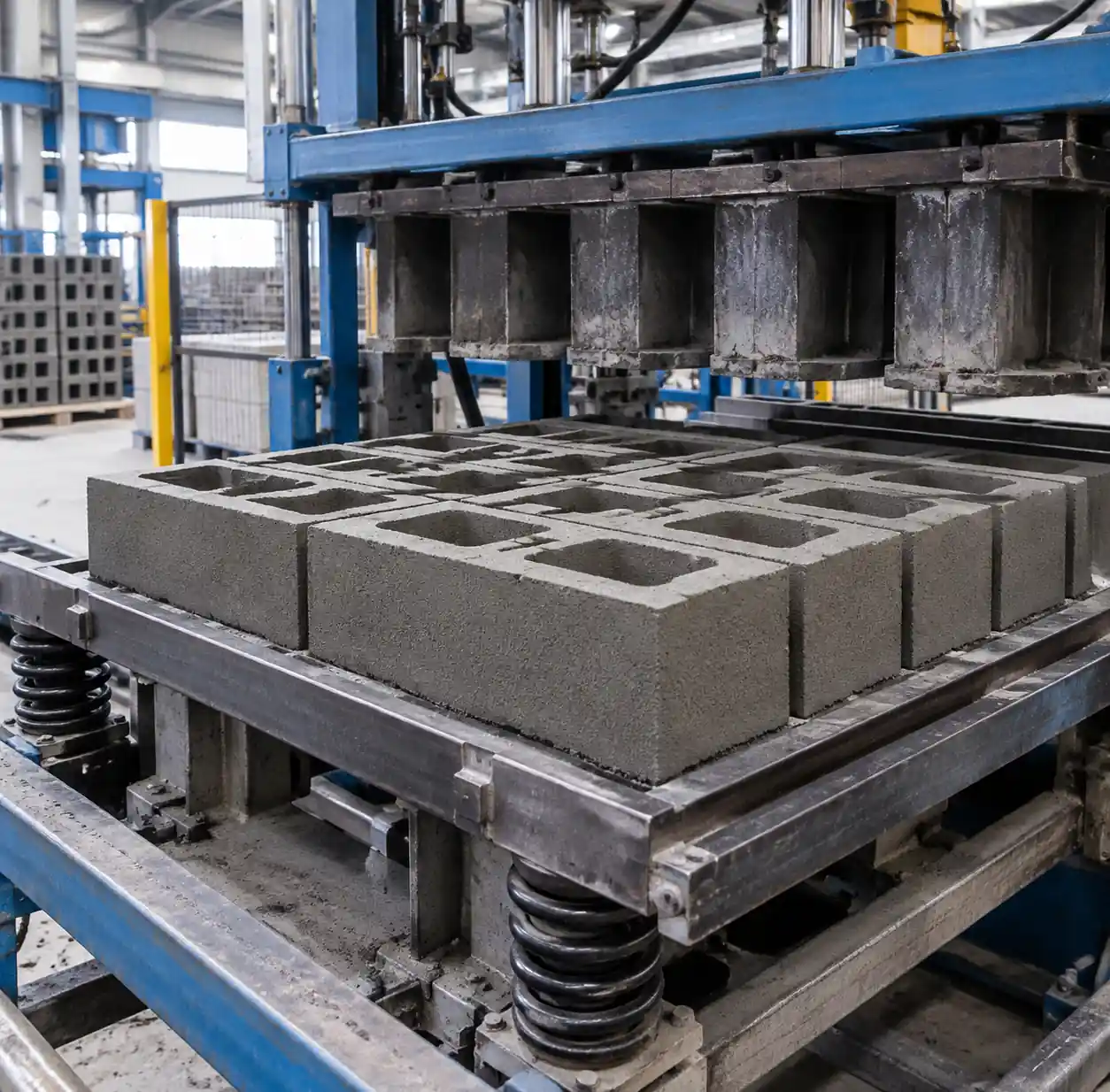
Semi-automatic machines offer optimal balance for Nigerian conditions, producing 800-2,000 blocks per shift with 2-4 workers. The QT4-24 runs on single-phase 220V power available in most locations, eliminating three-phase power requirements that limit automatic machines.
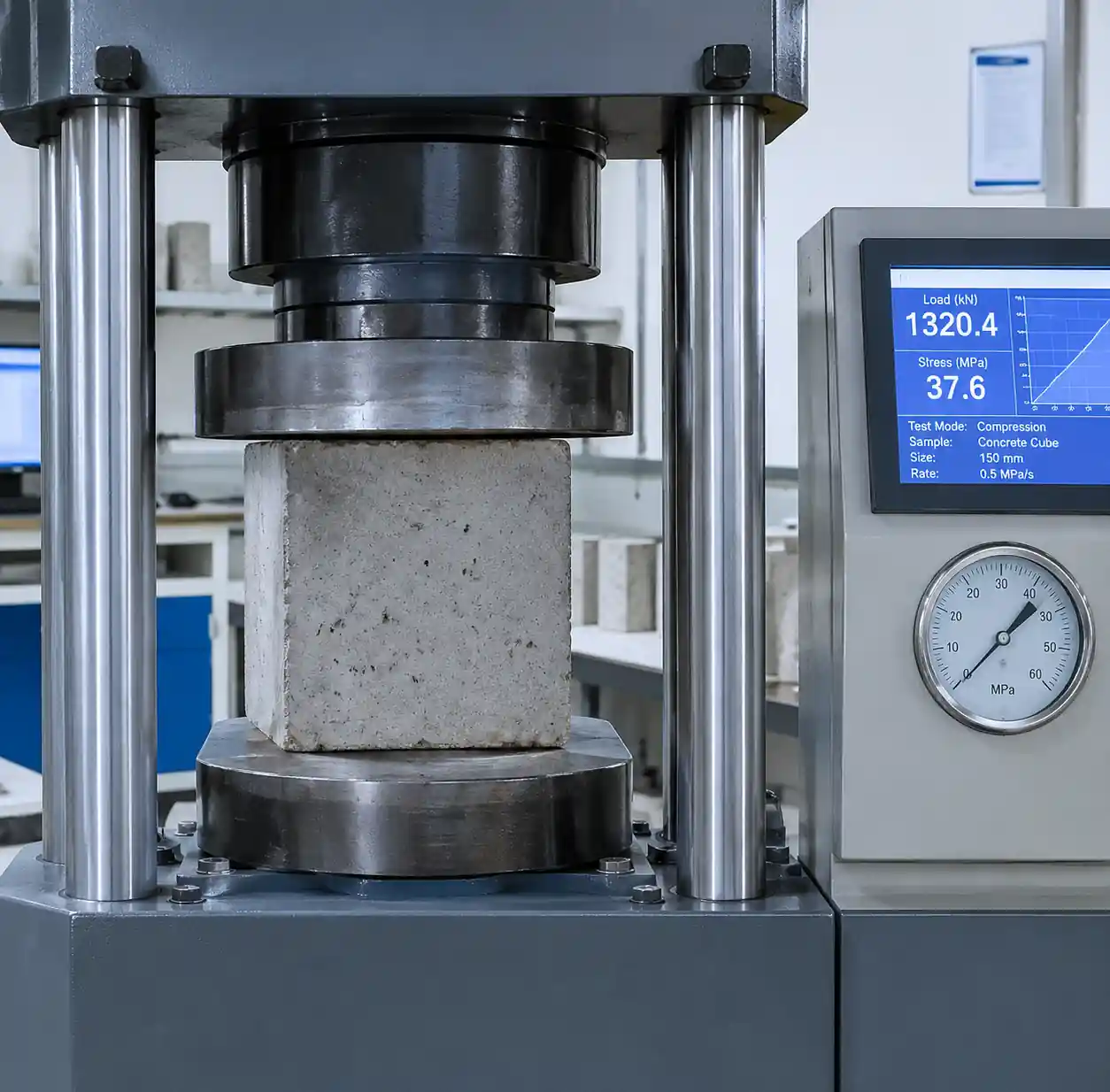
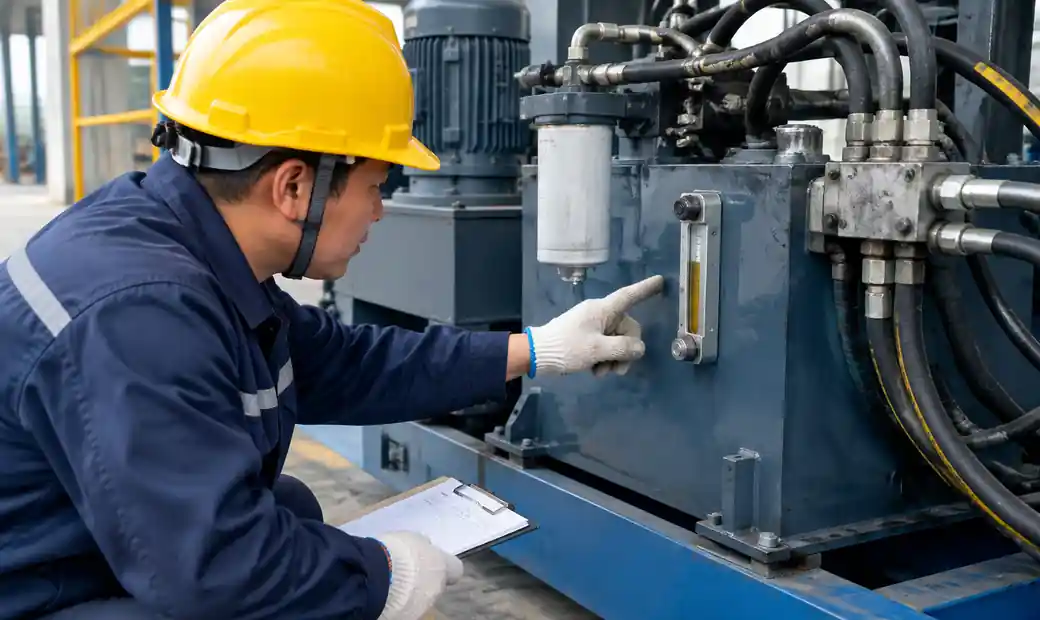
Hydraulic compression delivers consistent 18-22 MPa compressive strength meeting SONCAP standards. For Nigerian conditions specifically, semi-automatic machines handle voltage fluctuations better than PLC-controlled systems. Local technicians service hydraulic components, while automatic machine repairs often require factory technicians unavailable outside major cities. The 12-18 month ROI timeline allows reinvestment before major maintenance requirements.
Fully Automatic Machines: ₦12,000,000 – ₦60,000,000
Automatic machines produce 3,000-46,000 blocks per shift, suiting large-scale operations with secured contracts. However, three-phase 380V power requirements and backup generators costing ₦4,000,000-₦8,000,000 plus 15-25 liters hourly diesel consumption at ₦1,400+ per liter make these economically viable only for contractors managing multiple housing estates or precast manufacturers serving regional markets.
Raw Material Costs and Production Economics
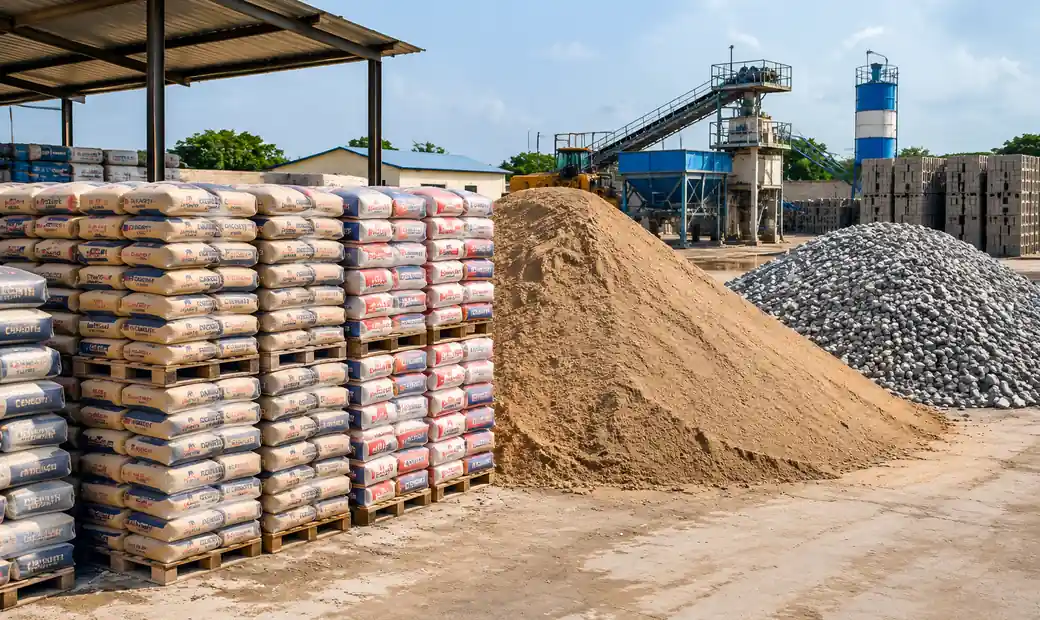
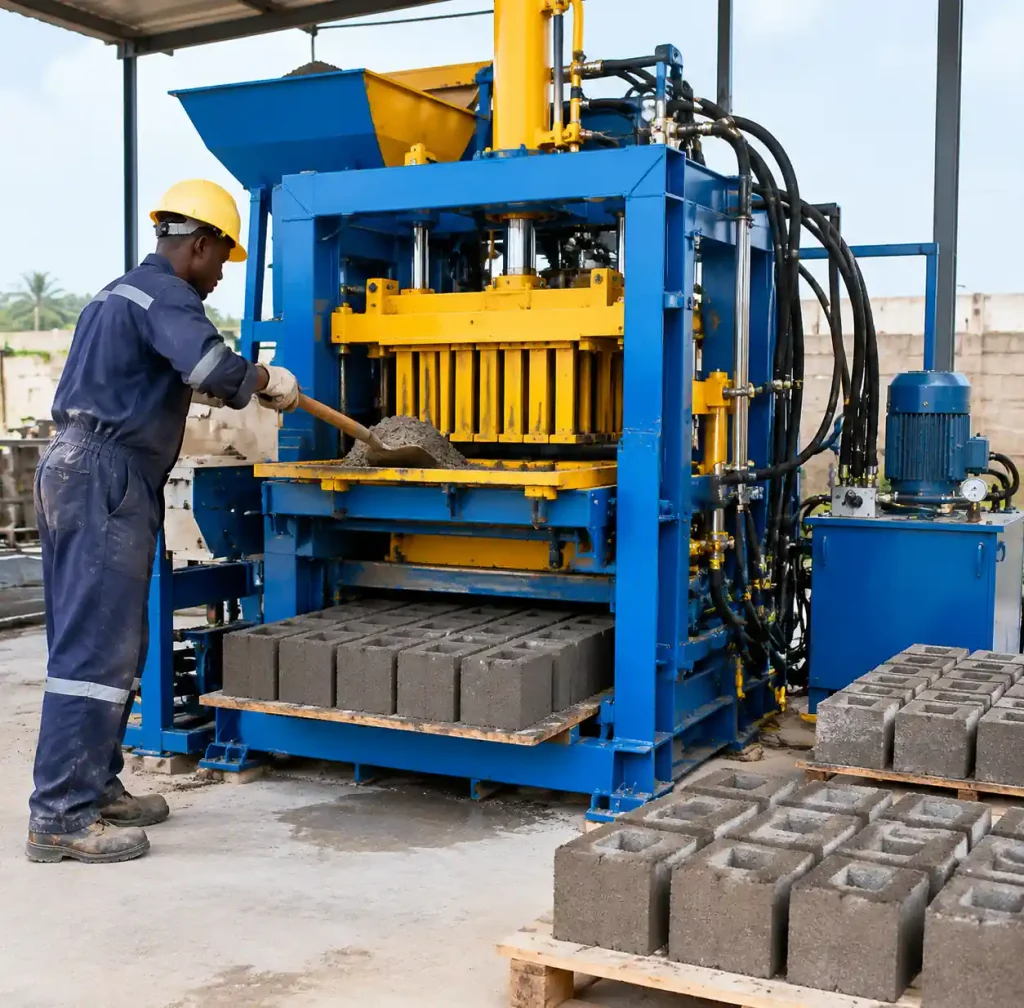
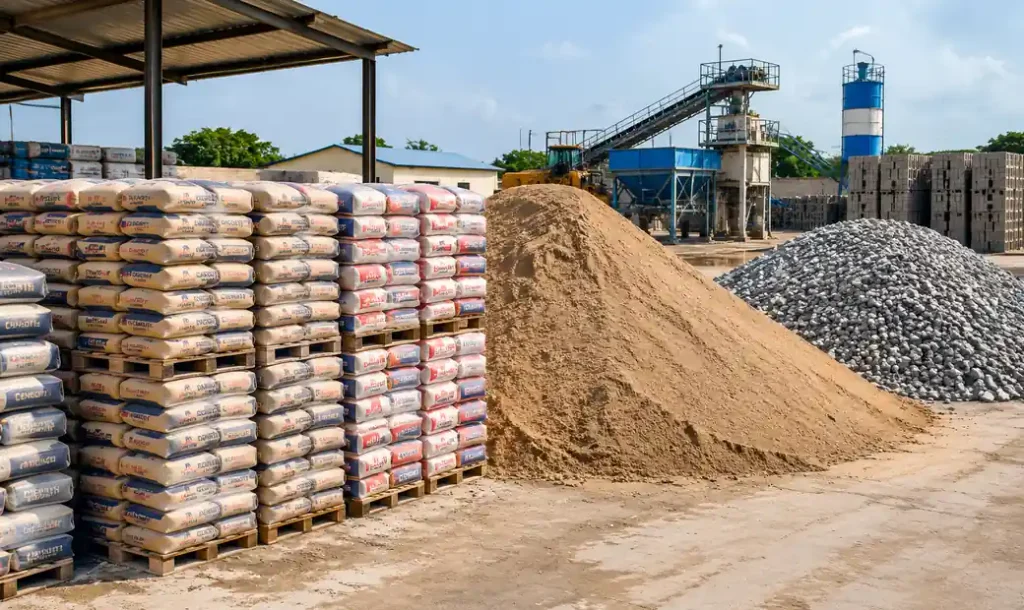
Raw materials represent 65-75% of production costs, with cement accounting for 45-55% of total block cost.
Standard Block Production Formula
For 400mm × 200mm × 200mm hollow blocks (9-inch):
Material Quantities per Block:
- Cement: 0.28-0.35 kg (₦96-₦130 per block at ₦10,500/bag)
- Sharp sand: 1.8-2.2 kg (₦18-₦25 per block)
- Granite chips: 2.5-3.0 kg (₦22-₦30 per block)
- Water: 0.25-0.30 liters
- Total raw material cost: ₦136-₦185 per block
You can produce 140-180 blocks per 50kg cement bag using 8-10% cement content, delivering 18-20 MPa strength for residential construction. Reducing cement below 8% saves ₦15-₦20 per block but produces weak blocks failing compressive tests.
Cement Sourcing Strategy
February 2026 prices across major brands:
| Brand | Price per 50kg Bag | Regional Availability |
|---|---|---|
| Dangote Cement | ₦10,500 – ₦10,600 | Nationwide distribution |
| BUA Cement | ₦10,600 – ₦10,700 | Strong in North |
| Lafarge (Unicem) | ₦10,600 – ₦10,700 | Major cities only |
Bulk purchasing directly from distributors saves ₦300-₦500 per bag when buying 100+ bags monthly. Establishing credit terms with suppliers manages cash flow during the 30-60 day payment cycles common with contractors.
Power Supply: Nigeria’s Critical Challenge
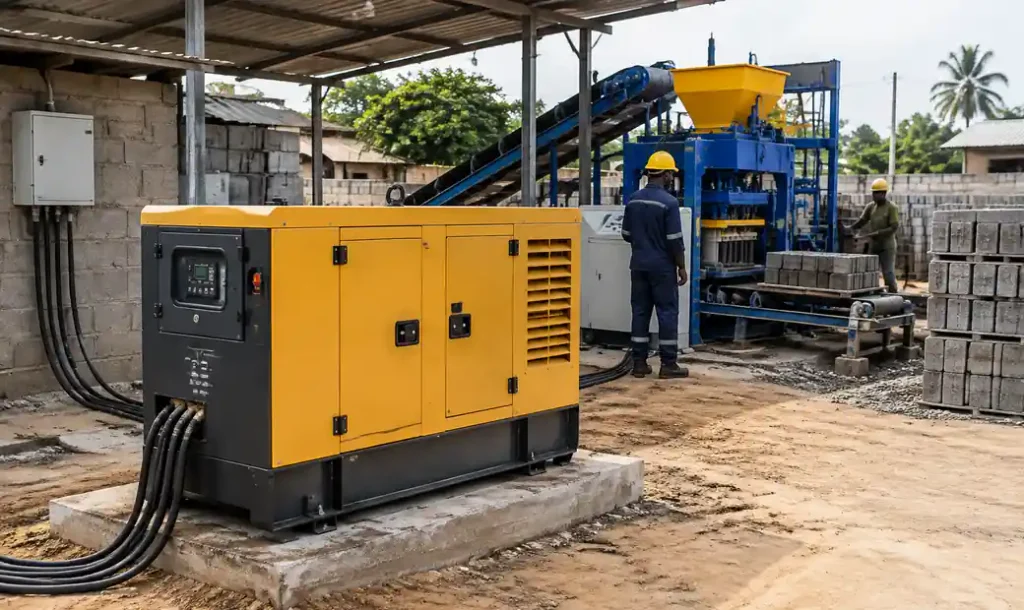
Grid electricity remains unreliable across Nigeria. Lagos and Abuja experience 4-8 hour daily outages, while rural locations see 12-16 hour blackouts. Most block producers rely primarily on diesel generators.
Generator Economics for Block Production
Semi-Automatic Operation (15 kVA Generator):
- Generator cost: ₦1,200,000 – ₦1,800,000
- Diesel consumption: 3-4 liters per hour
- Daily fuel cost (8 hours): ₦33,600-₦44,800 (at ₦1,400/liter)
- Monthly fuel expense: ₦840,000-₦1,120,000
Fully Automatic Operation (30-40 kVA Generator):
- Generator cost: ₦3,500,000 – ₦5,500,000
- Diesel consumption: 8-12 liters per hour
- Monthly fuel expense: ₦2,240,000-₦3,360,000
Fuel costs following subsidy removal now rival labor expenses. Some producers explore hybrid solar-diesel systems reducing fuel consumption by 40-60%, though requiring ₦4,000,000-₦8,000,000 upfront investment. Diesel block machines operate completely off-grid but add ₦35-₦50 per block to production costs.
Complete Cost Breakdown and Pricing Strategy
Production Cost Per Block (400mm × 200mm × 200mm Hollow Block)
Direct Materials: ₦138-₦188 (cement, sand, granite, water)
Direct Labor: ₦8-₦12 (2-4 workers producing 1,000-1,500 blocks daily)
Operating Costs: ₦33-₦53 (diesel/electricity, maintenance, pallets)
Overhead: ₦12-₦18 (rent, licensing, supervision, transport)
TOTAL PRODUCTION COST: ₦191-₦271 per block
Market Pricing (Lagos, Ogun, Abuja – February 2026)
| Block Type | Production Cost | Wholesale Price | Retail Price | Profit Margin |
|---|---|---|---|---|
| 9-inch Hollow | ₦191-₦271 | ₦350-₦450 | ₦450-₦550 | 29-35% wholesale |
| 6-inch Hollow | ₦165-₦235 | ₦300-₦380 | ₦380-₦470 | 28-32% wholesale |
| Solid Block | ₦245-₦340 | ₦450-₦580 | ₦580-₦700 | 29-33% wholesale |
| Interlocking Pavers | ₦280-₦390 | ₦550-₦750 | ₦750-₦950 | 40-48% wholesale |
Wholesale targets contractors buying 1,000+ blocks. Most profitable operations focus on wholesale volume with select retail customers paying cash.
Location and Facility Requirements
Ideal Location Characteristics
Proximity to Construction: Within 15-25 km of active housing estates. Delivery costs increase ₦15-₦30 per block beyond 30 km.
Raw Material Access: Near quarries or sand deposits reduces transport costs by ₦8-₦15 per block.
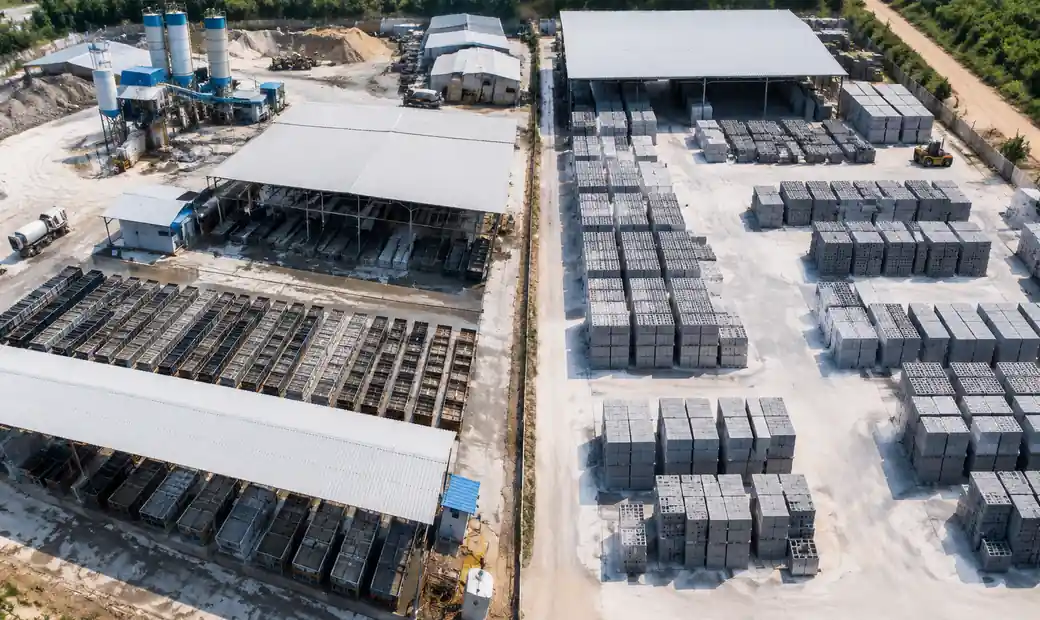
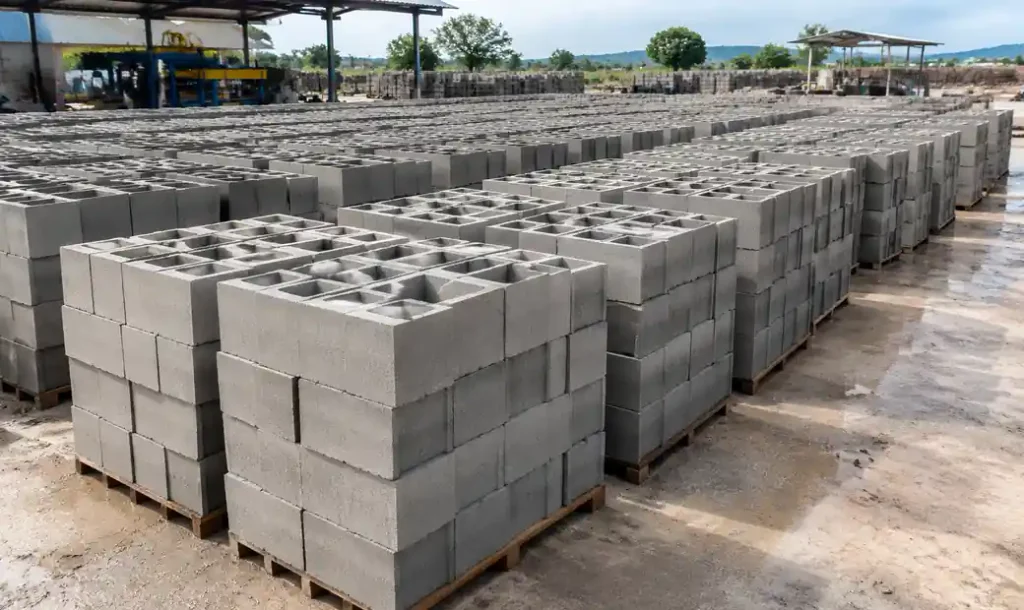
Land Size: Minimum 400-600 square meters including machine area (40-60 sqm), raw material storage (80-120 sqm), curing area (180-280 sqm), and finished block storage (40-60 sqm).
High-Potential Areas (2026)
Lagos-Ogun Corridor: Epe, Ibeju-Lekki, Mowe-Ibafo, Sagamu serve Lagos construction with lower land costs.
Abuja Outskirts: Lugbe, Kubwa, Kuje support continuous expansion.
Port Harcourt Area: Eleme, Obio-Akpor serve Rivers State with less competition.
Avoid saturated markets where 8-12 producers already serve small customer bases.
Business Registration and Legal Requirements
CAC Registration: ₦50,000-₦120,000 for business name or limited company registration, completed in 2-4 weeks.
Required Licenses: Local environmental permit (₦30,000-₦80,000 annually), SON certification for quality compliance (₦100,000-₦200,000), tax identification number (free).
Insurance: General liability (₦80,000-₦150,000), equipment insurance (₦120,000-₦250,000), employer’s liability if 5+ workers (₦60,000-₦100,000).
Large contractors and government agencies require SONCAP certification before awarding contracts exceeding 50,000 blocks.
Marketing and Customer Acquisition
Direct Sales to Contractors (70% of Revenue)
Build relationships with small contractors (1,000-5,000 blocks per project), medium contractors (10,000-50,000 blocks for housing estates), and real estate developers (50,000-200,000+ blocks requiring credit terms).
Visit construction sites, introduce yourself to site engineers and contractors, leave block samples with contact information. Follow up within 3-5 days.
Payment Terms Structure
Cash on delivery: 5-10% discount improves cash flow
30-day terms: Standard for established relationships
Progress payments: 40% deposit, 40% at midpoint, 20% completion for large orders
Avoid: 60-90 day terms trap working capital
Require deposits from new customers. Extend credit gradually as payment history proves reliability.
Competitive Advantages
Quality Consistency: Blocks meeting 20 MPa strength win premium contracts through proper cement ratios and adequate curing.
Delivery Reliability: On-schedule delivery earns loyalty as contractors face penalties for delays.
Product Variety: Offering hollow blocks, solid blocks, and interlocking pavers captures more opportunities.
ROI and Profitability Timeline
Months 1-3 (Startup): Production of 800-1,200 blocks daily, revenue ₦840,000-₦1,620,000 monthly, usually negative profit while recovering startup costs and building contractor relationships.
Months 4-8 (Growth): Production increases to 1,200-1,800 blocks daily, revenue ₦1,440,000-₦2,430,000 monthly, profit ₦180,000-₦450,000 monthly (12-18% margins) as efficiency improves.
Months 9-18 (Established): Production reaches 1,500-2,000 blocks daily at full capacity, revenue ₦1,890,000-₦2,700,000 monthly, profit ₦380,000-₦730,000 monthly (20-27% margins) with repeat customers.
ROI Achievement: Semi-automatic operations recover initial investment within 14-20 months at 65-75% capacity utilization with effective cost control.
FAQ
How much capital do I need to start a block making business in Nigeria?
You need ₦9,700,000-₦22,100,000 ($6,400-$14,600) for complete setup including semi-automatic machine, mixer, generator, land, raw materials, and working capital for 2-3 months. Smaller manual operations start with ₦5,000,000-₦8,000,000 but face severe production limits. Underestimating working capital causes most early failures—budget for 3 months operations before expecting positive cash flow.
What is the profit margin on block production in Nigeria?
Wholesale margins range 28-35% per block after all costs. A 9-inch hollow block costs ₦191-₦271 to produce and sells wholesale for ₦350-₦450. Monthly profits for established operations producing 1,500-2,000 blocks daily reach ₦380,000-₦730,000. However, the February 2026 cement price jump from ₦9,500 to ₦10,500 per bag reduced margins by 4-6 percentage points for producers unable to raise prices immediately.
Can I run a block making business without reliable electricity?
Yes, but at significantly higher operating costs. Most Nigerian producers rely on diesel generators, adding ₦840,000-₦1,120,000 monthly fuel costs for semi-automatic operations. Diesel-powered mobile machines operate completely off-grid for remote locations. Hybrid solar-diesel systems reduce fuel consumption by 40-60% but require ₦4,000,000-₦8,000,000 initial investment. Grid power, where available, reduces energy costs by 30-45% compared to full diesel generation.
How long does it take to learn block making?
Operating semi-automatic machines requires 2-3 days basic training covering mix ratios, machine operation, and curing procedures. Workers with mechanical aptitude learn quickly, while unskilled operators need 2-3 weeks supervised production. Business management, quality control, and customer relationship building require 6-12 months to develop through experience.
What are the biggest challenges in block making business?
Raw material cost volatility (especially cement price fluctuations), power supply unreliability driving up operating costs, intense local competition compressing margins, and managing customer payment cycles that trap working capital. Successful producers address these through bulk cement purchasing, proper generator sizing and fuel management, quality focus differentiating from competitors, and strict credit policies protecting cash flow.
Which block type is most profitable to produce?
Interlocking pavers deliver 40-48% wholesale margins compared to 28-35% for standard hollow blocks, but market demand is smaller. Most profitable operations focus on 9-inch hollow blocks for volume (65-75% of sales) while offering 6-inch hollow blocks and solid blocks to serve diverse needs. Adding interlocking pavers as a premium line captures higher margins from landscaping applications using mold changes costing ₦300,000-₦800,000 per set.
Do I need SON certification to sell blocks in Nigeria?
SON certification isn’t legally mandatory for all sales but becomes essential for government contracts, large construction companies, and quality-conscious developers requiring proof your blocks meet Nigerian Industrial Standards (NIS 87:2007) for compressive strength and dimensional accuracy. Certification costs ₦100,000-₦200,000 but opens access to higher-value contracts. Small-scale operations serving individual builders often operate without certification initially, adding it as business scales.
Conclusion
Nigeria’s block making business offers genuine profit potential for entrepreneurs who understand operational realities. The construction sector’s 3.1% growth in 2026 and massive housing deficit create sustained demand, but success requires managing cement price volatility, power infrastructure challenges, and competitive pressures through disciplined operations.
Semi-automatic machines deliver optimal economics for Nigerian contexts, combining hydraulic precision with operational simplicity and manageable power requirements. Budget ₦9,700,000-₦22,100,000 for complete startup including adequate working capital, focus on quality consistency meeting 18-20 MPa compressive strength, and build direct contractor relationships generating steady volume orders. Expect 14-20 month ROI timelines at 65-75% capacity utilization with proper cost control.
If you need reliable block making equipment designed for Nigerian power conditions and operational requirements, Raytone Block Machinery supplies semi-automatic and fully automatic machines serving producers across Nigeria. Our QT4-24 semi-automatic model operates on single-phase 220V power available in most locations, producing 1,200-1,800 blocks daily with proven durability under Nigerian conditions. Contact us today for equipment specifications, pricing, and technical guidance for your block making operation.