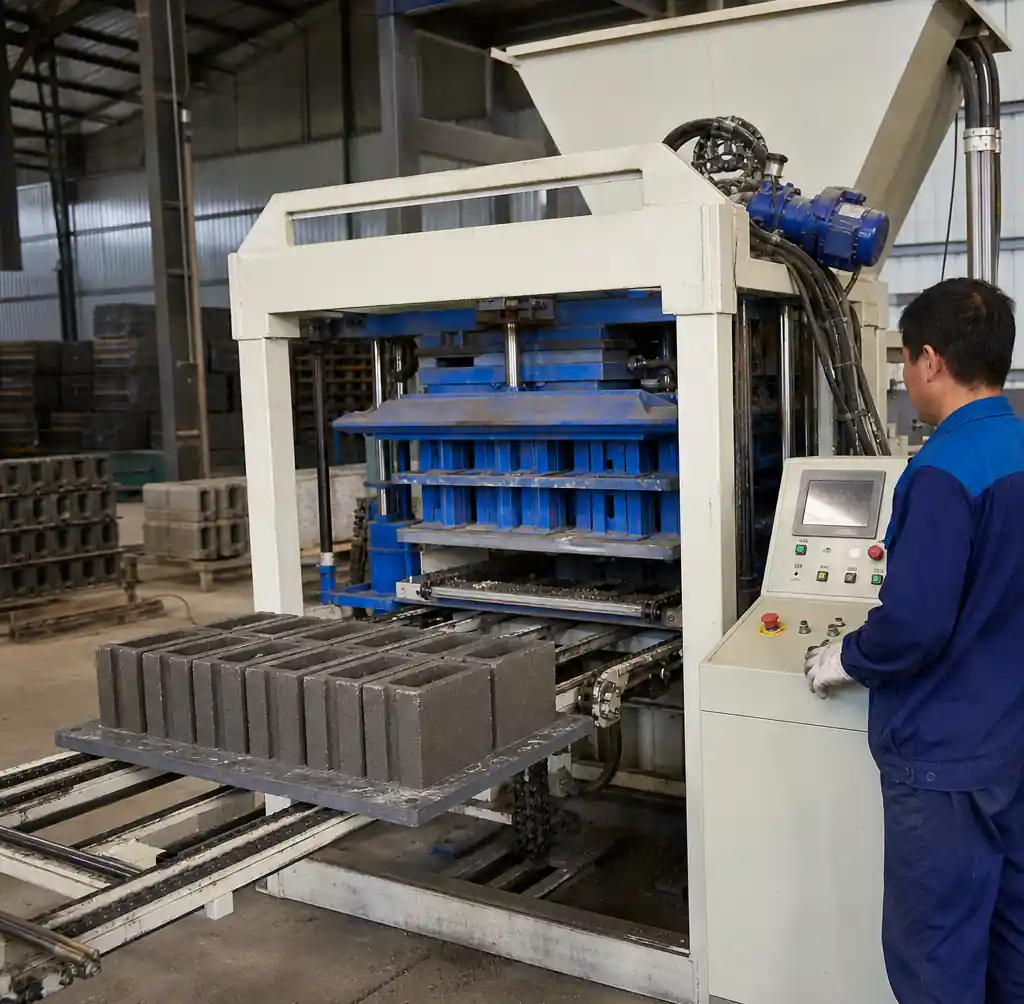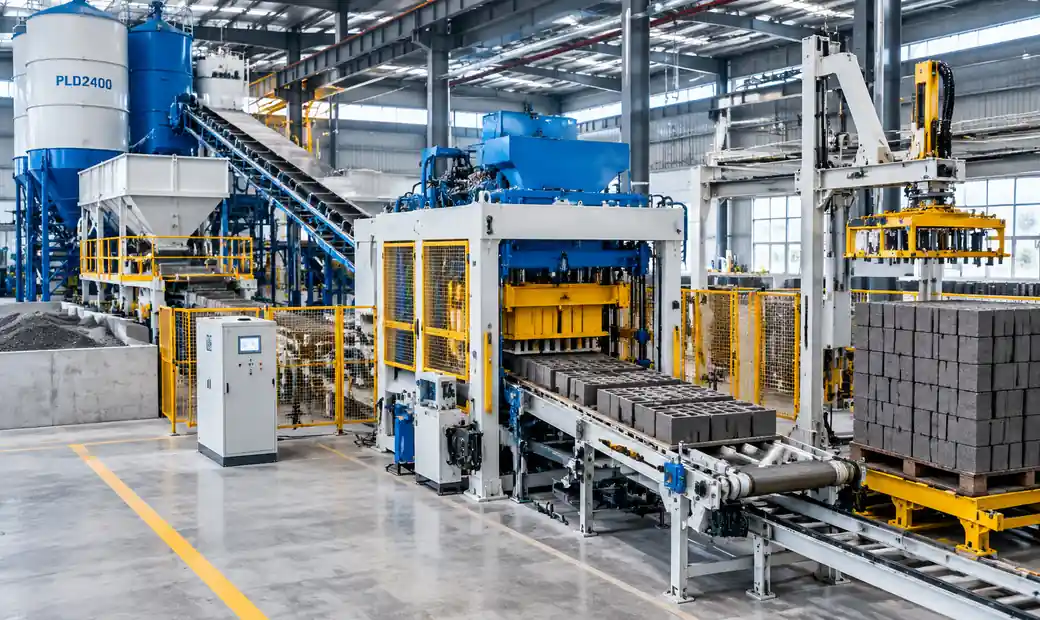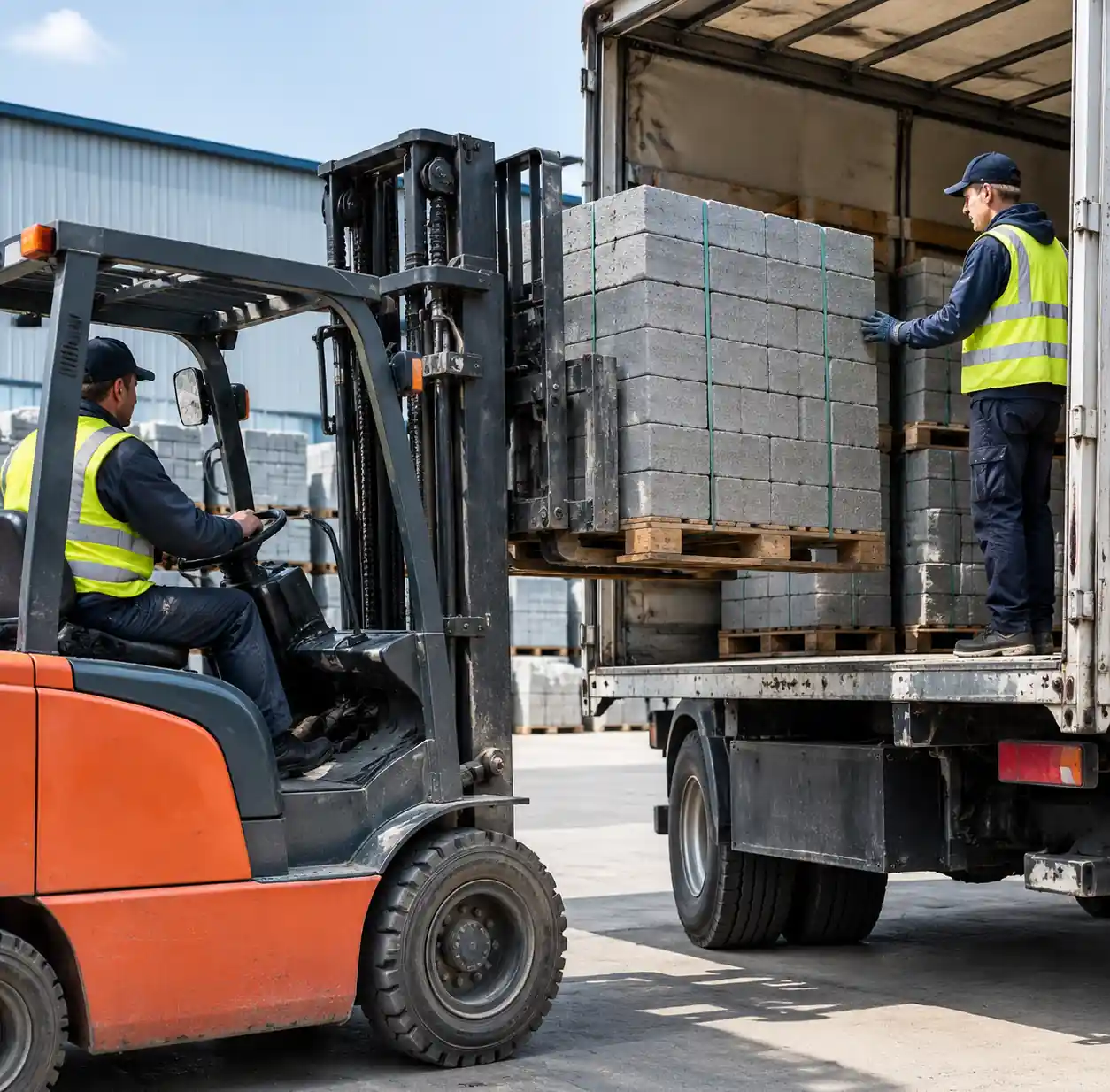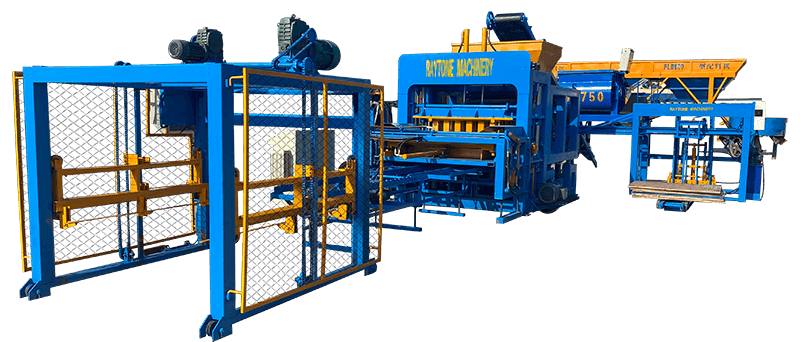






Proper maintenance isn’t just about preventing breakdowns—it’s about protecting your investment and maintaining consistent production quality. After years of supporting manufacturers worldwide, we’ve seen how systematic maintenance can extend equipment life by 40-60% while reducing unplanned downtime by up to 75%. This guide shares the maintenance protocols that separate profitable operations from costly ones.
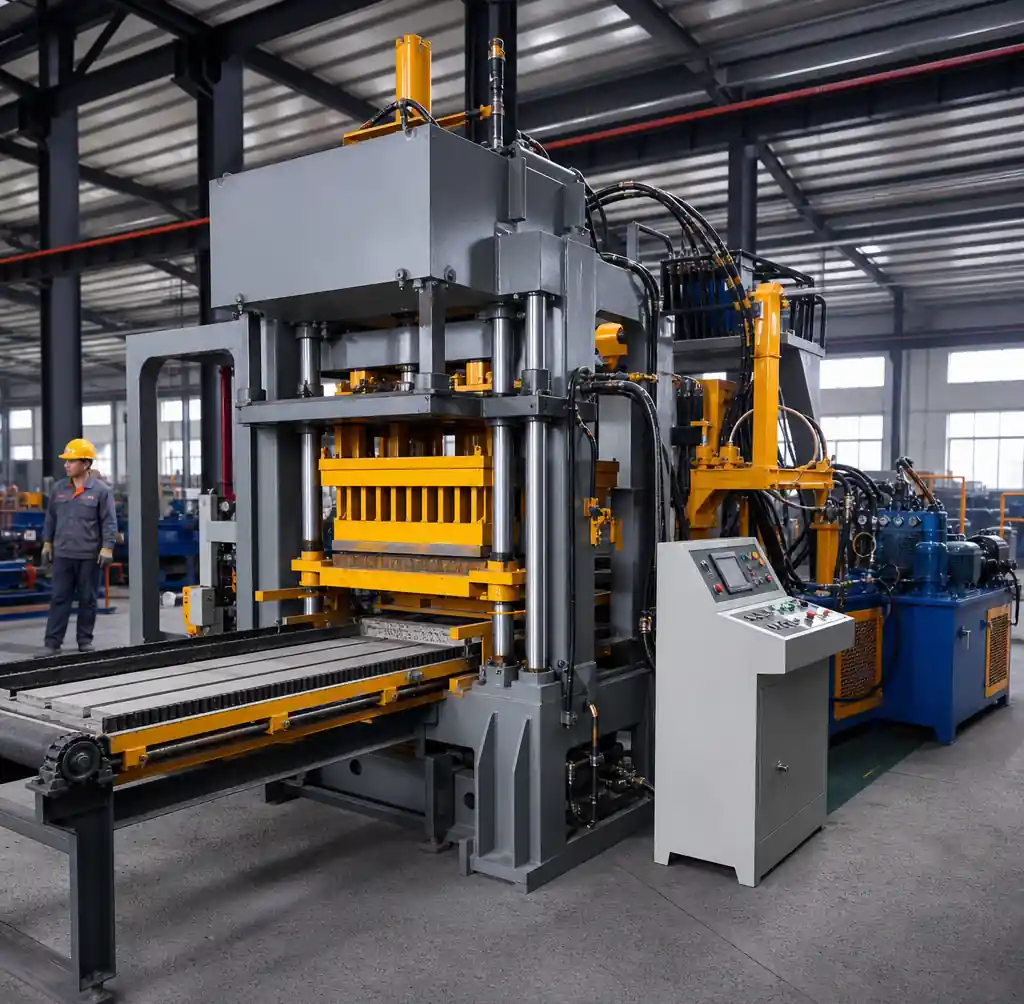
Why Block Machine Maintenance Matters More Than You Think
Most operators underestimate maintenance impact until they face a critical failure during peak production. A single hydraulic system failure can cost $15,000-$30,000 in repairs plus production losses exceeding $50,000 weekly for mid-sized operations. Beyond immediate costs, neglected maintenance accelerates wear patterns that compound over time, reducing block quality consistency and increasing reject rates.
The machines running 16+ hours daily face exponentially higher stress than those operating 8-hour shifts. Without proper maintenance intervals, high-production environments see component failures 3-4 times faster than expected service life ratings suggest.
Critical Maintenance Zones That Demand Daily Attention
Hydraulic System Integrity
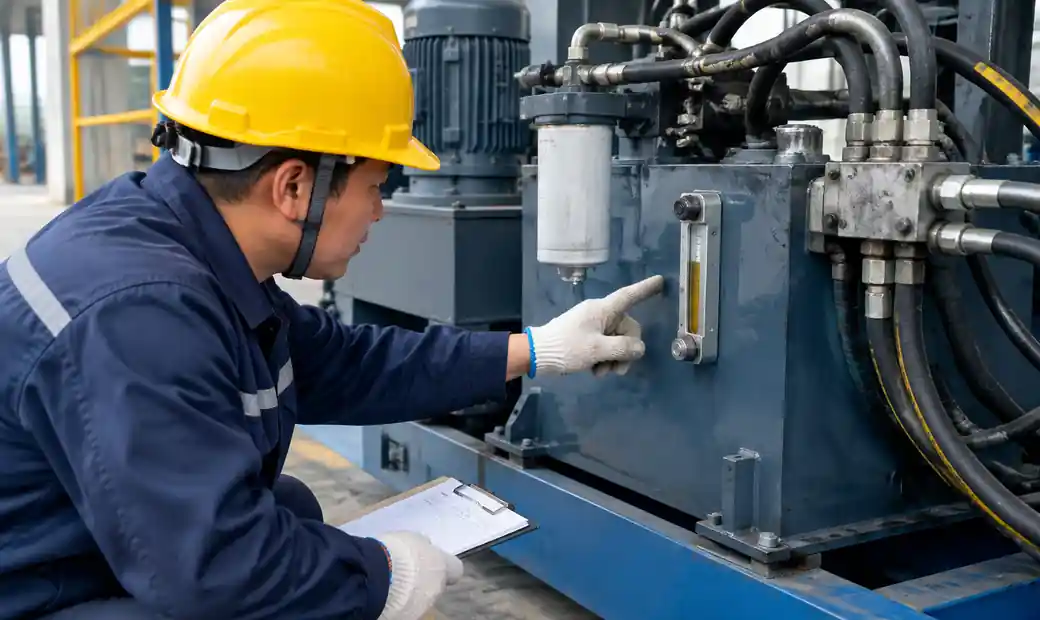
Your hydraulic system is the heart of block formation. Oil contamination accounts for 70-80% of hydraulic failures we’ve investigated. Check oil levels before every shift—not just when warning lights appear. Oil should be translucent amber, not cloudy or darkened. Any milky appearance indicates water contamination requiring immediate oil change and seal inspection.
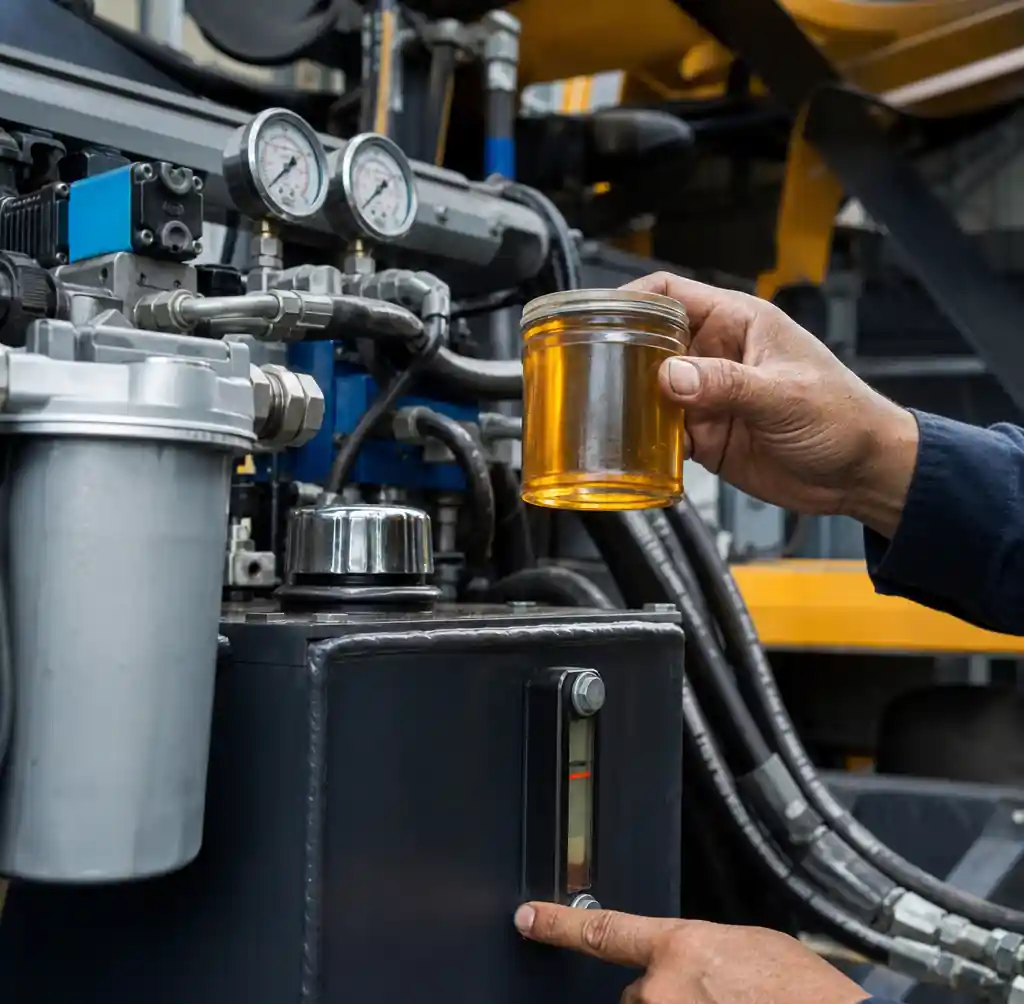
Monitor system pressure during operation. Pressure fluctuations beyond ±5% of normal operating range signal developing problems. Common causes include failing pump seals, clogged filters, or accumulator bladder degradation. Catching these early prevents cascade failures that damage multiple components.
Replace hydraulic filters every 500 operating hours minimum, or more frequently in dusty environments. We’ve seen operations extend filter life “to save costs” only to spend 10x more replacing pumps damaged by contaminated oil. Quality filtration at 10-micron absolute rating protects against the abrasive particles that cause 90% of hydraulic component wear.
Mold and Vibration Table Care
Mold condition directly impacts block quality and machine stress levels. Clean molds thoroughly after each production run, removing all concrete residue before it hardens. Hardened concrete creates uneven pressure distribution during compaction, forcing hydraulic systems to work harder and accelerating wear on guide posts and bushings.
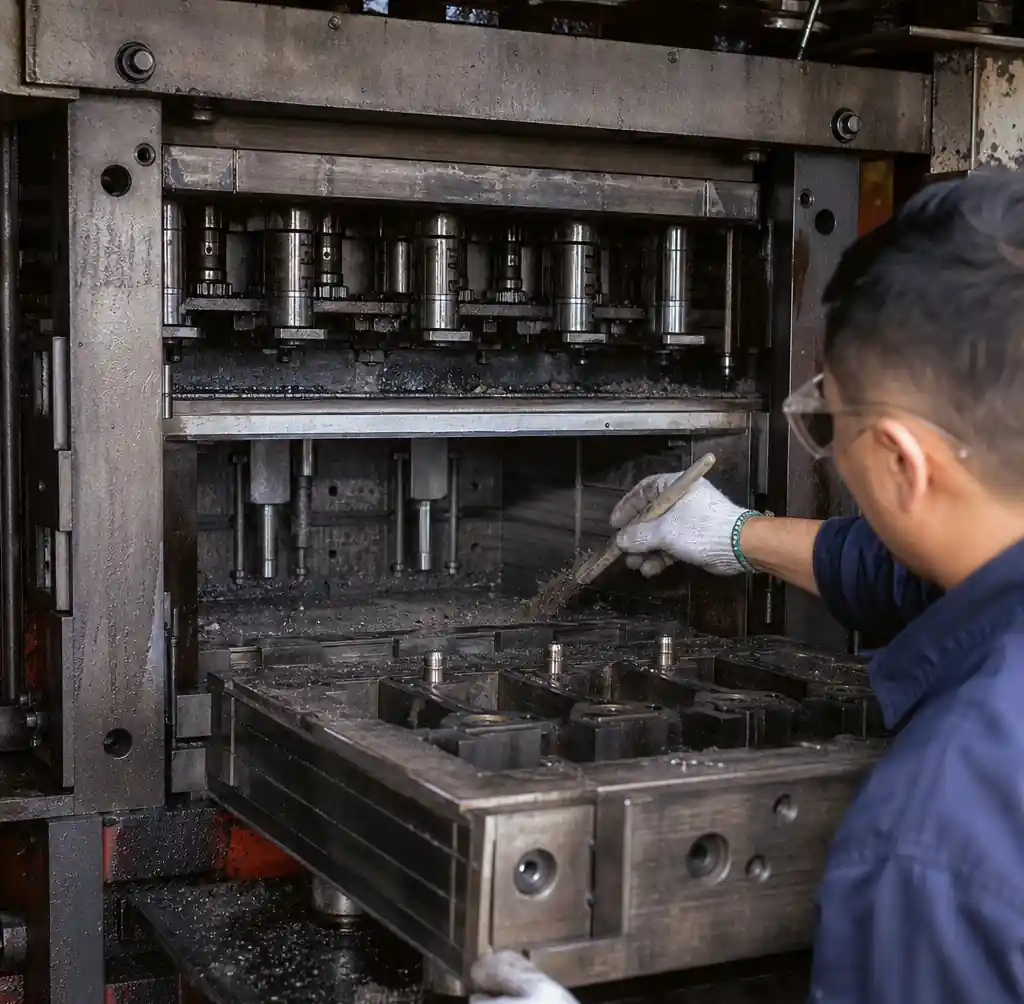
Inspect mold release agent application systems weekly. Inconsistent release agent coverage causes blocks to stick, creating extraction forces 2-3 times higher than design specifications. This overstresses ejector mechanisms and frame components. We’ve tracked operations where poor mold release practices reduced main frame life by 40%.
Vibration table motors require particular attention. Check mounting bolts for looseness weekly—vibration naturally works fasteners loose. A motor mounting bolt failure while operating creates severe damage cascading through the drive system. Bearing noise that increases beyond normal operating sound indicates developing failure. Replace bearings proactively rather than waiting for seizure.
Weekly Maintenance Protocols for Long-Term Reliability
Lubrication Points That Prevent Expensive Failures
Proper lubrication prevents 60% of mechanical failures. Create a lubrication map marking every grease point and oil reservoir with recommended intervals. Guide posts, bushings, chain drives, and pivot points each have specific lubrication requirements—using wrong lubricant types causes problems as serious as inadequate lubrication.
High-pressure grease points on press mechanisms require NLGI Grade 2 lithium complex grease with EP (extreme pressure) additives. Standard automotive greases lack the film strength for press loads exceeding 200 tons. Under-specification here leads to metal-to-metal contact that creates wear patterns requiring component replacement rather than normal maintenance.
Chain drives need proper tension and regular oil application. Chains running too tight consume 15-20% more power and accelerate sprocket wear. Too loose, and they develop shock loading that damages both chain and drive components. Proper tension allows 2-3% slack at chain mid-span between sprockets.
Electrical and Control System Inspection
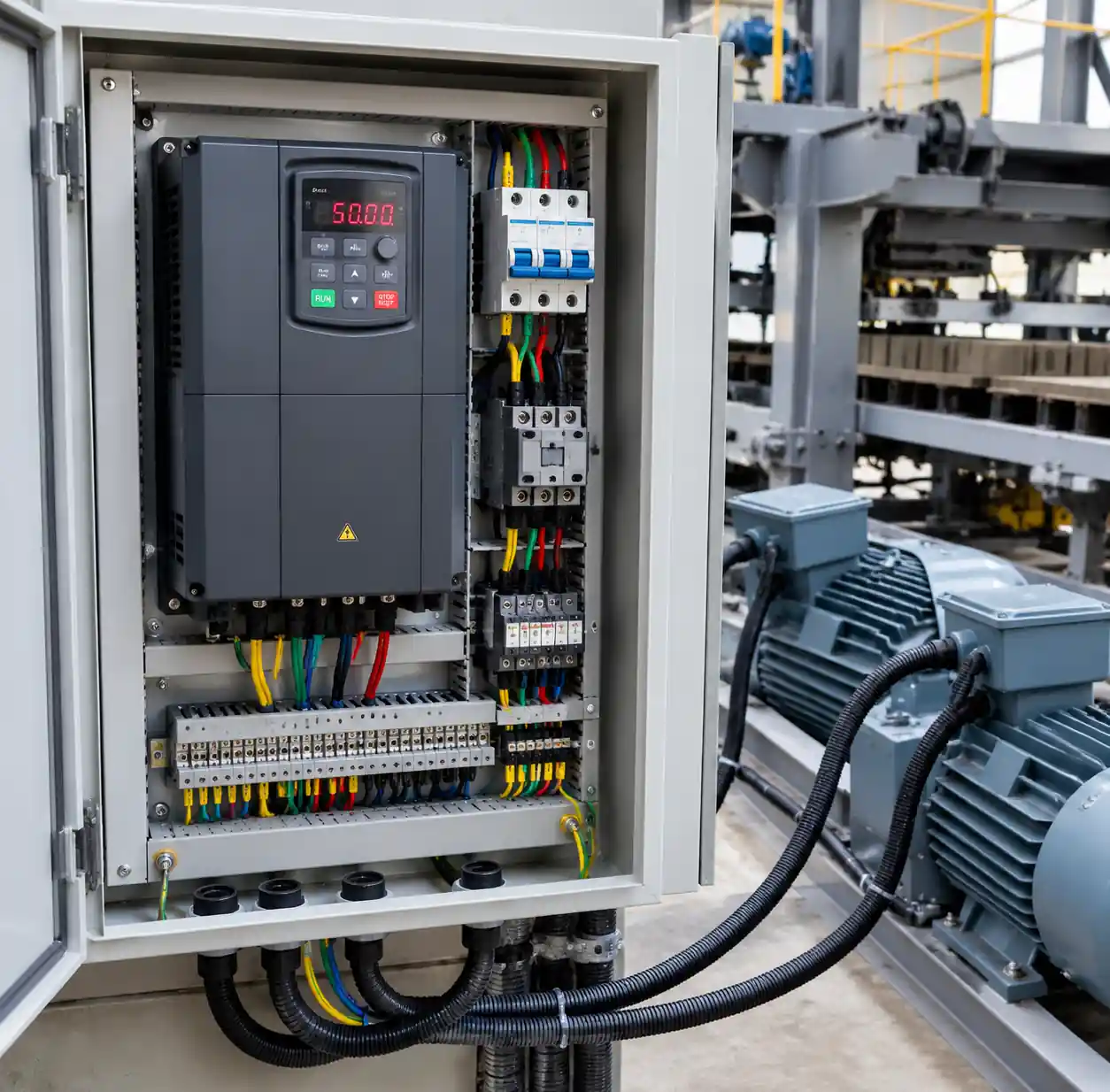
Electrical failures cause 30% of unplanned downtime. Inspect control cabinet interiors monthly for dust accumulation, loose connections, and component overheating signs. Dust acts as insulation, causing electronics to overheat. Electrical connections expand and contract with temperature cycling, working loose over time.
Check sensor calibration quarterly. Position sensors, pressure transducers, and limit switches drift from specification gradually. When sensors drift beyond tolerance, the PLC receives incorrect data, causing timing issues that affect block quality and increase mechanical stress. A limit switch reading 2mm off specification creates repeated mechanical impacts that weren’t designed into the system.
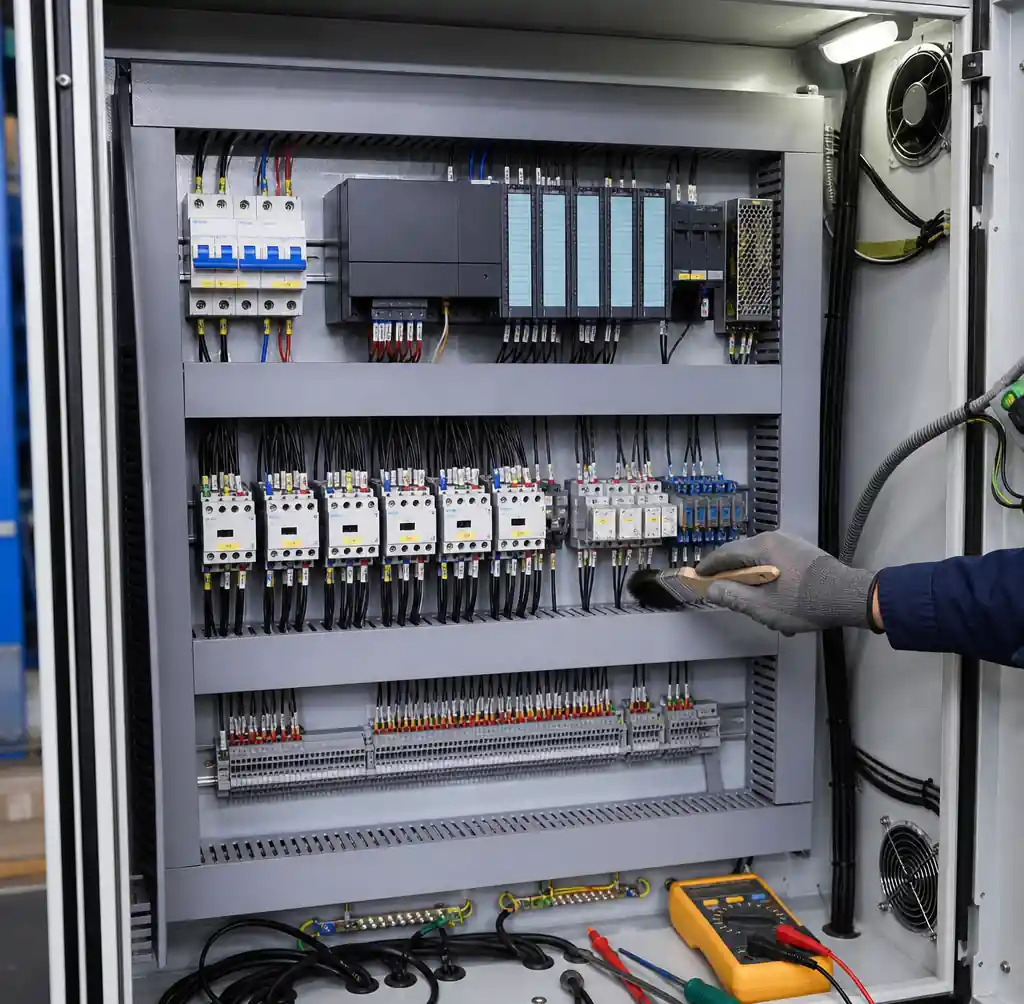
PLC battery replacement is often overlooked until program loss occurs. Most PLC backup batteries last 3-5 years. Mark installation dates and replace proactively. Losing your program during production due to a $30 battery costs thousands in downtime and reprogramming.
Monthly Deep Maintenance Requirements
Structural and Frame Inspection
Frame alignment affects everything downstream. Monthly, inspect the main frame for cracks, especially at welded joints and high-stress points near press cylinders. Micro-cracks propagate slowly until catastrophic failure occurs without warning. Dye penetrant testing on suspect areas provides early detection before structural integrity is compromised.
Check foundation bolt torque quarterly. Production vibration loosens anchor bolts gradually. A loose machine frame creates alignment issues affecting mold operation, increases wear throughout the system, and can cause severe accidents if the machine shifts during operation.
Conveyor and Material Handling Systems
Conveyor belt alignment and roller condition directly impact production flow. Misaligned belts wear edges prematurely and can jam material transfer, creating production stops. Inspect belt tracking weekly and adjust as needed. Replace worn rollers before bearing failure—a seized roller tears belts and can cause material spillage that damages other components.
Belt tension should allow 3-4% sag under no load. Over-tensioned belts overload drive motors and bearings. Under-tensioned belts slip, causing speed variations that affect production timing and quality consistency.
Maintenance Comparison: Reactive vs. Preventive Approach
| Maintenance Aspect | Reactive Maintenance | Preventive Maintenance |
|---|---|---|
| Annual Maintenance Cost | $45,000-$65,000 | $18,000-$25,000 |
| Unplanned Downtime | 15-25 days/year | 2-4 days/year |
| Average Equipment Life | 8-12 years | 15-20 years |
| Block Quality Consistency | Variable, 5-8% reject rate | Stable, 1-3% reject rate |
| Parts Replacement Frequency | Emergency rush orders, 40% premium | Planned orders, standard pricing |
| Eficiência na produção | 70-80% of rated capacity | 90-95% of rated capacity |
| Labor Overhead | High emergency repair costs | Predictable scheduled maintenance |
Component Replacement Intervals by Machine Type
| Component | Fully Automatic | Semi-Automatic | Manual | Signs Requiring Early Replacement |
|---|---|---|---|---|
| Hydraulic Oil | Every 2,000 hrs | Every 1,500 hrs | Every 1,200 hrs | Darkening, contamination, water presence |
| Hydraulic Filters | Every 500 hrs | Every 400 hrs | Every 300 hrs | Pressure differential >15 PSI across filter |
| Main Seals | 8,000-10,000 hrs | 6,000-8,000 hrs | 5,000-7,000 hrs | Any visible leaking, pressure loss |
| Vibration Motor Bearings | 12,000-15,000 hrs | 10,000-12,000 hrs | 8,000-10,000 hrs | Noise increase, temperature rise >15°C |
| Guide Post Bushings | 15,000-20,000 hrs | 12,000-15,000 hrs | 10,000-12,000 hrs | Visible wear, increased play >0.5mm |
| Mold Liners | 500,000-800,000 cycles | 400,000-600,000 cycles | 300,000-500,000 cycles | Surface damage, dimensional changes |
| Chain Drives | 10,000-12,000 hrs | 8,000-10,000 hrs | 6,000-8,000 hrs | Elongation >2%, link binding |
Advanced Maintenance Strategies for High-Volume Operations
Predictive Maintenance Integration
Temperature monitoring on critical components provides early warning of developing failures. Bearing temperatures rising 10-15°C above baseline indicate inadequate lubrication or bearing degradation. Hydraulic oil temperature consistently above 65°C suggests system inefficiency or cooling inadequacy requiring investigation.
Vibration analysis on motors and vibration tables detects bearing wear, imbalance, and misalignment before failure. Portable vibration meters cost $300-$800 and pay for themselves preventing a single major failure. Establish baseline vibration signatures when equipment is new, then compare monthly readings to detect changes.
Oil analysis programs cost $25-$40 per sample but provide detailed contamination and wear metal detection. Analyzing hydraulic oil quarterly identifies component wear before failure. Iron content increase indicates cylinder or pump wear. Silicon increase shows seal degradation or external contamination entry.
Spare Parts Inventory Strategy
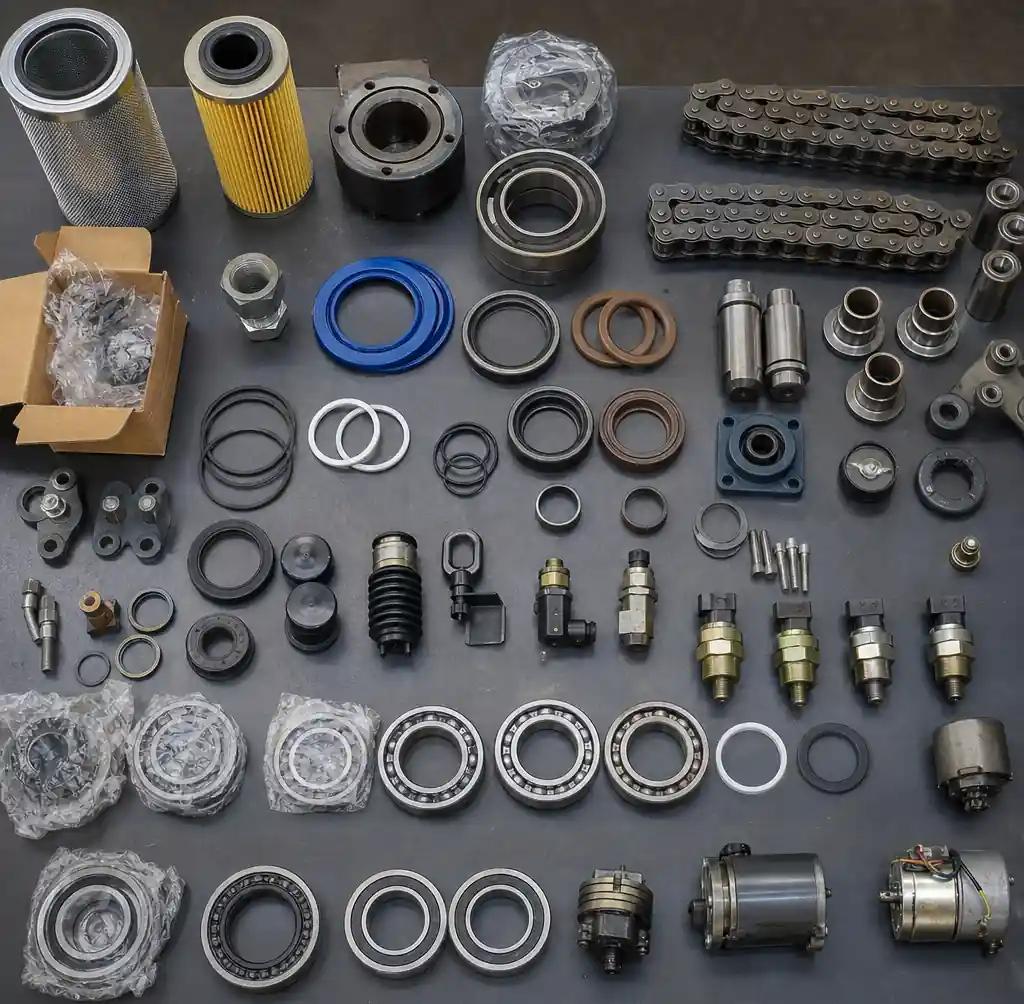
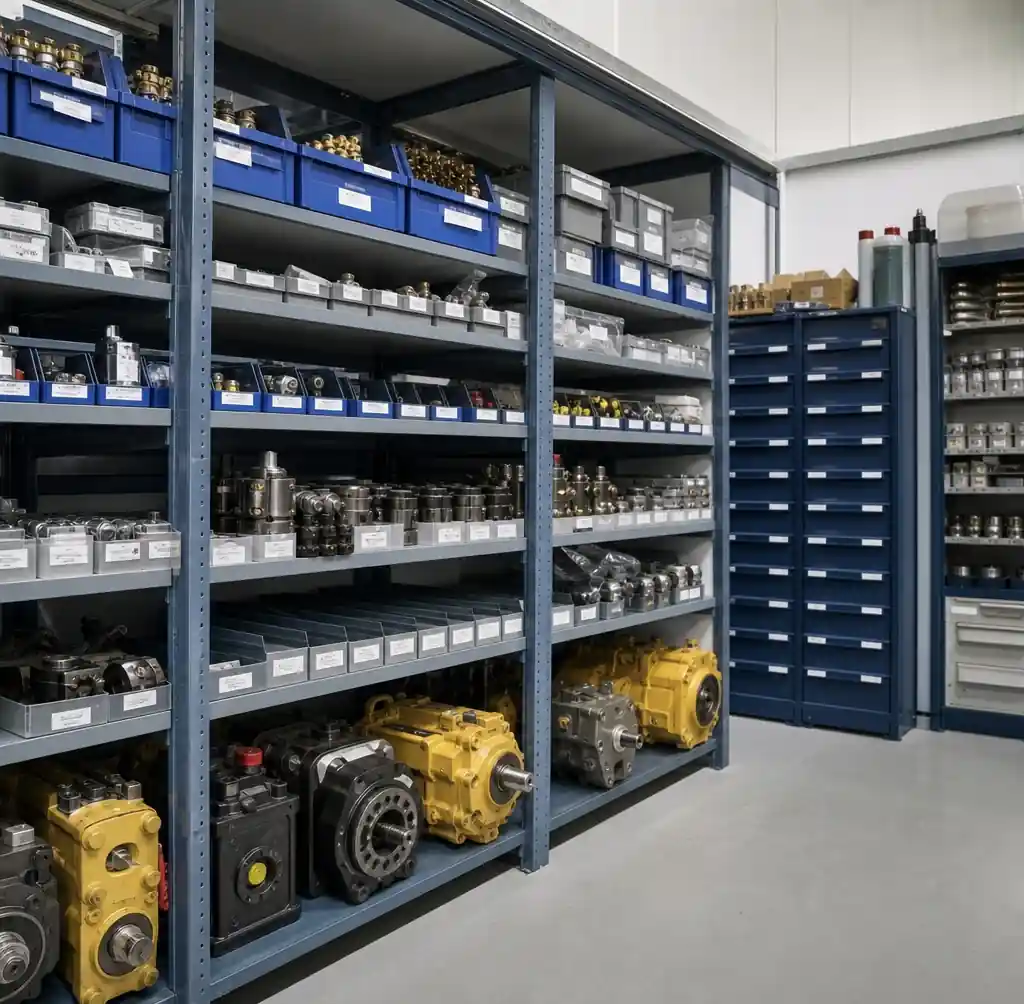
Maintain critical spares for components with lead times exceeding your acceptable downtime. Main hydraulic pump failure can stop production for 2-3 weeks waiting for replacement if you lack spare inventory. A $8,000 spare pump sitting on shelf costs less than one week of lost production for most operations.
Priority spares list should include: complete hydraulic pump, cylinder seal kits, PLC processor module, main motor contactors, proximity sensors, pressure transducers, and mold wear plates. These items either have long lead times or cause complete production stoppage when they fail. Supporting equipment components should also be included in your spare parts inventory.
Seasonal Maintenance Considerations
Cold Weather Preparations
Hydraulic oil viscosity changes significantly with temperature. Oil that flows properly at 25°C becomes thick and sluggish below 10°C. Cold starts with thick oil starve components of lubrication and overload pumps. In climates with freezing temperatures, install tank heaters maintaining minimum 15°C oil temperature before starting.
Condensation inside electrical cabinets increases in cold weather, especially with daily temperature cycling. Install dehumidifiers or desiccant packs in control cabinets. Moisture causes corrosion on circuit boards and creates tracking paths that cause electrical shorts.
Hot Weather Adaptations
High ambient temperatures reduce hydraulic system cooling capacity. Monitor oil temperatures closely during heat waves. If oil temperature exceeds 70°C regularly, improve cooling capacity through additional heat exchangers or increased coolant flow. Hot oil degrades faster, reducing effective change intervals by 30-40%.
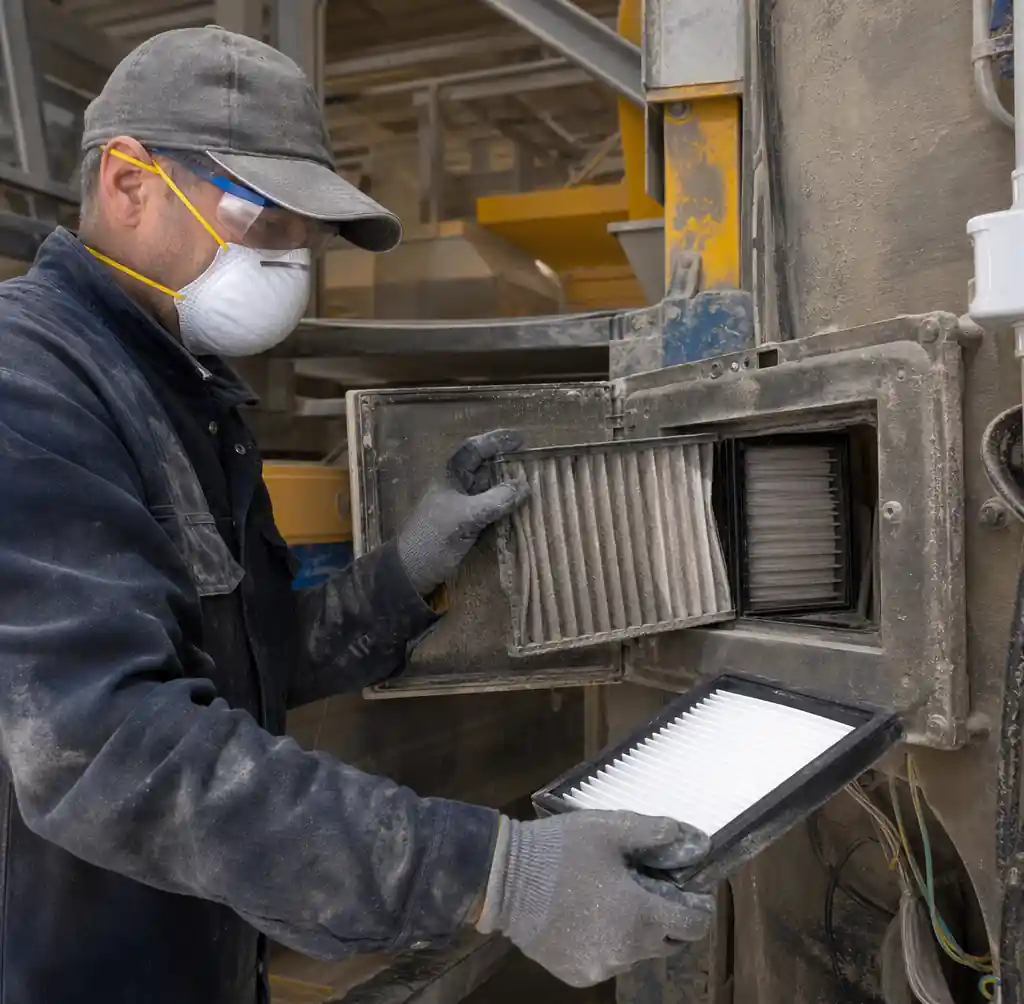
Dust levels typically increase in hot, dry conditions. Increase filter change frequency and cleaning intervals for electrical cabinets. Dust contamination in hydraulic oil increases dramatically when equipment operates in hot, dusty environments without adequate sealing.
Documentation and Record-Keeping Best Practices
Maintenance logs provide critical trending data that prevents failures. Record all maintenance activities with dates, operating hours, and observations. This data reveals patterns invisible from single inspections. A gradual oil consumption increase over 6 months indicates seal wear requiring attention before complete failure occurs.
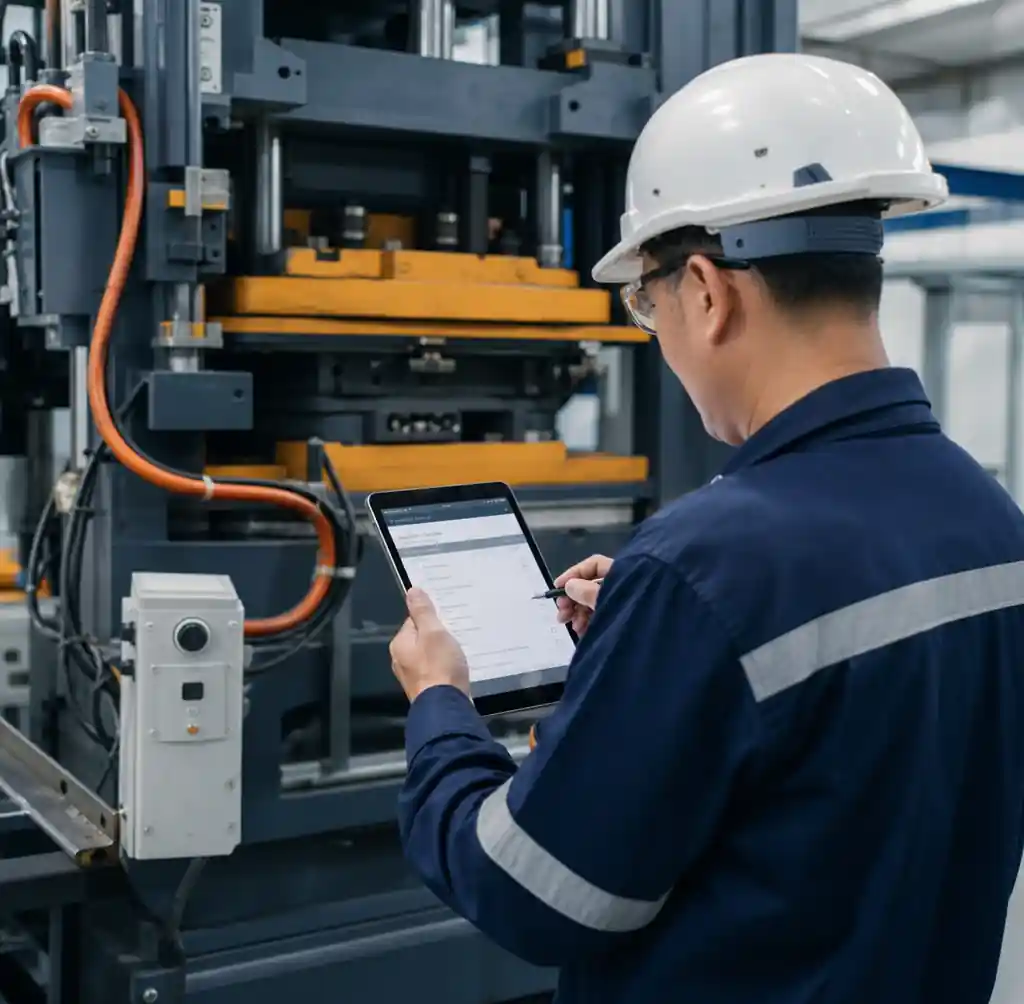
Digital maintenance management systems improve scheduling and documentation consistency. Even simple spreadsheet logs provide value if maintained consistently. Track each maintenance task performed, parts replaced, operating hours at service, and any unusual observations.
Photograph wear patterns and damage during inspections. Photos document baseline conditions and progression over time. When consulting with equipment suppliers about problems, photos communicate more effectively than descriptions.
Common Maintenance Mistakes That Cost Thousands
Using Incorrect Replacement Parts
Aftermarket parts varying from OEM specifications cause premature failures. A hydraulic seal with slightly different hardness or material formulation fails at 40% of expected life. Saving $200 on seals costs $15,000 when premature failure damages cylinders. Critical components justify OEM parts despite higher initial cost.
Overlooking Root Cause Analysis
Replacing failed components without investigating why they failed leads to repeat failures. If a hydraulic pump fails at 3,000 hours instead of expected 8,000 hours, contamination or system problems caused premature failure. Simply installing a new pump without addressing contamination causes the replacement to fail equally fast.
Inconsistent Maintenance Execution
Maintenance value comes from consistent execution, not occasional intensive efforts. Performing thorough maintenance once monthly then neglecting daily checks provides minimal benefit. Daily 15-minute inspections prevent more failures than monthly 4-hour maintenance sessions alone.
Training Operators for First-Line Maintenance
Operators are your first line of defense against failures. Train them to recognize abnormal sounds, smells, and visual indicators. An operator hearing bearing noise changes or noticing hydraulic leak stains catches problems at earliest stages when repairs are simplest and cheapest.
Create simple daily checklists operators complete before starting production. Items should be observable within 10-15 minutes: fluid levels, unusual leaks, abnormal sounds, loose components, mold condition. When operators take ownership of equipment condition, problem detection improves dramatically.
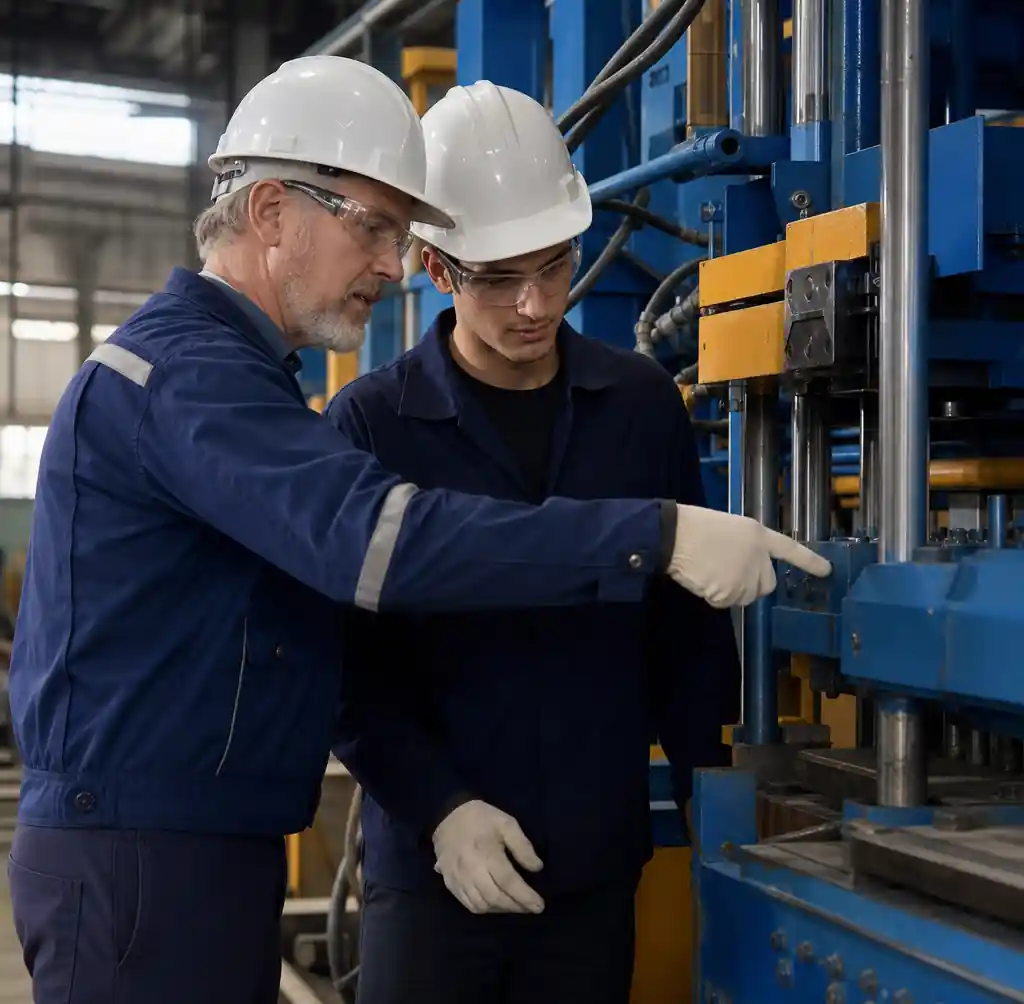
Empower operators to stop production when they observe serious problems. An operator continuing to run equipment with obvious hydraulic leaks or unusual noises causes damage far exceeding production lost from stopping to investigate. Create a culture where catching problems early is rewarded, not punished.
Frequently Asked Questions
How often should hydraulic oil be changed in a block machine?
Change hydraulic oil every 2,000 operating hours for fully automatic machines under normal conditions, or every 1,500 hours for semi-automatic systems. However, oil analysis provides better guidance than fixed intervals. If analysis shows contamination or additive depletion before scheduled changes, change oil immediately. Conversely, clean oil can sometimes extend safely beyond standard intervals, though we recommend 2,500 hours maximum regardless of analysis results.
What are the most critical daily maintenance tasks?
Check hydraulic oil level and appearance, inspect molds for concrete buildup, verify proper mold release application, listen for abnormal bearing or motor sounds, check for new hydraulic leaks, and verify vibration table operation smoothness. These tasks take 10-15 minutes but catch 70% of developing problems before they cause failures.
How can I tell if my block machine needs major maintenance?
Warning signs include: increasing hydraulic oil consumption, cycle time slowing, block quality consistency declining, unusual noises developing, oil temperature rising above normal range, more frequent minor repairs needed, and production capacity decreasing despite no process changes. Any combination of these indicates accumulated wear requiring comprehensive inspection and service.
Is it worth investing in predictive maintenance technology?
For operations running 2+ shifts daily, predictive maintenance tools pay for themselves quickly. A $500 infrared thermometer and $800 vibration meter can prevent a single $20,000 failure. Oil analysis at $35/sample identifies problems months before failure. The ROI becomes obvious after preventing the first major component failure. Single-shift operations benefit less but should still implement oil analysis and temperature monitoring on critical components.
What maintenance tasks should never be postponed?
Never delay hydraulic oil changes when contaminated, filter replacements when differential pressure is high, or seal replacements when leaks appear. Don’t postpone structural crack repairs, loose foundation bolt tightening, or safety system repairs. These items escalate from minor issues to major failures rapidly. Delaying a $300 seal replacement can cause $8,000 cylinder damage within weeks.
How do I create a maintenance schedule for my specific machine?
Start with manufacturer recommendations from Raytone Block Machinery, then adjust based on your operating conditions. High-production environments (16+ hours daily) need 30-40% more frequent service than standard schedules. Dusty environments require more frequent filter changes and cleaning. Adapt intervals based on inspection findings—if components show significant wear before scheduled replacement, shorten intervals. Track maintenance in logs to identify optimal timing for your specific conditions.
What’s the difference in maintenance between automatic and manual machines?
Automatic block machines have more complex electrical and hydraulic systems requiring specialized knowledge, but they also include more sensors and diagnostic capabilities making problems easier to identify. Manual machines are mechanically simpler but rely more heavily on operator observation to detect issues. Automatic machines typically need 30-40% more maintenance labor hours annually but produce 2-3x more blocks, resulting in lower maintenance cost per block produced.
How does maintenance differ for mobile block machines?
Mobile block machines face additional challenges from frequent relocation and outdoor exposure. They require more frequent frame and mounting inspection, enhanced weather protection for electrical components, and careful attention to wheel/track systems. Mobile units also need portable tool kits and spare parts inventory that travels with the machine since they may operate far from your main facility.
What maintenance considerations are specific to diesel-powered machines?
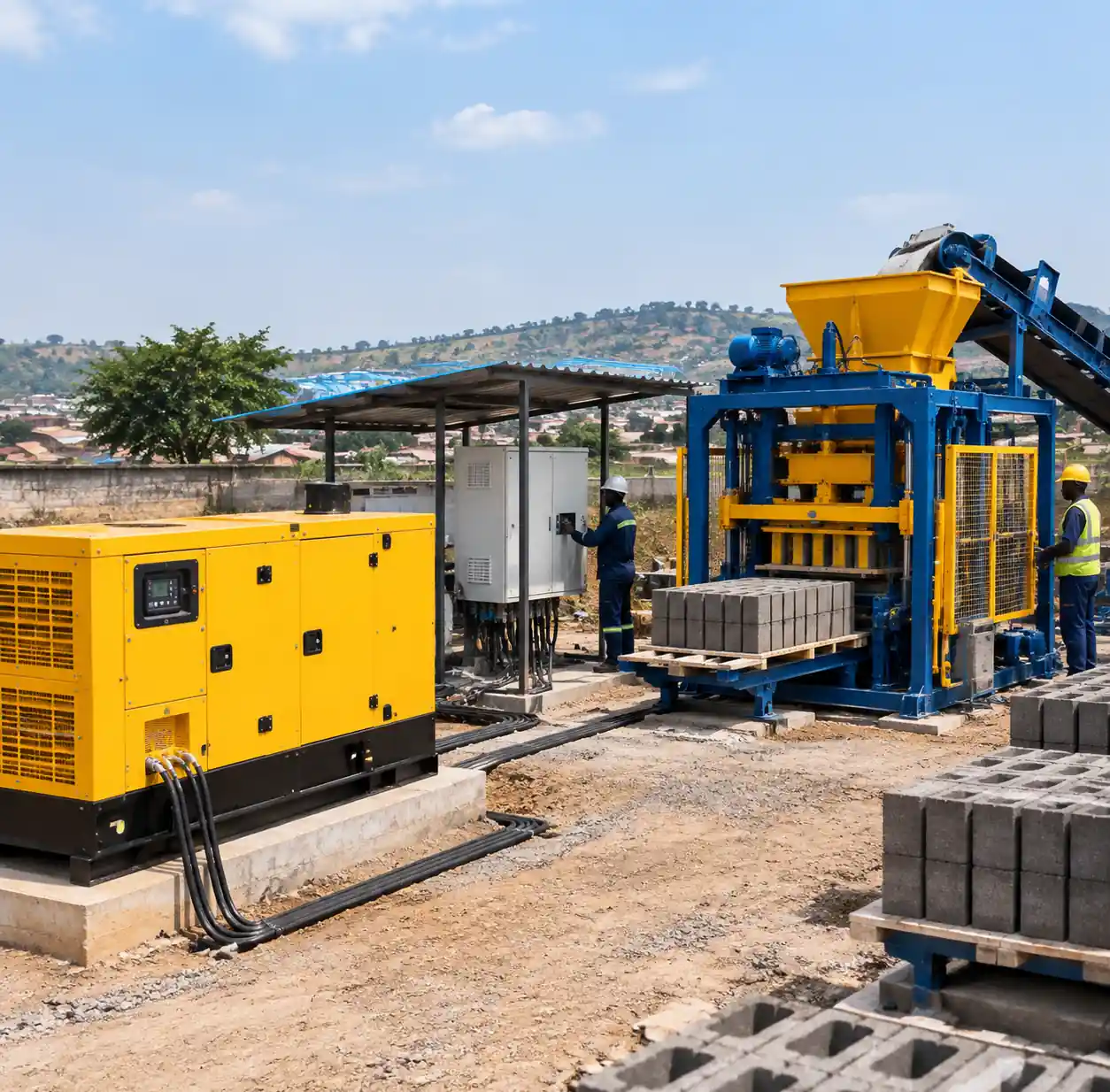
Diesel block machines add engine maintenance requirements: oil changes every 200-250 hours, air filter cleaning/replacement every 100 hours, fuel filter replacement every 500 hours, and regular cooling system inspection. Diesel engines in dusty block production environments need more frequent air filter service. However, diesel machines eliminate dependence on electrical infrastructure and can operate in remote locations.
How important is proper installation for long-term maintenance?
Proper installation is fundamental to maintenance success. Machines installed on inadequate foundations or with poor alignment experience accelerated wear requiring 2-3x more maintenance intervention. Foundation settlement causes progressive misalignment that damages guide posts, bearings, and hydraulic cylinders. Investing in proper installation according to manufacturer specifications prevents most premature wear problems.
What role does operator training play in maintenance?
Well-trained operators prevent 50-60% of maintenance issues through proper machine operation and early problem detection. Training should cover normal operating sounds and vibrations, proper material loading procedures, correct cycle timing, and when to stop production for inspection. Operators who understand how their actions affect machine health make better decisions and catch developing problems before they become failures. Professional training programs significantly reduce maintenance costs.
Can I perform maintenance in-house or do I need external support?
Most routine maintenance (daily checks, lubrication, filter changes, minor adjustments) can be performed by trained in-house staff. However, major hydraulic overhauls, electrical system troubleshooting, and structural repairs often require specialized knowledge and equipment. Many operations maintain hybrid approach: in-house preventive maintenance with manufacturer support for major service and emergency repairs. Raytone’s technical support provides remote diagnostics and on-site assistance for complex issues.
Conclusão
Effective block machine maintenance isn’t about following a rigid checklist—it’s about understanding your equipment’s condition and responding appropriately. The maintenance approaches outlined here represent what we’ve seen work consistently across thousands of installations worldwide for automatic, semi-automatic, and manual block machines. Operations implementing systematic preventive maintenance typically achieve 15-20 year equipment life while maintaining production efficiency above 90%.
Your specific maintenance needs vary based on production volume, operating environment, and machine type. Start with daily inspections and basic preventive tasks, then build toward predictive maintenance as you develop familiarity with your equipment’s normal operating characteristics. The key is consistency—regular attention prevents the cascade failures that destroy production schedules and profitability.
Document everything, train your team thoroughly, and view maintenance as production insurance rather than overhead cost. The operations that excel at maintenance don’t experience fewer problems because they’re lucky—they catch and resolve issues before they become problems. That’s the difference between equipment that lasts 10 years and equipment that produces profitably for 20.
For comprehensive technical support, maintenance training, and genuine replacement parts for your block making equipment, contact Raytone Block Machinery. Our experienced technical team provides remote diagnostics, on-site service, and preventive maintenance programs tailored to your specific equipment and operating conditions.