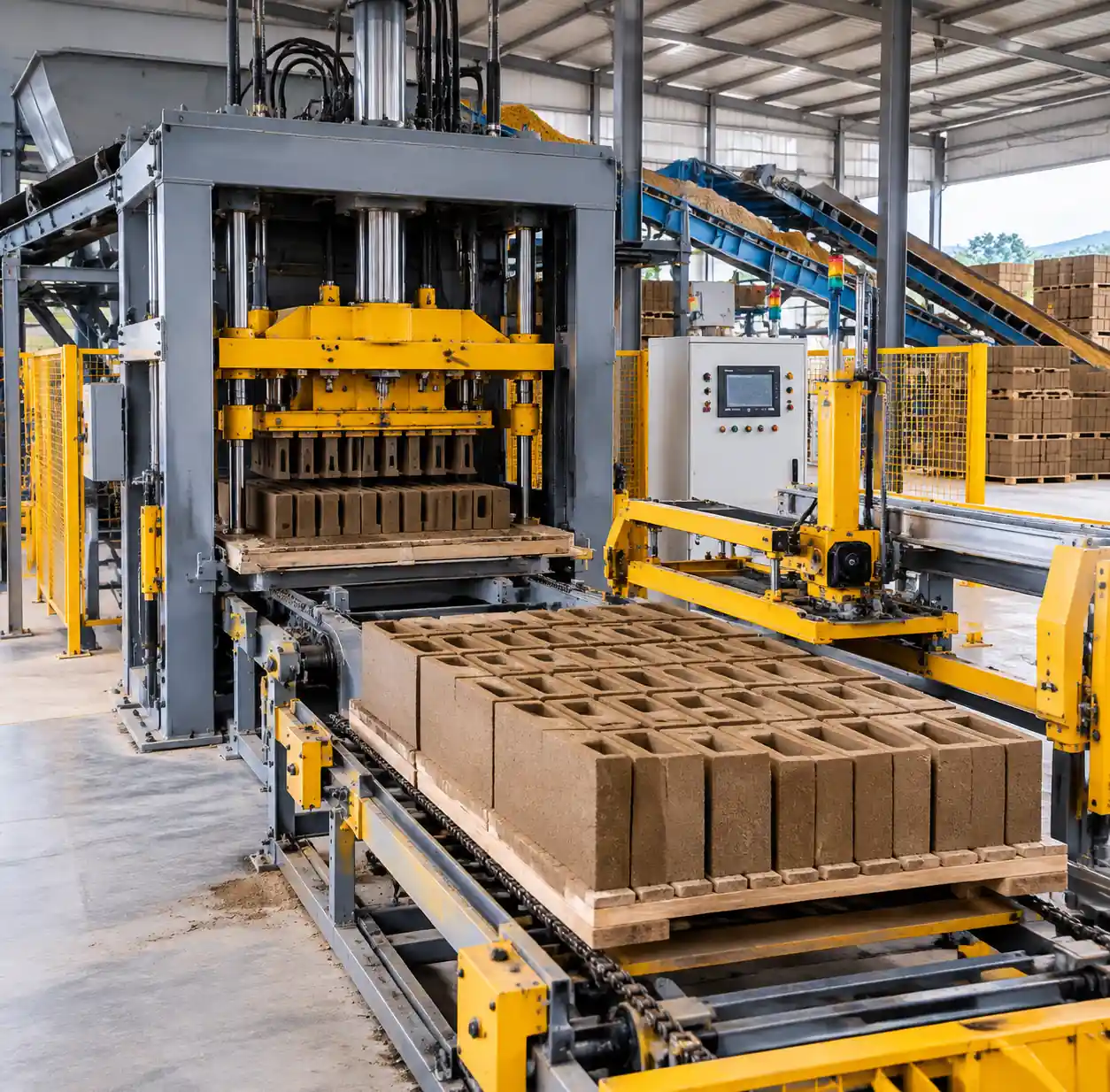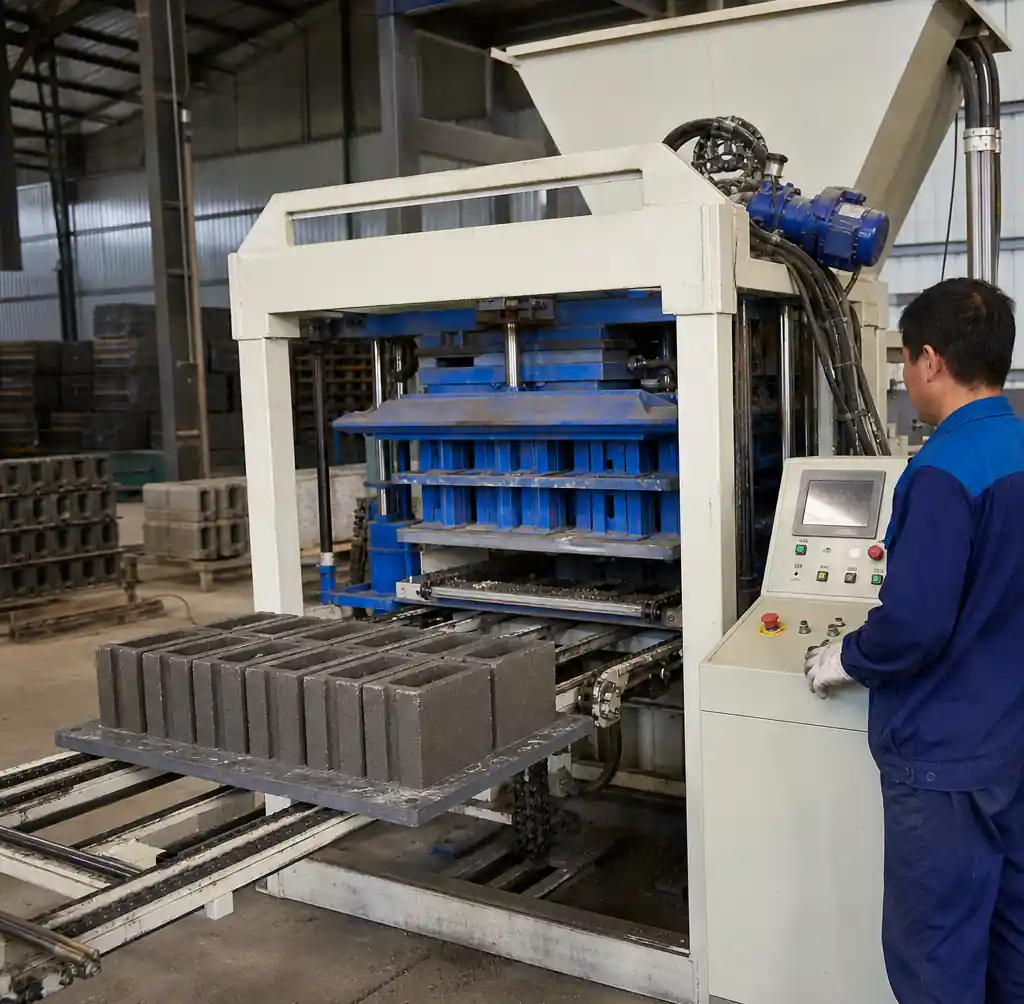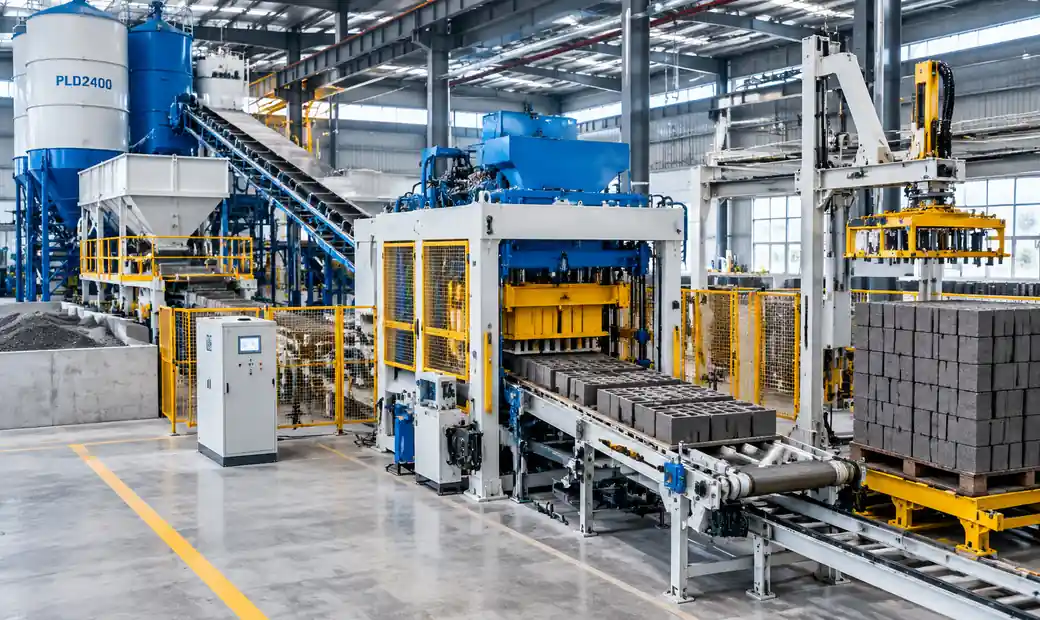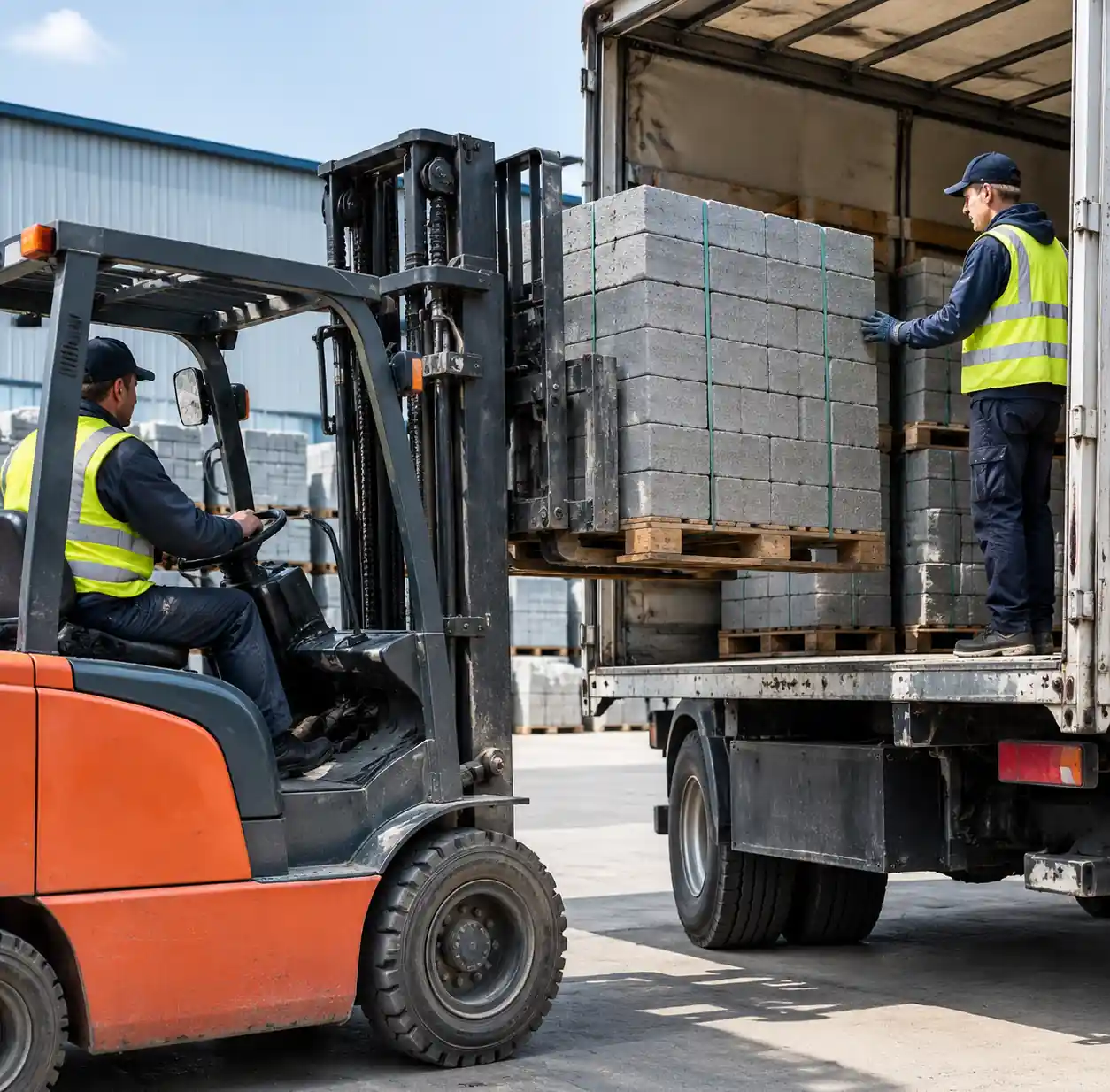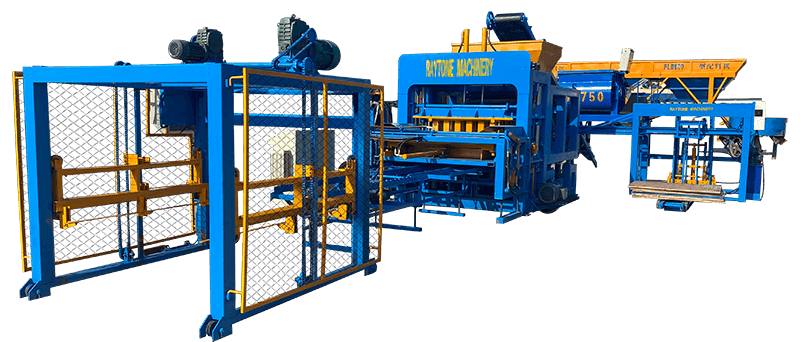






Transportation costs account for 15-25% of finished block expenses in traditional brick manufacturing. Mobile brick machines eliminate this overhead by producing blocks directly at construction sites. This operational shift reduces project costs, accelerates construction timelines, and provides flexibility that stationary plants cannot match.
What is a Mobile Brick Machine?
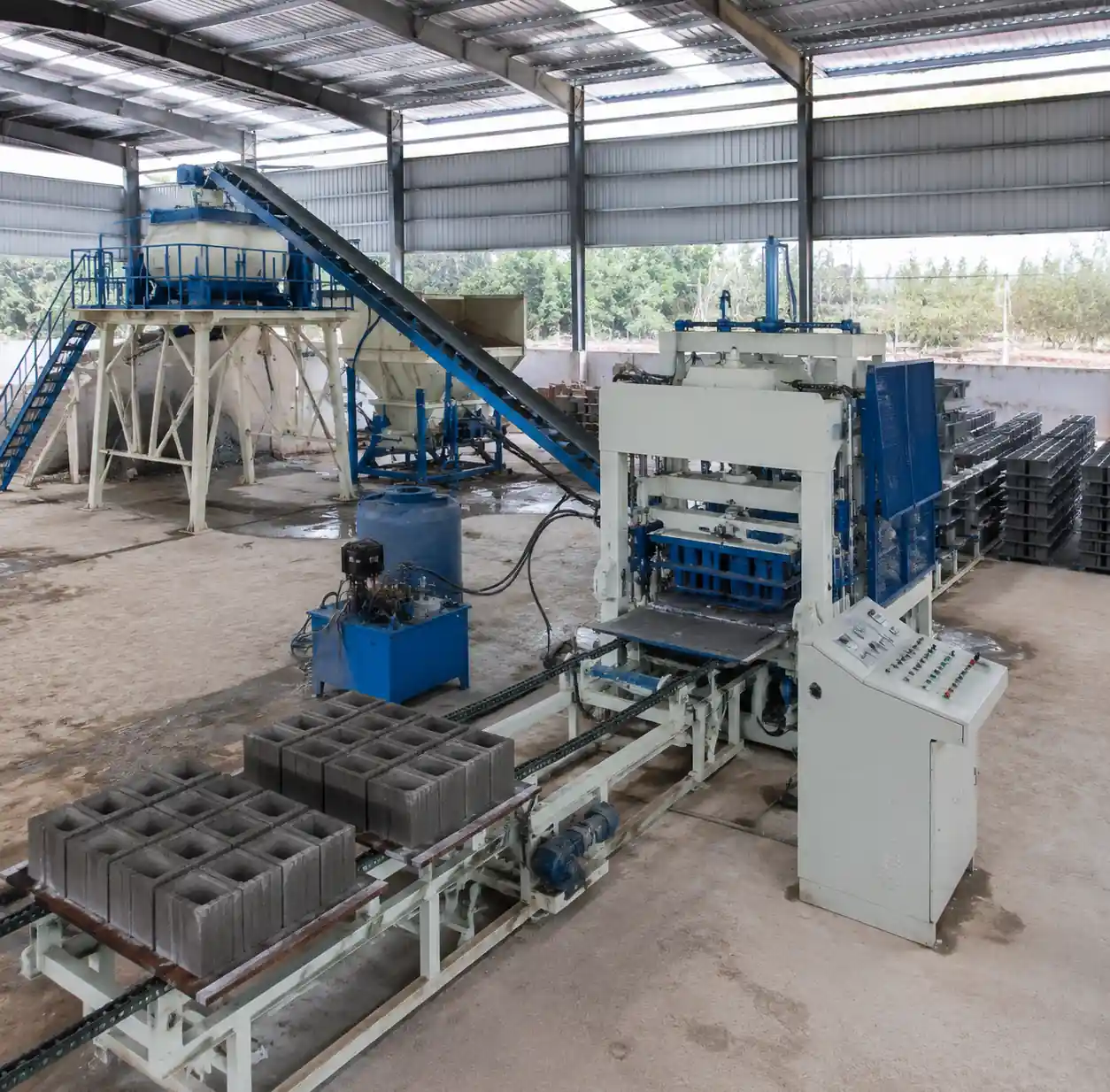
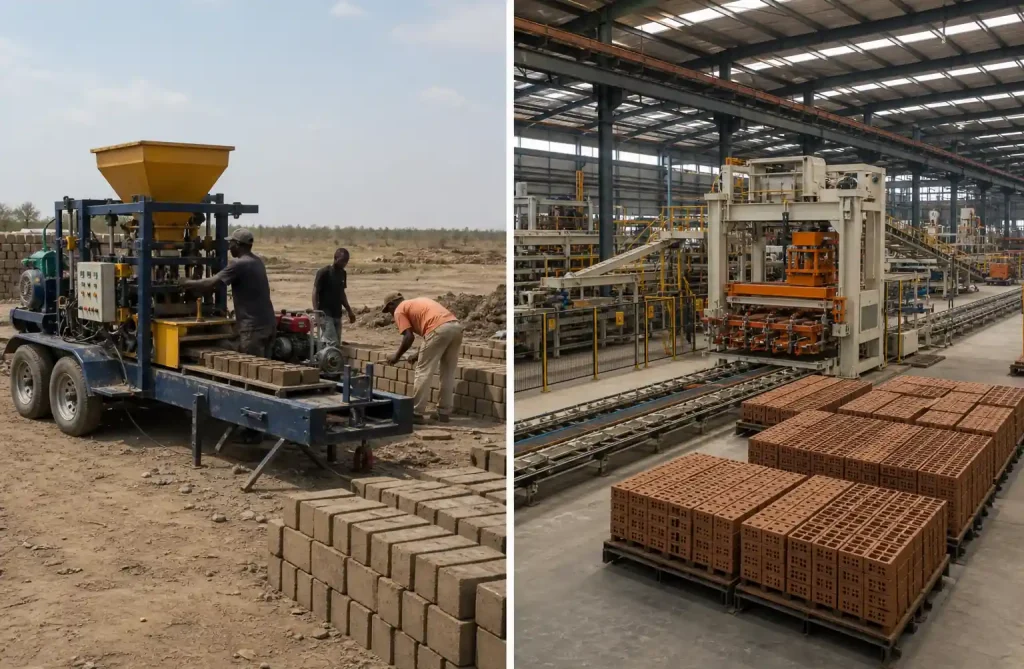
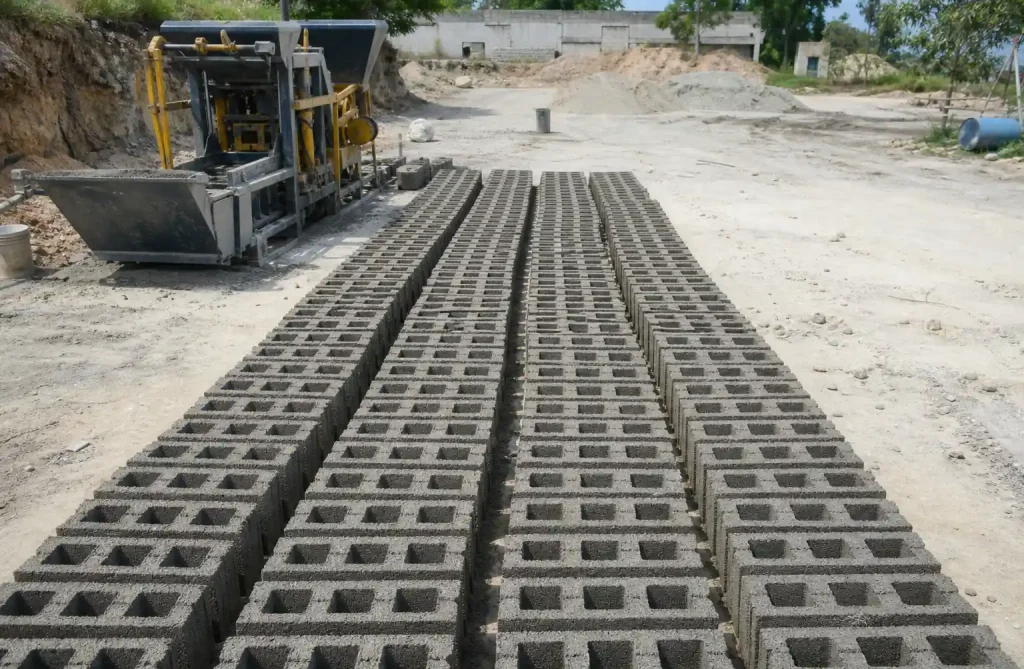
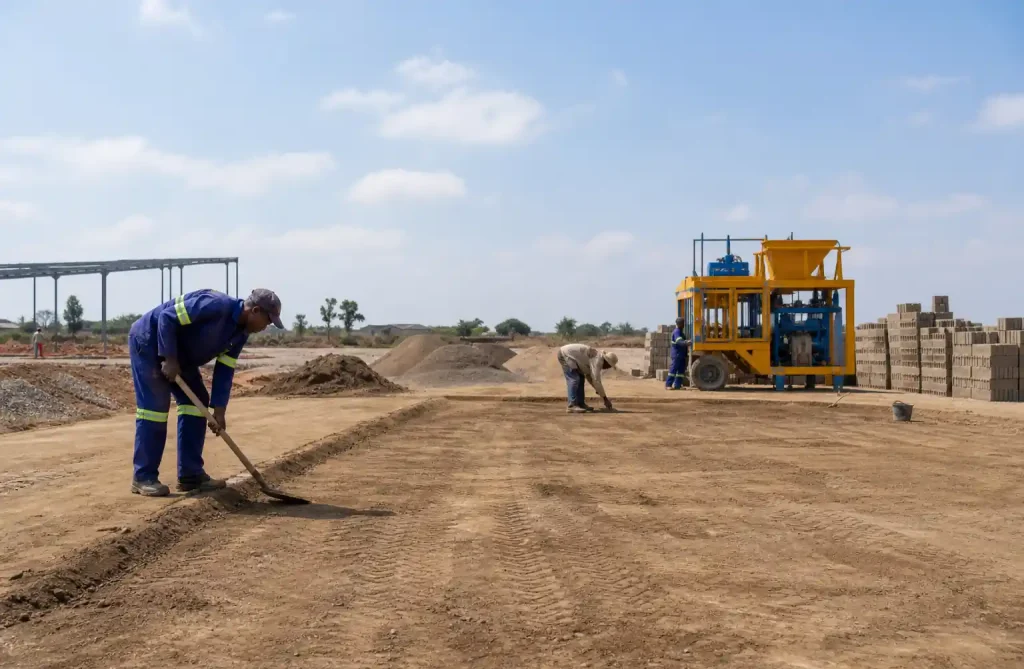
Mobile brick machines, also called egg laying block machines, are self-contained production units that manufacture concrete blocks while moving across the work site. Unlike stationary machines that require pallets and separate curing areas, mobile units deposit blocks directly onto the ground where they cure in place.
The term “egg laying” describes the production method – the machine moves forward while continuously laying blocks behind it. Mobile machines serve three primary markets: small-scale contractors producing 3,000-8,000 blocks daily, remote construction sites lacking infrastructure, and developers building multiple small projects across different locations.
Mobile vs Stationary Block Production: Core Differences
| Factor | Mobile Brick Machine | Stationary Brick Machine |
|---|---|---|
| Production Location | Moves across site, blocks on-ground | Fixed position, uses pallets |
| Daily Capacity | 3,000-23,000 blocks | 7,000-50,000+ blocks |
| Initial Investment | $8,000-$45,000 | $25,000-$300,000+ |
| Labor Required | 2-4 workers | 4-7 workers |
| Factory Required | No permanent facility | Dedicated factory space |
| Transportation Cost | Zero (on-site production) | $0.08-$0.15 per block |
| Setup Time | 1-2 hours | 2-4 weeks |
| Best For | Small projects, remote sites, multiple locations | Large-scale production, urban factories |
The economic crossover occurs around 15,000-20,000 blocks per project – below this threshold, mobile production typically costs less.
Key Benefits of On-Site Block Production
Elimination of Transportation Costs: A 50km haul adds $0.08-$0.15 per block. On a 10,000-block project, transportation alone costs $800-$1,500. Projects 100km+ from suppliers face $0.20-$0.30 per block in transport costs. Mobile machines eliminate this entirely.
Reduced Capital Requirements: Entry-level manual mobile machines start around $8,000-$12,000. Mid-range hydraulic models cost $20,000-$35,000. Compare to stationary semi-automatic lines requiring $50,000-$105,000, or automatic systems demanding $150,000-$300,000. Mobile machines offer 60-75% lower capital investment.
Production Flexibility: Contractors can deploy machines across multiple sites sequentially, eliminating idle capacity. Mid-project specification changes pose no logistical challenge – change the mold and continue production.
Just-in-Time Production: Mobile production synchronizes block availability with construction pace, eliminating storage costs and multiple handling. This reduces breakage rates from 3-5% to under 1%.
Cost Analysis: Mobile Production Economics
Direct Cost Comparison (per 400×200×200mm hollow block)
| Cost Component | Mobile Machine | Stationary Factory | Savings |
|---|---|---|---|
| Raw Materials | $0.18-$0.25 | $0.15-$0.22 | -$0.03 |
| Labor | $0.08-$0.12 | $0.05-$0.08 | -$0.03 |
| Energy | $0.02-$0.04 | $0.02-$0.05 | Comparable |
| Transportation | $0.00 | $0.10-$0.15 | +$0.10-$0.15 |
| Equipment Depreciation | $0.01-$0.02 | $0.03-$0.05 | +$0.02 |
| Factory Overhead | $0.00 | $0.05-$0.08 | +$0.05-$0.08 |
| Total per Block | $0.29-$0.45 | $0.40-$0.63 | +$0.11-$0.18 |
On a 10,000-block project, savings reach $1,100-$1,800. Contractors completing 3-4 projects annually save $4,000-$7,000 with 70% less capital investment.
Break-Even Analysis (QTM10-25, $30,000 investment, 18,000 blocks/day)
- Monthly production (20 days): 360,000 blocks
- Savings vs purchased blocks: $0.15 per block → $54,000/month
- Equipment depreciation: $500/month
- Net monthly benefit: $53,500
- Payback period: 0.56 months (17 days)
At 50% capacity utilization: payback period 1.1 months.
Mobile Brick Machine Models
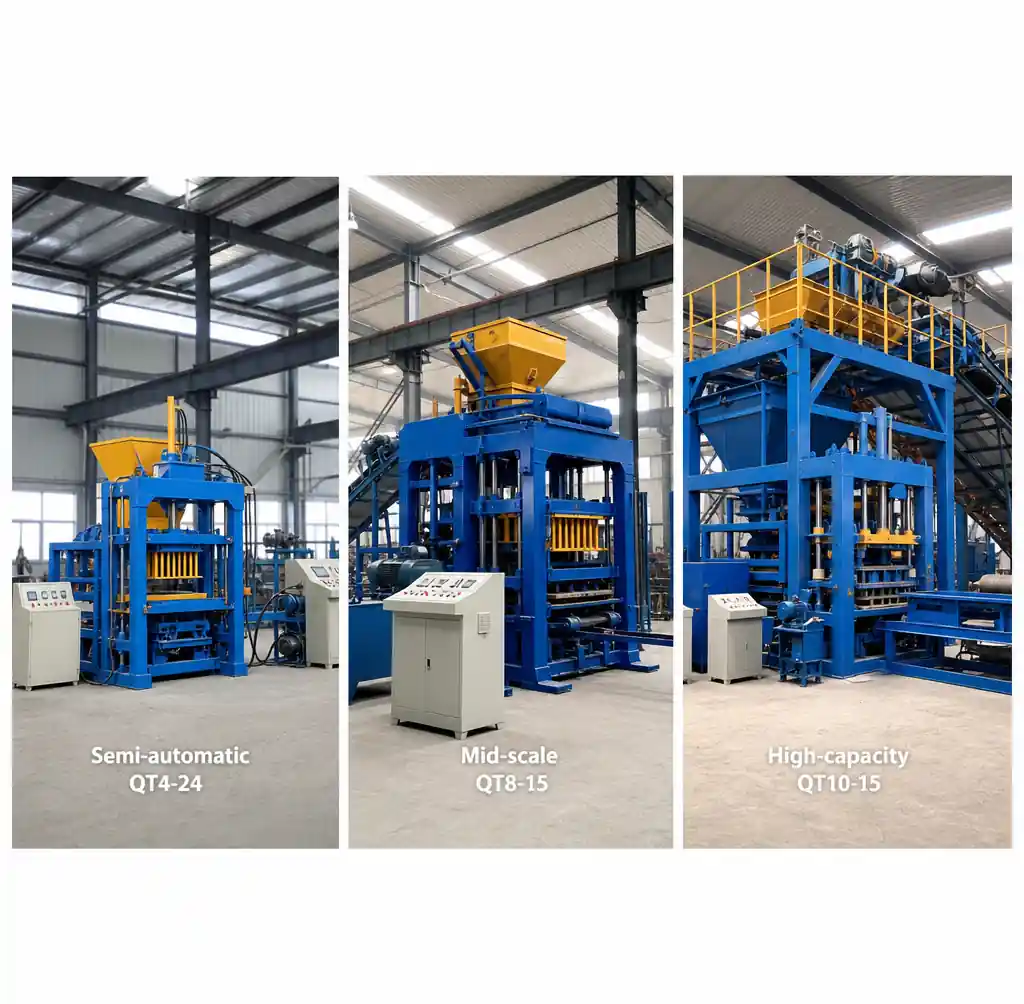
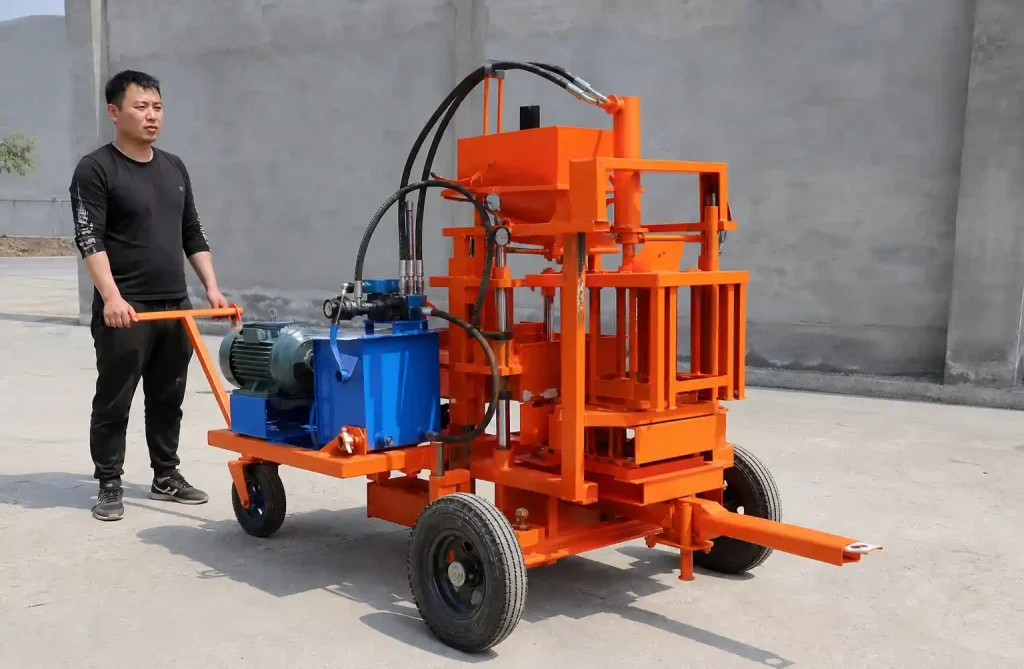
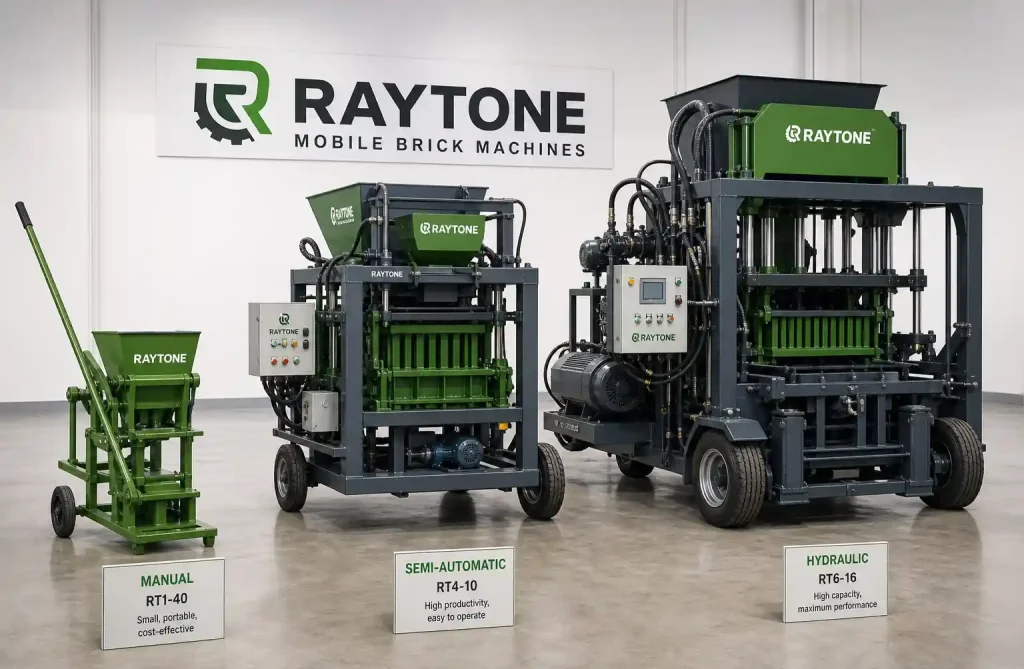
Small-Scale: QT4-45B and QMR4-45: 3,000-3,500 blocks per 8-hour shift with 2-3 workers. The QMR4-45 diesel variant enables off-grid production. Ideal for individual home construction, rural projects, and new contractors (see starting a brick making business). Investment: $8,000-$12,000. Payback: 8-15 months.
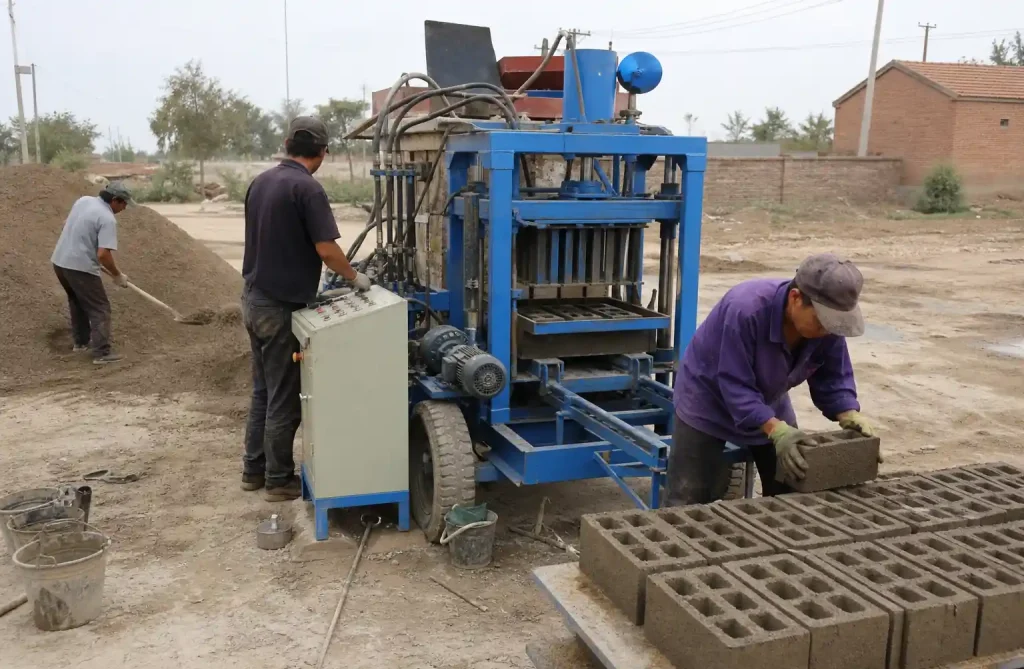
Mid-Range: QTM6-25 and QTM10-25: 8,000-18,000 blocks daily with hydraulic systems for consistent compaction. Ideal for small residential developments, commercial buildings, and contractors managing 2-3 concurrent projects. Investment: $20,000-$35,000. Payback: 3-8 months.
High-Output: QTM12-25: 23,000 blocks daily – rivals entry-level stationary lines. Ideal for large subdivisions, industrial projects, and rental operations. Investment: $40,000-$50,000. Payback: 2-5 months.
Operational Considerations
Site Requirements: Level ground (slopes under 5-7°), 20-30 meters of clear path per run. Wet or soft ground causes blocks to sink – work in dry seasons or prepare compacted aggregate base.
Weather Dependency: Fresh blocks need 4-6 hours of dry weather for initial set. Below 5°C, cement hydration slows; above 35°C requires frequent water curing.
Production Rate Realities: Field production runs 60-80% of rated capacity. A QTM10-25 rated at 18,000 blocks daily typically produces 12,000-14,000 blocks.
Quality Control: Mobile operations require site supervisors to monitor mix proportions, compaction, and dimensions. Invest in testing tools and consider supporting equipment like batching machines.
When Mobile Machines Make Economic Sense
Project Scale Decision Matrix:
- Under 5,000 blocks: Manual mobile machines (QT4-45B, QMR4-45)
- 5,000-15,000 blocks: Hydraulic mobile machines (QTM6-25, QTM10-25)
- 15,000-30,000 blocks: High-output mobile (QTM12-25) or stationary semi-automatic machines
- Over 30,000 blocks: Stationary automatic lines unless remoteness favors mobile
Geographic Factors: Remote sites 50km+ from suppliers show clear mobile advantage. Urban projects with good supplier networks favor delivered blocks.
Business Models: Contractors managing multiple small projects benefit from fleet deployment. Learn about choosing between automatic, semi-automatic, and manual machines. Rental or contract production services offer another model – charge $0.40-$0.55 per block.
FAQ
What is the main advantage of mobile brick machines?
Mobile machines eliminate transportation costs ($0.10-$0.15 per block) while requiring 60-75% less capital than stationary plants. They provide flexibility for contractors working multiple job sites and enable production in remote locations lacking infrastructure.
How much can I save using a mobile brick machine?
Savings range from $0.11-$0.18 per block versus purchased blocks. On a 10,000-block project, expect $1,100-$1,800 savings. Annual savings reach $55,000-$135,000 for contractors producing 500,000-750,000 blocks annually.
What is the production capacity of mobile brick machines?
Capacity ranges from 3,000 blocks per shift (QT4-45B) to 23,000 blocks per day (QTM12-25). Mid-range models produce 8,000-18,000 blocks daily. Field production typically runs 60-80% of rated capacity.
Do mobile brick machines require special skills?
Basic operation requires 2-4 days of training. Operators must understand mix proportions, moisture control, and compaction cycles. Most contractors achieve proficiency within 2-3 weeks.
Can mobile machines produce different block types?
Yes, by changing molds. Most models accommodate hollow blocks, solid blocks, paving blocks, and interlocking blocks. Mold changes require 30-60 minutes. Consider molds and supporting equipment for product flexibility.
Conclusion
Mobile brick machines transform project economics for small-to-medium contractors and remote sites. By eliminating $0.10-$0.15 per block in transportation costs, on-site production saves $0.11-$0.18 per block. Models from $8,000 to $50,000 deliver 6-14 month payback periods – exceptional returns compared to stationary alternatives requiring 18-36 month payback.
Production flexibility enables contractors to serve multiple projects, access remote markets, and scale without fixed infrastructure. For projects under 30,000 blocks, particularly in areas 50km+ from suppliers, mobile machines offer the optimal combination of capital efficiency, operational flexibility, and cost competitiveness.
Raytone Block Machinery manufactures mobile brick machines from compact manual units to high-capacity hydraulic models, serving contractors in over 100 countries. We also offer complete automatic brick plant solutions for larger operations. Contact us today for specifications and production analysis.