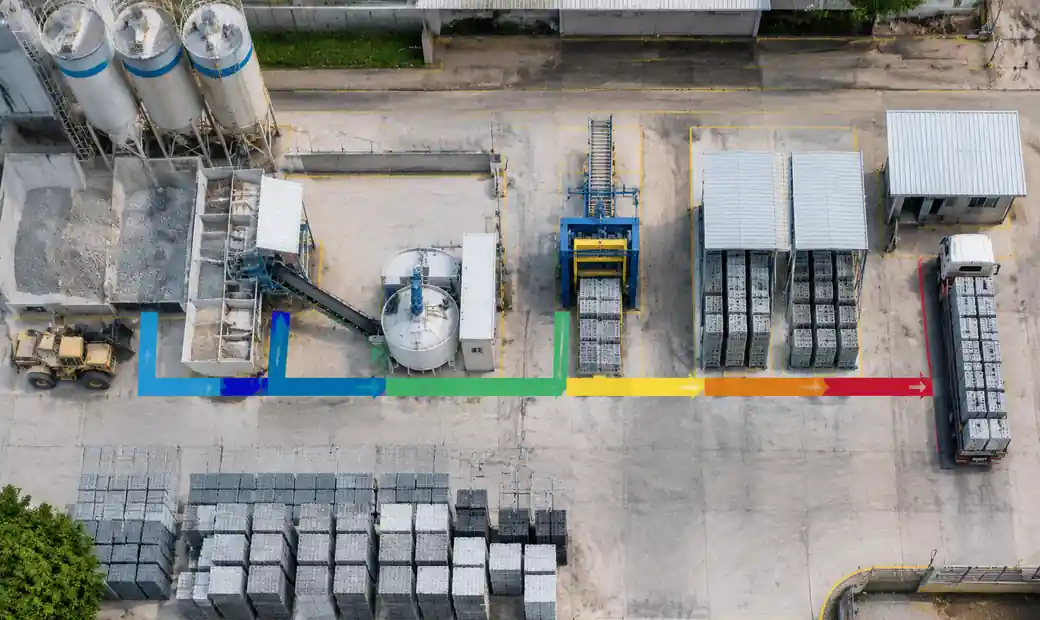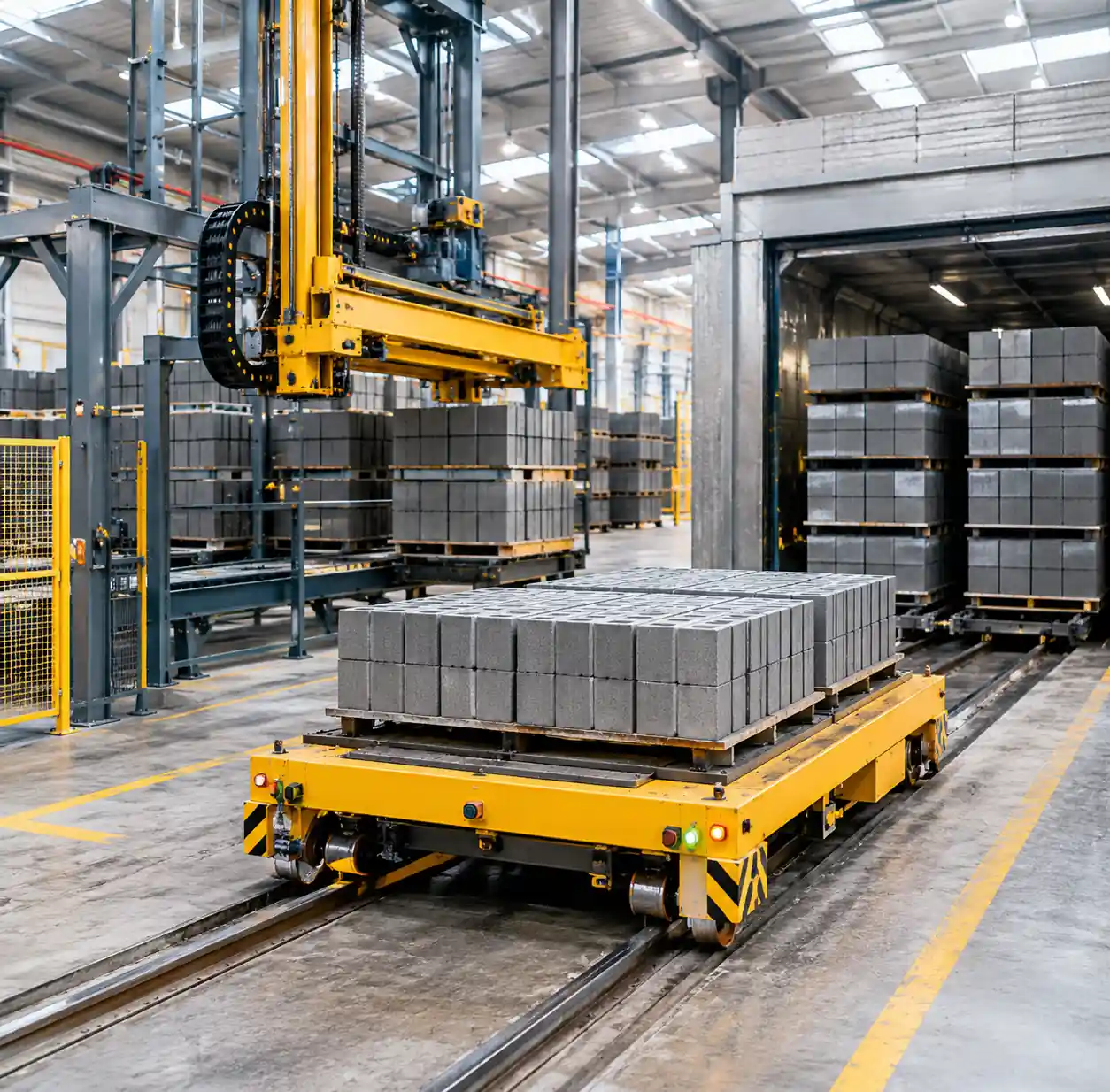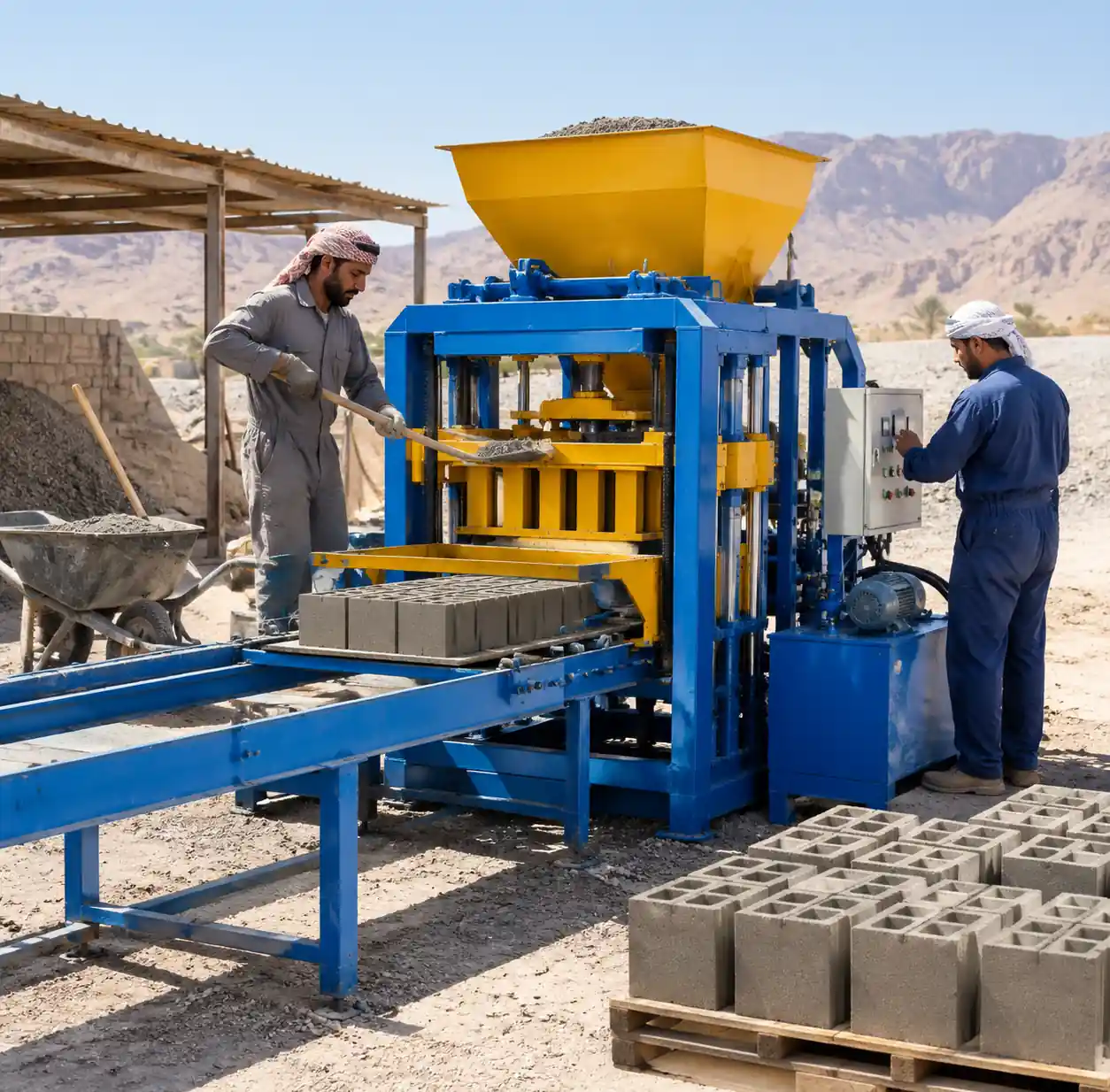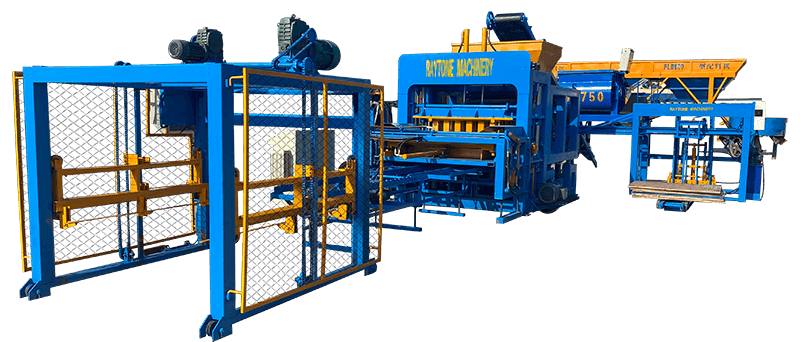






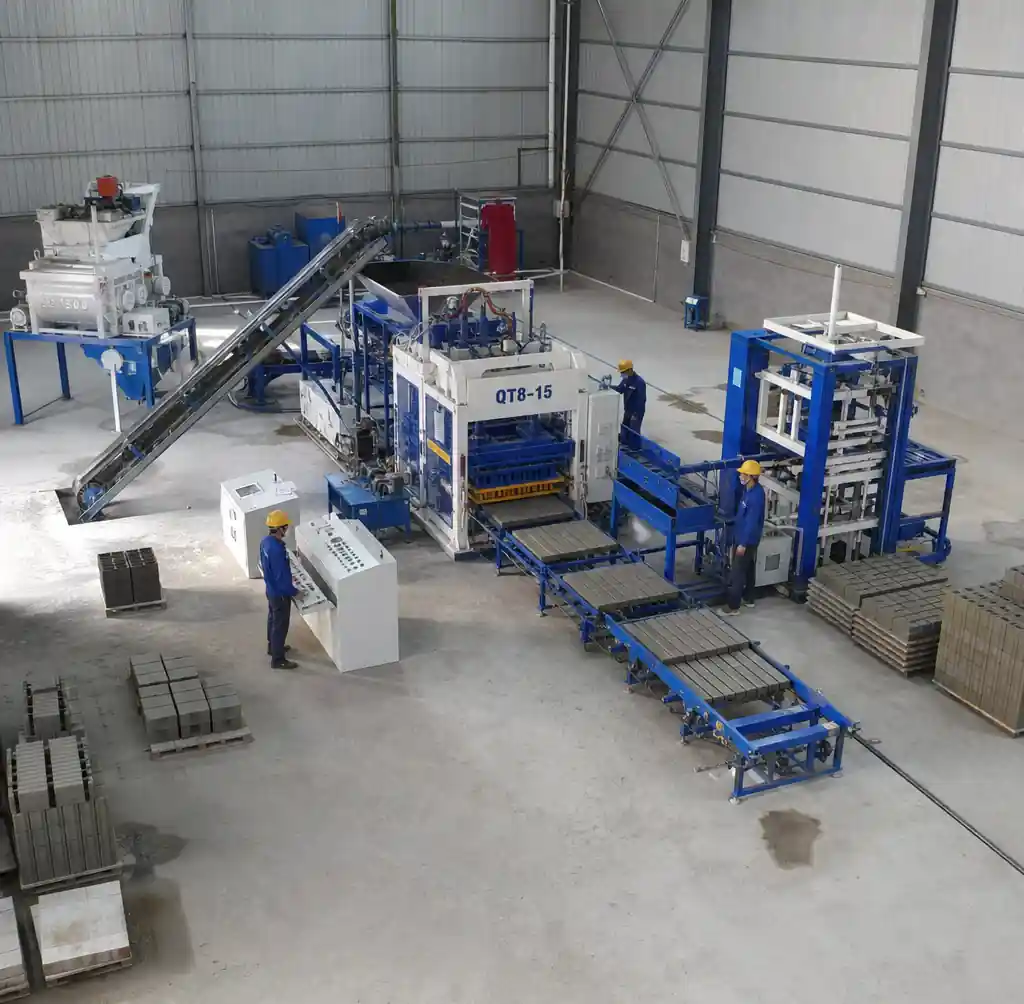
Mid-scale concrete block production demands machinery that balances automation, capacity, and investment. The QT8-15 automatic block machine produces 30,720 standard blocks per day, positioning it between small-scale semi-automatic lines and large industrial plants. Understanding this machine’s capabilities, costs, and operational requirements determines whether it matches your production scale.
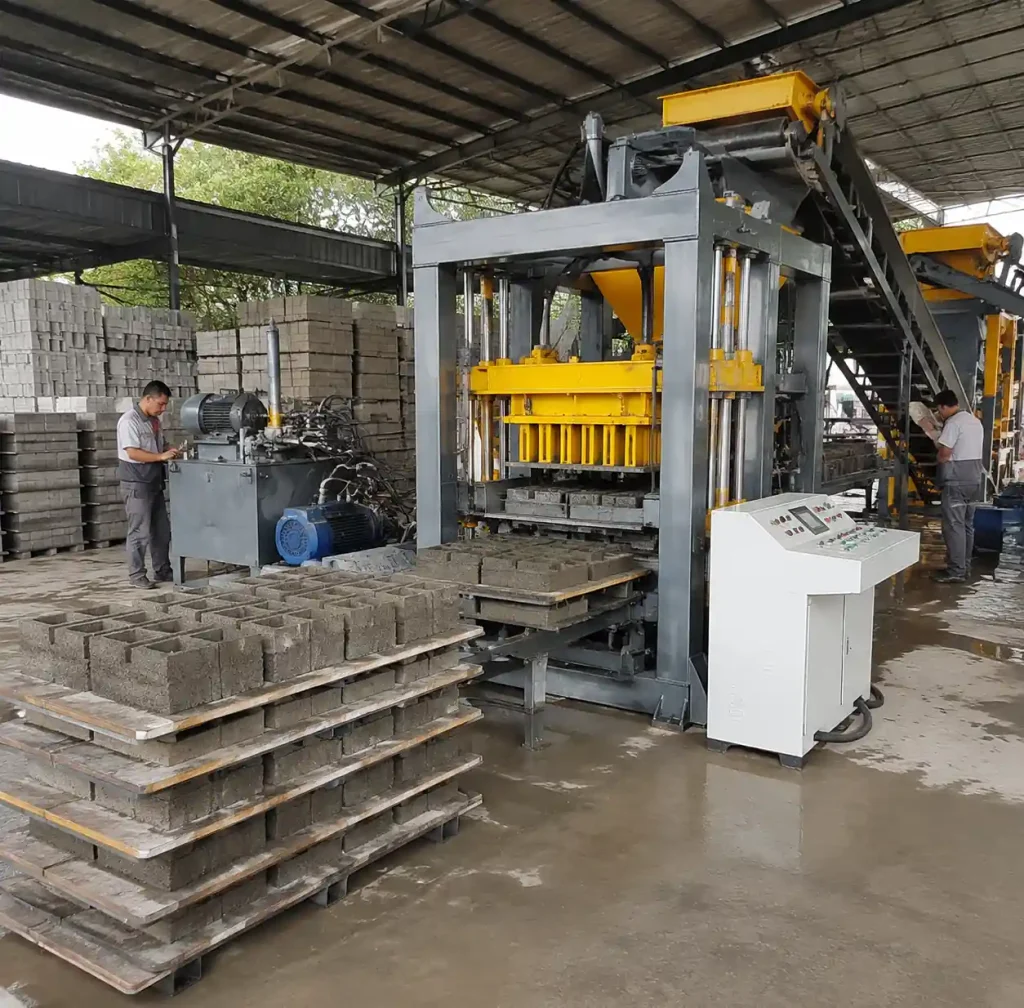
Why Mid-Scale Production Fills a Critical Market Gap
Small-scale operations using semi-automatic block machines handle 3,000-8,000 blocks per shift but struggle when demand exceeds 20,000 blocks daily. Large fully automatic plants produce 50,000+ blocks per day yet require $250,000-$500,000 investments that small contractors cannot justify.
Mid-scale automatic machines like the QT8-15 serve construction companies managing 3-6 active projects, ready-mix concrete producers adding block production, and regional distributors supplying 15-30 retail locations. These operations need consistent daily output between 25,000-35,000 blocks without the overhead of industrial-scale automation.
QT8-15 Technical Specifications
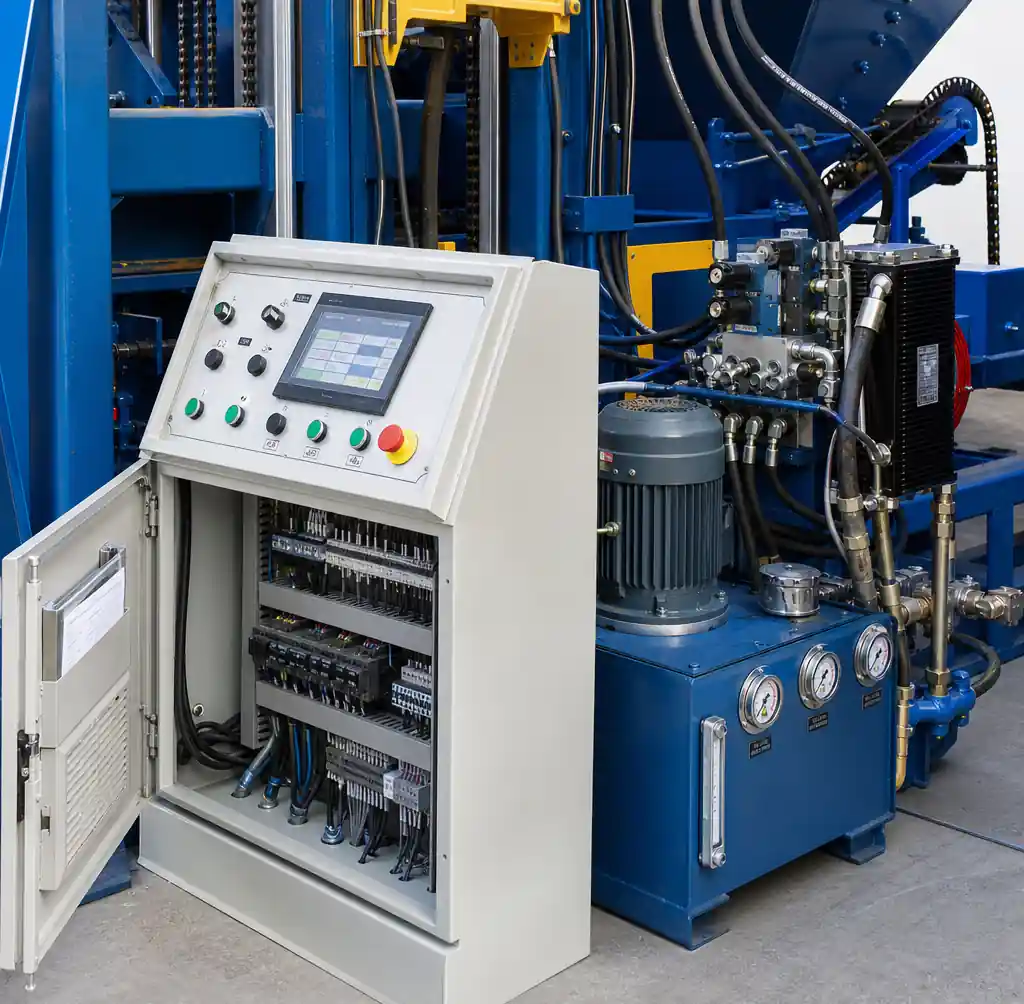
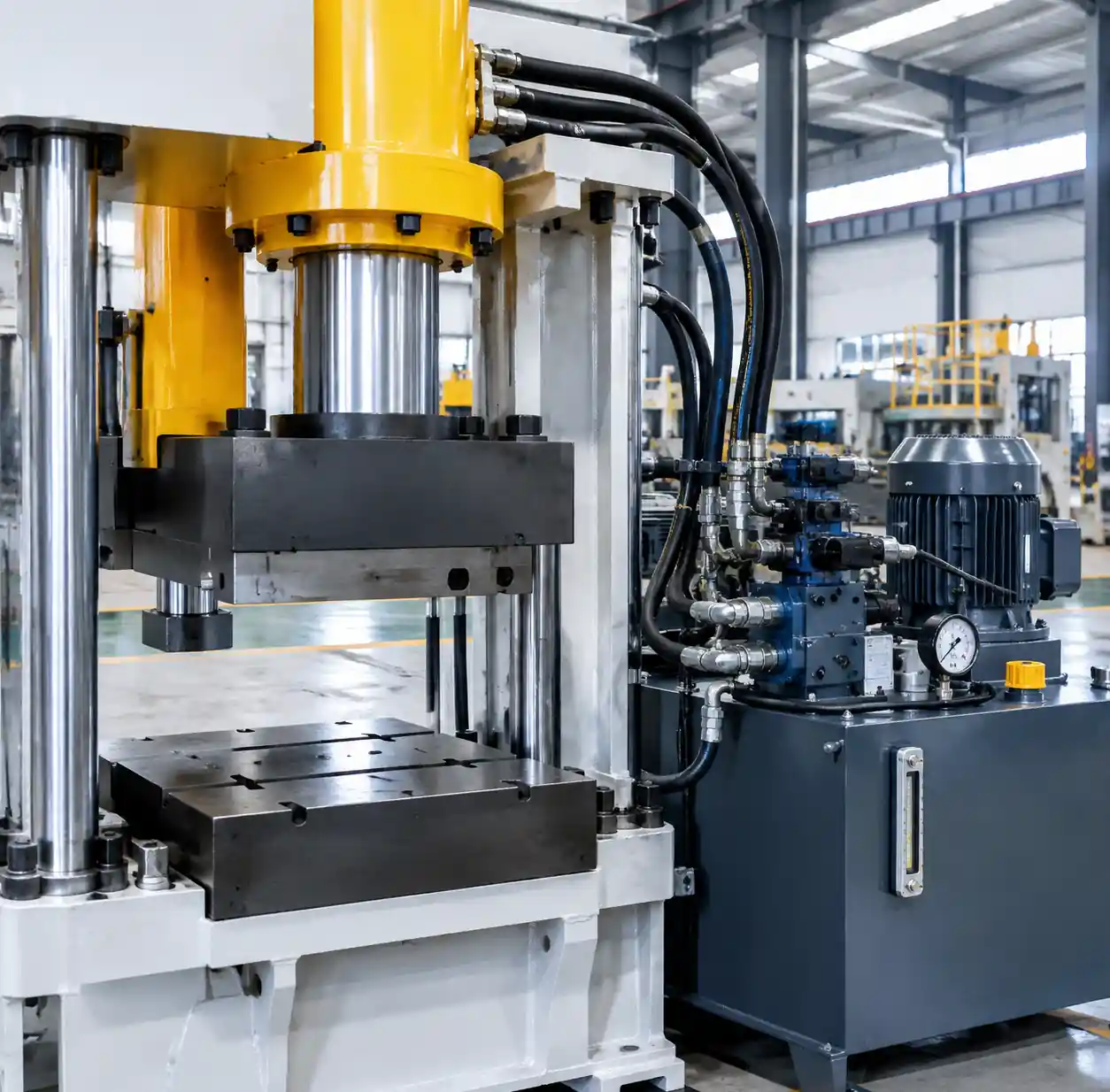
The QT8-15 combines hydraulic pressing with dual vibration systems, producing blocks through controlled compression cycles. Understanding these specifications reveals what the machine actually delivers versus manufacturer marketing claims.
| Specification | Value | Industry Context |
|---|---|---|
| Capacidad de producción | 3,840 blocks/hour (390×190×190mm) | Mid-range automatic, 2.5x semi-automatic output |
| Cycle Time | 15-18 seconds per batch | Competitive with QT8-15 class machines |
| Molding Area | 1,050mm × 850mm | Accommodates 8 standard blocks per cycle |
| Pressing Force | 200 tons (hydraulic) | Sufficient for 20-25 MPa block strength |
| Vibration Frequency | 3,800-4,500 cycles/min | Dual-motor system for density uniformity |
| Potencia total | 51.25 kW | Requires 380V three-phase supply |
| Machine Dimensions | 9,800mm × 3,600mm × 2,800mm | 35.3m² footprint plus stacking area |
| Peso de la máquina | 18,500 kg | Requires reinforced concrete foundation |
| Operators Required | 3-4 workers per shift | Feeding, demolding, quality control |
Production Capacity Breakdown
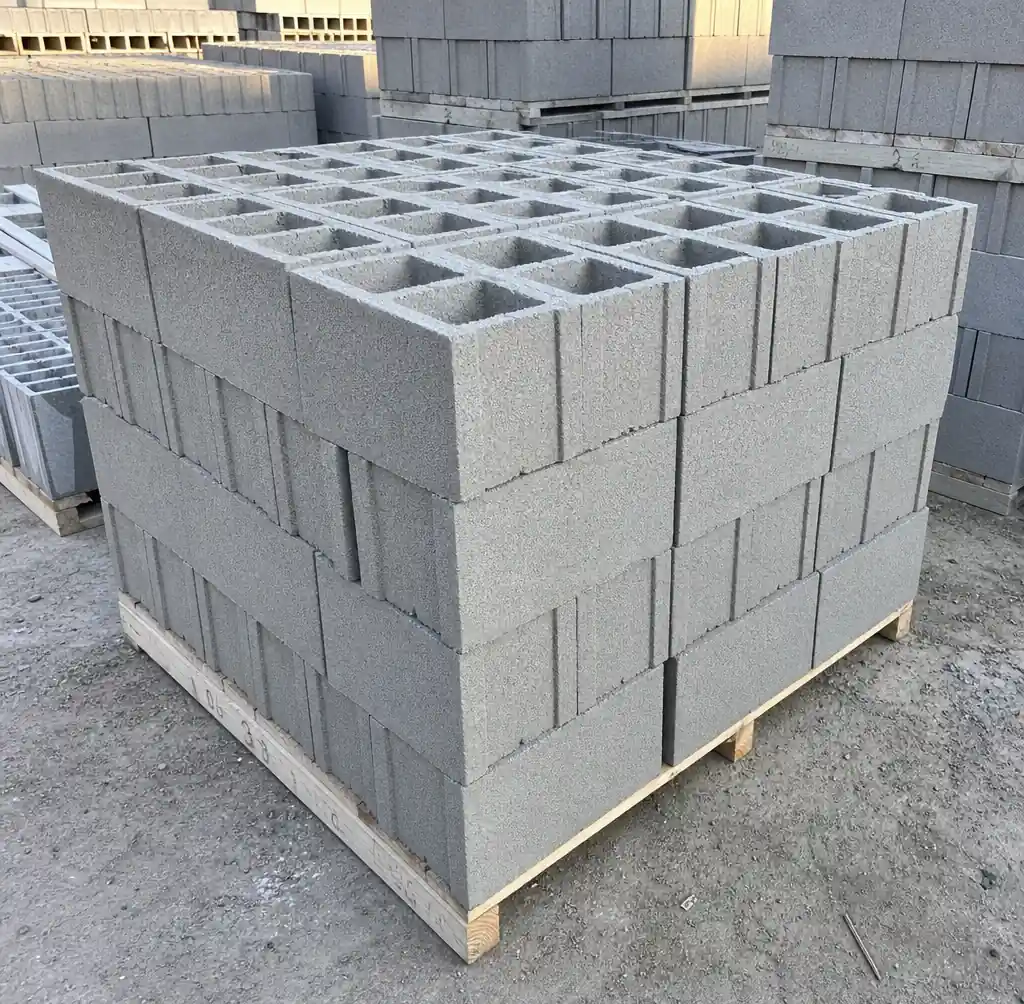
The 30,720 blocks per day assumes 8-hour shifts at 85% efficiency—a realistic target accounting for material refilling, mold changeovers, and maintenance breaks. Actual output varies by block configuration:
- Standard hollow blocks (390×190×190mm): 3,840 blocks/hour, 30,720 blocks/day
- Solid bricks (240×115×90mm): 8,200 bricks/hour, 65,600 bricks/day
- Interlocking pavers (200×100×80mm): 6,400 pavers/hour, 51,200 pavers/day
- Curbstones (500×200×250mm): 1,920 pieces/hour, 15,360 pieces/day
Block configuration changes require 25-35 minutes for mold replacement and parameter adjustment. Operations producing multiple block types daily lose 8-12% capacity to changeover time.
Power and Infrastructure Requirements
The QT8-15’s 51.25 kW power demand creates specific infrastructure needs that differentiate mid-scale from small-scale operations.
Electrical System
380V three-phase power at 100-amp capacity handles the main pressing motor (37 kW), vibration motors (2 × 5.5 kW), and hydraulic pump (3 kW). Facilities operating on single-phase power require transformer installation costing $3,500-$6,500 depending on local utility requirements.
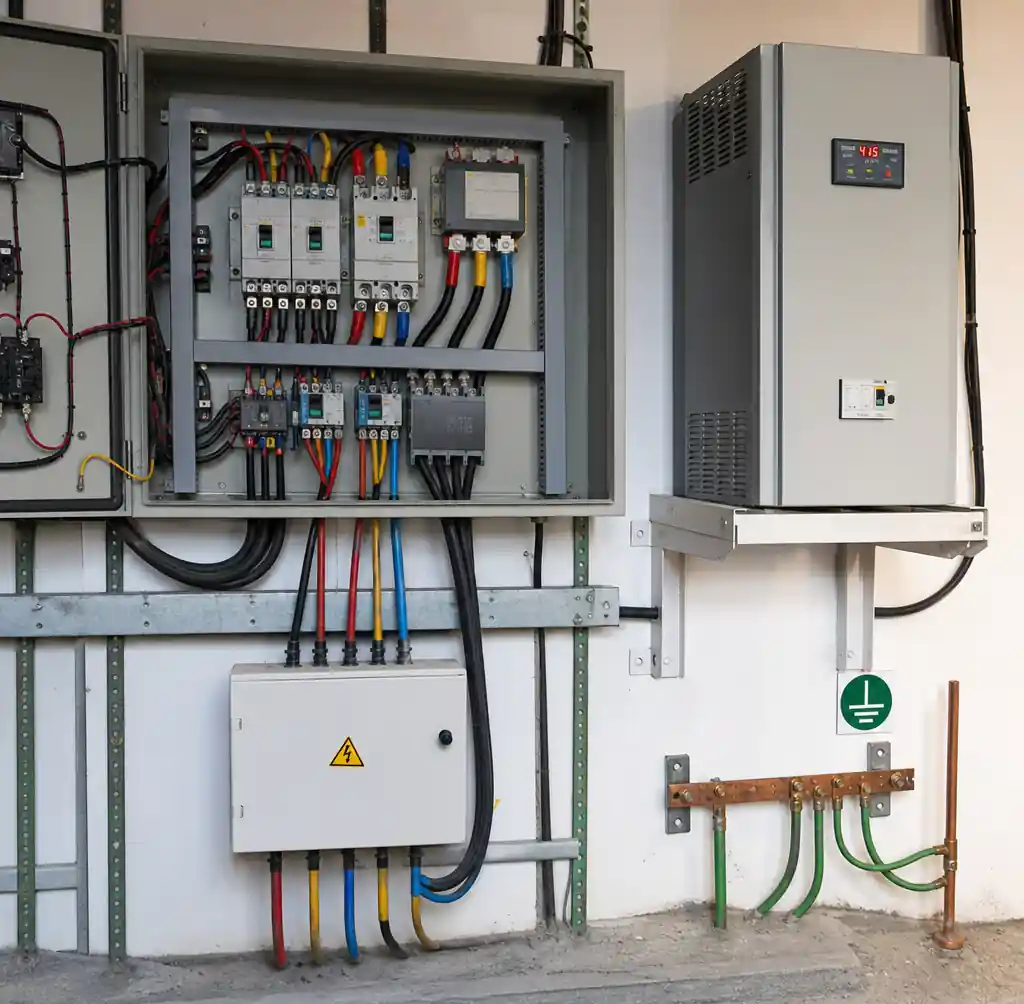
Voltage fluctuations exceeding ±5% damage hydraulic control boards and vibration motor bearings. Operations in areas with unstable grid power need voltage stabilizers ($2,200-$4,000 for 60 kW capacity) or risk $8,000-$15,000 control system repairs.
Foundation Specifications
The 18,500 kg machine weight concentrates on a 9.8m × 3.6m footprint, creating 52 kg/m² ground pressure. Standard industrial floors support 300-500 kg/m² without issue, but older warehouse floors may require reinforcement.
Concrete foundation specifications: 400mm depth, C30 grade concrete (30 MPa compressive strength), reinforced with 12mm rebar at 200mm spacing. Foundation curing requires 28 days before machine installation. Contractors cutting curing time to 14 days risk foundation cracking and machine misalignment within 8-14 months.
Investment Cost Analysis
QT8-15 pricing varies by manufacturer, included components, and shipping logistics, but realistic total investment ranges differ significantly from advertised machine-only prices.
Complete System Investment
| Componente de coste | Range (USD) | Notes |
|---|---|---|
| QT8-15 Main Machine | $45,000 – $58,000 | Varies by hydraulic components, control systems |
| Hormigonera (1.5m³) | $8,500 – $12,000 | Planetary mixer for consistent batching |
| Conveyor System | $6,000 – $9,500 | Block transfer from machine to stacking area |
| Apilador de bloques (automatic) | $12,000 – $18,000 | Reduces labor, improves stacking consistency |
| Pallet System | $4,500 – $7,000 | 800-1,200 pallets for production flow |
| Foundation & Installation | $8,000 – $14,000 | Site preparation, electrical, commissioning |
| Initial Raw Materials | $3,000 – $5,000 | First month cement, aggregates, additives |
| Training & Spare Parts | $2,500 – $4,000 | Operator training, critical components |
| Total Investment | $89,500 – $127,500 | Complete operational system |
Manufacturers quoting $45,000-$55,000 advertise machine-only pricing. Operations failing to budget for complete system costs face production delays of 4-8 weeks and emergency equipment purchases at 25-40% price premiums.
Operating Costs per 1,000 Blocks
Understanding per-unit production costs determines pricing strategy and profit margins:
- Raw materials: $28-$35 (cement $18-$22, aggregates $6-$8, additives $4-$5)
- Electricity: $3.20-$4.80 (51.25 kW × 0.26 hours × $0.12-$0.18/kWh)
- Trabajo: $9-$15 (3-4 workers × $72-$96 daily wage ÷ 30.72 thousand blocks)
- Maintenance: $1.80-$2.50 (hydraulic oil, seals, wear parts amortized)
- Depreciation: $3.50-$4.80 (5-year lifespan, $89,500-$127,500 investment)
Total cost per 1,000 blocks: $45.50-$62.10
Market pricing for standard hollow blocks ranges from $85-$140 per thousand depending on region and competition, creating gross margins of $23-$78 per thousand blocks before fixed costs.
ROI Projections and Break-Even Analysis
Financial viability depends on production volume, market pricing, and capacity utilization—variables that fluctuate significantly across markets.
Three Production Scenarios
| Scenario | Daily Production | Monthly Revenue | Monthly Costs | Net Profit | ROI Timeline |
|---|---|---|---|---|---|
| Conservative (60% capacity) | 18,400 blocks | $22,080 @ $120/thousand | $13,248 | $8,832 | 12-16 months |
| Moderate (75% capacity) | 23,040 blocks | $27,648 @ $120/thousand | $16,560 | $11,088 | 9-12 months |
| Optimal (85% capacity) | 26,112 blocks | $31,334 @ $120/thousand | $18,763 | $12,571 | 7-10 months |
These calculations assume $120 per thousand selling price and $72 per thousand variable costs. Markets with pricing below $95 per thousand or where variable costs exceed $78 per thousand extend ROI timelines beyond 18 months.
Operations achieving ROI under 12 months typically benefit from three factors: established customer relationships reducing sales cycles, owned land eliminating rental costs, and existing electrical infrastructure avoiding transformer expenses.
QT8-15 vs. Alternative Production Solutions
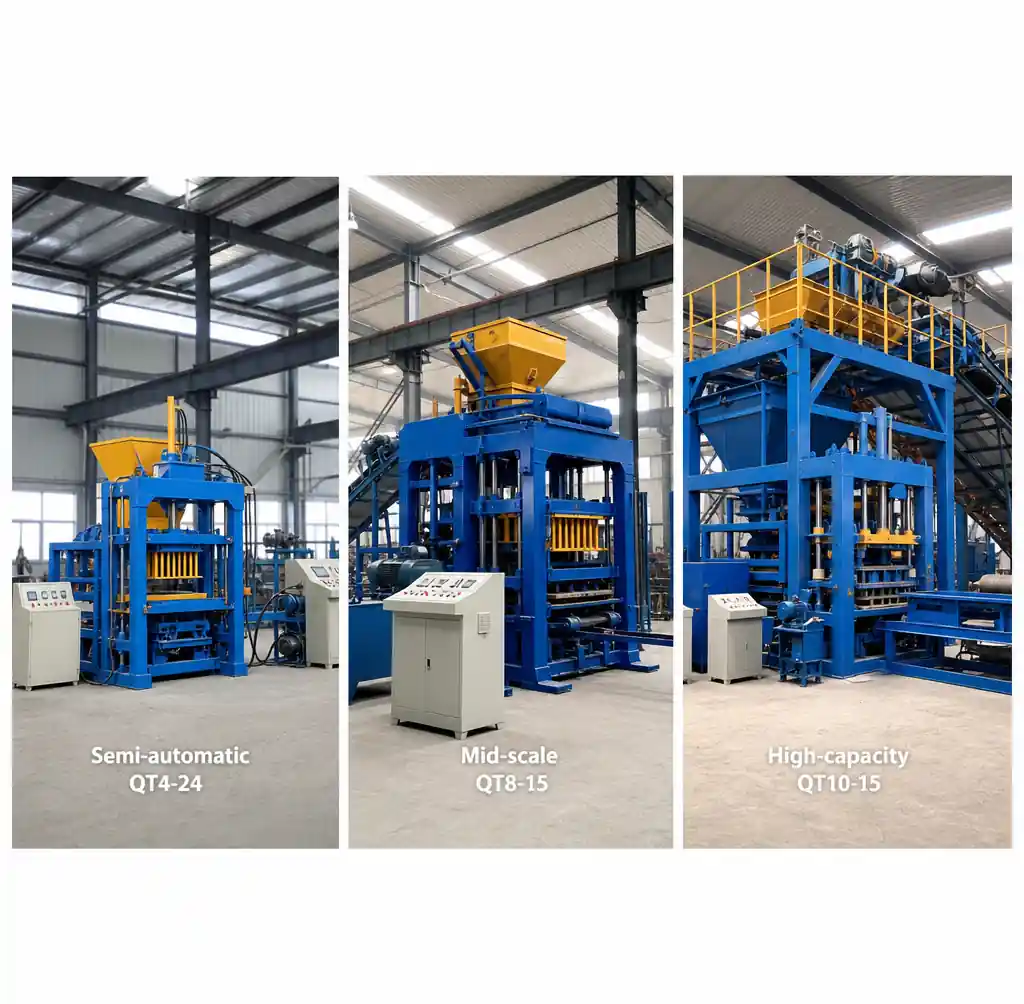
Selecting optimal equipment requires comparing the QT8-15 against both smaller and larger alternatives in terms of capacity, cost, and operational complexity.
| Factor | QT4-24 Semi-Auto | QT8-15 Auto | QT10-15 Auto |
|—|—|—|
| Capacidad diaria | 9,600-12,000 blocks | 26,000-30,720 blocks | 40,000-46,080 blocks |
| Investment Cost | $32,000-$48,000 | $89,500-$127,500 | $145,000-$195,000 |
| Labor (per shift) | 5-6 workers | 3-4 workers | 3-4 workers |
| Cycle Time | 25-30 seconds | 15-18 seconds | 12-15 seconds |
| Power Requirement | 24.75 kW | 51.25 kW | 63.5 kW |
| Footprint | 22 m² | 35.3 m² | 42 m² |
| Ideal para | 8,000-15,000 daily demand | 20,000-35,000 daily demand | 40,000+ daily demand |
The QT8-15 makes economic sense when daily demand consistently exceeds 18,000 blocks. Operations with demand below 15,000 blocks pay for unused capacity—a QT4-24 semi-automatic machine provides better cost efficiency. Demand regularly exceeding 35,000 blocks justifies the QT10-15’s higher capacity despite greater investment.
Maintenance Requirements for Mid-Scale Operations
Automatic block machines introduce hydraulic and electronic systems requiring scheduled maintenance that semi-automatic operations often skip.
Daily Maintenance (15 minutes pre-shift)
Hydraulic oil level inspection prevents pump cavitation that destroys $3,500-$5,500 hydraulic pumps. Oil should appear translucent amber—cloudy color indicates oxidation requiring immediate change. Vibration motor bolt tightness checks prevent bearing damage; loose mounting bolts allow vibration transmission to the frame, causing cracks visible at 8-12 months.
Mold cavity cleaning removes concrete residue affecting block dimensional accuracy. Residue buildup creates 1-2mm variations, causing block rejection rates to climb from 2-3% to 8-12% over a two-week period.
Weekly Maintenance (45-60 minutes)
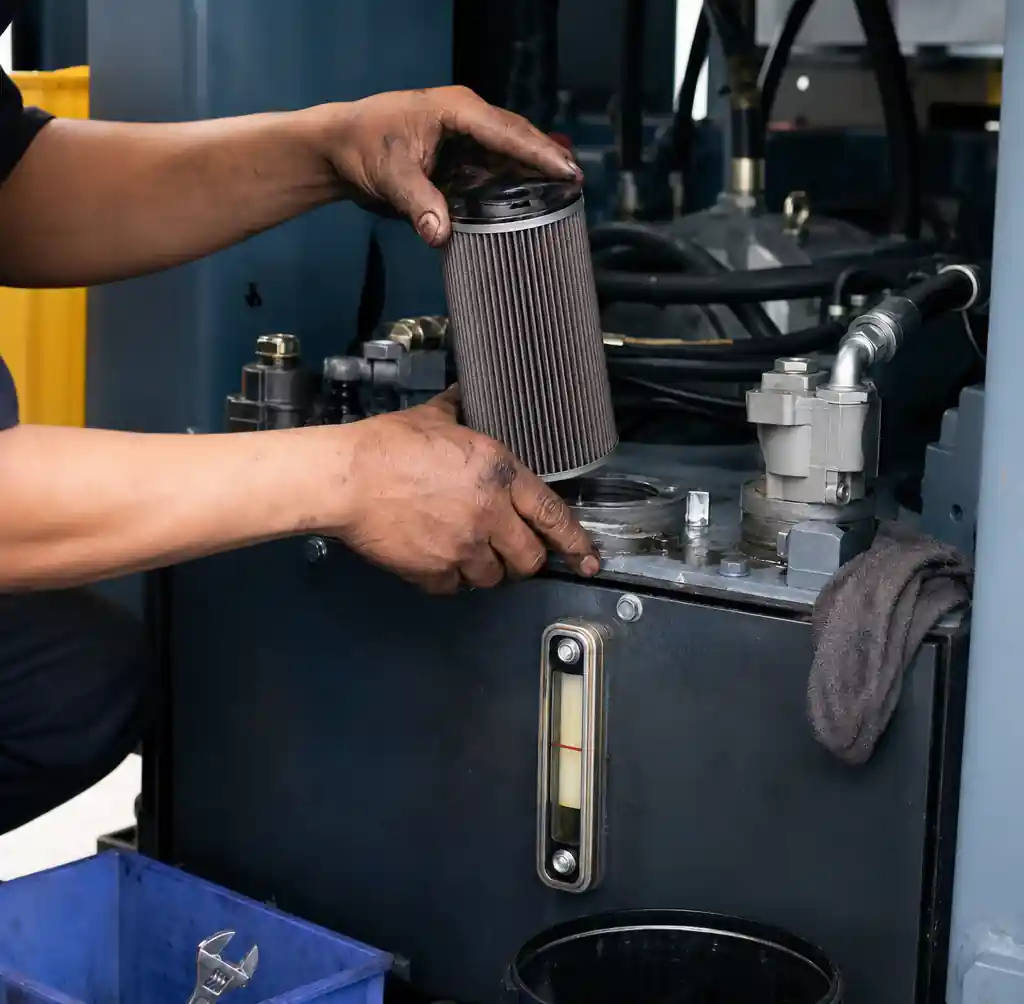
Hydraulic filter inspection catches contamination before component damage. Filters showing pressure differential above 15 PSI require immediate replacement. A $65 filter replacement prevents $8,000-$12,000 valve manifold damage.
Electrical connection tightness prevents arcing that carbonizes wire insulation. Loose connections create intermittent control problems that operators blame on “electrical gremlins” when simple terminal tightening would solve the issue.
Monthly Maintenance (2-3 hours)
Complete hydraulic oil analysis tests viscosity, contamination, and additive depletion. Oil maintaining ISO cleanliness code 18/16/13 extends component life 200-300%. Operations skipping oil analysis replace hydraulic cylinders at 6,000-8,000 hours instead of 12,000-15,000 hours, doubling maintenance costs.
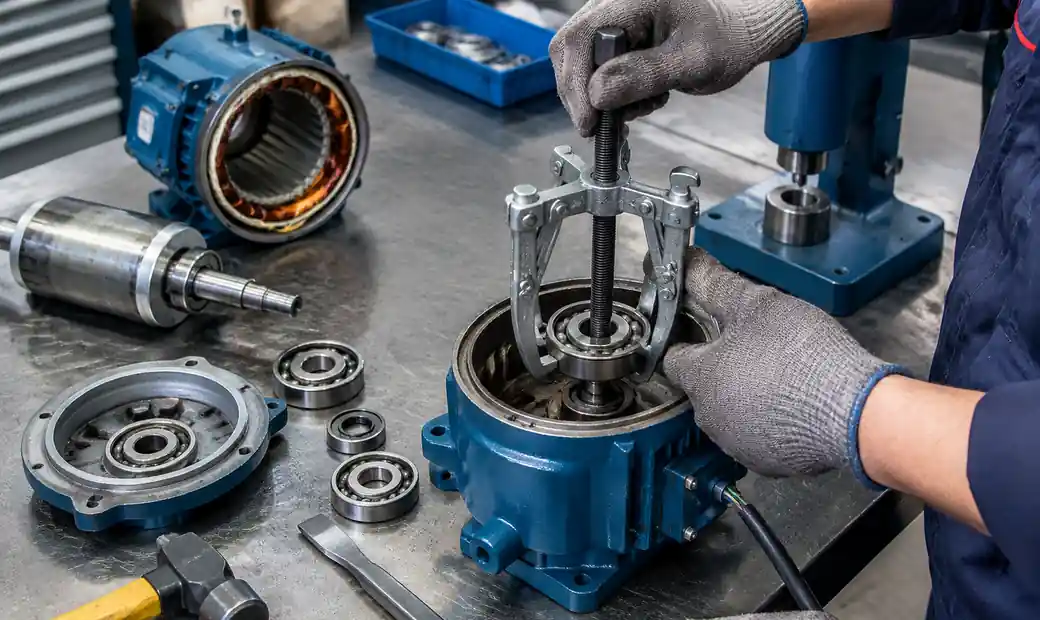
Vibration motor bearing inspection detects developing problems audibly before catastrophic failure. Bearings exhibiting whining sounds need replacement within 2-3 weeks. Ignoring warning signs leads to motor burnout requiring $1,800-$2,400 motor replacement versus $220-$380 bearing replacement.
Scaling from Small to Mid-Scale Production
Operations expanding from semi-automatic to QT8-15 automatic machines encounter operational changes beyond simply running faster equipment.
Workflow Transformation
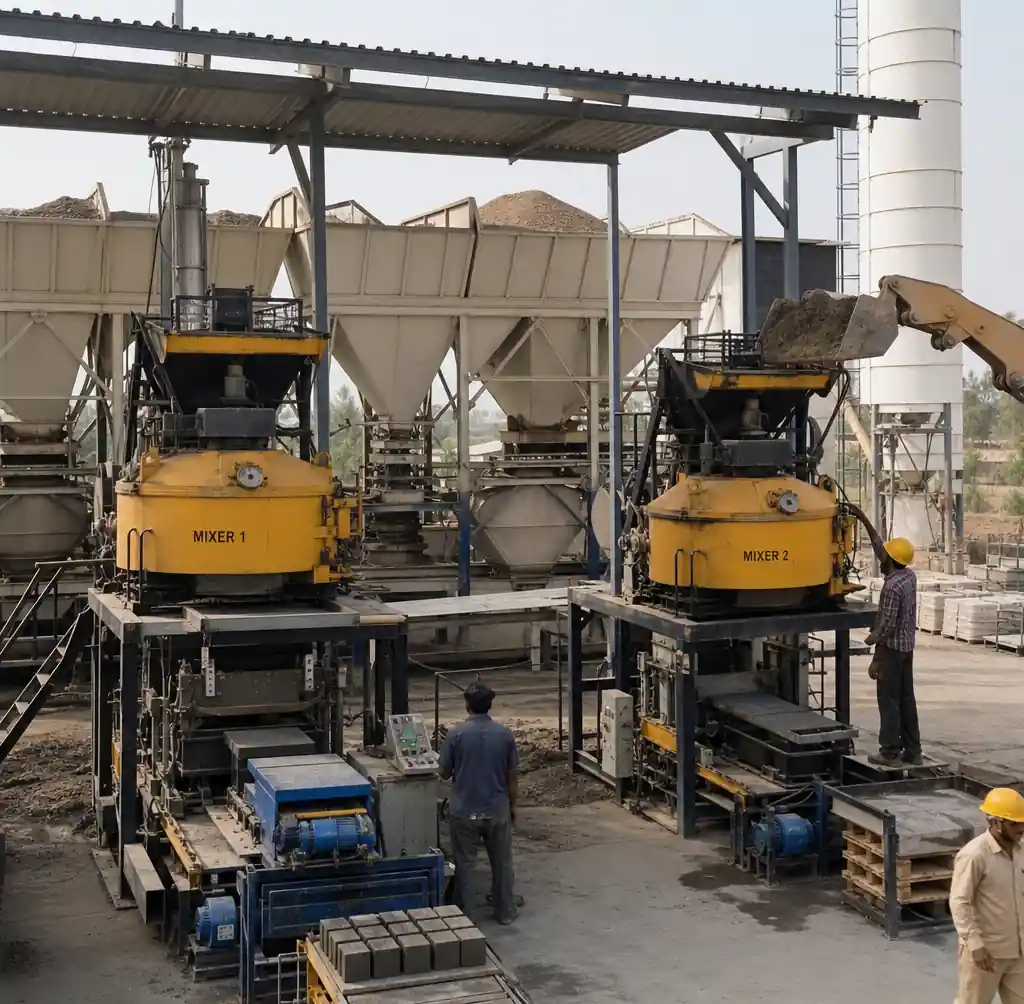
Semi-automatic operations batch-produce blocks with workers manually moving materials and blocks. The QT8-15’s continuous production requires constant material flow—running out of mixed concrete stops production for 12-18 minutes per incident. Operations averaging 2-3 material shortages per shift lose 36-54 minutes daily (7.5-11% capacity loss).
Implementing a two-mixer rotation system eliminates shortages. One mixer produces while the second batch loads ingredients. This requires purchasing a second mixer ($8,500-$12,000) but recovers capacity worth $3,800-$5,200 monthly at $120 per thousand pricing.
Quality Control Systems
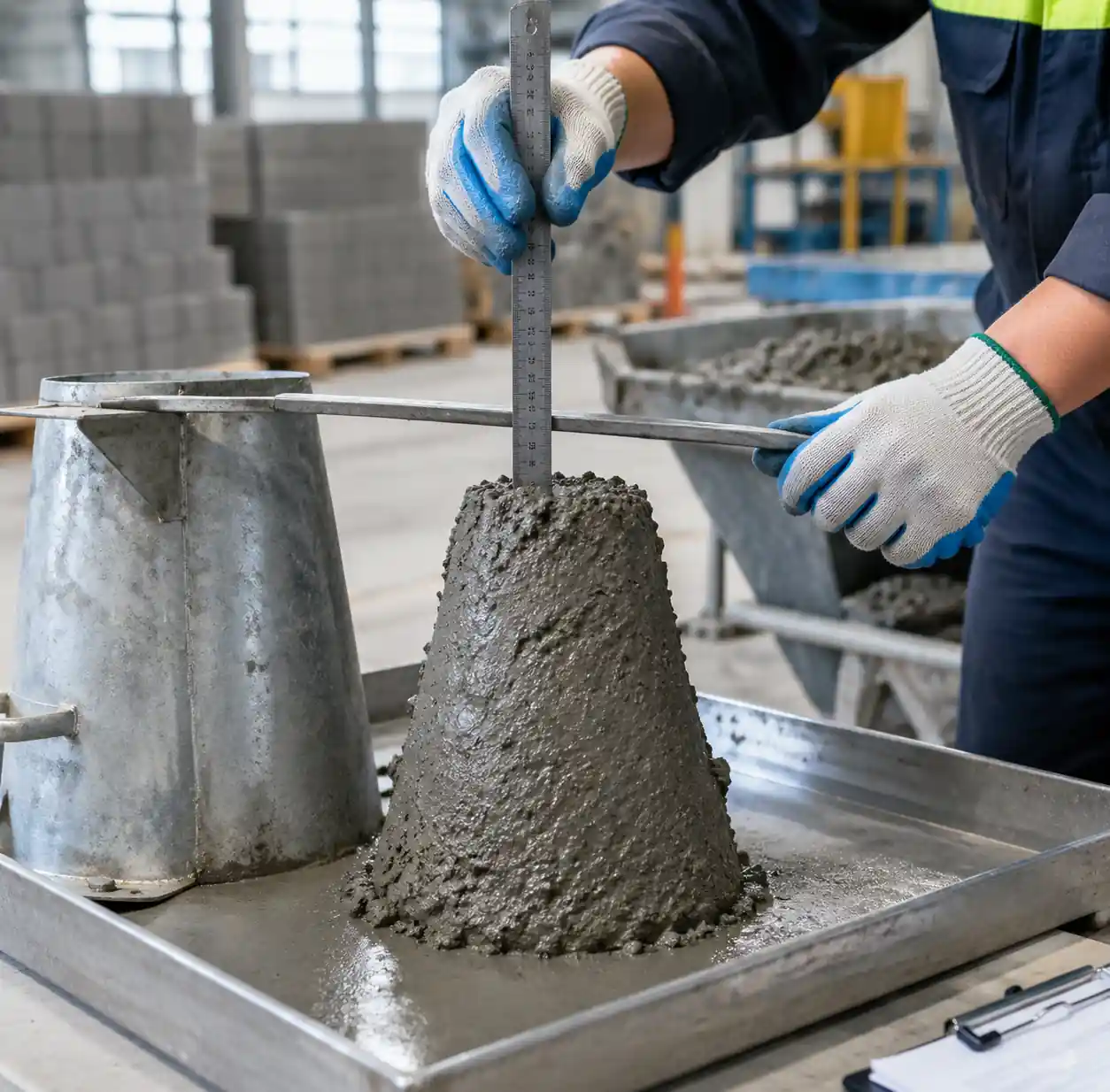
Higher production rates make visual inspection insufficient—defects slip through at 4-6% rates versus 1-2% with semi-automatic production. Implementing dimensional checking (every 500 blocks) and compressive strength testing (daily samples) identifies problems before producing thousands of rejected blocks.
A concrete compression tester costs $3,200-$5,500 but prevents incidents where 8,000-15,000 blocks fail strength requirements. Rejected blocks create $1,920-$4,200 losses in materials plus customer relationship damage that costs far more than testing equipment.
Real-World Performance: What Operators Report
Manufacturers advertise ideal specifications. Operators running QT8-15 machines daily report realities that affect actual productivity.
Common Production Challenges
Material consistency issues: Aggregate moisture content varying by 2-4% changes optimal water ratio. Operations not adjusting mixer water inputs produce blocks with 8-12% strength variation. Installing a moisture meter ($180-$320) and training operators to adjust water ratios solves this problem.
Pallet flow bottlenecks: The QT8-15 produces blocks faster than workers manually move pallets. Operations without automatic stacking systems report workers “constantly running” to keep pace. This creates worker fatigue, safety incidents, and turnover rates 40-60% higher than semi-automatic operations.
Mold wear patterns: High-production molds wear unevenly, with corner blocks showing dimensional issues 2-3 months before center blocks. Manufacturers recommend replacing all mold cavities simultaneously ($3,800-$5,200), but operators report rotating worn molds to low-volume product lines extends useful life by 35-50%.
Operator Insights Worth Knowing
Operators running QT8-15 machines for 18+ months identify specific modifications improving reliability:
Installing hydraulic oil coolers in hot climates (above 32°C ambient) prevents oil temperature from exceeding 65°C. Oil operating at 70-75°C degrades 3-4 times faster, requiring changes every 800-1,000 hours instead of 2,000-2,500 hours.
Adding a concrete temperature sensor prevents batching cold materials in winter. Concrete below 5°C requires 40-60% longer curing time before demolding. Warming water to 35-40°C costs $15-$25 monthly in heating but prevents demolding damage affecting 5-8% of blocks.
Using quick-disconnect hydraulic couplings ($380-$520 installed) on the pressing cylinder reduces mold changeover time from 35 minutes to 18-22 minutes. Operations changing molds twice daily recover the investment in 8-12 weeks through increased production time.
Preguntas frecuentes
Q: Can the QT8-15 produce different block sizes without buying multiple machines?
Yes, through mold changeovers. The 1,050mm × 850mm molding area accommodates molds for standard blocks, solid bricks, pavers, and curbstones. Changeover takes 25-35 minutes. Operations producing 2-3 different products daily should budget 60-90 minutes total changeover time, reducing effective capacity by 12-18%. Businesses producing only one product type avoid this capacity loss.
Q: What’s the minimum daily production to justify a QT8-15 versus staying with semi-automatic?
18,000-20,000 blocks daily. Below 15,000 blocks, a semi-automatic machine costs $32,000-$48,000 and meets demand with lower fixed costs. Between 15,000-18,000 blocks represents a gray zone where either machine type works depending on labor costs and growth projections. Above 20,000 blocks daily, the QT8-15’s labor efficiency and consistent quality justify the higher investment.
Q: How long does operator training take for workers experienced with semi-automatic machines?
3-5 days for basic operation, 2-3 weeks for troubleshooting proficiency. Workers familiar with concrete mixing and block production learn machine operation quickly—the challenge is understanding hydraulic systems and electronic controls. Sending 1-2 operators for factory training ($1,200-$2,000 including travel) prevents costly mistakes during the first 60-90 days when incorrect pressure settings or maintenance oversights cause the most damage.
Q: What’s the realistic lifespan before major component replacement?
5-7 years with proper maintenance, 3-4 years with poor maintenance. Main hydraulic cylinders, vibration motors, and control systems reach 12,000-15,000 operating hours before requiring replacement. At 2,400-2,800 hours annually (single shift), this represents 5-7 years. Operations running two shifts (4,800-5,600 hours annually) reach this point in 2.5-3.5 years. The machine frame lasts 15-20+ years—major component replacement costs $22,000-$35,000, far less than new machine purchase.
Q: Can I start with basic equipment and add automation later?
Limited upgrade path. The QT8-15 includes core automation (hydraulic pressing, vibration control, cycle timing). You can add peripheral automation like automatic stackers ($12,000-$18,000) or conveyor systems ($6,000-$9,500) anytime. However, you cannot economically upgrade from semi-automatic to automatic—the control systems, hydraulic components, and frame design differ fundamentally. Choose the appropriate machine type initially based on realistic production projections.
Conclusión
The QT8-15 automatic block machine serves operations requiring 20,000-35,000 blocks daily—a production range where semi-automatic machines demand excessive labor while industrial plants represent overinvestment. Its 30,720 blocks per day capacity, 3-4 worker requirement, and $89,500-$127,500 complete system cost create an ROI of 7-16 months depending on market pricing and capacity utilization.
This machine makes financial sense for construction companies managing multiple projects, concrete producers adding block production to existing operations, and regional distributors supplying retail networks. It fails to justify costs for operations with demand under 15,000 blocks daily or budgets unable to absorb $90,000+ capital investment.
Success requires understanding that advertised machine prices exclude essential supporting equipment, that 30,720 blocks per day assumes 85% efficiency rarely achieved without workflow optimization, and that maintenance quality directly determines whether the machine reaches 12,000-15,000 operating hours or fails at 6,000-8,000 hours.
For mid-scale concrete block production requiring automation without industrial complexity, the QT8-15 delivers the capacity, efficiency, and investment level that match this specific market segment. Whether it matches your specific operation depends on accurate demand forecasting, realistic cost analysis, and honest assessment of your technical capabilities.
Raytone Block Machinery supplies complete automatic block production lines including the QT8-15, supporting equipment, installation, and operator training. Contact us for detailed specifications, customized production line design, and pricing based on your specific requirements and location.