





Large-scale construction projects demand consistent block supply. The QT10-15 automatic block machine delivers 46,080 standard blocks per 8-hour shift, making it suitable for contractors managing multiple sites, precast manufacturers serving regional markets, and entrepreneurs scaling from mid-capacity operations. This production rate eliminates supply bottlenecks that delay project timelines and strain contractor relationships.
This review covers the QT10-15’s technical specifications, actual production metrics across block types, power and space requirements, total investment breakdown, and ROI calculations based on current market conditions. You’ll learn whether this machine matches your production scale and capital availability.
What Makes the QT10-15 a High-Capacity System
The QT10-15 represents Raytone Block Machinery’s large-format automatic platform. The “10” designation indicates 10-block capacity per mold cycle, while “15” refers to the 15-20 second molding cycle.
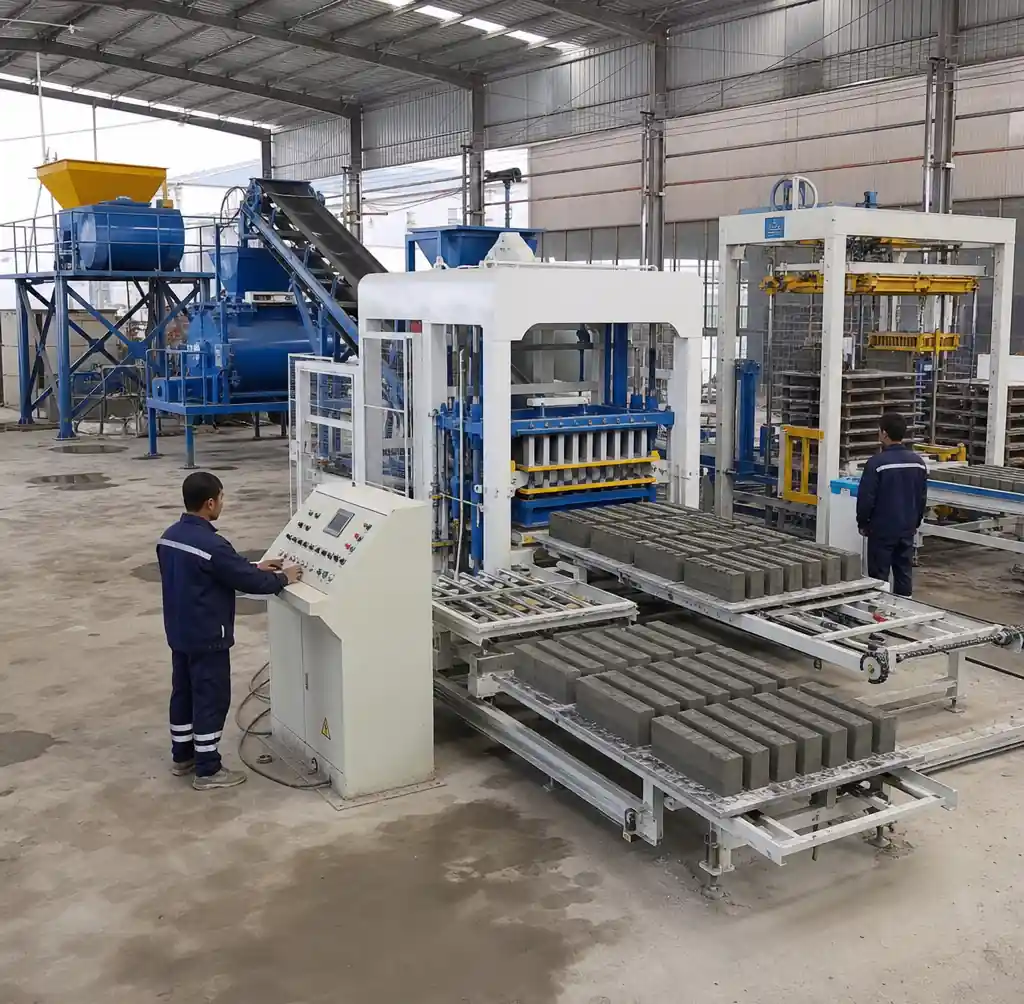
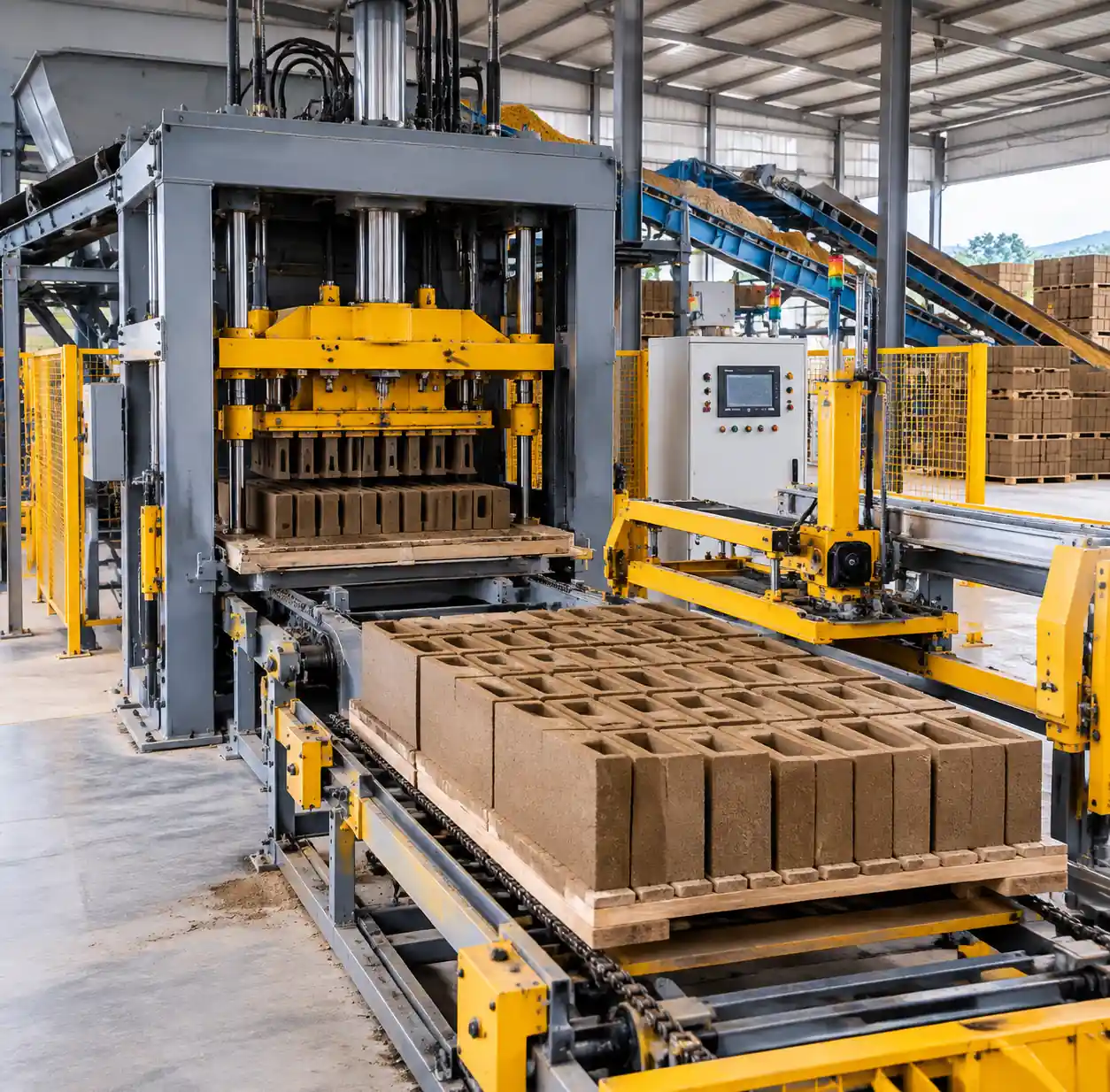
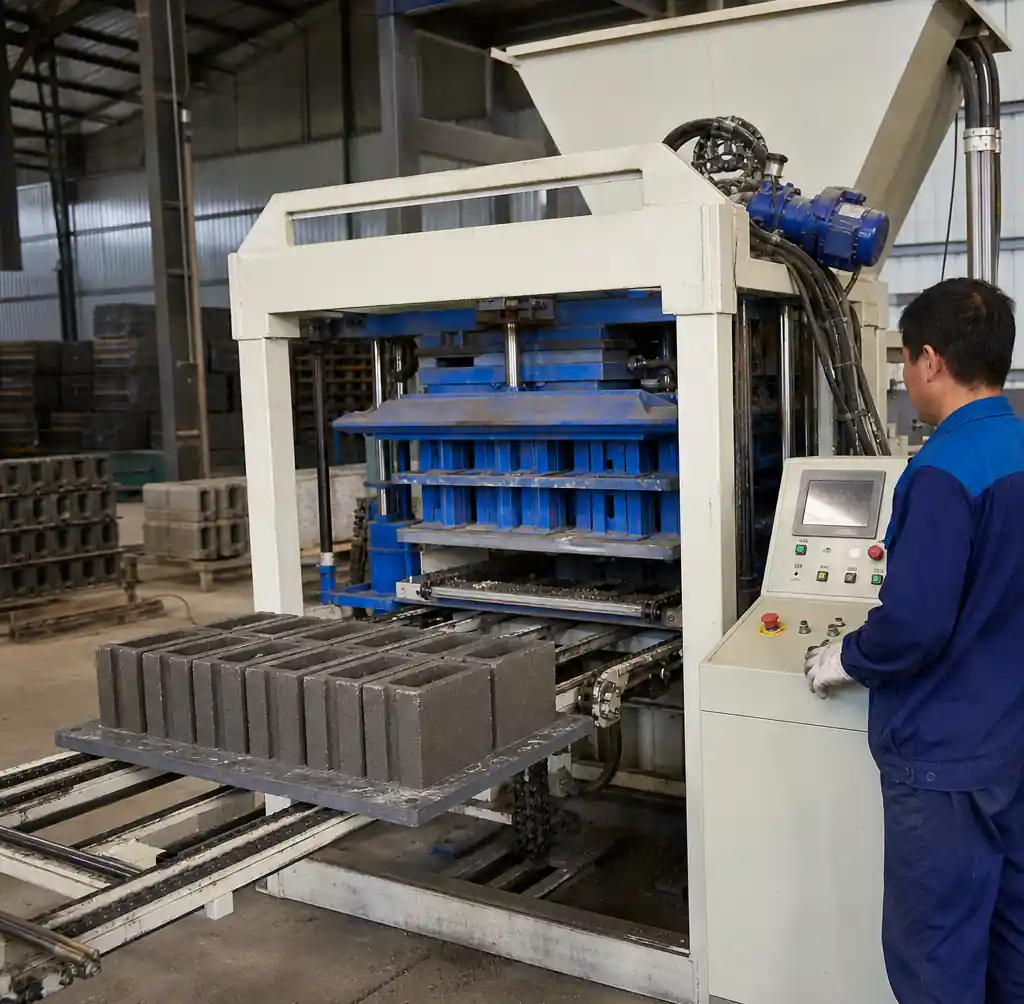
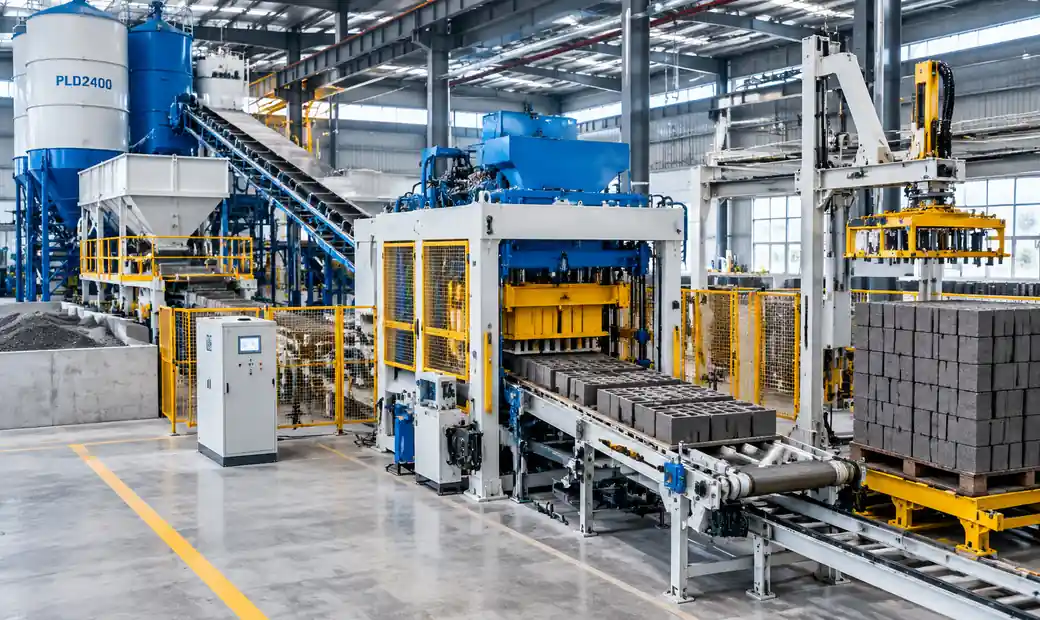
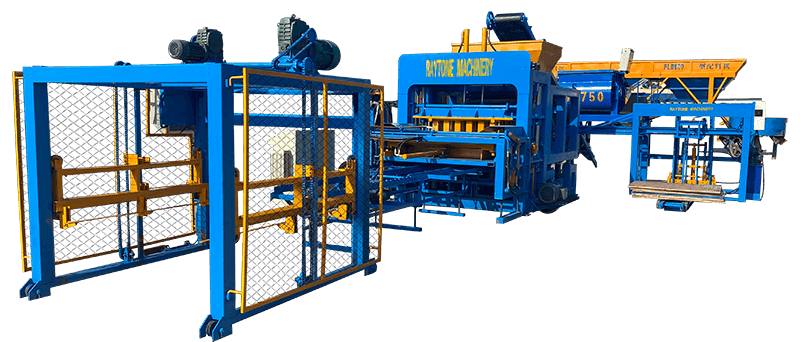
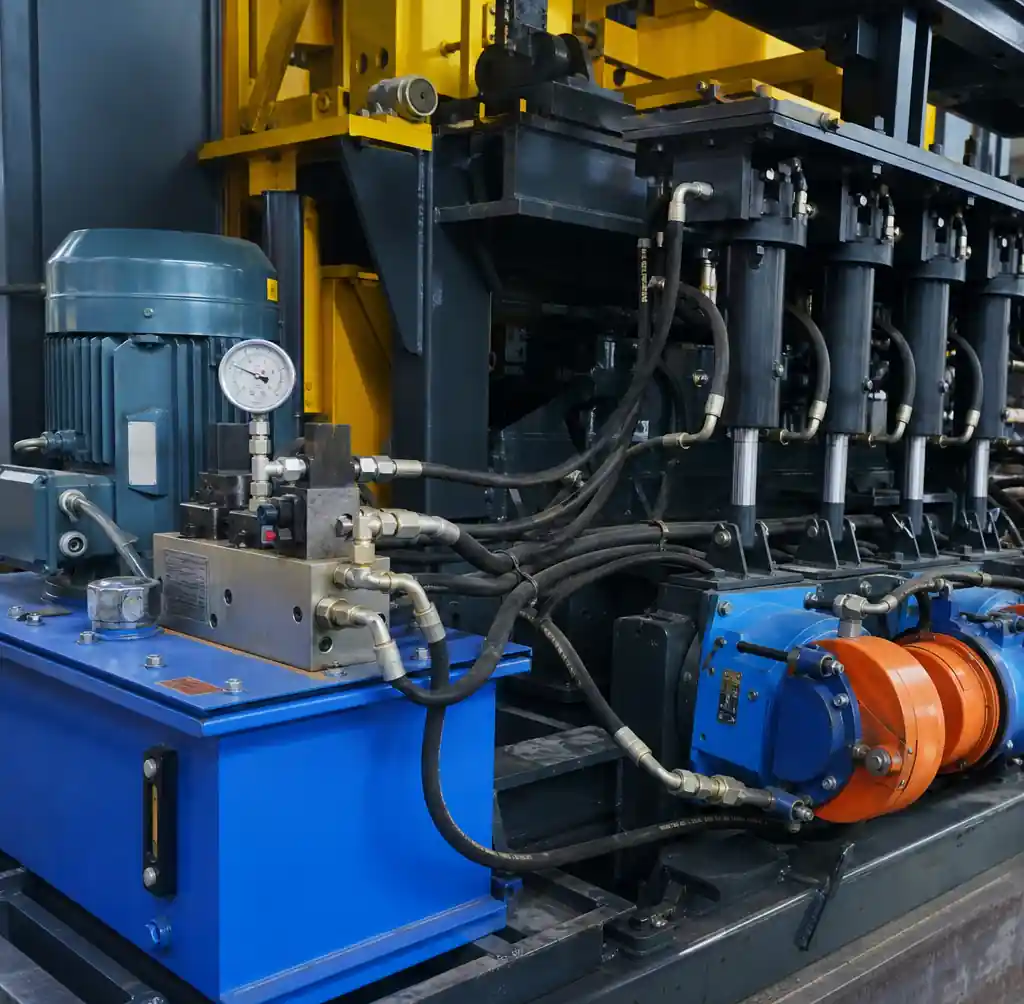
This machine integrates five automated subsystems: PLD batching machine for material ratios, JS750 mixer for concrete mixing, belt conveyor, QT10-15 host with hydraulic molding, and automatic stacking. One operator manages the line through a PLC panel.
Core Technical Specifications
| Parameter | Specification |
|---|---|
| Machine dimensions | 9,400 × 3,060 × 2,980 mm |
| Host machine weight | 12,500 kg |
| Total power requirement | 107.8 kW |
| Vibration force | 100 kN |
| Molding cycle | 15-20 seconds |
| Pallet size | 1,400 × 900 × 30 mm |
| Required workshop area | 300 m² minimum |
| Water consumption | 14 tons per day |
| Labor requirement | 5-7 operators |
| Mixer model | JS750 (750L discharge) |
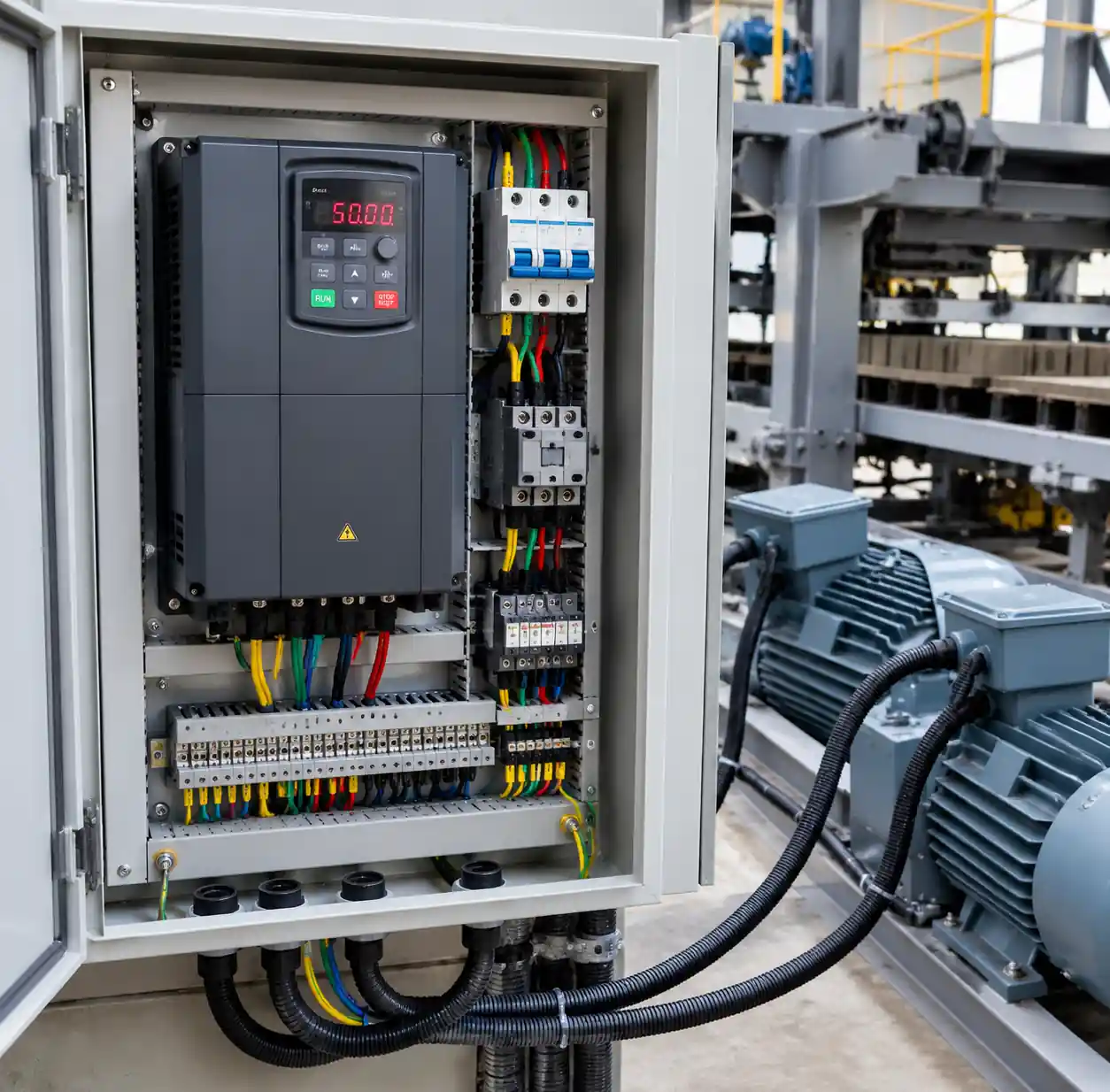
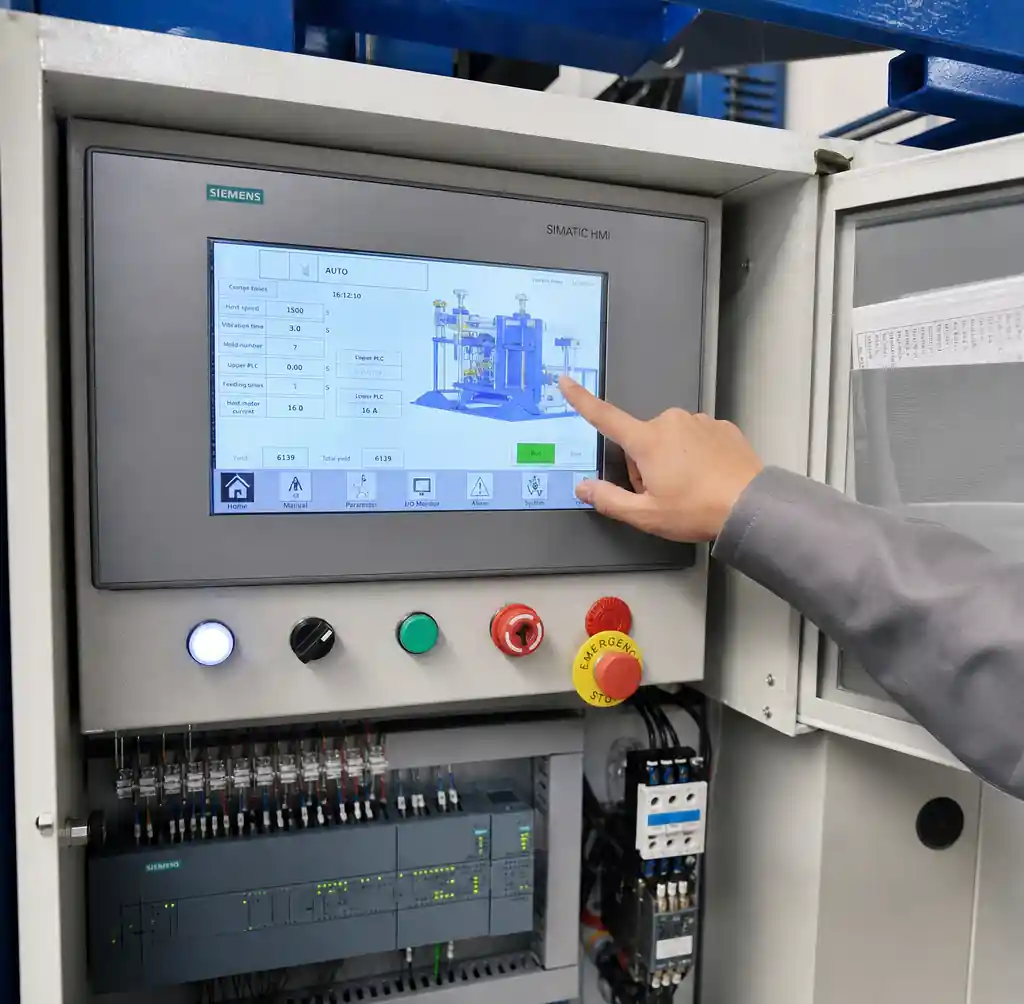
The 100 kN vibration force ensures proper concrete compaction. Siemens PLC controls the molding sequence, maintaining cycle consistency within ±0.5 seconds. This timing precision directly impacts daily output.
Production Capacity Across Block Types
Actual output varies significantly by block dimensions. Larger blocks reduce pieces per mold, while smaller formats maximize throughput.
| Block Size (L×W×H) | Pieces/Mold | Hourly Output | 8-Hour Output |
|---|---|---|---|
| 400×100×200 mm hollow | 24 | 5,760 | 46,080 |
| 400×150×200 mm hollow | 16 | 3,840 | 30,720 |
| 400×200×200 mm hollow | 12 | 2,880 | 23,040 |
| 400×250×200 mm hollow | 10 | 2,400 | 19,200 |
| 240×115×50 mm solid | 65 | 15,600 | 124,800 |
| 200×100×60 mm pavers | 44 | 7,920 | 63,360 |
Real-world production typically reaches 85-92% of theoretical capacity due to material prep delays and quality checks.
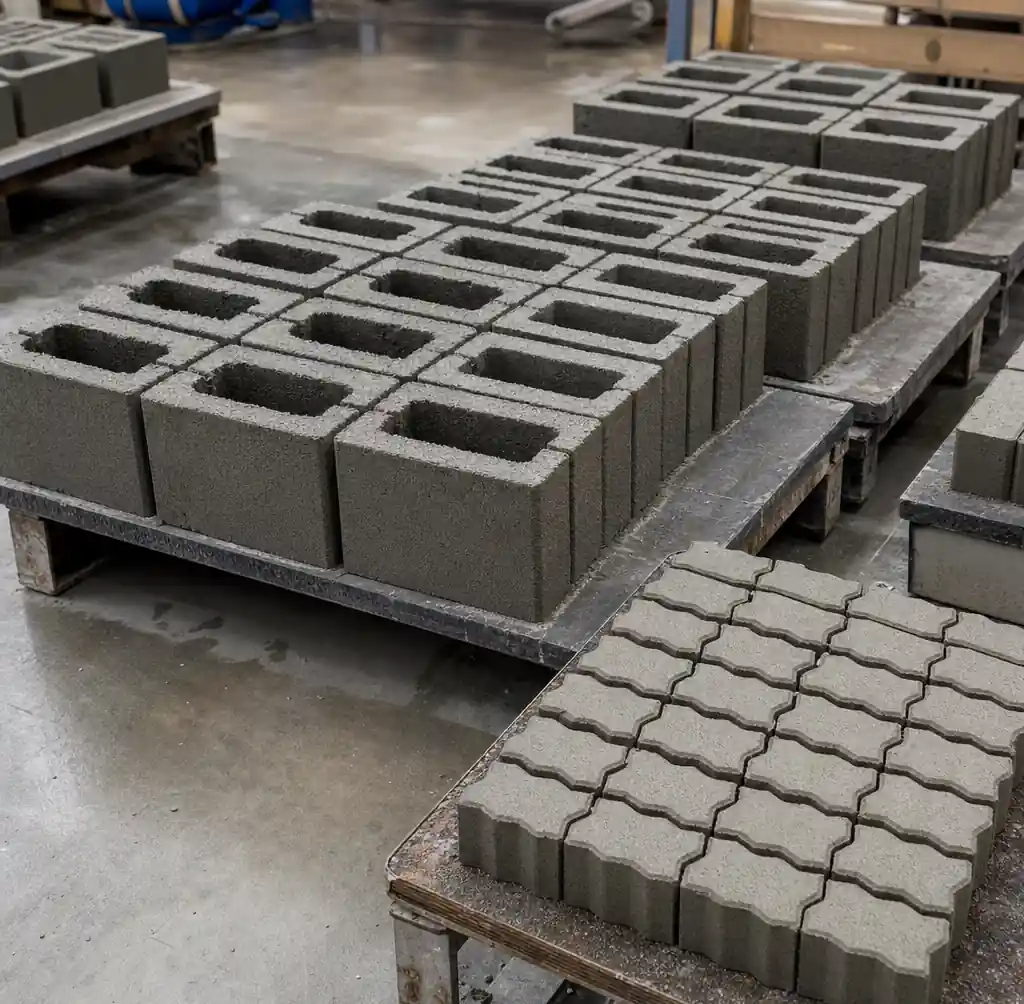
The 46,080 daily output for 400×100×200 mm blocks serves as baseline. For 400×200×200 mm blocks, expect 23,040 pieces daily. Production planning must account for your specific block mix.
Comparing QT10-15 with Other Automatic Models
Understanding where the QT10-15 sits in Raytone’s lineup helps determine whether you need this capacity or if a smaller model suffices.
| Modelo | Pieces/Mold (400×200×200) | Daily Output | Potencia | Investment Range |
|---|---|---|---|---|
| QT4-26 | 4 | 7,680 | 33.9 kW | $18,000-$24,000 |
| QT6-15 | 6 | 11,520 | 72.4 kW | $28,000-$38,000 |
| QT8-15 | 8 | 15,360 | 96.3 kW | $42,000-$56,000 |
| QT10-15 | 12 | 23,040 | 107.8 kW | $65,000-$85,000 |
The QT10-15 offers 50% more output than the QT8-15 while requiring only 12% additional power. Choose the QT8-15 if your confirmed daily demand sits at 12,000-18,000 blocks. The QT10-15 makes sense when demand exceeds 20,000 blocks daily.
Power Requirements and Infrastructure
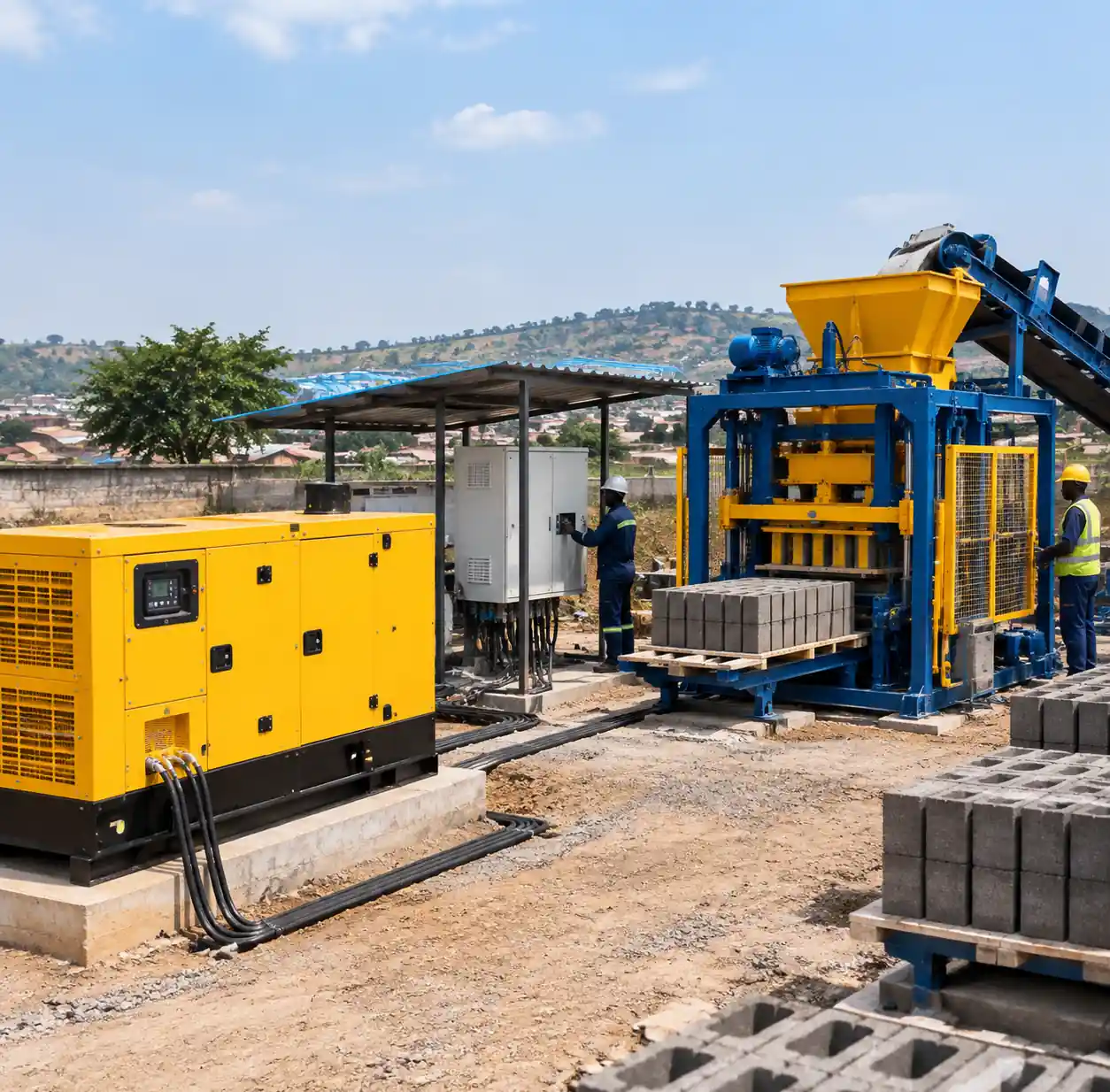
The 107.8 kW total power draws from JS750 mixer (30 kW), QT10-15 host (45 kW), batching machine (9.9 kW), conveyors (7.5 kW), stacking system (11 kW), and auxiliaries (4.4 kW).
You need 380V three-phase supply with 150 kVA transformer capacity. Facilities with existing 100 kVA transformers require electrical upgrades ($3,500-$6,000). Areas with unstable power should add voltage stabilizers ($1,200-$2,500).
Space Requirements and Layout
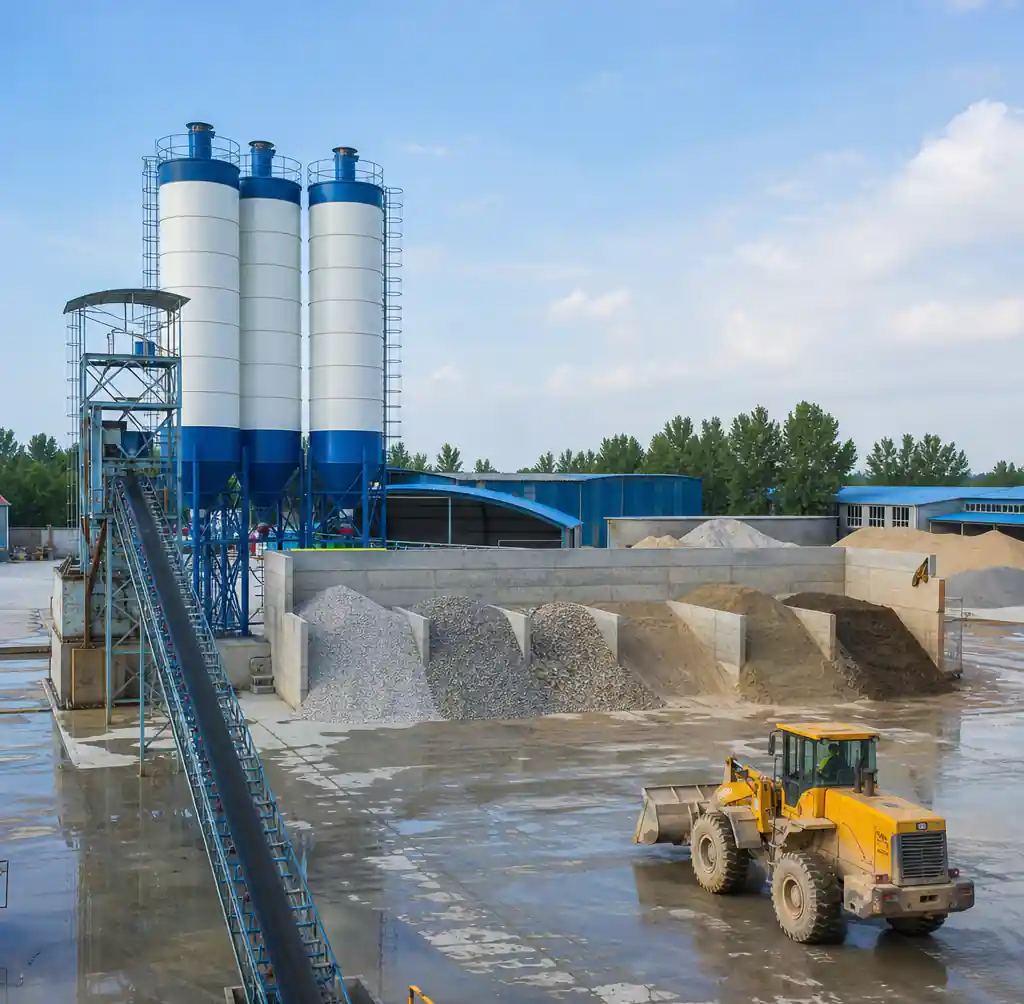
Production zone (300 m²): Batching machine, mixer, host machine, conveyor, stacking area. Needs 4.5m ceiling height.
Material storage (200-250 m²): Covered storage for cement (50-ton capacity), aggregate bins (60-80 tons), sand (40-50 tons). The machine consumes approximately 15 tons of raw materials per shift at peak production.
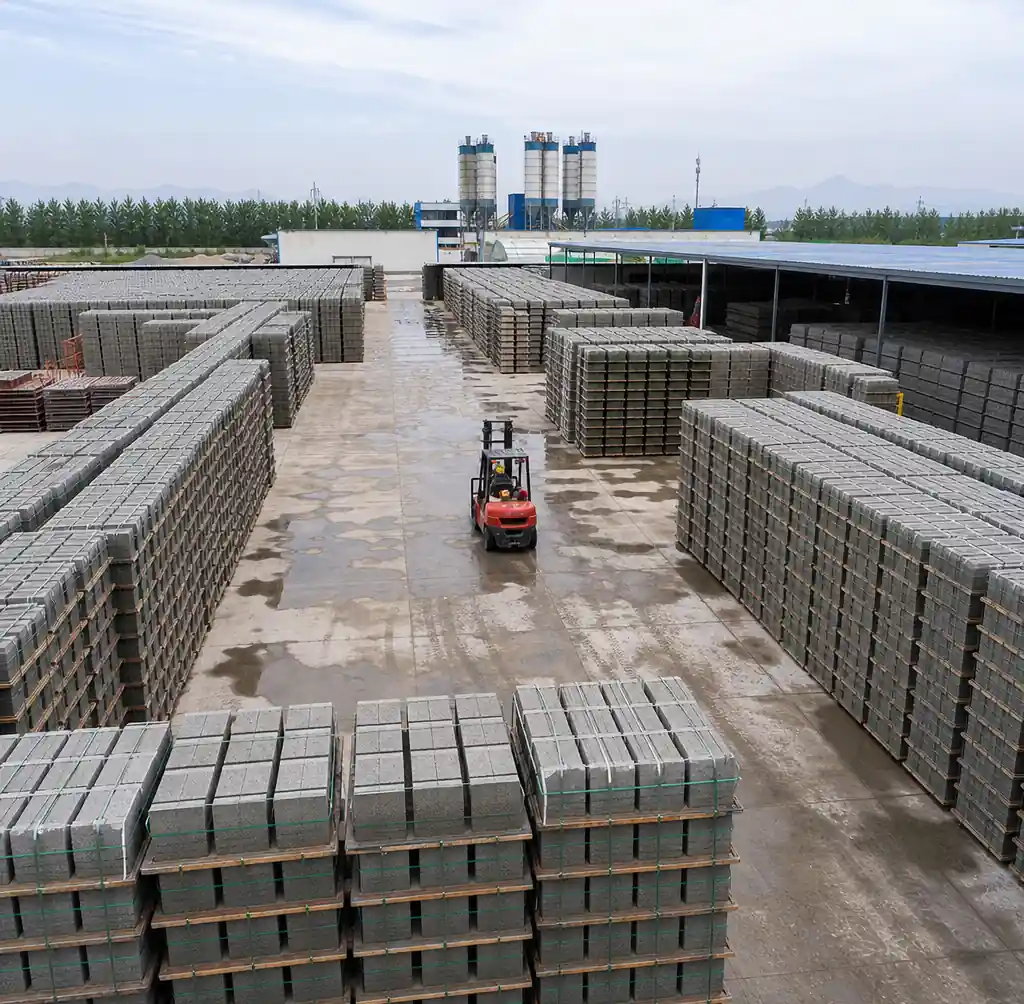
Curing area (1,200-1,500 m²): Space for 7-10 days of inventory. At 23,000 blocks daily, you need space for 160,000-230,000 blocks.
Pallet circulation: Requires 1,200-1,500 pallets. Budget 150 m² for pallet storage and washing.
Total facility footprint: 1,850-2,300 m² minimum for efficient operations.
Investment Breakdown and Total Cost
Equipment purchase represents 60-70% of total investment.
Equipment Costs
| Component | Rango de precios |
|---|---|
| QT10-15 host machine | $42,000-$52,000 |
| JS750 mixer | $8,500-$11,000 |
| PLD batching machine | $6,500-$9,000 |
| Belt conveyor system | $3,500-$5,000 |
| Automatic stacking machine | $12,000-$16,000 |
| PLC control system | $4,500-$6,000 |
| Hydraulic station | $5,000-$7,000 |
| Subtotal: Core Equipment | $82,000-$106,000 |
| Shipping (FOB to destination) | $6,500-$12,000 |
| Customs and duties | $8,000-$15,000 |
| Total Equipment Landed | $96,500-$133,000 |
Infrastructure and Setup
Electrical installation ($8,000-$15,000), foundation and floor ($12,000-$18,000), workshop structure ($15,000-$25,000), loader ($18,000-$35,000), mold set ($6,000-$9,000), pallets ($18,000-$24,000), installation ($5,000-$8,000).
Infrastructure subtotal: $82,000-$134,000
Working Capital
Raw material inventory (2 weeks): $8,000-$12,000. Operating expenses (1 month): $15,000-$22,000.
Total project investment: $201,500-$301,000 for turnkey operation. Most operators invest $220,000-$260,000.
Operating Costs and Production Economics
Daily operating costs determine profitability and ROI timeline.
Daily Operating Costs (23,040 blocks @ 400×200×200 mm)
Raw materials per 1,000 blocks: Cement (140-160 kg) $18-$22, crushed stone (820-880 kg) $12-$16, sand (380-420 kg) $6-$9, water (180-200 L) $0.30-$0.50.
Material cost per 1,000 blocks: $36.30-$47.50
Daily material cost: $836-$1,094
Trabajo (5-7 operators × 2 shifts): $160-$280
Electricity (107.8 kW × 8h × $0.10-$0.15/kWh): $86-$129
Maintenance: $45-$70
Total daily cost: $1,127-$1,573
Cost per block: $0.049-$0.068
Selling prices range from $0.25-$0.45 per block. Using conservative pricing ($0.30) and mid-range costs ($0.058), gross profit reaches $0.242 per block or $5,574 daily.
ROI Calculation and Payback Period
Conservative scenario (19,000 blocks daily, 250 working days):
- Annual production: 4,750,000 blocks
- Revenue (@ $0.30/block): $1,425,000
- Operating costs (@ $0.058/block): $275,500
- Labor and overhead: $120,000
- Gross profit: $1,029,500
With $240,000 investment, payback: 2.8 months.
Realistic scenario with 60% financed at 8%:
- Annual loan payment: $36,600
- Net profit after debt: $992,900
- ROI: 413% annually
- Payback on equity ($96,000): 35 days
The QT10-15 attracts established manufacturers with existing distribution networks and confirmed demand to maintain 75-85% utilization rates.
Key Advantages of the QT10-15 Platform
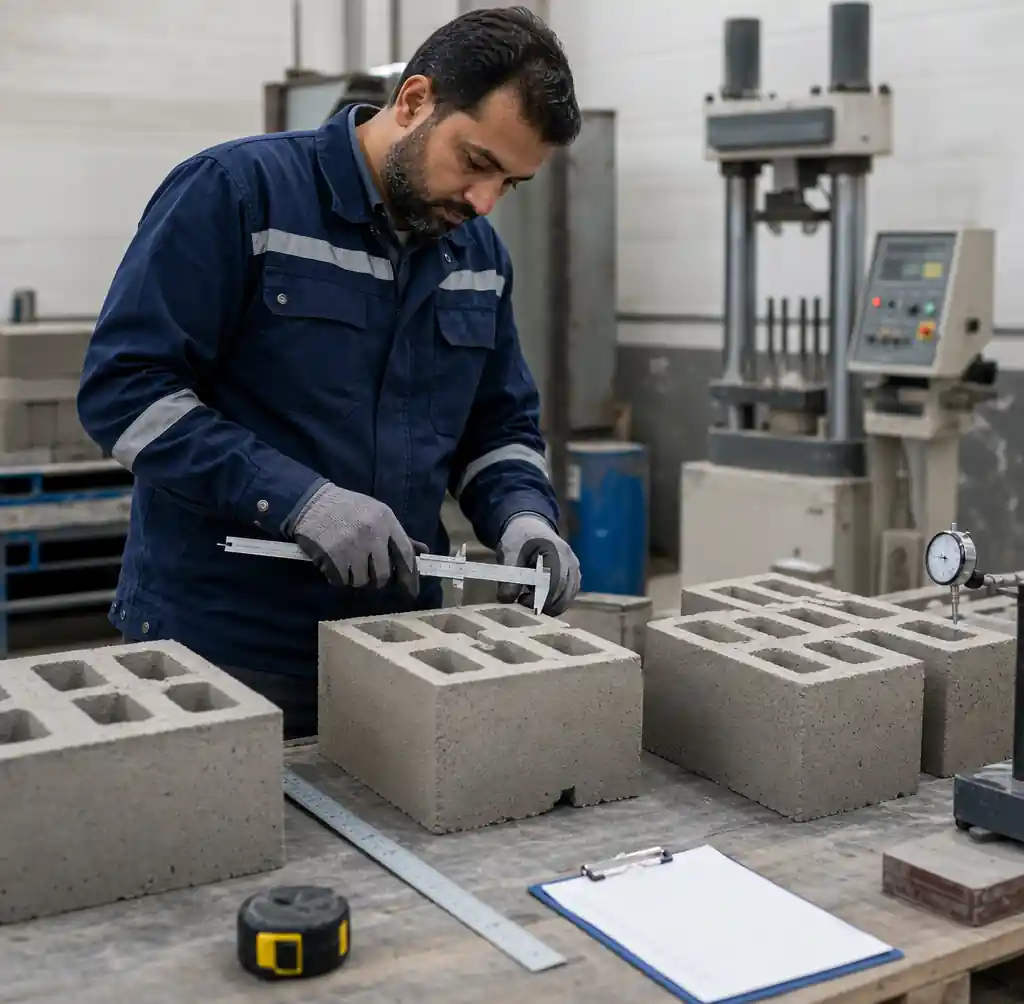
Production consistency: Siemens PLC maintains molding parameters within tight tolerances. Block dimensional variance stays under ±1.5 mm, meeting structural specifications. Máquinas manuales produce ±3-5 mm variance requiring additional checks.
Labor efficiency: Seven operators manage 46,080-block daily output—6,583 blocks per worker. Semi-automatic systems produce 1,800-2,200 blocks per worker. This 3× efficiency reduces labor cost per block from $0.022-$0.028 to $0.008-$0.012.
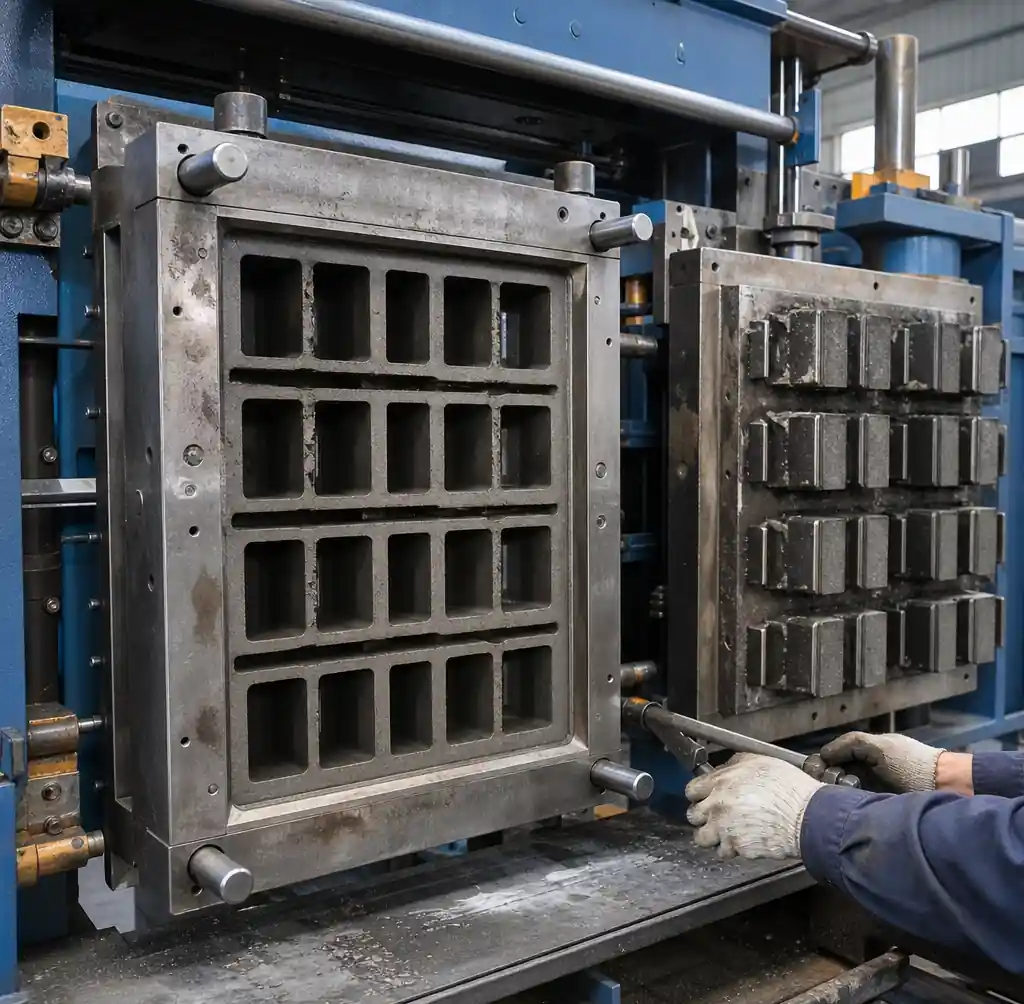
Mold change speed: Quick-release hydraulic clamps enable mold swaps in 25-30 minutes. Contractors needing multiple block sizes benefit significantly.
Continuous operation: The automated feeding system allows 10-12 hour daily operation when demand justifies extended shifts.
Maintenance Requirements
The QT10-15 uses industrial-grade components designed for 15-20 year service life with proper maintenance.
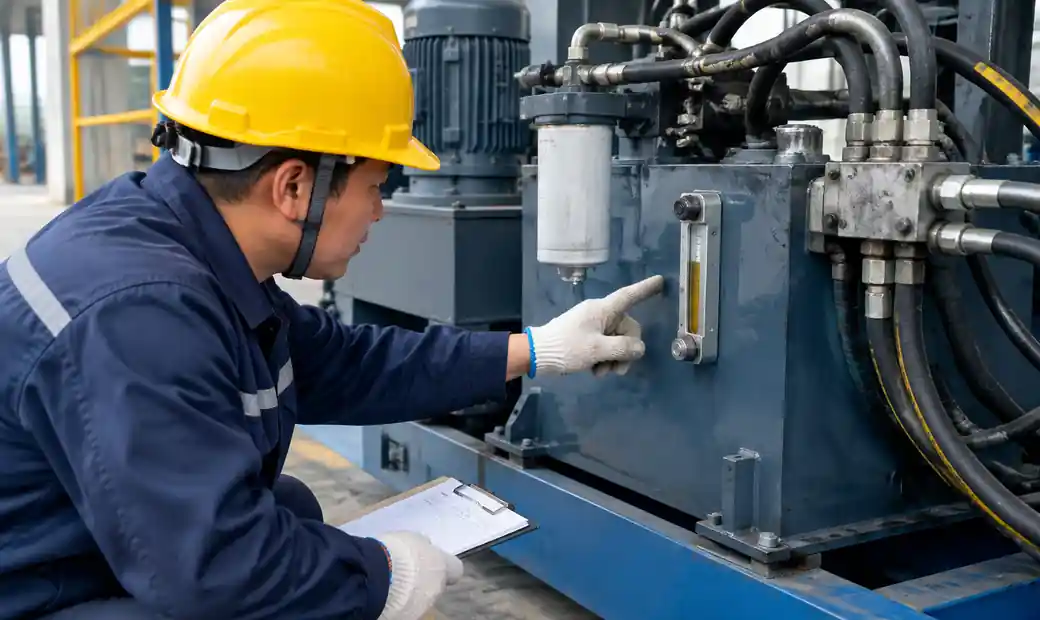
Daily (15-20 min): Hydraulic oil check, mold cleaning, vibration motor inspection, hopper check.
Weekly (2-3h): Hydraulic filter changes, mixer blade inspection, conveyor alignment, electrical connections.
Monthly (4-6h): Hydraulic cylinder seals, PLC backup, mold guide lubrication, vibration motor greasing.
Annual overhaul (3-5 days): Complete hydraulic service, mixer blade replacement, vibration motor bearings, electrical system check.
Replacement parts cost 3-4% of annual revenue. Budget $42,000-$56,000 for maintenance at $1.4M annual production.
Raytone stocks critical components at regional centers for 48-72 hour delivery, reducing downtime compared to overseas shipments.
Is the QT10-15 Right for Your Production Scale?
This machine targets three business profiles:
Profile 1: Established manufacturers scaling up – You operate QT4 or QT6 machines at 90%+ capacity with backlogged orders. The QT10-15 provides 2-3× capacity increase.
Profile 2: Large contractors integrating production – Your company consumes 15,000-25,000 blocks monthly across projects. Bringing production in-house eliminates supplier delays and reduces per-block costs by $0.08-$0.15.
Profile 3: Regional precast suppliers – You serve 30-50 builders across a 50-mile radius. The QT10-15’s output supports market share growth while maintaining 25-35% reserve capacity.
The QT10-15 is not suitable for startups without confirmed customers, operations lacking skilled technical staff, facilities with unreliable power infrastructure, or markets where block prices fall below $0.28 per unit.
Preguntas frecuentes
What is the realistic daily production I can expect?
Plan for 19,000-21,000 blocks (400×200×200 mm) per 8-hour shift after the initial 3-month learning curve. The 23,040 theoretical maximum requires experienced operators and optimal material preparation. Running extended 10-hour shifts increases output to 26,000-28,000 blocks daily.
How long does installation and commissioning take?
Foundation preparation requires 7-10 days (concrete must cure 28 days before equipment installation). Equipment installation takes 5-7 days. Operator training adds 10-15 days. Budget 50-60 days from foundation pour to full production.
Can I produce interlocking blocks and pavers?
Yes, the QT10-15 accommodates custom mold configurations. Interlocking block molds cost $2,500-$4,500. Paver molds range from $1,800-$3,200. Mold changes take 25-30 minutes.
What is the typical mold lifespan?
Standard steel molds produce 80,000-120,000 cycles (960,000-1,440,000 blocks) before refurbishment. Hardened steel molds with carbide inserts extend this to 200,000-250,000 cycles. At 23,000 blocks daily, expect 3-5 years per mold set.
Do I need prior block manufacturing experience?
Technical machinery experience helps but isn’t mandatory. Raytone provides comprehensive training covering concrete mixing ratios, machine operation, quality control, and troubleshooting. Plan for 2-3 months to reach optimal production efficiency.
How does the QT10-15 handle different concrete mix designs?
The machine accommodates mix designs from 1:4:6 (cement:sand:aggregate) lean mixes to 1:2:3 high-strength formulations. Vibration frequency and molding pressure adjust through PLC settings. Specialty products like lightweight aggregate blocks work well with minor parameter adjustments.
Conclusión
The QT10-15 automatic block machine delivers 46,080 thin blocks or 23,040 standard hollow blocks per 8-hour shift through integrated automation and proven hydraulic technology. Total investment ranges from $200,000-$300,000 including equipment, infrastructure, and working capital.
This capacity level suits established block manufacturers scaling production, large contractors vertically integrating supply chains, and regional precast suppliers serving multiple builders. The combination of high output, consistent quality, and labor efficiency creates ROI timelines of 3-5 months for operations maintaining 75-85% capacity utilization.
Raytone Block Machinery manufactures the QT10-15 with Siemens controls, Yuken hydraulic components, and industrial-grade structural elements backed by comprehensive training and regional parts availability. If your confirmed daily demand exceeds 18,000-20,000 blocks and you have the technical infrastructure to support automated production, contact our team for detailed specifications and project planning assistance.