





A single production stoppage costs manual block makers $150-$400 per day, while automatic plant operators lose $800-$2,500 daily. In high-capacity facilities producing 20,000+ blocks per shift, unexpected downtime erases $1,200-$3,000 in revenue before the problem is even diagnosed. The difference between manufacturers who hit 95%+ uptime and those constantly fighting breakdowns isn’t luck—it’s knowing which problems occur, why they happen, and how to fix them fast.
Block machine operators face seven recurring problems that account for 82% of all production disruptions: weak blocks, hydraulic system failures, mold sticking, vibration issues, electrical faults, material mix problems, and premature wear. This guide covers each problem with root causes, diagnostic steps, and proven solutions drawn from actual troubleshooting cases across manual, semi-automatic, and fully automatic block making machines.
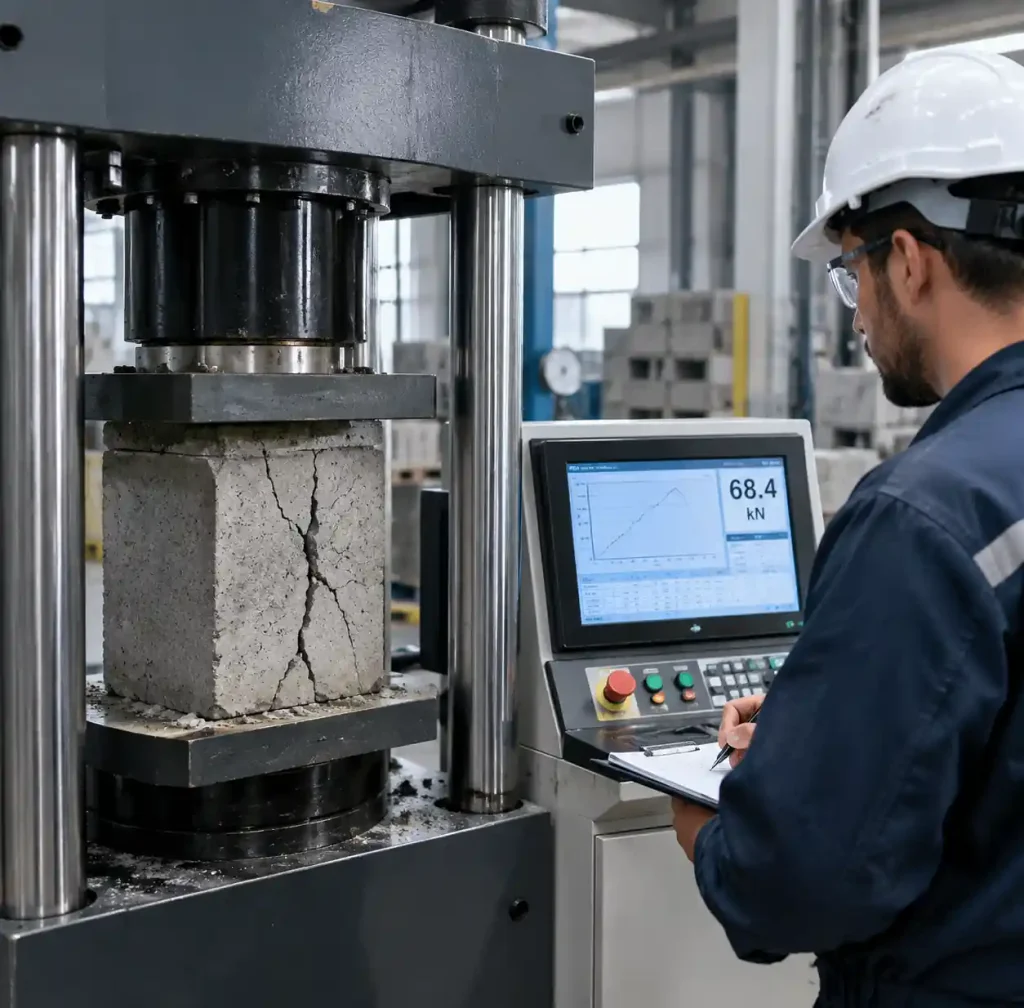
Problem 1: Weak Blocks and Low Compressive Strength
Blocks failing strength tests represent the most expensive quality defect. Weak blocks get rejected at job sites, damage your reputation, and force expensive reproduction runs. When blocks consistently test below 3.5 MPa (500 psi) for standard applications or fail structural requirements at 14-17 MPa, three root causes account for 78% of cases.
Insufficient Compaction Pressure
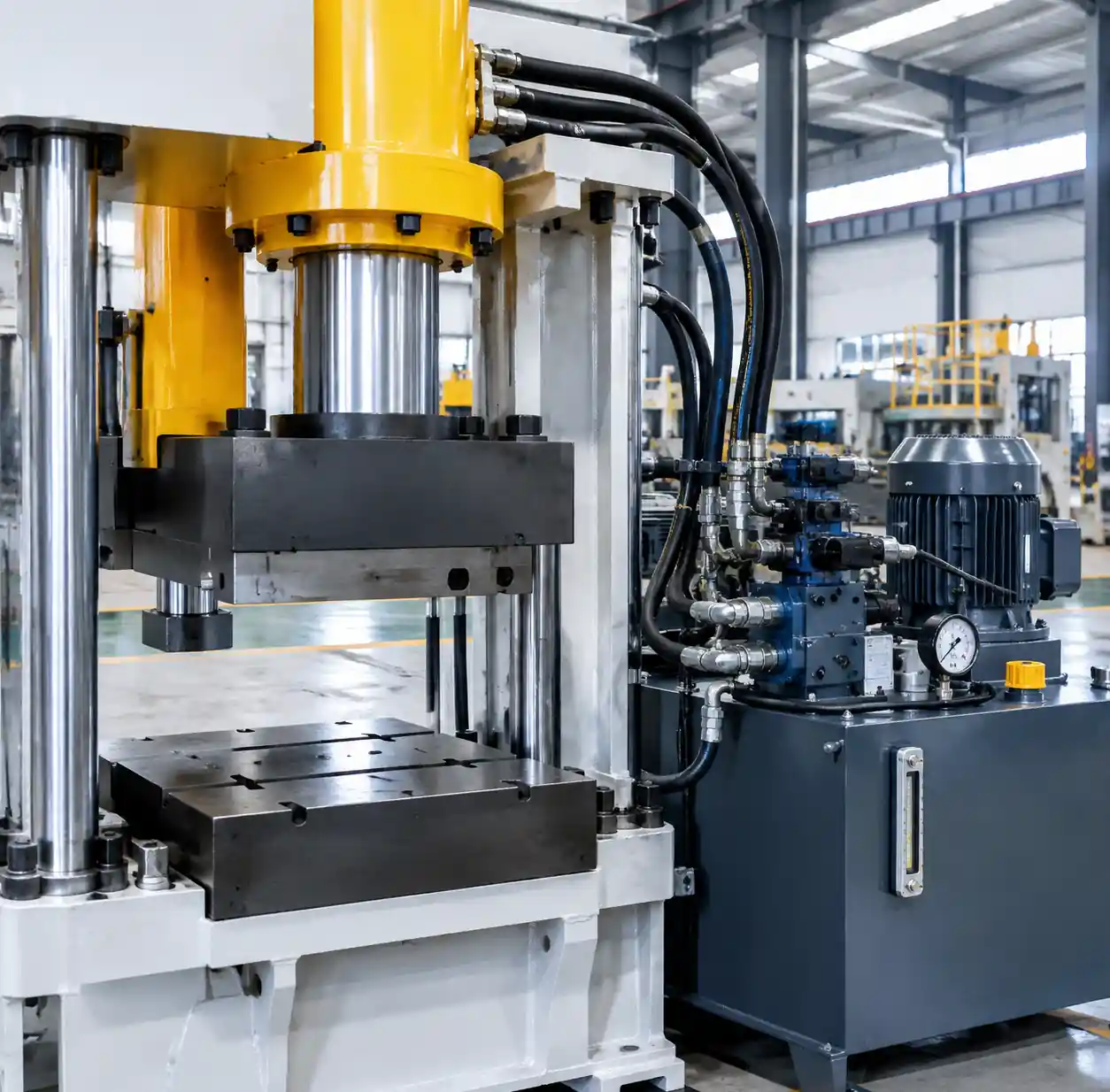
Hydraulic pressure below specification leaves blocks porous and weak. Semi-automatic machines require 140-180 bar while fully automatic systems need 180-220 bar for proper densification. Test actual pressure under load using a calibrated gauge—don’t trust old panel meters that drift 15-25% over 2-3 years.
Fix: Adjust pressure at the hydraulic pump. If pressure won’t reach specification, the pump is worn (typically after 8,000-12,000 hours) or relief valves are leaking. Pump rebuild costs $800-$1,800 versus $2,500-$4,500 for replacement on semi-automatic block machines.
Vibration System Malfunction
Inadequate vibration leaves air pockets trapped in the concrete matrix. Blocks appear solid but crush under moderate load. Vibration motors operating below rated frequency (typically 50 Hz / 3,000 RPM) or loose mounting bolts reduce compaction effectiveness by 30-45%.
Diagnostic: Place your hand on the mold table during compaction. Proper vibration creates continuous buzzing sensation. If you feel periodic thumping instead of steady vibration, motor bearings are failing or mounts have loosened.
Fix: Tighten all vibration motor mounting bolts to specification (typically 45-60 Nm torque). Replace worn bearings—they fail progressively and damage motors if ignored. Bearing replacement costs $150-$300 versus $800-$1,400 for new vibration motors.
Mix Design Problems
Insufficient cement content or excess water weakens blocks regardless of machine performance. Proper mix ratios for standard hollow blocks: 1 part cement, 6-8 parts combined aggregates (sand and gravel), water-cement ratio 0.40-0.45 by weight. Every 5% increase in water content beyond optimal reduces 28-day strength by 12-18%.
Fix: Verify mix proportions using a batch scale accurate to ±2%. Test moisture content of aggregates—wet sand or gravel throws off water ratios. Adjust added water to account for aggregate moisture. Store cement properly; cement exposed to humidity for 3+ months loses 15-25% strength potential.
| Problem Cause | Symptoms | Diagnostic Test | Solution | Cost |
|---|---|---|---|---|
| Low hydraulic pressure | Blocks crumble under hand pressure | Pressure gauge under load | Pump rebuild or adjustment | $800-$4,500 |
| Failed vibration | Porous surface, low density | Hand vibration test | Tighten mounts, replace bearings | $150-$1,400 |
| Poor mix design | Consistently weak blocks batch-to-batch | Slump and strength tests | Adjust cement ratio, control water | $0 (process) |
Problem 2: Hydraulic System Leaks and Pressure Loss
Hydraulic problems cause 34% of unexpected downtime on automatic and semi-automatic machines. Oil leaks create safety hazards, contaminate blocks, and signal developing failures that destroy expensive components within days if ignored.
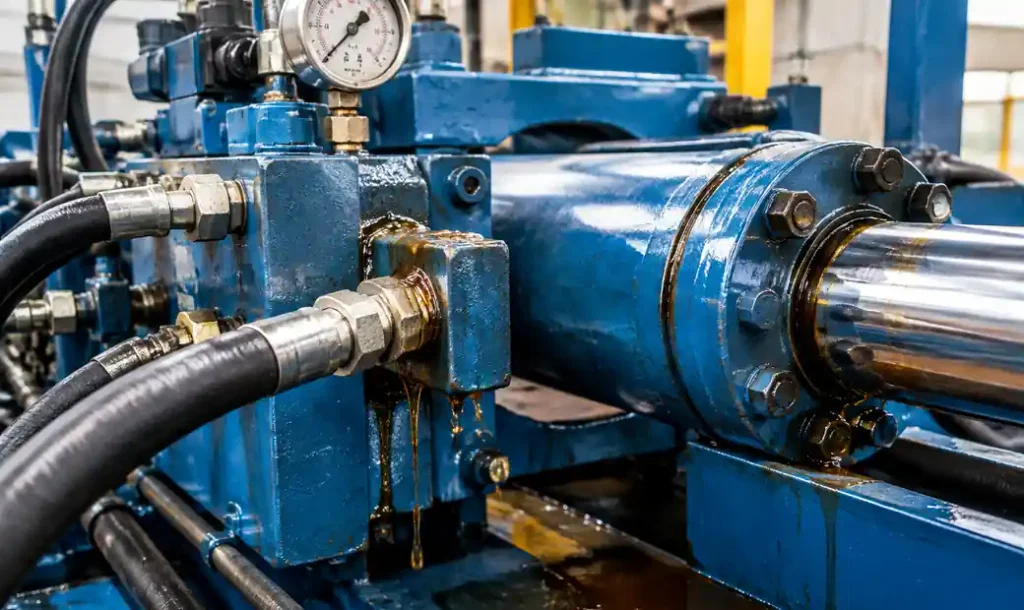
External Leaks
Visible oil around cylinder rods, hose connections, or pump housing indicates seal failure. Fresh leaks (oil spots appearing daily) need attention within 1-2 days. Established leaks losing 0.5-1 liter daily require immediate repair—continued operation damages cylinder rods through contamination.
Fix: Replace rod seals on leaking cylinders. Standard rod seal kits cost $45-$120 depending on cylinder bore. Clean cylinder rods thoroughly before reassembly—scored rods destroy new seals within hours. If rods show scoring deeper than 0.1mm, cylinder requires professional re-chroming ($400-$900) or replacement.
Pressure Drops During Cycle
System pressure starting normal but dropping 20-30% during compression indicates internal leakage past worn piston seals or valve seats. This creates weak blocks even though initial pressure appears correct.
Diagnostic: Monitor pressure throughout the complete molding cycle. Healthy systems hold within ±5% of setpoint. Pressure dropping 15-30% during hold time confirms internal leakage.
Fix: For cylinder piston seal leaks, complete seal kit replacement ($80-$200 per cylinder). For valve leaks, disassemble directional control valves and clean thoroughly using hydraulic fluid—particles smaller than 25 microns cause valve sticking. Replace valves ($200-$600) if cleaning doesn’t restore function.
Contaminated Hydraulic Oil
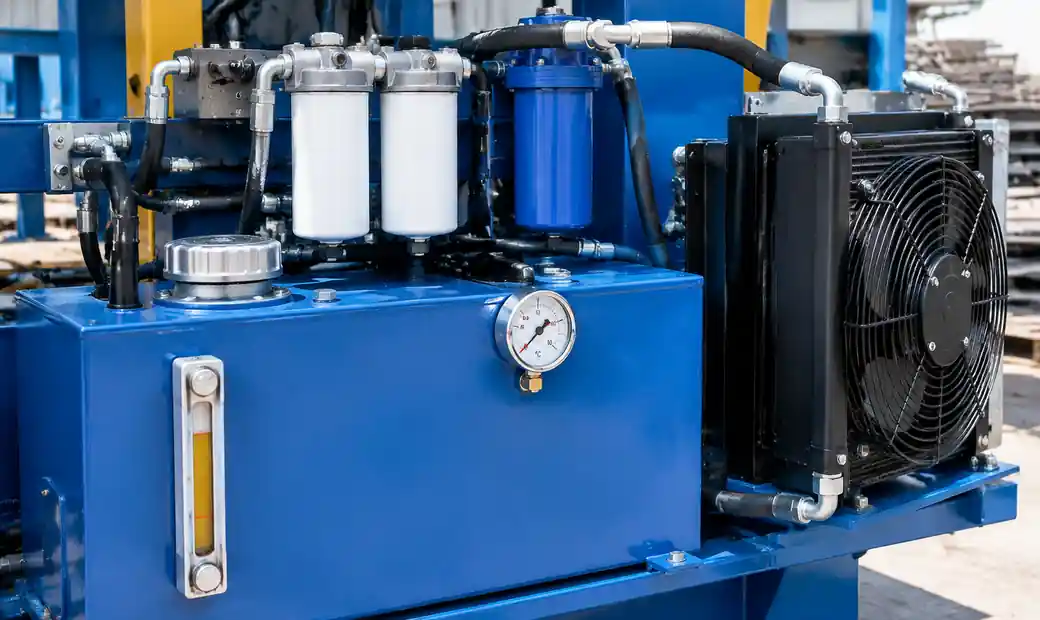
Milky oil (water contamination) or dark, burned-smelling oil (oxidation) causes accelerated component wear. Contaminated oil destroys $15,000-$25,000 worth of pumps, valves, and cylinders within 6-12 months through abrasive wear and corrosion.
Fix: Complete oil change costs $300-$800 depending on system capacity (100-300 liters for typical automatic plants). Use ISO VG 46 hydraulic oil with anti-wear additives. Install 10-micron return filters ($45-$120) protecting components from wear particles. Change filters every 500 operating hours in dusty concrete production environments.
Problem 3: Blocks Sticking to Molds
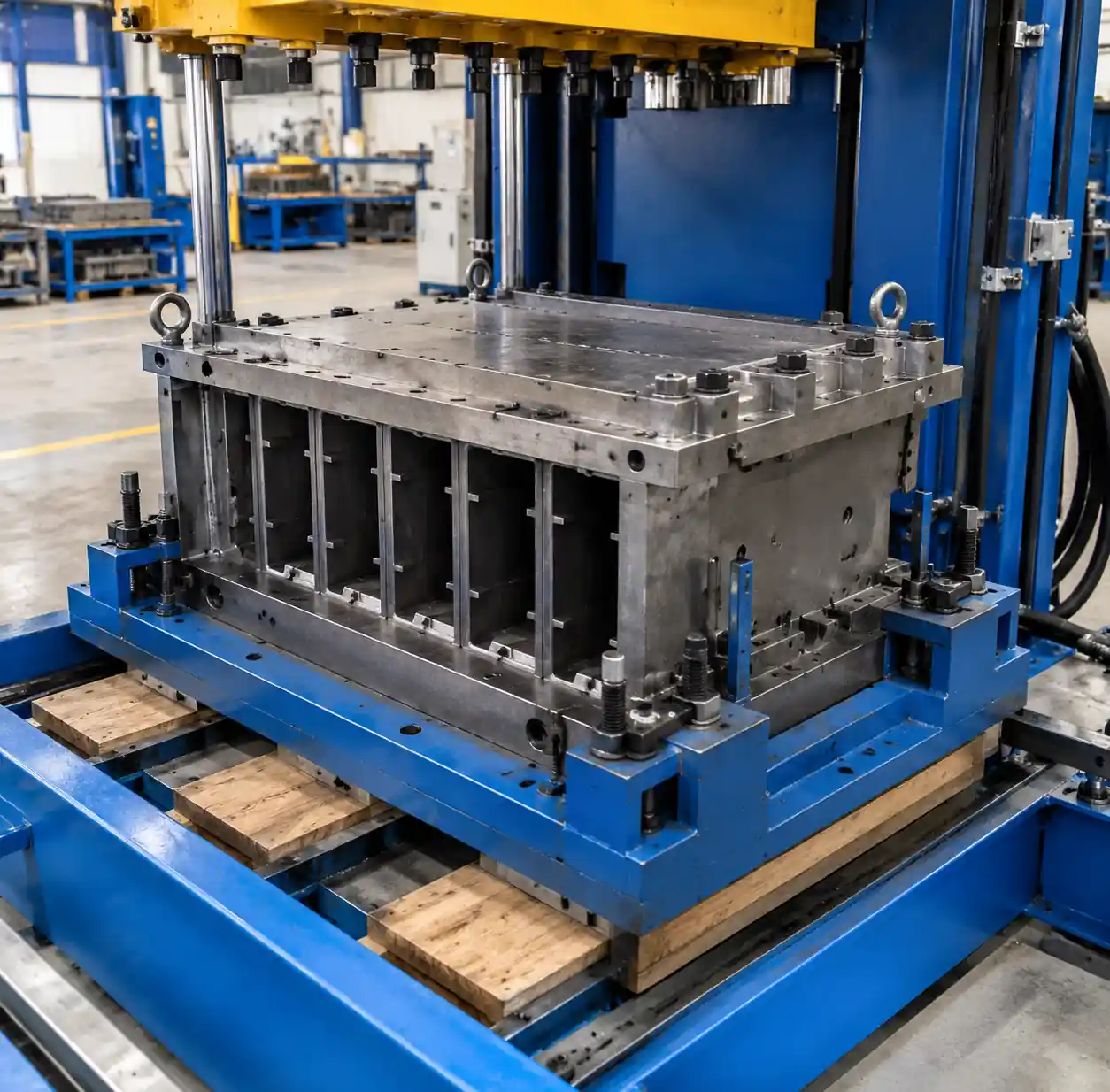
Concrete adhering to mold surfaces damages blocks during demolding, creates surface defects, and slows production by 15-30%. Persistent sticking accelerates mold wear and requires frequent mold replacement at $2,500-$8,000 per set for manual block machines up to automatic systems.
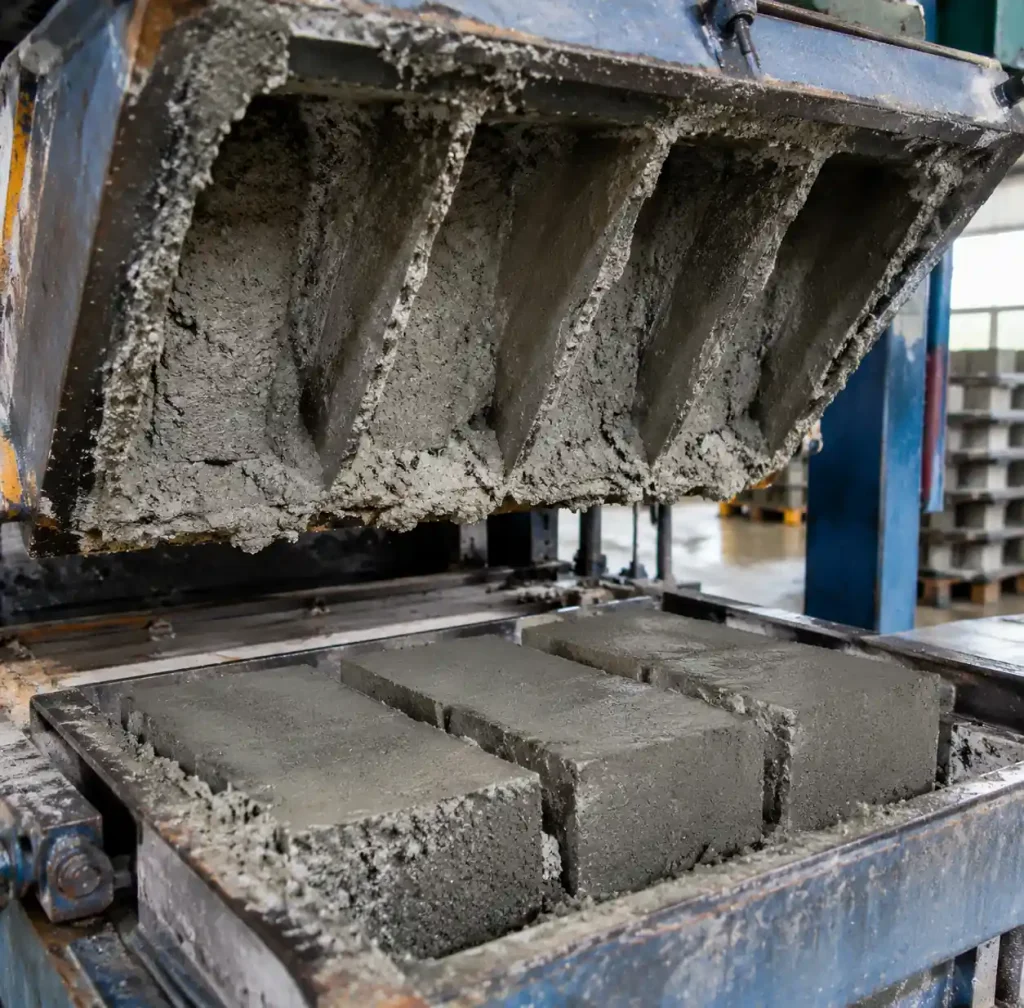
Improper Release Agent Application
Insufficient release agent or using wrong products causes adhesion. Petroleum-based oils contaminate concrete and often increase sticking. Water-based release agents designed for concrete molds create a thin barrier without affecting block quality.
Fix: Apply proper mold release before every cycle. Spray evenly covering all surfaces with light, uniform coating—excess creates block surface defects. Quality concrete form release agents cost $12-$25 per liter and cover 800-1,200 mold cycles. Never use engine oil, diesel fuel, or cooking oil as substitutes.
Concrete Mix Too Wet or Too Dry
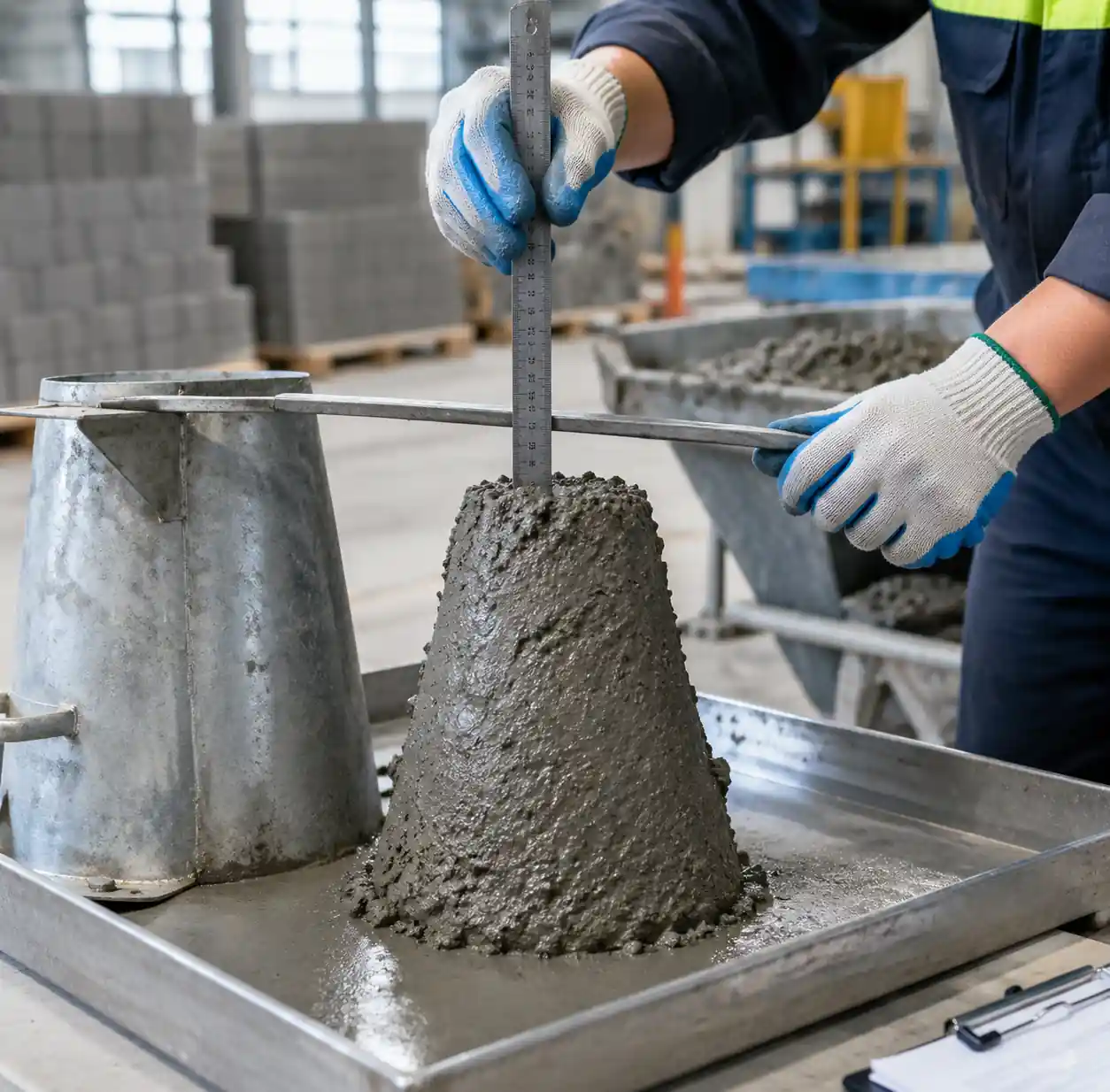
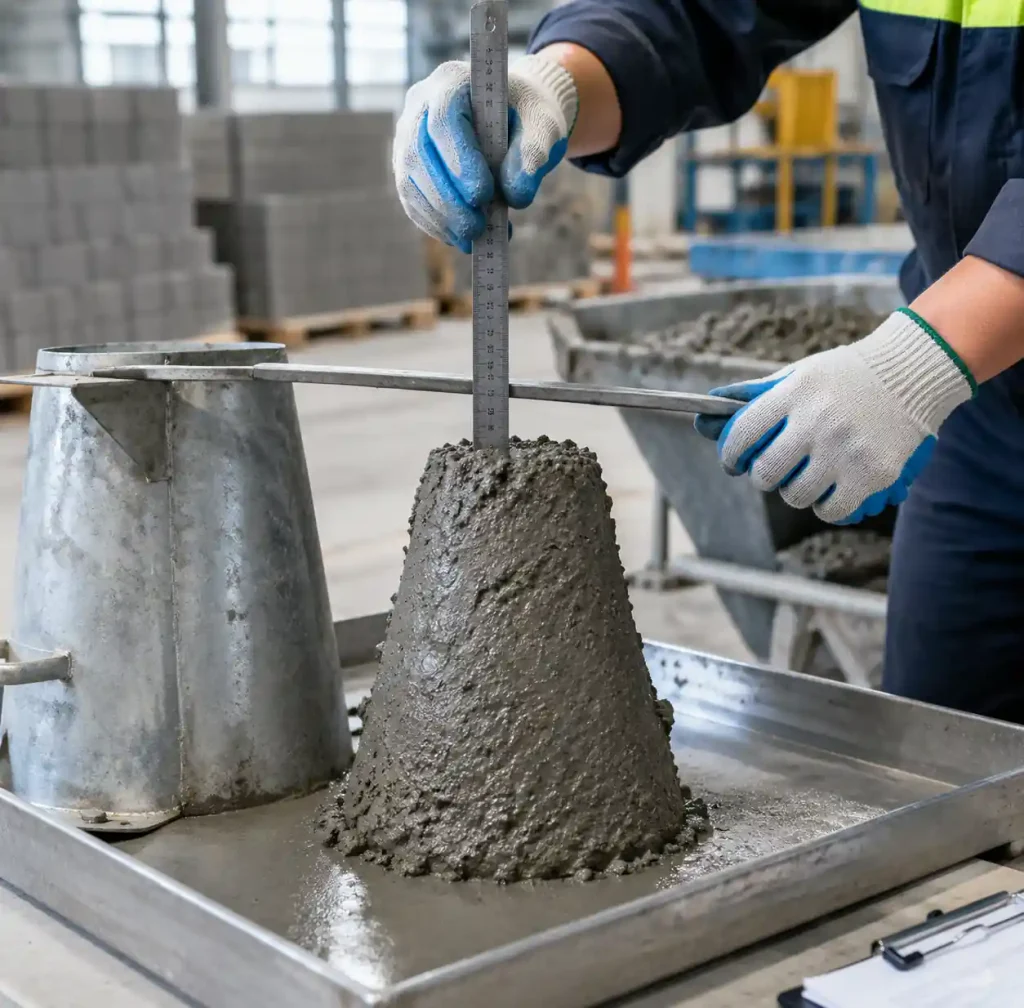
Mixes with excess water (slump >25mm) stick to molds during demolding. Overly dry mixes (slump <5mm) don’t compact properly and crumble, also appearing as “sticking.” Target slump: 10-20mm for zero-slump concrete used in block machines.
Diagnostic: Perform slump cone test on fresh mix. Measure actual water content accounting for aggregate moisture. Wet aggregates contribute 3-8% moisture that must be deducted from added water.
Fix: Adjust water to achieve target slump. Install moisture sensors ($800-$1,500) on batch plants producing 8,000+ blocks daily—they pay for themselves in 3-6 weeks through reduced material waste and consistent quality.
Worn or Damaged Mold Surfaces
Scratches, corrosion, or concrete buildup on mold surfaces increase friction and cause sticking. Molds with surface roughness Ra >3.2μm require more release agent and produce lower quality blocks.
Fix: Polish mold surfaces using 400-600 grit abrasive removing minor scratches and buildup. For deep scratches or corrosion, professional mold refurbishment costs $400-$1,200 versus $2,500-$8,000 for replacement. Apply anti-corrosion coating ($15-$30 per liter) extending mold life by 40-60%.
Problem 4: Vibration System Failures
Vibration problems produce weak blocks, uneven compaction, and excessive noise. Faulty vibration accounts for 18% of quality defects across all machine types from manual to fully automatic plants.
Loose Mounting Bolts
Vibration progressively loosens mounting bolts. A single loose bolt reduces effective vibration by 20-30% and causes uneven compaction across the mold. Continued operation with loose mounts destroys motor bearings within 100-200 operating hours.
Fix: Inspect and tighten all vibration motor and table mounting bolts weekly. Use proper torque wrench (typically 45-60 Nm for M12 bolts, 70-90 Nm for M16 bolts). Apply medium-strength threadlocker (Loctite 243 or equivalent) preventing loosening while allowing future disassembly.
Worn Motor Bearings
Failed bearings create grinding noise, excessive heat, and erratic vibration. Bearing wear progresses gradually—catch early (noise just starting) to prevent motor damage requiring complete replacement.
Diagnostic: Motor running temperature exceeding 75°C (normal 50-65°C) indicates bearing friction. Unusual noise—grinding, squealing, or knocking—confirms bearing failure.
Fix: Bearing replacement costs $150-$300 including labor versus $800-$1,400 for new vibration motors if bearing damage extends to armature or housing. On high-capacity plants producing 15,000+ blocks daily, keep spare motor in inventory ($900-$1,500) eliminating 2-3 day lead times.
Incorrect Vibration Frequency
Vibration frequency mismatch with concrete mix properties causes poor compaction. Standard block mixes require 50-60 Hz (3,000-3,600 RPM). Overly fast vibration (>60 Hz) segregates aggregates. Slow vibration (<45 Hz) leaves air pockets.
Fix: Verify motor rated frequency matches your power supply (50 Hz in most markets, 60 Hz in North America). For adjustable systems, optimize frequency through trial production runs measuring block density—target 2,200-2,400 kg/m³ for standard hollow blocks.
| Vibration Problem | Symptoms | Diagnostic | Fix | Repair Cost |
|---|---|---|---|---|
| Loose mounting bolts | Uneven compaction, one-sided weak blocks | Visual inspection, torque check | Tighten to spec, apply threadlocker | $0 (maintenance) |
| Worn bearings | Grinding noise, motor overheating >75°C | Temperature, sound inspection | Replace bearings | $150-$300 |
| Wrong frequency | Consistently weak or segregated blocks | Frequency meter test | Adjust or change motor pulley | $50-$400 |
Problem 5: Electrical and Control System Faults
Electrical problems stop production immediately and often require specialized diagnosis. Control system faults cause 16% of machine downtime, with troubleshooting complicated by multiple interlocked safety circuits.
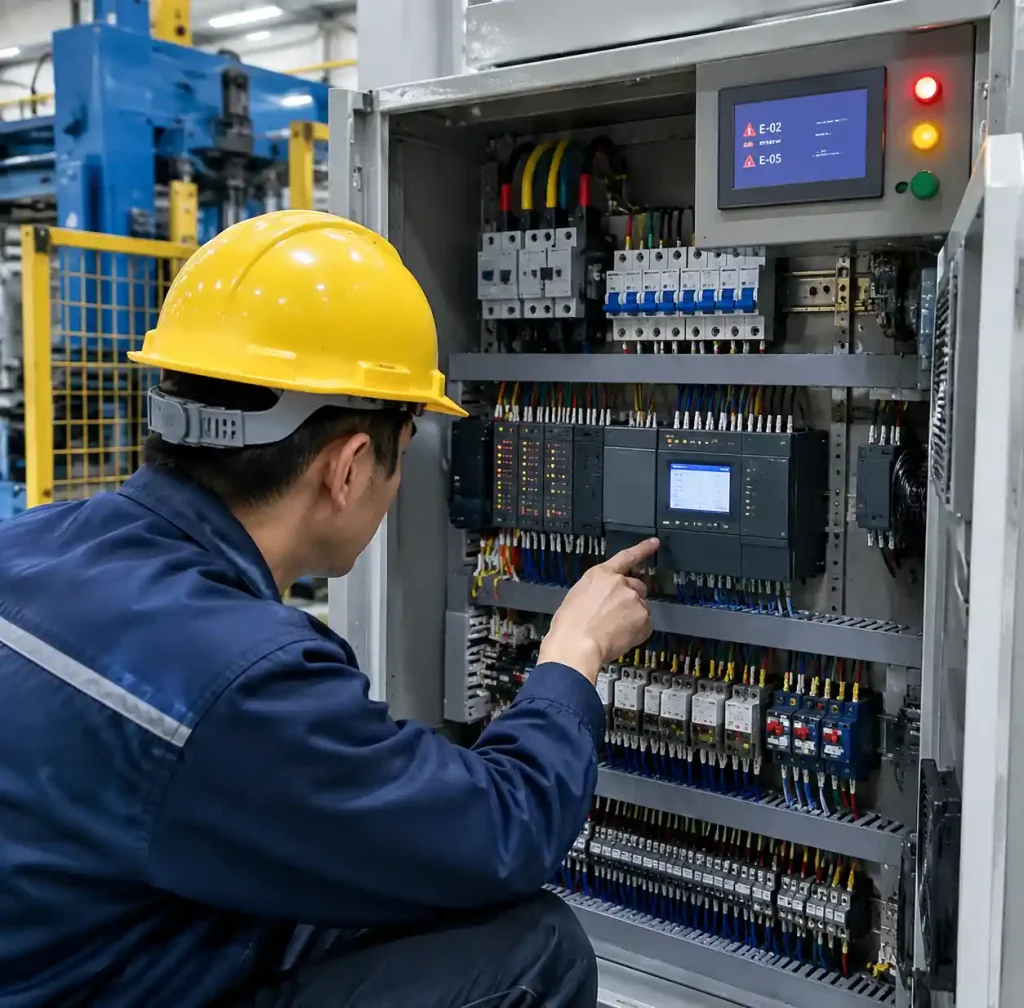
PLC Communication Errors
Moderno automatic machines use PLCs coordinating hydraulics, motors, and sensors. Communication failures between PLC and components create error codes stopping production even when mechanical systems function perfectly.
Diagnostic: Check error code display. Common codes indicate sensor failures (inputs not changing state), solenoid faults (outputs not responding), or communication timeouts (damaged cables or connectors).
Fix: Verify all sensor and actuator cable connections—vibration loosens electrical connections over time. Clean connector contacts using electronic contact cleaner. Replace failed sensors ($25-$120 each) or solenoid coils ($45-$180 each) as indicated by diagnostics. Keep wiring diagrams accessible—electrical troubleshooting without proper schematics takes 4-6 times longer.
Blown Fuses and Tripped Breakers
Repeated fuse failures indicate short circuits or motor overload. Never install larger fuses to “fix” the problem—this bypasses protection and creates fire hazards.
Diagnostic: Measure motor running current using clamp meter. Current exceeding nameplate rating by >10% confirms overload. Use multimeter checking for short circuits between power conductors and ground.
Fix: For motor overload, investigate mechanical binding or excessive load. Clean concrete buildup from moving parts. For short circuits, inspect cables in areas exposed to concrete dust and moisture—replace damaged insulation. Install sealed electrical enclosures (IP54 minimum, IP65 for harsh environments) protecting controls from concrete dust ($300-$800 depending on panel size).
Sensor Failures
Proximity sensors, limit switches, and pressure transducers fail from concrete dust contamination or mechanical impact. Failed sensors prevent machine cycle completion even with all mechanical systems working.
Fix: Clean sensor faces weekly using soft cloth and non-abrasive cleaner. Verify sensing distance—inductive sensors require 2-8mm gap, capacitive sensors need 5-15mm depending on rated sensing range. Replace failed sensors using exact manufacturer specifications—wrong sensor types cause intermittent faults difficult to diagnose. Quality sensors cost $25-$120 versus $8-$15 for generic replacements that fail within 3-6 months.
Problem 6: Poor Concrete Mix Quality
Raw material problems cause 23% of block quality defects. Even the best machines produce inferior blocks when fed poor concrete mixes. Mix quality affects strength, appearance, and production efficiency.
Incorrect Aggregate Grading
Aggregate size distribution critically affects block strength and appearance. Too much fine material (sand >45% of total aggregates) creates weak blocks. Too much coarse material (gravel >65%) produces porous blocks with poor surface finish.
Fix: Perform sieve analysis confirming aggregate gradation meets concrete block standards (ASTM C90 or local equivalents). Optimal gradation: 30-35% sand (0-4.75mm), 35-40% medium aggregate (4.75-12mm), 25-30% coarse aggregate (12-20mm). Adjust mix proportions based on actual grading results.
Low-Quality Cement or Aged Cement
Cement stored improperly or exceeding 60-90 days age loses strength potential. Cement exposed to humidity hardens partially in bags, creating lumps that don’t hydrate properly during mixing.
Diagnostic: Cement should flow freely without lumps. Squeeze a handful—it should remain powdery, not forming a ball. Test strength by casting sample cubes and testing at 7 and 28 days.
Fix: Source cement from reliable suppliers with high turnover. Store cement on pallets (not directly on concrete floors) in dry conditions. Use within 30-45 days of manufacture. Reject cement with visible lumps or that forms balls when squeezed.
Insufficient Mixing Time
Under-mixed concrete shows strength variation of 15-30% between blocks from same batch. Proper mixing requires 90-120 seconds in pan mixers, 60-90 seconds in twin-shaft mixers after all materials are charged.
Fix: Time your actual mixing cycle from last material added until discharge. For semi-automatic systems with batch mixers, extend mixing time if blocks show strength variation >8% within batches. Install mixer timer switches ($40-$80) ensuring consistent mixing duration.
Problem 7: Accelerated Equipment Wear
Premature wear shortages machine life and increases maintenance costs. Proper operation extends manual machine life from 8-10 years to 12-15 years, automatic systems from 12-15 years to 18-22 years.
Lack of Lubrication
Unlubricated guide rails, hinges, and moving joints cause accelerated wear and increased operating force. Dry operation increases friction by 300-500%, creating heat and surface damage.
Fix: Follow manufacturer lubrication schedules (typically 8-12 grease points daily for semi-automatic machines). Use lithium-based EP2 grease rated for wet, dusty environments. Apply 2-3 grease gun pumps per point—over-lubrication attracts concrete dust creating abrasive paste. Install automatic lubrication systems ($800-$2,500) on high-capacity automatic plants operating 20+ hours daily.
Operating Beyond Capacity
Running machines above rated capacity accelerates wear dramatically. A manual machine rated 3,000 blocks/day but pushed to 4,500 blocks/day experiences 60-90% increased wear on molds, hydraulic components, and structural parts.
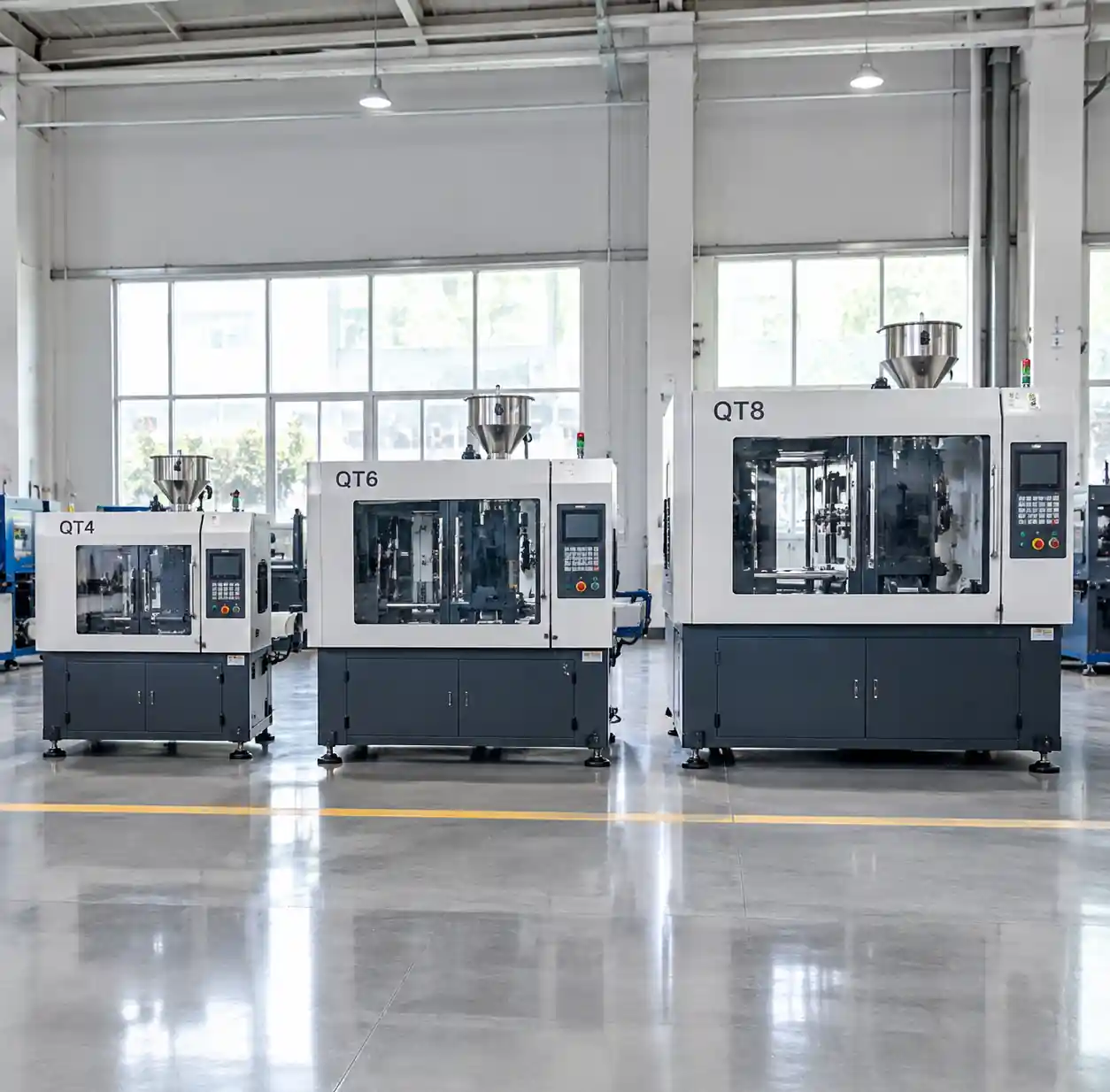
Fix: Respect rated capacity limits. For higher production, invest in larger capacity equipment rather than overloading existing machines. A QT4-40 producing 3,200 blocks/day within rated capacity lasts 12+ years versus 6-8 years when pushed beyond design limits.
Skipping Preventive Maintenance
Manufacturers who implement structured maintenance programs reduce emergency repairs by 75% and extend equipment life by 40-60%. Maintenance costs average $150-$400 monthly for manual machines, $400-$800 for semi-automatic systems, $800-$1,500 for fully automatic plants—far less than emergency repair costs of $800-$5,000 per breakdown.
Fix: Implement daily, weekly, and monthly maintenance checklists covering hydraulic system inspection, lubrication, cleaning, and component replacement. Stock critical spare parts (seals, filters, sensors) eliminating 2-7 day lead times. Complete maintenance guide available at block machine maintenance.
Diagnostic Tools Every Operator Needs
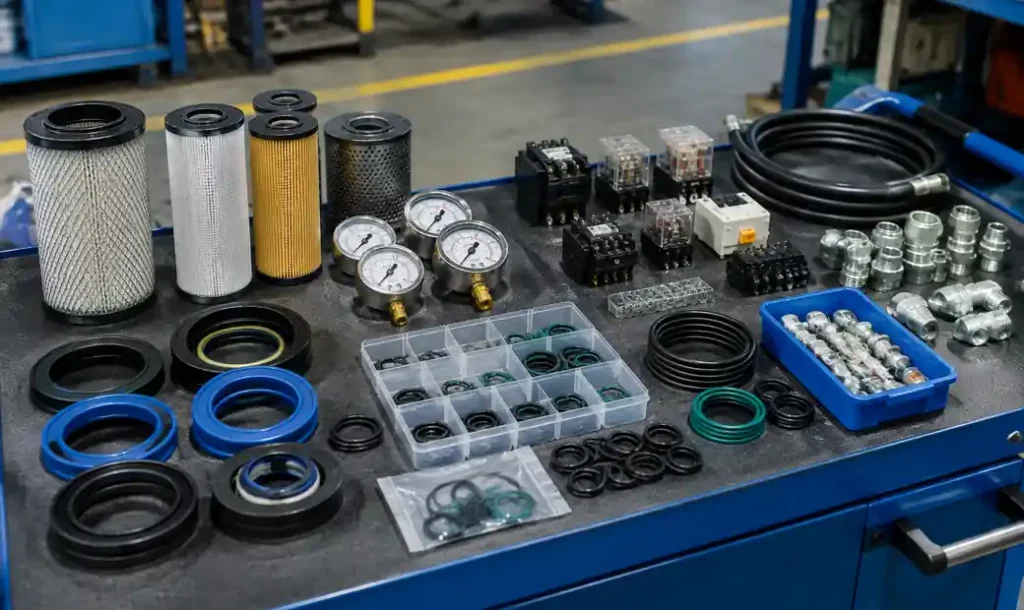
Professional troubleshooting requires proper test equipment. These six tools diagnose 90% of block machine problems:
- Hydraulic pressure gauge (0-250 bar range, glycerin-filled): $45-$120. Tests actual system pressure under load identifying pump wear and valve problems.
- Digital multimeter: $30-$80. Diagnoses electrical faults, tests sensors, verifies voltage and current, checks ground continuity.
- Infrared thermometer: $25-$60. Identifies overheating motors, bearings, and hydraulic pumps before failure.
- Torque wrench (20-100 Nm range): $60-$180. Ensures proper bolt tightening preventing loosening under vibration.
- Vibration frequency meter: $80-$200. Verifies vibration motor operating at correct RPM for optimal compaction.
- Slump cone and tamping rod: $15-$40. Tests concrete mix consistency ensuring proper water content.
Preventing Problems: Production Best Practices
Prevention costs less than repair. These five practices eliminate 70-80% of recurring problems:
Daily pre-start inspection (10-15 minutes): Check hydraulic oil level, tighten loose bolts, clean molds, verify concrete mix consistency. Catches developing problems before they cause breakdowns.
Weekly maintenance routine (45-60 minutes): Deep clean all components, inspect drive belts and chains, test vibration system, replace air filters. Supporting equipment maintenance prevents cascade failures.
Monthly comprehensive service (2-3 hours): Hydraulic oil analysis, seal inspection, electrical connection check, calibration verification. Detects wear before component failure.
Operator training: Properly trained operators recognize early warning signs—unusual sounds, pressure changes, quality shifts—preventing 60-75% of breakdowns through early intervention.
Spare parts inventory: Stock critical components (seals, filters, sensors, bearings) based on lead times and failure history. $800-$2,000 spare parts investment eliminates 2-7 day downtime for common failures.

When to Call Technical Support
Some problems require factory-trained technicians or specialized equipment. Contact manufacturer support or qualified service providers for:
- PLC programming errors or control system redesign
- Major hydraulic component rebuilds (pumps, proportional valves)
- Structural damage to machine frame or base
- Persistent quality problems after trying standard solutions
- Electrical problems requiring three-phase power system work
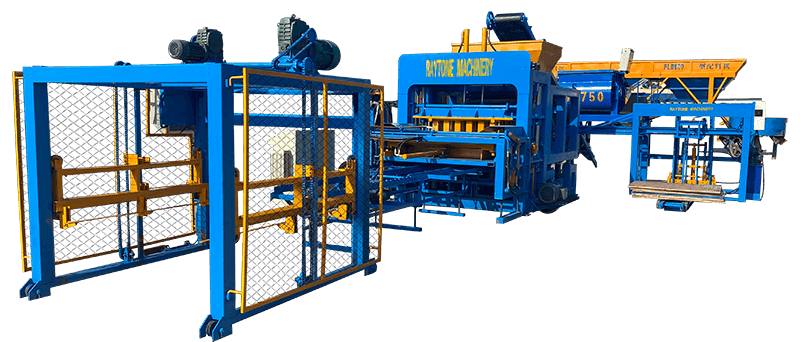
Raytone Block Machinery provides technical support through our service network covering installation, training, troubleshooting, and repairs for all machine types from manual to complete automatic plants.
Cost Impact of Unresolved Problems
Delaying repairs escalates costs exponentially. A $150 hydraulic seal replacement postponed for 2-3 weeks damages cylinder rods requiring $800-$1,500 repair. Ignored vibration motor bearings ($200 replacement) destroy motors necessitating $1,200-$2,000 replacement plus 2-3 days production loss ($1,600-$6,000 in lost revenue).
The economic pattern is consistent: early intervention at first symptoms costs 1/5 to 1/10 of emergency repairs after catastrophic failure. Manufacturers tracking maintenance costs and downtime find preventive maintenance returns $4-$6 for every dollar spent through avoided breakdowns and extended equipment life.
| Problem Ignored | Initial Repair Cost | Delayed Repair Cost | Downtime Cost | Total Impact |
|---|---|---|---|---|
| Small hydraulic leak | $150 seal kit | $800-$1,500 cylinder repair | 4-8 hours ($200-$800) | $1,000-$2,300 |
| Loose vibration mounts | $0 (tighten bolts) | $1,200-$2,000 motor replacement | 2-3 days ($1,600-$6,000) | $2,800-$8,000 |
| Contaminated hydraulic oil | $300-$800 oil change | $8,000-$15,000 pump/valve replacement | 5-7 days ($4,000-$14,000) | $12,000-$29,000 |
FAQ: Block Machine Troubleshooting
Q: How often should I change hydraulic oil?
A: Every 2,000 operating hours for standard conditions, every 1,500 hours in dusty or hot environments (>35°C ambient). Send oil samples for analysis at 1,000-hour intervals detecting contamination before visible problems appear. Oil analysis costs $35-$60 versus $15,000-$25,000 for component damage from contaminated oil.
Q: Why do my blocks have different strengths from the same batch?
A: Three common causes: insufficient mixing time (extend by 30-60 seconds), uneven vibration distribution (check for loose mounts or worn bearings), or inconsistent moisture in aggregates (install moisture sensors or adjust water accounting for aggregate moisture content).
Q: What causes blocks to crack immediately after demolding?
A: Premature demolding before initial set (minimum 3-5 minutes after compaction) or excessive vibration during demolding. Reduce vibration table tilt speed and ensure blocks have adequate green strength before handling. Ambient temperature below 15°C extends required setting time to 8-12 minutes.
Q: How can I reduce mold wear?
A: Apply proper release agent every cycle, maintain concrete mix consistency (target slump 10-20mm), clean molds daily removing all residue, and avoid abrasive cleaning methods. Proper care extends mold life from 80,000-100,000 cycles to 150,000-200,000 cycles.
Q: When should I rebuild vs replace hydraulic pumps?
A: Rebuild worn pumps (8,000-12,000 operating hours) if housing and shaft are undamaged—rebuild costs $800-$1,800 versus $2,500-$4,500 replacement. Replace if contaminated oil caused scoring or housing damage. Rebuilds typically deliver 75-85% of original pump life.
Q: What’s the most important daily maintenance task?
A: Checking hydraulic oil level and condition. Low oil destroys pumps within hours ($2,500-$4,500 replacement plus downtime). Contaminated oil damages $15,000-$25,000 worth of components. This 60-second check prevents the most expensive failures on automatic and semi-automatic systems.
Conclusión
Block machine problems follow predictable patterns across manual, semi-automatic, and automatic systems. The seven issues covered—weak blocks, hydraulic leaks, mold sticking, vibration faults, electrical problems, mix quality, and accelerated wear—cause 82% of production disruptions and account for 90% of emergency repair costs.
The economic case for structured troubleshooting and preventive maintenance is compelling: manufacturers implementing daily inspection routines and monthly service schedules cut unexpected downtime by 75%, extend equipment life by 40-60%, and reduce repair costs by 65-80%. For a semi-automatic plant producing 7,000 blocks daily, this translates to $15,000-$35,000 additional annual profit through higher uptime and lower maintenance costs.
Success requires three elements: understanding which problems occur and why, having diagnostic tools identifying root causes quickly, and implementing preventive maintenance catching issues before they escalate. Operators who master these fundamentals run profitable operations regardless of machine type, while those who react to breakdowns face continuous quality problems and escalating repair costs.
Start with the daily inspection checklist, stock essential spare parts based on your machine type and production volume, and track maintenance costs versus downtime. Within 60-90 days you’ll establish baseline performance data revealing which improvements deliver maximum impact for your specific operation.
Ready to upgrade your block production capacity or replace aging equipment? Explore our complete range from entry-level máquinas manuales through high-capacity sistemas automáticos, or review our complete plant solutions for turnkey installation. Contact Raytone Block Machinery technical team for equipment selection guidance matched to your production requirements and budget.