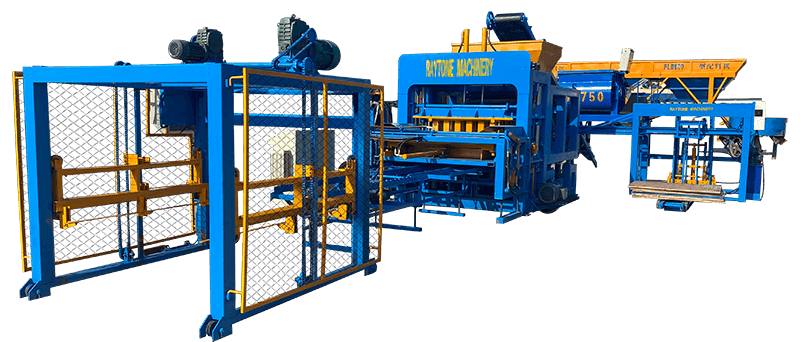






Block manufacturers choosing between vibration and hydraulic systems face a decision that determines production capacity, block quality, maintenance costs, and long-term profitability. The right compaction technology increases block density by 12-18% while cutting labor costs by 35-55%.
Modern block production relies on two distinct compaction technologies: vibration systems that use high-frequency oscillation to eliminate air pockets, and hydraulic systems that apply controlled static pressure to compress concrete. Understanding these fundamental differences helps you select equipment that matches your production goals and budget constraints.
Research on vibration compaction technology confirms that properly configured systems achieve 95-98% compaction density, while hydraulic pressing systems deliver superior block strength through sustained pressure application.
This guide compares vibration and hydraulic block machine technologies, covering working principles, production capacity, block quality, energy efficiency, maintenance requirements, and selection criteria for different business scales.
How Vibration Block Machines Work
Vibration block machines use high-frequency mechanical oscillation as the primary forming force to compact concrete mix. Eccentric motors mounted on the mold table generate continuous vibrations at 2,850-3,000 RPM (45-55 Hz), creating rhythmic oscillation that fluidizes concrete particles.
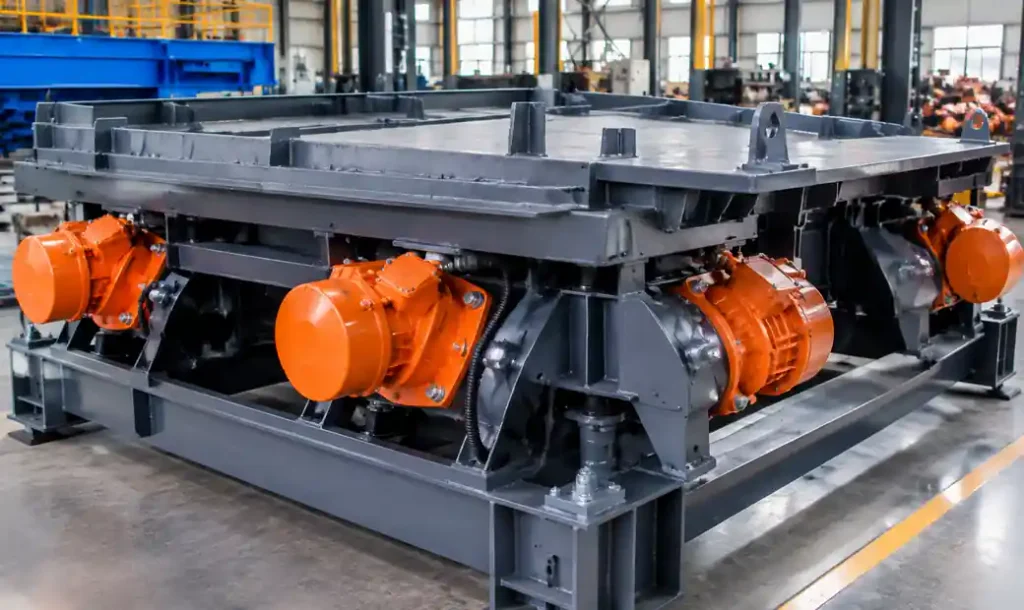
Vibration Compaction Principle
The vibration process works by temporarily liquefying the concrete mix, allowing particles to rearrange into denser configurations while forcing trapped air to escape. As the eccentric weights rotate, they create centrifugal forces producing vertical and horizontal movement. This multi-directional energy breaks surface tension between particles, eliminates voids, and achieves uniform material distribution throughout the mold.
Manual block machines with vibration systems typically use 1-2 vibration motors generating 0.8-1.5mm amplitude. Máquinas semiautomáticas employ 2-3 synchronized motors producing 1.2-1.8mm amplitude for faster compaction cycles. Automatic production lines use 3-4 motors with adjustable frequency and amplitude control, optimizing vibration parameters for different block types.
Vibration duration typically ranges from 6-15 seconds depending on concrete mix design and block density requirements. Wetter mixes with higher slump need shorter vibration (6-8 seconds), while zero-slump dry mixes require extended vibration (10-15 seconds) to achieve adequate compaction.
How Hydraulic Block Machines Work
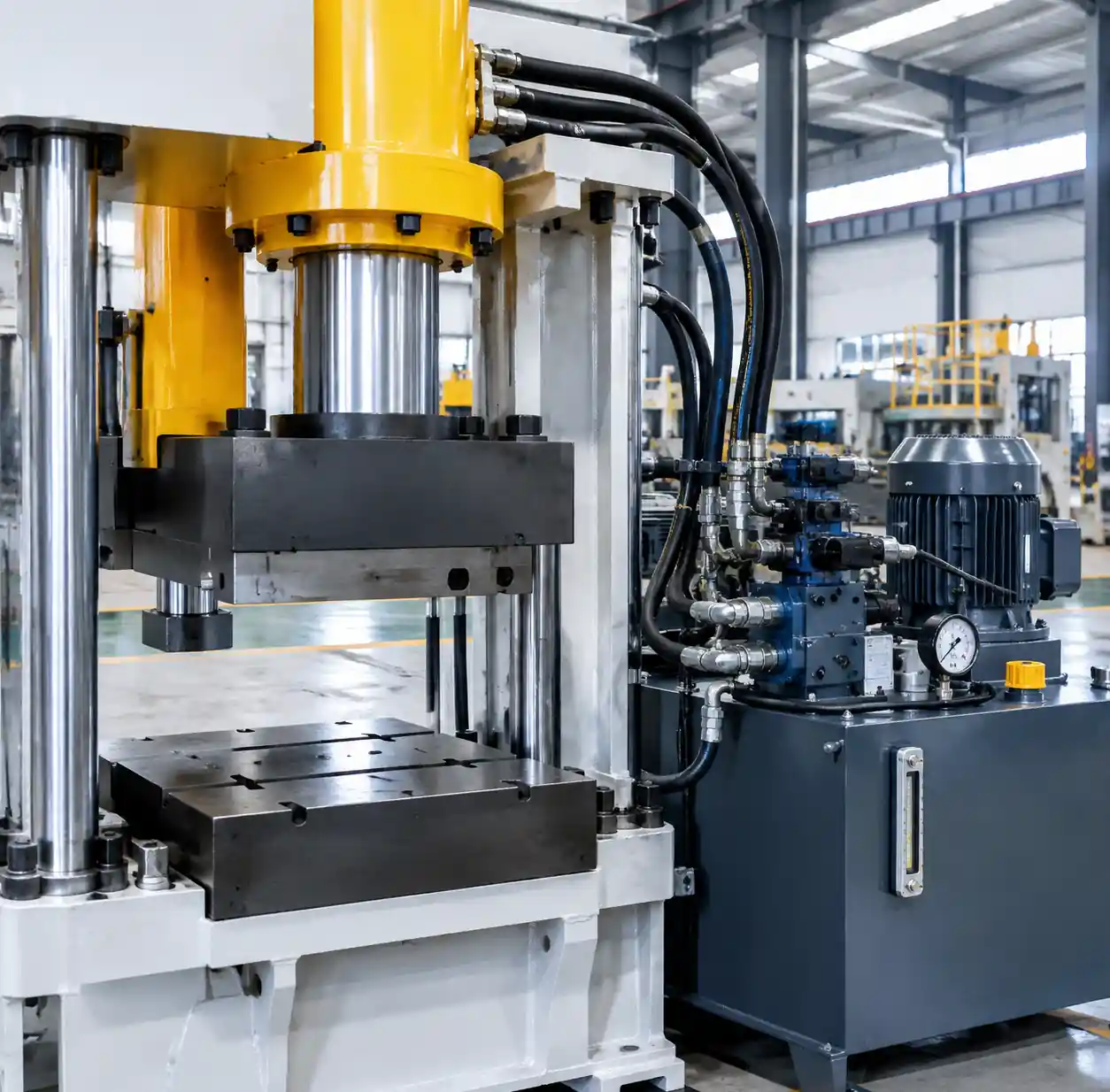
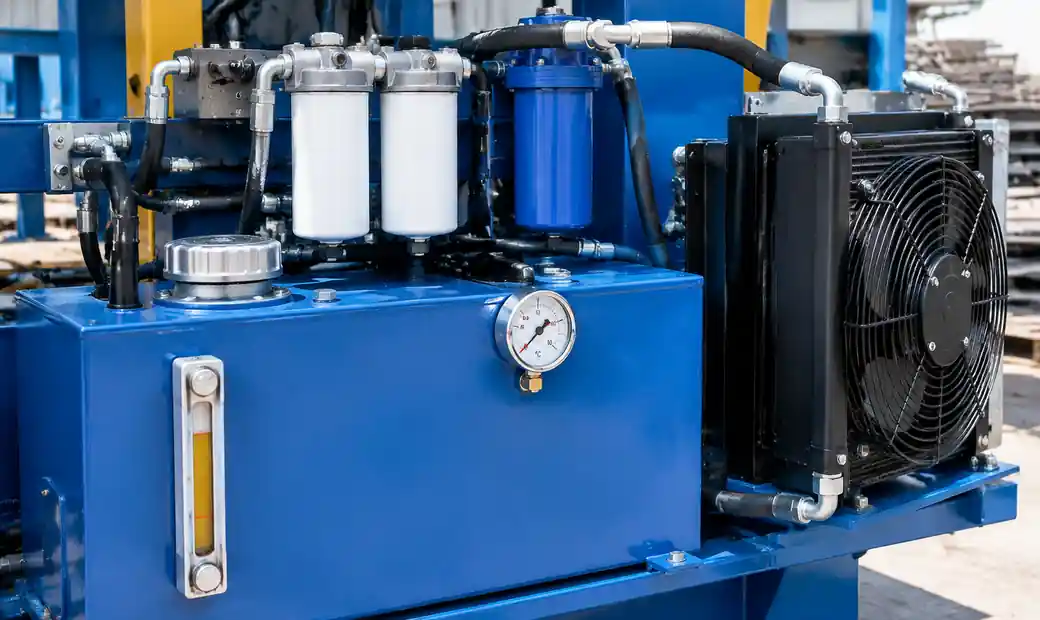
Hydraulic block machines employ high-pressure oil systems to apply controlled static pressure, compressing concrete through sustained force rather than vibration. The hydraulic power unit generates 160-250 bar pressure, transmitted through cylinders to the pressing head that compacts material uniformly.
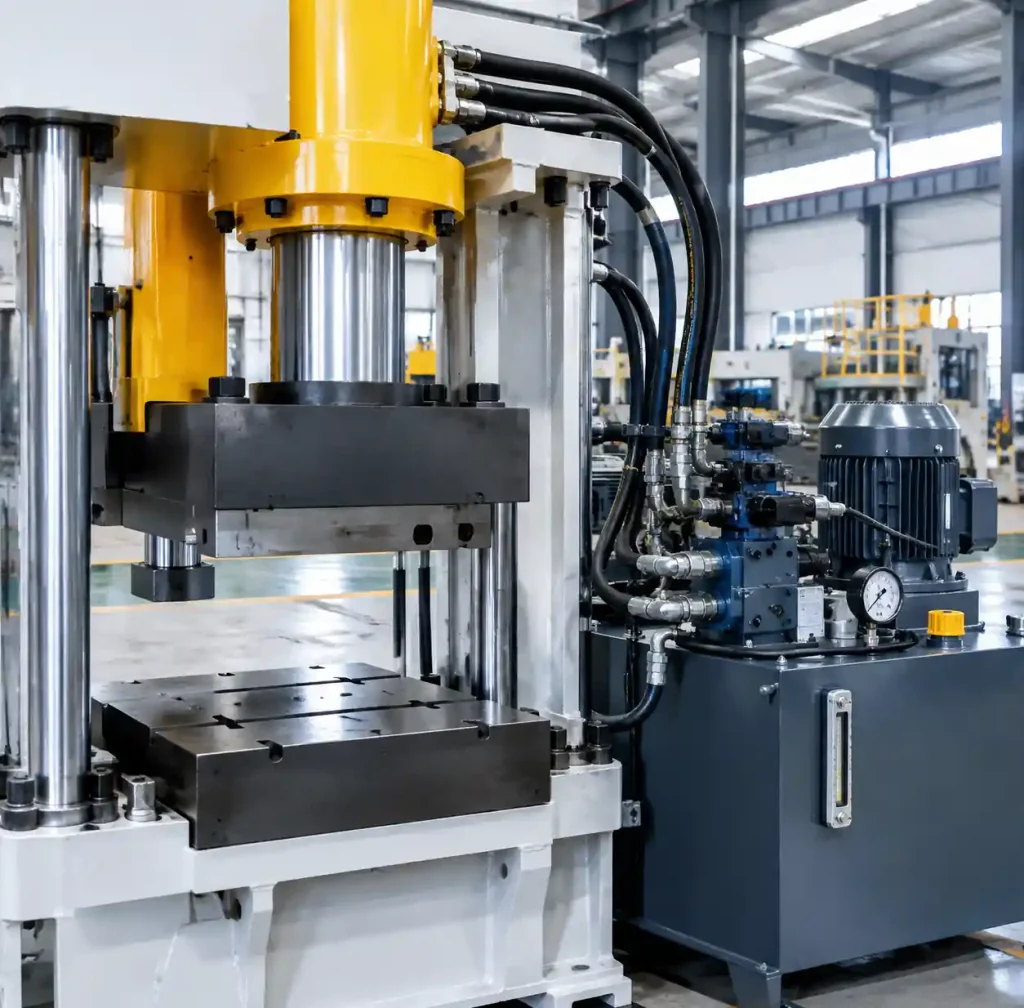
Hydraulic Pressing Principle
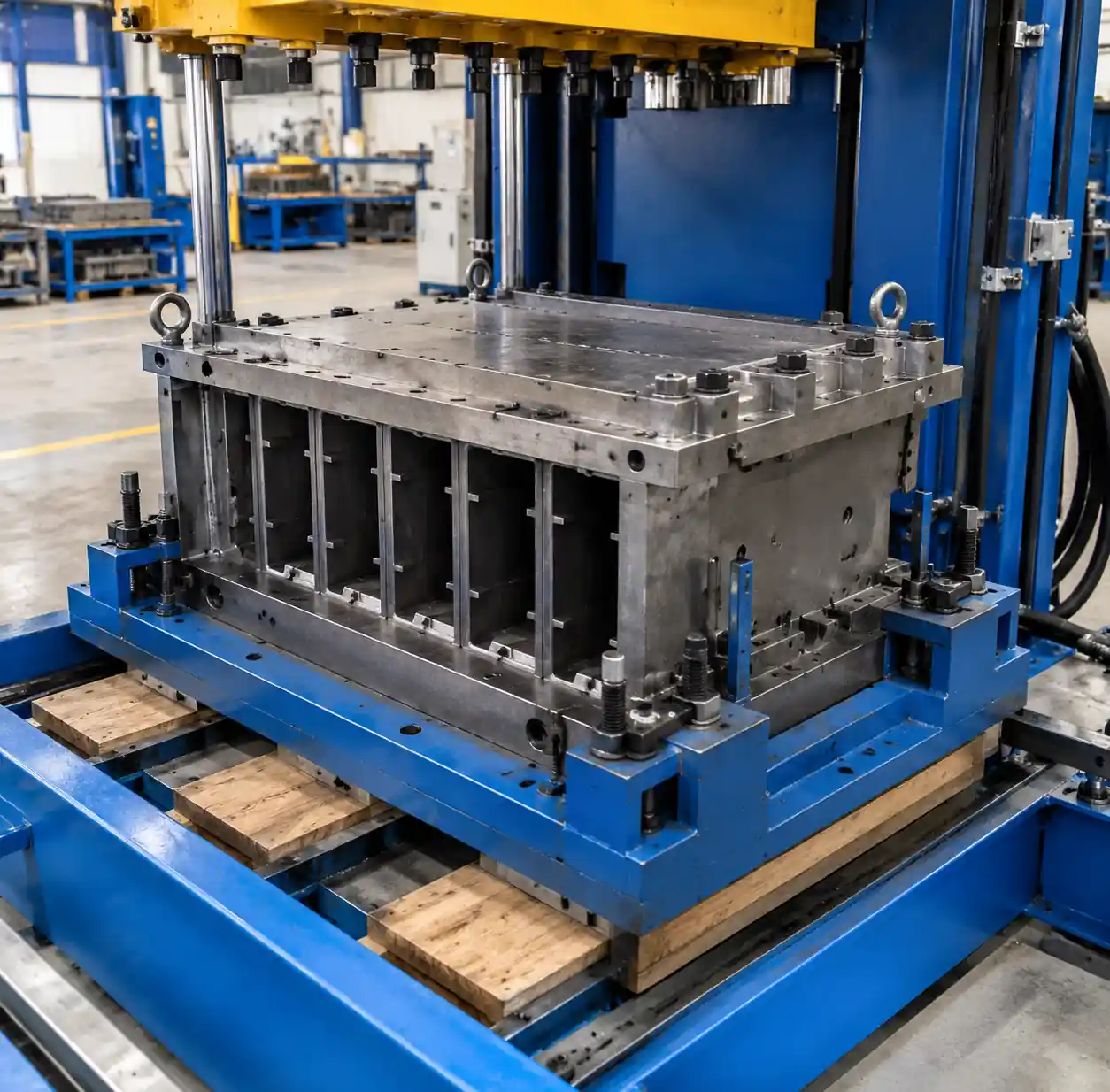
Hydraulic systems work on “high pressure, slow speed” principles, applying hundreds of tons of force gradually to compress concrete particles. The pressing cylinder descends slowly, squeezing material into the mold while forcing air and excess water out through drainage channels. Pressure increases progressively—starting at 80-100 bar for initial compression, rising to 180-220 bar for final densification.
This controlled pressure application creates superior particle bonding compared to vibration alone. Hydraulic force aligns aggregate particles systematically, producing blocks with higher compressive strength and more uniform density distribution. The slower compression allows cement paste to flow between aggregates, filling microscopic voids that vibration cannot eliminate.
Most hydraulic systems combine both technologies—vibration removes large air pockets quickly, then hydraulic pressure completes compaction. This hybrid approach reduces cycle time while maximizing block quality. The vibration phase runs 3-5 seconds, followed by 4-8 seconds of hydraulic pressing.
Technology Comparison: Vibration vs Hydraulic Systems
| Feature | Vibration Block Machines | Hydraulic Block Machines | Combined Systems |
|---|---|---|---|
| Primary Compaction Method | High-frequency oscillation (45-55 Hz) | Static pressure (160-250 bar) | Vibration + hydraulic pressure |
| Compaction Force | Dynamic centrifugal force | 200-600 tons sustained pressure | Both forces combined |
| Block Density Achieved | 1,850-2,050 kg/m³ | 2,000-2,200 kg/m³ | 2,100-2,300 kg/m³ |
| Compressive Strength Range | 12-18 N/mm² | 18-25 N/mm² | 20-28 N/mm² |
| Density Uniformity | ±5-8% variation | ±2-4% variation | ±1-3% variation |
| Cycle Time | 12-20 seconds | 18-28 seconds | 15-25 seconds |
| Energy per Block | 0.6-0.9 kWh | 0.8-1.2 kWh | 0.9-1.3 kWh |
| Equipment Complexity | Simple mechanical | Complex hydraulic + electrical | Most complex |
| Inversión inicial | $8,000-$35,000 | $15,000-$85,000 | $25,000-$180,000 |
| Maintenance Frequency | Every 300-500 hours | Every 400-600 hours | Every 500-800 hours |
The fundamental difference lies in how each technology transfers energy to concrete. Vibration creates temporary particle mobility through rapid oscillation—effective for removing large voids but limited in achieving maximum density. Hydraulic pressure forces particles together mechanically, creating tighter packing and stronger particle-to-particle bonds.
Combined systems deliver optimal results by using vibration for speed and hydraulic pressure for quality. The vibration phase eliminates 70-80% of air voids in 3-5 seconds, then hydraulic pressure completes densification in 4-8 seconds. This staged approach produces blocks 8-15% stronger than vibration alone while maintaining cycle times only 15-25% longer.
Production Capacity and Speed Comparison
Production capacity differs significantly between vibration and hydraulic systems due to cycle time variations and automation potential.
| Tipo de máquina | Technology | Blocks per Hour | Blocks per 8-Hour Shift | Operator Requirements |
|---|---|---|---|---|
| Manual Vibration | Vibration only | 200-350 | 1,600-2,800 | 4-6 workers |
| Manual Hydraulic | Hydraulic only | 180-300 | 1,440-2,400 | 4-6 workers |
| Semi-Auto Vibration | Vibration only | 500-800 | 4,000-6,400 | 2-3 workers |
| Semi-Auto Hydraulic | Combined system | 450-750 | 3,600-6,000 | 2-3 workers |
| Automatic Vibration | Vibration + pressure | 1,200-1,800 | 9,600-14,400 | 1-2 supervisors |
| Automatic Hydraulic | Combined system | 1,500-2,500 | 12,000-20,000 | 1-2 supervisors |
Vibration-only systems achieve faster individual cycles (12-18 seconds) compared to hydraulic systems (18-28 seconds), translating to 15-35% higher throughput for equivalent automation levels. However, this speed advantage decreases as automation increases—fully automatic systems optimize cycle timing through parallel operations, narrowing the gap to 10-15%.
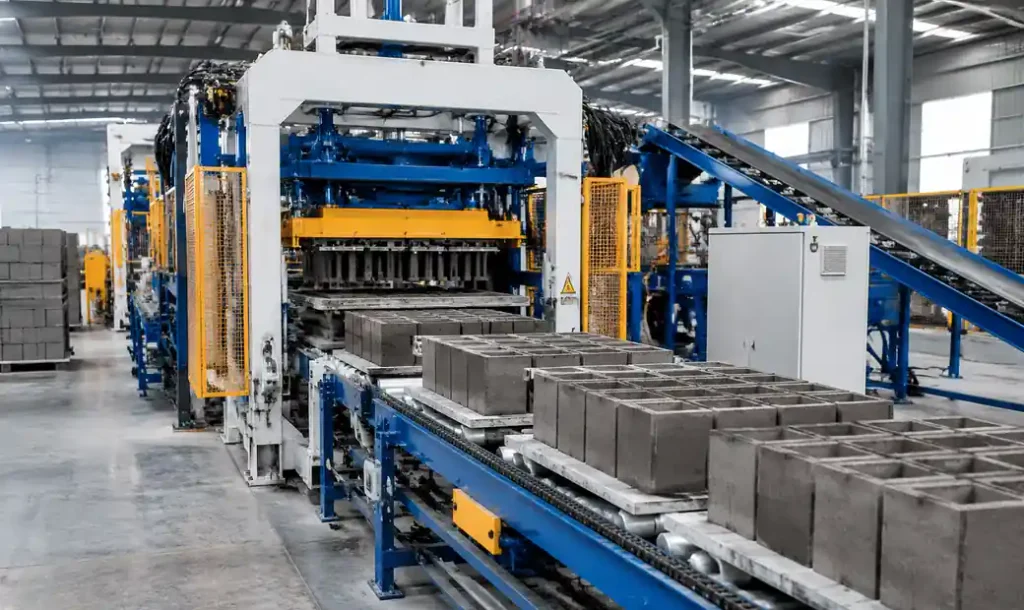
The quality-speed tradeoff becomes critical above 5,000 blocks daily. Vibration systems maximize output but produce blocks at the lower end of strength specifications. Hydraulic and combined systems sacrifice 10-20% of maximum speed to deliver blocks 15-30% stronger, reducing rejection rates from 8-12% to 2-4%.
Block Quality and Strength Differences
Compaction technology directly determines block compressive strength, density uniformity, surface finish, dimensional accuracy, and durability characteristics.
Compressive Strength
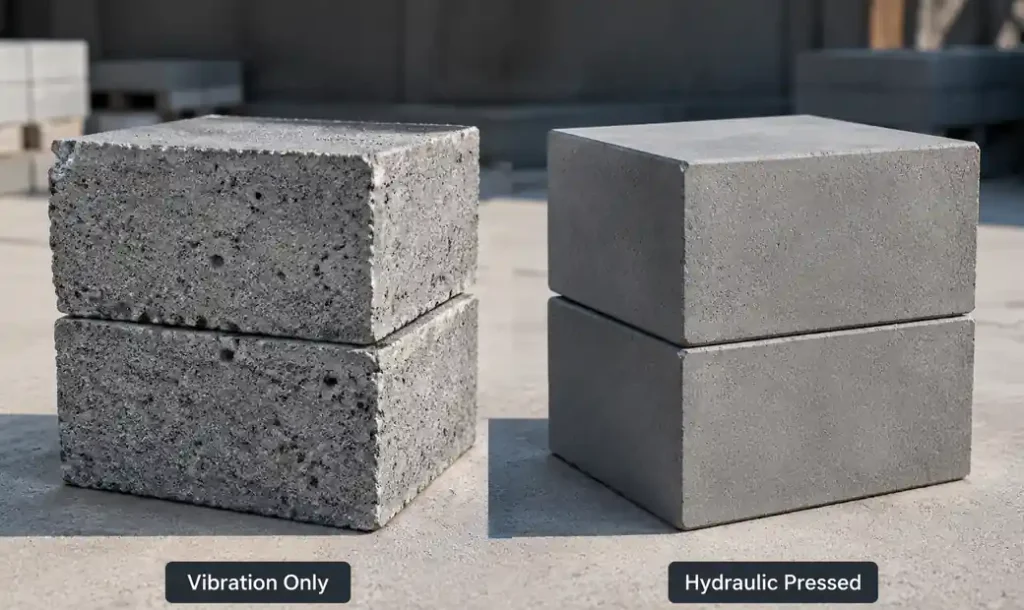
Hydraulic systems produce blocks with 25-40% higher compressive strength compared to vibration-only machines using identical concrete mixes. Testing data from construction sites shows vibration blocks achieving 12-16 N/mm² at 28 days, while hydraulic blocks reach 18-24 N/mm² from the same raw materials.
This strength difference results from superior particle packing. Hydraulic pressure forces aggregates into tighter arrangements with more contact points between particles. The sustained compression also drives cement paste deeper into voids, creating stronger bonds. Vibration alone cannot achieve this level of densification—oscillation rearranges particles but lacks the force to eliminate microscopic air spaces.
Block Density and Uniformity
Hydraulic systems produce blocks with superior density distribution throughout the entire block structure. Testing data shows hydraulic blocks achieving ±2-3% density variation between top and bottom sections, compared to ±6-10% for vibration-only systems.
Vibration compaction naturally produces denser material at the bottom where vibration energy accumulates, while the top surface receives less compaction energy. Hydraulic pressure applies uniform force across the entire block height, compressing all sections equally.
Surface Quality and Appearance
Hydraulic systems deliver superior surface finish through controlled cement paste migration. The slow compression brings fine particles to mold surfaces, creating smooth, dense faces that resist water penetration. Surface density typically reaches 2,150-2,250 kg/m³ for hydraulic blocks versus 1,950-2,100 kg/m³ for vibration blocks.
Denser surfaces resist freeze-thaw damage better, reducing spalling and cracking in harsh climates. For decorative blocks and pavers where appearance matters, hydraulic compaction produces sharper edges, cleaner corners, and better color consistency.
Energy Efficiency and Operating Costs
Energy consumption and operational expenses vary significantly between vibration and hydraulic technologies, affecting production costs and profitability.
| Cost Factor | Vibration Systems | Hydraulic Systems | Combined Systems |
|---|---|---|---|
| Power per Block | 0.6-0.9 kWh | 0.8-1.2 kWh | 0.9-1.3 kWh |
| Energy Cost per 1,000 Blocks | $18-$27 (at $0.10/kWh) | $24-$36 | $27-$39 |
| Vibration Motor Replacement | $350-$800 every 2,000 hours | Not applicable | $350-$800 every 2,500 hours |
| Hydraulic Oil & Filters | Not applicable | $180-$400 every 1,500 hours | $200-$450 every 2,000 hours |
| Annual Maintenance Cost | $1,200-$2,800 | $3,500-$6,500 | $4,000-$8,000 |
| Downtime Days per Year | 3-5 days | 2-4 days | 2-4 days |
Vibration systems consume 15-30% less energy per block than hydraulic systems, providing $6-$12 savings per 1,000 blocks. For high-volume operations producing 15,000+ blocks daily, this translates to $2,000-$4,500 monthly energy savings.
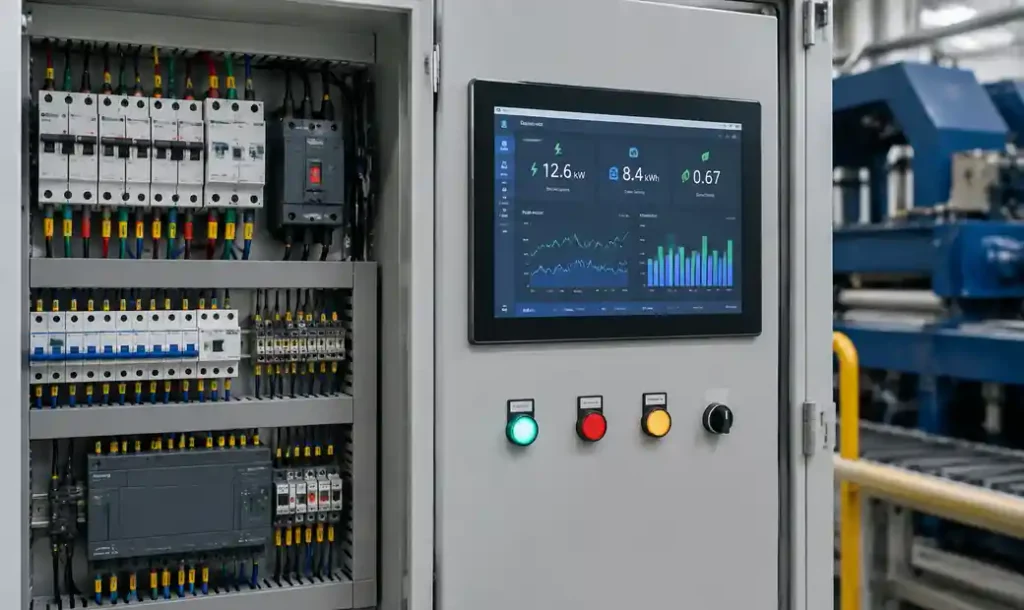
However, total operating costs tell a different story. Hydraulic systems’ higher maintenance expenses ($3,500-$6,500 annually) are offset by lower labor costs and reduced rejection rates. When factoring labor efficiency, quality consistency, and material waste, hydraulic systems typically cost $0.08-$0.12 per block versus $0.12-$0.18 for vibration-only machines at production volumes above 5,000 blocks daily.
Maintenance Requirements Comparison
Maintenance complexity differs substantially between vibration and hydraulic technologies, affecting long-term reliability and operational continuity.
Vibration System Maintenance
Vibration motors operate under extreme mechanical stress with eccentric forces creating bearing loads 4-6 times higher than standard motors. Bearing inspection every 500 hours prevents 80-90% of failures. Replace bearings at 2,000-3,000 hours—a $80-150 bearing replacement takes 45 minutes, while motor failure creates $2,000-5,000 daily production losses.
Eccentric weight bolts require torque verification every 40 hours initially, then quarterly. Bolt loosening causes amplitude loss and potential weight separation. Always use thread-locking compound and replace bolts annually.
Mantenimiento del sistema hidráulico
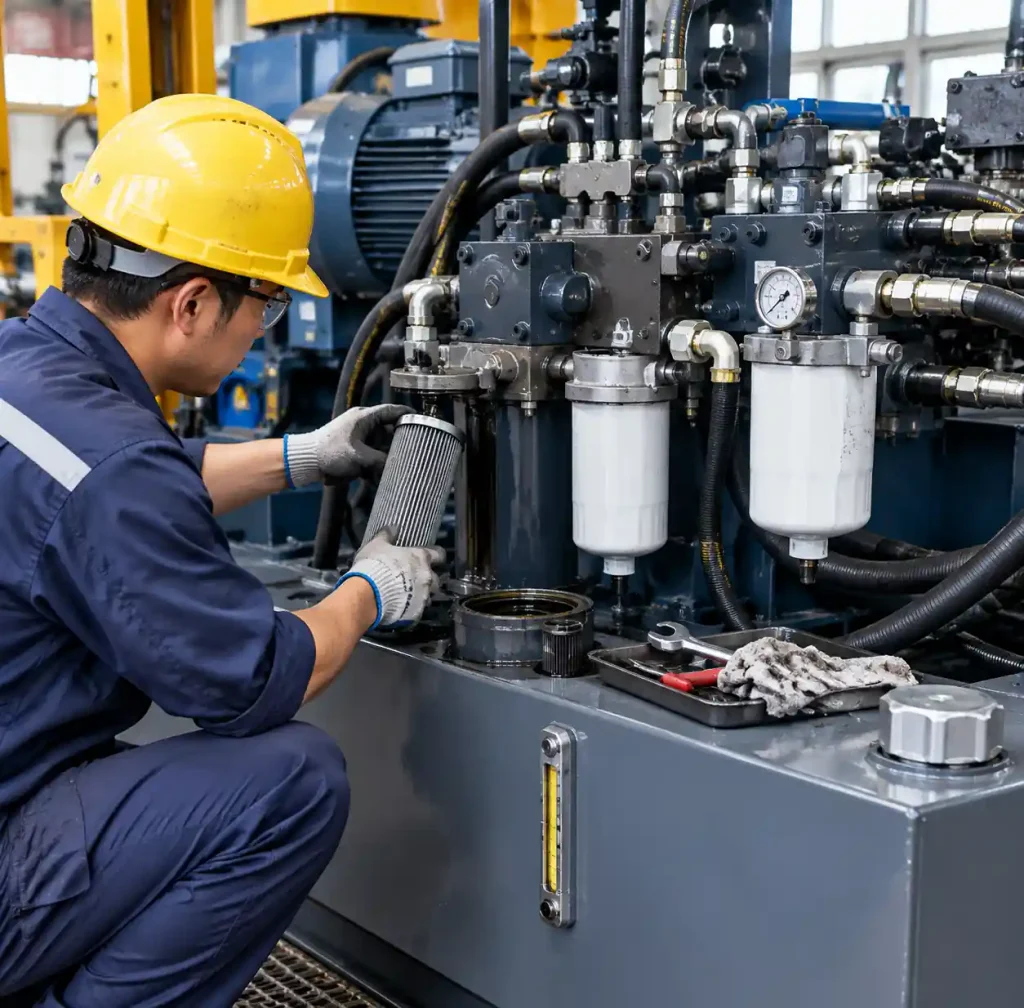
Hydraulic systems demand more frequent routine maintenance but provide better failure prediction. Check oil level daily—low oil causes pump cavitation and accelerated wear. Oil should appear translucent amber; cloudiness indicates oxidation requiring immediate replacement.
Replace hydraulic filters every 500 hours and change oil every 1,500-2,000 hours. Premium ISO VG 46 hydraulic oil costs $180-$400 per change for semi-automatic machines, $500-$900 for automatic systems. Main cylinder seals last 6,000-10,000 hours depending on operating conditions.
Combined System Maintenance
Machines using both technologies require maintenance protocols for each system. The redundancy allows continued operation at reduced capacity if one system fails—hydraulic malfunction permits vibration-only operation at 70-80% normal quality.
Cost Analysis: Which System Offers Better ROI?
Total cost of ownership analysis over 5 years reveals which technology delivers better return on investment for different production scales.
Small-Scale Operations (1,000-3,000 blocks/day)
For startups and small businesses, vibration systems offer lower entry costs and faster ROI. A semi-automatic vibration machine costing $12,000-$18,000 produces adequate quality blocks at lower capital investment.
5-Year Cost Breakdown (2,500 blocks/day average):
- Equipment: $15,000
- Energy (5 years): $16,200
- Maintenance: $9,000
- Total: $40,200
Hydraulic systems at this scale cost 40-60% more initially ($20,000-$28,000) with higher maintenance expenses, extending payback periods from 12-18 months to 18-28 months.
Mid-Scale Operations (5,000-10,000 blocks/day)
At medium production volumes, hydraulic and combined systems show advantages through better quality consistency and lower labor requirements. The 15-30% strength improvement reduces rejection rates from 8-12% to 2-4%, saving $8,000-$18,000 annually in wasted materials.
Hydraulic blocks command 8-12% price premiums in quality-conscious markets, generating $45,000-$85,000 additional revenue over 5 years that compensates for higher equipment costs.
Large-Scale Operations (15,000+ blocks/day)
High-volume automatic production favors combined systems. The quality consistency, reduced labor requirements, and premium pricing deliver 22-35% better profitability despite higher initial investment and maintenance costs.
ROI Analysis (20,000 blocks/day):
- Additional investment for hydraulic: $45,000
- Annual savings (labor + quality): $38,000-$52,000
- Payback period: 10-14 months
- 5-year net benefit: $145,000-$215,000
Which Technology Should You Choose?
Your production requirements, quality standards, budget constraints, and market positioning determine the optimal compaction technology.
Choose vibration-only systems when:
- Starting with limited capital ($8,000-$20,000 budget)
- Producing basic hollow blocks for non-structural applications
- Operating in price-sensitive markets prioritizing volume over premium quality
- Maintaining simple equipment with basic technical skills
- Maximizing production speed for standard specifications
Choose hydraulic or combined systems when:
- Producing structural blocks requiring 18+ N/mm² compressive strength
- Targeting quality-conscious markets willing to pay premiums
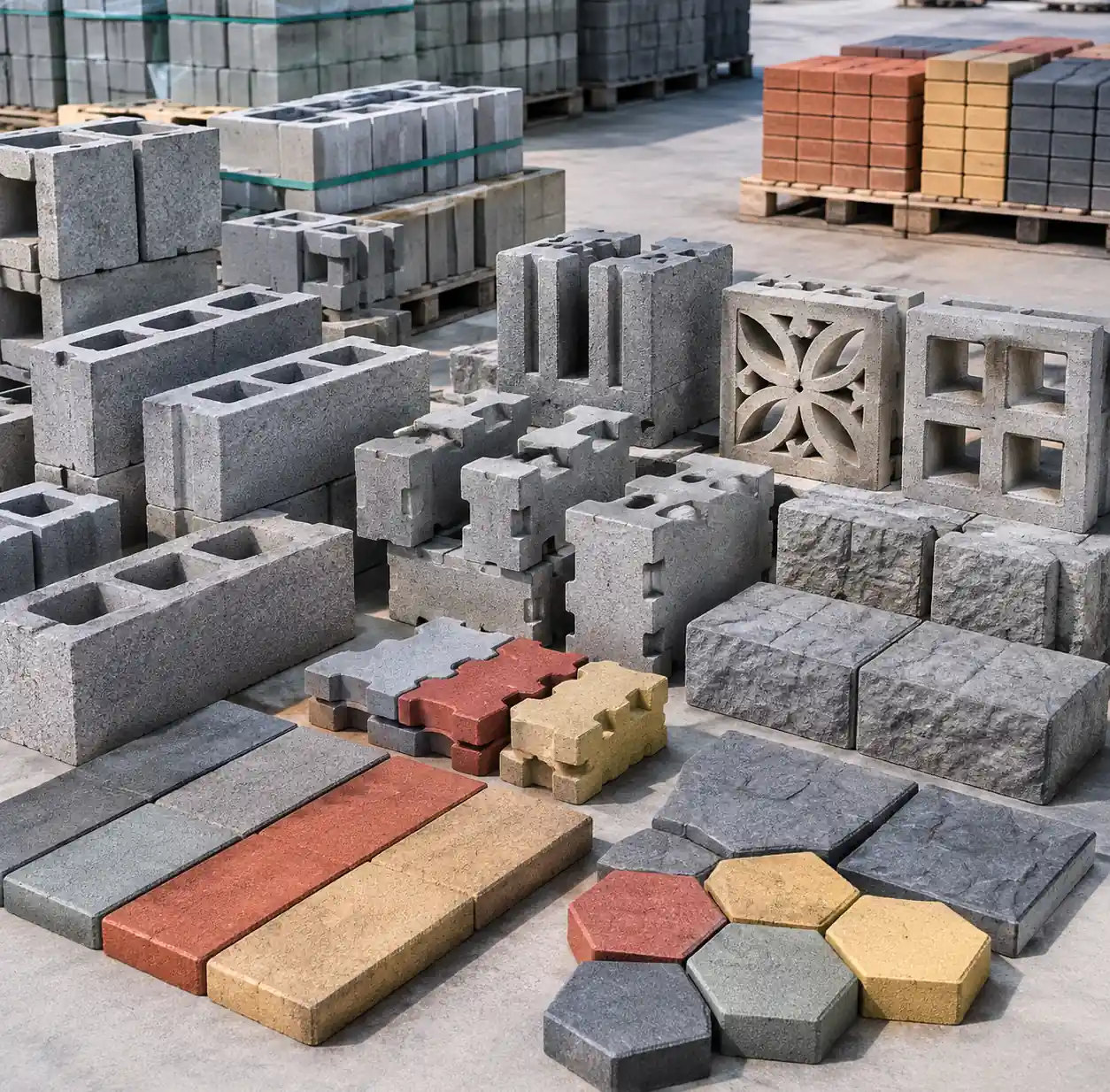
- Manufacturing decorative pavers, interlocking blocks, or specialty products
- Scaling to 5,000+ blocks daily where quality consistency matters
- Building long-term business reputation on superior products
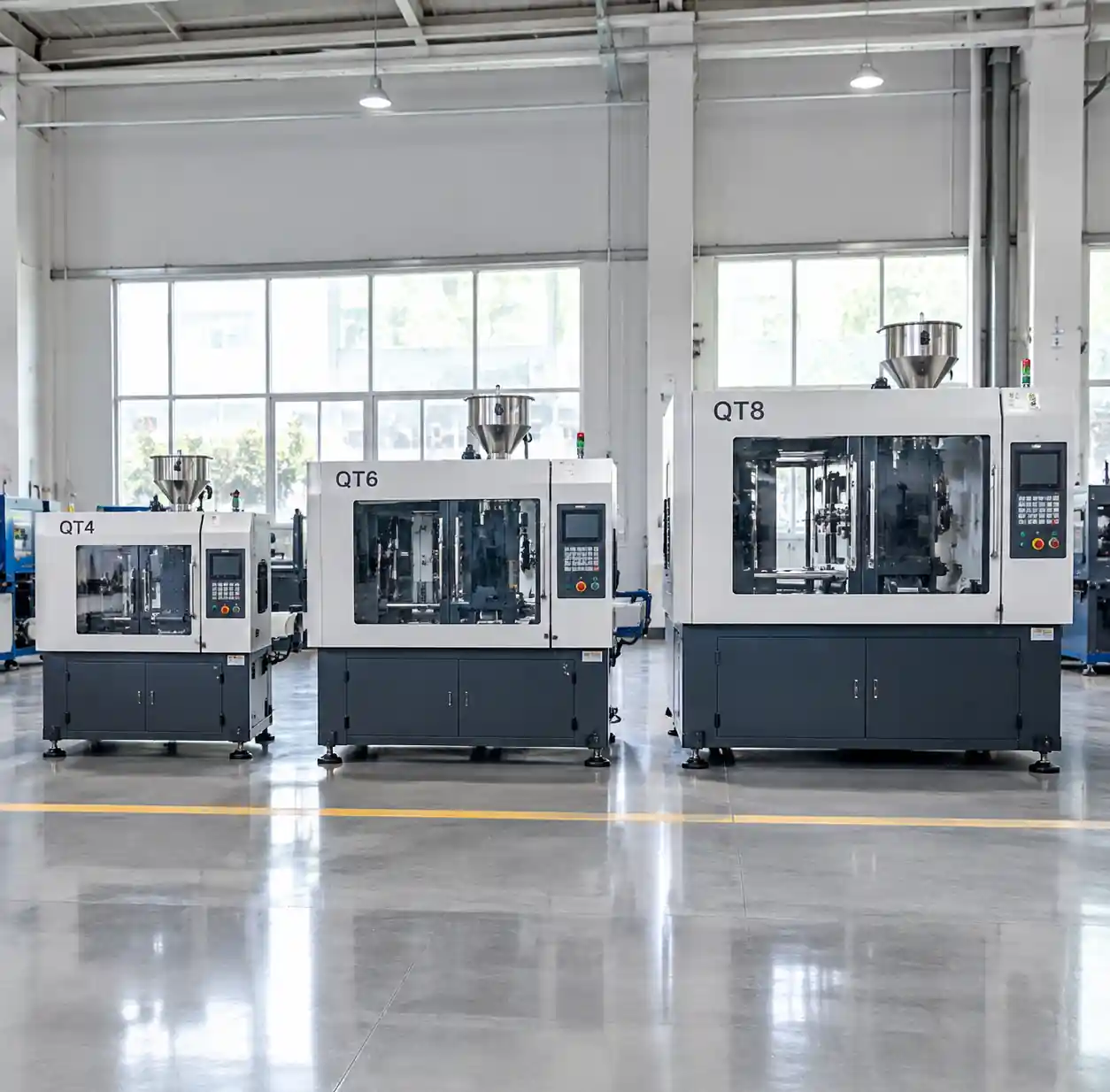
For most growing businesses, semi-automatic combined systems offer the best balance. Models like the QT4-24 and QT4-40 provide hydraulic compression with vibration assistance, delivering quality approaching automatic systems at semi-automatic prices. These machines cost $18,000-$32,000—40-60% less than full automatic lines while producing blocks 20-35% stronger than vibration-only systems.
Frequently Asked Questions
Can vibration-only machines produce structural blocks?
Vibration machines can produce blocks meeting minimum structural specifications (12-15 N/mm²), but hydraulic systems consistently achieve higher strengths (18-28 N/mm²). For load-bearing walls and multi-story construction, hydraulic compaction provides better safety margins and more consistent quality.
How much stronger are hydraulic blocks compared to vibration blocks?
Using identical concrete mixes, hydraulic systems produce blocks 25-40% stronger than vibration-only machines. Testing shows vibration blocks averaging 12-16 N/mm² at 28 days, while hydraulic blocks reach 18-24 N/mm². Combined systems achieve 20-28 N/mm² through superior compaction.
Which system requires less maintenance?
Vibration systems have simpler maintenance with fewer components—primarily bearing inspection and bolt torque checks. Hydraulic systems require oil changes, filter replacements, and seal maintenance. Annual maintenance costs run $1,200-$2,800 for vibration versus $3,500-$6,500 for hydraulic systems.
Is the quality difference noticeable to customers?
Yes. Hydraulic blocks show visibly smoother surfaces, sharper edges, and more consistent dimensions. The density difference affects weight (hydraulic blocks are 8-15% heavier), sound when struck, and appearance. Professional contractors recognize quality differences and often specify hydraulic-pressed blocks.
Can I upgrade a vibration machine to add hydraulic?
Converting vibration machines to hydraulic requires replacing the pressing mechanism, adding hydraulic power units, and modifying controls—essentially building a new machine. Conversion costs 60-80% of new hydraulic equipment prices. Most operators find purpose-built hydraulic systems more cost-effective.
Which technology is better for interlocking blocks?
Hydraulic systems excel at interlocking blocks requiring precise dimensions and strong edges. The controlled pressure creates sharp, clean interlocking features that vibration alone cannot achieve. Surface density from hydraulic compression also improves weather resistance for exterior applications.
What about energy costs—which is cheaper to operate?
Vibration systems consume 15-30% less electricity per block ($18-$27 per 1,000 blocks) compared to hydraulic systems ($24-$36 per 1,000 blocks). However, hydraulic systems’ better quality reduces waste and rejection costs, making total production costs lower at volumes above 5,000 blocks daily.
Conclusión
Vibration and hydraulic technologies serve different market segments and production goals. Vibration systems maximize throughput at lower initial investment, suitable for price-competitive markets and startups. Hydraulic systems deliver superior block quality, consistency, and strength—critical for structural applications and premium markets.
The trend toward combined systems reflects industry recognition that quality increasingly differentiates successful block manufacturers. As construction standards tighten and customers demand stronger, more uniform products, hydraulic compaction becomes essential rather than optional.
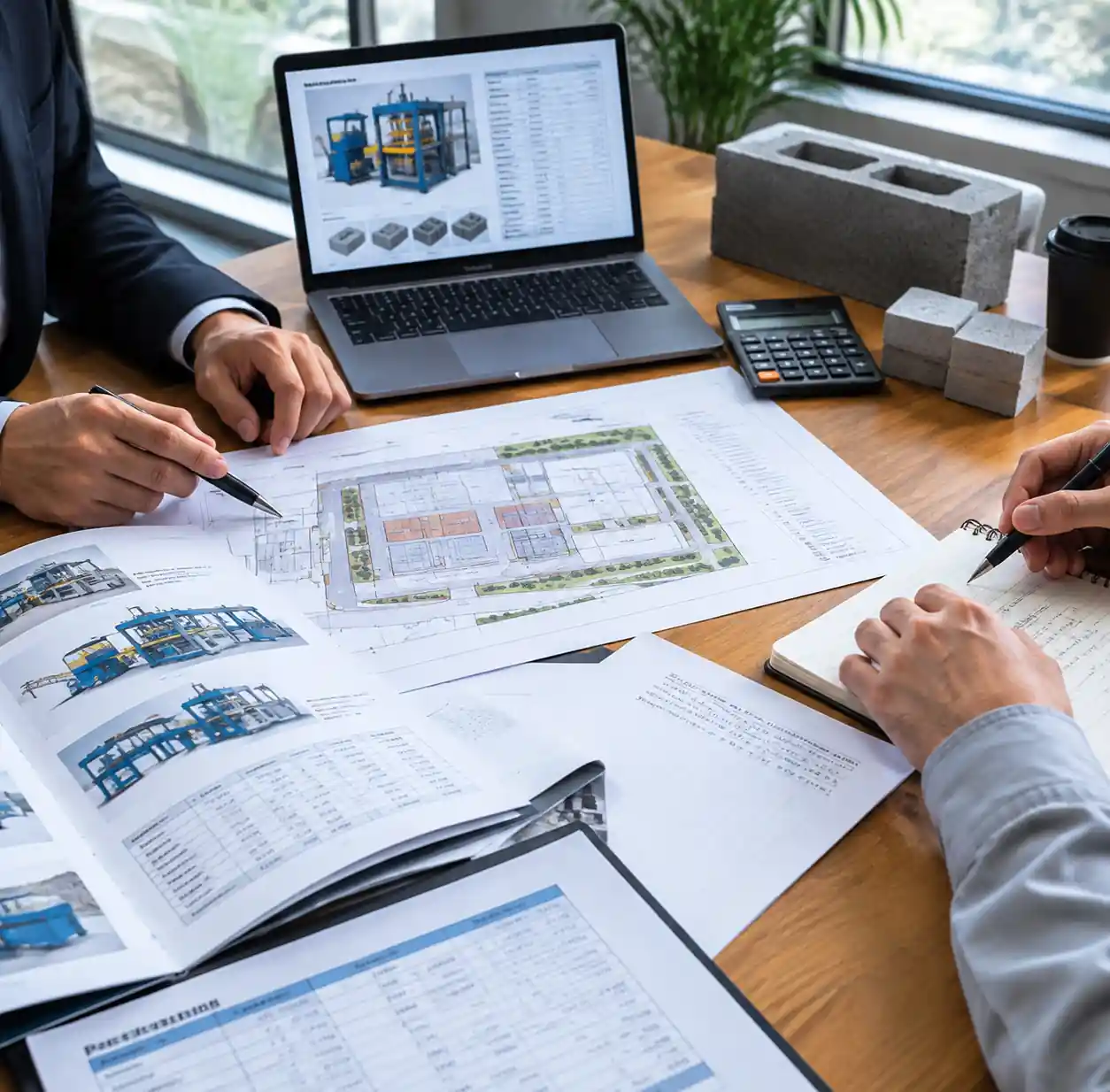
Raytone Block Machinery offers both vibration and hydraulic block machine solutions. Contact our technical team for equipment selection guidance, capacity planning, and ROI analysis tailored to your specific requirements.