


Kenya’s construction sector is expanding at 7.5% annually in 2026, fueled by government housing projects, infrastructure development, and urbanization pressures in Nairobi, Mombasa, and Kisumu. For contractors and entrepreneurs entering block production, choosing the right machine determines whether you capture this growth or struggle with reliability issues that drain capital and damage client relationships.
This guide identifies which block making machines perform reliably in Kenya’s specific conditions—unstable power supply, imported equipment logistics, and varying operator skill levels—while delivering the production capacity and block quality Kenyan contractors demand.
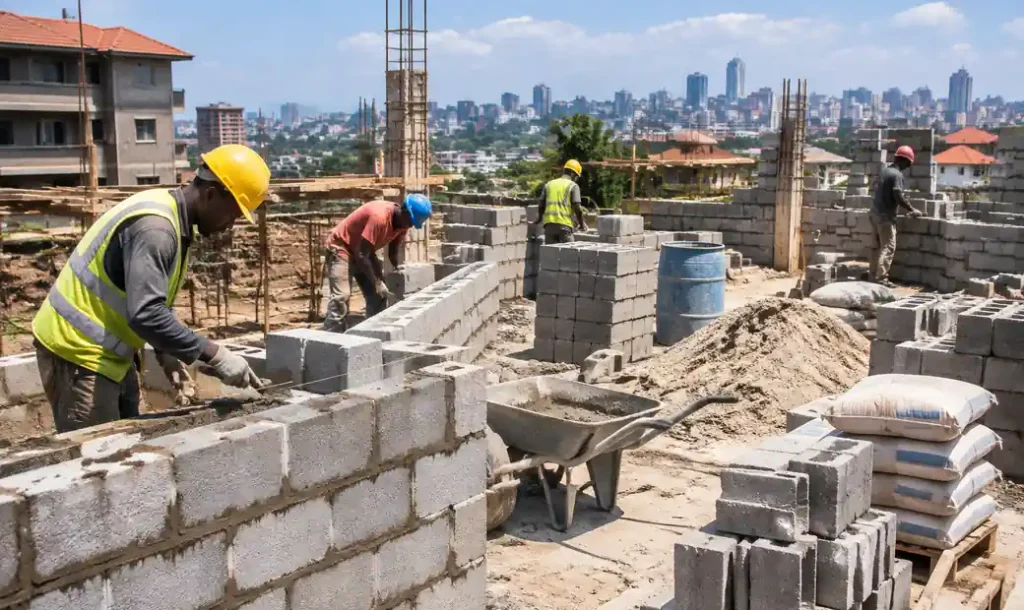
Kenya’s Construction Market: Why Equipment Choice Matters Now
Kenya’s construction industry reached robust growth momentum with 11.2% CAGR during 2021-2025, positioning 2026 as a pivotal year for equipment investment. The government’s affordable housing initiative targets 250,000 units annually, while infrastructure projects like the Nairobi Expressway expansion and renewable energy installations create sustained demand for concrete blocks.
Block producers face specific operational realities that imported equipment must address. Power supply in Kenya operates at 415V three-phase and 240V single-phase with 50Hz frequency, yet voltage fluctuations exceeding ±15% occur regularly outside Nairobi’s industrial zones. Equipment designed for stable Chinese or European grids fails within months when exposed to Kenya’s actual power conditions.
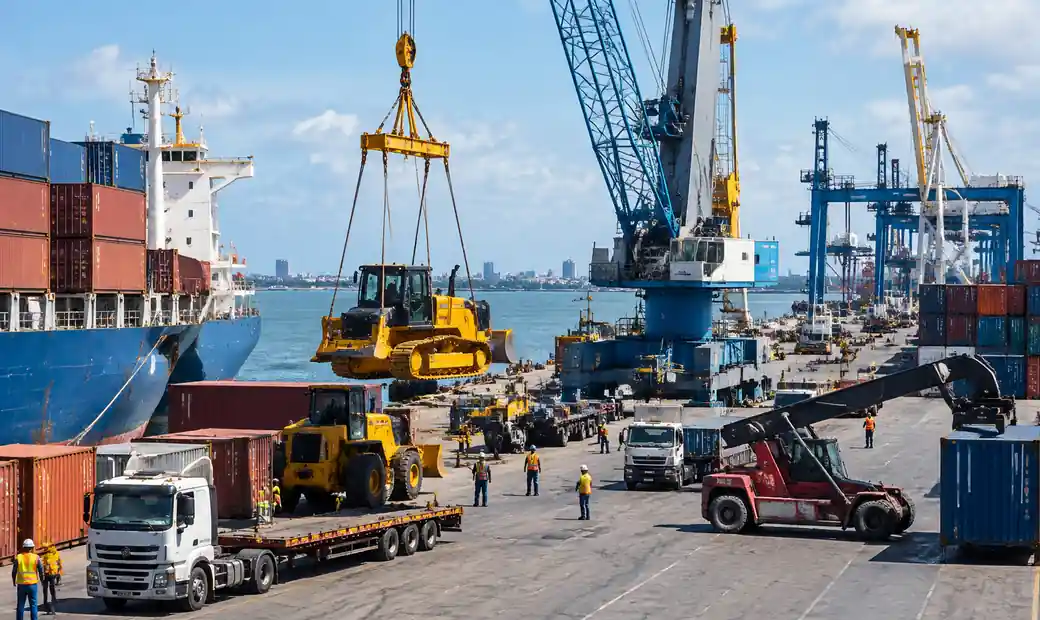
Import procedures through Mombasa Port add complexity. Machinery attracts 10-25% customs duty plus 16% VAT on the combined CIF value and duty, then requires coordination with clearing agents, Kenya Revenue Authority inspections, and transport to inland locations. Machines from suppliers lacking Kenyan service networks leave buyers stranded when components fail.
Understanding Block Machine Types for Kenyan Operations
Manual Block Machines: Low Investment, Limited Scale
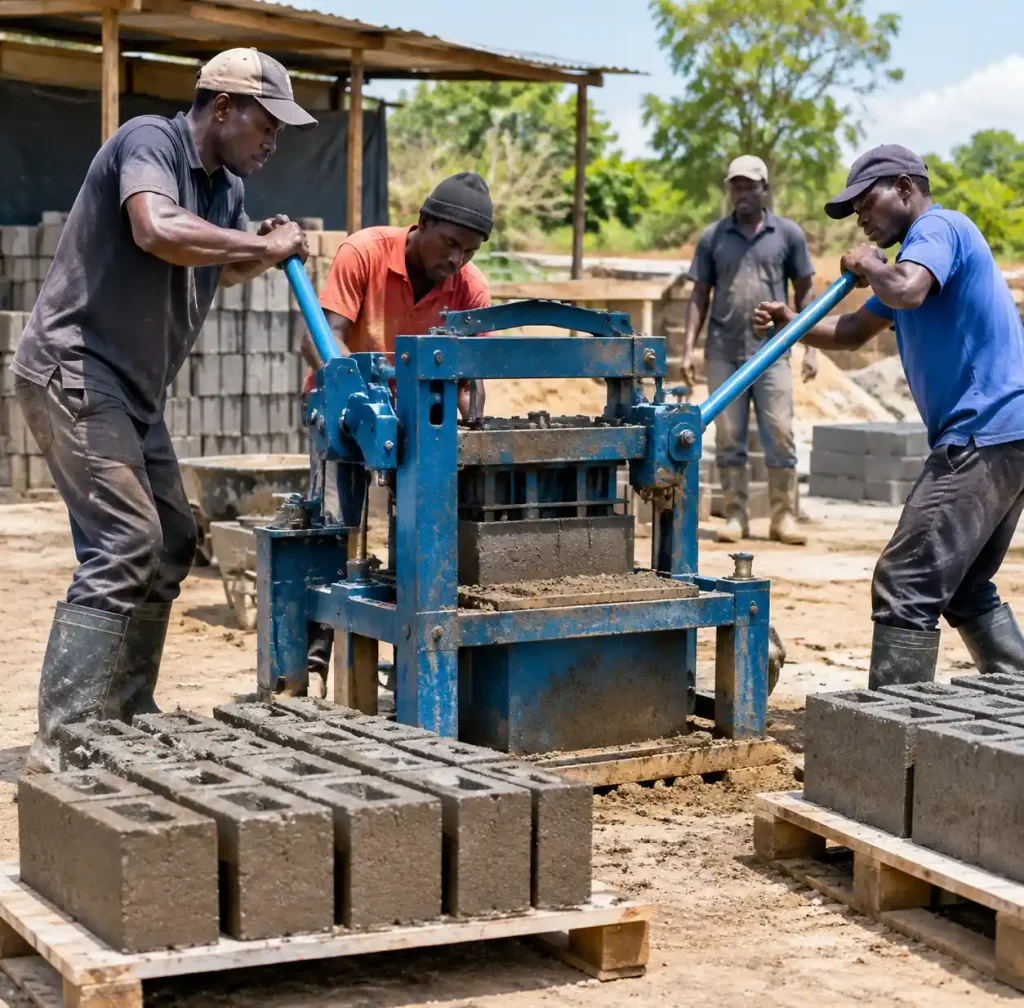
Manual machines require no electrical connection, operating through mechanical leverage while 4-6 workers handle material loading, pressing, and block removal. Investment runs $3,000-$7,000 including shipping, producing 800-1,200 blocks per 8-hour shift.
These machines suit rural contractors working on 5-10 house projects annually where labor costs $4-6 daily and grid electricity remains unavailable. The limitation appears quickly: production capacity constrains business growth, and block quality varies with operator technique.
Semi-Automatic Machines: Kenya’s Production Workhorse
Semi-automatic hydraulic machines dominate Kenyan markets, balancing affordability with automated pressing precision. Models like the QT4-30 and QT4-40 cost $9,000-$16,000, require 2-4 operators, and produce 1,200-2,400 blocks per shift. Hydraulic systems compress concrete uniformly while operators handle material feeding and block removal.
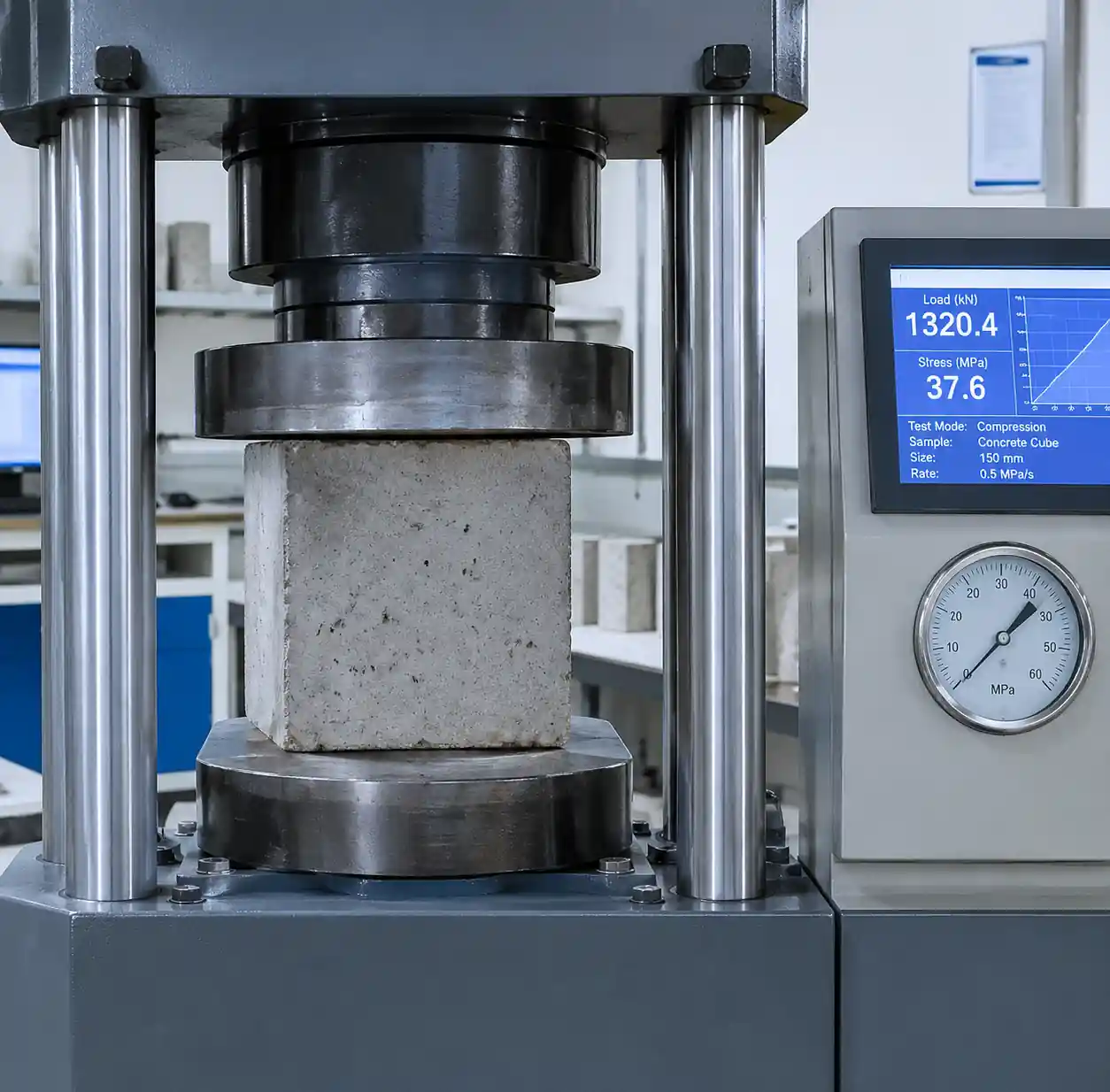
These machines run on single-phase 240V power available at most construction sites, eliminating the three-phase requirement that restricts automatic machines. The hydraulic pressing delivers consistent block density (±3-5% variation) regardless of operator strength, producing blocks meeting Kenya’s 17-20 MPa compressive strength standards.
For contractors serving Nairobi’s residential construction or county government housing projects, semi-automatic machines provide the production capacity to handle 30-50 house developments annually while keeping total investment under KES 2.5 million ($18,000).
Fully Automatic Machines: High-Volume Production
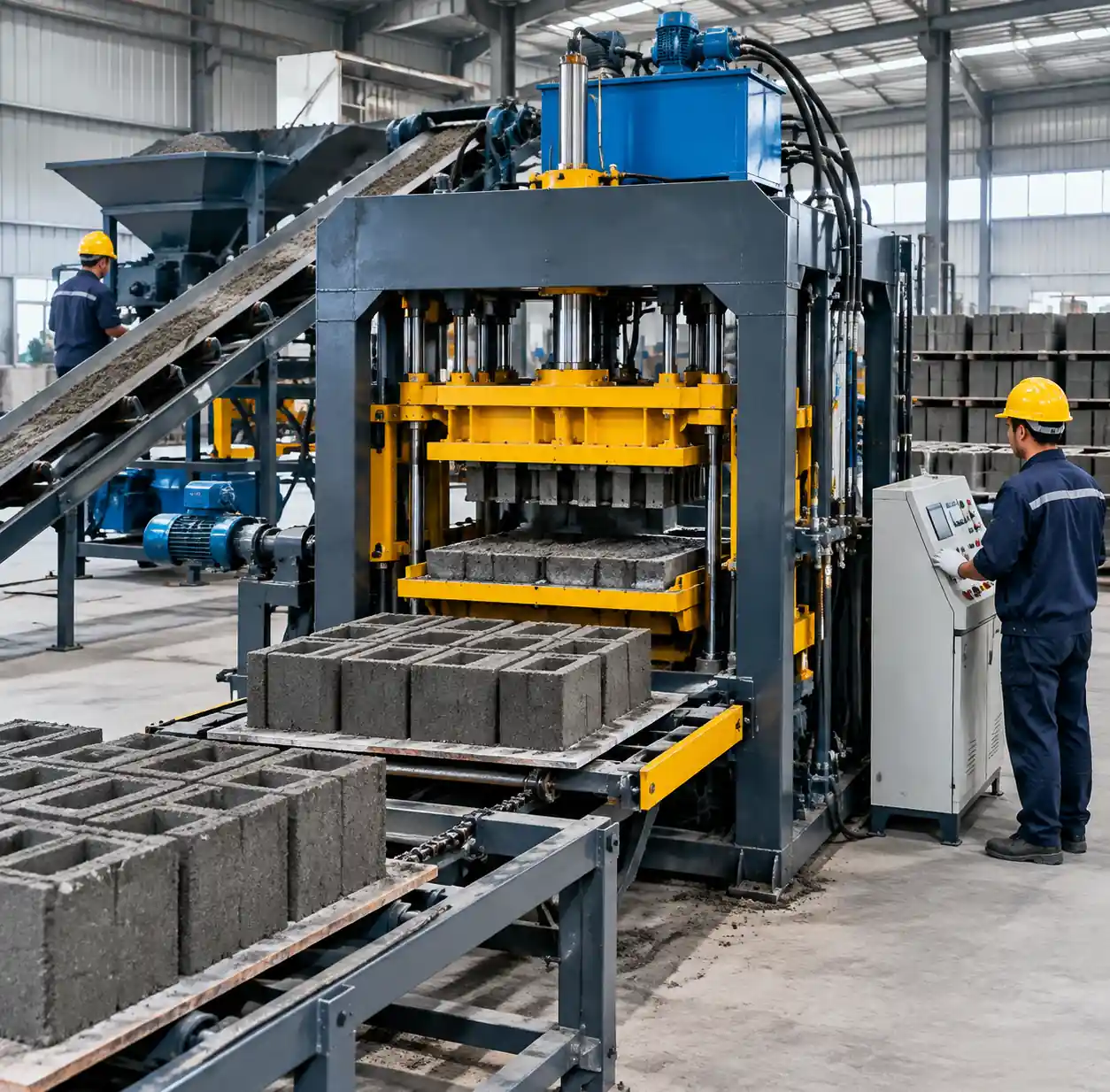
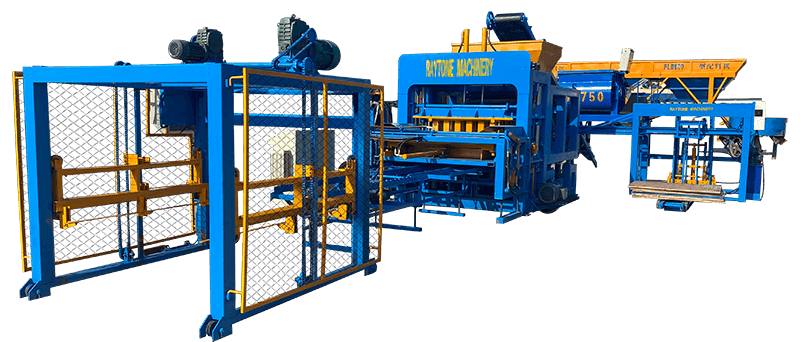
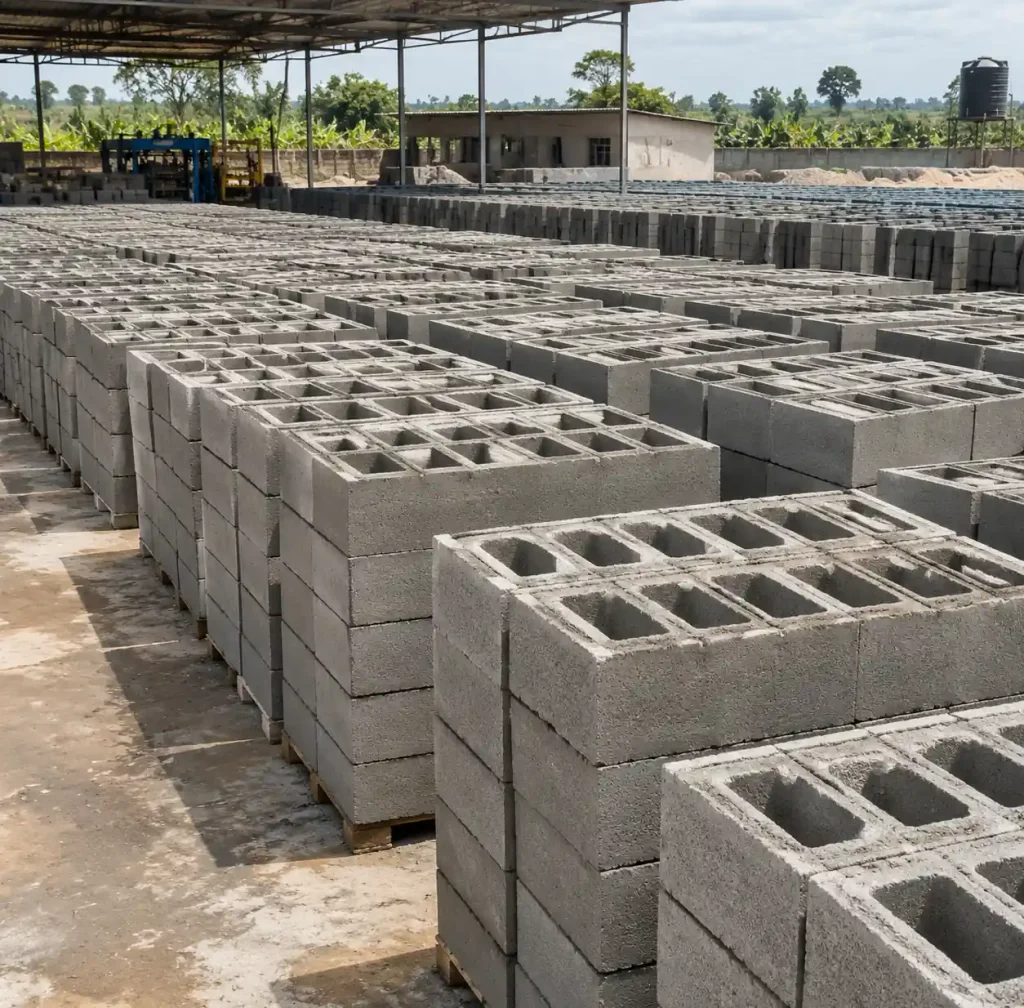
Fully automatic machines like the QT8-15 y QT10-15 cost $28,000-$110,000, require 2-6 operators, and produce 3,600-46,000 blocks per shift depending on model capacity. PLC controls automate material feeding, pressing, and block transfer with 15-20 second cycle times.
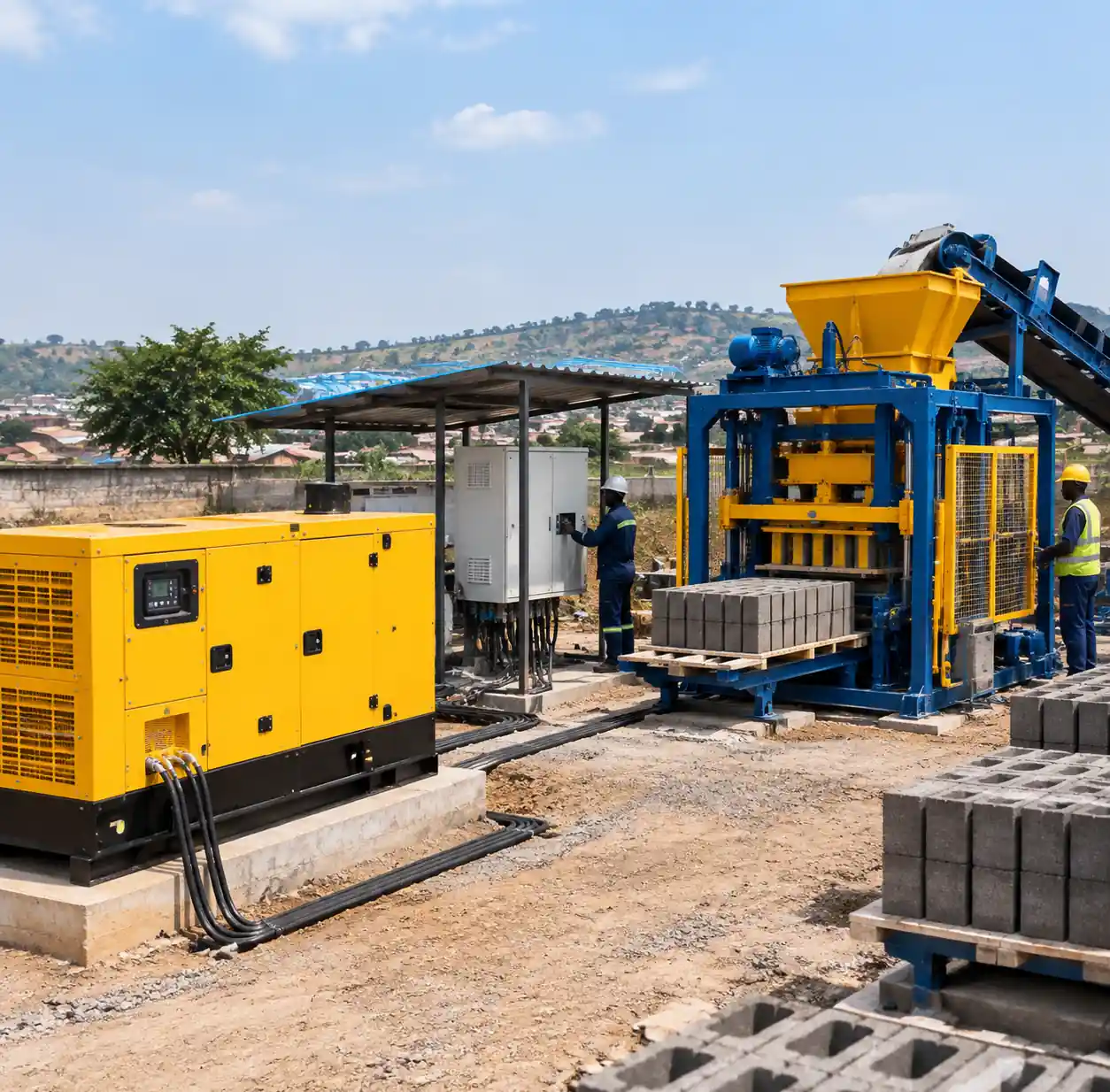
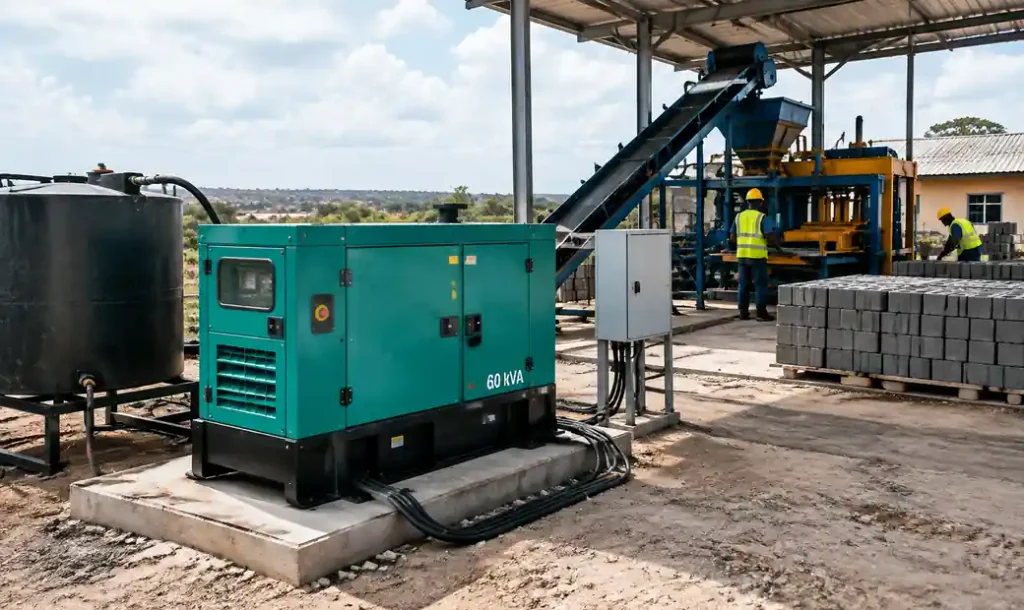
The barrier is three-phase 415V power requirements and higher technical complexity. Areas outside Nairobi’s industrial zones need backup generators adding KES 1.2-2.0 million ($8,000-$14,000) to setup costs. These machines suit contractors managing multiple simultaneous projects or operations scaling beyond 3,000 blocks daily capacity.
Best Block Machine Models for Kenya Market
| Machine Model | Capacidad de producción | Power Requirements | Investment (FOB) | Best Application |
|---|---|---|---|---|
| QT4-40 Semi-Auto | 1,200-1,600 blocks/shift | 240V single-phase, 13.5kW | $9,000-$12,500 | Small contractors, 20-40 houses/year |
| QT4-30 semiautomática | 1,600-2,400 blocks/shift | 240V single-phase, 14.8kW | $11,000-$15,000 | Medium contractors, 40-70 houses/year |
| QT8-15 Automático | 3,600-5,000 blocks/shift | 415V three-phase, 36.75kW | $28,000-$35,000 | Large contractors, government housing |
| QT10-15 Automático | 15,000-46,000 blocks/shift | 415V three-phase, 51.25kW | $85,000-$120,000 | Precast plants, regional supply operations |
QT4-40: Proven Single-Phase Reliability
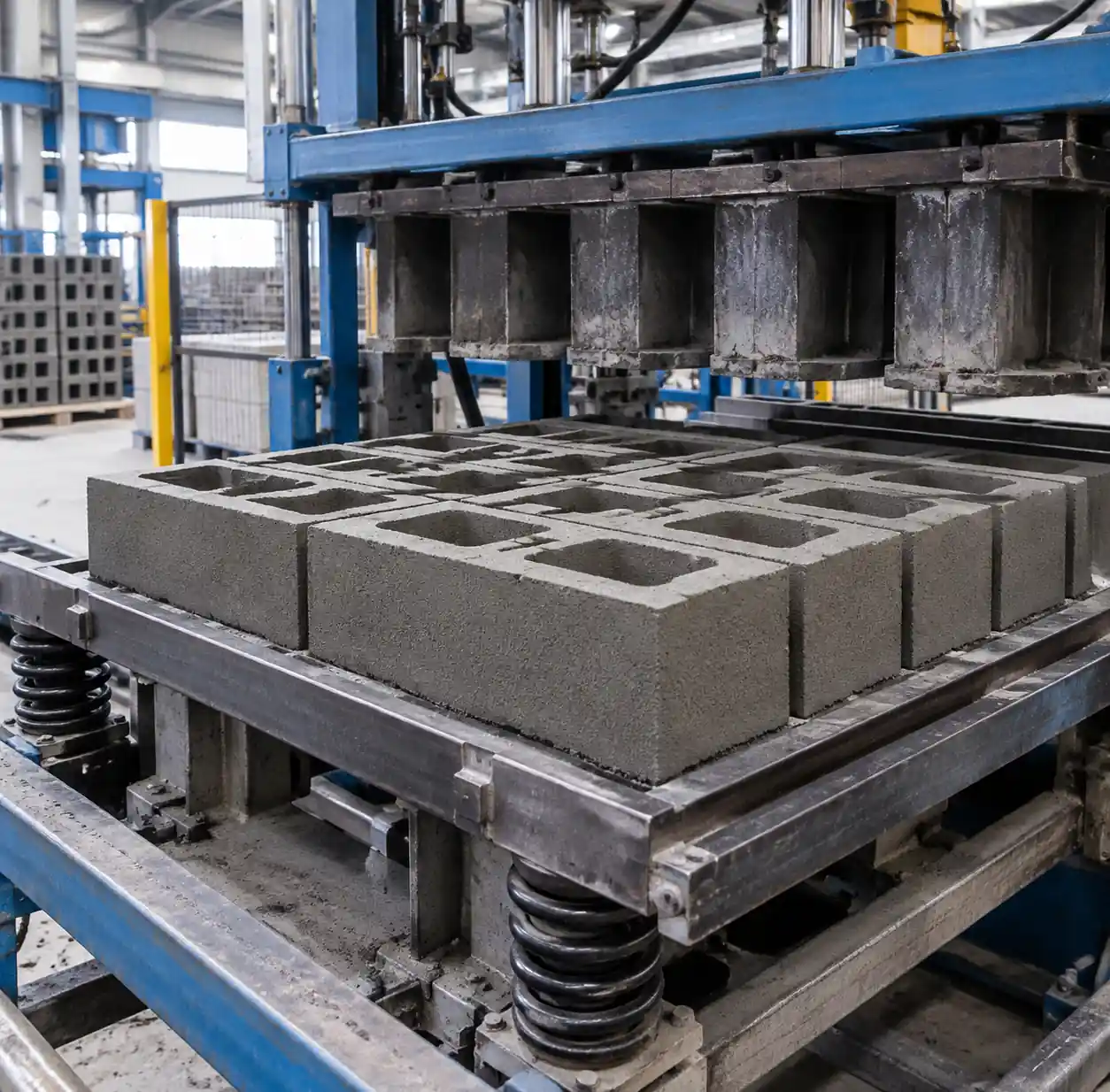
The QT4-40 produces 1,200-1,600 standard blocks per shift, running on single-phase 240V power viable across Kenya including areas with basic electrical infrastructure. With 100-120 tons compression force and quick-change molds, it handles hollow blocks, solid blocks, and pavers with 25-35 minute mold changes.
Operating successfully in Nairobi, Mombasa, Nakuru, and Eldoret, this machine handles Kenya’s cement variations and temperatures up to 38°C. Raytone Block Machinery provides 24-month warranty with 48-hour service response through our Nairobi center. ROI: 14-18 months at 60-70% capacity utilization.
QT8-15: Mid-Scale Automatic Production
The QT8-15 produces 3,600-5,000 blocks per shift with PLC controls, English touchscreen interface, and 180-210 bar hydraulic systems. At 200 tons compression force with Siemens or Schneider PLC, this machine suits Kenya’s government housing projects requiring consistent 3,000-4,000 daily output.
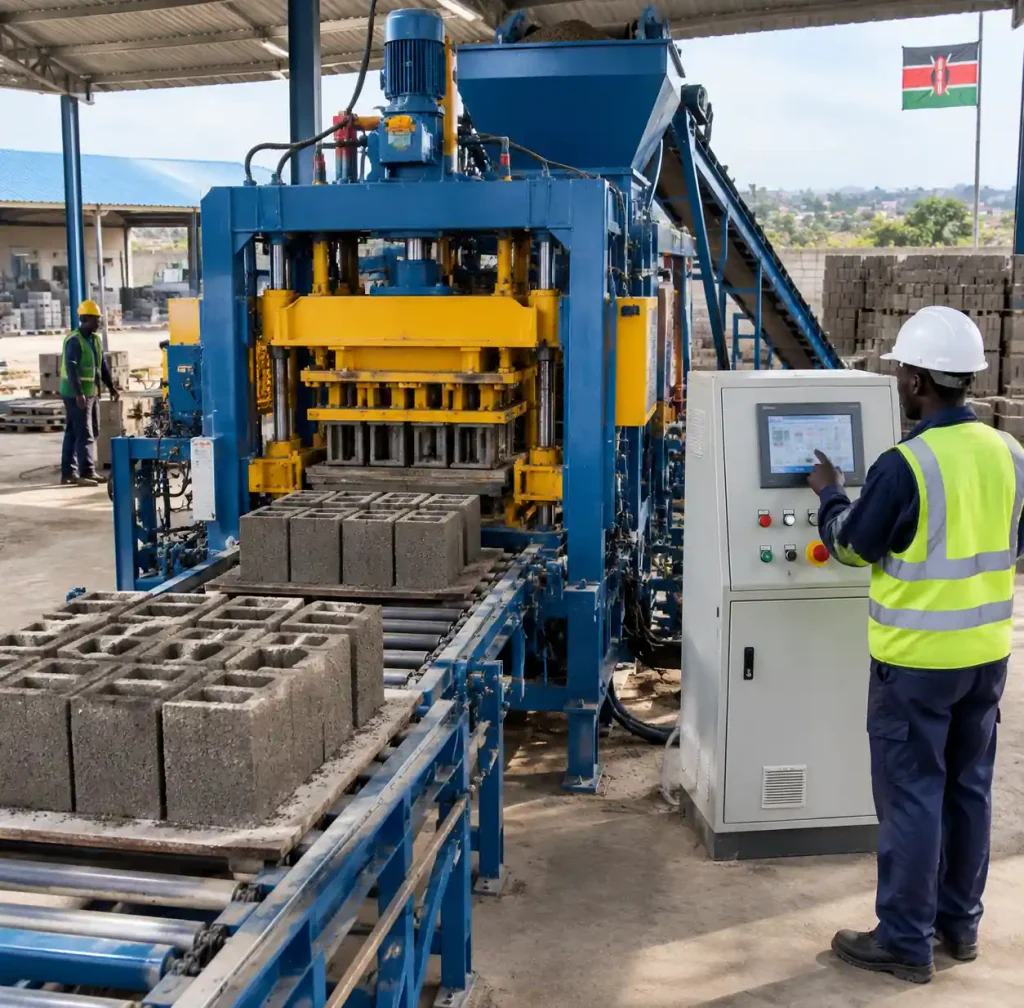
Quick-change molds allow 25-30 minute switches between hollow blocks and cabro paving stones, increasing revenue flexibility. Requires three-phase 415V power and 50-60 kVA generator backup.
QT10-15: High-Capacity Precast Operations
Producing up to 46,080 blocks per shift, the QT10-15 serves precast manufacturers supplying regional markets. Siemens S7-1200 PLC with remote diagnostics, 250-300 tons compression, and integrated batching systems support 200,000-300,000 monthly output for government institutions and large developments. Investment recovery: 20-28 months at 50-60% capacity.
Power Infrastructure: Kenya-Specific Considerations
Kenya’s grid operates at 415V three-phase and 240V single-phase (50Hz), but voltage fluctuations exceeding ±10% occur regularly outside Nairobi and Mombasa, damaging motors and PLC controllers.
Semi-automatic machines on 240V single-phase connect to standard residential power, eliminating transformer costs (KES 180,000-450,000) and 6-12 week approval delays. Fully automatic machines need three-phase 415V requiring transformer installation (KES 280,000-650,000), metering (KES 85,000-120,000), and 8-16 week Kenya Power approvals.
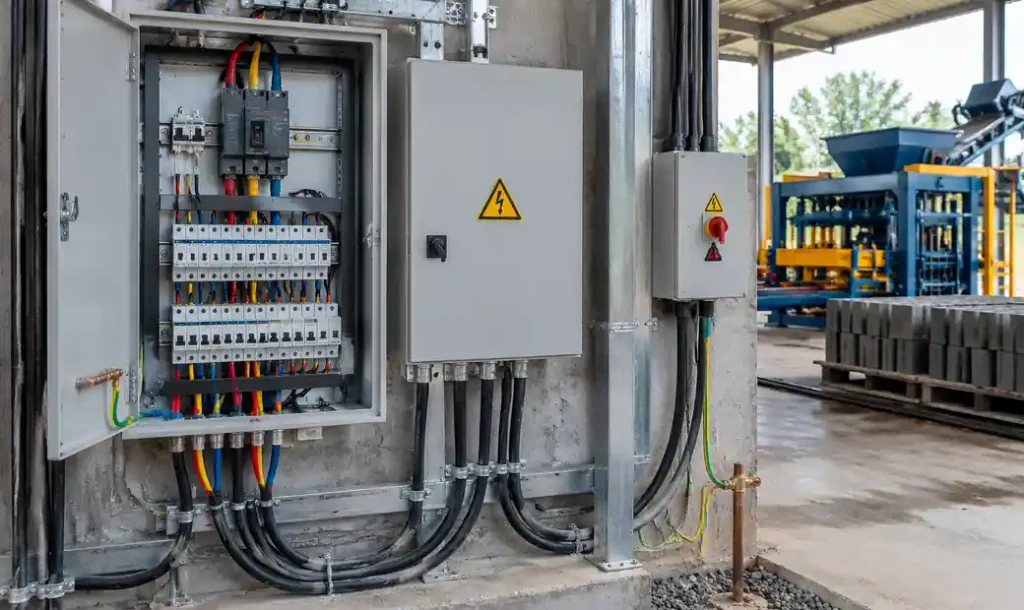
Generator Backup Systems
Machine motors draw 2.5-3× running power at startup. Generator sizing: multiply running power by 3, add 20% margin.
| Tipo de máquina | Running Power | Recommended Generator | Fuel Cost (8hrs) |
|---|---|---|---|
| QT4-40 Semi-Auto | 13.5 kW | 50 kVA diesel | KES 2,800-3,400 |
| QT8-15 + Mixer | 55 kW | 200 kVA diesel | KES 9,500-11,500 |
| QT10-15 + Mixer | 70 kW | 250 kVA diesel | KES 12,000-14,500 |
Automatic transfer switches (KES 180,000-420,000) switch to generator within 10-15 seconds during grid failures, preventing concrete from setting during manual switching delays (20-40 minutes).
Import Procedures and Total Investment
Importing Block Machines to Kenya
Mombasa Port imports face: 10-25% customs duty, 16% VAT on (CIF+duty), 2% Railway Development Levy, 3.5% Import Declaration Fee. Example: $12,700 CIF machine incurs $4,204 import costs (33% markup), final landed cost $16,904.
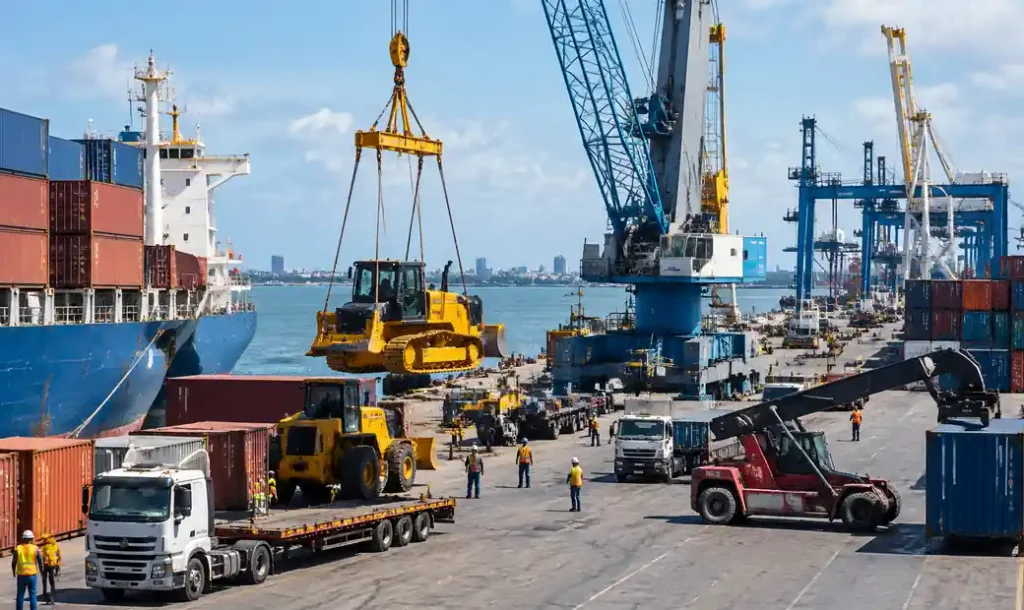
Clearing agents: KES 45,000-85,000. Mombasa-Nairobi transport: KES 60,000-95,000. Timeline: 25-35 days shipping, 5-10 days clearing, 6-8 weeks total.
Complete Setup Investment
| Investment Category | Semi-Auto Setup (QT4-40) | Automatic Setup (QT8-15) |
|---|---|---|
| Machine (landed) | KES 2,350,000 ($16,900) | KES 4,650,000 ($33,500) |
| Installation & Training | KES 120,000 ($850) | KES 210,000 ($1,500) |
| Power Infrastructure | KES 85,000 ($600) | KES 650,000 ($4,700) |
| Generator (if needed) | KES 420,000 ($3,000) | KES 1,680,000 ($12,000) |
| Block Pallets (200 units) | KES 280,000 ($2,000) | KES 350,000 ($2,500) |
| Mixer & Tools | KES 210,000 ($1,500) | KES 490,000 ($3,500) |
| Working Capital | KES 420,000 ($3,000) | KES 700,000 ($5,000) |
| Total Investment | KES 3,885,000 ($27,850) | KES 8,730,000 ($62,700) |
Working capital covers initial cement inventory (50 bags minimum), sand and aggregates (5-7 cubic meters), labor for first month, and utility deposits. Most Kenyan contractors start semi-automatic operations with KES 3.5-4.5 million total investment, recovering this within 16-22 months at typical production levels.
Local Support and After-Sales Service
Machine failure costs more than repairs—production stops, operators collect wages, and contracts face penalty clauses. Verify service capabilities before purchasing.
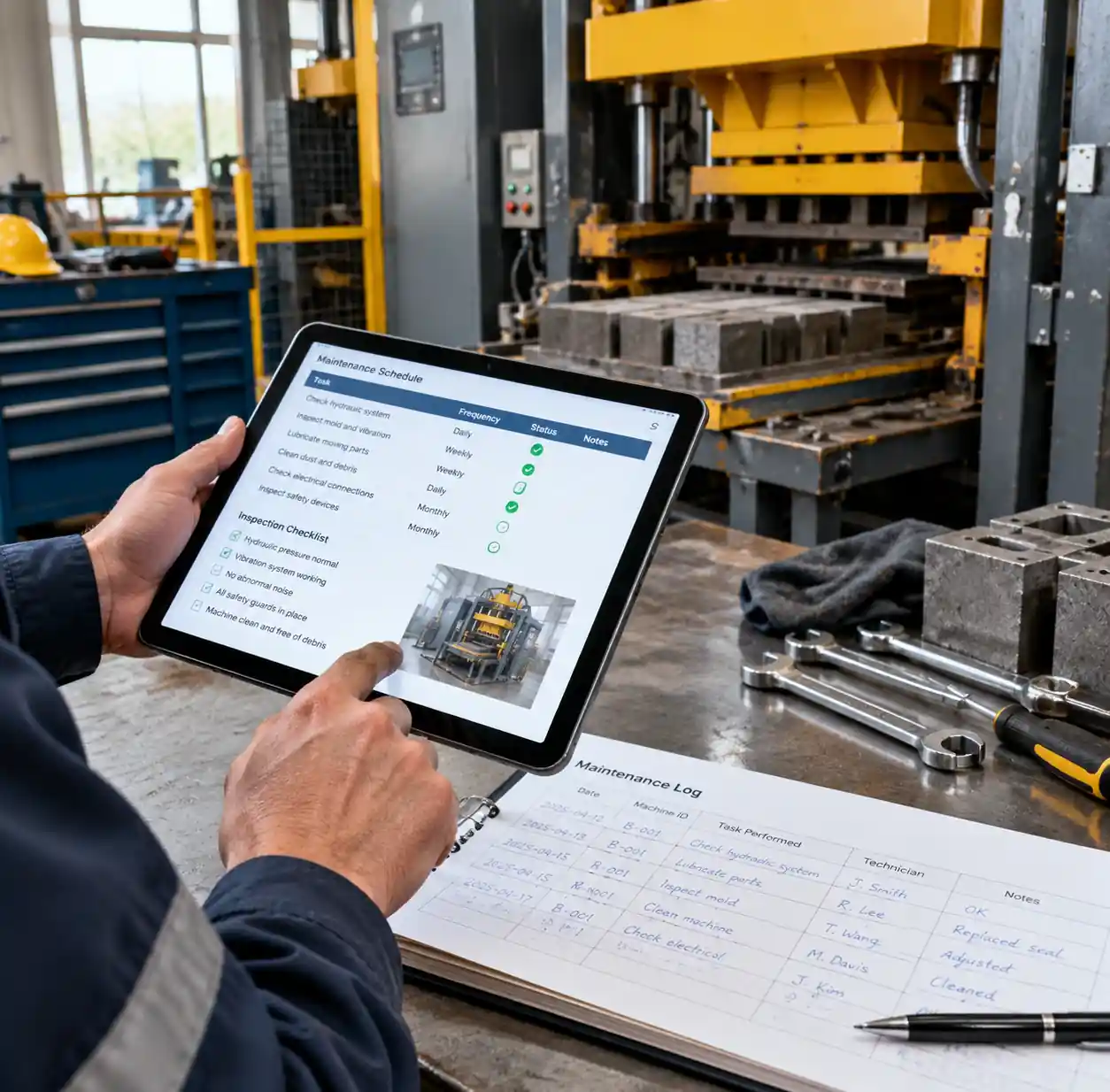
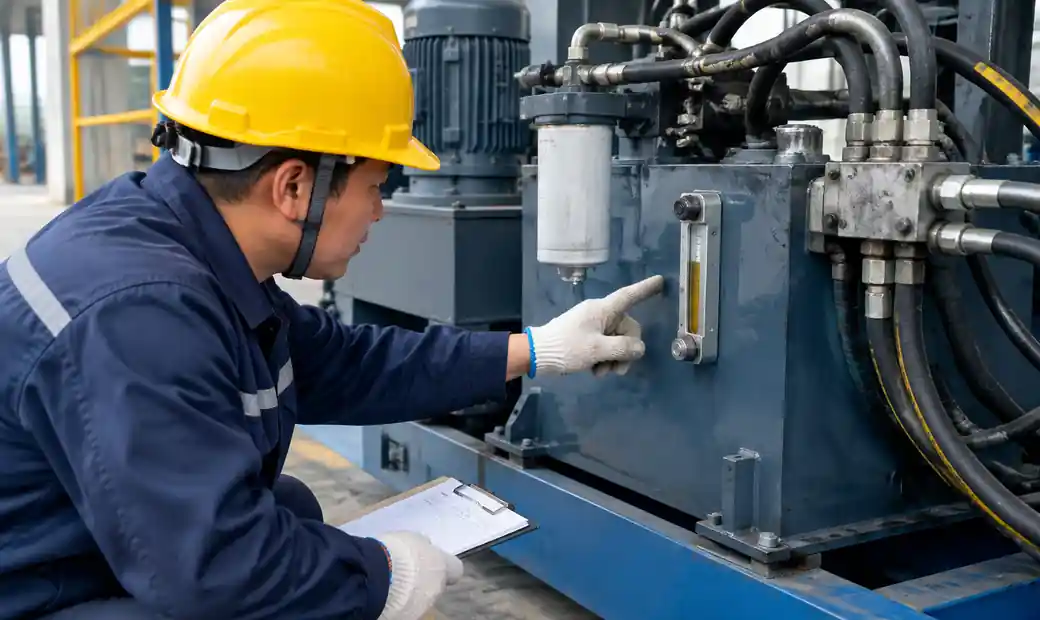
Raytone Block Machinery operates Nairobi service centers covering Central Kenya, Rift Valley, and Eastern regions with 48-72 hour response. Our technicians stock hydraulic seals, solenoid valves, vibration motors, and PLC modules, eliminating 6-12 week Chinese supplier lead times.
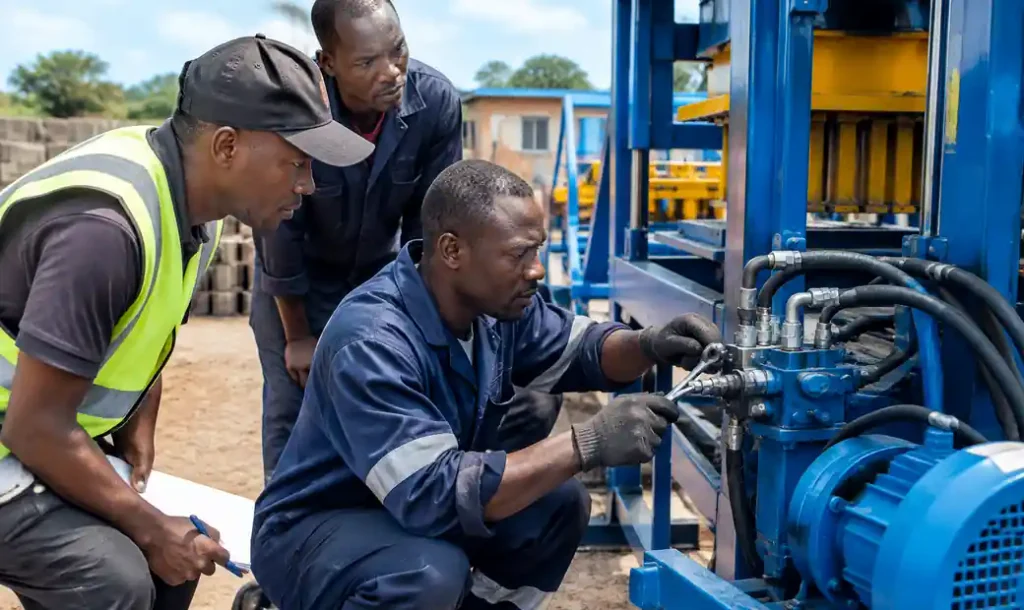
Installation includes 3-5 days training on mixing ratios, operation sequences, mold changes, and troubleshooting. English manuals, maintenance checklists, and smartphone-accessible video guides provided. Warranty: 24 months on hydraulic/electrical systems, 6 months on wear parts. Annual service contracts: KES 45,000-85,000 with two preventive visits.
Block Production Economics in Kenya
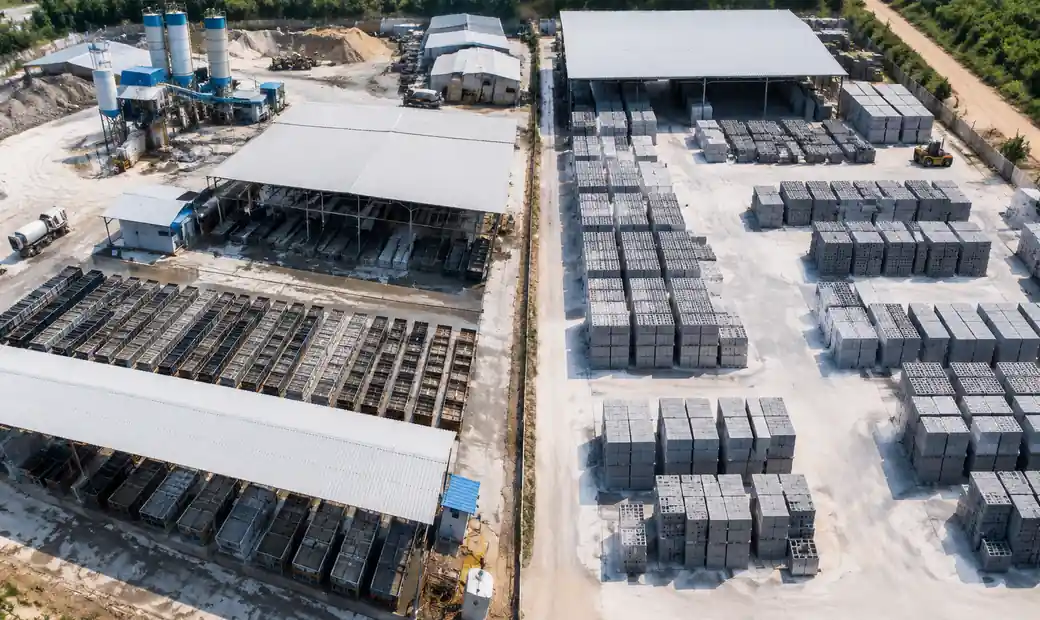
Standard 400×200×200mm hollow blocks cost KES 33-43 to produce (cement KES 18-22, sand KES 6-8, stone chips KES 5-7, labor KES 4-6). Learn more about raw material quality and sourcing.
Wholesale pricing: Nairobi KES 48-65, Mombasa KES 52-68, Nakuru/Eldoret KES 45-60. Profit: KES 10-22 per block.
QT4-40 operation producing 1,400 blocks daily (28,000 monthly) generates KES 210,000 monthly profit (revenue KES 1,540,000 at KES 55/block, minus KES 1,120,000 materials, KES 140,000 labor, KES 70,000 utilities). Payback: 18-19 months at 60-70% utilization, 12-15 months at 80%+ utilization.
Preguntas frecuentes
What block machine capacity do I need for Kenya construction projects?
For contractors serving 20-40 houses annually, semi-automatic machines producing 1,200-1,600 blocks daily provide sufficient capacity while keeping investment under KES 4 million. Contractors managing 50-100 houses or commercial projects exceeding 5,000 blocks monthly benefit from automatic machines producing 3,500-5,000 blocks daily.
Can I run block machines during Kenya’s power outages?
Semi-automatic machines on single-phase power operate successfully with 40-60 kVA generators costing KES 350,000-500,000. Fully automatic machines requiring three-phase power need 180-250 kVA generators costing KES 1.5-2.2 million. Automatic transfer switches ensure production continues through grid failures without manual intervention.
How long does importing a block machine to Kenya take?
Sea freight from China to Mombasa: 25-35 days. Port clearing and customs: 5-10 days. Transport to Nairobi: 2-3 days. Installation and training: 3-5 days. Total timeline: 6-8 weeks from payment to production. Air freight reduces shipping to 7-10 days but adds $2,500-$4,500 to costs.
What’s the difference between Chinese and European machines for Kenya?
European machines cost 2.5-3× more than Chinese equivalents, use branded hydraulic components (Bosch Rexroth, Parker), but lack the service networks Chinese manufacturers established across Kenya. Chinese machines from established suppliers like Raytone deliver reliable quality at prices allowing 16-22 month ROI versus 36-48 months for European equipment.
Do I need special licenses for block production in Kenya?
Single Business Permit from county government: KES 10,000-35,000 annually depending on county and production scale. Environmental impact assessment for operations exceeding 5,000 blocks daily: KES 45,000-95,000. Kenya Bureau of Standards registration if selling to government projects: KES 15,000 application. No specialized manufacturing license required for block production.
What blocks are most demanded in Kenya construction?
400×200×200mm (8-inch) hollow blocks dominate at 65% of market volume for residential walls. 400×200×150mm (6-inch) blocks serve interior partitions (20% of market). Cabro paving stones capture premium pricing at KES 80-120 per block for driveways and commercial paving (15% of market). Interlocking blocks growing in demand for earthquake-resistant construction.
Conclusión
Kenya’s construction expansion creates exceptional opportunities for block producers equipped with machinery matching the country’s specific operational realities. Success comes not from buying the most advanced or cheapest machine, but from selecting equipment that handles Kenya’s power infrastructure, operates reliably with available technical support, and delivers the production capacity your market demands.
Semi-automatic hydraulic machines provide the optimal balance for most Kenyan contractors, combining hydraulic precision with single-phase power compatibility and affordable investment. The QT4-40 serves small-to-medium contractors excellently at under KES 4 million total investment. The QT8-15 handles larger operations targeting government housing programs and commercial projects. Both models operate successfully across Kenya when properly maintained and supported by local service networks.
Raytone Block Machinery supplies equipment specifically designed for Kenya’s power conditions, import requirements, and production demands. Our machines operate successfully in Nairobi, Mombasa, Nakuru, Kisumu, and Eldoret with service support providing 48-hour response times across Kenya. Ponte en contacto con nosotros hoy mismo for detailed specifications, project-specific recommendations, and factory-direct pricing for your Kenya block production operation.