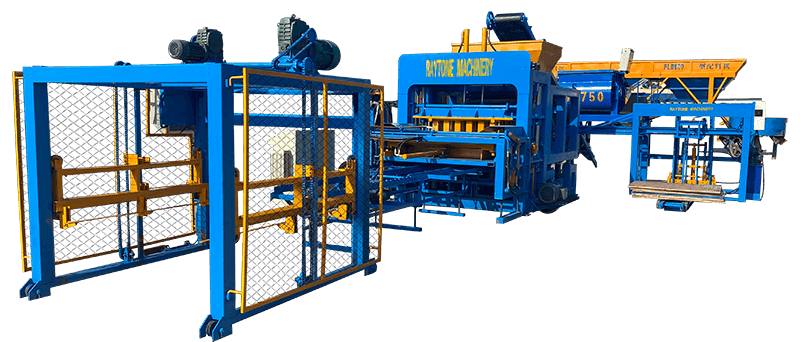






Operating a block making machine without proper safety protocols puts workers at serious risk. In February 2026, OSHA cited a Miami-based concrete manufacturer after a worker suffered fatal injuries when entering the unprotected area of a concrete block cubing machine. Over 28% of injuries in block manufacturing stem from material handling hazards, while 23% involve hand injuries from moving parts. This guide covers critical safety procedures, hazard identification, PPE requirements, lockout/tagout protocols, and operator training standards based on OSHA regulations and real-world incident analysis across manual, semi-automatic, and automatic production systems.
Understanding Block Machine Hazards
Block making machines generate hydraulic pressures up to 21 MPa, operate vibration systems producing 70-100 KN of force, and involve multiple moving components including pressing heads, material distributors, and conveyor systems. Recognizing specific hazards prevents accidents and saves lives.
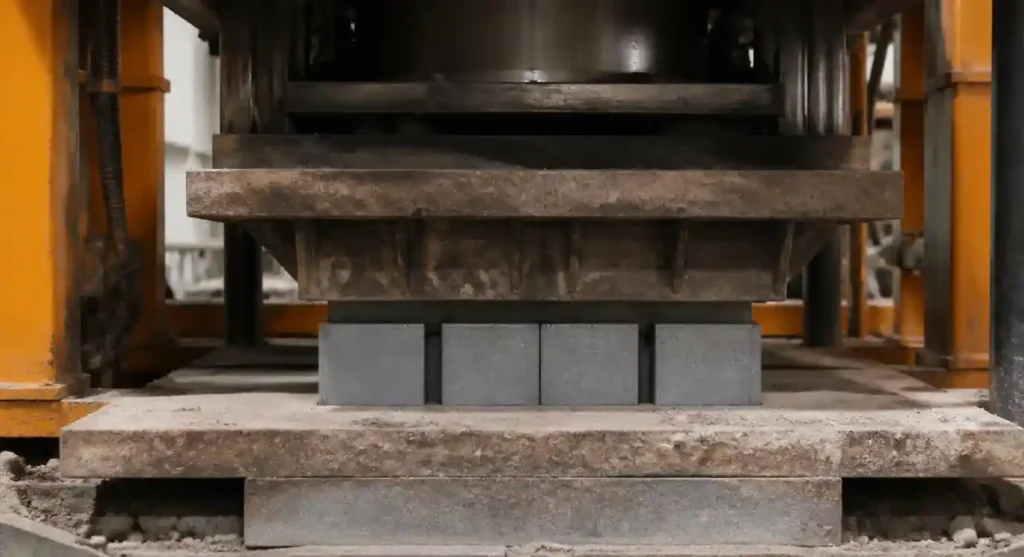
Crushing and Pinch Points: Hydraulic pressing systems exert 15-21 MPa pressure during block formation cycles. Workers caught between pressing head and mold face catastrophic injuries. The 2025 Miami incident involved a worker entering an unguarded machine zone during operation. Guide posts, material hoppers, and pallet ejection mechanisms create additional pinch points where hands or clothing can be trapped.
Moving Mechanical Parts: Belt drives, chain conveyors, rotating mixers, and vibration motors present entanglement hazards. Loose clothing, long hair, jewelry, or gloves can catch in rotating components causing severe injuries. Automatic production lines operate continuously with multiple synchronized moving parts increasing exposure risk.
Hydraulic System Failures: Pressurized hydraulic lines carrying fluid at 18-25 MPa can rupture causing injection injuries where high-pressure fluid penetrates skin. Even small leaks create slip hazards and indicate potential catastrophic hose failure. California FACE investigation documented a supervisor’s death when crushed by concrete block manufacturing equipment with hydraulic system involvement.
Electrical Hazards: Three-phase power systems supplying 380V/415V to motors, PLCs, and hydraulic pumps present electrocution risks. Wet concrete environments increase conductivity. Ground fault circuit interrupters (GFCIs) and proper grounding (resistance below 4 ohms) are critical safety measures for all block making equipment.
| Hazard Type | Primary Risk | Injury Severity | Prevention Priority |
|---|---|---|---|
| Crushing/Pinch Points | Hydraulic pressing (15-21 MPa), guide posts, ejection systems | Fatal or permanent disability | Critical – Guarding + Lockout/Tagout |
| Moving Parts | Belts, chains, conveyors, mixers, vibration motors | Amputation, severe lacerations | High – Machine guarding + PPE |
| Hydraulic Injection | Pressurized lines (18-25 MPa), hose rupture | Tissue damage, amputation | High – Regular inspection + maintenance |
| Electrical Shock | 380V/415V three-phase, wet conditions | Fatal electrocution | Critical – GFCI + proper grounding |
| Material Handling | Lifting cement bags (25-50 kg), pallet movement | Back injuries, strains | Moderate – Mechanical aids + training |
| Slip/Trip | Wet concrete, hoses, tools, uneven surfaces | Fractures, head trauma | Moderate – Housekeeping + non-slip surfaces |
Pre-Operation Safety Inspection
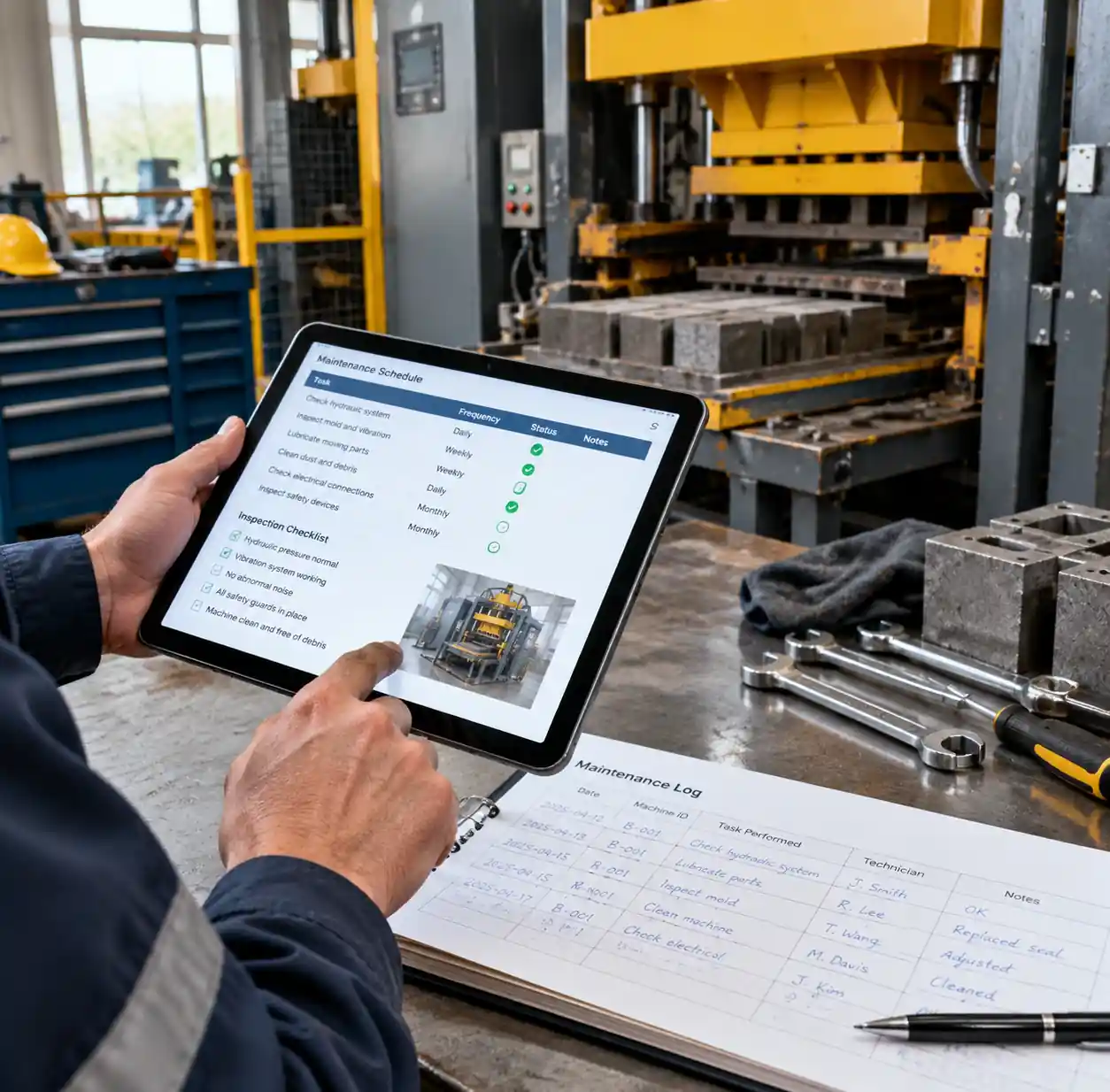
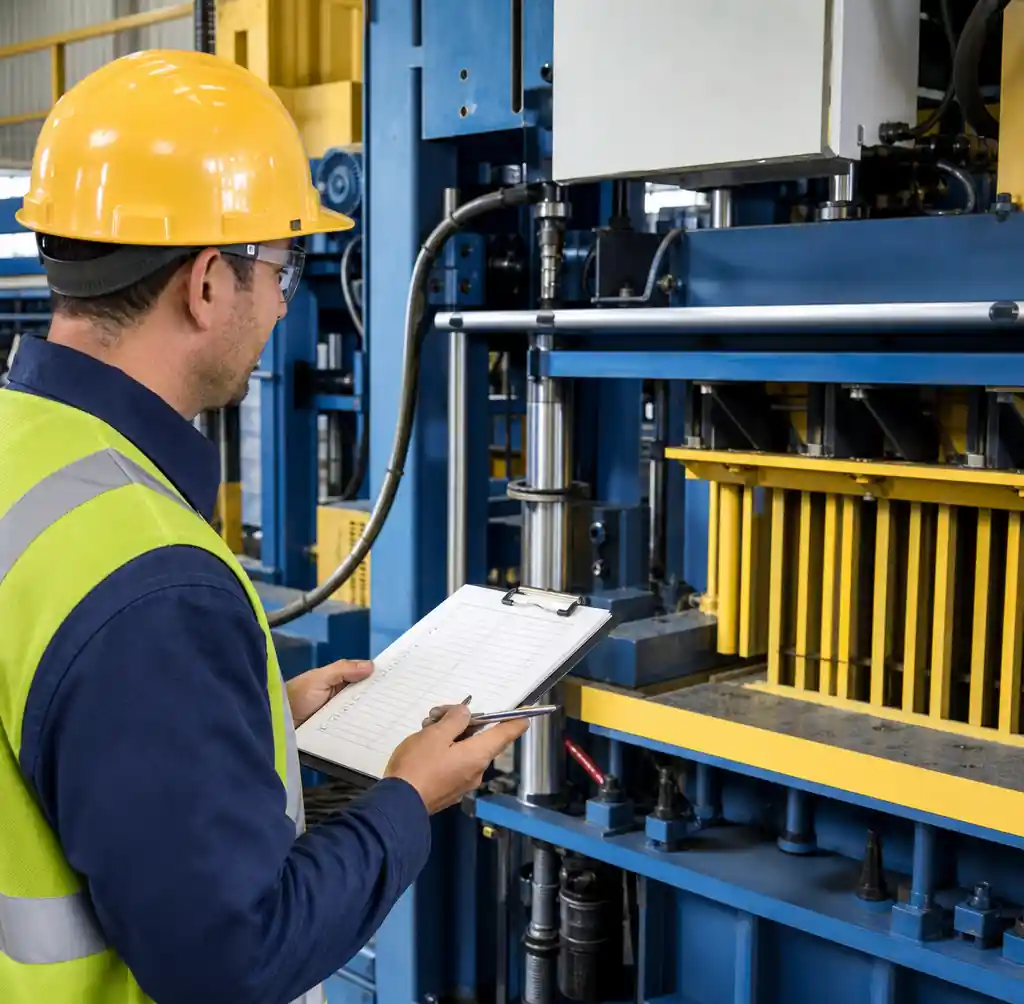
Conducting thorough pre-shift inspections identifies defects before they cause accidents. OSHA machinery safety guidance requires machines be inspected at the beginning of each shift and not used if defects affect safe operations.
Machine Structure and Guards: Verify all safety guards are in place and securely fastened. Check guard integrity – bent, damaged, or missing guards require immediate repair before operation. Emergency stop buttons must be accessible within 2 meters of operator positions and tested for immediate response. Manual machines require guards on belt drives and material hoppers, while automatic systems need comprehensive guarding on conveyor transfer points and stacking mechanisms.
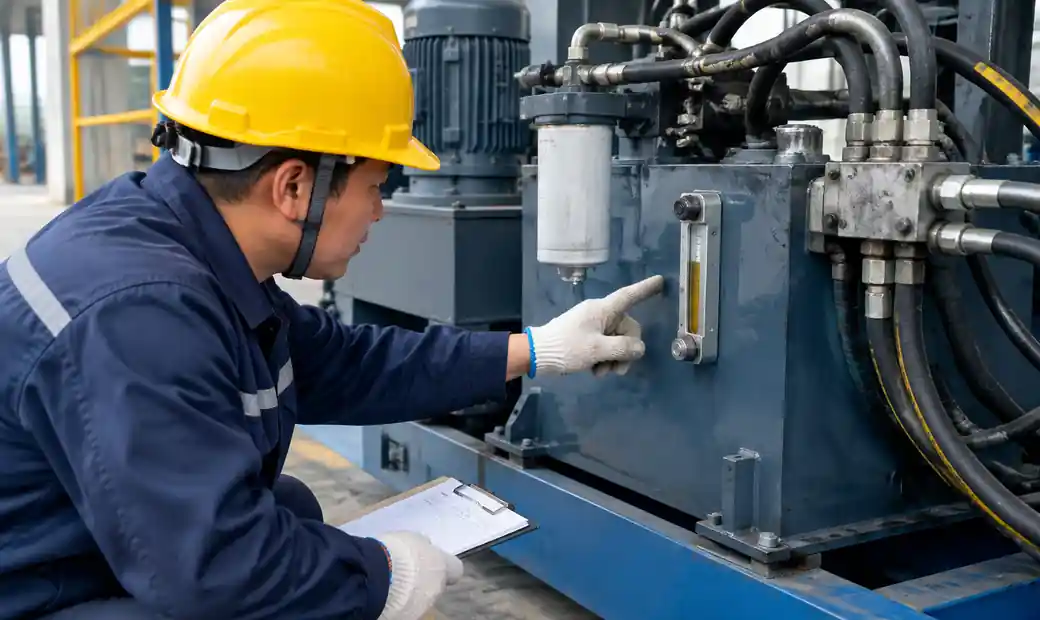
Hydraulic System Check: Inspect all hydraulic hoses for abrasion, bulging, or seepage. Even minor leaks indicate imminent failure at 18-25 MPa working pressure. Check connections at cylinders, valves, and pump for tightness. Verify hydraulic oil level in reservoir – low oil causes pump cavitation and overheating. Oil temperature should stabilize at 40-55°C during operation; excessive heat above 60°C signals system problems requiring immediate shutdown.
Electrical System Verification: Confirm ground connections are intact and emergency stop circuits function correctly. Test each emergency stop button – machine should shut down immediately with hydraulic pressure released. Check control panel indicators and PLC status lights. Verify motor rotation directions match specifications – reversed phases damage pumps and mixers in concrete batching equipment.
Mold and Pressing Components: Examine mold cavities for damage, wear, or concrete buildup affecting block formation. Guide posts must slide smoothly without binding through full stroke – resistance indicates misalignment or worn bushings. Pressing head should be level and seat squarely on mold frame. Pallet condition affects ejection – warped or damaged pallets cause jams requiring dangerous manual intervention.
Personal Protective Equipment Requirements
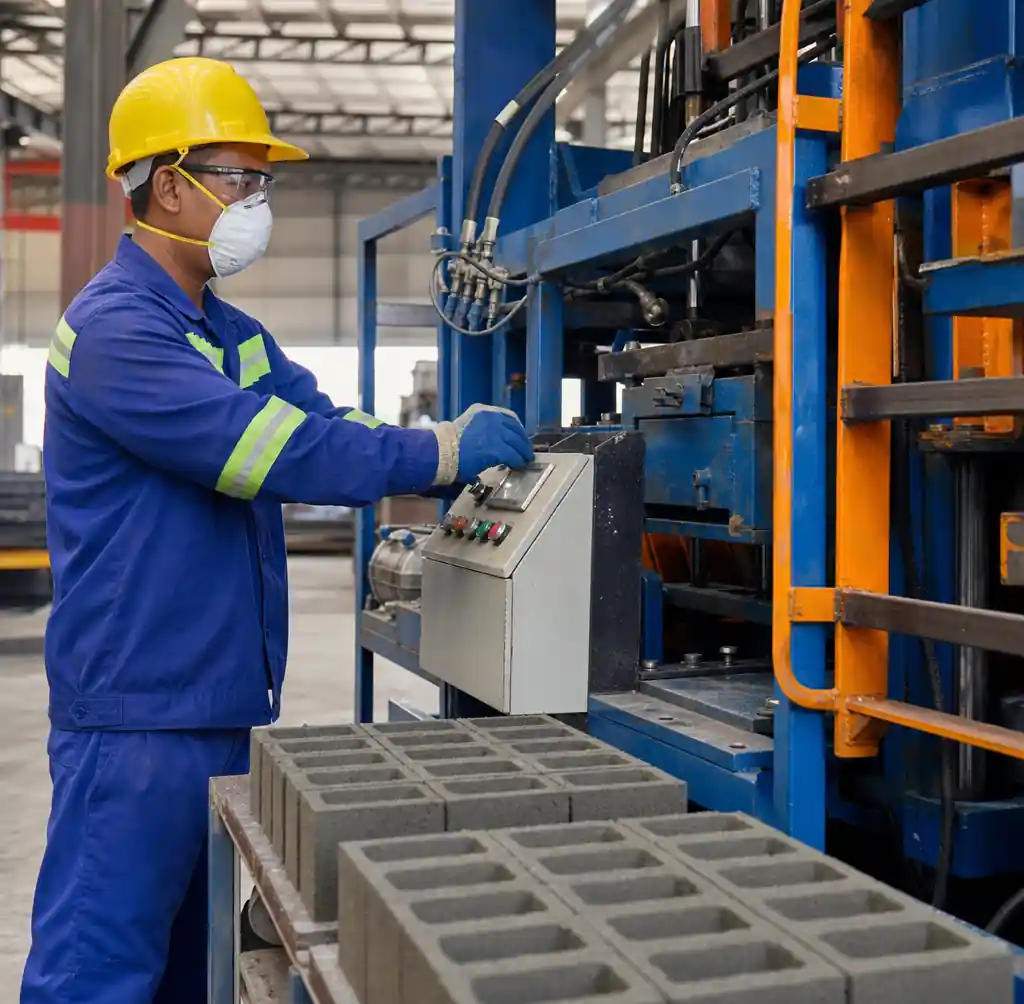
Appropriate PPE forms the last line of defense when engineering controls and safe procedures are insufficient. Every operator must wear complete protection during machine operation and maintenance.
Head Protection: Hard hats meeting ANSI Z89.1 standards protect against falling objects from material handling equipment, overhead conveyors, and stacking systems. Mandatory in all production areas where automatic brick plants operate with overhead material flow.
Eye and Face Protection: Safety glasses with side shields are minimum requirement. Face shields provide additional protection during hydraulic maintenance when dealing with pressurized systems. Grinding or cutting molds requires both face shield and safety glasses. Concrete dust and cement particles cause severe eye irritation and long-term damage without proper protection.
Hand Protection: Cut-resistant gloves rated ANSI A3 or higher protect against sharp mold edges and block handling. Never wear gloves near rotating equipment – entanglement risk outweighs cut protection. Use gloves specifically during material handling, mold changes, and block stacking, removing them before operating controls or working near moving parts.
Foot Protection: Steel-toe boots meeting ASTM F2413 protect against falling blocks (18-25 kg each), dropped tools, and pallet impacts. Soles must resist concrete chemicals and provide traction on wet surfaces. Composite toe options available for workers concerned about electrical conductivity or metal detection in automated systems.
Hearing Protection: Earplugs or earmuffs rated NRR 25+ required when operating vibration systems producing 85+ dB continuous noise. QT10-15 automatic machines with high-frequency vibration generate sustained noise requiring hearing conservation programs per OSHA 1910.95.
Respiratory Protection: Dust masks rated N95 minimum for cement dust exposure during material loading and product handling. Prolonged exposure to cement dust causes respiratory issues. Production facilities should implement engineering controls (ventilation, enclosed mixing) as primary protection with respirators as backup.
| PPE Item | Standard | When Required | Replacement Schedule |
|---|---|---|---|
| Hard Hat | ANSI Z89.1 | All production areas | Every 5 years or after impact |
| Safety Glasses | ANSI Z87.1 | Continuous during operation | When scratched/damaged |
| Face Shield | ANSI Z87.1 | Hydraulic maintenance, grinding | When cracked/damaged |
| Cut-Resistant Gloves | ANSI A3+ | Material handling, mold work | Monthly or when worn |
| Steel-Toe Boots | ASTM F2413 | Continuous in plant | Every 6-12 months |
| Hearing Protection | NRR 25+ | Near operating machines (85+ dB) | Earplugs daily, earmuffs 6 months |
| Respirator | N95 minimum | Cement dust exposure | Daily (disposable) or per manufacturer |
Lockout/Tagout Procedures
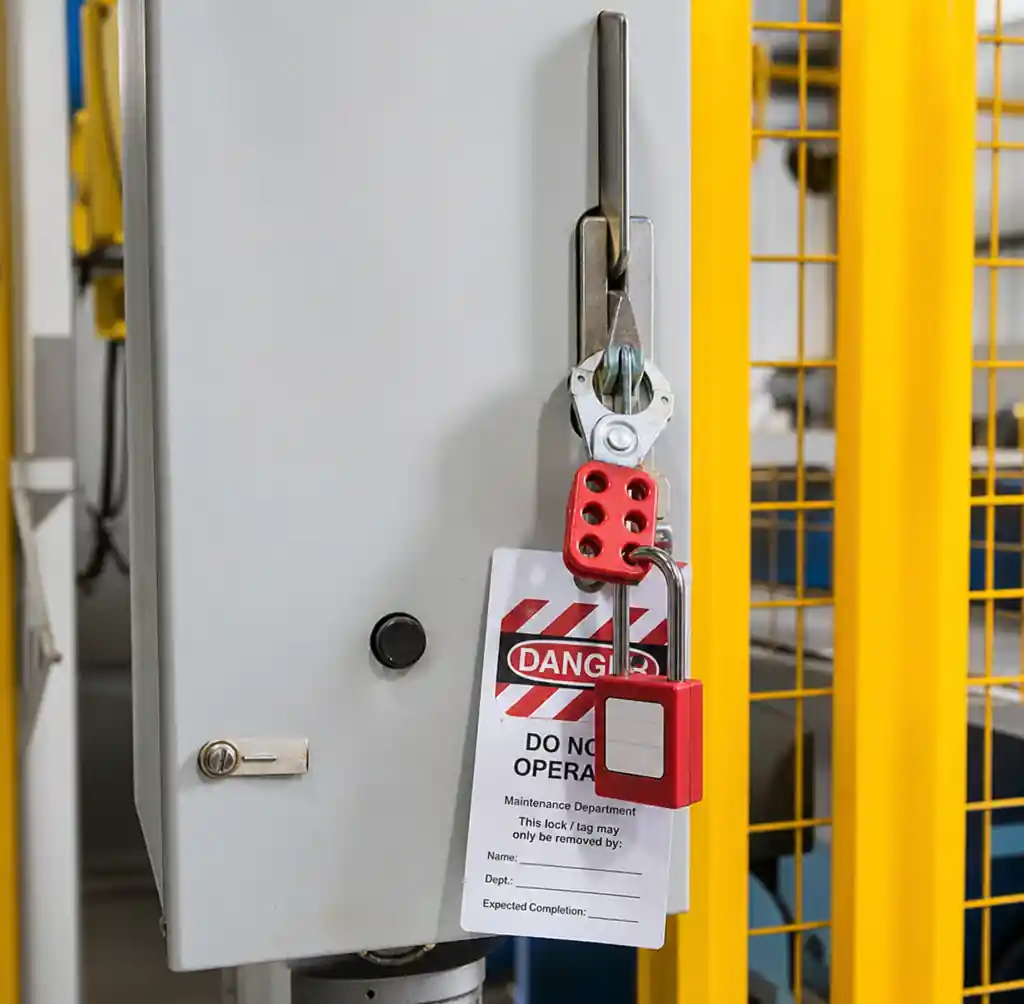
Lockout/tagout (LOTO) protocols prevent unexpected machine startup during maintenance, cleaning, or troubleshooting. Bypassing LOTO procedures causes severe injuries and fatalities in concrete manufacturing operations.
When LOTO is Required: Any time workers access hazardous zones – installing or removing molds, clearing material jams, adjusting guide posts, servicing hydraulic systems, performing electrical maintenance, or cleaning internal components. LOTO applies to supporting equipment including concrete mixers, batching machines, and conveyors when performing integrated maintenance.
LOTO Execution Steps:
- Notify all personnel that equipment will be shut down for maintenance. Clear the work area of non-essential workers.
- Shut down the machine using normal stop procedures. Turn main control switch to OFF position.
- Isolate all energy sources – disconnect main electrical breaker and padlock in OFF position. Close and lock hydraulic system valves. Release residual pressure from hydraulic circuits by cycling controls with power disconnected.
- Apply lockout devices – Each worker performing maintenance applies their personal lock to the energy isolation point. Multiple workers require multiple locks using lockout hasps. Tag each lock with worker’s name, date, and reason for lockout.
- Verify isolation – Test start controls to confirm machine does not energize. Measure electrical circuits with multimeter to verify zero voltage. Check hydraulic pressure gauges show zero pressure.
- Perform maintenance safely with confirmed energy isolation.
- Remove lockout devices – Only the worker who applied each lock removes it after completing work and clearing tools and materials. Verify all guards reinstalled before removing final lock.
- Restore power and test – Reconnect energy sources, verify area is clear, notify all personnel, and conduct test run before resuming production.
Group Lockout Procedures: For automatic production lines requiring multiple workers, designate one person as authorized coordinator who accounts for all personnel before removing group lockout. Each worker maintains individual lock on group lockbox controlling master isolation.
Safe Operating Procedures
Following consistent operating procedures reduces accident risk and maintains production quality. These protocols apply to all machine types from manual egg-layer systems to high-capacity automatic lines.
Startup Sequence: Complete pre-operation inspection checklist before energizing equipment. Start hydraulic pump and allow oil temperature to reach 35-40°C minimum before applying full load. Cycle machine through two complete operations without material to verify smooth operation. Check for unusual noises, vibrations, or hydraulic leaks indicating problems requiring shutdown and repair.
Material Loading: Never place hands inside material hopper while machine is energized. Use proper material handling equipment for cement bags weighing 25-50 kg – manual lifting causes back injuries. Maintain clean work area around hoppers preventing slip hazards from spilled material. Concrete mixer and batching systems should feed material continuously without manual intervention.
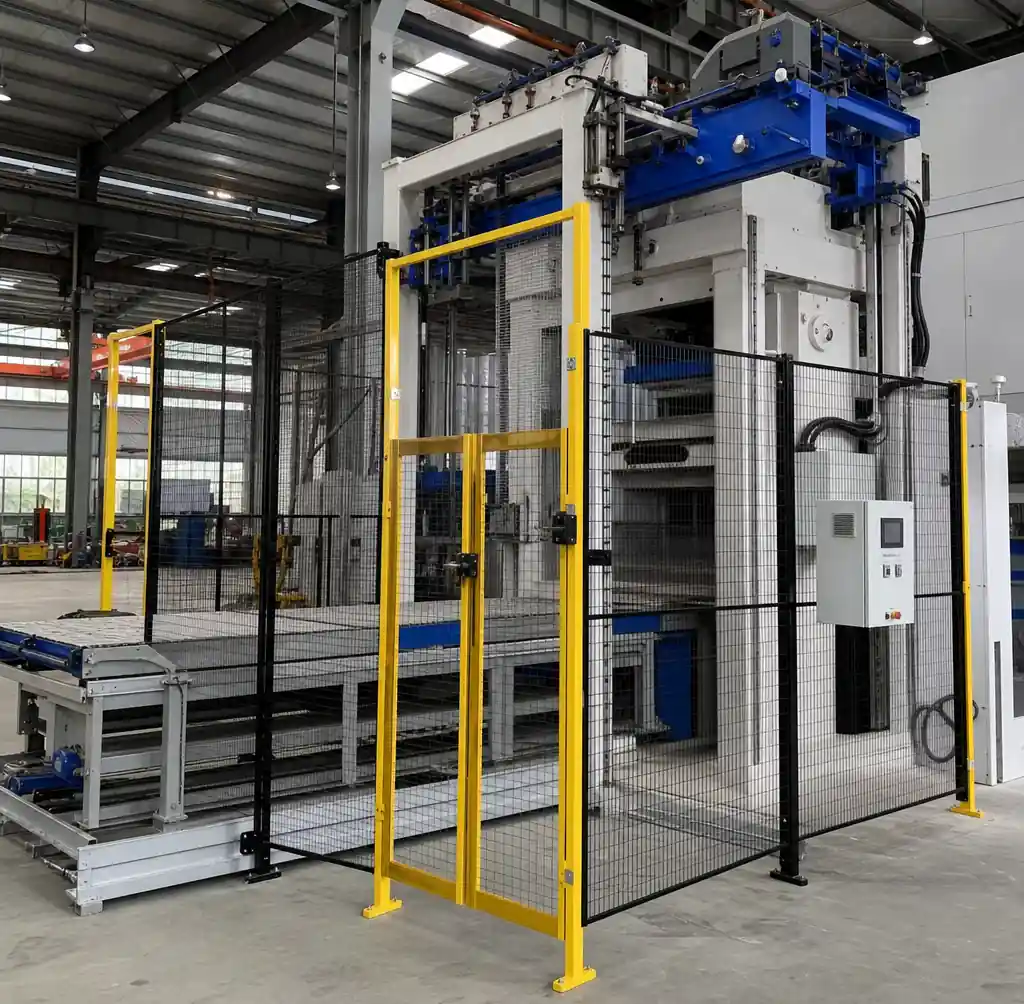
Production Operation: Maintain safe distance from machine during automatic cycles. Automatic systems complete pressing cycles in 15-20 seconds – never attempt to adjust material or remove blocks mid-cycle. Keep hands clear of pressing zone at all times – crushing forces of 15-21 MPa cause fatal injuries. Monitor hydraulic pressure gauges continuously – fluctuations indicate system problems requiring immediate investigation.
Mold Changes: Execute complete LOTO procedure before installing or removing molds. Mold assemblies weigh 50-150 kg requiring mechanical lifting equipment or two-person teams. Never use damaged or worn molds – improper block formation causes production issues and safety risks. Clean mold cavities thoroughly and apply appropriate release agent before reinstalling.
Block Handling: Allow proper handling time after formation. Fresh blocks are fragile requiring careful transfer to curing areas. Use mechanical pallet handling equipment for loads exceeding 100 kg. Stack blocks on stable, level surfaces with proper support preventing collapse.
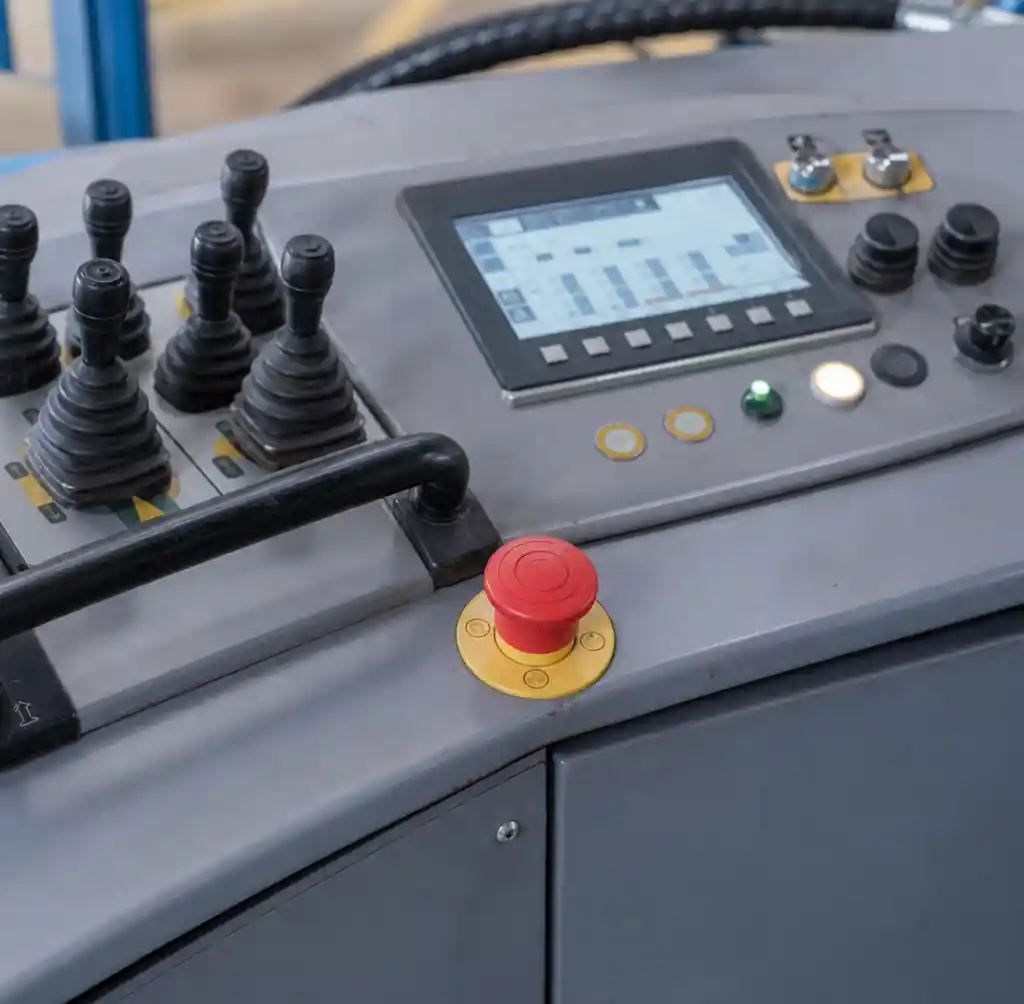
Emergency Shutdown: Emergency stop buttons halt all machine functions immediately releasing hydraulic pressure. Use emergency stops for any unsafe condition – unusual sounds, visible damage, hydraulic leaks, smoking motors, or personnel in danger zones. After emergency stop, complete full LOTO procedure before investigating cause.
End of Shift Procedures: Complete shutdown sequence – stop material feed, allow machine to finish final cycle, release hydraulic pressure, clean material residue from critical components, and secure machine in safe state. Report any abnormal conditions or needed repairs to next shift and maintenance personnel.
Maintenance Safety Protocols
Regular maintenance extends equipment life and prevents dangerous failures, but maintenance activities introduce significant hazards requiring strict safety protocols.
Scheduled Maintenance Planning: Develop comprehensive maintenance schedule covering daily, weekly, monthly, and quarterly tasks. Maintenance should occur during scheduled downtime minimizing pressure to rush work. Ensure qualified personnel perform maintenance – hydraulic systems, electrical controls, and structural components require specialized knowledge.
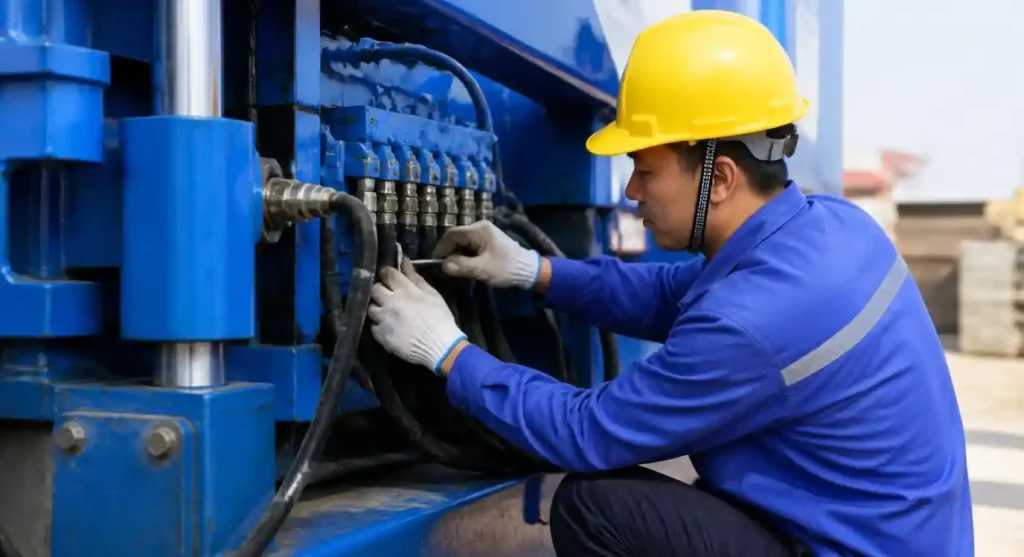
Hydraulic System Maintenance: Always depressurize system completely before loosening any connections. Hydraulic fluid under 18-25 MPa pressure can penetrate skin causing severe injection injuries requiring immediate surgical intervention. When checking for leaks, use cardboard or paper – never hands. Hydraulic injection injuries may appear minor initially but cause extensive internal tissue damage. Change hydraulic oil and filters per manufacturer specifications – contaminated oil damages pumps, valves, and cylinders leading to unexpected failures.
Electrical Maintenance: Only qualified electricians should perform electrical maintenance on three-phase 380V/415V systems. Test all circuits with multimeter after LOTO to confirm zero voltage before contact. Wet conditions in concrete plants increase electrocution risk. Maintain proper ground connections and verify ground resistance remains below 4 ohms. Inspect motor bearings during electrical maintenance – overheating or unusual noise indicates bearing failure risking motor seizure during operation.
Mechanical Component Service: Lubricate guide posts weekly with high-pressure grease (3-5 pumps per fitting). Guide post binding from inadequate lubrication causes uneven pressing and potential jamming. Inspect guide post bushings monthly – excessive wear (over 0.2 mm) allows misalignment affecting safety and product quality. Check all structural bolts quarterly verifying proper torque – vibration loosens connections over time.
Confined Space Entry: Accessing enclosed areas of large automatic production lines may require confined space procedures. Test atmosphere for adequate oxygen and absence of hazardous gases. Maintain continuous communication with attendant outside confined space. Use proper ventilation and lighting. Never enter confined space alone.
Operator Training and Certification
Comprehensive training programs prepare operators to work safely and respond appropriately to hazards. OSHA requires employers provide training on workplace hazards, safe work practices, and emergency procedures.
Initial Training Program: New operators require minimum 3-5 days structured training before independent operation. Training covers machine-specific controls and functions, hazard recognition, PPE requirements, LOTO procedures, emergency response, material handling techniques, quality control, and routine maintenance tasks. Hands-on training under supervision confirms competency before solo operation of manual, semi-automatic, or automatic systems.
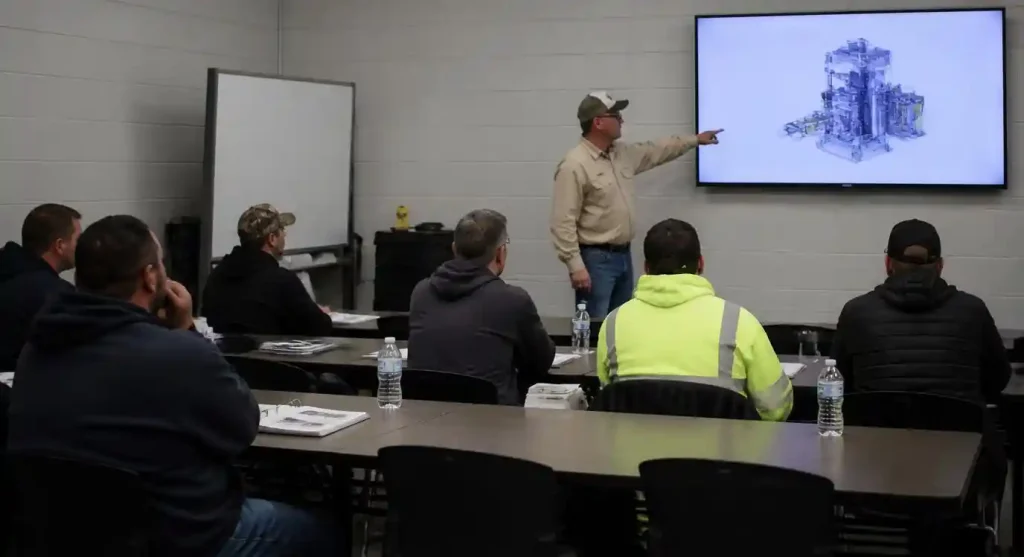
Training Documentation: Maintain records of all safety training including date, duration, topics covered, trainer name, and trainee signature. Documentation proves compliance during OSHA inspections and provides evidence of due diligence if accidents occur. Update training records when procedures change or after incidents.
Refresher Training: Annual refresher training reinforces safe practices and updates operators on procedure changes, new equipment, or lessons learned from incidents. Immediate retraining required after accidents, near-misses, procedure violations, or extended absences from operation (30+ days).
Competency Assessment: Evaluate operator competency through written tests on safety procedures and observed performance during operation. Operators must demonstrate ability to conduct pre-operation inspections, execute safe startup and shutdown, recognize and respond to hazards, properly use PPE, perform emergency stops, and execute LOTO procedures. Raytone Block Machinery provides comprehensive training support during equipment commissioning ensuring your team operates safely from day one.
Emergency Response Procedures
Despite preventive measures, emergencies occur requiring rapid, appropriate response to minimize injuries and damage.
Medical Emergencies: Establish clear communication methods for summoning help – designated phone, radio, or alarm system. Post emergency numbers prominently including local emergency services, facility first aid station, and nearby hospital. Maintain stocked first aid kits near production areas. Train designated personnel in first aid and CPR. For serious injuries – crushing, amputation, electrical shock, hydraulic injection – call emergency services immediately while providing initial first aid. Do not move seriously injured workers except to prevent further injury.
Hydraulic Injection Injuries: Require immediate emergency medical treatment even if wound appears minor. High-pressure hydraulic fluid injection causes extensive internal tissue damage requiring surgical debridement within hours. Transport victim to emergency room immediately stating “hydraulic injection injury” – many medical personnel unfamiliar with this injury type may underestimate severity.
Equipment Fires: Electrical fires in motors or control panels require Class C fire extinguishers (non-conductive). Hydraulic oil fires need Class B foam extinguishers. Never use water on electrical fires. If fire exceeds small extinguisher capacity, evacuate personnel and call fire department. Diesel-powered machines require additional fuel fire precautions.
Structural Failures: Major hydraulic leaks, loud cracking sounds, visible frame damage, or sudden machine settling indicate structural failure requiring immediate shutdown and evacuation. Cordon off area preventing access until qualified engineers assess safety. Resume operation only after repairs verified by professional inspection.
Hazardous Material Spills: Hydraulic oil spills create slip hazards and environmental concerns. Contain spills immediately with absorbent material. Clean affected area thoroughly preventing slip accidents. Dispose of contaminated materials per environmental regulations. Large spills may require professional hazmat response.
Incident Reporting: Document all accidents, injuries, and near-misses regardless of severity. Investigation determines root causes preventing recurrence. Near-miss investigations are particularly valuable – they reveal hazards before causing injuries. Include witness statements, photographs, equipment condition, and corrective actions in incident reports.
Regulatory Compliance and Standards
Understanding applicable safety regulations ensures legal compliance and protects workers from known hazards.
OSHA General Industry Standards: 29 CFR 1910.212 requires machines have guards protecting operators and other employees from hazards including rotating parts, flying chips, and sparks. 29 CFR 1910.147 establishes lockout/tagout requirements for controlling hazardous energy. 29 CFR 1910.95 covers hearing conservation programs when noise exceeds 85 dB. Violations of these standards result in OSHA citations and penalties as demonstrated by the February 2026 Miami manufacturer citation.
International Standards: EN 12629 series addresses safety requirements for machines and equipment producing concrete products including block making machines. EN 12629-8 specifically covers hydraulic machine safety. IS 13291 (1992) provides general requirements for concrete block making machines in Indian standards. These international standards inform best practices even where not legally required.
Employer Responsibilities: Provide workplace free of recognized hazards causing or likely to cause death or serious physical harm. Supply appropriate PPE at no cost to employees. Train workers on hazards and safe procedures. Implement lockout/tagout programs. Maintain equipment in safe operating condition. Report serious injuries and fatalities to OSHA within required timeframes (8 hours for fatalities, 24 hours for hospitalizations).
Worker Rights: Refuse work creating imminent danger of death or serious injury without fear of retaliation. Request OSHA inspection if workplace contains hazards. Receive training in language workers understand. Access exposure and medical records. Report injuries and hazards to employers and OSHA.
FAQ
What are the most common causes of block machine accidents?
The most common causes include failure to use lockout/tagout during maintenance (leading to unexpected startup), inadequate machine guarding allowing access to crushing zones, improper training resulting in hazardous work practices, hydraulic system failures from poor maintenance, and workers entering danger zones during operation. The 2025-2026 OSHA investigations reveal that accessing unprotected machine areas during operation caused multiple fatal injuries.
How often should block making machines be inspected?
Pre-shift inspections daily before operation checking guards, emergency stops, hydraulic systems, and general condition. Weekly inspections covering lubrication, hydraulic hose condition, and detailed component checks. Monthly maintenance including hydraulic filter changes and guide post measurements. Quarterly comprehensive inspections documenting structural bolts, electrical systems, and wear component condition. Professional inspections annually by qualified technicians ensuring overall mechanical integrity.
What qualifications do block machine operators need?
Operators require comprehensive safety training covering machine-specific operation, hazard recognition, PPE use, lockout/tagout procedures, and emergency response. Minimum 3-5 days structured training before independent operation. While formal certification varies by location, documented competency assessment proves training effectiveness. Refresher training annually maintains skills. Specialized equipment like fully automatic lines may require additional technical training on PLC systems and automated controls.
Can I bypass safety guards to speed up production?
Never bypass, disable, or remove safety guards. Guards protect workers from crushing injuries, entanglement, and contact with moving parts. Removing guards violates OSHA regulations (29 CFR 1910.212) resulting in citations and penalties. More importantly, bypassing guards puts workers at extreme risk – most serious accidents involve disabled or missing guards. If guards interfere with operation, consult manufacturer about proper adjustments rather than removing protection.
What should I do if I notice a hydraulic leak during operation?
Shut down the machine immediately using normal stop procedures if leak is minor, or emergency stop if leak is substantial or rapidly worsening. Do not continue operation with hydraulic leaks – even small leaks indicate potential catastrophic hose failure at 18-25 MPa working pressure. Execute lockout/tagout procedures before investigating. Never check for leaks with hands – use cardboard to locate spray. Replace damaged hoses and fittings before resuming operation. Clean spilled hydraulic oil to prevent slip hazards.
How do I know if my safety training is adequate?
Adequate training enables operators to confidently identify all machine hazards, correctly use all required PPE, perform complete pre-operation inspections, execute proper lockout/tagout procedures, operate controls safely, recognize abnormal conditions requiring shutdown, respond appropriately to emergencies, and perform basic maintenance safely. Written competency assessments and observed performance evaluations verify training effectiveness. If operators express uncertainty about any safety procedure, additional training is required.
What’s the difference between emergency stop and normal shutdown?
Normal shutdown follows operational sequence – stop material feed, complete final pressing cycle, release hydraulic pressure gradually, and turn off power. Use normal shutdown at end of shift or for planned maintenance. Emergency stop immediately halts all functions cutting power to motors and releasing hydraulic pressure rapidly. Use emergency stop for unsafe conditions, personnel in danger zones, unusual sounds or vibrations, visible damage, or equipment malfunction. After emergency stop, complete investigation before restart.
Are older block machines less safe than new equipment?
Not necessarily if properly maintained and retrofitted with modern safety features. Older machines may lack contemporary guarding, emergency stops, or safety interlocks found on new equipment. However, you can retrofit these safety features to older machines bringing them to current safety standards. Regular maintenance, proper guarding, and LOTO procedures make older manual or semi-automatic machines as safe as new equipment. Assess each machine individually rather than assuming age determines safety.
What training do maintenance personnel need?
Maintenance personnel require more extensive training than operators including advanced LOTO procedures for complex repairs, hydraulic system service covering safe depressurization and component replacement, electrical safety for three-phase industrial systems, mechanical troubleshooting and repair techniques, and confined space entry procedures if applicable. Specialized training needed for PLC programming and control system maintenance on automatic production lines. Maintenance work involves higher risk requiring correspondingly higher skill levels.
Conclusion
Block making machine safety requires comprehensive approach combining proper equipment guarding, rigorous lockout/tagout procedures, appropriate PPE, thorough operator training, and systematic maintenance protocols. Recent OSHA citations demonstrate that safety failures cause preventable fatalities and serious injuries in concrete manufacturing operations. Understanding hydraulic hazards, electrical risks, crushing zones, and moving part dangers enables effective hazard recognition and mitigation. Following established safety procedures, conducting pre-operation inspections, and maintaining equipment in safe condition protects workers while maximizing production efficiency.
Raytone Block Machinery provides comprehensive safety guidance, detailed operating manuals, and commissioning support for manual, semi-automatic, and fully automatic block production systems. Our equipment incorporates modern safety features including comprehensive machine guarding, multiple emergency stops, safety interlocks, and clearly marked hazard zones. Whether you operate a manual brick plant, semi-automatic facility, or complete automatic production line, prioritizing safety protects your most valuable asset – your workers.
Contact our technical team for safety consultation, operator training programs, equipment safety audits, and guidance on implementing comprehensive safety management systems for your block manufacturing operation.