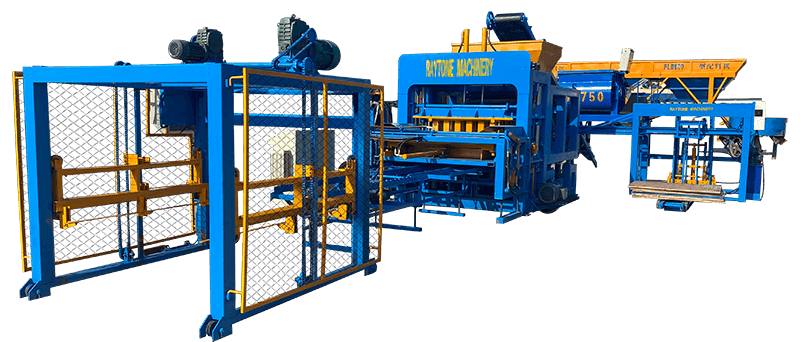






Power planning determines whether your block production runs smoothly or faces costly downtime. Block making machines demand specific electrical configurations, and getting it wrong means production delays, equipment damage, or safety hazards.
This guide covers power requirements across manual, semi-automatic, and fully automatic block machines, voltage specifications, generator sizing, and electrical installation requirements for reliable block production operations.
Power Consumption by Machine Type
Block making machines range from manual presses requiring no electricity to automated production lines drawing 45 kW. Your machine type directly determines electrical infrastructure requirements.
Manual Block Machines
Manual block machines like the QT4-40 operate through mechanical leverage, requiring no electrical connection. Some models add a 0.75-1.5 kW vibration motor running on single-phase 220V power. Production capacity: 800-1,200 blocks per 8-hour shift.
Полуавтоматические блоковые машины
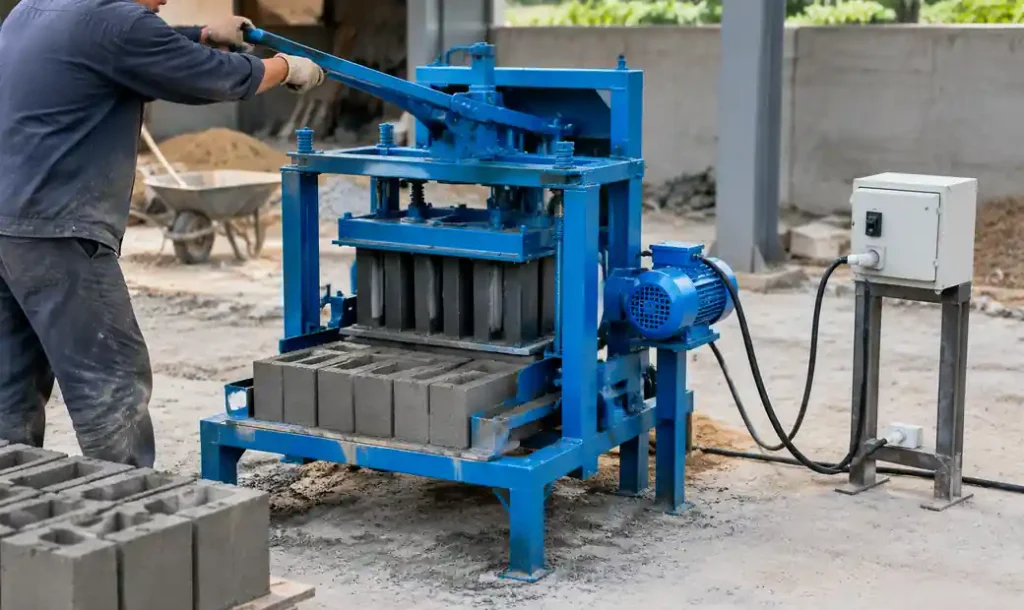
Semi-automatic machines like the QT4-30 series combine manual feeding with motorized pressing. Total power consumption: 9.5-15 kW. These require stable three-phase power (380V or 415V) for hydraulic pumps (7-10 kW), vibration motors (2-3 kW), and control systems (0.5-1 kW). Daily production: 5,000-10,000 blocks. Power consumption: 12-18 kWh per 1,000 blocks.
Fully Automatic Block Machines
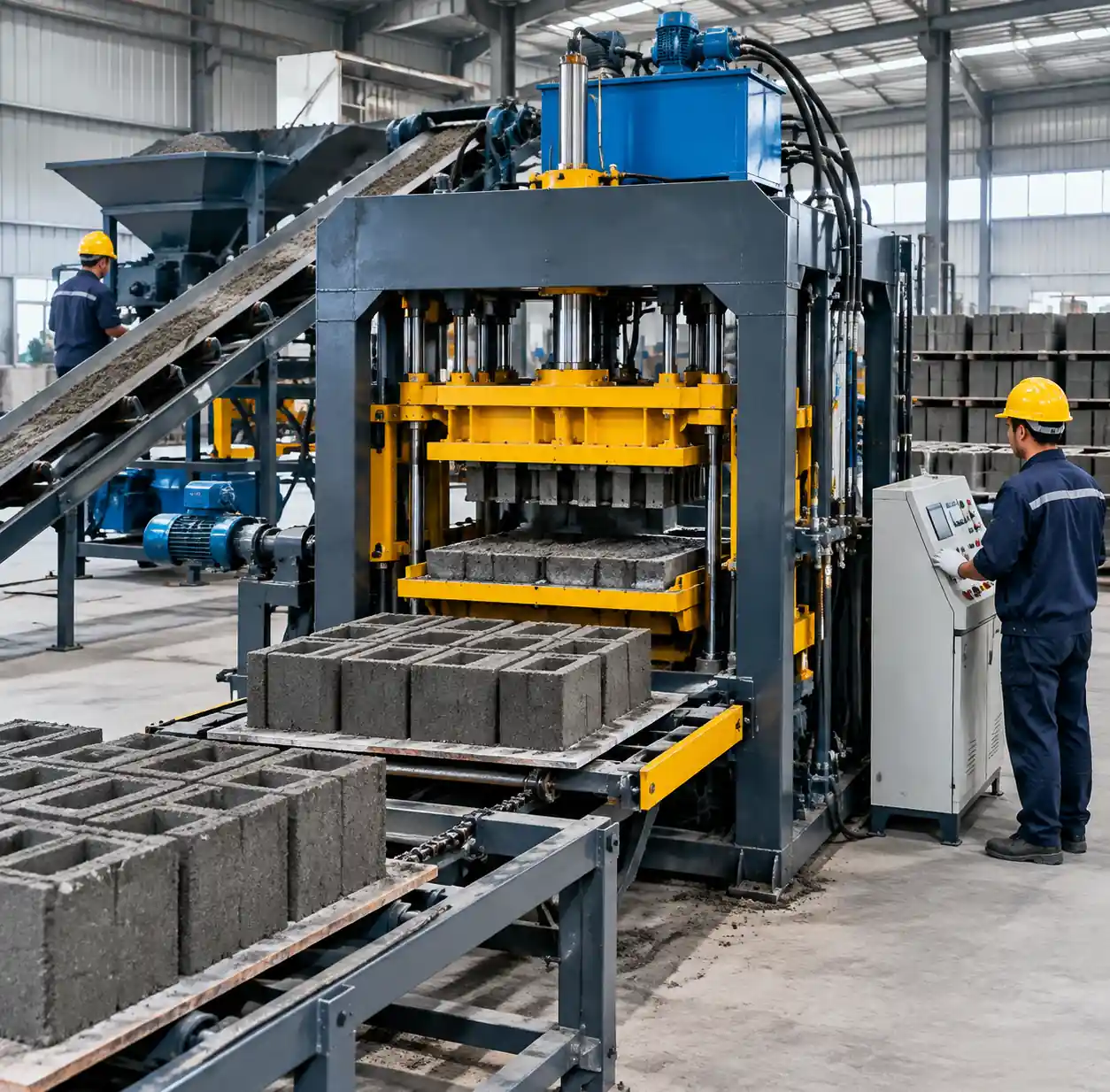
Fully automatic machines like the QT10-15 and QT8-15 integrate complete automation. Power requirements: 25-45 kW distributed across hydraulic system (15-25 kW), vibration (5-8 kW), mixer (5-10 kW), conveyors (3-5 kW), and PLC controls (1-2 kW).
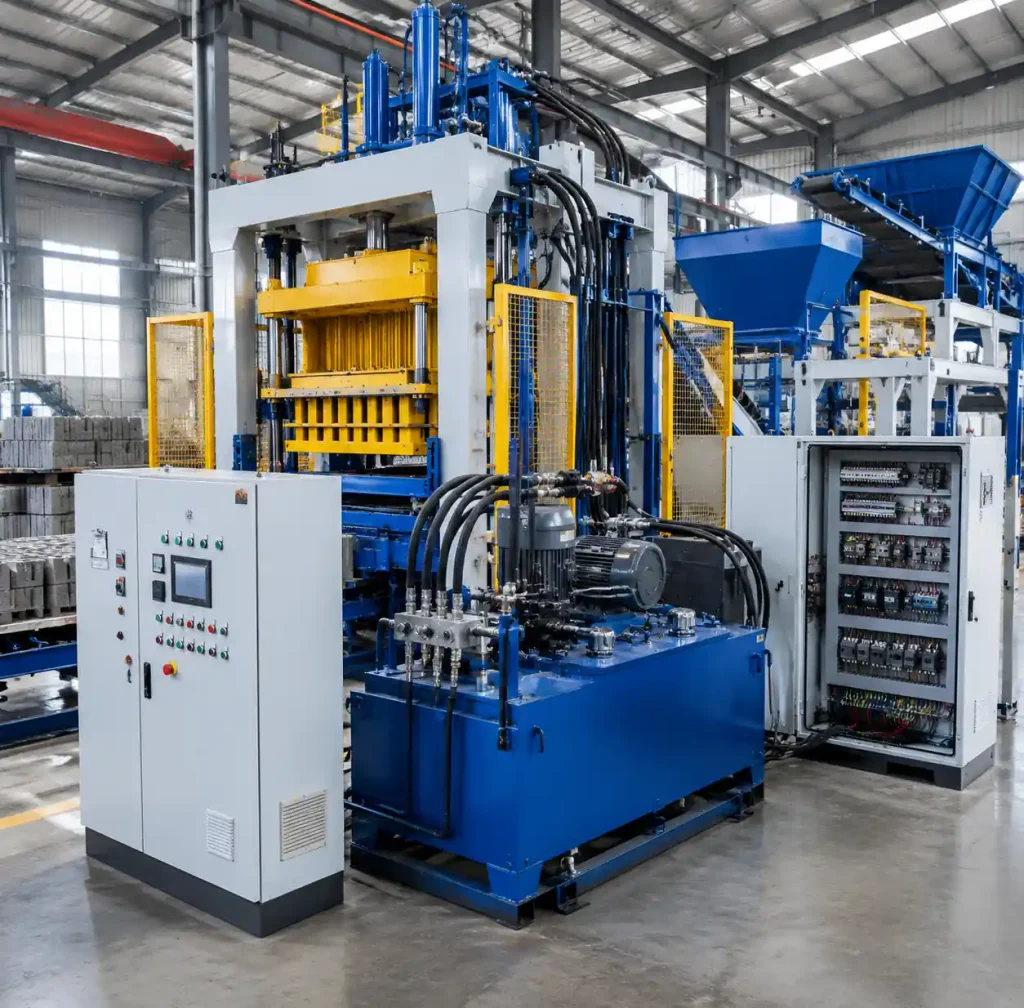
Production capacity reaches 20,000-46,000 blocks per day, but stable three-phase industrial power becomes critical for uninterrupted operation.
Voltage and Phase Requirements
Single-Phase vs Three-Phase Power
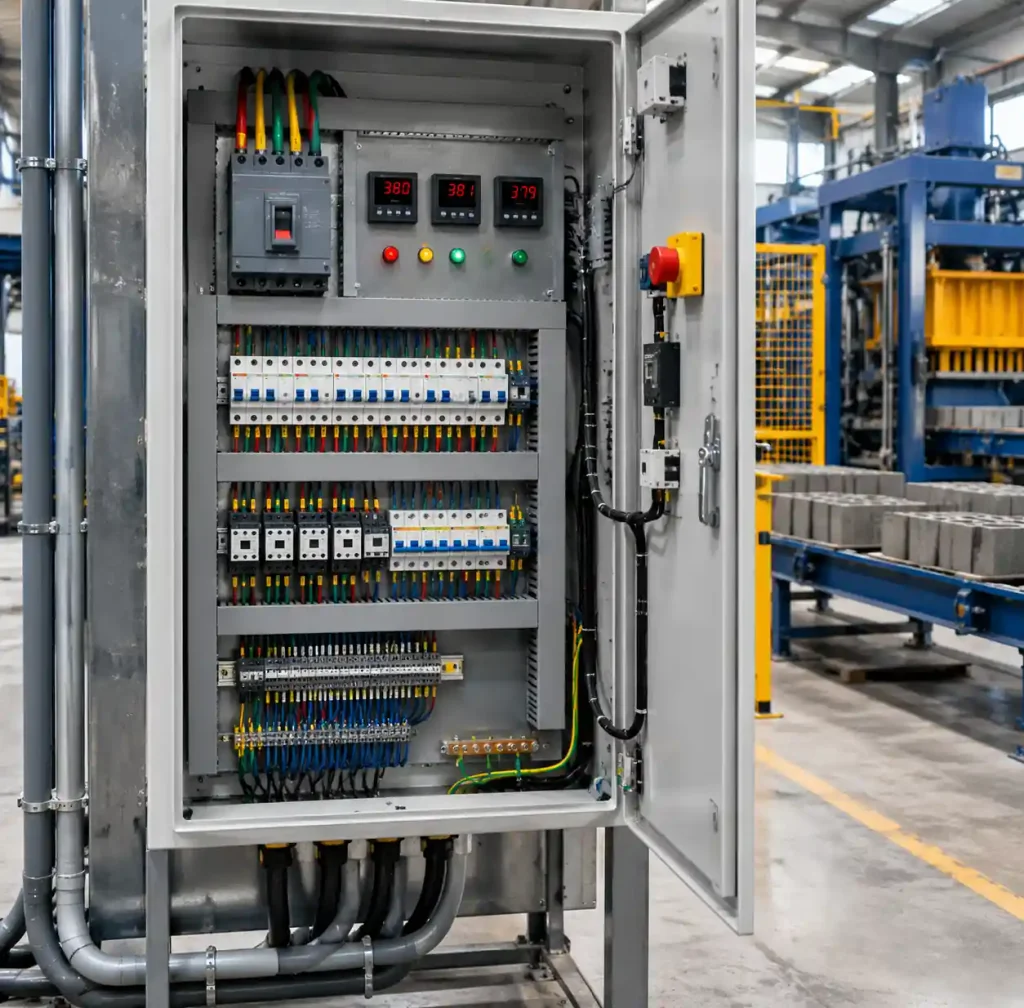
Manual machines with vibration motors use single-phase 220V power. Semi-automatic and automatic machines require three-phase power (380V, 400V, or 415V) for reliable hydraulic pump operation and balanced power distribution. Three-phase installation costs: $2,000-$8,000 depending on transformer distance.
Regional Voltage Standards
| Region | Standard Voltage | Frequency | Phase |
|---|---|---|---|
| North America | 208V, 240V, 480V | 60 Hz | Three-phase |
| Europe | 400V | 50 Hz | Three-phase |
| Asia | 380V, 415V | 50 Hz | Three-phase |
| Africa | 380V, 400V, 415V | 50 Hz | Three-phase |
| Australia | 415V | 50 Hz | Three-phase |
Confirm local voltage before ordering. Machines tolerate ±10% voltage variation, but sustained undervoltage causes motor damage.
Amperage Calculation
Formula: Amperage = Power (kW) / (√3 × Voltage × Power Factor)
Example: 20 kW machine on 380V with 0.85 power factor = 35.7 amps. Size breakers and wiring for 125% of calculated amperage (45-50 amps) to handle starting surges.
Generator Sizing for Backup Power
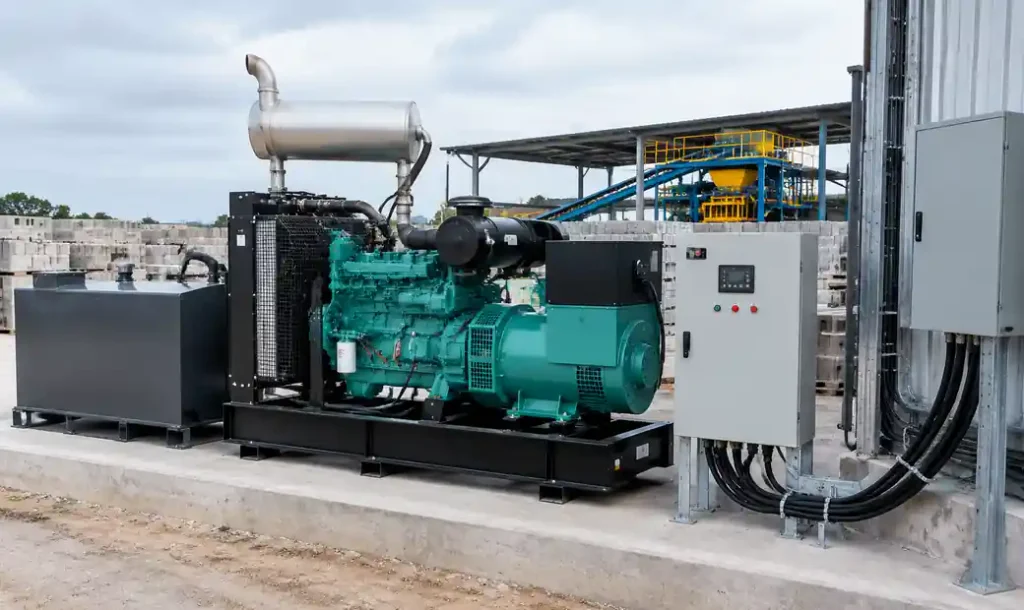
Block machine motors draw 2-3× running power during startup. Calculate minimum generator capacity: list all equipment, find running watts, multiply by 2.5-3× for surge, add 20% safety margin.
Generator Capacity by Machine Type
| Тип машины | Running Power | Starting Power | Recommended Generator |
|---|---|---|---|
| Manual (with motor) | 1.5 kW | 4 kW | 7.5 kVA |
| Полуавтоматический | 12 kW | 30 kW | 40 kVA |
| QT8-15 Автоматический | 28 kW | 70 kW | 90 kVA |
| QT10-15 + Mixer | 38 kW | 95 kW | 120 kVA |
Example: QT4-30 (12 kW) + JS500 mixer (18.5 kW) = 30.5 kW running. Starting surge: 30.5 × 2.5 = 76.25 kW. With 20% margin: 91.5 kW. Recommended: 100 kVA diesel generator.
Diesel vs Gasoline Generators
Diesel generators dominate block production with 25-30% better fuel efficiency, 10,000-20,000 hour service life, and suitability for continuous 8-12 hour operation. Most gasoline generators are limited to 10-15 kW and 4-6 hour duty cycles.
Automatic Transfer Switch Systems
ATS monitors grid power and automatically starts generators during outages, switching within 10-20 seconds. Installation cost: $1,500-$5,000. Manual switching takes 15-30 minutes, during which concrete may begin setting.
Electrical Installation Requirements
Site Infrastructure Setup
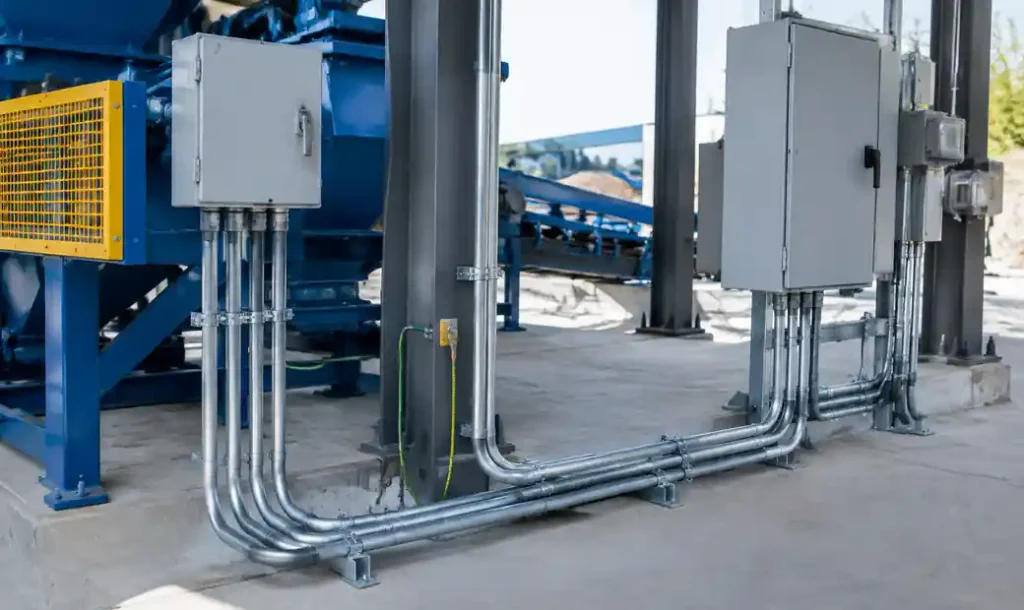
Main distribution panel:
- Three-phase board rated for total facility load
- Individual circuit breakers at 125% of machine amperage
- Ground fault protection per local codes
- Clear labeling and emergency shutoff access
Power distribution:
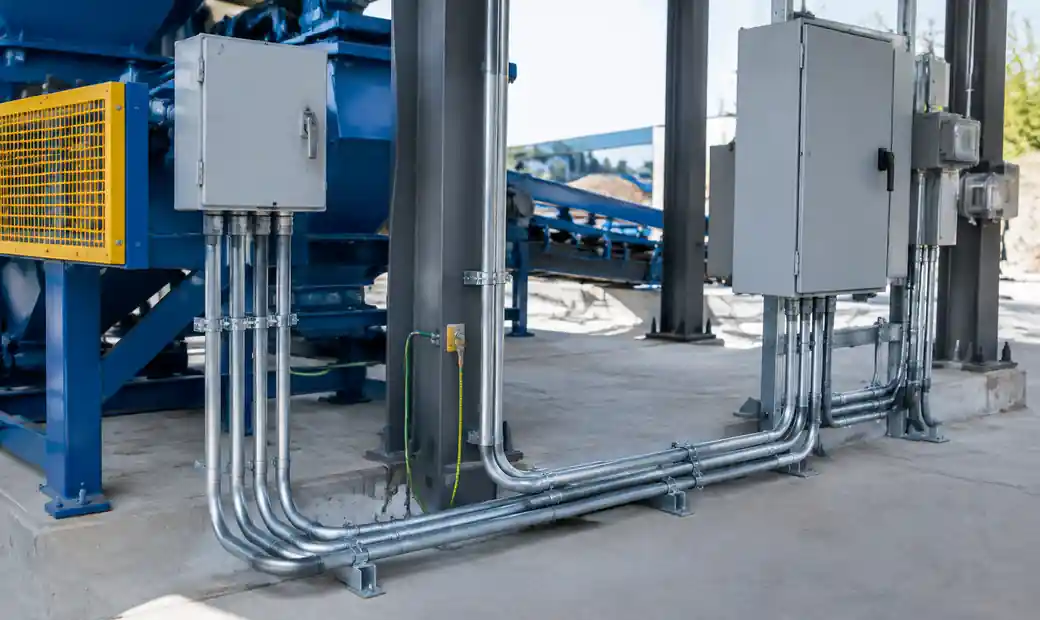
- Conduit runs from panel to machine locations
- Wire sizing based on amperage and distance (voltage drop <3%)
- Weatherproof enclosures for outdoor areas
- Grounding system with resistance <5 ohms
Wire Sizing and Protection
| Machine Power | Cable Size (Copper) | Breaker Rating | Max Run Length* |
|---|---|---|---|
| 5-10 kW | 4 mm² (12 AWG) | 20-25A | 40 meters |
| 10-15 kW | 6 mm² (10 AWG) | 30-40A | 35 meters |
| 15-25 kW | 10 mm² (8 AWG) | 50-60A | 30 meters |
| 25-35 kW | 16 mm² (6 AWG) | 70-90A | 25 meters |
| 35-50 kW | 25 mm² (4 AWG) | 100-125A | 20 meters |
*Maximum distance for <3% voltage drop at 380V
Use 90°C rated cable in metal conduit. Install thermal-magnetic three-pole breakers with lockout/tagout capability.
Motor Starters and Controls
Soft starters reduce starting current from 6× to 2-3× full load ($200-$800). VFDs provide precise speed control and 15-30% energy savings ($500-$2,500). Install surge protection for PLC control systems in areas with unstable grid power.
Diesel Block Machines: Power-Independent Solutions
Diesel block machines integrate diesel engines directly with hydraulic systems, eliminating electrical requirements. These solve power challenges in remote locations where grid power is unavailable or unreliable.
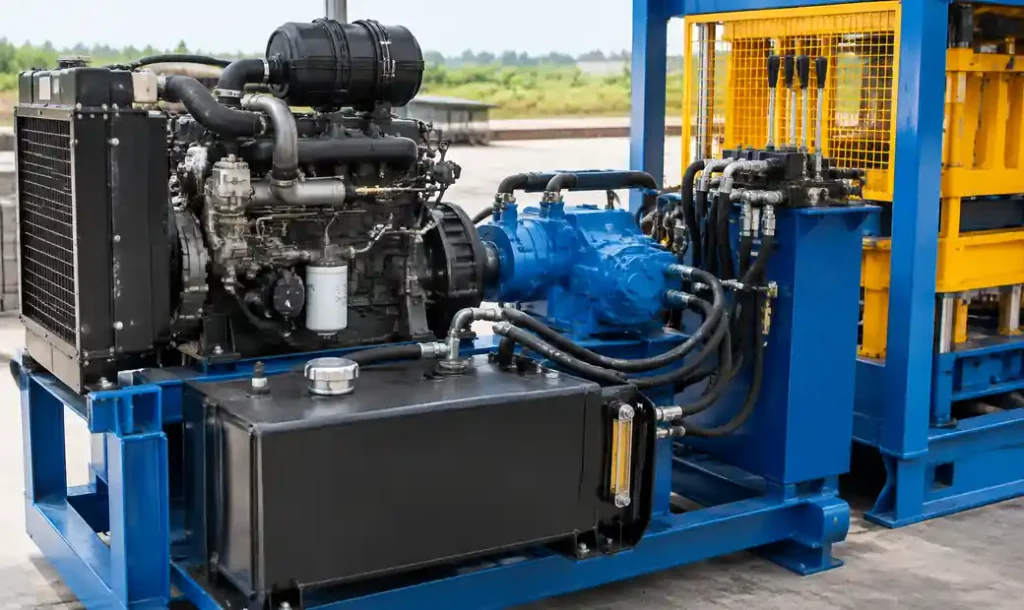
Choose diesel when grid power is unreliable (>2 hours outage daily), three-phase installation exceeds $8,000-$10,000, or mobile operation is required. Popular models like the QTJ4-30 diesel block machine produce 2,500-4,000 blocks per day. Fuel consumption: 5-8 liters per 1,000 blocks.
Cost Comparison: Electric vs Diesel
Electric semi-automatic (12 kW) producing 5,000 blocks/day:
- Daily power: 60-75 kWh at $0.12/kWh = $7.20-$9.00
- Monthly cost (26 days): $187-$234
Diesel semi-automatic (25 HP) producing 5,000 blocks/day:
- Daily fuel: 30-40 liters at $1.20/liter = $36-$48
- Monthly cost (26 days): $936-$1,248
Electric costs 4-5× less when grid power is reliable. Diesel provides independence where electricity is unavailable. Diesel engines require oil changes every 50 hours and full service every 500 hours ($100-$150 monthly maintenance).
Safety and Compliance
Essential Safety Features
Block machine installations must include emergency stop buttons at operator positions, lockout/tagout capability on main disconnect, ground fault protection per local codes, and IP54+ rated enclosures for dusty environments. Only qualified electricians should perform installation or repairs.
According to IEC 60204-1, electrical equipment for industrial machinery requires proper conductor support, adequate working space (minimum 30 inches clearance), and proper grounding. The Indian Standard IS 13291 provides requirements specific to concrete block making machines.
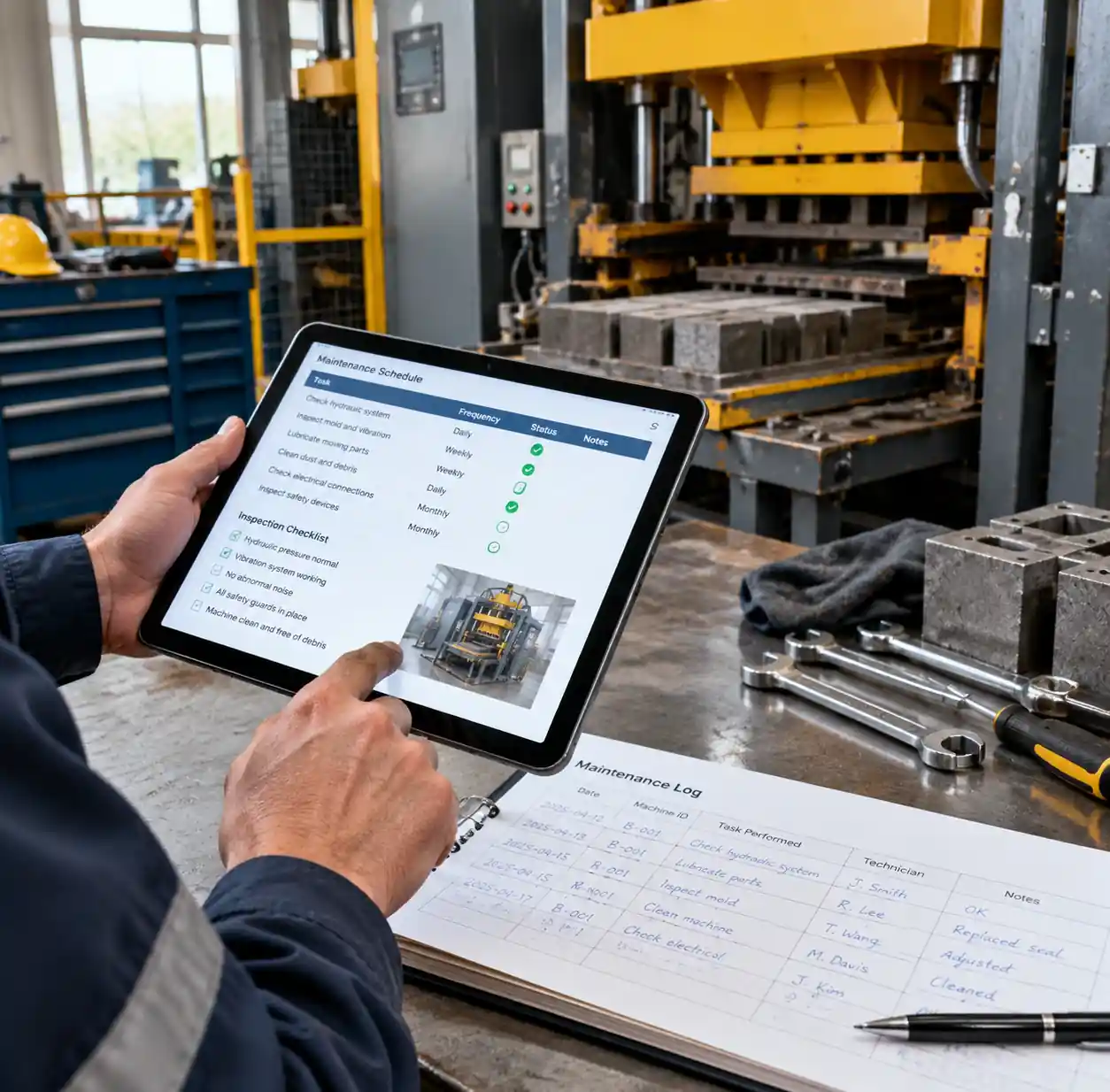
Before production, verify all connections are tight, wire sizing is adequate, ground resistance is below 5 ohms, circuit breakers function correctly, and voltage remains stable under load (±10% of rated).
Power Cost Optimization
Load Management
Start concrete mixer first, then block machine. Stagger multiple machine startups by 2-3 minutes. Avoid simultaneous operation during peak hours to reduce demand charges.
Power Factor Correction
Block machine motors reduce power factor to 0.70-0.85, causing utility penalties. Installing power factor correction capacitors ($300-$1,500) improves power factor to 0.95+, reducing bills by 10-15%. Payback: 6-18 months.
Energy Monitoring
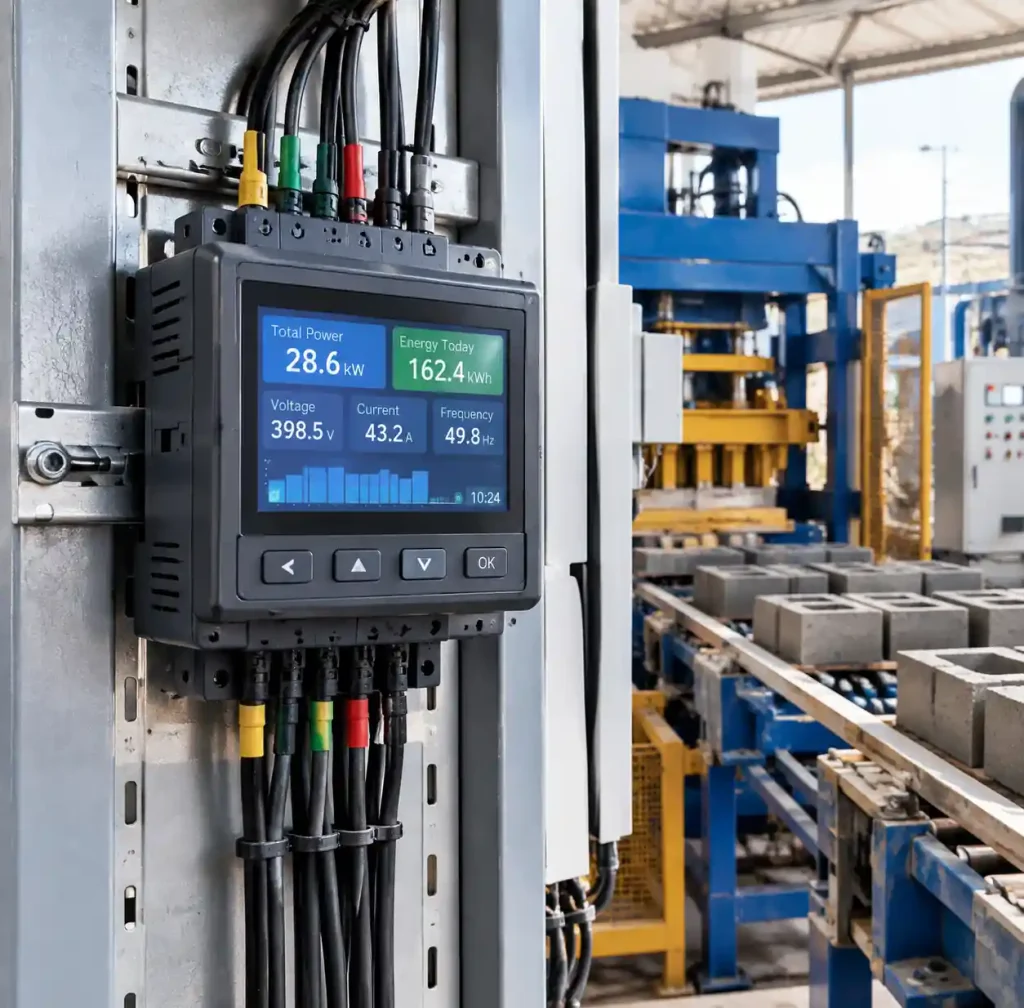
Install energy meters on major equipment to track kWh per 1,000 blocks, identify excessive consumption, verify minimal idle power, and calculate production costs. Modern monitoring systems cost $500-$2,000.
Часто задаваемые вопросы
What size generator do I need for a semi-automatic block machine?
For a 12 kW semi-automatic machine, you need minimum 40 kVA three-phase diesel generator to handle 2.5-3× starting surge. With a concrete mixer (18 kW), upgrade to 100 kVA generator.
Can I run a block machine on single-phase power?
Only small manual machines with electric vibrators (1-3 kW) run on single-phase 220V. Semi-automatic and automatic machines require three-phase industrial power for hydraulic systems. Converting to single-phase risks motor damage and voids warranties.
How much does three-phase power installation cost?
Urban industrial zones: $1,000-$3,000. Rural areas requiring new transformer: $5,000-$15,000. Beyond 200 meters from existing lines, diesel machines become more economical.
What happens if voltage drops below rated voltage?
Motors draw higher current to compensate, causing overheating and shortened lifespan. Sustained operation below 90% rated voltage (342V on 380V system) damages motors within weeks. Install voltage monitoring or automatic shutdown.
Should I choose diesel or electric power?
Choose electric if you have reliable three-phase grid power—operational costs are 70-80% lower. Choose diesel if grid power is unreliable (>2 hours downtime daily), three-phase installation exceeds $8,000, or you need mobility. Our машины с дизельным блоком offer power independence.
How do I calculate electrical operating costs?
Multiply machine power (kW) × hours × electricity rate. Example: 12 kW machine running 6 hours at $0.12/kWh = 12 × 6 × $0.12 = $8.64 per day or $225 monthly (26 days). Add 10-15% for auxiliary equipment.
Заключение
Block making machine power requirements range from zero for manual machines to 45+ kW for automatic production lines. Semi-automatic machines typically require 10-15 kW three-phase power, while diesel alternatives solve challenges in areas with unreliable electricity.
Proper electrical installation with correctly sized wiring, adequate breakers, generator backup, and safety systems prevents downtime and equipment damage. Size generators for 2.5-3× motor starting surge and maintain voltage within ±10% of specifications.
Raytone Block Machinery provides complete technical support for installations worldwide. Our автоматические блочные машины, semi-automatic models, и diesel-powered units include detailed electrical specifications and installation manuals.
Свяжитесь с нами сегодня for electrical specifications, generator sizing calculations, and installation support for your block making project.