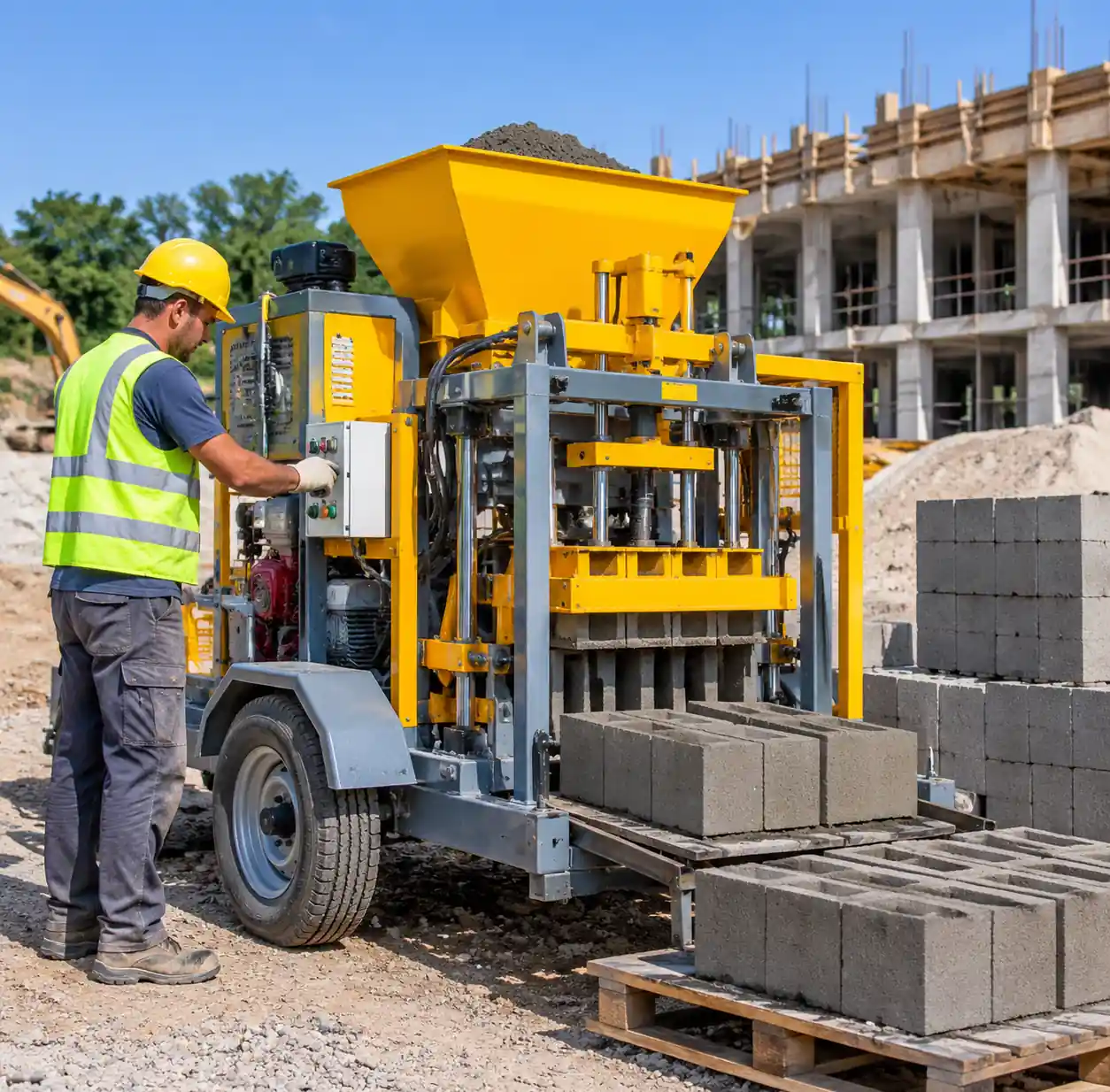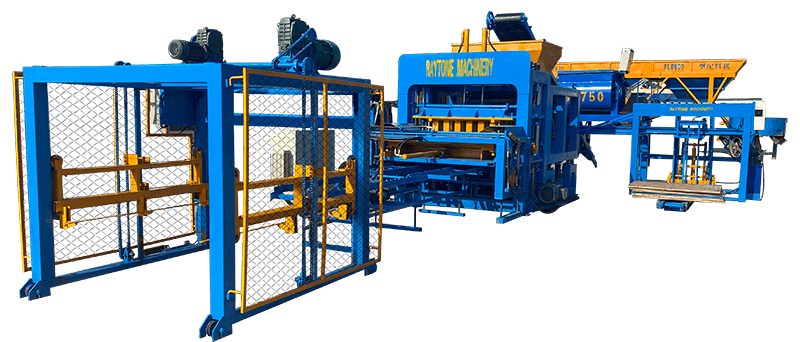
Starting a block making business requires careful budget planning and capital allocation across equipment, facilities, raw materials, and working capital. According to construction industry data, the concrete block manufacturing market continues growing at 8.6% annually, reaching $1.74 billion in 2026, driven by infrastructure expansion and affordable housing demand worldwide.
If you want to launch a profitable block production operation in 2026, then you will need to understand the complete cost structure, from machinery selection to facility setup and operational expenses. This comprehensive guide breaks down every startup cost category with real numbers to help you plan your investment accurately.
Core Equipment Investment
Your block making machine represents the single largest capital expenditure and determines your production capacity, labor requirements, and long-term profitability.
Manual Block Machines: $1,000-$5,000
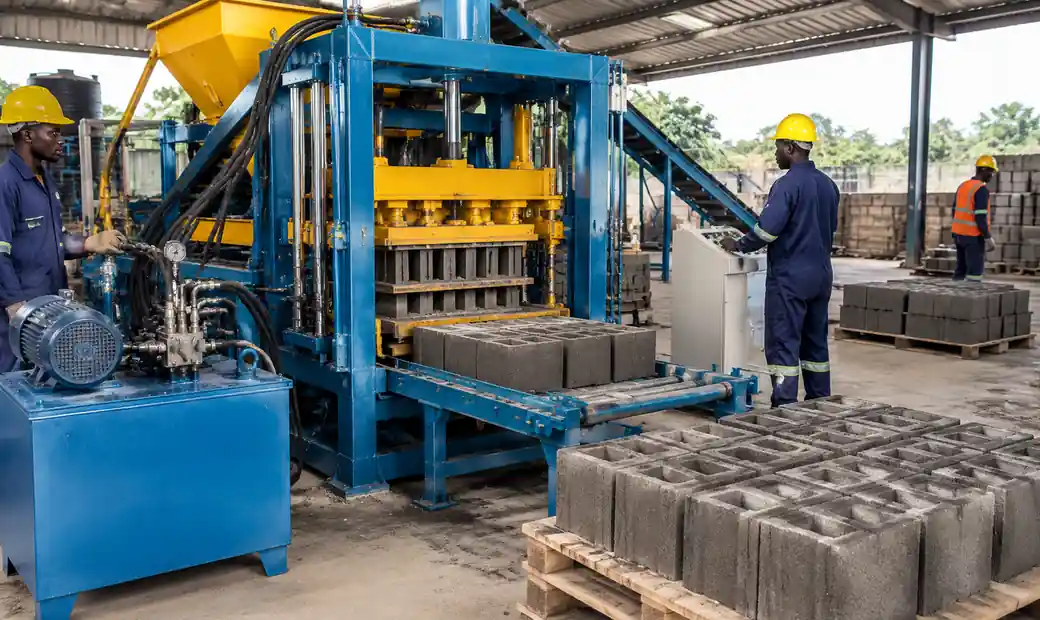
Manual machines suit startups with limited capital and production targets under 1,500 blocks per day. These machines require 4-6 operators and produce blocks through hand-operated vibration and manual demolding. You can start with models like the QT4-40 at $2,800-$3,500, which produces 960-1,440 blocks per 8-hour shift depending on block size and operator skill.
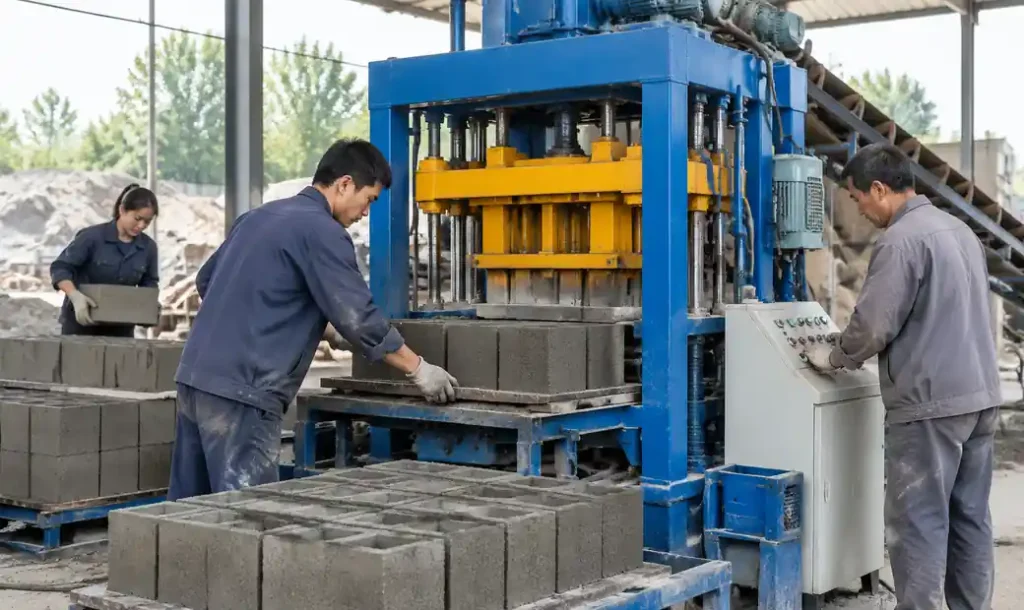
The lower equipment cost comes with higher labor expenses – manual operations typically cost $0.08-$0.12 per block in labor, compared to $0.02-$0.04 for automated systems. Manual machines work best for rural areas, small construction projects, or businesses testing market demand before scaling up.
Semi-Automatic Block Machines: $8,000-$25,000
Semi-automatic machines balance affordability and efficiency, producing 3,000-7,200 blocks per day with 2-3 operators. These hydraulic machines automate the vibration, molding, and demolding processes while requiring manual pallet handling and material feeding. The QT4-24 semi-automatic machine at $12,000-$18,000 represents the sweet spot for mid-scale operations.
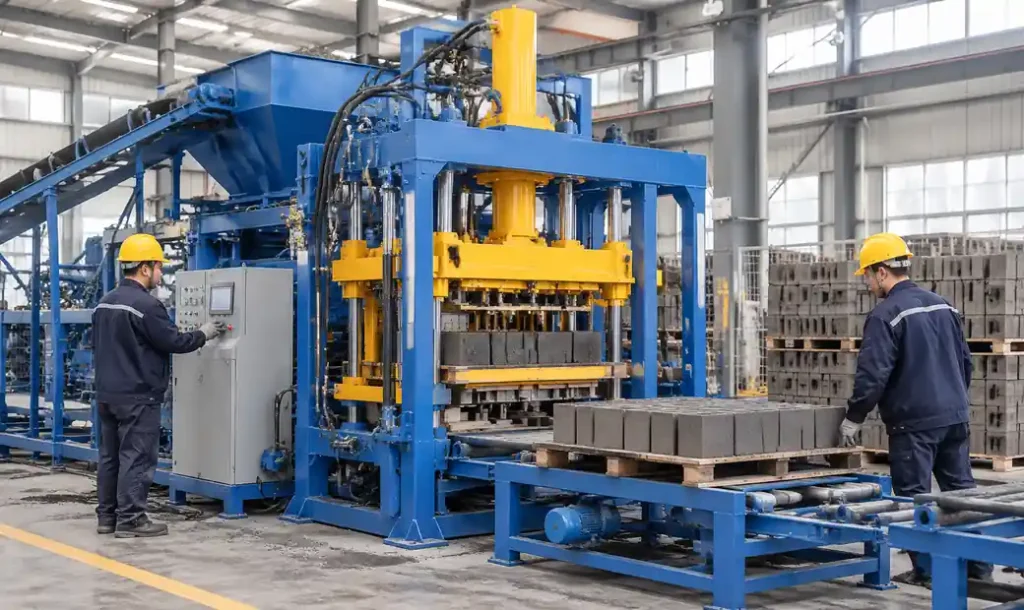
Semi-automatic equipment reduces labor costs to $0.04-$0.06 per block while maintaining production flexibility. You can quickly change molds to produce different block types, from standard hollow blocks to interlocking pavers, maximizing your product range without additional machinery investment.
Fully Automatic Block Plants: $45,000-$250,000
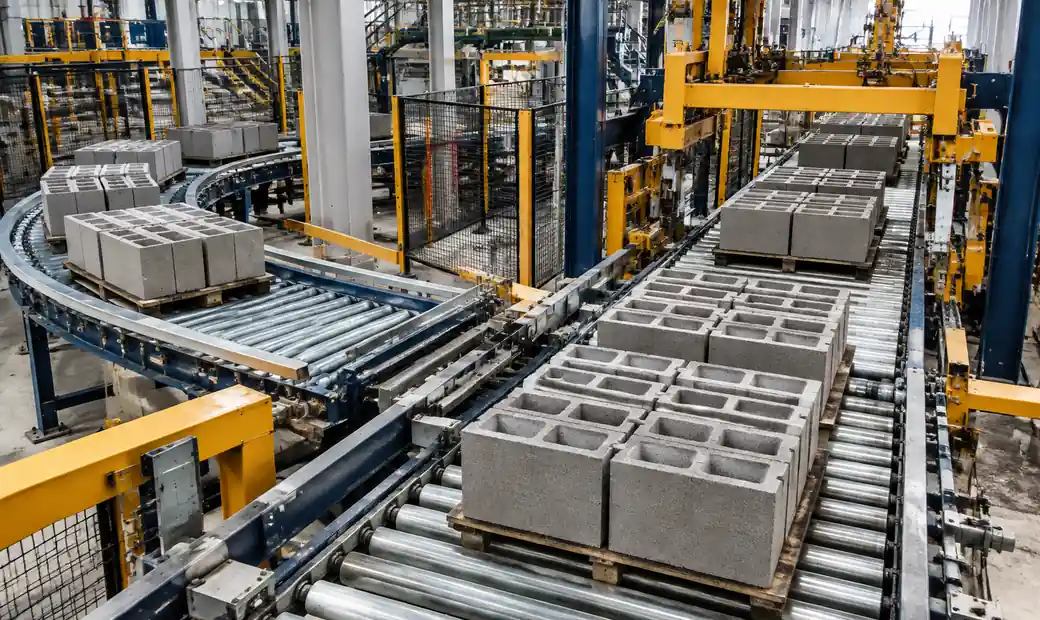
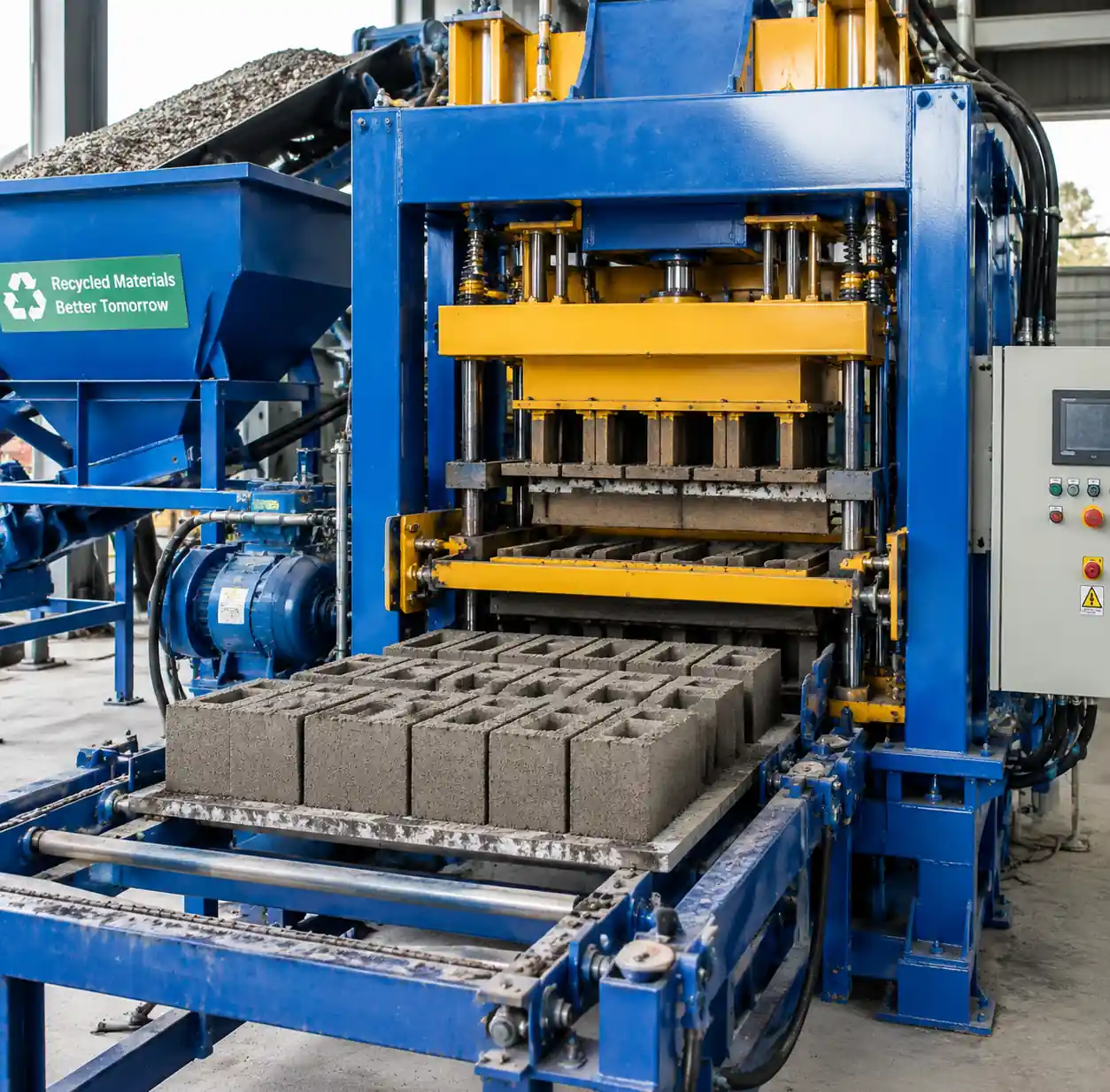
Automatic production lines suit businesses targeting 10,000-50,000 blocks daily with minimal labor. These PLC-controlled systems integrate material batching, automatic feeding, hydraulic pressing, pallet transfer, and automated stacking. Complete automatic solutions start at $85,000 for mid-capacity lines and can exceed $200,000 for high-output systems with advanced features.
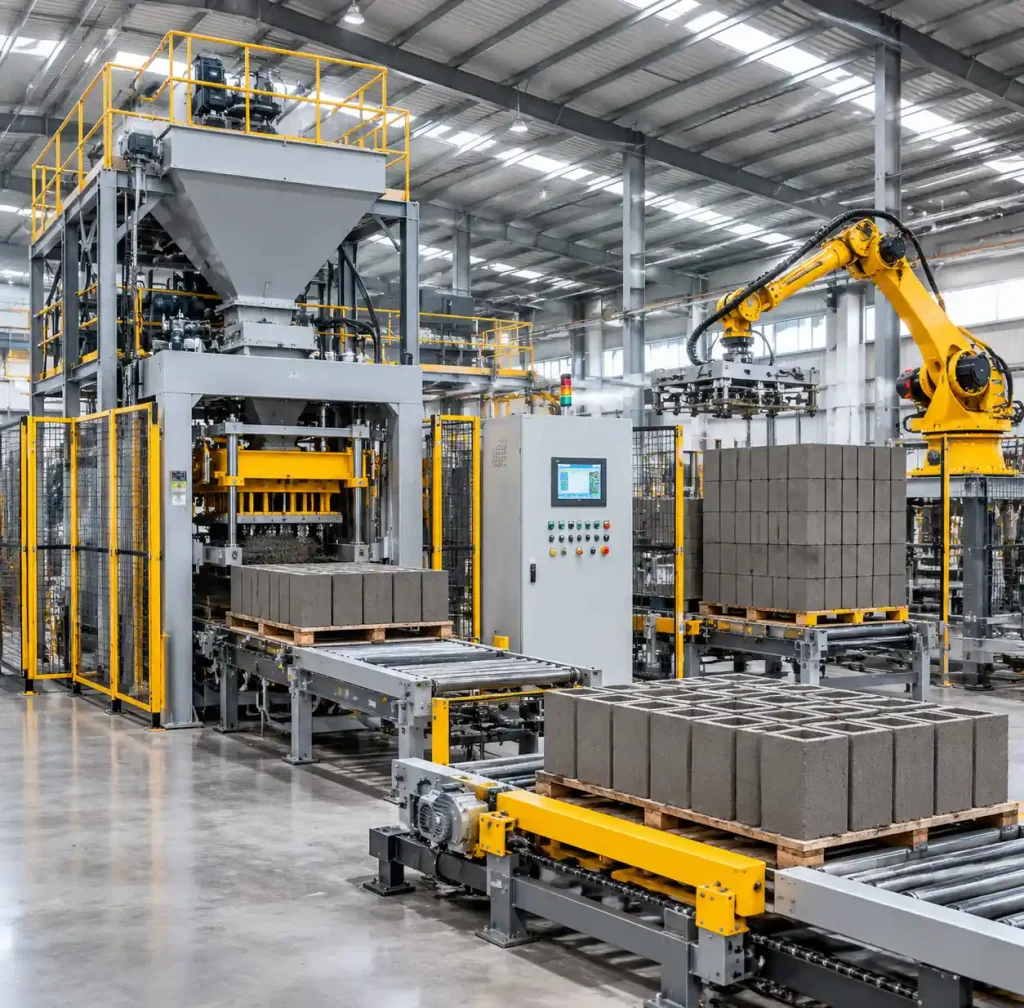
Automatic plants slash labor costs to $0.01-$0.02 per block while delivering consistent quality and production speed. The higher upfront investment pays back through volume production – a $150,000 automatic line producing 30,000 blocks daily can recover its cost in 18-24 months at typical market margins.
| Тип машины | Ценовой диапазон | Суточная производительность | Labor Required | Labor Cost/Block | Идеально подходит для |
|---|---|---|---|---|---|
| Руководство | $1,000-$5,000 | 960-1,500 blocks | 4-6 workers | $0.08-$0.12 | Startups, rural areas, low volume |
| Полуавтоматический | $8,000-$25,000 | 3,000-7,200 blocks | 2-3 workers | $0.04-$0.06 | Growing businesses, mid-scale |
| Полностью автоматический | $45,000-$250,000 | 10,000-50,000 blocks | 1-2 operators | $0.01-$0.02 | High volume, urban markets |
Supporting Equipment and Machinery
Beyond the core block machine, you need auxiliary equipment for material preparation, curing, and handling to maintain efficient production flow.
Concrete Mixers: $800-$8,000
Concrete mixers ensure consistent material blending for uniform block strength. Forced-action mixers (JS500-JS1000 models) cost $2,500-$7,000 and handle 15-30 cubic meters per hour, matching semi-automatic and automatic machine capacities. For manual operations, gravity drum mixers at $800-$1,500 suffice for smaller batches.
Material Batching Systems: $1,500-$12,000
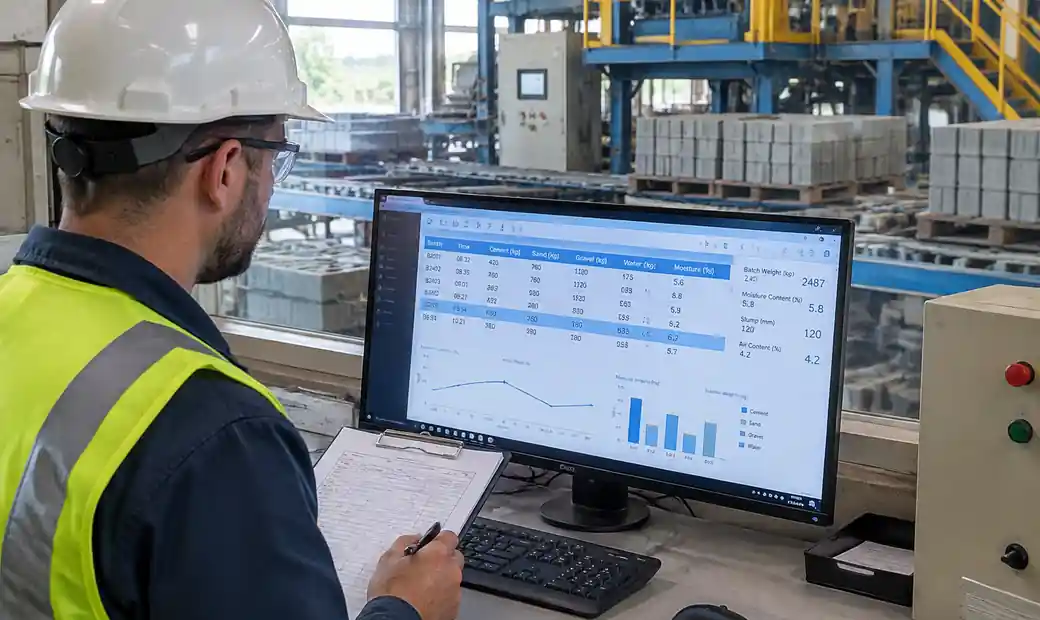
Batching machines weigh and proportion cement, sand, and aggregates automatically, reducing waste and ensuring consistent mix ratios. PLD batching systems cost $3,000-$10,000 depending on hopper capacity and weighing precision. Manual weighing operations work for small-scale production but create quality inconsistencies that lead to customer complaints and block rejection.
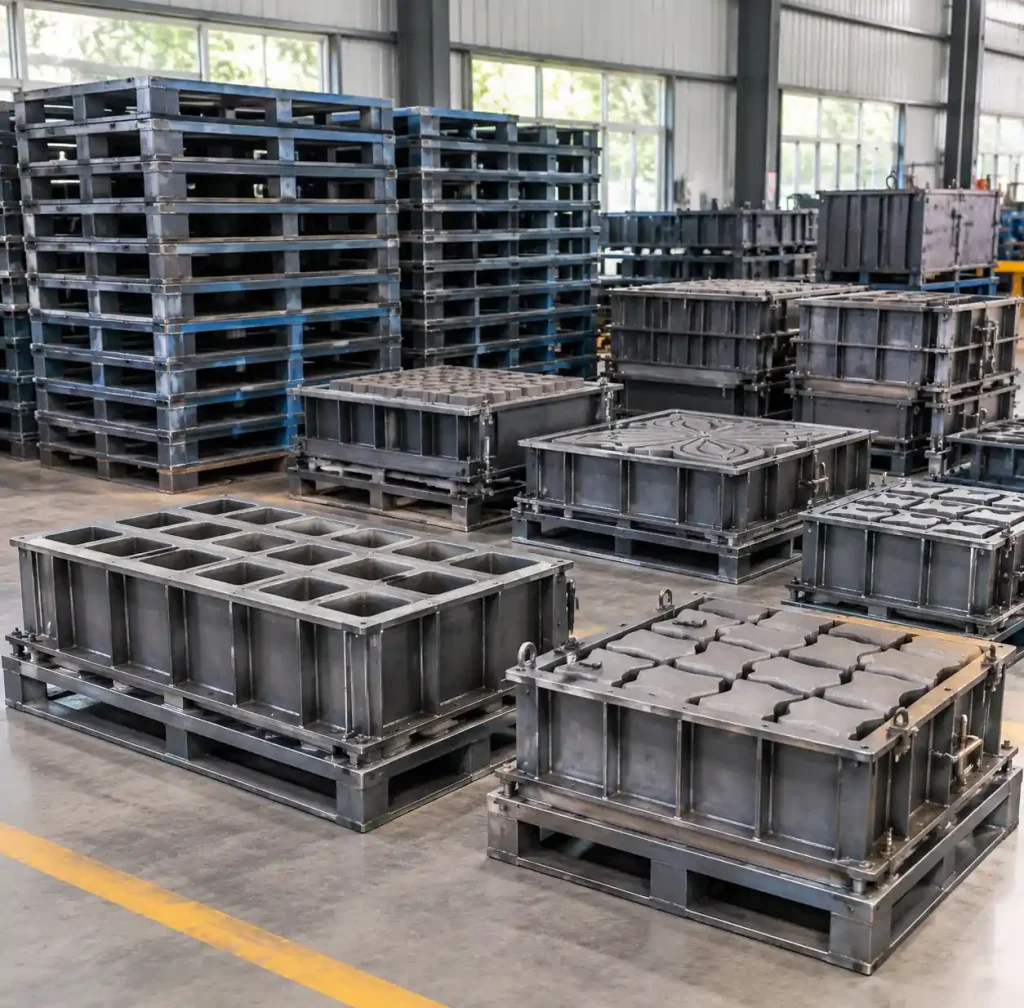
Pallets and Molds: $2,000-$8,000
Steel pallets cost $15-$25 each, and you need 300-500 pallets for continuous production ($4,500-$12,500 total). Block molds determine your product types – standard hollow block molds run $800-$2,000, while custom interlocking or decorative molds cost $1,500-$4,000. Budget $4,000-$6,000 for an initial pallet and mold set covering 2-3 standard block sizes.
Forklifts and Material Handlers: $8,000-$25,000
Used diesel forklifts (3-5 ton capacity) cost $8,000-$15,000, while new electric models run $18,000-$25,000. You need at least one forklift for moving pallets, raw materials, and finished blocks. Small operations can start with manual pallet jacks ($300-$800) and add forklifts as volume increases.
Land and Facility Costs
Your production facility needs adequate space for equipment, raw material storage, curing areas, and finished product inventory.
Land Requirements by Production Scale
Manual operations (1,000-1,500 blocks/day) require minimum 5,000-8,000 square feet including curing space. Semi-automatic facilities (5,000-7,000 blocks/day) need 12,000-18,000 square feet, while automatic plants (20,000+ blocks/day) demand 25,000-40,000 square feet for efficient workflow and inventory management.
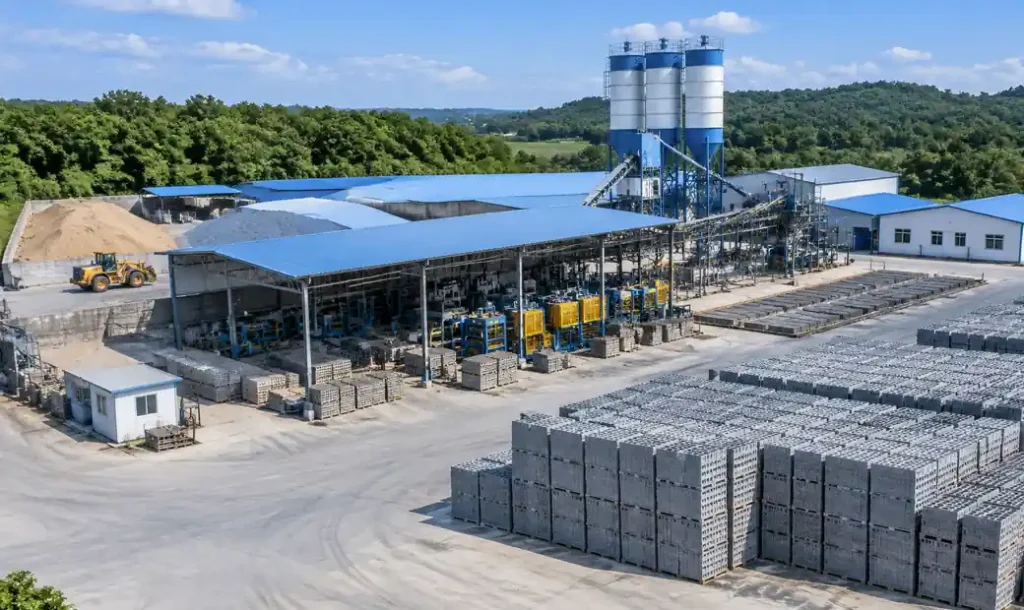
Land costs vary dramatically by location – industrial land in Nigeria runs ₦500,000-₦2,000,000 annually for rent, while purchasing land near major cities in Kenya, Ghana, or Tanzania ranges from $15,000-$80,000 per acre. You can start with leased land to minimize upfront costs, but purchasing makes sense once you verify market demand and profitability.
Curing Yard and Storage Areas
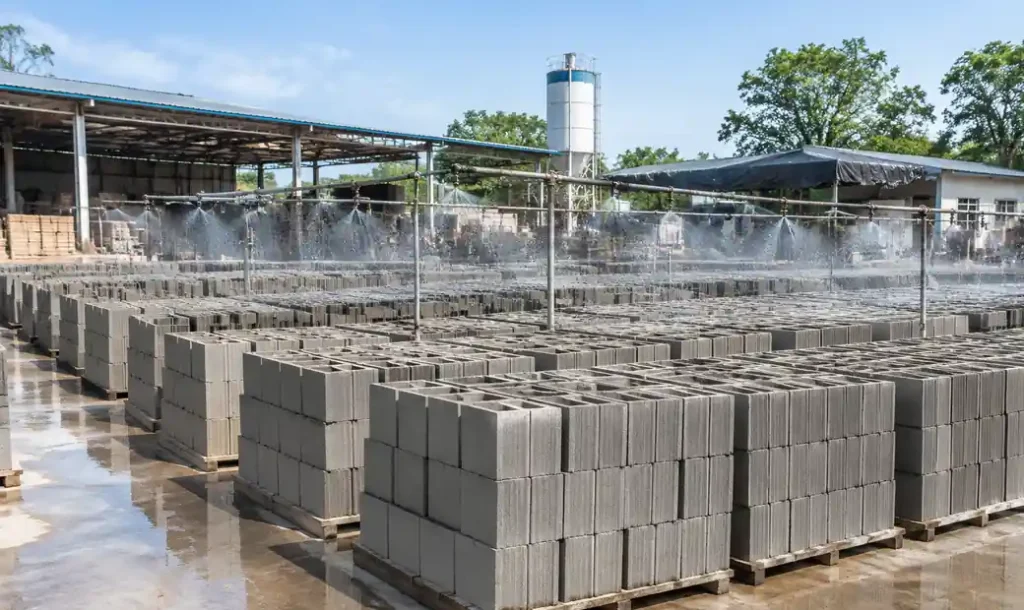
Concrete blocks need 7-14 days of proper curing to reach minimum strength before sale. Your curing area must accommodate 7-10 days of production inventory – a 5,000 blocks/day operation needs space for 35,000-50,000 blocks at various curing stages (approximately 8,000-12,000 square feet of covered or open curing area).
Raw material storage (cement, sand, aggregates) requires covered sheds protecting against moisture. Budget $3,000-$8,000 for basic corrugated steel roofing over the curing yard and material storage bays.
Raw Material Working Capital
Block production is raw material intensive – cement, sand, and aggregates comprise 60-70% of your per-block production cost.
Material Cost Per Block
Based on 2026 market prices, producing one standard 6-inch hollow block (390×190×190mm) costs approximately $0.58-$0.65 in raw materials:
- Cement: 2.2 kg at $0.16/kg = $0.35 (60% of material cost)
- Sand: 8 kg at $0.008/kg = $0.06
- Aggregates: 6 kg at $0.006/kg = $0.04
- Water and admixtures: $0.03
- Total materials: $0.48-$0.52 per block
Add labor ($0.02-$0.08), energy ($0.03-$0.05), and depreciation ($0.02-$0.04), bringing total production cost to $0.55-$0.69 per block depending on your production method and scale.
Initial Working Capital for Raw Materials
You need sufficient working capital to purchase 15-30 days of raw material inventory before receiving payment from customers. Working capital requirements by production scale:
- Manual (1,000 blocks/day): $8,000-$12,000 for one month’s materials
- Semi-automatic (5,000 blocks/day): $40,000-$55,000 for one month’s materials
- Automatic (20,000 blocks/day): $160,000-$220,000 for one month’s materials
Most suppliers offer 15-30 day credit terms once you establish payment history, reducing your working capital burden after the first 2-3 months of operation.
Startup Cost Summary by Production Scale
| Cost Category | Manual Operation | Полуавтоматический | Полностью автоматический |
|---|---|---|---|
| Block Machine | $2,500-$4,000 | $12,000-$20,000 | $85,000-$180,000 |
| Вспомогательное оборудование | $3,000-$6,000 | $8,000-$15,000 | $25,000-$45,000 |
| Land (annual lease) | $3,000-$8,000 | $8,000-$15,000 | $18,000-$35,000 |
| Facility Setup | $4,000-$8,000 | $10,000-$18,000 | $25,000-$45,000 |
| Raw Material Capital | $10,000-$15,000 | $45,000-$60,000 | $180,000-$240,000 |
| Business Registration | $500-$1,500 | $800-$2,000 | $1,500-$3,500 |
| Utilities Setup | $1,000-$2,500 | $3,000-$6,000 | $8,000-$15,000 |
| Contingency (10%) | $2,400-$4,500 | $8,700-$13,600 | $34,000-$56,000 |
| Total Investment | $26,400-$49,500 | $95,500-$149,600 | $376,500-$619,500 |
Additional Operational Costs
Power and Utilities
Electricity costs for block production depend on your machine type and local utility rates. Manual operations use minimal power ($50-$100/month for lighting and mixers), while automatic plants consume 80-150 kWh per day ($400-$900/month at $0.15-$0.20/kWh).
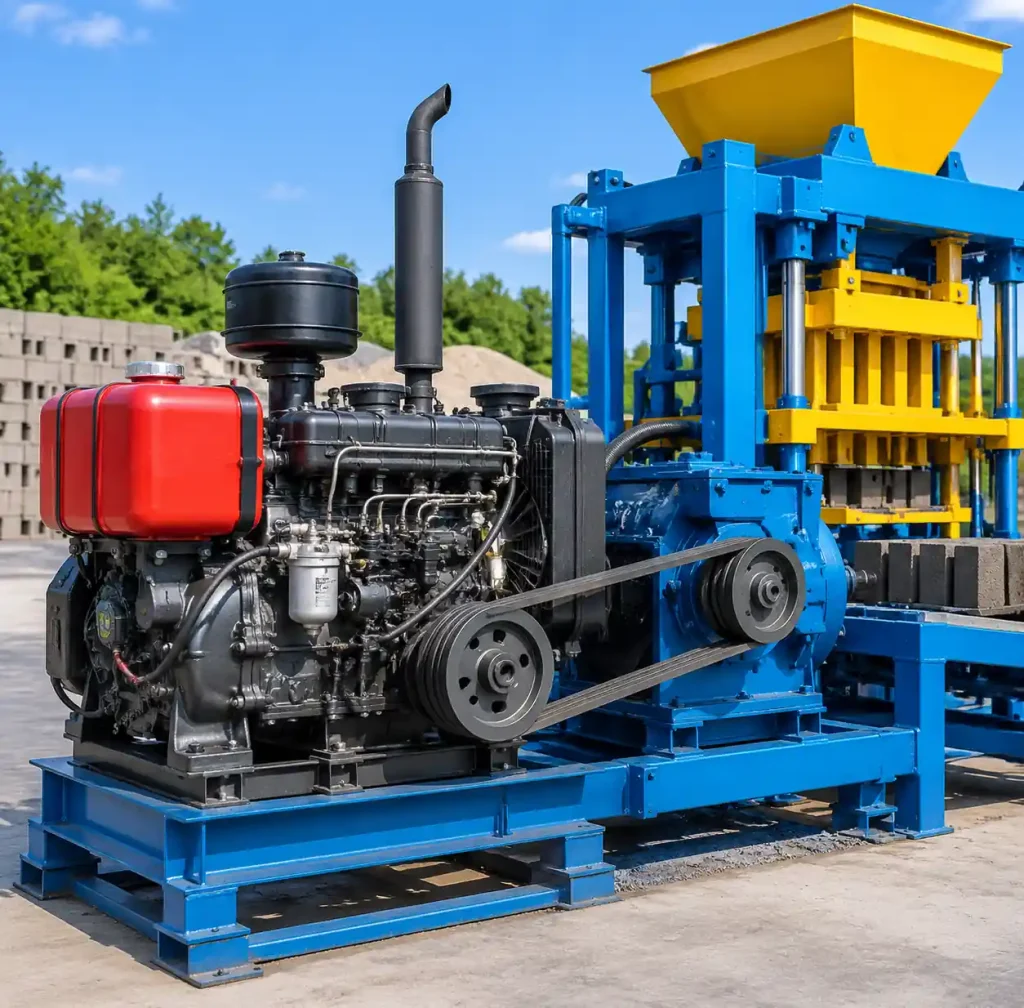
Diesel-powered machines offer an alternative in areas with unreliable grid power, consuming 8-15 liters per 1,000 blocks (approximately $0.08-$0.15 per block in fuel costs at $1.00/liter diesel).
Labor Costs
Labor represents your second-largest operational expense after raw materials. Monthly labor costs by scale:
- Manual (6 workers): $1,200-$2,400/month in developing markets, $4,800-$7,200 in developed economies
- Semi-automatic (3 workers): $600-$1,200/month or $2,400-$3,600 in higher-wage areas
- Automatic (2 operators): $400-$800/month or $3,200-$4,800 for skilled PLC operators
Transportation and Logistics
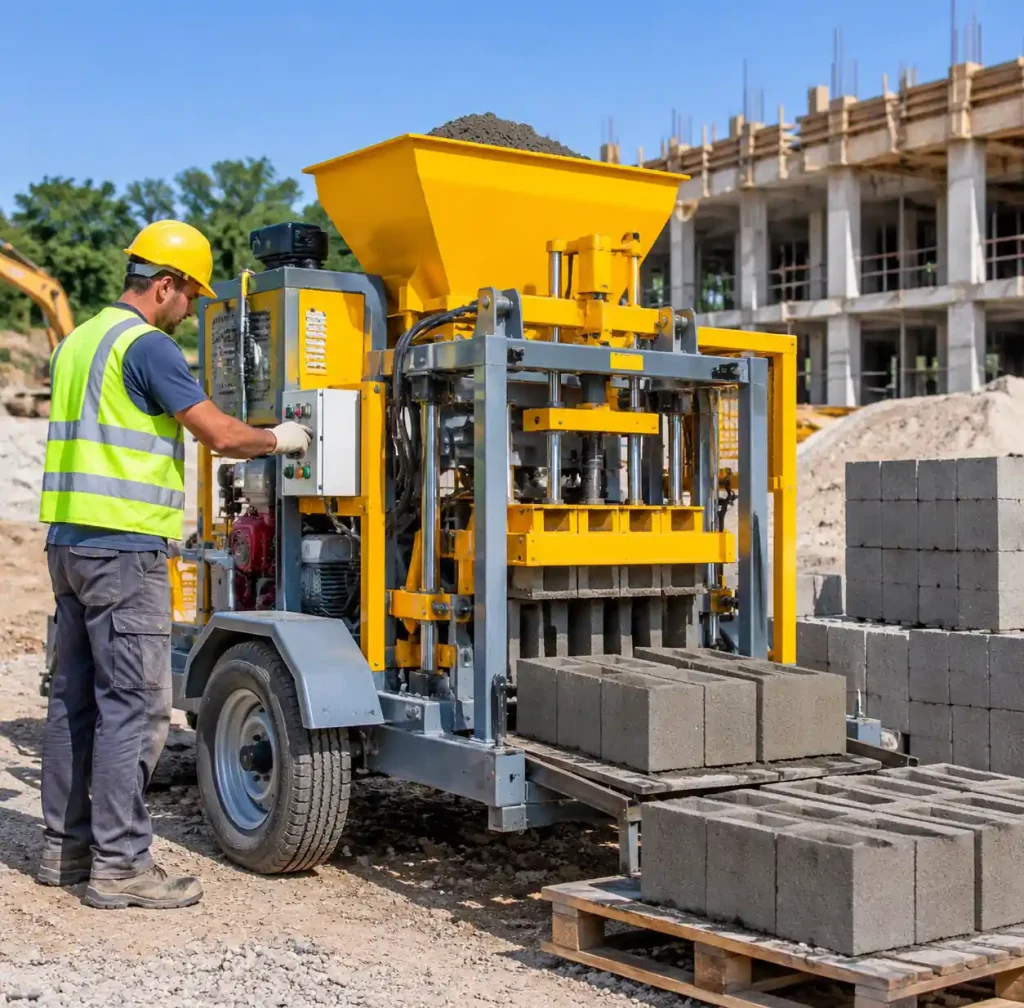
Delivering blocks to construction sites requires trucks or contracting with logistics providers. Budget $0.10-$0.20 per block for delivery within 20-30 kilometers. Мобильные блоковые машины eliminate this cost by producing blocks on-site, saving $0.11-$0.18 per block in transportation expenses.
Revenue and Profitability Projections
Understanding potential returns helps justify your initial investment and guides business planning decisions.
Market Pricing
Concrete blocks sell for $0.70-$1.50 per unit depending on block type, size, quality, and local market conditions. Standard 6-inch hollow blocks average $0.85-$1.10 in most developing markets, while specialized interlocking or decorative blocks command $1.25-$2.00 per unit.
Gross Profit Margins
With production costs of $0.55-$0.69 per block and selling prices of $0.85-$1.10, gross margins typically range from 25-45% before considering business overhead, depreciation, and financing costs. Higher margins apply to specialized products, larger orders, and direct contractor sales bypassing distributors.
Break-Even Timeline
- Manual operations ($30,000-$45,000 investment) producing 1,200 blocks/day at $0.25 net margin recover startup costs in 10-15 months
- Semi-automatic businesses ($100,000-$140,000 investment) producing 5,000 blocks/day at $0.28 net margin break even in 14-18 months
- Automatic plants ($400,000-$600,000 investment) producing 25,000 blocks/day at $0.22 net margin (volume pricing) recover investment in 18-26 months
These timelines assume 75-85% capacity utilization and stable material prices. Actual results depend on market demand, competitive intensity, payment collection efficiency, and your operational management skills.
Financing Your Block Making Business
Few entrepreneurs can self-fund a block production startup entirely. Consider these financing options:
Equipment financing from machinery suppliers often includes 20-30% down payment with 24-36 month payment plans at 8-14% annual interest. This preserves working capital for raw materials and operations.
Small business loans from banks require business plans, collateral, and proven construction industry experience. Loan amounts typically range from $20,000-$500,000 with 5-7 year terms.
Partnership and equity financing brings operating partners who contribute capital in exchange for ownership percentage. This reduces your debt burden but dilutes your equity stake.
Cost Optimization Strategies
Smart entrepreneurs minimize startup costs without compromising production capability or quality:
Start smaller and scale gradually – Begin with semi-automatic equipment meeting current demand, then upgrade to automatic lines as sales grow. This reduces initial capital requirements while building market proof.
Lease land initially rather than purchasing to conserve capital. Once profitability is proven, purchase land to eliminate ongoing lease expenses.
Buy quality used equipment for supporting machinery like forklifts, mixers, and generators. Reliable used equipment costs 40-60% of new prices while delivering similar performance.
Negotiate supplier credit terms for cement and materials. Even 15-day payment terms significantly reduce working capital requirements.
Focus on one block type initially to minimize mold investment and simplify production. Add product variety once you master operations and build steady customer demand.
Часто задаваемые вопросы
How much does it cost to start a small block making business?
Small-scale manual block production requires $26,000-$50,000 for equipment, facility setup, and initial working capital. This covers a manual machine, basic supporting equipment, land lease, and 30 days of raw materials to produce 1,000-1,500 blocks daily.
What is the most expensive part of starting a block business?
For manual and semi-automatic operations, raw material working capital (35-40% of total startup costs) exceeds equipment costs. For automatic plants, the block machine itself represents the largest expense at 40-50% of total investment.
How long does it take to become profitable in block manufacturing?
Break-even typically occurs in 10-26 months depending on your production scale, capacity utilization, and market conditions. Manual operations recover costs fastest (10-15 months) due to lower initial investment, while automatic plants need 18-26 months despite higher daily production volumes.
Can I start with a diesel machine to avoid electricity costs?
Yes, машины с дизельным блоком work well in areas with unreliable power supply. Diesel adds $0.08-$0.15 per block in fuel costs versus $0.03-$0.05 for electricity, but eliminates downtime from power outages and avoids expensive generator backup systems.
Do I need special permits or licenses?
Most jurisdictions require business registration, environmental permits for industrial operations, and sometimes construction material quality certifications. Budget $500-$3,500 for permits and licenses depending on your location and production scale.
Заключение
Starting a block making business in 2026 requires realistic budget planning across equipment, facilities, working capital, and operational expenses. Total startup costs range from $26,000 for manual operations to $620,000 for high-capacity automatic plants, with break-even timelines of 10-26 months under typical market conditions.
Your equipment choice should match your available capital, target market size, and growth ambitions. Manual machines minimize upfront investment for testing market demand, semi-automatic systems balance cost and productivity for growing businesses, and automatic plants deliver maximum efficiency for established operations serving urban construction markets.
Raytone Block Machinery offers complete block production solutions from ручные станки в fully automatic plants, plus supporting equipment for material handling and mixing. Our experienced team helps you size the right equipment configuration for your market, providing accurate cost projections and ROI analysis tailored to your specific conditions.
Свяжитесь с нами сегодня for detailed budget breakdowns, equipment recommendations, and financial modeling based on your target production capacity and local market conditions.
Budget planning tools and ROI calculators available upon request. All pricing reflects 2026 market conditions and may vary by region.