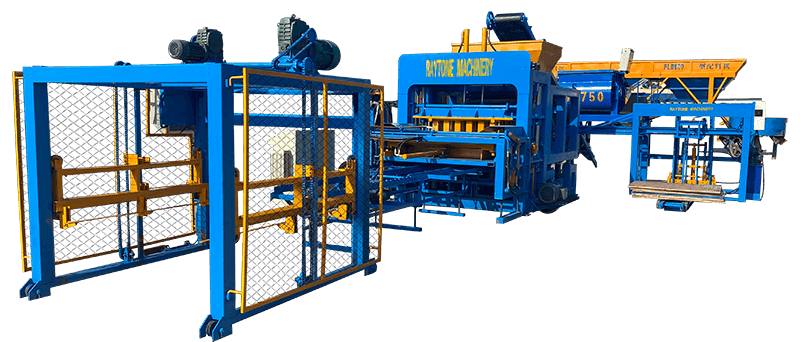






Unreliable electricity supply costs African block producers an estimated 20-30% of potential output through production downtime and generator fuel expenses. If you’re operating in areas with unstable power grids or completely off-grid locations, diesel-powered block machines eliminate your dependency on electrical infrastructure while maintaining consistent production capacity.
This guide covers diesel block machine operation, real-world performance, fuel consumption economics, and when diesel makes better financial sense than electric alternatives.
What Is a Diesel Block Making Machine?
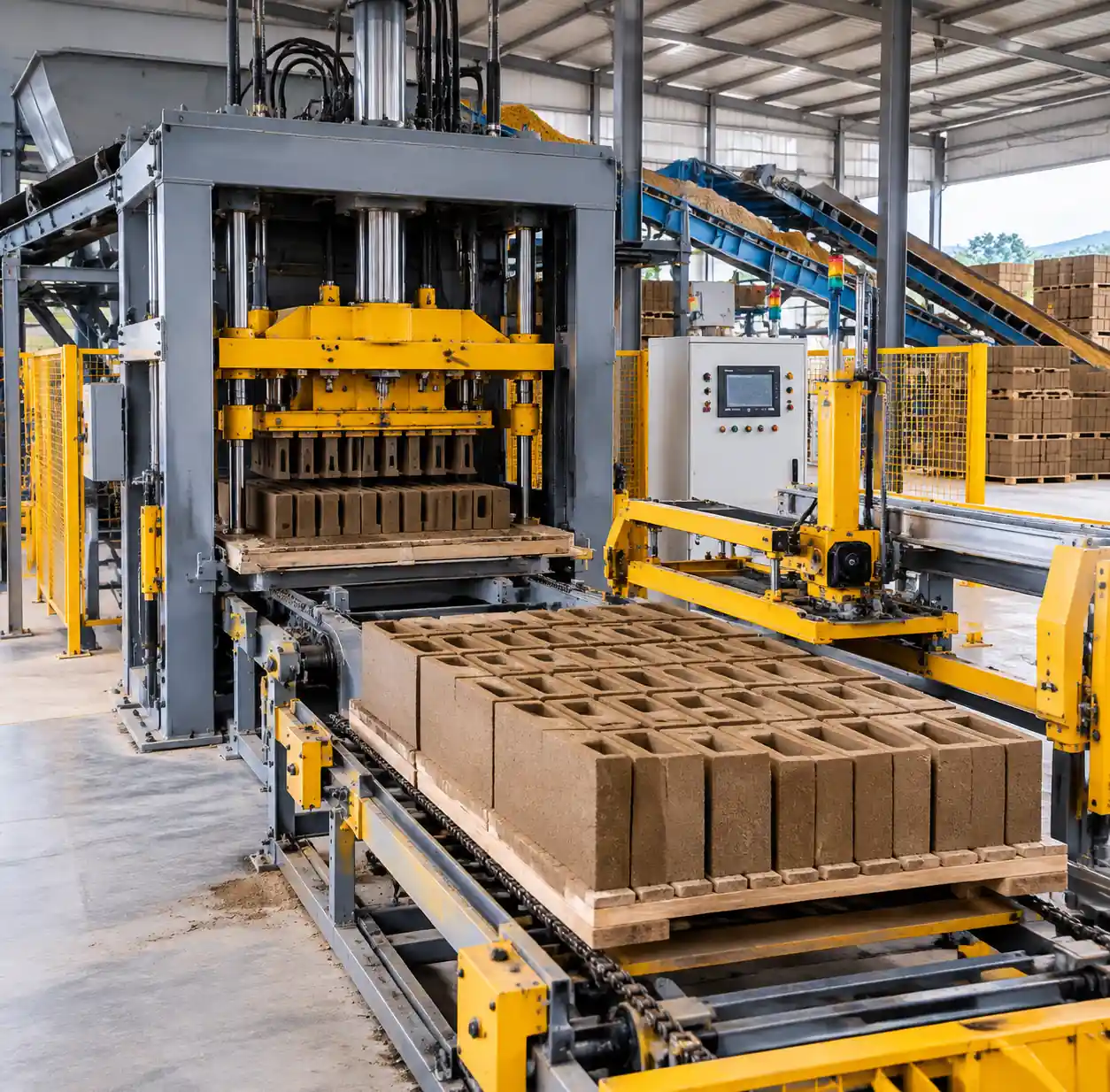
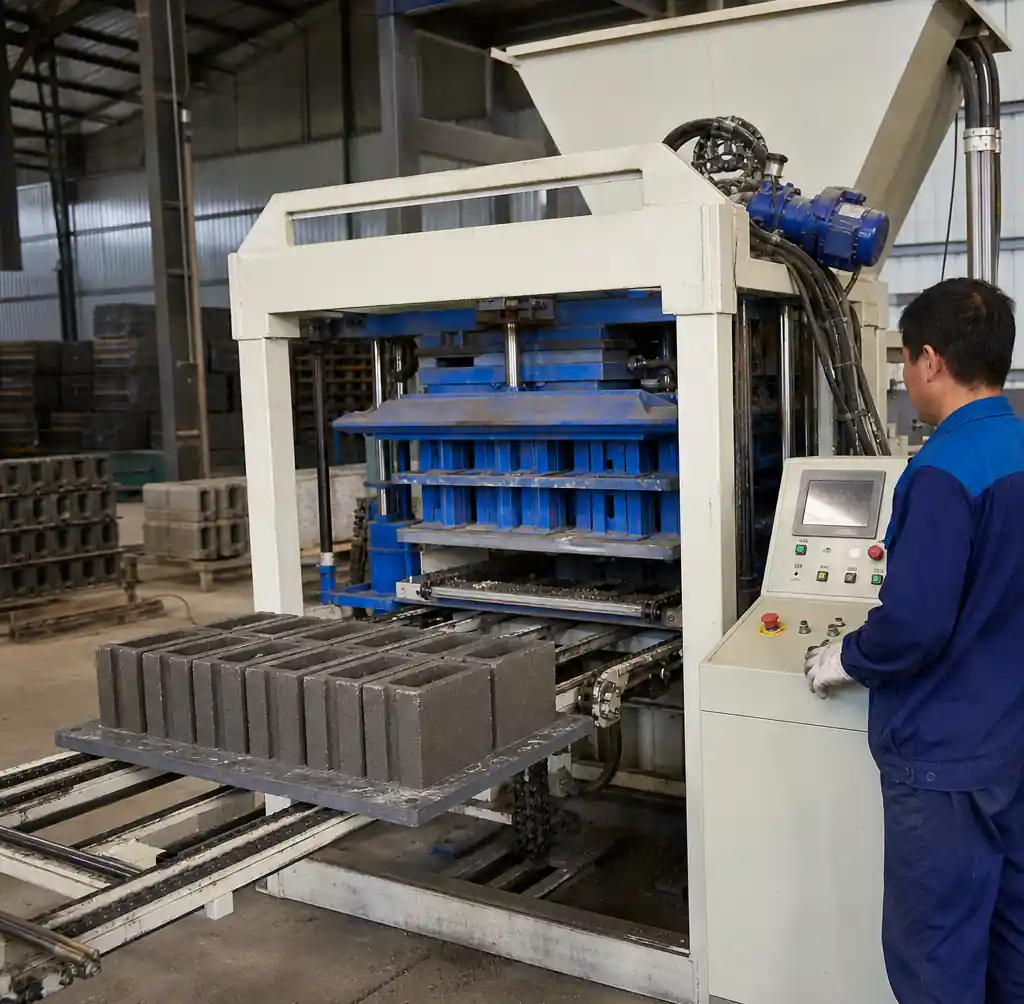
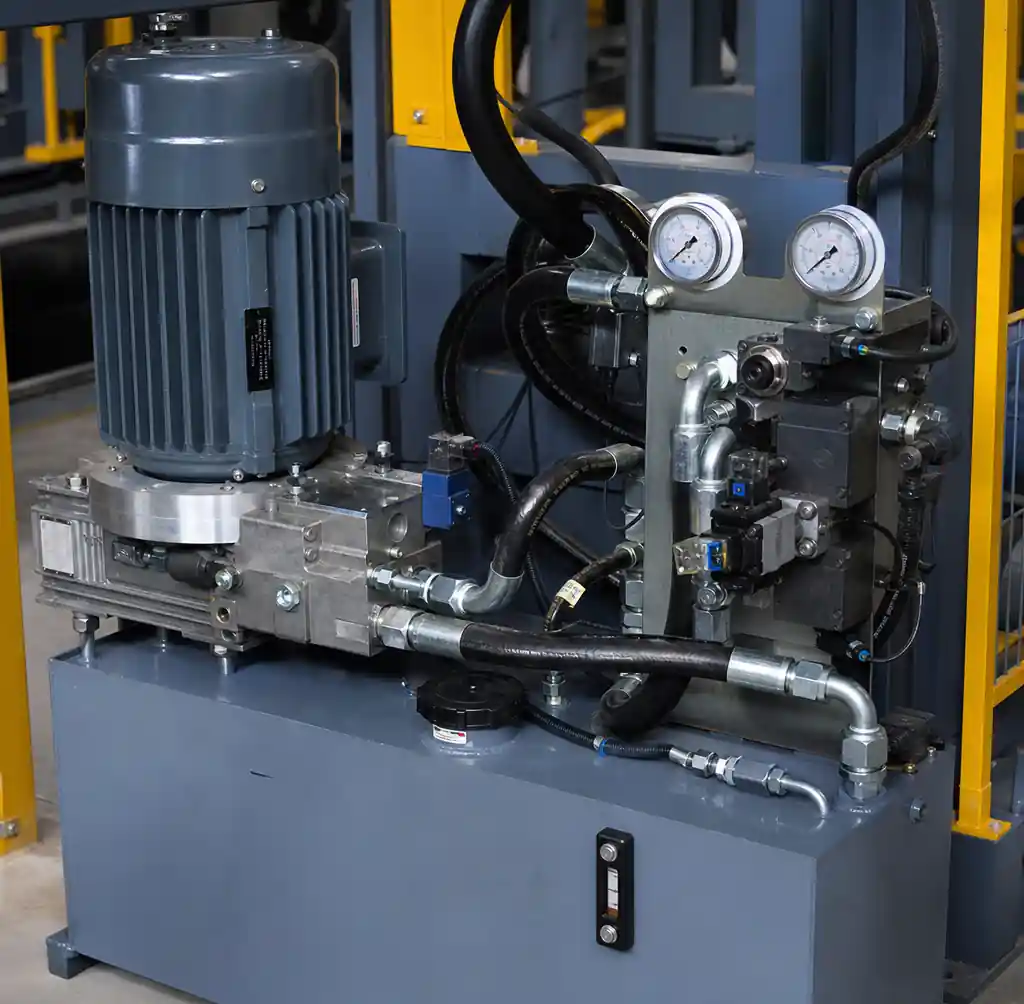
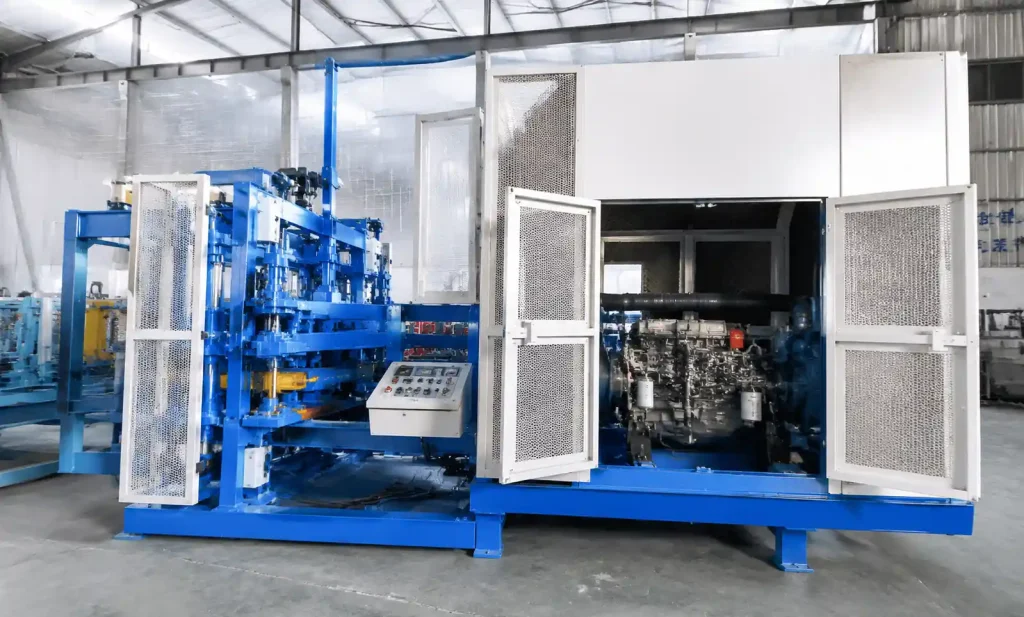
A diesel block making machine is a hydraulic concrete block production system powered directly by a diesel engine rather than electric motors. The diesel engine drives the hydraulic pump that generates pressure for block molding, vibration systems, and material distribution mechanisms.
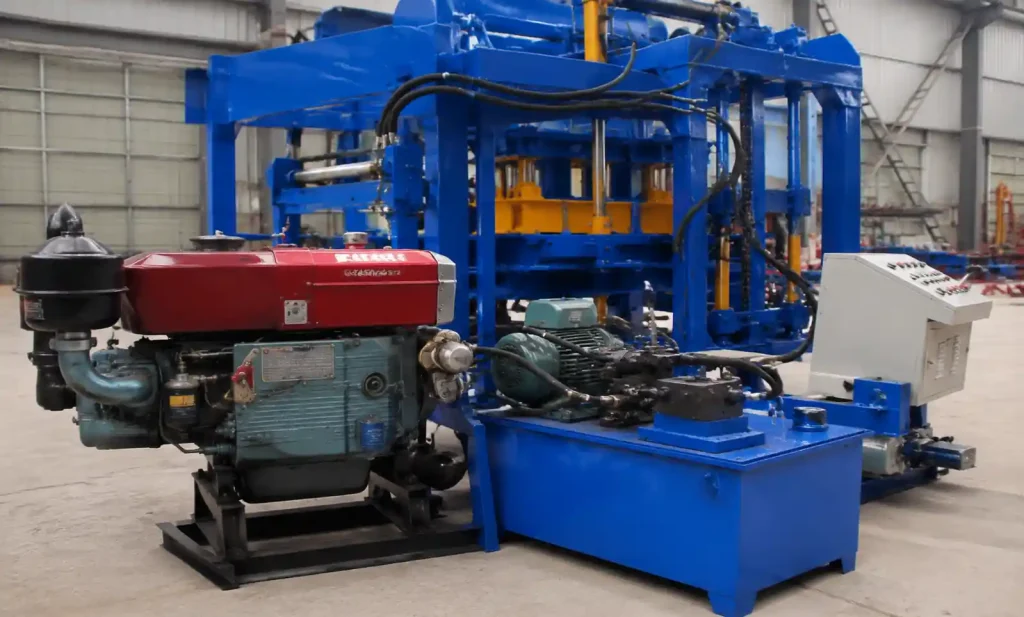
These machines operate independently from electrical grids, making them suitable for remote construction sites, rural areas with unreliable power supply, and mobile production operations. The QTJ4-30 diesel model produces 2,880-3,600 hollow blocks per 8-hour shift using a 13.34 kW diesel engine with 3-4 liters per hour fuel consumption.
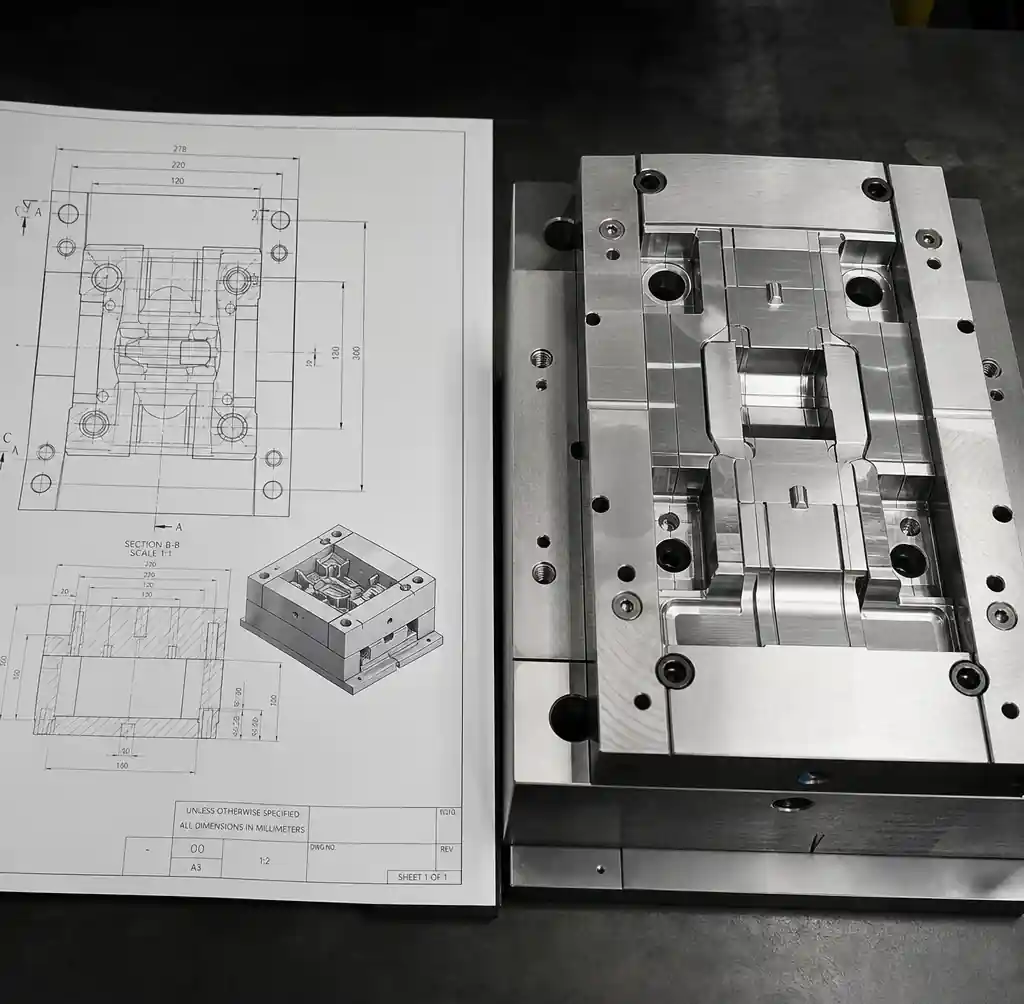
You can use diesel block machines for standard hollow blocks, solid bricks, pavers, and interlocking blocks by changing molds.
Diesel vs Electric Block Machines
| Особенность | Машина для производства дизельных блоков | Electric Block Machine |
|---|---|---|
| Power Source | Diesel engine (13-20 kW) | Electric motor (11-23 kW) |
| Grid Dependency | Fully independent | Requires stable 3-phase power |
| Fuel/Energy Cost | $3-5 per hour (diesel) | $2-3 per hour (electricity) |
| Startup Time | 2-3 minutes warm-up | Instant operation |
| Mobility | High – relocate between sites | Limited – requires power hookup |
| Maintenance | Engine servicing every 250 hours | Motor maintenance every 1,000 hours |
| Production Consistency | Stable in any location | Affected by voltage fluctuations |
| Initial Cost | $7,000-10,000 | $5,000-8,000 (comparable models) |
Diesel machines excel when grid electricity is unavailable, unreliable, or expensive to access. Electric machines offer lower operating costs in areas with stable, affordable power.
Key Advantages of Diesel-Powered Production
Complete Grid Independence: Diesel machines eliminate electrical infrastructure requirements entirely. You can operate where grid connection would cost $5,000-15,000 for transformer installation and power line extensions. Remote quarry sites, rural construction projects, and temporary production facilities benefit from this independence.
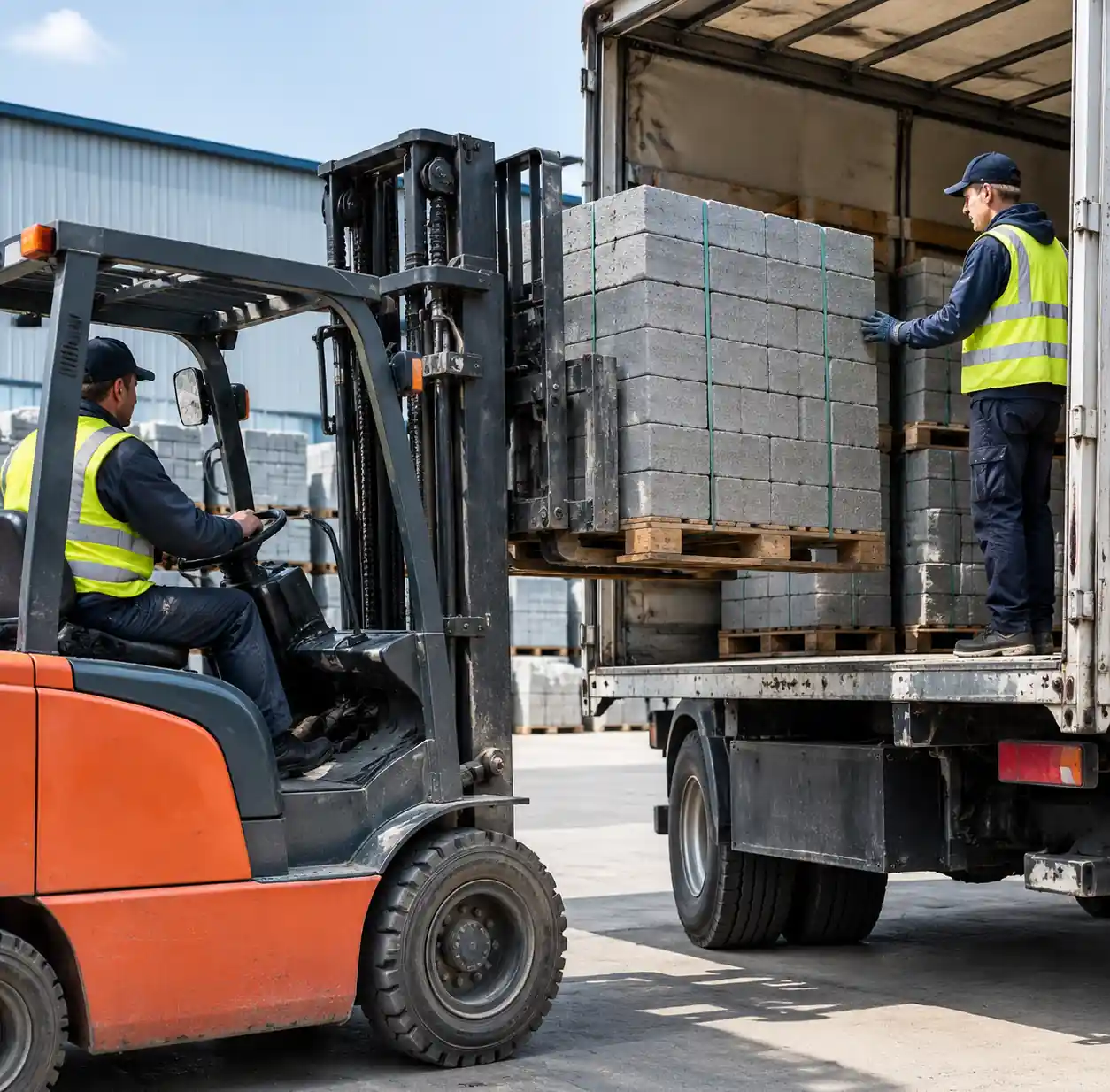
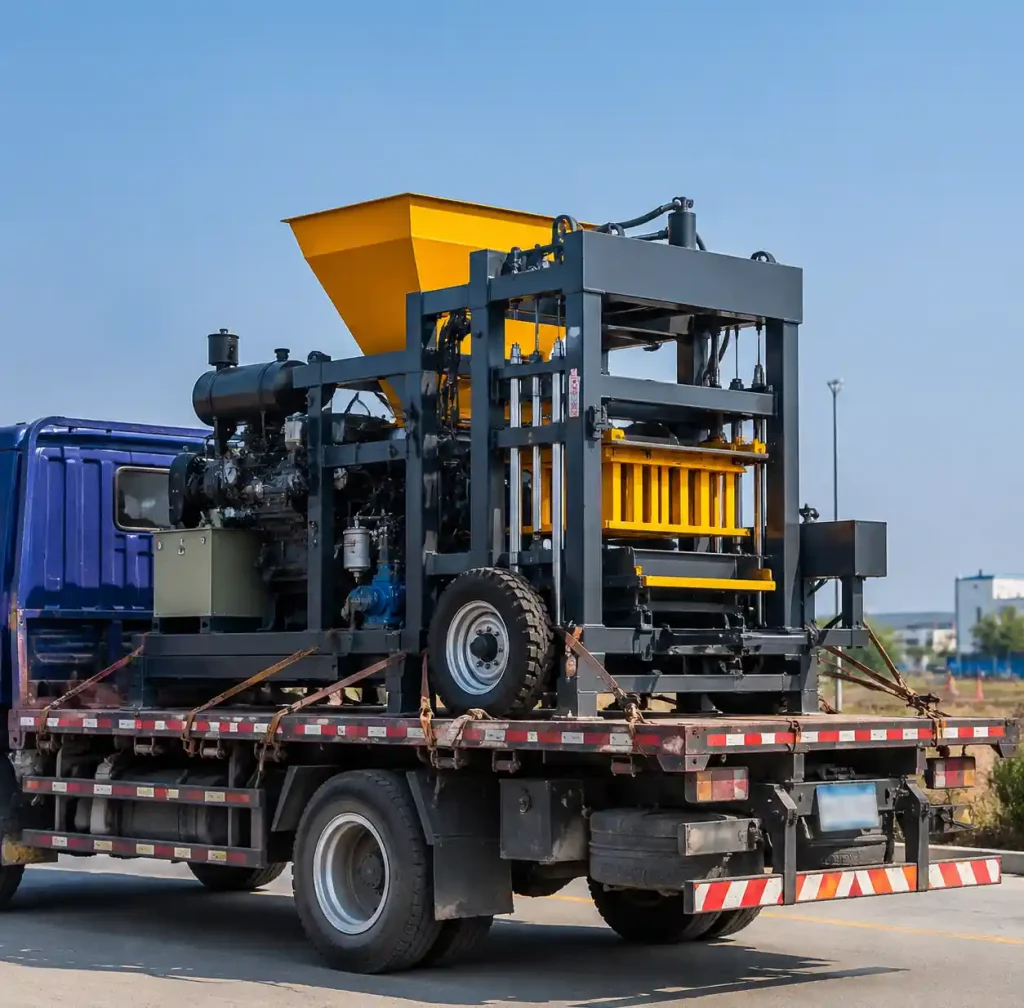
True Mobility: The QTJ4-30 weighs 1,500 kg and fits on standard flatbed trucks for transport between project sites. You can produce blocks directly at construction locations, eliminating transportation costs of $15-25 per truckload.
Consistent Power Output: Diesel engines deliver constant hydraulic pressure regardless of external conditions. Electric machines in areas with poor power quality experience voltage drops during peak usage hours, reducing vibration force and producing weaker blocks.
Technical Specifications: QTJ4-30 Diesel Model
| Parameter | Технические характеристики |
|---|---|
| Dimensions | 1,440×1,330×1,720 mm |
| Machine Weight | 1,500 kg |
| Diesel Engine Power | 13.34 kW |
| Total System Power | 20.84 kW |
| Hydraulic Pressure | 16-20 MPa |
| Сила вибрации | 30 kN |
| Molding Cycle | 30 seconds |
| Размер поддона | 850×450×20 mm |
| Fuel Consumption | 3-4 liters/hour |
| Daily Fuel Requirement | 24-32 liters (8-hour shift) |
Production Capacity Analysis
| Тип блока | Pieces/Mold | Pieces/Hour | Pieces/8-Hour Shift |
|---|---|---|---|
| Hollow 400×200×200mm | 4 | 288-360 | 2,304-2,880 |
| Hollow 400×150×200mm | 5 | 360-450 | 2,880-3,600 |
| Solid Brick 240×115×50mm | 18 | 1,296-1,620 | 10,368-12,960 |
| Paver 200×100×60mm | 9 | 648-810 | 5,184-6,480 |
The QTJ4-30 produces 2,880 standard hollow blocks per shift with 4 operators, matching the output of manual electric machines while eliminating grid dependency.
Fuel Economics and Operating Costs
Field installations across Ghana, Tanzania, and Kenya show consistent fuel usage of 3.2-3.8 liters per hour under normal production loads, translating to 25-30 liters per 8-hour shift producing 2,500-2,800 blocks.
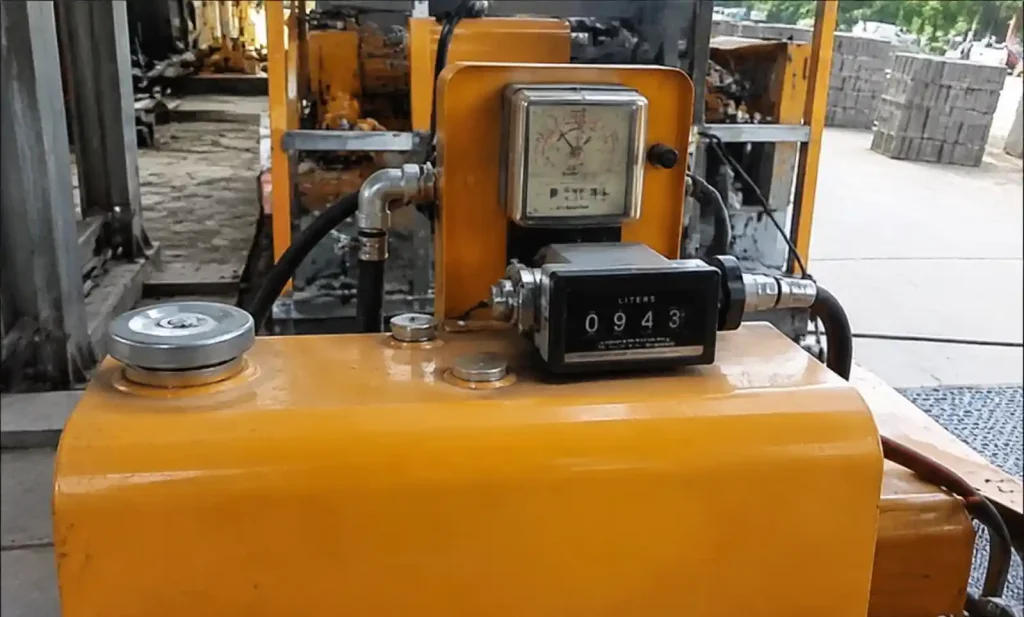
At $1.20-1.50 per liter diesel prices (2026 African market rates), daily fuel costs range from $30-45. Fuel cost per block: $0.012-0.018—a critical metric for pricing decisions.
Operating Cost Comparison: 1,000 Blocks
| Cost Component | Diesel Machine | Electric Machine (Grid) | Electric + Generator Backup |
|---|---|---|---|
| Energy/Fuel | $12-18 | $8-10 | $15-22 |
| Labor (4 workers) | $40-60 | $40-60 | $40-60 |
| Maintenance | $3-5 | $2-3 | $4-6 |
| Downtime Cost | $0 (continuous) | $5-15 (outages) | $2-5 |
| Total | $55-83 | $55-88 | $61-93 |
Diesel machines show cost competitiveness with electric systems in areas experiencing regular power disruptions.
When Diesel Power Makes Financial Sense
Off-Grid Locations: If grid connection costs exceed $8,000-12,000, diesel becomes the clear choice. A $3,000 premium for diesel over electric recoups in 8-12 months.
Areas With Unreliable Power: Regions with more than 3 hours of daily outages make diesel economically advantageous. Calculate annual downtime cost: 3 hours daily = 1,095 hours yearly lost production at 350 blocks/hour = 383,250 blocks of lost capacity annually. A diesel machine’s $1,500-2,000 additional annual fuel costs pays for itself in 2-3 months through eliminated outage losses.
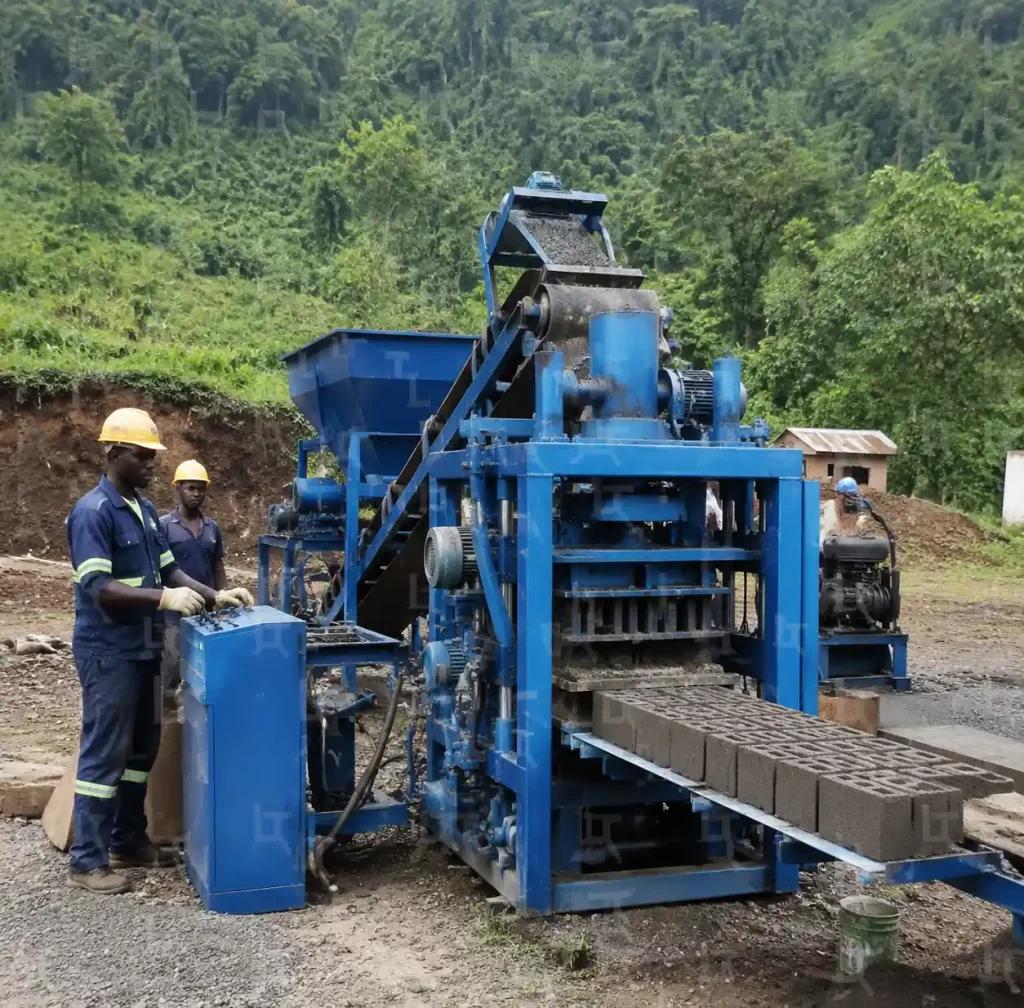
Mobile Production: Contractors moving between sites every 2-4 months find diesel machines essential. Setup time at new locations takes 2-3 hours versus 1-2 weeks waiting for temporary power installations.
Maintenance Requirements
Daily (10 minutes):
- Check engine oil level
- Inspect fuel lines for leaks
- Verify hydraulic fluid levels
- Clean air filter
250-Hour Service (Every 4-5 weeks):
- Engine oil and filter change
- Fuel filter replacement
- Check drive belt tension
- Inspect hydraulic hoses
- Lubricate moving parts
1,000-Hour Major Service (Every 4-5 months):
- Complete engine tune-up
- Valve clearance adjustment
- Injector inspection
- Hydraulic system filter replacement
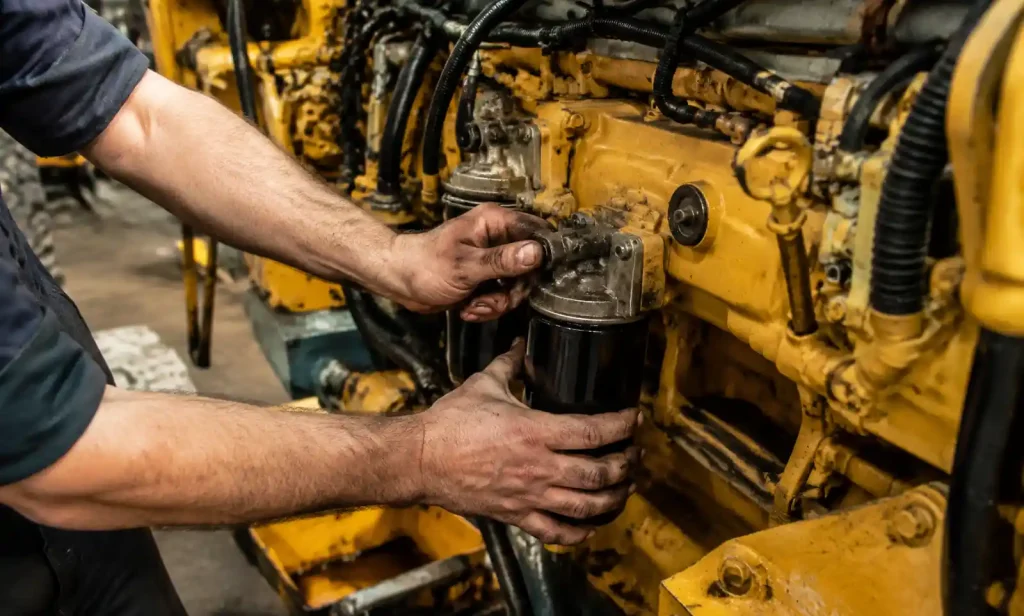
Budget $150-250 per 1,000 hours for routine maintenance plus $400-600 for major services.
Combining Diesel With Mobile Production
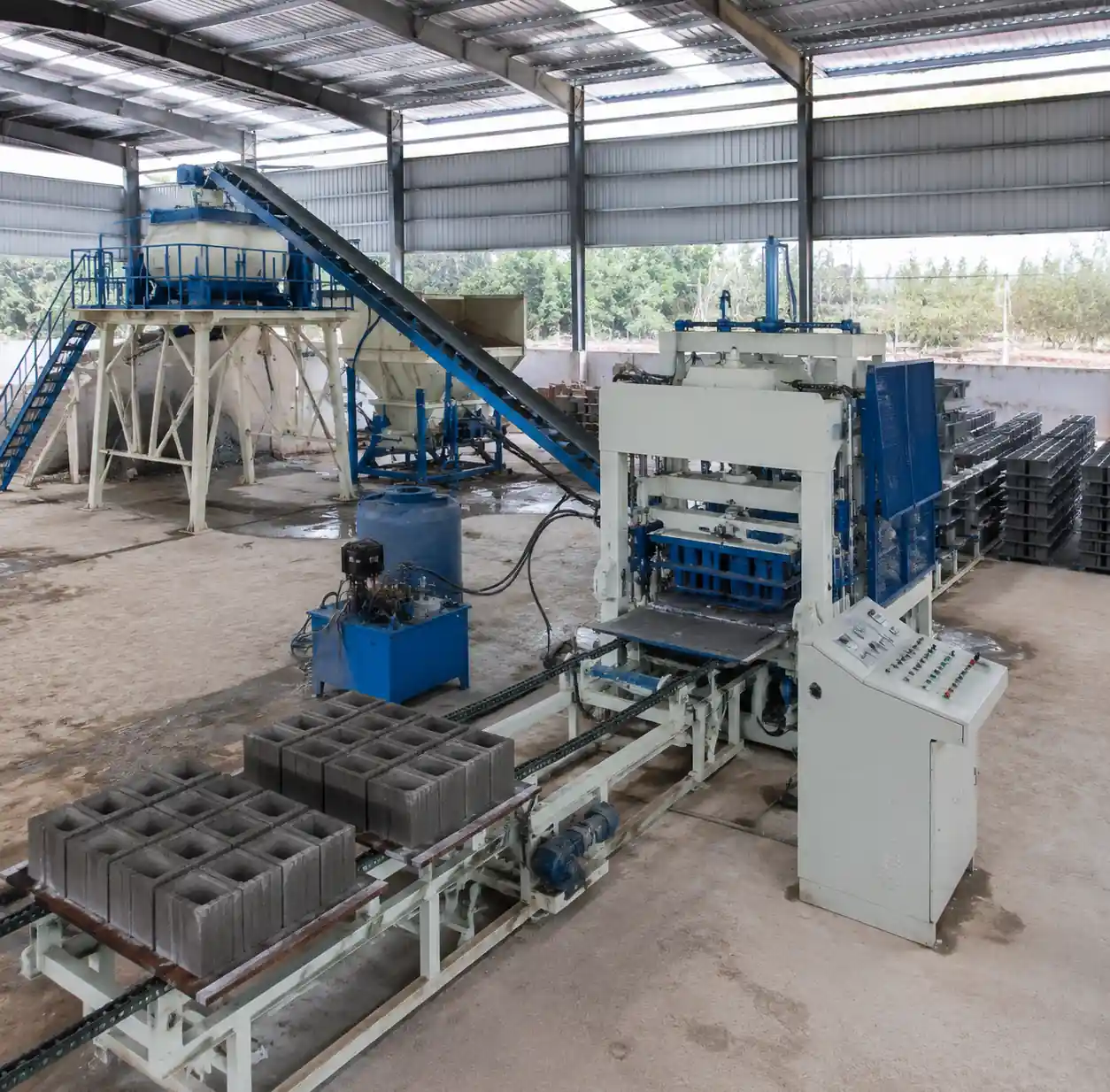
Mobile egg layer machines like the QTM6-25 and QT4-45B operate directly on prepared ground without pallets, producing blocks in place as the machine moves along the production area. These systems work perfectly with diesel power for maximum mobility.
The QTM6-25 diesel-electric hybrid uses a 12 kW power system to produce 8,000-10,000 blocks daily. You eliminate pallet costs entirely—saving $2-3 per square meter of production capacity.
Diesel Machine Selection Criteria
Small-scale (2,000-4,000 blocks daily): QTJ4-30 stationary diesel machine. Investment under $10,000, fuel $30-45 daily.
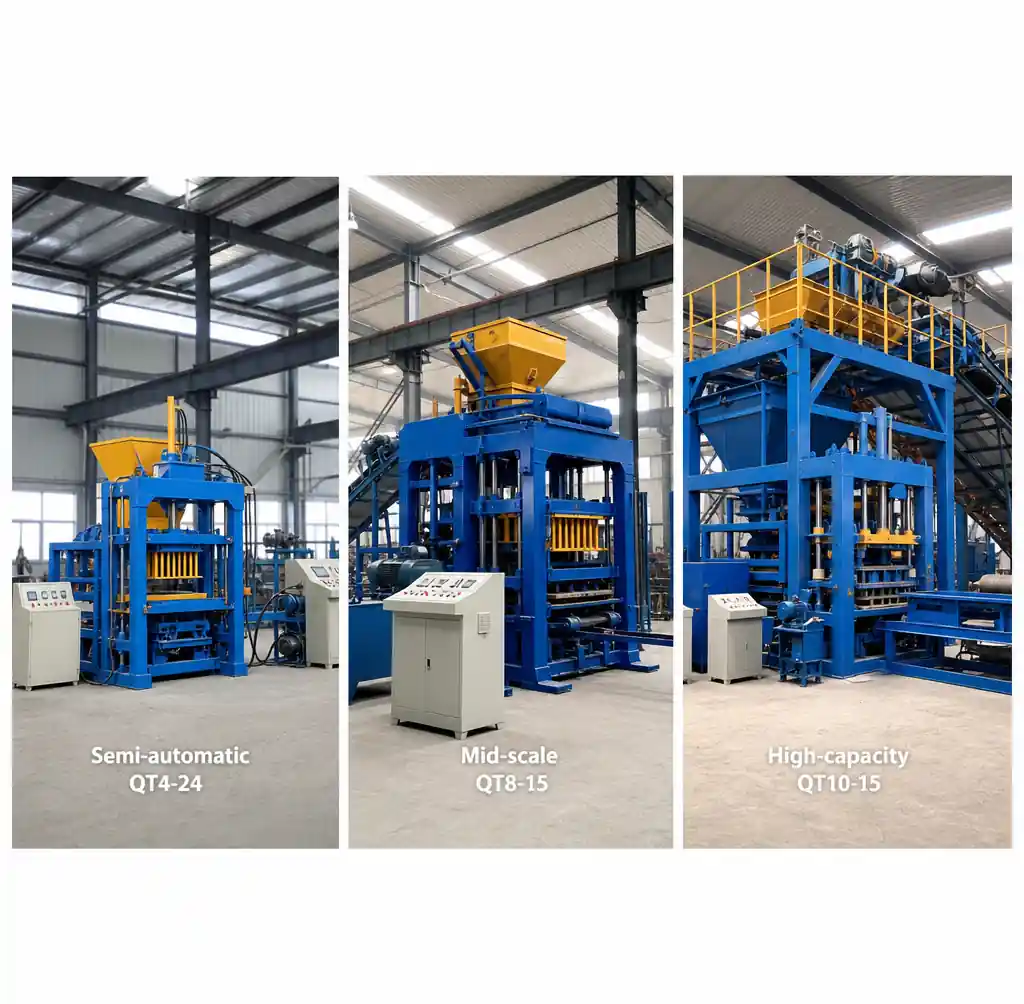
Medium-scale (5,000-8,000 blocks daily): Mobile diesel systems like QTM6-25. Cost $7,000-9,000, eliminates pallet expenses and enables flexible site deployment.
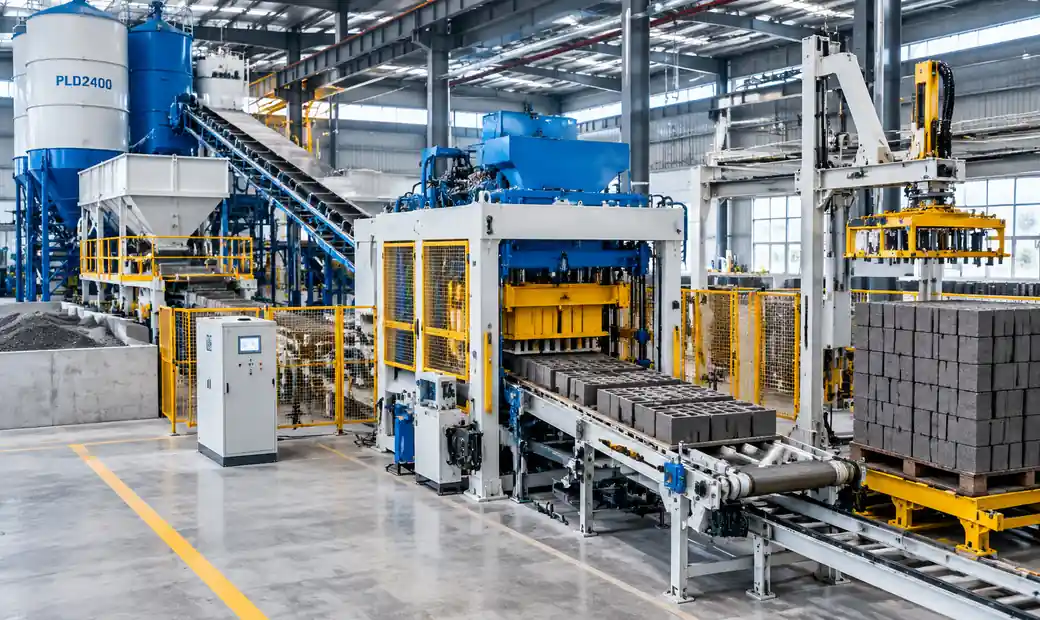
High-volume (10,000+ blocks daily): Diesel generators powering automatic electric lines. A 75 kW generator ($15,000-20,000) can power a QT4-26 automatic line producing 7,680 blocks per shift with better fuel efficiency.
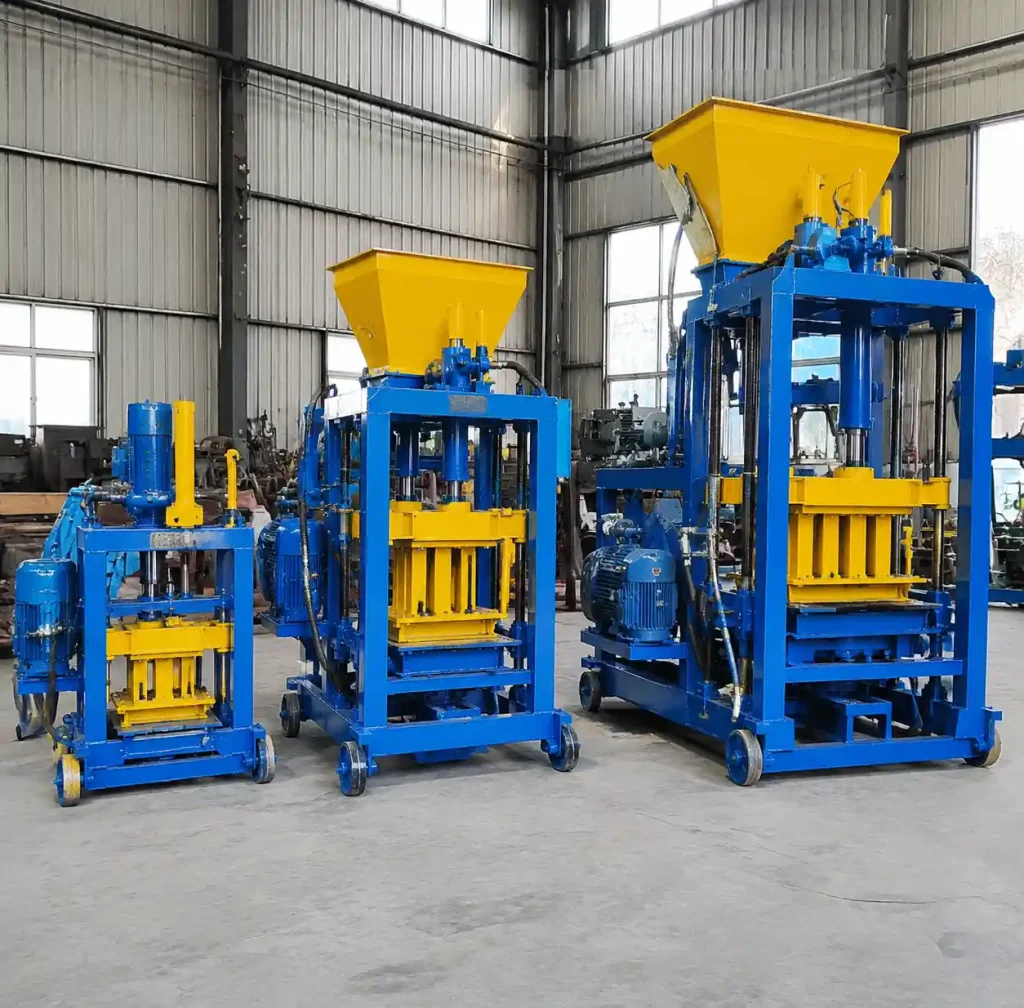
Environmental Considerations
Diesel engines produce particulate matter, nitrogen oxides, and CO₂. A QTJ4-30 running 2,000 hours annually emits approximately 6-8 tons of CO₂. Modern Tier 3/4 engines reduce particulate emissions by 60-80%. Diesel engines generate 85-95 dB noise—install acoustic enclosures ($300-600) to reduce to 75-85 dB if operating near residential zones.
Financing and Total Cost of Ownership
| Пункт | Cost Range |
|---|---|
| QTJ4-30 Diesel Machine | $7,000-10,000 |
| Shipping to Africa | $800-1,500 |
| Customs Duty | $500-1,200 |
| JQ350 Concrete Mixer | $1,200-1,800 |
| Molds (4 types) | $800-1,200 |
| Steel Pallets (100 pcs) | $600-900 |
| Tools & Accessories | $300-500 |
| Total | $11,200-17,100 |
5-Year Total Cost of Ownership (2,000 hours/year):
Diesel: Initial $11,200-17,100 + Fuel $47,250 + Maintenance $2,500-3,500 = $61,000-68,000
Electric + Generator: Initial $13,000-20,000 + Grid $24,000-32,000 + Generator fuel $8,000-12,000 + Maintenance $1,800-2,500 = $46,800-66,500
Electric shows slight advantage with reliable grids, but diesel proves competitive and superior when factoring downtime elimination and infrastructure savings.
Часто задаваемые вопросы
How much fuel does a diesel block machine use per day?
25-30 liters per 8-hour shift producing 2,500-2,800 hollow blocks. Solid brick production increases fuel use by 15-20%.
Can diesel machines match electric production capacity?
Yes. The QTJ4-30 produces 2,880-3,600 blocks per shift, matching comparable electric models. Capacity depends on hydraulic system power, not power source.
What maintenance does a diesel block machine require?
Daily oil/fuel checks; 250-hour oil/filter changes; 1,000-hour tune-ups. Budget $150-250 per 1,000 hours for routine maintenance.
Are diesel machines more expensive than electric?
Initial costs run $2,000-3,000 higher. However, diesel eliminates $5,000-15,000 grid connection costs in remote areas. Operating costs are $0.003-0.005 per block higher.
Can I convert an electric block machine to diesel?
Conversion costs $2,500-4,000—usually more expensive than purchasing a purpose-built diesel machine with proper engineering integration.
Заключение
Diesel block machines deliver power-independent production where electrical infrastructure is unavailable, unreliable, or prohibitively expensive. The QTJ4-30 produces 2,880-3,600 blocks per shift while consuming 25-30 liters of fuel daily, operating completely independent from electrical grids.
Choose diesel when grid connection exceeds $8,000, power outages surpass 3 hours daily, or mobile production drives your operation. Fuel costs of $0.012-0.018 per block remain competitive with grid electricity while eliminating downtime losses.
If you need reliable diesel block machines for off-grid production, Raytone Block Machinery manufactures the QTJ4-30 diesel model with proven field performance across Africa and Asia. Свяжитесь с нами сегодня for specifications and delivered pricing to your location.