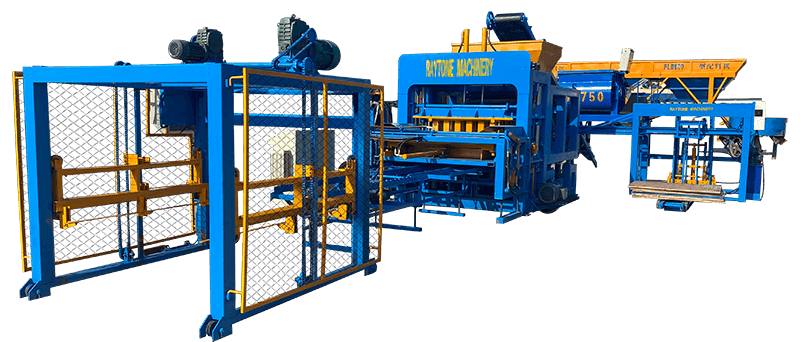






Small construction businesses face a critical decision: which block making machine delivers the right balance of production capacity, initial investment, and return on investment? Industry data shows that 68% of small block manufacturers choose semi-automatic machines in the $8,000-$18,000 range because these systems optimize labor efficiency while maintaining manageable capital requirements.
This guide evaluates the top 5 block making machines for small business operations in 2026, covering production capacity, total cost of ownership, ROI calculations, and model recommendations based on your business goals.
Understanding Block Making Machines for Small Business Scale
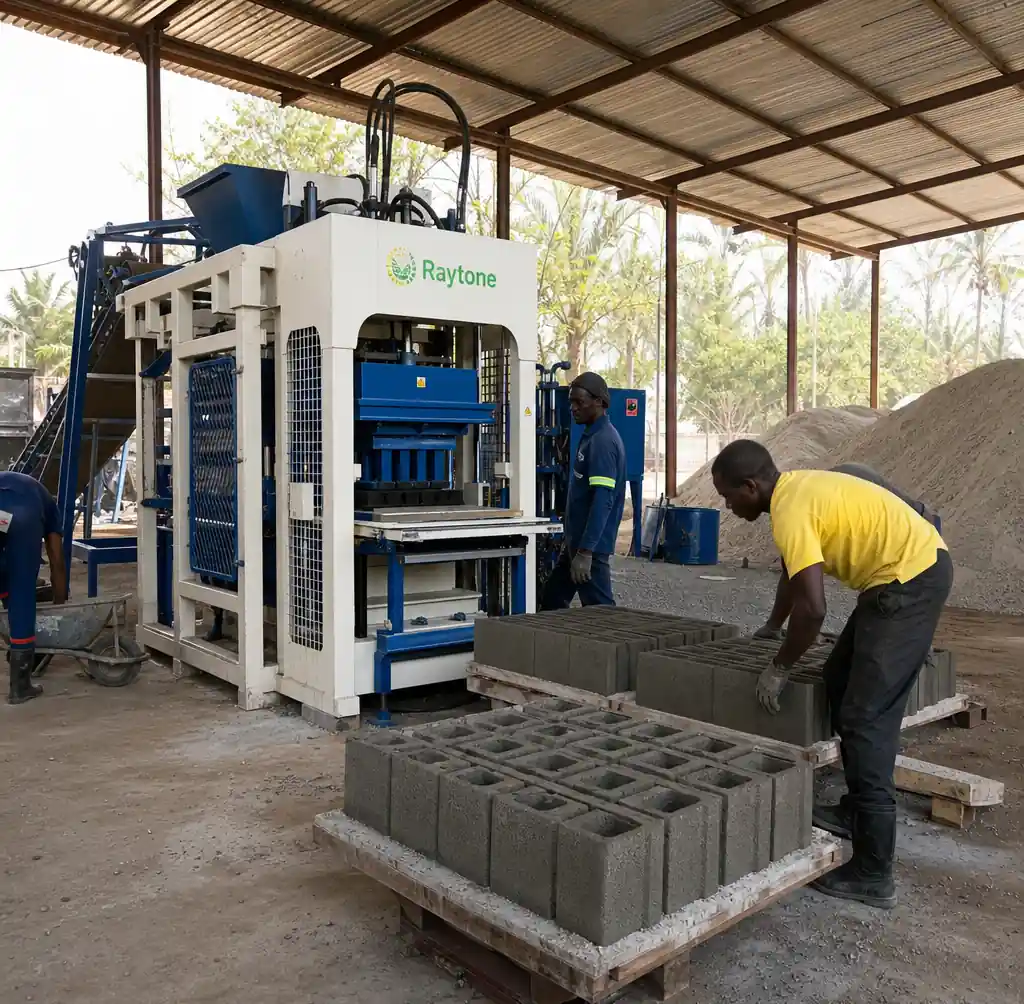
Block making machines convert raw materials into concrete blocks through hydraulic compression and vibration. Small business applications typically require 500-2,500 blocks per day.
Three automation levels exist:
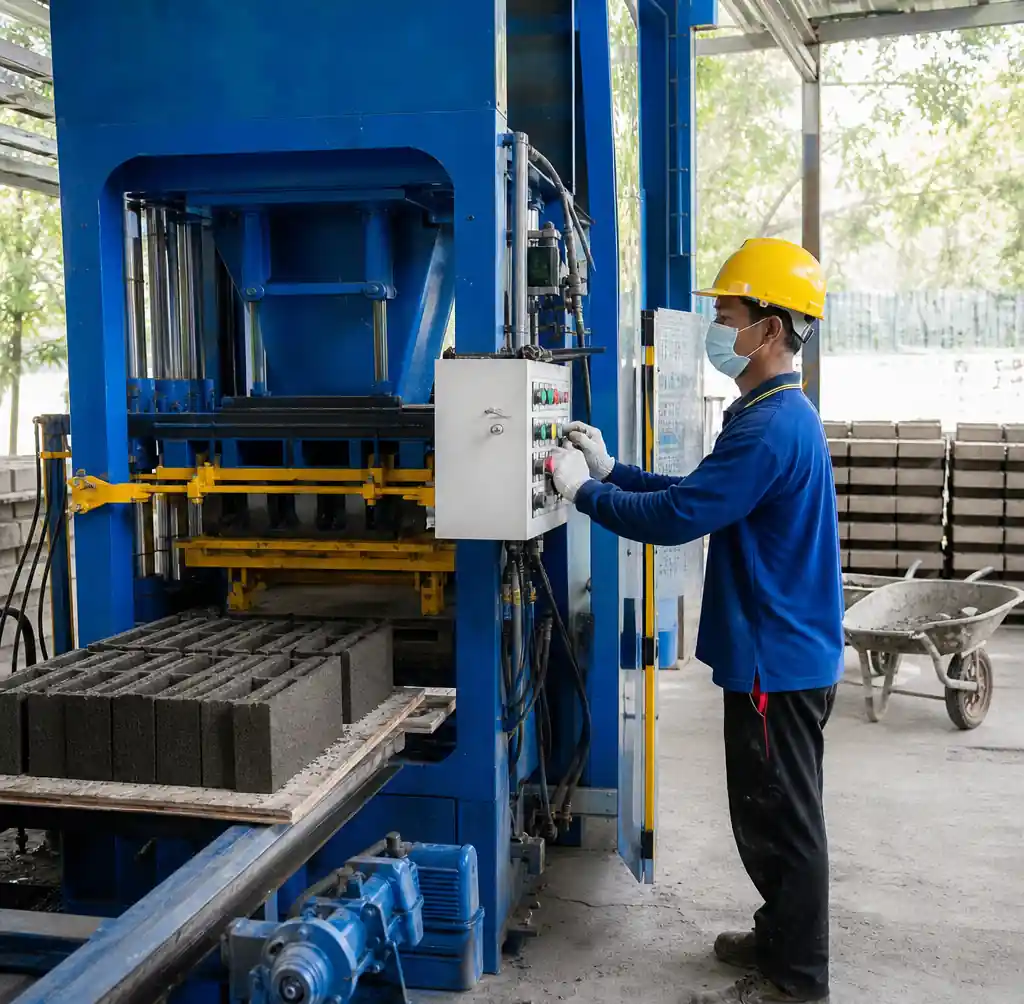
Manual machines require 4-6 operators and produce 500-800 blocks per 8-hour shift. Investment: $3,000-$8,000. Suit micro-businesses testing market viability.
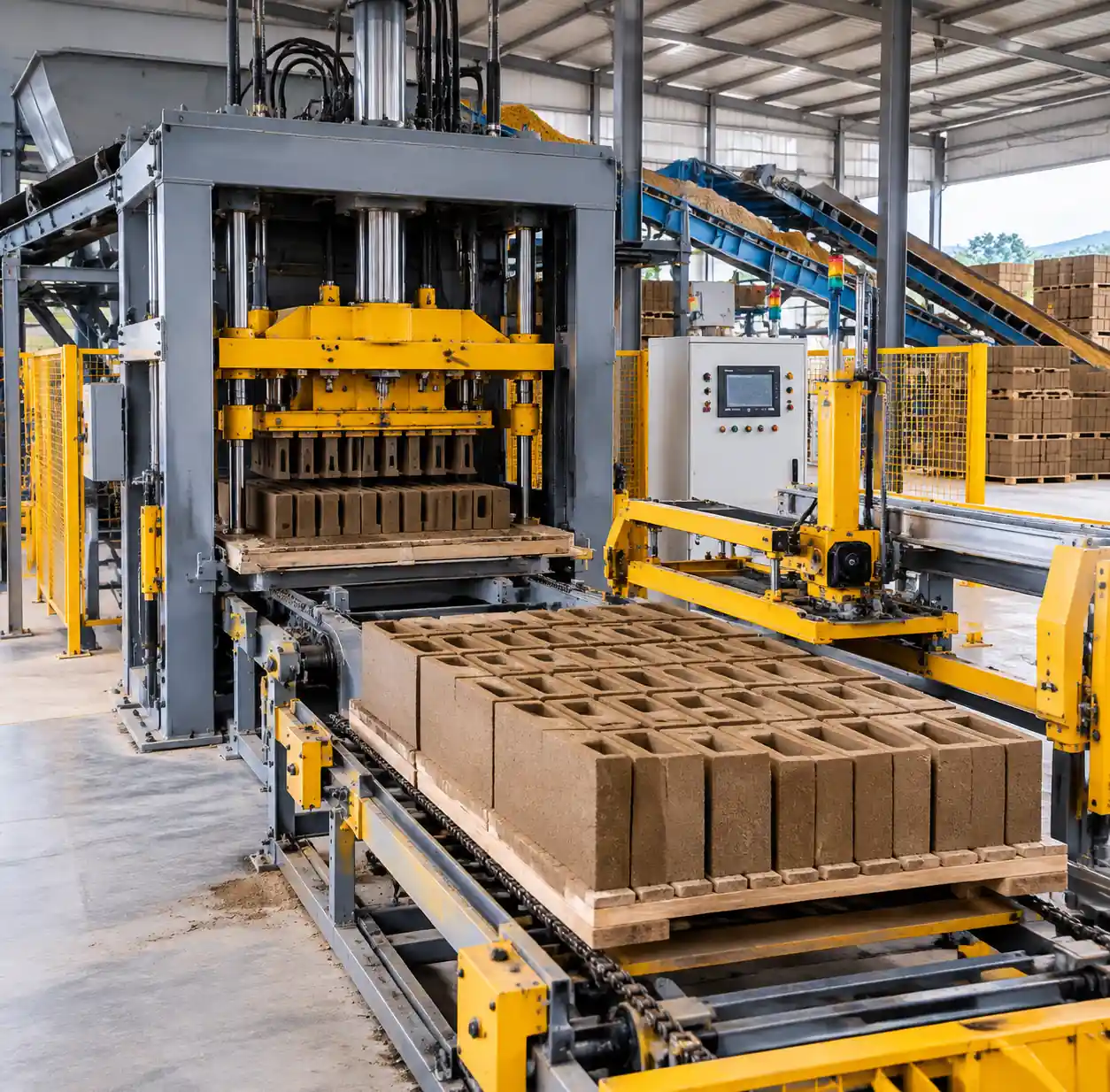
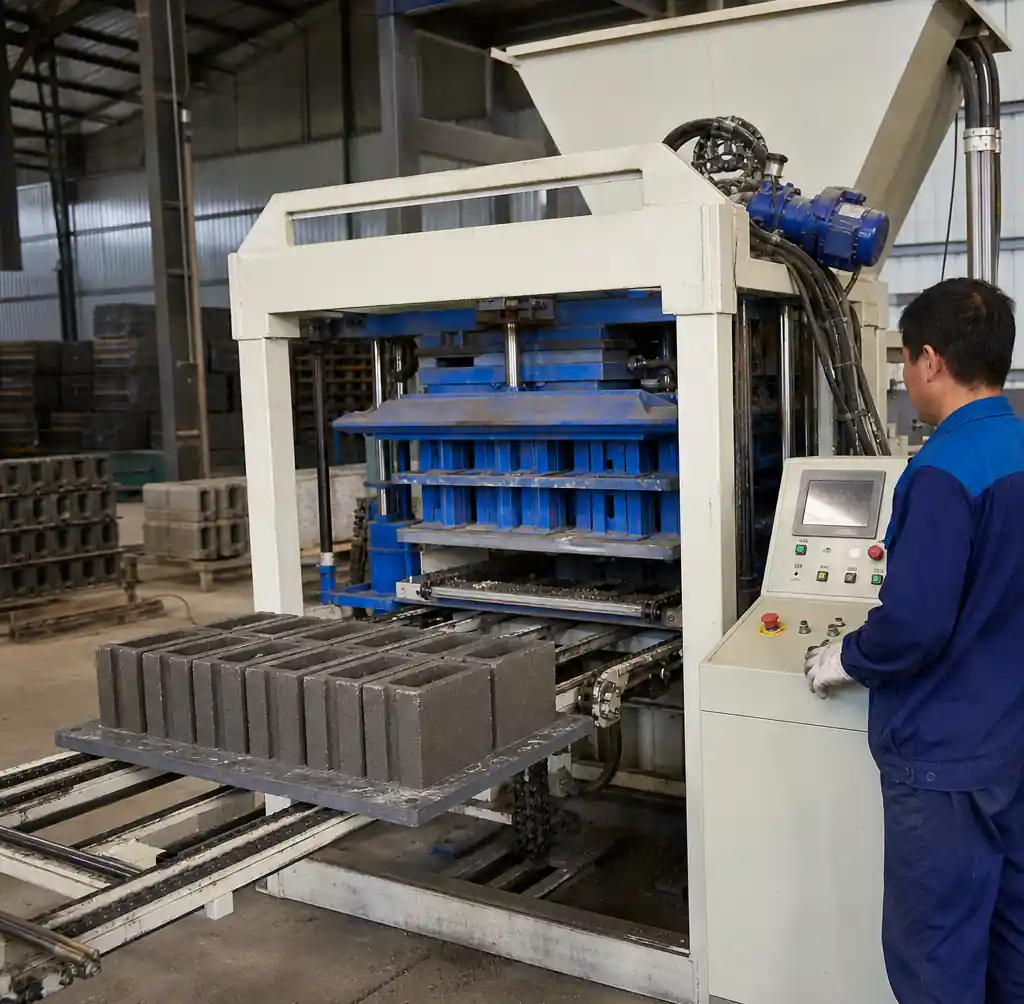
Semi-automatic machines balance automation with affordability. 2-4 operators produce 800-2,000 blocks per shift. Investment: $8,000-$18,000. Dominates small business installations with 12-18 month ROI.
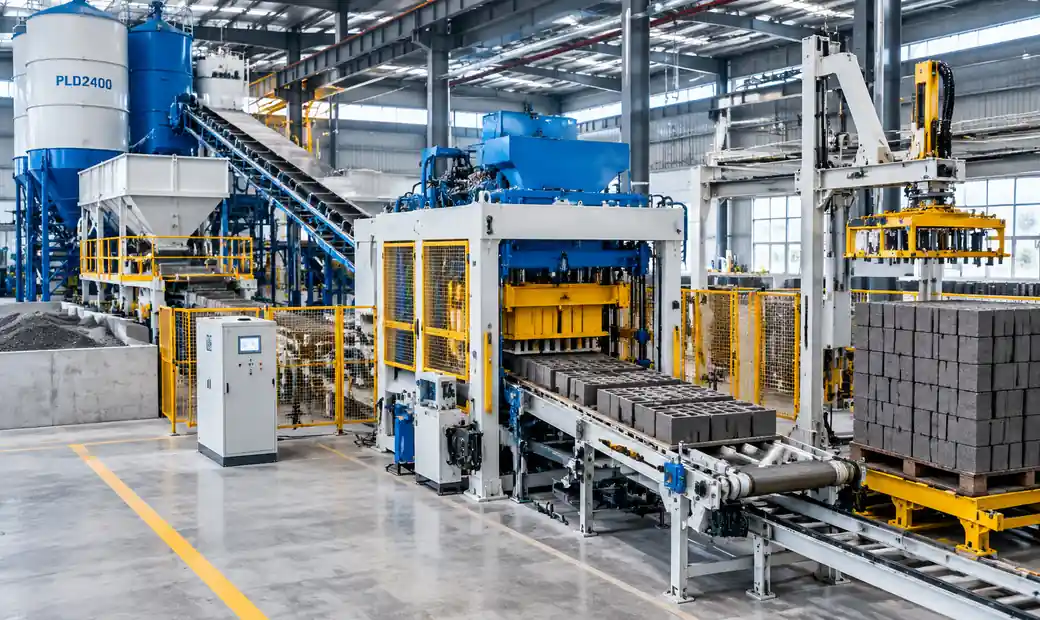
Entry-level automatic machines offer PLC control and higher throughput (1,500-2,500 blocks/shift) with 2-3 operators. Investment: $18,000-$30,000. Targets businesses with established demand.
Key Selection Criteria
Production Capacity: Calculate daily requirements based on confirmed orders plus 15-20% buffer. Select machines rated 20-30% above baseline.
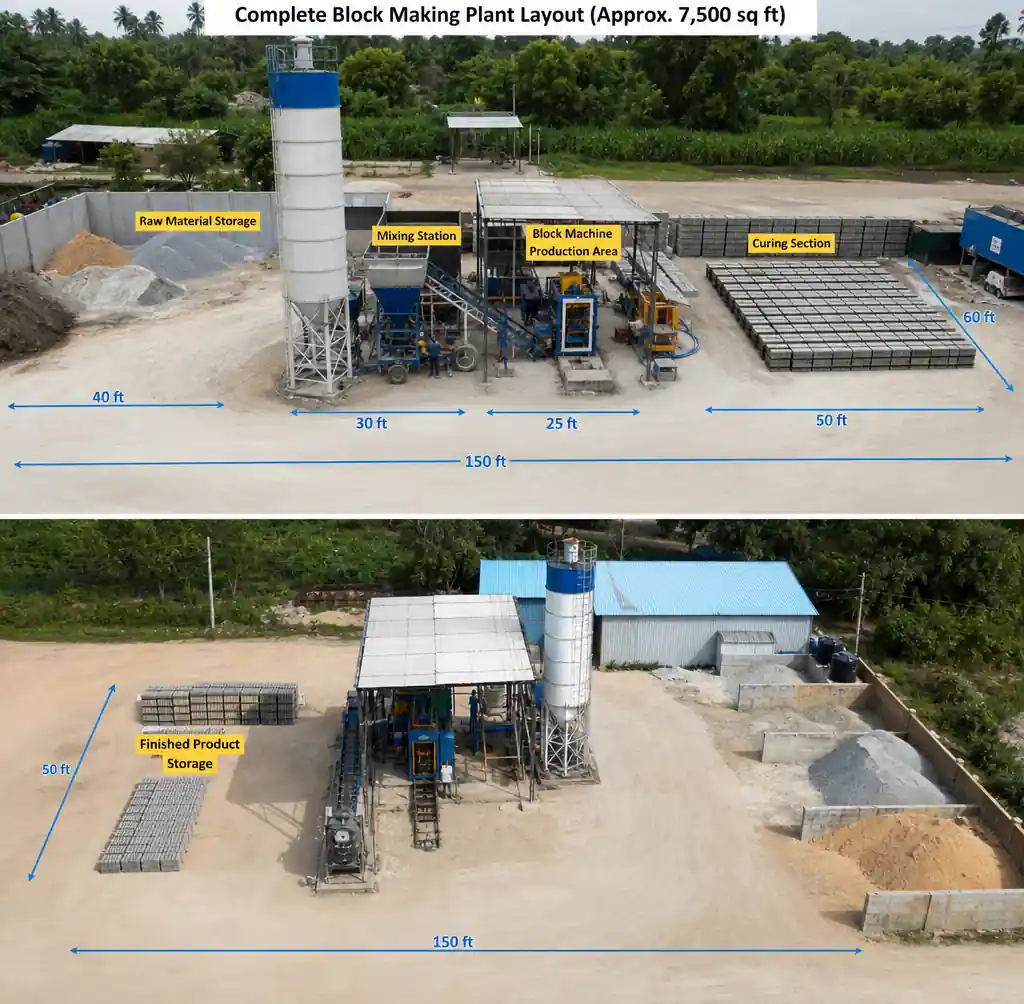
Budget: Total investment extends beyond machine price. Equipment cost: 50-60%; raw material storage: 10-15%; curing area: 10-15%; working capital: 15-20%; installation: 5%. A $12,000 machine requires $20,000-$24,000 total.
Space: Manual/semi-auto need 800-1,200 sq ft production area plus 2,000-3,000 sq ft storage and 3,000-5,000 sq ft curing. Total: 6,000-9,000 sq ft minimum.
Support: Prioritize manufacturers with regional dealer networks. Raytone Block Machinery maintains regional service centers with 48-hour parts delivery.
Top 5 Block Making Machines
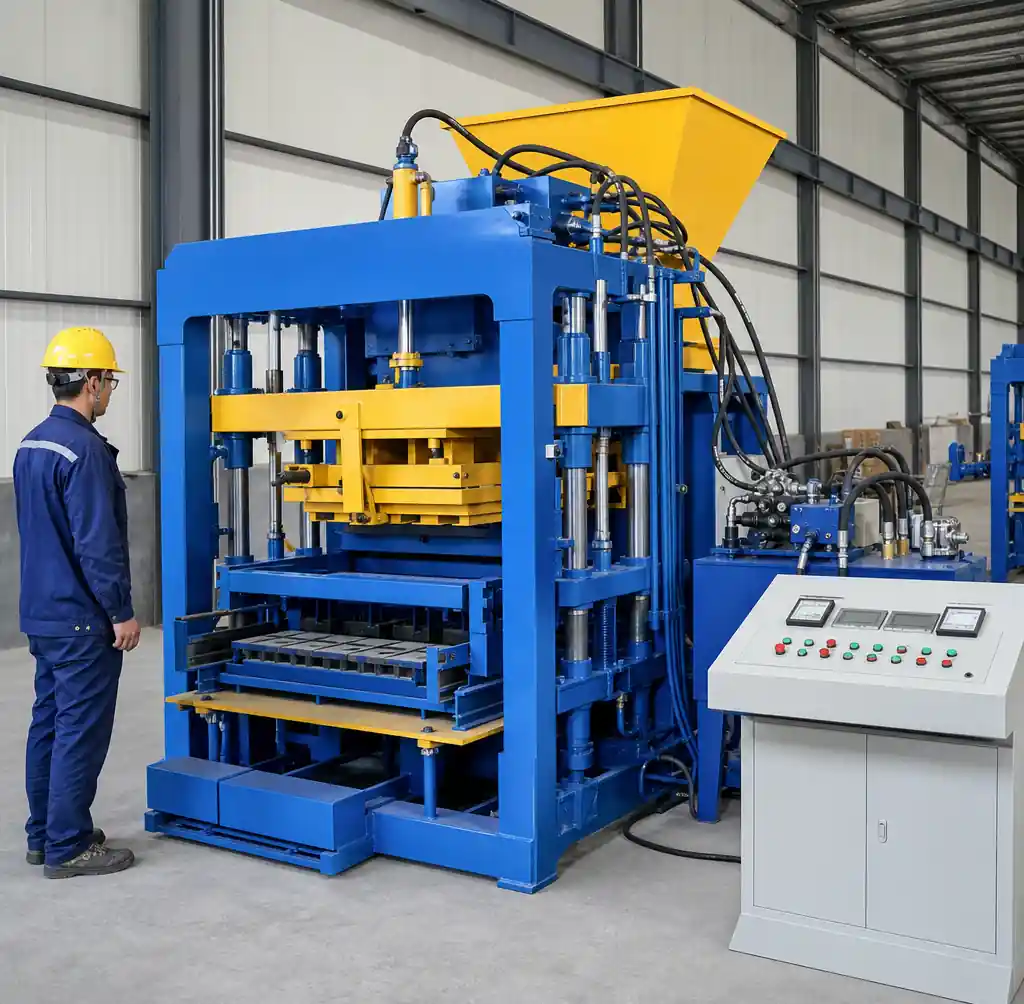
Model #1: QT4-40 Semi-Automatic (Best Overall Value)
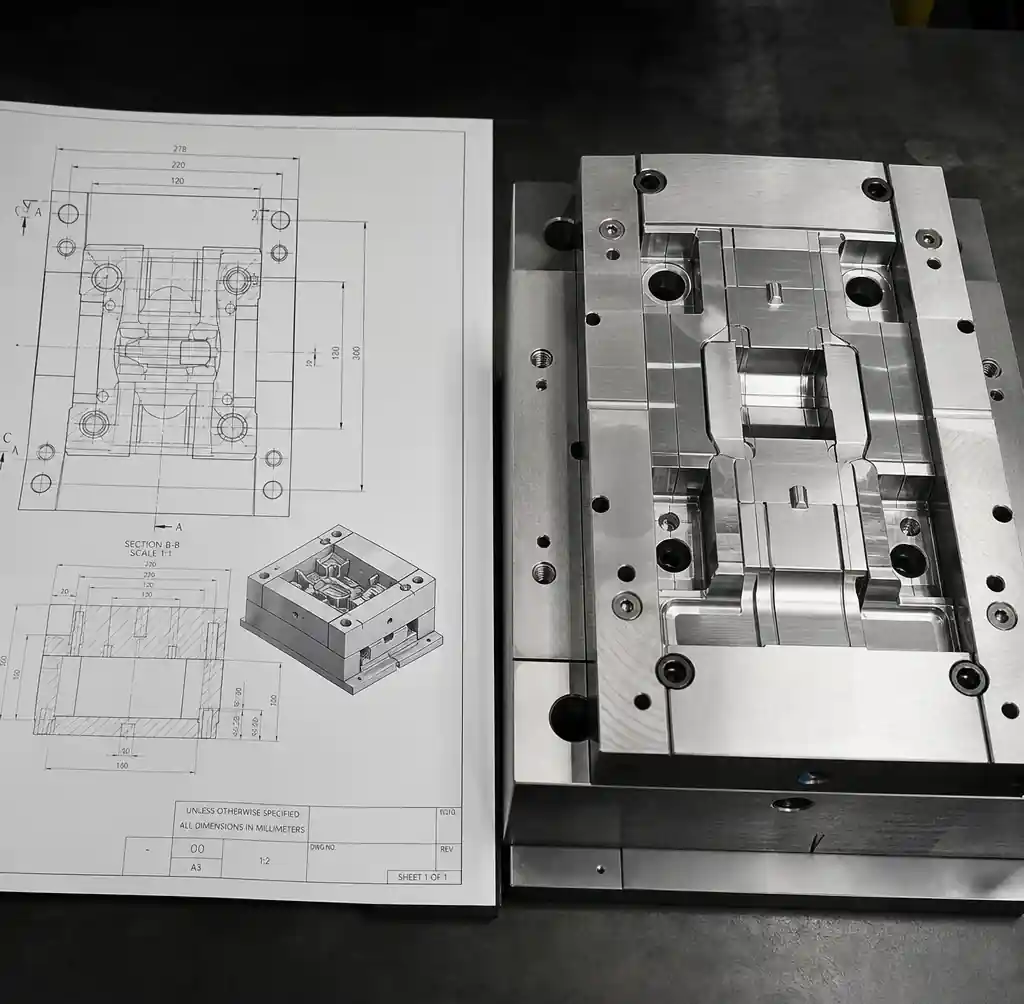
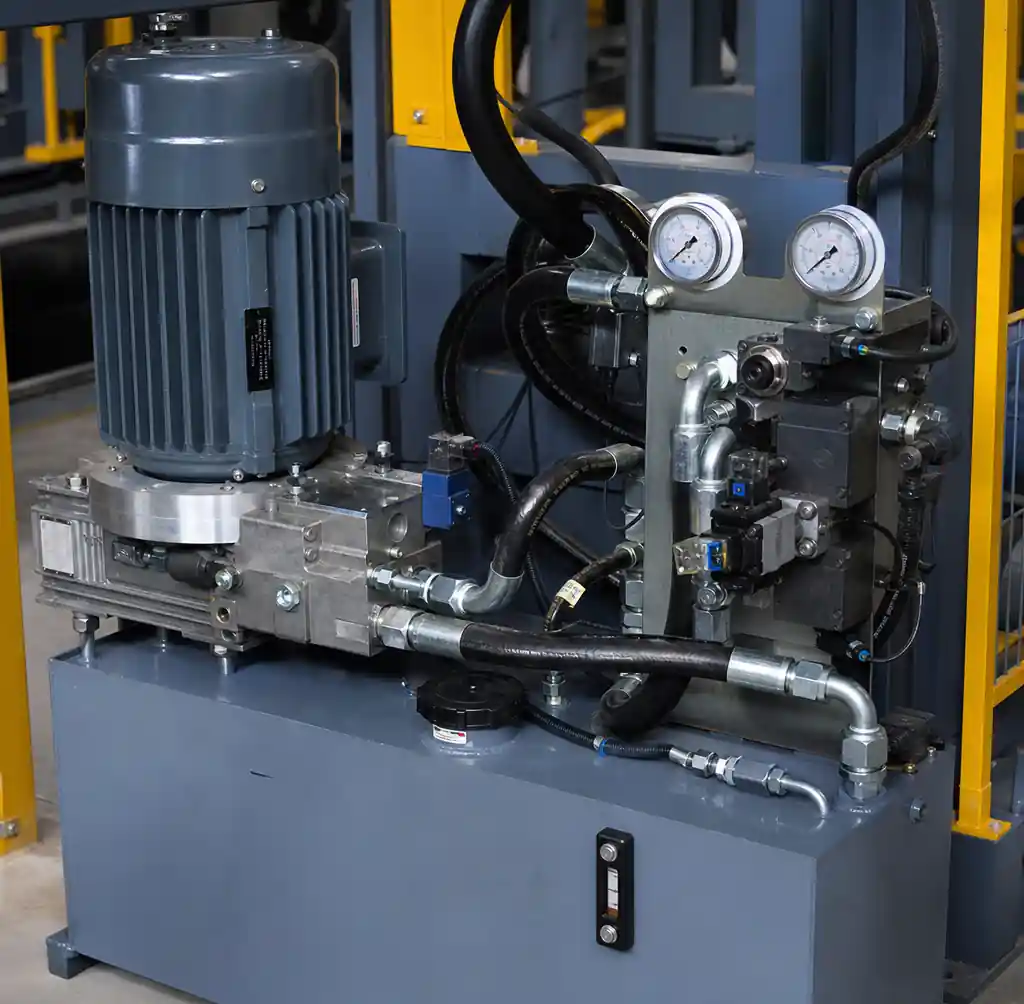
Produces 960-1,440 blocks per 8-hour shift. 15-20 second cycle, 45 KN vibration force, 18.25 kW power. Operates with 3-4 workers. Yuken hydraulic components, Siemens PLC, ±1.5mm accuracy. Quick-change molds enable product switching in 20 minutes.
Investment: $10,500-$12,800 machine + $3,500-$4,200 mixer/batching + $800-$1,200 installation = $14,800-$18,200 total.
At 1,200 blocks daily (300,000/year), $0.35 production cost, $0.60 selling price = $75,000 annual profit. ROI: 16-18 months.
Best For: Established small businesses, contractors diversifying, $20,000-$25,000 capital.
Model #2: QTJ4-26 Mobile (Best for Flexibility)
Mobile egg-laying machine produces blocks on ground without pallets. 800-1,000 blocks per shift, 20-25 second cycle, 38 KN force, 12.5 kW. Diesel option available. Compact: 600-800 sq ft space.
Investment: $8,500-$10,200 electric / $9,800-$11,500 diesel + $1,800-$2,200 mixer = $10,300-$12,400 total.
At 950 blocks daily (237,500/year), $0.22 net profit = $52,250 annual profit. ROI: 14-16 months.
Best For: Contractors on multiple sites, limited space, unreliable power, mobile production.
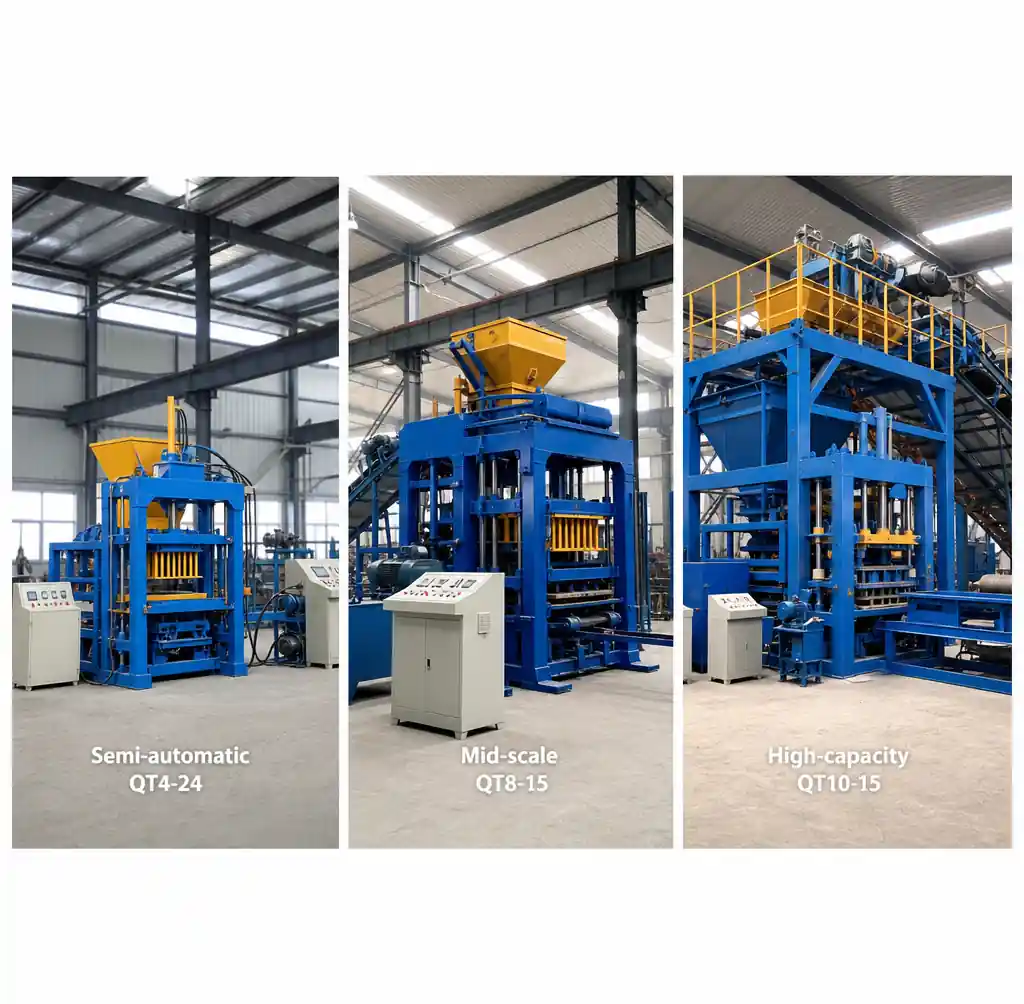
Model #3: QT4-24 Semi-Automatic (Best Budget Option)
Entry-level semi-automatic. 720-960 blocks per shift, 20-25 second cycle, 40 KN force, 15.75 kW. 3 workers minimum. Smaller mold reduces capacity but lowers investment.
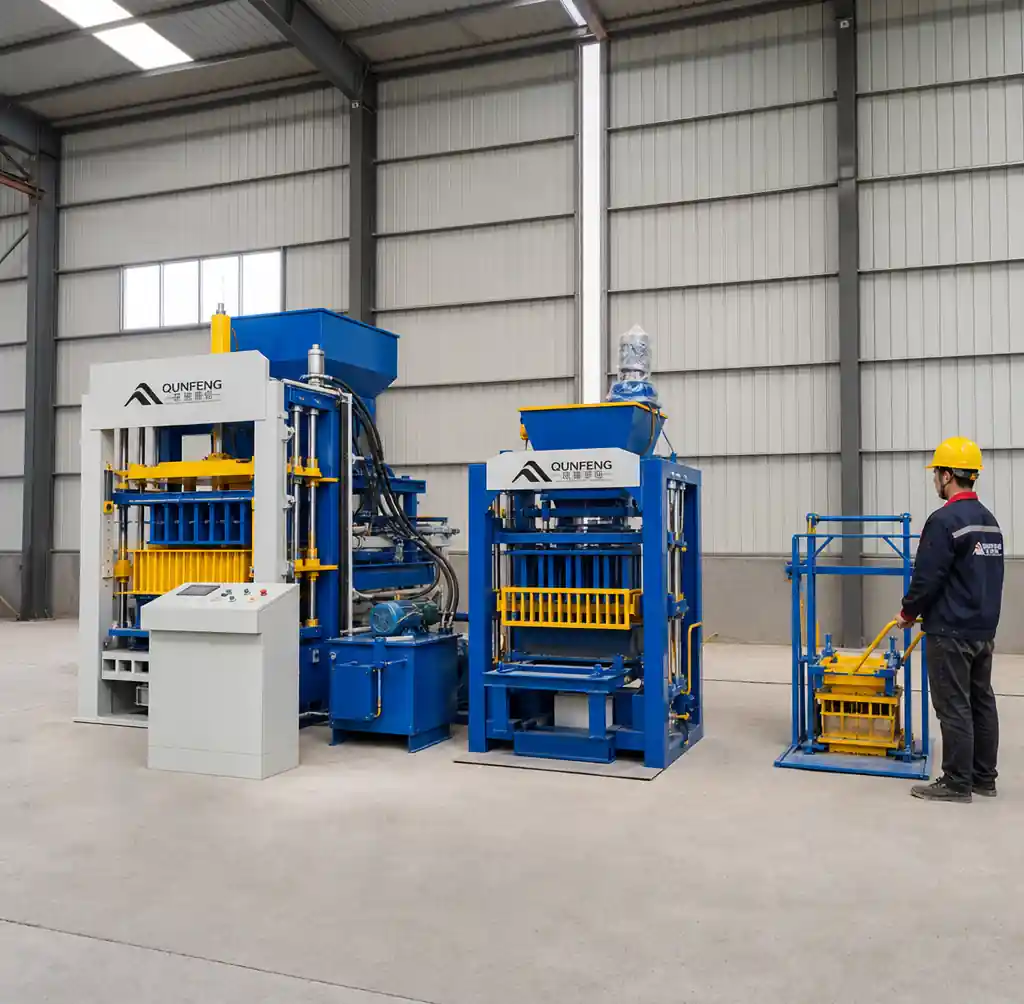
Investment: $7,200-$8,800 machine + $2,200-$2,800 mixer = $9,400-$11,600 total.
At 850 blocks daily (212,500/year), $0.25 net profit = $53,125 annual profit. ROI: 13-15 months.
Best For: First-time manufacturers, $12,000-$15,000 capital, low labor cost markets.
| Feature | QT4-40 (Best Overall) | QTJ4-26 (Mobile) | QT4-24 (Budget) |
|---|---|---|---|
| Production (blocks/shift) | 960-1,440 | 800-1,000 | 720-960 |
| Blocks/Cycle | 4-5 | 3-4 | 3-4 |
| Labor | 3-4 workers | 2-3 workers | 3 workers |
| Machine Investment | $10,500-$12,800 | $8,500-$10,200 | $7,200-$8,800 |
| Total Equipment | $14,800-$18,200 | $10,300-$12,400 | $9,400-$11,600 |
| Power | 18.25 kW | 12.5 kW | 15.75 kW |
| Space | 1,000-1,200 sq ft | 600-800 sq ft | 900-1,100 sq ft |
| Annual Production | 240,000-360,000 | 200,000-250,000 | 180,000-240,000 |
| ROI Period | 16-18 months | 14-16 months | 13-15 months |
| Best Application | Established businesses | Mobile/site production | Budget-conscious startups |
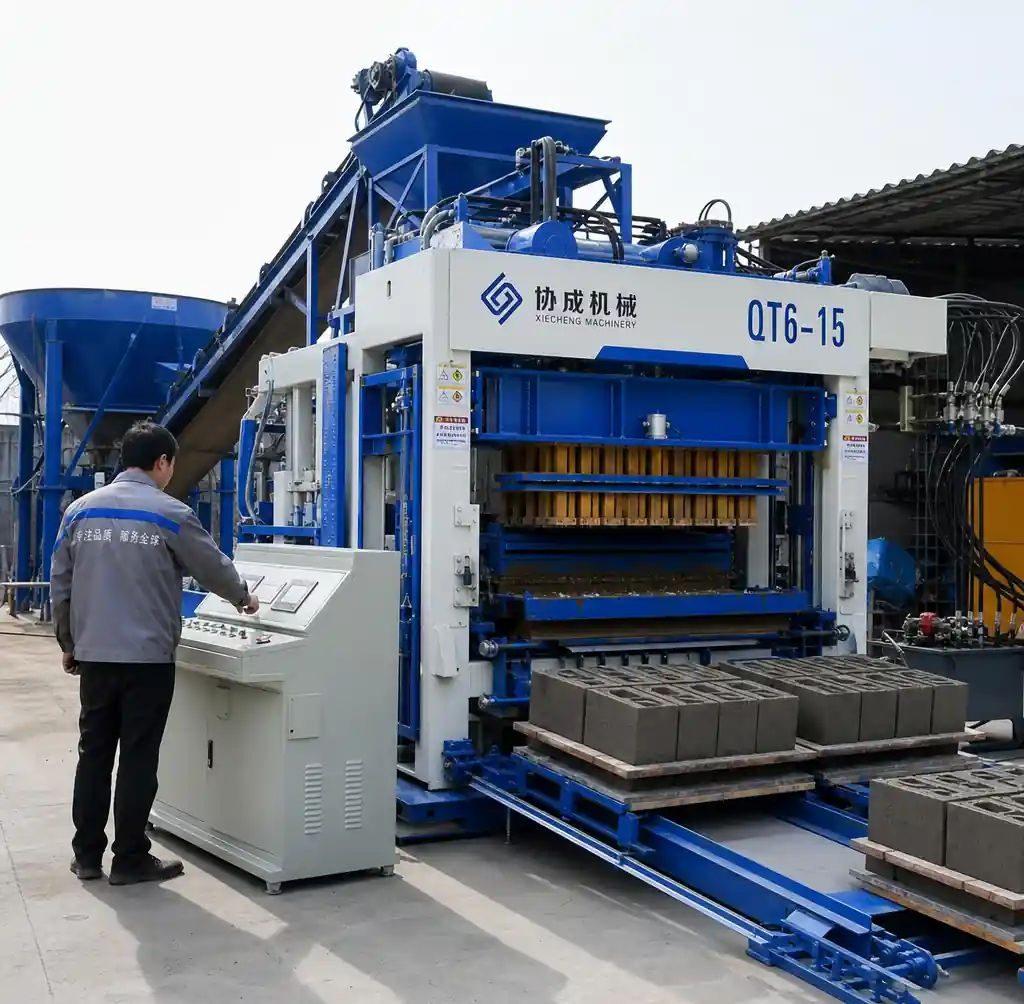
Model #4: QT6-15 Automatic (Best for High Volume)
Fully automatic system with PLC control, automatic pallet feeding. 1,800-2,400 blocks per shift, 12-15 second cycle, 60 KN force, 38.5 kW. 2-3 workers. Variable frequency vibration produces superior density (1,950-2,050 kg/m³).
Investment: $22,000-$26,500 machine + complete line $32,000-$38,000 + installation $2,500-$3,500 = $34,500-$41,500 total.
At 2,200 blocks daily (550,000/year), $0.30 net profit = $165,000 annual profit. ROI: 15-18 months.
Best For: Confirmed contracts exceeding 1,500 blocks daily, rapid scale-up, high labor cost markets.
Model #5: QT4-35 Hydraulic (Best for Interlocking Blocks)
Specializes in interlocking block production. 900-1,400 blocks per shift, 18-22 second cycle, 48 KN force, 21 MPa hydraulic pressure. ±0.8mm tolerance.
Investment: $13,800-$16,200 machine + $2,400-$3,200 molds + $3,800-$4,500 mixer = $20,000-$23,900 total.
Interlocking blocks command premium pricing ($0.75-$1.10). At 1,100 blocks daily (275,000/year), $0.38 net profit = $104,500 annual profit. ROI: 14-17 months.
Best For: Growing interlocking block demand, product differentiation, DIY construction market.
| Specification | QT6-15 (Automatic) | QT4-35 (Interlocking) |
|---|---|---|
| Automation | Fully automatic (PLC) | Semi-automatic |
| Production | 1,800-2,400/shift | 900-1,400/shift |
| Cycle | 12-15 seconds | 18-22 seconds |
| Vibration Force | 60 KN | 48 KN |
| Tolerance | ±1.2mm | ±0.8mm |
| Labor | 2-3 workers | 3-4 workers |
| Total Equipment | $34,500-$41,500 | $20,000-$23,900 |
| ROI Period | 15-18 months | 14-17 months |
Complete Production Line Components
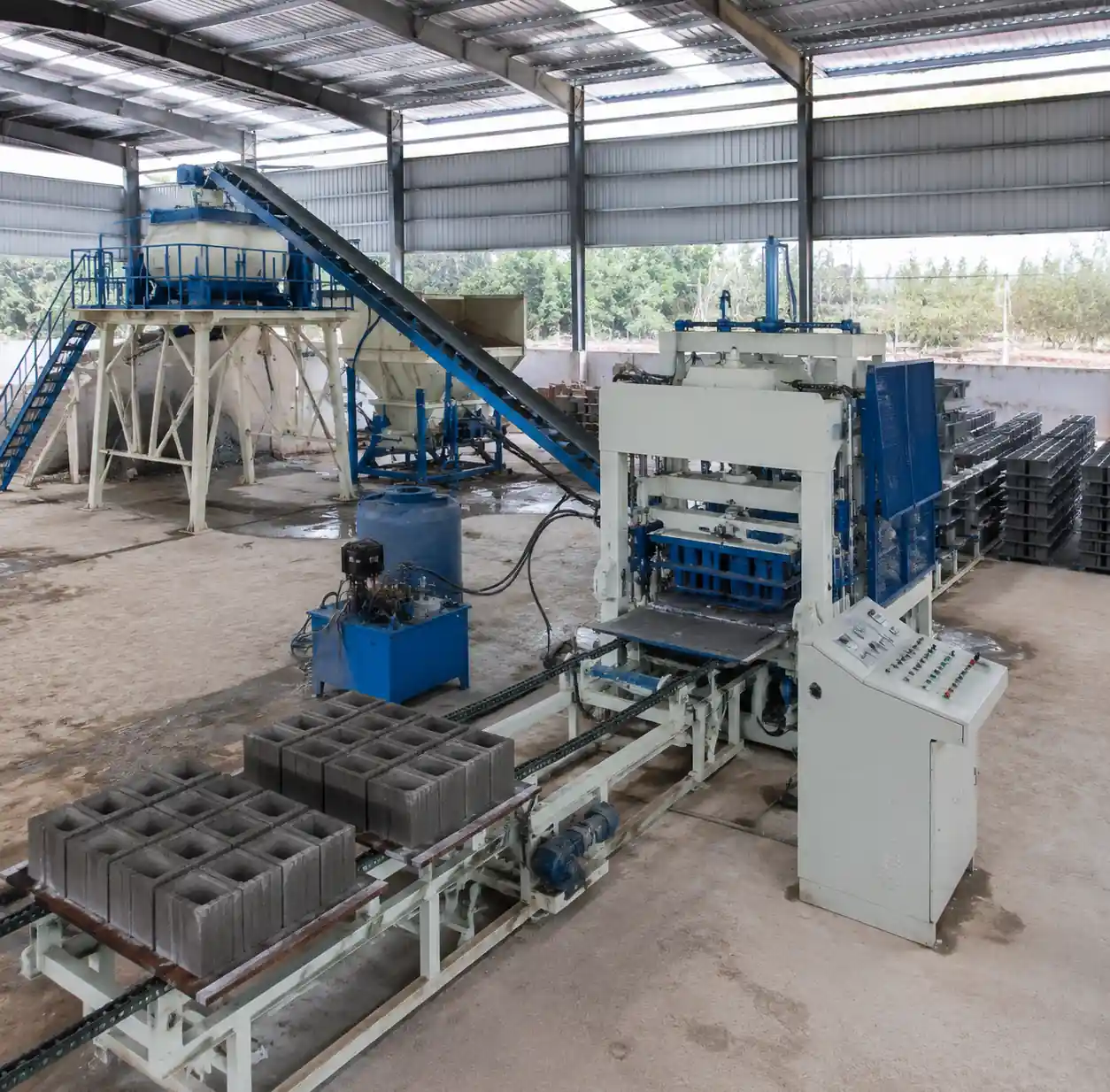
Block making machines require supporting equipment:
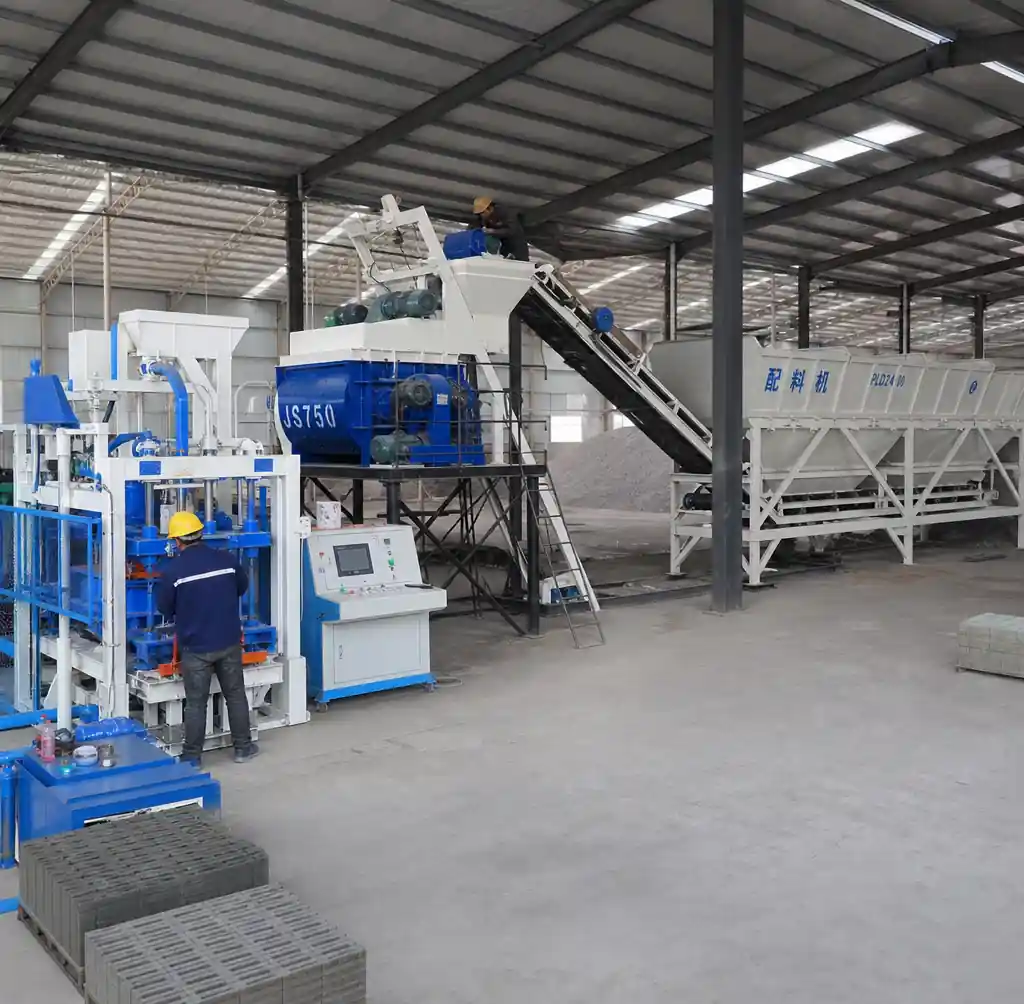
Concrete Mixer: JS500 ($1,800-$2,400) for 800-1,200 blocks/shift; JS750 ($2,800-$3,600) for 1,500+ blocks/shift. Pan mixers cost less ($800-$1,200) but have slower cycles.
Batching System: Automatic ($1,500-$2,200) ensures consistent mix; manual batching creates 8-12% waste.
Steel Pallets: $8-$12 each. Producing 1,000 blocks daily requires 60-80 pallets ($480-$960). Mold sets: $800-$1,200 per type.
Raytone supplies complete production line solutions with coordinated specifications.
ROI Calculation
Production Cost Breakdown (per block):
- Raw materials: $0.13-$0.20 (45-50%)
- Labor: $0.03-$0.09 (20-25%)
- Energy: $0.02-$0.05 (8-12%)
- Maintenance: $0.02-$0.03 (5-8%)
- Overhead: $0.03-$0.05 (10-15%)
- Total: $0.29-$0.46
Market Pricing: Basic hollow $0.55-$0.75; premium $0.75-$0.95; interlocking $0.85-$1.15; decorative $1.20-$1.80.
Profitability Scenarios:
- QT4-24: 850 blocks/day, $0.25 profit/block = $53,125/year. ROI: 13.5 months.
- QT4-40: 1,200 blocks/day, $0.32 profit/block = $96,000/year. ROI: 16.5 months.
- QT6-15: 2,200 blocks/day, $0.36 profit/block = $198,000/year. ROI: 16.3 months.
Decision Framework
1. Validate Demand: Survey local contractors. Secure letters of intent for 12,000-15,000 blocks monthly before investing.
2. Calculate Capital: Machine price is only 50-60% of total. Include facility prep (10-15%), raw material inventory (15-20%), pallets/molds (5-8%), working capital (10-15%).
3. Evaluate Support: Prioritize manufacturers with local service. Raytone maintains regional service centers with 48-72 hour response.
4. Match Capacity: Select machines rated 20-30% above baseline demand to accommodate maintenance, learning curves, and seasonal peaks.
5. Consider Growth: Semi-automatic machines accept upgrades: pallet feeders, batching automation, conveyors, additional molds.
FAQ
What is the minimum investment to start a small block making business?
$20,000-$25,000 for manual equipment. Semi-automatic starting around $35,000-$40,000 total investment provides significantly better ROI due to higher productivity.
How many blocks can a small business produce daily?
500-2,500 blocks per 8-hour shift. Manual: 500-800; semi-automatic: 800-1,500; entry-level automatic: 1,500-2,500.
What is the typical ROI for block making equipment?
12-24 months. Semi-automatic machines typically reach payback in 14-18 months with consistent production.
What power requirements do these machines need?
Manual/small semi-auto: 12-20 kW; larger semi-auto: 18-25 kW; automatic: 30-40 kW three-phase. Diesel options available for unreliable power.
How many workers are needed?
Manual: 4-6; semi-automatic: 3-4; fully automatic: 2-3. Labor decreases as automation increases.
Conclusão
Selecting the right block making machine determines small business success in the critical first 24 months. The QT4-40 semi-automatic represents the best overall value for most small businesses, balancing production capacity (960-1,440 blocks/shift), manageable investment ($14,800-$18,200), and proven 16-18 month ROI. For mobile operations, QTJ4-26 provides flexibility. Budget-conscious startups should consider QT4-24. Growth-oriented businesses benefit from QT6-15 automatic.
Validate market demand, calculate total capital (1.7-2.0× machine price), and prioritize manufacturers with local support. Raytone Block Machinery manufactures the complete range with Siemens PLC, Schneider electrical, and Yuken hydraulics, backed by training and regional service centers.
Contact our team for detailed specifications, current pricing, and customized recommendations.