




Green building certifications like LEED and BREEAM reward concrete block manufacturers who reduce embodied carbon, use recycled content, and provide Environmental Product Declarations (EPDs). Block producers implementing sustainable manufacturing practices—including SCM integration, waste reduction, and energy-efficient production—can earn 3-8 LEED credits while reducing CO₂ emissions by up to 40% compared to conventional methods.
In today’s article, we will explain how green building certifications directly impact block manufacturing operations, which sustainability standards matter most for concrete masonry units, and how manufacturers can optimize production processes to meet LEED v4.1, BREEAM, and emerging carbon reduction requirements. This comprehensive guide will help block producers, architects, and contractors understand the certification landscape and implement strategies that deliver both environmental performance and market competitiveness.
Why Green Building Certifications Matter for Block Manufacturing
The construction industry accounts for 39% of global carbon emissions, with cement production alone responsible for 8% of worldwide CO₂ emissions. Green building certifications directly address this impact by creating measurable sustainability standards that reward manufacturers who reduce environmental footprints. For concrete block producers, certifications translate into market access—over 180,000 LEED-registered projects globally now require documented sustainability performance from building materials.
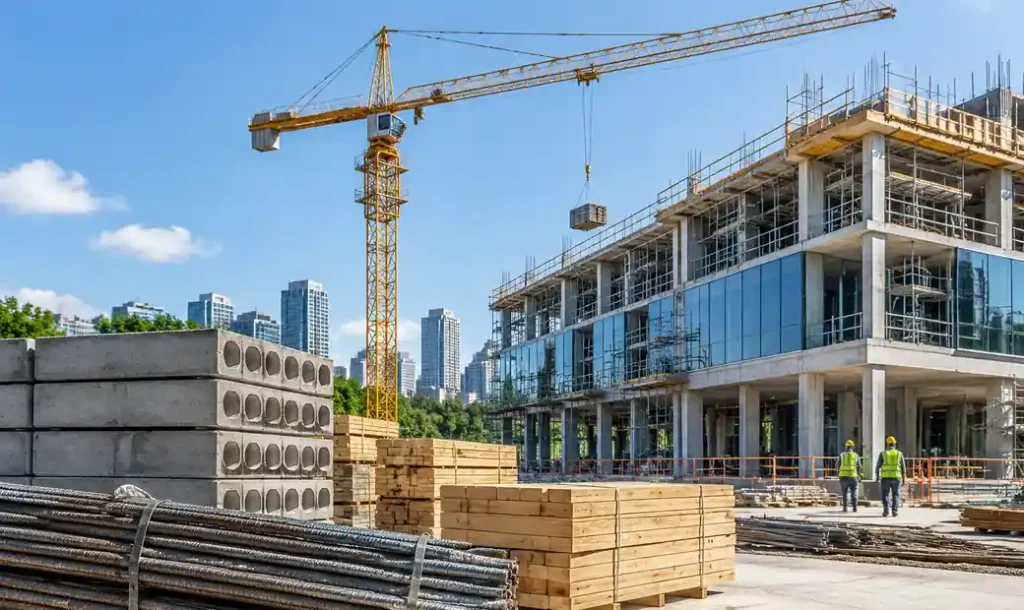
Block manufacturers face increasing pressure from three directions. First, architects and engineers specify materials with EPDs and third-party certifications to earn project credits. Second, building codes in California, Washington, and New Jersey now mandate low-carbon concrete procurement. Third, corporate sustainability commitments from major developers require supply chain transparency. Manufacturers who cannot demonstrate certified environmental performance lose specification opportunities worth billions annually.
Understanding Major Green Building Certification Systems
LEED (Leadership in Energy and Environmental Design)
LEED dominates North American and Asian markets with over 110,000 certified projects across 185 countries. The LEED v4.1 rating system awards points across multiple categories where concrete masonry units contribute directly. Block manufacturers can support projects earning credits in Materials & Resources (sourcing, recycled content, EPDs), Energy & Atmosphere (thermal mass performance), and Innovation (low-carbon manufacturing).
Key LEED credits for concrete blocks include:
- Building Product Disclosure and Optimization (1-2 points): Requires EPDs meeting ISO 14025 and EN 15804 standards
- Sourcing of Raw Materials (1-2 points): Rewards responsibly sourced aggregates and cement with extended supply chain verification
- Material Ingredients (1-2 points): Requires disclosure of material composition and hazard screening
- Construction and Demolition Waste Management (1-2 points): Tracks diversion of production waste from landfills
BREEAM (Building Research Establishment Environmental Assessment Method)
BREEAM leads European markets and saw 43% growth in US industrial certifications during 2024. The system evaluates materials across lifecycle stages and rewards concrete masonry for durability, thermal mass, and local sourcing. BREEAM’s Materials category (12.5% of total score) assesses environmental impact through the entire supply chain, from raw material extraction through manufacturing and transport.
BREEAM recognizes the Concrete Sustainability Council (CSC) certification, which provides third-party verification of responsible sourcing practices in concrete production. CSC certification addresses environmental management, supply chain transparency, and social responsibility—factors increasingly important to European project teams.
Green Globes and Living Building Challenge
Green Globes offers a cost-effective alternative for smaller projects, while the Living Building Challenge sets the highest sustainability bar with net-zero requirements. Both systems reward concrete masonry for thermal performance, local manufacturing, and recycled content. The Living Building Challenge’s Materials Petal requires Red List-free products and supply chain transparency that pushes manufacturers toward cleanest possible production.
How Concrete Block Manufacturing Impacts Environmental Performance
Carbon Emissions from Block Production
Concrete masonry unit manufacturing generates 150-300 kg CO₂ per cubic meter of finished blocks, with cement accounting for 80-90% of total embodied carbon. Every ton of Portland cement releases approximately 0.9 tons of CO₂ during production—0.5 tons from limestone calcination and 0.4 tons from kiln fuel combustion. Block producers using 10-15% cement content in typical mix designs must address this primary carbon source.
Research demonstrates that replacing cement with supplementary cementitious materials (SCMs) reduces emissions by 2-40% depending on substitution levels and SCM type. Fly ash, ground granulated blast furnace slag (GGBFS), and silica fume provide proven alternatives that maintain strength while cutting carbon intensity. Optimal SCM incorporation typically ranges between 15-35% cement replacement without compromising structural performance.
Energy Consumption in Manufacturing
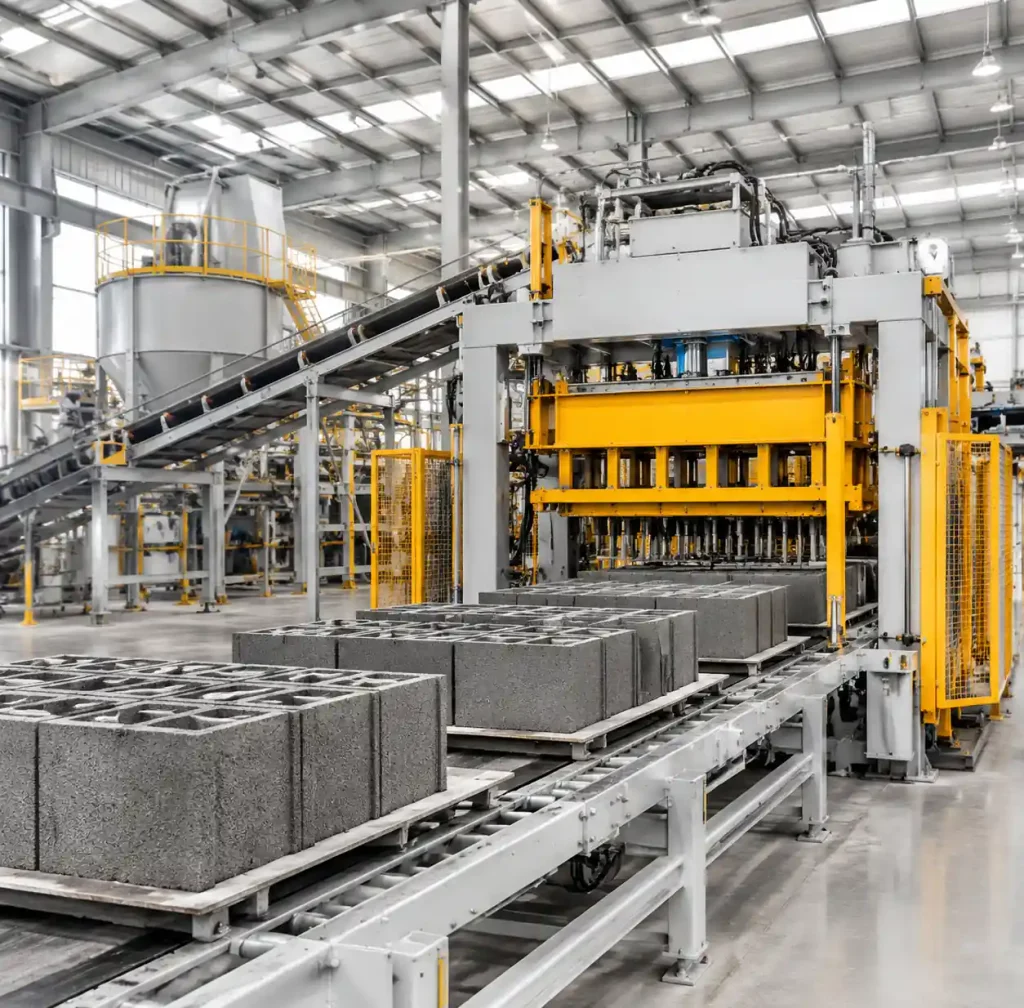
Block production consumes 200-400 kWh per thousand units across mixing, molding, curing, and handling operations. Curing processes—especially steam curing systems—represent the largest energy sink. Manufacturers adopting solar thermal curing, waste heat recovery, and efficient batching systems reduce energy consumption by 25-40% while meeting accelerated production schedules.
Modern block plants equipped with regenerative thermal oxidizers capture waste heat from curing processes and redirect it to preheat raw materials or provide facility heating. These closed-loop systems deliver payback periods under three years while supporting green building documentation requirements for energy-efficient manufacturing.
Sustainable Manufacturing Strategies for Block Producers
1. Supplementary Cementitious Materials Integration
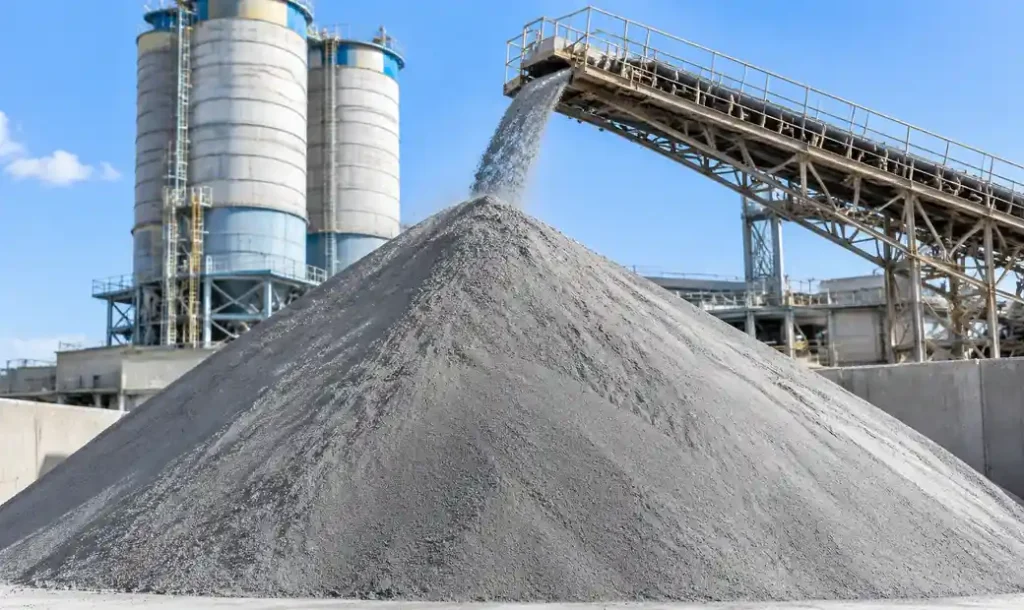
Strategic SCM use delivers immediate carbon reductions while maintaining or improving product performance. Fly ash improves workability and reduces water demand. GGBFS enhances chemical resistance and long-term strength development. Silica fume increases density and impermeability for specialty applications. Manufacturers must balance replacement levels against curing requirements, strength development timelines, and local material availability.
Implementation Strategy:
- Start with 15-20% fly ash replacement in standard hollow blocks
- Increase to 25-35% for non-load-bearing applications
- Test GGBFS for marine and chemical exposure applications
- Document strength development curves at 7, 14, 28, and 56 days
- Update mix designs to maintain consistency across batch runs
2. Recycled Aggregate and Content
Post-industrial recycled content from returned concrete, production rejects, and crushed blocks can replace 10-30% of virgin aggregates without strength loss. Post-consumer content from demolition debris requires more stringent quality control but can contribute to LEED credits for recycled content. Manufacturers tracking and documenting recycled content percentages support projects earning Materials & Resources credits.
3. Water Conservation and Closed-Loop Systems
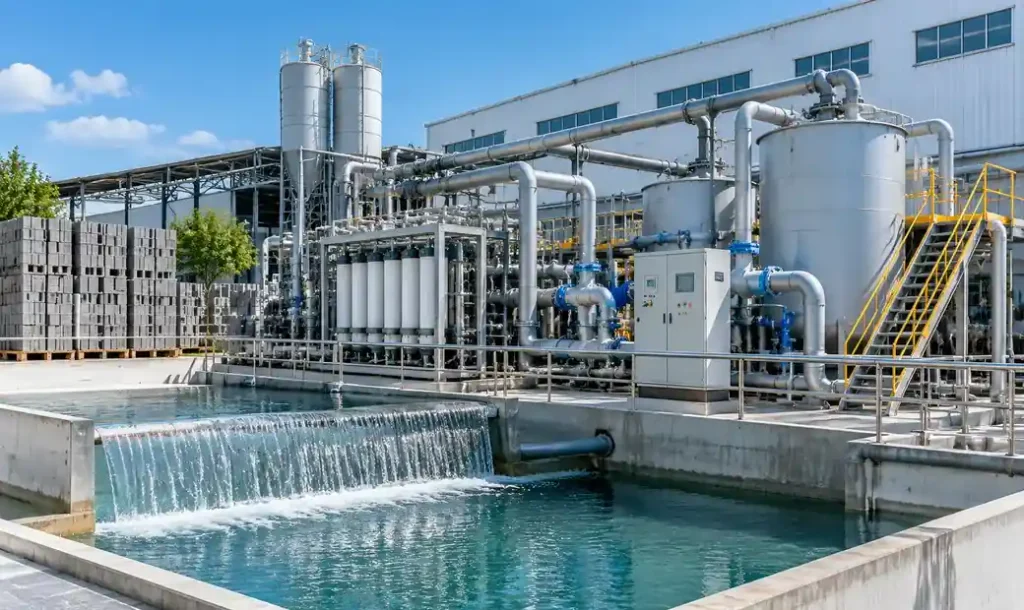
Block manufacturing typically consumes 50-80 liters of water per thousand units for mixing, curing, and cleaning. Closed-loop water reclamation systems capture wash water, settling suspended solids, and returning clarified water to mixing operations. These systems reduce municipal water consumption by 60-80% while preventing discharge of alkaline wastewater. Documentation of water efficiency supports LEED Water Efficiency credits indirectly through sustainable manufacturing practices.
4. Renewable Energy Integration
Solar panel installations on factory roofs provide 20-40% of electrical demand in favorable locations. Wind turbines suit plants in high-wind corridors. Manufacturers generating renewable energy document this performance through EPDs and support projects earning Energy & Atmosphere credits. Even purchasing renewable energy certificates (RECs) reduces reported carbon footprint and strengthens sustainability positioning.
Comparison of Green Building Certification Requirements for Concrete Blocks
| Certification | Documentation Required | Carbon Focus | Recycled Content Recognition | Regional Strength | Certification Cost |
|---|---|---|---|---|---|
| LEED v4.1 | EPDs per ISO 14025, HPDs, material ingredient disclosure | High – embodied carbon tracking mandatory | Yes – pre/post-consumer content valued | North America, Asia | $2,500-$27,500+ project-dependent |
| BREEAM | EPDs per EN 15804, responsible sourcing evidence (CSC cert) | Very High – lifecycle carbon assessment | Yes – material efficiency ratings | Europe, growing in US | £500-£35,000 GBP project-dependent |
| Green Globes | Manufacturer declarations, third-party testing optional | Moderate – energy performance emphasis | Yes – points for recycled aggregates | North America | $2,000-$15,000 project-dependent |
| Living Building Challenge | Complete material transparency, Red List compliance, carbon accounting | Extreme – net-zero embodied carbon | Required – maximum material reuse | Global (limited projects) | $3,000-$25,000 project-dependent |
Environmental Product Declarations for Concrete Masonry
EPDs provide standardized lifecycle assessment data following ISO 14025 and EN 15804 methodologies. These third-party verified documents quantify environmental impacts across raw material extraction, manufacturing, transportation, use phase, and end-of-life disposal. Industry-average EPDs exist for generic concrete blocks, but product-specific EPDs demonstrate superior environmental performance and support higher LEED credit achievement.
EPD Key Metrics:
- Global Warming Potential (GWP): 200-450 kg CO₂-eq per ton
- Acidification Potential: 0.15-0.35 kg SO₂-eq per ton
- Eutrophication Potential: 0.02-0.08 kg PO₄-eq per ton
- Ozone Depletion Potential: negligible for standard mixes
- Smog Formation Potential: 0.8-2.5 kg O₃-eq per ton
Manufacturers developing product-specific EPDs through Program Operators like UL Environment or NSF International demonstrate measurable environmental advantages over industry averages. These documents remain valid for five years and provide competitive differentiation in specification decisions.
How Block Manufacturers Can Earn LEED Credits
Materials & Resources Credits
Building Product Disclosure and Optimization – Environmental Product Declarations (1-2 points)
Projects earn points when 20+ different permanently installed products from 5+ manufacturers provide EPDs. Concrete masonry qualifies when manufacturers supply EPDs covering at least 25% of product cost. Product-specific EPDs demonstrating 10% improvement over industry average earn additional points.
Building Product Disclosure and Optimization – Sourcing of Raw Materials (1-2 points)
Credits reward products extracted, manufactured, and purchased within 100 miles of project site (Regional Materials) or meeting responsible sourcing criteria through CSC certification, Forest Stewardship Council equivalents, or extended supply chain disclosures. Local block manufacturers hold inherent advantages for regional material credits.
Building Product Disclosure and Optimization – Material Ingredients (1-2 points)
Requires Health Product Declarations (HPDs) or material ingredient reporting demonstrating optimization. Block manufacturers must disclose chemical composition to 0.1% threshold and screen against hazard lists. Clean mix designs without admixtures containing phthalates, heavy metals, or volatile organic compounds support credit achievement.
Energy & Atmosphere Performance
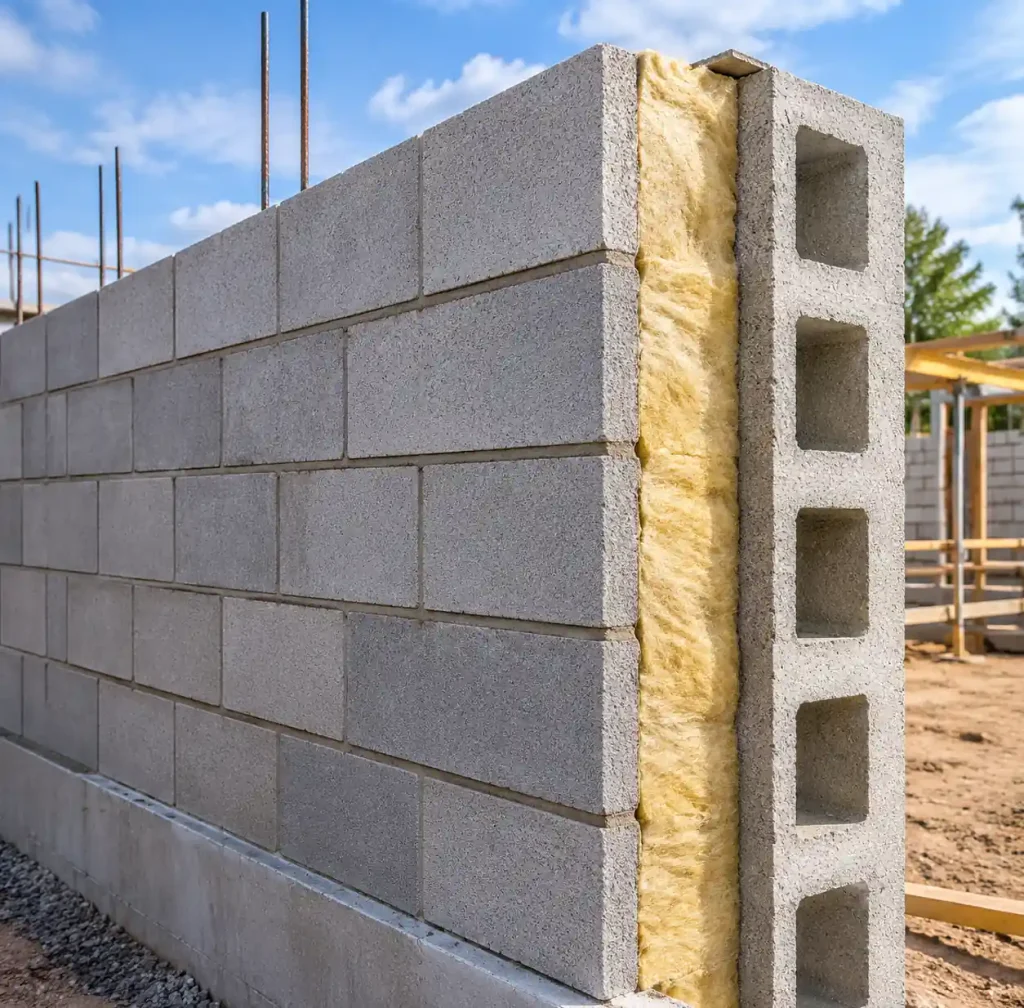
Concrete masonry’s thermal mass properties support Energy & Atmosphere credits indirectly through whole-building energy modeling. Blocks with 8-inch nominal thickness provide thermal lag of 8-10 hours, reducing HVAC peak loads and improving energy performance. Insulated concrete masonry with integral foam inserts achieves R-values up to R-20, supporting Passive House and net-zero energy projects.
Manufacturing Process Improvements for Certification
Quality Control and Documentation
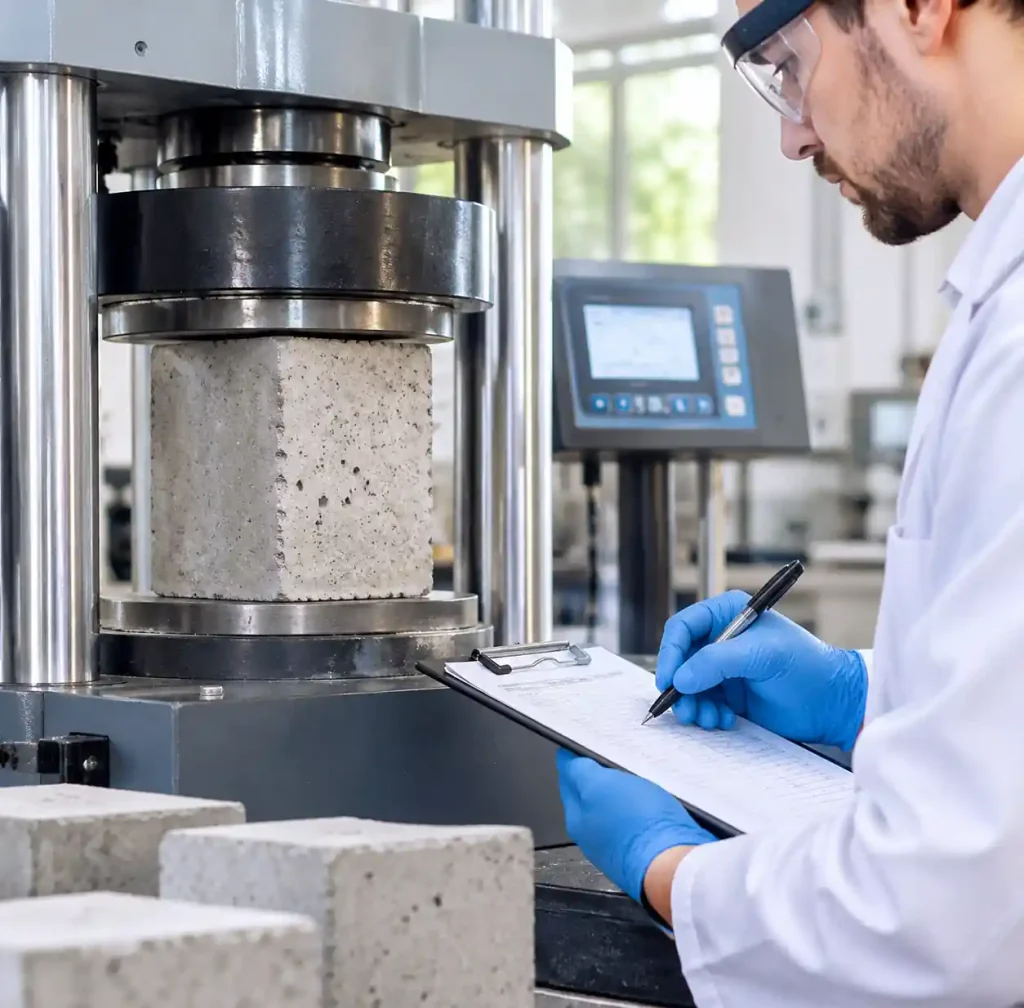
Third-party testing laboratories verify strength, density, absorption, and dimensional tolerances per ASTM C90. Manufacturers maintaining ISO 9001 quality management systems demonstrate process control that supports certification requirements. Digital tracking systems document batch-level data on cement content, SCM percentages, recycled aggregate quantities, and curing energy consumption—all essential for EPD verification.
Documentation Requirements:
- Raw material sourcing records with supplier certifications
- Batch production logs with mix design data
- Energy consumption monitoring (electricity, natural gas, process fuels)
- Water usage and wastewater treatment records
- Waste generation and diversion tracking
- Transportation distances for materials and distribution
Carbon Reduction Targets and Reporting
Progressive manufacturers set science-based targets aligned with Paris Agreement goals of 50% carbon reduction by 2030. Annual sustainability reports document progress through independently verified greenhouse gas inventories following GHG Protocol standards. Public disclosure through CDP (formerly Carbon Disclosure Project) demonstrates transparency that differentiates manufacturers in competitive specification processes.
Block Manufacturing Carbon Reduction Strategies Comparison
| Strategy | Carbon Reduction Potential | Implementation Cost | Technical Complexity | Credit Support | Payback Period |
|---|---|---|---|---|---|
| 30% Fly Ash Replacement | 25-30% GWP reduction | Low – $2-5/ton saved vs Portland cement | Moderate – requires mix optimization | LEED EPDs, BREEAM materials | Immediate cost savings |
| Solar Thermal Curing | 15-20% energy reduction | High – $150,000-400,000 capital | High – integration with existing systems | Energy efficiency documentation | 5-8 years |
| 30% Recycled Aggregate | 8-12% GWP reduction | Low – often cost-neutral | Low – quality control emphasis | Recycled content credits | Immediate cost savings |
| Waste Heat Recovery | 20-25% thermal energy reduction | Medium – $50,000-150,000 | Moderate – retrofit complexity | Energy efficiency documentation | 3-5 years |
| Renewable Energy Procurement | Up to 40% Scope 2 emissions | Medium – variable with PPA terms | Low – administrative only | EPD carbon intensity reduction | Variable with electricity pricing |
| Low-Carbon Cement Adoption | 30-50% GWP reduction | Medium-High – 10-30% premium | Low – direct substitution | Product-specific EPD improvement | Depends on market premium |
Certification Process and Timeline for Block Manufacturers
Achieving green building certification support requires 6-18 months of preparation depending on starting point:
Months 1-3: Baseline Assessment
- Conduct lifecycle assessment of current manufacturing
- Identify highest-impact carbon sources
- Review supply chain documentation capabilities
- Assess quality control and testing protocols
Months 4-6: Implementation
- Integrate SCMs and optimize mix designs
- Install monitoring systems for energy and water
- Develop EPD with third-party verifier
- Complete CSC or equivalent sourcing certification
Months 7-12: Verification and Documentation
- Third-party testing and verification
- EPD publication through Program Operator
- Marketing material development
- Sales team training on green building credits
Ongoing: Maintenance and Updates
- EPD renewal every 5 years
- Annual sustainability reporting
- Continuous improvement in carbon intensity
- Engagement with green building rating systems
Common Challenges and Solutions
Challenge: Cost Premium for Low-Carbon Materials
Solution: Strategic sourcing of locally available SCMs, negotiating volume agreements with fly ash suppliers, and documenting cost savings from reduced cement usage. Life-cycle cost analysis demonstrates long-term value despite modest upfront premiums.
Challenge: Regional SCM Availability Variations
Solution: Develop multiple mix designs optimized for regionally available materials. Fly ash dominates in coal power regions, GGBFS near steel production, and natural pozzolans in volcanic zones. Flexibility in SCM sourcing maintains certification benefits across markets.
Challenge: Third-Party Verification Costs
Solution: Industry-average EPDs cost $3,000-$8,000 for initial development plus $1,500-3,000 for five-year renewals. Manufacturers producing multiple product lines amortize verification costs across entire portfolio. Industry associations like National Concrete Masonry Association offer group EPD programs reducing per-manufacturer costs.
Future of Green Building Standards and Block Manufacturing
The International Energy Agency projects building-related CO₂ emissions must fall 50% by 2030 to meet Paris Agreement targets. This drives rapid evolution in green building standards with emerging requirements including:
- Embodied Carbon Limits: Building codes in California, Washington, and New Jersey implementing maximum embodied carbon thresholds for structural materials
- Whole-Life Carbon Accounting: LEED v5 (expected 2027) emphasizing total lifecycle carbon over individual product attributes
- Circular Economy Requirements: BREEAM and Living Building Challenge mandating design for disassembly and material reuse
- Carbon Border Adjustments: European Union Carbon Border Adjustment Mechanism creating carbon tariffs affecting imports from 2026
- Supply Chain Transparency: Blockchain and digital product passports tracking environmental impacts from quarry to construction site
Block manufacturers investing in sustainable manufacturing infrastructure today position themselves for increasingly stringent requirements while capturing current market opportunities in green construction.
الأسئلة الشائعة
What percentage of cement can be replaced with fly ash in concrete blocks without losing strength?
Standard concrete masonry units safely accommodate 15-25% fly ash replacement with no strength reduction when properly cured. Load-bearing applications maintain 1,900+ psi compressive strength at 25% replacement. Non-structural applications successfully use 30-35% replacement. Strength development occurs more gradually than Portland cement, typically reaching specified strength at 56 days rather than 28 days, which influences production scheduling but delivers equivalent final performance.
How much does an Environmental Product Declaration cost for block manufacturers?
Product-specific EPDs cost $5,000-$15,000 for initial development including lifecycle assessment, third-party verification, and publication through a Program Operator like UL Environment or NSF International. EPDs remain valid for five years, after which renewal costs $2,000-$5,000. Industry-average EPDs through trade associations cost $500-$2,000 per manufacturer but provide less competitive differentiation.
Which green building certification offers the best return on investment for block producers?
LEED certification support delivers highest ROI in North American markets due to dominant market share—over 110,000 certified projects specifying materials with EPDs. BREEAM offers strongest returns in European markets and growing industrial/data center segments in the US. Green Globes provides cost-effective entry for smaller manufacturers targeting cost-sensitive projects. Focus follows your target market geography and customer segment.
Can recycled concrete aggregate from demolition waste be used in new concrete blocks?
Yes, with proper processing and quality control. Demolished concrete crushed to specified gradations can replace 10-30% of virgin coarse aggregate without strength loss. Critical factors include removing contaminants (wood, metal, gypsum), controlling gradation consistency, and adjusting mix water content for higher absorption of recycled aggregates. Many manufacturers successfully incorporate production rejects and returned concrete at higher percentages since quality is pre-verified.
How long does it take to earn back investment in sustainable manufacturing equipment?
Payback varies by technology. SCM integration delivers immediate savings since fly ash and slag typically cost 30-50% less than Portland cement. Solar panel installations achieve 6-8 year payback with incentives. Waste heat recovery systems return investment in 3-5 years through reduced natural gas consumption. Water reclamation systems payback in 2-4 years in regions with high water/sewer costs. Most importantly, sustainable manufacturing creates market access and premium pricing that accelerates returns beyond direct cost savings.
What documentation do architects need from block manufacturers for LEED projects?
Architects require EPDs meeting ISO 14025 standards, material ingredient disclosures through Health Product Declarations (HPDs), responsible sourcing documentation (CSC certification preferred), and product compliance letters confirming contribution to specific credits. Provide cut sheets documenting recycled content percentages, regional material criteria (extraction and manufacturing locations within 100 miles), and third-party test reports for strength and performance. Digital libraries with this documentation readily available accelerate specification decisions.
الخلاصة
Green building certifications fundamentally reshape concrete block manufacturing by rewarding measurable environmental performance through third-party verification and standardized metrics. Manufacturers implementing sustainable practices—SCM integration, recycled content utilization, energy-efficient production, and comprehensive documentation—position themselves for growing market demand while reducing operational costs and carbon intensity.
The pathway forward requires systematic investment in manufacturing improvements, robust quality control, and transparent documentation systems. Block producers who achieve EPD publication, reduce embodied carbon by 25-40%, and maintain third-party certifications create competitive advantages in increasingly sustainability-focused construction markets. These investments deliver both environmental benefits and business performance through specification preference, premium pricing, and access to high-value green building projects.
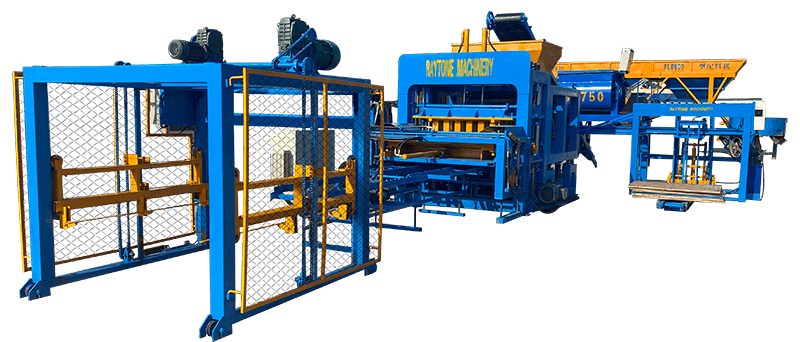
If you need high-performance concrete masonry units manufactured with sustainable practices and comprehensive environmental documentation, Raytone Block Machinery provides complete solutions for certified green building projects. Our automated production systems integrate precise SCM control, recycled content tracking, and energy-efficient manufacturing that supports LEED, BREEAM, and emerging carbon reduction requirements. We supply manufacturers worldwide with equipment and technical expertise to meet the highest sustainability standards while maintaining competitive production economics.
اتصل بنا اليوم for sustainable block manufacturing solutions, EPD development support, and equipment systems designed for green building certification requirements.