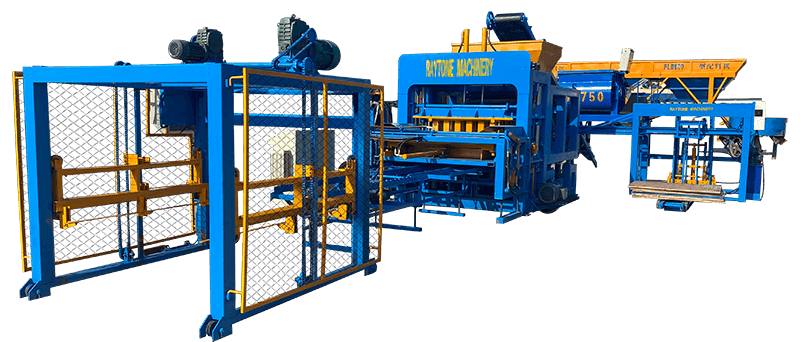






Block production demands precision, and choosing the right mould determines product quality, market competitiveness, and production efficiency. Whether you’re starting a block business or expanding your product line, understanding mould types helps you make informed equipment decisions. This guide covers standard blocks, interlocking designs, paver patterns, hollow core options, and custom mould manufacturing.
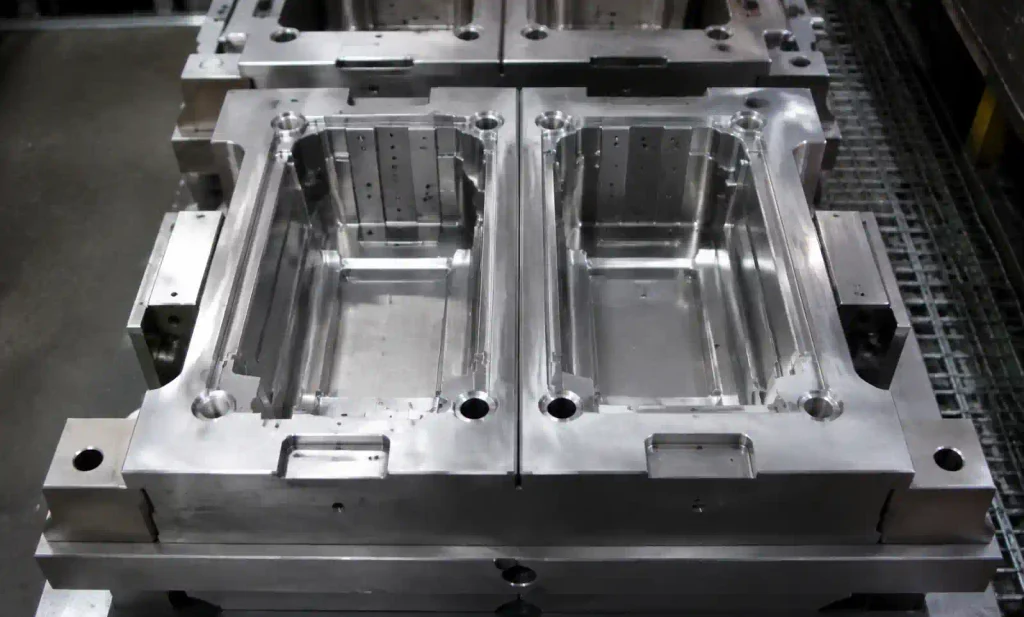
Standard Block Moulds: Foundation of Production
Standard block moulds produce rectangular solid or hollow blocks following regional standards like 400×200×200mm (worldwide standard), 390×190×190mm (European), or custom market dimensions.
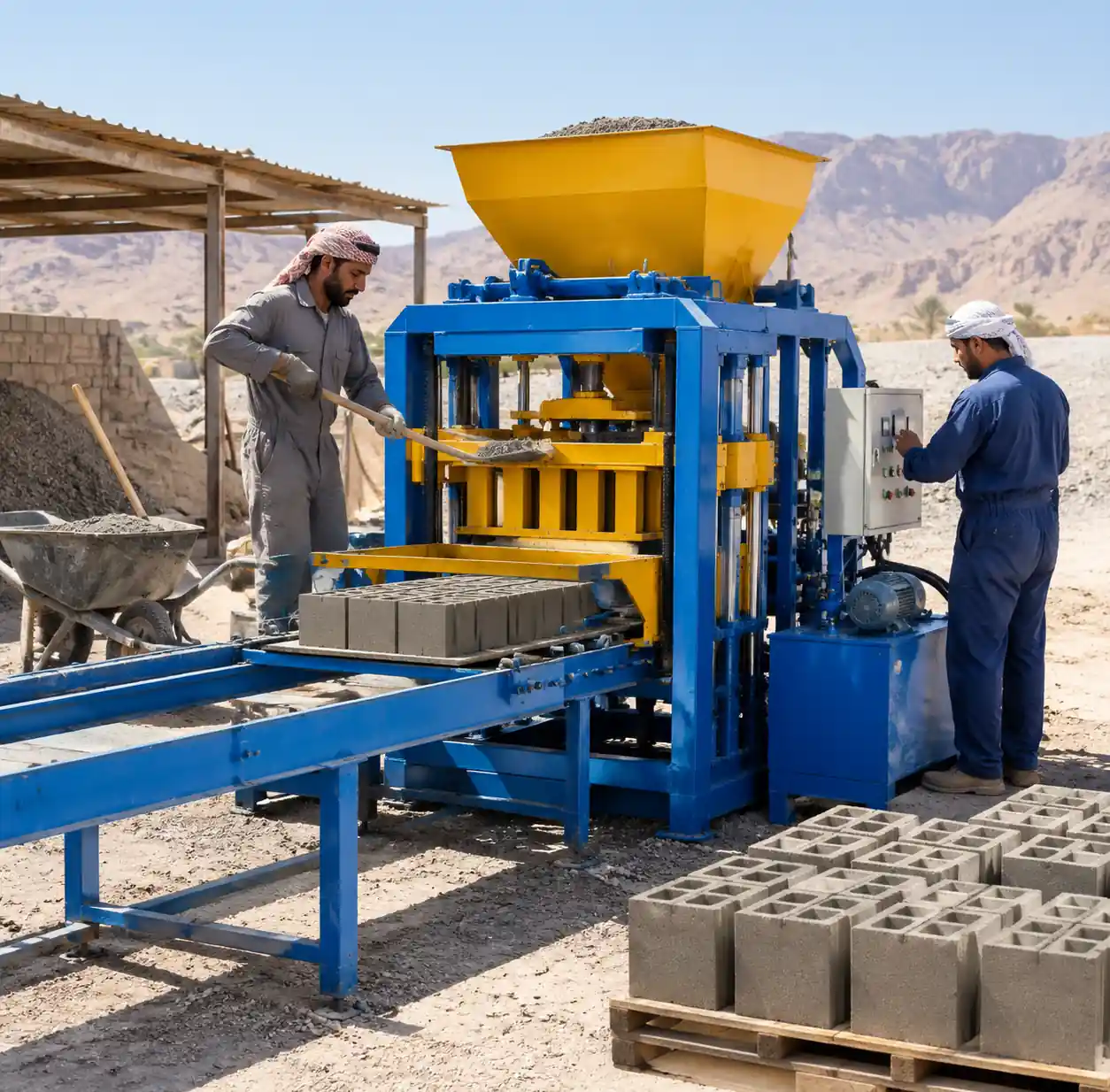
Most آلات الصب الأوتوماتيكية و semi-automatic models accommodate multiple mould sizes through quick-change systems. Production rates range from 3,000 to 10,000 blocks per 8-hour shift.
Standard moulds use high-grade steel (50-60 HRC hardness) with CNC machining ensuring ±1mm dimensional accuracy. Quality moulds last 300,000 to 500,000 production cycles before refurbishment.
Interlocking Block Moulds: Mortar-Free Construction
Interlocking block moulds create units with tongue-and-groove or pin-and-socket connections that eliminate mortar. These blocks lock mechanically, reducing construction time by 40-60% and improving structural stability. The design also enables disassembly for temporary structures.
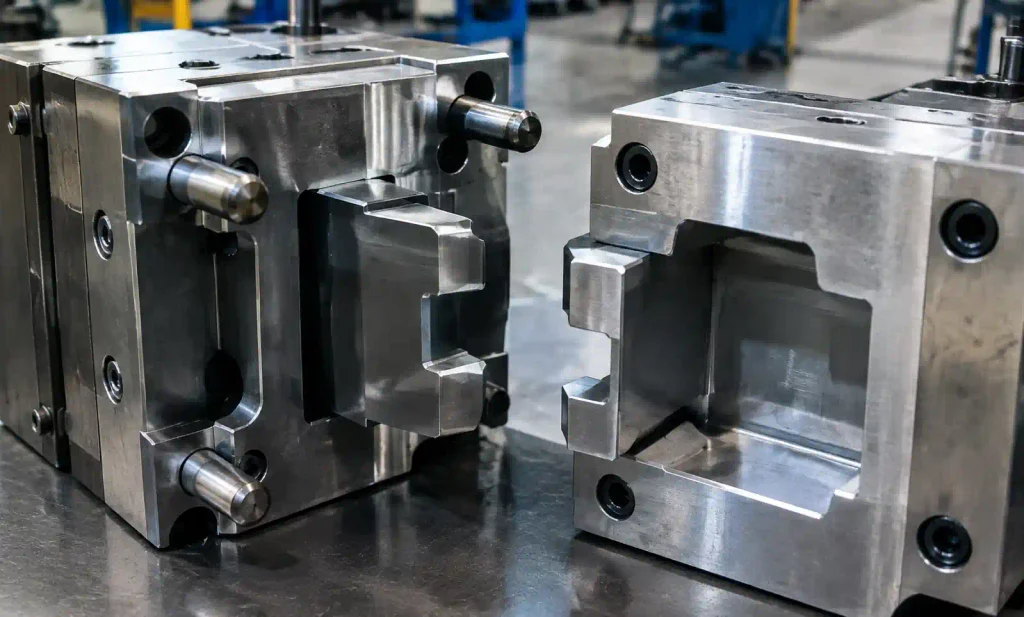
Tongue-and-groove systems feature horizontal protrusions (10-15mm depth) fitting into corresponding recesses. Common dimensions include 300×150×100mm, ideal for wall construction with good lateral stability.
Pin-and-socket systems use vertical alignment pins (20-30mm diameter) inserting into matching holes. This configuration excels in retaining walls where vertical load transfer matters, creating positive mechanical locks that resist lateral pressure.
Wave-pattern interlocking employs curved surfaces that nest together, distributing loads across multiple contact points. This design suits landscaping and erosion control where drainage and flexibility outweigh strict dimensional precision.
Production considerations for interlocking moulds:
- More complex geometry requires slower cycle times (15-20 seconds vs 10-15 seconds for standard blocks)
- Higher mould manufacturing cost ($3,000-$8,000 vs $1,500-$3,500 for standard)
- Requires precise alignment systems to prevent mould damage
- Best suited for semi-automatic or automatic machines with vibration control
| Feature | Standard Blocks | Interlocking Blocks |
|---|---|---|
| Installation Speed | Baseline (mortar required) | 40-60% faster (mortar-free) |
| Labor Cost | Higher (skilled mason needed) | Lower (semi-skilled acceptable) |
| Mould Cost | $1,500-$3,500 | $3,000-$8,000 |
| مدة الدورة | 10-15 seconds | 15-20 ثانية |
| Disassembly | Destructive | Non-destructive |
| الأفضل لـ | Permanent structures | Retaining walls, temporary buildings |
Paver Block Moulds: Decorative and Functional
Paver moulds produce blocks for driveways, walkways, and landscaping. Unlike structural blocks, pavers prioritize surface finish, precision, and aesthetics. Market demands include rectangular, hexagonal, circular, and decorative patterns.
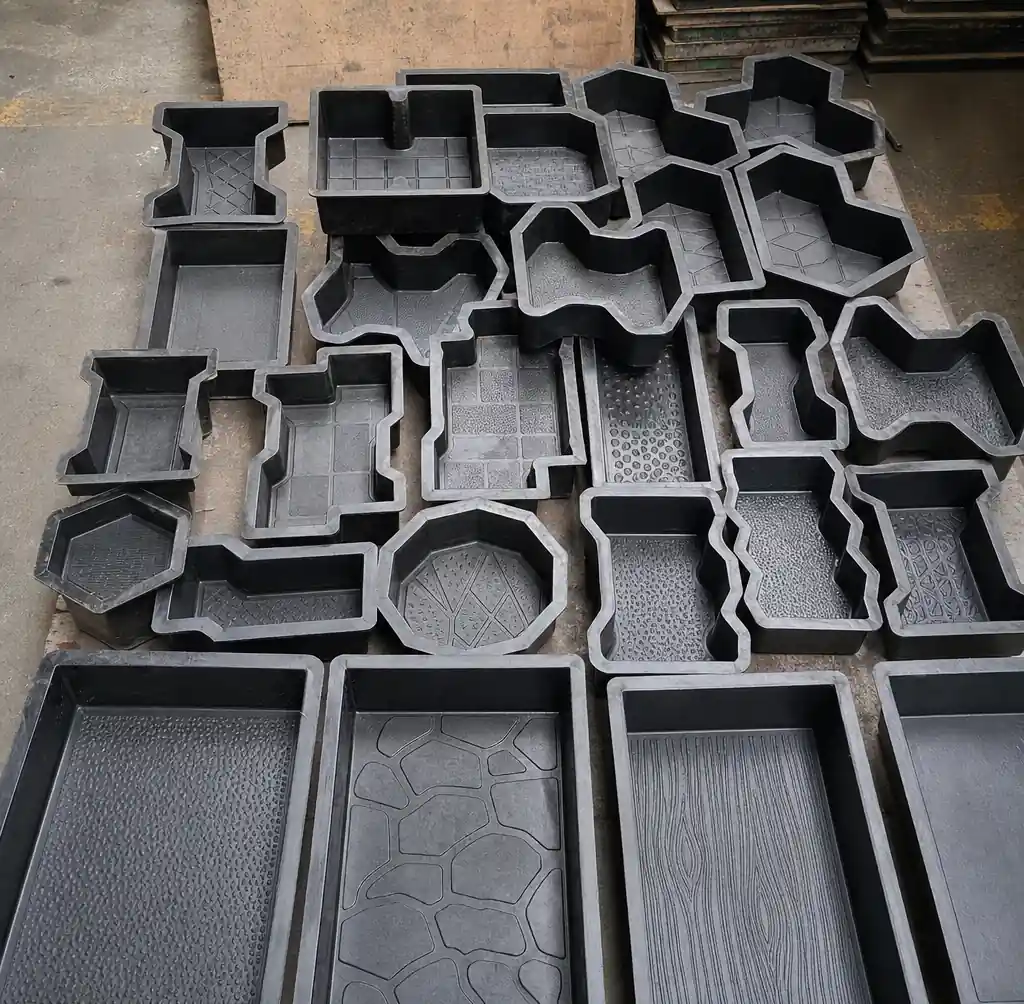
Rectangular pavers (200×100×60mm, 230×115×60mm) dominate due to simple laying patterns and high production rates. Machines produce 800-1,200 square meters daily with multi-cavity moulds (6-8 pieces per cycle).
Interlocking pavers (I-shaped, Z-shaped) distribute loads better than rectangles and resist shifting. The interlocking works through shear transfer, ideal for vehicular traffic areas.
Decorative pavers include hexagons, octagons, wave shapes, and cobblestone textures. Production rates drop 20-30% due to complex geometry, but these command 30-50% price premiums.
Paver mould considerations: thinner cross-sections (60-80mm) require stronger construction, surface details increase cost by 20-40%, multi-cavity configuration critical for economics, compatible with most block machine types.
Hollow Core Block Moulds: Weight and Material Efficiency
Hollow core moulds produce blocks with internal voids reducing weight by 40-50% while maintaining structural strength. The design improves thermal insulation and provides space for electrical and plumbing conduits.
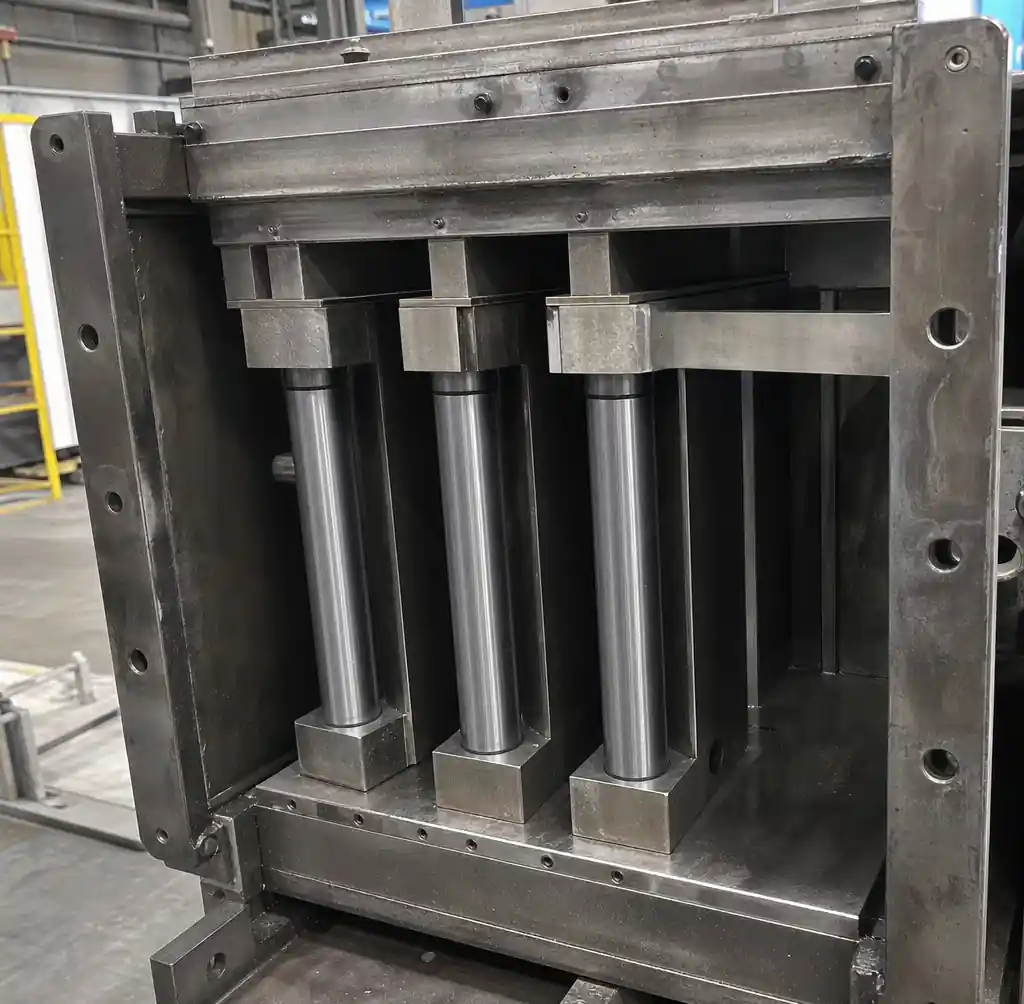
Two-core blocks suit general wall construction. Cores occupy 30-40% of volume with 25-30mm web thickness, maintaining load capacity for 3-4 story structures.
Three-core blocks maximize material savings for non-load-bearing partitions. Thinner webs (20-25mm) reduce weight to 60-65% of solid equivalents, ideal for interior walls.
Custom core shapes include round cores (60-80mm diameter) for improved concrete flow, tapered cores for easy demoulding, and specialized structural profiles.
Hollow core specifications: web thickness 25-35mm for load-bearing, 2-3 degree core taper for block release, 25-30mm minimum shell thickness, proper core positioning for handling stability.
| Block Type | Weight (kg) | Concrete Use | Thermal R-Value | Cost per Block |
|---|---|---|---|---|
| Solid Block | 18-20 | 100% | 0.80-0.90 | Baseline |
| Two-Core Hollow | 11-13 | 60-65% | 1.10-1.25 | 20-25% less |
| Three-Core Hollow | 9-11 | 55-60% | 1.25-1.40 | 30-35% less |
Custom Mould Manufacturing: Tailored Solutions
Custom moulds enable product differentiation and niche market entry. While standard moulds serve general construction, custom designs address architectural requirements, regional preferences, or specialty applications.
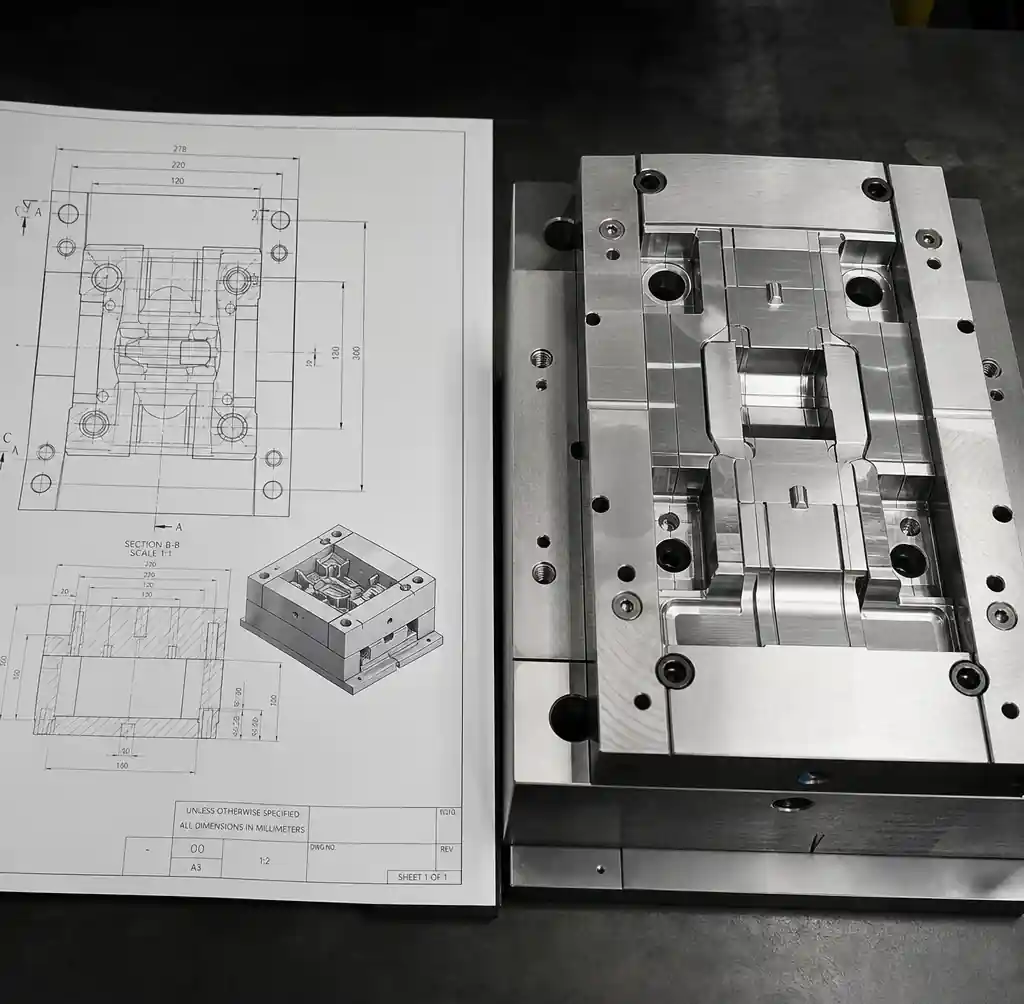
Design process starts with detailed CAD drawings showing dimensions, cores, textures, and interlocking features. Simulation analyzes concrete flow, vibration, and demoulding before manufacturing, preventing costly errors.
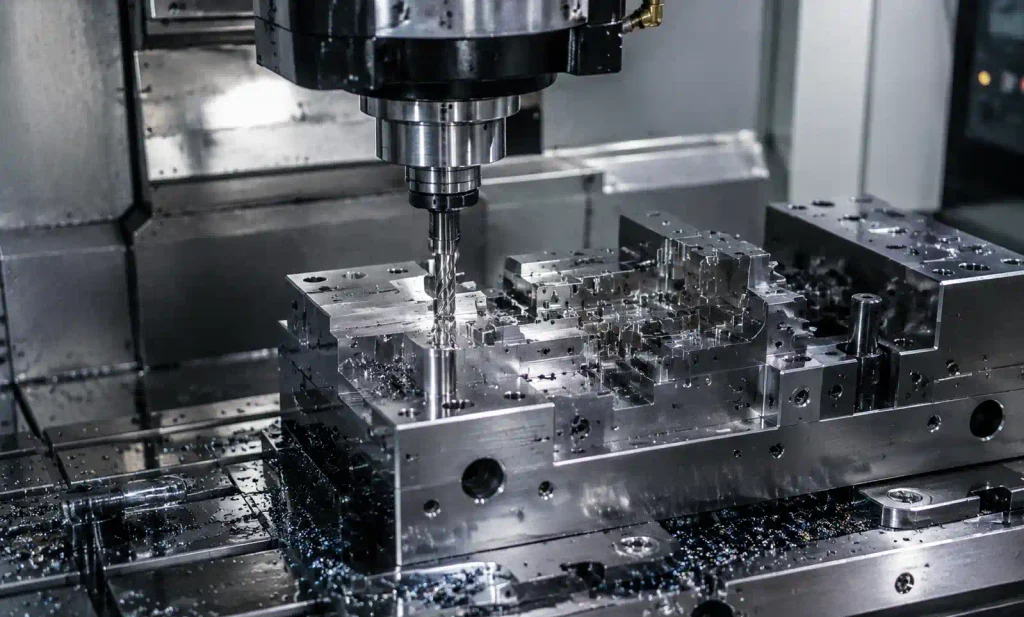
Material selection uses Q345 structural steel (10-12mm thickness) for mould frames, 45# steel hardened to 50-60 HRC for working surfaces, and 40Cr steel at 55-62 HRC for core pins.
Manufacturing timeline: design (3-5 days), material procurement (5-7 days), CNC machining (10-15 days), heat treatment (3-5 days), assembly (2-3 days), trial production (2-5 days). Total: 25-45 days.
Cost factors: simple rectangular $2,000-$4,000, complex interlocking $5,000-$12,000, additional cavities +40-150%, surface texturing +$500-$2,000, special features +$300-$1,500.
Invest in custom moulds when: market shows specialty shape demand, premium pricing justifies investment (30-50% higher), volume exceeds 200,000 blocks, standard moulds can’t meet specifications, or uniqueness provides competitive advantage.
Mould Maintenance and Longevity
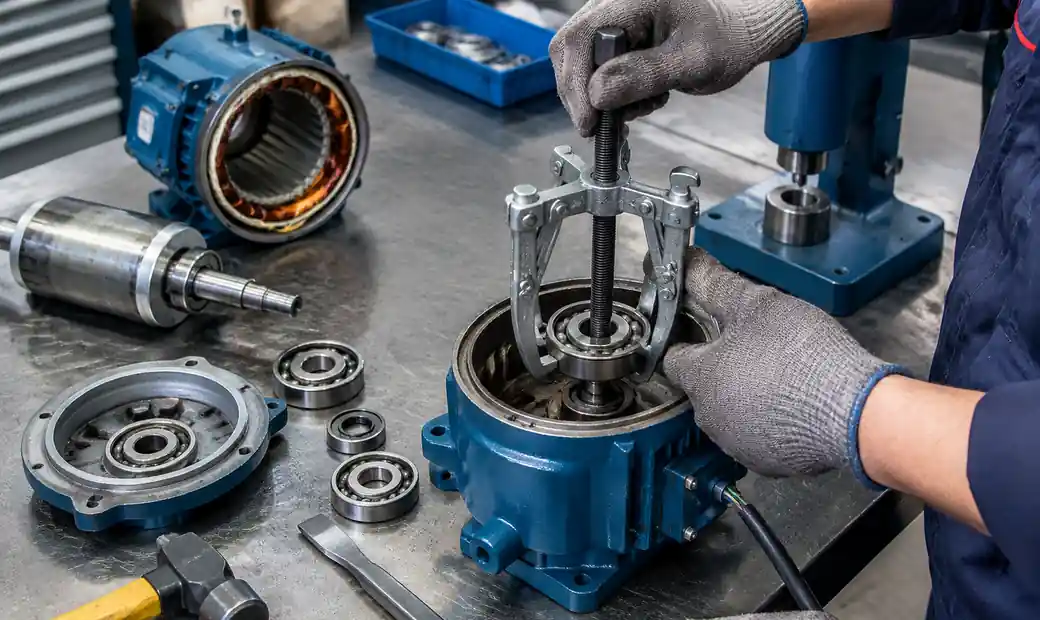
Proper mould care extends service life and maintains quality. Daily cleaning removes concrete before hardening, preventing dimensional changes. Use non-metallic tools to avoid surface scratching.
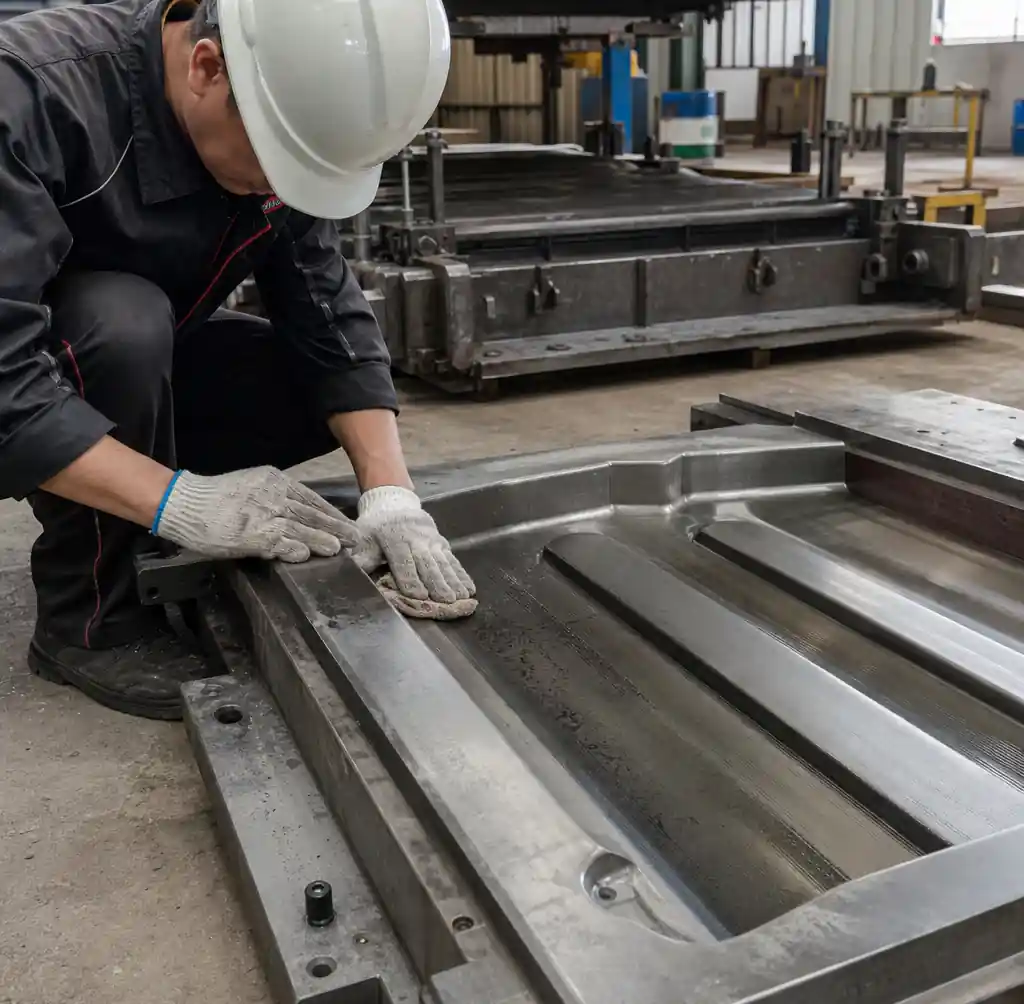
Apply thin release agent coats before each cycle. Popular options include diesel oil (economical, frequent application) and specialized compounds (better finish). Weekly inspection identifies wear, cracks, or deformation. Check working surface wear, core pin alignment, weld integrity, and guide pin clearances.
Refurbishment after 300,000-500,000 cycles includes surface grinding, hard-chrome plating, and heat treatment. Refurbishment costs 30-40% of new mould price and extends life by 200,000-300,000 cycles.
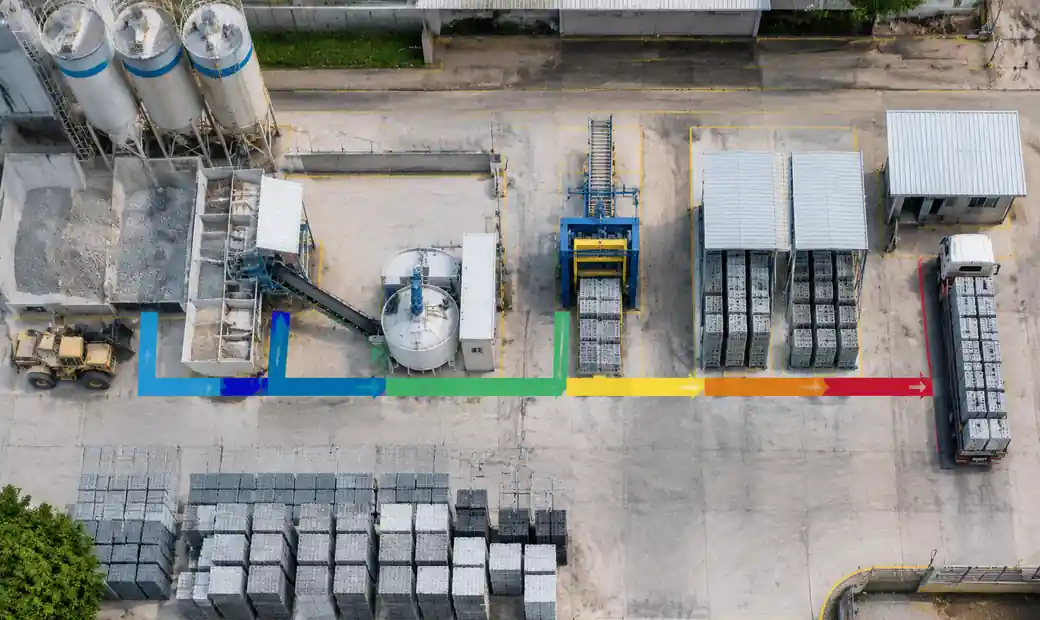
Integration with Block Machine Systems
Mould selection must match your machine type and production goals. الآلات اليدوية accommodate simpler moulds with manual removal. Semi-automatic systems handle moderate complexity including basic interlocking designs.
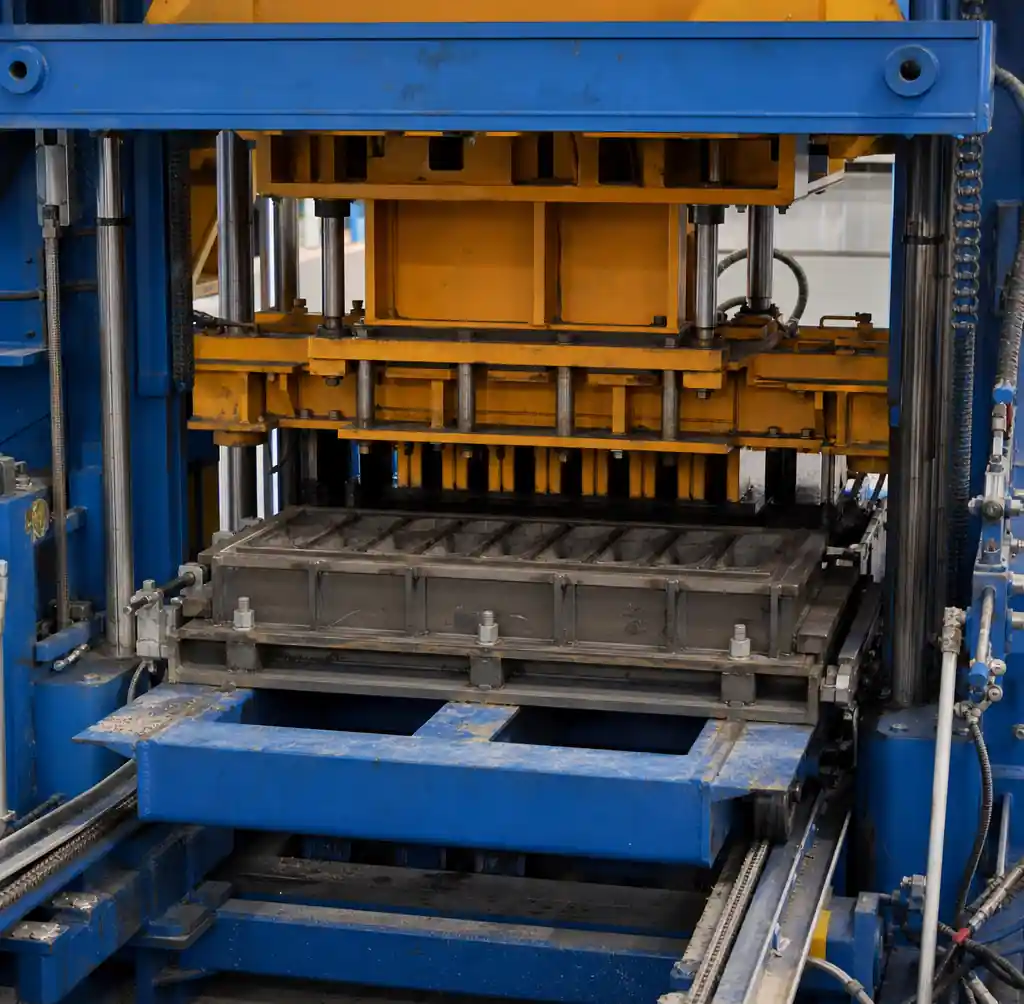
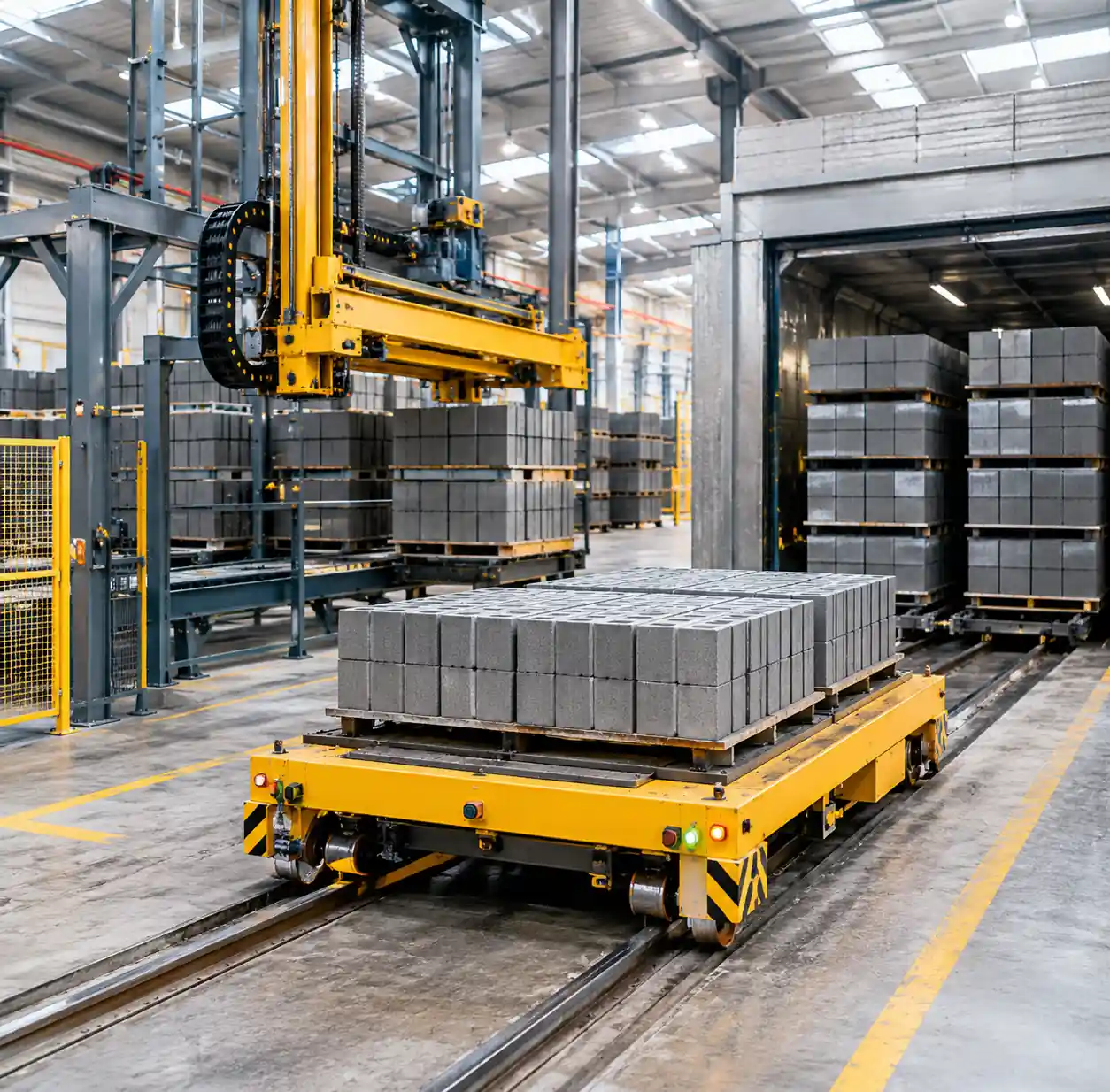
Automatic machines maximize mould capabilities through programmable vibration, precision hydraulic pressing, automated demoulding, and quick-change systems (15-30 minutes).
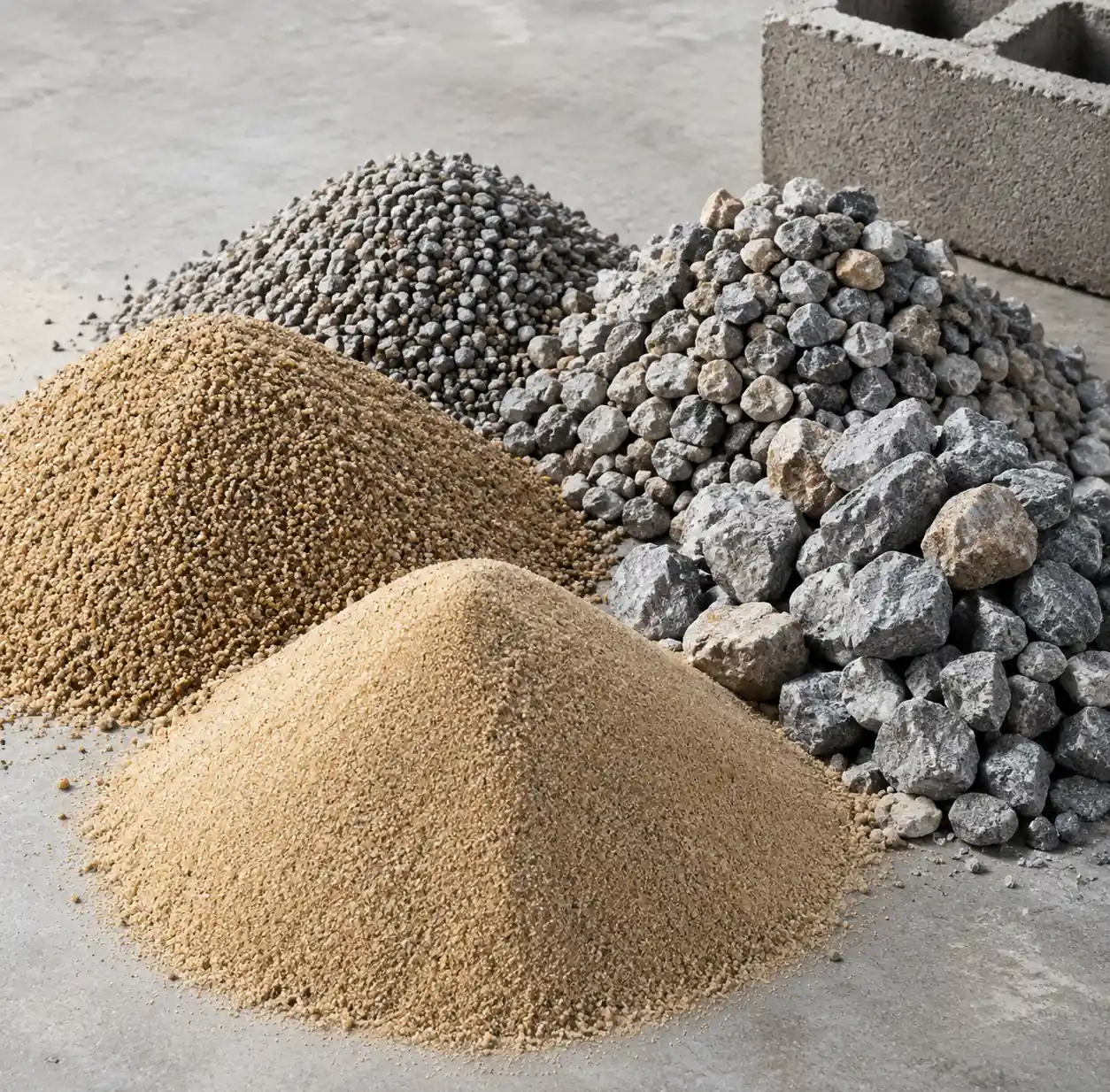
Standard machines accommodate moulds from 850×550mm to 1050×850mm. Check specifications before ordering custom moulds. Supporting equipment enhances performance—proper mixers ensure consistent aggregate distribution, adequate curing prevents premature handling, and appropriate pallet systems complement mould design.
الأسئلة الشائعة
How long does a typical block mould last?
Quality moulds last 300,000 to 500,000 production cycles with proper maintenance. This translates to 2-4 years of service in operations running single shifts, or 1-2 years in multi-shift production. Factors affecting lifespan include mould material quality, concrete mix abrasiveness, maintenance practices, and production volume. Regular cleaning and proper release agent application can extend service life by 30-40%.
Can I use multiple mould types on one machine?
Yes, most modern block machines support multiple mould types through quick-change systems. However, switching between standard blocks and complex shapes like interlocking or pavers requires machine parameter adjustments including vibration frequency, pressing pressure, and cycle timing. Budget 15-30 minutes for mould changes on semi-automatic and automatic machines, or 30-60 minutes for manual systems. Some manufacturers offer complete production line solutions with multiple machines dedicated to specific block types for maximum efficiency.
What’s the minimum order quantity for custom moulds?
Most manufacturers accept single custom mould orders, but economics improve with multiple units. A single custom mould costs $3,000-$12,000 depending on complexity. Ordering 2-3 identical moulds reduces per-unit cost by 15-20% through manufacturing efficiency. Calculate break-even based on your selling price premium—if custom blocks command 30% higher prices, you need to produce approximately 50,000-100,000 blocks to recover a $5,000 mould investment.
How do I choose between interlocking and standard blocks?
The decision depends on your target market and production capability. Choose interlocking blocks when: customers value installation speed over initial cost, your market includes DIY builders or landscapers, you have access to semi-automatic or automatic equipment with precision controls, and you can achieve 30-50% price premiums. Stick with standard blocks for: general construction markets where mortar skills are common, maximum production volume requirements, lower equipment investment, and price-sensitive customers.
Do I need special equipment for paver production?
Paver production works on standard block machines but achieves better results with modifications. Optimal setup includes: variable frequency vibration control for uniform surface finish, face-mix feeding systems for colored surface layers, multi-cavity moulds (6-8 pieces) for economic production, and automated pallet handling since pavers are numerous and thin. Small producers start with standard equipment and simple paver moulds, then upgrade as volume justifies specialized systems.
What causes rough block surfaces and how do mould design affect this?
Surface roughness stems from insufficient vibration, improper mould release, concrete mix issues, or worn mould surfaces. Mould design impacts finish through: surface hardness (minimum 50 HRC prevents pitting), surface smoothness (0.4-0.8 Ra for best results), proper draft angles (2-3 degrees) for clean release, and adequate release agent retention. Regular mould maintenance including cleaning, proper release agent application, and periodic refinishing maintains surface quality. Switch to specialized mould release compounds rather than diesel oil if surface quality is critical for your market.
الخلاصة
Mould selection impacts every aspect of block production from efficiency to product quality and market positioning. Standard moulds provide reliable performance for general construction, while interlocking designs serve growing markets for faster installation. Paver moulds open decorative and landscaping opportunities, hollow core designs optimize material usage, and custom manufacturing enables market differentiation.
Success depends on matching mould type to your equipment capabilities, target market requirements, and production volume. Start with proven standard designs to establish production experience, then expand into specialized moulds as market demands justify the investment. Quality moulds from reputable manufacturers deliver consistent results and longevity that lower your per-block production cost over time.
Raytone Block Machinery manufactures complete block making solutions with mould systems optimized for each application. Our automatic, semi-automatic, ، و الآلات اليدوية accommodate standard and custom moulds with quick-change capability. We provide technical support for mould selection, custom design services, and comprehensive training for optimal results.
Contact us today for mould recommendations specific to your production goals and market requirements.