





Block production doesn’t end when concrete leaves the mold. Poor curing causes up to 40% of block strength failures in commercial operations, leading to cracked units, dimensional instability, and costly rework. Studies show that properly cured blocks can achieve 95% of their target compressive strength, while inadequately cured blocks may reach only 60-70%.
If you want to produce high-quality concrete blocks that meet strength specifications and pass quality tests, then you need to understand curing methods, timing requirements, environmental controls, and defect prevention strategies. This comprehensive guide covers the essential aspects of block curing processes based on industry standards and real-world manufacturing experience.
What Is Block Curing?
Block curing is the controlled process of maintaining adequate moisture and temperature conditions in freshly molded concrete blocks to allow complete cement hydration. During curing, cement particles react with water to form calcium silicate hydrate crystals that bind aggregate particles together, creating the block’s structural strength.
The curing process typically begins immediately after demolding and continues for 7 to 28 days depending on the curing method used. Proper curing prevents premature moisture loss, maintains favorable temperature ranges, and ensures blocks achieve their designed compressive strength and durability characteristics.
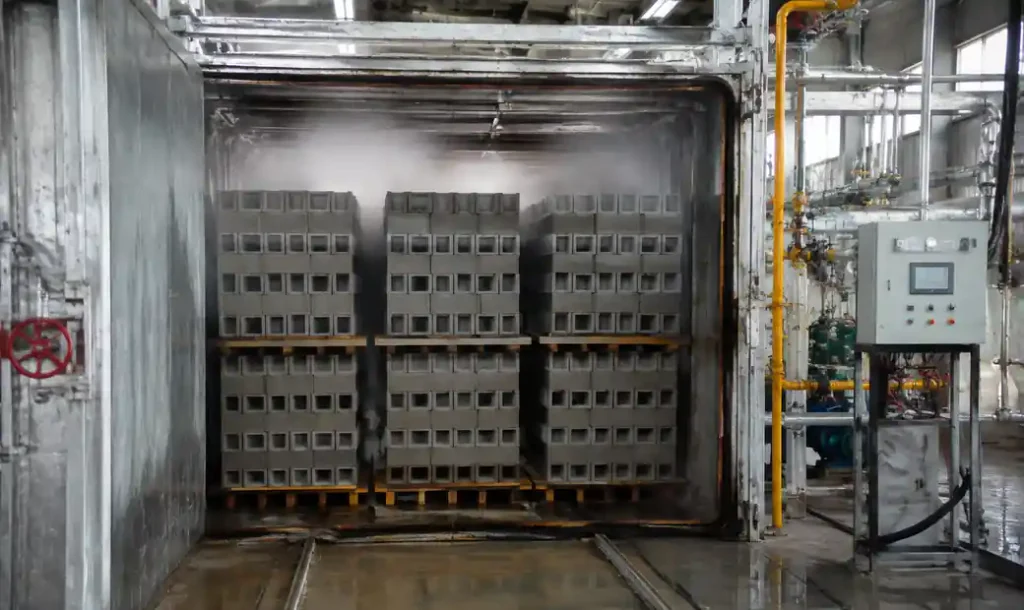
Commercial block manufacturers use three primary curing approaches: natural air curing, water curing, and accelerated steam curing. Each method offers different advantages in terms of production speed, energy costs, and final product quality.
Why Proper Curing Matters for Block Quality
Curing directly impacts five critical block performance characteristics that determine product quality and customer satisfaction.
Compressive Strength Development
Properly cured blocks reach 70% of their design strength within 7 days and 95% within 28 days. Inadequate curing can reduce final strength by 30-50%, causing blocks to fail quality testing and structural requirements.
Dimensional Stability
Controlled curing minimizes shrinkage and prevents warping or cracking. Blocks that dry too quickly develop internal stresses that cause surface cracks, dimensional variations exceeding tolerances, and reduced load-bearing capacity.
Surface Quality
Proper moisture maintenance during curing produces smooth, uniform surfaces free from dusting, efflorescence, and color variations. These surface characteristics affect both aesthetics and long-term durability.
Water Absorption Control
Curing affects the block’s pore structure and capillary network. Well-cured blocks have lower water absorption rates (typically 8-12% by weight), improving freeze-thaw resistance and reducing moisture-related damage.
Production Efficiency
Accelerated curing methods allow next-day shipping, reducing inventory costs and storage space requirements. Natural curing requires 7-14 days of yard space before blocks can be palletized and shipped.
Primary Block Curing Methods
Natural Air Curing
Natural air curing relies on ambient temperature and humidity to maintain moisture in blocks during the hydration period. This method requires minimal equipment investment but demands careful environmental management and longer curing cycles.
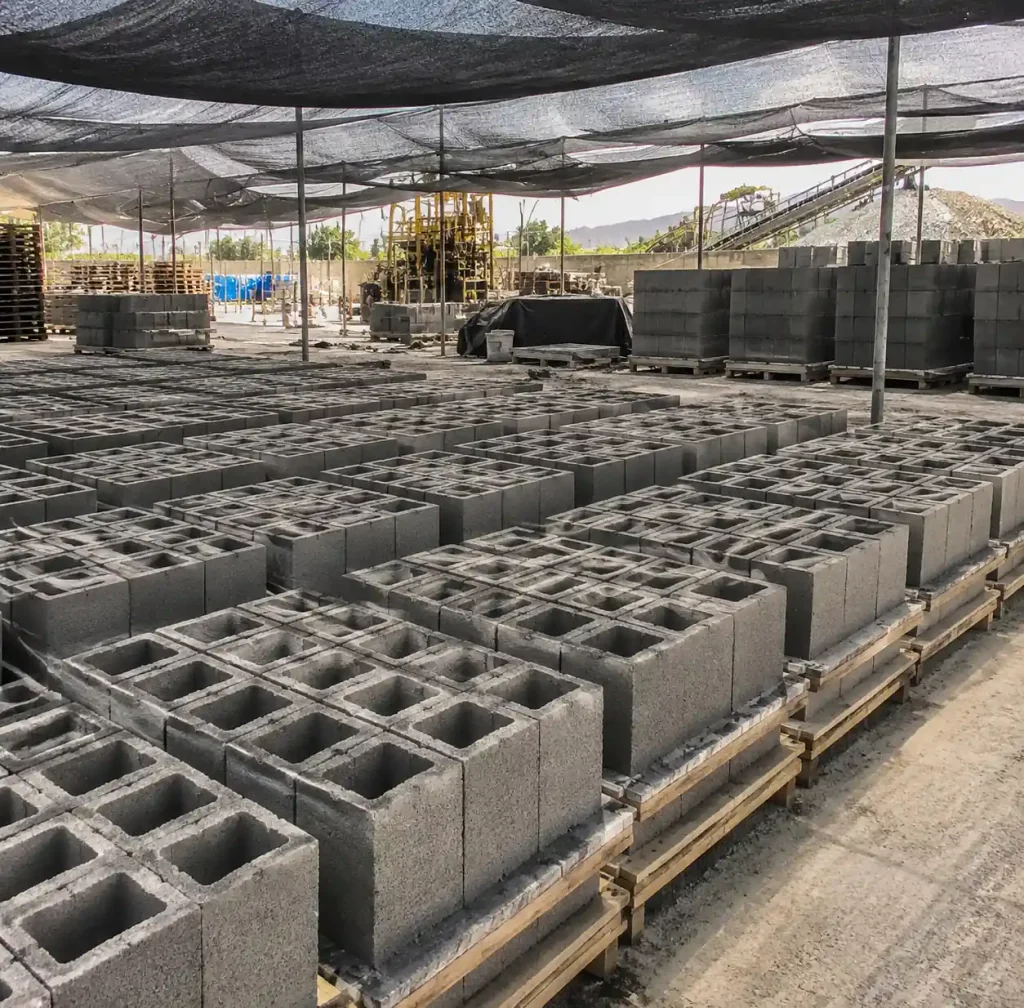
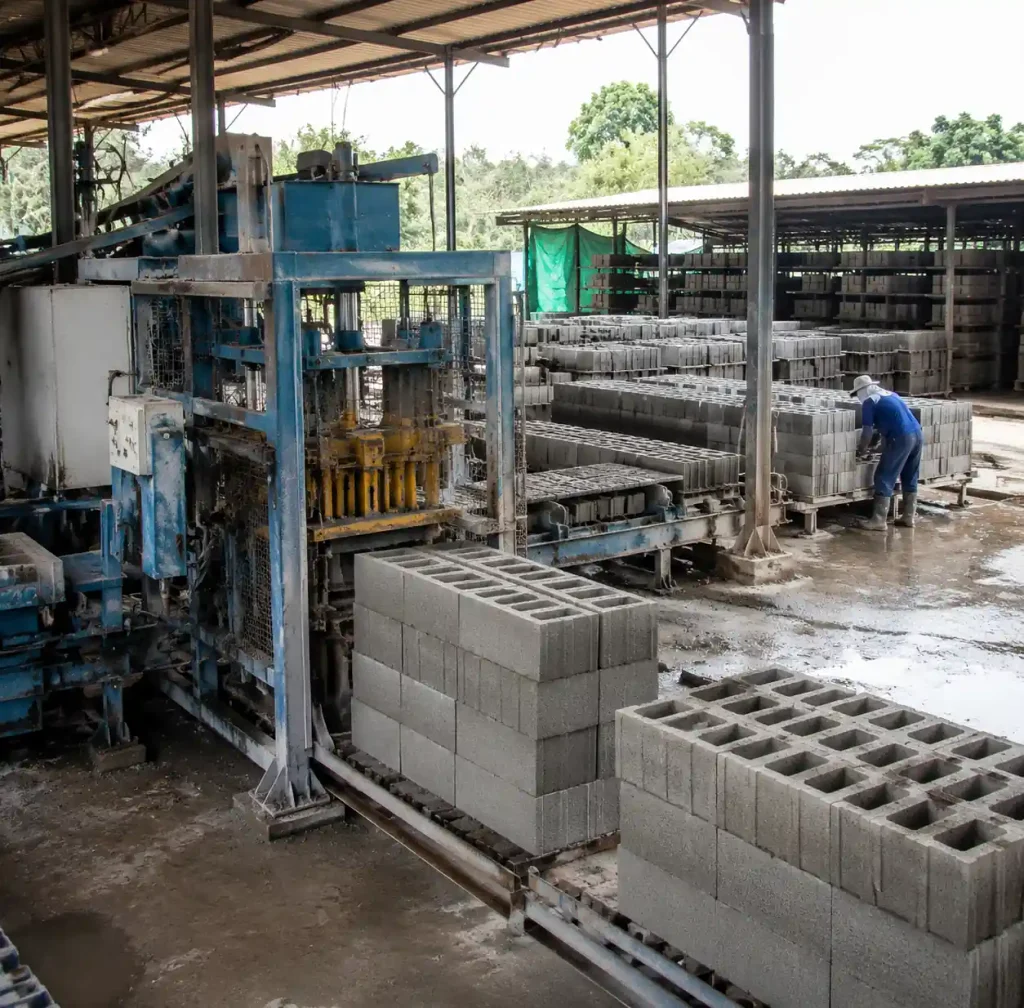
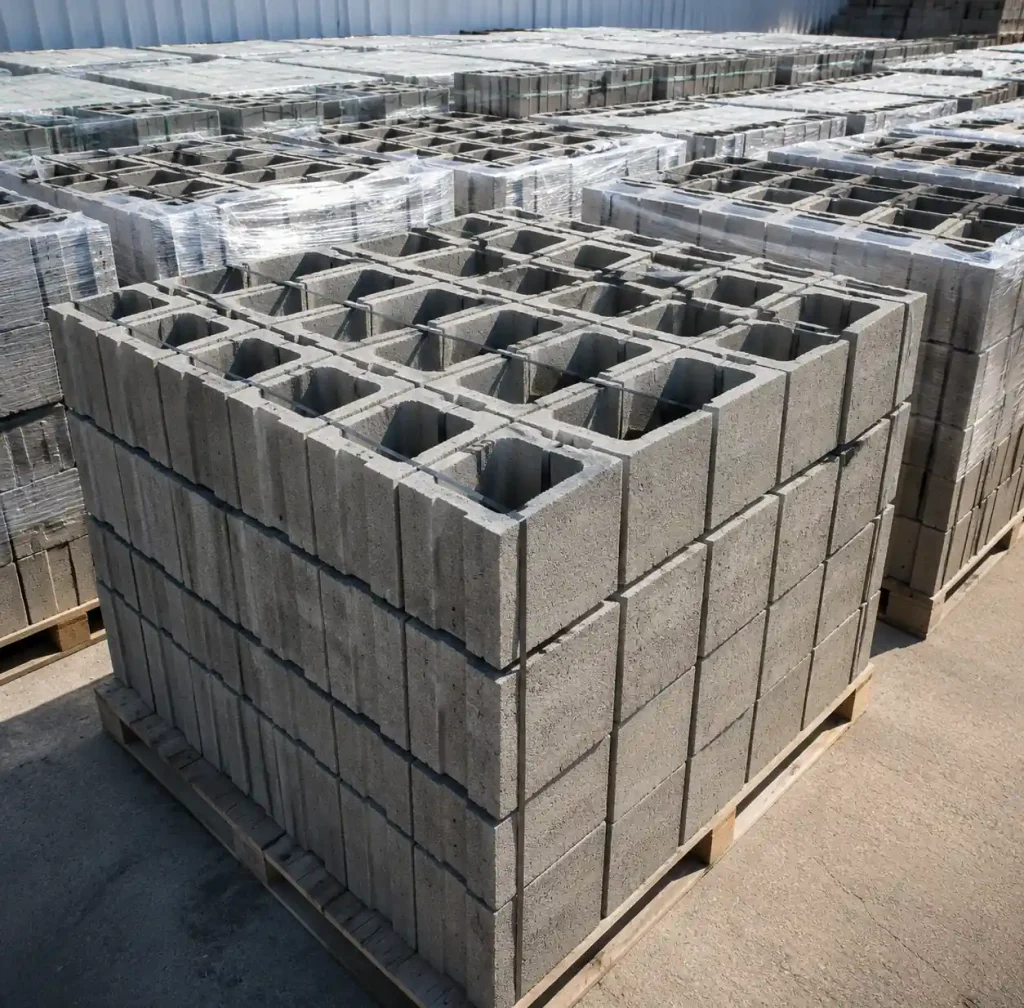
You can implement natural air curing by stacking freshly demolded blocks in organized rows within a covered curing yard. Blocks should be placed on pallets with adequate spacing for air circulation while being protected from direct sunlight and wind exposure.
Process Requirements:
- Maintain ambient temperature between 15°C and 30°C
- Keep relative humidity above 80% through regular water spraying
- Protect blocks from rain, wind, and temperature extremes
- Allow 7-14 days before handling or shipping
- Monitor surface moisture twice daily during the first 3 days
Natural curing works well for small to medium production volumes (5,000-15,000 blocks per day) where capital investment must be minimized. However, this method offers limited production flexibility and depends heavily on local climate conditions.
Water Curing (Pond or Spray Method)
Water curing maintains continuous surface moisture through immersion in water tanks or regular spray applications. This method produces excellent strength development and surface quality but requires significant water management infrastructure.
Pond Curing Implementation:
You can submerge stacked blocks in water-filled curing tanks for 7-14 days, ensuring complete immersion and consistent temperature. This approach provides ideal moisture conditions but requires substantial water volumes (approximately 2-3 cubic meters per 1,000 blocks) and handling equipment for loading and unloading.
Spray Curing System:
Install automated spray nozzles throughout the curing yard to maintain surface moisture without full immersion. Spraying should occur every 2-4 hours during daylight hours for the first 3 days, then twice daily for the following 4-7 days.
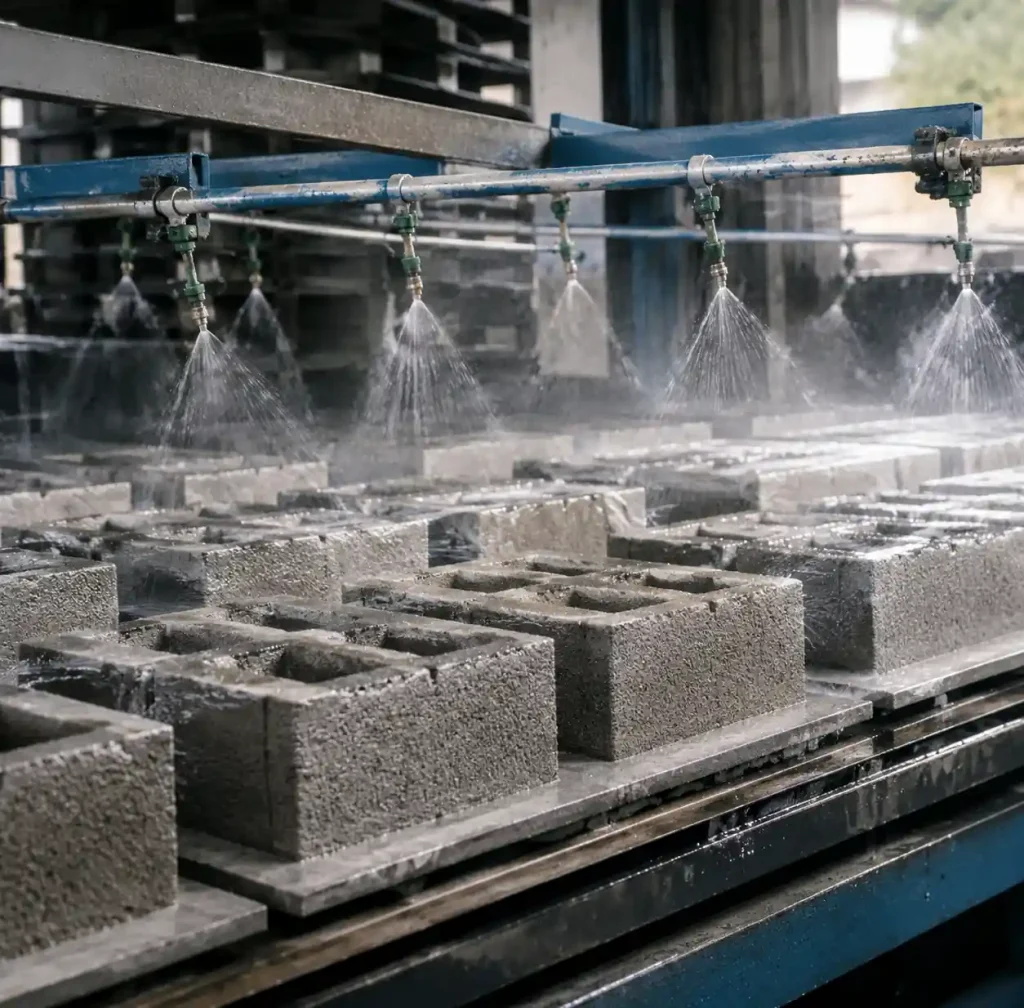
Water curing delivers superior results for high-strength blocks, decorative units, and products requiring exceptional surface quality. The main challenges include water cost, drainage management, and the risk of surface staining from prolonged water contact.
Accelerated Steam Curing
Steam curing uses elevated temperature and humidity in enclosed chambers to accelerate cement hydration, allowing blocks to achieve handling strength within 12-18 hours. This method dominates commercial production due to its speed and consistency.
Steam Curing Cycle Stages:
- Initial Set Period (2-4 hours): Allow blocks to gain initial strength at ambient temperature before introducing steam
- Temperature Rise (2-3 hours): Gradually increase chamber temperature at 20-25°C per hour to prevent thermal shock
- Peak Temperature Hold (4-8 hours): Maintain temperature at 60-70°C with 95-100% relative humidity
- Cooling Period (2-4 hours): Gradually reduce temperature to prevent surface cracking
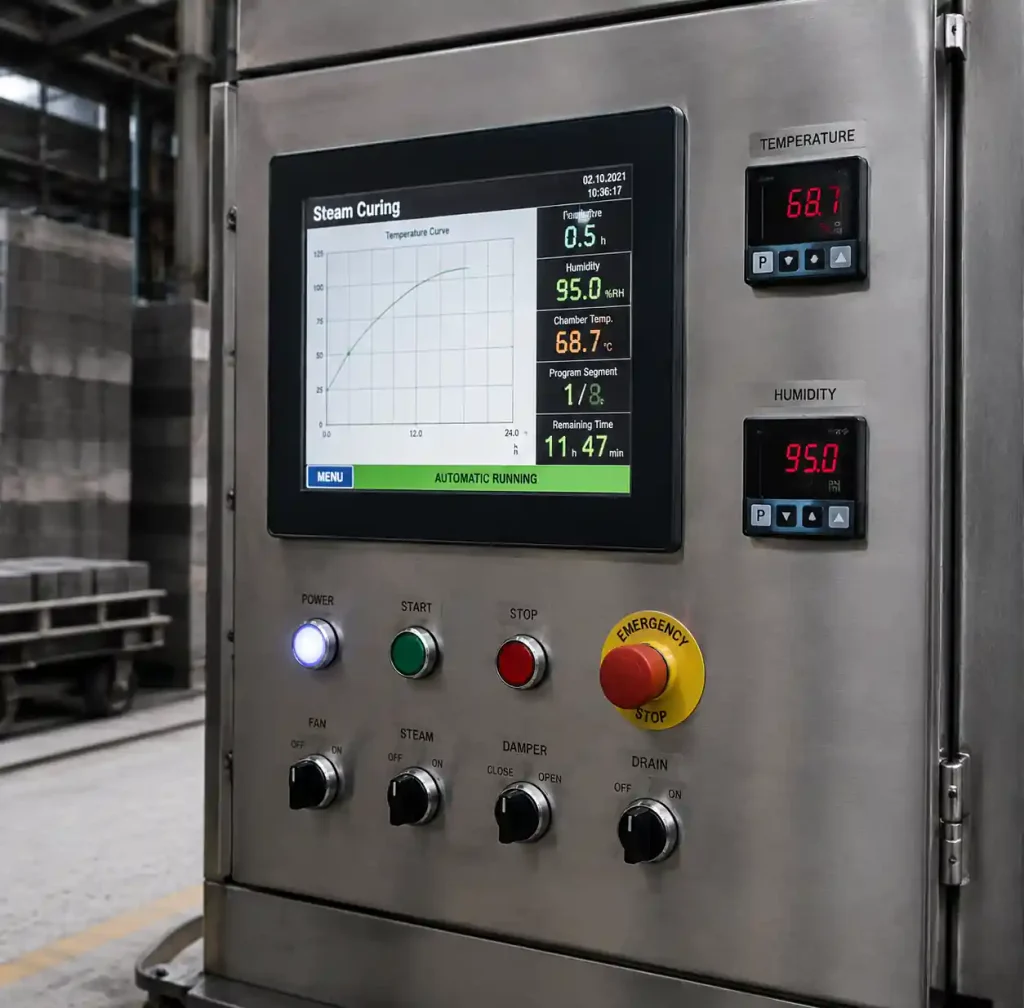
The complete cycle typically requires 12-16 hours, enabling daily production turnover. You can achieve 60-80% of 28-day strength within this timeframe, allowing blocks to be palletized and shipped the following day.
Steam Curing Equipment Requirements:
- Insulated curing chambers with capacity matching daily production
- Steam boiler system (typically 0.5-1.0 ton capacity per chamber)
- Temperature and humidity monitoring systems
- Automated control panels for cycle management
- Proper ventilation for steam release
Steam curing requires significant capital investment ($50,000-$200,000 depending on capacity) but reduces land requirements by 70% compared to natural curing and eliminates weather-related production disruptions.
Comparison of Curing Methods
| Curing Method | Time to Handling Strength | 7-Day Strength (% of 28-day) | Capital Investment | Operating Cost | الأفضل لـ |
|---|---|---|---|---|---|
| Natural Air Curing | 7-14 days | 65-75% | Low ($5K-$15K) | Very Low | Small operations, dry climates |
| Water Spray Curing | 5-7 days | 70-80% | Medium ($15K-$40K) | Medium | Medium production, quality focus |
| Water Pond Curing | 7-10 days | 75-85% | Medium ($20K-$50K) | Medium-High | High-strength blocks, decorative units |
| Steam Curing | 12-18 hours | 60-75% | High ($50K-$200K) | High | High-volume production, fast turnover |
| Autoclave Curing | 8-12 hours | 80-90% | Very High ($200K-$500K) | Very High | Specialized products, maximum strength |
Critical Curing Parameters to Monitor
Temperature Control
Temperature affects hydration rate, strength development, and surface quality throughout the curing process. Concrete hydration proceeds optimally between 20°C and 30°C, with reaction rates doubling for every 10°C temperature increase within this range.
Temperature Management Guidelines:
- Initial curing: Maintain 15-25°C for first 24 hours
- Steam curing peak: 60-70°C maximum (higher temperatures cause strength reduction)
- Avoid temperature differentials exceeding 20°C between block core and surface
- Never allow blocks to freeze during curing (hydration stops below 5°C)
- Cool blocks gradually to prevent thermal shock cracking
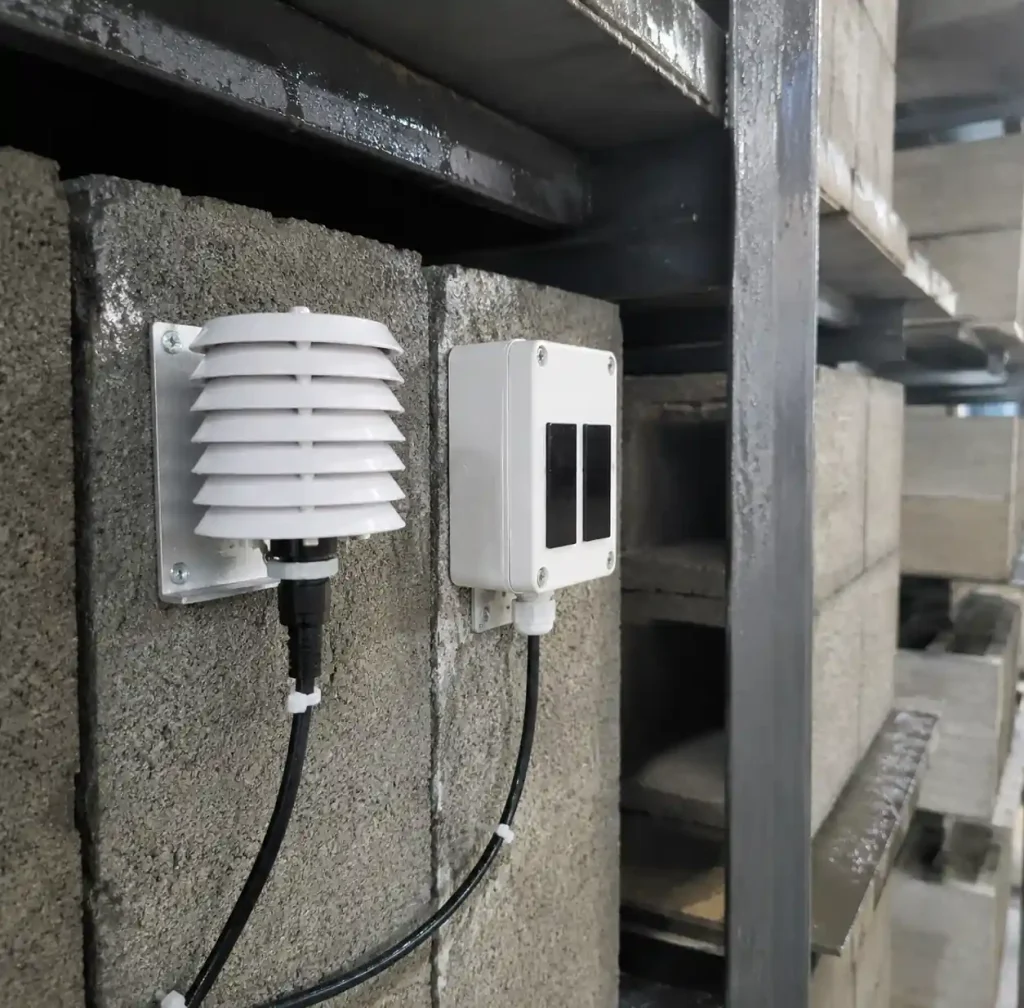
You should install temperature sensors at multiple points within curing chambers and maintain detailed temperature logs for quality control documentation.
Humidity Management
Relative humidity above 80% prevents premature moisture loss from block surfaces. When humidity drops below this threshold, surface drying causes shrinkage cracks and reduces ultimate strength development.
Humidity Control Methods:
- Natural curing: Apply water spray to maintain visible surface moisture
- Steam curing: Inject live steam to maintain 95-100% relative humidity
- Use humidity sensors to trigger automatic spray systems
- Cover blocks with polyethylene sheeting when ambient humidity is low
- Avoid exposing blocks to wind during the first 3 days
Insufficient humidity during the first 72 hours causes the most severe quality problems, as early-age moisture loss cannot be fully recovered through subsequent curing.
Curing Duration Requirements
Curing duration must be sufficient for cement hydration to achieve target strength levels. The relationship between curing time and strength development follows a logarithmic curve, with most strength gained in the first 7 days.
Minimum Curing Periods by Method:
- Natural air curing: 7 days minimum, 14 days for high-strength blocks
- Water curing: 7 days for standard blocks, 10-14 days for structural units
- Steam curing: 12-18 hour cycle, followed by 24-48 hours ambient curing
- Cold weather: Extend all curing periods by 30-50% when temperatures drop below 15°C
Blocks should not be shipped until they reach minimum handling strength of 8-10 MPa (typically 50-60% of design strength) to prevent damage during loading and transportation.
Common Curing Defects and Prevention
Surface Cracking
Surface cracks appear as fine hairline fractures across block faces, typically caused by rapid moisture loss or thermal shock during curing.
Prevention Strategies:
- Maintain consistent moisture on all block surfaces during first 3 days
- Avoid exposing hot blocks to cold air or water
- Increase steam-up rate gradually (maximum 25°C per hour)
- Use curing compounds on blocks that cannot be continuously wet
- Protect blocks from direct sunlight and wind exposure
Surface cracks reduce both appearance quality and structural performance, making affected blocks unsuitable for exposed applications.
Insufficient Strength Development
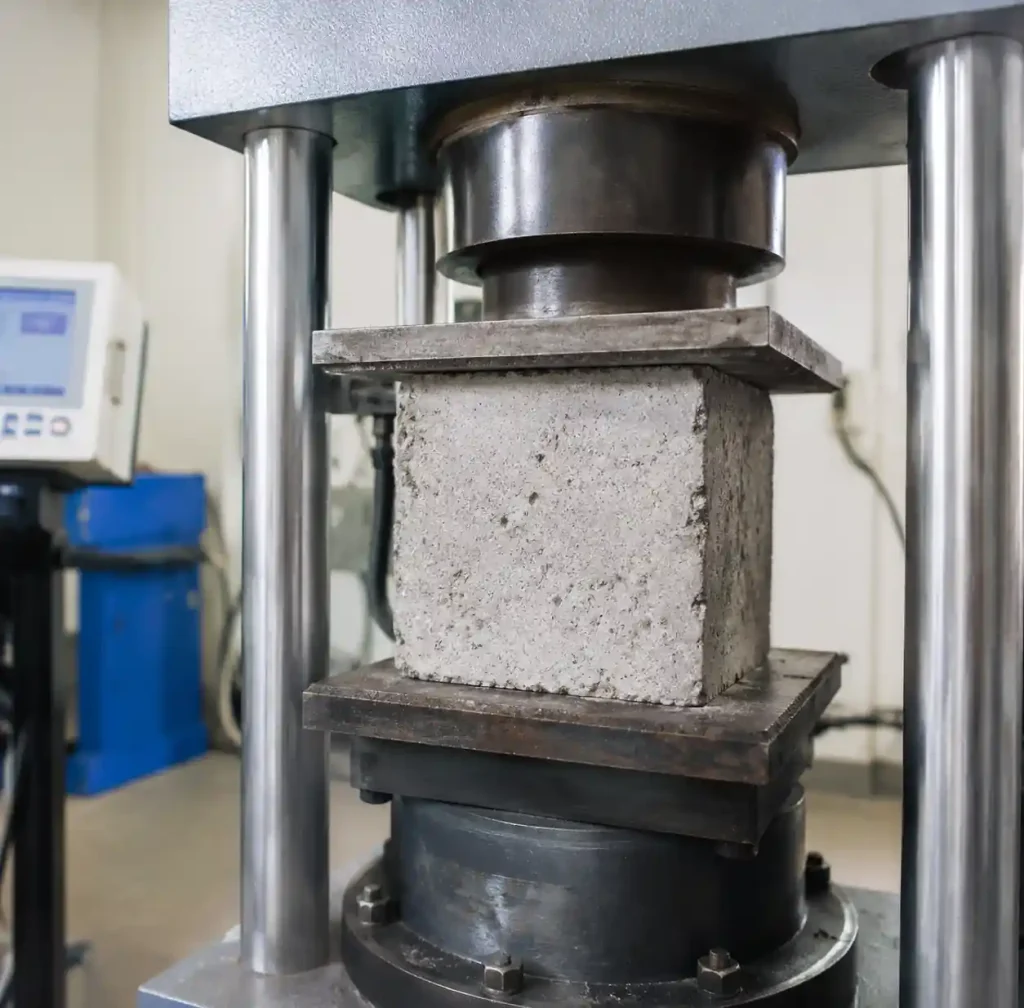
Blocks failing compressive strength tests typically result from inadequate curing duration, poor temperature control, or excessive early-age moisture loss.
Root Causes and Solutions:
- Early demolding: Allow minimum 8-12 hours initial set before handling
- Low curing temperature: Maintain above 15°C, extend duration in cold weather
- Moisture loss: Increase spray frequency or improve humidity control
- Poor mix design: Verify adequate cement content and water-cement ratio
- Contaminated aggregates: Test for clay, silt, or organic matter that inhibits hydration
You must conduct regular compression testing at 7 days and 28 days to verify curing effectiveness and adjust parameters when results fall below specifications.
Efflorescence Formation
White crystalline deposits appear on block surfaces when soluble salts migrate to the surface during curing and evaporate, leaving salt residue.
Prevention Methods:
- Use low-alkali cement and clean aggregates
- Minimize free water in mix design
- Avoid excessive wetting during curing
- Ensure proper drainage in curing areas
- Store blocks off ground on pallets with air circulation
Efflorescence primarily affects aesthetics rather than structural performance, but customers perceive it as a quality defect that reduces product value.
Dimensional Variations
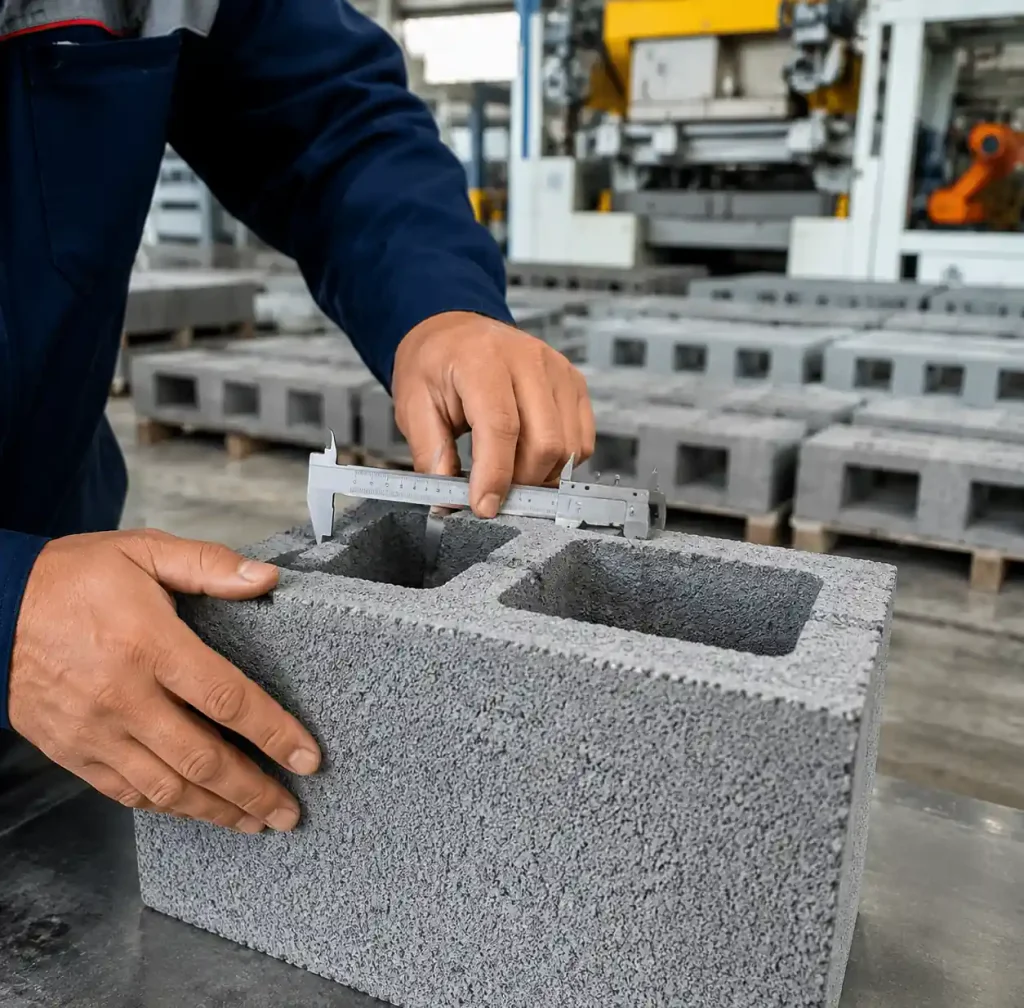
Blocks exceeding dimensional tolerances (typically ±3mm for length and width) result from uneven curing conditions that cause differential shrinkage.
Control Measures:
- Maintain uniform temperature throughout curing chamber
- Ensure consistent moisture exposure on all block surfaces
- Use proper mix design with controlled slump
- Allow adequate cooling before measurement
- Calibrate molds regularly to prevent cumulative tolerances
Dimensional consistency affects laying productivity and mortar consumption in masonry construction, making it a critical quality parameter for professional buyers.
Optimizing Curing Operations for Different Production Scales
Small-Scale Operations (Under 10,000 blocks/day)
Small producers should focus on natural curing with moisture management enhancements to minimize capital investment while maintaining acceptable quality.
Recommended Setup:
- Covered curing yard with concrete floor and shade structures
- Manual or semi-automated spray system with timer controls
- Polyethylene sheeting for overnight moisture retention
- Minimum 14-day inventory capacity before shipping
- Basic temperature and humidity monitoring
This approach requires $5,000-$15,000 initial investment and can achieve 7-day strengths of 65-75% of design capacity with proper management.
Medium-Scale Operations (10,000-30,000 blocks/day)
Medium producers benefit from hybrid systems combining natural curing with controlled moisture application to improve consistency and reduce cycle time.
Recommended Setup:
- Partially enclosed curing area with automated spray systems
- Timed water application every 2-4 hours
- Sectioned curing zones for different production batches
- 7-10 day inventory capacity
- Digital temperature/humidity logging
Investment of $20,000-$50,000 enables 7-day shipping cycles with 70-80% strength achievement and improved surface quality.
Large-Scale Operations (Over 30,000 blocks/day)
High-volume producers require steam curing systems to achieve daily turnover and minimize land requirements for curing storage.
Recommended Setup:
- Multiple insulated curing chambers (3-5 units)
- Automated steam boiler with programmable controls
- Chamber capacity matching 1-2 days of production
- Automated loading/unloading systems
- Comprehensive monitoring and data logging
- Backup natural curing area for emergency use
Capital investment of $100,000-$300,000 enables next-day shipping, reduces inventory carrying costs by 80%, and provides consistent quality independent of weather conditions.
Quality Testing During and After Curing
In-Process Monitoring
Effective quality control requires continuous monitoring throughout the curing cycle to identify problems before they affect large production batches.
Daily Monitoring Checklist:
- Record chamber temperatures every 2 hours during steam cycles
- Verify humidity levels remain above 80% in all curing zones
- Inspect surface moisture on sample blocks twice daily
- Check for visible cracks, discoloration, or surface defects
- Document any equipment malfunctions or process deviations
You should establish control charts for key parameters and investigate any readings outside established limits immediately.
Post-Curing Testing
Compression testing verifies that curing processes achieved target strength levels and identifies any systematic problems requiring corrective action.
Testing Protocol:
- Test minimum 3 blocks per 5,000 block batch
- Conduct 7-day tests to verify early strength development
- Perform 28-day tests for final strength certification
- Test blocks from different curing zones to verify uniformity
- Maintain detailed records for quality documentation
Blocks should achieve minimum 70% of design strength at 7 days and 95% at 28 days. Consistent failures indicate problems with mix design, curing parameters, or raw material quality requiring investigation.
Seasonal Adjustments for Curing
Hot Weather Curing (Above 30°C)
High temperatures accelerate moisture loss and can cause thermal cracking if not properly managed.
Hot Weather Modifications:
- Increase spray frequency to every 1-2 hours during first 3 days
- Use cooled mixing water to reduce initial concrete temperature
- Apply curing compounds immediately after demolding
- Provide additional shade structures in curing yards
- Consider night production to avoid peak heat exposure
Cold Weather Curing (Below 10°C)
Low temperatures slow hydration rates and risk freezing damage if moisture is present when temperatures drop below 0°C.
Cold Weather Modifications:
- Extend curing period by 50-100% to compensate for slower hydration
- Use insulated blankets or heated enclosures to maintain minimum 10°C
- Add accelerating admixtures to mix design (following manufacturer guidelines)
- Avoid water spray methods that increase freezing risk
- Monitor overnight low temperatures and add supplemental heating if needed
Equipment and Infrastructure Requirements
The curing infrastructure you need depends on production volume, available capital, and target quality levels.
Basic Natural Curing Setup ($5,000-$15,000):
- Covered curing area with concrete or compacted gravel floor
- Manual water hose or simple spray system
- Polyethylene sheeting and support frames
- Basic thermometer and hygrometer
Advanced Spray Curing System ($20,000-$50,000):
- Automated spray nozzles with timer controls
- Water storage and pumping system
- Partially enclosed curing structures
- Digital monitoring equipment
- Drainage system for water management
Steam Curing System ($75,000-$250,000):
- Insulated curing chambers with rails and cart systems
- Steam boiler (diesel, gas, or biomass-fired)
- Automated control panel with PLC programming
- Temperature and humidity sensors throughout chambers
- Steam distribution piping and condensate return
- Ventilation and safety equipment
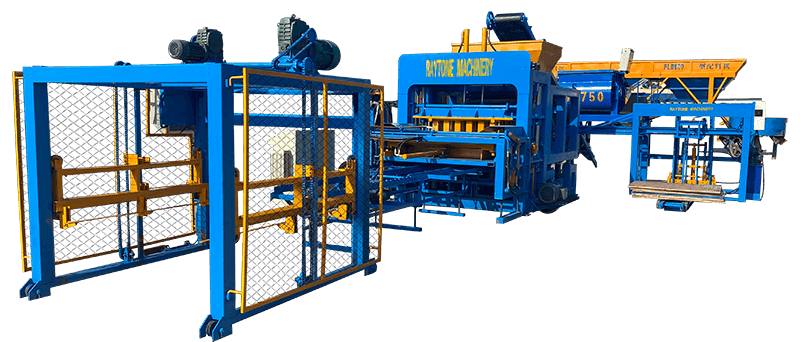
Raytone Block Machinery offers complete curing solutions integrated with our block machine systems, including chamber design, steam boiler selection, and automation programming tailored to your production requirements.
الأسئلة الشائعة
How long should concrete blocks cure before use?
Blocks require minimum 7 days curing before use in non-structural applications and 28 days for structural applications where full design strength is required. Steam-cured blocks shipped after 1-2 days continue gaining strength after installation and reach equivalent 28-day strength through continued ambient curing.
What temperature is best for curing concrete blocks?
Optimal curing temperature ranges from 20°C to 30°C for natural curing methods. Steam curing uses elevated temperatures of 60-70°C during the accelerated cycle but should not exceed 75°C as higher temperatures reduce ultimate strength development. Avoid curing below 10°C as hydration becomes very slow.
Can I speed up block curing naturally?
You can accelerate natural curing slightly by maintaining higher ambient temperatures (using greenhouse structures), increasing moisture retention (with plastic sheeting), and using Type III high-early-strength cement. However, natural curing cannot match steam curing speed without applying external heat and humidity.
Why are my blocks cracking during curing?
Surface cracks during curing typically result from rapid moisture loss (increase spray frequency), thermal shock (reduce steam-up rate), or inadequate initial set time before handling (wait 12+ hours before moving). Deep cracks may indicate mix design problems such as excessive water content or poor aggregate gradation.
How much does steam curing equipment cost?
Complete steam curing systems range from $75,000 for small operations (10,000-20,000 blocks/day) to $250,000+ for high-volume facilities (50,000+ blocks/day). Operating costs include fuel for steam generation (typically $2-$5 per 1,000 blocks) and electricity for controls and handling equipment.
What humidity level is needed for proper curing?
Maintain relative humidity above 80% throughout the curing period to prevent surface moisture loss. Steam curing chambers should reach 95-100% relative humidity. When ambient humidity falls below 80%, you must apply water spray or use curing compounds to seal moisture inside blocks.
الخلاصة
Proper block curing is essential for achieving target strength, dimensional stability, and surface quality in concrete block production. Natural air curing works well for small operations with limited capital, while steam curing delivers the speed and consistency required for high-volume commercial production. Success requires careful control of temperature, humidity, and curing duration along with regular quality testing to verify results.
If you need professional block making equipment with integrated curing solutions for your production facility, Raytone Block Machinery provides complete automatic, semi-automatic, and manual block making systems designed for operations from 5,000 to 50,000+ blocks per day. Our engineering team can help you select the optimal curing method and equipment configuration for your production requirements and budget. اتصل بنا اليوم for expert consultation and factory-direct pricing on complete block production solutions.