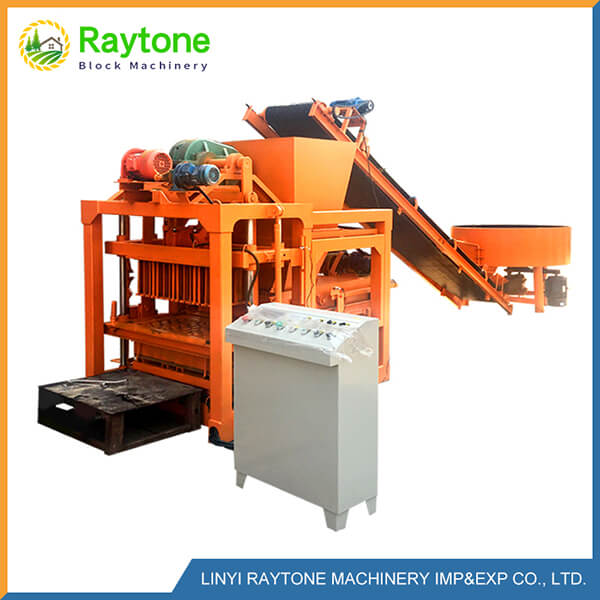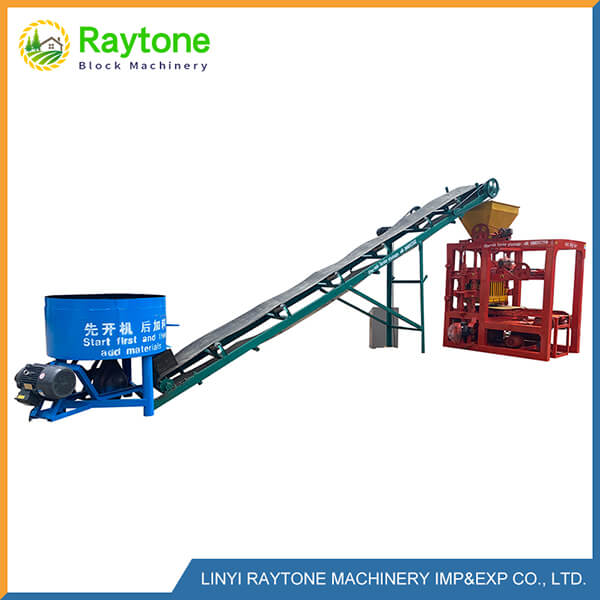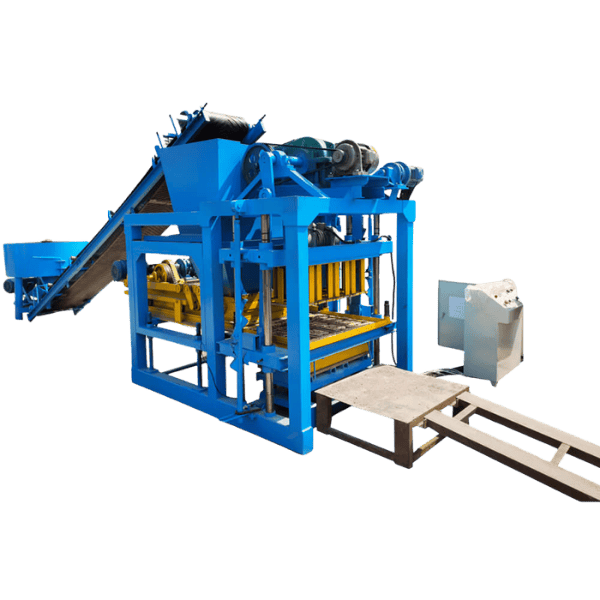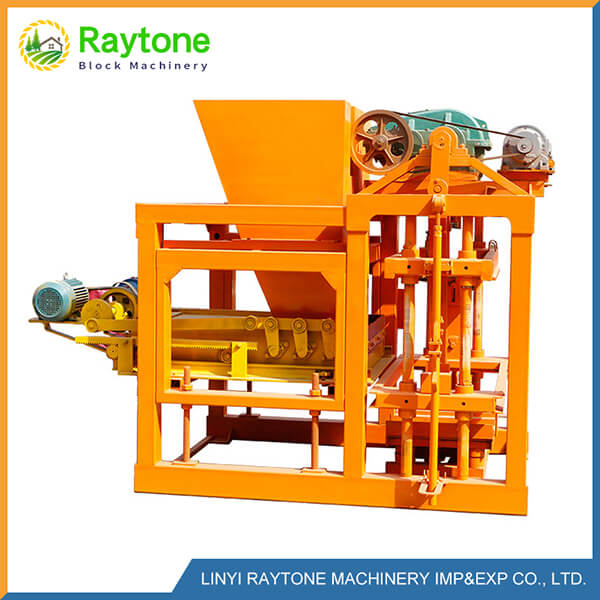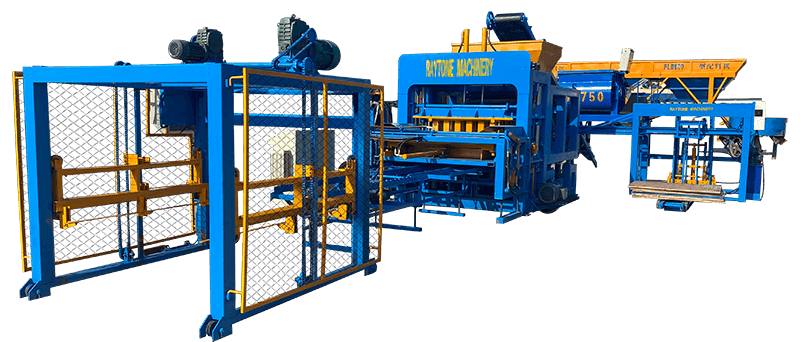






Semi-Automatic Block Making Machine
Cost-effective block production solution combining operator control with mechanical automation. Produce 8,000-14,000 blocks per day with 3-4 workers. Ideal for small factories and budget-conscious manufacturers seeking reliable output without full automation investment.
√ Daily Output | 8,000 – 14,000 Blocks
√ Investment Range | $30K – $65K
√ Monthly Profit Potential | $5K – $15K
√ ROI Period | 18-24 Months
√ Global Installations | 300+ Systems Operating
What is a Semi-Automatic Block Making Machine?
A hybrid production system combining operator control with mechanical forming and hydraulic pressing. Semi-automatic machines require skilled operator participation for pallet positioning and material feeding, but eliminate heavy manual labor through hydraulic compression. Daily output ranges 8,000-14,000 blocks with 3-4 person team. Delivers quality consistency (±1mm precision) with straightforward maintenance and 60% lower investment than full automation. Perfect for small manufacturers seeking mechanization without massive capital commitment.
– Small factories with limited capital budget (<$100K)
– Manufacturers transitioning from manual to mechanized production
– Markets with moderate demand (8K-15K blocks/day)
– Operators prioritizing cost control over maximum automation
– Entrepreneurs testing market viability before full automation
Why Choose Semi-Automatic Production?
Six critical advantages that semi-automatic systems deliver for budget-conscious manufacturers
Affordable Mechanization
60% lower investment than automatic systems ($30K-$65K vs $75K-$180K). Accessible entry point for small manufacturers seeking mechanization benefits without massive capital requirement.
Lower Operating Costs
Reduced electricity consumption (15-23 KW vs 70-110 KW). Smaller facility footprint (150-200 m² vs 200-300 m²). Lower maintenance costs with simpler mechanical design.
Simple Operation & Maintenance
Fewer hydraulic components = easier maintenance. Mechanical parts locally serviceable in most regions. Operators can handle basic repairs after training. Minimal downtime from mechanical issues.
Cost-Conscious Regional Supplier
Mold change in 15-20 minutes. Produces hollow blocks, solid blocks, and pavers. Operator control allows product variation. Respond quickly to market demand changes.
Lower Skill Requirements
Operator training: 20-30 hours (vs 40+ hours for automatic). Simpler operations = faster learning curve. Easier to find and train replacement operators in local markets.
Proven Upgrade Path
Clear stepping stone to full automation. Start semi-automatic → Build profitability → Upgrade to automatic. Use Year 1-2 profits to finance automation without additional capital raising.
Complete Range of Semi-Automatic Block Machines
From Budget Entry to Premium Semi-Automatic – Choose Your Capacity
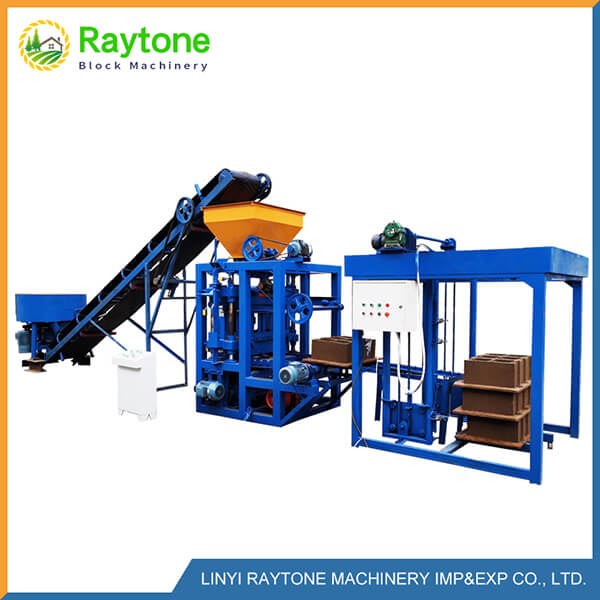
Premium Semi-Automatic Block Machine
Highest output in semi-automatic category. Produces 14,400 blocks per 8-hour shift with advanced mechanical system for improved consistency.
Model: QT4-30

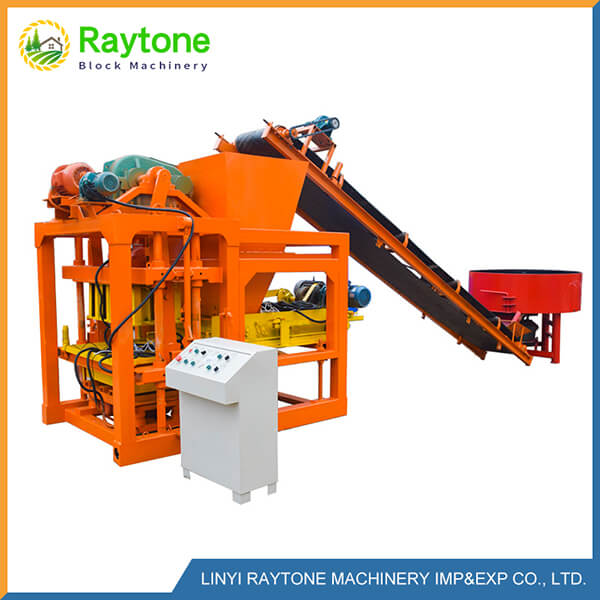
Standard Semi-Automatic Block Making Machine
Balanced capacity and investment. Delivers 11,520 blocks daily with proven reliability and optimal capacity-to-cost ratio for small factories.
Model: QT4-24
Technical Specifications - All Models
Detailed performance data to compare production capacity, investment, and returns
| SPECIFICATION | QT4-30 | QT4-24 |
|---|---|---|
| Daily Capacity (blocks/8h) | 14,400 | 11,520 |
| Machine Power | 23.15 KW | 23.15 KW |
| Footprint | 200 m² | 200 m² |
| Machine Dimensions | 2600×2000×2000 mm | 1800×1500×2520 mm |
| Machine Weight | 3.2 T | 1.5 T |
| Operators Required | 4 | 4 |
| Vibration Force | 50 KN | 50 KN |
| Molding Period | 20-25s | 22-27s |
| Precision | ±1mm | ±1mm |
| Paired Mixer | JQ350 | JQ350 |
| Investment Cost | $65,000 | $45,000 |
| Monthly Profit* | $12-15K | $8-12K |
| ROI Period | 18-20 months | 19-22 months |
| Block Type | QT4-30 | QT4-24 |
|---|---|---|
| Hollow 400×100×200 | 14,400 | 11,520 |
| Hollow 400×150×200 | 9,600 | 7,680 |
| Hollow 400×200×200 | 7,200 | 5,760 |
| Solid 240×115×50 | 28,800 | 23,040 |
| Paver 200×163×60 | 10,800 | 8,640 |
Professional Capacity Selection Guide
Choose the right semi-automatic machine based on your budget, market size, and growth plans
QT4-24 – Optimal Entry Choice
$70K budget, ideal for first-time manufacturers.
Lowest risk (19–22 months ROI) with sufficient production capacity.
Chosen by small-scale operators for proven, simple technology.
QT4-30 – Recommended Upgrade Choice
$70K–$100K budget, ideal for outgrown manual operations.
Fast ROI (18–20 months) with improved quality consistency.
Clear upgrade path to full automation in Year 2–3.
QT4-24 / QT4-30 – Phased Investment Choice
$50K–$80K initial budget, ideal for market validation first.
18–24 months to build $150K–$300K cash reserves from profits.
Scalable path: add automatic line in Year 2 for combined 37K blocks/day.
QT4-24 – Low Investment Choice
<$80K budget, ideal for stable regional markets with affordable labor.
Very low risk (fast payback even at conservative utilization).
Simple maintenance keeps operating costs minimal with 4-person team.
Best-Selling Models - Detailed Overview
Complete specifications for our semi-automatic block machines
Premium Semi-Automatic Block Machine (QT4-30)
What It Is: Highest-output semi-automatic system producing 14,400 blocks per 8-hour shift. Advanced mechanical system with improved consistency and operator-controlled precision.
Daily Output:14,400 hollow blocks | 28,800 solid blocks | 10,800 pavers
Perfect For: Established small factories with 12K-15K daily demand, operators upgrading from manual production, and manufacturers seeking maximum semi-auto capacity before automation.
Investment & Returns:
– Machine: $65,000
– Monthly Profit: $12,000-$15,000
– Team: 4 operators
– ROI: 18-20 months
Standard Semi-Automatic Block Making Machine (QT4-24)
What It Is: Balanced semi-automatic system with 11,520 blocks/day capacity. Proven reliability with optimal capacity-to-cost ratio for budget-conscious manufacturers.
Daily Output: 11,520 hollow blocks | 23,040 solid blocks | 8,640 pavers
Perfect For: Ultra-budget startups (<$70K investment) with 8K-12K daily demand. ROI in 19-22 months.
Investment & Returns:
Machine: $45,000
Monthly Profit: $8,000-$12,000
Team: 4 operators
More Than a Machine - Complete Semi-Automatic Setup
Semi-automatic machines require supporting equipment for optimal performance
Material Preparation:
- – Aggregate bins: Manual material handling
- – Cement storage: Basic silo or bagged cement
- – Water supply: Standard industrial connection
Material Processing:
- – Concrete Mixer (JQ350): 350L capacity pan mixer
- – Manual batching: Operator-controlled material measurement
- – Simple conveyor: Material transport to machine
Core Production:
- – Semi-Automatic Machine (QT4 series): Hydraulic pressing system
- – Manual pallet positioning: Operator-controlled
- – Vibration mechanism: Mechanical compaction
Output Handling:
- – Manual block removal: Workers move blocks to curing
- – Curing area: Open-air or covered space
- – Pallet management: Manual pallet circulation
Why Semi-Automatic Works:
Lower automation = Lower cost:
- – Simpler equipment = $30K-$65K vs $75K-$180K
- – Less electricity = $100-200 monthly vs $500-1,000
- – Easy maintenance = Operators handle repairs
Trade-offs understood:
- – More labor required (4 operators vs automatic’s efficiency)
- – Lower output (14K max vs 46K automatic)
- – Manual intervention (operator skill impacts quality)
What We Provide:
Complete equipment package | Factory layout design | Professional installation (1-2 weeks) | Operator training (20-30 hours) | Maintenance training | Phone/email technical support
Common Questions Answered
Is semi-automatic suitable for my market?
Yes, if market shows 8K-15K daily demand and capital budget under $100K. Semi-automatic ideal for small-to-medium markets. Produces quality blocks at affordable investment. Competes effectively against manual while avoiding massive automatic investment.
What's the difference vs manual machines?
Can I upgrade to automatic later?
Yes. Semi-automatic is proven stepping stone. Year 1-2: Build profits with semi-automatic. Year 3: Reinvest profits into automatic line. Keep semi-automatic as backup or secondary production. Many customers follow this exact path.
How many workers do I really need?
Both models: 4 operators total. One primary operator controls machine. Three others handle material prep, pallet positioning, and block handling. Much lower than manual (which needs 8-10 workers).
What about maintenance costs?
Simple mechanical design = low maintenance. Monthly costs $200-400 for hydraulic oil, replacement parts, and preventive maintenance. Operators can handle basic repairs after training. No complex electronics like automatic machines.
Can semi-automatic quality compete?
Yes. ±1mm precision meets construction standards. 95%+ qualification rate. Customers accept semi-automatic blocks at same prices as manual blocks. Quality consistency better than manual = fewer returns and complaints.
What if demand exceeds capacity?
Semi-automatic maximum is 14,400 blocks/day (QT4-30). If demand grows beyond 15K daily, upgrade to automatic (QT6-15 produces 23K/day). Keep semi-automatic as secondary line. Run both machines to reach 35K+ combined capacity.