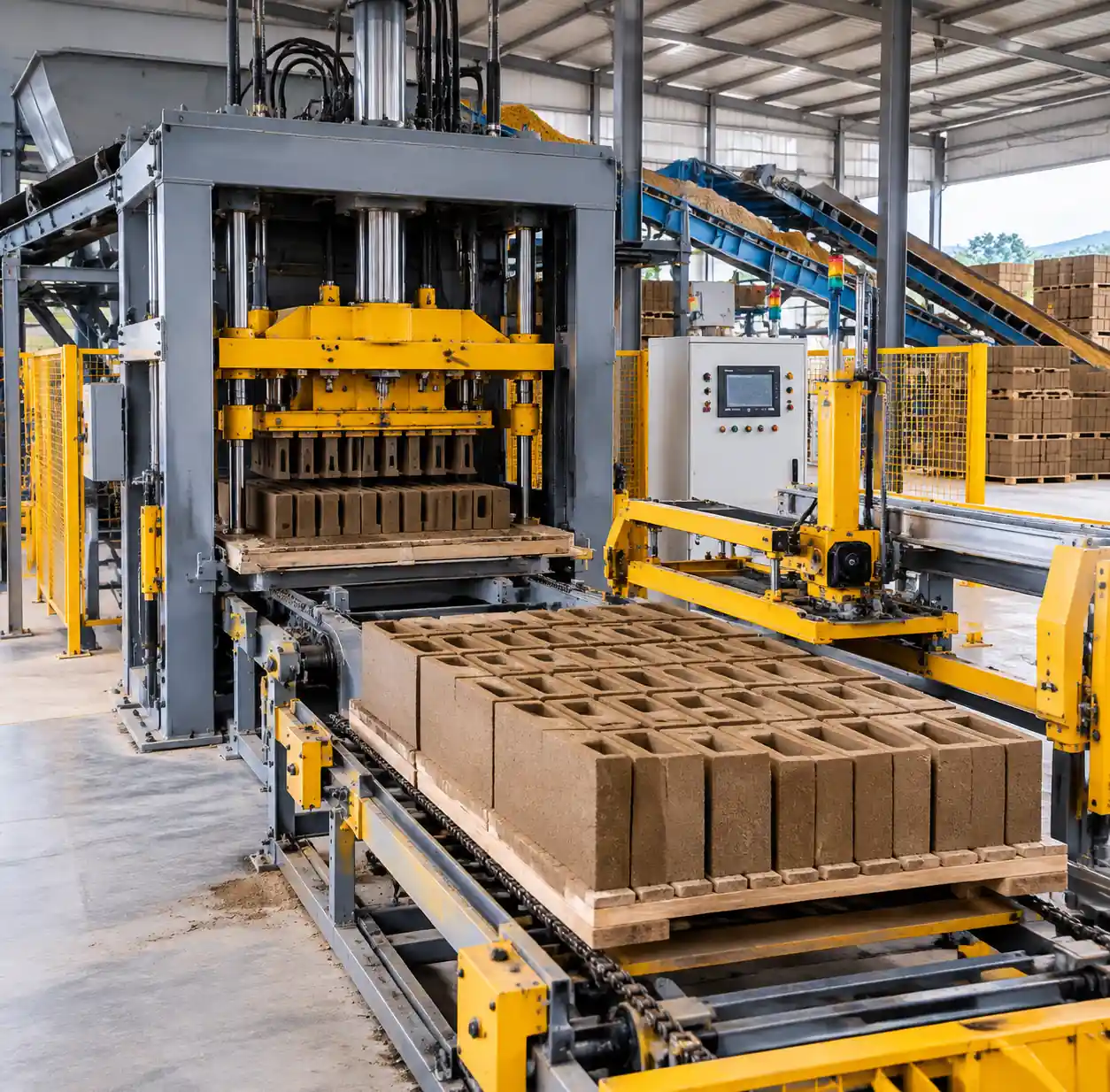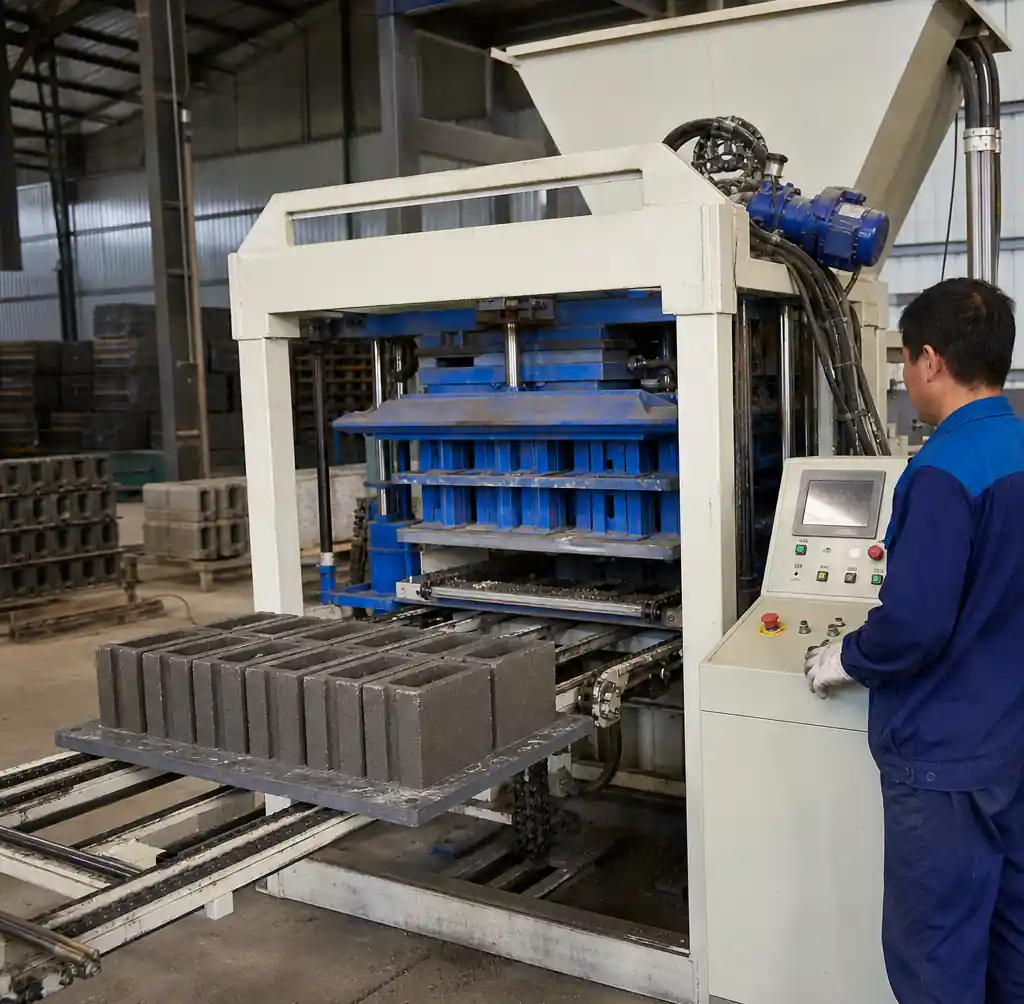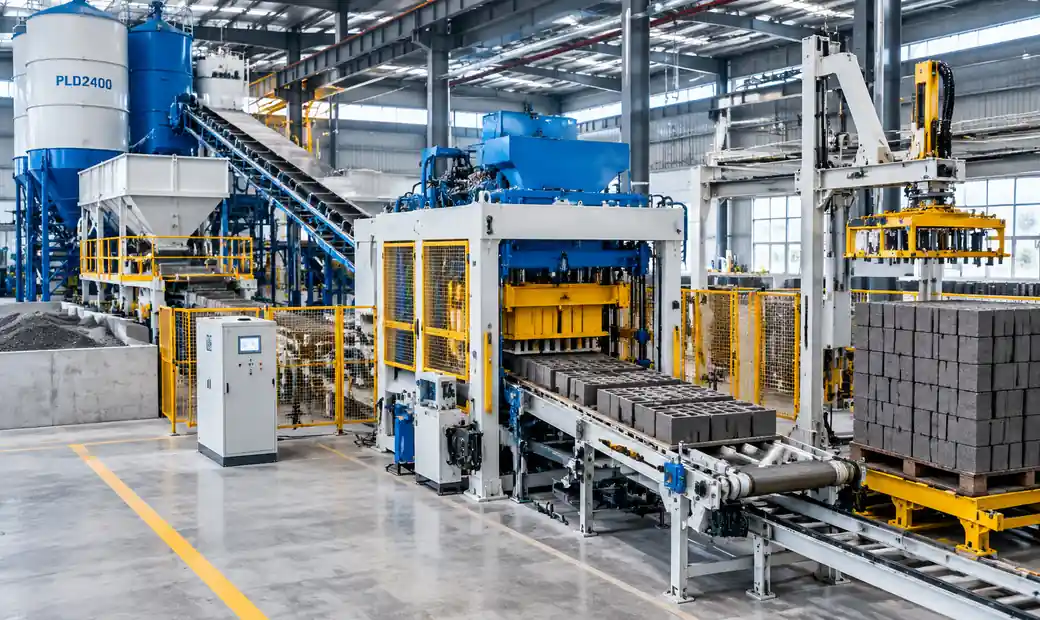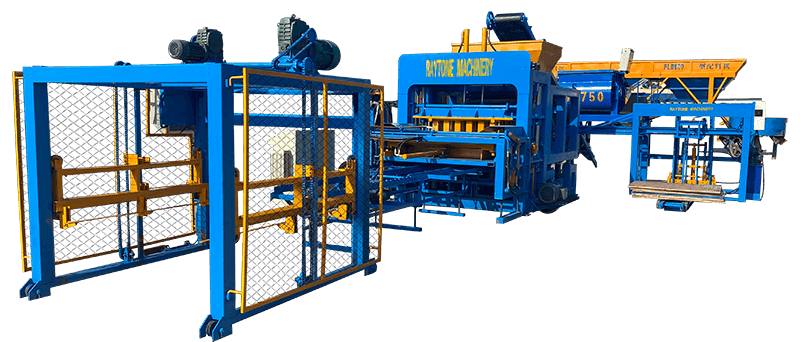






Block manufacturers losing 15-20% of production capacity to quality defects often trace the problem to inadequate vibration system configuration. After analyzing vibration parameters across automatic and semi-automatic block production lines in eight countries, I’ve documented how proper frequency and amplitude settings increase block density by 8-12% while reducing material waste by 18-25%.
Research on concrete compaction demonstrates that vibration systems operating at optimal frequencies (2850-3000 RPM for block machines) achieve 95-98% compaction density compared to 78-85% for poorly configured systems. The global concrete block machine market increasingly demands precision vibration control as quality standards tighten across construction sectors.
This guide explains vibration system technology in block machines, covering eccentric motor design, frequency optimization, amplitude control, impact on block quality, maintenance protocols, and performance tuning strategies for maximum production efficiency.
How Vibration Systems Work in Block Machines
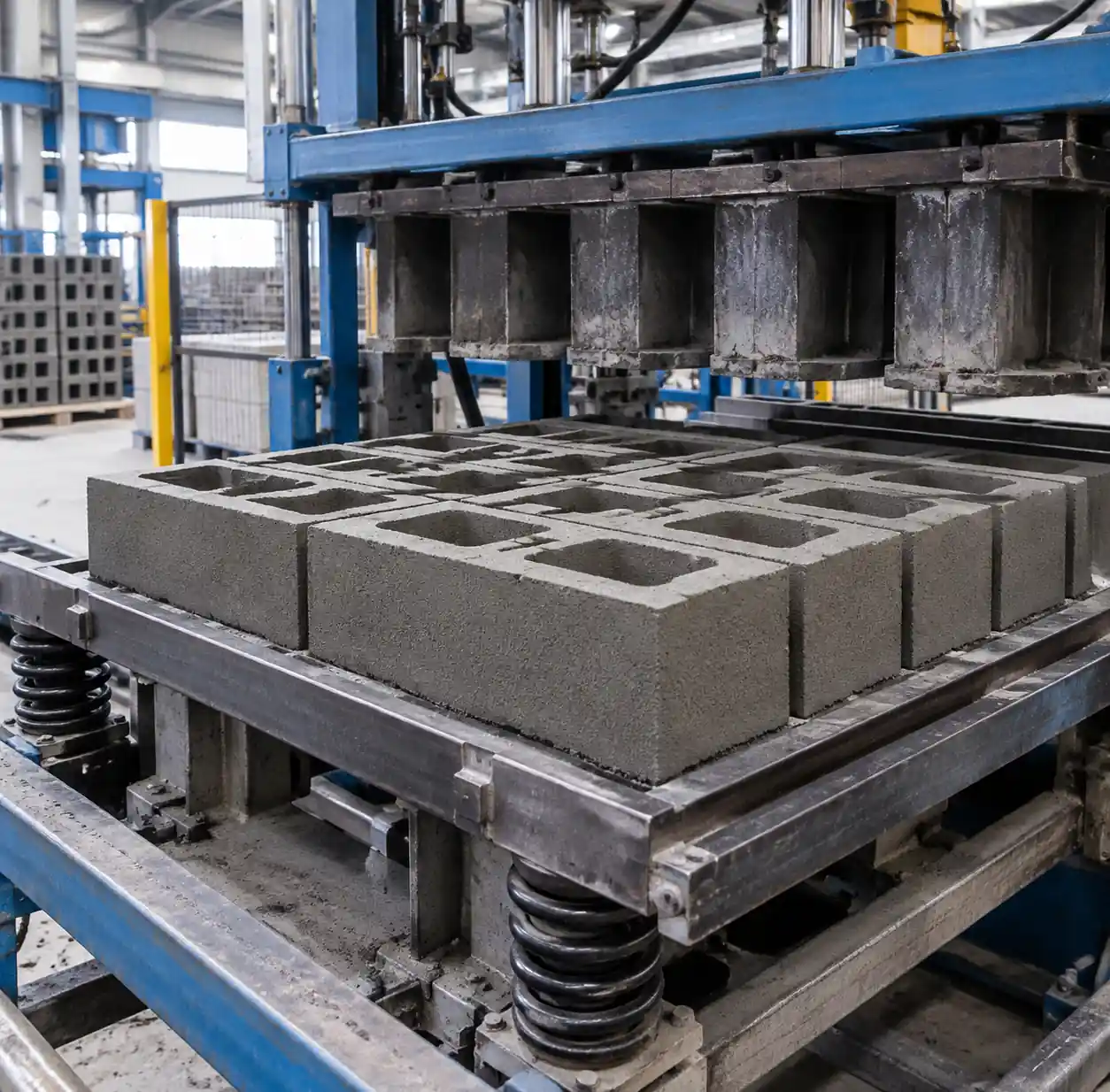
Vibration technology transforms block production from simple compression into dynamic compaction that eliminates air voids and creates uniform density. Block machines use controlled vibration to fluidize concrete mix, allowing particles to settle into optimal positions while forcing trapped air to escape.
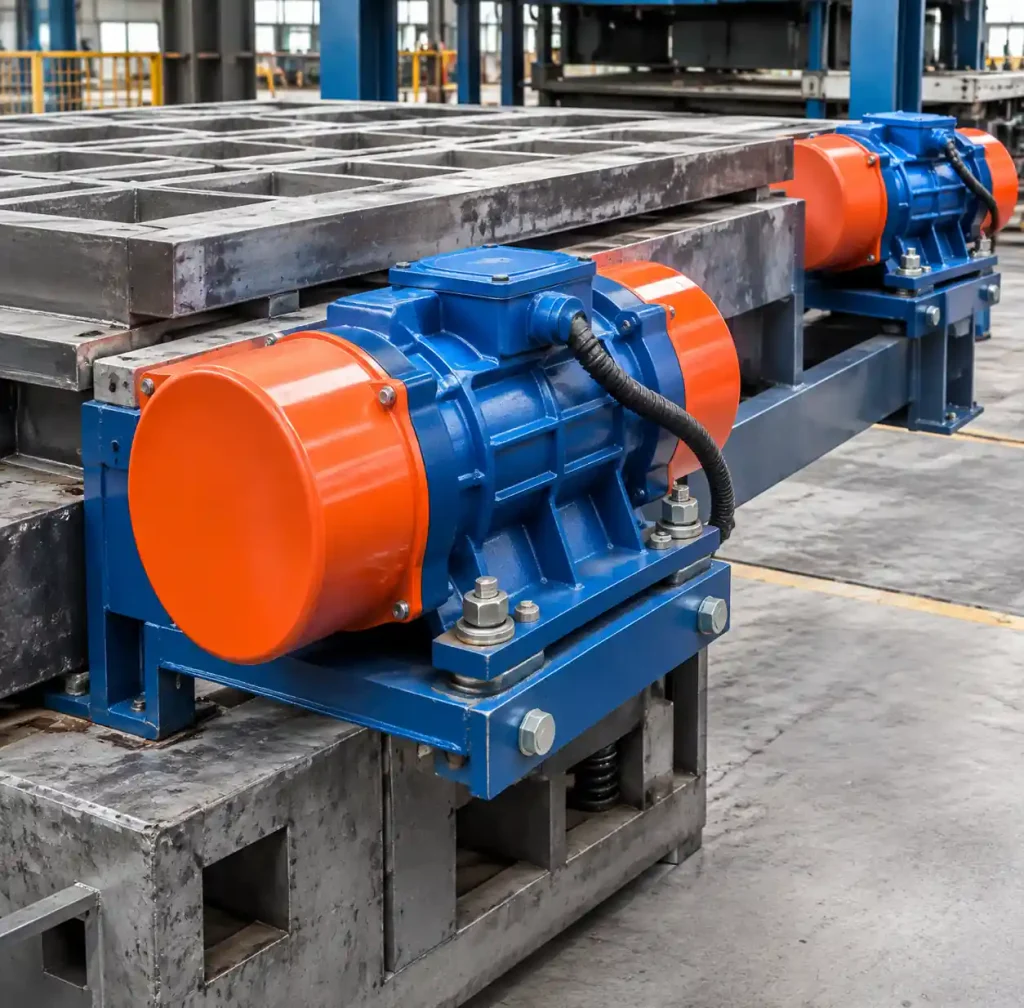
Eccentric Motor Principle
Vibration motors generate force through eccentric weights mounted on rotating shafts. As the motor spins at 2850-3000 RPM, these unbalanced masses create centrifugal force producing rhythmic oscillation. Vibration amplitude depends on eccentric weight size and positioning—heavier weights or wider spacing increases intensity.
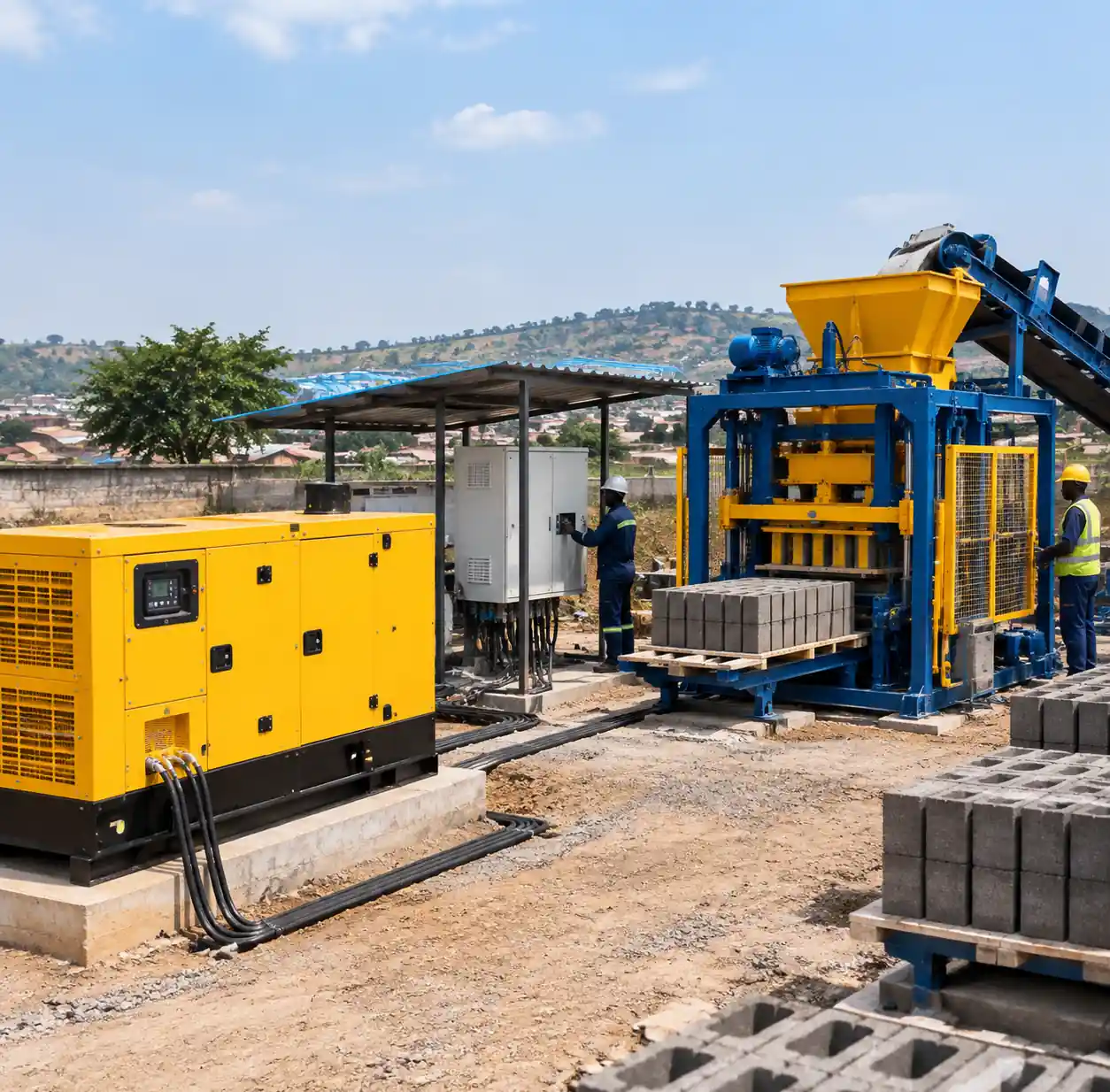
Автоматические блочные машины mount 2-4 vibration motors on the mold table, synchronized to prevent destructive interference. Semi-automatic systems use single or dual motor configurations optimized for lower production volumes.
The mold table receives primary vibration from mounted motors, creating uniform oscillation across the molding surface. This base frequency typically runs at 45-55 Hz (2700-3300 RPM) for optimal concrete particle movement. Studies on vibropressing compaction show that vibration durations of 4-8 seconds at 25-50 Hz combined with 75 kg/cm² pressure produce optimal block strength.
Frequency Settings and Their Impact on Block Quality
Vibration frequency directly determines compaction effectiveness and final block characteristics. Too low frequency fails to fluidize concrete adequately, leaving air pockets and weak zones. Excessive frequency can cause aggregate segregation where coarse particles separate from fine materials, creating non-uniform blocks.
| Frequency Range | Application | Compaction Effect | Block Density | Common Issues |
|---|---|---|---|---|
| 20-35 Hz | Light aggregate blocks | Partial compaction | 75-85% | Insufficient air removal, weak blocks |
| 40-55 Hz | Standard concrete blocks | Optimal compaction | 92-98% | Best balance for most applications |
| 60-80 Hz | Dense aggregate mixes | High intensity | 95-98% | Risk of aggregate segregation |
| 85+ Hz | Specialized applications | Excessive vibration | Variable | Segregation, surface defects |
Optimal Frequency Selection
Research on vibration compaction confirms that frequencies between 40-55 Hz achieve best results for standard concrete blocks. This range provides sufficient energy to liquefy the mix temporarily while maintaining aggregate suspension. You should adjust frequency based on concrete mix design—wetter mixes need lower frequencies (40-45 Hz) while drier zero-slump mixes require higher frequencies (50-55 Hz).
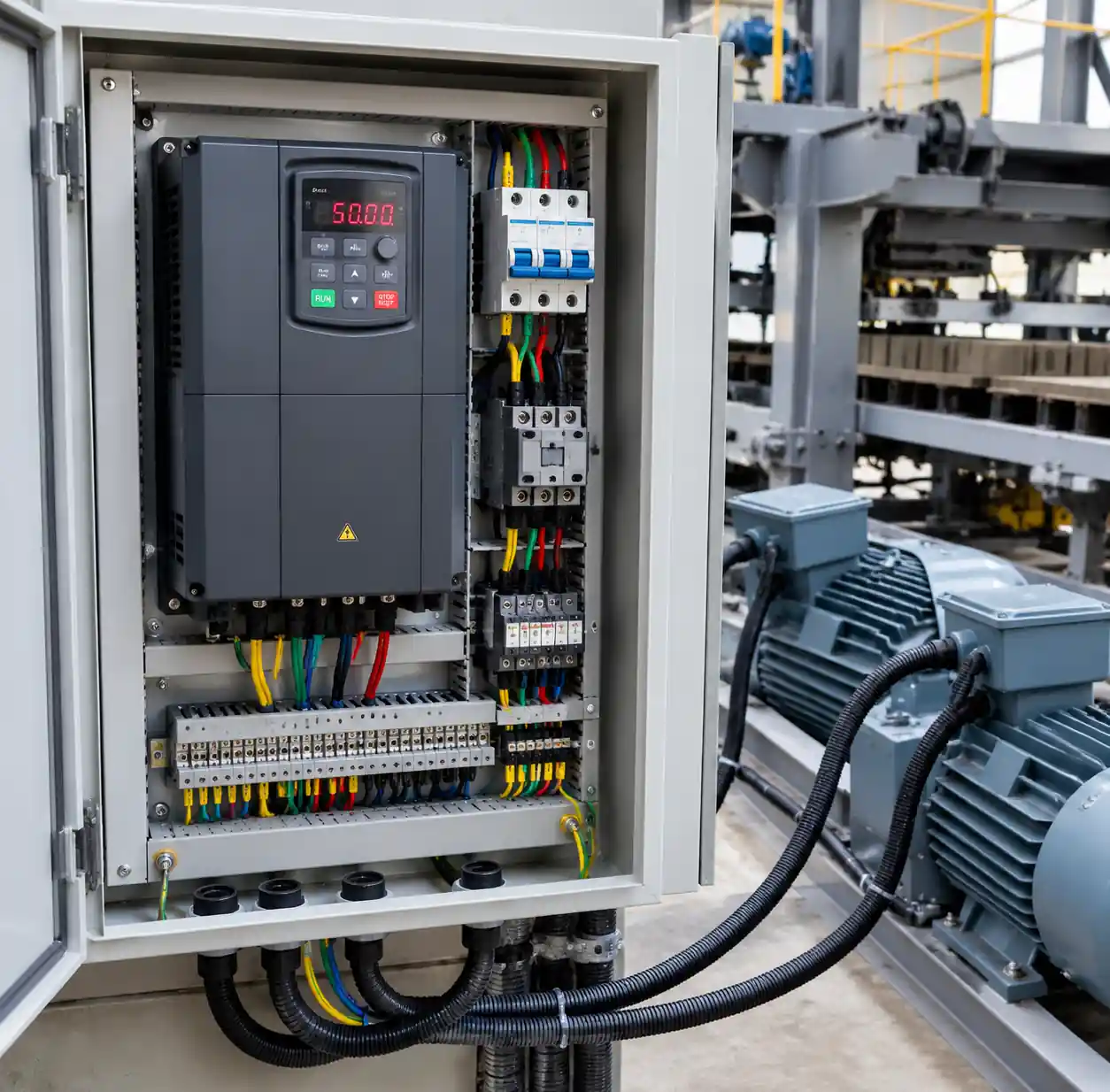
Вспомогательное оборудование like frequency converters enable precise frequency control, allowing operators to fine-tune vibration for different block types. Modern PLC-controlled systems automatically adjust frequency based on mold fill levels and material characteristics.
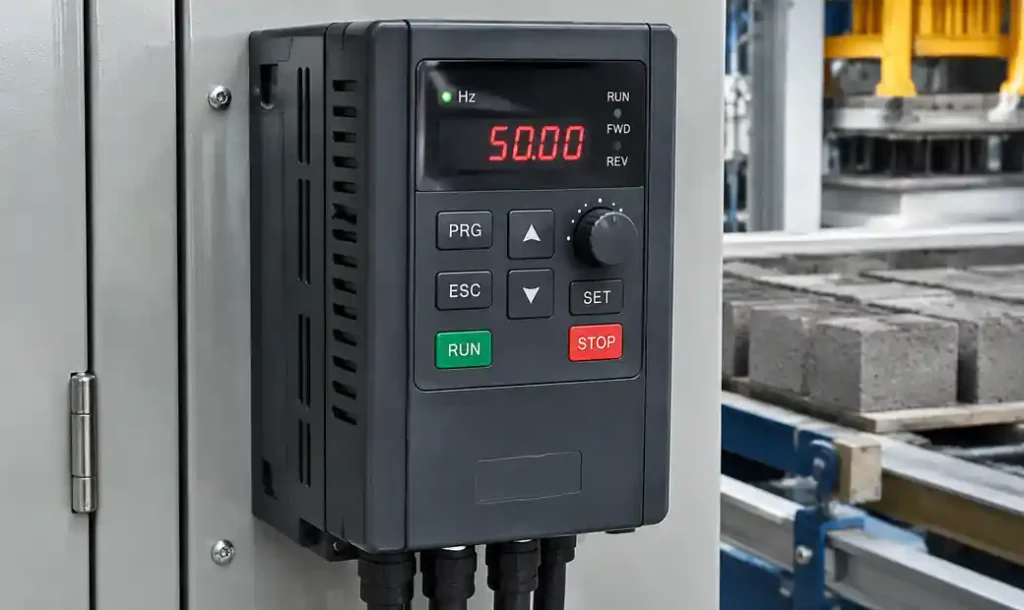
Vibration frequency must remain stable within ±2 Hz throughout each production cycle. Frequency variation beyond this range creates inconsistent compaction, producing blocks with density variations of 8-15% between batches. Maintenance practices emphasize bearing inspection every 500 operating hours and eccentric bolt torque verification weekly.
Amplitude Control and Adjustment Methods
Vibration amplitude—the distance the mold table moves during oscillation—determines compaction intensity. Amplitude typically ranges from 0.8-2.5mm for block machines, with control achieved through eccentric weight positioning.
Most автоматические блочные машины feature adjustable eccentric weights that operators reposition to modify amplitude. The weights consist of two half-moon shaped masses bolted together, with angular positioning marks from 0-180 degrees. Rotating the outer weight changes the combined center of mass offset.
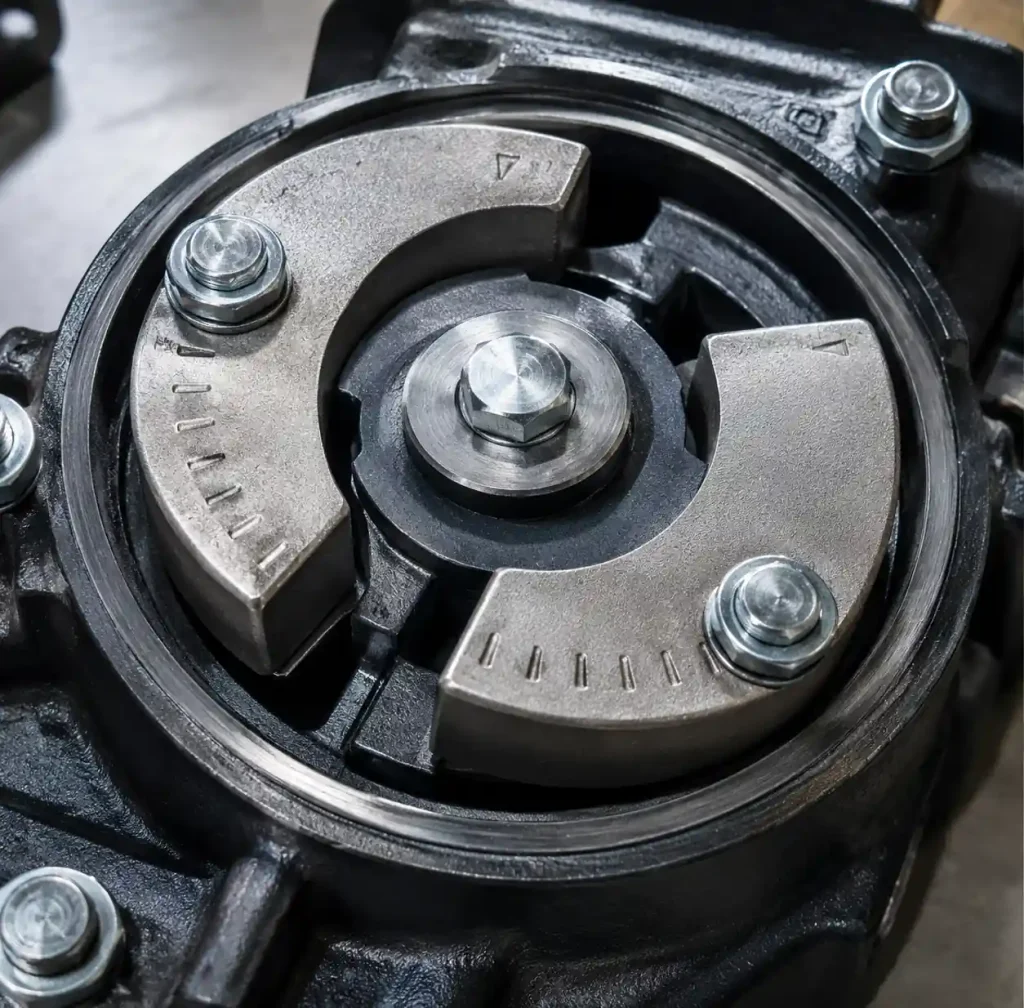
Maximum amplitude occurs when both weights align at 0 degrees. Minimum amplitude results from 180-degree opposition where weights partially cancel each other’s force. Most operations run at 45-90 degree settings, balancing compaction effectiveness against mechanical stress.
| Weight Position | Amplitude Range | Compaction Force | Идеально подходит для | Mechanical Stress |
|---|---|---|---|---|
| 0-30 degrees | 1.8-2.5mm | Maximum | Dense aggregates, large blocks | Высокий |
| 45-75 degrees | 1.2-1.8mm | Standard | Most concrete mixes | Moderate |
| 90-135 degrees | 0.8-1.2mm | Reduced | Light aggregates, thin blocks | Низкий |
| 150-180 degrees | 0.3-0.8mm | Minimum | Delicate applications | Very low |
Для продвинутых complete production solutions incorporate hydraulic eccentric weight adjustment that modifies amplitude during production cycles. These systems start with high amplitude (2.0-2.5mm) for initial compaction, then reduce to moderate amplitude (1.2-1.5mm) for final densification. This two-stage profile reduces vibration time by 20-30% while achieving superior compaction.
Impact of Vibration Parameters on Block Quality
Vibration system performance determines compressive strength, density uniformity, surface finish, dimensional accuracy, and durability. Manufacturers tracking these parameters correlate vibration settings with final product specifications.
Block compressive strength directly correlates with vibration-induced density. Studies on concrete consolidation show that optimal vibration increases 28-day compressive strength by 15-25% compared to inadequate vibration. A well-tuned system producing blocks at 2100-2200 kg/m³ density achieves strengths of 15-20 N/mm². Poor vibration creates blocks at 1850-1950 kg/m³ with only 10-14 N/mm², failing structural specifications.
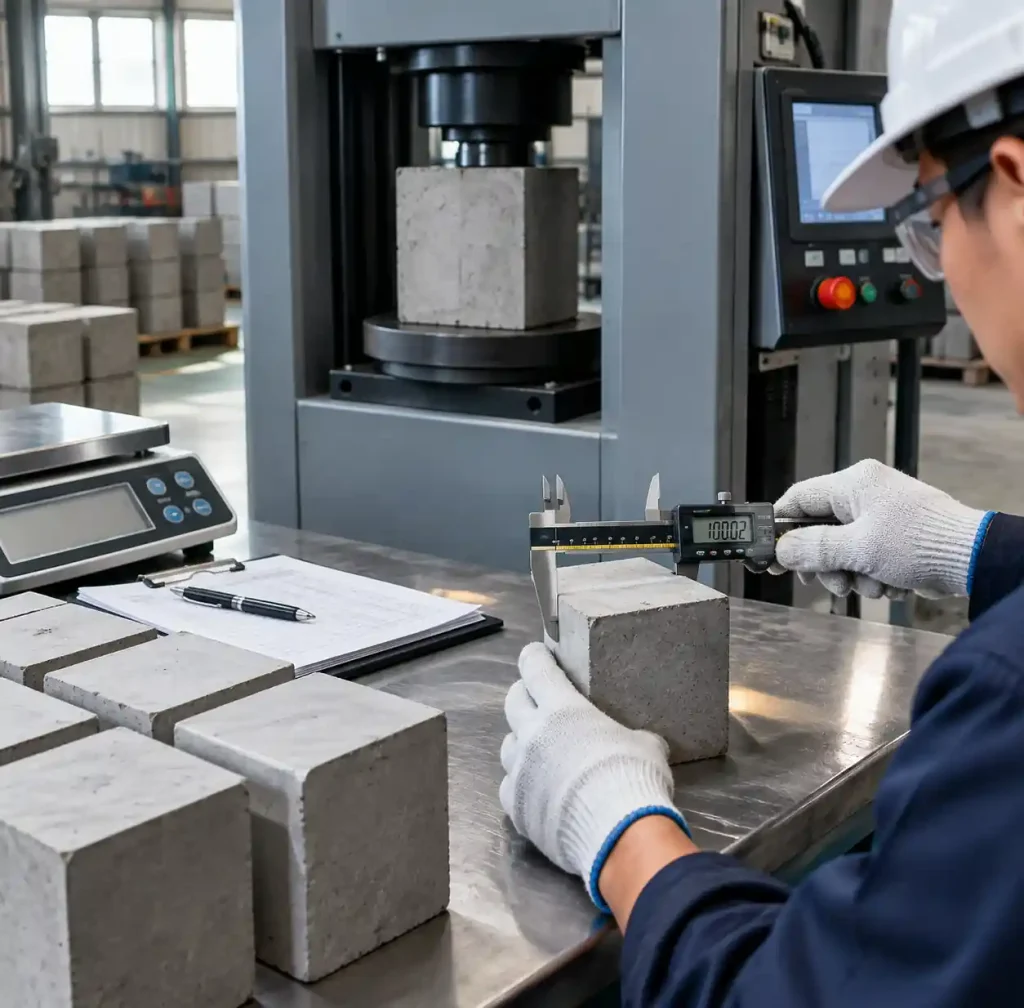
Proper vibration creates uniform density throughout each block, with variation less than 3% between sections. Inadequate vibration leaves the bottom denser than the top by 8-15%, creating unpredictable failure modes. You can verify density uniformity by weighing blocks immediately after demolding—batch variation should be less than 2%.
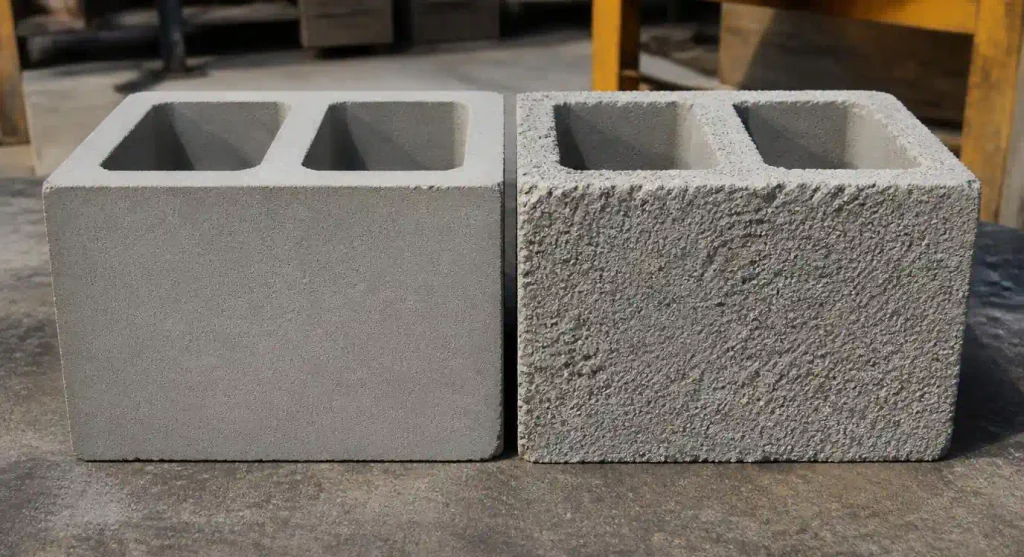
Vibration parameters affect surface finish through cement paste migration. Optimal vibration brings sufficient paste to mold surfaces, creating smooth, dense faces that resist water penetration. Manual block machines with simple vibration often struggle with surface quality. Upgrading to controlled vibration at 48-52 Hz typically improves surface finish dramatically.
Vibration System Maintenance and Troubleshooting
Vibration equipment operates under severe mechanical stress, with eccentric forces creating bearing loads 4-6 times higher than standard motors. Preventive maintenance prevents 85-90% of failures while extending equipment life by 40-60%.
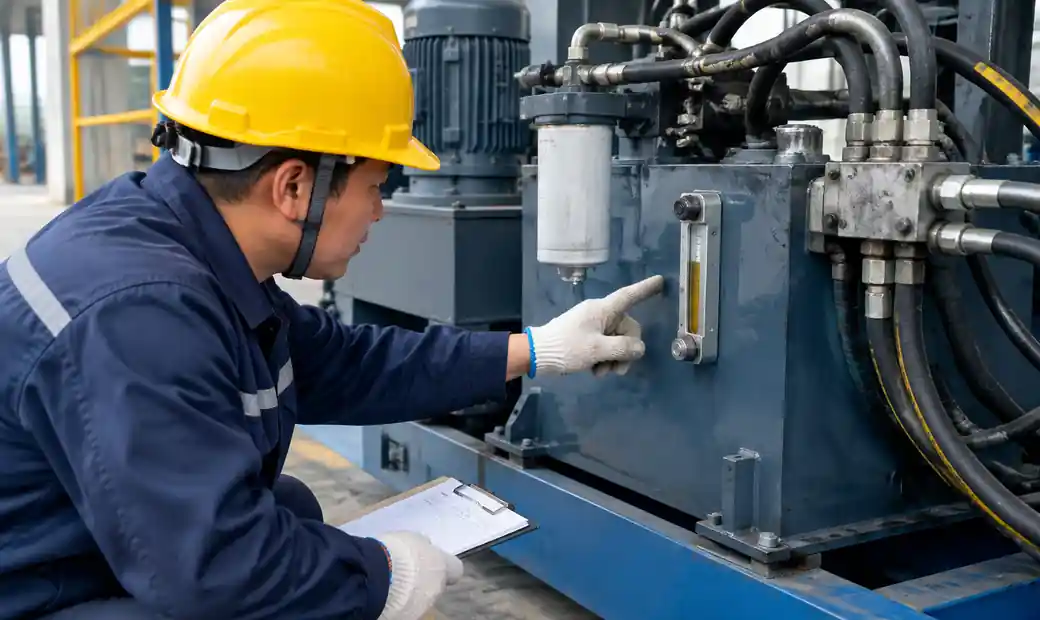
Vibration motor bearings require inspection every 500 operating hours. Listen for abnormal noise, check for excessive heat (>70°C), and monitor amplitude changes. Replace bearings before failure—a $80-150 bearing replacement takes 45-60 minutes, while catastrophic failure creates $800-1,500 repair costs plus $2,000-5,000 daily production losses.
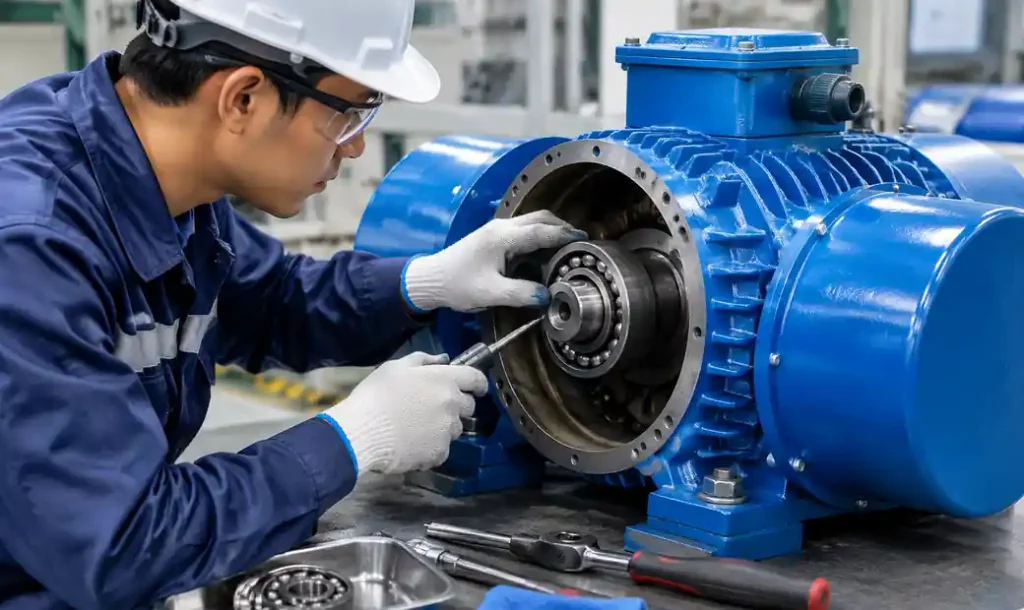
Eccentric weight bolts experience extreme alternating stress causing loosening despite locking fasteners. Maintenance protocols recommend torque verification every 40 operating hours during first 200 hours, then quarterly. Always use thread-locking compound and replace bolts annually.
| Maintenance Task | Frequency | Duration | Cost | Failure Prevention |
|---|---|---|---|---|
| Visual inspection | Daily | 5-10 min | $0 | Catches obvious issues |
| Bearing temperature check | Weekly | 10-15 min | $0 | Detects developing problems |
| Eccentric bolt torque | Every 40 hours / Quarterly | 30-45 min | $0 | Prevents catastrophic failure |
| Bearing replacement | 2000-3000 hours | 45-90 min | $80-150 | Maintains performance |
| Complete motor overhaul | 5000-8000 hours | 4-8 hours | $400-800 | Extends service life |
Performance Tuning for Different Block Types
Different block products require customized vibration parameters. Manufacturers must document optimal settings for each product and implement reliable changeover procedures.
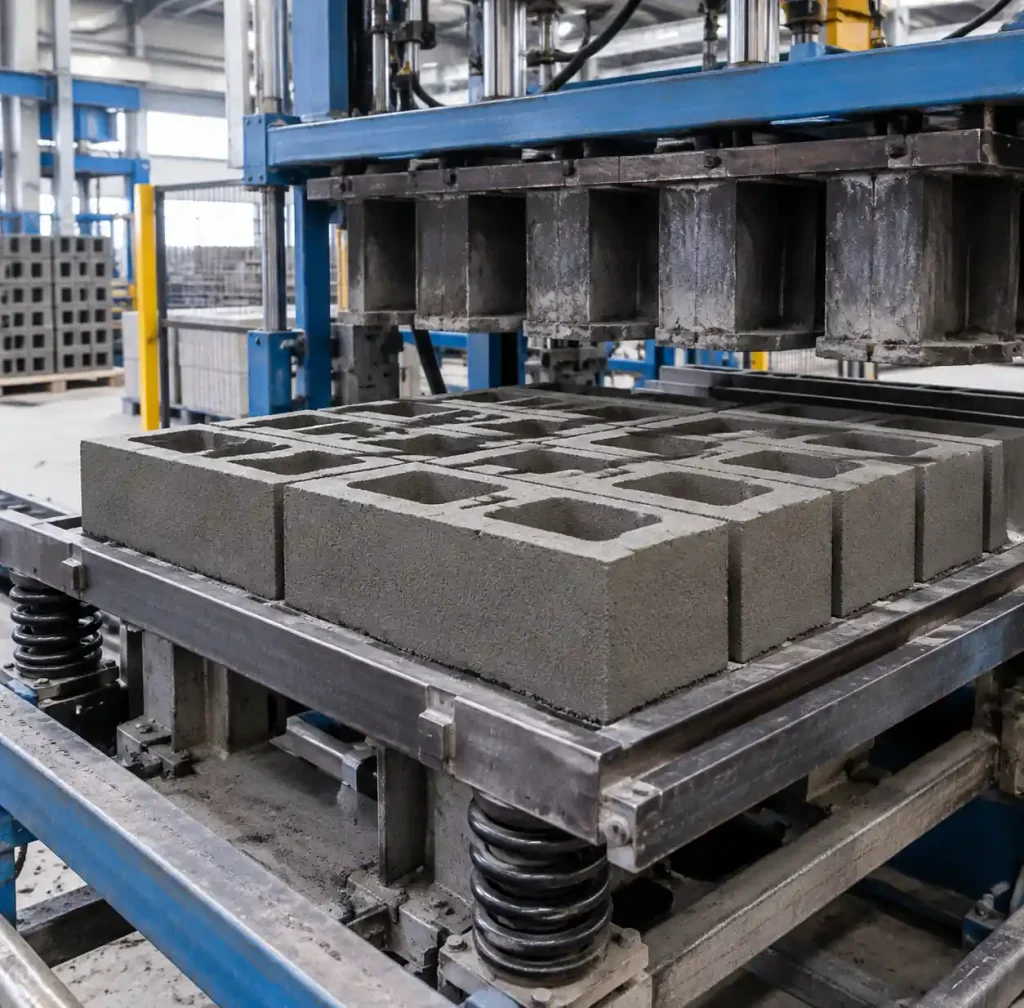
Standard hollow blocks (390×190×190mm) with 40-50% void space respond best to moderate vibration at 48-52 Hz with 1.4-1.8mm amplitude. The thin webs require balanced compaction that densifies material without causing cracking. Semi-automatic production lines run 6-8 second vibration cycles for hollow blocks with simultaneous hydraulic pressure.
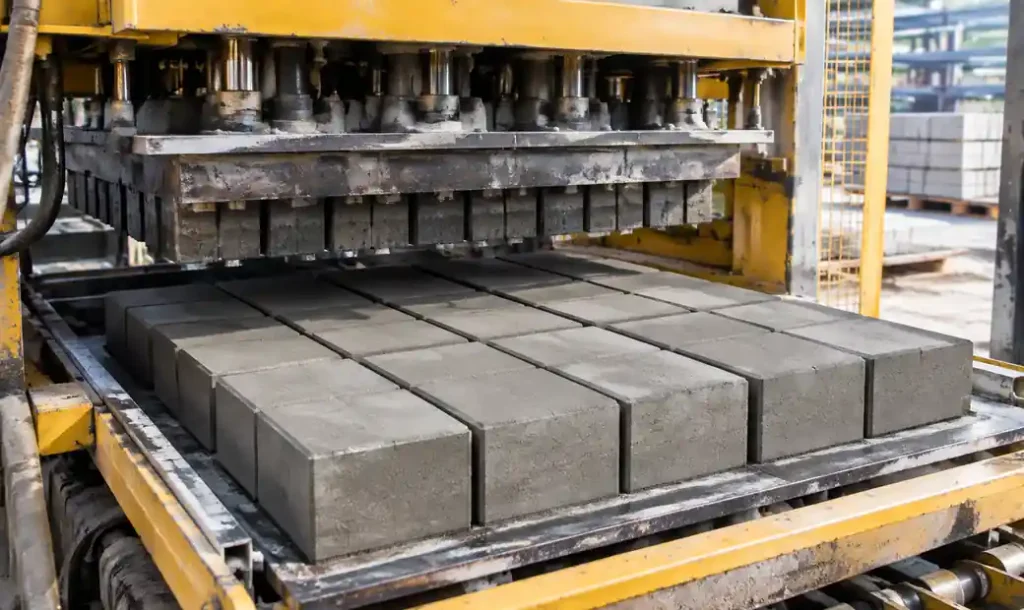
Solid concrete blocks and pavers need higher vibration intensity due to absence of cores. Increase frequency to 52-55 Hz and amplitude to 1.8-2.2mm. Vibration duration extends to 8-10 seconds for equivalent density. Мобильные блоковые машины used for site-produced pavers often require supplemental vibration through tamper heads.
Lightweight aggregate blocks using expanded clay or foam glass require gentler vibration to prevent aggregate crushing. Reduce frequency to 40-45 Hz and amplitude to 0.8-1.2mm. Longer vibration duration of 10-14 seconds compensates for reduced intensity while maintaining adequate compaction.
Часто задаваемые вопросы
What vibration frequency works best for automatic block machines?
Most automatic block machines operate optimally at 48-52 Hz (2880-3120 RPM) for standard concrete mixes, achieving 95-98% compaction density while preventing aggregate segregation. Adjust ±5 Hz based on mix design—wetter mixes need lower frequencies while zero-slump mixes perform better at the higher range.
How does vibration amplitude affect block quality?
Amplitude determines compaction force intensity. Standard hollow blocks require 1.4-1.8mm amplitude, while solid blocks need 1.8-2.2mm. Too little amplitude leaves air voids and weak blocks. Excessive amplitude causes mold wear and potential aggregate segregation.
Can I upgrade vibration systems on existing machines?
Yes. Most machines accommodate vibration motor upgrades or higher-capacity unit replacement. Adding frequency converters enables precise control. Upgrading to adjustable eccentric weights provides amplitude flexibility. Typical upgrade costs run $1,200-3,500 depending on machine size.
Why do vibration motors fail prematurely?
The three leading causes are inadequate lubrication (40% of failures), bearing wear from contamination (35%), and loose eccentric weight bolts (15%). Implementing daily inspection, weekly bearing temperature monitoring, and quarterly bolt torque verification prevents 85-90% of premature failures.
How often should vibration systems be serviced?
Perform daily visual inspection and weekly bearing temperature checks. Verify eccentric bolt torque every 40 operating hours for new equipment, then quarterly. Replace bearings preventively every 2000-3000 operating hours. Schedule complete motor overhaul every 5000-8000 hours.
What causes uneven block density?
Uneven density results from frequency instability (±3 Hz or more), phase mismatch between multiple motors, uneven mold filling, or inadequate vibration duration. Mold table levelness also affects density—tables more than 2mm out of level create density gradients. Regular calibration prevents most problems.
Заключение
Vibration system technology determines block quality, production efficiency, and equipment reliability in concrete block manufacturing. Understanding how frequency, amplitude, and vibration duration interact allows operators to optimize settings for different block types while maintaining consistent output quality.
The key performance indicators—frequency stability within ±2 Hz, appropriate amplitude for block type, and proper maintenance intervals—determine whether vibration systems deliver their full potential. Manufacturers who master these parameters typically achieve 8-12% higher block density, 15-25% greater compressive strength, and 40-60% longer equipment service life compared to operations treating vibration as an uncontrollable variable.
Raytone Block Machinery integrates precision-engineered vibration systems in all automatic and semi-automatic block machines, with frequency control accuracy within 0.1 Hz and adjustable amplitude systems for different production requirements. Our engineering team provides detailed vibration optimization protocols for your specific block designs and concrete mix formulations.
Свяжитесь с нами сегодня for vibration system specifications, performance tuning guidance, and block machine solutions customized for your production requirements.