





Block production quality and efficiency depend heavily on concrete preparation before material reaches your forming machine. The mixer and batching system determines mix consistency, production speed, material waste, and ultimately your profit margins. Yet many block manufacturers focus exclusively on the main machine while underinvesting in these critical supporting components.
Industry data shows poorly matched concrete mixing systems cause 35-45% of block quality issues—from strength variations to surface defects. A JS750 twin-shaft mixer paired with an undersized PLD800 batching machine creates bottlenecks that limit a QT10-15 automatic line to just 60% capacity. Material waste from inaccurate batching adds $3,200-$5,800 monthly costs for a mid-scale operation producing 150,000 blocks.
This guide explains how concrete mixers and batching machines integrate with block production lines, compares JS series mixer specifications, matches batching capacity to production requirements, and provides realistic investment costs. You will understand exactly which equipment configuration maximizes your production efficiency and delivers consistent block quality.
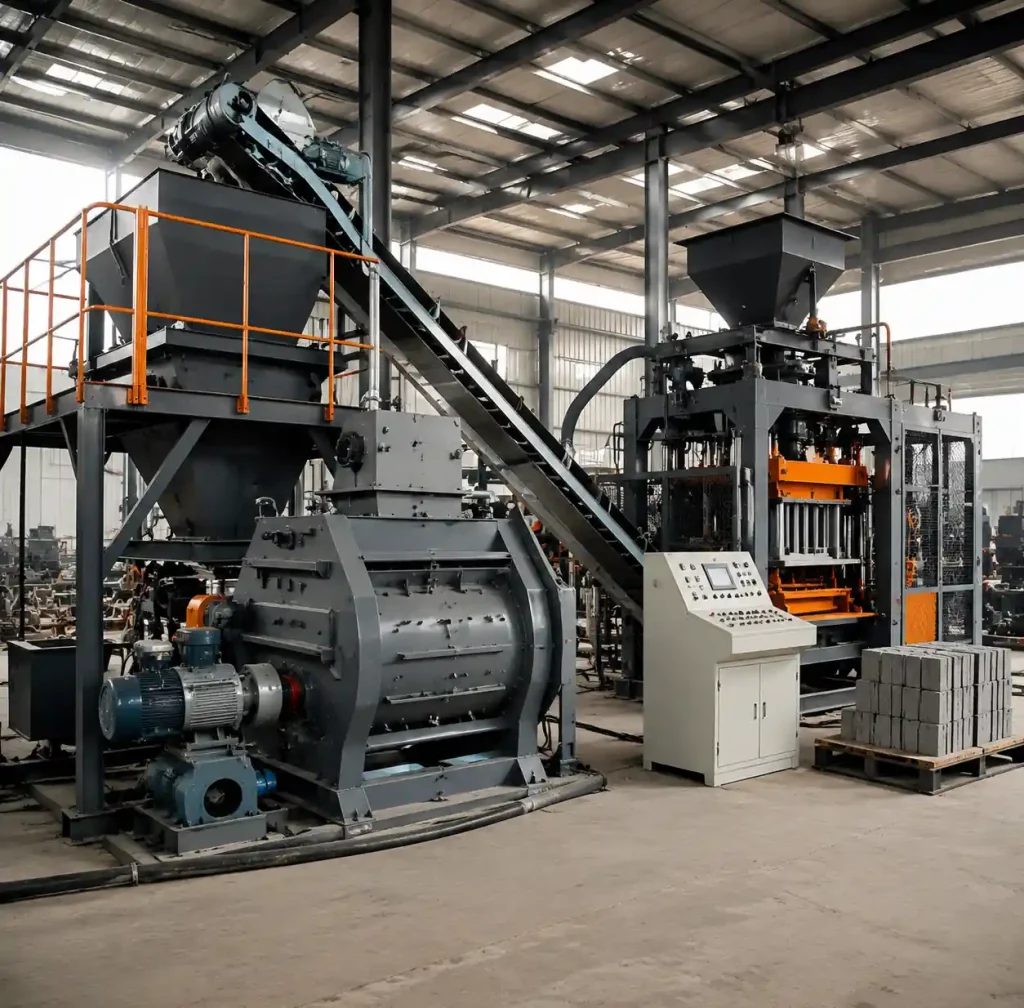
Understanding Concrete Mixers in Block Production
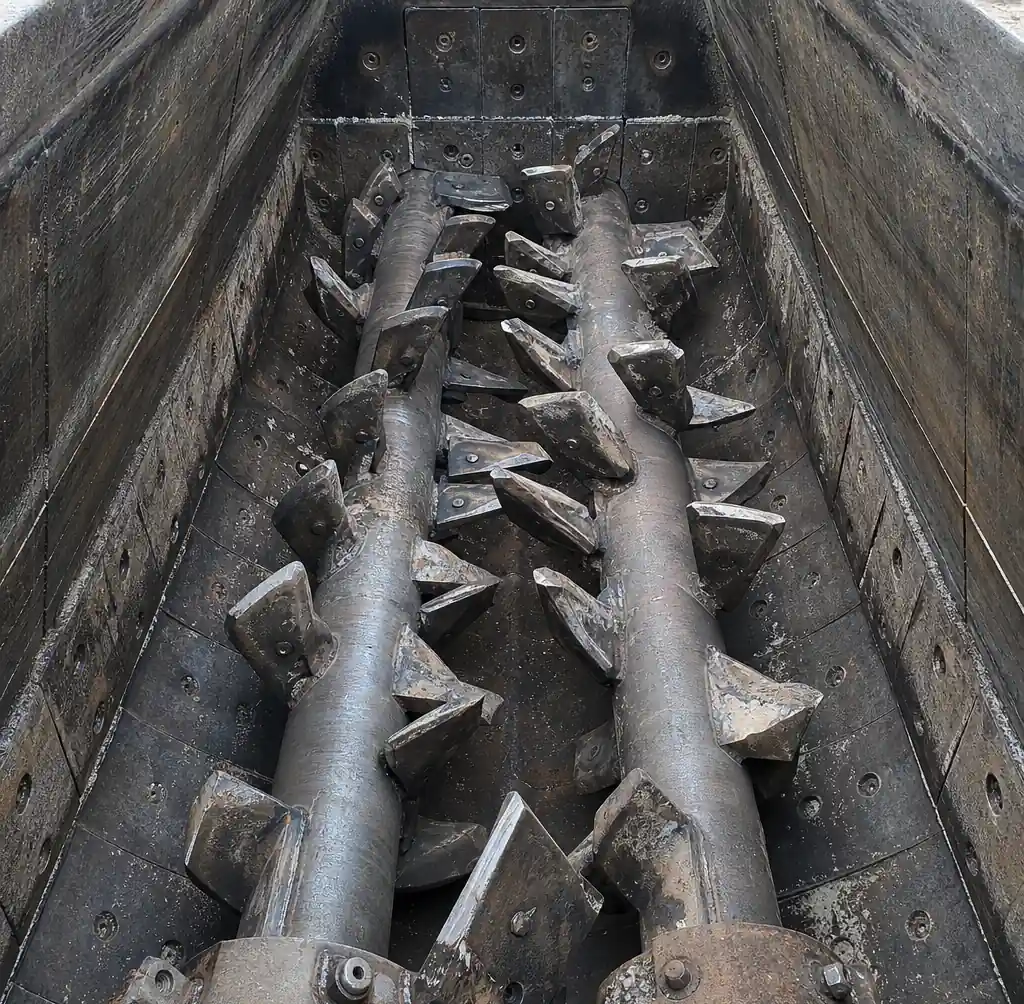
Twin-shaft mixers use two synchronized shafts with mixing blades rotating in opposite directions, achieving uniform mixing in 25-60 seconds. The JS series standard features wear-resistant liners and electric motors (18.5kW to 55kW) powering the mixing mechanism through reduction gearboxes.
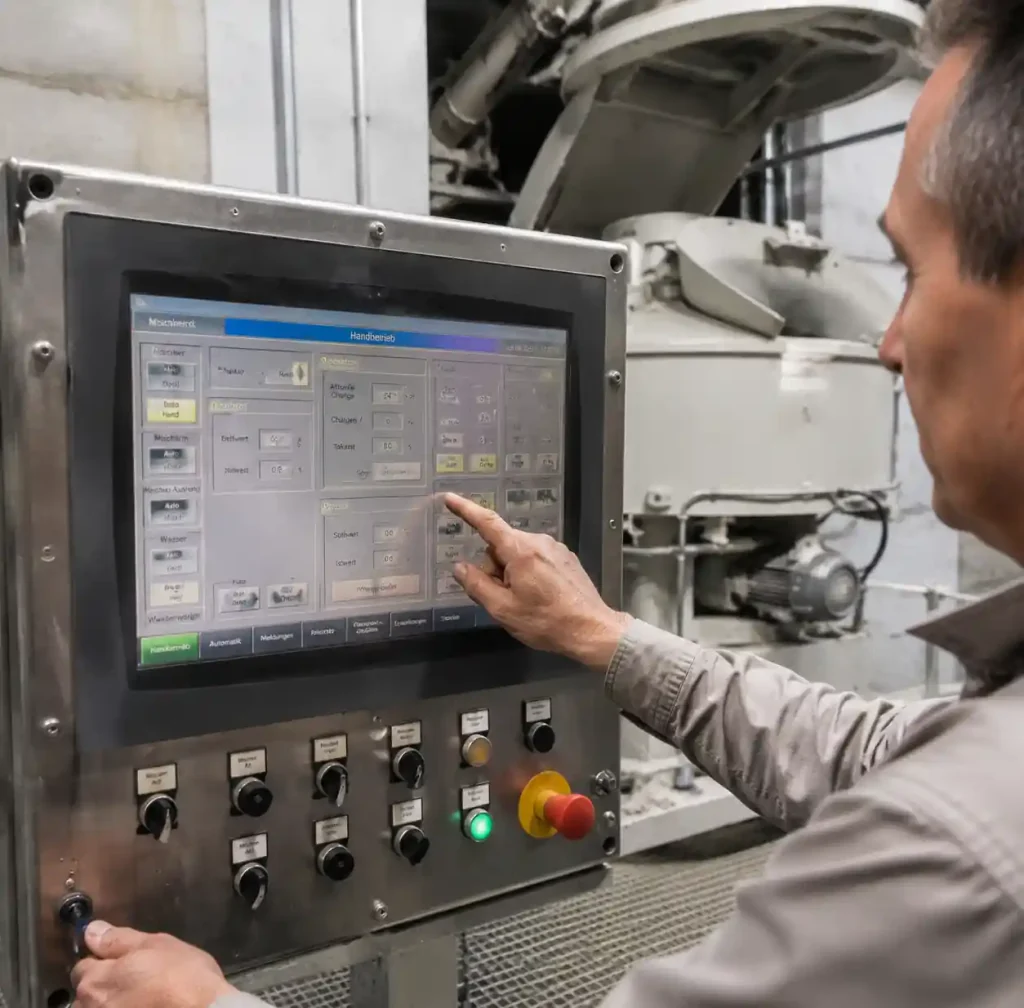
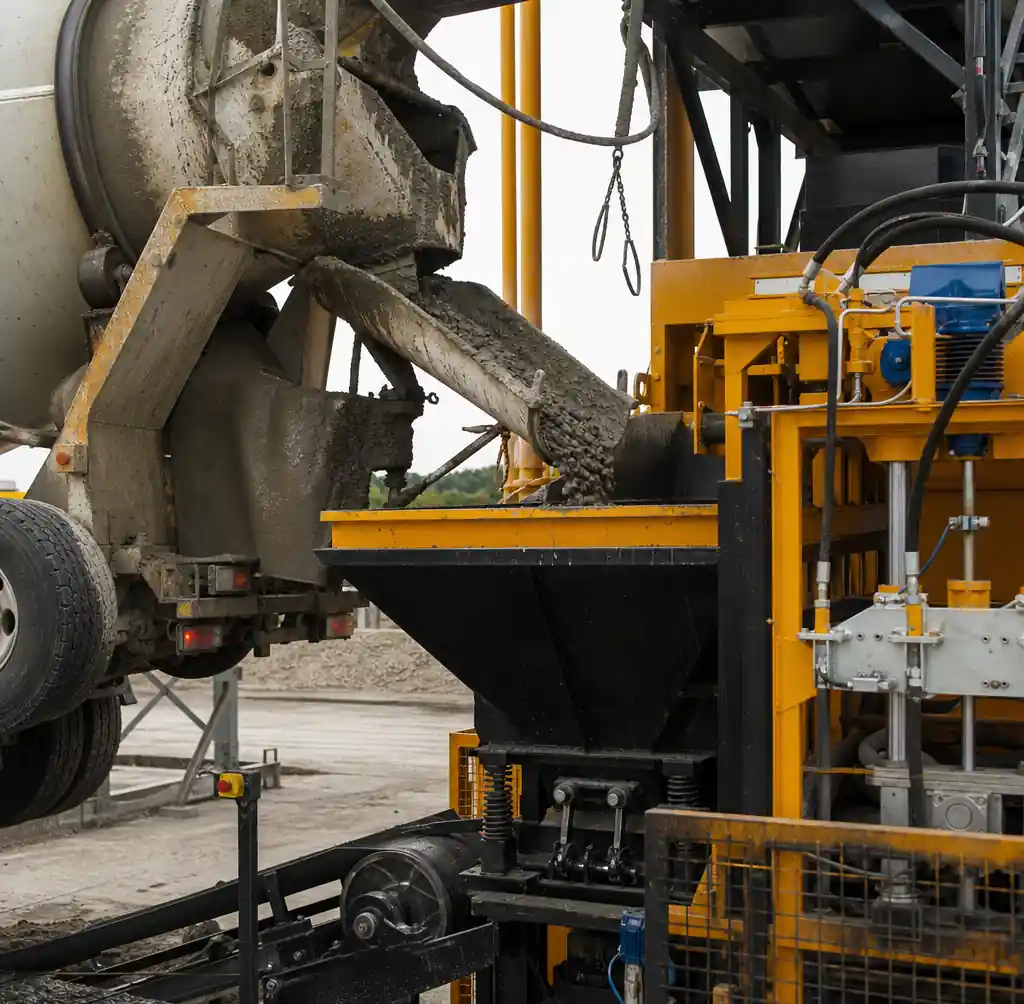
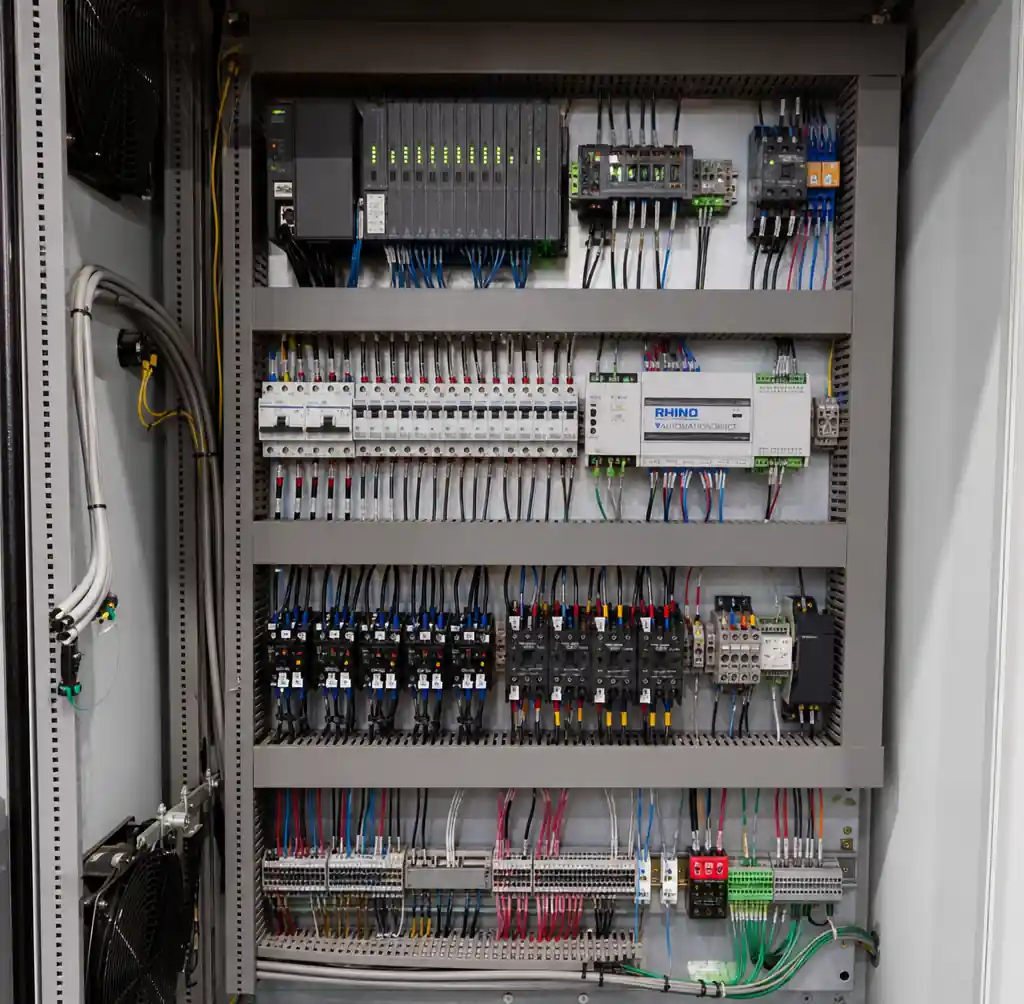
Modern JS mixers integrate with batching systems and block machines through PLC control, automating concrete preparation. When the block machine signals material demand, the system automatically measures, mixes, and delivers concrete.
Concrete uniformity directly impacts strength and quality. Properly mixed concrete (25-35 second twin-shaft mixing) achieves 15-20% higher strength than inadequately mixed material. Unmixed cement pockets create weak zones, aggregate clumping causes surface defects, and inconsistent water distribution leads to dimensional variations. Poor mixing typically costs $8,000-$15,000 monthly in rejects for operations producing 5,000+ blocks daily.
JS Series Concrete Mixer Comparison
JS500, JS750, and JS1000 Specifications
JS500 produces 25m³/hour with 500-liter discharge capacity—suitable for manual machines making up to 3,500 blocks daily. The 18.5kW motor and 2×7 blade configuration deliver adequate mixing for standard 4-7 MPa blocks.
JS750 delivers 35m³/hour with 750-liter capacity, matching semi-automatic machines producing 6,500-7,500 blocks daily. The 30kW motor and 2×9 blades handle heavier loads and provide faster cycles for load-bearing blocks.
JS1000 targets high-volume automatic production with 50m³/hour capacity supporting 15,000-46,000 daily blocks. The 37kW motor and 2×11 blade configuration maintain consistent quality at maximum rates.
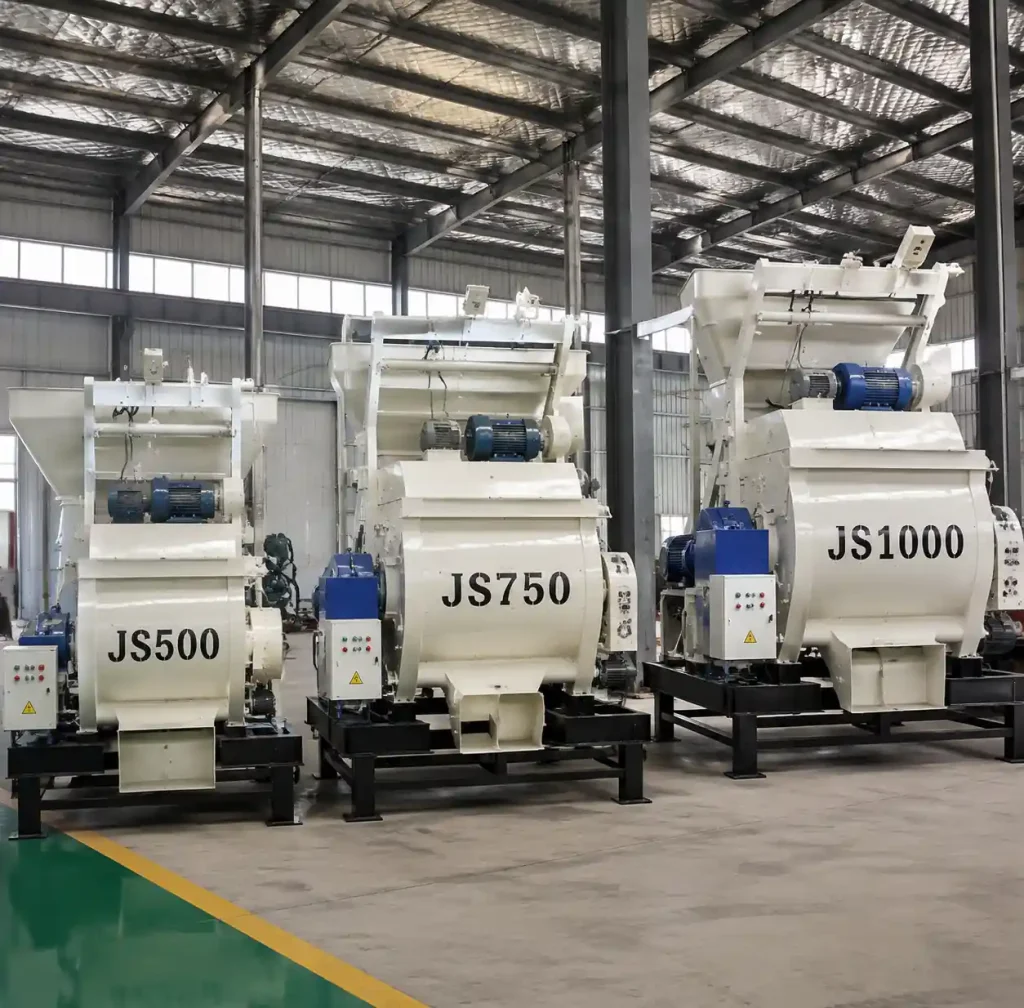
JS Series Model Comparison
| Технические характеристики | JS500 | JS750 | JS1000 |
|---|---|---|---|
| Discharge Capacity | 500L | 750L | 1,000L |
| Production Rate | 25m³/h | 35m³/h | 50m³/h |
| Motor Power | 18.5kW | 30kW | 37kW |
| Mixing Time | 30-35s | 25-35s | 25-30s |
| Daily Block Capacity | Up to 3,500 | 6,500-7,500 | 15,000-46,000 |
| Идеально подходит для | Ручные станки | Semi-automatic | Автоматические линии |
| Investment Cost | $8,500-$12,000 | $12,500-$17,000 | $18,000-$25,000 |
Model selection depends on block machine capacity and production targets. Undersizing the mixer creates bottlenecks that idle expensive block machines—a JS500 supplying a QT10-15 automatic line wastes 40-50% of machine capacity. Oversizing increases upfront investment without proportional benefit—a JS1000 serving a manual QT4-40 operates at 15-20% capacity utilization.
Batching Machines for Accurate Material Measurement
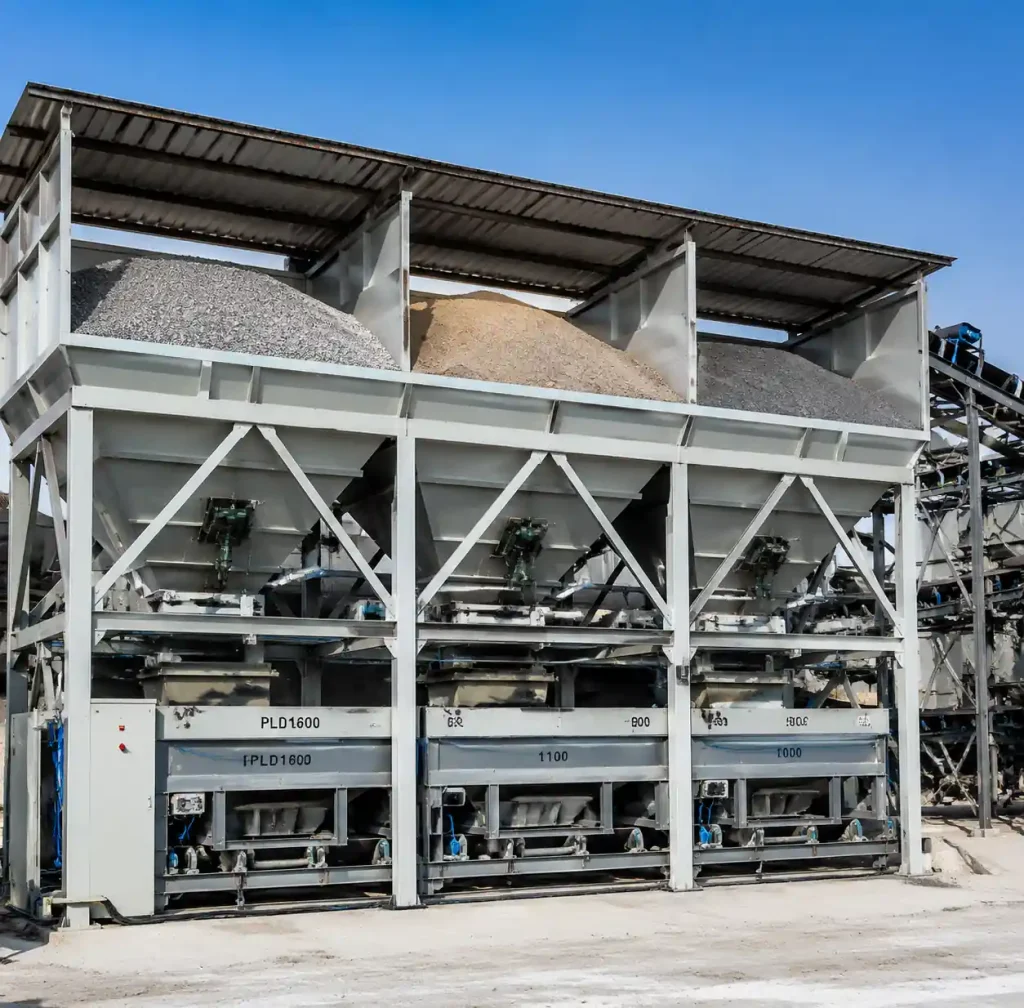
Batching machines measure and dispense materials in precise proportions using separate weighing hoppers for sand, stone, and cement. Electronic load cells achieve ±1% accuracy, ensuring consistent mix ratios. The PLD series stores materials in elevated hoppers, with pneumatic gates controlling discharge into the mixer below.
Accurate batching matters because material costs represent 65-75% of production expenses. A ±1% accurate system saves $2,400-$4,200 monthly in waste compared to ±5% manual batching for operations producing 150,000 blocks monthly. Automated batching reduces strength deviation from 15-22% to 6-8%, lowering reject rates.
PLD Model Selection
PLD800: 800kg capacity, 2-3 compartments, suits JS500 mixers and manual machines. Investment: $3,500-$5,500.
PLD1200: 1,200kg capacity, 3-4 compartments, matches JS750 mixers and semi-automatic production. Investment: $5,200-$7,800.
PLD1600: 1,600kg capacity, 3-4 compartments, supports JS1000 mixers and automatic lines. Investment: $6,800-$10,500.
Capacity Matching and Integration
Calculating Required Capacity
Match mixer capacity to block machine output using: Mixer capacity (m³/h) = Block output (blocks/h) × Block volume (m³) × 1.7 density factor ÷ 0.85 efficiency.
For a QT4-30 producing 360 blocks/hour of 400×200×200mm blocks: 360 × 0.016 × 1.7 ÷ 0.85 = 11.5m³/h. Apply a 2.5-3× multiplier for headroom, requiring 29-35m³/hour—making JS750 (35m³/h) the correct match.
Batching capacity must equal or exceed mixer charging capacity. The PLD800 (800kg) cannot efficiently serve JS1000 (requiring ~2,400kg), creating continuous bottlenecks.
| Block Machine Type | Mixer Model | Batching Model | System Match |
|---|---|---|---|
| Manual QT4-40 | JS500 | PLD800 | Optimal |
| Semi-Auto QT4-30 | JS750 | PLD1200 | Optimal |
| Auto QT10-15 | JS1000 | PLD1600 | Optimal |
| Semi-Auto QT4-30 | JS500 | PLD800 | Bottleneck |
| Auto QT10-15 | JS750 | PLD1200 | Bottleneck |
Интеграция производственной линии
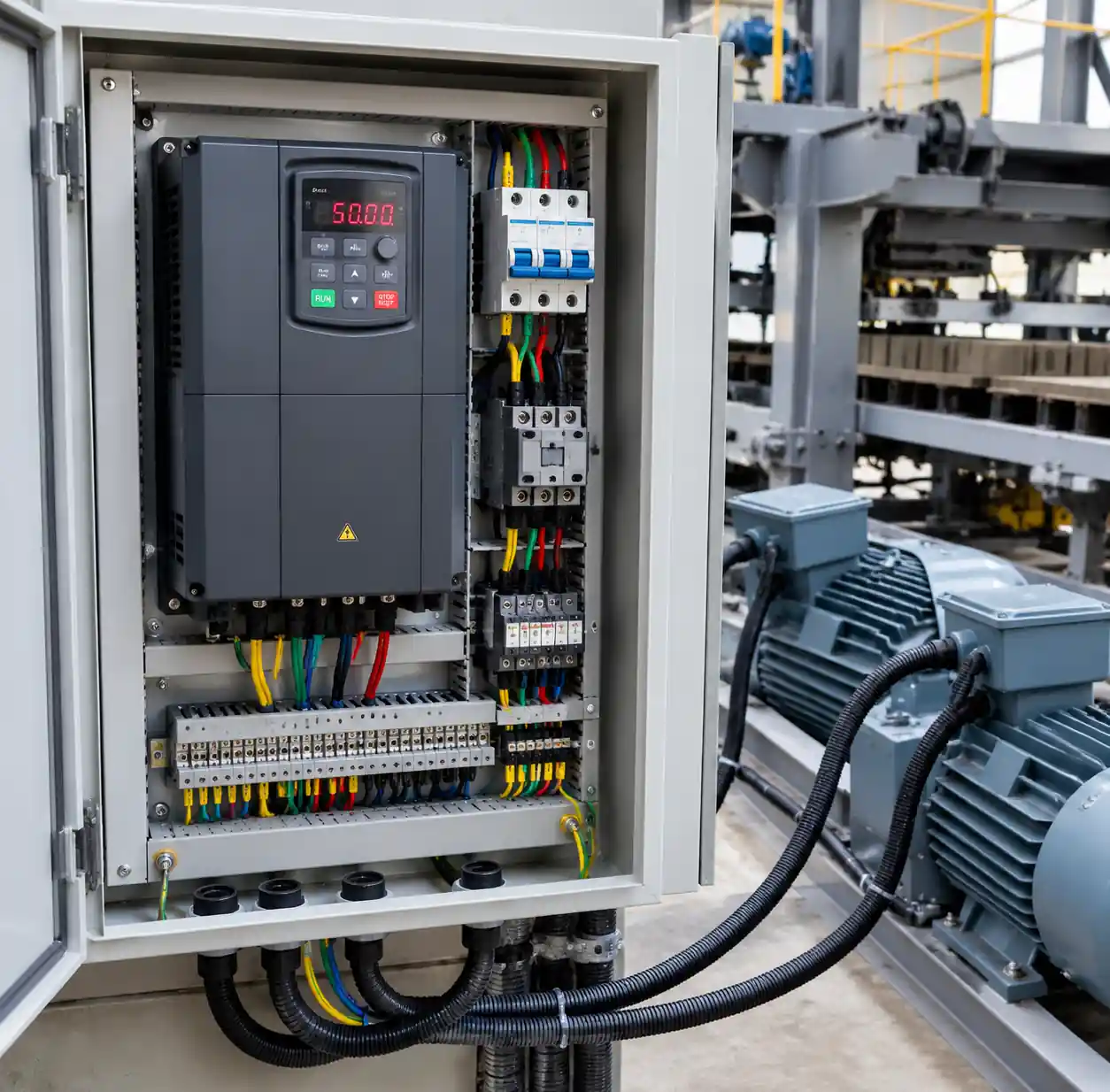
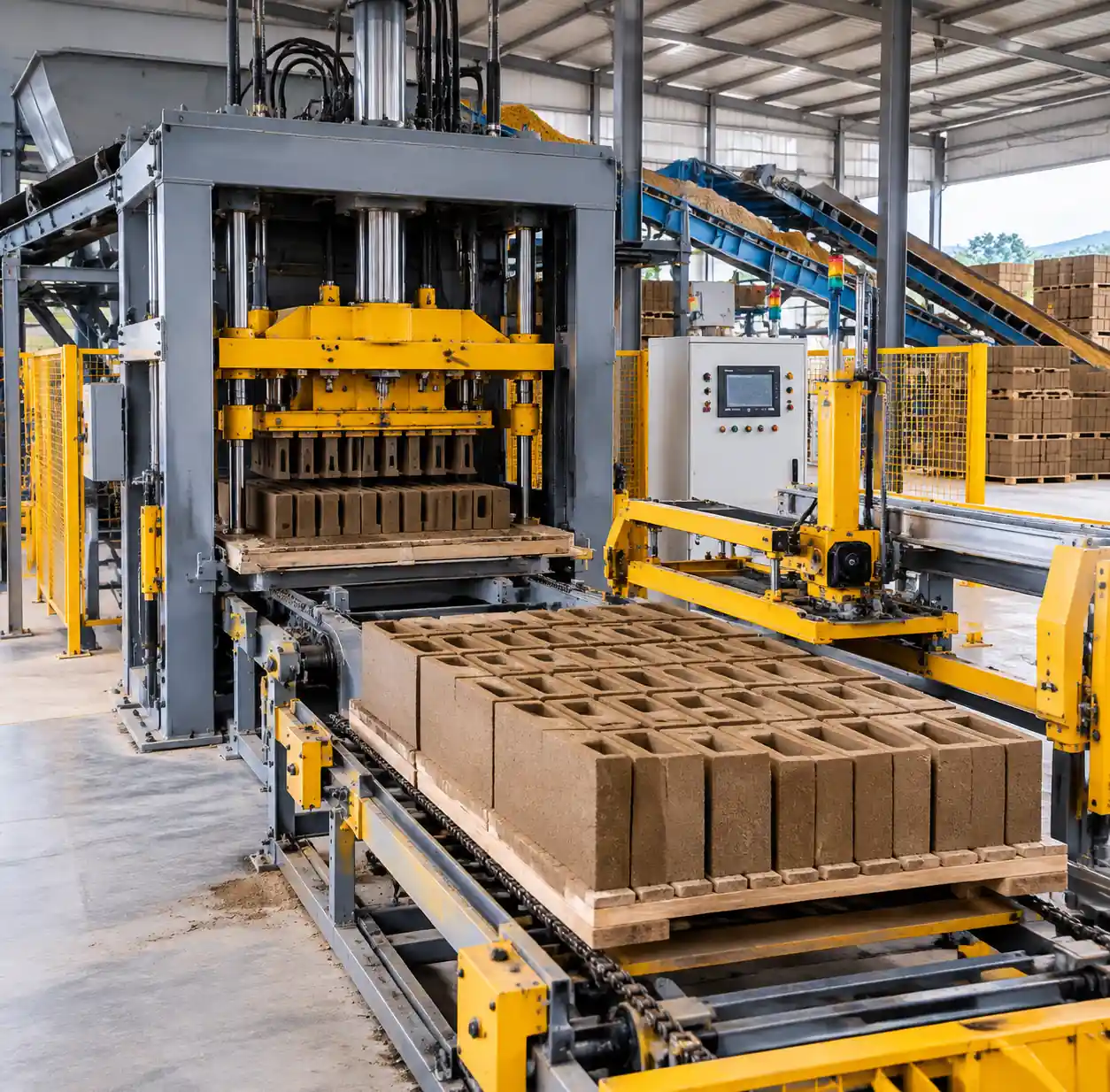
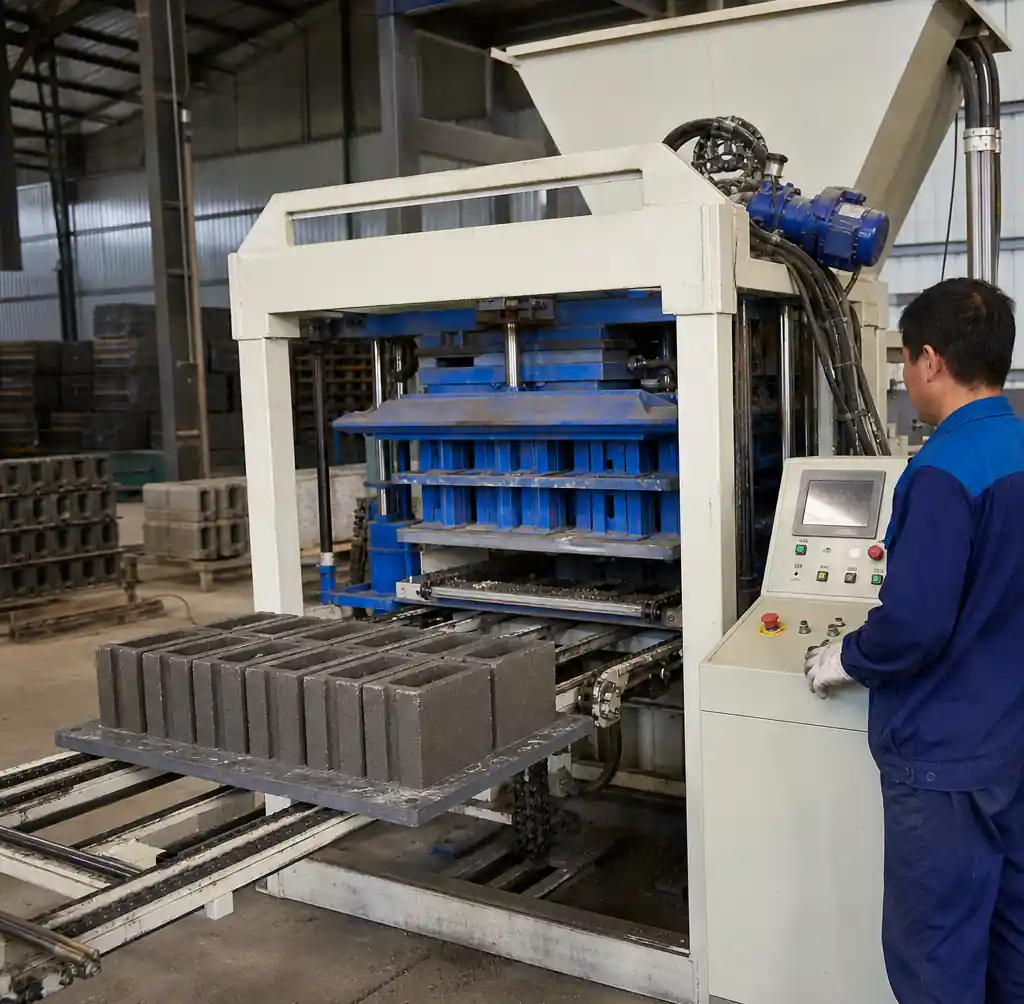
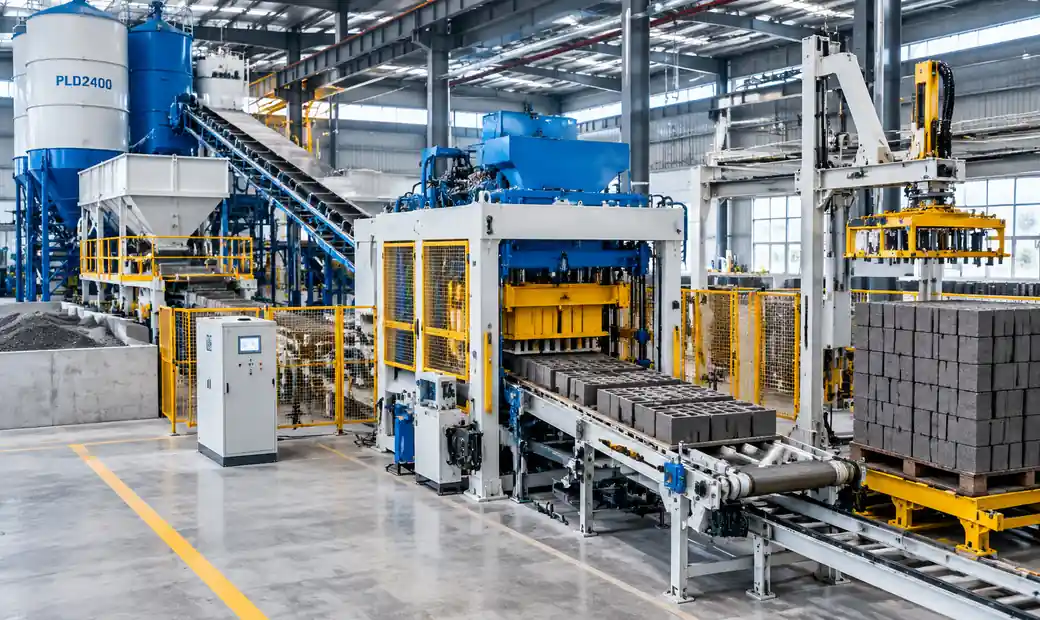
Integrated supporting equipment systems coordinate batching, mixing, and block forming through centralized PLC control. The block machine signals material requirements, the batching system prepares the next batch automatically, and concrete flows without manual intervention.
This automation increases efficiency 15-25% versus non-integrated systems requiring manual coordination, while maintaining programmed mix designs without operator variation.
Investment Analysis
Equipment Costs by Production Scale
Small-Scale System (Manual Production):
- JS500 mixer + PLD800 batching + conveyors + controls: $17,700-$27,300
Mid-Scale System (Semi-Automatic):
- JS750 mixer + PLD1200 batching + conveyors + controls: $26,700-$39,000
- Optional cement silo adds $4,500-$8,000
Large-Scale System (Automatic):
- JS1000 mixer + PLD1600 batching + conveyors + integrated PLC + silo: $46,300-$71,500
ROI Through Measurable Savings
Material Waste Reduction (7,000 blocks/day operation):
- Waste drops from 3-5% (manual) to 0.5-1% (automated)
- Monthly material cost: $85,000
- Savings: $2,125-$3,400/month = $25,500-$40,800 annually
Labor Efficiency:
- Eliminates 1-2 batching workers
- Savings: $1,800-$3,600/month = $21,600-$43,200 annually
Quality Improvements:
- Reject rate drops from 4% to 1.5%
- Saves 3,500-5,250 blocks monthly
- Value: $2,625-$5,250/month = $31,500-$63,000 annually
Total Annual Benefit: $78,600-$147,000
Payback Period: 2.6-6.0 months for mid-scale systems
The investment recovers in under one year through material savings, labor reduction, and quality improvements, then continues delivering value throughout 10-15 year equipment lifespans.
Maintenance Requirements
Twin-shaft mixers need regular maintenance for sustained performance:
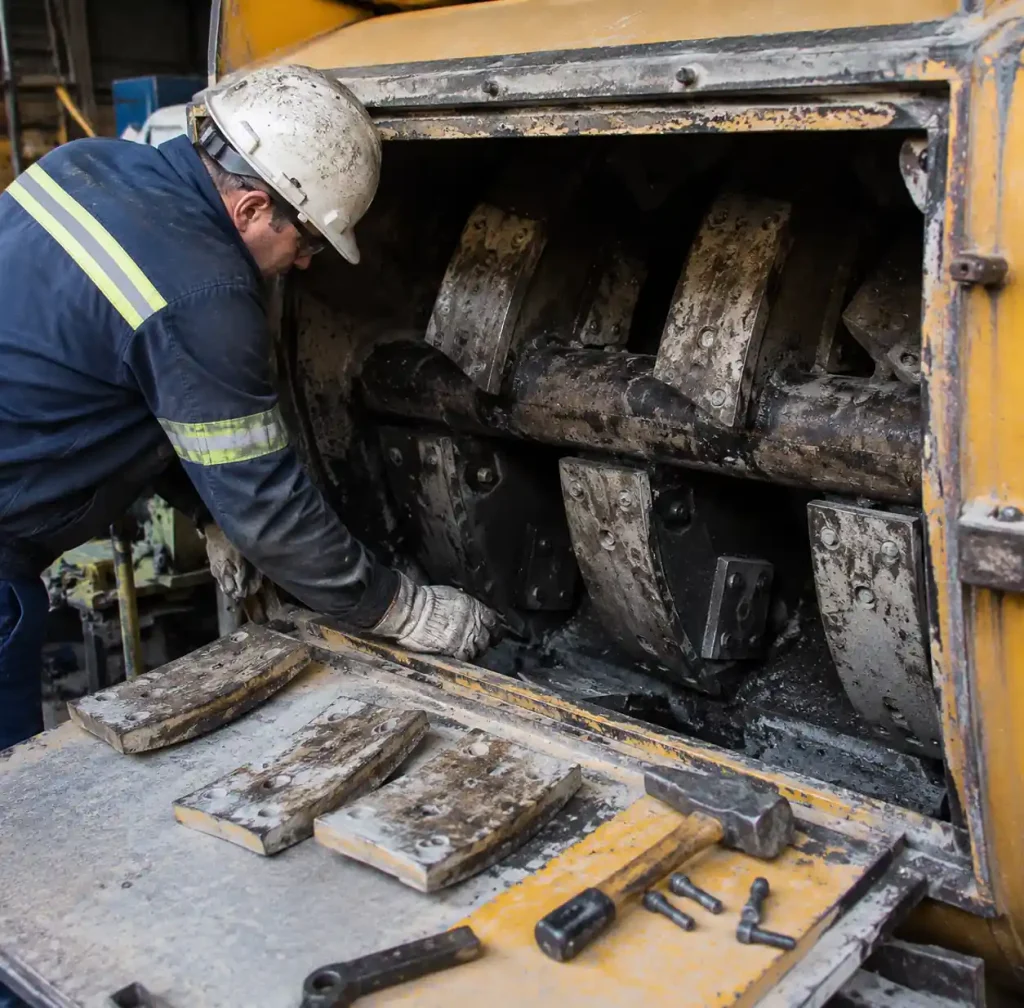
Daily (5-10 minutes): Clean mixing chamber, check lubrication, inspect blades, verify discharge.
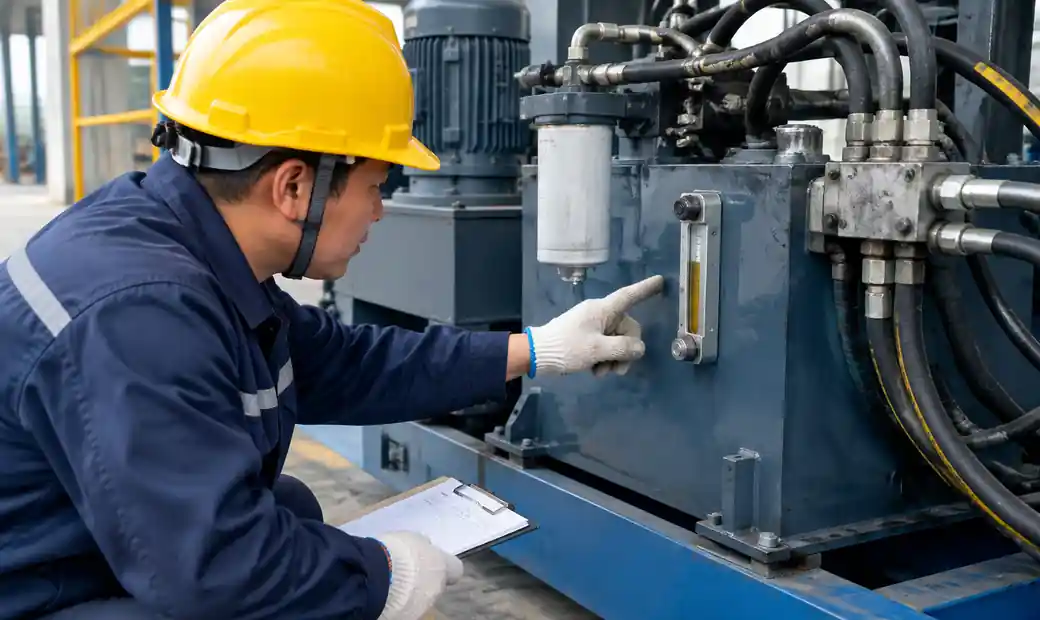
Weekly (30-45 minutes): Lubricate bearings, check motor alignment, inspect liners, verify batching accuracy.
Monthly (2-3 hours): Replace worn blade segments, check gearbox oil, inspect electrical connections, calibrate load cells.
Neglected maintenance dramatically increases costs. Worn blades require 50-70% longer mixing time, reducing capacity. Delayed bearing lubrication causes failure ($1,200-$2,800 replacement) versus $150 annual lubrication.
Monthly Operating Costs (JS750 + PLD1200, 25 days):
- Electricity: $280-$420
- Blade replacement: $120-$180
- Lubricants: $60-$90
- Wear liner replacement (prorated): $150-$220
- Repairs: $100-$200
- Total: $710-$1,110 monthly (less than 1% of production value)
Часто задаваемые вопросы
What size mixer do I need for a QT4-30 semi-automatic block machine?
A QT4-30 producing 6,500-7,500 blocks daily requires a JS750 mixer with 35m³/hour capacity, paired with PLD1200 batching. A JS500 creates bottlenecks limiting production to 4,500-5,000 blocks daily.
Can I use a single-shaft mixer instead of twin-shaft for block production?
Twin-shaft mixers deliver 15-20% higher compressive strength due to superior concrete uniformity. Single-shaft mixers appear cheaper ($4,000-$7,000 versus $8,500-$12,000) but increased reject rates cost $6,000-$12,000 annually, eliminating savings.
How accurate does batching need to be for good block quality?
±1% accuracy is the industry standard. Manual batching achieves only ±5%, causing strength variations and rejects. PLD series machines maintain ±1% through electronic weighing, delivering consistency required for building codes.
What is the payback period for automated mixing and batching equipment?
Most producers recover investment in 3-7 months through material savings, quality improvements, and labor reduction. Mid-scale operations save $6,500-$12,200 monthly, achieving payback in 2.6-6.0 months against $27,000-$39,000 investment.
Can I upgrade my mixer later if I expand production?
Yes, if designed properly. Purchase batching one size larger—a PLD1600 serving JS750 accommodates future JS1000 upgrade without replacing the batching system.
How long do mixing blades and wear liners last?
Blades last 6-18 months depending on volume. High-volume operations (5,000+ blocks daily) replace blades every 6-8 months. Wear liners last 18-36 months. Budget $1,500-$2,400 annually for blades and $600-$900 for liners on JS750 mixers.
Заключение
Concrete mixer and batching machine selection directly determines block production efficiency, quality consistency, and profitability. The JS series twin-shaft mixers—JS500 for manual operations, JS750 for semi-automatic production, and JS1000 for fully automatic lines—provide the mixing quality essential for strength and durability. Paired with properly sized PLD batching machines, these systems eliminate the material waste and quality variations that cost thousands monthly while delivering 2-6 month payback periods.
Capacity matching prevents both bottlenecks that limit expensive block machine utilization and oversizing that wastes capital. A JS750 mixer with PLD1200 batching machine optimally serves mid-scale operations producing 6,500-7,500 blocks daily, while automatic production lines exceeding 15,000 daily blocks require JS1000 capacity. Integration with block machine controls through automated systems maximizes efficiency and minimizes labor requirements.
The investment in quality mixing and batching equipment—$17,700-$71,500 depending on production scale—represents one of the highest-return capital expenditures in block manufacturing. Material savings alone typically recover costs in under one year, before accounting for quality improvements and labor reduction.
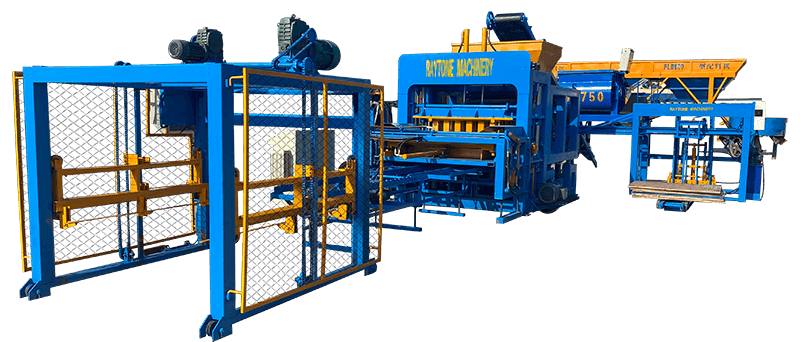
Raytone Block Machinery manufactures complete concrete preparation systems integrating JS series mixers, PLD batching machines, material conveyors, and control systems. Our equipment delivers precise material proportioning, consistent mixing quality, and seamless integration with manual, semi-automatic, and fully automatic block production lines. Whether starting new operations or upgrading existing facilities, Raytone supporting equipment ensures maximum productivity and quality.
Contact our technical team for system recommendations based on your production capacity, block specifications, and facility requirements.