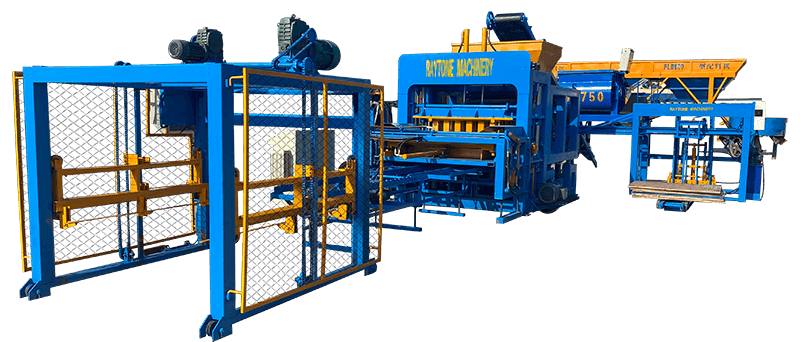






The global brick industry produces over 1.4 trillion units annually, with clay bricks and concrete blocks dominating construction materials worldwide. Understanding the differences between clay brick machines and concrete block machines determines your equipment investment, production costs, and market positioning.
Understanding Clay Brick vs Concrete Block Production
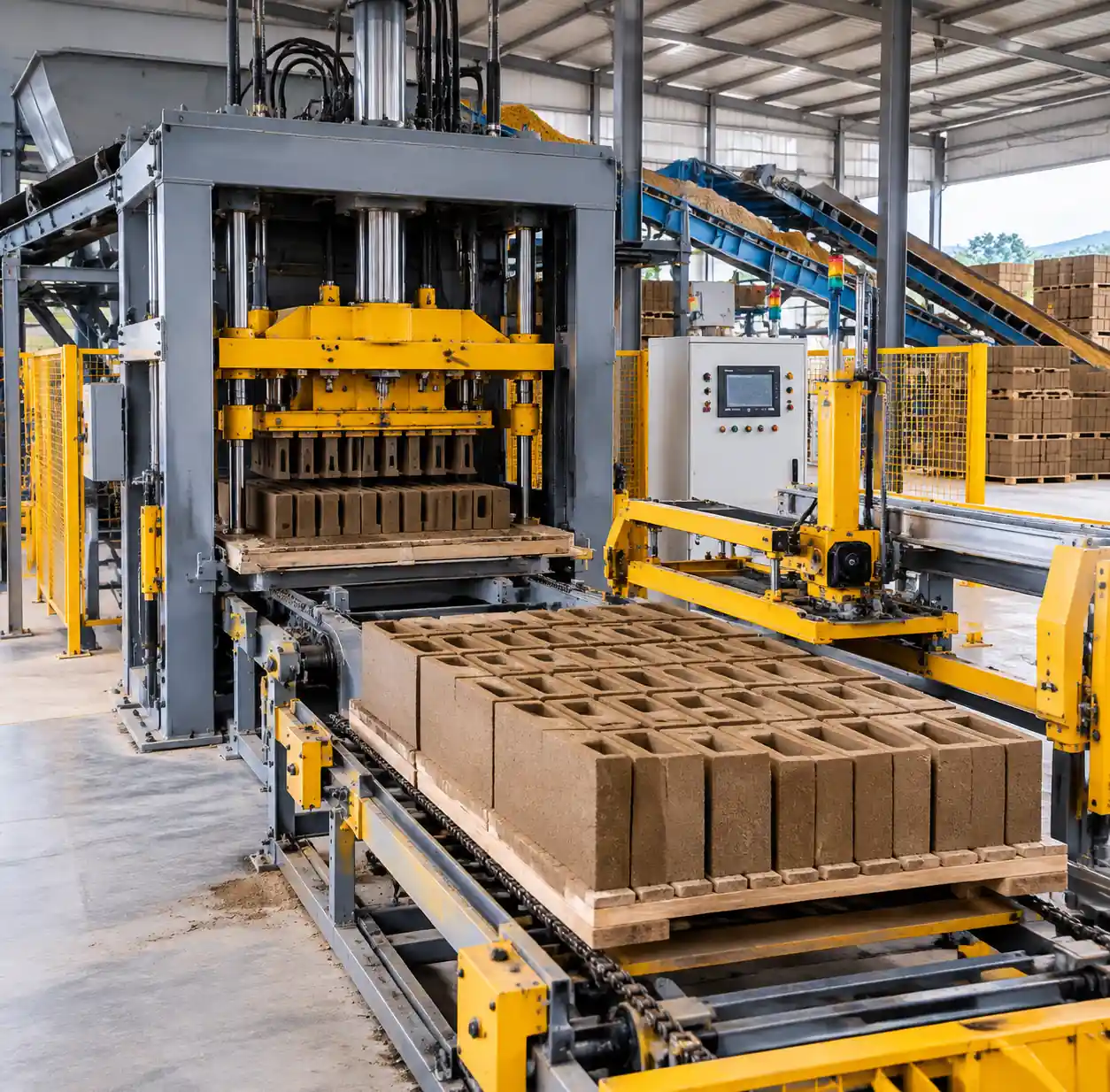
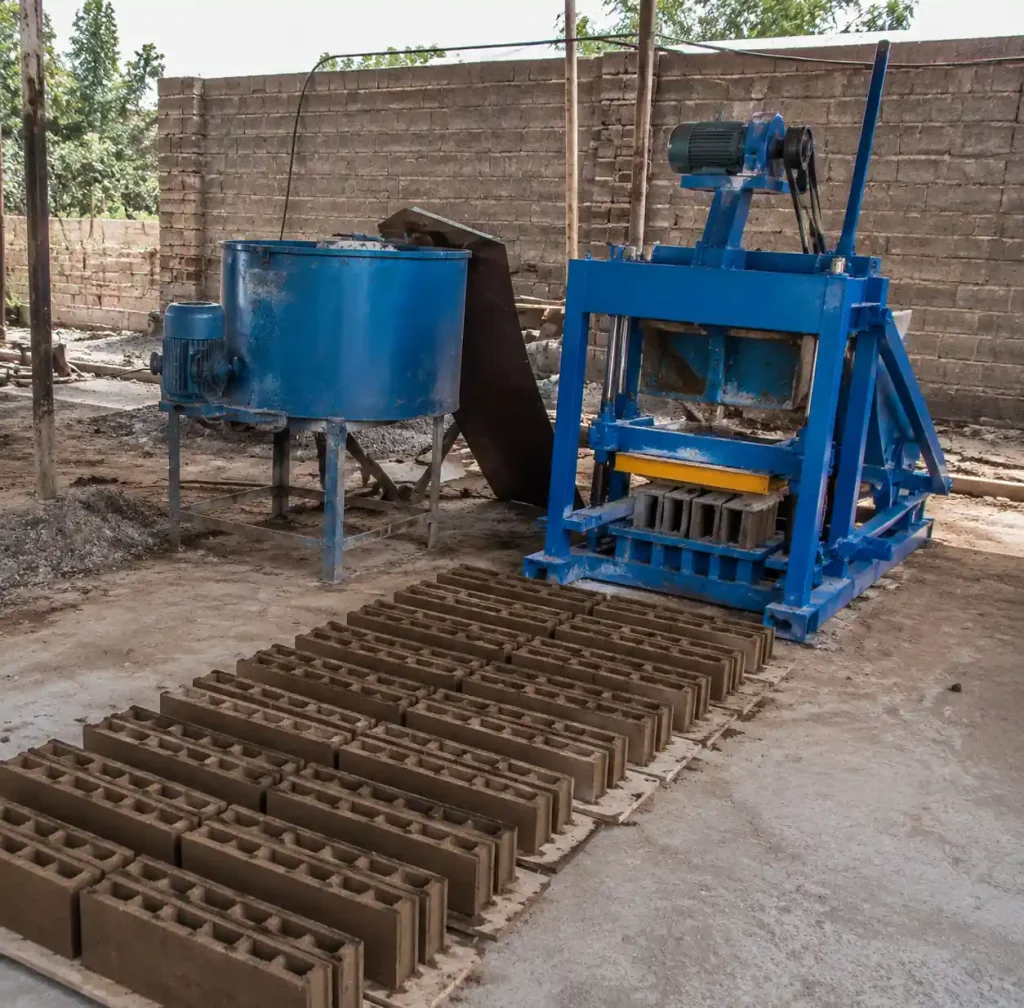
Clay brick machines use hydraulic pressing to compress a mixture of soil, clay, sand, and cement into interlocking or traditional bricks. Modern clay brick machines like the QT4-10 produce 1,440-11,520 pieces per shift through rapid hydraulic pressing cycles.
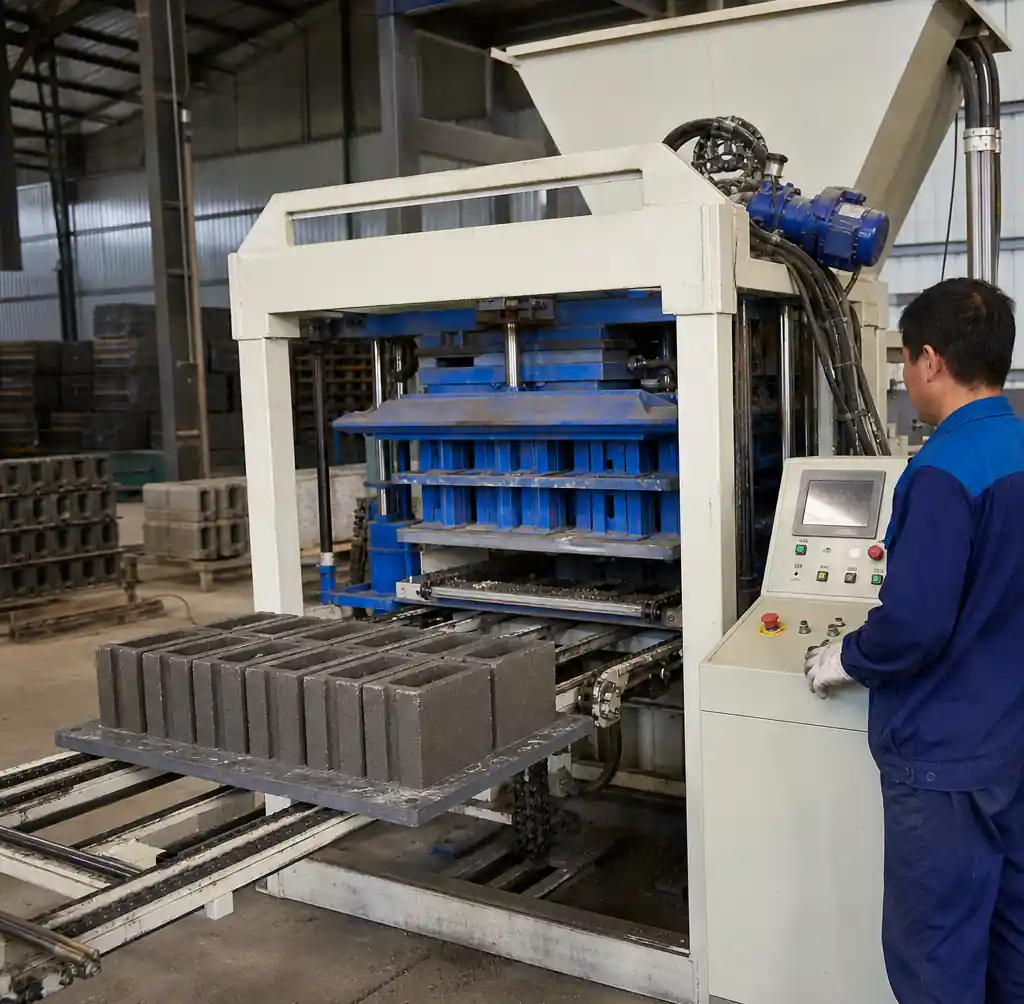
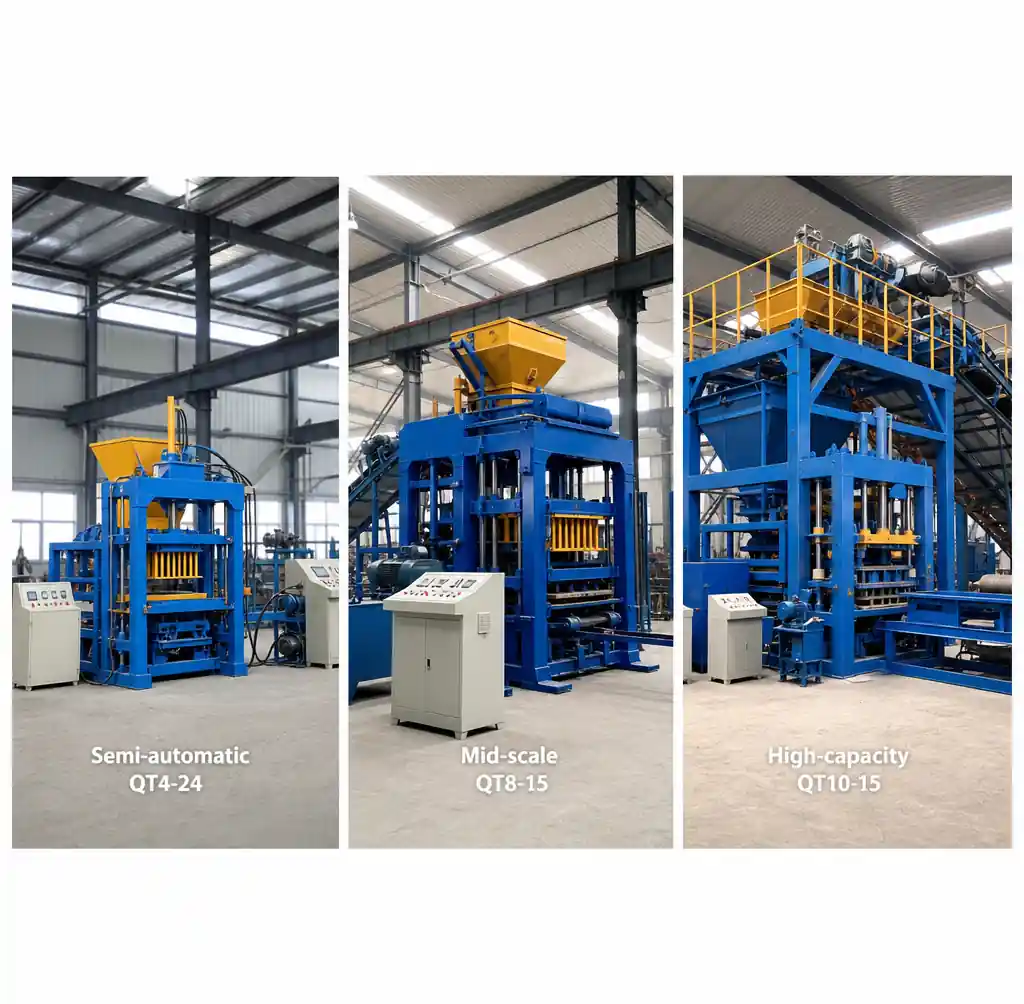
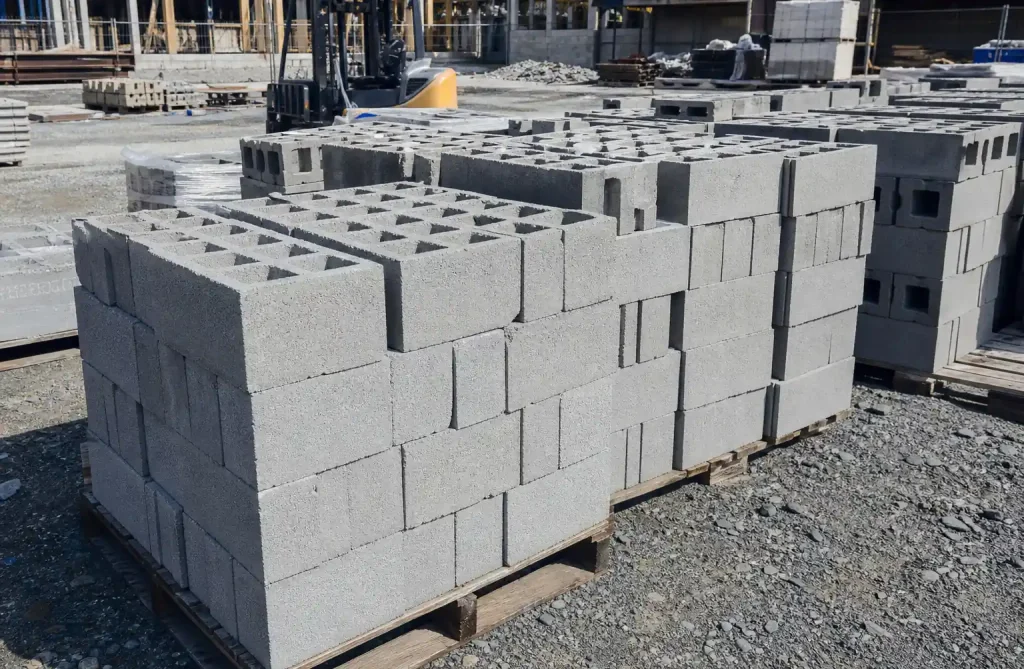
Машины для производства бетонных блоков combine vibration and hydraulic pressure to mold cement, aggregates, and water into hollow or solid blocks. Production ranges from 2,880 blocks per shift (manual models) to 46,080 blocks per shift (автоматические линии like the QT10-15).
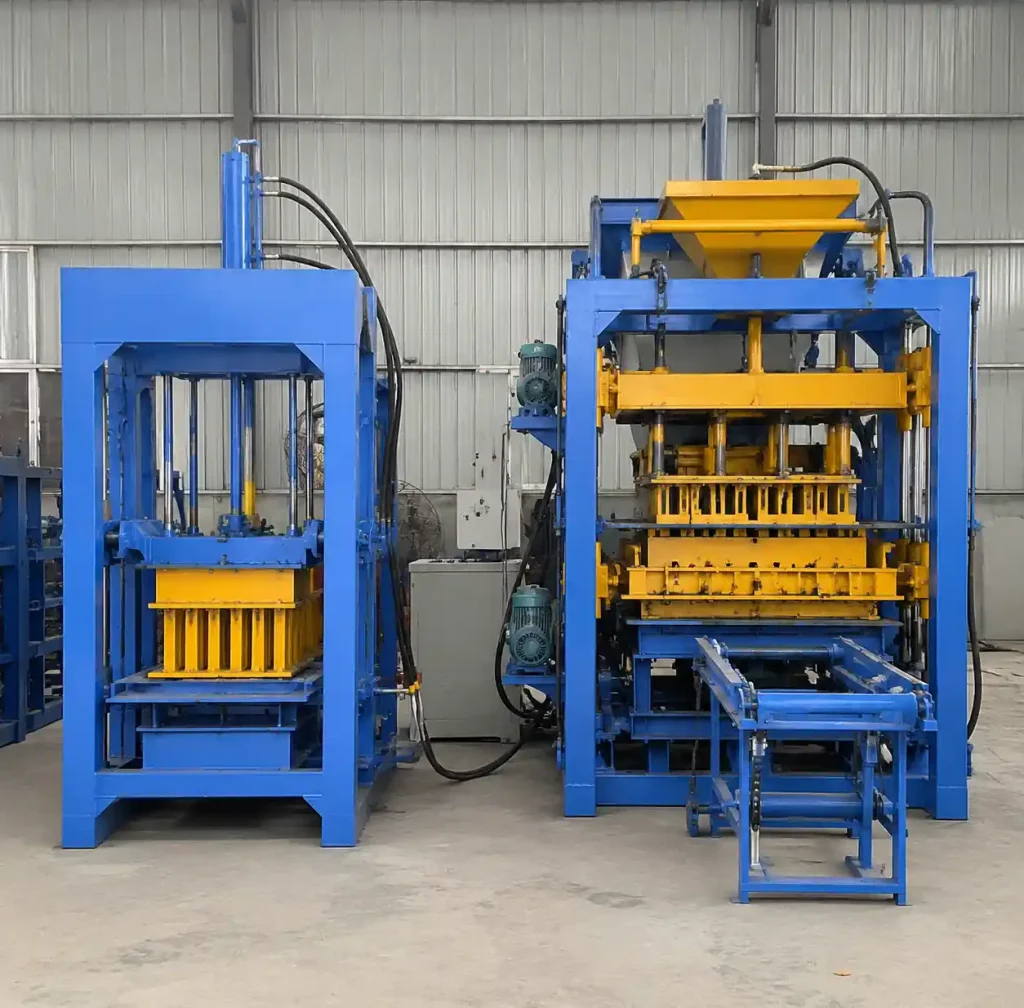
The fundamental difference: clay brick machines rely primarily on hydraulic pressing, while concrete block machines integrate vibration technology with compression.
Equipment Comparison
Clay Brick Machine Specifications
| Модель | Dimensions (mm) | Мощность | Cycle Time | Production (8 hrs) | Workers | Investment |
|---|---|---|---|---|---|---|
| QT4-10 (Automatic) | 1800×1500×2210 | 11 кВт | 10 sec | 11,520 pcs | 2-3 | $15,000-$25,000 |
| QT2-10 (Automatic) | 1600×1400×2100 | 7,5 кВт | 10 sec | 5,760 pcs | 2-3 | $10,000-$18,000 |
| QT2-25 (Semi-auto) | 1600×820×1700 | 5-7 KW | 20-25 sec | 3,840-4,800 pcs | 3-4 | $8,000-$12,000 |
| QT2-40 (Manual) | 600×400×800 | Minimal | 40 sec | 2,400-3,000 pcs | 4-5 | $3,000-$6,000 |
Concrete Block Machine Specifications
| Модель | Dimensions (mm) | Мощность | Сила вибрации | Production (8 hrs) | Workers | Investment |
|---|---|---|---|---|---|---|
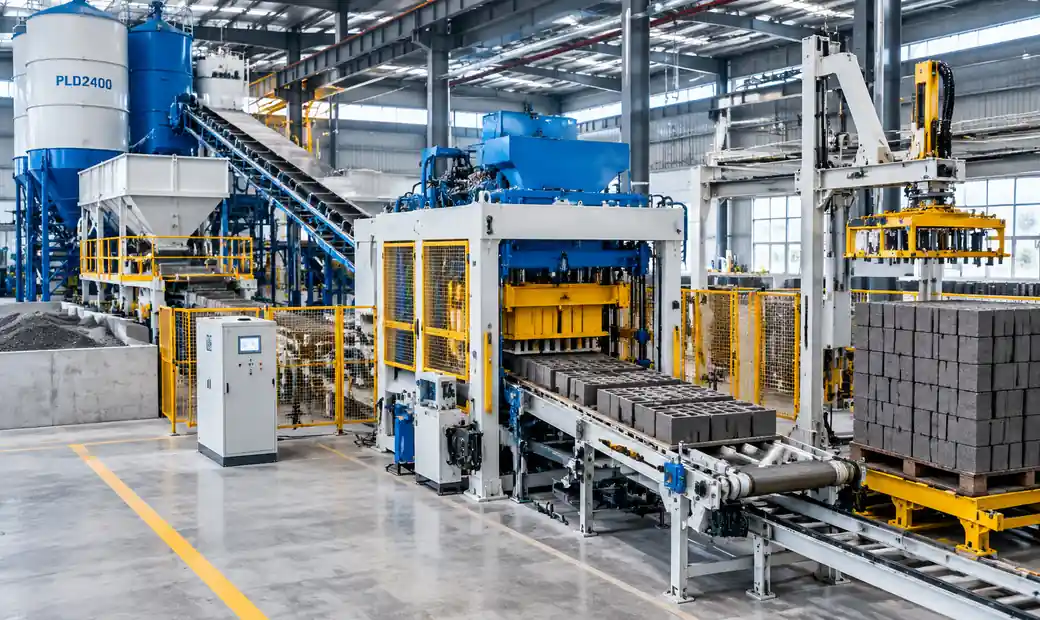
| QT10-15 (Automatic) | 9400×3060×2980 | 107.8 KW | 100 KN | 23,040-46,080 blocks | 5-7 | $150,000-$250,000 |
| QT8-15 (Automatic) | 8300×1860×3000 | 96.3 KW | 70-90 KN | 15,360-30,720 blocks | 5-7 | $100,000-$200,000 |
| QT4-24 (Semi-auto) | 1800×1500×2520 | 23.15 KW | 50 кН | 4,428-7,749 blocks | 4 | $25,000-$60,000 |
| QT4-40 (Manual) | 1800×1500×2500 | 11.15 KW | 50 кН | 2,560-4,114 blocks | 4-6 | $8,000-$15,000 |
Key differences:
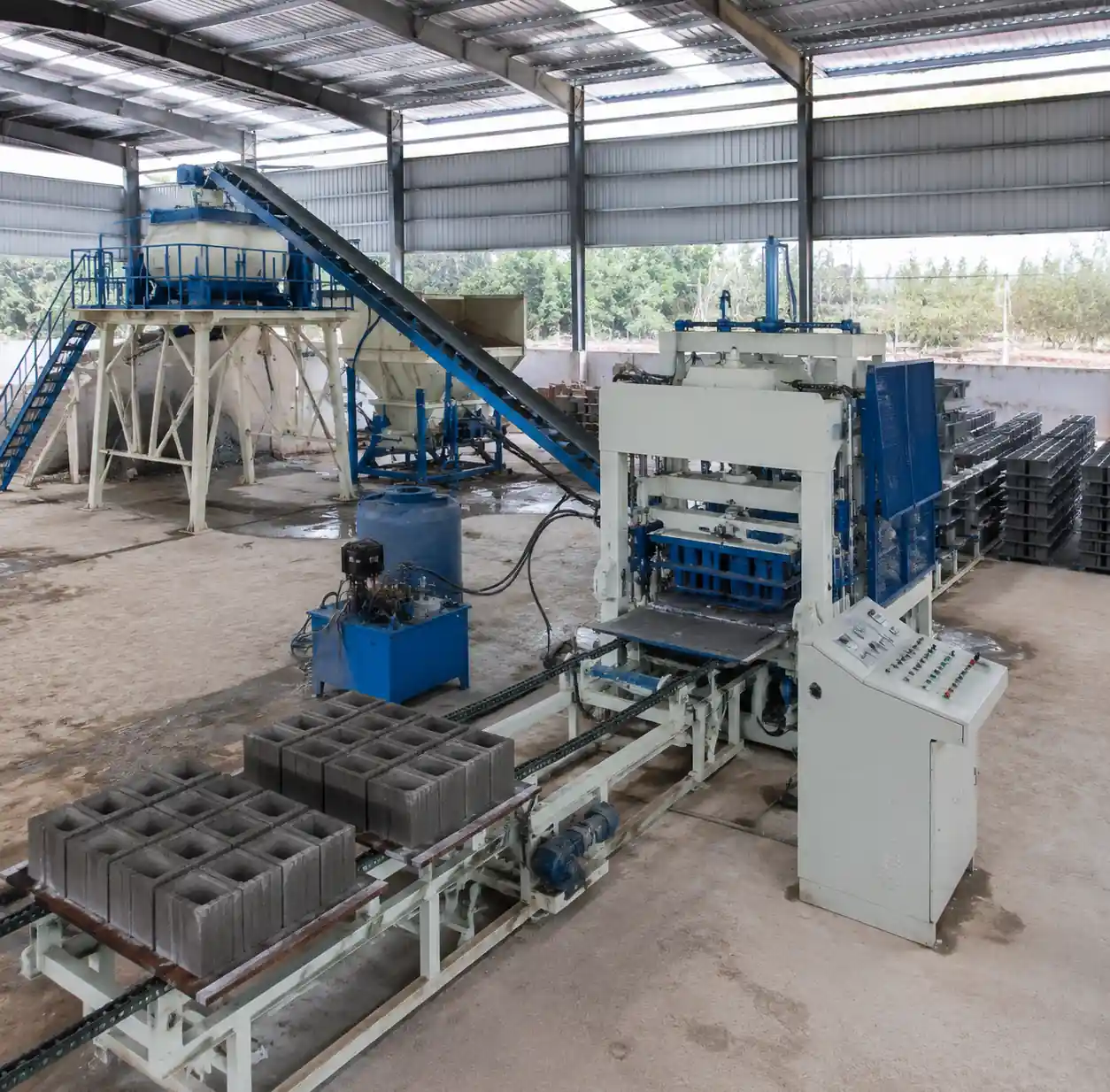
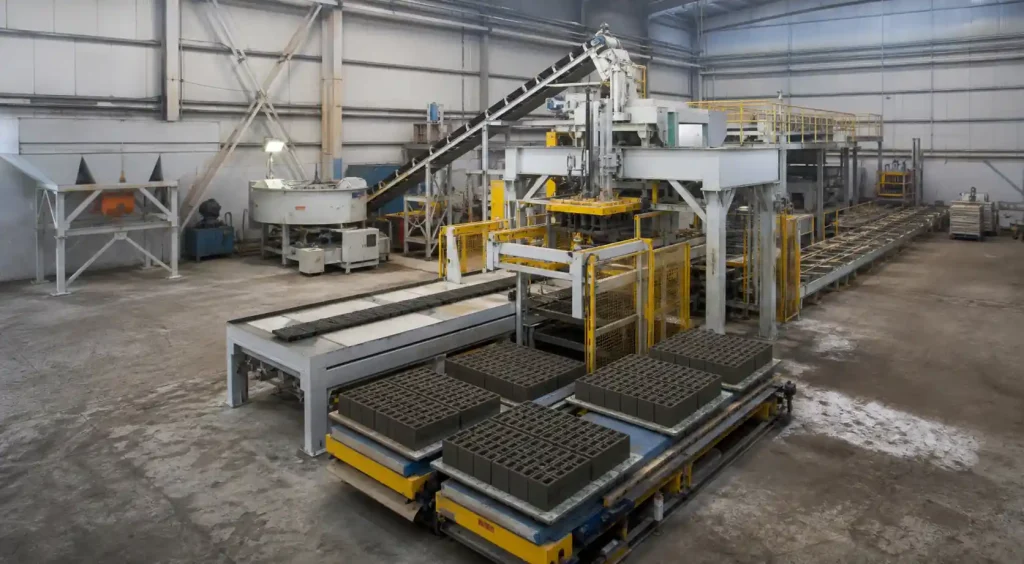
- Complexity: Concrete block machines require batching systems, mixers, and conveyors. Clay brick machines operate as standalone units.
- Footprint: Automatic concrete lines occupy 260-300 m². Clay brick machines need 60-150 m².
- Мощность: Concrete block production consumes 3-10× more electricity due to vibration systems.
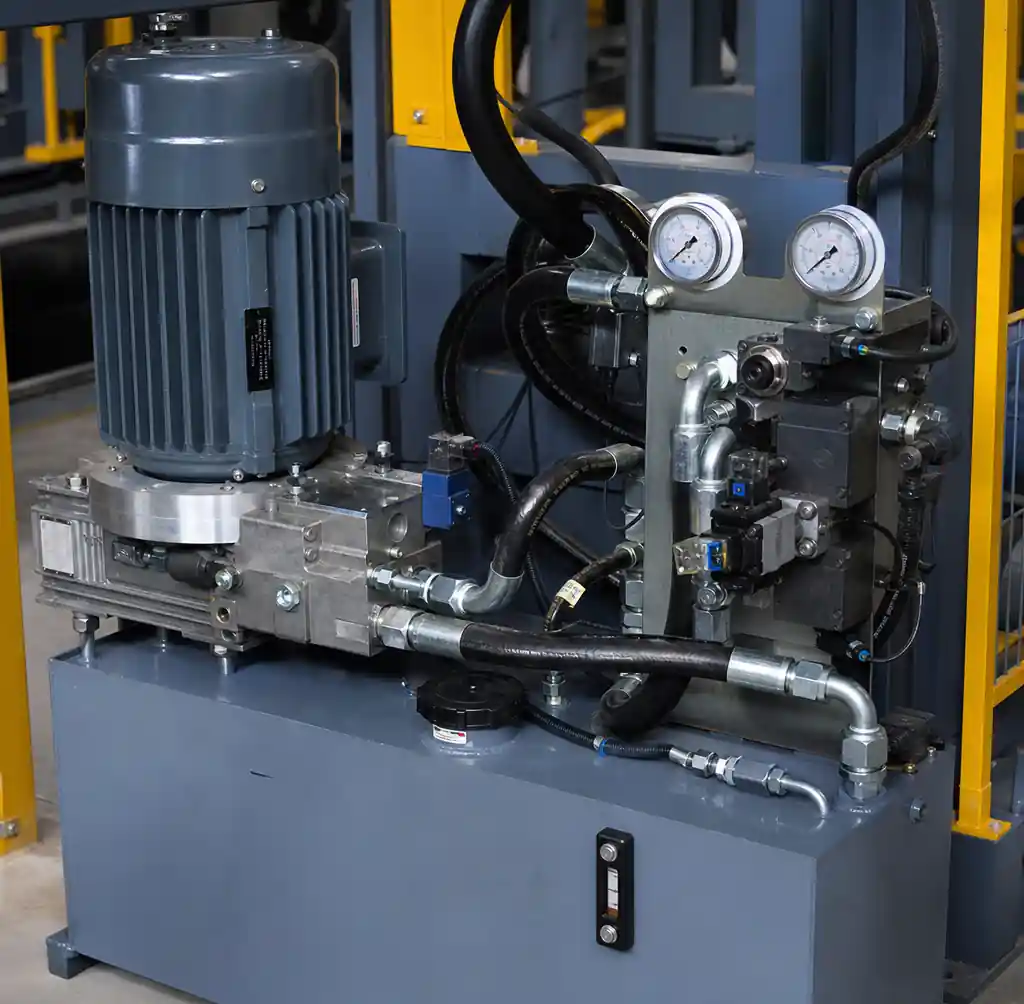
Raytone Block Machinery equips machines with Siemens PLC, Schneider electrical components, and Yuken hydraulic valves. Learn more about supporting equipment for complete production lines.
Raw Material Requirements and Costs
Clay Brick Raw Materials:
- Soil/clay (60-70%): $0-$5/ton
- Sand (15-20%): $10-$25/ton
- Cement (10-15%): $80-$120/ton
- Cost per brick (300×150×100mm): $0.08-$0.15
Concrete Block Raw Materials:
- Cement (10-15%): $80-$120/ton
- Aggregates (70-75%): $15-$35/ton
- Water (10-15%): 8-20 tons daily
- Cost per block (400×200×200mm): $0.15-$0.25
Production Process Comparison
Clay Brick Workflow:
- Mix soil, sand, and cement (8-12% moisture)
- Load into machine hopper; hydraulic ram compresses at 16-32 MPa
- Demold bricks directly onto pallets or ground
- Cure 7-14 days ambient (no kiln firing)
- Labor: 2-5 workers | Water: 4-8 tons/day
Concrete Block Workflow:
- PLD batching machine measures materials (±2% accuracy)
- Twin-shaft mixer blends for 60 seconds
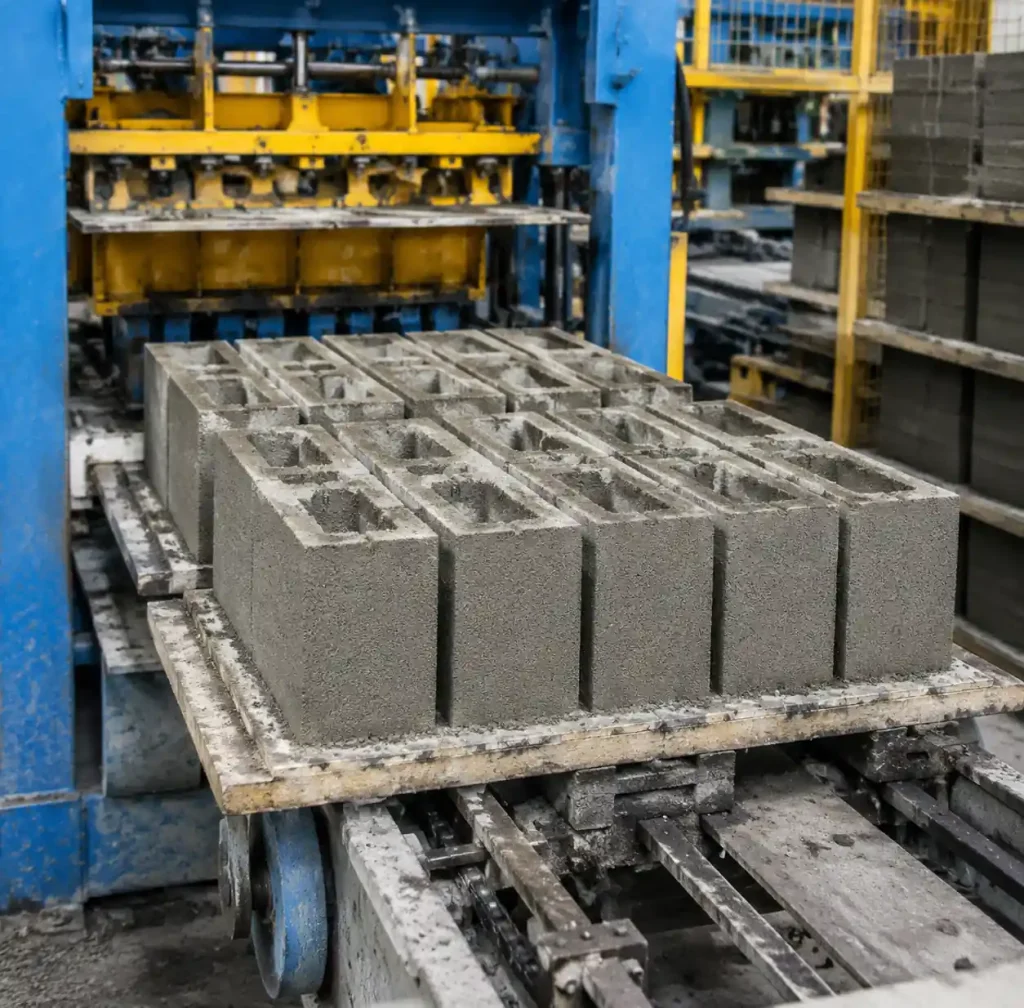
- Vibration (50-100 KN) + hydraulic pressing compacts material
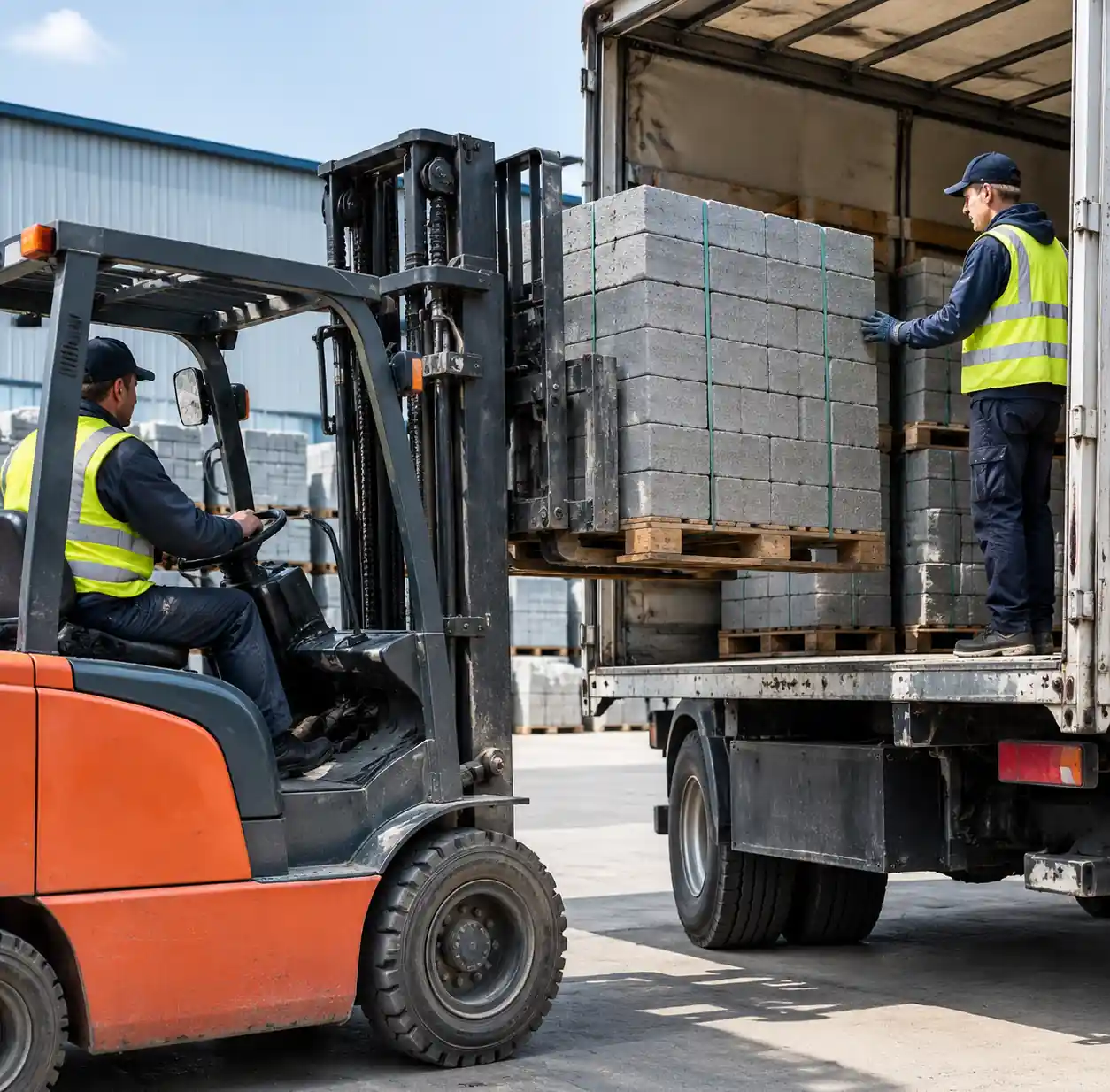
- Blocks release onto pallets; conveyor transfers to curing
- Cure 7-28 days (steam curing accelerates to 3-5 days)
- Labor: 4-7 workers | Water: 10-20 tons/day
Production Capacity Analysis
Volumetric comparison:
- Clay brick (QT4-10): 11,520 bricks × 0.0045 m³ = 51.84 m³/shift
- Concrete block (QT10-15): 23,040 blocks × 0.016 m³ = 368.64 m³/shift
Concrete block machines deliver 7-8× higher volumetric capacity.
Cost Analysis
Entry-level investment:
- Clay brick operation: $10,500-$16,500
- Concrete block operation: $12,000-$21,500
Medium-scale investment:
- Clay brick operation: $20,000-$34,000
- Concrete block operation: $44,000-$90,000
Operating costs (per 1,000 units):
Clay bricks: $127-$244 ($0.127-$0.244/brick)
- Raw materials $80-150, Labor $40-80, Electricity $2-4, Maintenance $5-10
Concrete blocks: $235-$395 ($0.235-$0.395/block)
- Raw materials $150-250, Labor $60-100, Electricity $10-20, Maintenance $15-25
Per square meter wall area:
- Clay bricks (44 bricks/m²): $5.59-$10.74/m²
- Concrete blocks (12.5 blocks/m²): $2.94-$4.94/m²
Concrete blocks provide more cost-effective coverage for structural applications.
Product Applications
Clay Brick Applications:
- Interlocking pavers (driveways, walkways, landscaping)
- Low-rise residential construction (natural appearance, no firing)
- Small-scale commercial (retail facades, boundary walls)
- Target markets: Homeowners, small contractors, landscaping, eco-building
Concrete Block Applications:
- Structural walls (load-bearing, rebar reinforcement)
- High-rise construction (volumetric capacity)
- Industrial facilities (warehouses, factories, agricultural)
- Infrastructure projects (retaining walls, sound barriers)
- Target markets: Construction companies, developers, government, commercial builders
Equipment Selection Decision Framework
Choose clay brick machines when:
- Capital under $25,000
- Production targets 3,000-12,000 units/day
- Aesthetic-focused applications (pavers, residential)
- Abundant soil/sand resources
- Limited electrical infrastructure
Choose concrete block machines when:
- Adequate capital ($25,000-$250,000)
- Production targets 15,000-50,000 units/day
- Structural construction demand
- Established cement/aggregate supply chains
- Reliable electrical power
Compare automatic vs semi-automatic vs manual block machines to find the right fit.
Technology Integration and Automation
Clay brick automation: Automatic models integrate hydraulic control systems for pressing pressure, cycle timing, and mold positioning. Mobile models like M7MI enable on-site production.
Concrete block automation: Full lines integrate batching (PLD), twin-shaft mixers (JS750), PLC control, conveyor systems, and automatic stacking reducing labor by 60-70%. The QT10-15 operates with 5-7 workers producing 46,080 blocks/shift (equivalent manual: 25-30 workers).
ROI considerations: A $150,000 automatic concrete line saves $60,000-$80,000 annually in labor—payback 24-36 months. A $15,000 automatic clay brick machine saves $10,000-$15,000 annually—payback 12-18 months.
Quality Standards
Clay Bricks:
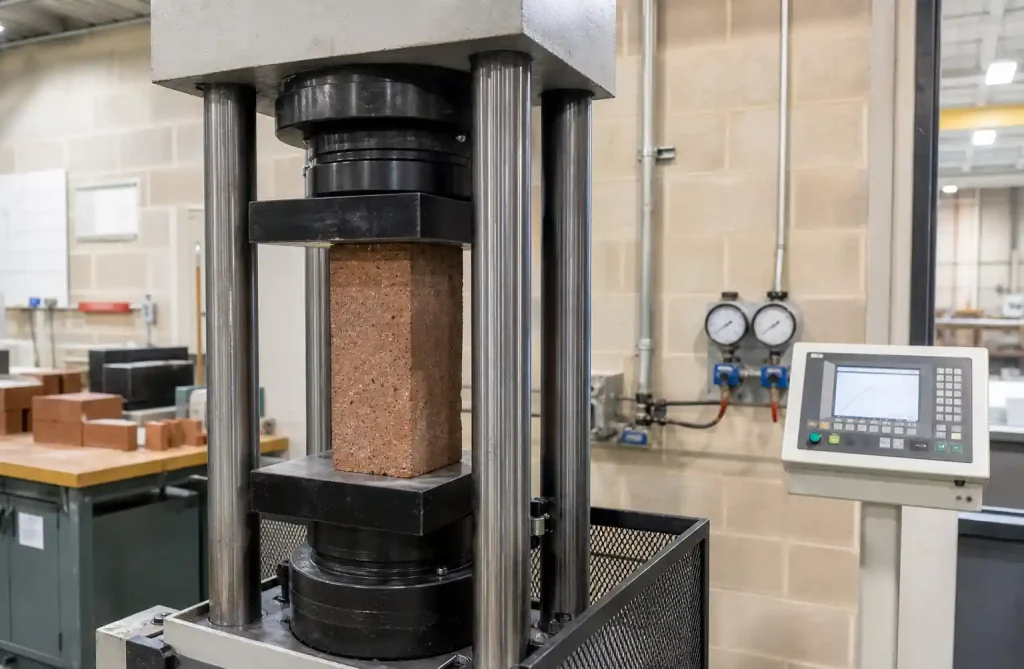
- Compressive strength: Min 3.0 MPa (non-load-bearing), 5.0 MPa (load-bearing)
- Water absorption: Max 15-20%
- Dimensional tolerance: ±3mm length/width, ±2mm height
Concrete Blocks:
- Compressive strength: Min 4.0 MPa (hollow), 7.0 MPa (solid) per ASTM C90
- Density: 1,800-2,200 kg/m³
- Absorption: Max 10% (Grade N), 13% (Grade S)
- Dimensional tolerance: ±3mm
Raytone Block Machinery designs equipment to produce units meeting these specifications with proper mix designs and operating procedures.
Часто задаваемые вопросы
What is the main difference between clay brick machines and concrete block machines?
Clay brick machines use hydraulic pressing to compress soil, clay, sand, and minimal cement into bricks without firing. Concrete block machines combine vibration and hydraulic pressure to mold cement-rich mixtures into hollow or solid blocks. Clay brick machines are simpler with lower power requirements (7.5-11 KW), while concrete block machines require more complex systems (23-108 KW).
Which machine type requires less investment to start?
Clay brick machines require lower initial investment ($10,000-$18,000 complete). Entry-level concrete block operations need $12,000-$21,500. However, concrete blocks deliver higher volumetric production and serve structural markets with higher unit prices.
Can one machine produce both clay bricks and concrete blocks?
No. Clay brick machines and concrete block machines use fundamentally different forming technologies. Clay brick machines rely on hydraulic pressing alone, while concrete block machines require vibration systems. Select equipment based on target product applications.
How much can I earn monthly with each machine type?
A medium-scale clay brick operation (8,000 bricks/day) at $0.10 net profit/brick earns $20,000/month. A medium-scale concrete block operation (15,000 blocks/day) at $0.15 net profit/block earns $56,250/month. Concrete block production typically generates higher absolute profits.
Which machine is better for areas with limited electricity?
Clay brick machines operate effectively with limited electricity. Manual and semi-automatic models need 5-8 KW. Mobile clay brick machines work off-grid. Concrete block machines require stable electricity (semi-auto: 23 KW, auto: 96-108 KW).
Заключение
Clay brick machines and concrete block machines serve distinct market segments with different equipment requirements, production economics, and product applications. Clay brick machines offer lower investment thresholds ($10,000-$25,000), simpler operation, and suitability for interlocking pavers and small-scale construction. Concrete block machines require higher investment ($25,000-$250,000) but deliver volumetric production capacity for structural construction markets.
Material costs favor clay bricks per unit, but concrete blocks prove more economical per square meter of wall coverage. Your equipment selection should align with target market demand, available capital, infrastructure conditions, and production scale objectives.
Raytone Block Machinery manufactures both clay brick machines и машины для производства бетонных блоков with models spanning manual, полуавтоматический, и fully automatic technologies. Contact us for detailed specifications and pricing.