





Hydraulic block machines account for over 70% of modern concrete block production worldwide. The shift from mechanical vibration to hydraulic compression fundamentally changed what manufacturers can produce. If you operate a block plant or plan to invest in production equipment, understanding hydraulic systems separates profitable operations from those facing constant downtime and quality issues.
This guide covers hydraulic pressure requirements, pump types, cylinder operation, oil specifications, and troubleshooting methods based on real production data.
What Are Hydraulic Systems in Block Making Machines?
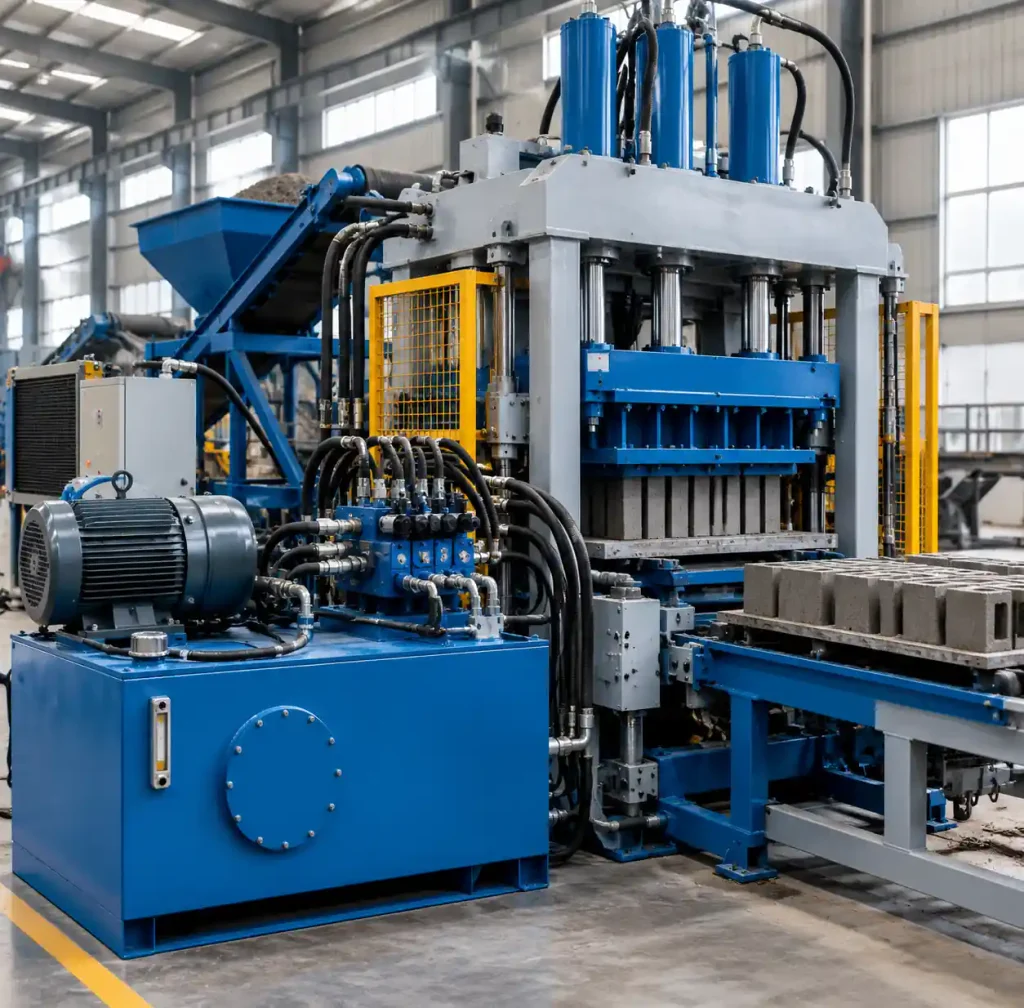
A hydraulic system in block making machines uses pressurized oil to generate the compression force needed for concrete compaction. The system converts electrical or diesel power into hydraulic pressure, typically operating between 16-25 MPa, which pressing cylinders convert into 200-600 tons of compaction force.
Modern hydraulic block machines achieve compression forces that mechanical systems cannot match. This controlled force creates blocks with consistent density throughout each unit. According to industry manufacturing standards, hydraulic systems maintain force precision within ±2%, producing blocks where strength variation stays under 3%.
You can find hydraulic systems in semi-automatic machines producing 3,000-5,000 blocks per shift and fully automatic lines reaching 15,000-30,000 blocks daily. The technology works across manual, semi-automatic, and automatic block machines.
Core Components of Hydraulic Block Machine Systems
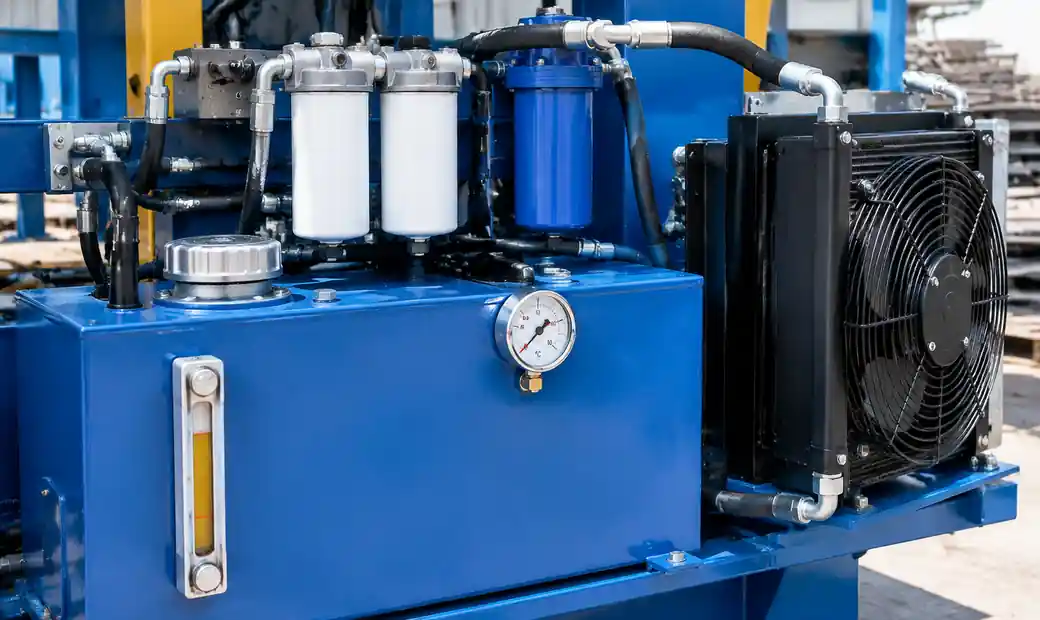
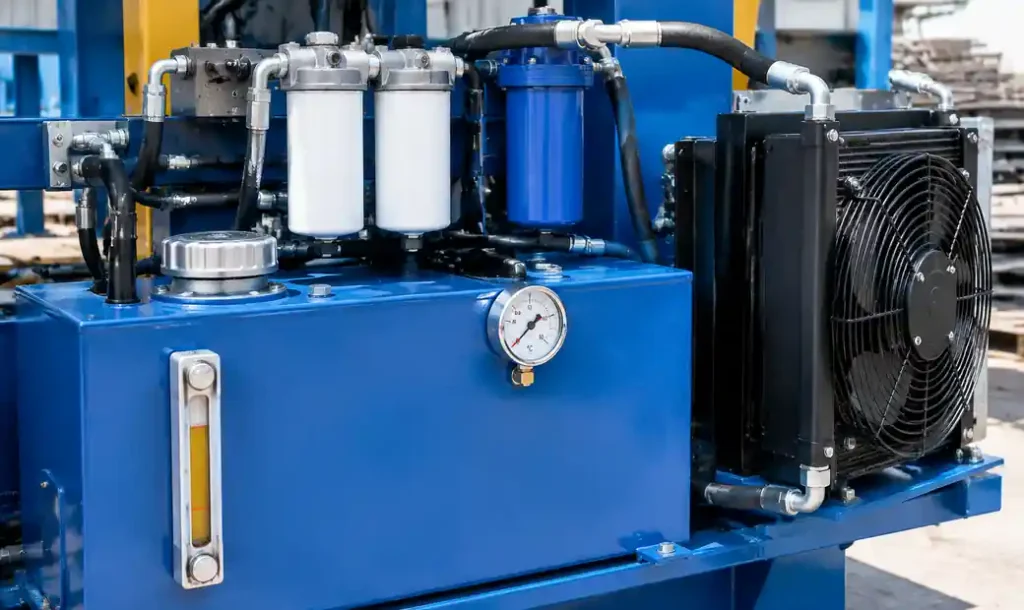
Hydraulic Power Unit
The power unit generates and regulates oil pressure that powers block formation. Standard units operate at 160-210 bar for regular production, with high-density systems reaching 250 bar.
Every power unit contains an electric motor (15-75 kW depending on machine capacity), hydraulic pump, oil reservoir, pressure relief valve, and control valves. The pump draws oil from the reservoir and pressurizes it to the required force level.
Piston pumps cost 30-40% more than gear pumps but consume 12-18% less electricity during operation. For production lines running 12+ hours daily, efficiency gains recover the premium investment within 18-24 months. Reservoir capacity should be 3-5 times the pump flow rate per minute to prevent overheating—every 10°C temperature increase above 55°C cuts hydraulic oil life by approximately 50%.
Main Pressing Cylinder
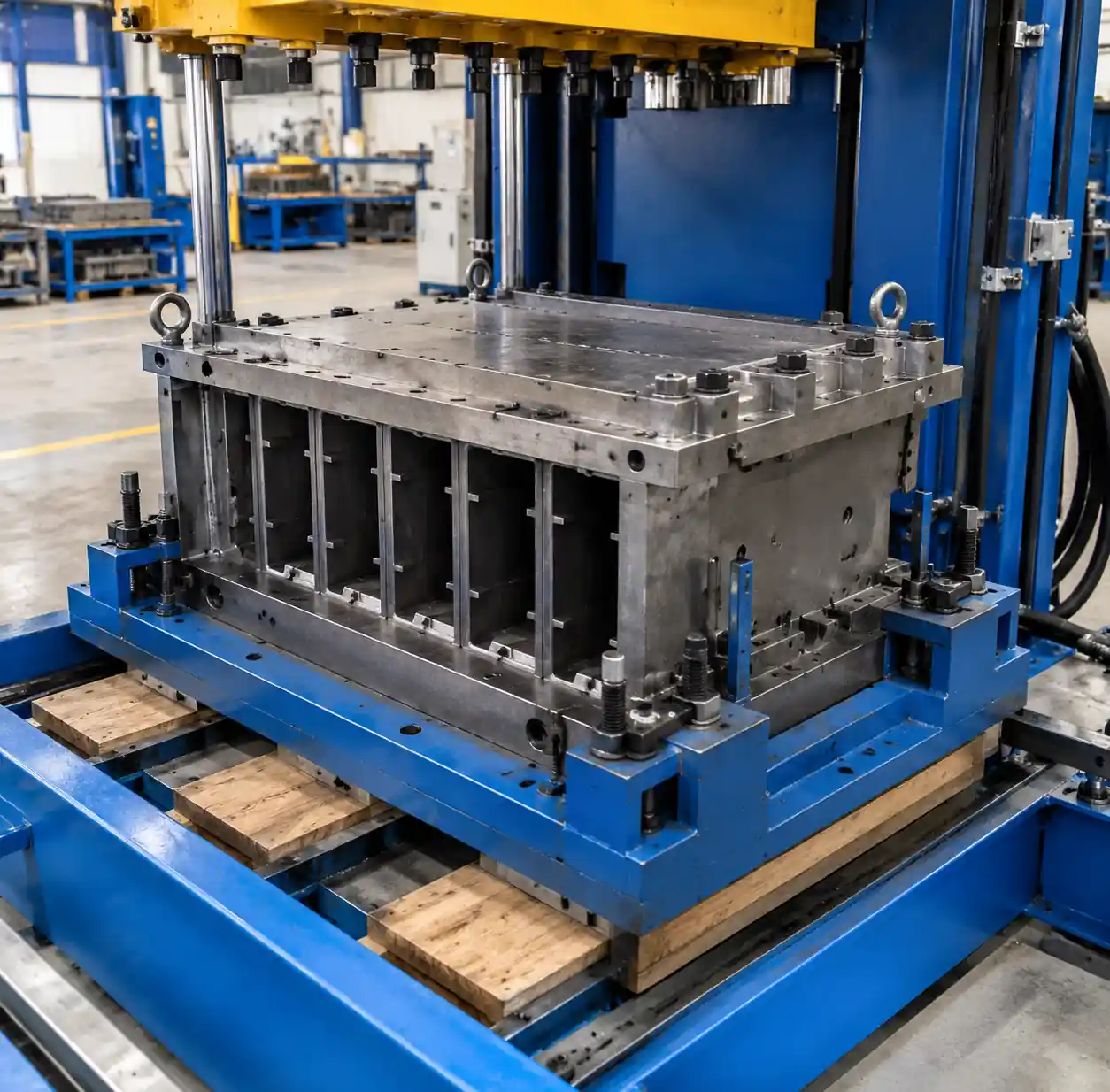
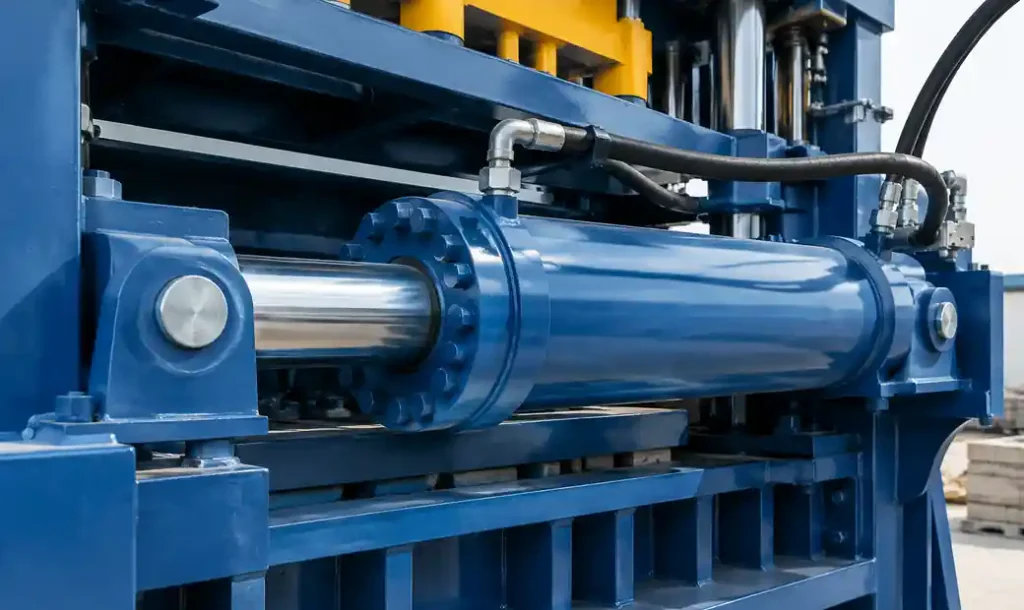
The pressing cylinder converts hydraulic pressure into vertical compaction force. Semi-automatic machines typically use 250-320mm bore cylinders, while automatic systems employ 400-500mm bore cylinders generating 200-600 tons of force.
Cylinder bore diameter directly determines maximum pressing force. A 400mm cylinder at 200 bar generates approximately 250 tons, while a 500mm cylinder at the same pressure produces 390 tons. Premium hydraulic seals in these cylinders last 8,000-12,000 operating hours versus 3,000-5,000 hours for standard seals.
Seal quality matters significantly. According to hydraulic cylinder maintenance research, proper seal selection and replacement prevents 70-80% of hydraulic failures. Replace main cylinder seals every 6,000-10,000 hours depending on production intensity.
Directional Control Valves
Control valves coordinate hydraulic cylinder movements in precise sequences. These valves direct pressurized oil to specific cylinders at exact moments during the molding cycle.
Fast-response valves switching in under 50 milliseconds enable production cycles of 15-20 seconds for semi-automatic machines and 8-12 seconds for fully automatic systems. Slower valve response costs 800-1,600 blocks per shift in lost production.
Solenoid-operated directional valves receive electrical signals from the PLC controller, opening and closing hydraulic pathways. Quality valves from manufacturers like Rexroth or Yuken maintain consistent response times across millions of cycles. Check valve solenoid connections weekly—loose plugs cause erratic machine behavior.
Hydraulic Pressure Requirements by Block Type
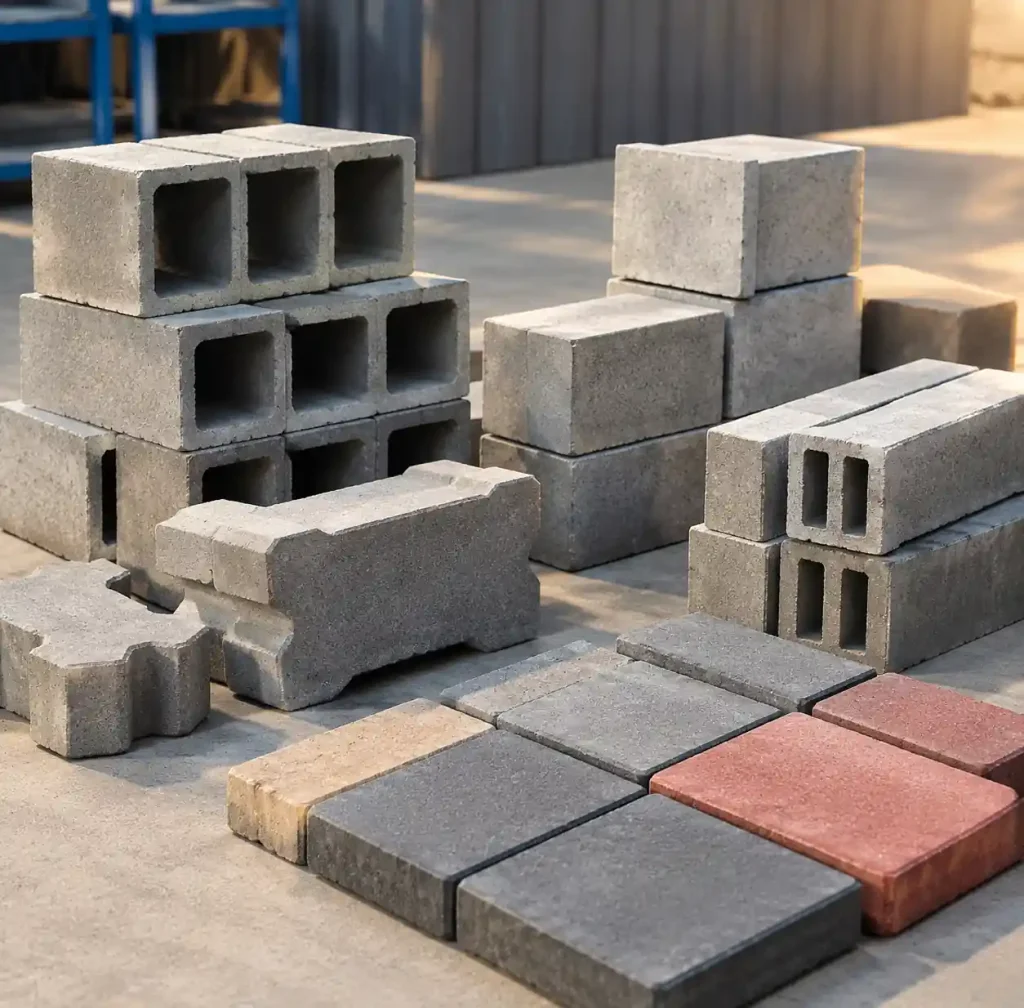
Different block products require specific pressure settings for optimal compaction and strength.
| Block Type | Hydraulic Pressure | Compression Force | Typical Strength | Production Cycle |
|---|---|---|---|---|
| Standard hollow blocks | 160-180 bar | 200-280 tons | 12-15 MPa | 15-20 seconds |
| Solid blocks | 180-200 bar | 280-350 tons | 15-18 MPa | 18-22 seconds |
| Interlocking blocks | 190-210 bar | 320-400 tons | 18-20 MPa | 20 à 25 secondes |
| Paving stones | 200-220 bar | 380-450 tons | 20-25 MPa | 22-28 seconds |
| High-density structural | 220-250 bar | 450-600 tons | 25-30 MPa | 25-30 seconds |
These pressure requirements come from real production data across multiple block plants. Start at the lower pressure range and increase in ±10 bar increments while testing block strength. Higher pressure than needed accelerates wear on molds, seals, and hydraulic components without improving block quality.
Hydraulic Pump Types and Selection
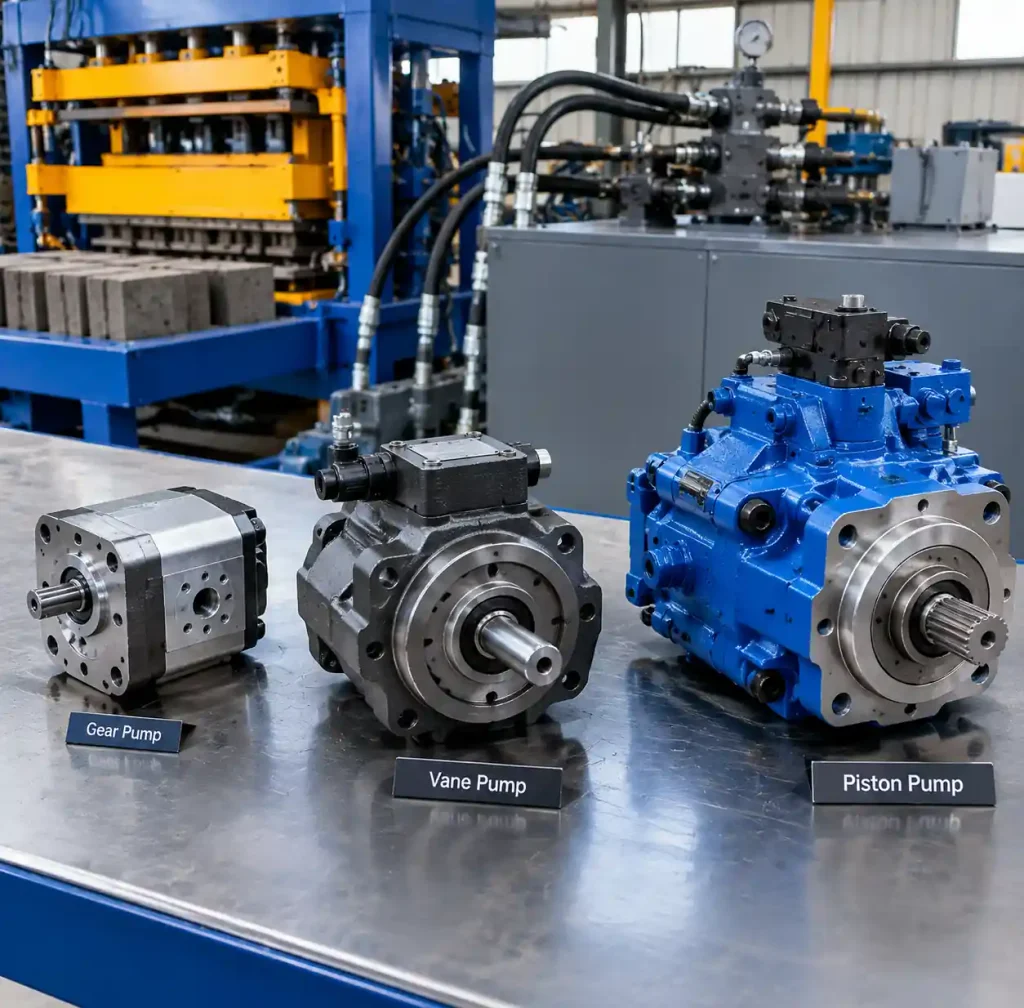
Gear Pumps
Gear pumps use intermeshing gears to move hydraulic oil. They tolerate contamination better than other pump types and cost 40-50% less than piston pumps.
According to hydraulic oil selection research, gear pumps operate effectively with oil viscosity from 10-300 cSt, making them suitable for varying temperature conditions. However, gear pumps consume more electricity and generate more heat during operation.
Use gear pumps for semi-automatic machines with moderate production hours (6-8 hours daily) where initial cost matters more than long-term efficiency.
Vane Pumps
Vane pumps use rotors with slots mounted to a shaft spinning eccentrically to a cam ring. They maintain steady flow and operate more quietly than gear pumps.
Vane pumps require oil viscosity between 14-160 cSt at operating temperature. Internal contact between vanes and the cam ring causes wear, making maintenance more expensive. Replace vanes every 4,000-6,000 operating hours.
Piston Pumps
Piston pumps deliver the highest efficiency and longest service life. They maintain consistent pressure across varying loads and speeds. Variable displacement piston pumps adjust flow rate automatically based on system demand, reducing energy waste during idle periods.
Piston pumps require oil viscosity from 10-160 cSt. For automatic block making production lines running 16+ hours daily, piston pumps save 15-20% on electricity costs compared to gear pumps. Initial costs run 35-45% higher, but operational savings and longer life (12,000-15,000 hours) justify the investment.
Hydraulic Oil Specifications and Management
Oil Grade Selection
ISO VG 46 hydraulic oil suits most block machines operating in 15-35°C ambient temperatures. Hot climates above 35°C require ISO VG 68, while cold environments below 10°C need ISO VG 32.
Oil viscosity affects system efficiency and component life. Too thick and pumps work harder, consuming excess electricity. Too thin and internal leakage increases while lubrication quality drops. According to hydraulic oil viscosity guidelines, proper viscosity selection extends component life by 200-300%.
Anti-wear (AW) hydraulic oils contain zinc additives that reduce component wear by 80-90% compared to non-AW oils. AW oils cost 30-50% more but prevent premature pump and valve wear.
Oil Change Intervals
Premium ISO VG 46 or VG 68 anti-wear oils last 2,000-2,500 operating hours in well-maintained systems. Economy oils without anti-wear additives require changes every 1,200-1,500 hours.
Oil temperature directly impacts service life. Systems consistently operating above 60°C experience accelerated oxidation. Oil running at 70°C degrades 50-60% faster than oil at 50°C. Install an oil temperature gauge and take corrective action when temperatures exceed 60°C regularly.
Check oil appearance daily before starting production. Hydraulic oil should look translucent amber. Cloudy appearance indicates oxidation requiring immediate oil change. Milky appearance means water contamination—change oil immediately and identify the water source before resuming operation.
Filter Maintenance
Hydraulic filters rated at 10 microns remove abrasive particles causing 90% of component wear. Replace filters every 500 operating hours minimum, more frequently in dusty production environments.
Monitor filter differential pressure using a gauge installed across the filter housing. Replace filters when pressure differential exceeds 15 PSI even if the hour interval hasn’t elapsed. A $45 filter replacement protects $8,000-$15,000 worth of hydraulic pumps, valves, and cylinders.
Hydraulic vs Mechanical Block Machines
| Feature | Hydraulic Block Machines | Mechanical Block Machines |
|---|---|---|
| Compression Control | Precise pressure regulation 160-250 bar | Fixed force from flywheel momentum |
| Block Density Uniformity | ±2% variation across batches | ±8-12% variation |
| Compressive Strength | 18-30 MPa achievable | Typically limited to 12-18 MPa |
| Production Cycle Time | 8-25 seconds per cycle | 15-35 seconds per cycle |
| Energy Consumption | 0.8-1.2 kWh per block | 1.5-2.3 kWh per block |
| Mold Changeover | 15-30 minutes | 45-90 minutes |
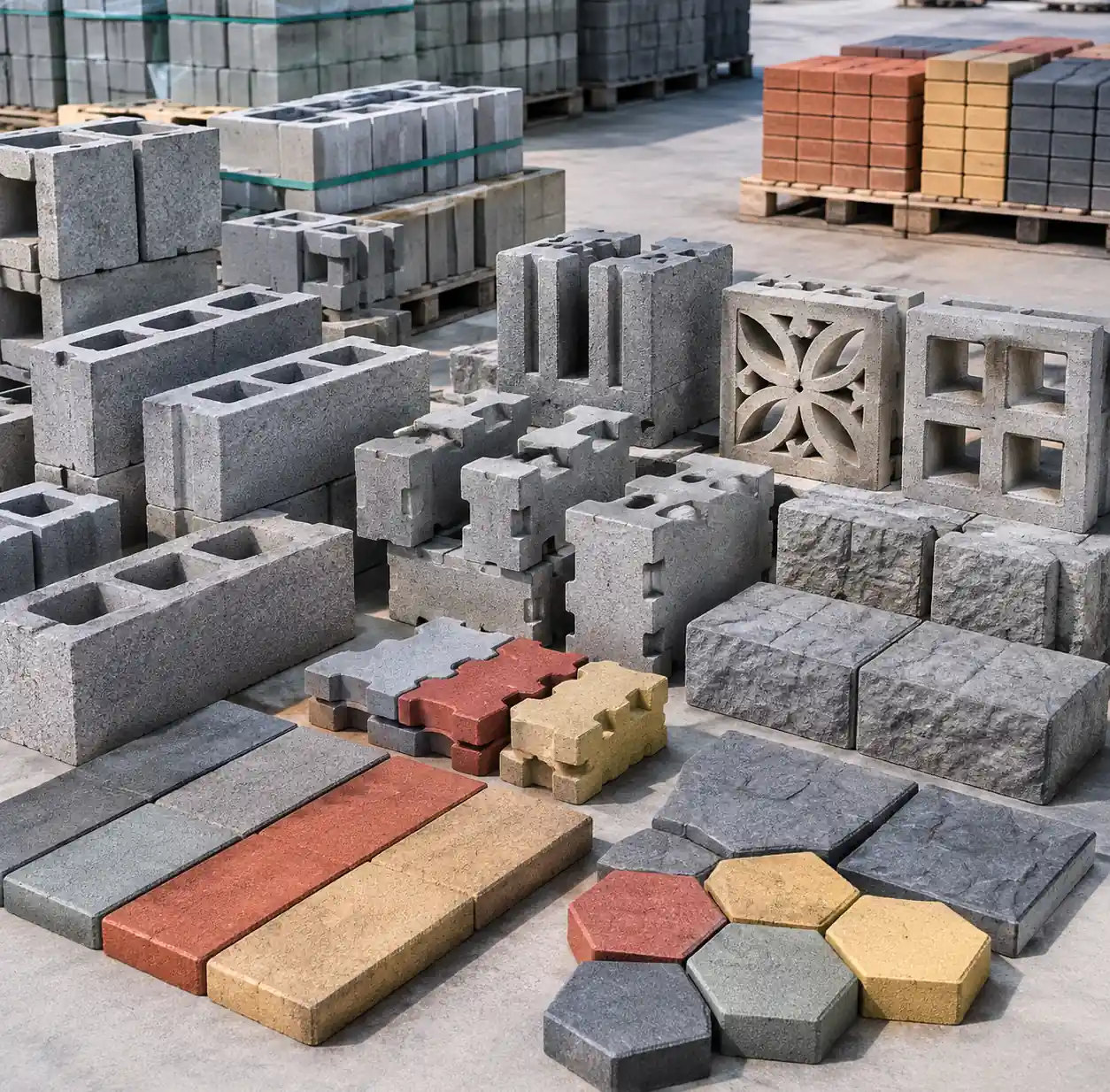
| Block Type Flexibility | Hollow, solid, interlocking, pavers, decorative | Limited to basic shapes |
| Investissement initial | $15,000-$180,000 | $8,000-$45,000 |
| Maintenance Complexity | Oil, seals, filters, valves | Bearings, clutch, linkages |
| Suitable Production Scale | 1,000-30,000 blocks/day | 500-8,000 blocks/day |
The compression control difference fundamentally changes product possibilities. Hydraulic machines produce interlocking blocks with tight tolerances, decorative pavers with fine surface detail, and high-density structural blocks—products where mechanical machines fail quality specifications or require excessive manual finishing.
For complete production solutions, hydraulic systems enable automation levels impossible with mechanical compression.
Daily Maintenance and Operational Checks
Pre-Shift Inspection Protocol
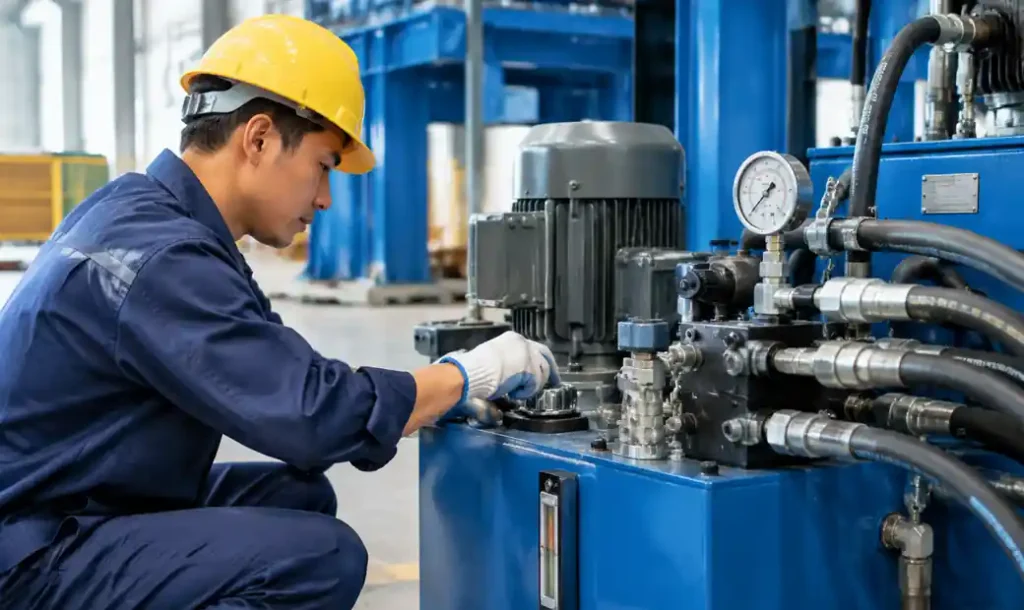
Check hydraulic oil level before every shift start. Low oil causes pump cavitation, accelerating wear and potentially causing catastrophic pump failure. Oil level should stay between minimum and maximum marks on the sight glass.
Inspect for oil leaks around cylinders, valve manifolds, and hose connections. Small seepage progresses rapidly under pressure. Wipe down components to identify fresh leakage versus old stains. Address leaks immediately—waiting compounds problems and increases repair costs.
Pressure Verification
System pressure should reach specified operating pressure (160-200 bar) within 2-3 seconds after startup and hold steady during production. Pressure fluctuations exceeding ±5% signal developing problems in the pump, relief valve, or cylinder seals.
Install a pressure gauge at the pump outlet and monitor readings during the first production cycle. Inability to reach target pressure or pressure drops during holding phases indicate internal leakage requiring investigation.
Temperature Monitoring
Touch the hydraulic pump housing after 30 minutes of operation. Temperature should feel warm but not uncomfortably hot. Pump housing temperature exceeding 65-70°C signals inadequate cooling, excessive system pressure, or internal leakage.
Oil reservoir temperature should stay below 55-60°C during continuous operation. Install a temperature gauge or use an infrared thermometer to monitor accurately. High temperatures require immediate investigation—check oil level, clean oil cooler fins, verify relief valve setting, and inspect for cylinder seal leakage.
Sound Baseline Recognition
Normal hydraulic operation produces a steady hum from the pump and smooth whooshing sounds during cylinder movement. Learn your machine’s normal sound profile.
Whining noise indicates pump cavitation from low oil level, clogged intake filter, or air entering the system. Knocking sounds suggest pressure spikes from relief valve problems or valve timing issues. Address abnormal sounds immediately before they progress to component failure.
Common Hydraulic Problems and Solutions
Insufficient Pressing Force
Symptoms: Blocks come out soft, crumble easily, don’t meet strength specifications.
Causes: Low hydraulic pressure setting, worn pump reducing maximum pressure, internal cylinder seal leakage, pressure relief valve opening prematurely, contaminated oil increasing internal friction.
Solutions: Check pressure gauge reading against specification (typically 160-220 bar depending on block type). Adjust pressure relief valve if reading is low. Replace cylinder seals if pressure builds but force remains weak. Service or replace pump if maximum achievable pressure has dropped significantly. Change hydraulic oil if contaminated.
Slow Production Cycles
Symptoms: Cylinder movement sluggish, production cycle takes longer than specification, reduced daily output.
Causes: Low pump flow rate from worn pump, clogged hydraulic filter, oil viscosity too high for temperature, directional valve response slow, internal leakage in cylinders or valves.
Solutions: Replace hydraulic filter and check if cycle speed improves. Check oil viscosity grade against ambient temperature—use lower viscosity if oil is too thick. Service directional control valves, cleaning or replacing as needed. Test cylinder seal integrity and replace if leaking internally.
Erratic Cylinder Movement
Symptoms: Cylinders move unevenly, jerking motion, inconsistent block quality, vibration during pressing.
Causes: Air in hydraulic system, water contamination in oil, valve spool sticking, loose electrical connections to solenoid valves, pressure fluctuations from failing pump.
Solutions: Bleed air from cylinders by running through several cycles with reduced load. Check oil for milky appearance indicating water contamination—change oil immediately if contaminated. Clean or replace directional valve spools. Tighten all solenoid electrical connections. Monitor system pressure for fluctuations indicating pump problems.
Oil Overheating
Symptoms: Oil temperature consistently above 60°C, reduced efficiency, shorter oil life, seal degradation.
Causes: Inadequate oil cooler capacity, clogged cooler fins, oil level too low, relief valve set too high causing excess heat generation, cylinder seals leaking internally creating friction.
Solutions: Clean oil cooler radiator fins removing dust and debris. Verify adequate oil level in reservoir. Check relief valve setting—excessive pressure generates heat. Inspect cylinder seals for internal leakage. Consider adding or upgrading oil cooler for high-production environments. Ensure adequate ventilation around hydraulic power unit.
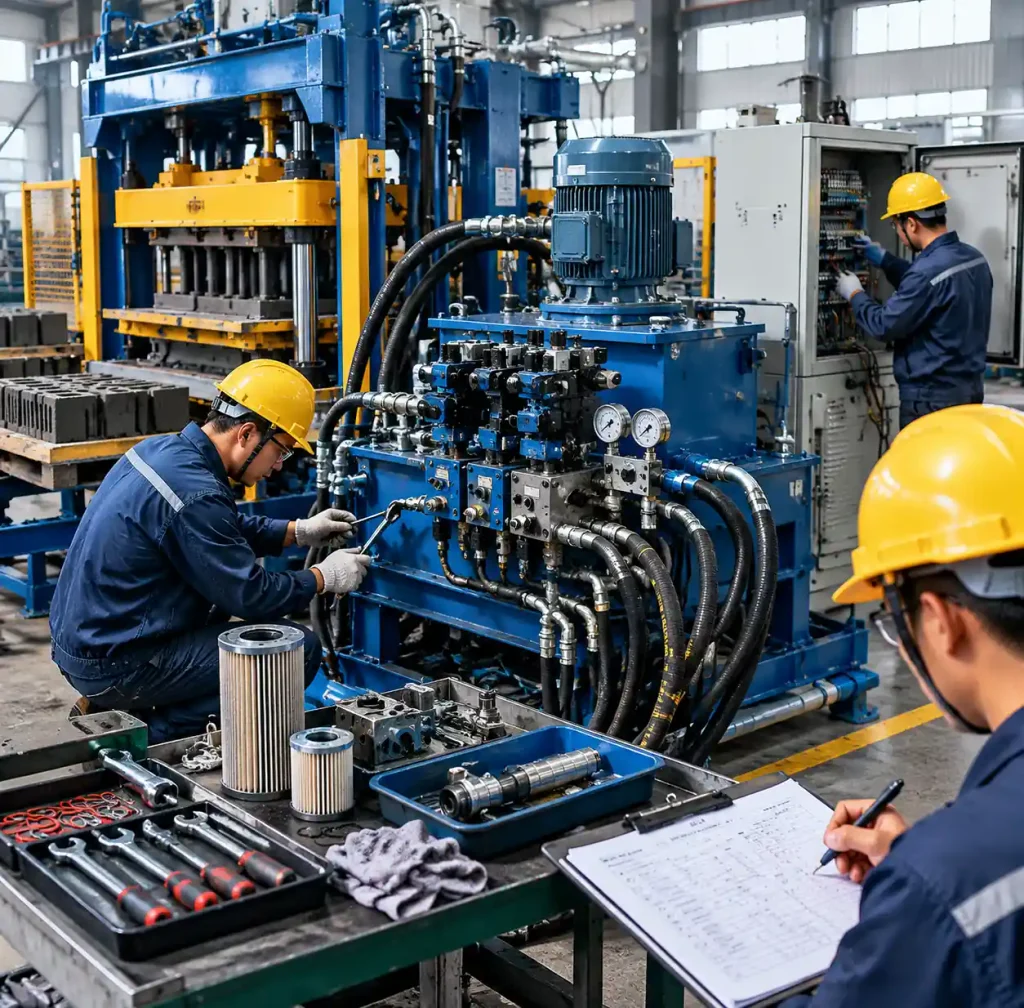
Preventive Maintenance Schedule
| Maintenance Task | Daily | Weekly | Monthly | Every 500 Hours | Every 2,000 Hours |
|---|---|---|---|---|---|
| Visual leak inspection | ✓ | ||||
| Oil level check | ✓ | ||||
| System pressure verification | ✓ | ||||
| Temperature monitoring | ✓ | ||||
| Clean machine exterior | ✓ | ||||
| Check solenoid connections | ✓ | ||||
| Clean oil cooler | ✓ | ||||
| Hydraulic filter replacement | ✓ | ||||
| Complete oil change | ✓ | ||||
| Cylinder seal inspection | ✓ | ||||
| Relief valve test | ✓ |
For automatic block machines, follow manufacturer-specific intervals which may be more stringent due to higher operating hours and production demands.
Maximizing Hydraulic System Performance
Pressure Optimization
Don’t automatically run at maximum pressure. Test block quality at incremental pressure settings to find the optimal point. Start at 160 bar for standard hollow blocks and increase by 10 bar increments while testing compressive strength after 7 and 28 days curing.
Running 20-30 bar higher than necessary accelerates mold wear, seal degradation, and energy consumption without improving block quality. Find the minimum pressure achieving target strength specifications.
Seal Replacement Strategy
Replace main cylinder seals proactively at 8,000-10,000 operating hours for automatic machines or 6,000-8,000 hours for semi-automatic machines. Don’t wait for visible leakage—internal seal degradation reduces efficiency before external leaks appear.
Use OEM-quality seals or equivalents meeting the same specifications. Aftermarket economy seals fail at 40-60% of OEM lifespan. Labor costs to replace failed seals far exceed the material cost difference between premium and economy seals.
Oil Quality Investment
Premium anti-wear hydraulic oils cost 30-50% more than basic hydraulic oils but extend component life by 200-300% and reduce energy consumption by 8-12%. For machines running 2,000+ hours annually, premium oil pays for itself through reduced repairs and electricity costs.
Avoid mixing different oil brands or types. When changing brands, flush the system completely. Different additive packages can react negatively, reducing effectiveness or creating deposits.
Supporting Equipment Integration
Block production supporting equipment works in sync with hydraulic machines. Proper concrete mixers ensure consistent material flow to the hopper, reducing pressure variations during molding. Conveyor systems move blocks efficiently off the machine, preventing production slowdowns that can cause hydraulic system temperature increases from extended idle operation at pressure.
FAQ
What pressure do hydraulic block machines operate at?
Most hydraulic block machines operate between 160-250 bar (16-25 MPa) depending on block type. Standard hollow blocks need 160-180 bar, solid blocks require 180-200 bar, and high-density structural blocks demand 200-250 bar. Modern machines allow pressure adjustment to match specific product requirements.
How often should I change hydraulic oil?
Change premium anti-wear hydraulic oil every 2,000-2,500 operating hours in well-maintained systems. Economy oils require changes every 1,200-1,500 hours. Check oil appearance daily—cloudy oil indicates oxidation and milky appearance means water contamination requiring immediate replacement regardless of hours.
What causes hydraulic cylinders to lose pressing force?
Common causes include worn cylinder seals allowing internal leakage, insufficient system pressure from pump wear or incorrect relief valve setting, contaminated oil increasing friction, or air in the hydraulic system. Check pressure gauge readings first, then inspect seals and oil condition.
Can I use any hydraulic oil in my block machine?
Use ISO VG 46 anti-wear hydraulic oil for most climates (15-35°C). Hot environments above 35°C need ISO VG 68, cold climates below 10°C require ISO VG 32. Anti-wear additives are essential—they reduce component wear by 80-90% and extend equipment life significantly despite costing 30-50% more than non-AW oils.
Why does my hydraulic system overheat?
System overheating above 60°C results from clogged oil cooler fins, inadequate reservoir capacity, excessive system pressure, internal cylinder leakage creating friction, or insufficient ventilation around the power unit. Clean coolers regularly, verify proper oil level, and ensure pressure relief valve settings are correct.
How long do hydraulic seals last?
Premium hydraulic seals last 8,000-12,000 operating hours in main pressing cylinders versus 3,000-5,000 hours for standard seals. Operating conditions significantly impact seal life—contaminated oil, excessive heat, and incorrect pressure settings accelerate wear. Replace seals proactively before visible leakage develops.
What maintenance does a hydraulic block machine need daily?
Check hydraulic oil level before every shift, inspect for oil leaks around cylinders and connections, verify system pressure reaches specification within 2-3 seconds, monitor pump and oil temperature, and listen for abnormal sounds like whining or knocking. Address any abnormalities immediately before continuing production.
Conclusion
Hydraulic systems transformed block making from inconsistent manual processes into precision manufacturing. Understanding pressure requirements, component functions, oil management, and maintenance protocols directly impacts your production efficiency and block quality. Machines operating at proper pressure with clean oil and well-maintained seals produce 15-20% more blocks per shift while consuming less energy and requiring fewer repairs.
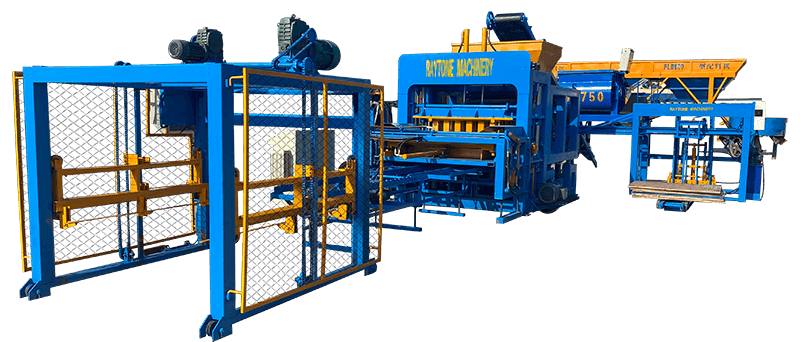
Raytone Block Machinery manufactures hydraulic block machines from semi-automatic models producing 3,000-5,000 blocks per shift to fully automatic systems reaching 15,000-30,000 blocks daily. Our machines feature heavy-duty hydraulic systems with premium components designed for continuous operation in demanding production environments. We provide complete training on hydraulic system operation, maintenance procedures, and troubleshooting methods.
Contact us for hydraulic block machine specifications, production capacity analysis, and technical support for your block manufacturing operation.