





If you’re launching a block making business or scaling from manual to semi-automatic production, choosing between the QT4-40 manual machine and QT4-24 semi-automatic machine determines your production capacity, labor requirements, and profit margins for years to come.
The QT4-40 manual machine produces 2,560-4,114 blocks per 8-hour shift with 4 workers operating at a 35-40 second cycle time. The QT4-24 semi-automatic machine delivers 4,428-7,749 blocks per shift with the same 4-person crew through automated cycle control and faster molding. Industry data shows that upgrading from manual to semi-automatic operation increases output by 73-88% while keeping labor costs identical, yet 68% of small producers choose the wrong machine type based on initial price alone rather than production economics.
This guide compares QT4-40 and QT4-24 machines across production capacity, automation level, labor efficiency, cycle time, initial investment, operating costs, and ideal use cases. You will learn which machine fits your production volume, how each affects your cost per block, and when the higher upfront cost of semi-automatic operation pays back through increased output.
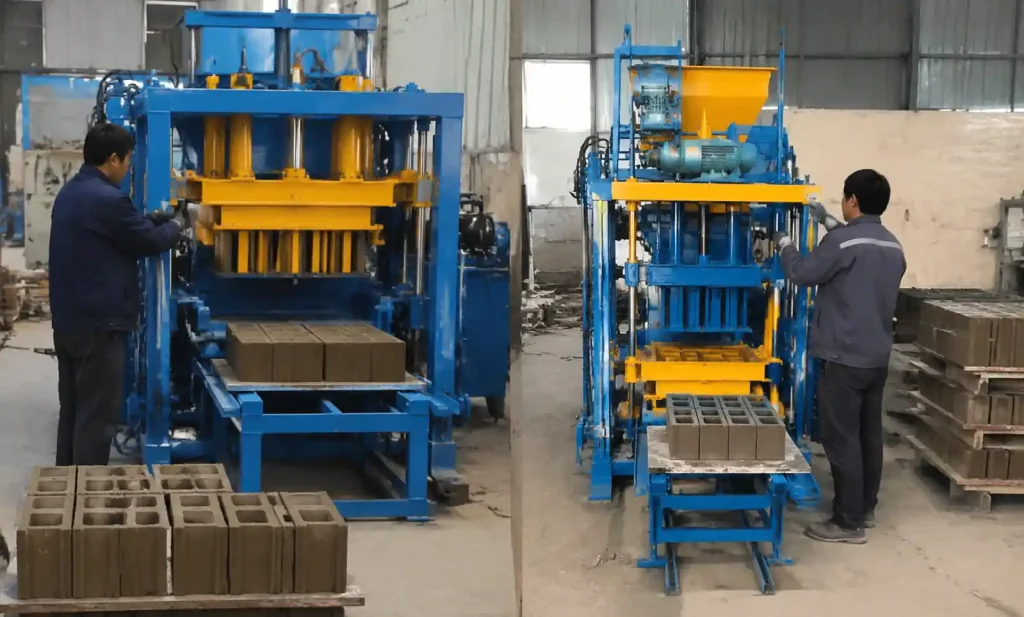
Understanding QT4-40 and QT4-24 Machine Types
QT4-40 Manual Block Machine
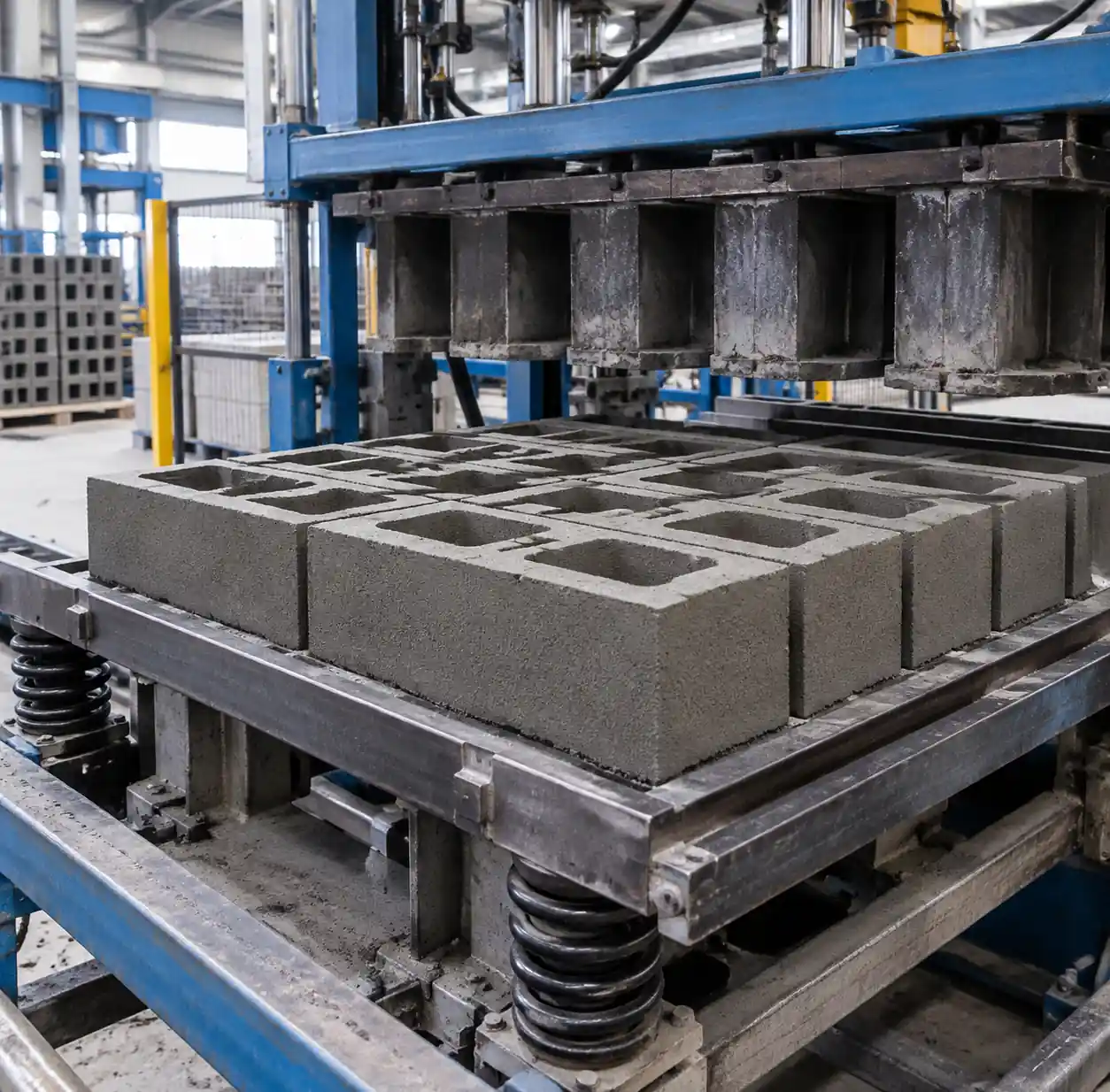
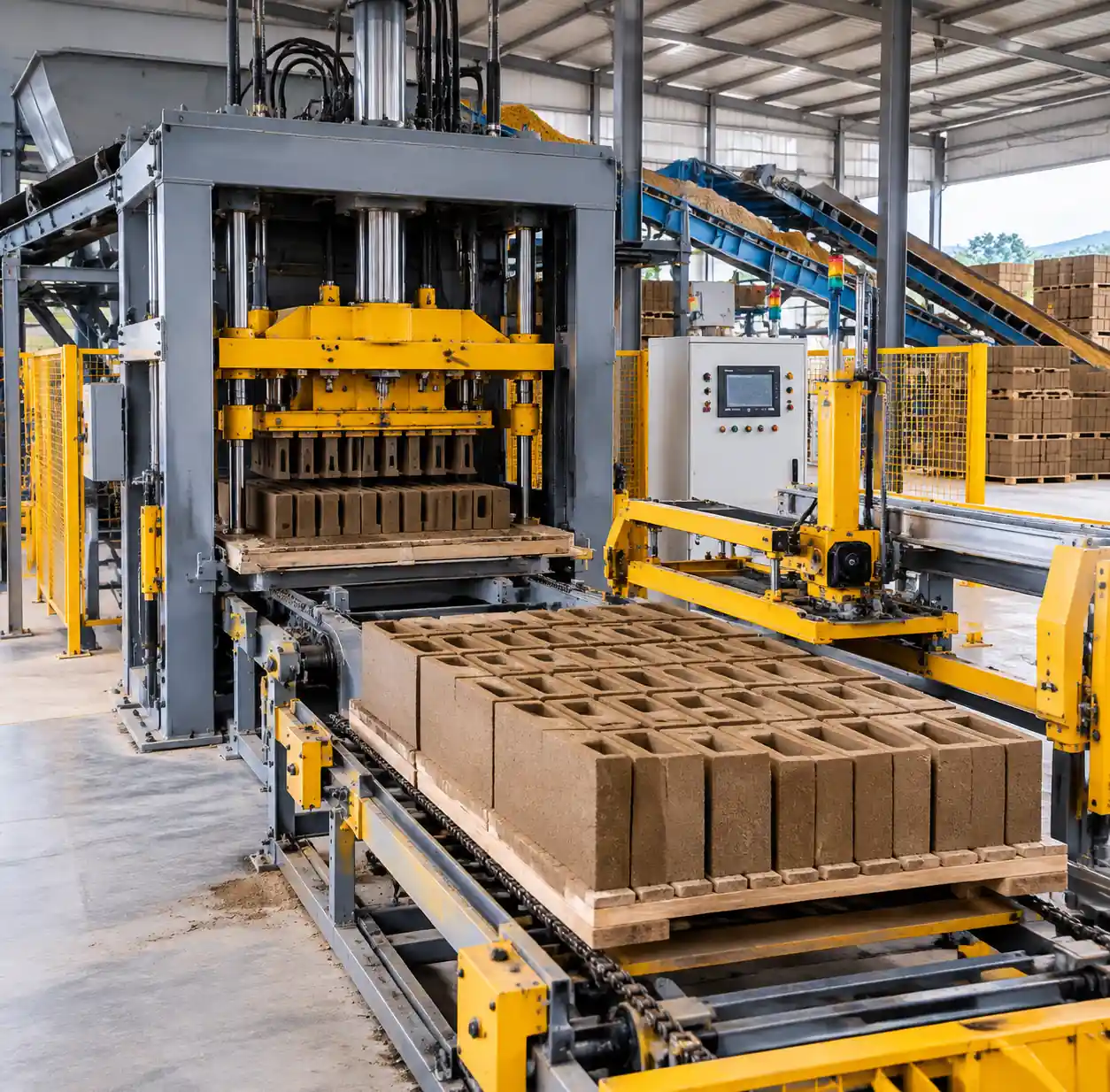
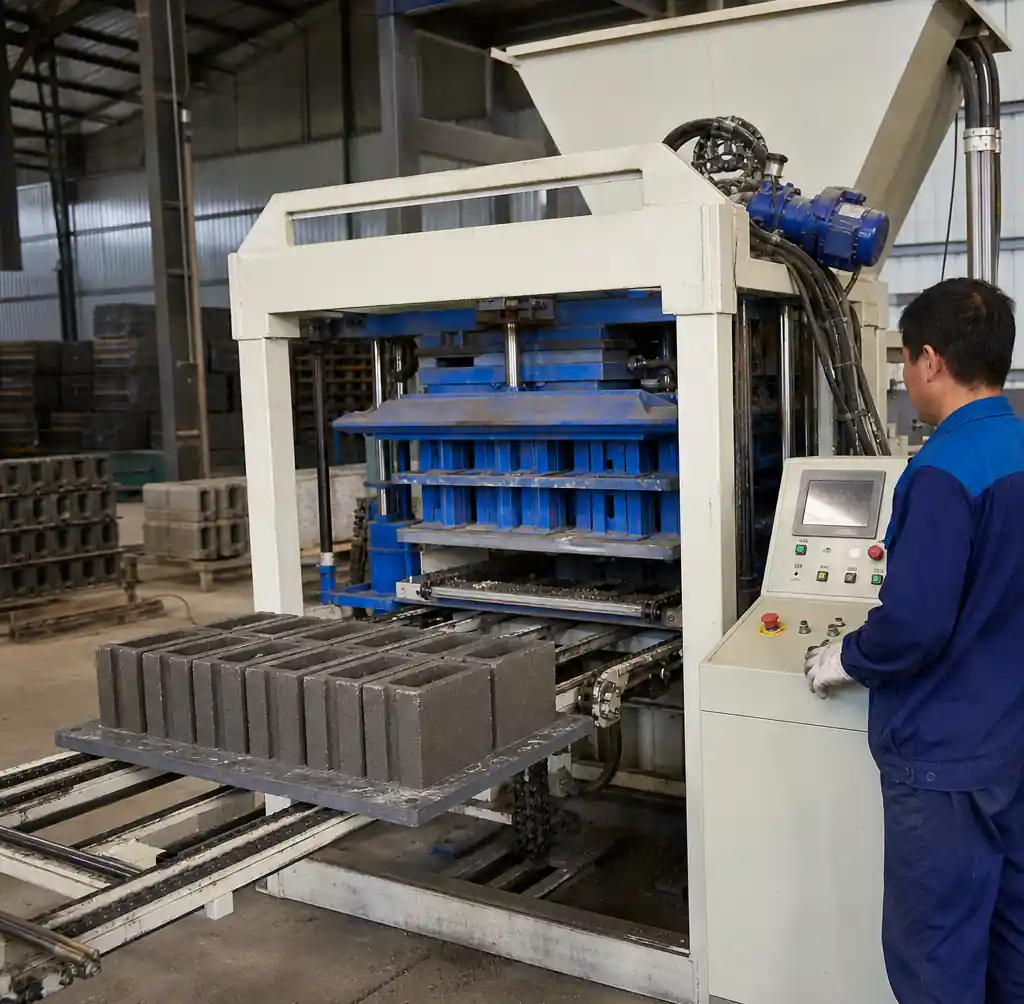
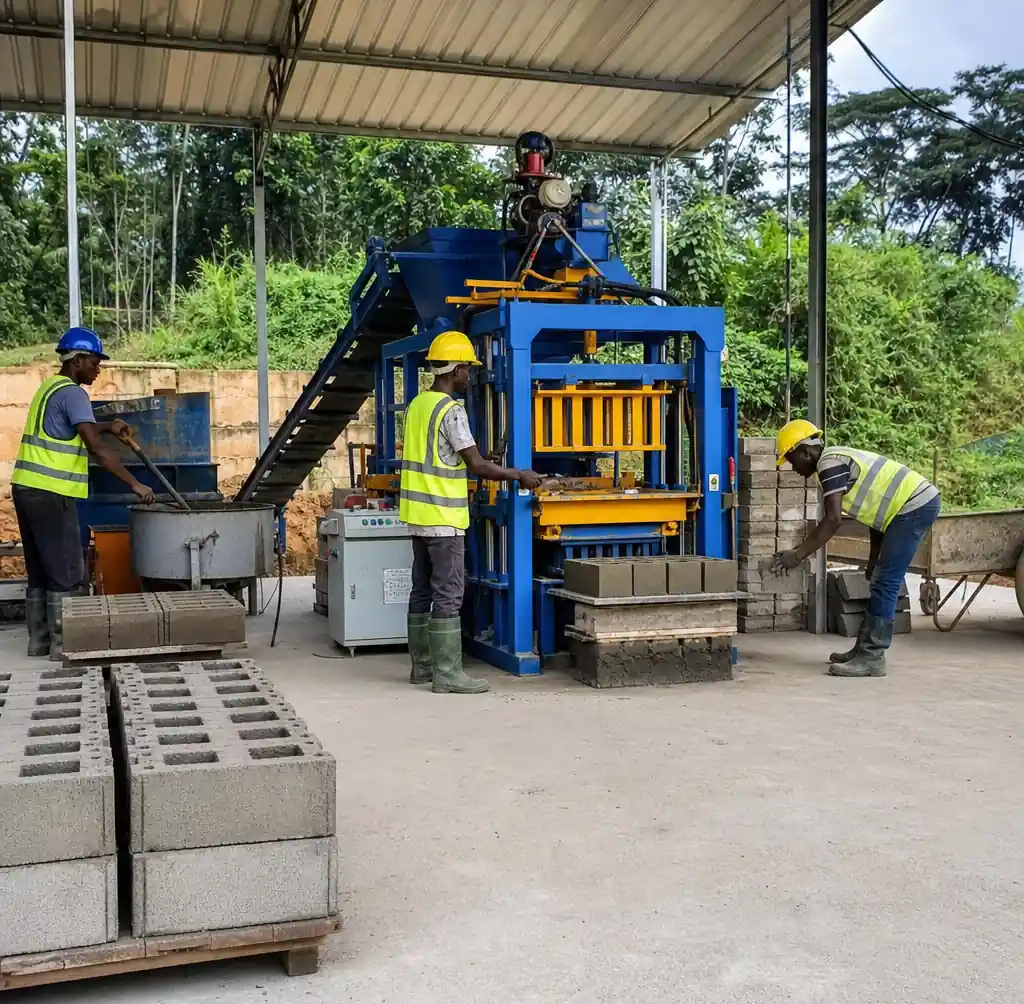
The QT4-40 is a hydraulic manual block machine that requires operators to control every production cycle. An operator loads raw materials into the hopper, manually triggers the hydraulic system to activate vibration and compression, monitors the 35-40 second molding cycle, then removes the finished blocks on their pallets before starting the next batch.
The machine uses 50KN vibration force combined with hydraulic pressure to form blocks. Two variants exist: a 2,500mm height model with 22.05KW total power producing 320-514 blocks per hour, and a compact 1,950mm height version with 18.65KW power producing 288-450 blocks per hour. Both mount on 850×450mm pallets and require a JQ350 concrete mixer for material preparation.
Production speed depends entirely on operator skill and physical stamina. An experienced 4-person crew maintains 400-450 blocks per hour for standard 400×200×200mm hollow blocks during an 8-hour shift.
Machine à blocs semi-automatique QT4-24
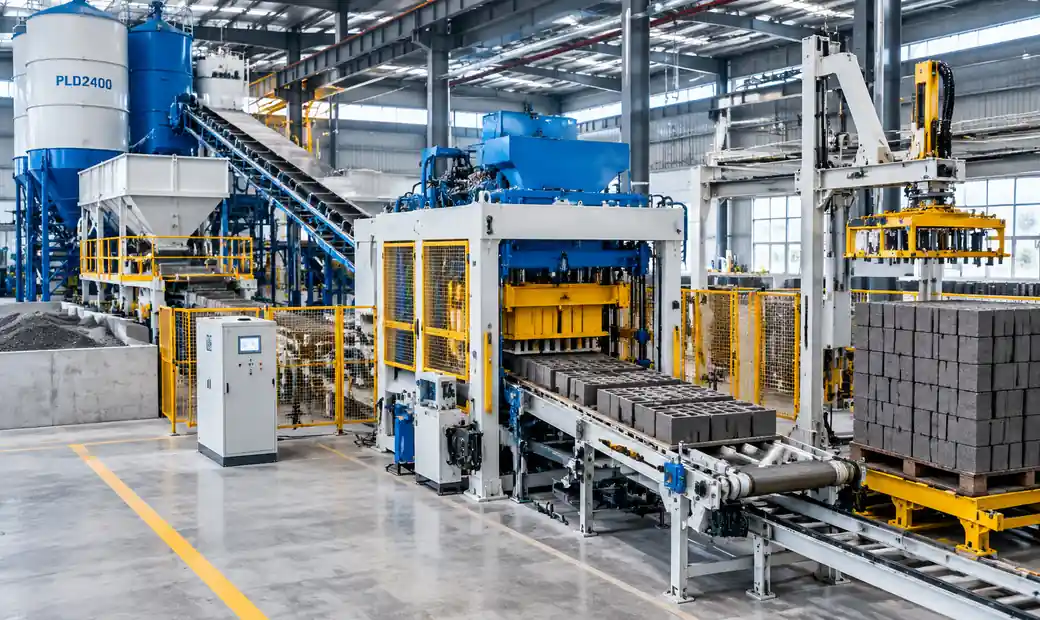
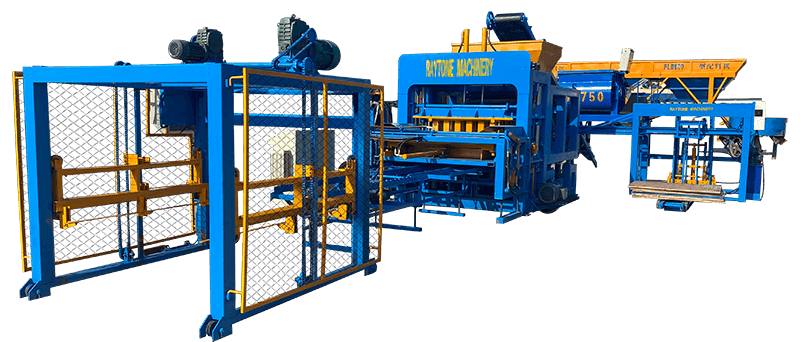
The QT4-24 is a semi-automatic hydraulic machine with automated cycle control through basic mechanical systems. The machine automatically manages vibration timing, compression pressure, and molding duration once the operator loads materials and initiates the cycle. This eliminates human timing variations that slow manual production.
The QT4-24 operates with 23.15KW power and 50KN vibration force on an 1,800×1,500×2,520mm frame. It mounts blocks on 850×550mm pallets and works with a JQ350 mixer. The automated cycle control reduces molding time and increases consistency, delivering 554-969 blocks per hour depending on block size with the same 4-worker crew as manual machines.
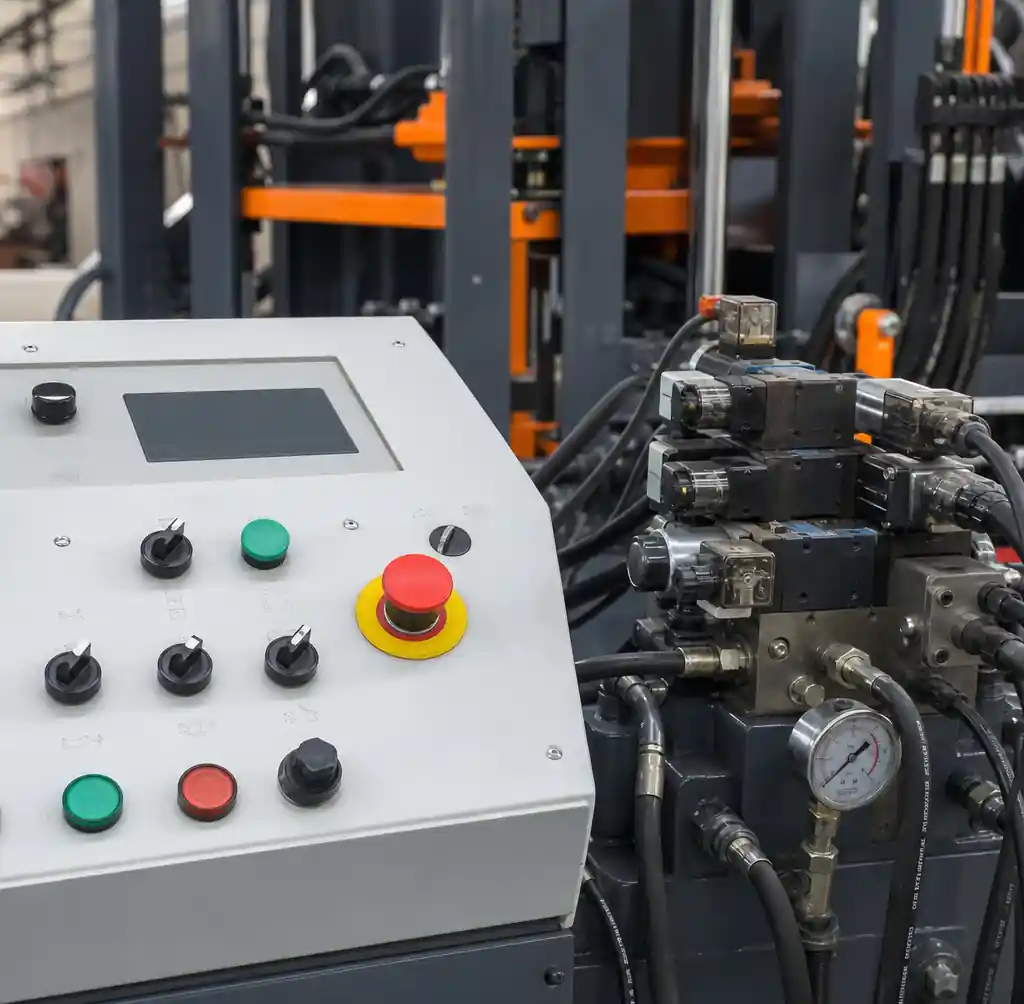
Semi-automatic operation means operators still manually load raw materials, position pallets, and remove finished blocks. The automation applies only to the compression and vibration cycle, but this single improvement increases production by 73-88% compared to manual operation.
Production Capacity Comparison
Daily Output by Machine Type
Production capacity directly determines how many orders you can fulfill and how quickly your business scales. The difference between manual and semi-automatic becomes dramatic at production scale.
| Machine Model | Block Size | Blocks/Hour | Blocks/8-Hr Shift | Blocks/Month (25 days) |
|---|---|---|---|---|
| QT4-40 Manual (Variant 1) | 400×150×200mm | 400-514 | 3,200-4,114 | 80,000-102,850 |
| QT4-40 Manual (Variant 1) | 400×200×200mm | 320-410 | 2,560-3,290 | 64,000-82,250 |
| QT4-40 Manual (Variant 2) | 400×150×200mm | 360-450 | 2,880-3,600 | 72,000-90,000 |
| QT4-40 Manual (Variant 2) | 400×200×200mm | 288-360 | 2,304-2,880 | 57,600-72,000 |
| QT4-24 semi-automatique | 400×100×200mm | 969 | 7,749 | 193,725 |
| QT4-24 semi-automatique | 400×200×200mm | 554 | 4,428 | 110,700 |
Production data based on manufacturer specifications for standard hollow blocks
The QT4-40 manual machine suits small construction projects and local market supply of 60,000 to 100,000 blocks monthly. The QT4-24 semi-automatic machine serves medium-scale contractors requiring 110,000 to 190,000 blocks monthly, enabling you to fulfill larger contracts and wholesale orders that manual production cannot supply.
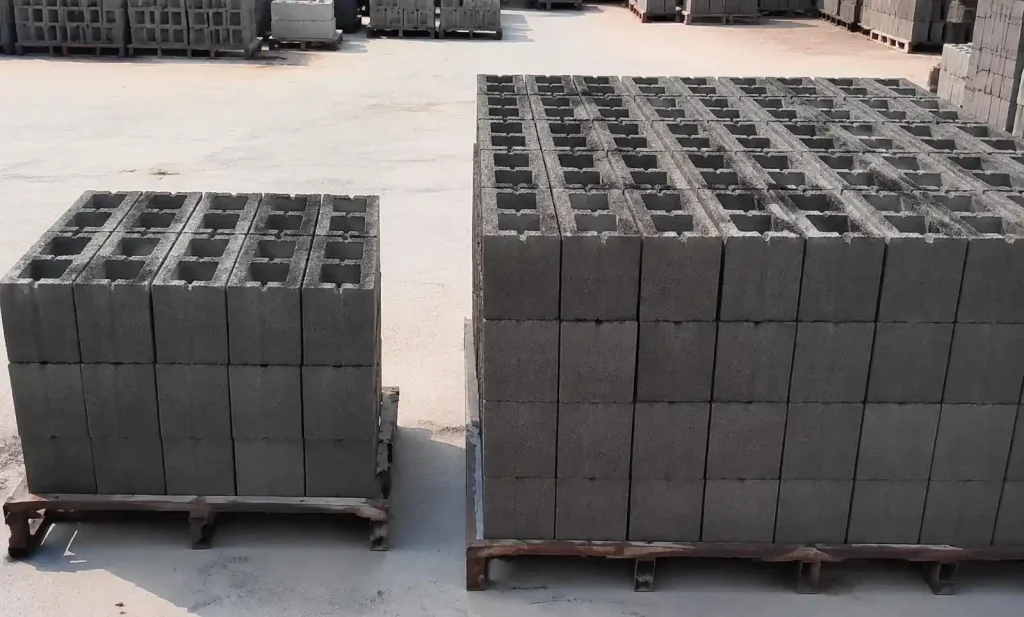
Cycle Time and Production Efficiency
Molding cycle time determines how many blocks you produce per hour. The QT4-40 manual machine operates at 35-40 second cycles depending on variant and operator efficiency. Every cycle requires manual activation, monitoring, and block removal, creating delays between batches as workers reposition materials and pallets.
The QT4-24 semi-automatic machine runs faster cycles through automated compression and vibration control. The machine executes each molding operation at optimal timing without human delays, maintaining consistent cycle speeds throughout the shift. This automation eliminates the 5-8 seconds of hesitation and repositioning that occurs in manual operation between each batch.
Production efficiency drops 15-25% during manual operation as workers tire through an 8-hour shift. Semi-automatic machines maintain consistent output because the automated cycle runs at the same speed regardless of time or operator fatigue.
Automation Level and Operation
QT4-40 Manual Operation
Manual operation requires workers to perform every production step. The operator loads concrete mix into the hopper, positions an empty pallet under the mold, pulls the lever or presses the button to activate hydraulic pressure and vibration, monitors the compression cycle for 35-40 seconds, deactivates the system when molding completes, removes the pallet with finished blocks, and repeats.
This process demands constant attention and physical effort. Operators must judge when the compression cycle reaches optimal density, which varies with mix moisture and ambient temperature. Inconsistent timing between batches creates quality variations and reduces daily output as workers slow down to avoid errors.
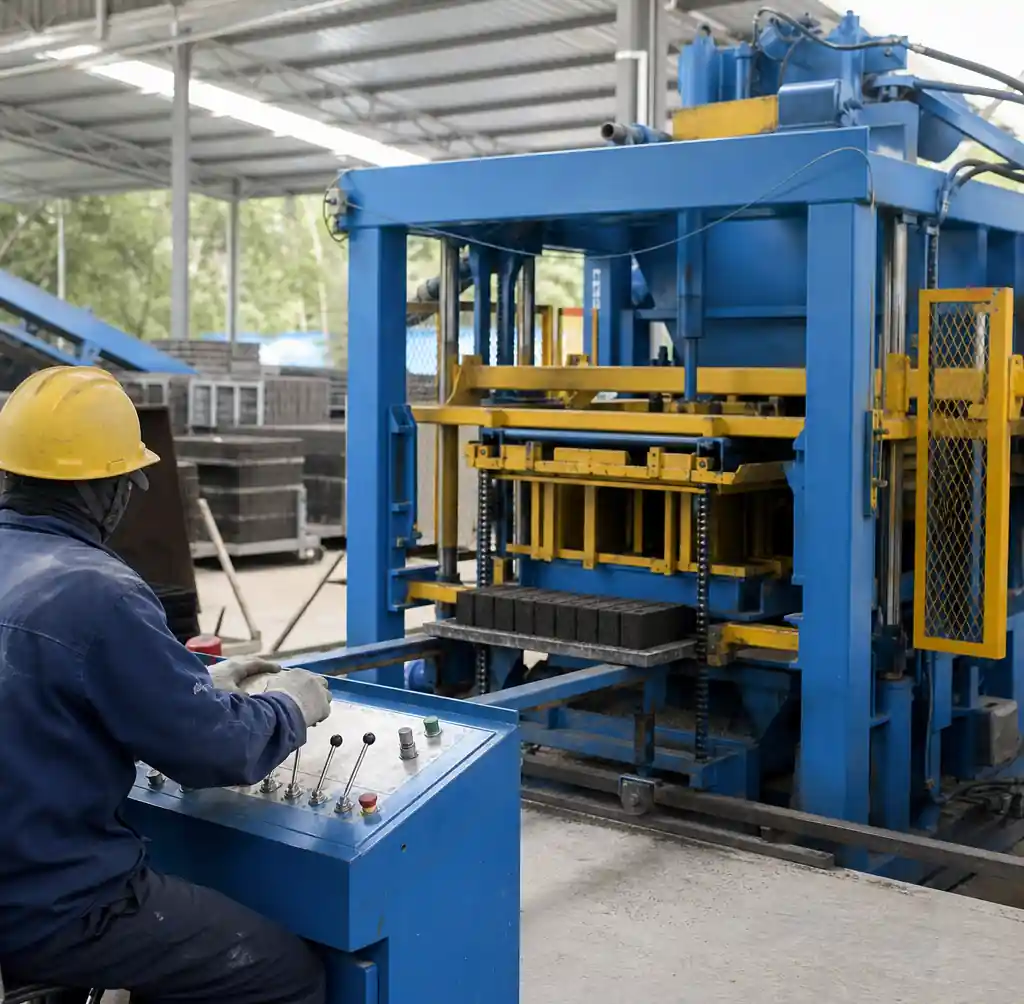
Manual machines work well when you need maximum production flexibility. You can easily adjust cycle timing for different block types, change molds quickly for varied production runs, and operate without electrical complexity in locations with unreliable power.
QT4-24 Semi-Automatic Operation
Semi-automatic operation automates the molding cycle while keeping material handling manual. Operators load concrete mix and position pallets, then activate the cycle through a control switch. The machine automatically executes the vibration sequence, applies hydraulic pressure at optimal timing, holds compression for the programmed duration, and signals completion.
The automated cycle eliminates human timing judgment. The machine delivers consistent vibration frequency, uniform pressure application, and precise cycle duration for every block regardless of which operator runs the shift. This consistency improves block quality and reduces strength variations from 15-20% in manual operation to 8-12% in semi-automatic production.
Workers still perform material loading, pallet handling, and block removal manually. Labor requirements remain at 4 workers for both machine types, but semi-automatic operation increases what each worker produces per shift by 73-88%.
Labor Requirements and Efficiency
Workforce Comparison
Both machines require 4 workers for operation: one machine operator controlling the hydraulic system, two workers managing material loading and concrete mixing, and one worker handling finished block removal and pallet management. The QT4-40 and QT4-24 use identical crew sizes with the same role distribution.
The difference appears in output per worker rather than total headcount. Each worker on a QT4-40 manual machine produces 640-1,029 blocks per 8-hour shift. Each worker on a QT4-24 semi-automatic machine produces 1,107-1,937 blocks per shift, increasing individual productivity by 73-88% without additional training or physical effort.
Labor Cost Per Thousand Blocks
This metric reveals the true labor efficiency difference between machine types. Assuming $800 per month average wages:
QT4-40 Manual Machine (Variant 1, 400×200×200mm blocks):
- Production: 2,560-3,290 blocks/shift
- Workers: 4 people × $800/month = $3,200 monthly
- Working days: 25 days/month
- Daily labor cost: $128
- Labor cost per 1,000 blocks: $38.90-$50.00
QT4-24 Semi-Automatic Machine (400×200×200mm blocks):
- Production: 4,428 blocks/shift
- Workers: 4 people × $800/month = $3,200 monthly
- Daily labor cost: $128
- Labor cost per 1,000 blocks: $28.91
The semi-automatic machine reduces labor cost per thousand blocks by 42-58% compared to manual production. Producing 100,000 blocks with manual machines costs $3,890-$5,000 in labor compared to $2,891 with a semi-automatic machine, saving $999-$2,109 in labor costs alone.
This labor efficiency advantage compounds monthly. At 110,000 blocks per month (the QT4-24’s typical output for 400×200×200mm blocks), you save $1,099-$2,320 monthly in labor costs compared to manual production requiring the same total workforce.
Machine Specifications Comparison
Technical Parameters
Understanding the technical differences helps you assess which machine fits your facility requirements and production goals.
| Specification | QT4-40 Manual (Variant 1) | QT4-40 Manual (Variant 2) | QT4-24 Semi-Automatic |
|---|---|---|---|
| Dimensions | 1800×1500×2500mm | 1800×1500×1950mm | 1800×1500×2520mm |
| Machine Weight | 1.5T | 1.5T | 1.5T |
| Host Power | 11.15kW | 11.15kW | 23.15kW |
| Puissance totale | 22.05kW | 18.65kW | 23.15kW |
| Force de vibration | 50KN | 50KN | 50KN |
| Cycle de moulage | 35 seconds | 40 seconds | Automated |
| Pallet Size | 850×450×20mm | 850×450×20mm | 850×550×20mm |
| Mixer Model | JQ350 | JQ350 | JQ350 |
| Main-d'œuvre nécessaire | 4 salariés | 4 salariés | 4 salariés |
| Workshop Area | Not specified | Not specified | 200m² |
The QT4-24 requires higher electrical power (23.15kW vs 18.65-22.05kW) to run the automated control systems. All three machines use identical 50KN vibration force and the same JQ350 mixer, ensuring comparable block quality and material compatibility.
Block Type Capacity
Both machines produce multiple block types through mold changes. Production capacity varies significantly by block size and configuration.
QT4-40 Manual Machine (Variant 1) – Blocks per 8-Hour Shift:
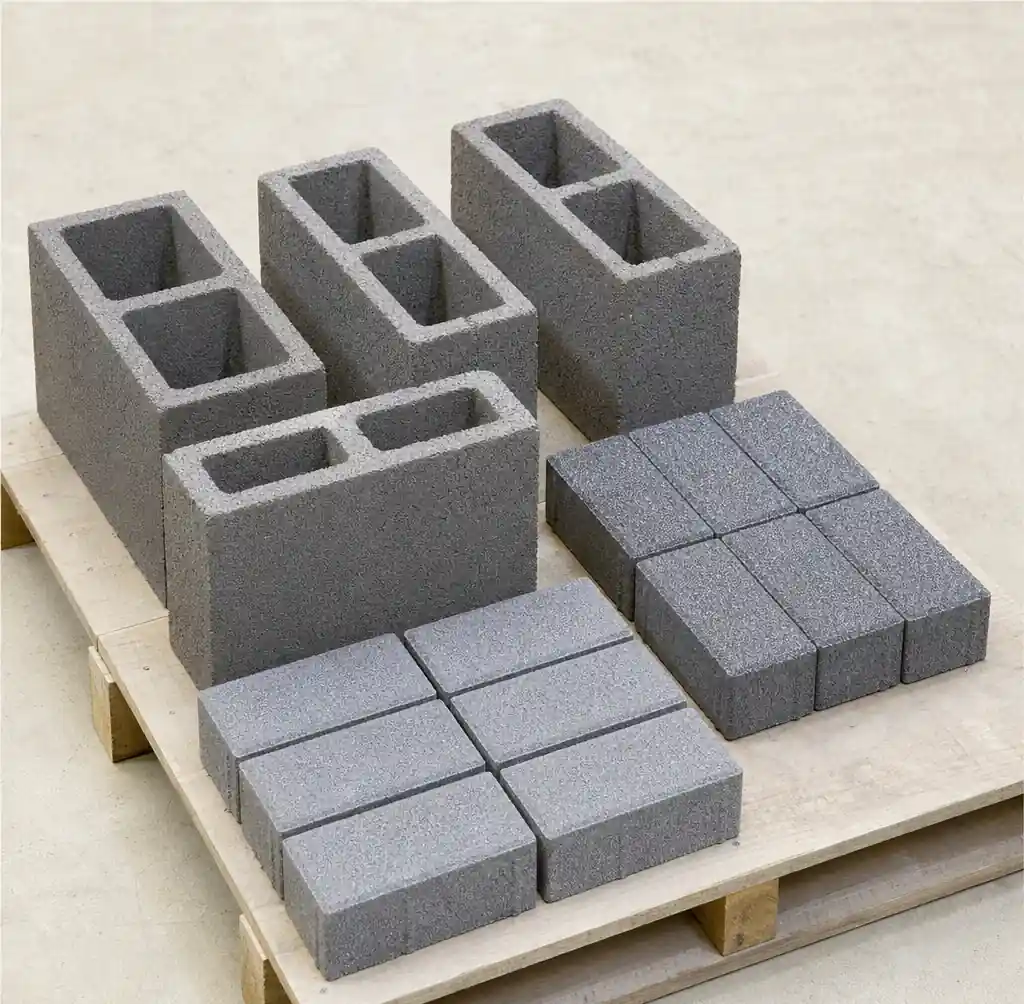
- Hollow 400×150×200mm: 3,200-4,114 blocks
- Hollow 400×200×200mm: 2,560-3,290 blocks
- Solid 240×115×50mm: 11,520-14,784 blocks
- Holland paver 200×100×60mm: 5,760-7,392 blocks
QT4-24 Semi-Automatic Machine – Blocks per 8-Hour Shift:
- Hollow 400×100×200mm: 7,749 blocks
- Hollow 400×200×200mm: 4,428 blocks
- Solid 240×115×50mm: 28,782 blocks
- Holland paver 200×100×60mm: 15,498 blocks
The semi-automatic machine produces 73-150% more blocks per shift across all block types. The advantage is largest for smaller blocks like pavers where the faster automated cycle compounds the efficiency gain.
Initial Investment Analysis
Purchase Price and Setup Costs
The upfront investment differs between manual and semi-automatic machines and directly affects your financing requirements and business risk.
QT4-40 Manual Machine:
- Machine cost: $4,500-$6,500
- JQ350 Mixer: $1,200-$1,800
- Molds (3-4 types): $800-$1,200
- Pallets (200 pieces): $600-$800
- Tools and accessories: $300-$500
- Total Initial Investment: $7,400-$10,800
QT4-24 Semi-Automatic Machine:
- Machine cost: $8,500-$11,000
- JQ350 Mixer: $1,200-$1,800
- Molds (3-4 types): $800-$1,200
- Pallets (250 pieces): $750-$1,000
- Tools and accessories: $400-$600
- Total Initial Investment: $11,650-$15,600
The QT4-24 semi-automatic machine requires $4,250-$4,800 more upfront capital, representing a 57-44% higher initial investment. This premium pays for automated cycle control, faster production capability, and higher daily output that generates additional revenue to recover the cost difference.
Facility Requirements
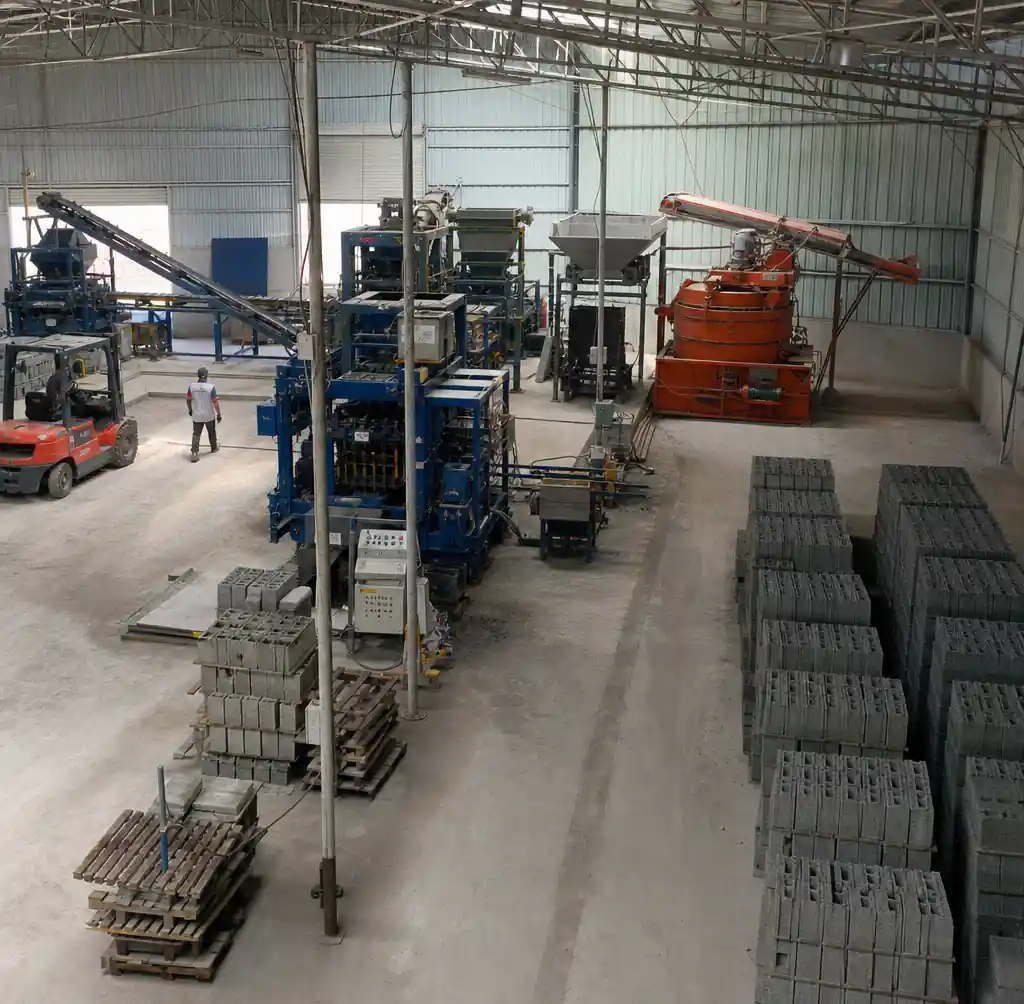
Both machines operate in similar facility footprints. The QT4-40 manual machine needs approximately 150-200m² including production area, material storage, and curing space. The QT4-24 semi-automatic machine requires 200m² workshop area as specified, plus curing and storage zones totaling 250-300m².
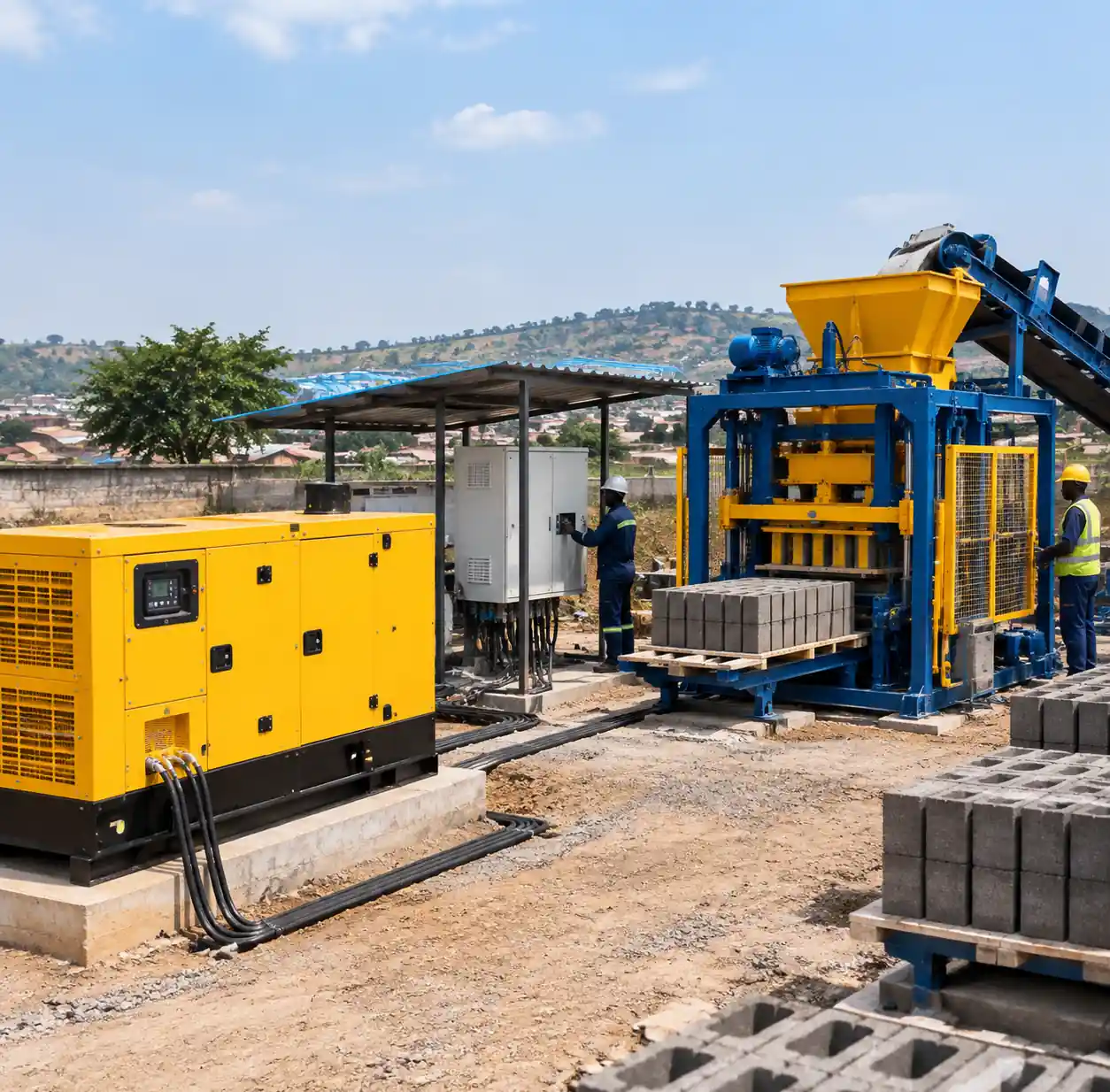
Both machines need basic infrastructure: concrete floor foundation, three-phase electrical power (380V/415V), water supply for mixing and curing, and adequate drainage. Facility preparation costs range from $2,000 to $5,000 depending on existing infrastructure.
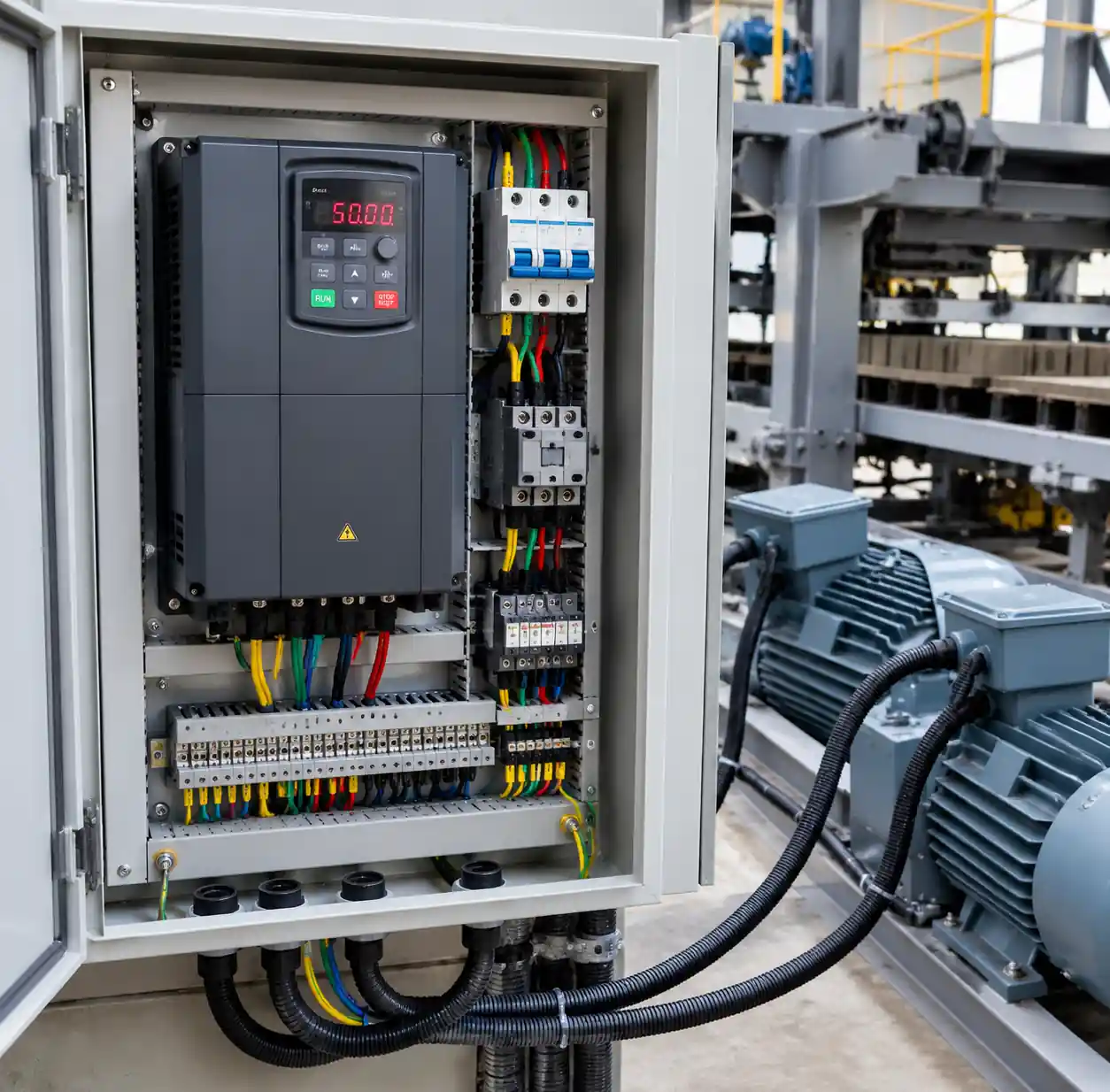
The semi-automatic machine’s higher power requirement (23.15kW) may require electrical service upgrades in facilities with limited capacity. Verify your electrical infrastructure can supply continuous 23-25kW loads before purchasing semi-automatic equipment.
Operating Costs and Maintenance
Daily Operating Expenses
Operating costs beyond labor include electricity, water, and raw materials. Material costs per block remain identical between machine types, but electricity and water consumption differ.
Electricity Consumption:
- QT4-40 Manual: 18.65-22.05kW × 8 hours = 149-176 kWh daily
- QT4-24 Semi-Auto: 23.15kW × 8 hours = 185 kWh daily
- Additional cost for QT4-24: 9-36 kWh daily = $1.35-$5.40 at $0.15/kWh
The semi-automatic machine consumes 5-24% more electricity daily. However, this additional cost of $1.35-$5.40 per day is negligible compared to the labor savings of $26-$58 per day when producing standard 400×200×200mm blocks.
Consommation d'eau :
Water usage depends on block production volume and curing methods rather than machine type. Both machines require the same water per block produced, but the QT4-24’s higher output increases total daily water consumption proportionally.
Maintenance Requirements
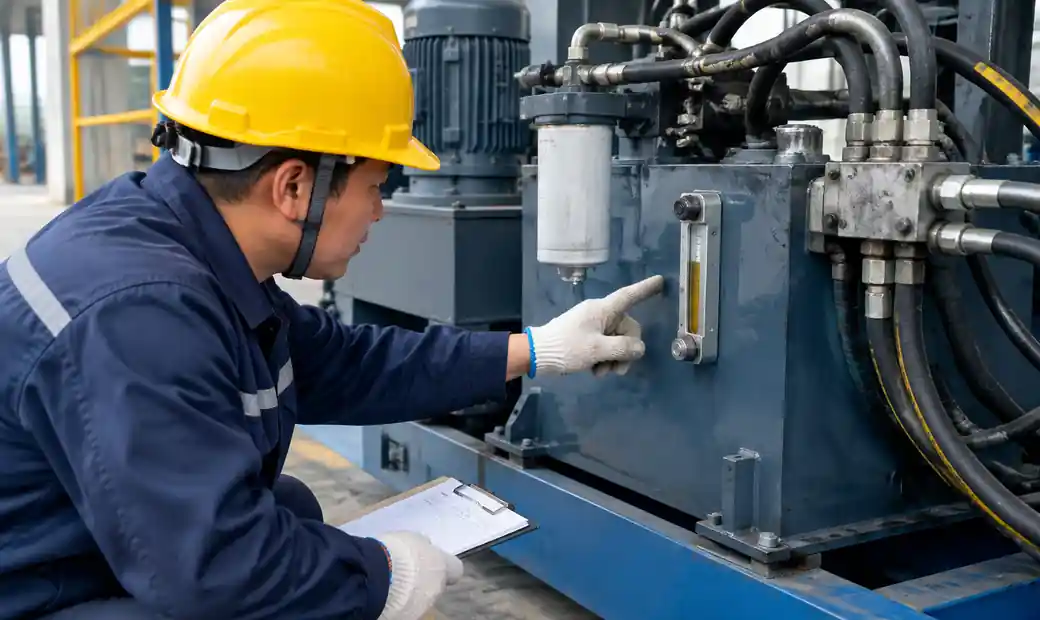
Manual machines require simpler maintenance due to fewer automated components. Daily maintenance includes lubrication of hydraulic rams, cleaning of molds, and visual inspection of vibration systems. Weekly maintenance adds hydraulic oil level checks and vibration mount inspections. Annual maintenance costs run $400-$700 including consumables and minor repairs.
Semi-automatic machines need additional maintenance for automated control systems. Daily tasks include sensor cleaning, control switch inspection, and automated valve checks beyond standard hydraulic maintenance. Annual maintenance costs increase to $600-$1,000 including electrical component servicing.
Downtime averages 3-5 days annually for both machine types when following preventive maintenance schedules. Emergency repairs cost $200-$500 for manual machines and $300-$800 for semi-automatic machines depending on component failures.
Spare parts inventory recommendations: manual machines $600-$900, semi-automatic machines $900-$1,400 including hydraulic seals, vibration mounts, electrical components, and control switches.
Return on Investment Analysis
Break-Even Calculation
Understanding when your investment pays back determines financial viability. Break-even calculations assuming typical market conditions:
Assumptions:
- Block selling price: $0.28 per block (400×200×200mm)
- Raw material cost: $0.11 per block
- Labor cost: $0.039-$0.050 per block (manual) vs $0.029 per block (semi-auto)
- Other costs (utilities, maintenance): $0.015 per block
- Working days: 25 days monthly
QT4-40 Manual Machine (2,560 blocks/day average):
- Daily revenue: 2,560 × $0.28 = $717
- Daily costs: Materials $282 + Labor $128 + Other $38 = $448
- Daily profit: $269
- Investment: $10,000
- Break-even: 37 days
QT4-24 Semi-Automatic Machine (4,428 blocks/day):
- Daily revenue: 4,428 × $0.28 = $1,240
- Daily costs: Materials $487 + Labor $128 + Other $66 = $681
- Daily profit: $559
- Investment: $14,000
- Break-even: 25 days
The semi-automatic machine pays back 12 days faster despite higher initial cost because the $290 additional daily profit from increased production quickly recovers the $4,000 investment premium.
Long-Term Profitability
Break-even shows initial payback, but 12-month and 24-month profit potential reveals the true financial impact of your machine choice.
12-Month Profit Comparison (25 working days/month):
QT4-40 Manual Machine:
- Annual production: 76,800 blocks
- Annual revenue: $21,504
- Annual costs: $13,440 (materials, labor, operating)
- Net 12-month profit: $8,064 (after $10,000 investment recovered)
QT4-24 Semi-Automatic Machine:
- Annual production: 132,840 blocks
- Annual revenue: $37,195
- Annual costs: $20,445 (materials, labor, operating)
- Net 12-month profit: $16,750 (after $14,000 investment recovered)
The semi-automatic machine generates $8,686 more profit in the first year, more than double the $4,000 additional investment required. Over 24 months, the cumulative profit advantage reaches $17,372, demonstrating that semi-automatic operation delivers superior returns when you have consistent market demand for increased output.
Which Machine Should You Choose?
Choose QT4-40 Manual Block Machine If:
You should invest in the QT4-40 manual machine when starting with limited capital to test market demand. Manual machines work best for 60,000 to 90,000 blocks monthly serving local construction projects and small contractors. Choose manual when you need maximum production flexibility for multiple block types with frequent mold changes, operate in areas with unreliable electrical power, or want the lowest possible entry cost to validate your business model before scaling.
The QT4-40 minimizes financial risk with $7,400-$10,800 total investment and delivers acceptable returns when your confirmed monthly demand stays below 80,000 blocks. Manual operation also suits custom block production where small batches and frequent specification changes make automation advantages less significant.
Choose QT4-24 Semi-Automatic Block Machine If:
You should invest in the QT4-24 semi-automatic machine when you have proven demand exceeding 100,000 blocks monthly and want to scale production without adding more workers. Choose semi-automatic when producing 110,000 to 190,000 blocks monthly for medium-scale contractors, when you have access to moderate financing ($12,000-$16,000), and when you need better quality consistency for commercial construction projects with specification requirements.
The QT4-24 delivers optimal value when labor efficiency matters more than initial cost. If your market supports selling 110,000+ blocks monthly, the semi-automatic machine’s faster payback (25 days vs 37 days) and higher annual profit ($16,750 vs $8,064) justify the $4,000 investment premium within the first production month.
Semi-automatic operation also makes sense when you compete for medium-sized contracts requiring production capacity minimums that manual machines cannot reliably fulfill. The consistent automated cycle reduces quality variations, helping you meet commercial building specifications.
Production Quality Considerations
Manual machines produce acceptable quality with 15-20% strength variations between blocks due to inconsistent compression timing and operator technique differences. Semi-automatic machines improve consistency to 8-12% variations through automated cycle control that delivers uniform vibration and pressure for every block.
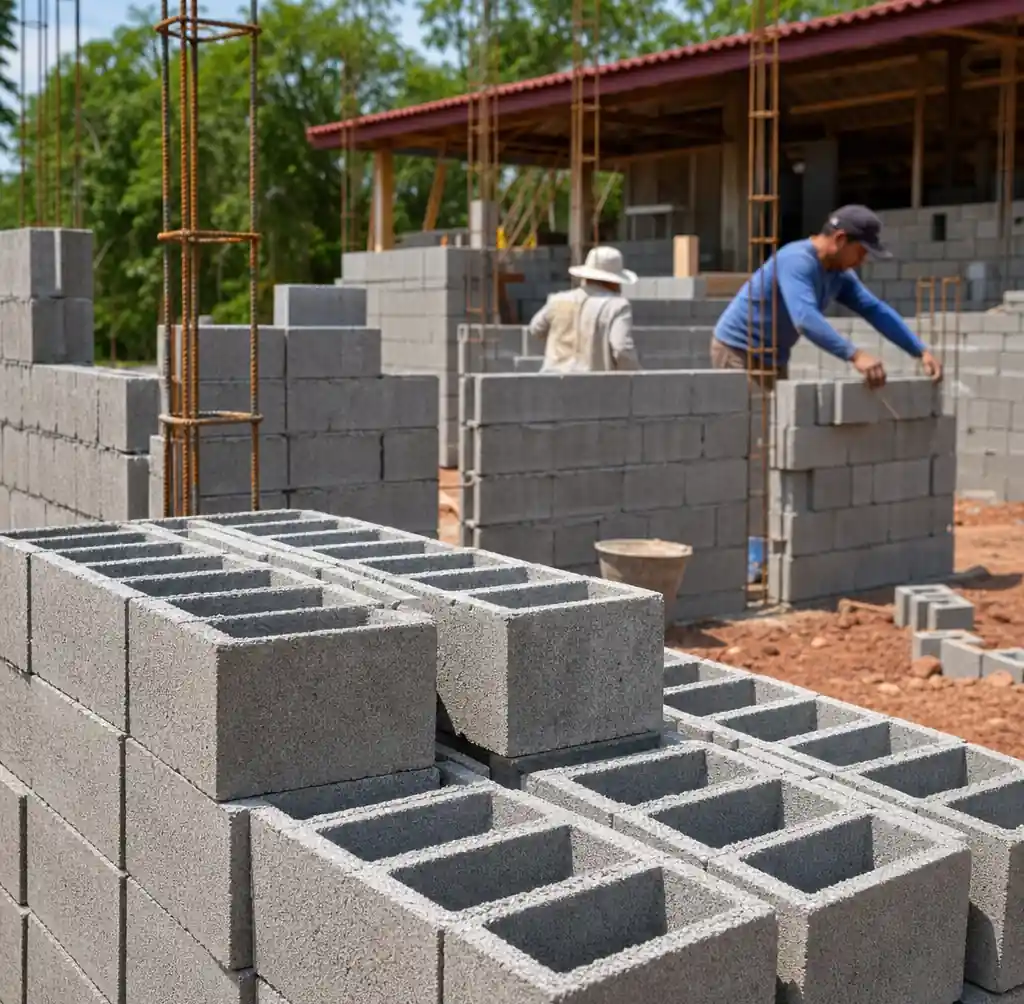
Manual production meets residential construction standards and local building codes for non-structural applications. Semi-automatic production more reliably meets commercial building specifications and national standards (ASTM C90, BS 6073) for load-bearing applications because automated cycles eliminate human timing variations that affect compressive strength.
For projects requiring engineering certifications or third-party testing compliance, semi-automatic machines reduce the risk of batch rejection due to quality inconsistencies. The automated cycle’s uniform vibration frequency and pressure application produce blocks with more consistent density, dimensional accuracy, and surface finish.
Key Decision Factors Summary
| Factor | Manuel du QT4-40 | QT4-24 Semi-Automatic |
|---|---|---|
| Investissement initial | $7,400-$10,800 | $11,650-$15,600 |
| Production (400×200×200mm)/Day | 2,304-3,290 blocks | 4,428 blocks |
| Workers Required | 4 | 4 |
| Labor Cost per 1,000 Blocks | $38.90-$50.00 | $28.91 |
| Cycle de moulage | 35-40 seconds (manual) | Automated |
| Break-Even Period | 37 days | 25 days |
| Annual Profit (Year 1) | $8,064 | $16,750 |
| Maintenance Cost/Year | $400-$700 | $600-$1,000 |
| Idéal pour | Testing markets, local supply | Medium-scale production, contracts |
| Quality Consistency | Variable (15-20%) | Good (8-12%) |
| Production Flexibility | High (easy manual adjustments) | Moderate (automated cycle) |
Frequently Asked Questions
Can I upgrade a QT4-40 manual machine to semi-automatic later?
No, manual and semi-automatic machines have different control systems and frame designs. Retrofitting automated cycle control to a manual machine costs more than the price difference between models. Plan your purchase based on expected production needs for 12-18 months rather than hoping to upgrade later.
How much electricity does each machine consume daily?
The QT4-40 manual machine consumes 149-176 kWh per 8-hour shift depending on variant. The QT4-24 semi-automatic machine uses 185 kWh per shift. At $0.15 per kWh, daily electricity costs are $22-26 for manual machines and $28 for semi-automatic machines. The QT4-24’s higher power consumption ($2-6 extra daily) is negligible compared to its labor savings of $26-58 per day.
What is the lifespan of each machine?
Both machine types last 8-12 years with proper maintenance. Manual machines sometimes last longer because simpler construction with fewer automated components reduces failure points. Machine lifespan depends more on maintenance quality, operating conditions, and production volume than on automation level. Expect to replace hydraulic seals every 3-4 years and vibration mounts every 5-6 years for both types.
Do both machines produce the same block quality?
Both machines produce blocks meeting residential construction standards. The difference appears in consistency rather than maximum quality. Manual machines produce some excellent blocks and some marginal blocks due to operator timing variations. Semi-automatic machines produce more uniform blocks because automated cycles eliminate human timing judgment. For commercial projects requiring engineering certifications, semi-automatic consistency advantages reduce the risk of batch rejection.
Which machine is better for making paver blocks?
Both machines produce quality paver blocks with appropriate molds. Manual machines work well for paver production because paver orders often involve frequent color and pattern changes requiring mold swaps. The QT4-40’s manual operation makes mold changeovers simple. However, if you produce large volumes of standard pavers (10,000+ per week), the QT4-24’s higher output justifies the automation even with occasional mold changes. Paver production capacity: QT4-40 produces 5,760-7,392 holland pavers (200×100×60mm) per shift, while QT4-24 produces 15,498 pavers per shift.
Can one operator run multiple machines simultaneously?
No for manual machines. The QT4-40 requires constant operator attention for cycle activation, monitoring, and block removal. One operator cannot effectively manage two manual machines. For semi-automatic machines, one trained operator can theoretically monitor two QT4-24 machines if well-organized with material pre-staging, but practical efficiency typically decreases 20-30% compared to dedicated operation. Most producers find better results running one machine per full crew rather than splitting attention across multiple machines.
Conclusion
Choosing between the QT4-40 manual machine and QT4-24 semi-automatic machine determines your production capacity, labor efficiency, and profit margins. The QT4-40 manual machine minimizes risk for testing markets and serving local demand up to 80,000 blocks monthly with $7,400-$10,800 initial investment. The QT4-24 semi-automatic machine delivers superior ROI for established businesses producing 110,000 to 190,000 blocks monthly, paying back its $4,000 investment premium within 12-25 days through increased output with identical labor costs.
Your decision should balance current capital availability, confirmed monthly demand, and growth timeline. Start with the QT4-40 manual machine if you’re validating market demand with limited capital. Invest in the QT4-24 semi-automatic machine if you have proven demand exceeding 100,000 blocks monthly and can access $12,000-$16,000 financing.
Raytone Block Machinery manufactures both manual block machines et semi-automatic block machines serving small to medium-scale producers worldwide. Our machines combine proven hydraulic systems with durable construction, backed by comprehensive installation training and technical support. Whether launching a new block business with manual production or scaling to semi-automatic operation for increased capacity, Raytone provides complete solutions matched to your production requirements and budget.
Contact our technical team today for detailed specifications, production line designs, customized recommendations based on your specific market conditions, and competitive factory-direct pricing for QT4-40 and QT4-24 block machines.