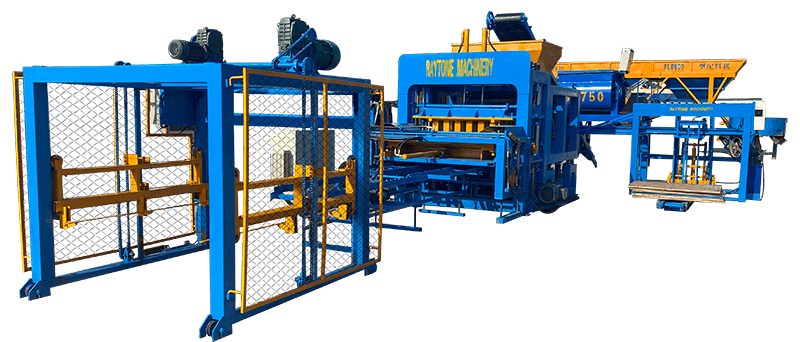
Block quality defects cost manufacturers $800-$2,500 daily in rejected loads, customer complaints, and reproduction runs. After analyzing 3,200+ production cases across manual, semi-automatic, and automatic plants, seven recurring quality issues account for 84% of all block defects: surface cracks, weak compressive strength, dimensional inaccuracy, color inconsistency, density variations, edge chipping, and curing problems.
This guide covers root causes, diagnostic methods, and proven solutions drawn from real production troubleshooting. Whether you operate a machine à bloquer manuelle producing 2,000 blocks per shift or an automatic block making machine running 20,000+ blocks daily, these quality control strategies reduce reject rates by 65-80%.
Common Block Quality Defects and Their Impact
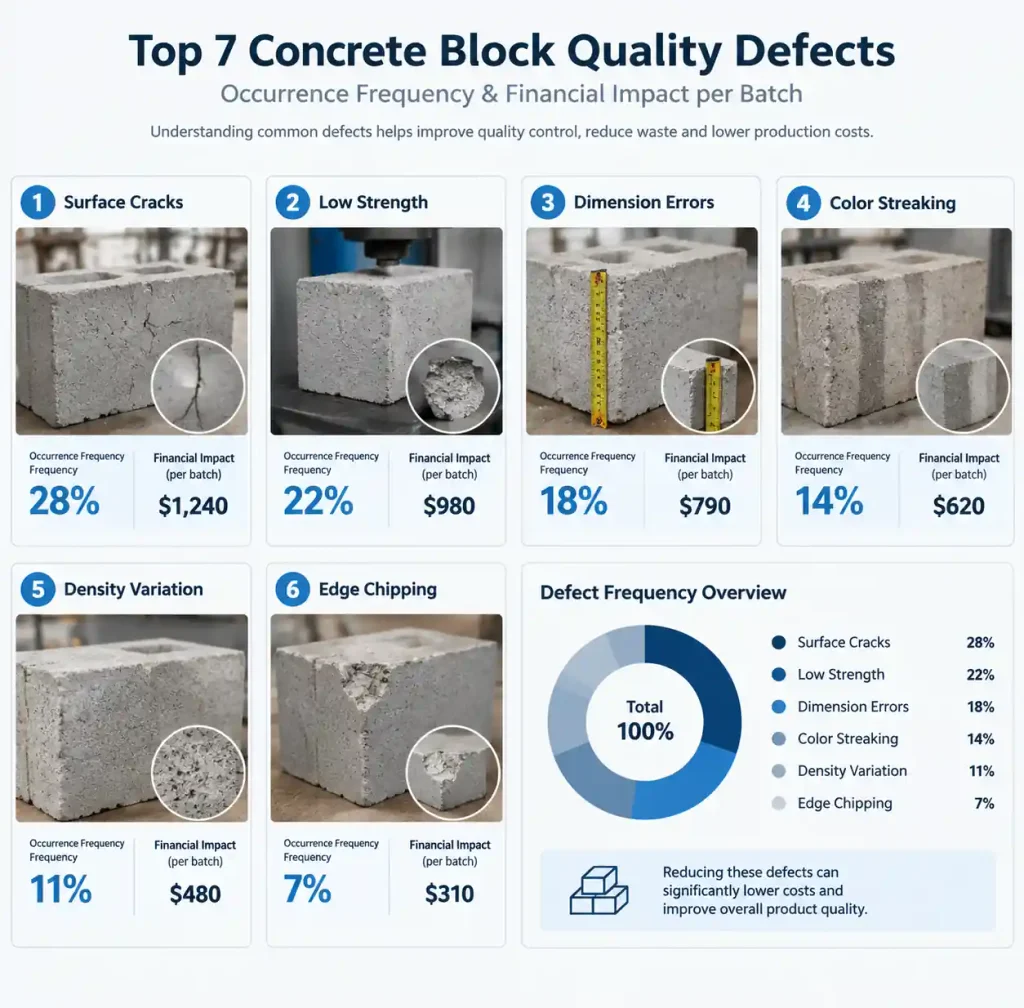
Block defects fall into seven categories, each causing specific production and financial losses. Understanding which defects occur most frequently in your operation guides targeted quality improvement.
| Defect Type | Visual Symptoms | Frequency | Revenue Impact |
|---|---|---|---|
| Surface Cracks | Hairline to deep cracks on faces | 28% of defects | $400-$1,200 per batch |
| Low Strength | Test failures below 13.1 MPa | 22% of defects | $800-$2,500 per load |
| Dimension Errors | ±3-5mm tolerance violations | 18% of defects | $300-$900 per batch |
| Color Streaking | Uneven pigmentation | 14% of defects | $200-$600 per batch |
| Density Variation | Weight differences >8% | 11% of defects | $250-$750 per batch |
| Edge Chipping | Corner/edge damage | 7% of defects | $150-$400 per batch |
The American Concrete Institute reports that 80% of concrete quality failures relate to improper mix design and production control—issues manufacturers can fix through systematic quality management.
Problem 1: Surface Defects and Cracks
Surface cracks appear as hairline fractures or deep splits compromising structural integrity and appearance. These defects develop from three primary causes affecting 28% of production quality issues.
Rapid Moisture Loss During Curing
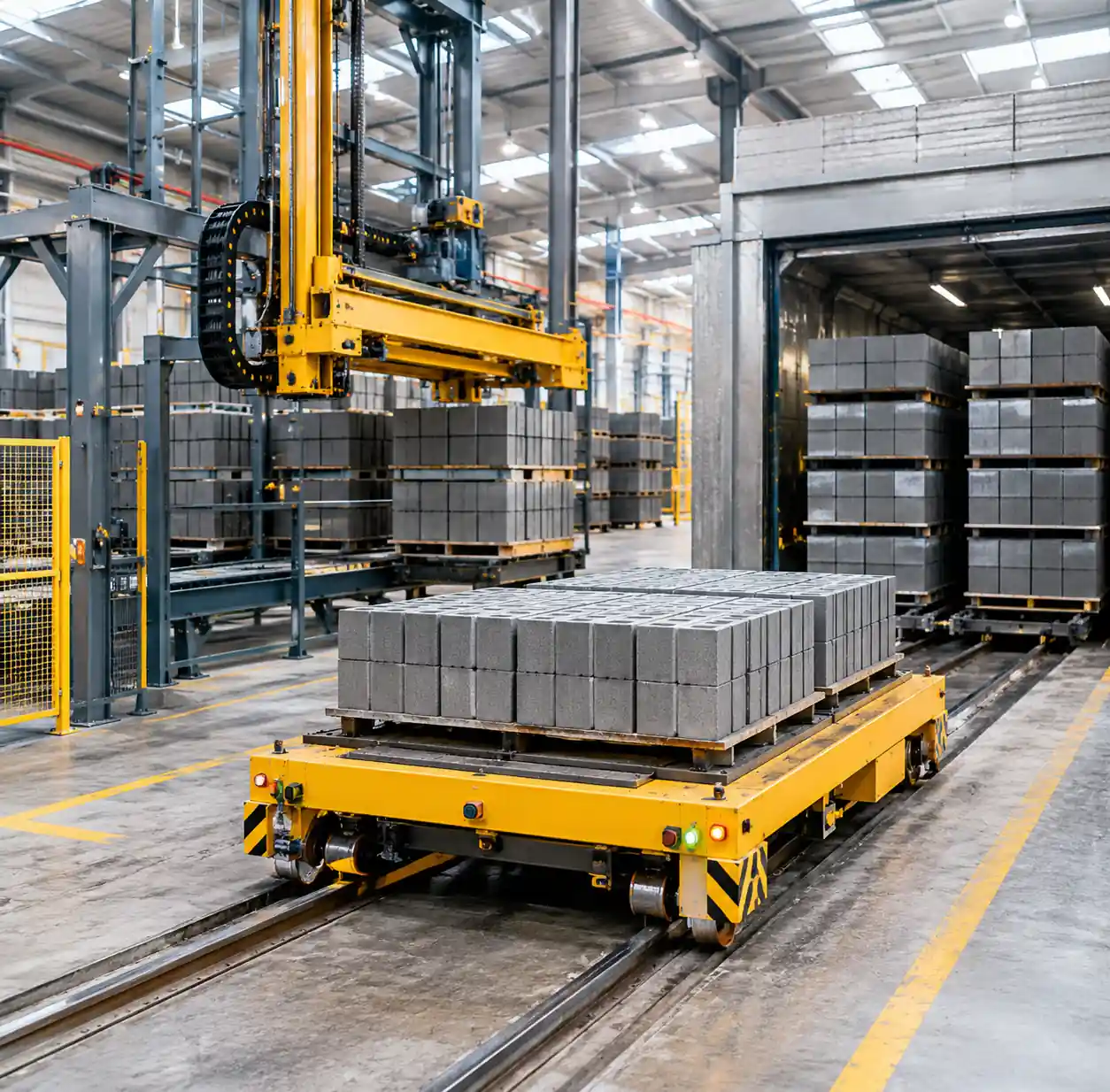
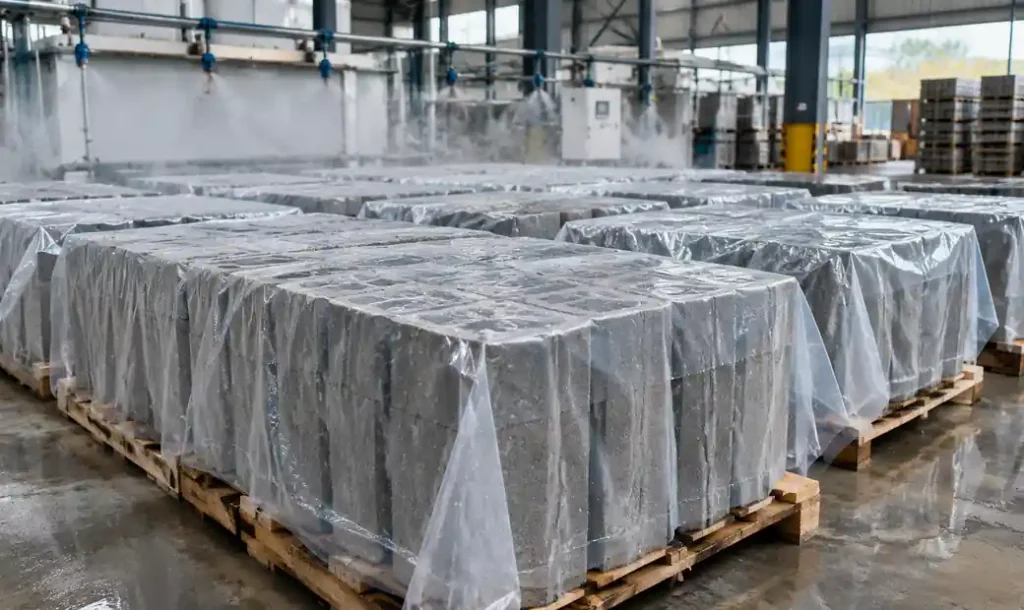
Excessive evaporation in the first 24-48 hours creates internal stresses that crack block surfaces. Blocks cured in direct sunlight or low humidity environments (below 50% RH) lose moisture 3-5x faster than proper curing conditions require.
Solution: Cover freshly molded blocks with plastic sheeting within 30 minutes of production. Maintain ambient temperature 18-25°C (65-77°F) and relative humidity above 80% for the first 72 hours. Water-mist curing racks every 4-6 hours during hot weather (above 28°C/82°F).
Excessive Vibration Time
Over-vibration for more than 8-12 seconds separates aggregate from cement paste, creating micro-fissures that develop into surface cracks. Semi-automatic machines typically require 6-8 seconds optimal vibration while fully automatic systems need 4-6 seconds due to higher compaction pressure.
Solution: Calibrate vibration duration using trial batches. Start at 6 seconds, increase by 1-second intervals while monitoring surface quality. Stop when blocks show smooth, uniform surfaces without voids. Document optimal settings for each block type and mix design.
Poor Mix Water Control
Water-cement ratios above 0.50 create excessive bleed water that rises to block surfaces during compaction. As this water evaporates, it leaves capillaries and voids that become crack initiation points.
Solution: Maintain strict water-cement ratio 0.40-0.45 by weight. Account for aggregate moisture content—wet sand and gravel contribute 3-8% water that must be deducted from mixing water. Use a batch scale accurate to ±1% for water measurement.
| Crack Cause | Diagnostic Test | Prevention | Implementation Cost |
|---|---|---|---|
| Rapid drying | Check RH%, curing method | Plastic covers, water misting | $150-$400 |
| Over-vibration | Time vibration cycle, inspect | Reduce cycle to 4-8 seconds | $0 (adjustment) |
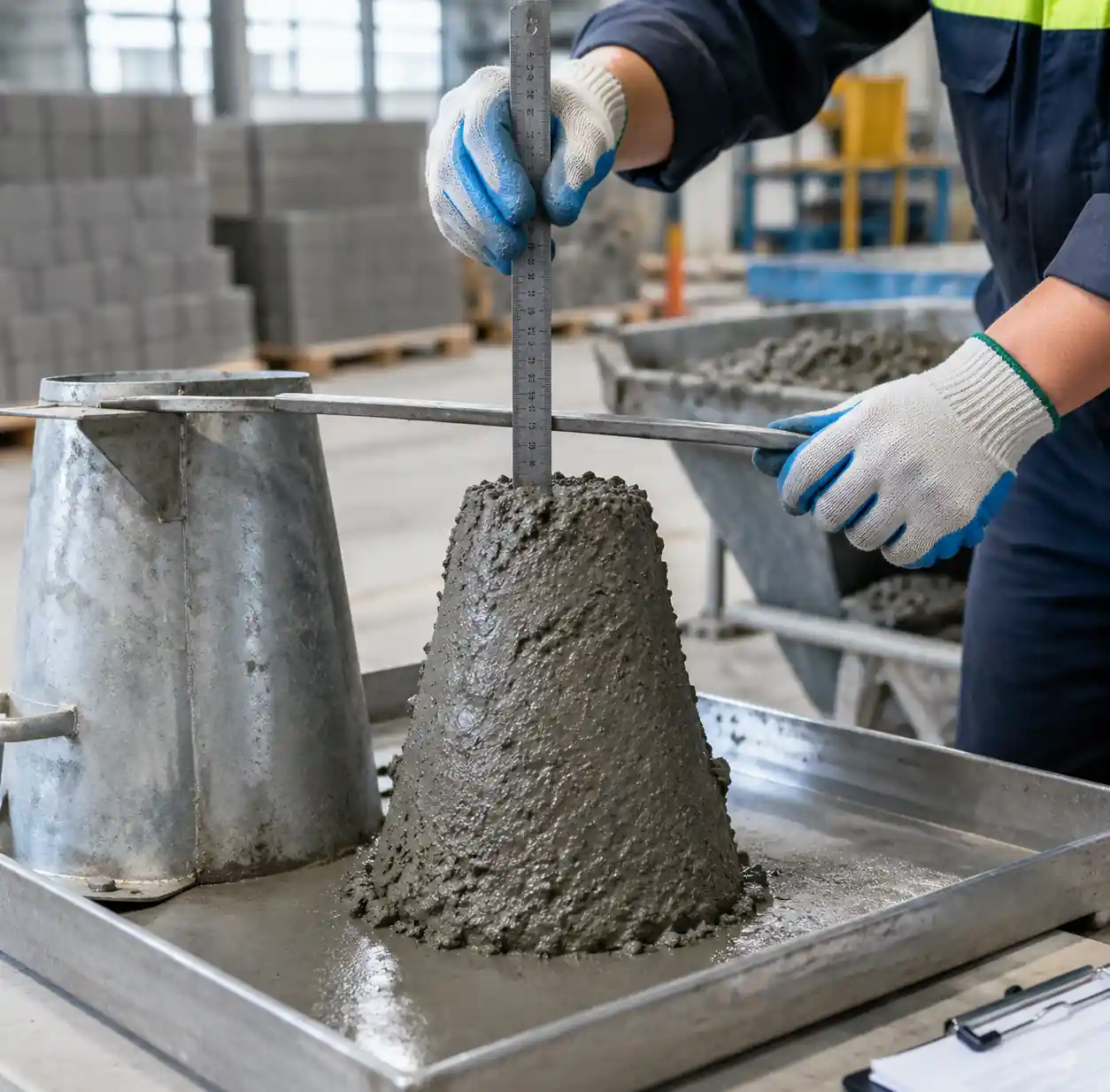
| Excess water | Slump test (target 10-20mm) | Control W/C ratio 0.40-0.45 | $200-$800 (scales) |
Problem 2: Low Compressive Strength
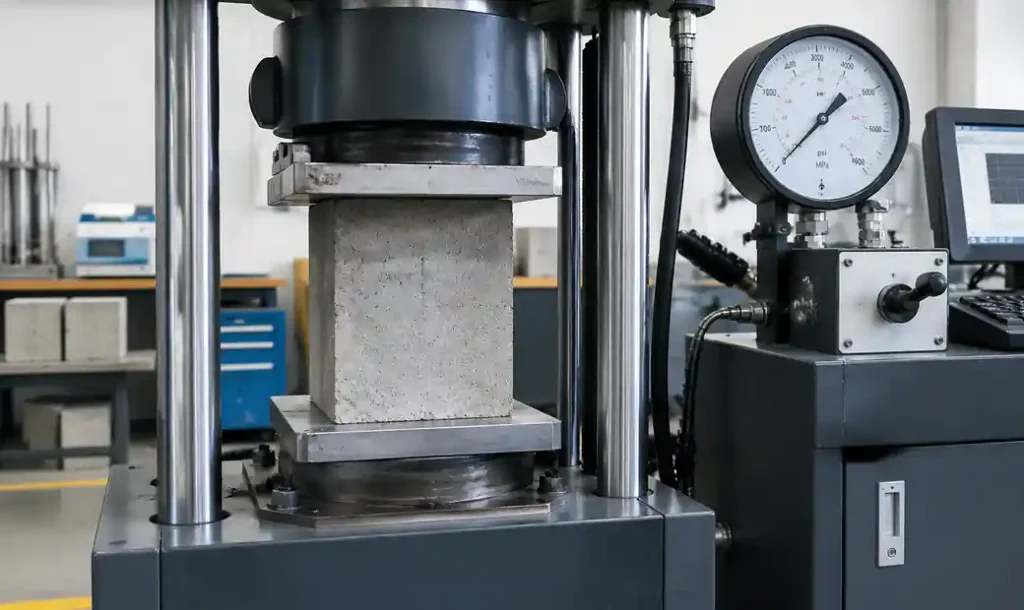
Blocks failing strength tests at 28 days represent the costliest quality defect—entire loads get rejected and reproduction erases profit margins. ASTM C90 requires minimum 13.1 MPa (1,900 psi) for loadbearing units, yet 22% of quality complaints involve strength failures from identifiable causes.
Insufficient Cement Content
The most common cause stems from incorrect batch proportions. Standard mix design requires 1 part cement to 6-8 parts combined aggregates (sand plus gravel). Reducing cement to save costs cuts strength proportionally—a 10% cement reduction drops 28-day strength by 15-20%.
Solution: Verify cement weight every batch using calibrated scales. Standard hollow block mix: 50kg cement per 0.024m³ concrete (approximately 2,083 kg/m³ cement content). Never substitute cement with excess fly ash beyond 15-20% replacement levels.
Inadequate Compaction Pressure
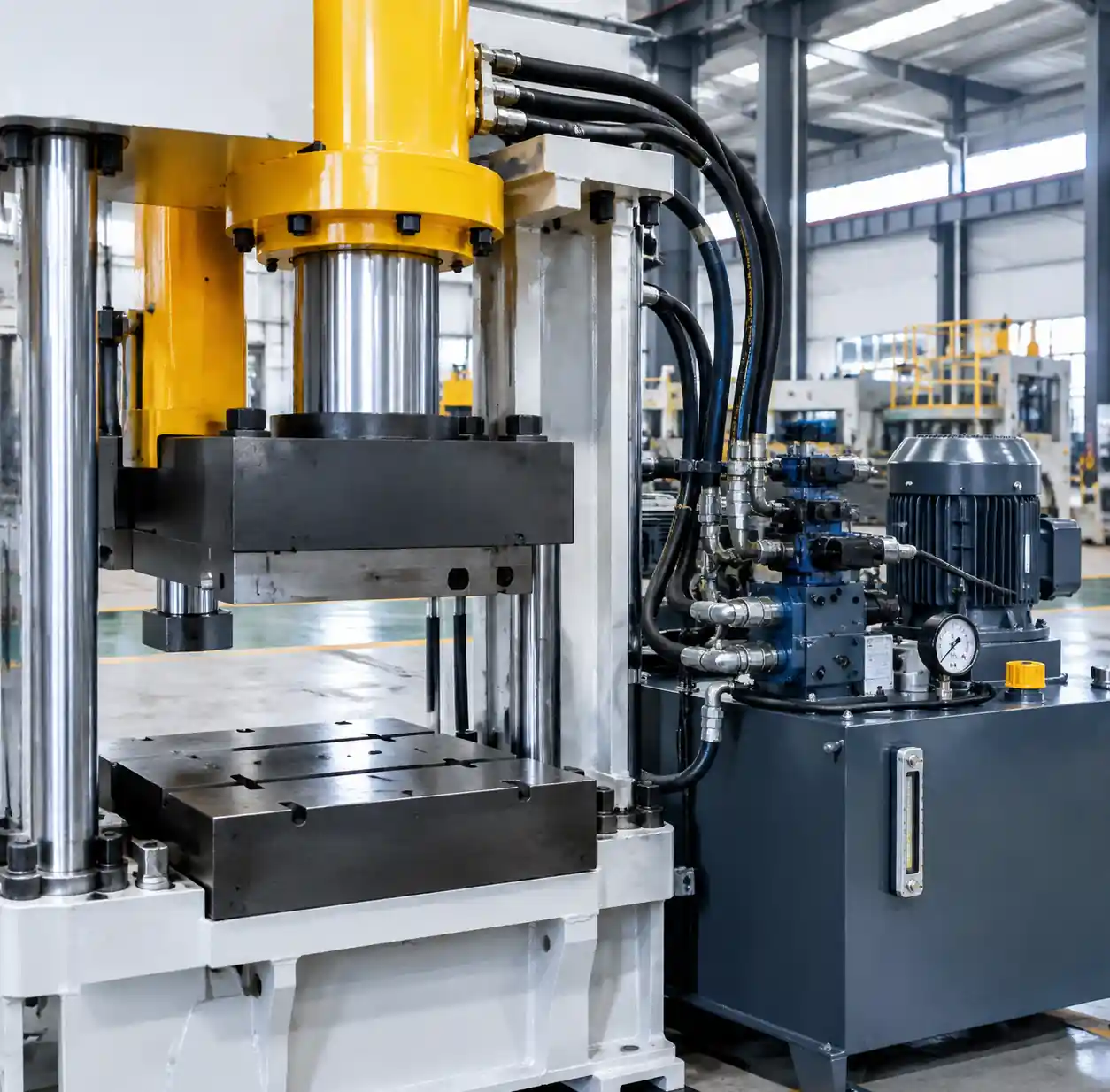
Hydraulic systems operating below specification leave blocks porous and weak. Automatic block machines require 180-220 bar pressure while semi-automatic systems need 140-180 bar for proper densification.
Solution: Test actual pressure under load using calibrated gauges—panel meters drift 15-25% after 2-3 years. If pressure won’t reach specification, hydraulic pump rebuilds cost $800-$1,800 versus $2,500-$4,500 for replacement.
Poor Quality Cement
Cement exposed to humidity loses strength potential 15-25% within 3 months, 30-40% after 6 months. Cement deliveries without proper storage or older than 90 days compromise block quality regardless of mix proportions.
Solution: Test cement compressive strength per ASTM C150 before use. Store cement in sealed, waterproof bags on pallets 15cm above ground level. Use oldest stock first, never hold cement beyond 3 months in humid climates.
Root cause analysis shows that mix design problems cause 68% of strength failures, machine calibration issues cause 24%, and raw material quality accounts for the remaining 8%.
Problem 3: Dimensional Accuracy Issues
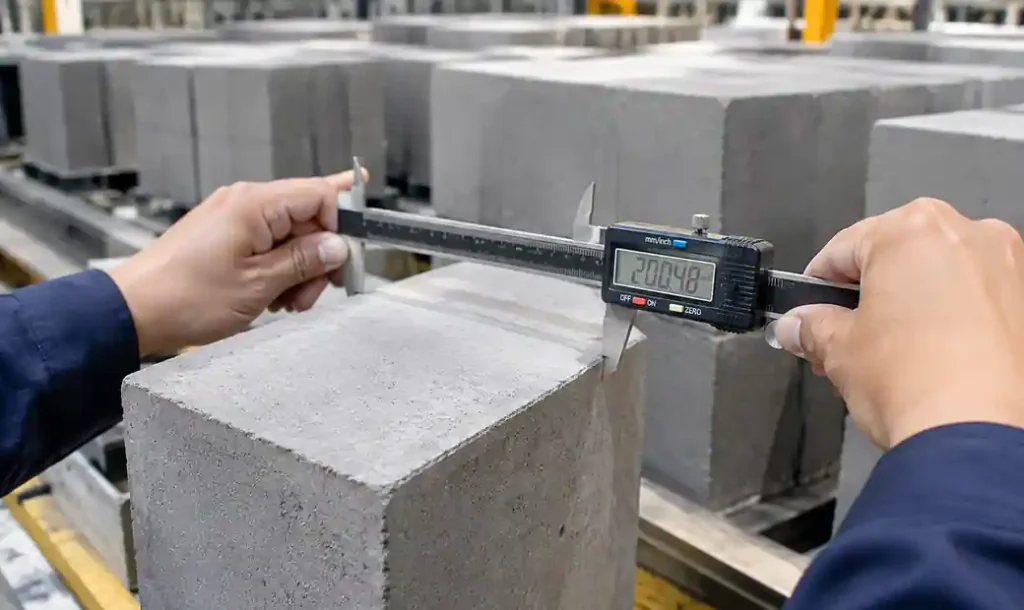
Blocks exceeding ±3mm dimensional tolerances (ASTM C90 allows ±3.2mm or 1/8 inch) create installation problems, mortar joint inconsistencies, and project delays. Dimensional defects affect 18% of production quality issues.
Worn or Misaligned Molds
Mold wear accelerates after 15,000-25,000 production cycles. Steel molds develop surface roughness and dimensional changes from concrete abrasion and repeated vibration stress. Tolerance violations typically begin when molds reach 70-80% of rated service life.
Solution: Inspect molds every 1,000 cycles for wear, cracks, or warping. Measure critical dimensions monthly using calibrated calipers. Professional mold refurbishment costs $600-$1,400 versus $3,500-$9,000 for complete replacement. Budget for mold replacement every 18-24 months in high-volume production.
Inconsistent Mix Moisture
Mix moisture variations create volume changes affecting final block dimensions. Dry mixes (slump <5mm) don’t fill mold corners completely while wet mixes (slump >25mm) slump after demolding, both producing out-of-tolerance blocks.
Solution: Maintain target slump 10-20mm through strict water control. Install concrete mixers with automated moisture sensors ($1,200-$2,200) that pay for themselves in 8-12 weeks through reduced material waste and consistent quality.
Improper Machine Calibration
Hydraulic cylinder drift, worn guide rails, or loose mounting bolts allow mold table movement during compaction, creating dimensional inconsistencies batch-to-batch.
Solution: Check machine level and alignment weekly. Tighten all mounting bolts to specified torque (typically 45-60 Nm). Replace worn guide bushings when play exceeds 0.5mm. Complete machine calibration every 500 operating hours or monthly for continuous production.
Problem 4: Color and Surface Finish Inconsistencies
Uneven pigmentation and surface appearance affect 14% of quality issues, particularly damaging when producing architectural or exposed blocks commanding premium pricing.
Incomplete Pigment Mixing
Pigment powders clump when added to dry batches or segregate from cement during short mixing cycles. Color streaking appears when mixing time falls below 3 minutes for colloidal mixers or 4 minutes for pan mixers.
Solution: Pre-blend pigments with cement before adding aggregates. Extend mixing time to 3-5 minutes after all materials are charged. Use liquid pigment dispersions for more consistent color—they cost 15-25% more but eliminate streaking defects.
Inconsistent Water Addition
Variation in water content changes hydration chemistry affecting surface color. Blocks from wet batches appear lighter while dry batches produce darker surfaces, even with identical pigment dosage.
Solution: Implement automated water metering systems dispensing water by weight rather than volume. Manual water addition should use calibrated measuring containers, never “by feel” or visual estimation.
Variable Curing Conditions
Blocks cured under different temperature or humidity conditions develop different surface appearances despite identical mix designs. Faster curing (higher temperature) produces lighter colors while slower curing creates darker surfaces.
Solution: Maintain consistent curing conditions across all blocks in a batch. Use enclosed curing chambers with temperature control 20-25°C and 85-95% RH. Avoid mixing blocks from different curing areas in the same delivery load.
Problem 5: Mixture Optimization for Quality Control
Mix design directly impacts block quality across all defect categories. Research from the American Concrete Institute demonstrates that proper proportions and material selection reduce defect rates by 45-60%.
Optimal Mix Proportions
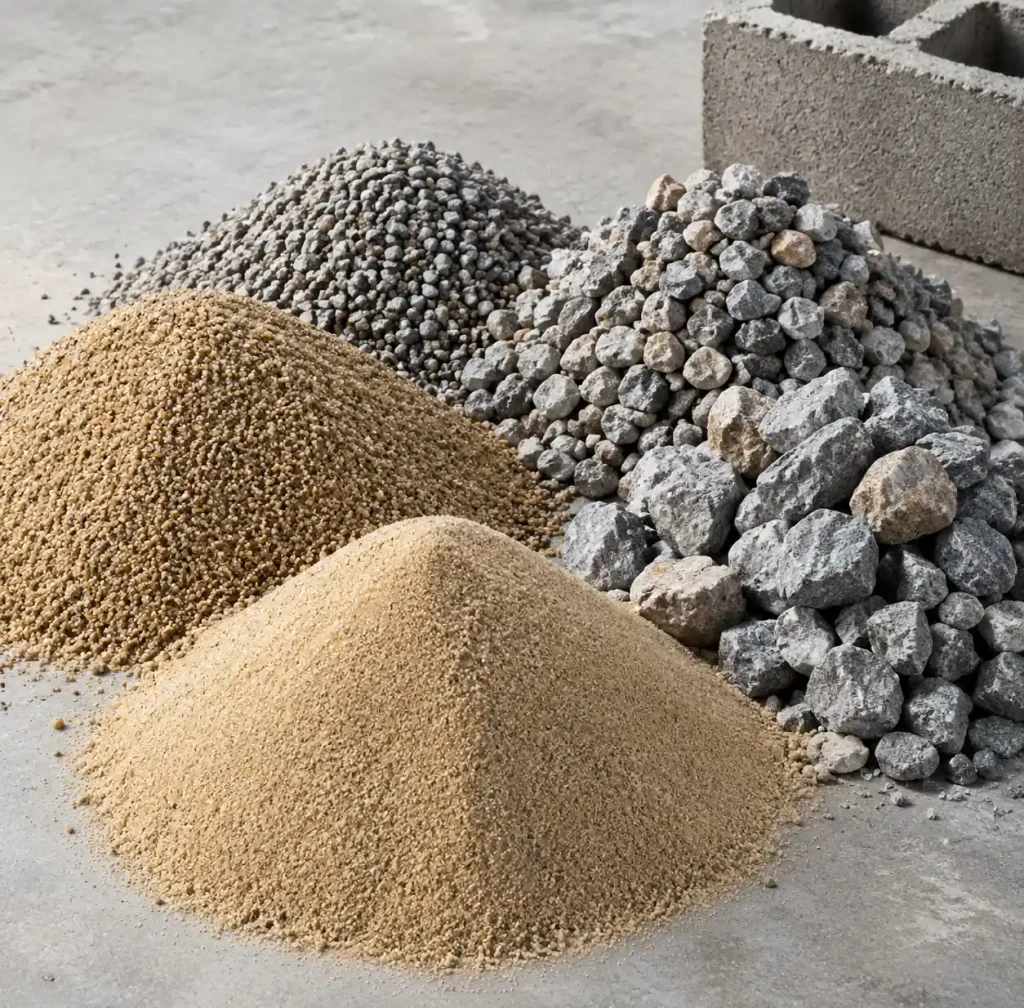
Standard hollow block production requires precise cement-to-aggregate ratios balancing strength, workability, and economy. The proven 1:6 to 1:8 mix ratio (cement:combined aggregates) achieves target strength while maintaining production efficiency.
By weight: 1 part cement, 2-2.5 parts sand (0-4mm), 3.5-5 parts gravel (4-10mm), water-cement ratio 0.40-0.45.
By volume (less accurate): 1 part cement, 2 parts sand, 4 parts gravel provides approximation but weight-based batching improves consistency by 30-40%.
Aggregate Grading and Quality
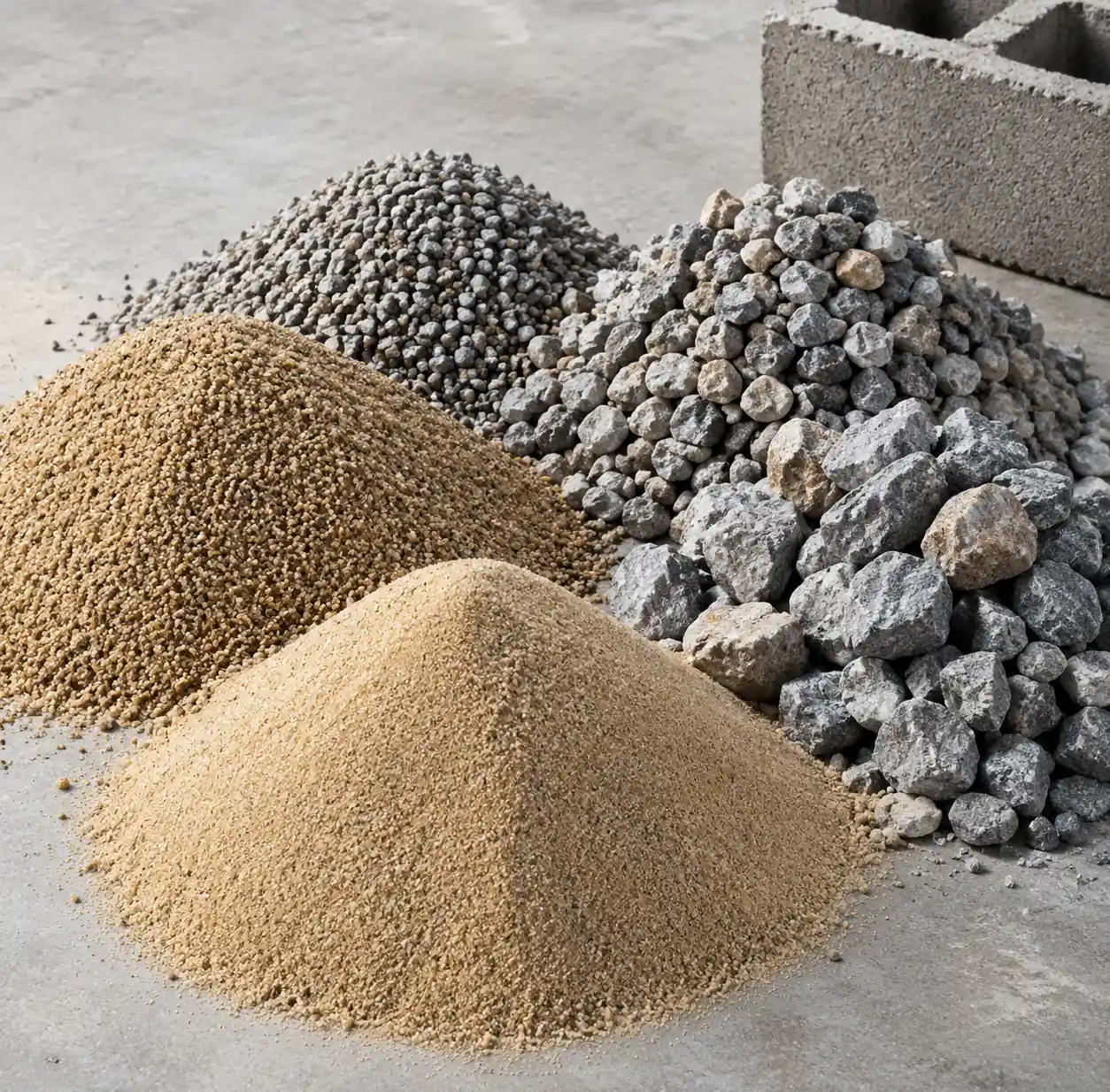
Poorly graded aggregates create voids requiring excess cement paste to fill, while clay-contaminated aggregates (>3% clay content) bond poorly with cement, reducing strength. Research shows proper aggregate gradation improves block strength by 12-18% versus randomly graded materials.
Solution: Specify aggregate gradation per ASTM C33. Sand should contain 15-25% particles passing 0.6mm sieve, 40-65% passing 2.4mm, and less than 5% passing 0.15mm. Test aggregates monthly for gradation and clay content using sieve analysis and sedimentation tests.
Admixtures for Quality Enhancement
Strategic use of admixtures addresses specific quality issues. Plasticizers reduce water demand improving strength and surface finish. Air-entraining agents enhance freeze-thaw resistance. Accelerators speed strength development in cold weather.
Solution: Superplasticizers at 0.2-0.5% cement weight reduce water by 15-20% while maintaining workability. This higher cement efficiency increases 28-day strength by 18-25%. Cost: $0.08-$0.15 per block, recovered through reduced cement consumption.
Common Quality Problems by Machine Type
Different machine types face characteristic quality challenges based on their automation level and production capacity.
| Type de machine | Common Defects | Primary Causes | Defect Rate |
|---|---|---|---|
| Manual | Dimensional variation, density inconsistency | Operator technique variation, inconsistent compaction | 8-15% |
| Semi-Automatic | Surface finish issues, minor dimension errors | Vibration calibration, water control | 4-8% |
| Automatic | Equipment wear defects, batch inconsistency | Mold wear, mixing system drift | 2-5% |
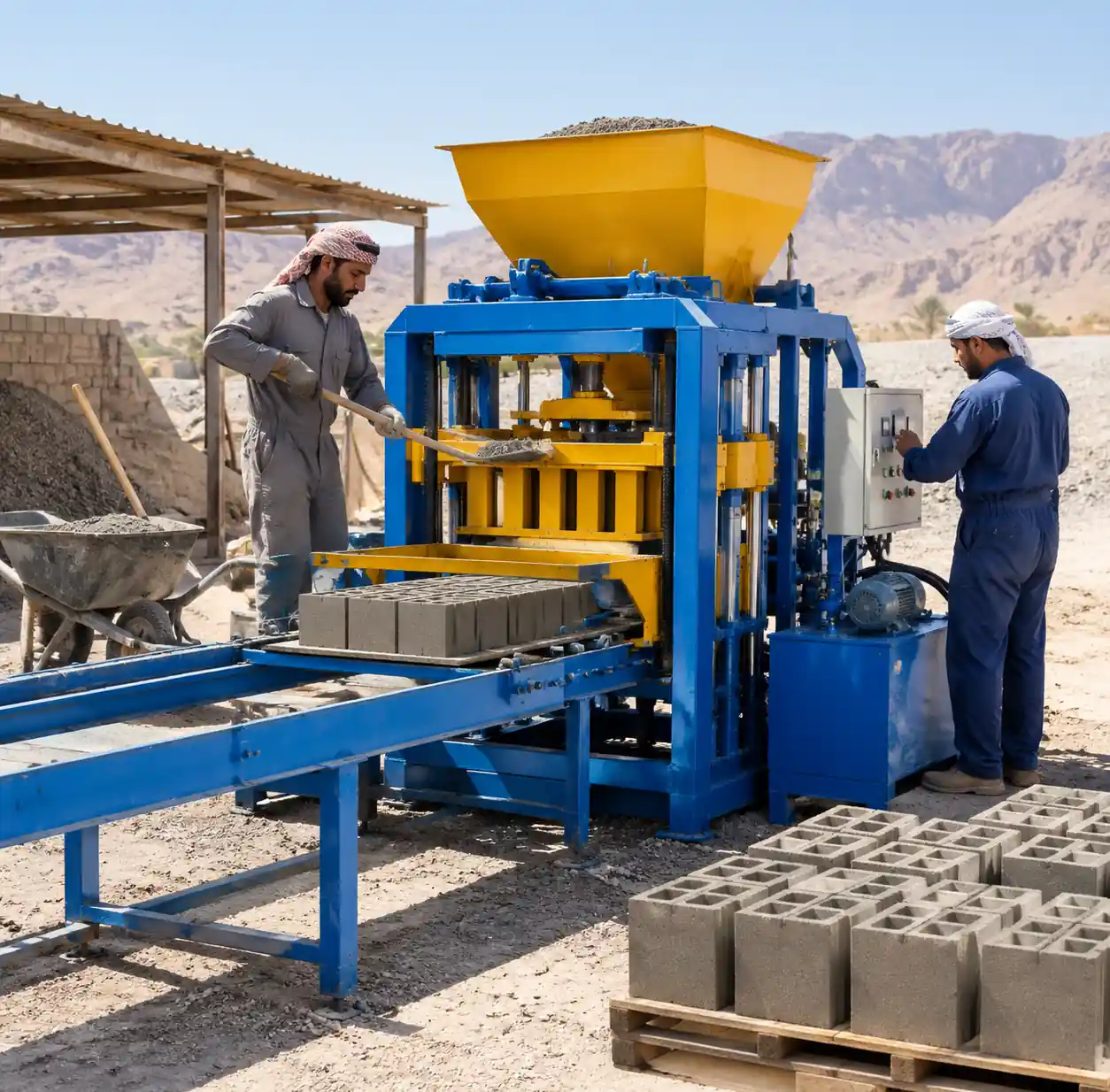
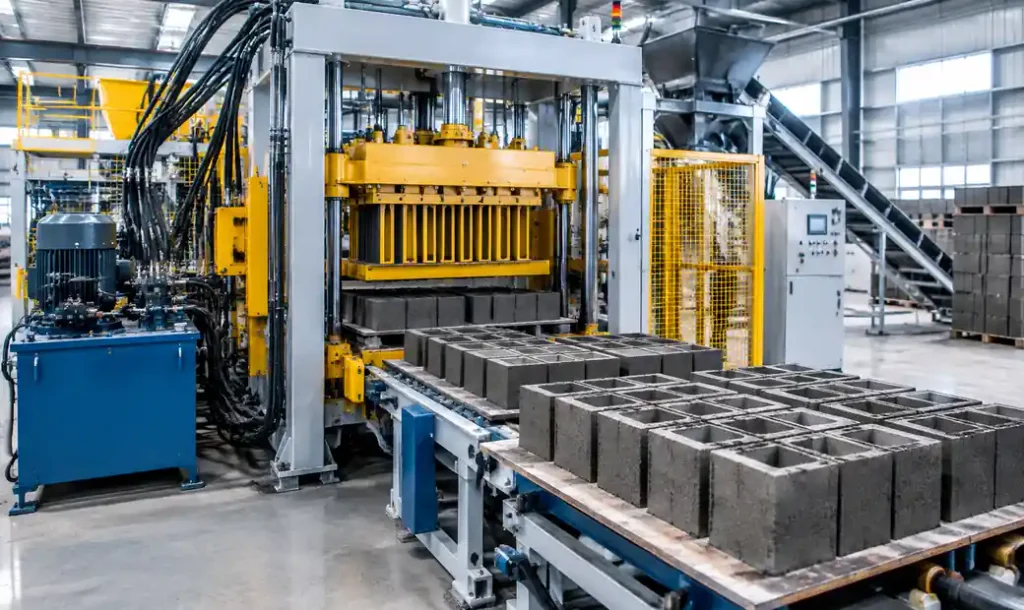
Manual block machines produce higher defect rates from operator variability but allow immediate adjustment when defects appear. Automatic systems deliver better consistency when properly maintained but require more sophisticated diagnostics when problems develop.
Quality Testing and Inspection Procedures
Systematic testing catches defects before blocks reach customers, converting quality issues into process improvement opportunities rather than customer complaints.
Daily Visual Inspection Protocol
Inspect 5-8 blocks per batch (every 500-1,000 blocks produced) for surface defects, color consistency, and obvious dimensional errors. Document defects in quality logs to identify patterns indicating systemic issues.
Inspection checklist: Surface cracks or crazing, color uniformity across face, sharp edges without chipping, texture consistency, void-free surface finish.
Dimensional Verification
Measure length, width, and height every 2 hours during production using calibrated calipers accurate to ±0.5mm. ASTM C90 allows ±3.2mm (1/8 inch) tolerance, but maintain internal targets of ±2mm for consistent compliance.
Critical measurements: Overall length (390-410mm for standard 400mm block), height (190-210mm for 200mm block), web thickness minimum 25mm, shell thickness minimum 32mm.
Compressive Strength Testing
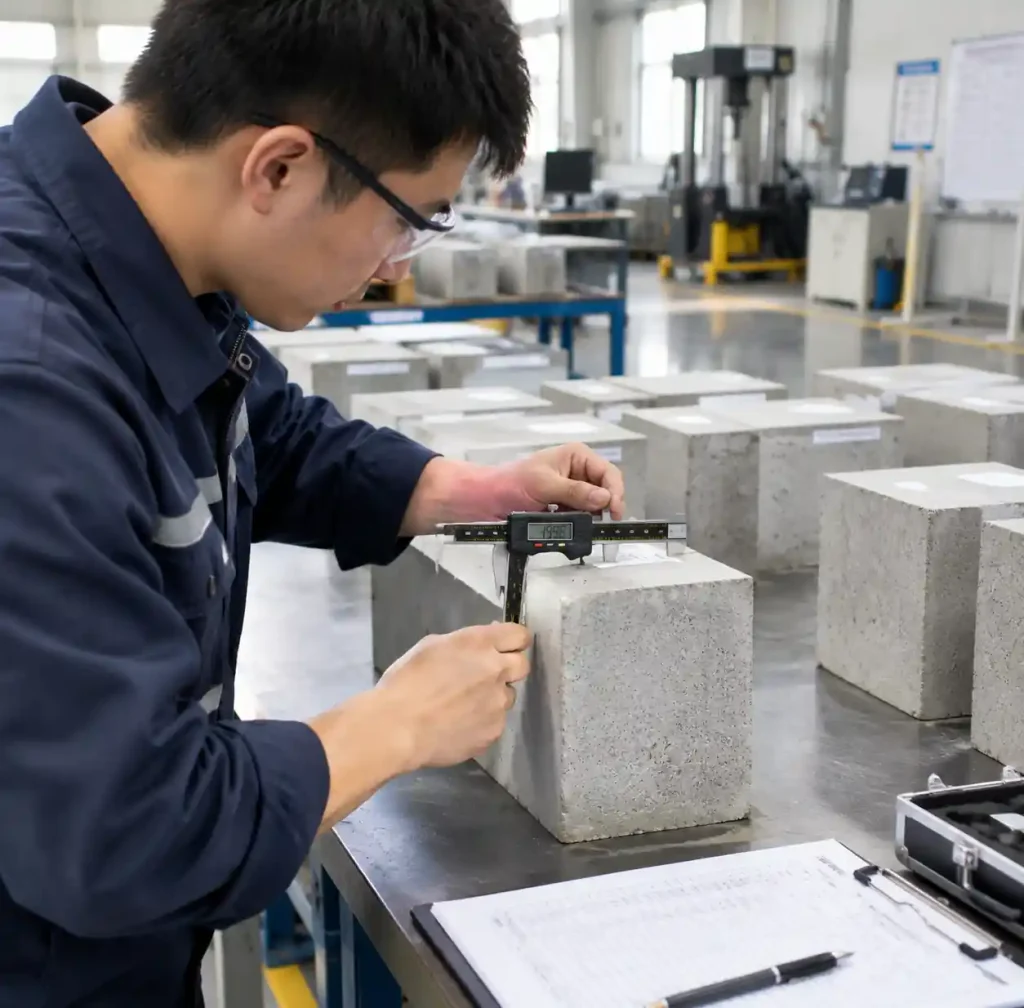
Test blocks at 7 days for early indication and 28 days for specification compliance per ASTM C140. Select minimum 3 units randomly per production lot (typically 10,000 blocks or one day’s production).
Testing procedure: Cure samples at 23°C ±2°C and 95%+ relative humidity. Cap specimens with sulfur compound creating parallel bearing surfaces. Apply load at 100-200 psi/minute until failure. Average of 3 tests must meet specification with no individual unit more than 10% below.
Solutions and Preventive Measures
Systematic quality control eliminates recurring defects through root cause correction rather than reactive firefighting.
Implement Statistical Process Control
Track key quality metrics (compressive strength, dimensional accuracy, density) using control charts identifying trends before defects escalate. Upper and lower control limits set at ±2 standard deviations catch process drift early.
Implementation: Record 5-10 measurements daily for 30 days establishing baseline. Calculate mean and standard deviation. Flag any measurement outside ±2 SD for immediate investigation. Adjust process limits quarterly as improvements reduce variation.
Establish Standard Operating Procedures
Document exact procedures for mixing, molding, demolding, and curing eliminating operator variability. Step-by-step SOPs reduce training time by 40-50% while improving consistency.
Critical procedures: Batching sequence (always cement first, then sand, gravel, water), mixing duration (3-5 minutes after water addition), vibration time (4-8 seconds depending on machine type), demolding timing (immediate for automatic, 2-4 hours for manual).
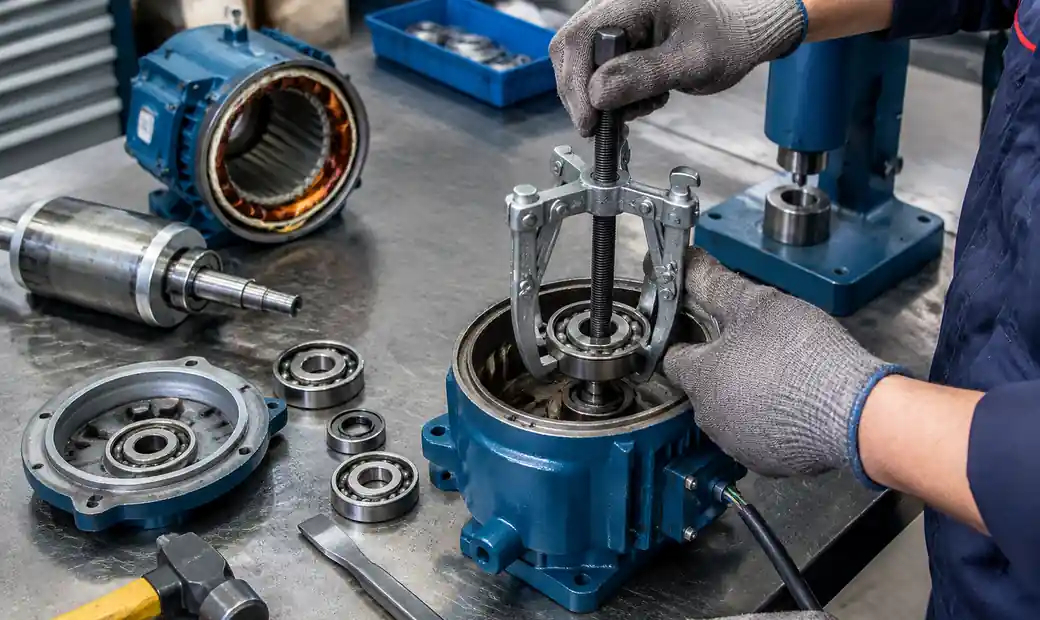
Preventive Maintenance Schedule
Equipment condition directly impacts quality. Supporting equipment maintenance prevents defects before they occur rather than reacting to quality problems.
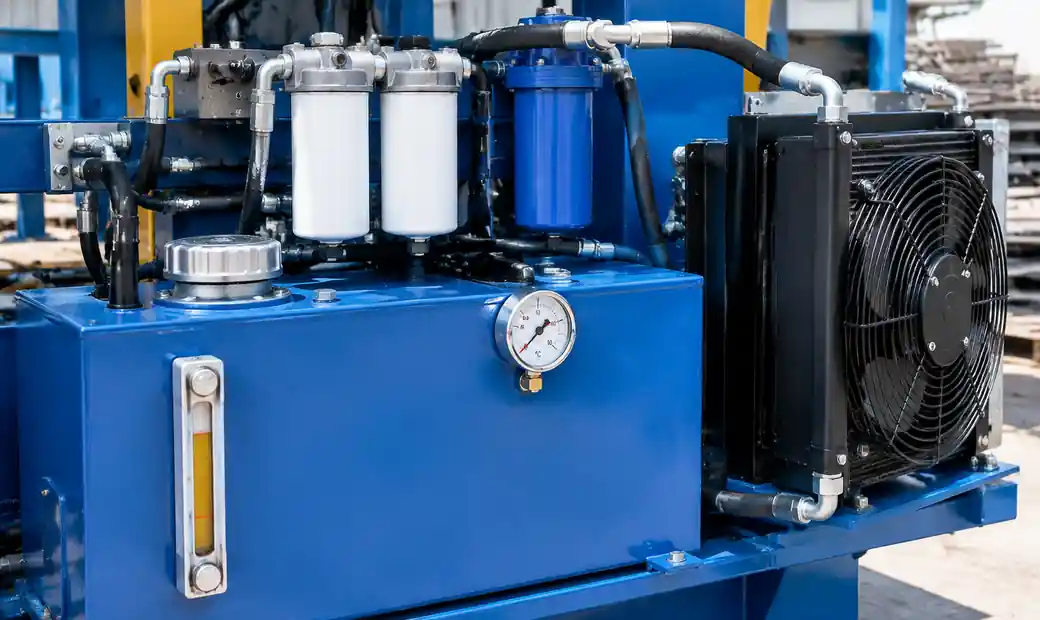
Weekly maintenance: Check hydraulic oil level, inspect vibration motor operation, verify mold condition, tighten mounting bolts, clean batch scales.
Monthly maintenance: Change hydraulic filters, calibrate pressure gauges, test vibration frequency, inspect molds for wear, verify mixer blade condition.
Quarterly maintenance: Complete hydraulic oil change, replace worn seals, refurbish or replace molds, calibrate all measurement systems.
FAQ
What causes blocks to crack during production?
Rapid moisture loss during the first 24-48 hours causes 64% of surface cracks. Cover blocks with plastic sheeting immediately after production and maintain 80%+ humidity. Excessive vibration (over 8-12 seconds) and high water-cement ratios above 0.50 cause the remaining 36% of cracking issues.
How do I improve block strength without adding more cement?
Optimize water-cement ratio to 0.40-0.45 (reduces water by 10-15% versus typical 0.50+ ratios), increase vibration effectiveness through proper maintenance, improve aggregate grading per ASTM C33, and add 0.3-0.5% superplasticizer reducing water demand while maintaining workability. These changes increase strength 18-30% without additional cement cost.
Why are my blocks different sizes?
Worn molds cause 52% of dimensional problems after 15,000-25,000 cycles. Inconsistent mix moisture (slump varying ±5mm) accounts for 31% of size variations. Machine misalignment from loose bolts or worn guide rails causes remaining 17%. Inspect molds monthly, control slump to 10-20mm, and calibrate machines every 500 hours.
What is acceptable block density variation?
Industry standard allows ±5% weight variation within a batch. Blocks varying more than 8% indicate serious mixing or compaction problems requiring immediate investigation. Semi-automatic and automatic machines should achieve ±3% consistency when properly calibrated.
How long should blocks cure before testing?
Test at 7 days for early strength indication (should reach 65-70% of 28-day strength) and 28 days for specification compliance. Never load or ship blocks before 7 days minimum curing—early loading causes micro-cracking reducing long-term durability by 25-40%.
Can I fix surface defects after production?
Minor surface voids can be patched with matching cement-sand paste for architectural applications, but structural defects (cracks >0.3mm, honeycombing, strength failures) cannot be repaired. Prevention through proper production control is 10-15x more cost-effective than post-production correction attempts.
Conclusion
Block quality issues stem from controllable production factors rather than unavoidable manufacturing variances. The seven defects covering 84% of quality problems—surface cracks, strength failures, dimensional errors, color inconsistencies, density variations, edge chipping, and curing defects—each have specific root causes and proven solutions.
Implementing systematic quality control reduces reject rates 65-80% within 60-90 days through three core strategies: strict mix design control (water-cement ratio 0.40-0.45, proper cement content, aggregate grading per ASTM C33), equipment calibration (hydraulic pressure verification, vibration timing, mold maintenance every 1,000 cycles), and standardized curing (80%+ humidity, 18-25°C temperature, minimum 72-hour moist curing).
If you need high-quality block production equipment that delivers consistent results, Raytone Block Machinery manufactures manual, semi-automatic, and fully automatic systems engineered for quality output from 2,000 to 46,000 blocks per day. Our equipment includes precision molds, calibrated hydraulic systems, and comprehensive supporting equipment designed for long-term reliability.
Contactez-nous dès aujourd'hui for detailed specifications, production line design, and equipment recommendations matching your quality requirements and production targets.