





Most aspiring block manufacturers believe they need $100,000+ to enter the market. That’s wrong. I’ve seen operations start with $8,000-$15,000 and reach profitability within 6-9 months by making strategic equipment choices and leveraging existing resources. The difference between success and failure isn’t budget size—it’s how intelligently you allocate capital across equipment, raw materials, and working reserves.
The global concrete block market reached 4.7 billion tonnes in 2022, with small-scale producers capturing significant regional market share through localized production that eliminates transportation costs. Construction demand continues rising in emerging markets, but successful entry requires matching investment level to market reality rather than overspending on capacity you won’t use for years.
Understanding Minimum Viable Investment
Budget constraints force clarity. Instead of asking “what’s the best equipment,” limited budgets demand “what’s the minimum system that produces sellable blocks profitably?” That question separates equipment salespeople from experienced producers.
The Real Cost Breakdown
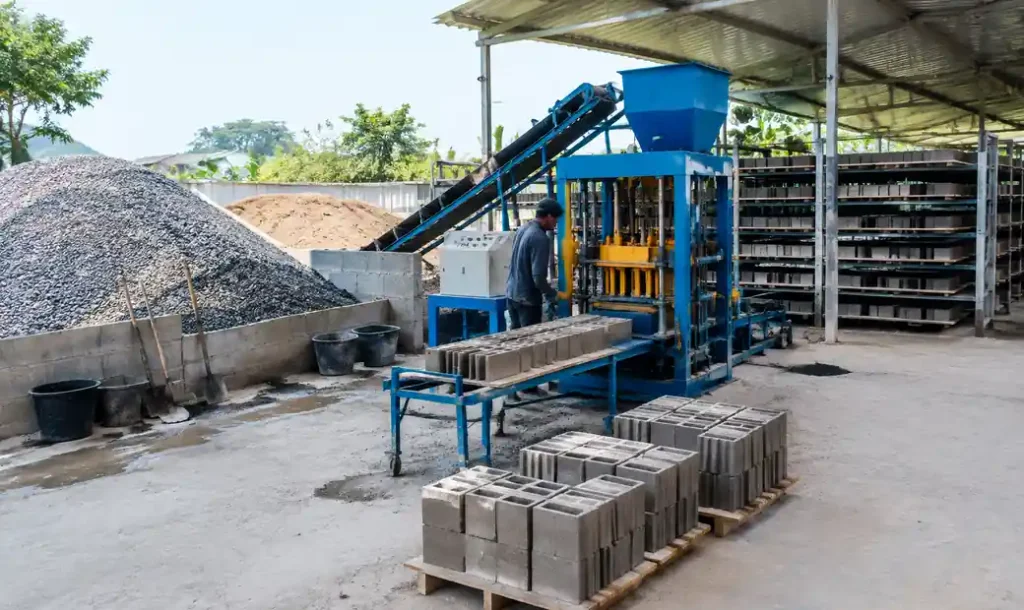
A viable block production startup requires four capital allocations: equipment, site preparation, raw material inventory, and working capital. The equipment purchase represents only 50-60% of total investment—a fact that catches newcomers off guard.
| Investment Component | Manual Setup | Semi-Automatic Setup | Budget Allocation % |
|---|---|---|---|
| Block Machine | $3,000-$6,500 | $8,000-$15,000 | 35-45% |
| خلاط الخرسانة | $800-$1,500 | $1,200-$2,500 | 8-12% |
| Moulds & Pallets | $600-$1,200 | $1,200-$2,000 | 6-10% |
| Site & Foundation | $1,500-$2,500 | $2,000-$3,500 | 12-15% |
| Raw Material Stock | $1,800-$3,000 | $3,000-$5,000 | 18-22% |
| Working Capital | $1,000-$2,000 | $2,000-$3,500 | 8-12% |
| Total Investment | $8,700-$16,700 | $17,400-$31,500 | 100% |
Working capital deserves emphasis. First-month operations require cash for cement purchases before customer payments arrive. Undercapitalization forces producers to delay production waiting for payment, destroying momentum and credibility. Allocate 10-15% of total investment to working capital or secure 30-day supplier credit terms before starting.
Equipment Selection Strategy
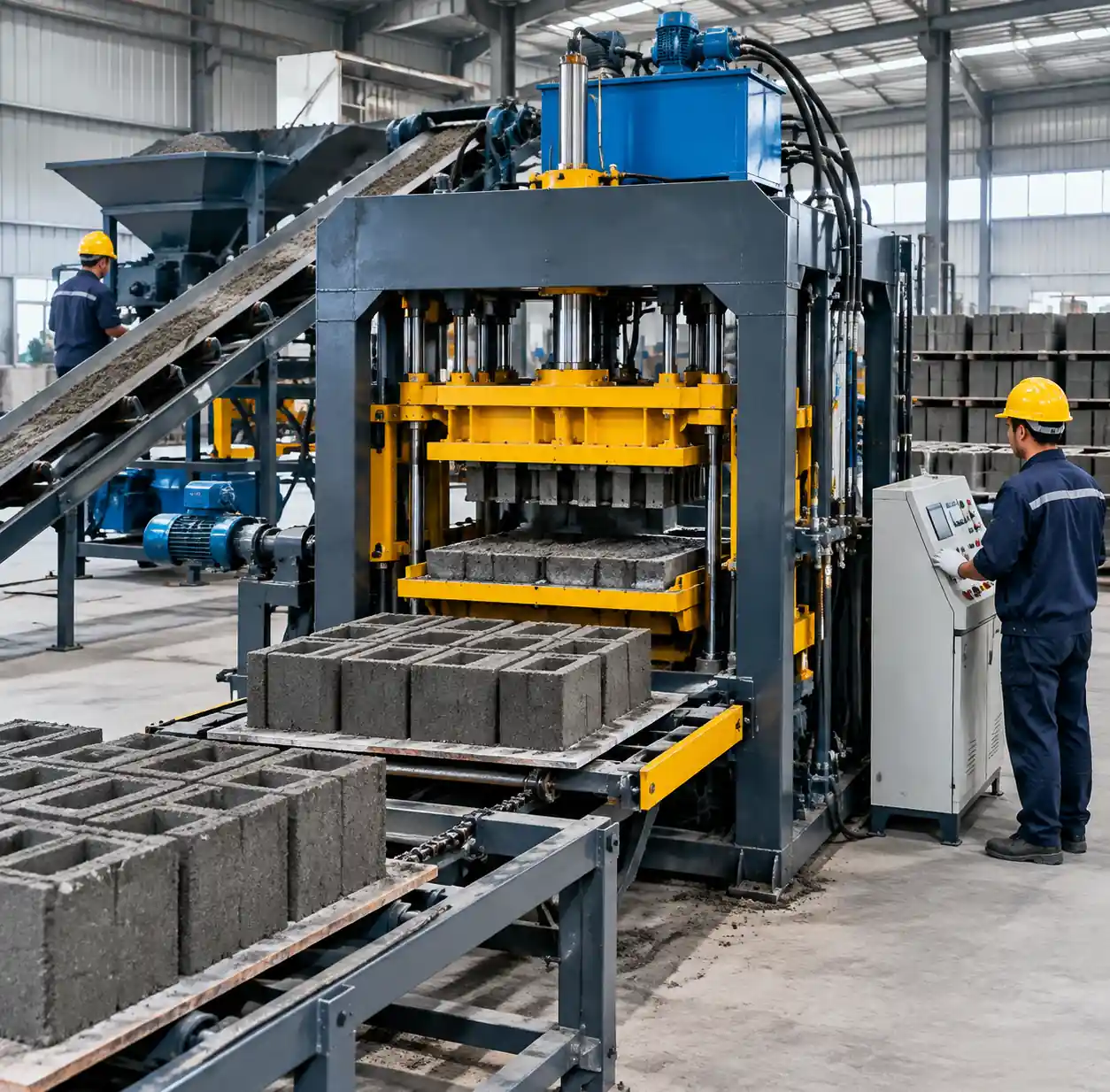
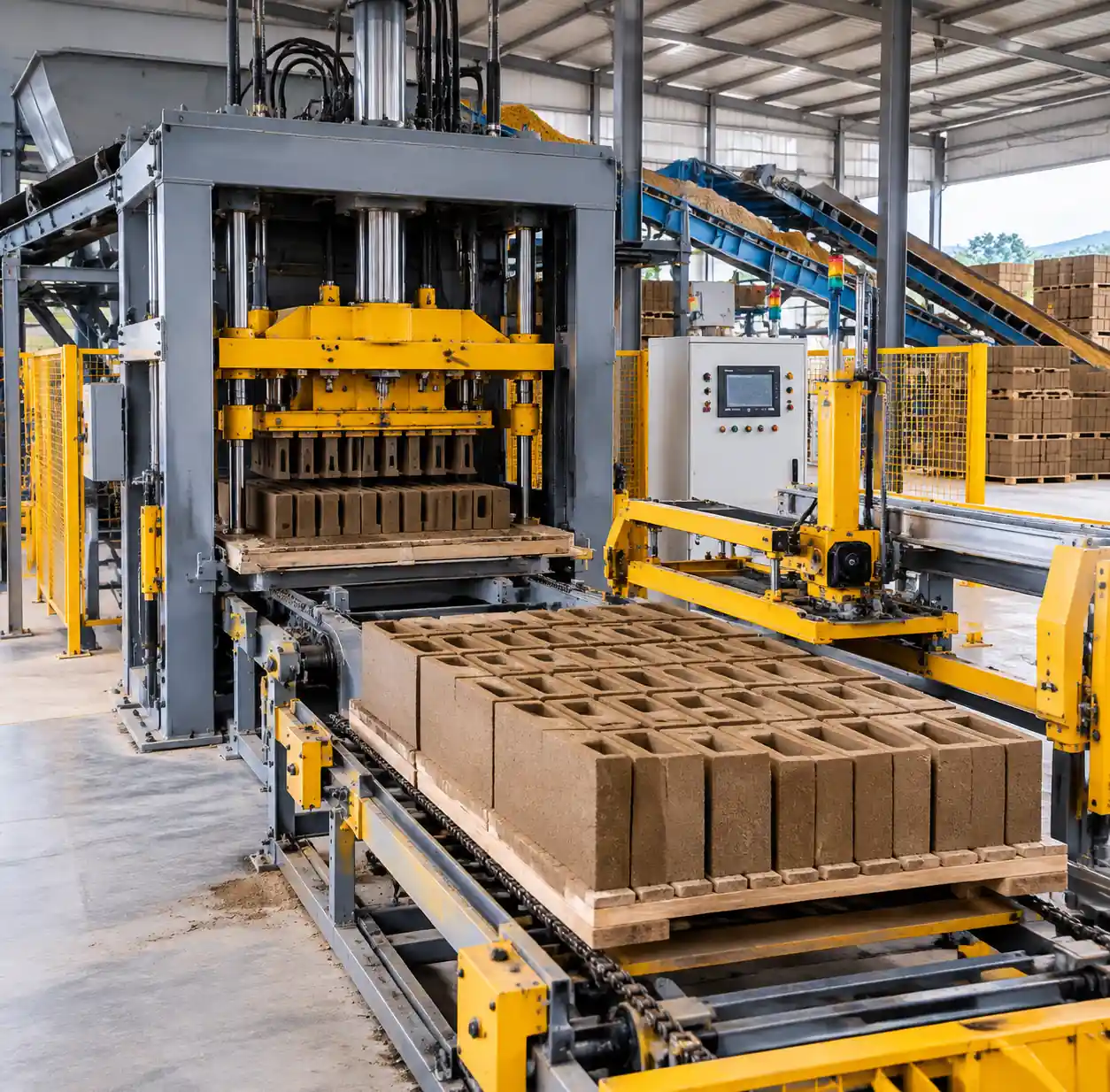
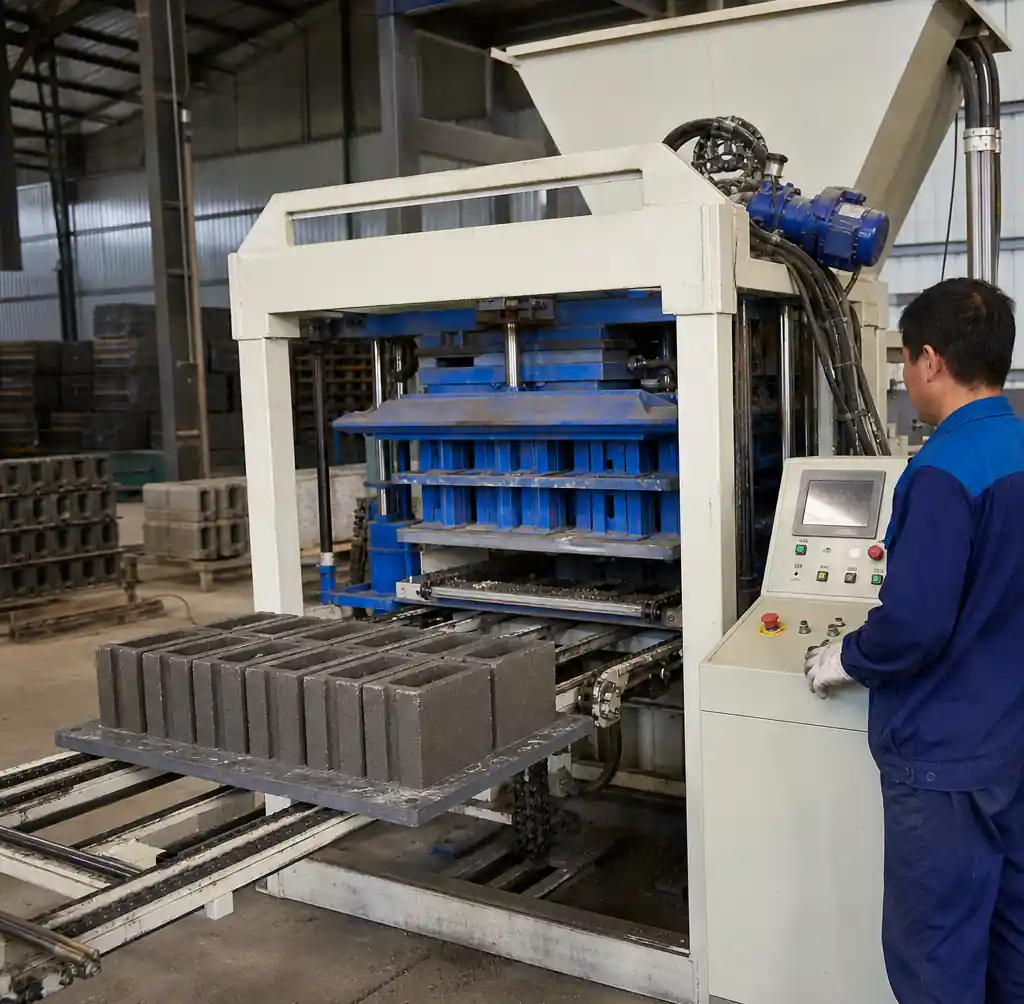
The equipment decision determines your cost structure for years. Manual machines cost $3,000-$8,000 and produce 400-600 blocks per 8-hour shift with 2-3 workers. Semi-automatic machines cost $8,000-$18,000 and produce 800-1,500 blocks with similar labor—delivering 3x output for 2-3x investment.
Manual machines work when:
- Testing market demand before full commitment
- Labor costs under $3/day make automation uneconomical
- Unstable electricity supply (under 16 hours daily) negates automation advantages
- Capital limited to under $10,000 total investment
Semi-automatic becomes essential when:
- Confirmed demand exceeds 500 blocks daily
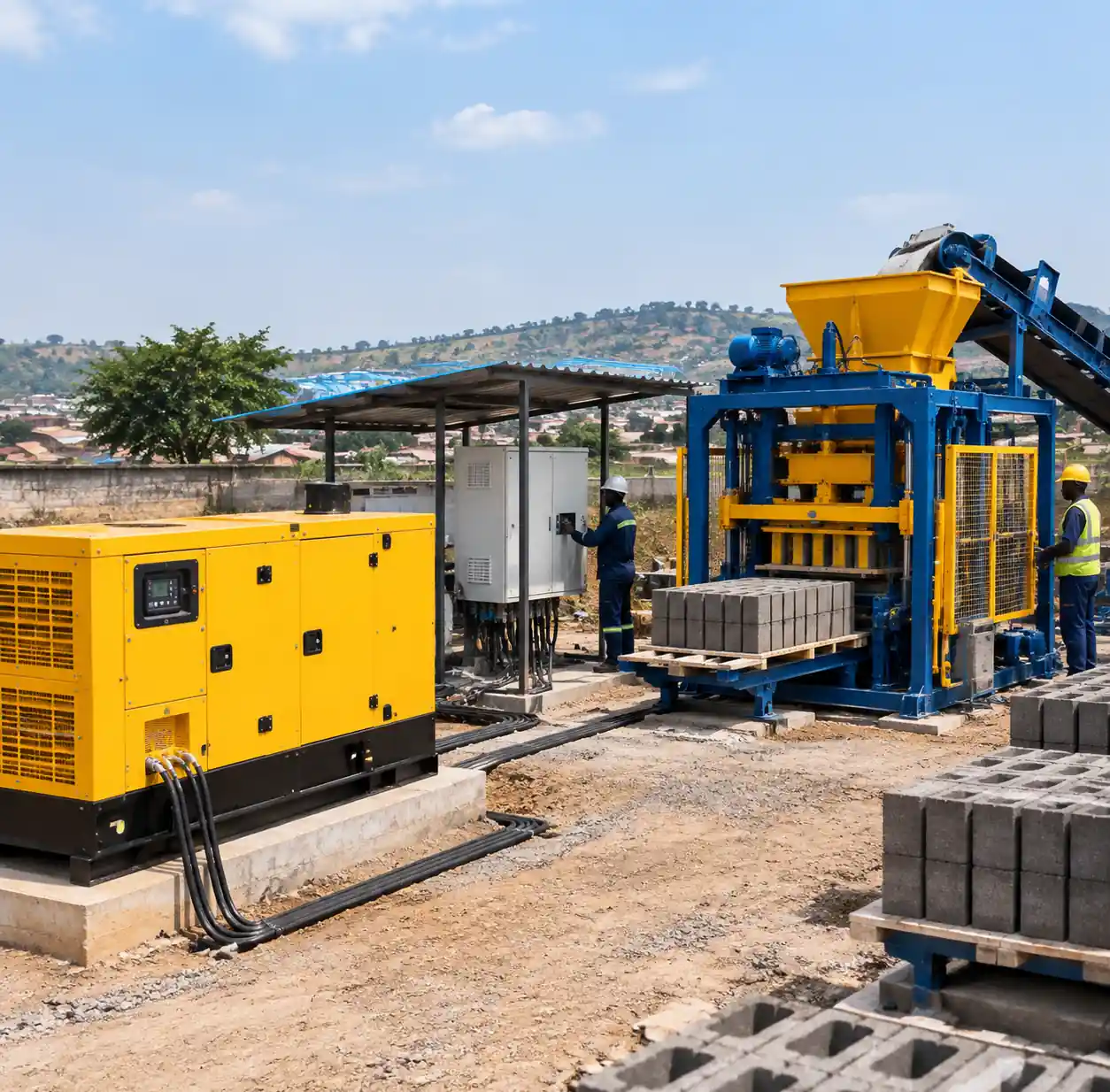
- Electricity available 18+ hours daily at under $0.15/kWh
- Labor costs above $8/day make automation ROI attractive
- Access to $15,000-$25,000 capital positions you for growth
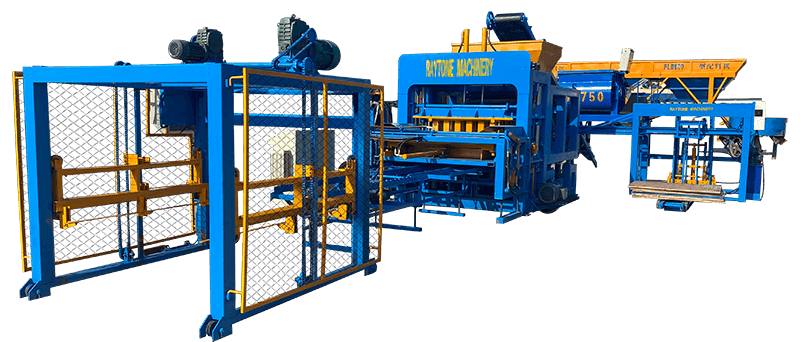
The QT4-40 manual machine and QT4-24 semi-automatic represent proven entry points. Both accept multiple mould configurations (hollow, solid, paver) providing product flexibility while building market understanding.
Mobile and Egg Layer Machines: The Budget Alternative
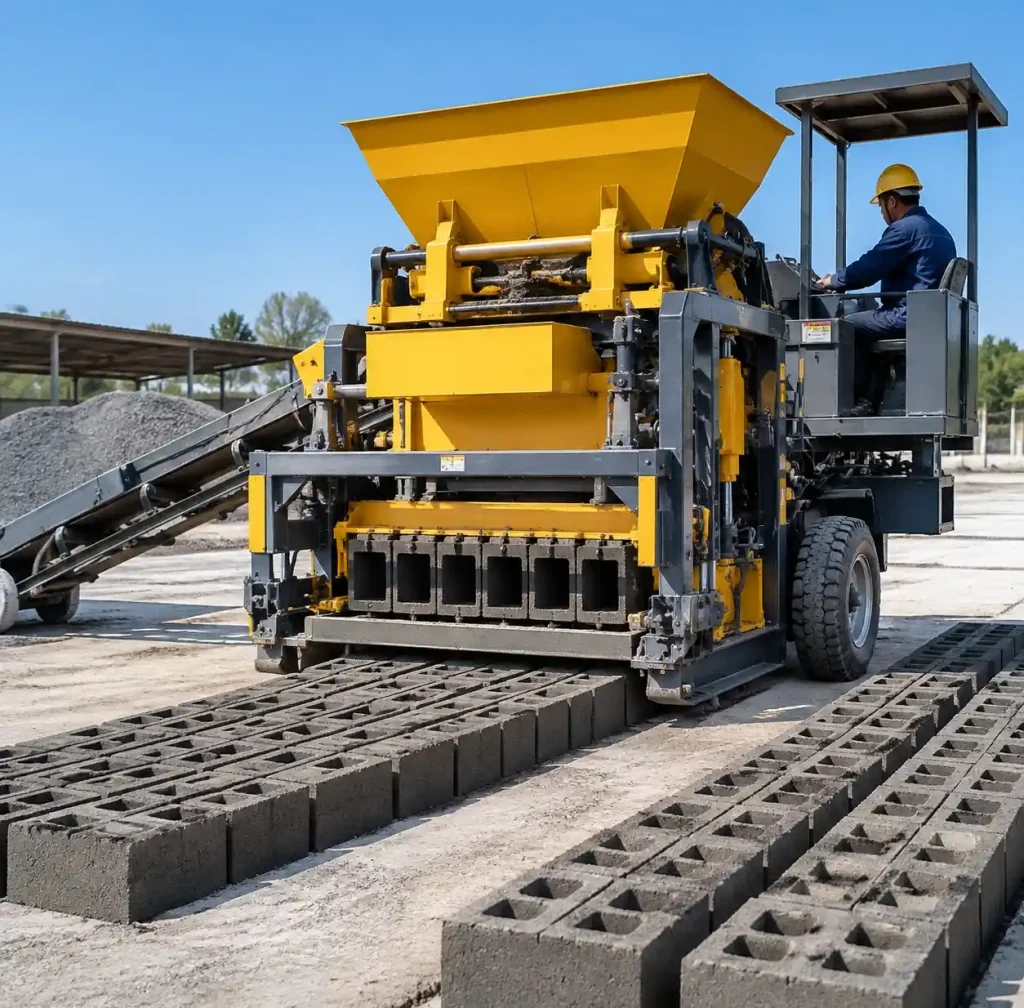
Mobile egg layer machines eliminate the single largest cost barrier: pallets. Conventional production requires 800-1,500 pallets ($10,000-$22,500) for curing cycle management. Egg layers deposit blocks directly on the ground, cutting startup costs 30-40%.
How Egg Layer Systems Work
The machine moves forward automatically after each block, laying products in rows like eggs. Blocks cure in place for 6-8 hours before handling, eliminating pallet investment and handling labor. Production capacity ranges from 800-2,000 blocks per shift depending on operator efficiency and block size.
Critical limitations to understand:
- Requires prepared flat surface (compacted soil or concrete pad)
- Weather-dependent—rain disrupts ground curing
- Limited to single-layer products (cannot stack during initial cure)
- Block pickup after initial cure requires manual labor or forklift
QTM series mobile machines cost $6,000-$12,000 and produce 1,000-1,800 blocks daily. For operations starting under $15,000 total budget, mobile systems provide semi-automatic productivity at near-manual investment levels.
Site Requirements and Setup Costs
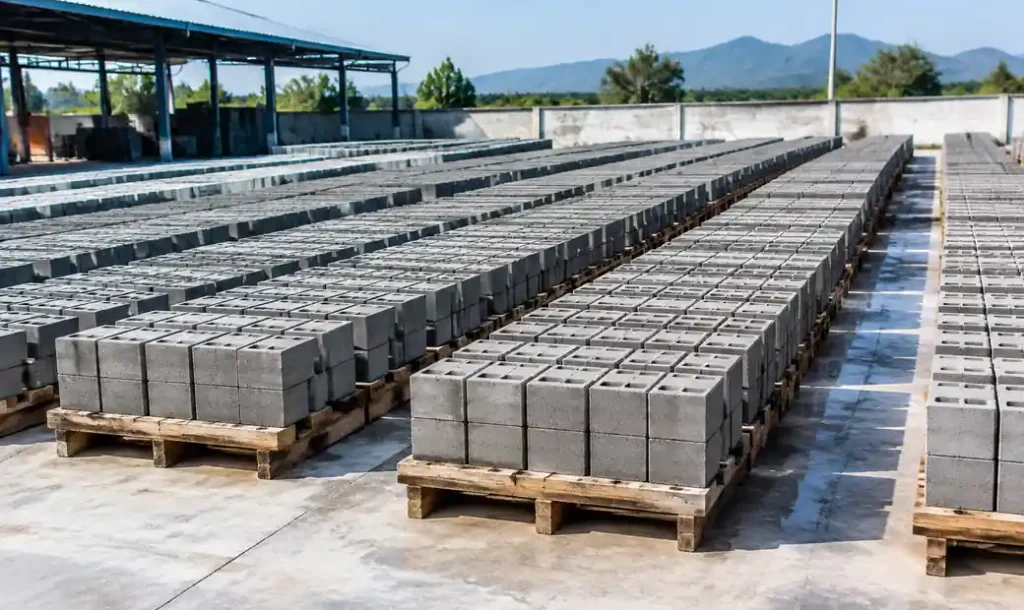
The curing area dominates space requirements. Each 1,000 blocks need approximately 45-50 m² for 7-day curing (1,000 blocks × 0.4 m² per block ÷ 2 rows high + aisle space). A 5,000 block weekly production requires 225-250 m² minimum.
| حجم الإنتاج | Daily Output | Curing Area Needed | Production Area | Total Land | Setup Cost |
|---|---|---|---|---|---|
| Micro (Manual) | 400-600 blocks | 180-220 m² | 50-70 m² | 230-290 m² | $1,500-$2,500 |
| Small (Semi-Auto) | 1,000-1,500 blocks | 400-500 m² | 80-100 m² | 480-600 m² | $2,500-$4,000 |
| Medium (Automatic) | 3,000-5,000 blocks | 900-1,400 m² | 150-200 m² | 1,050-1,600 m² | $5,000-$8,500 |
Site preparation costs vary dramatically by location. Undeveloped land requires grading, compaction, and drainage ($8-$15/m²). Existing concrete areas or compacted industrial yards reduce setup costs 60-80%.
Used Equipment: Risks and Rewards
Used block machines sell at 30-70% discounts versus new equipment. A $12,000 semi-automatic machine becomes $4,000-$8,400 used—potentially viable, potentially disastrous. The global used construction machinery market reached $95.4 billion in 2023, indicating robust supply, but buyer expertise determines outcomes.
Evaluation Checklist for Used Machines
Hydraulic system integrity (critical):
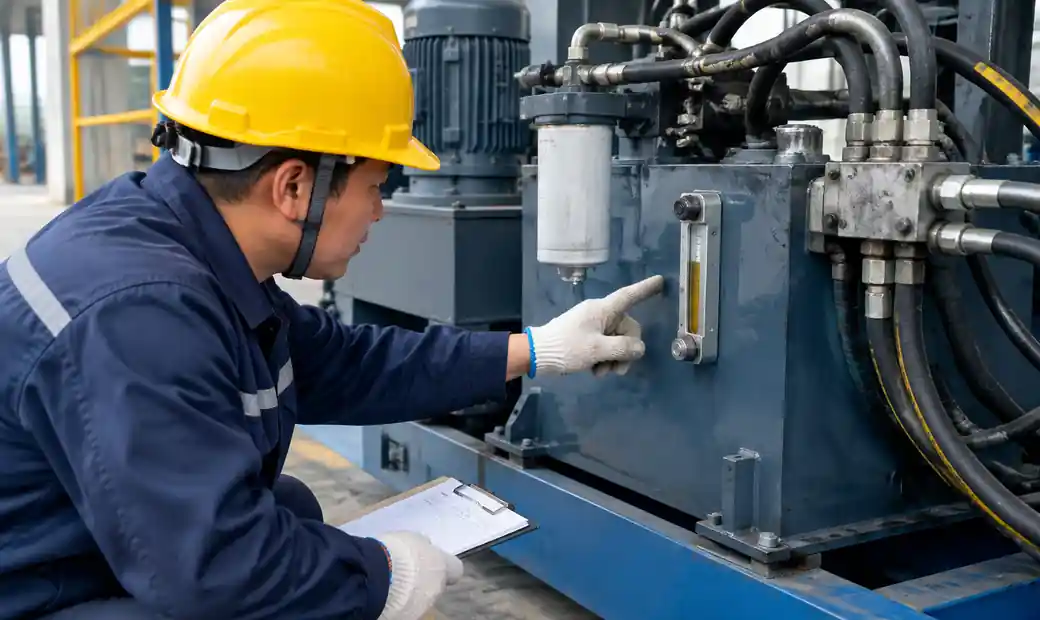
Inspect cylinder rod chrome plating for scoring, pitting, or wear bands. Damaged rods cause seal failures within months, requiring $800-$2,500 cylinder rebuilds. Request hydraulic pressure test showing system maintains rated pressure (160-200 bar) for 60 seconds without drop—more than 5% pressure loss indicates pump wear or seal deterioration.
Vibration system condition:
Worn vibration motor bearings create uneven compaction and block quality problems. Run motors for 15+ minutes checking temperature (should remain under 65°C) and listening for grinding or rattling. Bearing replacement costs $200-$600 per motor, but delay causes motor case damage requiring complete replacement ($800-$1,500).
Mould wear assessment:
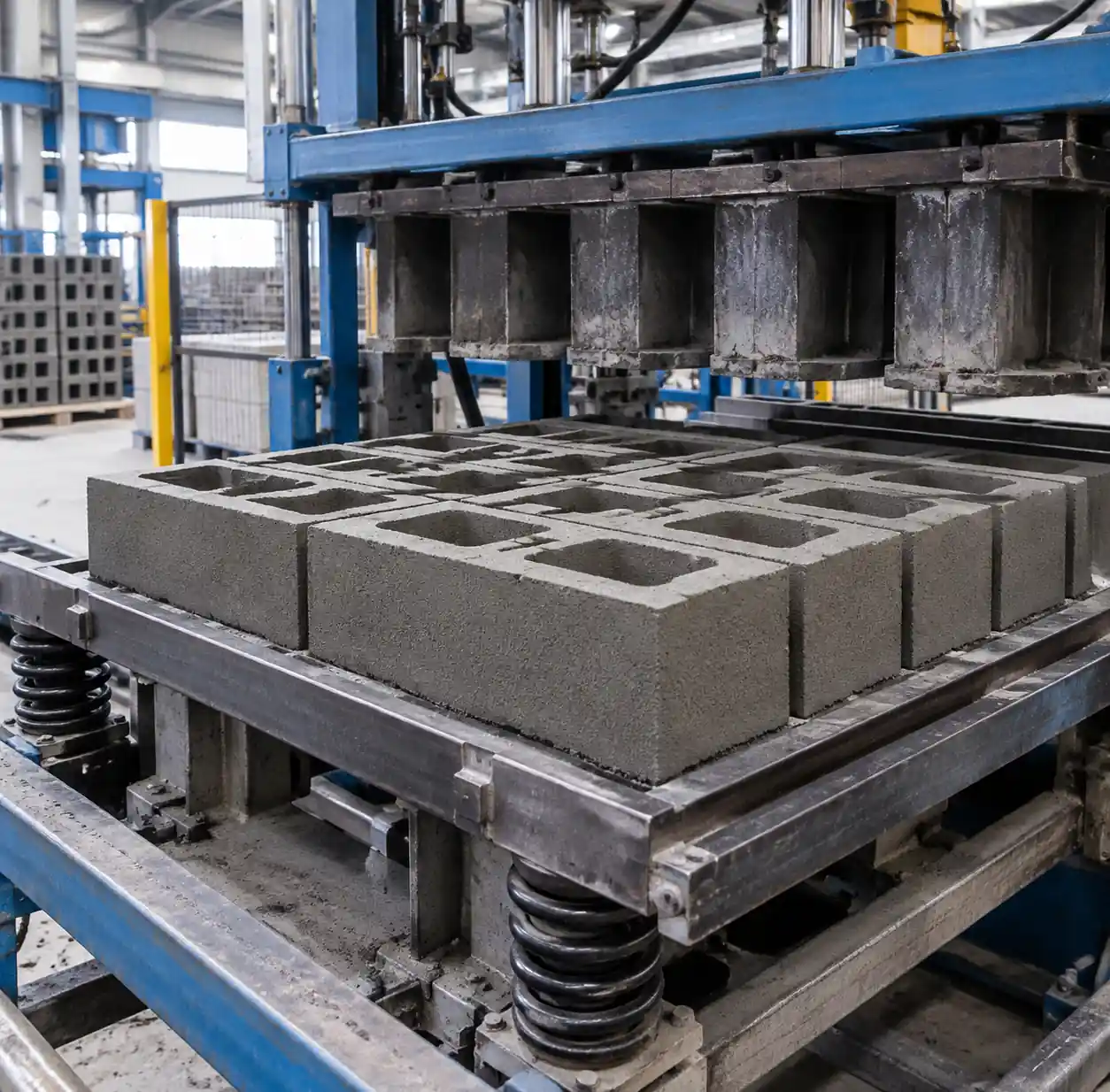
Examine mould cavity surfaces for cracks, erosion, or dimensional distortion. Moulds wear 0.5-1.5mm per 100,000 blocks. Excessive wear produces out-of-spec blocks that customers reject. Replacement moulds cost $400-$1,200 depending on block configuration.
Parts availability verification:
Research replacement part availability before purchase. Obsolete or rare models trap you with machines that cannot be repaired. Contact manufacturers or dealers confirming critical components (hydraulic pumps, motors, control boards) remain available. Confirm lead times under 30 days for common wear items.
Raw Material Sourcing and Cost Management
Raw materials consume 65-75% of operating costs. A standard 400×200×200mm hollow block uses approximately 0.027 m³ concrete (18kg cement, 48kg sand, 54kg aggregate, 6kg water). At current material prices, raw material cost runs $0.22-$0.28 per block.
Cement Procurement Strategy
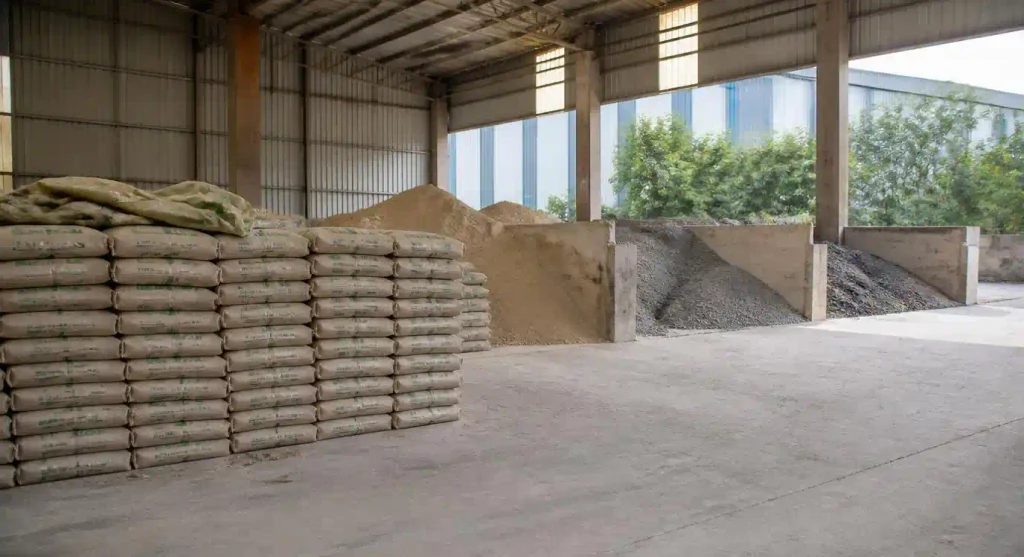
Cement represents 40-45% of material cost. Buying in 50kg bags from retail stores costs $8-$12 per bag. Bulk purchase (minimum 5-10 tonnes) reduces costs 15-25% to $6.80-$9.00 per bag equivalent. However, bulk requires storage capacity and working capital.
Staged procurement approach:
Start with bagged cement purchasing 2-week supply (40-60 bags). As production stabilizes and cash flow improves, transition to bulk delivery. This balances cash flow constraints against cost optimization, preventing capital lockup in material inventory while proving market demand.
Aggregate and Sand Sourcing
Local aggregate sourcing provides 30-50% cost advantages over transported materials. Construction sand costs $15-$35/tonne delivered; river sand or crushed stone sourced directly from quarries runs $8-$18/tonne. Transportation represents 40-60% of delivered cost for distances over 50km.
Site visit local quarries within 30km. Negotiate direct purchase agreements avoiding distributor markup. For startup operations using 8-12 tonnes daily, establish weekly delivery schedules rather than stockpiling months of inventory that ties up capital.
Phased Growth Model
Smart budget deployment follows production validation. Start minimal, prove market demand, then expand capacity using initial revenue rather than borrowed capital. This approach minimizes risk while building operational knowledge.
Phase 1: Market Validation (Months 1-3)
Investment: $8,000-$15,000 | Target: 300-600 blocks daily | Revenue Goal: $1,200-$2,400/month
Deploy manual or mobile machine producing hollow blocks only—the highest-volume product in most markets. Focus selling to small contractors and individual builders within 20km radius. Objective: confirm sustainable demand and establish production reliability before expansion.
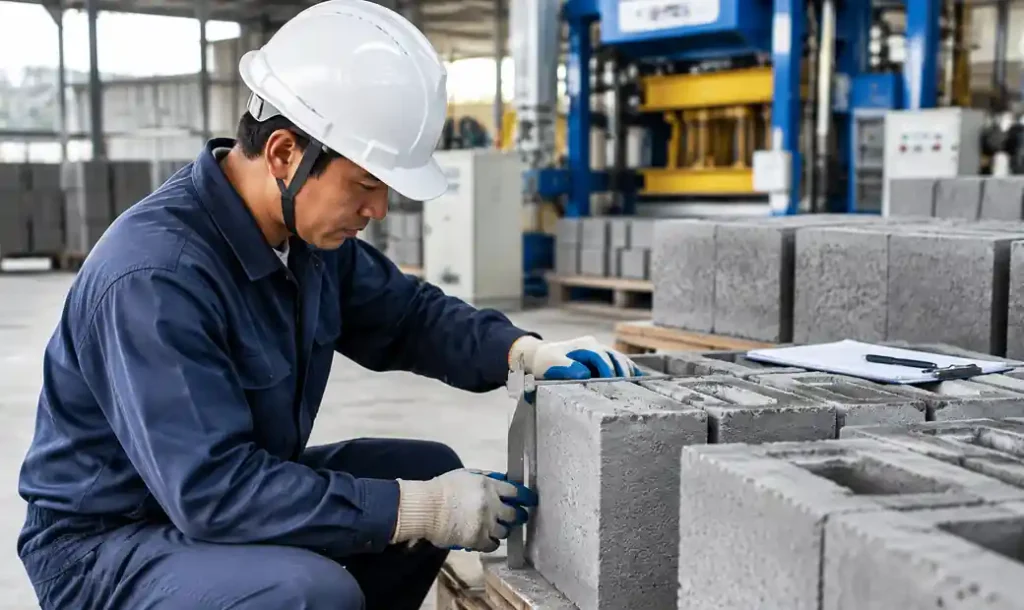
Key metrics to track: block quality rejection rate (target under 5%), customer reorder rate (target above 60%), production cost per block (target $0.28-$0.35). If rejection rates exceed 10% or reorder rates fall below 40%, address quality or market fit before expanding.
Phase 2: Capacity Scale (Months 4-9)
Additional Investment: $5,000-$12,000 | Target: 1,000-1,500 blocks daily | Revenue Goal: $4,000-$6,500/month
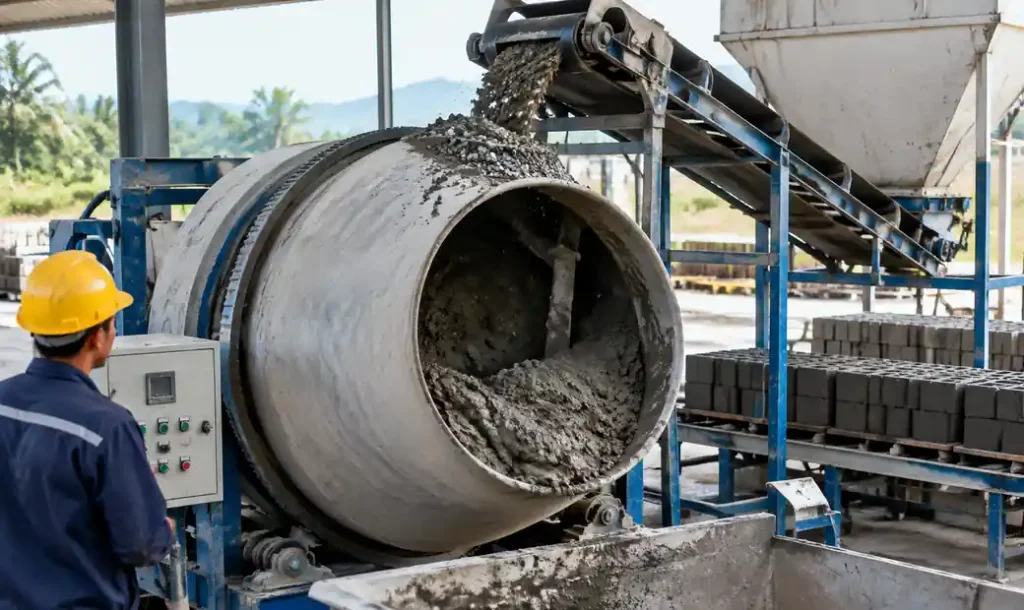
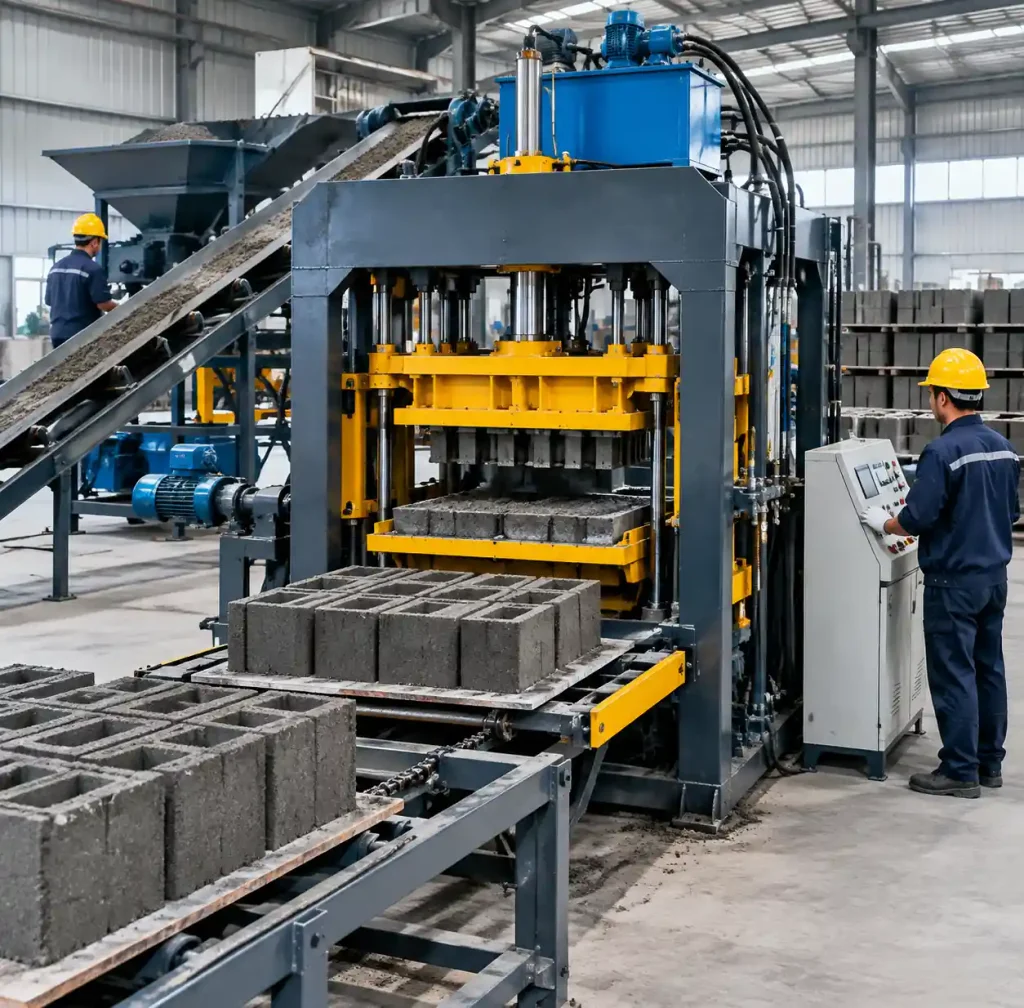
Add supporting equipment (concrete mixer upgrade, pallet feeder, additional moulds) or upgrade to semi-automatic machine. Expand product range adding solid blocks or pavers based on customer inquiries. Formalize supply agreements with 2-3 repeat customers providing consistent weekly orders.
This phase proves whether your operation can scale profitably. Monitor labor cost per block (should decrease 15-30% with volume), material waste rates (target under 3%), and working capital cycles (receivables should not exceed 45 days).
Phase 3: Market Expansion (Months 10-18)
Additional Investment: $8,000-$18,000 | Target: 2,500-4,000 blocks daily | Revenue Goal: $10,000-$16,000/month
Upgrade to semi-automatic or automatic equipment if not already completed. Add delivery truck ($8,000-$15,000 used) expanding market radius to 40-60km. Hire dedicated sales person targeting larger construction projects and developer accounts.
At this scale, implement formal quality control systems, inventory management, and customer service protocols. Operations requiring external labor (5+ employees) need systematic management replacing founder-does-everything approach.
Alternative Financing Strategies
Traditional bank loans require collateral and credit history that startups often lack. Alternative approaches provide working capital while building business credibility.
| Financing Method | Capital Access | Terms | الأفضل لـ | Risk Level |
|---|---|---|---|---|
| Supplier Credit | 30-90 day payment terms | No interest if paid on time | Established cement/material suppliers | Low |
| Equipment Financing | 70-85% of equipment cost | 3-5 years @ 8-15% interest | Manufacturers offering in-house financing | Medium |
| Revenue Sharing | Varies by agreement | Partner takes 20-40% profit share until repaid | Local investors seeking business returns | Medium-High |
| Contract Pre-Payment | 30-50% project value upfront | Per project terms | Large contractors needing guaranteed supply | Low-Medium |
| Microfinance Loans | $5,000-$25,000 | 1-3 years @ 12-24% interest | NGOs and development banks in emerging markets | Medium |
Revenue sharing with local investors works well in markets lacking formal financing infrastructure. Structure agreements with clear profit calculation methods and defined buyout terms (typically 1.5-2x investment return triggers partner exit).
Labor and Skills Requirements
Block production requires moderate skill levels—neither highly technical nor purely manual. A manual operation needs 2-3 workers: machine operator, material handler, and curing area manager. Semi-automatic systems require 3-4 people adding mixer operator role.
Operator training timeline:
- Basic operation proficiency: 3-5 days
- Quality consistency achievement: 2-3 weeks
- Maintenance and troubleshooting capability: 4-6 weeks
Partner with equipment suppliers offering installation training. Most manufacturers provide 3-7 days on-site commissioning including operator training. Allocate $300-$800 for extended training if supplier standard training proves insufficient—undertrained operators produce quality problems costing far more than training investment.
Cross-train workers on multiple stations. When your mixer operator calls in sick, production shouldn’t stop because only one person knows that equipment. Build redundancy in workforce capabilities.
Common Budget-Killing Mistakes
Three mistakes consistently destroy budget-constrained startups: overbuying capacity, underestimating working capital, and skipping quality control during ramp-up.
Overbuying capacity: A 5,000 block daily machine serves no purpose producing 800 blocks. The larger machine costs more, consumes more electricity, requires more raw material working capital, and doesn’t improve profitability. Match capacity to confirmed demand plus 30-40% growth buffer, not aspirational projections.
Working capital shortfall: Running out of cement money while waiting for receivables forces production halts. Customers interpret this as unreliability, not cash flow management. They switch suppliers. Maintain minimum 3-week material inventory coverage or establish supplier credit lines before starting production.
Quality shortcuts during ramp-up: Under budget pressure, new producers skip proper curing time (needs 7-14 days for full strength), use substandard cement to save $0.8 per bag, or ignore mix ratio precision. Defective blocks return as warranty claims or worse—silent reputation damage as builders reject your product without telling you why. Quality problems cost 10-20x more to fix than prevent.
Market Entry Strategy
Product quality alone doesn’t guarantee sales. Market entry requires targeted customer development matching your production capacity and delivery capabilities.
Initial target customers (first 90 days):
- Small-scale contractors building 2-5 houses simultaneously
- Individual home builders constructing own properties
- Small commercial renovations under 500 m²
These customers buy 500-2,000 blocks per project, matching manual/mobile machine capacity. They value reliable supply and reasonable quality over absolute lowest price. Build relationship with 8-12 accounts in this segment.
Secondary expansion customers (months 4-12):
- Mid-size contractors (5-15 concurrent projects)
- Material suppliers servicing retail builder market
- Government/NGO housing projects under 50 units
This segment requires consistent quality, formal invoicing, and sometimes 30-60 day payment terms. They purchase 3,000-10,000 blocks monthly. Target 3-5 accounts after proving operational reliability in initial customer segment.
الأسئلة الشائعة
What’s the absolute minimum investment to start block production?
$8,000-$10,000 gets you operational with a basic manual machine, second-hand mixer, minimal tooling, and one month working capital. This supports 300-500 block daily production. However, $12,000-$15,000 provides meaningful working capital buffer and proper site preparation, reducing early-stage stress substantially.
Should I buy used or new equipment when starting?
Buy new for your primary production machine if budget permits. Used equipment from reputable sellers works for supporting equipment (mixers, conveyors) where failure doesn’t halt production. Used block machines require expertise to evaluate—without mechanical knowledge, hidden maintenance costs often exceed upfront savings.
How long until I break even on initial investment?
Manual operations with strong local demand break even in 9-15 months. Semi-automatic systems serving established customer base achieve breakeven in 12-18 months. These timelines assume 70%+ capacity utilization and effective working capital management. Poor market validation or quality problems extend breakeven 6-12 months.
Can I start part-time while keeping my job?
Yes, but production scheduling matters. Block making concentrates activity in 4-6 hour windows—mixing, molding, demolding. Curing happens passively. Weekend production generates 800-1,200 blocks supplying small contractors weekly. Full-time transition becomes necessary around 1,500+ blocks weekly when customer service and delivery coordination exceed available hours.
What profit margin should I expect?
Gross margins run 35-50% (revenue minus direct material and labor costs). Net margins after equipment depreciation, maintenance, utilities, and overhead run 15-25% for efficient operations. At $0.65-$0.85 selling price and $0.28-$0.35 production cost, expect $0.10-$0.18 net profit per block once operational efficiency stabilizes.
How do I compete against established producers?
Compete on service, not price. Established producers often have poor delivery reliability, minimum order requirements, and limited customer service. Offer guaranteed delivery windows, accept smaller orders, provide technical support to builders. Price within 5-10% of market rates—undercutting 20-30% signals quality concerns rather than winning customers.
What blocks should I produce first?
Start with standard hollow blocks (400×200×200mm or 390×190×190mm depending on your market). They represent 60-75% of market volume in most regions. Add solid blocks after stabilizing hollow block production. Specialty products (interlocking, colored, pavers) require proven operational capability before attempting.
Do I need special permits or licenses?
Requirements vary significantly by location. Most jurisdictions require business registration (cost: $50-$500), environmental permits if production exceeds certain thresholds (cost: $200-$2,000), and occasionally construction material quality certifications (cost: $300-$1,500). Research local requirements before site selection—some zones prohibit manufacturing regardless of scale.
الخلاصة
Budget constraints force strategic clarity that often eludes well-funded startups. Limited capital demands precise equipment selection, disciplined working capital management, and validated market demand before expansion. The $8,000-$15,000 entry point proves viable when deployed intelligently across manual or mobile equipment, adequate raw material reserves, and proper site preparation.
Success follows a pattern: validate market demand at minimal scale, optimize production quality and efficiency, then expand capacity using revenue rather than additional borrowed capital. This approach builds sustainable businesses rather than overleveraged operations dependent on perpetual growth to service debt.
The block production industry rewards operators who understand their market, maintain quality standards, and manage cash flow effectively. Budget size determines starting scale, not ultimate success. Focus on serving initial customers exceptionally, maintain production discipline, and expand systematically as market pull justifies additional capacity.