





When you’re running a block making operation, raw material quality determines everything—from compressive strength and durability to production costs and profit margins. Poor material choices lead to weak blocks, customer complaints, and wasted resources. This guide breaks down what materials you need, the specifications that matter, and how to source them cost-effectively.
What Are the Essential Raw Materials for Block Making?
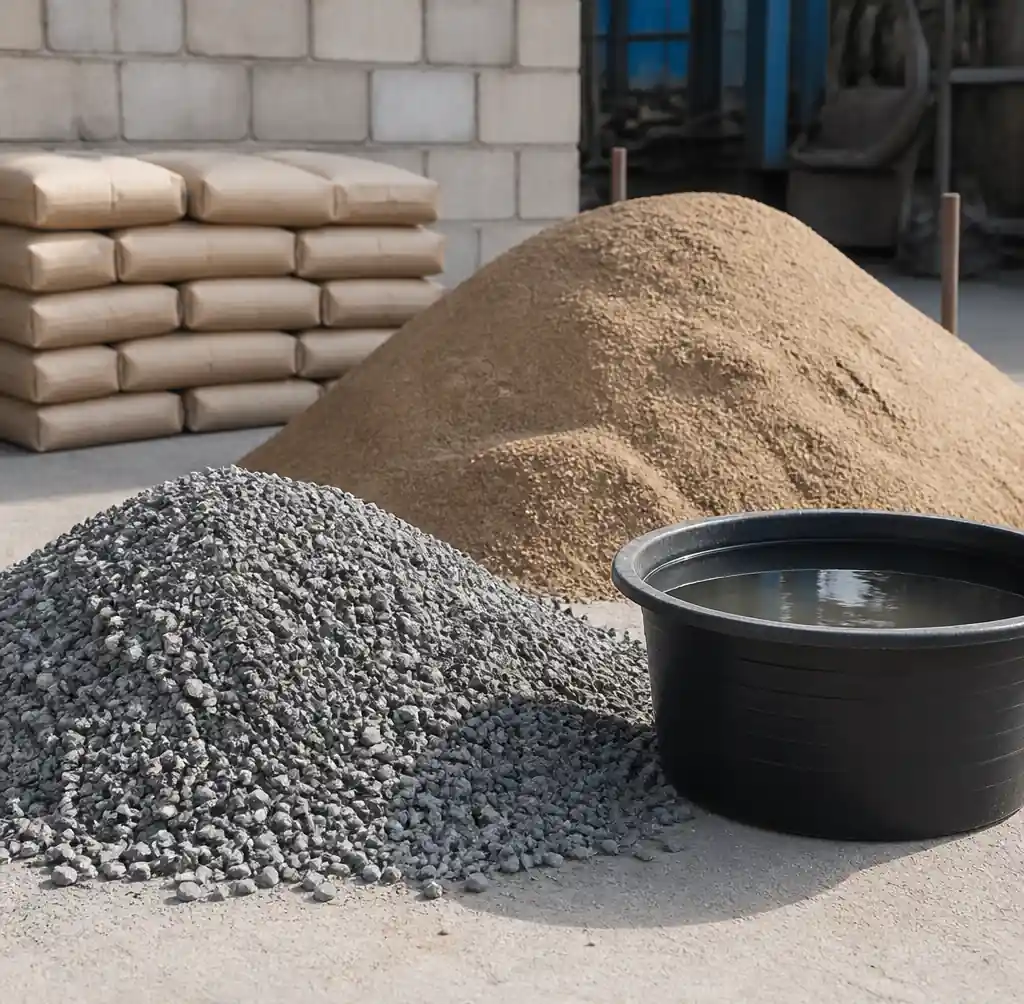
Block production requires four core materials: Portland cement, aggregates (gravel or crushed stone), sand, and water. Cement acts as the binding agent, aggregates provide bulk and strength, sand fills voids and improves workability, and water activates the hardening reaction.
Optional additives like plasticizers, accelerators, and colorants enhance performance but aren’t required for basic production. The ratio and quality of your core materials directly impact your block’s load-bearing capacity, freeze-thaw resistance, and market value.
Portland Cement: Selection and Quality Standards
Portland cement is the most critical ingredient. You need Type I (general purpose) or Type II (moderate sulfate resistance) conforming to ASTM C150/C150M standards. Type I works for most applications, while Type II is better for areas with sulfate-rich soil or groundwater.
Check for proper storage—no hardened lumps, no moisture exposure. Fresh cement should feel powdery and flow freely. Cement loses strength over time, so use material within 3 months of manufacture. For concrete block machine operations, cement represents 10-15% of total raw material cost but delivers essential binding power.
Aggregate Selection: Size, Grading, and Crushing Value
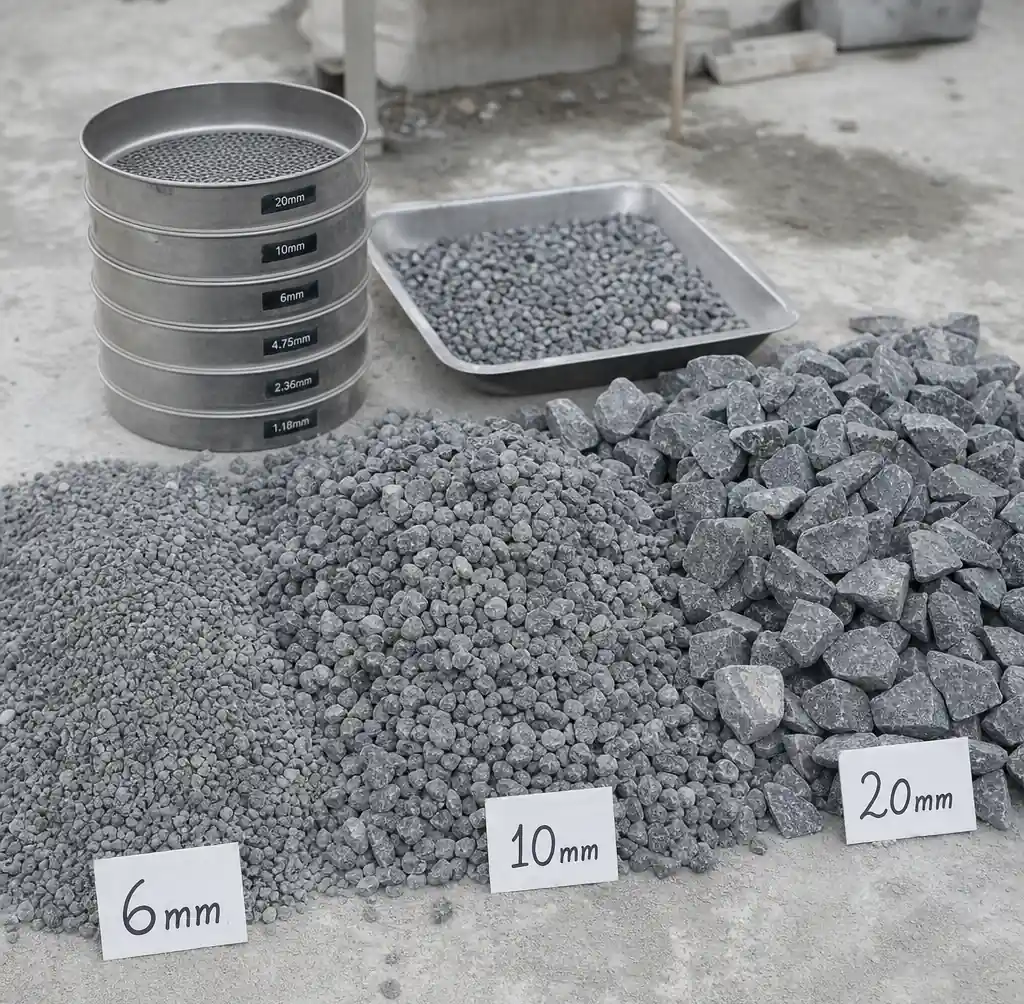
Aggregates make up 60-75% of block volume. You need coarse aggregates sized 6-20mm with clean, angular particles. Aggregate crushing value (ACV) should stay below 30% for load-bearing blocks—this measures stone resistance to crushing under pressure.
Quality aggregates absorb less than 2% water by weight. High absorption weakens blocks by stealing water from cement hydration. Test by weighing dry aggregate, soaking 24 hours, then reweighing.
| Aggregate Property | Specification | Test Standard |
|---|---|---|
| Size Range | 6mm – 20mm | ASTM C33 |
| Crushing Value | < 30% (load-bearing) | IS 2386 Part 4 |
| Water Absorption | < 2% by weight | ASTM C127 |
| Flakiness Index | < 15% | BS 812 |
| Elongation Index | < 15% | BS 812 |
Crushed stone works better than river gravel—angular particles interlock more effectively. Visit quarries, inspect stockpiles, and run sample batches before large orders.
Sand Specifications: Particle Size and Cleanliness
Sand fills spaces between cement and aggregate particles. You need clean, sharp sand with particles from 0.15-5mm, free from clay, silt, organic matter, and salts.
Simple field test: squeeze damp sand in your hand. It should form a ball that crumbles easily. If it stays sticky or leaves a clay film, the sand has too much silt. Sand should constitute 51-53% of total aggregate volume for optimal strength.
Avoid sea sand unless thoroughly washed—salt corrodes steel and causes efflorescence (white staining). River sand or manufactured sand are best options.
Cement-to-Aggregate Ratios for Different Block Types
Your mix ratio determines block strength, cost, and application. For semi-automatic block machines و الخطوط الآلية, these ratios deliver consistent results:
| Block Type | Mix Ratio (Cement:Sand:Aggregate) | Compressive Strength | Application |
|---|---|---|---|
| Load-Bearing | 1:2:3 or 1:2:4 | 5-8 MPa (725-1160 psi) | Structural walls, foundations |
| Non-Load-Bearing | 1:3:6 | 3-4 MPa (435-580 psi) | Partition walls, infill |
| Paver Blocks | 1:1.5:3 | 8-10 MPa (1160-1450 psi) | Driveways, walkways |
| Hollow Blocks | 1:2:4 | 4-6 MPa (580-870 psi) | Standard construction |
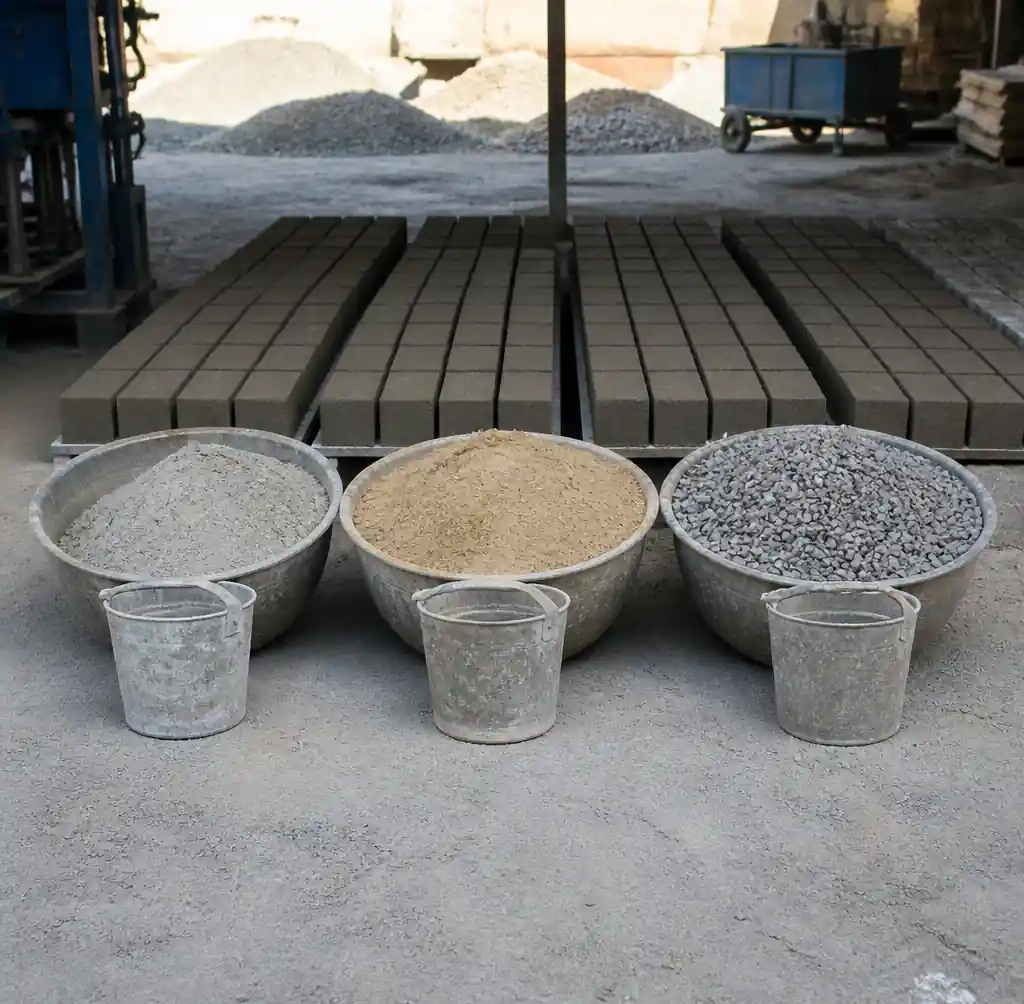
The 1:2:4 ratio balances strength with economy. For every 1 part cement, use 2 parts sand and 4 parts aggregate by volume. This produces blocks meeting ASTM C1372 specifications.
Water Quality and Water-Cement Ratio Control
Use potable water—if it’s safe to drink, it’s safe for blocks. Avoid water with high chloride (> 500 ppm), sulfates (> 400 ppm), or pH below 6 or above 8.
The water-cement ratio (w/c) controls final strength. Target 0.40-0.50. Lower ratios create stronger blocks but reduce workability. Higher ratios make mixing easier but produce weaker, porous blocks. Cement needs only 38% water by weight for complete hydration—excess water creates voids.
Measure carefully. A 50kg cement bag needs 20-25 liters for 0.40-0.50 ratio. Many operators add too much water for easier handling, then face cracking and strength failures.
Chemical Admixtures: When and How to Use Them
Admixtures modify concrete properties or accelerate curing:
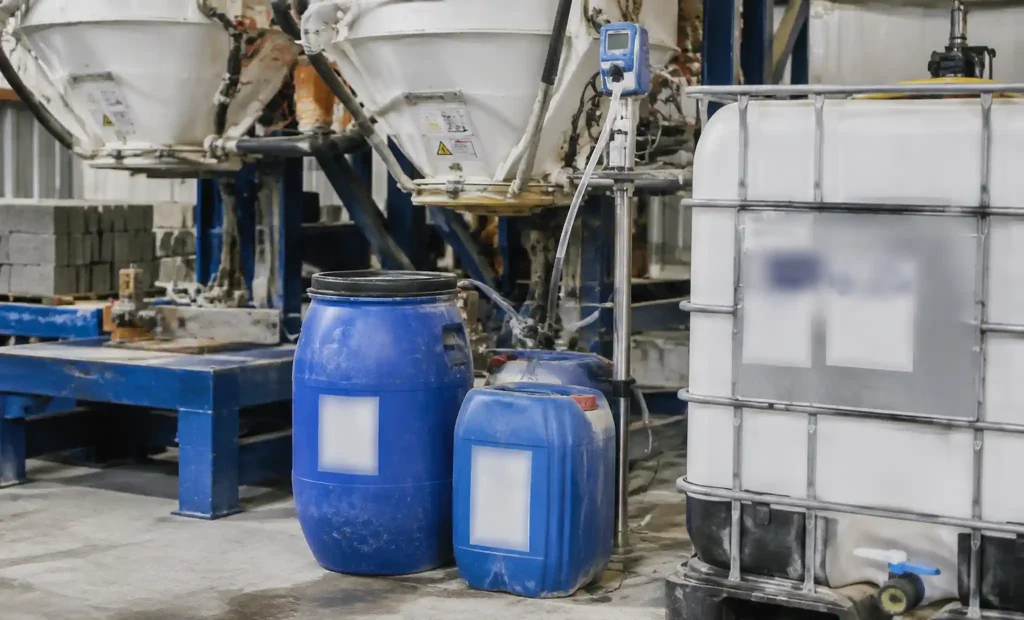
Plasticizers reduce water by 5-15% while maintaining workability. Less water means stronger, denser blocks. Dosage: 0.1-0.3% of cement weight. Water reducers can boost strength by 20-30%.
Accelerators speed setting time for faster demolding and higher throughput. Calcium chloride (1-2% of cement weight) is common but can corrode steel. Non-chloride accelerators are safer but costlier.
Superplasticizers allow 15-30% water reduction for high-strength blocks (> 8 MPa) or fluid mixes.
For manual block machines, focus on basic mix design first. For automated production, plasticizer-accelerator combinations boost output 20-30%.
Local Sourcing Strategies to Cut Material Costs
Transportation accounts for 30-40% of raw material costs. Local sourcing cuts this while improving supply reliability.
Cement: Contact plants directly versus distributors. Order in bulk (10-20 tons minimum) for factory pricing and 30-60 day terms.
Aggregates and Sand: Source from quarries within 50km. Transport costs rise steeply beyond this. Test samples from multiple sources, then negotiate contracts with your top two. Backup suppliers prevent production shutdowns.
Water: If municipal water is expensive, drill a borewell ($2,000-$5,000). Test water chemistry first.
Build supplier relationships. Regular buyers get priority during shortages, better terms, and advance price notices.
Quality Testing and Material Acceptance Procedures
Test every batch before production to catch problems early.
Cement Testing:
- Consistency: Mix cement with 25-35% water. Paste should have uniform workability
- Setting time: Initial set at 30-45 minutes, final set by 10 hours
- Strength: Mortar cubes (1:3 cement:sand) reach 16 MPa at 3 days, 22 MPa at 7 days
Aggregate Testing:
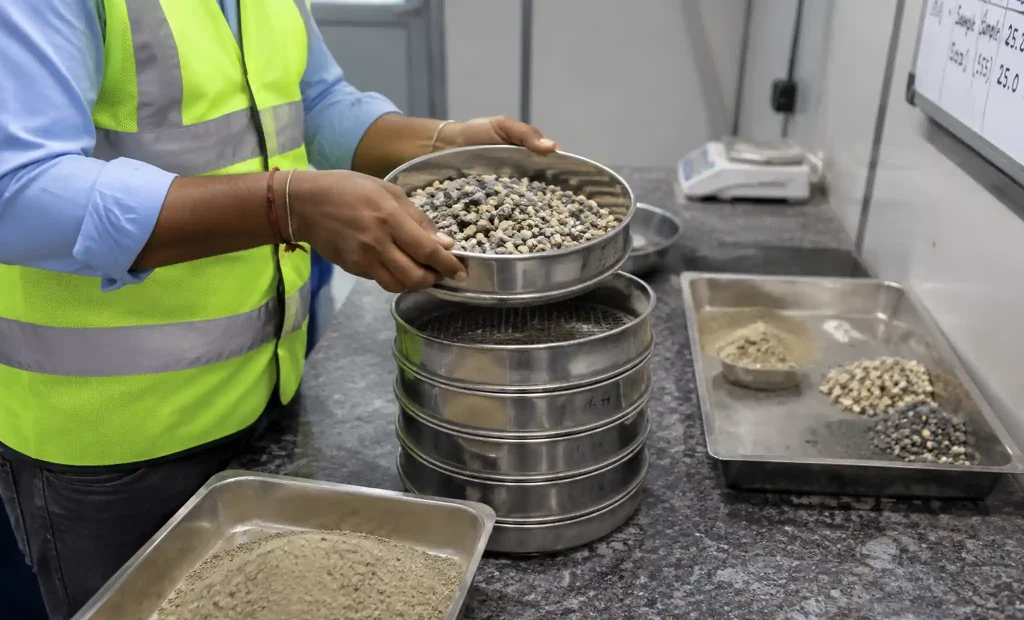
- Sieve analysis for grading
- Crushing value < 30% for load-bearing blocks
- Water absorption: Soak 24 hours, weigh, oven-dry at 110°C, reweigh. Absorption = (wet – dry weight) / dry weight × 100
Sand Testing:
- Silt content: Fill bottle 1/3 with sand, add water to 90%, shake, settle overnight. Silt layer should be < 5%
- Organic impurities: Mix with 3% sodium hydroxide. Dark brown/black indicates contamination—reject
| Material | Test | Frequency | Reject If |
|---|---|---|---|
| Cement | Consistency & Setting Time | Every delivery | Setting time outside 30min-10hr |
| Aggregate | Crushing Value | Monthly or new supplier | ACV > 30% |
| Sand | Silt Content | Weekly | Silt layer > 5% |
| Water | pH & Chlorides | Quarterly | pH < 6 or > 8, Cl⁻ > 500 ppm |
Keep test records. When customers question quality, your logs prove specification-grade inputs.
Storage and Handling Best Practices
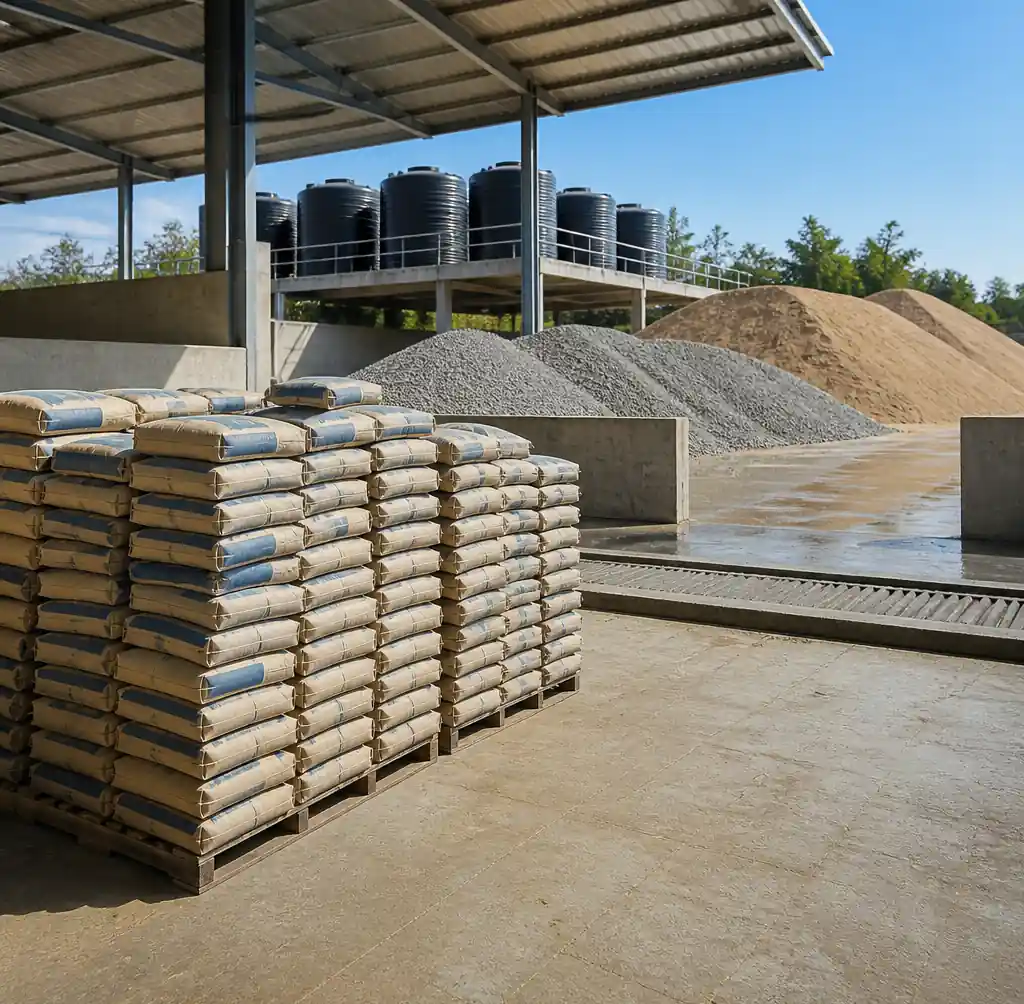
Cement: Store in dry, weatherproof shed on pallets 150-200mm above ground. Stack bags maximum 10 high. Use oldest stock first (FIFO). Cement over 3 months loses 10-20% strength. For diesel block plants in remote areas, plan 1-2 months’ storage.
Aggregates and Sand: Store on concrete or compacted ground with drainage. Separate sizes and types. Cover during heavy rain—excess moisture affects water calculations.
Water: Keep tanks clean and covered. If using borewell water, let settle 24 hours before use.
Admixtures: Store in original containers, cool and shaded. Most have 1-2 year shelf life.
Create separate zones for each material to prevent cross-contamination.
Cost Optimization Without Compromising Quality
Negotiate bulk discounts: Buying 50 tons at once costs 8-12% less per ton. Buy for 30-45 days of production.
Optimize mix design: Test batches with 5-10% less cement. Many operations drop from 360kg/m³ to 330kg/m³ without strength loss.
Use plasticizers: Costs $0.50-1.00 per cubic meter but allows 10-15% cement reduction, saving $3-5 per 100 blocks.
Quality equipment: Concrete mixers and batching machines eliminate waste. A $2,000 batching machine pays for itself in 6-8 months.
Never buy inferior cement, use unwashed sand, accept poor aggregates, or skip tests—these cost more in rejected blocks and reputation damage.
Common Material Problems and Solutions
Weak, crumbly blocks: Too much water, poor cement, high silt. Fix: Reduce w/c to 0.45, test cement, wash sand.
Cracks during curing: Too dry, rapid moisture loss. Fix: Increase water slightly, cover with plastic, avoid direct sun 24 hours.
Surface defects: Poor workability, insufficient vibration. Fix: Add plasticizer, increase vibration, use well-graded aggregates.
Color variations: Inconsistent cement, variable sand moisture. Fix: Single cement source, measure moisture, enforce 3-minute mixing.
Efflorescence: High salt in sand/water. Fix: Test and wash sand if chlorides > 500 ppm, reduce w/c ratio.
For آلات صب الخرسانة المتنقلة, establish material specs with suppliers since on-site testing is limited.
Material Requirements by Production Scale
| حجم الإنتاج | Daily Output | Material Sourcing Approach |
|---|---|---|
| Small (Startup) | 300-800 blocks | Buy from local dealers, test each batch, pay cash for discounts |
| Medium | 800-3,000 blocks | Direct quarry contracts, 30-day terms, monthly bulk cement orders |
| Large (Industrial) | 3,000+ blocks | Annual supply agreements, on-site testing lab, dedicated suppliers |
Small آلة قطع يدوية operations start with retail purchases while building volume. At 500+ blocks daily, transition to wholesale suppliers.
Medium semi-automatic operations should lock in quarterly contracts. Price volatility hurts margins—fixed contracts protect profitability.
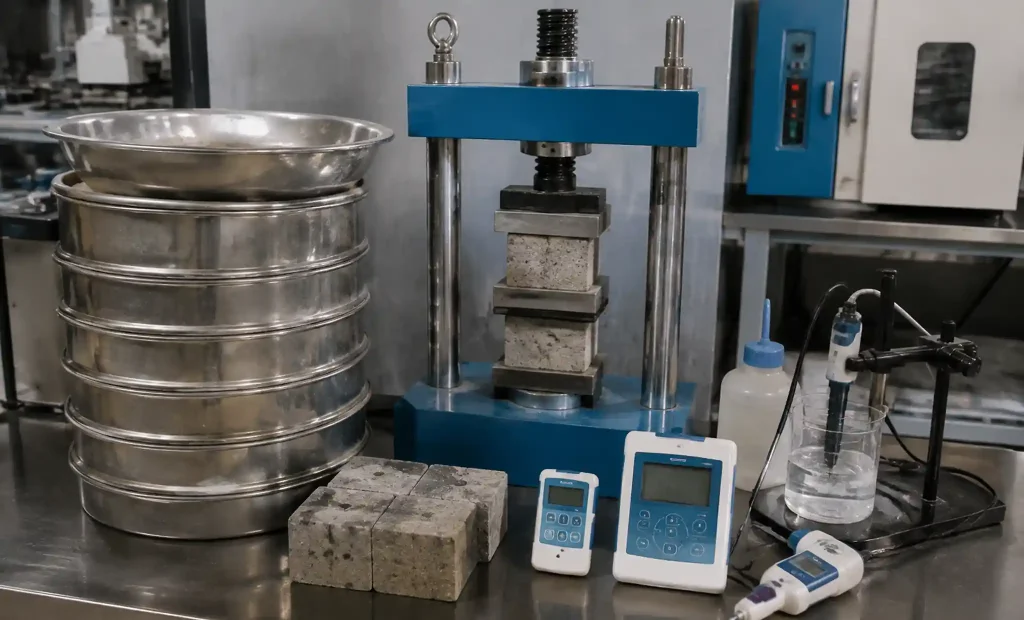
Large complete automatic lines need on-site testing: sieves, compression tester, moisture meters, pH kits ($10,000-15,000).
الأسئلة الشائعة
What’s the shelf life of bagged cement?
3 months maximum in dry storage. After 6 months, cement loses 25-40% strength.
Can I use recycled concrete as aggregate?
Yes, but crushing value and absorption will be higher. Works for non-load-bearing blocks. Limit to 30-50% of total aggregate.
How much do raw materials cost per 1,000 blocks?
For 400×200×200mm hollow blocks (1:2:4 mix): cement $45-60, aggregates $20-30, sand $15-20, water $2-5. Total: $82-115.
Is borewell water safe for block production?
Yes if tested. Check pH (6-8), chlorides (< 500 ppm), sulfates (< 400 ppm).
Do I need admixtures for basic production?
No. Focus on correct ratios, quality materials, and curing first.
How do I calculate material quantities?
Each 400×200×200mm block needs 0.01 m³ concrete. For 1,000 blocks (1:2:4 ratio): 350kg cement, 700kg sand, 1,400kg aggregate.
الخلاصة
Raw material quality determines business success. Use Portland cement meeting ASTM standards, aggregates with crushing values below 30%, sharp sand free from silt, and potable water at 0.40-0.50 cement ratio. Test every batch, source locally, and maintain quality standards.
Strategic optimization—plasticizers, direct contracts, bulk purchasing—cuts costs 15-20% without compromising strength. Raytone Block Machinery provides complete block making solutions with expert guidance on material selection. Our equipment works with locally-sourced materials worldwide, from manual operations إلى fully automatic plants producing 30,000+ blocks daily. Contact us for specifications matched to your production goals.