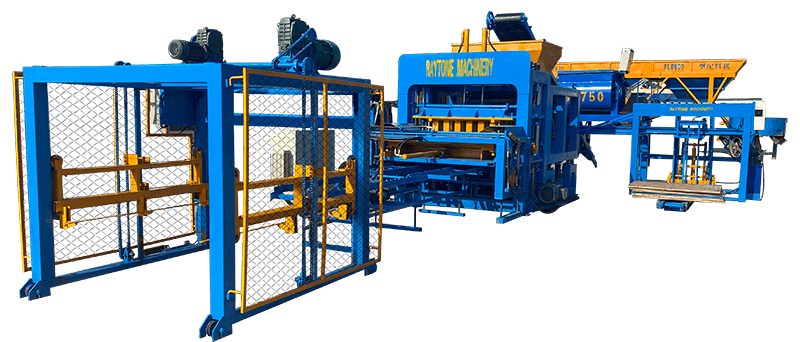
Mortar-free construction has gained significant traction in global markets, with interlocking block technology reducing construction time by 40-50% compared to traditional masonry methods. The interlocking block machine market is projected to grow at 8.2% annually through 2030, driven by demand for faster, more cost-effective construction solutions in emerging economies.
If you want to capitalize on this growing construction trend, then you will need to understand interlocking block machines, their production capabilities, market applications, and profitability potential. This guide covers the technology, benefits, specifications, and business considerations for interlocking block manufacturing.
What Are Interlocking Blocks?
Interlocking blocks are specialized concrete masonry units featuring built-in connectors—tongues and grooves—that allow them to fit together without mortar. The mechanical interlock system creates a self-aligning, structurally stable wall assembly that eliminates or significantly reduces the need for binding agents between courses.
These blocks work through geometric locking mechanisms that distribute loads evenly across multiple contact points. When stacked, the protruding tongues fit precisely into corresponding grooves, creating friction and compression that holds the structure together. This design improves shear resistance by up to 30% compared to conventional mortared blocks while allowing faster assembly.
You can use interlocking blocks for residential walls, boundary fencing, retaining structures, and low-cost housing projects. Their precision-molded design ensures consistent dimensional accuracy, typically within ±2mm tolerances, which contributes to structural stability and ease of construction.
How Interlocking Block Machines Work
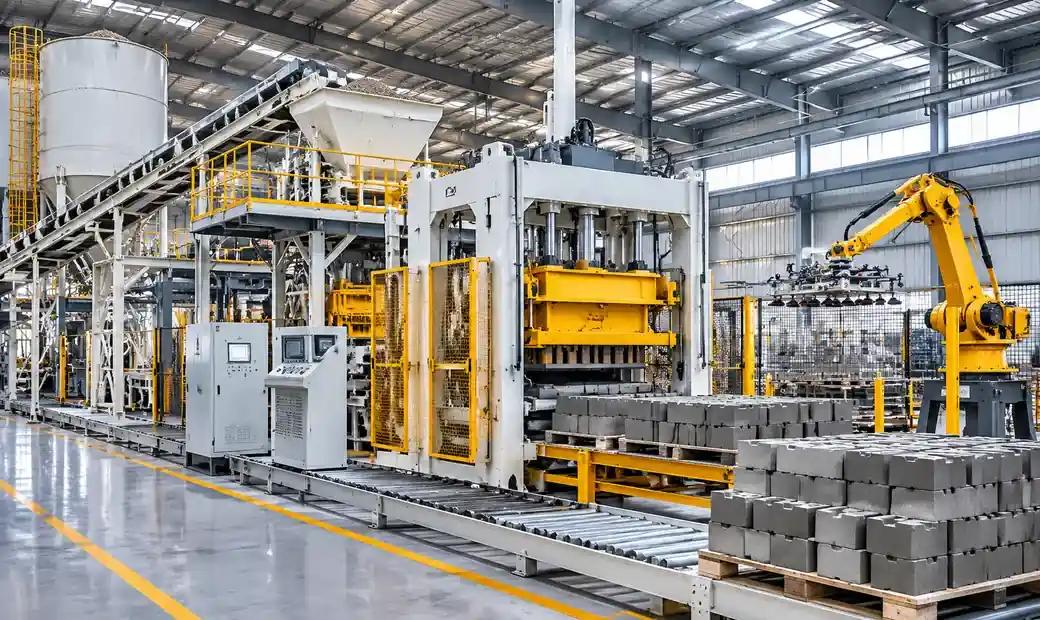
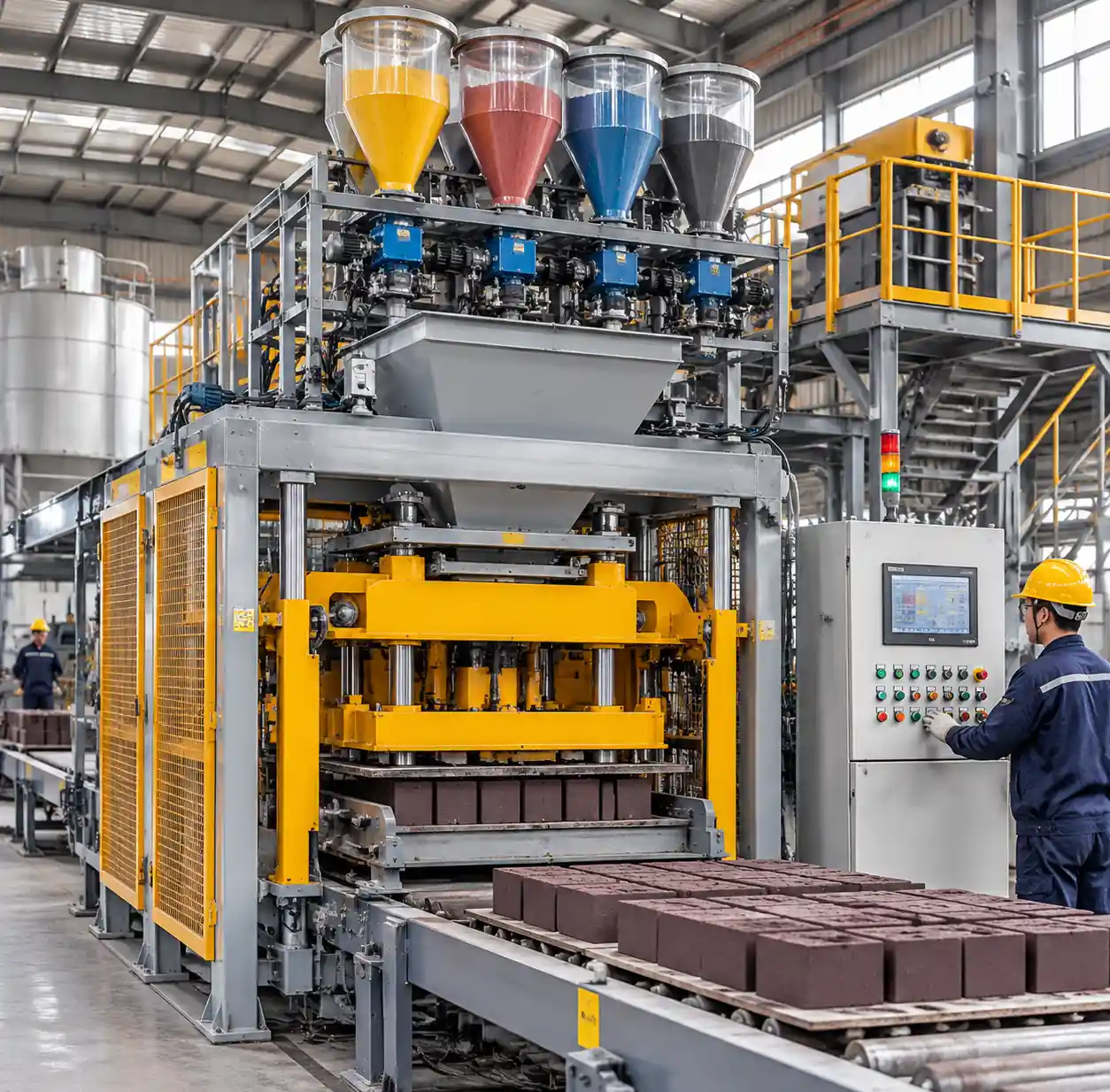
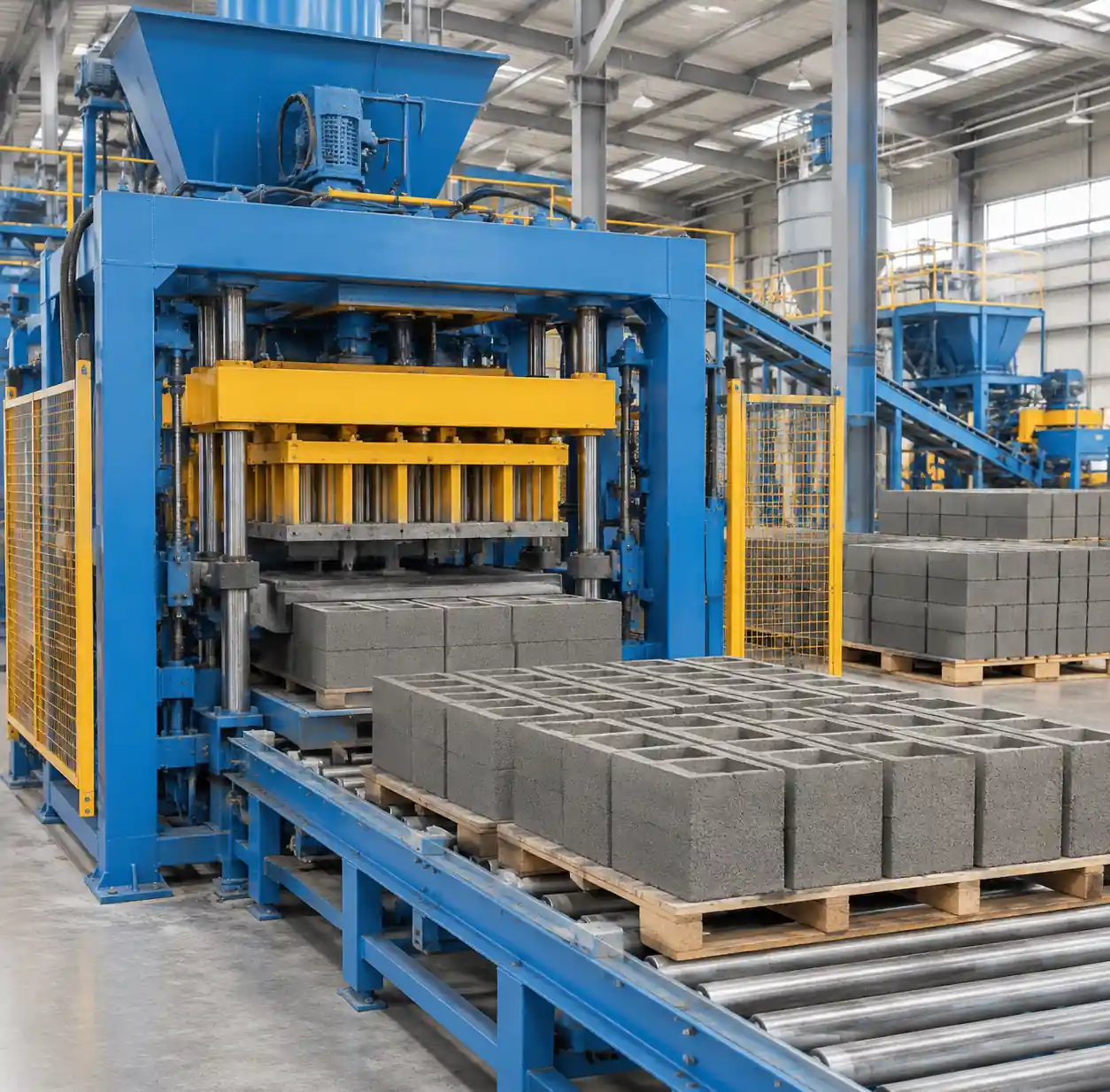
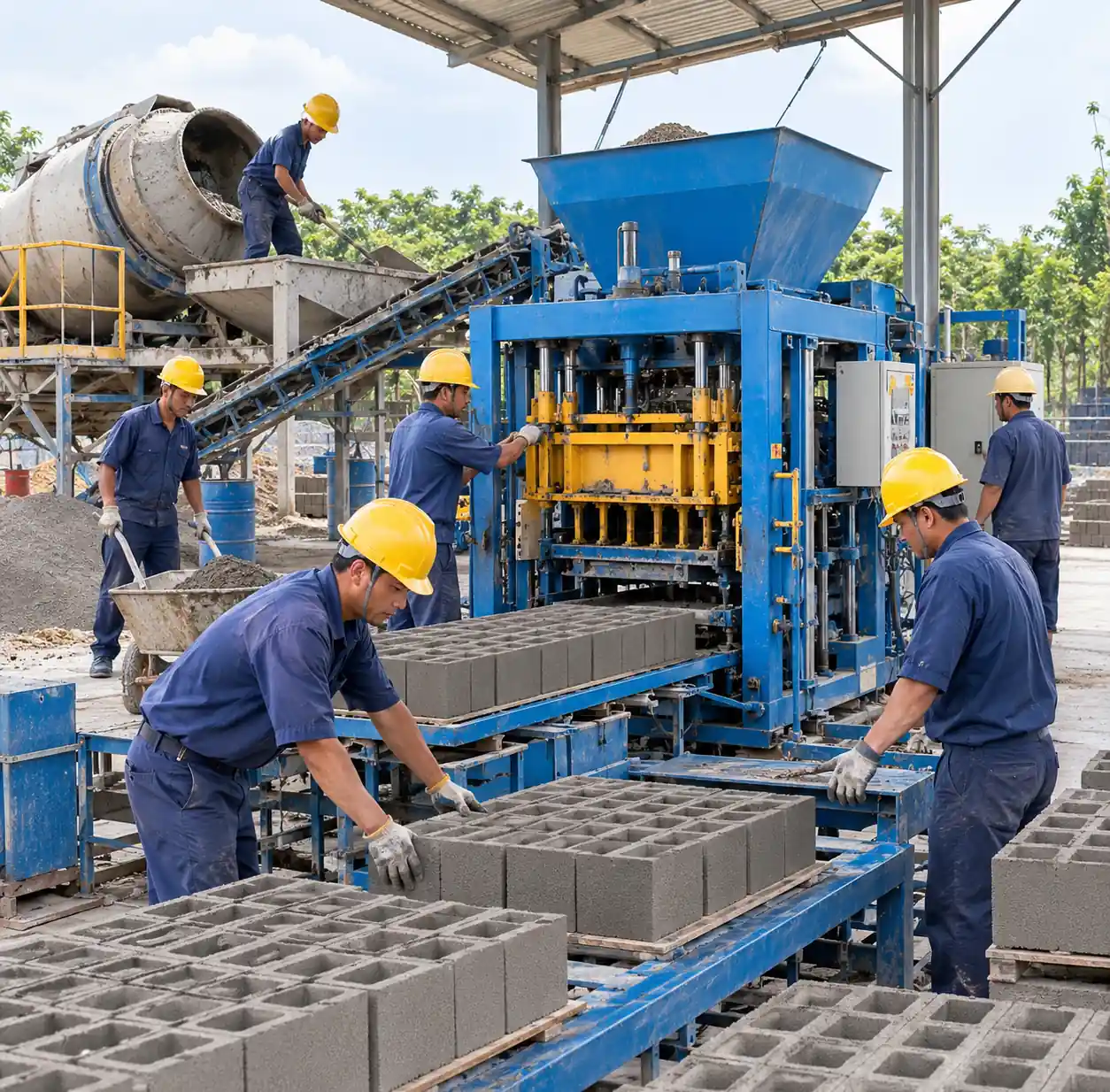
An interlocking block machine produces these specialized blocks through hydraulic pressure and vibration. The production cycle begins when the raw material mix—cement, sand, aggregate, and water—is fed into the mold cavity. The machine then applies simultaneous pressure (25-40 MPa) and high-frequency vibration (50-60 Hz) to compact the mixture and eliminate air pockets.
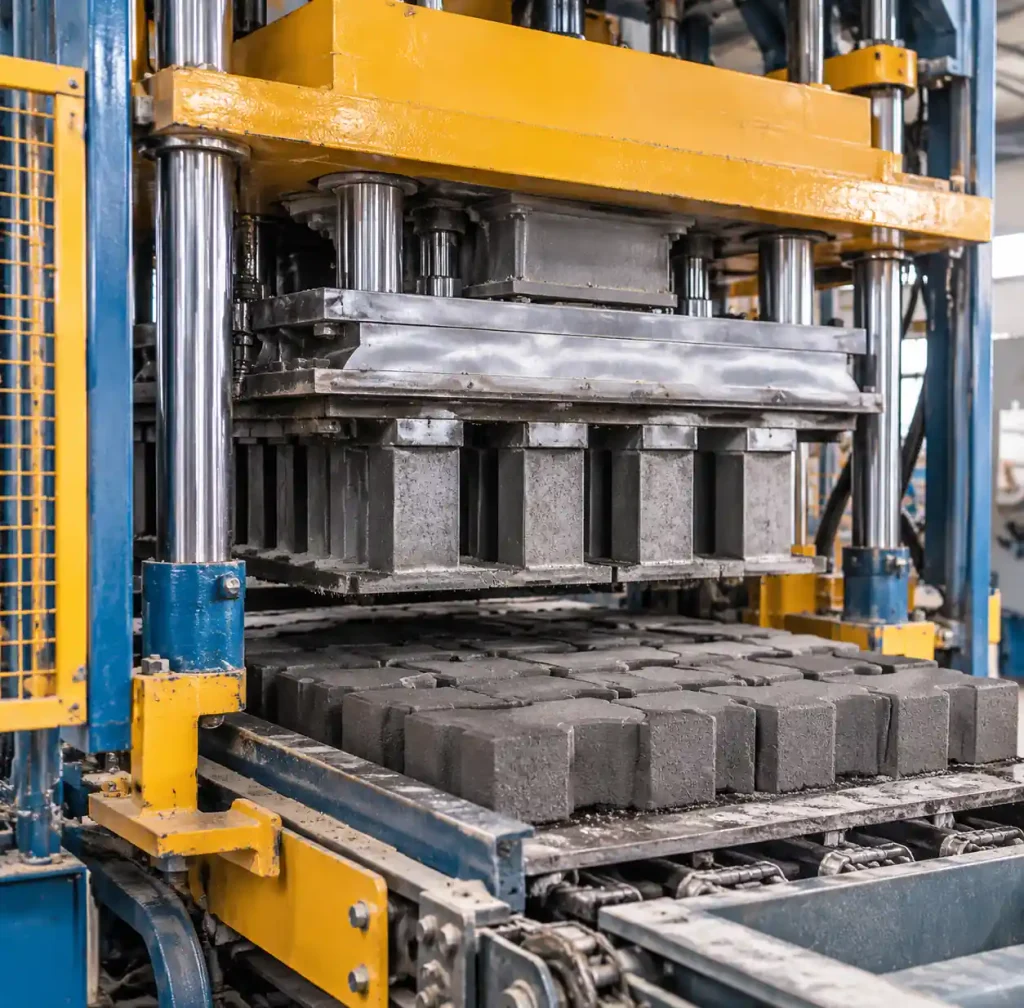
Production capacity varies based on machine type. Manual models produce 400-800 blocks per 8-hour shift. الآلات شبه الأوتوماتيكية achieve 1,200-2,400 blocks per shift. Fully automatic systems can reach 4,000-8,000 blocks daily.
Key Benefits of Interlocking Block Technology
Faster Construction Speed
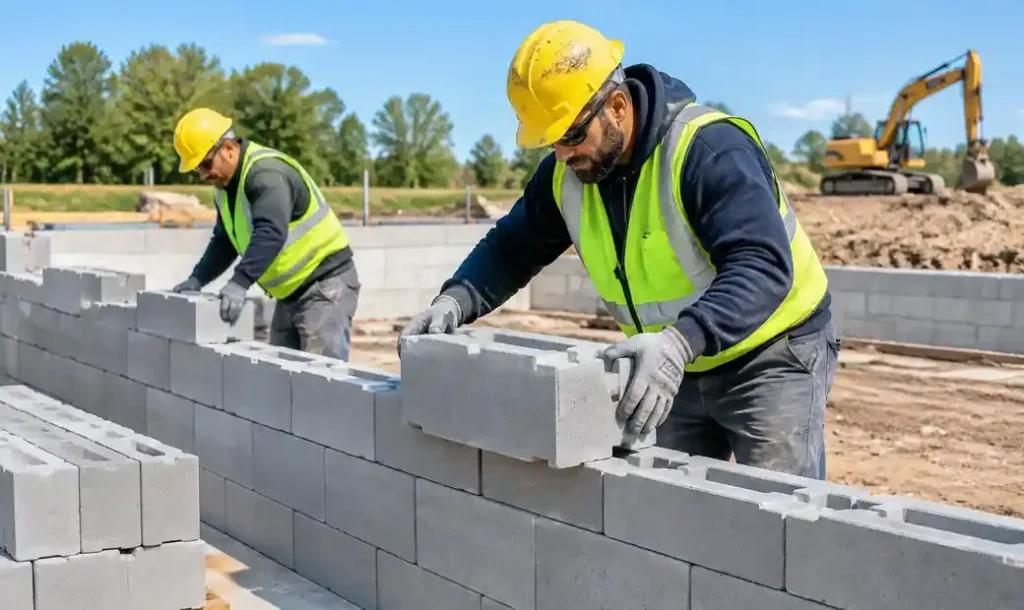
Interlocking blocks eliminate mortar mixing, application, and curing time. Construction crews can lay 40-60 square meters of wall per day, compared to 20-30 square meters with conventional blocks. This 50-100% speed advantage translates directly into reduced labor costs.
The self-aligning feature means walls go up straighter with less skilled labor required. Projects in affordable housing and emergency shelter construction particularly benefit from this speed advantage.
Reduced Material and Labor Costs
Eliminating mortar cuts material costs by 15-25% depending on local cement prices. A standard project requiring 10,000 blocks saves approximately $800-1,500 in mortar materials. Labor requirements drop by 30-40% because the laying process is simpler and faster.
The dry-stacking method allows immediate disassembly and reuse of blocks if design changes are needed. This flexibility adds value in disaster relief, mining camps, and temporary structures.
Enhanced Structural Performance
| مؤشر الأداء | Interlocking Blocks | Conventional Mortared Blocks |
|---|---|---|
| Compressive Strength | 8-12 MPa | 7-10 MPa |
| Shear Resistance | 30% higher | Baseline |
| Construction Speed | 40-60 m²/day | 20-30 m²/day |
| Mortar Savings | 100% (dry-stack) | غير متوفر |
| Labor Skill Required | Basic-Intermediate | Intermediate-Advanced |
| Disassembly/Reuse | Possible | Not practical |
The mechanical interlock distributes loads across multiple contact surfaces rather than relying entirely on mortar bond strength. Testing per ASTM C90 standards shows interlocking block walls achieve comparable or superior compressive strength to mortared walls when properly constructed.
Environmental Sustainability
Interlocking block production requires 10-15% less cement than conventional blocks because the mechanical interlock compensates for reduced binding materials. Lower cement content translates to reduced CO₂ emissions—approximately 0.12 tons of CO₂ saved per 1,000 blocks produced compared to standard block-plus-mortar construction.
The blocks can incorporate recycled materials including crushed concrete aggregate, fly ash, and quarry dust without compromising structural performance. Some manufacturers successfully incorporate up to 30% recycled content, supporting circular economy principles in construction.
Interlocking Block Machine Types and Specifications
Manual Interlocking Block Machines
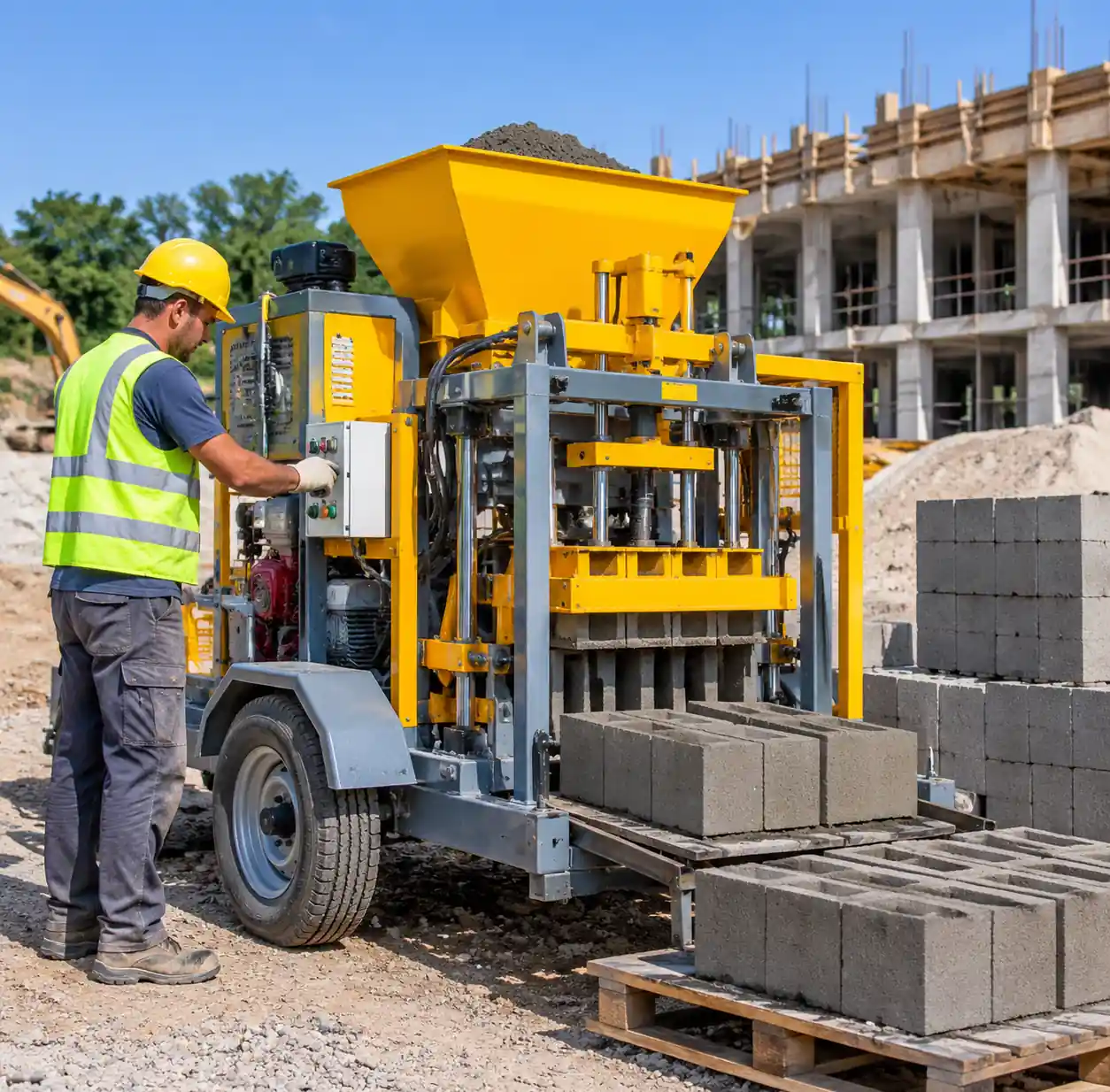
Manual machines suit small-scale producers and rural areas with limited power infrastructure. These machines require 2-4 operators and produce 400-800 blocks per 8-hour shift. Investment costs range from $2,000-5,000 depending on capacity and mold configurations.
Semi-Automatic Machines
Semi-automatic interlocking block machines balance production capacity with moderate investment. Production capacity reaches 1,200-2,400 blocks per 8-hour shift with a crew of 2-3 workers.
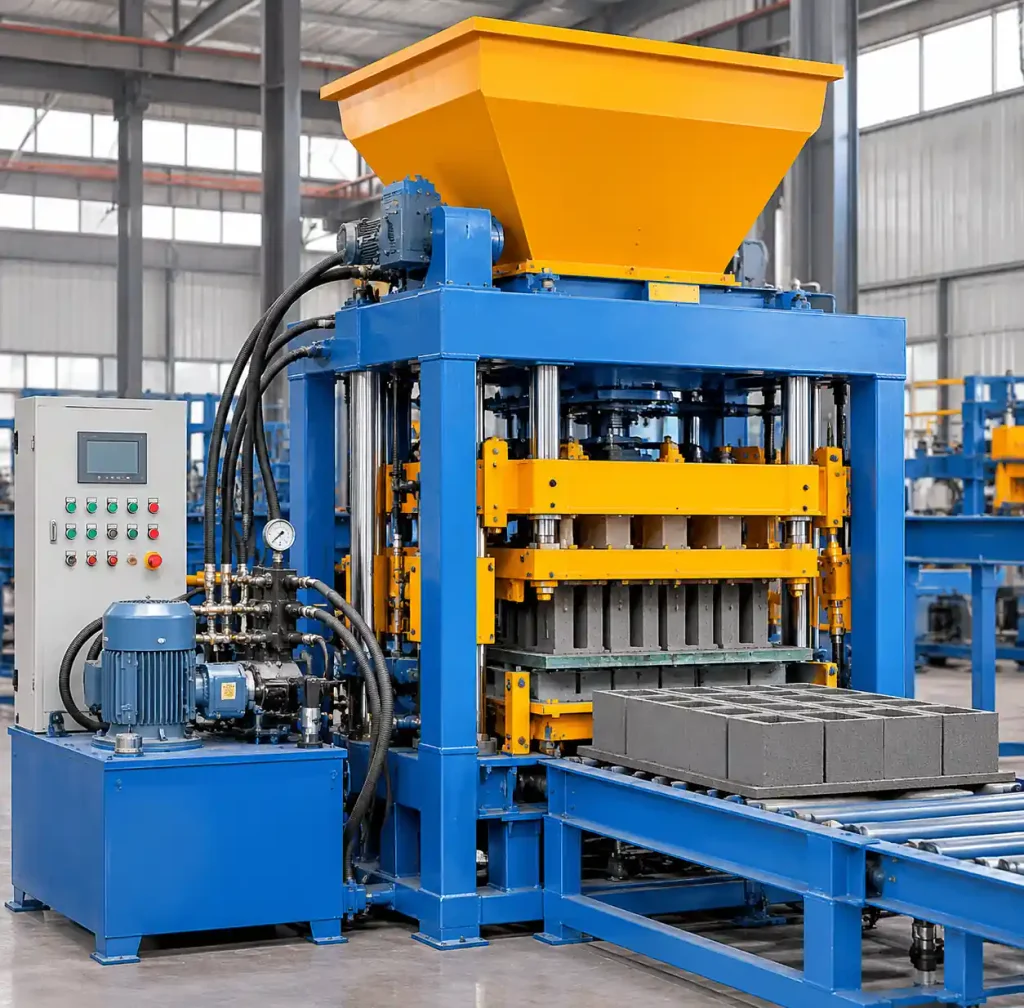
الـ QT4-28 semi-automatic model offers versatile production with quick mold changes between block types. These machines typically consume 15-22 kW of electrical power and require a production area of 150-200 square meters.
Fully Automatic Production Lines
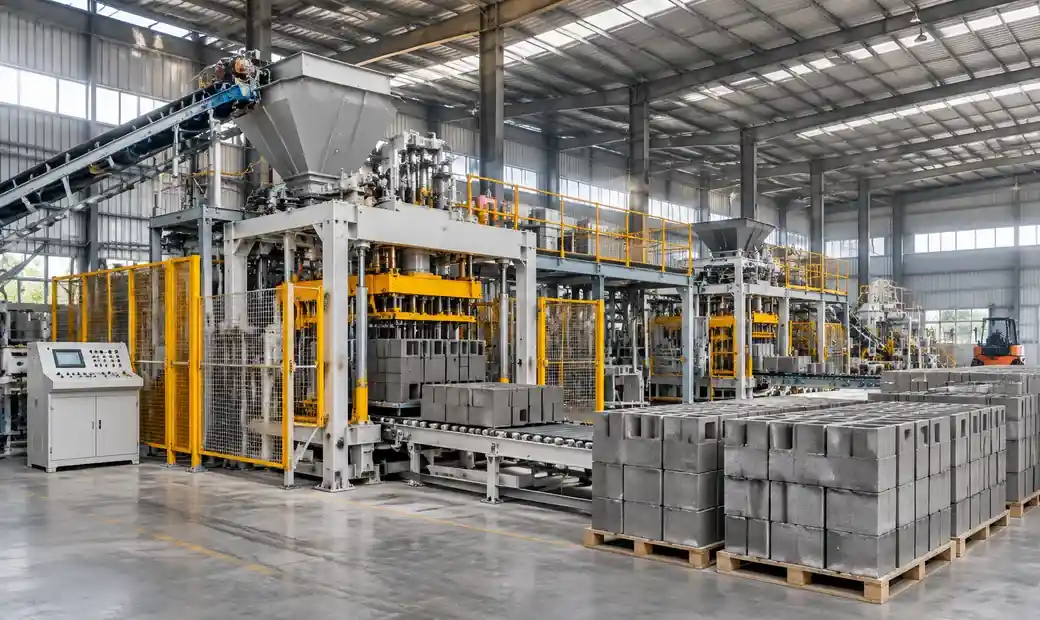
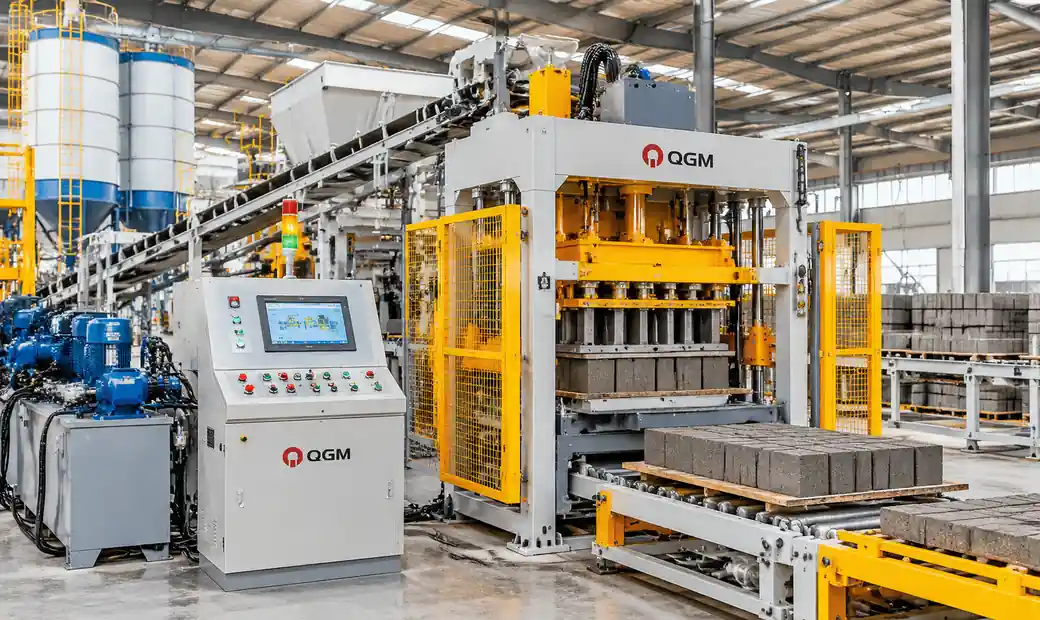
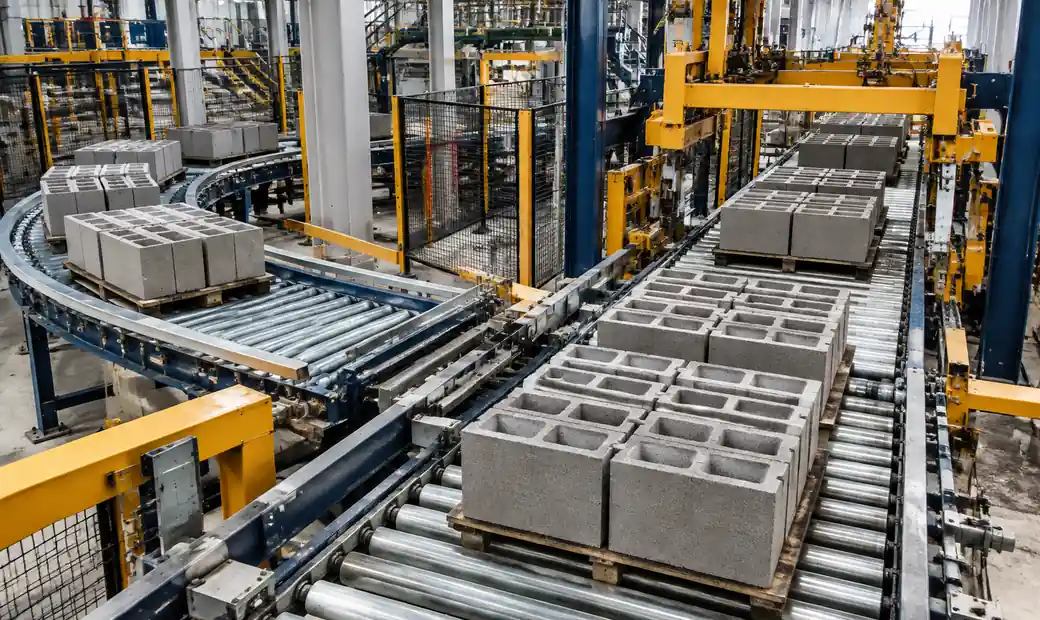
Fully automatic systems integrate material batching, mixing, pressing, and pallet handling. Daily output ranges from 4,000-12,000 blocks with 2-4 operators for monitoring and quality control.
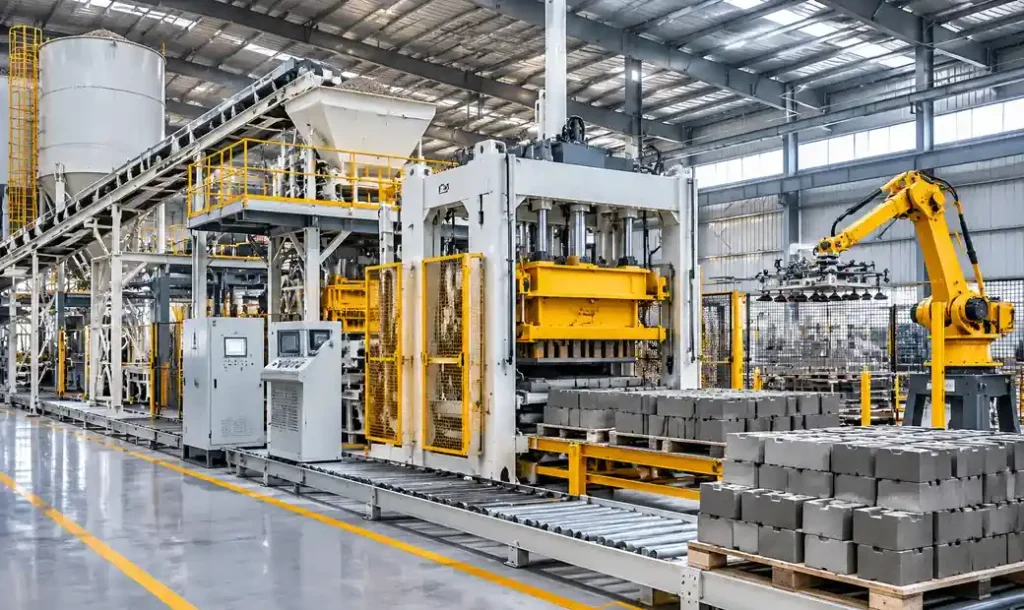
Investment costs range from $50,000-200,000 for complete turnkey installations including mixers, conveyors, and curing systems.
Applications and Market Opportunities
البناء السكني
Interlocking blocks serve the growing affordable housing sector in Africa, Asia, and Latin America. Government housing programs in Kenya, Nigeria, Ghana, and India increasingly specify interlocking block technology to accelerate low-income housing construction. Load-bearing walls can support structures up to 3-4 stories when properly engineered with reinforcement columns.
Commercial and Industrial Buildings
Warehouses, workshops, and agricultural buildings benefit from interlocking block construction. The dry-stack method allows rapid enclosure—a 500 square meter warehouse can be enclosed in 2-3 weeks versus 4-6 weeks with conventional construction.
Infrastructure and Public Works
| Application Type | Key Advantages | Typical Block Size |
|---|---|---|
| Boundary Walls | Fast installation, reduced theft risk | 400×200×200mm |
| Retaining Walls | Good shear resistance, drainage | 400×200×200mm |
| Road Barriers | Quick deployment, reusable | 500×250×200mm |
| School Construction | Low cost, community participation | 400×200×150mm |
| Emergency Shelters | Rapid assembly, no skilled labor needed | 400×200×150mm |
Government infrastructure projects increasingly adopt interlocking blocks for boundary fencing, road separation barriers, and retaining structures. The technology proves especially valuable in remote areas where skilled masonry labor is scarce or expensive.
Machine Selection Considerations
Calculate your target market demand before selecting machine capacity. A small contractor may need 800-1,200 blocks daily, making a manual or semi-automatic machine appropriate. Urban contractors supplying multiple projects require 3,000-6,000 blocks daily, necessitating fully automatic systems.
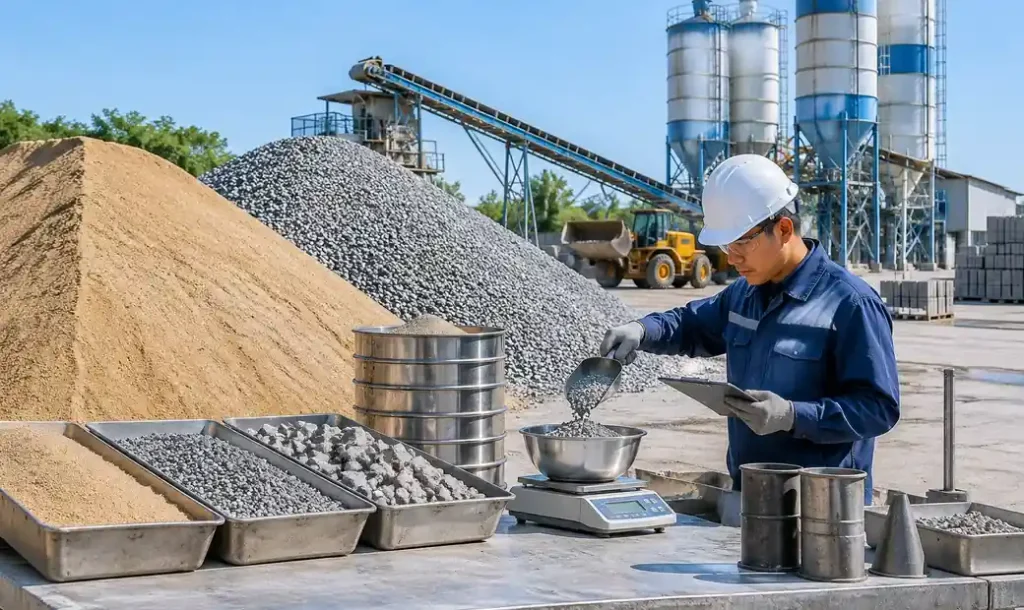
Interlocking block production requires consistent material quality. The ideal sand passes through a 4.75mm sieve with less than 10% passing 0.15mm. Clay content should not exceed 3%.
Manual machines require no electrical power. Semi-automatic machines consume 15-22 kW and require stable 380V three-phase power. Fully automatic lines demand 40-80 kW total.
Production Economics and Profitability
Cost Analysis Per 1,000 Blocks
Production costs vary by location, material prices, and production scale. Based on 2026 market data from East Africa and South Asia:
Raw Materials: Cement ($45), Sand ($9), Aggregates ($6), Water/additives ($2) = $62 total
Operating Costs: Electrical power ($7), Labor ($15), Equipment depreciation ($8), Maintenance ($3) = $33 total
Total Production Cost: $95 per 1,000 blocks
Market selling prices range from $120-160 per 1,000 blocks depending on local demand and competition. This yields gross margins of 25-40% before overhead expenses.
Return on Investment Timeline
A semi-automatic interlocking block machine producing 2,000 blocks daily can generate $50-80 daily gross profit at typical market margins. With 250 production days annually, annual gross profit reaches $12,500-20,000. Against a $15,000-25,000 machine investment, payback periods of 1.5-2.5 years are achievable.
Fully automatic systems with $80,000-120,000 investments require higher production volumes. Daily output of 6,000-8,000 blocks generates annual gross profits of $40,000-65,000, yielding payback periods of 2-3 years.
Quality Control and Standards
Interlocking blocks must meet dimensional tolerances within ±2mm to ensure proper fitting. Regular calibration of molds and monitoring of material moisture content (optimal range 6-8%) maintains consistent dimensions.
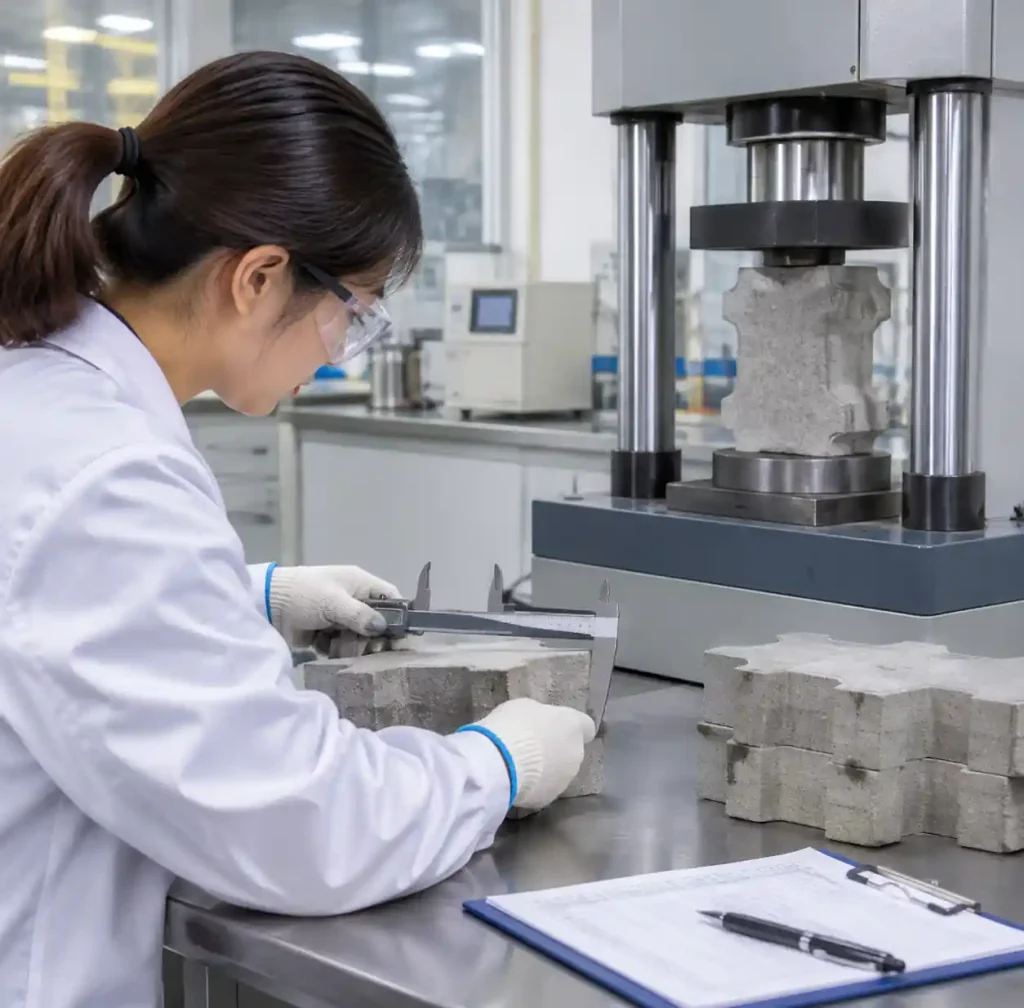
Compressive strength testing per ASTM C90 ensures blocks meet minimum requirements. For load-bearing applications, interlocking blocks should achieve 7-10 MPa compressive strength at 28 days curing.
Raytone Block Machinery Solutions
If you need reliable interlocking block machines for your production business, Raytone Block Machinery offers a complete range from manual to fully automatic systems. Our machines feature precision-engineered molds designed for long service life and consistent block quality, with hydraulic systems rated for 1 million+ cycles. Our engineering team provides technical support for raw material optimization, mix design development, and quality control implementation.
الأسئلة الشائعة
What is the minimum investment to start interlocking block production?
You can start with a manual interlocking block machine for $3,000-5,000 plus approximately $2,000-3,000 for molds, tools, and initial raw materials. Total startup investment including workspace rental and working capital typically ranges from $8,000-12,000 for small-scale operations.
How many workers are needed to operate an interlocking block machine?
Manual machines require 3-4 workers per shift. Semi-automatic machines need 2-3 workers for material handling and block removal. Fully automatic production lines operate with 2-4 workers primarily for monitoring, material batching, and quality control functions.
What is the curing time for interlocking blocks?
Interlocking blocks require 7-day minimum curing before use in non-load-bearing applications and 14-21 days for load-bearing construction. Initial setting occurs within 24 hours, allowing careful stacking and transport. Maintain moisture during curing by water spraying or covering to achieve optimal strength development.
Can interlocking blocks be used for multi-story buildings?
Yes, when properly engineered. Interlocking blocks work for load-bearing walls in structures up to 3-4 stories with appropriate reinforcement columns and ring beams at floor levels. For taller buildings, use interlocking blocks as infill with a structural frame system bearing the primary loads.
What is the typical lifespan of interlocking block machines?
With proper maintenance, manual machines last 8-12 years, semi-automatic machines 10-15 years, and fully automatic systems 15-20 years. The hydraulic components and molds are the primary wear items requiring periodic replacement. Annual maintenance costs typically run 3-5% of equipment value.
Are interlocking blocks suitable for earthquake-prone areas?
Interlocking blocks can be used in seismic zones when construction follows proper engineering design. The mechanical interlock provides good shear resistance, but structures require vertical reinforcement columns and ring beams per local building codes. Some regions mandate mortar joints in seismic applications despite the interlocking design.
الخلاصة
Interlocking block technology addresses fundamental construction challenges—high costs, slow building speeds, and skilled labor shortages—making it a compelling solution for residential, commercial, and infrastructure projects. The machines enable profitable businesses in growing construction markets where demand for affordable, rapid building methods continues expanding.
Success depends on selecting appropriate equipment capacity for your target market, securing consistent raw material supplies, and building relationships with contractors who value the speed and cost advantages this technology delivers.
اتصل بنا اليوم for detailed specifications, production demonstrations, and competitive pricing on Raytone interlocking block machines and complete turnkey production solutions.