





Concrete block manufacturing hinges on a fundamental choice: wet mix or dry mix technology. This decision affects production speed, block quality, curing requirements, and ultimately your profit margins. Understanding the technical differences between these systems separates successful block manufacturers from those struggling with quality issues and operational inefficiencies.
What Are Wet Mix and Dry Mix Block Machines?
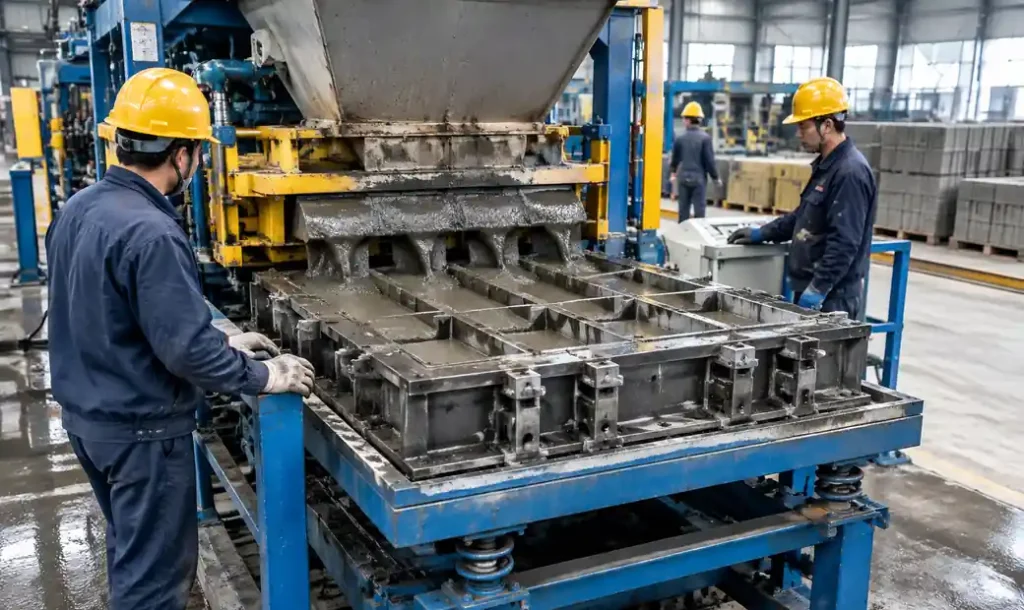
Wet mix block machines use concrete with higher water content (water-cement ratio 0.50-0.65), creating a more fluid, workable mix similar to poured concrete. The material flows easily into molds and requires less compaction force. Blocks must cure 18-24 hours before demolding and need extended moisture curing.
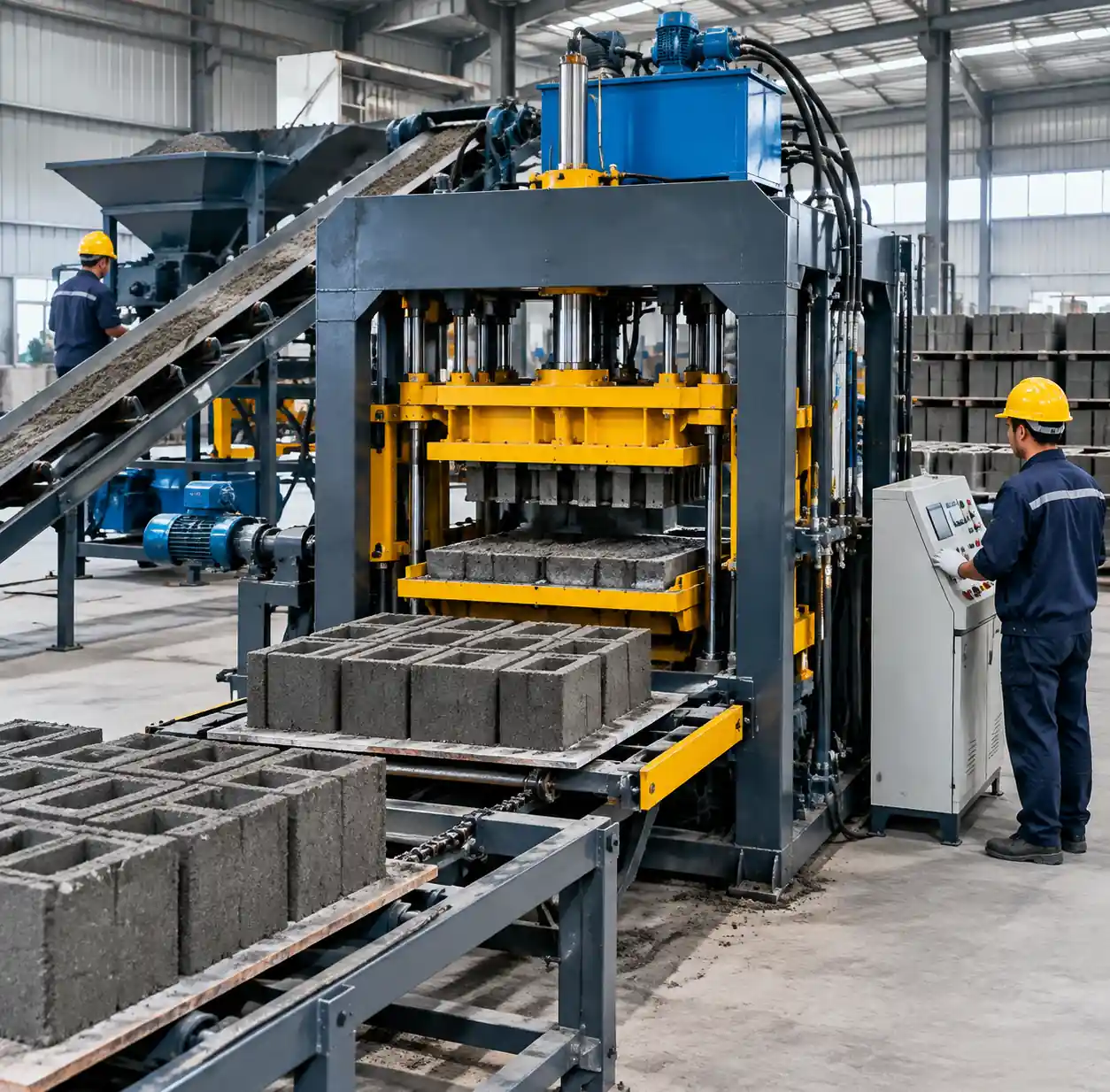
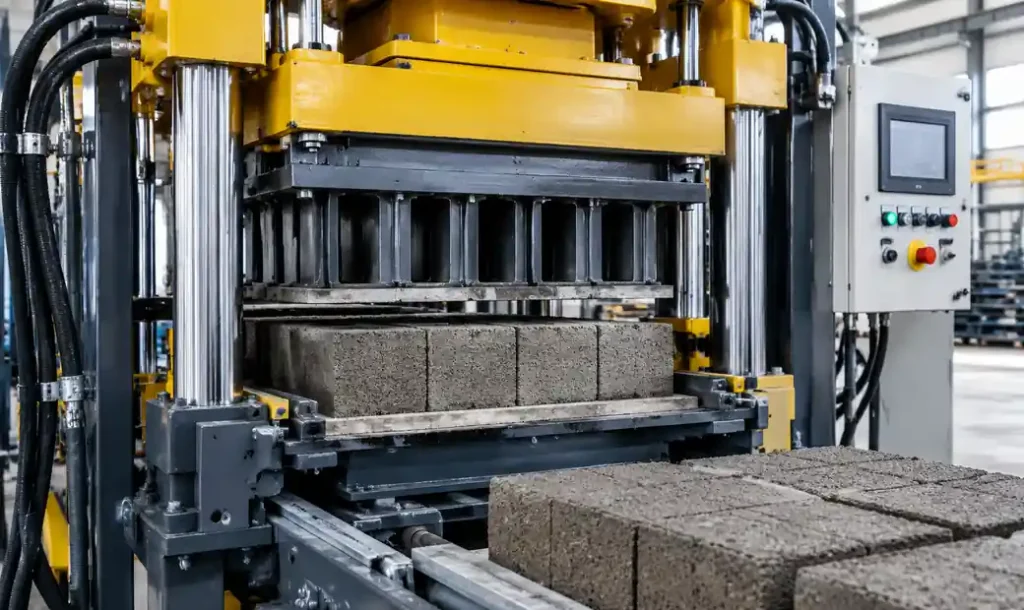
Dry mix block machines operate with low-slump concrete (water-cement ratio 0.35-0.45), producing a stiff, nearly dry consistency. The mix requires high hydraulic pressure (160-250 bar) and vibration to achieve proper compaction. Blocks demold immediately after pressing and can be handled within minutes.
This fundamental difference in water content creates cascading effects on equipment design, production workflow, energy consumption, block properties, and market positioning. The right choice depends on your target products, production scale, climate conditions, and available capital.
Core Technology Differences
Mixing and Material Preparation
Wet mix systems require conventional concrete mixers delivering ready-to-pour consistency. A JS500 or JS750 mixer produces 15-25 cubic meters per hour, supplying material for continuous production. The fluid mix distributes evenly in molds with minimal mechanical force, relying primarily on vibration and gravity.
Dry mix technology demands intensive mixing to distribute minimal water throughout the aggregate-cement blend. High-intensity pan mixers or planetary mixers achieve uniform moisture distribution in 90-180 seconds versus 60-90 seconds for wet mixes. Inconsistent mixing creates weak spots in finished blocks—the most common quality failure in dry mix operations.
Compaction Methods
Wet mix machines apply primarily vibration through motors ranging from 1.5-5 kW depending on mold size. Vibration frequencies of 50-70 Hz for 5-15 seconds eliminate air pockets and ensure material settles into mold cavities. Some systems add light pressure (20-50 bar) to accelerate settling and improve surface finish.
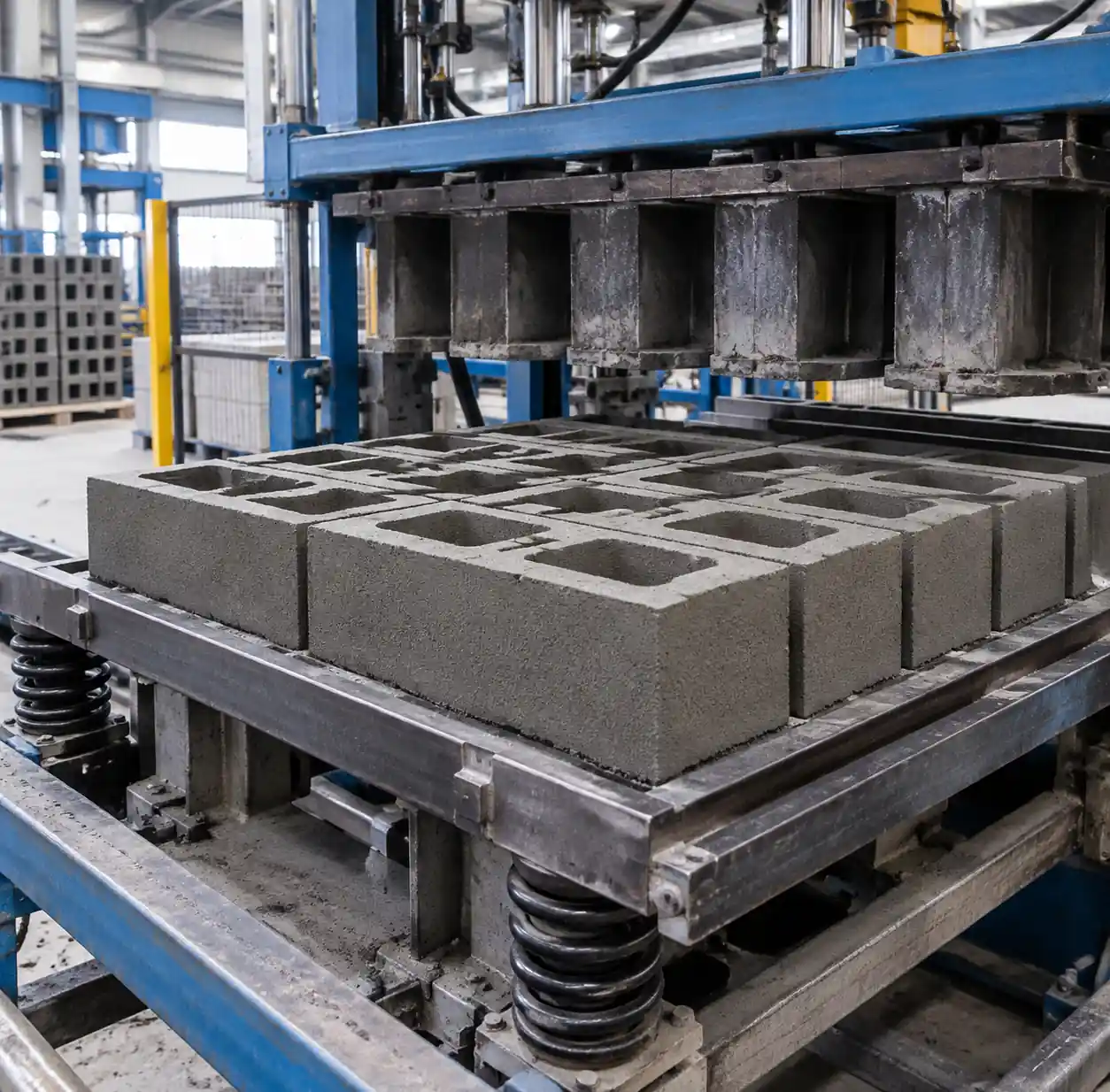
Dry mix machines combine hydraulic pressure and vibration. Hydraulic systems generate 200-600 tons of force compacting the near-dry material into dense blocks. Vibration assists material flow into corners and cavities during compression. This dual-action compaction achieves densities of 2,100-2,300 kg/m³—essential for structural applications.
Wet Mix vs Dry Mix: Technology Comparison
| Technology Aspect | Wet Mix Block Machines | Dry Mix Block Machines |
|---|---|---|
| Water-Cement Ratio | 0.50-0.65 (fluid consistency) | 0.35-0.45 (stiff, near-dry) |
| Compaction Force | 20-50 bar with vibration | 160-250 bar hydraulic + vibration |
| Demolding Time | 18-24 hours (molds stay occupied) | Immediate (15-30 seconds) |
| Mold Requirements | 300-500 molds for continuous production | 20-40 molds (rapid turnover) |
| Initial Curing | 7-14 days moisture curing mandatory | 24-48 hours ambient curing sufficient |
| Production Cycle | 8-12 blocks per mold per day | 400-800 blocks per mold per day |
| Block Density | 1,700-1,900 kg/m³ | 2,100-2,300 kg/m³ |
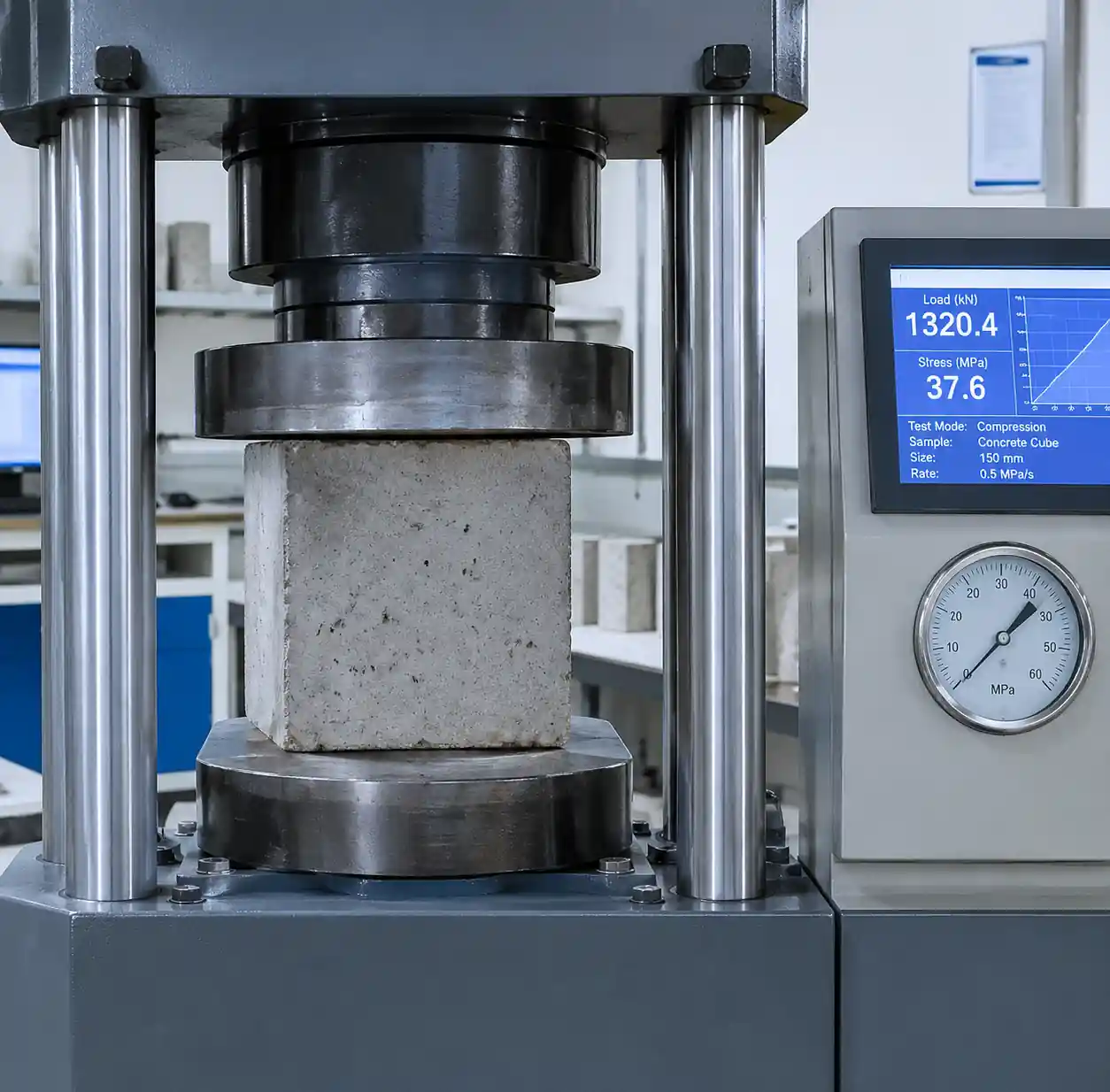
| Compressive Strength | 8-15 MPa typical range | 15-25 MPa achievable |
| Energy per Block | 0.15-0.25 kWh (lower equipment power) | 0.80-1.20 kWh (hydraulic systems) |
The demolding time difference fundamentally changes your operational model. Wet mix operations invest $15,000-$45,000 in mold inventory occupying 500-800 square meters of curing space. Dry mix systems recover molds instantly, requiring far less capital and space despite higher machine costs.
Production Speed and Capacity Analysis
Wet Mix Production Workflow
Wet mix systems produce 800-2,000 blocks per 8-hour shift depending on mold quantity and material handling efficiency. The workflow sequences filling, vibrating, transporting filled molds to curing areas, and returning empty molds after 18-24 hours. Production capacity depends more on mold inventory and curing space than machine speed.
A typical setup: 400 molds × 2 blocks per mold × 1 cycle per day = 800 blocks daily maximum. Increasing output requires proportional mold investment and curing space expansion—linear scaling with declining returns.
Dry Mix Production Speed
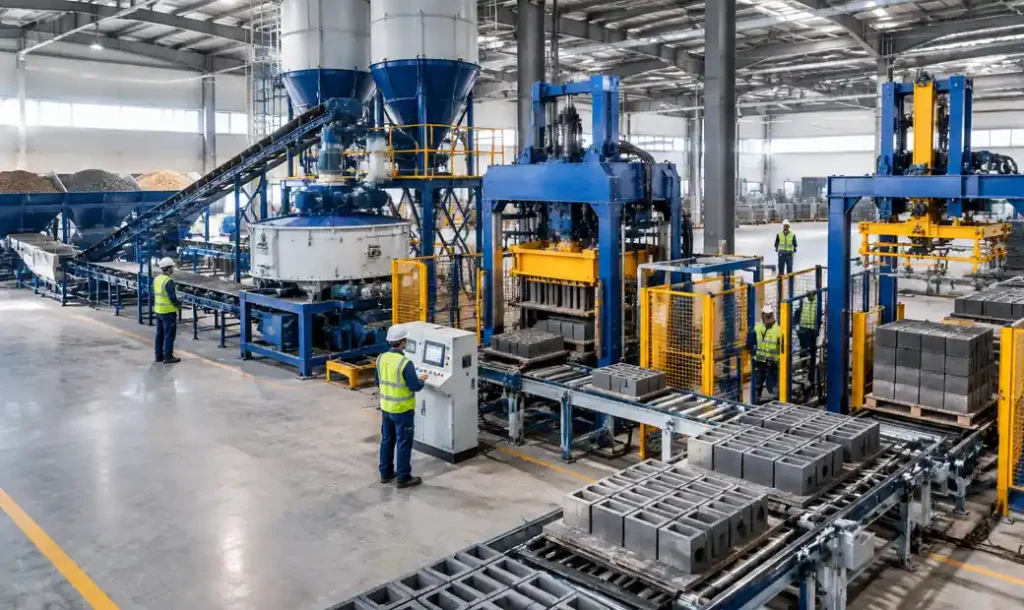
Semi-automatic dry mix machines complete 15-25 second cycles producing 4-6 standard blocks per cycle. This yields 5,000-8,000 blocks per 8-hour shift with 3-4 operators. Fully automatic systems achieve 8-12 second cycles generating 15,000-30,000 blocks per day with 2-3 supervisors.
Production scales with machine capacity rather than auxiliary equipment investment. Output levels impossible with wet mix technology become achievable through automation and rapid mold cycling.
Block Quality and Performance Characteristics
Density and Strength
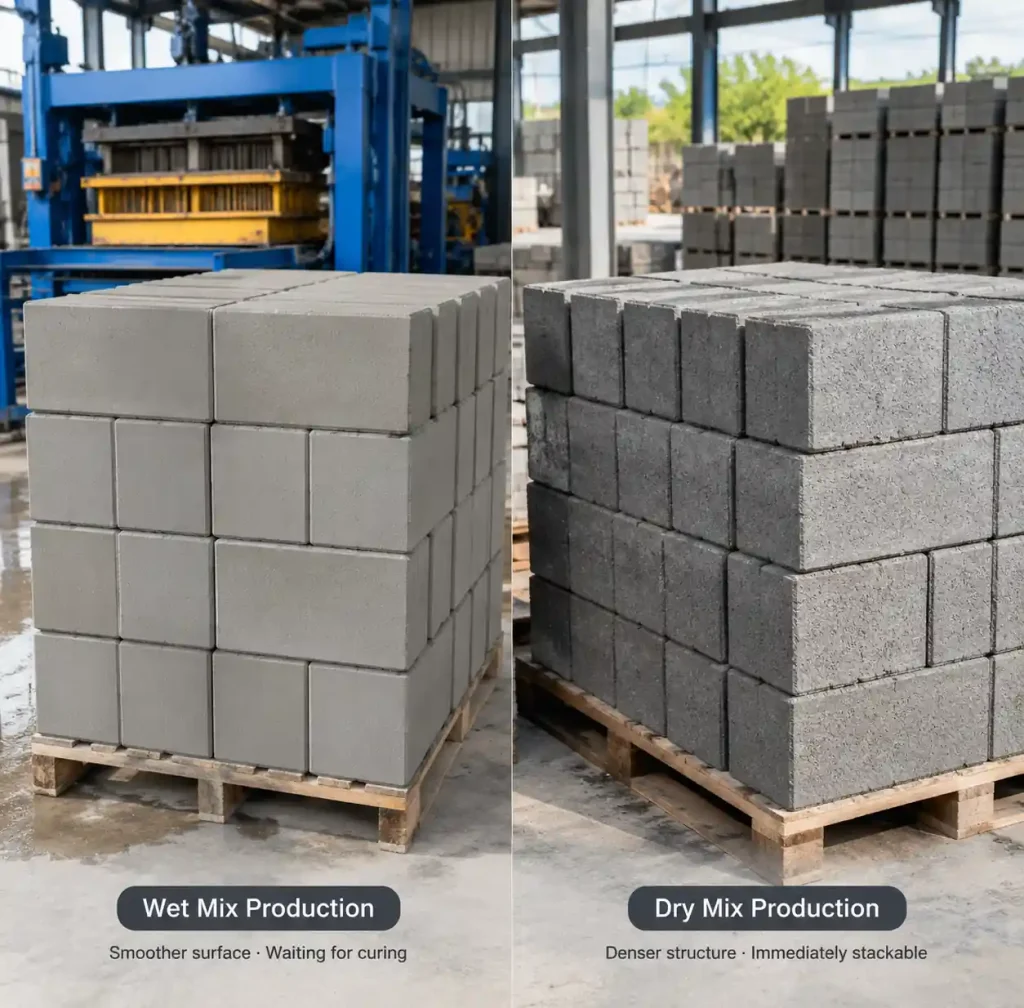
Wet mix blocks typically achieve 1,700-1,900 kg/m³ density and 8-15 MPa compressive strength—adequate for non-structural applications, residential walls, and landscaping blocks. The higher water content creates more voids as water evaporates during curing, limiting achievable density.
Dry mix blocks reach 2,100-2,300 kg/m³ density through high-pressure compaction forcing particles into tight contact. Properly cured blocks routinely exceed 20 MPa compressive strength, meeting structural requirements for load-bearing walls, commercial construction, and engineered applications. Lower water content means fewer voids and denser material structure.
Surface Finish and Dimensional Accuracy
Wet mix produces smooth, uniform surfaces as fluid concrete flows to match mold contours precisely. This advantage matters for architectural blocks, decorative pavers, and products where appearance justifies lower strength. Dimensional variation typically stays within ±2-3mm.
Dry mix creates slightly rougher surfaces depending on vibration effectiveness and material distribution. Modern hydraulic systems with computer-controlled pressing achieve ±1-2mm dimensional accuracy—critical for precision construction and interlocking block systems requiring tight tolerances.
Moisture Content and Shrinkage
Wet mix blocks contain 15-25% moisture after demolding, requiring controlled drying to prevent cracking. Shrinkage of 0.3-0.6mm per meter occurs during the first 28 days as excess water evaporates. Rapid drying causes surface cracking—a common quality issue in hot, dry climates.
Dry mix blocks emerge with 6-12% moisture content, experiencing minimal shrinkage (0.1-0.2mm per meter). Immediate handling and stacking doesn’t compromise quality. This characteristic enables faster inventory turnover and reduces storage space requirements by 60-70% compared to wet mix operations.
Curing Requirements Comparison
| Curing Parameter | Wet Mix Technology | Dry Mix Technology |
|---|---|---|
| Demolding Time | 18-24 hours in molds | Immediate (blocks self-supporting) |
| Initial Handling | 24-48 hours before careful movement | 2-4 hours for full handling |
| Moisture Curing Duration | 7-14 days mandatory misting/covering | 24-48 hours ambient curing adequate |
| Shipping Readiness | 14-21 days (moisture + strength) | 3-7 days (accelerated curing possible) |
| Curing Space Requirements | 800-1,200 m² for 5,000 blocks/day | 200-400 m² for same output |
| Climate Sensitivity | High (cracking in hot/dry, freezing risk in cold) | Moderate (handles temperature variation better) |
| Labor for Curing Management | 2-3 workers misting, turning, monitoring | 1 worker periodic checking |
These curing differences directly impact working capital. Wet mix operations carry 14-21 days of inventory before shipping, requiring 2-3× the land area. Dry mix manufacturers ship within a week, reducing storage costs and accelerating cash flow by 60-75%.
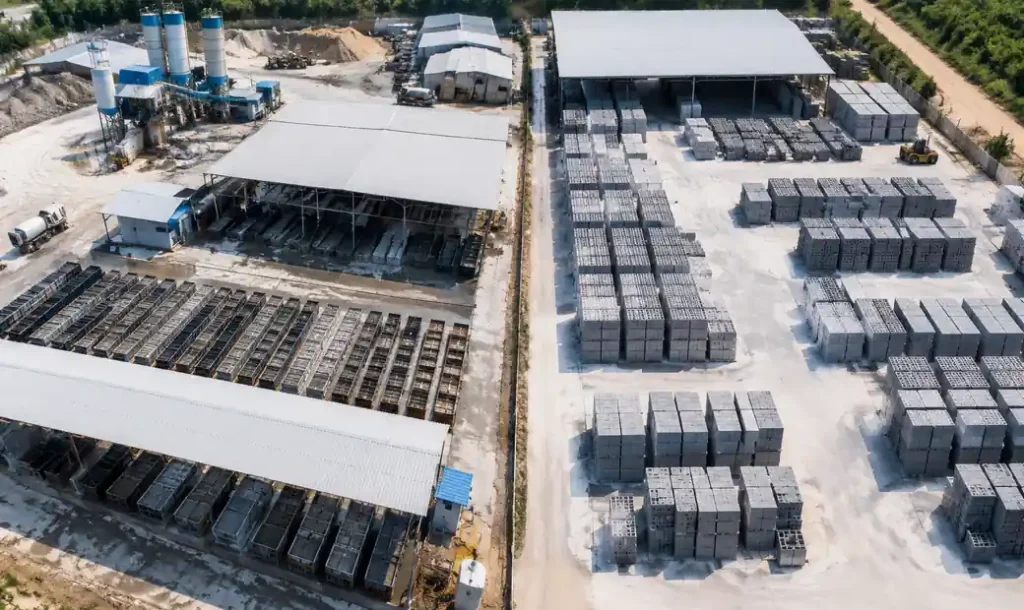
Cost Analysis: Investment and Operating Expenses
Initial Equipment Investment
Wet mix machines cost $5,000-$25,000 depending on capacity and automation level. However, total startup investment reaches $45,000-$120,000 including 300-500 molds ($80-$150 each), curing yard infrastructure, material handling equipment, and extended working capital for inventory.
Dry mix manual hydraulic machines start at $8,000-$15,000, semi-automatic systems run $15,000-$45,000, and fully automatic plants require $80,000-$250,000. Despite higher machine costs, total investment stays comparable or lower because mold requirements drop 90% and curing infrastructure scales down proportionally.
Production Cost Per Block
Wet Mix Operating Costs (per 1,000 standard blocks):
- Raw materials: $45-$65 (higher cement content for strength)
- Energy: $15-$25 (lower equipment power)
- Labor: $80-$150 (mold handling, curing management)
- Mold depreciation: $12-$20 (large inventory, 3-5 year life)
- Total: $152-$260 per 1,000 blocks
Dry Mix Operating Costs (per 1,000 standard blocks):
- Raw materials: $40-$55 (efficient cement usage)
- Energy: $40-$60 (hydraulic power)
- Labor: $25-$45 (automated production)
- Mold depreciation: $2-$4 (minimal inventory)
- Maintenance: $8-$15 (hydraulic systems)
- Total: $115-$179 per 1,000 blocks
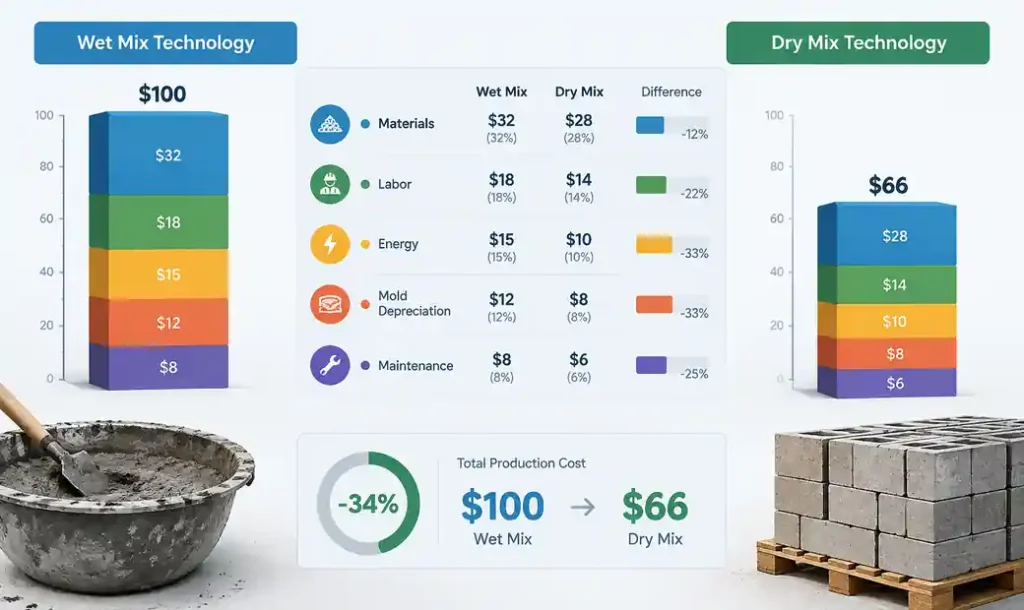
Dry mix technology delivers 25-35% lower production costs primarily through labor efficiency and reduced mold investment. For operations producing 5,000+ blocks daily, this translates to $150,000-$280,000 annual savings despite higher energy and maintenance expenses.
Market Positioning and Product Applications
Wet Mix Optimal Applications
Wet mix technology excels for:
- Decorative architectural blocks requiring smooth surfaces and intricate textures
- Large format blocks (600×400×200mm+) where demolding force challenges dry mix systems
- Specialty colors that flow uniformly throughout fluid mixes
- Low-volume custom production where mold costs spread across fewer units
- Markets with low labor costs offsetting handling requirements
Manufacturers targeting residential landscaping, decorative retaining walls, or custom architectural elements find wet mix systems deliver aesthetic quality justifying price premiums of 30-50% over standard blocks.
Dry Mix Competitive Advantages
Dry mix dominates:
- High-volume commodity production (10,000+ blocks/day) where speed determines profitability
- Structural blocks for commercial construction requiring 18-25 MPa strength
- Hollow core blocks needing precise dimensions and high density
- Interlocking systems demanding ±1mm tolerances
- Markets with high labor costs where automation provides competitive advantage
- Hot, arid climates where extended moisture curing proves difficult
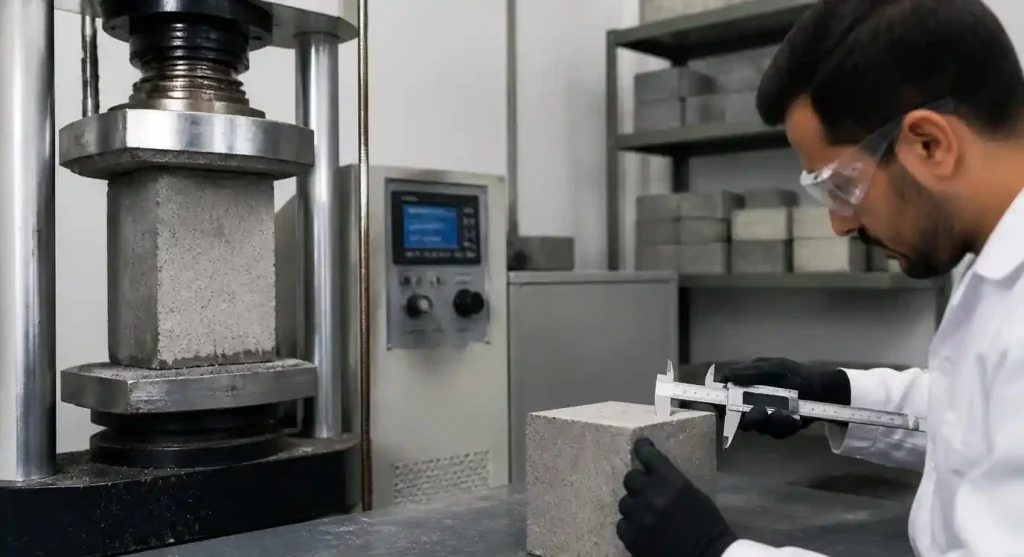
Operations supplying contractors, commercial projects, and infrastructure development benefit from dry mix speed, consistency, and structural performance.
Climate and Environmental Considerations
Weather Impact on Production
Wet mix manufacturing struggles in temperature extremes. In hot, dry climates (>35°C, <30% humidity), rapid surface evaporation causes cracking unless blocks receive continuous misting for 7-10 days. Cold weather (<5°C) prevents proper curing and risks freeze damage to wet blocks. Many wet mix operations shut down or severely limit production during winter months.
Dry mix systems tolerate wider temperature ranges (0-45°C). Immediate demolding eliminates weather exposure during the vulnerable early curing stage. Blocks can be moved to covered curing areas within hours, protecting them from rain, direct sun, and temperature swings. This weather independence maintains year-round production capacity.
استهلاك المياه
Wet mix operations consume 180-250 liters per cubic meter of concrete including mixing water and 7-14 days of curing mist. For 5,000 blocks daily (requiring ~25 m³ concrete), water usage reaches 4,500-6,250 liters per day—a significant factor in water-scarce regions.
Dry mix technology requires only 110-140 liters per cubic meter for the mix itself, with minimal curing water. Daily consumption drops to 2,750-3,500 liters for equivalent production—a 40-45% reduction. This matters in areas facing water restrictions or high water costs.
Equipment Maintenance and Reliability
Wet Mix System Maintenance
Wet mix machines need primarily cleaning and vibrator motor maintenance. Concrete residue must be removed daily to prevent buildup affecting mold fit and vibration efficiency. Vibrator motors ($200-$400 replacements) typically last 18-24 months under continuous use. The substantial maintenance burden falls on mold inventory—cleaning 300-500 molds daily requires 2-3 workers 3-4 hours.
Dry Mix Hydraulic Maintenance
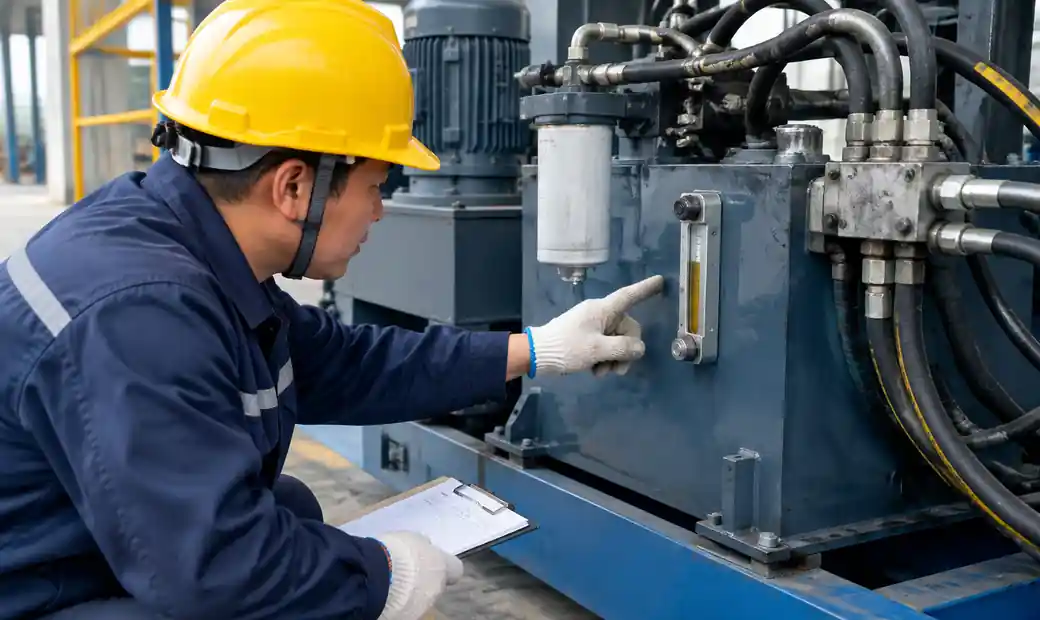
Hydraulic block machines require systematic maintenance. Hydraulic oil changes every 1,200-2,000 hours cost $250-$600 depending on system capacity. Filter replacements every 400-600 hours run $35-$65. Main cylinder seals need replacement at 6,000-10,000 hours ($800-$2,500 including labor). Annual maintenance totals $2,500-$6,000 for semi-automatic systems and $5,000-$12,000 for fully automatic plants.
Despite higher maintenance costs, dry mix equipment reliability exceeds wet mix operations. Hydraulic systems achieve 95-98% uptime with preventive maintenance versus 88-93% for wet mix operations dealing with mold damage, curing area constraints, and weather disruptions.
Technology Selection Guide
Choose Wet Mix When:
✓ Producing under 2,000 blocks daily (mold investment stays manageable)
✓ Targeting decorative, architectural, or specialty block markets
✓ Surface appearance justifies price premiums
✓ Labor costs remain below $3-$4 per hour
✓ Climate provides consistent moderate temperatures
✓ Capital limited to $40,000-$80,000 total investment
✓ Curing space readily available (800-1,200 m²)
Choose Dry Mix When:
✓ Planning production exceeding 3,000 blocks daily
✓ Structural blocks (15+ MPa) represent primary products
✓ Speed and consistency determine competitive position
✓ Dimensional precision matters (±1-2mm tolerance)
✓ Operating in hot, dry, or cold climates
✓ Labor costs exceed $5-$6 per hour
✓ Land area limited or expensive
✓ Fast inventory turnover essential for cash flow
Most commercial block manufacturers worldwide operate dry mix hydraulic systems because production economics favor speed, density, and automation. Wet mix serves niche markets where aesthetic requirements override production efficiency.
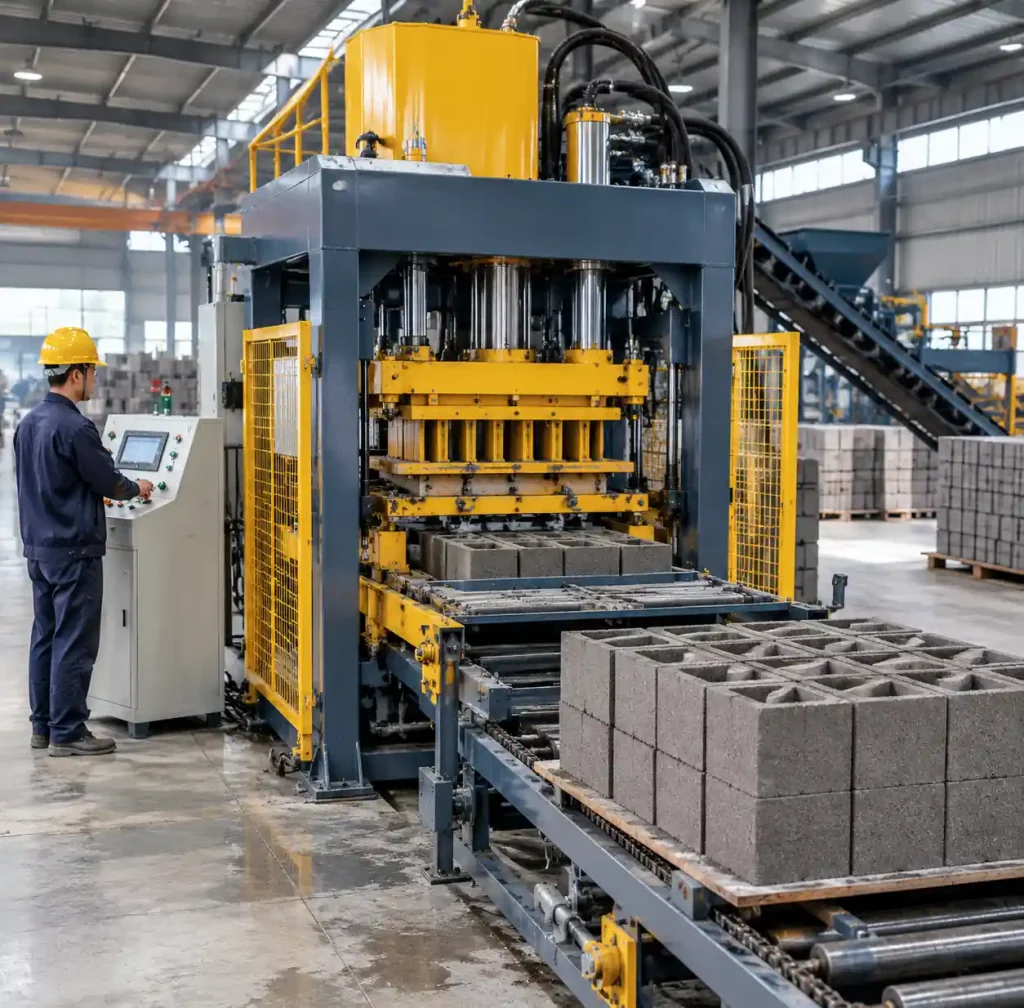
Integration with Supporting Equipment
Wet Mix Material Handling
Wet mix systems need concrete mixers with 15-25% excess capacity beyond production consumption. For 3 m³/hour production, a JS500 mixer (0.5 m³ per batch, 25-30 batches/hour) provides adequate supply. Material transport uses wheelbarrows, conveyor belts, or hopper systems feeding casting stations. The fluid mix flows easily through basic handling equipment.
Dry Mix Batching Requirements
Dry mix demands precision batching. Computer-controlled batching systems measure cement, aggregates, and water with ±2% accuracy—critical because the stiff mix won’t mask ratio variations like fluid concrete does. Manual batching introduces 8-15% variation causing inconsistent strength and density.
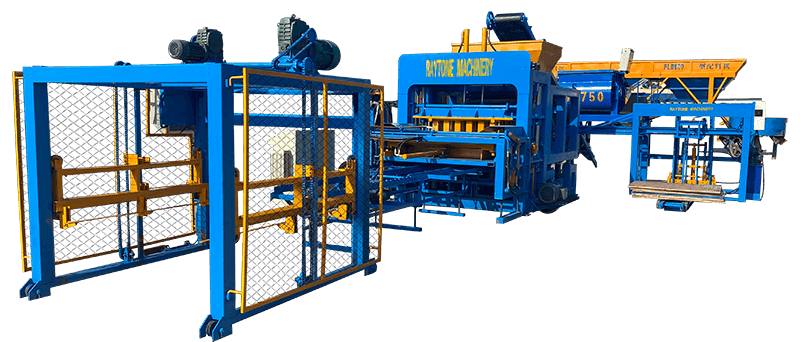
A PLD1200 batcher paired with JS750 mixer supplies semi-automatic machines producing 5,000-7,000 blocks daily. Fully automatic systems need PLD2400 batchers with JS1000 or JS1500 mixers to maintain continuous production without material supply bottlenecks.
الأسئلة الشائعة
Which technology produces stronger blocks?
Dry mix technology produces stronger blocks achieving 18-25 MPa compressive strength compared to 8-15 MPa for wet mix. The lower water-cement ratio (0.35-0.45 vs 0.50-0.65) and high-pressure compaction (200-600 tons) create denser material structure with fewer voids. Structural applications requiring load-bearing capacity above 15 MPa need dry mix blocks.
How much faster is dry mix production?
Dry mix systems produce 5-15× more blocks daily from similar floor space. A semi-automatic dry mix machine generates 5,000-7,000 blocks per shift versus 800-1,500 for wet mix operations with comparable labor. The difference stems from immediate demolding—dry mix molds cycle 400-800 times daily versus once for wet mix molds.
Can I use wet mix machines in hot climates?
Wet mix production in hot, arid climates requires extensive curing management. Blocks need misting 4-6 times daily for 7-14 days or covered curing areas preventing rapid evaporation. Many operations experience 15-25% rejection rates from surface cracking when curing protocols lapse. Dry mix technology handles hot climates better through minimal moisture content and rapid strength development.
Which technology requires less investment?
Total startup investment runs similar for both technologies at small scale ($45,000-$80,000 for 2,000-3,000 blocks/day capacity). Wet mix has lower machine costs but higher mold, infrastructure, and working capital needs. At scales above 5,000 blocks/day, dry mix requires less total capital despite expensive machines because mold investment drops 85-90% and curing infrastructure scales down proportionally.
What maintenance costs should I expect?
Wet mix maintenance costs $800-$1,500 annually primarily for vibrator motors, mold repair, and cleaning supplies. Dry mix hydraulic systems require $2,500-$6,000 annually for semi-automatic and $5,000-$12,000 for fully automatic machines including hydraulic oil, filters, seals, and preventive maintenance. Despite higher costs, dry mix delivers 25-35% lower cost per block through labor efficiency.
How much space do I need for each technology?
Wet mix operations producing 5,000 blocks daily need 1,200-1,800 m² total (300-400 m² production, 800-1,200 m² curing, 100-200 m² storage). Dry mix requires 400-700 m² total (200-300 m² production, 150-300 m² short-term curing, 50-100 m² storage). The 60-70% space reduction stems from rapid curing and immediate block handling capability.
Can wet mix blocks match dry mix strength?
Wet mix rarely exceeds 15 MPa compressive strength because higher water content creates voids as moisture evaporates. Achieving 18+ MPa requires water-cement ratios below 0.45—creating stiff mixes that don’t flow properly in wet mix molds. The physics of the process limits wet mix to moderate-strength applications regardless of curing duration or cement content.
Which technology offers better return on investment?
For production above 4,000 blocks daily, dry mix delivers superior ROI through lower labor costs, faster inventory turnover, and higher-value products commanding 15-25% price premiums for structural applications. Wet mix ROI excels for specialty, decorative, or custom products where low volumes spread over extensive mold inventory and appearance justifies premium pricing above commodity structural blocks.
الخلاصة
Wet mix and dry mix block machines represent fundamentally different production philosophies. Wet mix prioritizes surface quality and simplicity at the cost of production speed and strength limitations. Dry mix emphasizes density, speed, and automation while requiring higher capital investment and technical maintenance capability.
The global shift toward dry mix hydraulic technology reflects construction industry demands for higher strength, dimensional consistency, and production efficiency. Operations producing over 3,000 blocks daily in competitive markets benefit from dry mix economics despite initial equipment costs.
Your choice should align with your target market, production scale, available capital, and technical capabilities. Most manufacturers entering the concrete block industry today choose semi-automatic hydraulic systems balancing proven technology, manageable investment, and commercial production capacity.
Raytone Block Machinery manufactures both technologies with production capacities from 2,000 to 50,000 blocks daily. Our engineering team helps you select optimal equipment matching your specific market requirements, climate conditions, and production goals. Contact our technical advisors for equipment specifications, production line layouts, and ROI analysis customized to your project parameters.