




Starting a block making business or expanding production capacity requires a critical decision: choosing between automatic, semi-automatic, and manual block machines. This choice directly impacts your production output, labor costs, initial investment, and long-term profitability.
With block machine prices ranging from $3,000 for basic manual units to over $150,000 for fully automatic production lines, making the right choice requires understanding how each type aligns with your production scale, budget, and business goals. Industry data shows that choosing the wrong machine type costs businesses an average of 18-24 months in delayed ROI and lost market opportunities.
In this comprehensive guide, we compare automatic, semi-automatic, and manual block machines across every dimension that matters: production capacity, labor requirements, initial investment, maintenance costs, ROI timelines, and ideal use cases. You will learn exactly which machine type fits your production scale and how to maximize profitability from day one.
Understanding the Three Types of Block Machines
Manual Block Machines
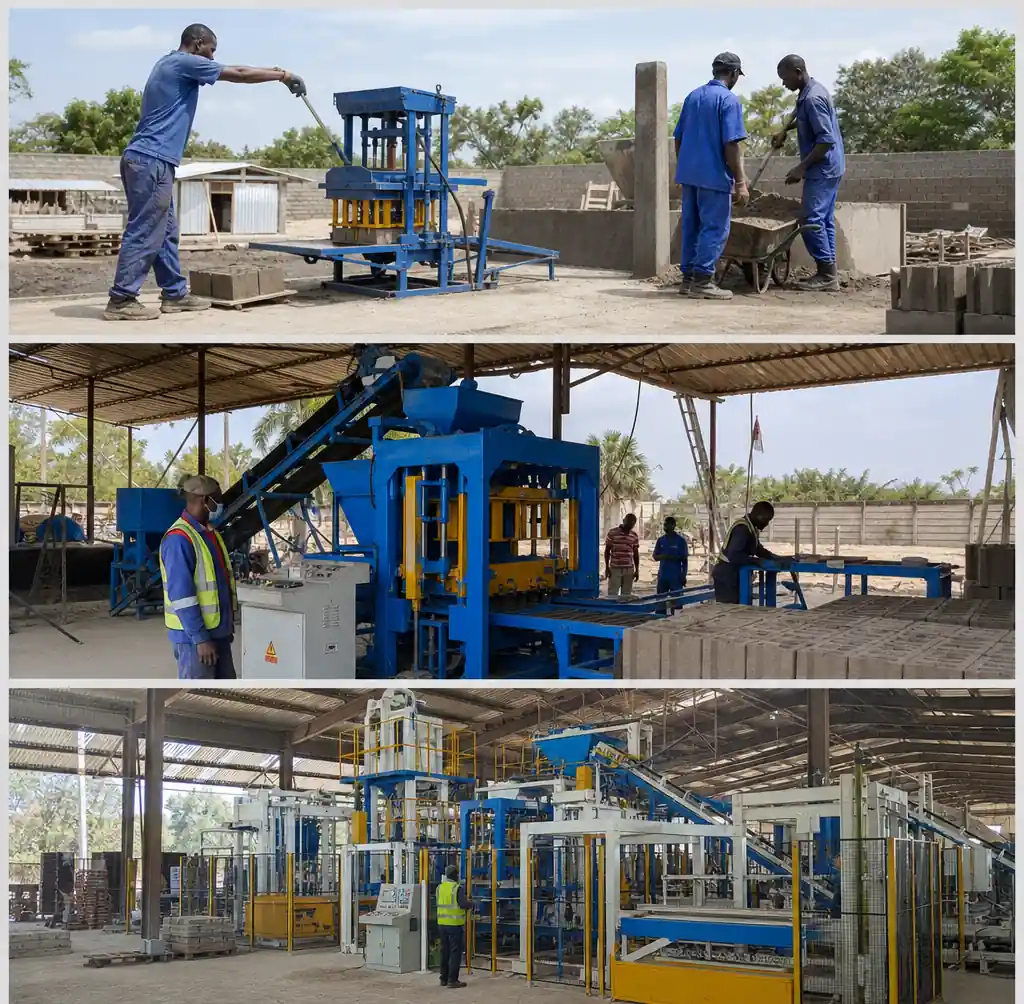
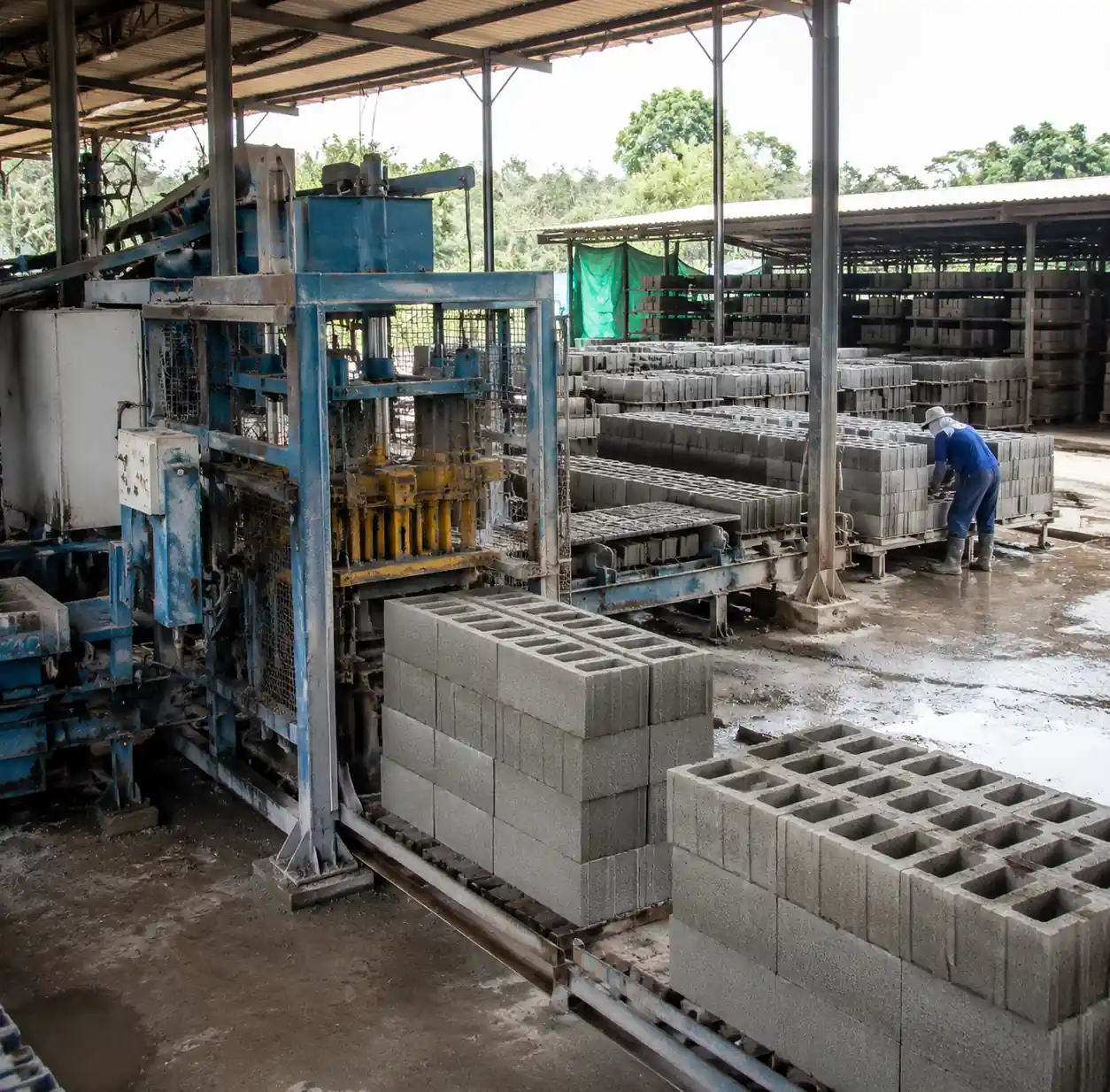
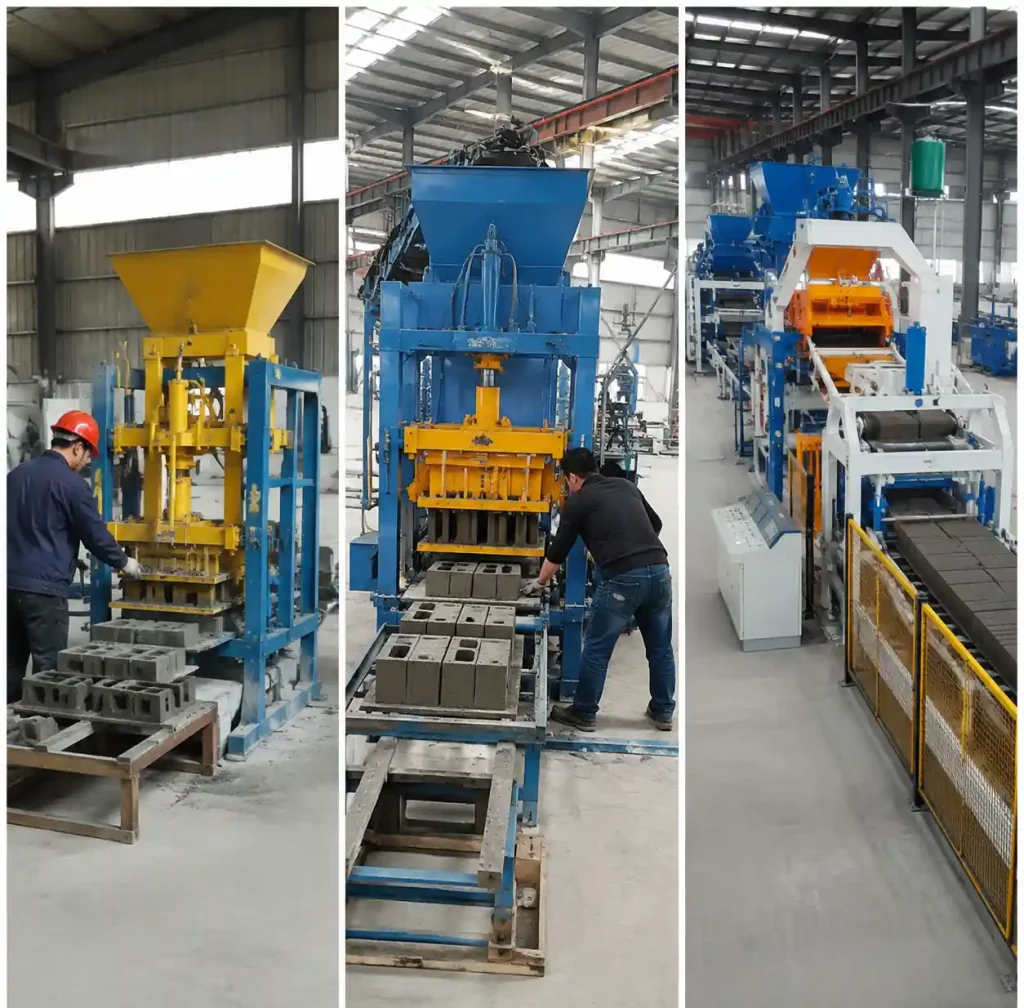
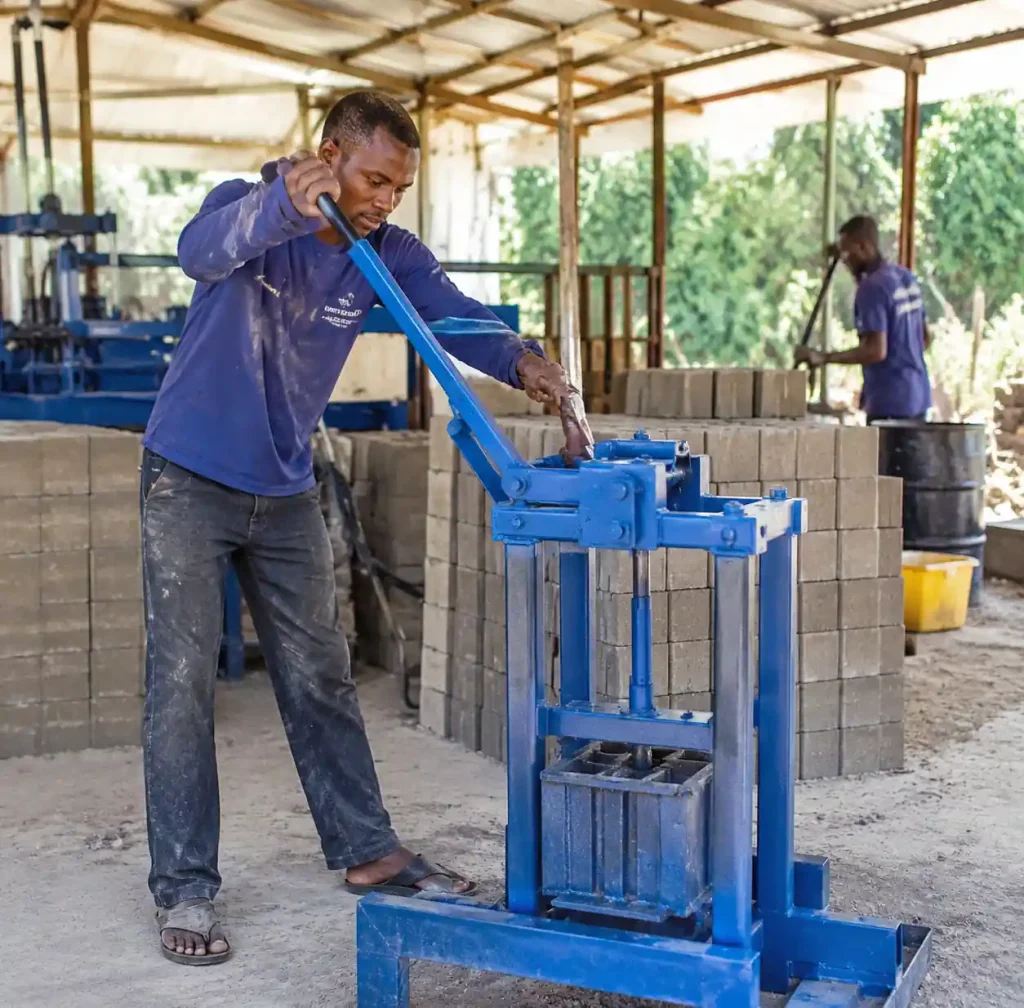
Manual block machines require operators to perform most production steps by hand. An operator loads raw materials into the hopper, activates the hydraulic or vibration system to compress and mold the block, then manually removes the finished block on its pallet. These machines like the QT4-40 and QT4-24 use hydraulic pressure combined with vibration to form blocks but depend heavily on human labor for material handling and cycle management.
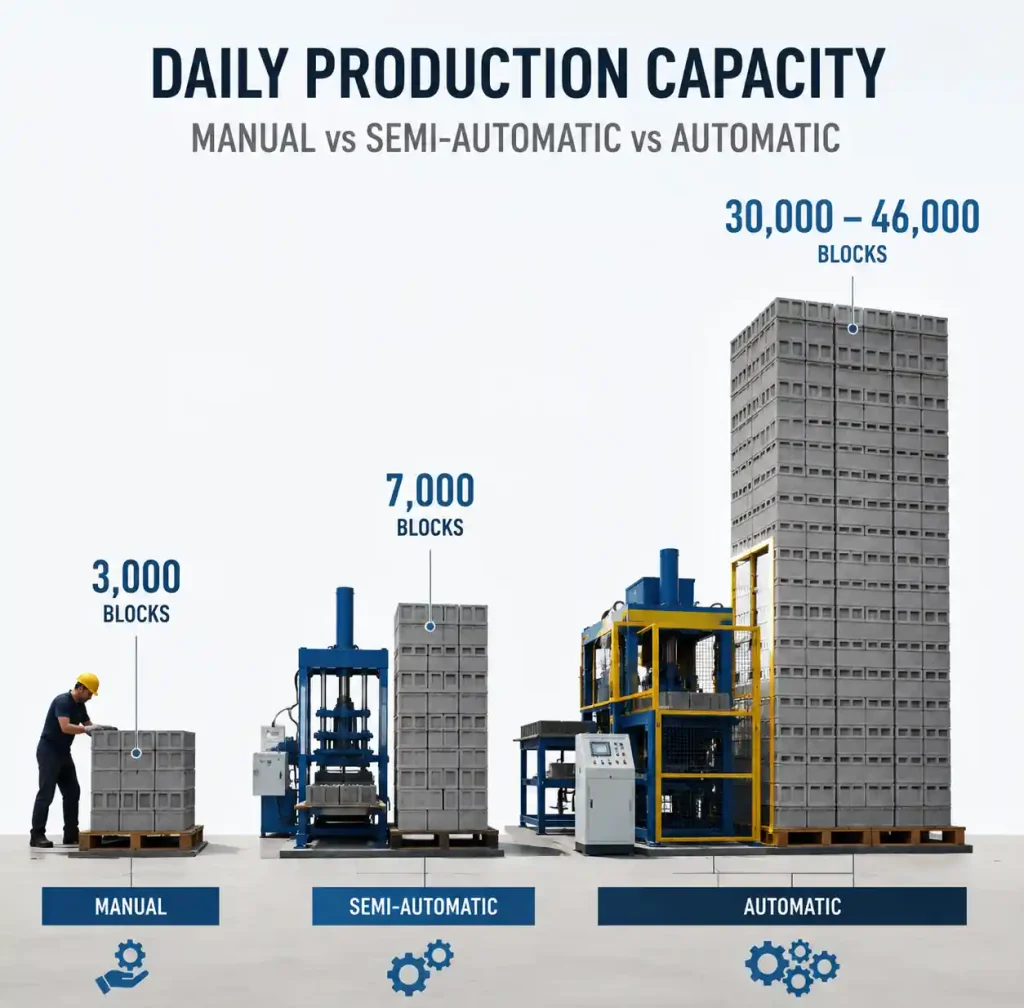
Manual machines produce 2,000 to 4,000 blocks per 8-hour shift. You can start production with a basic manual machine, concrete mixer, and 3-4 workers. The molding cycle takes 40-50 seconds per batch, with production speed limited by manual material handling.
Полуавтоматические блоковые машины
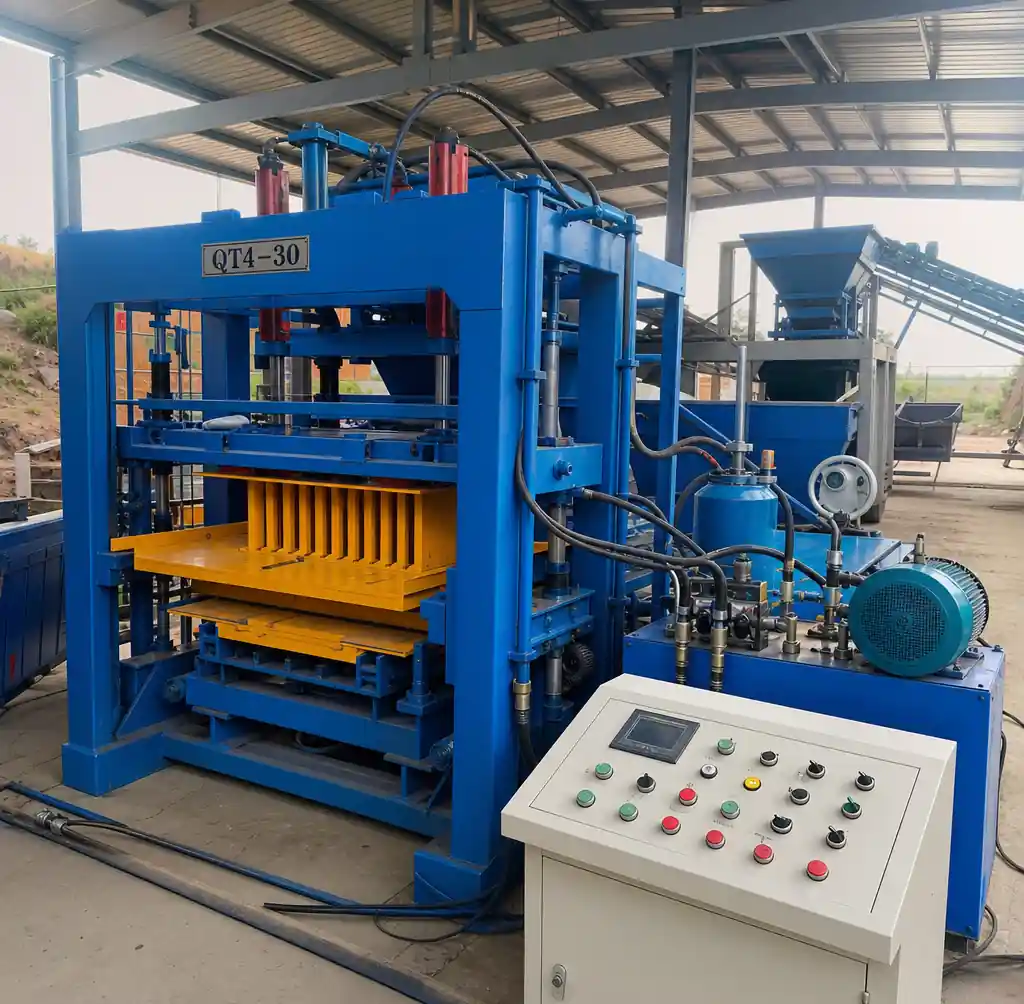
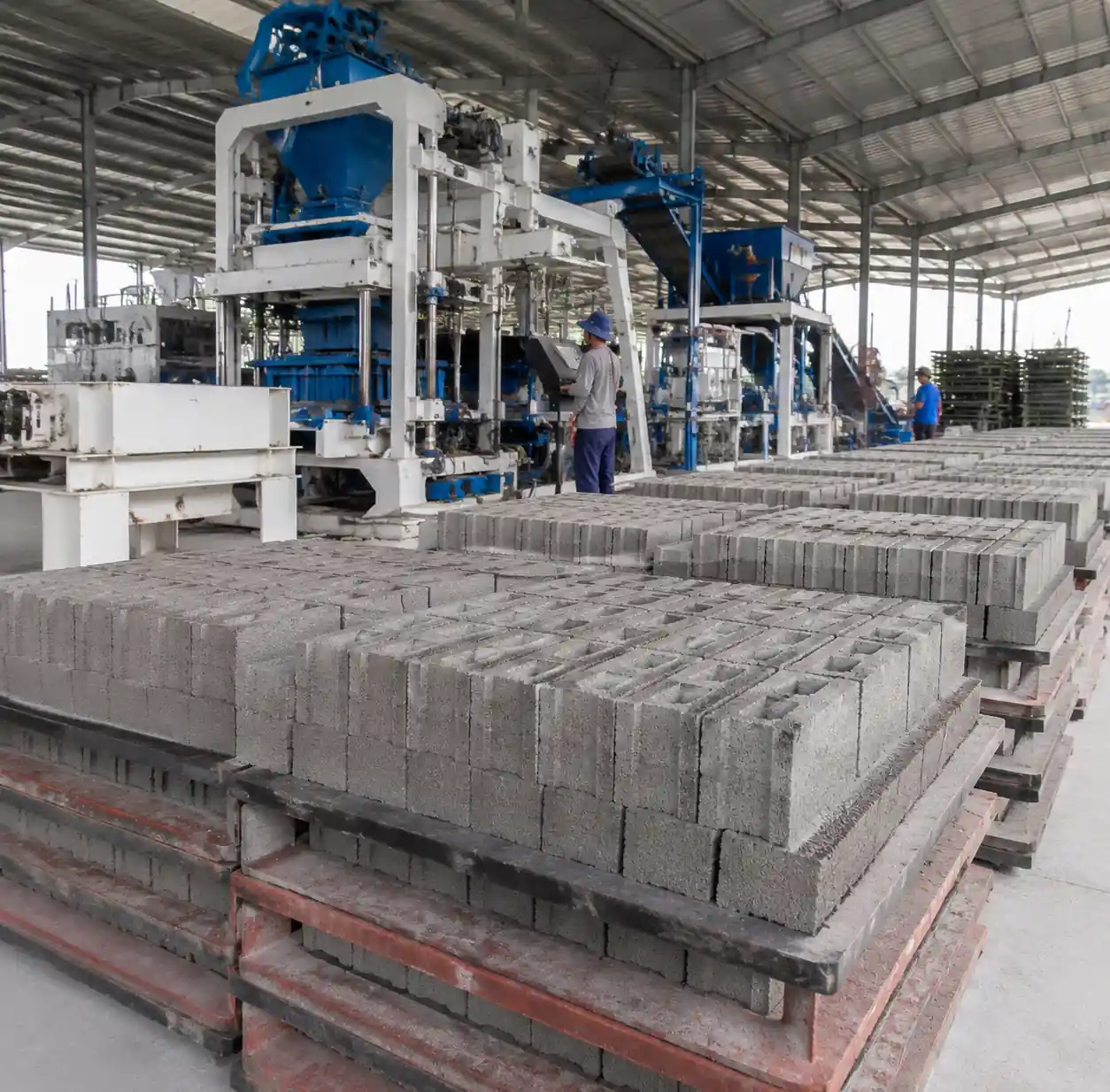
Semi-automatic machines like the QT4-30 combine automated block formation with manual material handling. The machine automatically controls the vibration, compression, and molding cycle through PLC systems. However, operators still manually load raw materials and remove finished blocks from the production area.
Semi-automatic systems increase production to 5,000-8,000 blocks per 8-hour shift with the same 4-person crew. The automated molding cycle reduces to 25-30 seconds per batch. PLC-controlled vibration and pressure eliminate human variation, delivering consistent block quality suitable for medium-scale production.
Автоматические блоковые машины
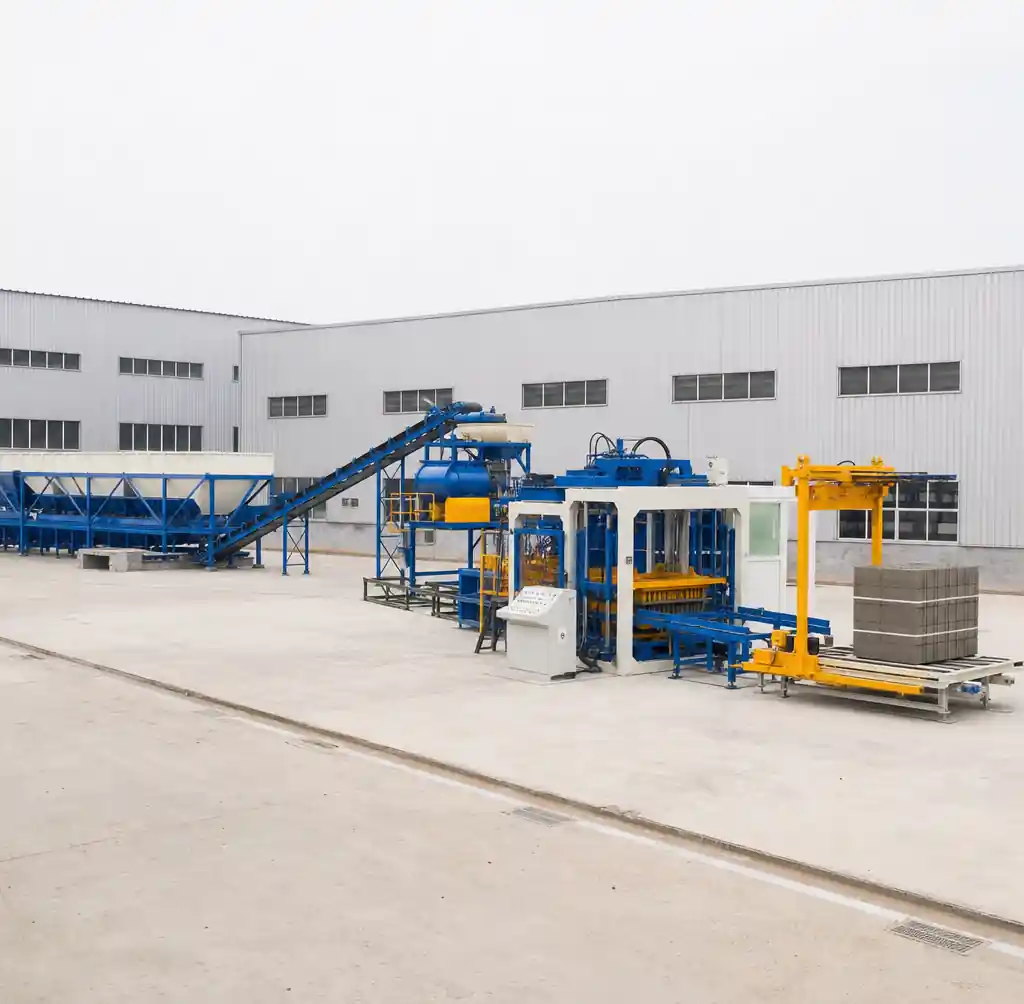
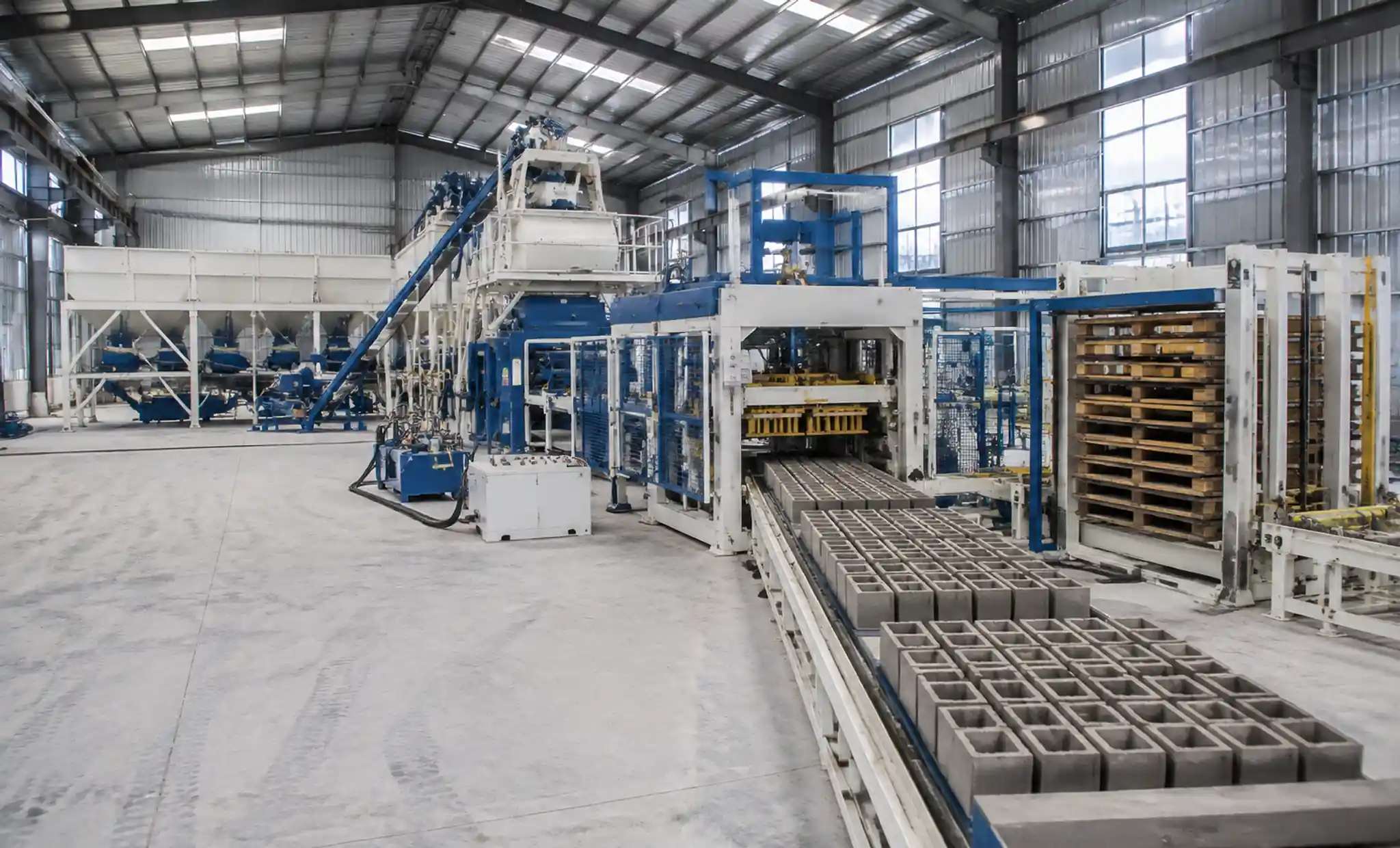
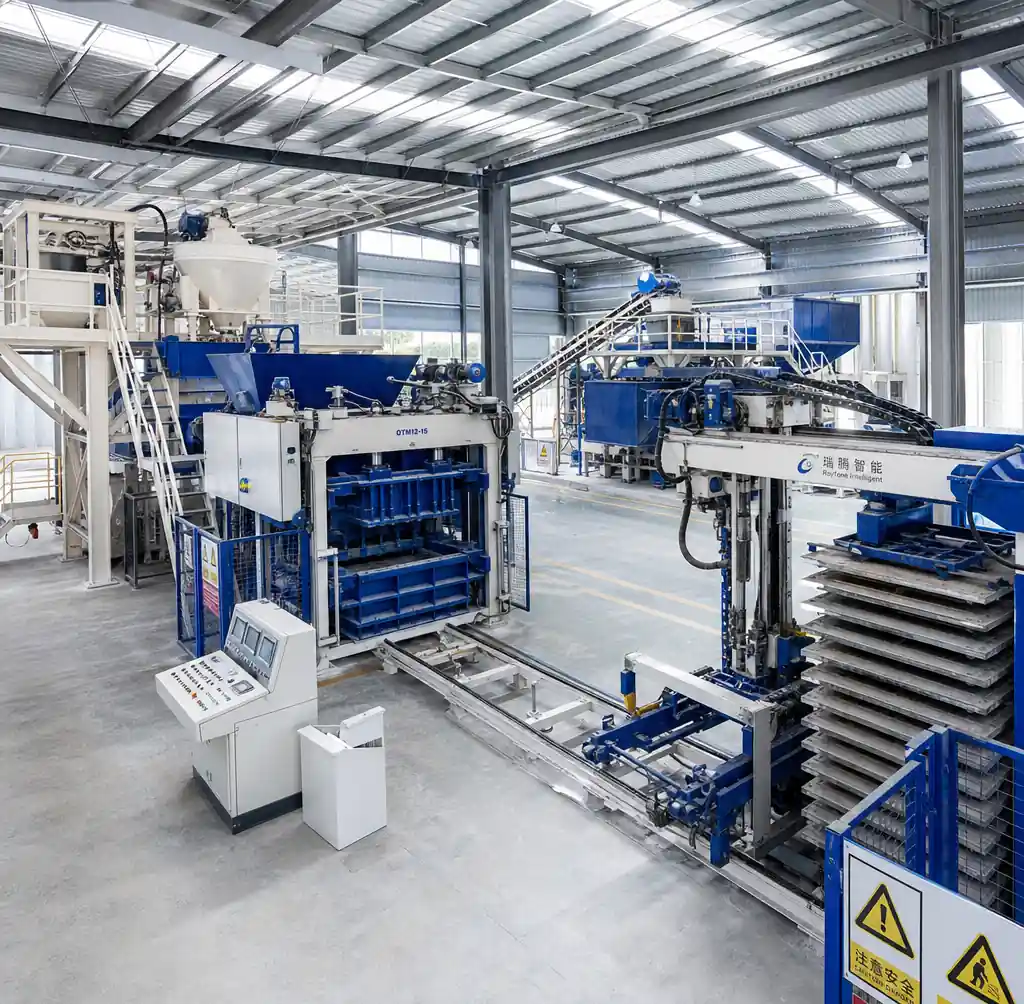
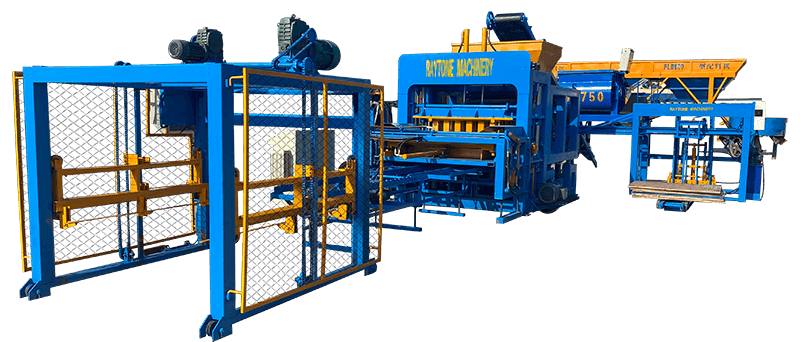
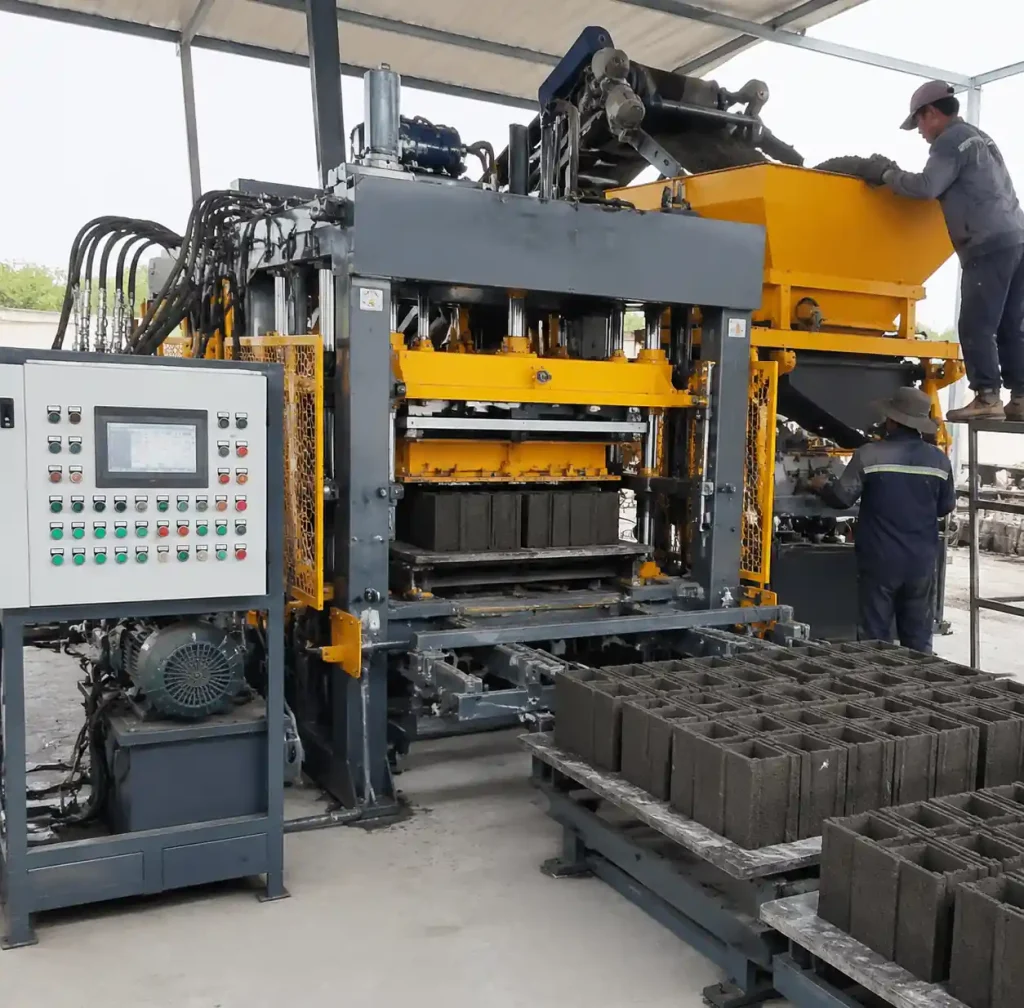
Fully automatic block machines integrate the entire production process from batching to stacking. Automatic systems like the QT10-15 and QT8-15 connect batching machines, concrete mixers, belt conveyors, the block machine, and automatic stacking systems through a central PLC control panel operated by one person.
Production capacity reaches 15,000-46,000 blocks per 8-hour shift depending on block size and machine model. The QT10-15 produces up to 46,080 standard hollow blocks (400×200×200mm) in one shift with just 5-7 workers. Molding cycles run as fast as 15-20 seconds per batch. Automated batching, controlled mixing, and uniform vibration deliver consistent quality that meets strict dimensional tolerances and compressive strength specifications.
Production Capacity Comparison
Daily Output by Machine Type
Production capacity determines how quickly you can fulfill orders and scale your business. The differences between machine types become dramatic at production scale.
| Тип машины | Blocks per Hour | Blocks per 8-Hour Shift | Blocks per Month (25 days) |
|---|---|---|---|
| Manual (QT4-40) | 320-450 | 2,560-3,600 | 64,000-90,000 |
| Semi-Automatic (QT4-30) | 720-900 | 5,760-7,200 | 144,000-180,000 |
| Automatic (QT8-15) | 1,920-3,840 | 15,360-30,720 | 384,000-768,000 |
| Automatic (QT10-15) | 2,880-5,760 | 23,040-46,080 | 576,000-1,152,000 |
Production data based on standard 400×200×200mm hollow blocks
Manual machines suit small construction projects and local market supply of 50,000 to 100,000 blocks monthly. Semi-automatic machines deliver 150,000 to 180,000 blocks monthly for medium-scale contractors and regional distributors. Automatic lines exceed 500,000 blocks monthly, enabling large construction projects, government contracts, and wholesale distribution.
Production Flexibility
Mold changeover takes 20-30 minutes for manual machines, 15-20 minutes for semi-automatic machines, and 30-45 minutes for automatic lines. Manual and semi-automatic machines handle multiple block types per shift economically. Automatic lines work best dedicated to one or two high-volume block types due to recalibration requirements.
Labor Requirements and Costs
Workforce Comparison
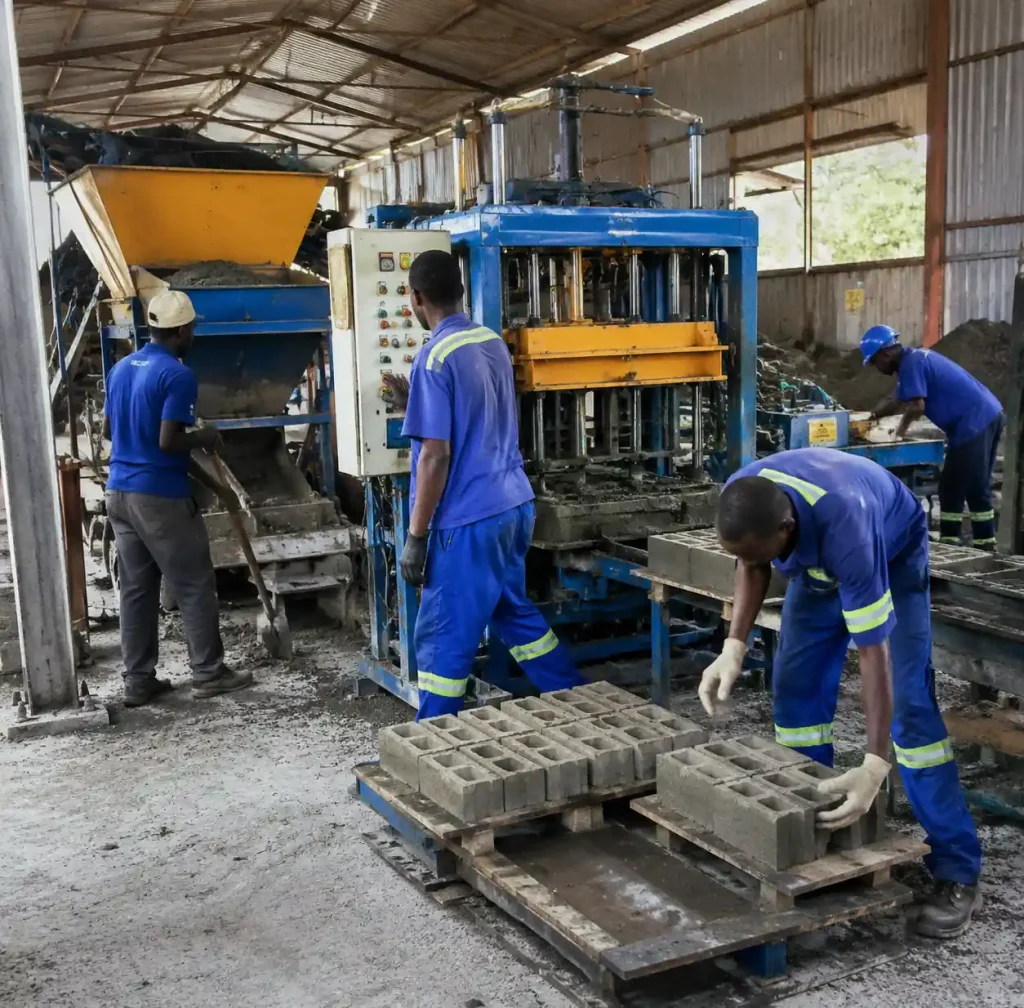
Labor costs represent the largest ongoing expense in block production after raw materials. The workforce requirements differ dramatically between machine types.
| Тип машины | Workers Required | Key Roles | Monthly Labor Cost (Example)* |
|---|---|---|---|
| Руководство | 3-4 | Machine operators, material loading, block handling, curing area management | $2,400-$3,200 |
| Полуавтоматический | 4-5 | Machine operator, material preparation, block removal, quality control | $3,200-$4,000 |
| Automatic | 5-7 | Line supervisor, PLC operator, material management, quality control, maintenance | $4,000-$5,600 |
Labor costs vary significantly by location. Examples assume $800/month average wage.
Manual production requires the most labor per block produced. Automatic lines employ more total workers but produce 10-15 times more blocks, making labor cost per block significantly lower.
Labor Cost Per Thousand Blocks
This metric reveals the true labor efficiency of each machine type:
Manual Machine:
- Production: 3,000 blocks/shift
- Workers: 4 people × $800/month = $3,200 monthly
- Working days: 25 days/month
- Daily labor cost: $128
- Labor cost per 1,000 blocks: $42.67
Semi-Automatic Machine:
- Production: 7,000 blocks/shift
- Workers: 4 people × $800/month = $3,200 monthly
- Daily labor cost: $128
- Labor cost per 1,000 blocks: $18.29
Automatic Machine (QT10-15):
- Production: 30,000 blocks/shift
- Workers: 6 people × $800/month = $4,800 monthly
- Daily labor cost: $192
- Labor cost per 1,000 blocks: $6.40
The automatic machine reduces labor cost per thousand blocks by 85% compared to manual production. Producing one million blocks with manual machines costs $42,670 in labor compared to $6,400 with an automatic line—a savings of $36,270.
Skill Requirements
Manual machines require basic training (2-3 days). Semi-automatic machines need operators who understand PLC controls and troubleshooting (5-7 days training). Automatic lines require trained technicians understanding PLC programming, hydraulic systems, and electrical controls (2-3 weeks training, often provided during installation).
Анализ первоначальных инвестиций
Purchase Price Ranges
The upfront investment varies dramatically between machine types and directly determines your financing requirements and business risk profile.
| Тип машины | Machine Cost Range | Вспомогательное оборудование | Total Initial Investment |
|---|---|---|---|
| Руководство | $3,000-$8,000 | $2,000-$4,000 | $5,000-$12,000 |
| Полуавтоматический | $8,000-$15,000 | $4,000-$8,000 | $12,000-$23,000 |
| Automatic Line | $50,000-$150,000 | $30,000-$80,000 | $80,000-$230,000 |
Supporting equipment includes concrete mixers, batching machines (for automatic lines), molds, pallets, curing racks, and basic tools. Automatic lines require additional components like conveyor systems, automatic stackers, and PLC control panels that increase total investment significantly.
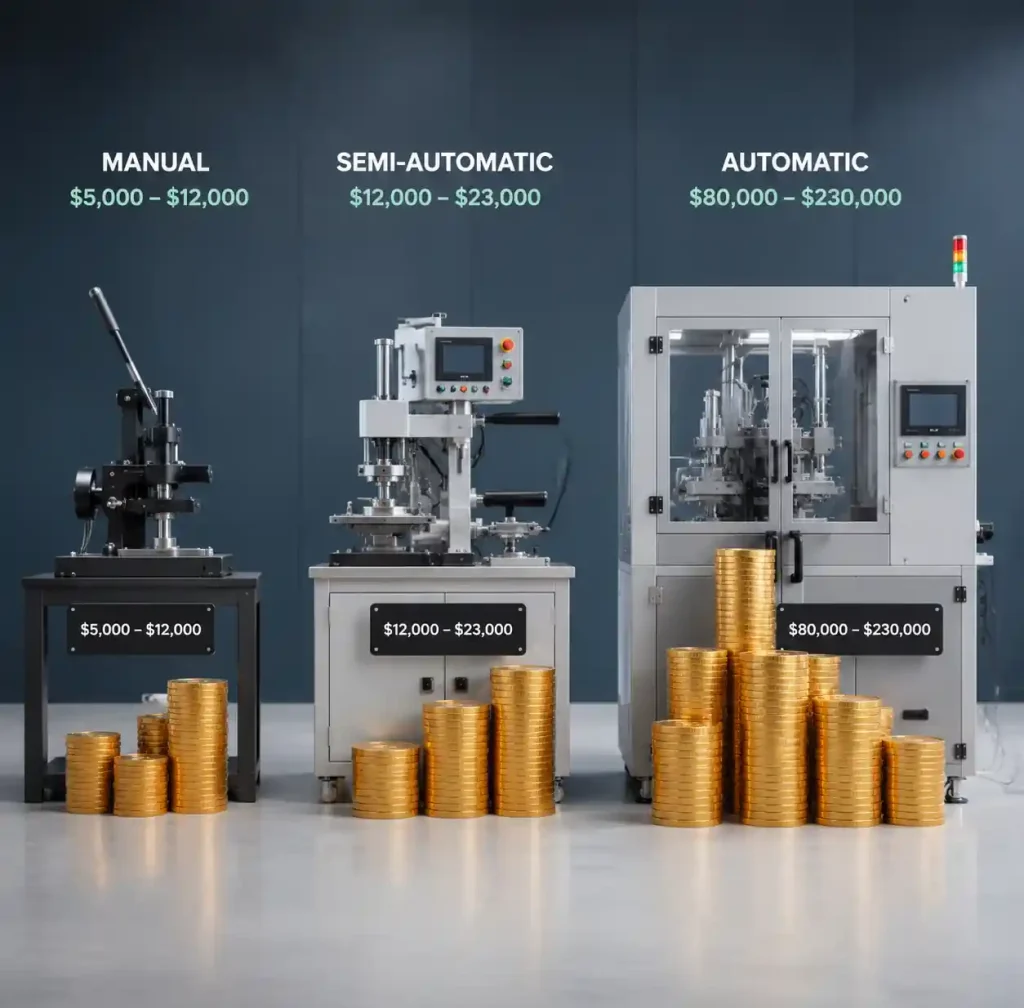
Manual machines minimize financial risk with $5,000-$12,000 total investment including working capital. Semi-automatic machines require moderate capital of $12,000-$23,000, accessible through small business loans. Automatic production lines require $80,000-$230,000, typically needing bank financing or substantial reserves.
Facility Requirements
Manual and semi-automatic machines operate in 200-300 square meter facilities with basic infrastructure. Automatic production lines require 300-500 square meters for production plus additional storage and curing areas, totaling 1,000-2,000 square meters. Facility preparation costs range from $10,000 to $30,000 for automatic systems requiring sturdy foundations and three-phase electrical power.
Maintenance Requirements and Costs
Manual machines require daily lubrication and weekly mold inspections. Annual maintenance costs run $300-$600. Downtime averages 2-4 days annually, costing $900-$1,800 in lost production.
Semi-automatic machines need 30-45 minutes daily maintenance including sensor cleaning and hydraulic checks. Annual costs increase to $800-$1,500. Downtime of 3-5 days annually costs $3,150-$5,250 in lost production.
Automatic lines require comprehensive preventive maintenance programs. Daily checks take 60-90 minutes, weekly deep maintenance consumes 3-4 hours. Annual maintenance costs range from $5,000 to $12,000. Downtime of 5-8 days annually impacts $22,500-$36,000 in production opportunity, making preventive maintenance essential.
Spare parts inventory needs: manual machines $500-$1,000, semi-automatic machines $1,500-$2,500, automatic lines $5,000-$10,000.
Return on Investment (ROI) Comparison
Break-Even Analysis
Understanding when your investment pays back determines financial viability. Break-even calculations assuming typical market prices:
Assumptions: Block selling price: $0.30, raw material cost: $0.12, labor costs vary by type, other costs: $0.02 per block, 25 working days monthly.
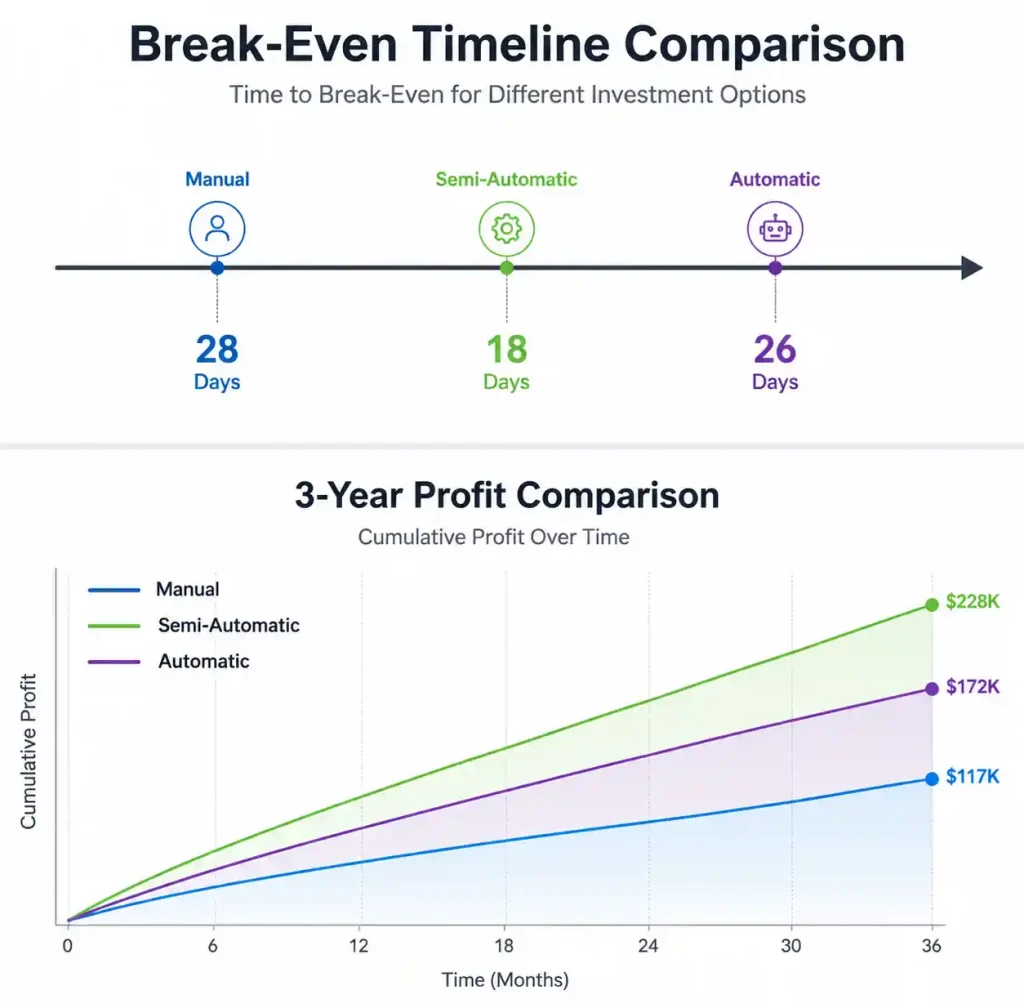
- Manual Machine: Investment $10,000, daily profit $352, break-even: 28 days
- Semi-Automatic Machine: Investment $18,000, daily profit $992, break-even: 18 days
- Automatic Machine: Investment $120,000, daily profit $4,608, break-even: 26 days
The fastest ROI comes from semi-automatic machines with established demand. All three machine types pay back investments quickly when operating at capacity with consistent market access.
Long-Term Profitability
Break-even analysis shows initial payback, but 3-5 year profit potential reveals the true financial impact of your machine choice.
3-Year Profit Comparison (25 days/month operation):
- Manual Machine: Net 3-year profit: $306,800 (after $10,000 investment)
- Semi-Automatic Machine: Net 3-year profit: $874,800 (after $18,000 investment)
- Automatic Machine: Net 3-year profit: $4,027,200 (after $120,000 investment)
The automatic machine generates 13 times more profit over three years compared to manual production due to dramatically lower labor costs per block and ability to fulfill large contracts that manual producers cannot supply.
Which Machine Type Should You Choose?
Choose Manual Block Machines If:
You should invest in ручные станки when starting with limited capital to test market demand. Manual machines work best for 50,000 to 100,000 blocks monthly for local construction. Choose manual when labor costs are low, you need production flexibility for multiple block types, or operate in rural areas without reliable electricity (using diesel-powered models).
Choose Semi-Automatic Block Machines If:
Полуавтоматические станки deliver optimal value when you have proven demand exceeding manual capacity and want to scale without full automation complexity. Choose semi-automatic when producing 150,000 to 250,000 blocks monthly, want better quality consistency, have access to moderate financing ($15,000-$25,000), and have 4-5 reliable workers who can manage semi-automatic production with moderate training.
Choose Automatic Block Machines If:
You should invest in automatic production lines when you have secured contracts requiring 500,000+ blocks monthly. Choose automatic when labor costs are high relative to machine costs (reducing labor cost from $42 to $6 per thousand blocks), you have access to substantial capital ($100,000-$200,000), compete for government contracts requiring production capacity minimums, and have reliable electrical infrastructure with technical staff for maintenance.
Production Quality Considerations
Manual machines produce acceptable quality with 15-20% strength variations between blocks. Semi-automatic machines improve consistency to 5-8% variations through PLC-controlled processes. Automatic production lines deliver 3-5% variations, meeting strict engineering specifications for structural applications.
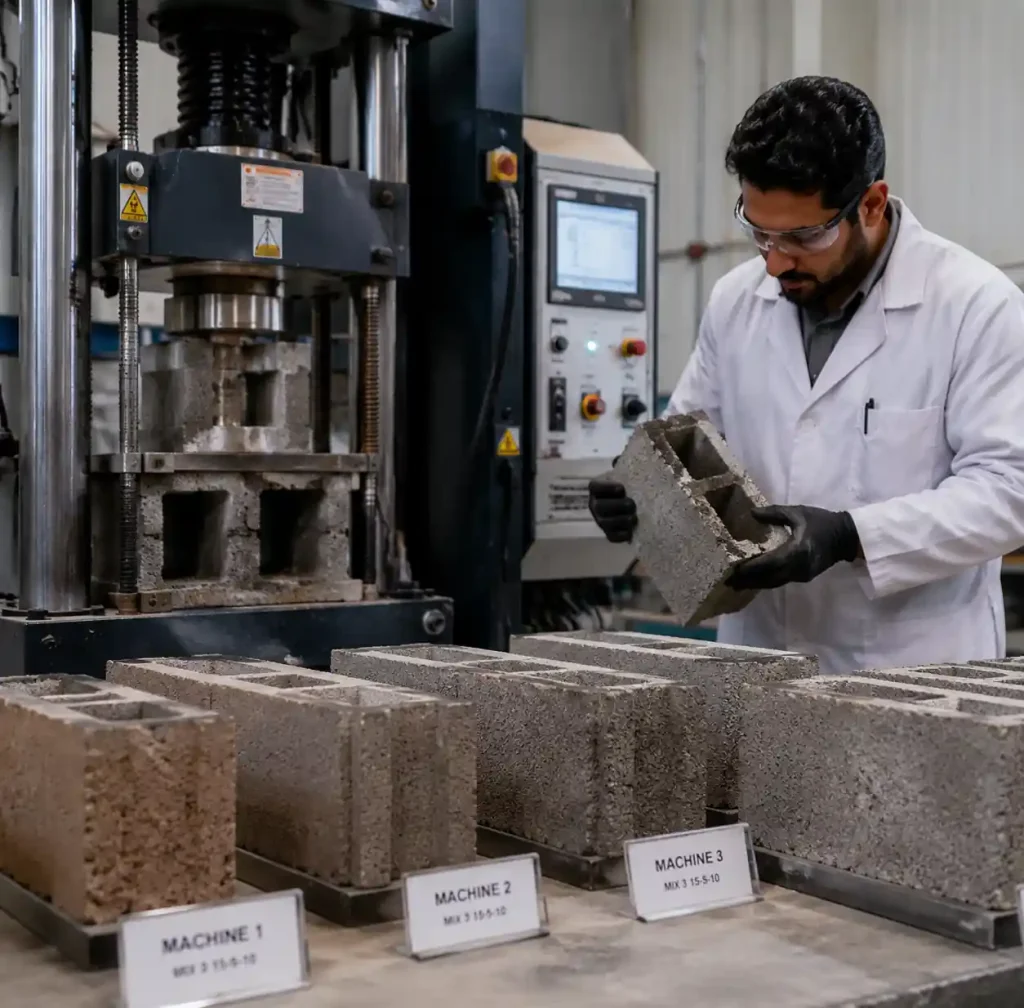
Manual machines suit residential and light commercial construction. Semi-automatic machines reliably meet national standards for commercial buildings. Automatic lines consistently meet international standards including ASTM specifications and European norms required for exports and engineered structural applications.
Scaling Your Production Over Time
Many successful producers start with manual machines to validate market demand with minimal risk. After 6-12 months, they upgrade to semi-automatic machines when demand is proven. The transition to automatic lines typically comes after 18-24 months of successful semi-automatic operation.
When scaling, you can add multiple machines of the current type for flexibility and redundancy, or upgrade to more automated systems for better long-term economics. Most successful strategies combine both approaches: add multiple manual or semi-automatic machines initially, then consolidate to automatic production once volume exceeds 400,000-500,000 blocks monthly.
Key Decision Factors Summary
| Factor | Руководство | Полуавтоматический | Automatic |
|---|---|---|---|
| Initial Investment | $5,000-$12,000 | $12,000-$23,000 | $80,000-$230,000 |
| Production Capacity/Day | 2,500-3,600 blocks | 5,500-7,500 blocks | 15,000-46,000 blocks |
| Workers Required | 3-4 | 4-5 | 5-7 |
| Labor Cost per 1,000 Blocks | $42 | $18 | $6 |
| Break-Even Period | 28-30 days | 18-20 days | 26-28 days |
| Maintenance Cost/Year | $300-$600 | $800-$1,500 | $5,000-$12,000 |
| Идеально подходит для | Startups, local supply | Medium-scale production | Large contracts, wholesale |
| Technical Skill Required | Низкий | Moderate | Высокий |
| Quality Consistency | Variable (15-20%) | Good (5-8%) | Excellent (3-5%) |
Часто задаваемые вопросы
Can I upgrade a manual machine to semi-automatic later?
No, they have different structural designs and control systems. Plan your purchase based on expected production needs for 18-24 months rather than hoping to upgrade.
How much electricity does each machine type consume?
Manual machines consume 11-18 kW per hour of operation, semi-automatic machines use 20-24 kW per hour, and automatic production lines require 70-110 kW per hour depending on line configuration. Your electricity costs per block decrease with automation because of higher production output during each hour of operation.
What is the lifespan of each machine type?
All three machine types last 10-15 years with proper maintenance. Manual machines sometimes last longer because of simpler construction with fewer complex components. Machine lifespan depends more on maintenance quality and operating conditions than on automation level.
Can one operator run multiple manual or semi-automatic machines?
One operator cannot effectively run multiple manual machines due to constant material loading and block handling requirements. One trained operator can monitor two semi-automatic machines if well-organized, but efficiency typically decreases 15-20%.
Which machine type is best for making paver blocks?
All three types produce quality paver blocks with appropriate molds. Manual and semi-automatic machines work well for paver production because paver blocks require frequent mold changes to produce different colors and patterns in small batches. Автоматические линии excel at high-volume paver production when you produce large quantities of standard designs.
Do I need special training to operate these machines?
Manual machines require 2-3 days basic training. Semi-automatic needs 5-7 days including PLC basics. Automatic lines require 2-3 weeks comprehensive training. Most manufacturers provide training during installation.
Заключение
Choosing between automatic, semi-automatic, and manual block machines determines your production capacity, cost structure, and competitive position. Manual machines minimize risk for testing markets and serving local demand up to 100,000 blocks monthly. Semi-automatic machines deliver fastest ROI and suit established businesses scaling from 150,000 to 250,000 blocks monthly. Automatic production lines generate maximum profitability when you have secured high-volume demand exceeding 500,000 blocks monthly.
Your decision should balance current capital availability, confirmed market demand, labor costs in your location, and growth ambitions. Most successful producers start with lower automation levels to prove demand, then scale to more automated systems as volume grows.
Raytone Block Machinery manufactures автоматический, полуавтоматический, и ручные блочные станки serving producers in over 100 countries worldwide. Our machines combine proven hydraulic systems with modern PLC controls and are backed by comprehensive training and technical support. Whether launching a new block business or installing automatic production lines for large-scale operations, Raytone provides complete solutions matched to your production requirements and budget.
Contact our technical team today for detailed specifications, production line designs, and customized recommendations based on your specific production goals and market conditions.