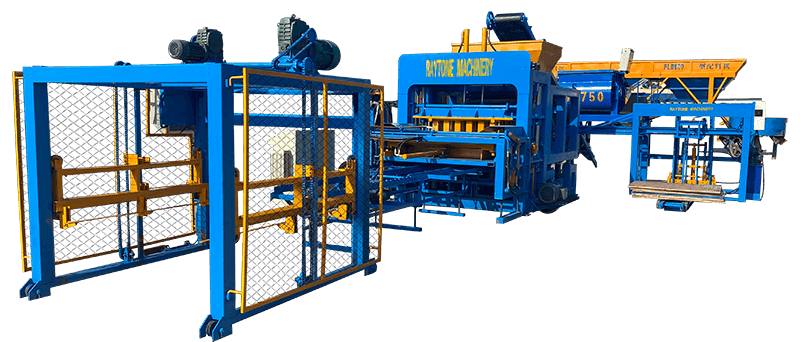






The global construction industry consumes over 1.4 trillion bricks annually. With urbanization accelerating, brick making remains a viable manufacturing business with proven profitability. This guide covers equipment selection, raw material sourcing, regulatory compliance, production workflows, and market positioning for 2026.
Understanding the Brick Making Business Model
Brick making operations range from small manual units producing 3,000-5,000 blocks per day to automated plants manufacturing 50,000+ blocks per shift. Raw materials (cement, aggregates, water) convert into finished concrete blocks through molding and curing.
Three production models exist: manual operations (minimal capital, higher labor), semi-automatic systems (balanced), and automatic lines (max output, lower per-unit costs). Your choice depends on target volume, available capital, and labor economics.
Investment Requirements and Startup Costs
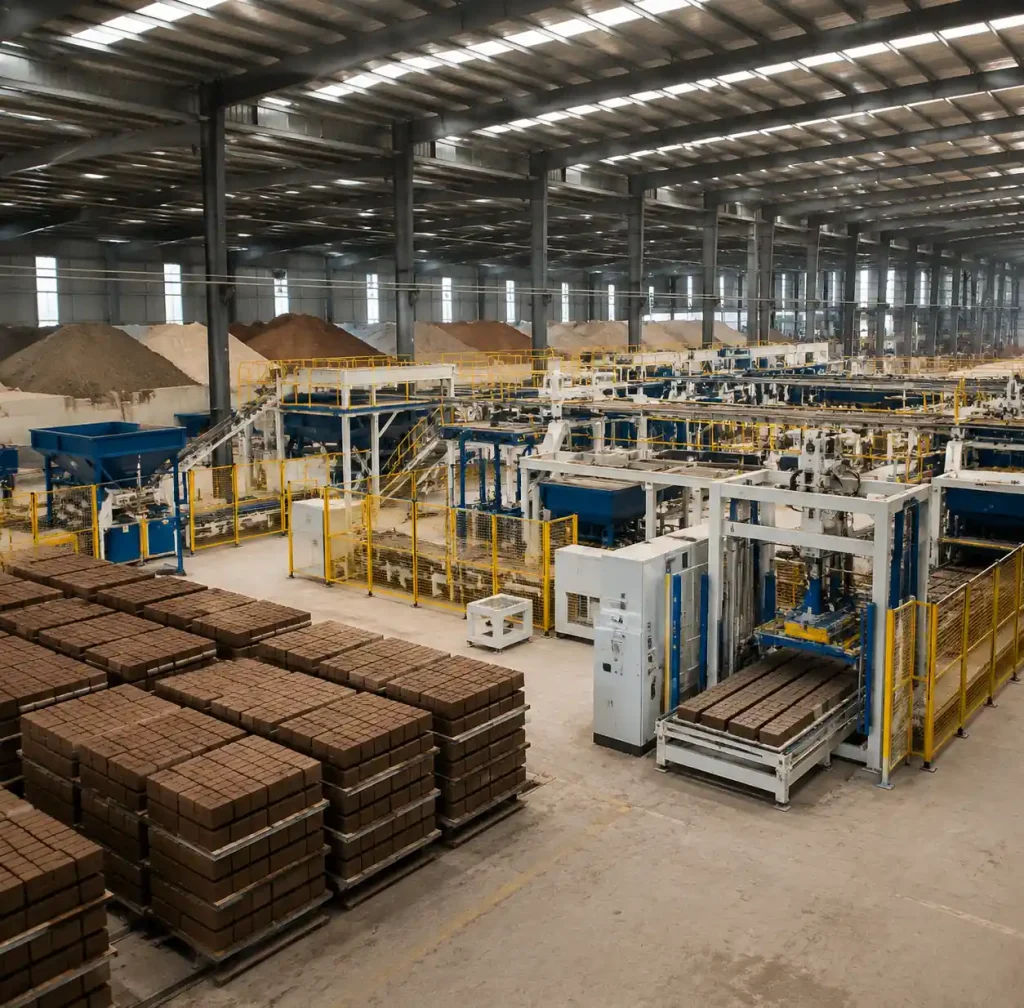
Capital requirements vary significantly by production scale and automation level. Manual operations start around $20,000-$35,000, while automated plants require $190,000-$380,000+.
| Production Scale | Equipment Investment | Working Capital | Total Initial Investment |
|---|---|---|---|
| Manual (3,000-5,000 blocks/day) | $15,000-$25,000 | $5,000-$10,000 | $20,000-$35,000 |
| Semi-Automatic (8,000-15,000 blocks/day) | $35,000-$80,000 | $15,000-$25,000 | $50,000-$105,000 |
| Automatic (25,000-50,000 blocks/day) | $150,000-$300,000 | $40,000-$80,000 | $190,000-$380,000 |
Beyond machinery, budget for land (minimum 3,000-5,000 sq ft), raw material inventory, utilities, permits, and 3-6 months operating expenses. Equipment constitutes 60-70% of startup investment.
Selecting the Right Block Making Equipment
Machine selection directly impacts production capacity, labor requirements, product quality, and operational costs.
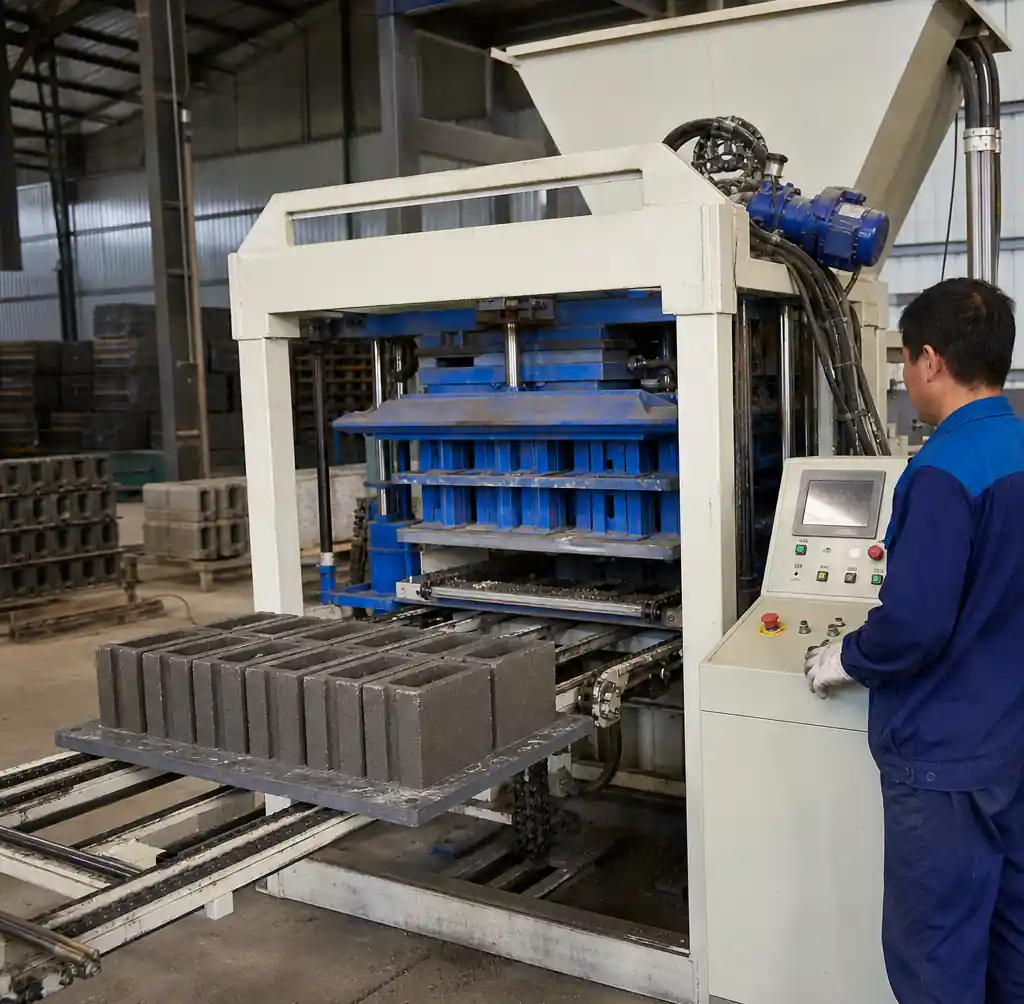
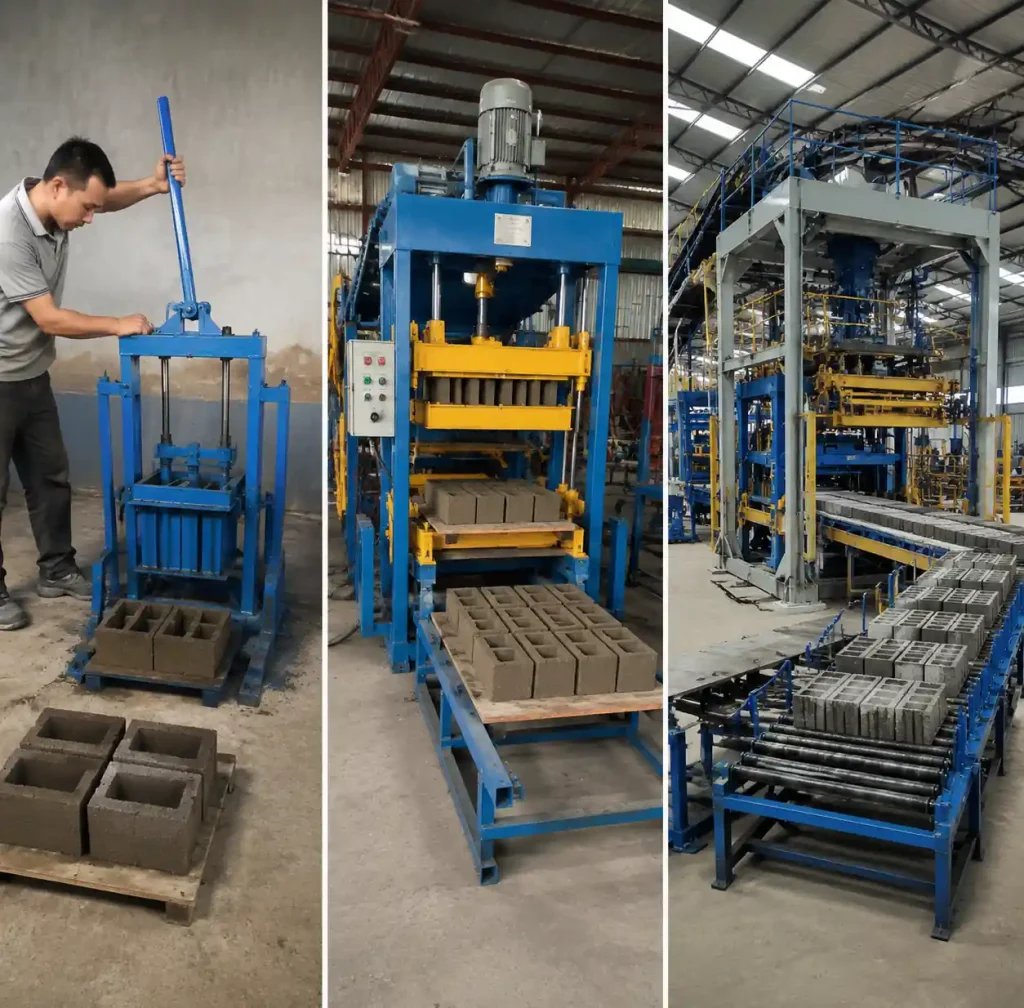
Manual machines like the QT4-40 produce 2,880-4,320 blocks per shift with 4-6 workers. Capital costs stay low ($8,000-$15,000), but labor intensity limits scalability.
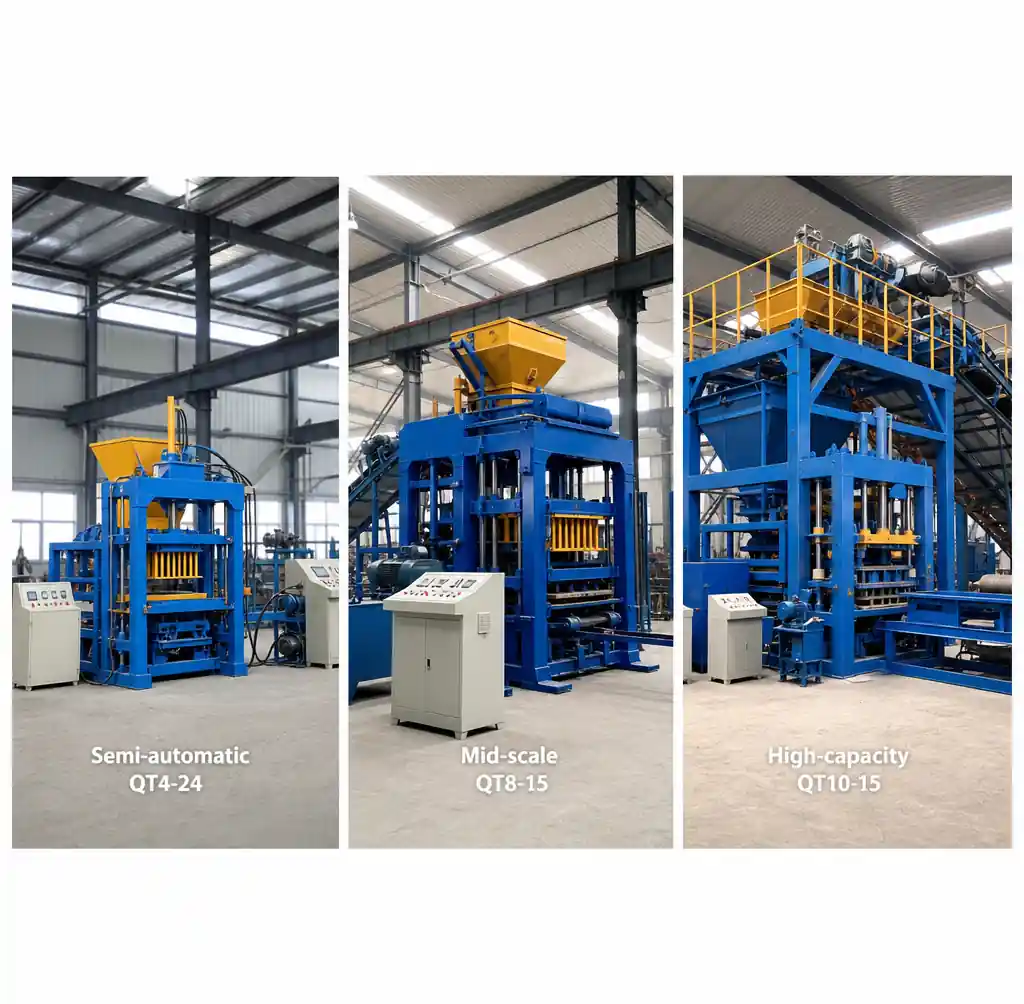
Semi-automatic machines such as QT4-24 or QT4-30 increase output to 7,200-15,000 blocks per shift with 4-5 workers. Investment ranges $25,000-$60,000.
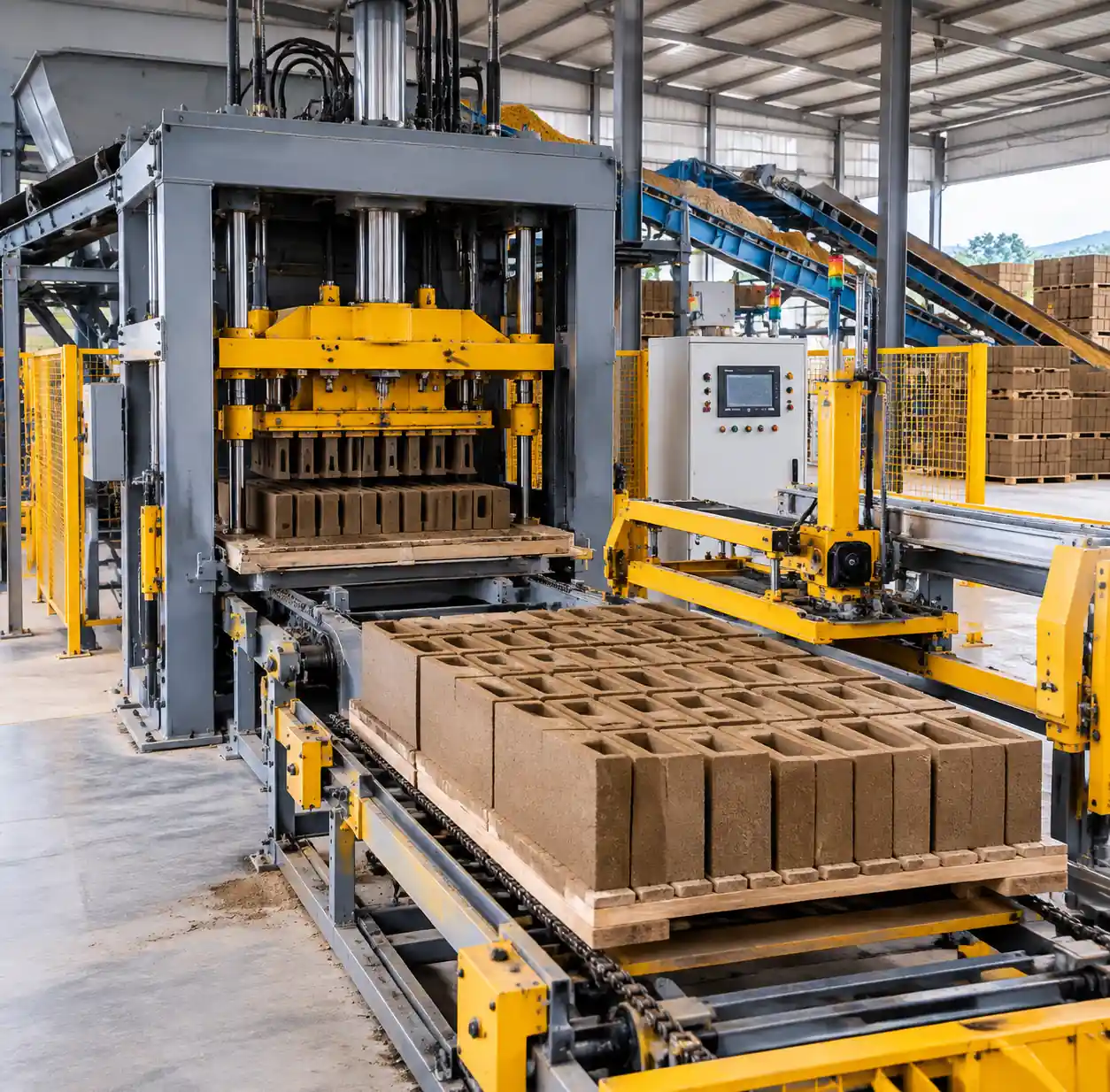
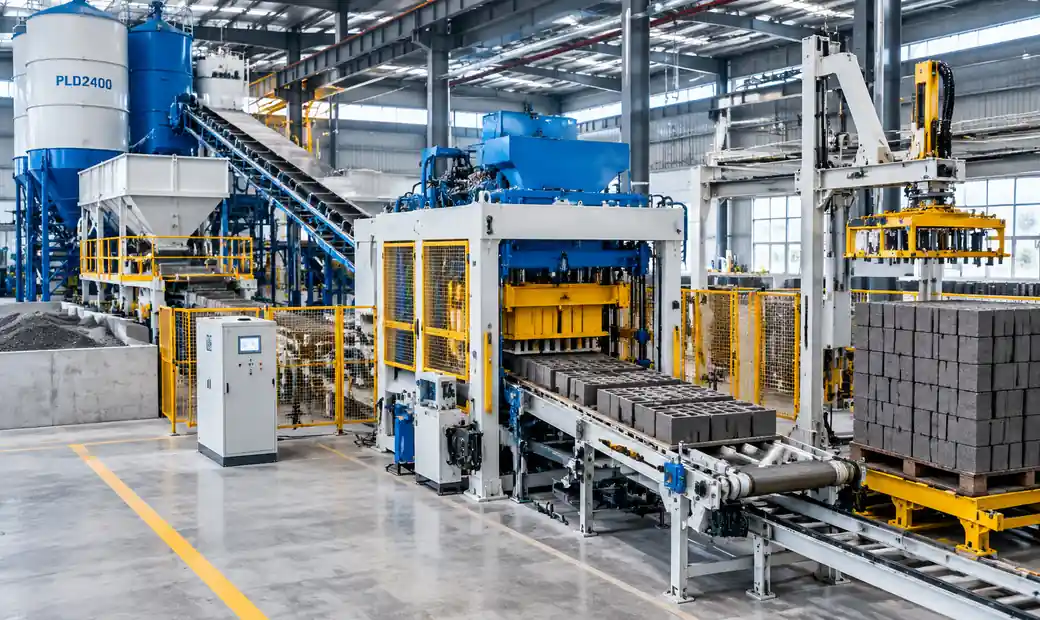
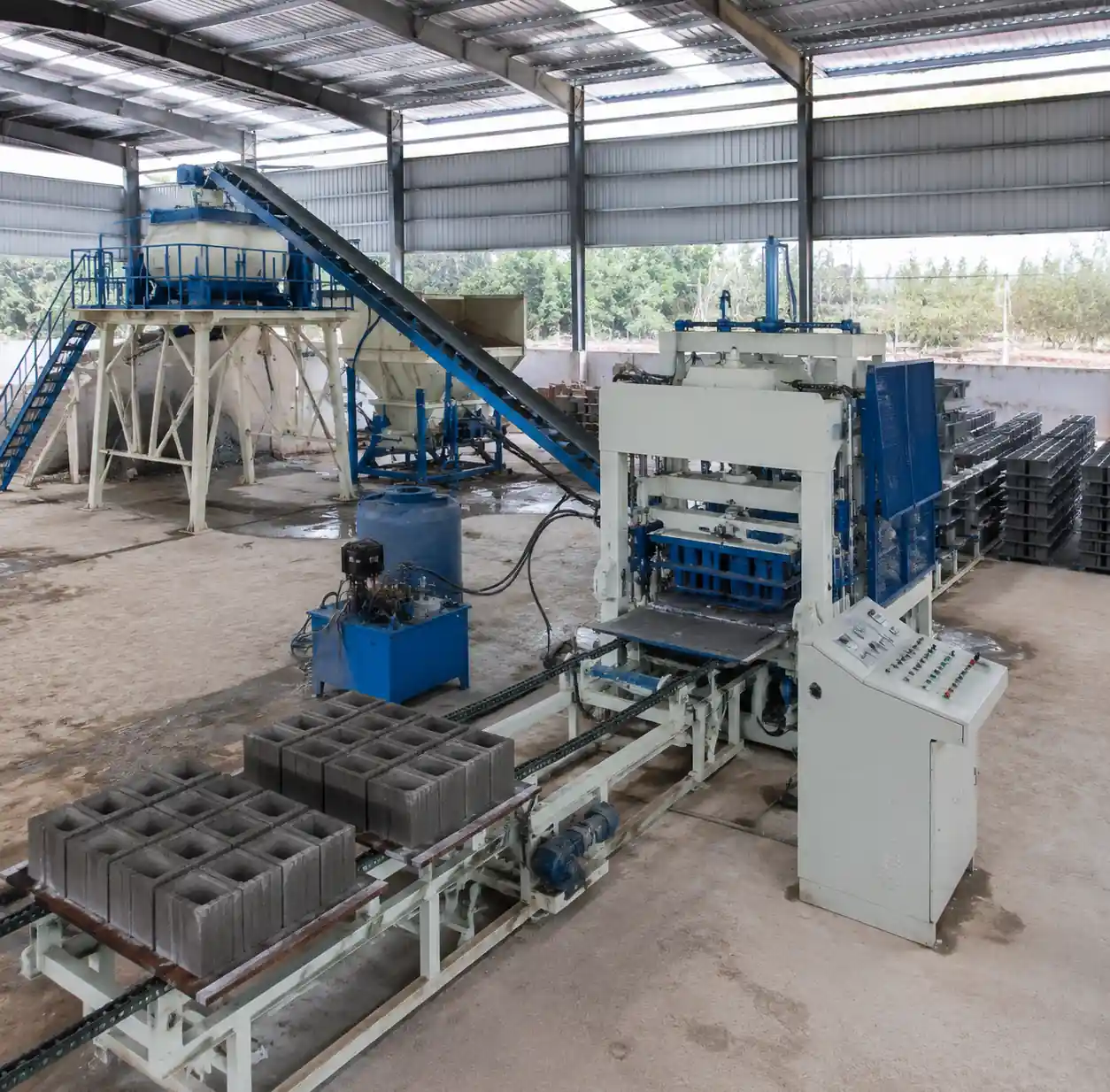
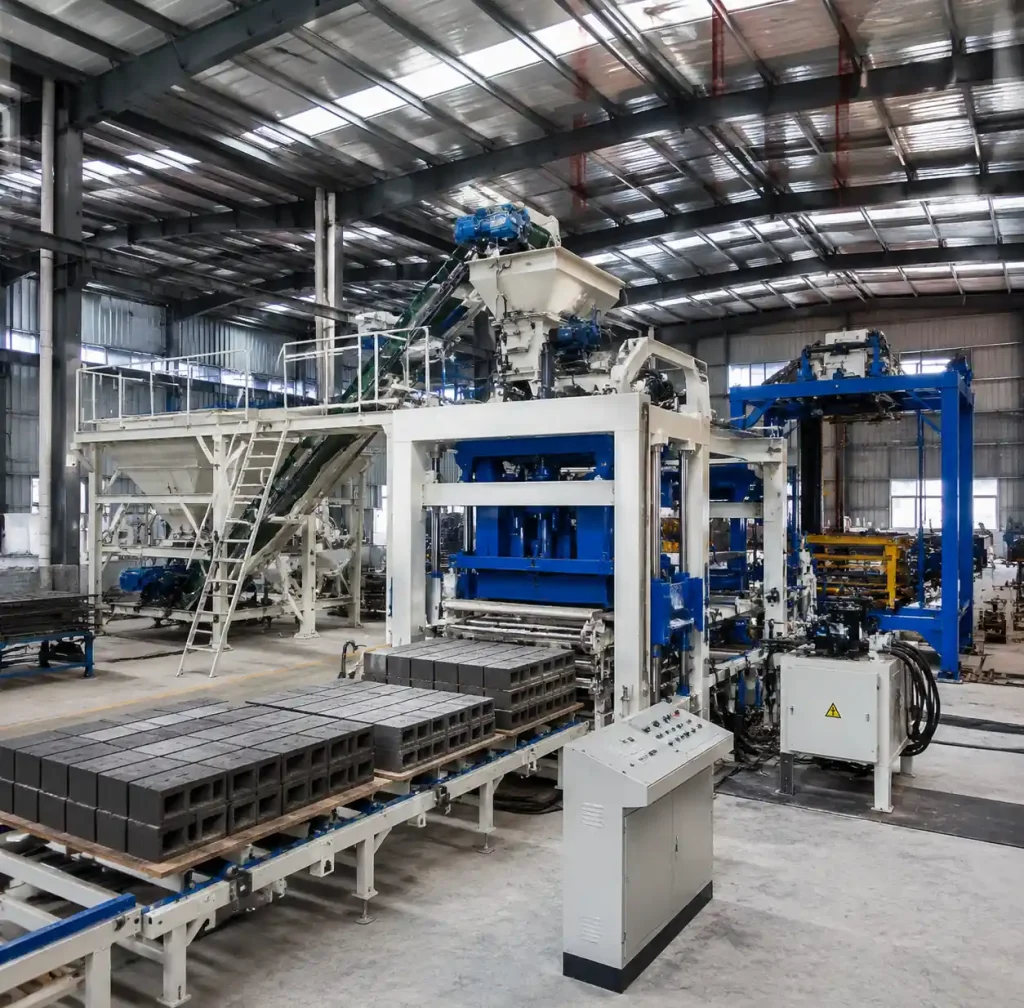
Fully automatic lines integrate batching, mixing, conveying, and stacking controlled by PLC. Models like QT10-15 or QT8-15 require $100,000-$250,000 investment but achieve lowest per-unit costs.
| Machine Type | Production Capacity (8 hours) | Labor Required | Investment Range | Best For |
|---|---|---|---|---|
| Manual (QT4-40) | 2,880-4,320 blocks | 4-6 workers | $8,000-$15,000 | Small-scale, low-cost labor |
| Semi-Automatic (QT4-24) | 7,200-11,000 blocks | 4-5 workers | $25,000-$60,000 | Medium-scale, balanced |
| Automatic (QT8-15) | 30,000-35,000 blocks | 5-7 workers | $100,000-$200,000 | Large-scale, high-volume |
| Automatic (QT10-15) | 35,000-46,000 blocks | 5-7 workers | $150,000-$250,000 | Industrial-scale, lowest cost |
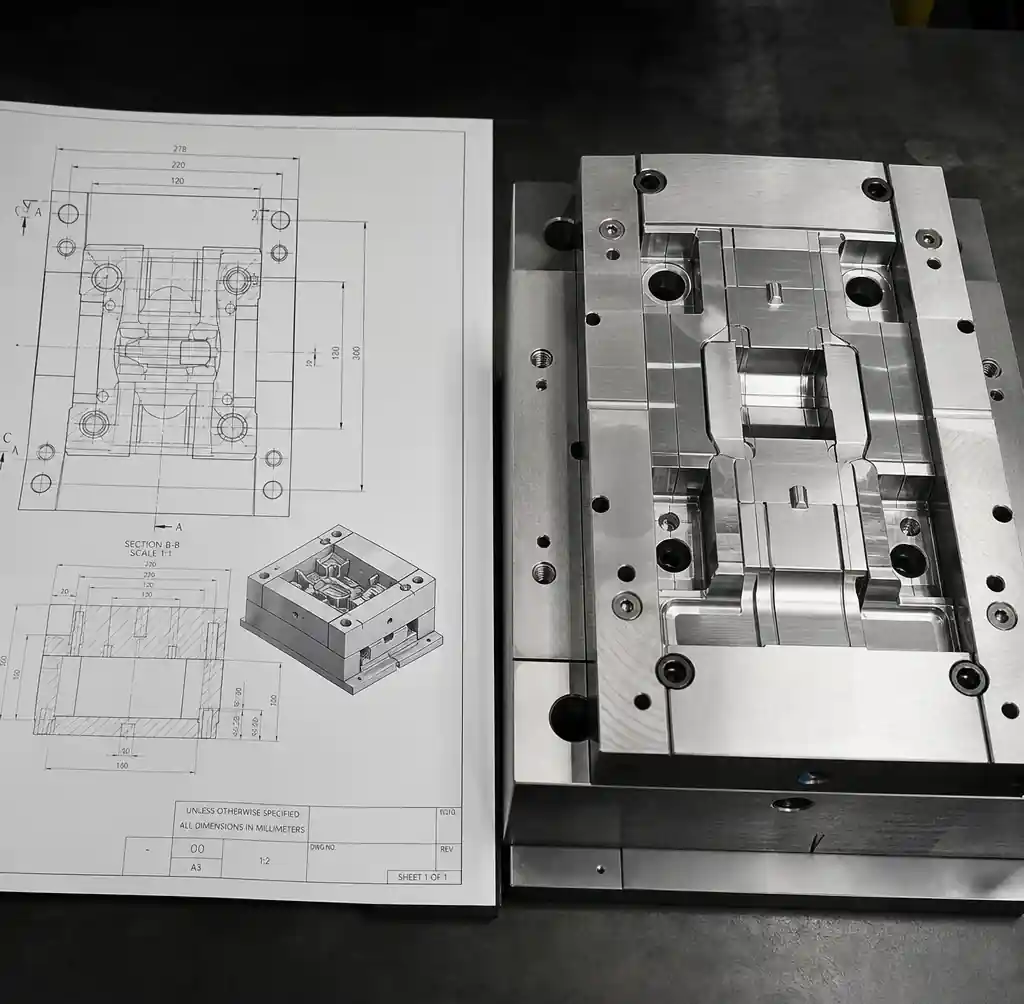
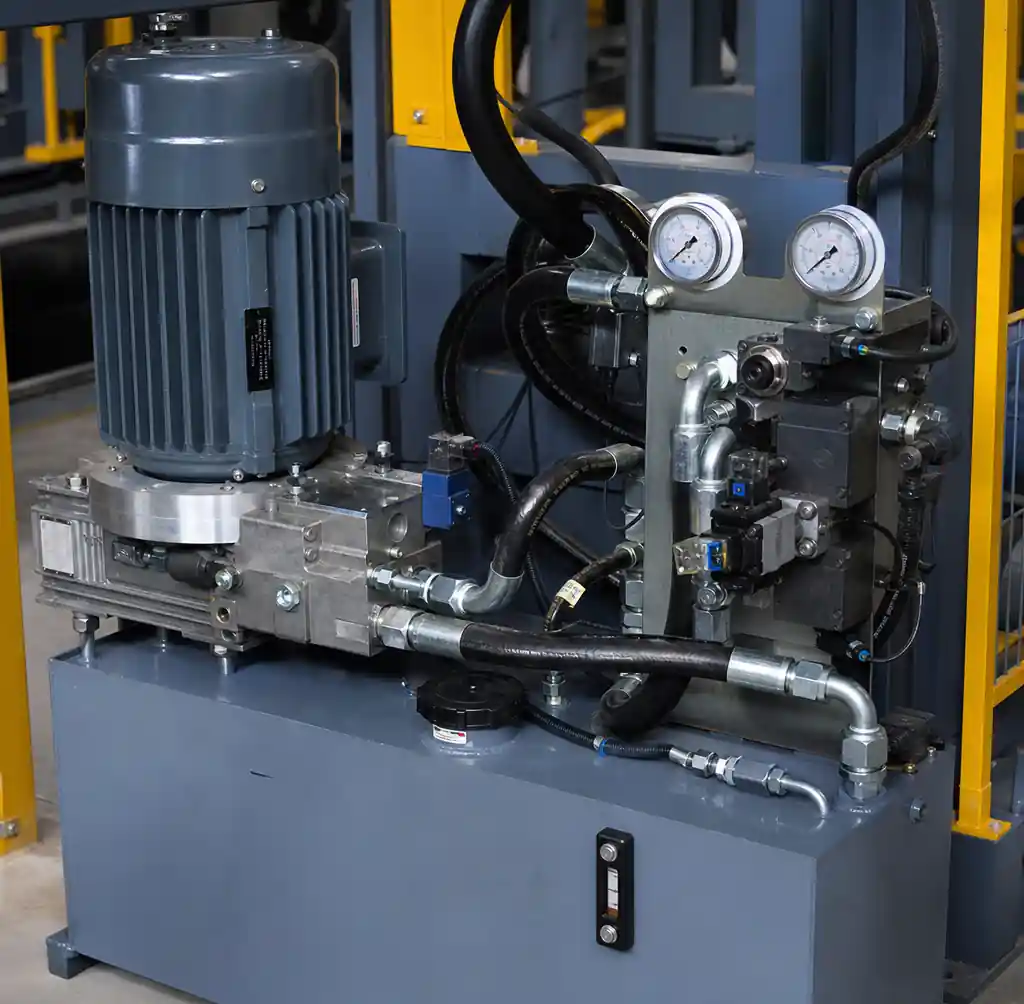
When evaluating machines, verify vibration force (KN), molding cycle time (15-40 seconds), mold compatibility, and component quality. Raytone uses Siemens PLC, Schneider electrical, and Yuken hydraulic components. Consider the complete production line solution rather than standalone machines.
Raw Material Sourcing and Supply Chain
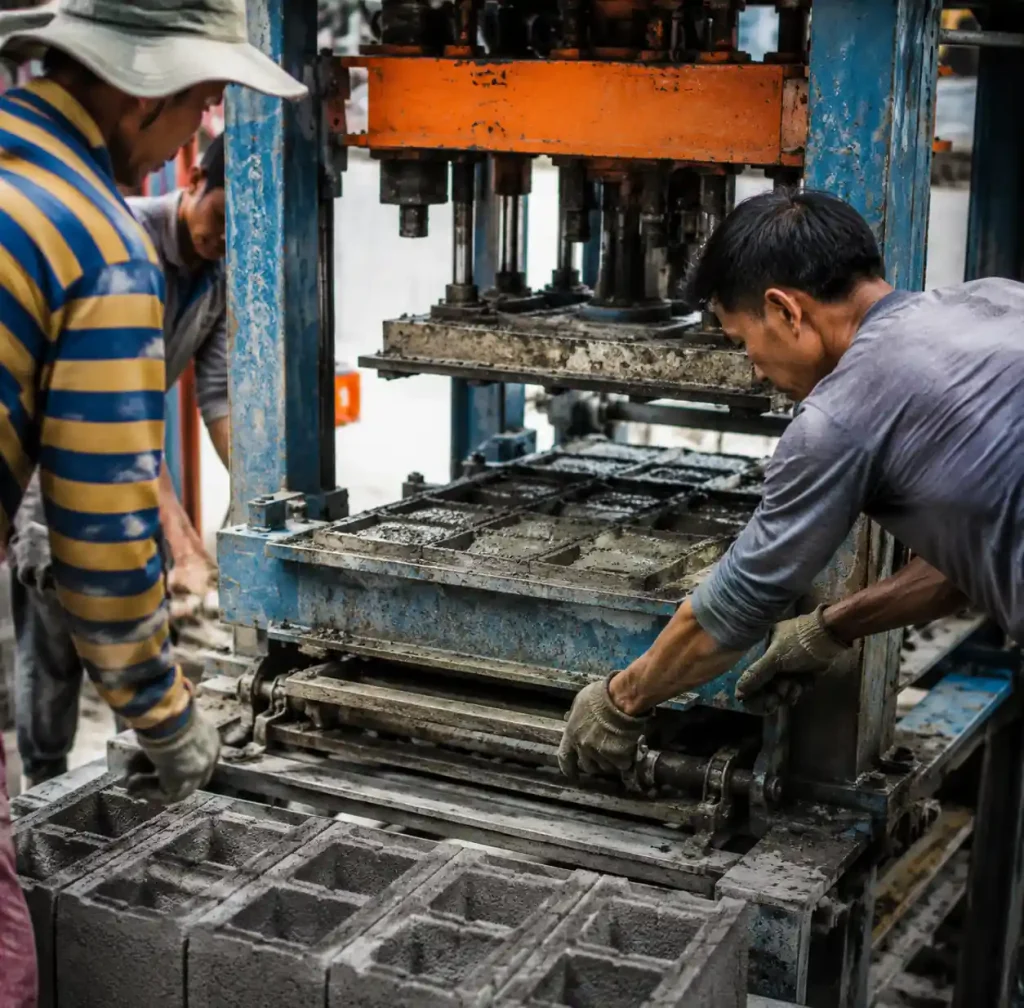
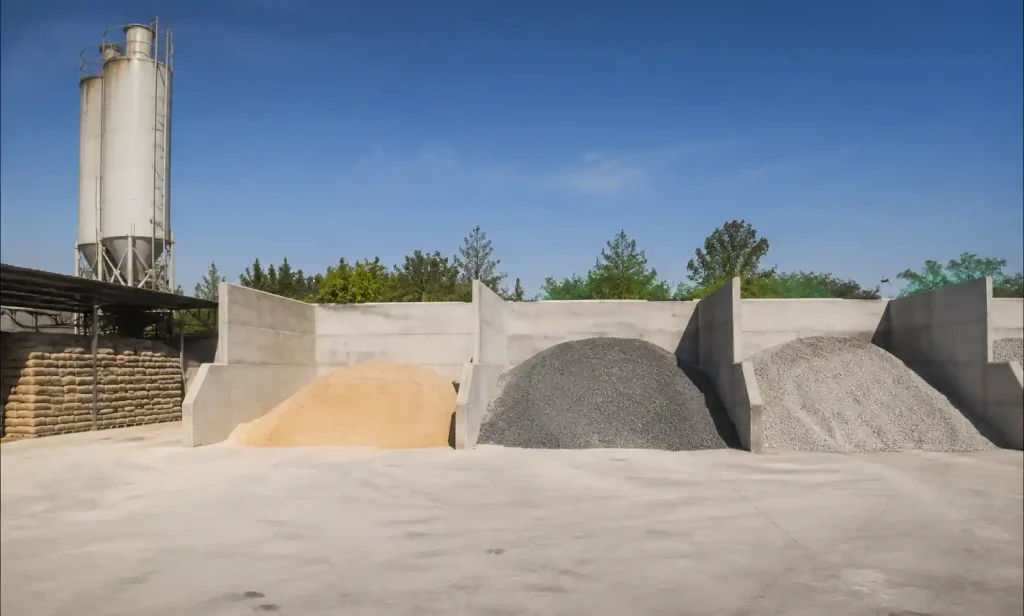
Concrete block production requires cement (10-15%), aggregates (70-75%), and water (10-15%). Raw material costs represent 40-50% of production expenses.
Cement: establish accounts with regional manufacturers. Bulk purchasing (minimum 20-ton orders) secures better pricing. You need approximately 30-50kg cement per cubic meter of concrete.
Aggregates: identify quarries or sand suppliers within 50km. Quality affects block strength and appearance. Sand should be clean and well-graded.
Water: quality matters significantly. High salinity impairs cement hydration. Daily consumption ranges from 8-20 tons. Establish relationships with multiple suppliers to avoid stoppages.
Licensing, Permits, and Regulatory Compliance
Legal requirements vary by jurisdiction but typically include: business registration, environmental permits (dust, water, noise), building permits (zoning compliance), and product quality certifications (ASTM C90, BS 6073).
Start with business registration and tax identification. Environmental permits require dust suppression systems and proper material storage. Safety compliance includes machine guarding, PPE, and workers’ compensation coverage.
Production Operations Setup
Facility layout significantly impacts efficiency. Organize into zones: raw material storage, batching/mixing, molding, curing, and finished product storage. Material flow should minimize handling.
Raw material storage requires weather protection. Cement needs covered storage. Aggregates can be stored in open bays with drainage. The batching and mixing area houses your batching machine and mixer positioned for gravity-fed transfer. Twin-shaft mixers like JS500 or JS750 provide thorough mixing in 60-second cycles.
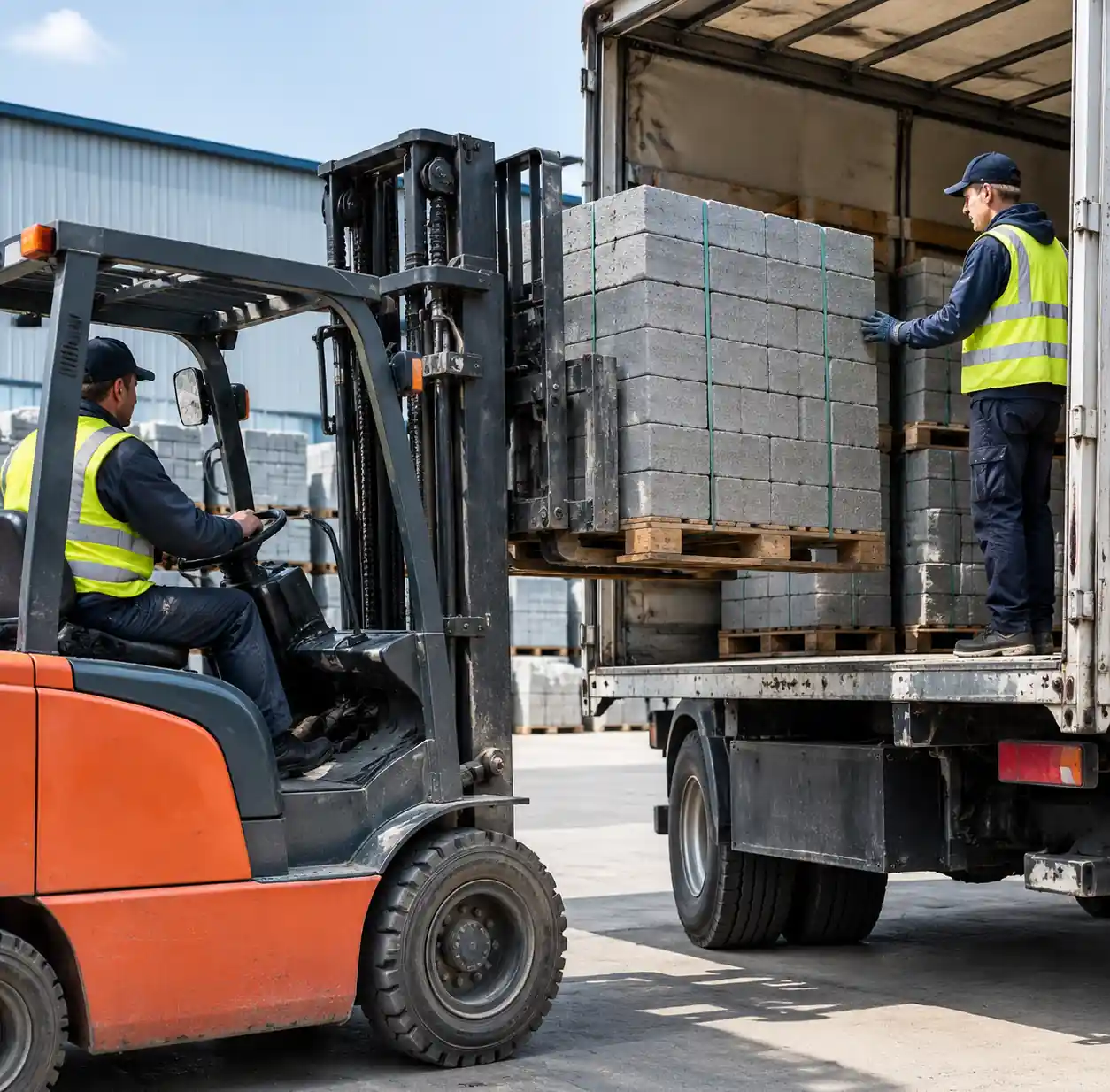
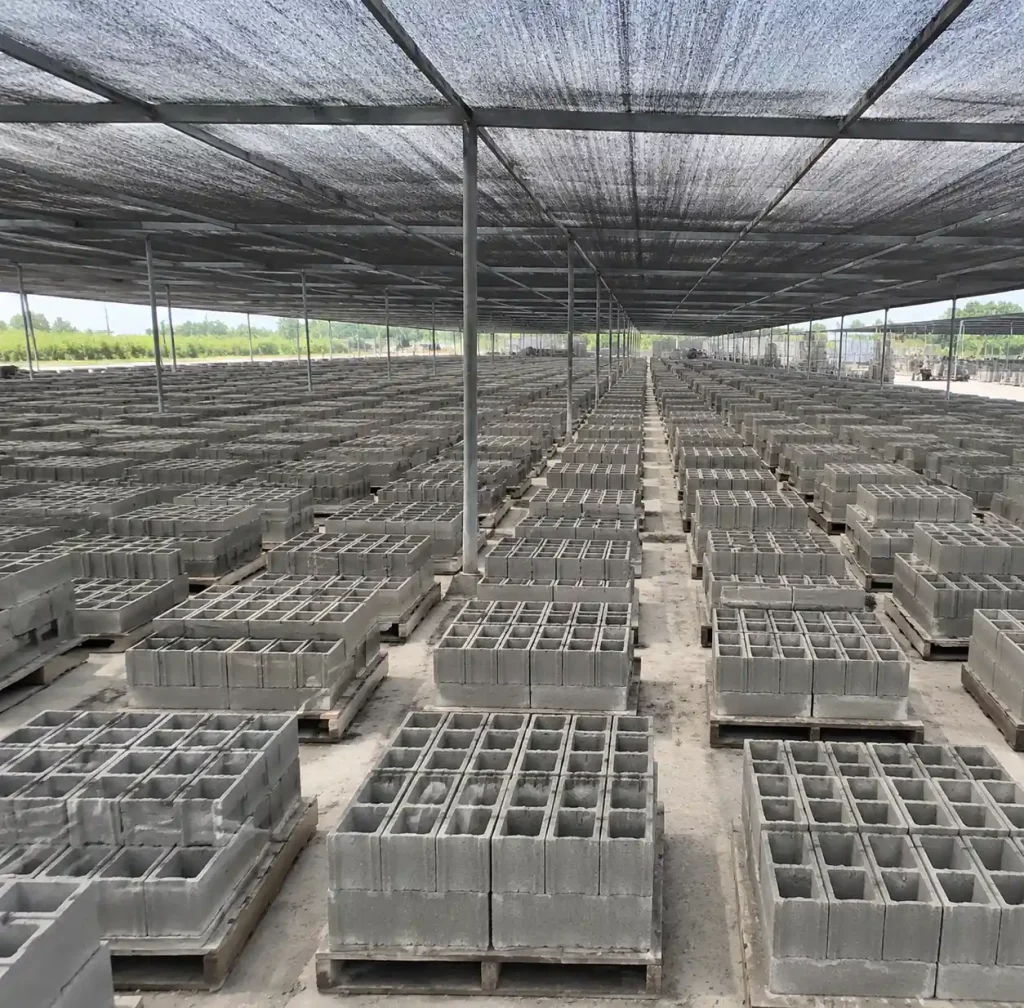
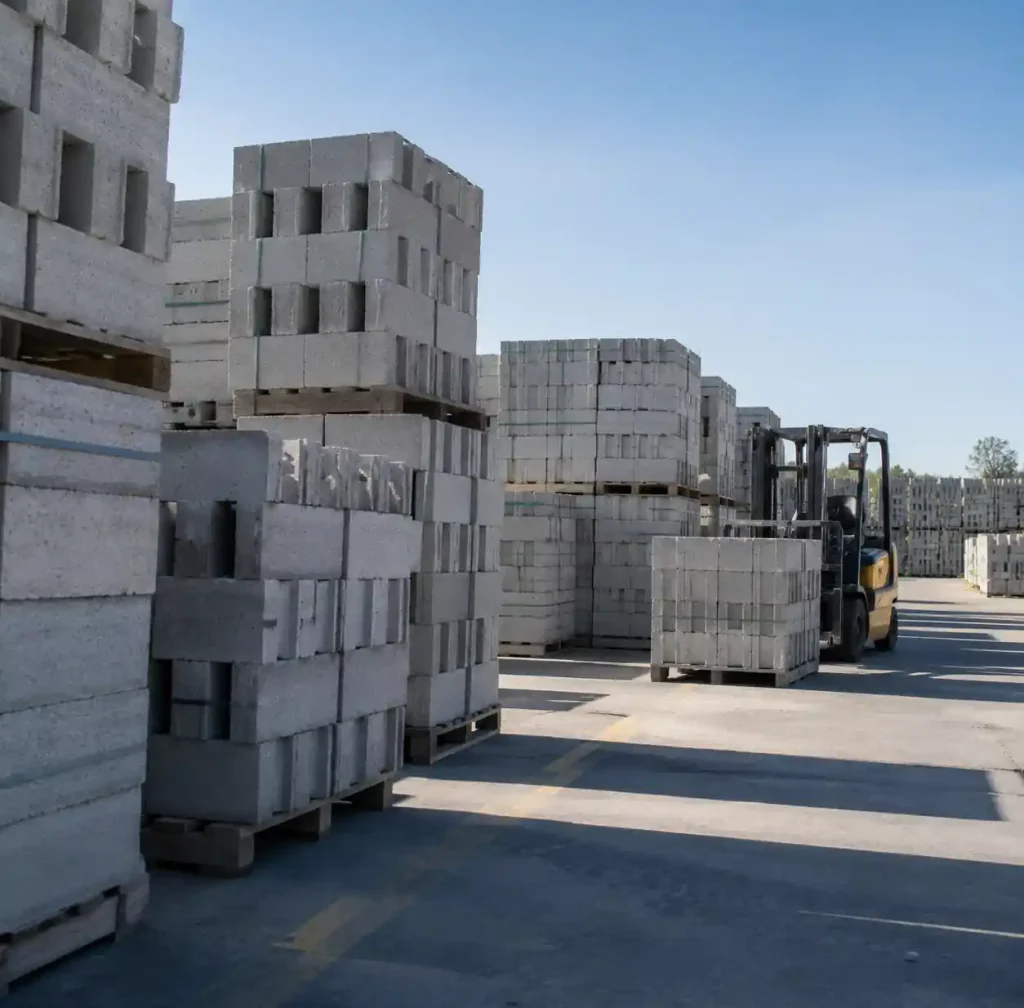
The molding zone requires adequate space for pallet handling and inspection. Curing areas need substantial space – blocks cure 7-28 days. Finished product storage organizes by size and grade with forklift access.
Production Costs and Profit Margins
Cost breakdown: raw materials (40-50%), labor (20-30%), energy (8-12%), maintenance (5-8%), overhead (10-15%).
Raw materials: $0.15-$0.25 per standard block (400×200×200mm). Labor: $0.10-$0.15 per block (manual), $0.03-$0.06 (automatic). Energy: $0.02-$0.05 per block. Maintenance: $0.02-$0.04 per block.
Total production costs: $0.35-$0.55 per block. Selling prices: $0.60-$1.00 per block. Gross margins: 30-50%.
A semi-automatic operation producing 8,000 blocks daily at 250 working days manufactures 2 million blocks annually. At $0.15 net profit per block, annual profit reaches $300,000. ROI typically ranges from 18-36 months.
Market Analysis and Customer Acquisition
Customer segments: individual home builders (500-5,000 blocks), small contractors (10,000-50,000 blocks), mid-sized construction companies (100,000-500,000 blocks per project).
Geographic analysis identifies construction activity within economical delivery radius (50-100km). Research residential developments, commercial construction, and infrastructure projects.
Marketing: direct relationships. Attend construction events, join builder associations, visit construction sites, establish relationships with material suppliers who refer customers.
Pricing: research local market prices. Price slightly below market during startup to build customer base, then adjust toward market rates.
Scaling and Growth Strategies
First stage: achieve full utilization and operational expertise. Once consistent quality and demand are established, expand capacity through: adding shifts (maximizes equipment investment), purchasing additional machines (reduces risk), upgrading to automated production lines (justified by volume).
Product diversification: most machines produce different sizes using alternative molds – paving blocks, interlocking blocks, hollow blocks. Geographic expansion: distribution yards or dealer partnerships in nearby cities.
Common Mistakes to Avoid
Undercapitalization: budget for 6-12 months operating expenses.
Poor equipment selection: cheap machines generate maintenance and quality problems; excessive automation ties up capital.
Inadequate curing: blocks need minimum 7 days (ideally 28 days) to achieve specified strength.
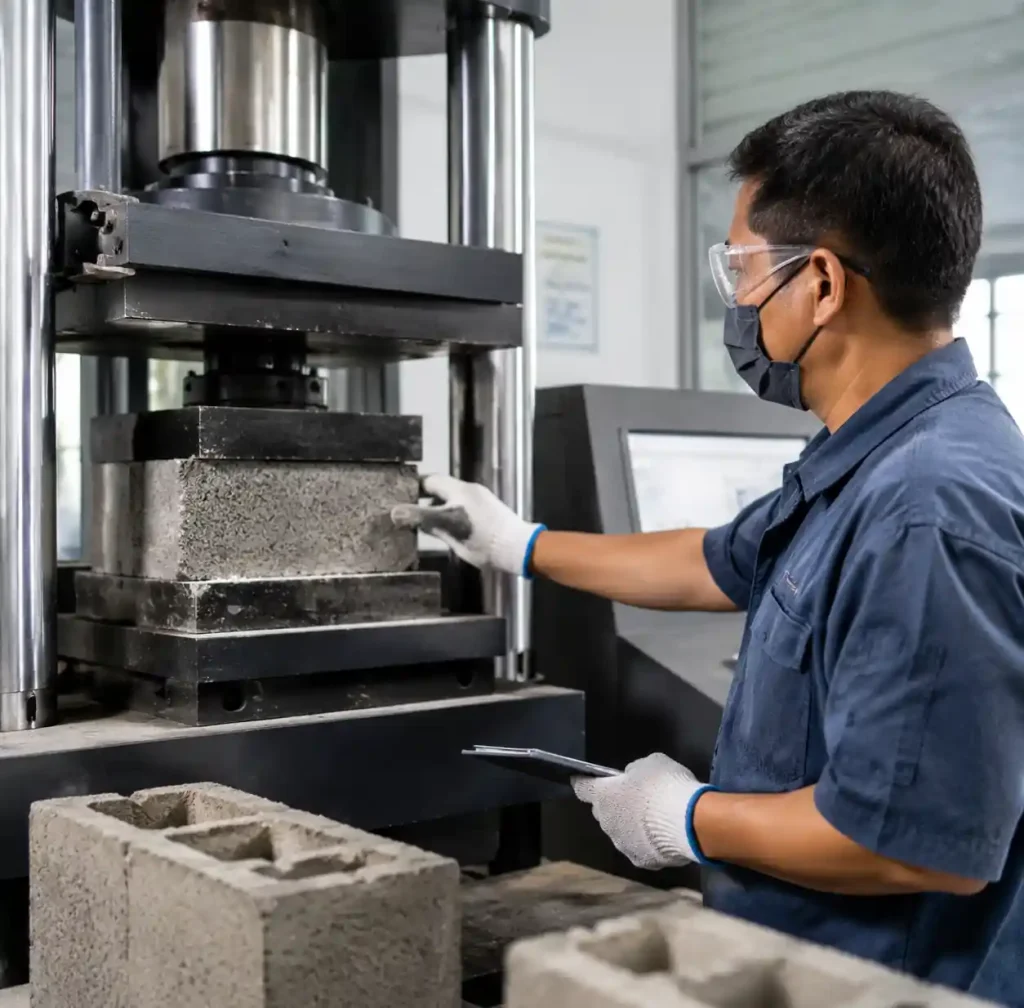
Neglecting quality control: implement routine testing of compressive strength, dimensional accuracy, and appearance.
Ignoring cash flow: construction customers often demand 30-60 day payment terms – maintain cash reserves.
Failure to maintain equipment: establish preventive maintenance schedules and stock critical spare parts.
FAQ
How much money do I need to start a brick making business?
$20,000-$35,000 for manual operations, $50,000-$105,000 for semi-automatic, and $190,000-$380,000 for automatic lines. Include equipment, working capital, facility setup, permits, and 3-6 months operating expenses.
What is the profit margin in brick making?
Gross profit margins of 30-50% and net margins of 15-25% are achievable. Production costs run $0.35-$0.55 per standard block with selling prices of $0.60-$1.00. Annual net profits range from $50,000-$300,000+ depending on scale.
Should I choose manual, semi-automatic, or automatic?
Manual suits under 5,000 blocks/day in low-cost labor markets. Semi-automatic works for 8,000-15,000 blocks/day balancing investment and efficiency. Automatic makes sense for 25,000+ blocks/day or large construction projects. Match machine type to market demand, capital, and labor economics.
How long to become profitable?
Positive cash flow within 4-8 months once production stabilises. Full ROI typically within 18-36 months depending on capacity utilisation and market conditions. Faster profitability comes from securing customers before production start, maintaining high utilisation rates, and cost control.
What raw materials are needed?
Cement (10-15%), aggregates including sand and crushed stone (70-75%), and water (10-15%). A standard 400×200×200mm hollow block uses approximately 30-50kg cement, 120-150kg aggregates, and 15-20 litres water. Establish reliable suppliers for consistent quality.
Conclusão
Starting a brick making business requires careful planning around equipment selection, raw material procurement, regulatory compliance, and market development. Success depends on matching capacity to demand, maintaining quality, managing cash flow, and building customer relationships. Equipment decisions set your trajectory – manual minimises capital but limits growth; semi-automatic balances investment and capacity; automatic demands substantial capital but achieves lowest per-unit costs. For reliable block making equipment, Raytone Block Machinery offers solutions from manual to fully automatic lines, serving over 100 countries. Contact us today for specifications, pricing, and business setup consultation.