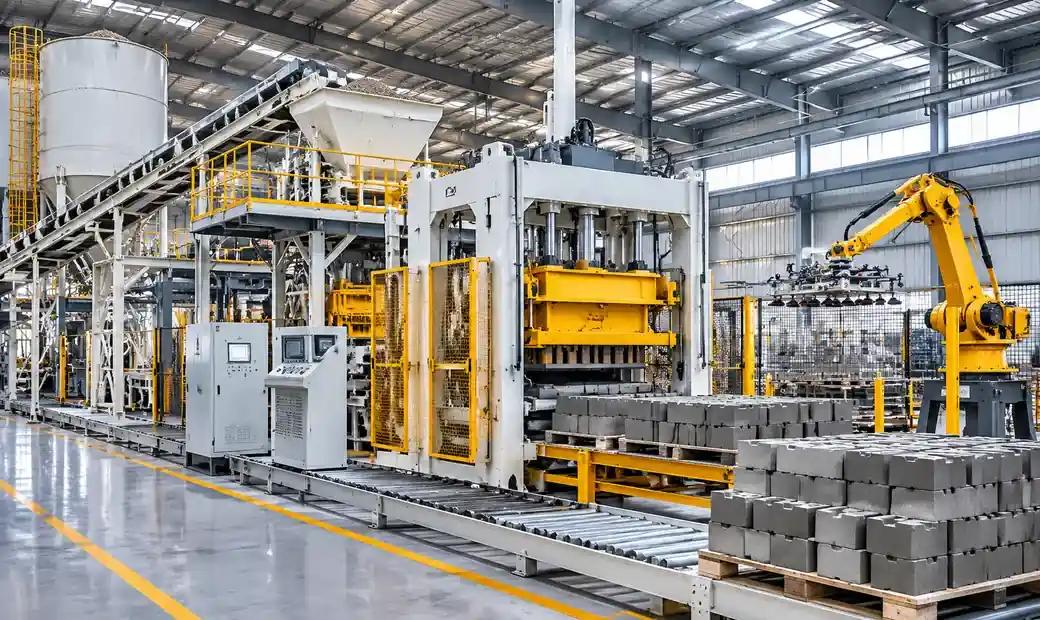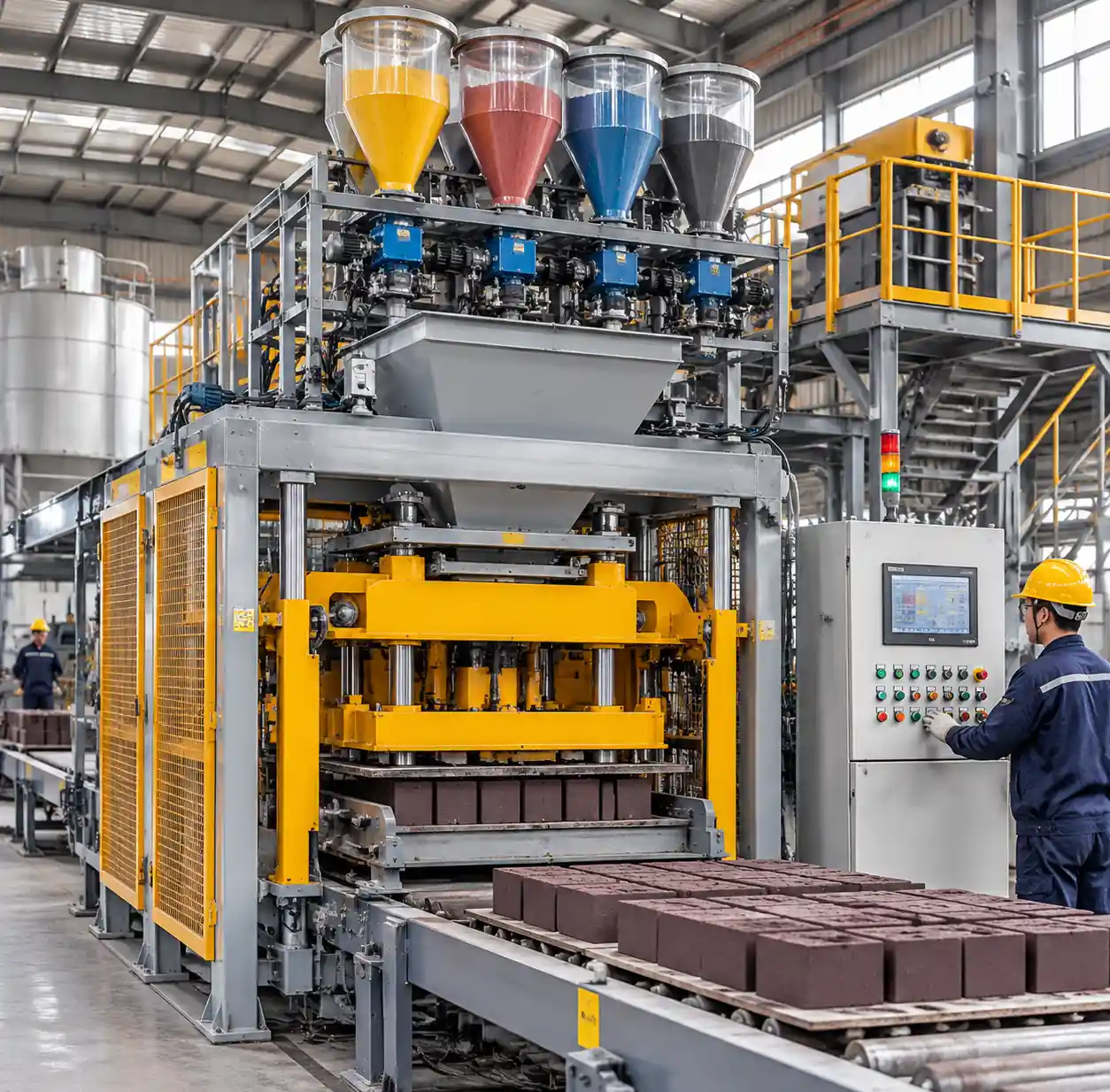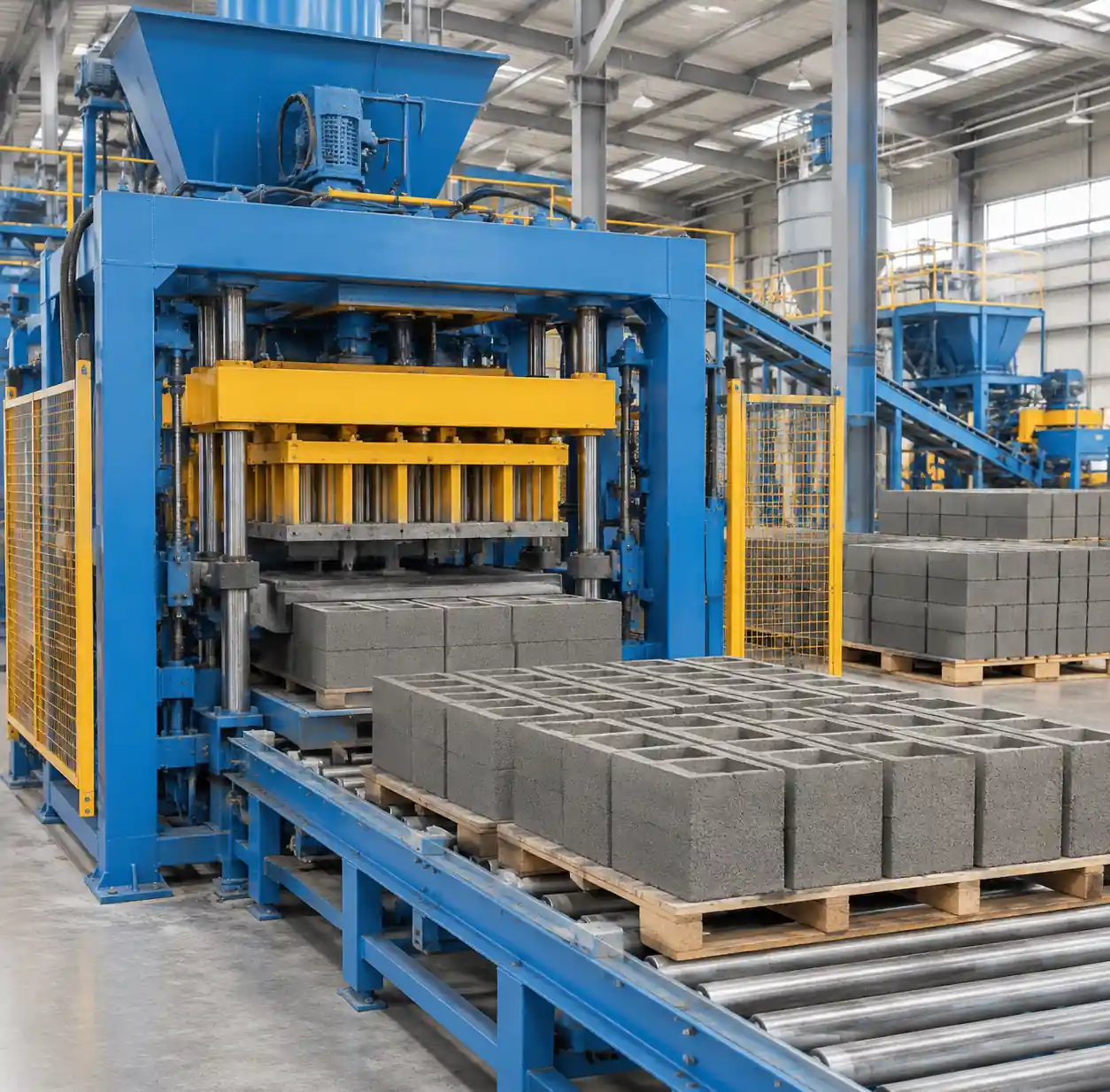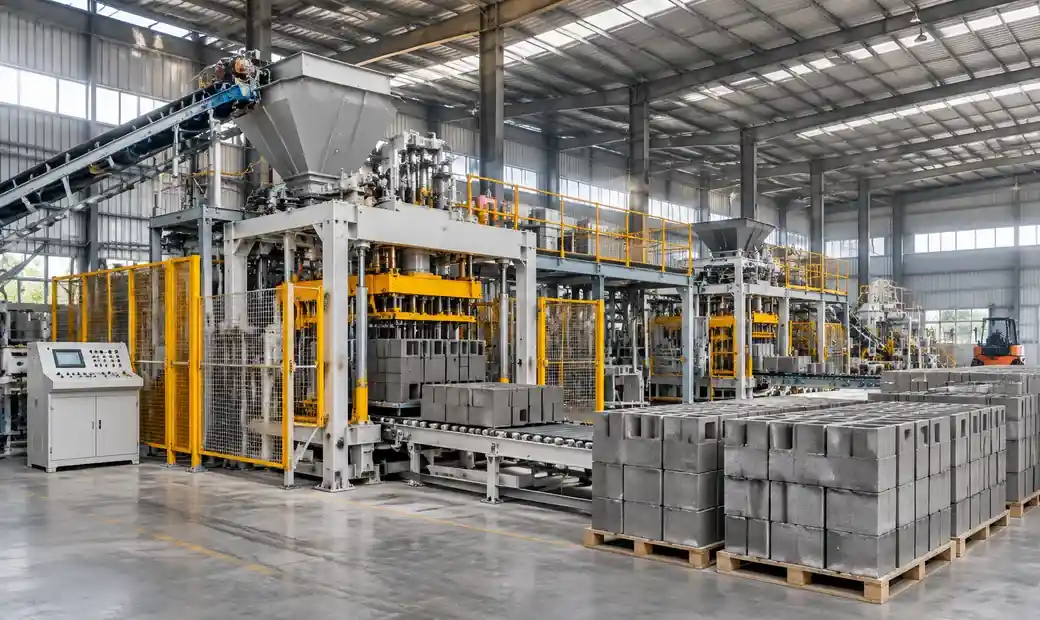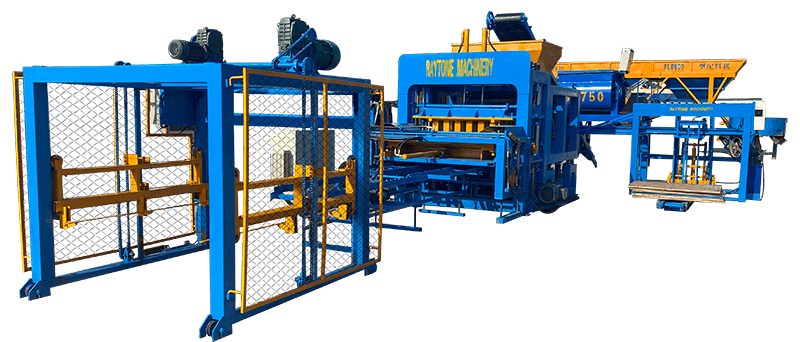
Proper block machine operator training prevents 80-90% of production accidents while increasing output by 25-40%. After training operators across 12 countries, the pattern is clear: untrained operators cause equipment damage, produce inconsistent blocks, and create dangerous work environments. Trained operators run machines at full capacity with minimal downtime and zero safety incidents.
This guide covers the essential technical skills, safety protocols, and certification requirements that separate competent operators from those who struggle. Whether operating manual, semi-automatic, or fully automatic systems, these fundamentals apply universally.
Core Technical Skills for Block Machine Operators
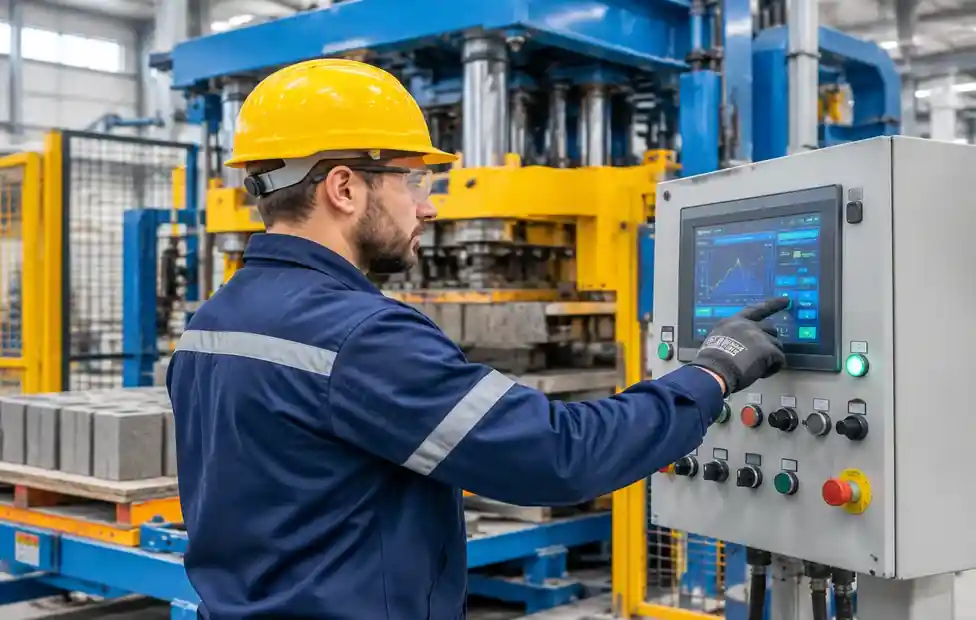
Successful block machine operation requires four skill categories: machine operation, quality control, preventive maintenance, and troubleshooting. Each skill builds on foundational knowledge that operators must master before running production independently.
Machine Operation Fundamentals
Material Loading and Mix Consistency: Operators must recognize proper concrete consistency by sight and feel. Too wet causes blocks to slump during demolding; too dry produces weak blocks with surface cracks. Experienced operators adjust water content within ±2% based on ambient humidity and aggregate moisture—a skill requiring 200-400 blocks of supervised practice.
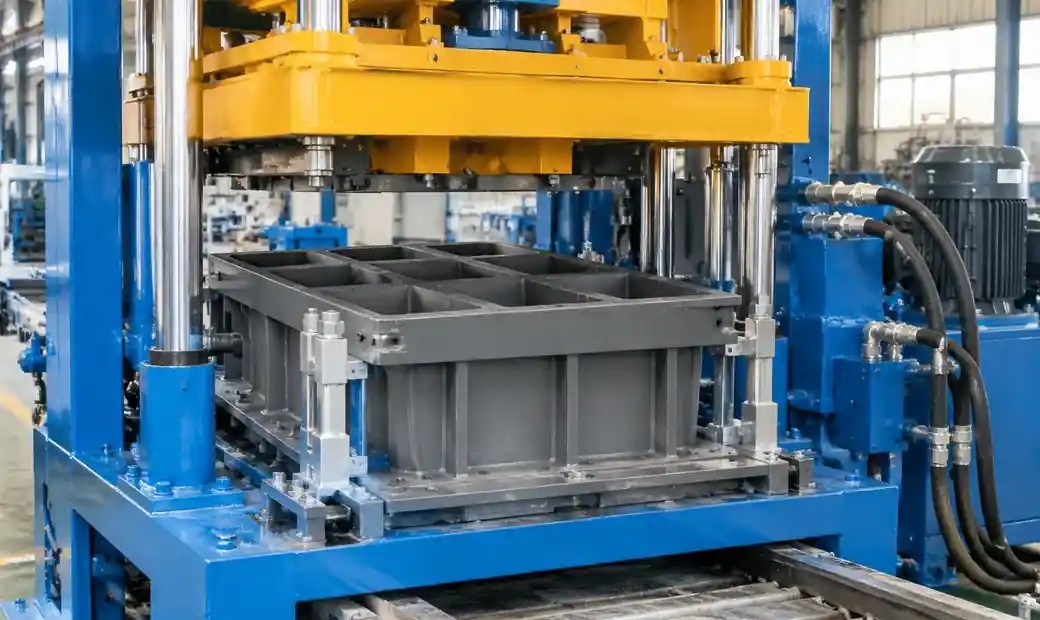
Mold Setup and Block Specifications: Manual, semi-automatic, and automatic machines require different mold-handling procedures. Operators must install molds correctly, verify dimensional accuracy with calipers, and adjust compression settings. Mold changeover on manual machines takes 15-25 minutes for trained operators versus 45-90 minutes for beginners.
Pressure and Vibration Control: Hydraulic systems operate at 160-220 bar depending on block type. Operators must understand pressure-density relationships: standard hollow blocks at 170-180 bar, solid blocks at 190-200 bar, high-density pavers at 210-220 bar. Incorrect pressure creates weak blocks or accelerates machine wear.
Cycle Timing Optimization: Production speed depends on correct cycle timing. Operators adjust compression duration, vibration periods, and demolding sequences based on mix design and block type. Rushing cycles by 15-20% causes defects; extending unnecessarily wastes capacity.
Quality Control Competencies
| Quality Check | Frequency | Measurement Method | Acceptance Criteria | Corrective Action |
|---|---|---|---|---|
| Block Dimensions | Every 50 blocks | Digital caliper, +/-1mm precision | Length/width/height within +3mm/-2mm | Adjust mold positioning, check mix consistency |
| Surface Finish | Every 25 blocks | Visual inspection, finger test | No cracks, smooth surface, sharp edges | Modify mix water content, adjust vibration |
| Weight Consistency | Every 100 blocks | Platform scale | ±3% variation from target | Calibrate material dosing, check compaction |
| Strength Sampling | 3 blocks per 1,000 | Compression testing at 7/28 days | Meet specification (typically 18-25 MPa) | Adjust cement ratio, increase compression |
| Hollow Core Alignment | Every 30 blocks | Visual inspection | Cores centered, walls uniform thickness | Realign core rods, check mold condition |
Operators document quality checks in production logs. Recognizing defect patterns early—before producing hundreds of substandard blocks—separates trained operators from those learning through expensive mistakes.
Preventive Maintenance Responsibilities
Daily operator maintenance prevents 70-80% of breakdowns. Trained operators perform these tasks in 15-20 minutes before production:
Hydraulic System Checks: Verify oil level in sight glass—low oil causes pump cavitation and seal damage. Check oil color (transparent amber is good; milky or dark requires immediate attention). Monitor operating temperature—consistently above 60°C indicates problems. Inspect hoses and connections for leaks before pressurizing.
Lubrication Points: Apply grease to mold guides, vibration table bearings, and pallet positioning mechanisms according to manufacturer schedules. Over-lubricating attracts concrete dust; under-lubricating causes accelerated wear.
Cleaning Procedures: Remove concrete buildup from molds, vibration table, and feed box. Hardened concrete on molds transfers to blocks as surface defects. Clean hydraulic cylinder rods to prevent seal damage from abrasive dust.
Wear Component Inspection: Check mold condition for cracks or wear—damaged molds produce defective blocks. Inspect pallet condition and replace cracked pallets before they break mid-cycle.
Critical Safety Protocols and Hazard Prevention
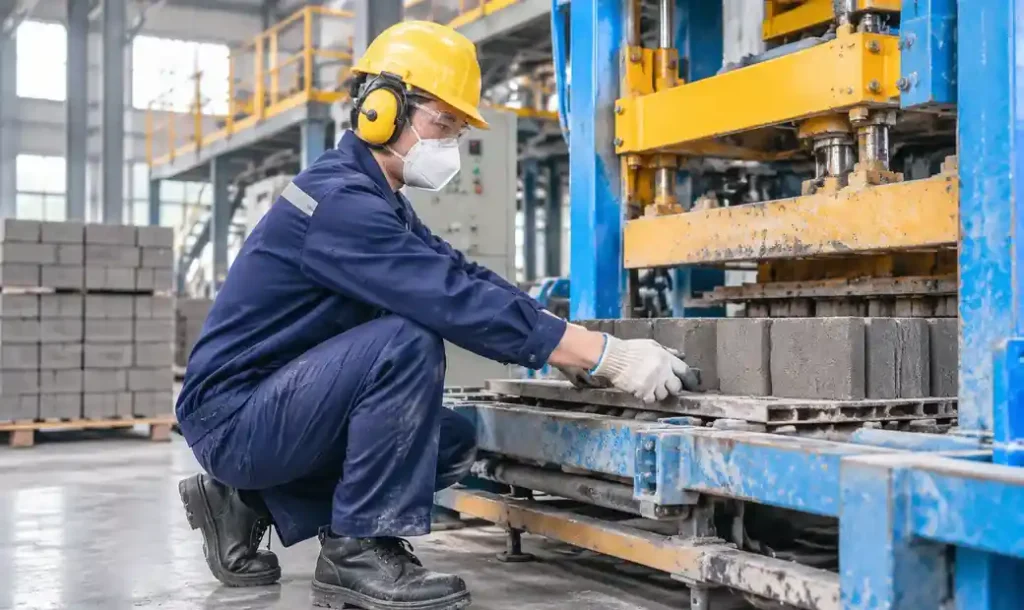
Block machine operation involves mechanical hazards, chemical exposure, noise, and ergonomic risks. According to OSHA concrete products manufacturing guidelines, operators face pinch points, crush hazards, cement dust exposure, and repetitive motion injuries. Proper training addresses each hazard category systematically.
Mechanical Hazard Protection
Lockout/Tagout Procedures: Before performing maintenance, operators must de-energize equipment, lock power disconnects, and tag controls. A 2001 New Jersey fatality occurred when an operator’s head was crushed in a block-palletizing machine during cleaning—the machine was not locked out. European EN 12629-2 safety standards mandate lockout systems and emergency stops within operator reach.
Guard Integrity and Emergency Stops: Never operate machines with guards removed or bypassed. Test emergency stops before each shift—response time should be under 2 seconds. Position yourself where emergency stops are always accessible; never reach into guarded areas during machine operation.
Pinch Point Awareness: Hydraulic pressing, mold movement, and pallet transfer create crush zones. Keep hands, tools, and loose clothing away from moving parts. The pressing cylinder generates 200-600 tons of force—sufficient to crush bones instantly.
Chemical and Dust Exposure Control
Personal Protective Equipment (PPE): Required PPE includes safety glasses (ANSI Z87.1 rated), dust masks (N95 minimum for cement dust), steel-toed boots, and chemical-resistant gloves when handling wet concrete. Cement dust irritates eyes, skin, and respiratory systems; prolonged exposure causes dermatitis and respiratory issues.
Ventilation and Dust Suppression: Operate bag-breaking equipment under local exhaust ventilation. Use water spray systems on aggregate conveyors to minimize airborne dust. OSHA concrete manufacturing standards specify permissible exposure limits for cement dust and silica.
Skin Protection from Cement: Wet concrete causes chemical burns through prolonged contact. Wash cement-contaminated skin immediately with water. Wear long pants and long sleeves; never allow wet concrete against bare skin for extended periods.
Ergonomic Safety and Injury Prevention
| Task | Ergonomic Hazard | Safe Practice | Injury Prevention |
|---|---|---|---|
| Manual pallet handling | Back strain, 15-25 kg loads | Use mechanical assists, two-person lift for >20 kg | Lift with legs, keep load close to body |
| Mold changeover | Awkward postures, overhead work | Use lifting equipment for molds >30 kg | Take micro-breaks every 30 minutes |
| Material bag handling | Repetitive lifting, 25-50 kg bags | Mechanized bag breakers preferred | Alternate tasks, use proper lifting technique |
| Standing operations | Lower back fatigue, leg strain | Anti-fatigue mats, scheduled position changes | Stretch every 2 hours, supportive footwear |
| Vibration exposure | Hand-arm vibration syndrome | Limit continuous exposure, wear anti-vibration gloves | Rotate tasks, monitor for numbness/tingling |
Repetitive motion injuries develop gradually. Operators experiencing persistent numbness, tingling, or pain should report symptoms immediately—early intervention prevents permanent damage.
Noise Exposure and Hearing Protection
Block machines generate 85-95 dB during operation. OSHA requires hearing protection above 85 dB for 8-hour exposure. Automatic production lines with multiple vibration sources reach 90-95 dB. Operators must wear earplugs or earmuffs; exposure above 85 dB without protection causes permanent hearing loss.
Operator Training Program Structure
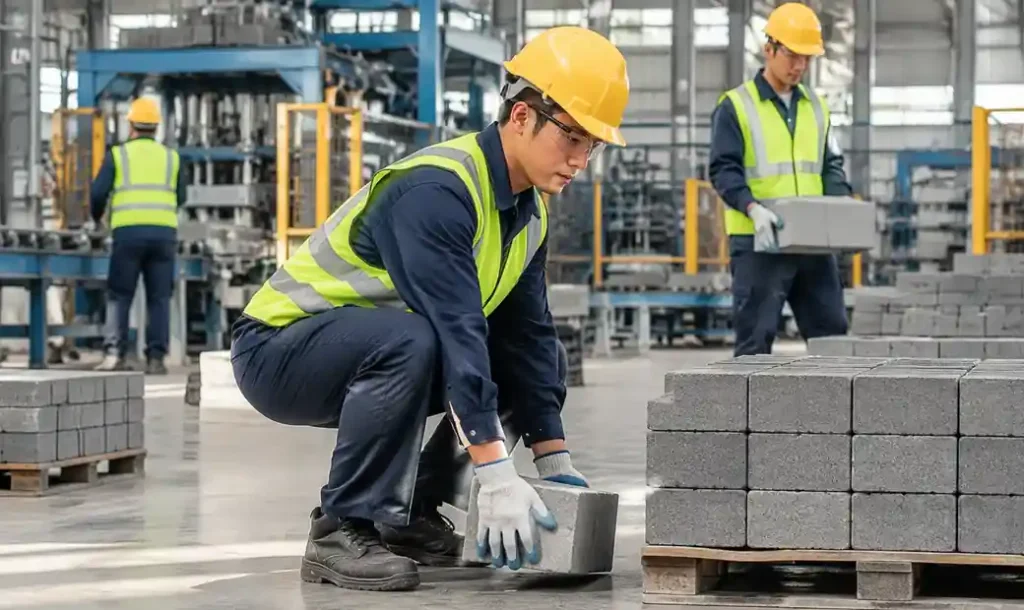
Effective training combines classroom instruction, supervised operation, and competency verification. Based on training programs we’ve implemented across multiple facilities, a comprehensive program requires 80-120 hours spanning 2-3 weeks.
Phase 1: Safety and Theory (16-24 hours)
Safety Fundamentals: Lockout/tagout procedures, PPE requirements, emergency response, hazard identification, and incident reporting. Operators must demonstrate lockout procedures on actual equipment and locate all emergency stops.
Machine Technology: Hydraulic system principles, vibration theory, compression mechanics, and control systems. Understanding why procedures matter improves compliance and enables intelligent troubleshooting.
Quality Standards: Block specifications, testing methods, defect recognition, and documentation requirements. Operators learn to identify common defects and their causes.
Material Science Basics: Cement hydration, aggregate grading, water-cement ratios, and how material properties affect block quality. This knowledge enables operators to recognize and compensate for material variations.
Phase 2: Supervised Operation (40-60 hours)
Hands-on training under experienced operator or trainer supervision. Trainees perform each task repeatedly until achieving competency:
Startup and Shutdown Sequences: Complete pre-operational checks, start hydraulic systems, verify all safety systems, and execute proper shutdown including cleaning and securing equipment.
Standard Production Cycles: Load material, operate compression cycles, adjust parameters, remove finished blocks, and maintain production pace while ensuring quality.
Mold Changeover: Remove existing molds, install new molds, adjust settings for different block types, and verify first-article quality.
Quality Monitoring: Perform dimensional checks, recognize defects, document results, and initiate corrective actions when issues arise.
Routine Maintenance: Execute daily lubrication, cleaning, and inspection tasks. Identify wear conditions requiring maintenance team attention.
Phase 3: Independent Operation with Oversight (24-36 hours)
Trainees operate independently while supervisors observe periodically. This phase develops confidence, problem-solving skills, and proper decision-making. Supervisors intervene only for safety issues or significant errors, allowing trainees to experience real production challenges.
Phase 4: Competency Verification
Final assessment includes:
- Written test: Safety procedures, machine operation theory, quality standards, troubleshooting basics (minimum 80% required)
- Practical demonstration: Complete production cycle from startup through shutdown, including quality checks and documentation
- Safety procedures: Lockout/tagout, emergency stop usage, proper PPE, hazard identification
- Problem-solving scenarios: Respond to simulated equipment issues, quality problems, and material variations
Operators passing all components receive operator certification valid for 12-24 months depending on facility policy. Recertification includes refresher training and competency reverification.
Advanced Skills for Experienced Operators
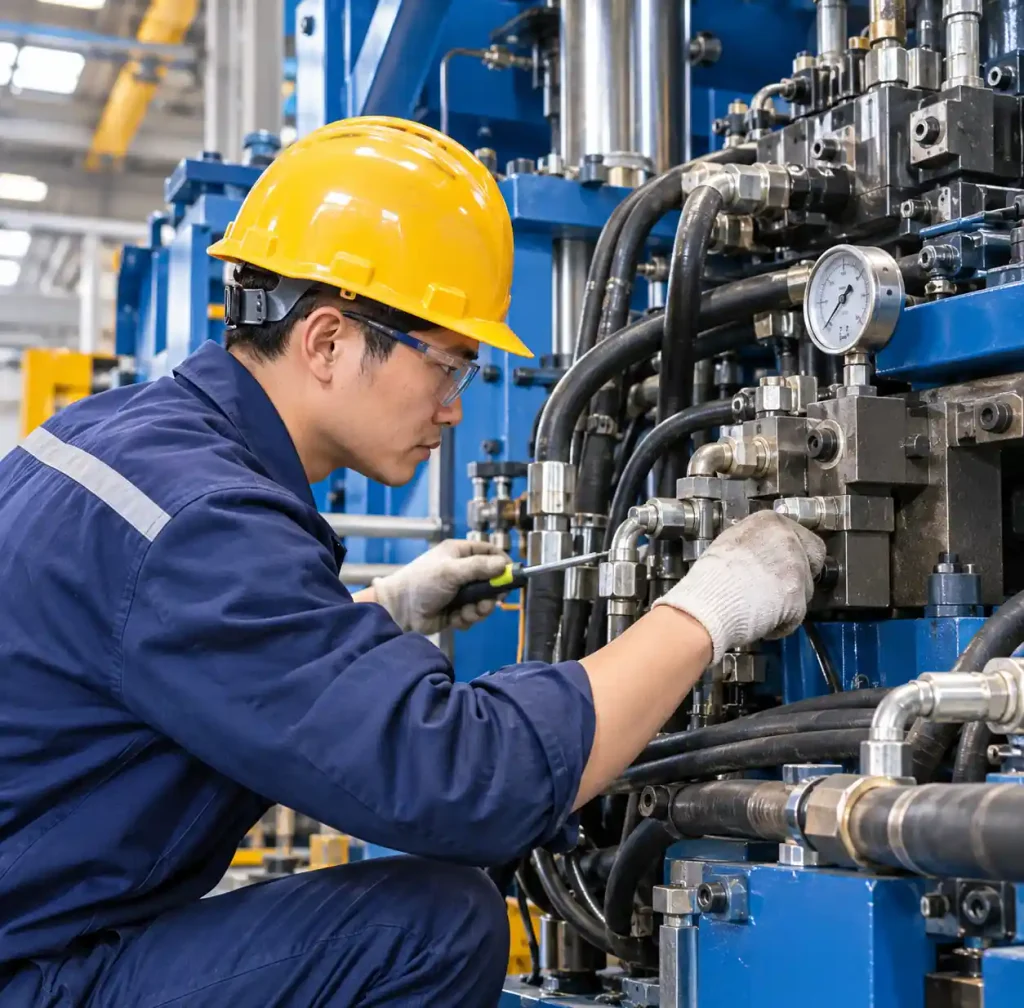
After 6-12 months, operators develop advanced troubleshooting and optimization abilities that significantly impact production efficiency and equipment longevity.
Troubleshooting Common Production Issues
Block Surface Defects: Cracks indicate insufficient moisture or excessive compression. Pitting suggests air pockets from inadequate vibration. Surface scaling occurs when concrete adheres to molds—increase mold release agent. Uneven surfaces result from inconsistent compaction—check vibration system balance.
Dimensional Variations: Blocks consistently oversized indicate worn molds or insufficient compression. Undersized blocks suggest excessive pressure deforming molds or premature demolding. Experienced operators distinguish between mold wear, setup errors, and material issues.
Production Speed Optimization: Skilled operators fine-tune cycle parameters—reducing compression time by 1-2 seconds without quality loss, optimizing vibration duration, and streamlining material loading. These micro-optimizations increase daily production by 8-15% compared to baseline settings.
Material Adaptation: Aggregate moisture varies with weather; cement batches have slight property differences. Expert operators adjust water content, compression pressure, and cycle timing to maintain consistent quality despite material variations—a skill preventing quality issues that less experienced operators don’t recognize until producing hundreds of defective blocks.
Multi-Machine Operation
Large facilities employ operators managing 2-3 machines simultaneously. This requires:
- Cycle synchronization: Stagger machine cycles so operations requiring operator intervention don’t coincide
- Priority management: Respond to quality issues immediately while managing routine tasks across machines
- Efficiency optimization: Minimize movement between machines through strategic positioning and material staging
Multi-machine operators produce 40-60% more blocks per labor hour than single-machine operators, justifying higher compensation and advanced training investment.
Training for Different Machine Types
Training requirements vary significantly between manual, semi-automatic, and fully automatic systems. Each automation level demands different skill emphasis.
| Type de machine | Training Duration | Key Skills Emphasis | Certification Requirements |
|---|---|---|---|
| Manual (QT4-40, QT4-24) | 40-60 hours | Physical operation, material consistency judgment, manual quality control | Basic operator certification, safety training |
| Semi-Automatic (QT4-30, QT6-15) | 60-80 hours | Cycle programming, automated controls, preventive maintenance, quality sampling | Intermediate certification, hydraulic systems knowledge |
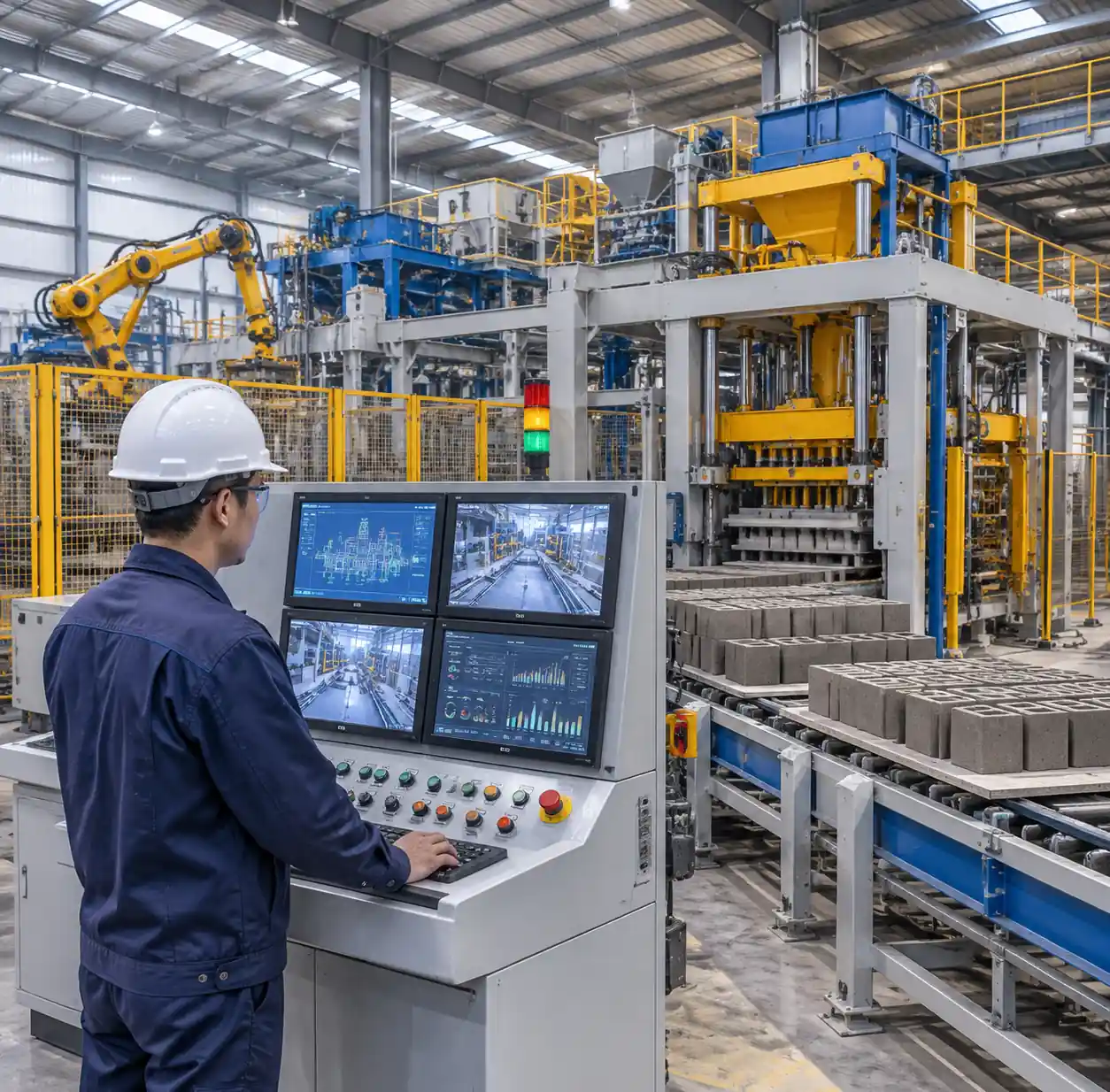
| Fully Automatic (QT10-15, QT12-15) | 80-120 hours | PLC programming basics, automated production line management, system troubleshooting | Advanced certification, control systems training |
| Specialized (Paver, Interlocking) | +20-30 hours | Specialized mold handling, precise color batching, aesthetic quality control | Product-specific certification |
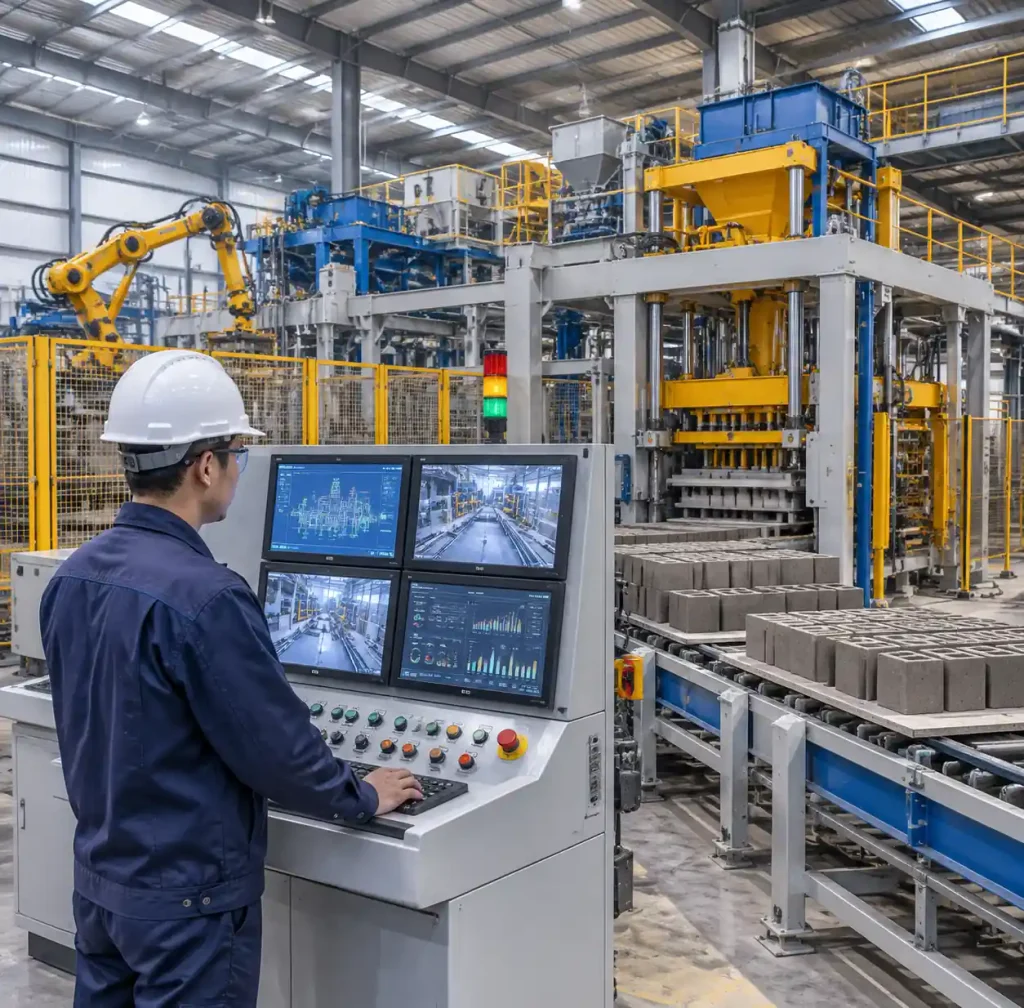
Manual machine operators require strong physical stamina and material judgment skills. Semi-automatic operators need mechanical aptitude and systematic troubleshooting abilities. Fully automatic operators must understand control systems, coordinate with batching plant operators, and manage integrated production lines.
Certification and Regulatory Compliance
While most regions lack mandatory block machine operator licensing, industry standards and safety regulations effectively require formal training. EN 12629 European standards specify machine safety requirements; OSHA regulations in the United States mandate safety training for equipment operators.
Manufacturer-Provided Training: Equipment manufacturers including Raytone Block Machinery provide installation and commissioning training typically spanning 3-5 days. This covers machine-specific operation, safety systems, and basic troubleshooting. Manufacturer training certificates verify completion but may not constitute full operational competency.
Internal Certification Programs: Facilities should implement internal certification documenting that operators completed comprehensive training and demonstrated competency. Internal certificates typically expire after 12-24 months, requiring recertification including safety refreshers and competency reverification.
Third-Party Safety Training: OSHA 10-hour or 30-hour construction safety courses provide foundational safety knowledge applicable to block plant operations. Forklift certification (required for operators moving palletized blocks) follows OSHA 1910.178 standards requiring classroom training, practical evaluation, and workplace-specific instruction.
Ongoing Education Requirements: Technology advances and regulatory changes require continuous operator education. Facilities should provide 8-16 hours of annual refresher training covering safety updates, new equipment features, quality improvements, and emerging best practices.
Frequently Asked Questions
How long does block machine operator training take?
Complete training requires 80-120 hours (2-3 weeks) for fully automatic machines, 60-80 hours for semi-automatic, and 40-60 hours for manual machines. This includes safety training, supervised operation, and competency verification. Operators reach full proficiency after 3-6 months of regular production experience.
Do I need certification to operate a block making machine?
Most regions don’t mandate specific block machine operator licenses, but OSHA safety training and facility-specific certification are effectively required. Equipment manufacturers provide training certificates; facilities should implement internal certification programs documenting competency. Forklift certification is legally required when operators move palletized blocks.
What safety equipment is required?
Mandatory PPE includes ANSI Z87.1 safety glasses, N95 dust masks for cement dust, steel-toed boots meeting ASTM F2413 standards, and chemical-resistant gloves. Hearing protection is required above 85 dB (most block machines exceed this). High-visibility vests are necessary in facilities with forklift traffic.
Can one person operate multiple block machines?
Experienced operators can manage 2-3 semi-automatic or manual machines simultaneously by staggering production cycles. Fully automatic lines typically require dedicated operators due to higher speed and complexity. Multi-machine operation requires 6+ months experience and increases output per labor hour by 40-60%.
What causes most operator-related accidents?
According to OSHA data, primary hazards include: pinch point injuries during mold handling (35%), falls from working on elevated equipment (22%), cement dust exposure (18%), ergonomic injuries from repetitive lifting (15%), and caught-between accidents during maintenance without lockout (10%). Proper training addresses all these hazard categories.
How often should operators receive refresher training?
Annual refresher training (8-16 hours) should cover safety updates, equipment modifications, quality improvements, and regulatory changes. Operators transferring to different equipment types need role-specific training. After extended absences (>3 months), operators should complete abbreviated retraining before resuming independent operation.
What math and technical skills do operators need?
Operators must perform basic arithmetic for calculating ratios, weights, and production counts. Reading measuring tools (calipers, scales) to ±1mm or ±1kg precision is essential. Understanding hydraulic pressure units (bar, PSI) and converting between measurement systems helps optimize settings. Technical documentation reading comprehension ensures proper procedure execution.
How do automatic machine operators differ from manual operators?
Automatic machine operators require stronger technical troubleshooting abilities and control system understanding. Manual operators need physical stamina and material consistency judgment. Automatic operators spend more time monitoring quality and maintaining equipment; manual operators spend more time on physical block handling. Advanced training for automatic lines costs 50-80% more but manages 3-5x higher production capacity.
Conclusion
Comprehensive block machine operator training is a production investment, not an expense. Properly trained operators reduce accident rates by 80-90%, increase production efficiency by 25-40%, and extend equipment life by preventing operator-induced damage. The 80-120 hour training investment pays returns within the first month through reduced scrap, fewer breakdowns, and higher output.
Effective training programs combine safety fundamentals, technical knowledge, hands-on supervised practice, and competency verification. Operators must master material handling, quality control, preventive maintenance, and troubleshooting across their facility’s specific equipment. Whether operating manual systems, semi-automatic machines, or fully automatic production lines, these core competencies determine operational success.
Facilities prioritizing operator training consistently outperform those viewing training as a checkbox exercise. Contact Raytone Block Machinery for customized operator training programs aligned with your equipment and production goals.