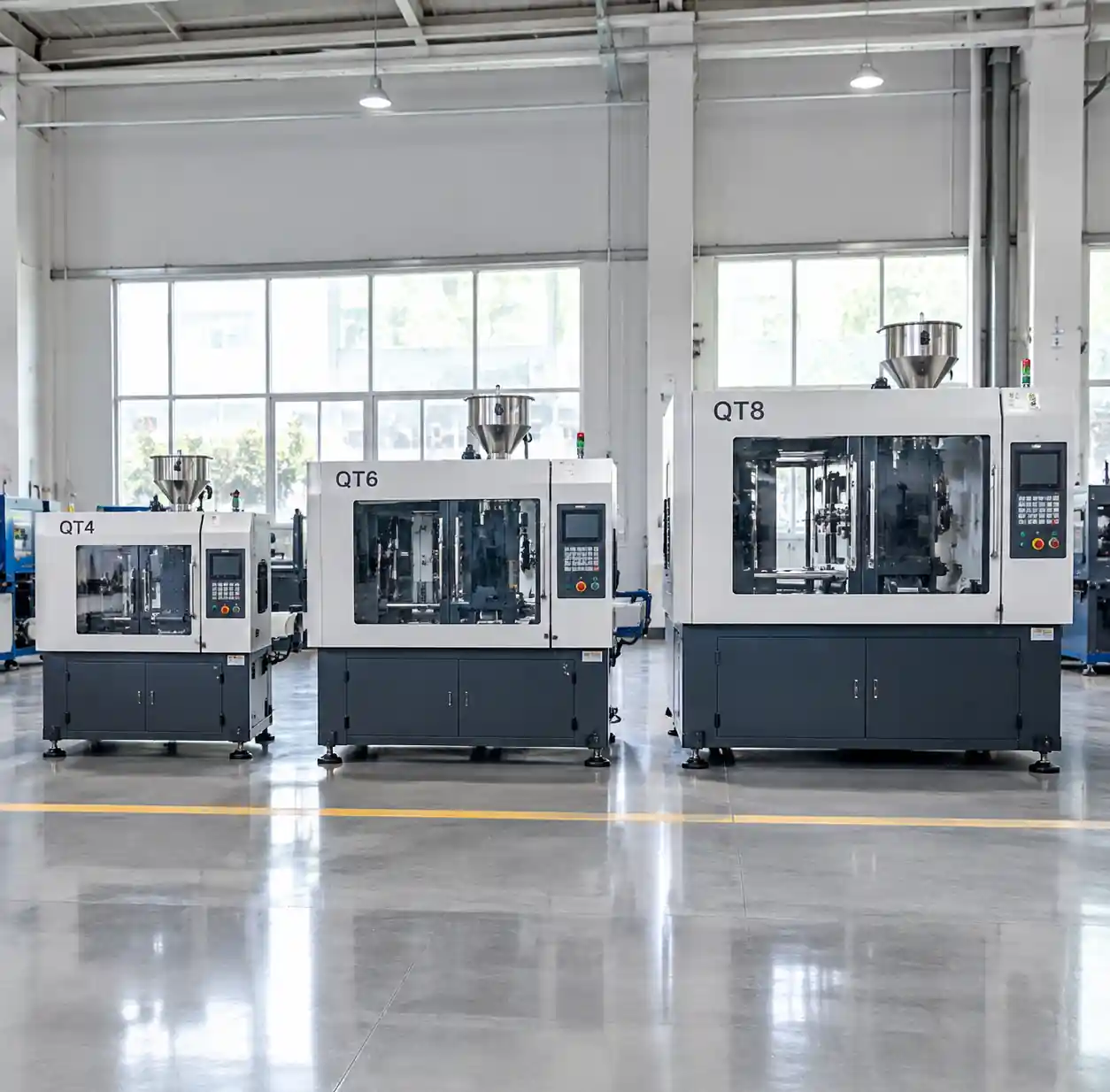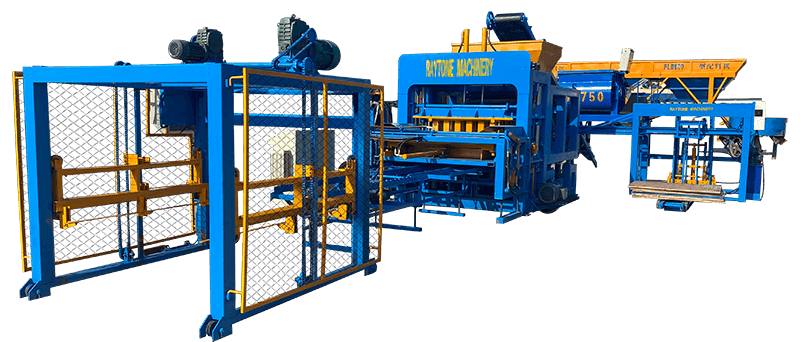






Choosing the right block machine model determines your production capacity, labor costs, and return on investment for years. The QT4, QT6, and QT8 series represent three distinct capacity tiers in automatic block production, each designed for specific production scales. Understanding which model matches your daily output requirements and budget prevents costly mismatches between equipment capability and business demand.
Understanding QT Series Nomenclature
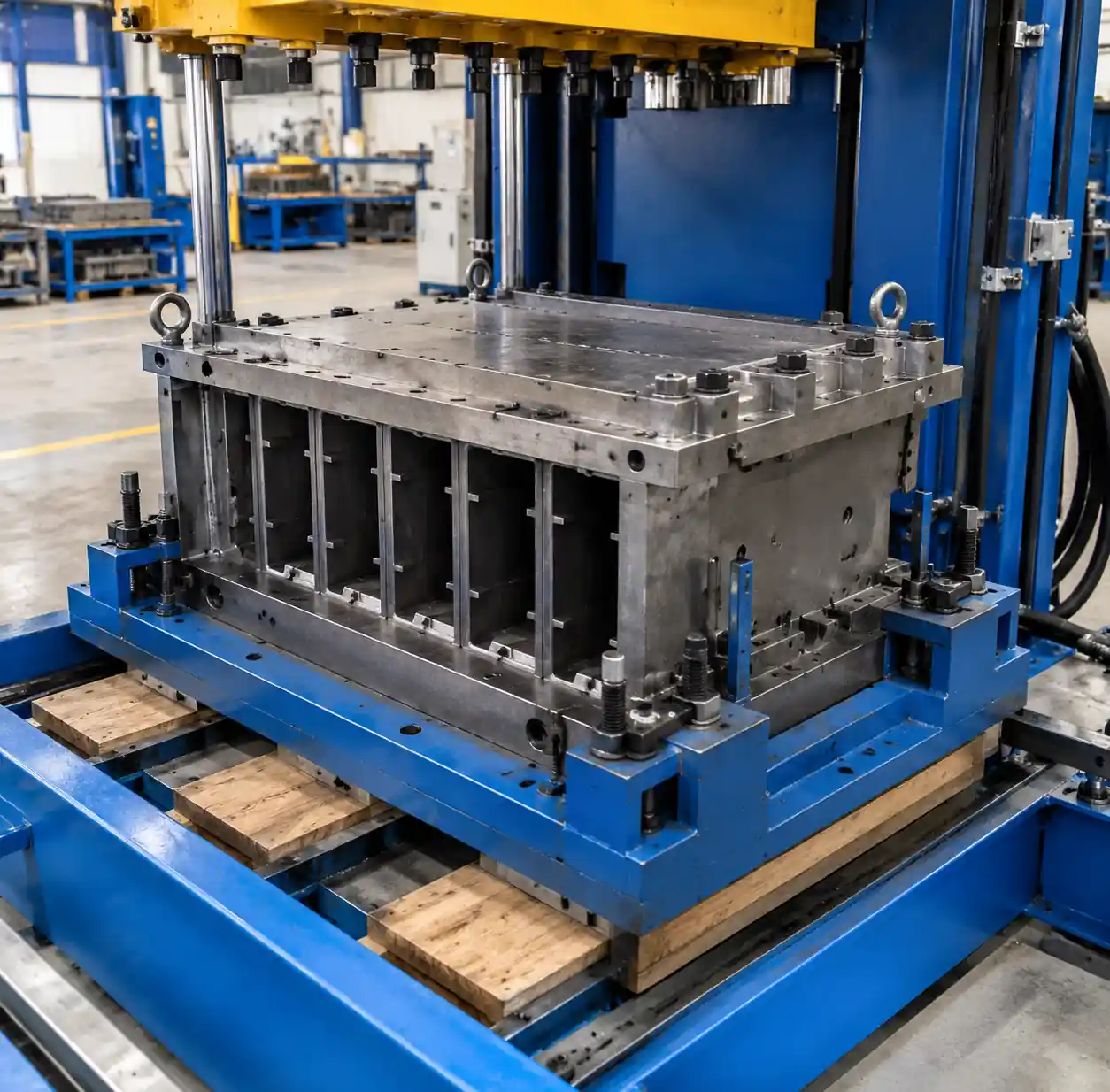
The “QT” designation stands for “vibrating table” technology—the core mechanism that compresses concrete into blocks through synchronized hydraulic pressure and vibration. The number following “QT” indicates the machine’s production tier, with higher numbers representing greater capacity, larger molding areas, and increased automation complexity.
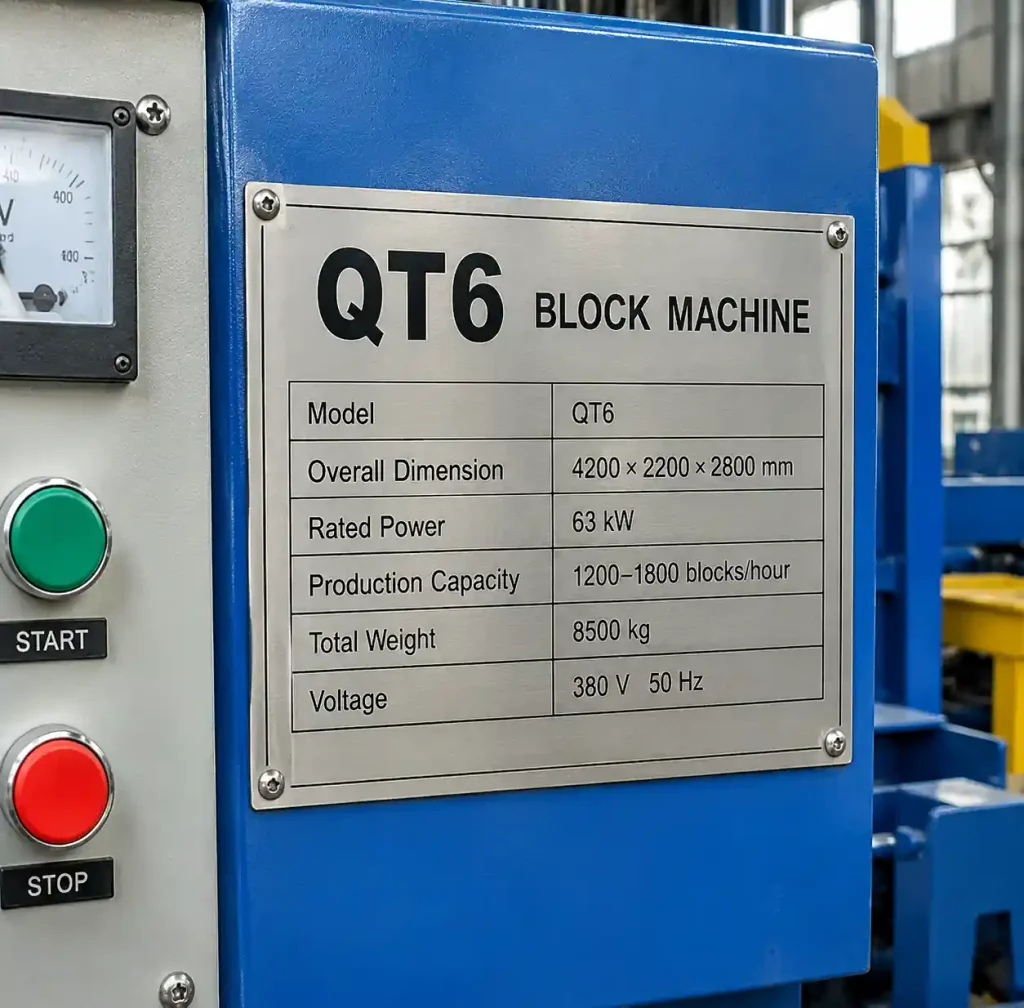
The “-15” suffix commonly seen (QT4-15, QT6-15, QT8-15) refers to cycle capacity, typically indicating the number of standard blocks produced per pressing cycle or production batch. This nomenclature helps buyers quickly identify a machine’s output potential before examining detailed specifications.
Manufacturers design these three models to serve distinct market segments: small-to-medium contractors (QT4), regional block suppliers (QT6), and industrial-scale operations (QT8). Each tier involves different capital requirements, infrastructure needs, and operational complexity that must align with your production goals.
QT4 Series: Entry-Level Automatic Production
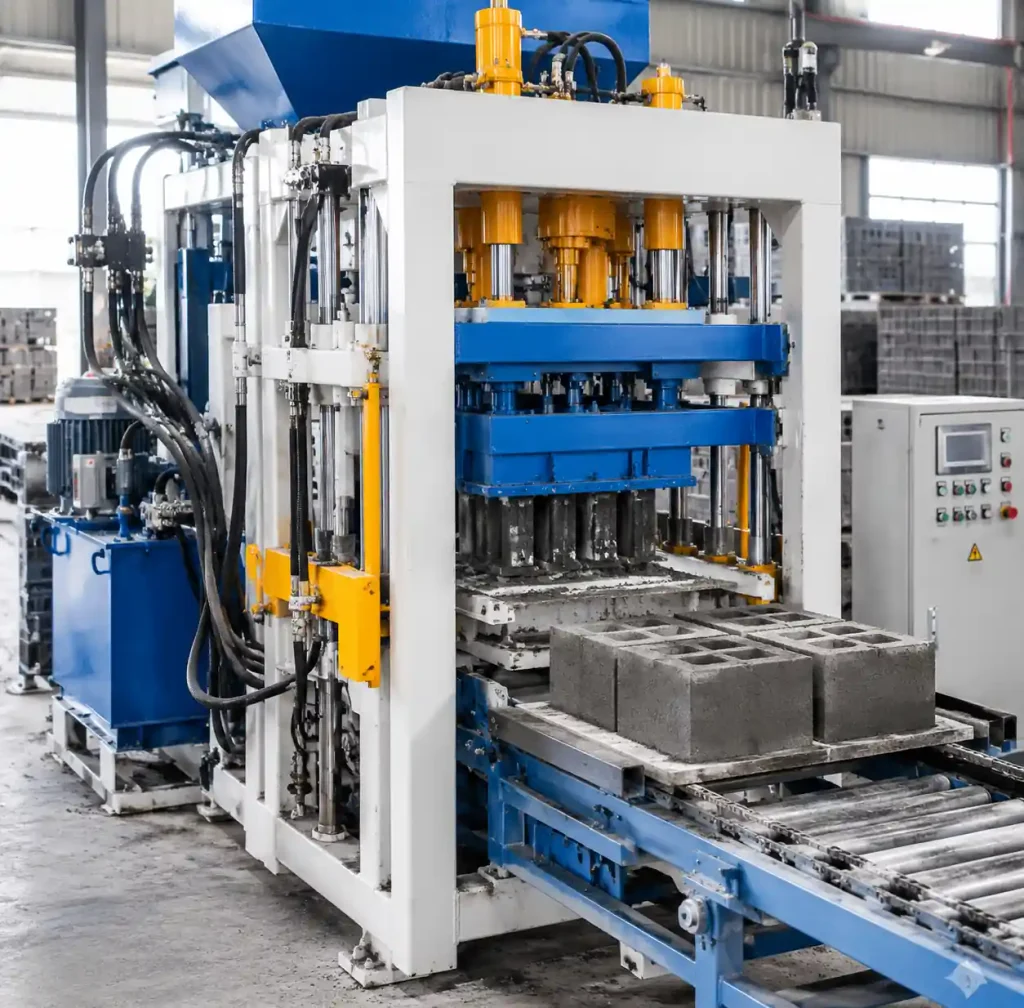
The QT4 series positions itself as the most accessible automatic block machine option, bridging the gap between semi-automatic equipment and full industrial automation. Its compact design and moderate investment make it suitable for businesses transitioning from manual or semi-automatic operations.
QT4-15 Technical Specifications
| Specification | Value | Context |
|---|---|---|
| Capacité de production | 5,760-7,680 blocks/8hr shift | Based on 390×190×190mm hollow blocks |
| Blocks Per Cycle | 4 blocks | Standard molding configuration |
| Cycle Time | 20 à 25 secondes | Includes feeding, pressing, demolding |
| Molding Area | 880×550mm | Limits maximum block size options |
| Pressing Force | 100-120 tons | Adequate for 15-20 MPa blocks |
| Puissance totale | 20.75-24.75 kW | Single-phase not sufficient |
| Machine Weight | 3,500-4,200 kg | Foundation requirements less demanding |
| Footprint | 7.1m × 1.5m × 3.0m | Fits smaller production facilities |
| Operators Required | 3-4 per shift | Material handling, quality control |
The QT4’s 4-block-per-cycle capacity creates practical output limits. At 20-second cycles, theoretical maximum reaches 720 cycles per hour (2,880 blocks/hour), but realistic efficiency rates of 75-85% reduce actual output to 2,160-2,448 blocks per hour or 17,280-19,584 blocks in an 8-hour shift.
Investment and Operating Economics
Complete QT4-15 system investment ranges from $32,000-$52,000 including:
- Main machine: $18,000-$28,000
- Concrete mixer (500L): $3,500-$6,000
- Conveyor system: $3,000-$5,500
- Pallet set (400-600 pieces): $2,500-$4,000
- Foundation and installation: $3,000-$6,000
- Initial materials and training: $2,000-$2,500
Operating costs per 1,000 blocks average $42-$58, breaking down as raw materials ($26-$32), electricity ($2.80-$4.20), labor ($8-$12), and maintenance ($1.50-$2.50). With market pricing of $90-$130 per thousand blocks, gross margins range from $32-$88 per thousand before fixed costs.
The QT4’s lower capital requirement creates faster payback potential for smaller operations. A facility producing 15,000 blocks daily at $110 per thousand generates monthly revenue of $49,500. After variable costs of $27,000 and fixed costs around $6,000, net monthly profit of approximately $16,500 recovers the $32,000-$52,000 investment in 2-4 months under optimal conditions.
QT6 Series: Mid-Tier Production Capacity
The QT6 series targets operations requiring higher output than QT4 provides but not needing full industrial-scale capacity. Its 6-block-per-cycle design increases throughput 50% over QT4 while maintaining similar operational simplicity.
QT6-15 Technical Specifications
| Specification | Value | Context |
|---|---|---|
| Capacité de production | 960-3,600 blocks/hour | Range depends on block size and efficiency |
| Blocks Per Cycle | 6 blocks | 50% more than QT4 per cycle |
| Cycle Time | 15-25 seconds | Faster than QT4 with improved hydraulics |
| Molding Area | 980×680mm | 30% larger than QT4 |
| Pressing Force | 150-180 tons | Supports higher-strength blocks |
| Vibration Frequency | 3,800-4,500 cycles/min | Dual-motor system |
| Force de vibration | 68-95 kN | Enhanced density uniformity |
| Puissance totale | 34.4-34.54 kW | 40% more than QT4 |
| Machine Weight | 8,500 kg | Requires stronger foundation |
| Footprint | 9.45m × 3.3m × 2.7m | Double QT4’s floor space |
| Operators Required | 3-4 per shift | Similar to QT4 despite higher output |
The QT6’s increased molding area accommodates larger block configurations and reduces changeover frequency for operations producing multiple block types. Its dual vibration motor system provides more uniform concrete compression, reducing strength variation across blocks from 8-12% (common in QT4) to 4-6%.
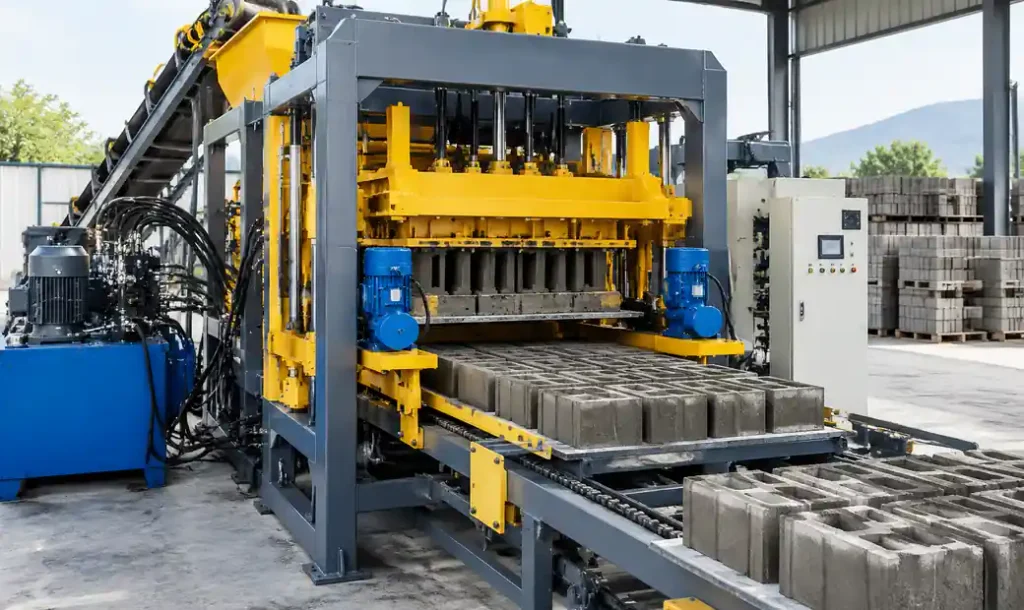
At 18-second average cycles with 80% efficiency, the QT6-15 produces approximately 960 blocks per hour (7,680 blocks per 8-hour shift) for standard blocks. For smaller products like solid bricks (240×115×90mm), capacity increases to 2,400-3,000 bricks per hour.
Investment Analysis
Complete QT6-15 systems require $58,000-$85,000 total investment:
- Main machine: $29,800-$42,000
- Concrete mixer (1.0m³): $6,000-$9,000
- Conveyor and transfer system: $5,000-$8,000
- Pallet system (600-900 pieces): $3,500-$5,500
- Foundation and electrical: $6,000-$10,000
- Supporting equipment: $4,000-$6,500
- Installation and training: $3,700-$4,000
Operating costs per 1,000 blocks run $44-$60: materials ($27-$34), electricity ($3.50-$5.20 with higher power draw), labor ($8-$13), maintenance ($2.00-$3.00), and depreciation ($3.50-$4.80 over 5 years).
The QT6 makes economic sense when daily demand consistently exceeds 20,000 blocks. Below this threshold, QT4’s lower investment provides better ROI. Above 35,000 blocks daily, QT8’s efficiency advantages justify its higher cost despite the QT6 theoretically handling this volume.
QT8 Series: Industrial-Scale Production
The QT8 series represents the highest capacity in semi-compact automatic block machines before entering full industrial production line territory. Its 8-block-per-cycle design doubles QT4 output while requiring only marginally more labor.
QT8-15 Technical Specifications
| Specification | Value | Context |
|---|---|---|
| Capacité de production | 17,000-30,720 blocks/8hr shift | Depends on block type and efficiency |
| Blocks Per Cycle | 8 blocks | Double QT4 capacity |
| Cycle Time | 15-18 seconds | Fastest in the comparison |
| Molding Area | 1,050×850mm | Largest molding surface |
| Pressing Force | 200 tons | Produces high-strength blocks |
| Vibration Frequency | 3,800-4,500 cycles/min | Industrial-grade motors |
| Puissance totale | 51.25 kW | Requires robust electrical supply |
| Machine Weight | 14,000-18,500 kg | Heaviest foundation requirements |
| Footprint | 9.8m × 3.6m × 2.8m | Requires significant floor space |
| Operators Required | 3-4 per shift | Same labor as smaller models |
The QT8-15 achieves 30,720 blocks per day (3,840 blocks/hour) at 85% efficiency running 8-hour shifts. This output serves construction companies managing multiple projects simultaneously, ready-mix concrete producers diversifying into block manufacturing, and regional distributors supplying 20-40 retail locations.
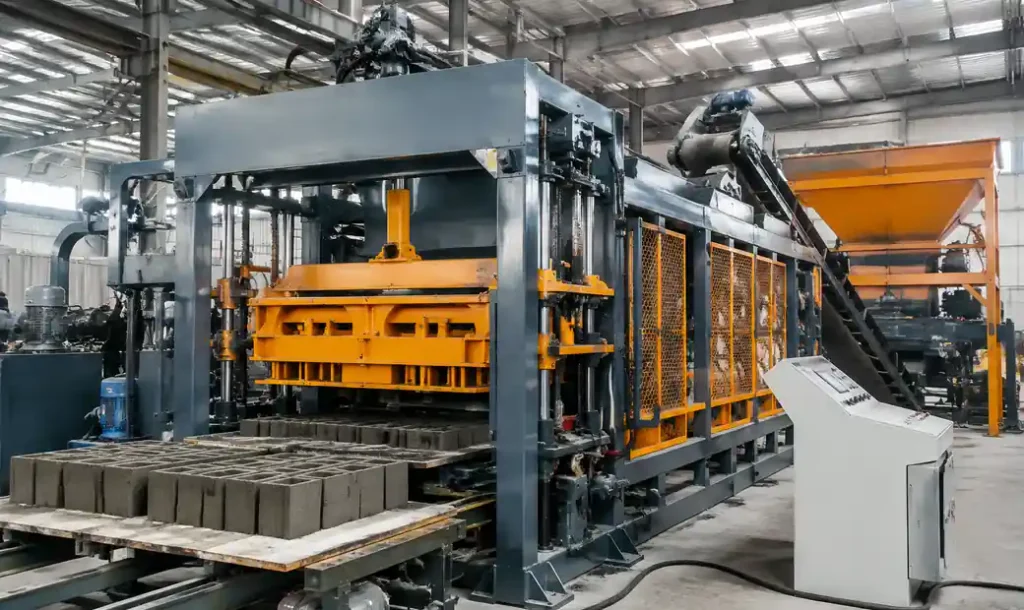
Its robust hydraulic system maintains consistent 200-ton pressing force throughout production, creating blocks with less than 3% strength variation—critical for structural applications requiring certified strength ratings. The larger molding area accommodates specialty products like curbstones (500×200×250mm) and large pavers that smaller machines cannot produce.
Complete System Investment
QT8-15 installations require $89,500-$127,500 total investment as detailed in our QT8-15 production analysis:
- Main machine: $45,000-$58,000
- Concrete mixer (1.5m³): $8,500-$12,000
- Conveyor system: $6,000-$9,500
- Automatic block stacker: $12,000-$18,000
- Pallet system (800-1,200): $4,500-$7,000
- Foundation and installation: $8,000-$14,000
- Initial materials: $3,000-$5,000
- Training and spare parts: $2,500-$4,000
Operating costs per 1,000 blocks average $45.50-$62.10: materials ($28-$35), electricity ($3.20-$4.80), labor ($9-$15), maintenance ($1.80-$2.50), and depreciation ($3.50-$4.80).
At 85% capacity producing 26,112 blocks daily and selling at $120 per thousand, monthly revenue reaches $93,802. After variable costs ($52,627) and fixed costs ($12,000), monthly profit of approximately $29,175 recovers the investment in 3-4 months—faster than QT4 or QT6 despite higher initial cost, due to superior economies of scale.
Direct Model Comparison
Understanding how these three models compare across critical factors helps identify which matches your specific requirements and constraints.
| Factor | QT4-15 | QT6-15 | QT8-15 |
|---|---|---|---|
| Daily Output (8hr) | 17,280-19,584 blocks | 23,040-28,800 blocks | 26,112-30,720 blocks |
| Blocks Per Cycle | 4 | 6 | 8 |
| Cycle Time | 20 à 25 secondes | 15-25 seconds | 15-18 seconds |
| Total Investment | $32,000-$52,000 | $58,000-$85,000 | $89,500-$127,500 |
| Cost Per 1,000 Blocks | $42-$58 | $44-$60 | $45.50-$62.10 |
| Power Requirement | 20.75-24.75 kW | 34.4-34.54 kW | 51.25 kW |
| Machine Weight | 3,500-4,200 kg | 8,500 kg | 14,000-18,500 kg |
| Footprint | 10.65 m² | 31.19 m² | 35.28 m² |
| Foundation Cost | $3,000-$6,000 | $6,000-$10,000 | $8,000-$14,000 |
| ROI Timeline | 2-4 months | 3-5 months | 3-4 months |
| Idéal pour | 15,000-20,000 daily demand | 20,000-30,000 daily demand | 25,000-40,000 daily demand |
| Labor Per Shift | 3-4 workers | 3-4 workers | 3-4 workers |
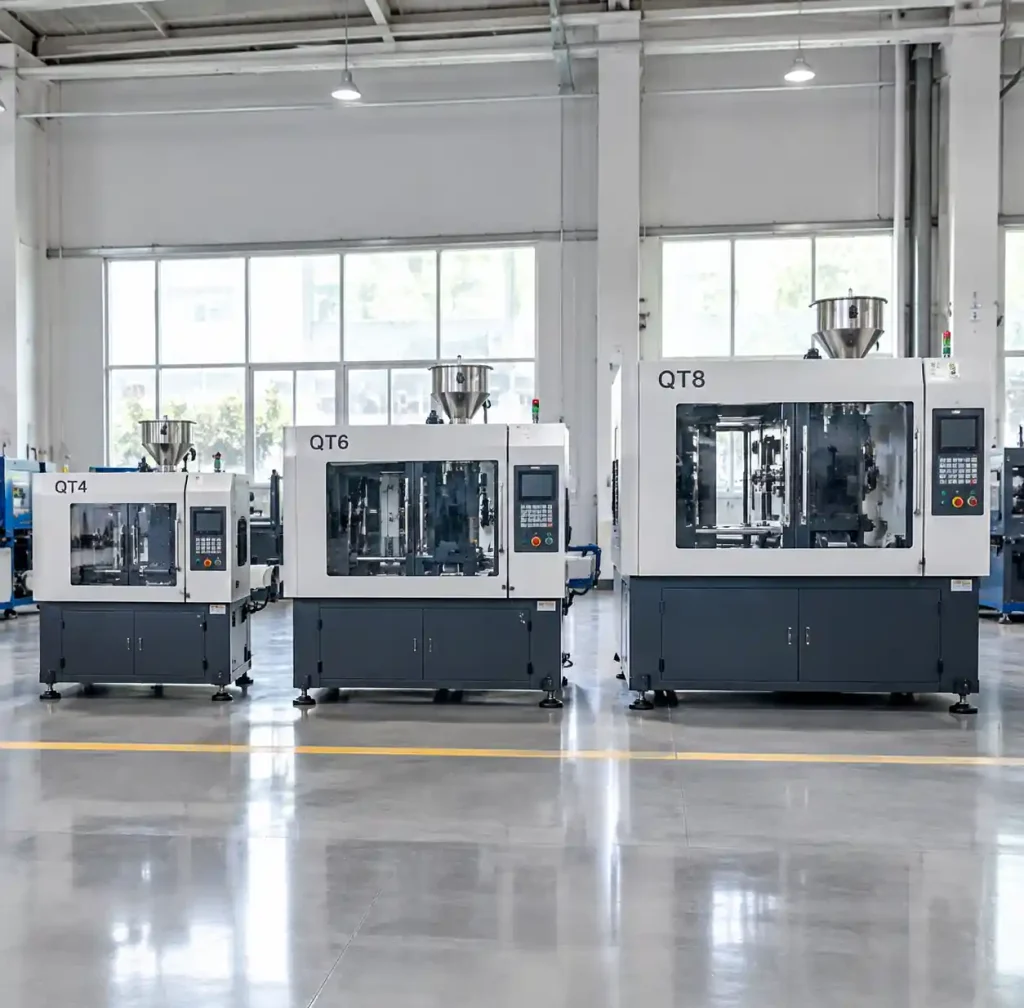
The per-block production cost increases slightly with model size due to higher depreciation, electricity, and maintenance costs. However, larger models achieve better labor efficiency—QT8 produces 6,528-7,680 blocks per worker per shift versus QT4’s 4,320-4,896 blocks per worker.
Automation Level and Operational Differences
While all three models classify as “automatic block machines,” their automation sophistication varies significantly in ways that affect daily operations.
Feeding and Material Handling
QT4-15: Semi-automated feeding requires workers to monitor hopper levels and manually activate batching from the mixer. Material flow interruptions occur 2-4 times per shift when operators don’t anticipate hopper depletion, causing 8-15 minute production stops.
QT6-15: Improved hopper design with larger capacity (30% more than QT4) and optional level sensors reduces feeding interruptions to 1-2 per shift. Some models include automatic mixer-to-hopper conveyors eliminating manual batching.
QT8-15: Fully automated material flow systems with dual-mixer capability ensure continuous concrete supply. Level sensors trigger automatic batching, and some configurations include robotic material handling that eliminates manual intervention entirely.
Control Systems and Monitoring
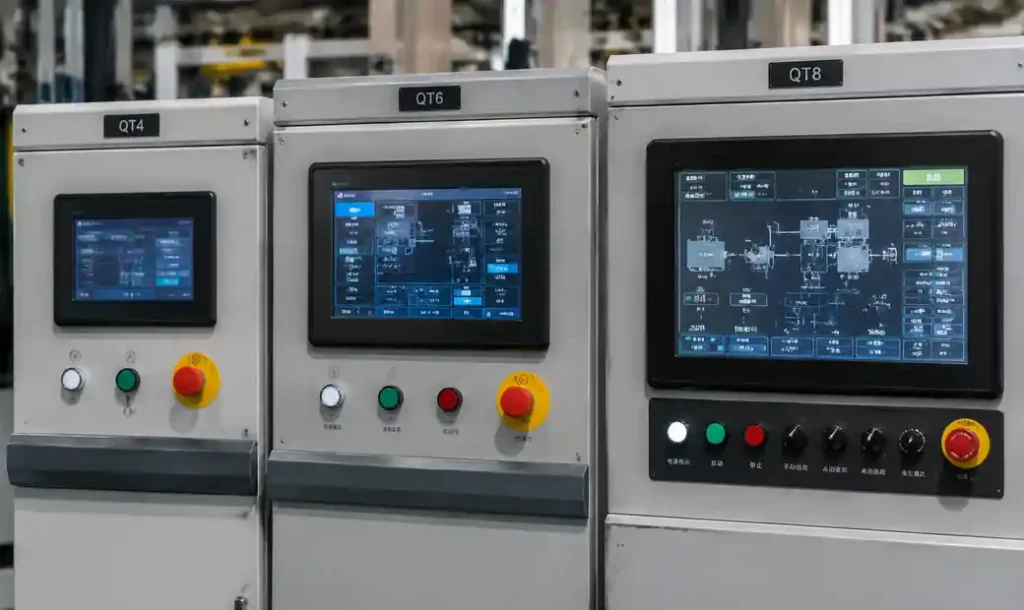
QT4-15: Basic PLC controllers manage press cycles and timing but offer limited diagnostic capabilities. Operators troubleshoot problems through trial-and-error, often consulting the manual or calling technical support for non-obvious issues.
QT6-15: Advanced PLC systems with touchscreen interfaces display real-time production data including cycle counts, pressure readings, and basic fault diagnostics. Error codes help operators identify specific problems faster than QT4’s simpler system.
QT8-15: Industrial-grade PLC with data logging, remote monitoring capability, and predictive maintenance alerts. Some models include cloud connectivity allowing manufacturers to diagnose problems remotely and push firmware updates. Production data exports to spreadsheets for analysis.
Quality Control and Consistency
QT4-15: Block dimensional variation typically ranges 2-4mm due to manual feeding variations and simpler vibration systems. Compressive strength varies 8-12% across production runs, requiring larger safety margins in structural calculations.
QT6-15: Improved consistency reduces dimensional variation to 1.5-3mm and strength variation to 4-6%. Dual vibration motors provide more uniform concrete compression than QT4’s single-motor design.
QT8-15: Achieves 1-2mm dimensional tolerance and under 3% strength variation through precise hydraulic control and synchronized vibration systems. Meets strictest quality certifications with minimal rejected blocks (under 2% versus 4-6% for QT4).
Infrastructure and Site Requirements
The physical and utility requirements differ substantially across models, affecting total implementation costs beyond machine purchase price.
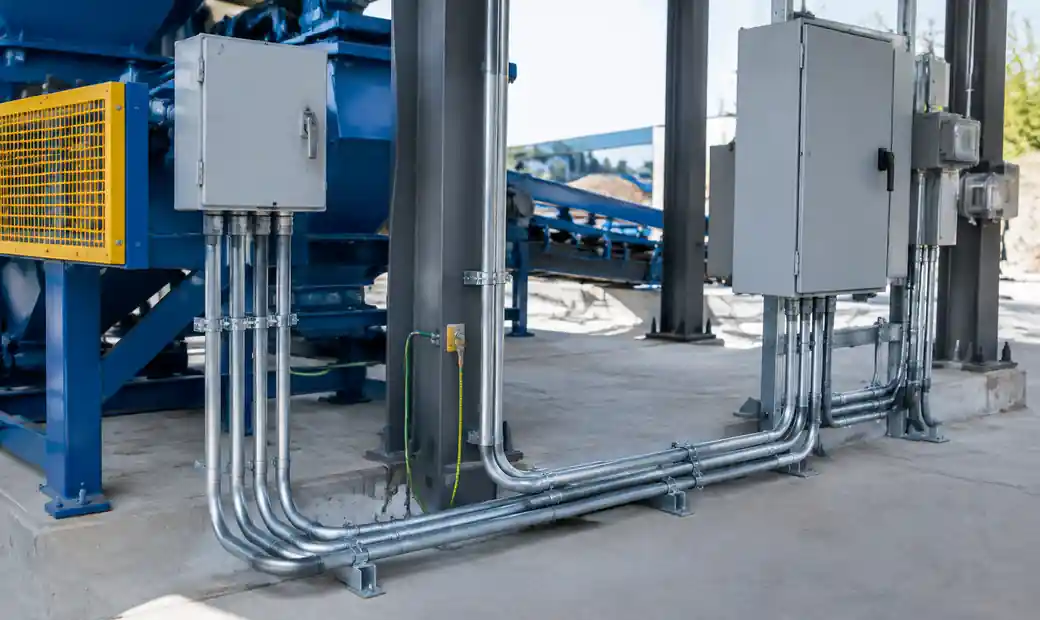
Electrical Infrastructure
QT4-15: 20.75-24.75 kW demand works with standard industrial three-phase service (380V/50Hz or 415V/60Hz). Existing facilities usually have adequate electrical capacity without transformer upgrades. Total electrical installation costs $2,000-$4,000 including wiring, breakers, and disconnects.
QT6-15: 34.54 kW requires heavier electrical service. Facilities with only 40-50 kW total capacity need transformer upgrades costing $3,500-$6,500. Voltage stabilizers recommended in areas with grid instability add $2,200-$4,000. Total electrical preparation $5,000-$9,000.
QT8-15: 51.25 kW demand necessitates 100-amp three-phase service. Smaller operations often lack this capacity, requiring utility upgrades ($4,000-$8,000) plus on-site transformer installation. Voltage fluctuation beyond ±5% damages control systems, making stabilizers mandatory in many locations. Total electrical infrastructure $8,000-$15,000.
Foundation Requirements
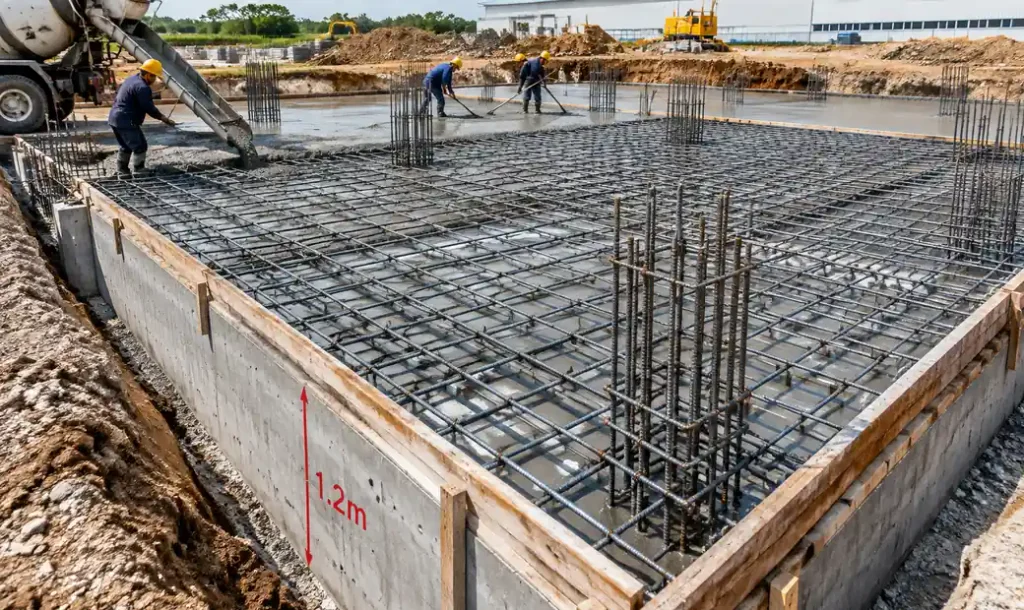
QT4-15: 3,500-4,200 kg weight creates 52-60 kg/m² ground pressure across its 10.65m² footprint. Standard industrial floors (300-500 kg/m² capacity) handle this without reinforcement. Recommended foundation: 300mm thick, C25 concrete, 10mm rebar at 250mm spacing. Curing time 14-21 days minimum. Foundation cost $3,000-$6,000.
QT6-15: 8,500 kg weight over 31.19m² creates similar ground pressure (27 kg/m²) but the machine’s concentrated hydraulic forces during pressing require reinforced foundations. Specification: 350mm thick, C30 concrete, 12mm rebar at 200mm spacing. Full 28-day curing recommended. Foundation cost $6,000-$10,000.
QT8-15: 14,000-18,500 kg weight and 200-ton pressing forces demand robust foundations: 400mm thick, C30 grade concrete, 12mm rebar at 200mm spacing, full 28-day curing mandatory. Cutting curing time causes foundation cracking and machine misalignment within 8-14 months. Foundation cost $8,000-$14,000.
Space and Layout Planning
QT4-15: Minimum facility size 150-200m² accommodates machine, mixer, curing area for 2-3 days production, and material storage. Compact footprint suits smaller properties or operations adding block production to existing facilities.
QT6-15: Requires 250-350m² including expanded curing area handling higher output. Layout must accommodate larger pallets circulation—600-900 pallets versus QT4’s 400-600. Conveyor systems need 15-20m straight runs.
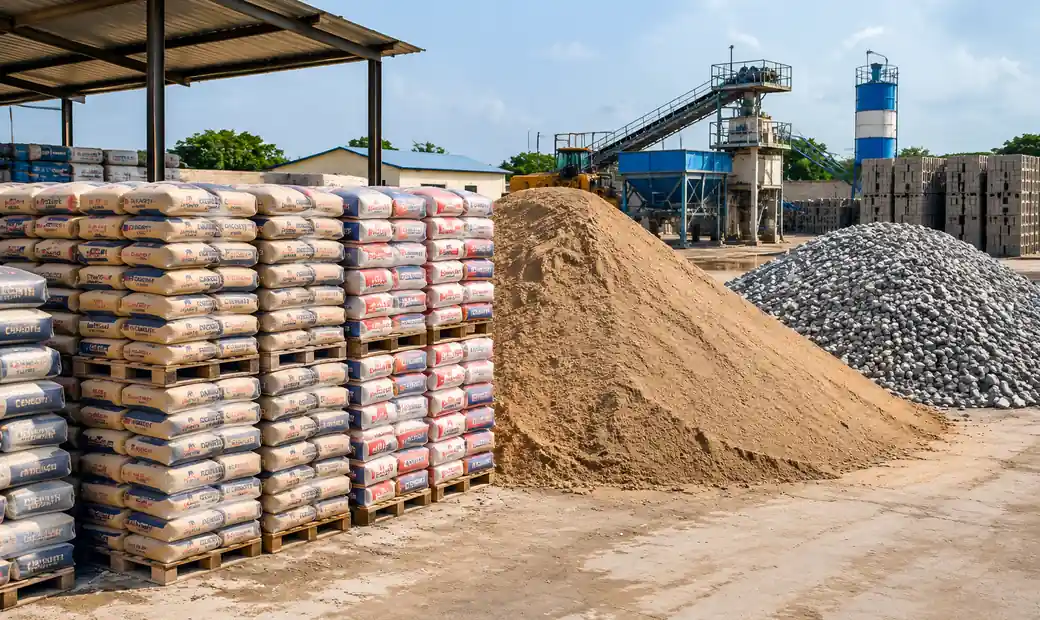
QT8-15: Demands 400-550m² minimum. Curing area must hold 3-4 days production (75,000-120,000 blocks) requiring 180-280m² alone. Material storage for consistent production needs 50-80m² for cement, aggregates, and additives.
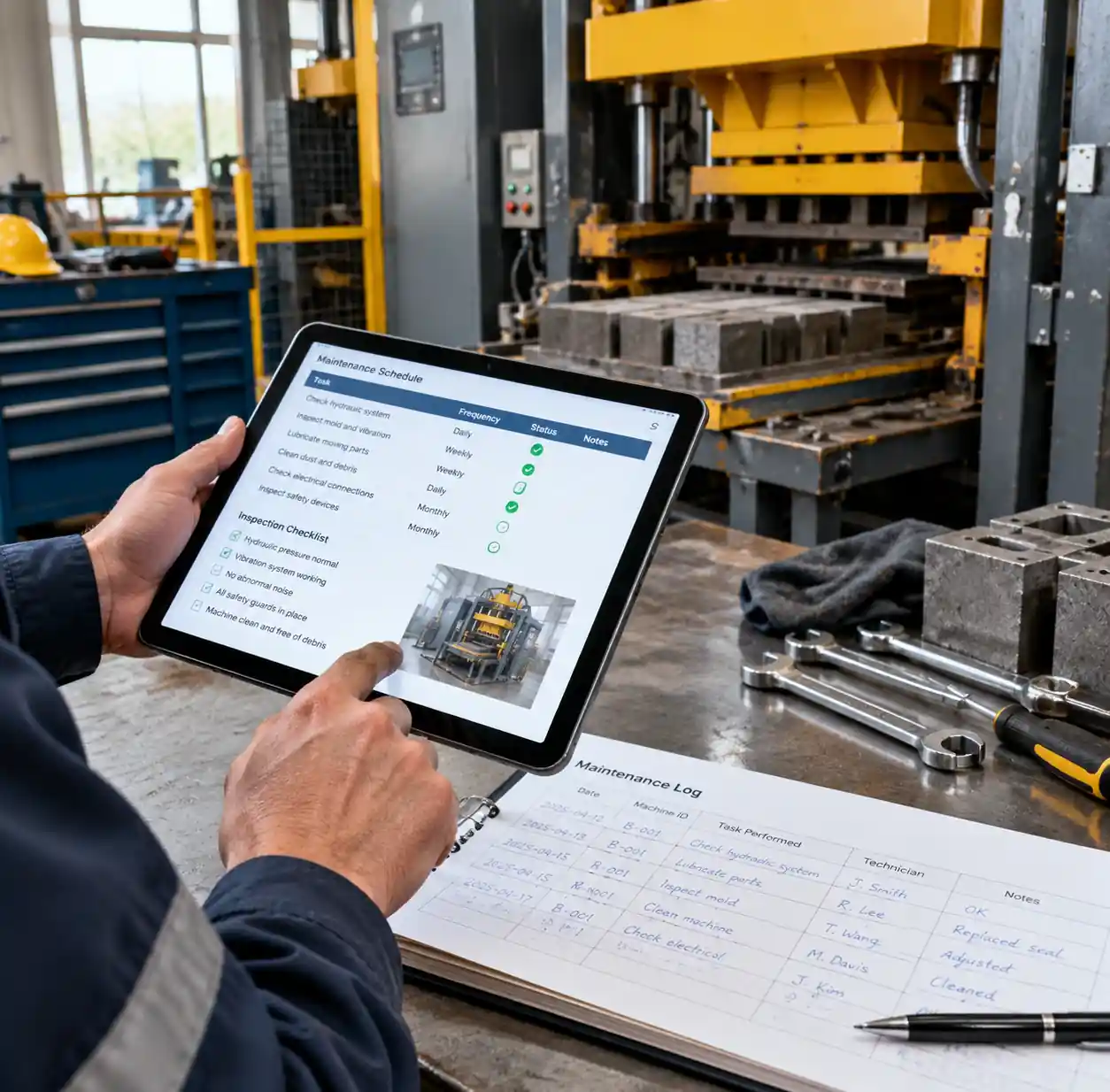
Maintenance Requirements and Complexity
Maintenance demands scale with machine complexity, affecting both scheduled maintenance costs and unexpected repair expenses.
Daily Maintenance Time
QT4-15: 10-15 minutes pre-shift inspection covers hydraulic oil level, vibration motor bolts, and mold cleaning. Simpler hydraulic system with fewer components reduces inspection points. Most operators handle this without specialized training.
QT6-15: 15-20 minutes daily maintenance adds hydraulic filter pressure checks and dual vibration motor inspection. Additional sensors and controls require basic diagnostic skills to verify normal operation.
QT8-15: 20-25 minutes pre-shift maintenance includes comprehensive hydraulic system inspection, automatic stacking system checks, and control system verification. Requires operators with mechanical and electrical understanding.
Scheduled Maintenance Intervals
| Maintenance Task | QT4-15 | QT6-15 | QT8-15 |
|---|---|---|---|
| Hydraulic Oil Change | Every 1,000 hours | Every 1,500 hours | Every 2,000 hours |
| Hydraulic Filter | Every 500 hours | Every 600 hours | Every 800 hours |
| Vibration Motor Bearings | Every 2,000 hours | Every 2,500 hours | Every 3,000 hours |
| Seals and Gaskets | Every 1,500 hours | Every 1,800 hours | Every 2,200 hours |
| Control System Check | Every 6 months | Every 6 months | Every 6 months |
| Complete Overhaul | 6,000-8,000 hours | 8,000-10,000 hours | 10,000-12,000 hours |
Annual maintenance costs (single shift operation, 2,400-2,800 hours/year):
- QT4-15: $1,800-$2,800
- QT6-15: $2,400-$3,600
- QT8-15: $3,200-$4,500
Common Failure Points
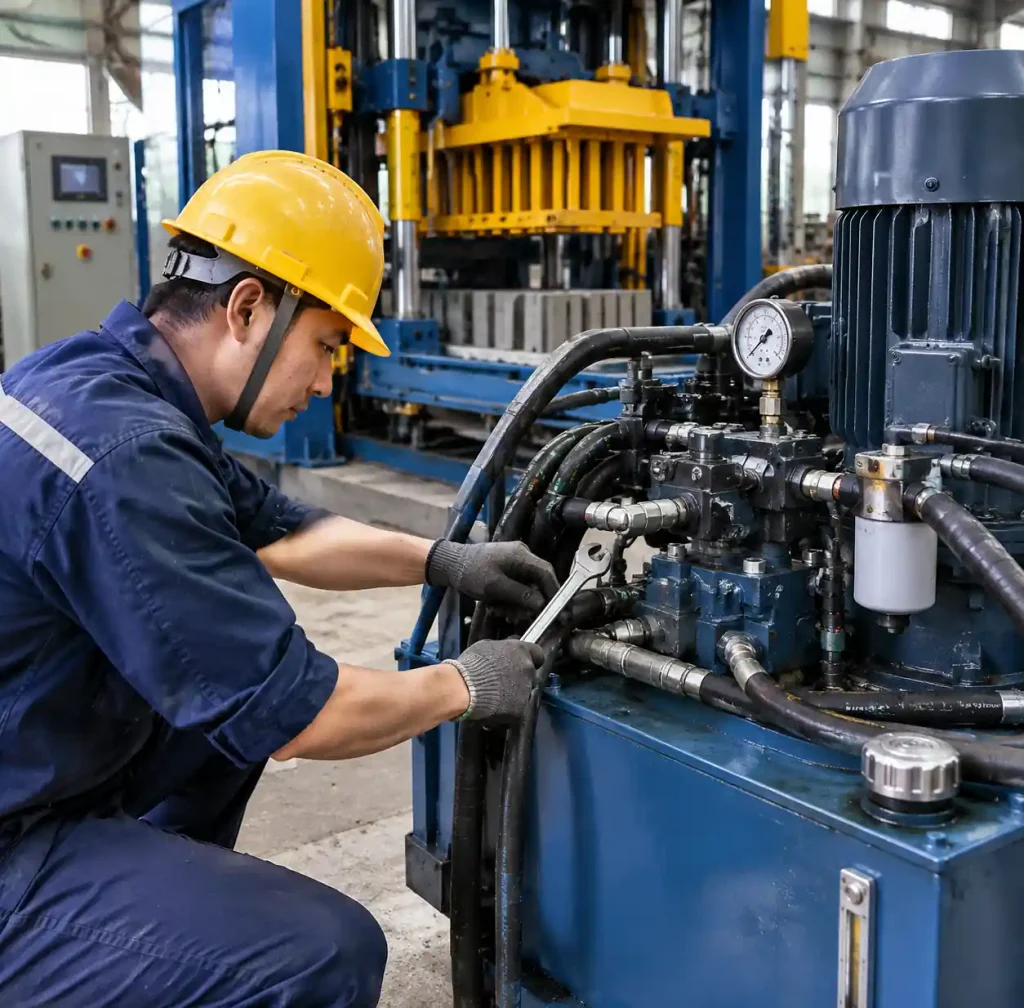
QT4-15: Hydraulic pump seal failures (800-1,200 hours) represent the most common issue, costing $180-$320 for parts plus 2-3 hours downtime. Single vibration motor creates single-point-of-failure risk—motor burnout costs $800-$1,400 including labor.
QT6-15: Hydraulic valve manifold contamination occurs more frequently due to higher system complexity. Preventive filter changes ($65-$85) every 600 hours prevent valve damage ($1,200-$2,200 repair). Dual vibration motors reduce single-point failure risk but double bearing maintenance requirements.
QT8-15: Control system failures represent the primary concern in complex automatic systems. PLC board replacement costs $1,800-$3,200 versus simpler QT4 controllers ($600-$900). However, the QT8’s industrial-grade components and superior filtration create 30-40% fewer unexpected failures than QT4 or QT6.
Which Model Matches Your Production Scale?
Selecting the optimal model requires honest assessment of current demand, realistic growth projections, and available capital.
Choose QT4-15 When:
- Daily demand consistently ranges 12,000-20,000 blocks
- Capital budget limits total investment to $35,000-$55,000
- Facility space under 200m² restricts larger equipment
- Electrical service limited to 30-40 kW capacity
- Operating single-shift production (8 hours daily)
- Technical expertise limited to basic mechanical maintenance
- Market pricing supports $95-$140 per thousand blocks
The QT4 delivers adequate capacity for small contractors, concrete product startups, and businesses testing block production before full commitment. Its lower complexity makes it suitable for operations without dedicated maintenance personnel.
Choose QT6-15 When:
- Daily demand ranges 20,000-30,000 blocks consistently
- Capital availability reaches $60,000-$90,000
- Facility provides 250-350m² operational space
- Quality requirements demand tighter tolerances than QT4 provides
- Production includes multiple block types requiring frequent changeovers
- Growth projections suggest 35-40% capacity increase within 2 years
- Technical staff can handle intermediate maintenance
The QT6 suits regional block suppliers, established concrete producers adding automated production, and growing contractors managing 4-6 active projects simultaneously. Its improved consistency and moderate capacity increase justify the investment step up from QT4.
Choose QT8-15 When:
- Daily demand exceeds 25,000 blocks with projections above 35,000
- Capital budget accommodates $90,000-$130,000 total investment
- Facility space provides 400-550m² minimum
- Structural block applications require certified strength uniformity
- Operating extended shifts or considering two-shift production
- Maintenance staff includes someone with hydraulic system experience
- Market supports $110-$150 per thousand pricing
The QT8 serves construction companies with continuous large projects, precast manufacturers supplying commercial construction, and distributors with established retail networks. Its industrial-grade construction and automation sophistication suit operations treating block production as core business rather than supplementary income.
Real-World Selection Mistakes to Avoid
Buyers frequently make predictable errors in model selection that cost them months in delayed ROI or force premature equipment replacement.
Mistake #1: Buying for peak demand instead of average demand. Contractors landing a single 100,000-block project buy QT8 equipment, then average only 15,000 blocks daily for the next 18 months. The QT8 sits at 45-50% capacity while depreciating at full rate. Right approach: size equipment for 75-85% of average sustained demand, not occasional peaks. Rent additional capacity or subcontract overflows.
Mistake #2: Ignoring total system costs. Buyers focus on machine price alone, neglecting mixer, conveyors, pallets, foundation, and working capital. A $28,000 QT4 becomes $52,000 fully operational. Insufficient budgeting forces shortcuts (cheaper mixer, inadequate pallets) that limit actual productivity below specifications.
Mistake #3: Underestimating infrastructure requirements. QT6 or QT8 buyers overlook electrical upgrades, foundation specifications, or facility size needs. Discovering $12,000 electrical work is required after machine delivery delays startup 4-8 weeks and eliminates working capital buffers.
Mistake #4: Overestimating operator capabilities. Buyers assume workers operating semi-automatic equipment seamlessly transition to QT8’s advanced automation. Reality: 2-3 weeks learning curve produces 15-25% more rejected blocks and frequent emergency service calls ($200-$400 per visit) during the first 90 days.
Mistake #5: Selecting based on lowest price rather than total cost. $18,000 QT4 machines from unknown manufacturers lack parts availability, technical support, and quality hydraulic components. Repairing failed hydraulic pumps takes 3-6 weeks for replacement parts versus 2-3 days for established brands like Raytone Block Machinery. Production downtime costs far exceed initial savings.
FAQ
Q: Can I upgrade from QT4 to QT6 or QT8 later as my business grows?
No practical upgrade path exists between models. The hydraulic systems, control platforms, and structural frames differ fundamentally—you cannot retrofit QT4 into QT6. Growth requires selling the existing machine (recovering 40-55% of original cost after 2-3 years) and purchasing the larger model. Plan for the capacity you’ll need within 18-24 months, not current demand.
Q: Do all three models produce the same quality blocks?
Block strength potential is similar (all can produce 15-25 MPa blocks), but consistency varies significantly. QT8 maintains under 3% strength variation, QT6 achieves 4-6%, and QT4 typically sees 8-12% variation. For non-structural applications (landscaping walls, garden borders), QT4 quality suffices. Structural applications requiring certified strength ratings benefit from QT6 or QT8 consistency.
Q: How much faster is the ROI on QT4 versus QT8 given the price difference?
Counter-intuitively, QT8 often achieves faster ROI despite higher cost due to superior economies of scale. QT4 at $42,000 investment producing 18,000 blocks daily generates about $14,000 monthly profit (payback 3 months). QT8 at $110,000 producing 28,000 blocks daily generates $29,000 monthly profit (payback 3.8 months). The QT8’s 55% higher output with similar labor costs creates better margins that offset higher investment. ROI advantage depends on actually selling the increased production—unsold blocks earn nothing.
Q: Can smaller models produce the same block types as larger ones?
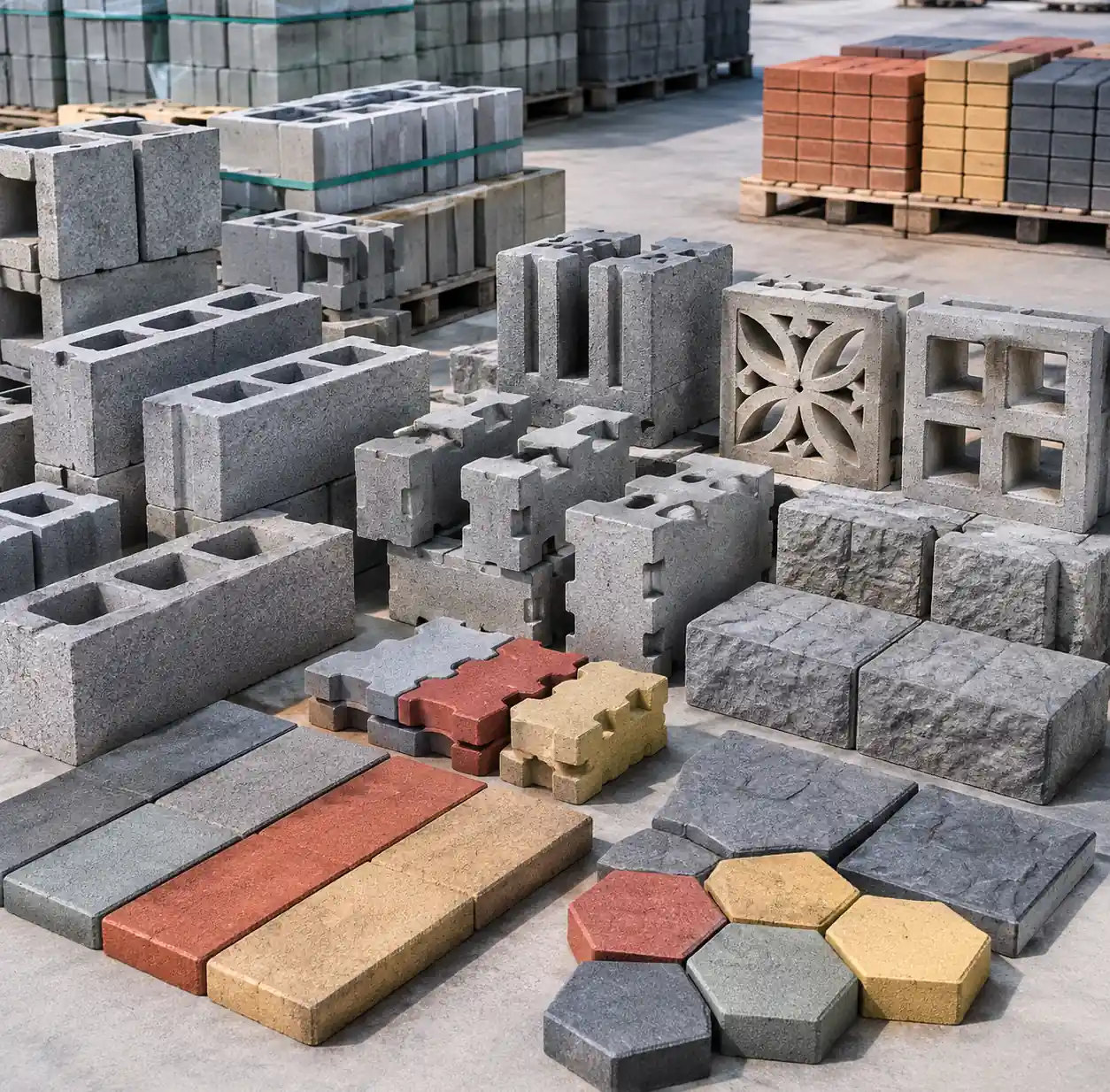
Block type capability depends on molding area, not machine size. QT4’s 880×550mm area accommodates standard blocks (390×190×190mm), solid bricks, and small pavers. It cannot produce large curbstones (500×200×250mm) or oversized pavers that require QT8’s 1,050×850mm area. Check specific block dimensions against molding area before purchase—this constraint does not change with mold purchases.
Q: What’s the actual lifespan before major component replacement becomes necessary?
Main hydraulic cylinders, pressing rams, and structural frames last 15-20 years with proper maintenance. However, “wearing components” need periodic replacement: hydraulic pumps (4,000-6,000 hours), vibration motor bearings (6,000-8,000 hours), seals and gaskets (4,000-6,000 hours), and control system components (8-12 years). Plan for $8,000-$15,000 in major component replacement every 3-4 years for QT4, $12,000-$22,000 for QT6, and $18,000-$32,000 for QT8. These costs represent 20-30% of new machine purchase—still economical versus complete replacement.
Conclusion
The QT4, QT6, and QT8 block machines serve distinctly different production scales that cannot be ignored without financial consequences. QT4-15 handles 17,000-19,500 blocks daily for $32,000-$52,000 investment, suiting contractors and startups with moderate demand. QT6-15 produces 23,000-28,800 blocks daily for $58,000-$85,000, targeting regional suppliers and established operations. QT8-15 delivers 26,000-30,700 blocks daily for $89,500-$127,500, serving industrial-scale production requiring maximum consistency and efficiency.
Selection depends on matching equipment capacity to sustained daily demand—not occasional peaks—while ensuring adequate capital covers total system costs including mixer, conveyors, foundation, and working capital. Electrical infrastructure, facility space, and maintenance capabilities must align with model requirements or implementation delays eliminate fast payback advantages.
The investment gap between models justifies itself only when daily production consistently requires the higher capacity. Buying oversized equipment wastes capital on unused capacity, while undersized machines force expensive upgrades or subcontracting that eliminates profit margins. Accurate demand forecasting over 18-24 months determines optimal selection more than any other factor.
Raytone Block Machinery manufactures complete production lines including QT4, QT6, and QT8 series automatic block machines with full installation, training, and technical support. Our systems integrate mixers, conveyors, stackers, and control systems into turnkey solutions tailored to your specific capacity requirements and site conditions. Contact our engineering team for detailed specifications, customized line design, and accurate pricing based on your production goals and location.