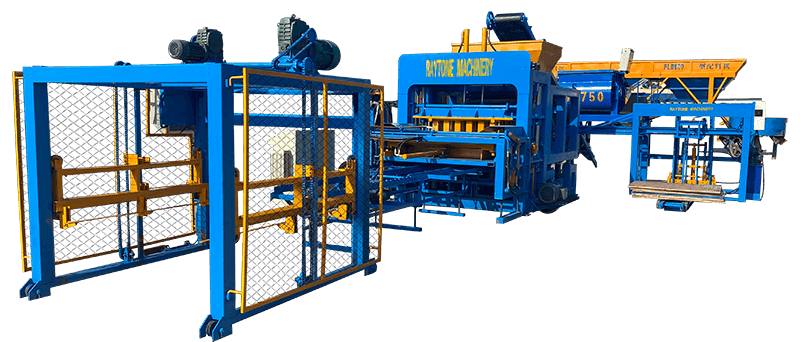






Block plant automation level determines your production economics, labor efficiency, and competitive positioning. The decision between automatic and semi-automatic systems directly impacts your initial investment, operating costs, production capacity, and profitability timeline.
Automatic production lines require $80,000-$230,000 investment and employ 5-7 workers to produce 15,000-46,000 blocks per shift. Semi-automatic machines need $12,000-$23,000 and use 4 workers to output 5,500-7,500 blocks per shift. Industry data shows that choosing the wrong automation level costs businesses 12-18 months in delayed ROI and limits contract opportunities.
This comprehensive ROI comparison analyzes automatic versus semi-automatic block plants across total investment, production capacity, labor costs, energy consumption, maintenance requirements, break-even timelines, and 3-year profit projections. You will learn exactly which automation level matches your production scale and how to maximize profitability based on your market demand.
Understanding Automation Levels
Machines à blocs semi-automatiques
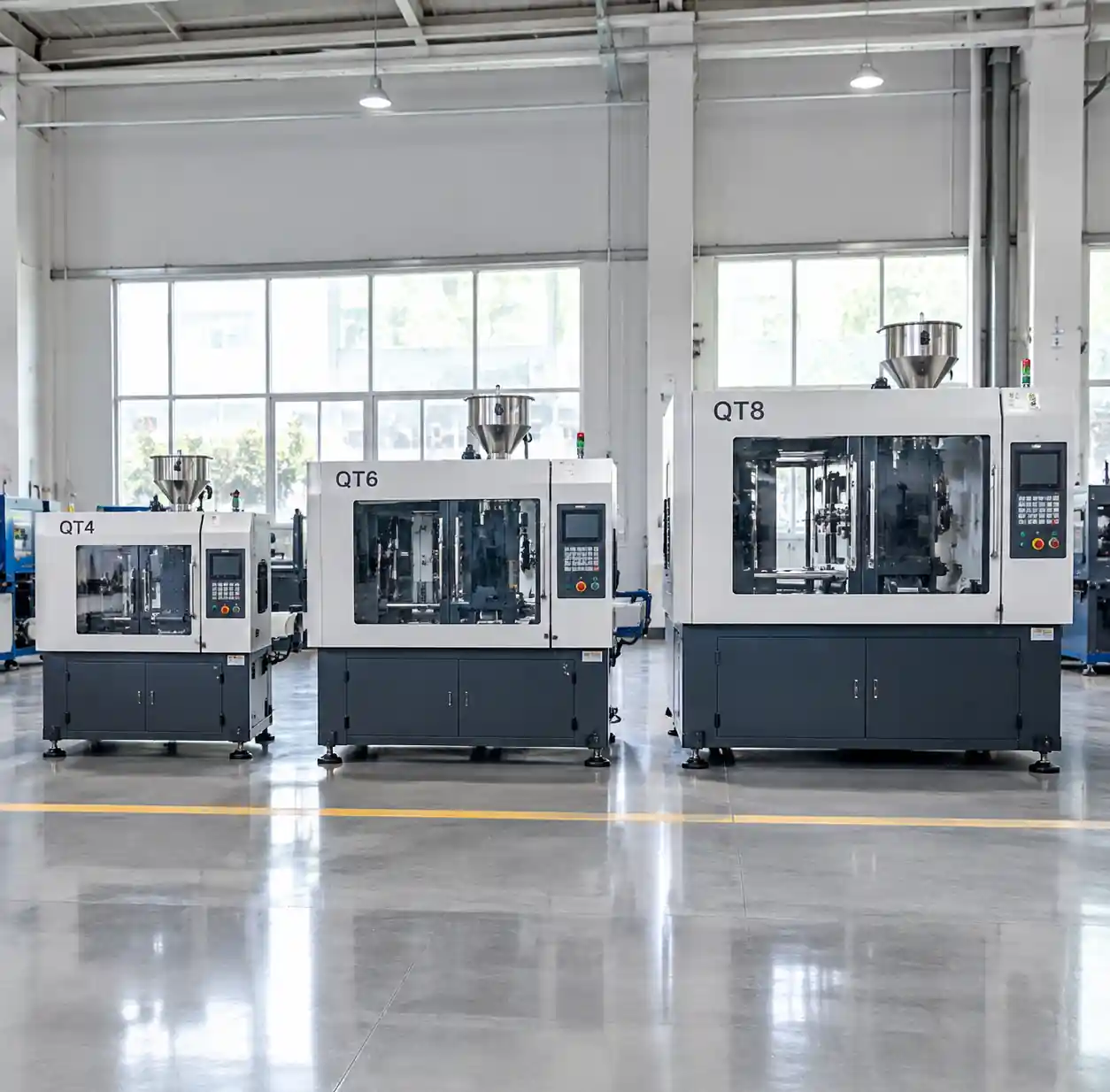
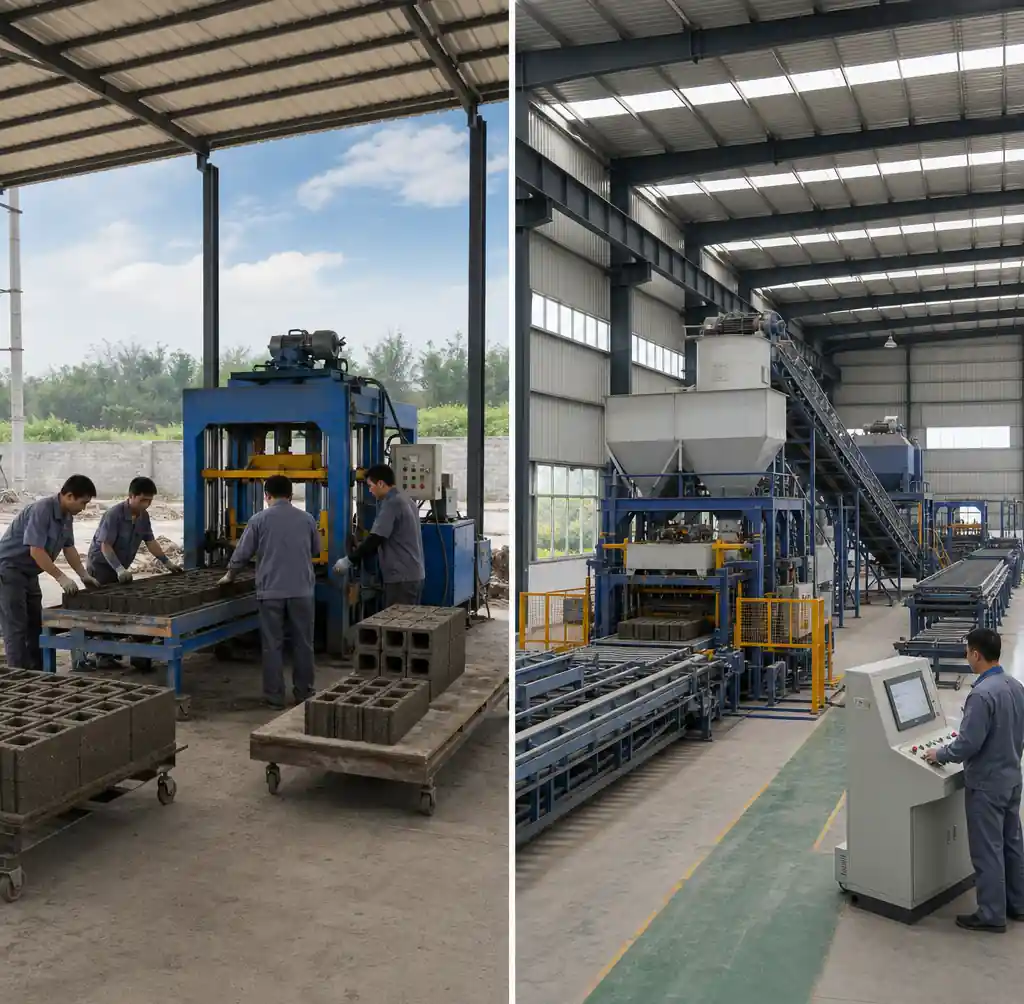
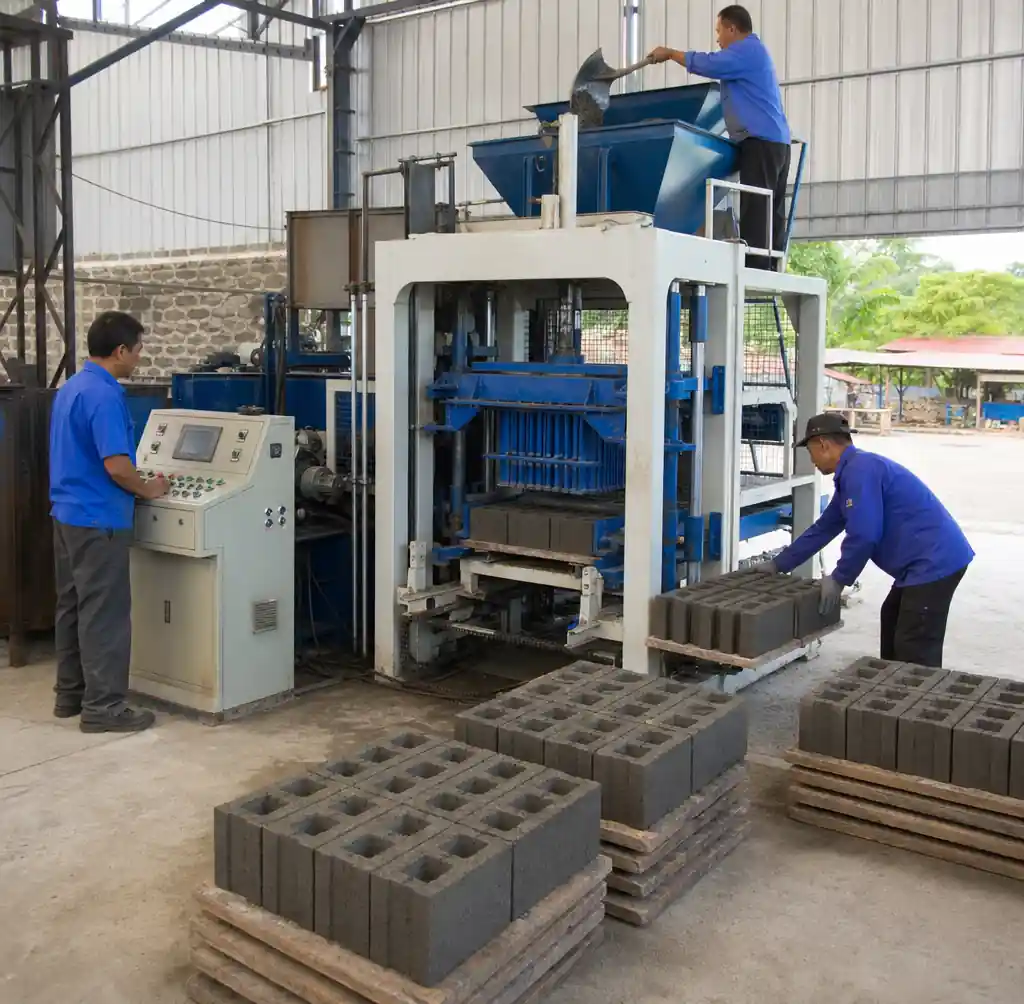
Machines semi-automatiques like the QT4-30 and QT4-24 combine automated molding cycles with manual material handling. The PLC system automatically controls vibration, hydraulic compression, and molding timing. However, operators manually load raw materials into the hopper and remove finished blocks from the production area.
The QT4-30 produces 7,200 blocks per 8-hour shift (900 blocks/hour) with standard 400×200×200mm hollow blocks. The QT4-24 outputs 7,749 blocks per shift. Molding cycles run 25-30 seconds per batch. These machines require 4 workers: one machine operator managing the PLC panel, two workers handling material loading and block removal, and one quality control supervisor.
Semi-automatic systems deliver consistent block quality with 5-8% strength variations through PLC-controlled pressure and vibration. You can change molds in 15-20 minutes, making these machines suitable for producing multiple block types in one shift.
Automatic Block Production Lines
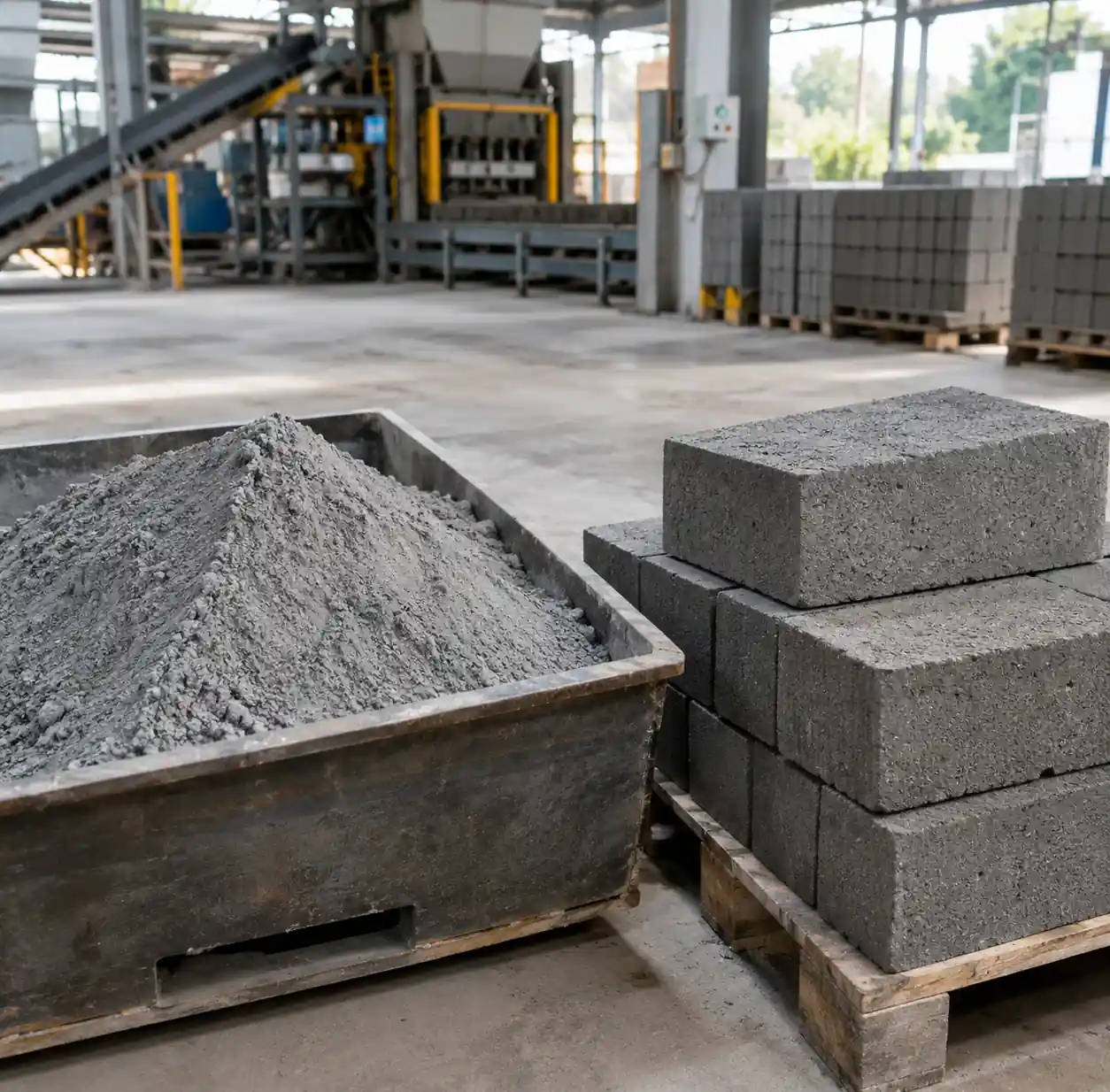
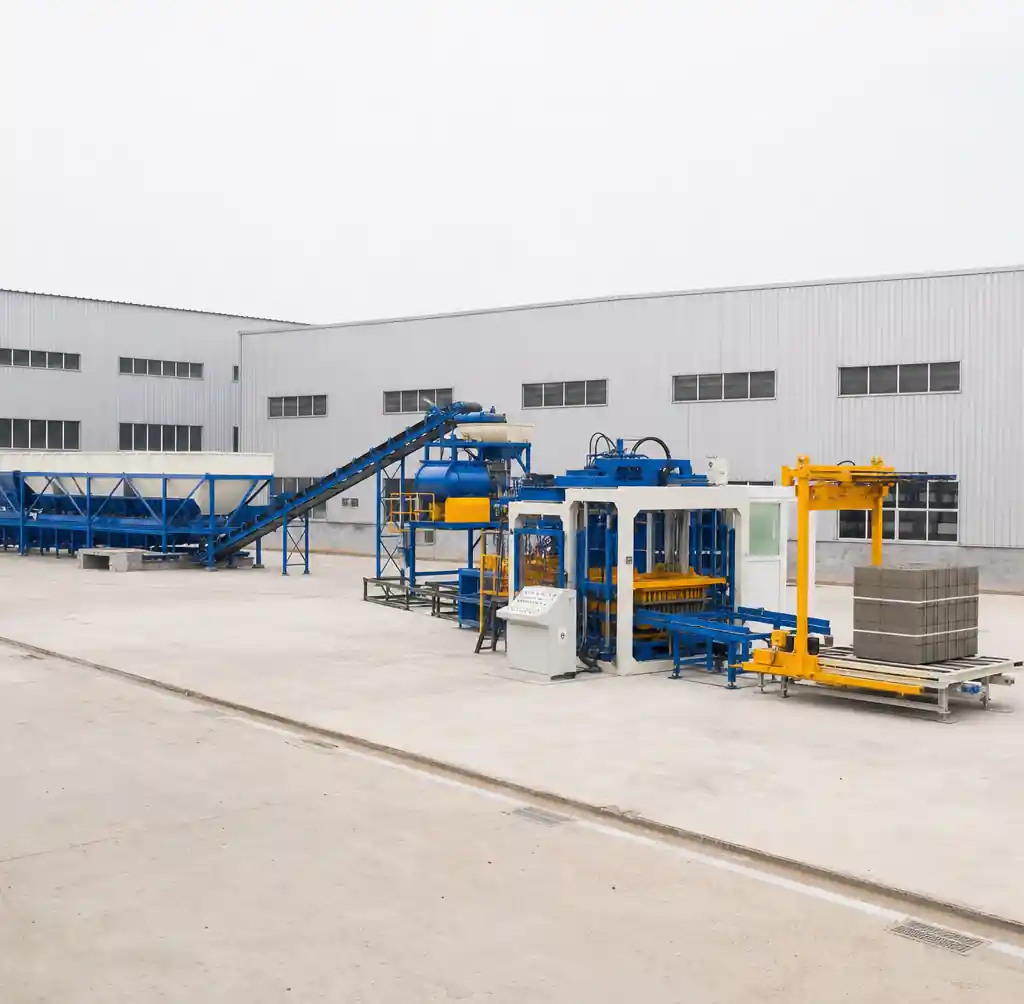
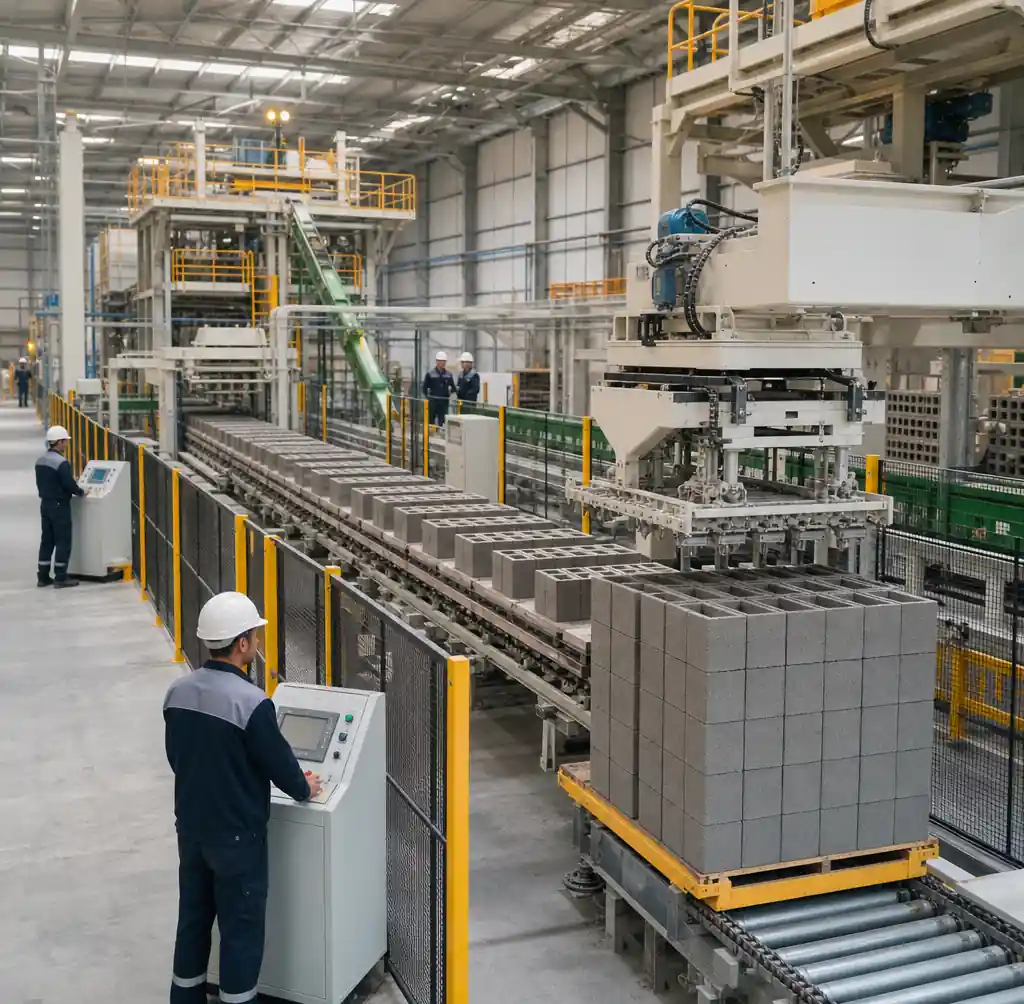
Automatic production lines integrate the entire process from batching to stacking. The QT10-15 and QT8-15 systems connect automatic batching machines, concrete mixers, belt conveyors, the block machine, and automatic stackers through a central PLC control panel operated by one supervisor.
The QT10-15 produces 46,080 standard hollow blocks per 8-hour shift (5,760 blocks/hour maximum). The QT8-15 outputs 30,720 blocks per shift. Molding cycles run 15-20 seconds per batch. These lines require 5-7 workers: one line supervisor, one PLC operator, two material management workers, one quality control technician, and 1-2 maintenance staff.
Automatic systems deliver superior consistency with 3-5% strength variations. The fully automated batching, controlled mixing time, uniform vibration, and precise hydraulic pressure ensure dimensional tolerances and compressive strength that meet international specifications including ASTM standards.
Total Investment Comparison
Initial Capital Requirements
The upfront investment determines your financing requirements, business risk profile, and time to operational readiness.
| Investment Component | Semi-Automatic | Automatic Line |
|---|---|---|
| Block Machine | $8,000-$15,000 | $50,000-$150,000 |
| Batching System | Manual/Simple ($1,000-$2,000) | Automatic ($15,000-$30,000) |
| Bétonnière | $2,000-$4,000 | $8,000-$15,000 |
| Conveyor System | Manual/Simple ($500-$1,000) | Belt Conveyors ($5,000-$10,000) |
| Stacking System | Manual | Automatic Stacker ($10,000-$20,000) |
| Molds & Pallets | $1,500-$2,000 | $5,000-$10,000 |
| PLC & Controls | Basic (included) | Advanced ($3,000-$5,000) |
| Installation & Training | $1,000-$2,000 | $5,000-$10,000 |
| TOTAL INVESTMENT | $12,000-$23,000 | $80,000-$230,000 |
Semi-automatic machines minimize financial risk with moderate capital requirements accessible through small business loans. Automatic production lines require substantial capital, typically needing bank financing, equipment leasing, or investor backing.
Facility Requirements
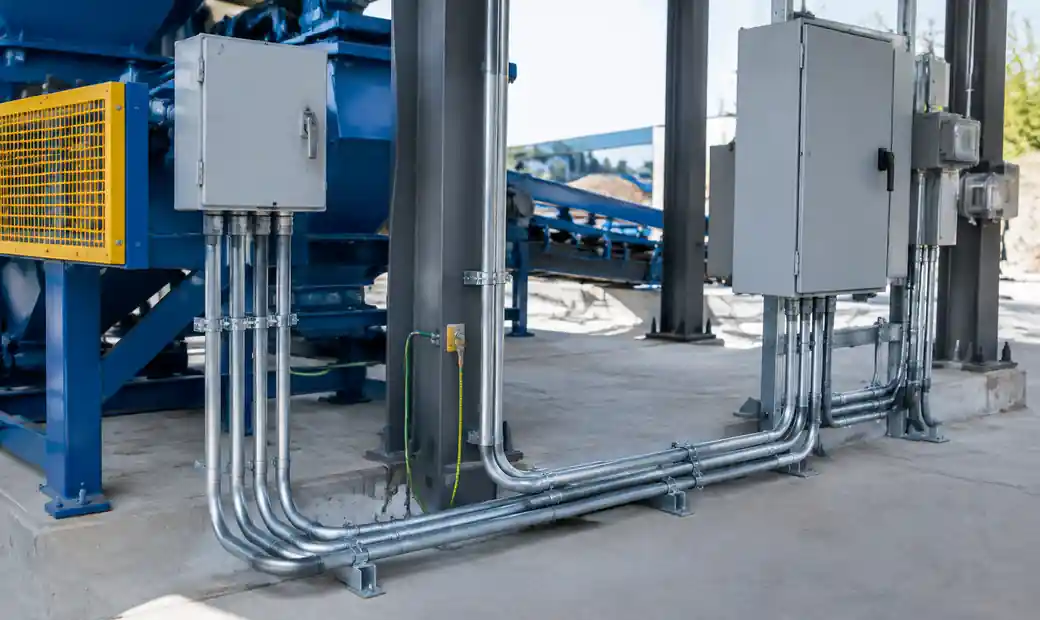
Semi-automatic machines operate in 200-300 square meter facilities with basic infrastructure. Standard single-phase or three-phase electrical supply (23.15 kW) handles power requirements. Foundation preparation costs $2,000-$5,000.
Automatic production lines require 400-600 square meters for production equipment plus additional curing and storage areas, totaling 1,000-2,000 square meters. Three-phase electrical infrastructure supporting 96-108 kW loads requires substantial preparation. Foundation work, electrical installation, and facility upgrades cost $15,000-$30,000.
Working Capital
Semi-automatic operations need $5,000-$8,000 working capital for raw materials, initial labor, and 30-day operating expenses before revenue starts flowing.
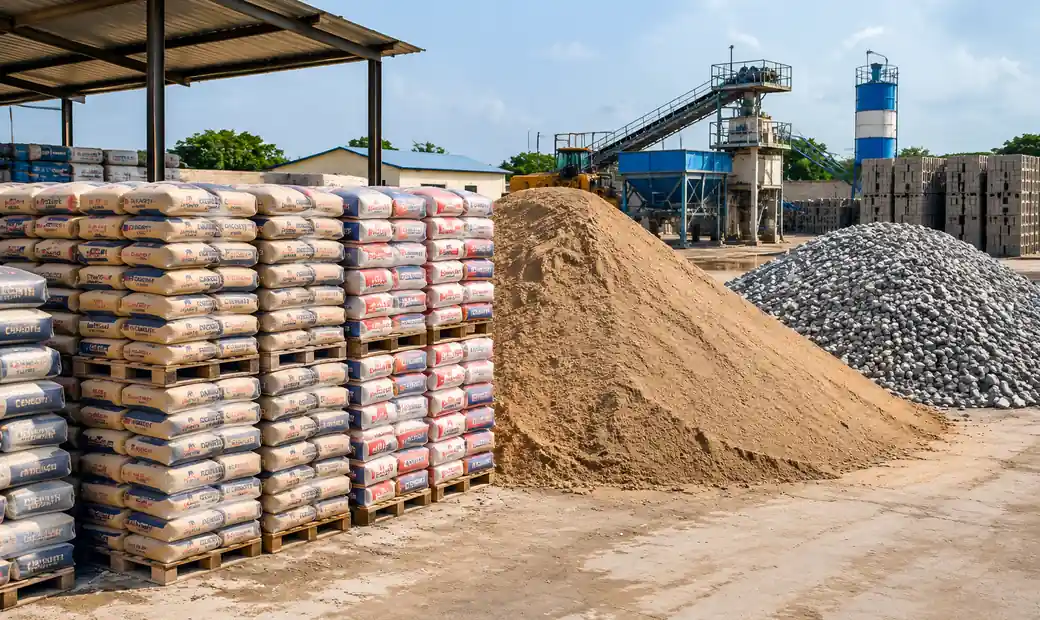
Automatic lines require $15,000-$25,000 working capital covering raw materials inventory, labor for 30-45 days, spare parts inventory, and utility deposits. Total capital requirement including equipment and working capital reaches $95,000-$255,000.
Analyse de la capacité de production
Daily and Monthly Output
Production capacity determines order fulfillment speed, contract eligibility, and revenue potential.
| Machine Model | Blocks/Hour | Blocks/8-Hour Shift | Blocks/Month (25 days) | Annual Capacity |
|---|---|---|---|---|
| QT4-24 semi-automatique | 969 | 7,749 | 193,725 | 2,324,700 |
| QT4-30 semi-automatique | 900 | 7,200 | 180,000 | 2,160,000 |
| QT8-15 Automatique | 3,840 | 30,720 | 768,000 | 9,216,000 |
| QT10-15 Automatique | 5,760 | 46,080 | 1,152,000 | 13,824,000 |
Production data based on standard 400×200×200mm hollow blocks
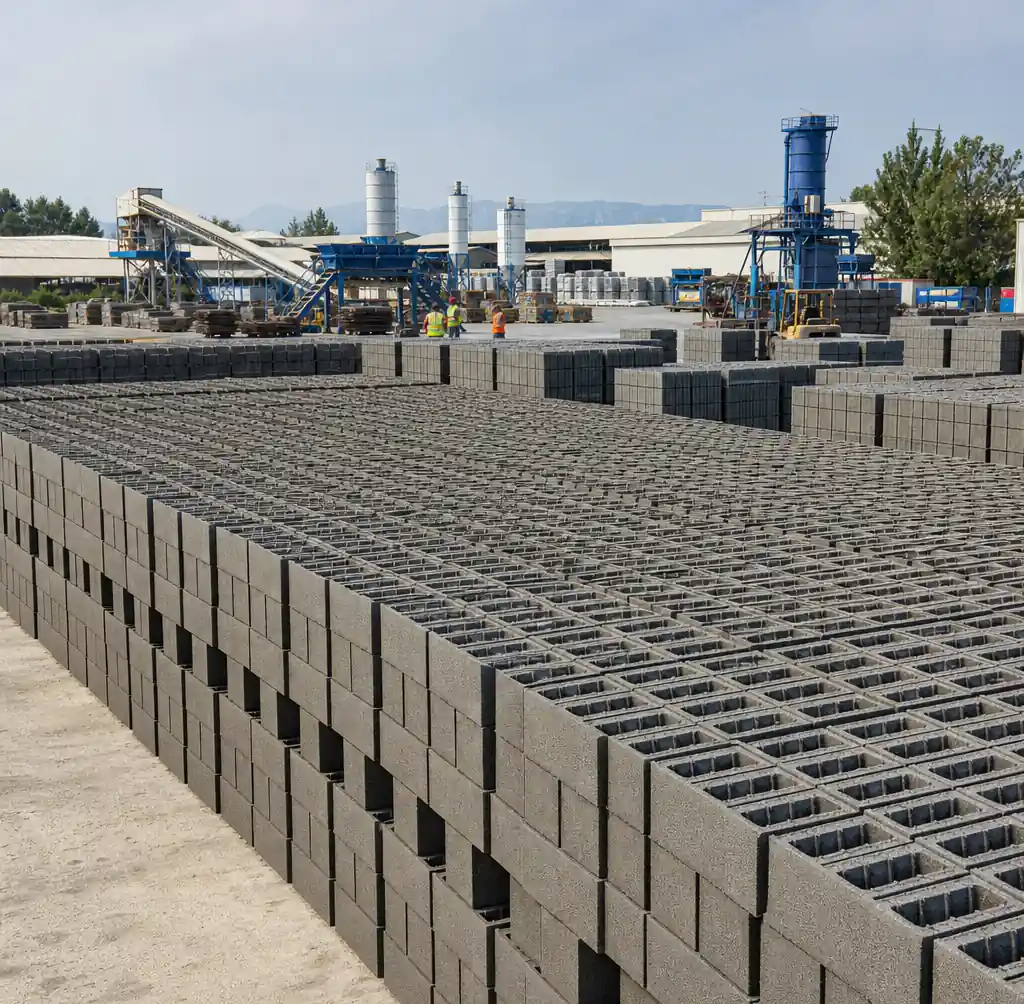
The QT10-15 automatic line produces 6.4 times more blocks per shift than the QT4-30 semi-automatic machine. This production difference determines your ability to fulfill large construction contracts, supply wholesale distributors, and serve government projects that require production capacity minimums.
Production Flexibility
Semi-automatic machines excel at production flexibility. Mold changeover takes 15-20 minutes. You can produce hollow blocks in the morning, switch to paver blocks for afternoon production, and change to solid blocks the next day. This flexibility suits producers serving diverse local markets with varying block type demands.
Automatic lines work best dedicated to one or two high-volume block types. Mold changeover takes 30-45 minutes plus recalibration of batching ratios, mixing time, vibration frequency, and pressure settings. The economic advantage of automatic lines comes from high-volume production of standard products rather than frequent type switching.
Labor Cost Comparison
Workforce Requirements
Labor costs represent the largest ongoing expense after raw materials. The automation level dramatically changes labor economics.
| Factor | Semi-Automatic | Automatic |
|---|---|---|
| Workers Required | 4 | 5-7 |
| Key Roles | Machine operator, material prep, block handling, QC | Line supervisor, PLC operator, material management, QC, maintenance |
| Monthly Labor Cost | $3,200 (4 × $800) | $4,800 (6 × $800) |
| Training Time | 5-7 days | 2-3 weeks |
| Skill Level | Moderate PLC knowledge | Advanced PLC, hydraulic, electrical |
Labor costs assume $800/month average wage. Adjust for your location.
Automatic lines employ more total workers but produce 4-6 times more blocks, making labor cost per block dramatically lower.
Labor Cost Per Thousand Blocks
This metric reveals the true labor efficiency of each automation level:
Semi-Automatic (QT4-30):
- Production: 7,200 blocks/shift
- Workers: 4 people × $800/month = $3,200 monthly
- Working days: 25 days/month
- Daily labor cost: $128
- Labor cost per 1,000 blocks: $17.78
Automatic (QT10-15):
- Production: 46,080 blocks/shift
- Workers: 6 people × $800/month = $4,800 monthly
- Daily labor cost: $192
- Labor cost per 1,000 blocks: $4.17
The automatic line reduces labor cost per thousand blocks by 77% compared to semi-automatic production. Producing one million blocks with semi-automatic machines costs $17,780 in labor compared to $4,170 with an automatic line—a savings of $13,610 per million blocks.
When you scale to 10 million blocks annually (typical for large producers), automatic production saves $136,100 in annual labor costs compared to semi-automatic production. This labor savings alone can justify the higher equipment investment.
Energy Consumption Analysis
Power Requirements
| Type de machine | Installed Power | Hourly Consumption | Cost per 1,000 Blocks* |
|---|---|---|---|
| QT4-30 semi-automatique | 23.15 kW | 23.15 kWh | $2.57 |
| QT8-15 Automatique | 96.3 kW | 96.3 kWh | $2.50 |
| QT10-15 Automatique | 107.8 kW | 107.8 kWh | $1.87 |
Electricity cost calculated at $0.10/kWh. Adjust for local rates.
Although automatic lines consume more total electricity, the energy cost per block decreases due to dramatically higher production output. The QT10-15 uses 4.7 times more power than the QT4-30 but produces 6.4 times more blocks, resulting in 27% lower energy cost per thousand blocks.
Total Energy Economics
Semi-Automatic Monthly Energy Cost:
- 7,200 blocks/day × 25 days = 180,000 blocks/month
- 23.15 kW × 8 hours/day × 25 days = 4,630 kWh/month
- 4,630 kWh × $0.10 = $463/month
Automatic Monthly Energy Cost:
- 46,080 blocks/day × 25 days = 1,152,000 blocks/month
- 107.8 kW × 8 hours/day × 25 days = 21,560 kWh/month
- 21,560 kWh × $0.10 = $2,156/month
Energy cost per block: Semi-automatic $0.0026, Automatic $0.0019 (27% lower).
Maintenance Requirements
Preventive Maintenance Programs
Semi-automatic machines require 30-45 minutes daily maintenance including sensor cleaning, hydraulic oil checks, and lubrication. Weekly deep cleaning and adjustment take 2-3 hours. Annual maintenance costs range from $800 to $1,500 including hydraulic seals, sensors, and wear parts.
Planned downtime averages 3-5 days annually for major maintenance, costing $3,150-$5,250 in lost production opportunity (7,200 blocks/day × $0.18 profit/block).
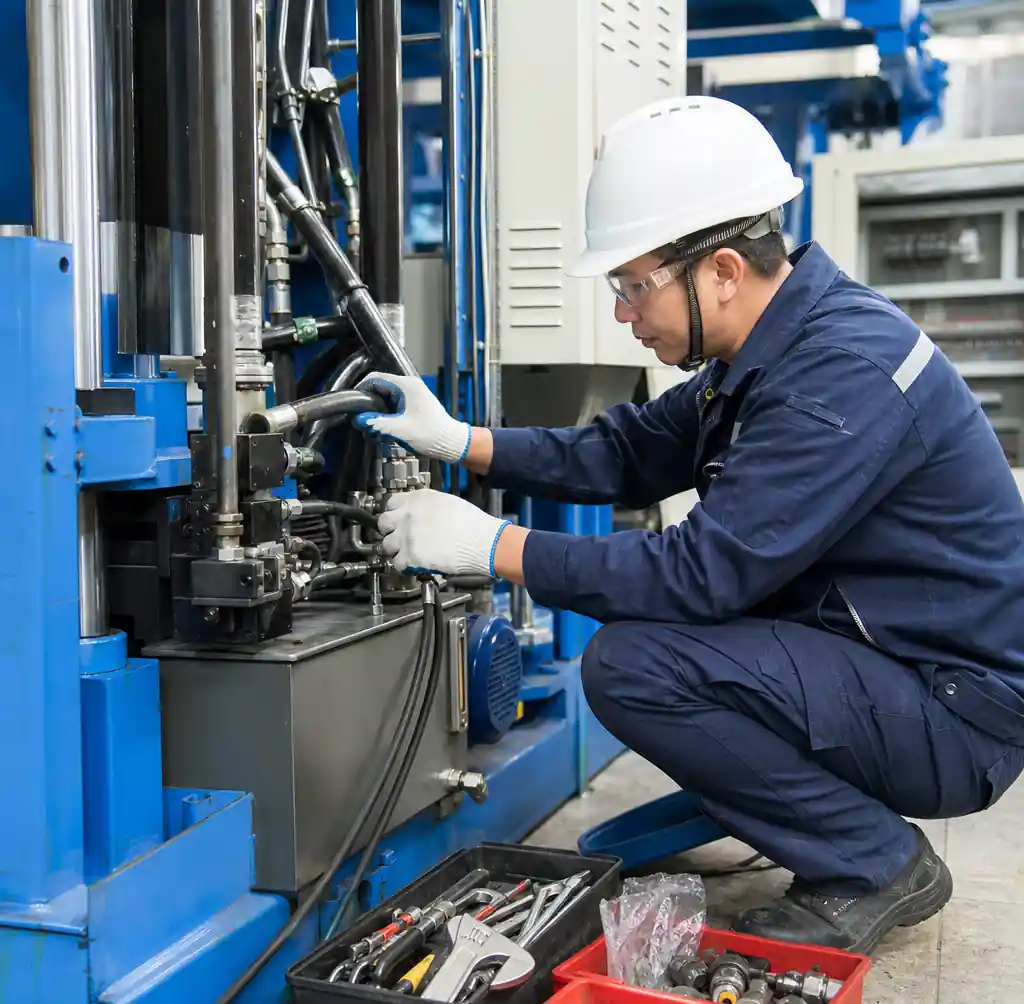
Automatic lines require comprehensive preventive maintenance. Daily checks consume 60-90 minutes covering PLC diagnostics, sensor calibration, hydraulic system inspection, conveyor alignment, and lubrication. Weekly deep maintenance takes 3-4 hours including full system checks.
Annual maintenance costs range from $5,000 to $12,000 covering hydraulic components, electrical parts, sensors, conveyor belts, and professional service visits. Planned downtime of 5-8 days annually impacts $22,500-$36,000 in production opportunity, making preventive maintenance essential to minimize unexpected failures.
Spare Parts Inventory
Semi-automatic operations maintain $1,500-$2,500 spare parts inventory including hydraulic seals, sensors, electrical contactors, and mold wear plates.
Automatic lines require $5,000-$10,000 spare parts inventory covering critical components for the block machine, batching system, mixer, conveyors, and stacker. Comprehensive inventory minimizes downtime costs that exceed $4,500 per lost production day.
Break-Even Analysis
ROI Calculation Methodology
Break-even calculations determine when your investment pays back. These calculations assume typical 2026 market conditions:
Assumptions:
- Block selling price: $0.30 per block
- Raw material cost: $0.12 per block (cement, sand, aggregates)
- Other costs: $0.02 per block (utilities, consumables)
- Working days: 25 days monthly
- Operation at 80% capacity (realistic for established producers)
Semi-Automatic ROI
QT4-30 Semi-Automatic:
- Investment: $18,000 (equipment + facility + working capital)
- Production: 7,200 blocks/day × 80% = 5,760 blocks/day
- Revenue: 5,760 × $0.30 = $1,728/day
- Costs per day:
- Materials: 5,760 × $0.12 = $691
- Labor: $128
- Energy: $185
- Other: 5,760 × $0.02 = $115
- Total costs: $1,119/day
- Daily profit: $609
- Break-even: 30 days ($18,000 ÷ $609)
Automatic Line ROI
QT10-15 Automatic:
- Investment: $150,000 (equipment + facility + working capital)
- Production: 46,080 blocks/day × 80% = 36,864 blocks/day
- Revenue: 36,864 × $0.30 = $11,059/day
- Costs per day:
- Materials: 36,864 × $0.12 = $4,424
- Labor: $192
- Energy: $863
- Other: 36,864 × $0.02 = $737
- Total costs: $6,216/day
- Daily profit: $4,843
- Break-even: 31 days ($150,000 ÷ $4,843)
Both automation levels achieve remarkably similar break-even periods of approximately one month when operating at capacity with established market demand. The critical difference lies in absolute profit generation and scalability.

Long-Term Profitability Comparison
Three-Year Profit Projection
Break-even analysis shows initial payback, but 3-5 year profit potential reveals the true financial impact of your automation choice.
3-Year Profit Analysis (25 days/month, 80% capacity):
Semi-Automatic (QT4-30):
- Monthly profit: $609 × 25 days = $15,225
- Annual profit: $15,225 × 12 = $182,700
- 3-year gross profit: $548,100
- Less initial investment: $18,000
- 3-year net profit: $530,100
Automatic (QT10-15):
- Monthly profit: $4,843 × 25 days = $121,075
- Annual profit: $121,075 × 12 = $1,452,900
- 3-year gross profit: $4,358,700
- Less initial investment: $150,000
- 3-year net profit: $4,208,700
The automatic line generates 7.9 times more net profit over three years compared to semi-automatic production. This dramatic difference comes from two factors: 77% lower labor cost per block and 6.4 times higher production capacity enabling you to fulfill large-volume contracts that semi-automatic producers cannot supply.
Profit Per Block Analysis
Semi-Automatic: $0.106 profit per block
Automatic: $0.131 profit per block
The automatic line generates 24% higher profit per block due to superior labor efficiency and slightly lower energy cost per block. When multiplied across millions of blocks annually, this difference compounds significantly.
Decision Framework
Choose Semi-Automatic Block Machines If:
You should invest in semi-automatic systems when you have proven market demand of 150,000-250,000 blocks monthly and want to scale from manual production without full automation complexity.
Ideal Scenarios:
- Established local or regional demand below 300,000 blocks monthly
- Access to moderate financing ($15,000-$25,000)
- Serving diverse markets requiring multiple block types with frequent changeover
- Labor costs are moderate ($600-$1,000 monthly per worker)
- 4-5 reliable workers available with moderate technical training capability
- Production flexibility valued over maximum output
Semi-automatic machines deliver optimal ROI when you need better quality consistency and higher capacity than manual production but lack the capital or demand volume that justifies full automation.
Choose Automatic Production Lines If:
You should invest in chaînes de production automatisées when you have secured contracts or confirmed demand exceeding 500,000 blocks monthly.
Ideal Scenarios:
- Large construction contracts requiring 600,000+ blocks monthly
- Government or institutional projects with production capacity minimums
- Wholesale distribution requiring consistent high-volume supply
- Labor costs are high relative to equipment costs ($800+ monthly per worker)
- Access to substantial capital ($100,000-$250,000) through financing or equity
- Reliable electrical infrastructure supporting 96-108 kW loads
- Technical staff or training capability for PLC, hydraulic, and electrical systems
- Focus on one or two high-volume standard block types
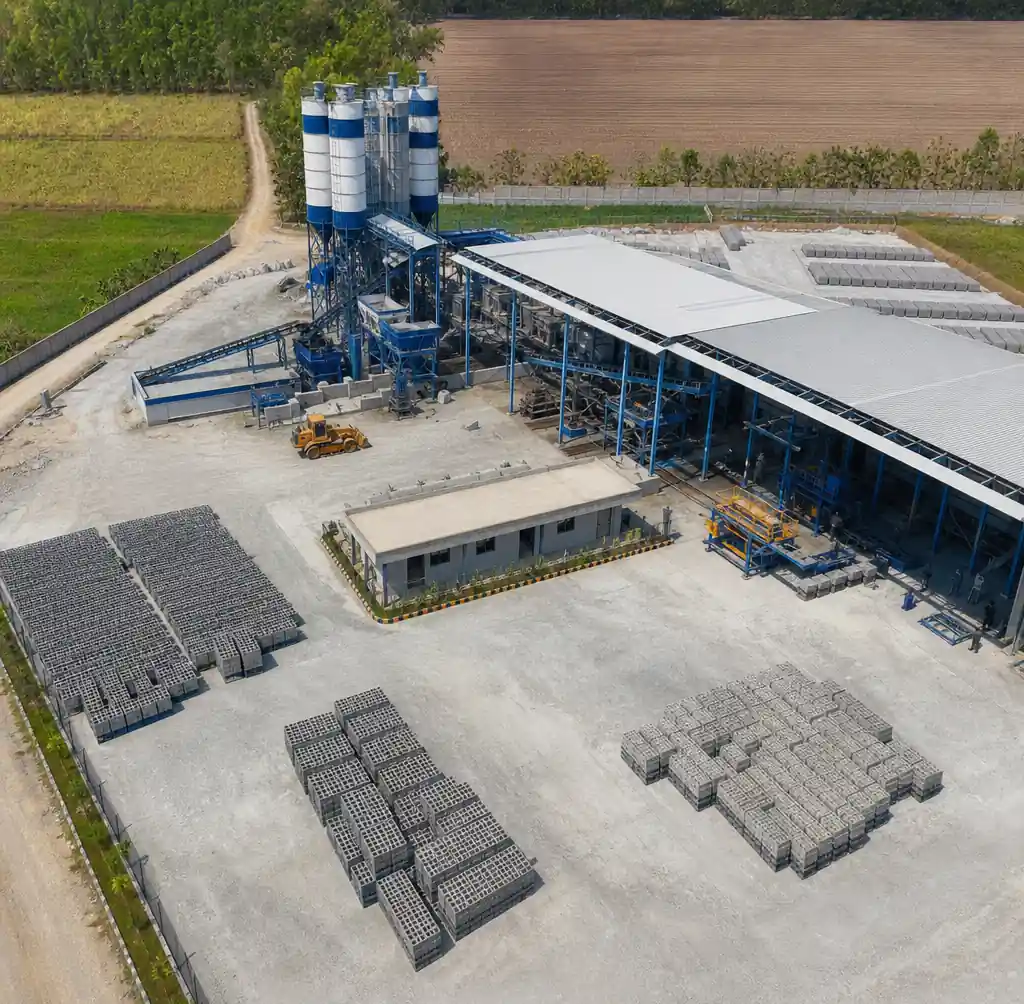
Automatic lines maximize profitability when you operate at high capacity. The superior labor efficiency (77% lower cost per thousand blocks) and ability to fulfill contracts that semi-automatic producers cannot supply generate returns that justify the 8-10 times higher investment.
Risk Factors and Considerations
Semi-Automatic Risks
Market demand fluctuation: Semi-automatic production is more vulnerable to demand drops. Fixed labor costs of $3,200/month become burdensome when production decreases below 60% capacity.
Scaling limitations: When demand exceeds 300,000 blocks monthly, you must either add multiple semi-automatic lines (increasing complexity and labor) or upgrade to automatic production (requiring new capital investment).
Competition: Automatic producers can undercut pricing due to lower labor costs while maintaining profitability.
Automatic Line Risks
Underutilization: Operating below 50% capacity makes ROI timelines extend significantly. The break-even period doubles from 31 days at 80% capacity to 62+ days at 40% capacity.
Technical complexity: Breakdowns require specialized technical knowledge. Maintaining competent technical staff is essential. Remote locations without technical service access face extended downtime.
Capital intensity: The $150,000-$230,000 investment creates substantial financial obligations. Debt service on equipment financing reduces operating flexibility during market downturns.
Production inflexibility: Frequent block type changes undermine the economic advantage. Automatic lines excel at high-volume standard production, not diverse small batches.
Financing Strategies
Semi-Automatic Financing
Most semi-automatic systems qualify for small business equipment loans with 2-4 year terms at 8-12% annual interest rates. Monthly payments of $400-$600 remain manageable during the first months of production.
Alternatively, cash purchase requires $18,000-$23,000 liquid capital. Many producers bootstrap from manual machine profits or combine personal savings with small business grants.
Automatic Line Financing
Automatic production lines typically require equipment financing or leasing. Standard terms include:
- 20-30% down payment ($30,000-$60,000)
- 5-7 year loan term
- 7-10% annual interest rate
- Monthly payments $1,800-$3,500
You need strong business financials, confirmed purchase orders, or letters of intent demonstrating demand to secure favorable financing terms. Some manufacturers offer financing programs or partnerships with equipment finance companies.
Frequently Asked Questions
Can I start with semi-automatic and upgrade to automatic later?
Yes, many successful producers follow this path. Start with one or two semi-automatic machines to prove market demand with moderate investment. After 12-18 months of profitable operation and confirmed demand growth, upgrade to automatic production. You can keep semi-automatic machines for specialty products or backup capacity while the automatic line handles high-volume standard production.
What production volume justifies automatic vs semi-automatic?
The crossover point occurs around 400,000-500,000 blocks monthly. Below this volume, semi-automatic machines deliver faster ROI with lower capital requirements. Above this volume, automatic lines generate dramatically higher absolute profits that justify the investment. If you have confirmed demand exceeding 600,000 blocks monthly, automatic production is the clear choice.
How do labor costs in my region affect the decision?
Labor cost differences strongly influence automation ROI. In regions where skilled labor costs $400-$600 monthly, semi-automatic machines remain competitive up to higher production volumes. In regions where labor exceeds $1,000 monthly, automatic lines become attractive at lower production volumes (300,000-400,000 blocks monthly) because the labor savings per block justify automation sooner.
What happens if demand drops after investing in automatic production?
Automatic lines require higher minimum operating levels to remain profitable. If demand drops below 50% capacity (23,000 blocks/day for QT10-15), consider sub-contracting production to other manufacturers, expanding market territory, or developing new customer segments. The lower operating cost per block gives you pricing flexibility to compete for new contracts while maintaining profitability.
Which system produces better quality blocks?
Automatic production delivers superior consistency with 3-5% strength variations vs 5-8% for semi-automatic systems. The fully automated batching ensures precise cement ratios, controlled mixing time produces uniform concrete, and consistent vibration/pressure deliver dimensional accuracy. Both systems produce blocks meeting national standards, but automatic production reliably meets international specifications required for exports and engineered structural applications.
How much space do I need for each system?
Semi-automatic plants operate in 500-800 total square meters including production (200-300 sqm), curing area (200-300 sqm), and raw material storage (100-200 sqm). Automatic plants require 1,500-2,500 total square meters including production (400-600 sqm), automated curing area (600-800 sqm), raw material storage (300-500 sqm), and finished product storage (200-600 sqm).
Conclusion
Choosing between automatic and semi-automatic block plants determines your production economics, competitive positioning, and profit potential. Semi-automatic machines require $12,000-$23,000 investment, achieve break-even in 30 days, and generate $530,000 net profit over three years serving markets up to 250,000 blocks monthly. Automatic production lines require $80,000-$230,000 investment, achieve break-even in 31 days, and generate $4,200,000 net profit over three years when operating above 600,000 blocks monthly.
The decision hinges on three factors: confirmed market demand volume, available capital, and local labor costs. Semi-automatic systems deliver optimal ROI for established producers scaling from manual production with moderate capital. Automatic lines maximize profitability when you have secured high-volume demand and can operate above 50% capacity consistently.
Raytone Block Machinery manufactures complete chaînes de production automatisées et semi-automatic systems serving block producers in over 100 countries worldwide. Our QT10-15 and QT8-15 automatic lines deliver industry-leading production capacity with proven reliability. Our QT4-30 and QT4-24 semi-automatic machines provide exceptional value for medium-scale producers.
Contact our technical team today for detailed ROI analysis customized to your market conditions, production line design recommendations, and financing options.