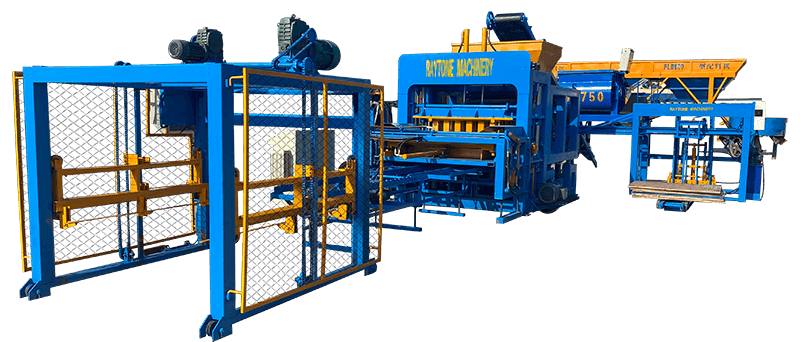






Power infrastructure determines whether your brick production runs smoothly or faces costly downtime. In regions where electricity fluctuates by 30-50 voltage drops daily or grid access costs $8,000-15,000, choosing between electric and diesel power is a critical financial decision.
This guide examines electrical specifications for major block machine models, generator sizing for backup power, diesel alternatives for off-grid operations, and operating cost comparisons to match your location’s infrastructure and production scale.
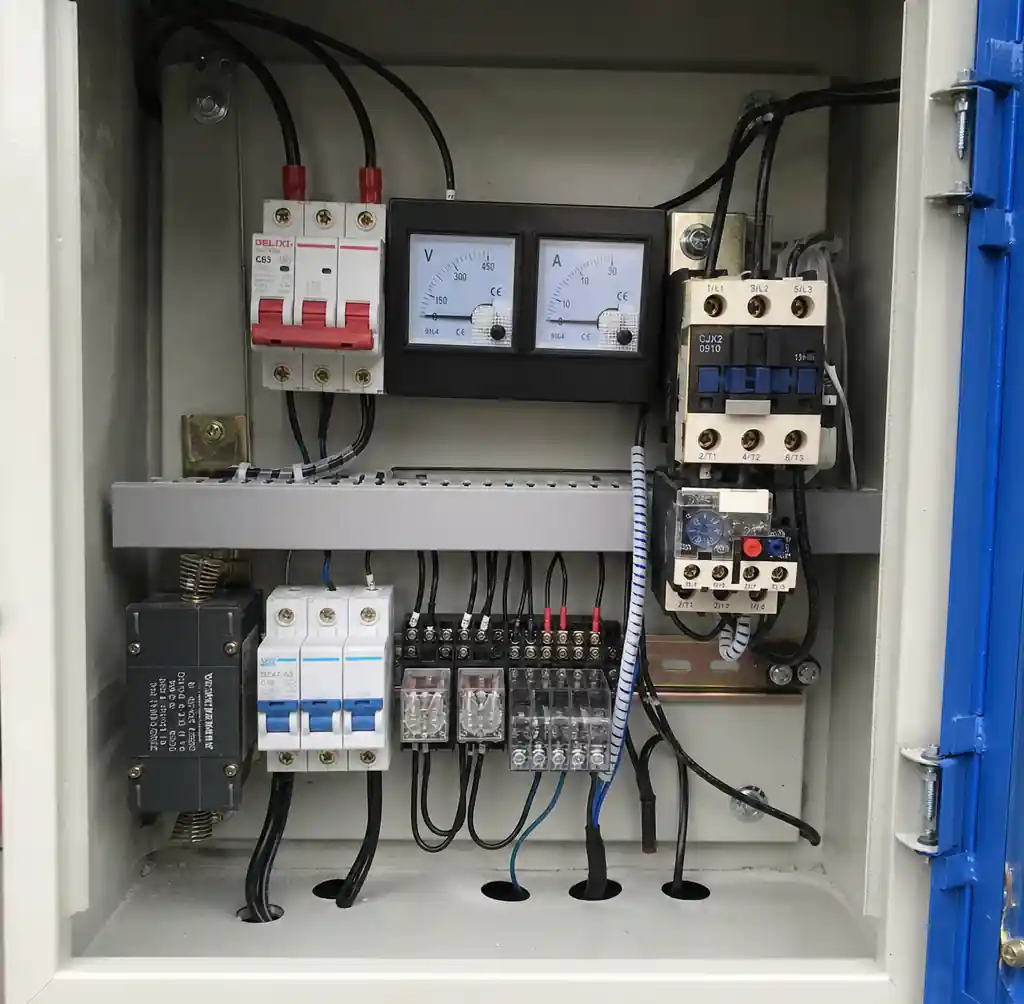
Understanding Power Requirements by Machine Type
Block machine power requirements vary significantly based on automation level, production capacity, and hydraulic system design. Your power planning starts with understanding these baseline specifications.
| Type de machine | Power Required | Voltage | Daily Energy (8hrs) | Generator Size |
|---|---|---|---|---|
| Manual (QT4-40) | 4-6 kW | 220V Single-Phase | 32-48 kWh | 7.5-10 kVA |
| Semi-Auto (QT4-24) | 11-15 kW | 380V Three-Phase | 88-120 kWh | 25-30 kVA |
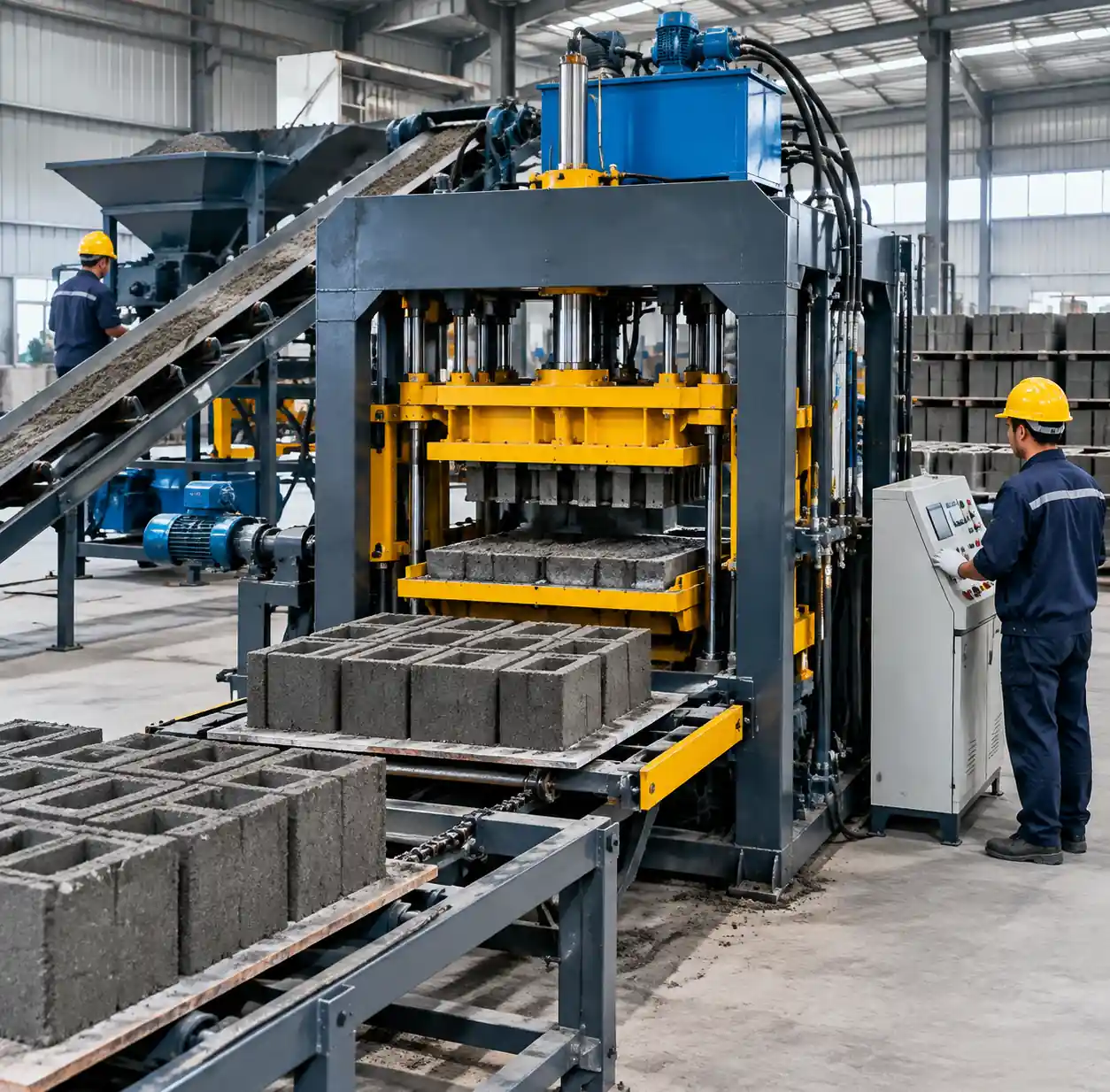
| Fully Auto (QT10-15) | 28-38 kW | 380V Three-Phase | 224-304 kWh | 50-60 kVA |
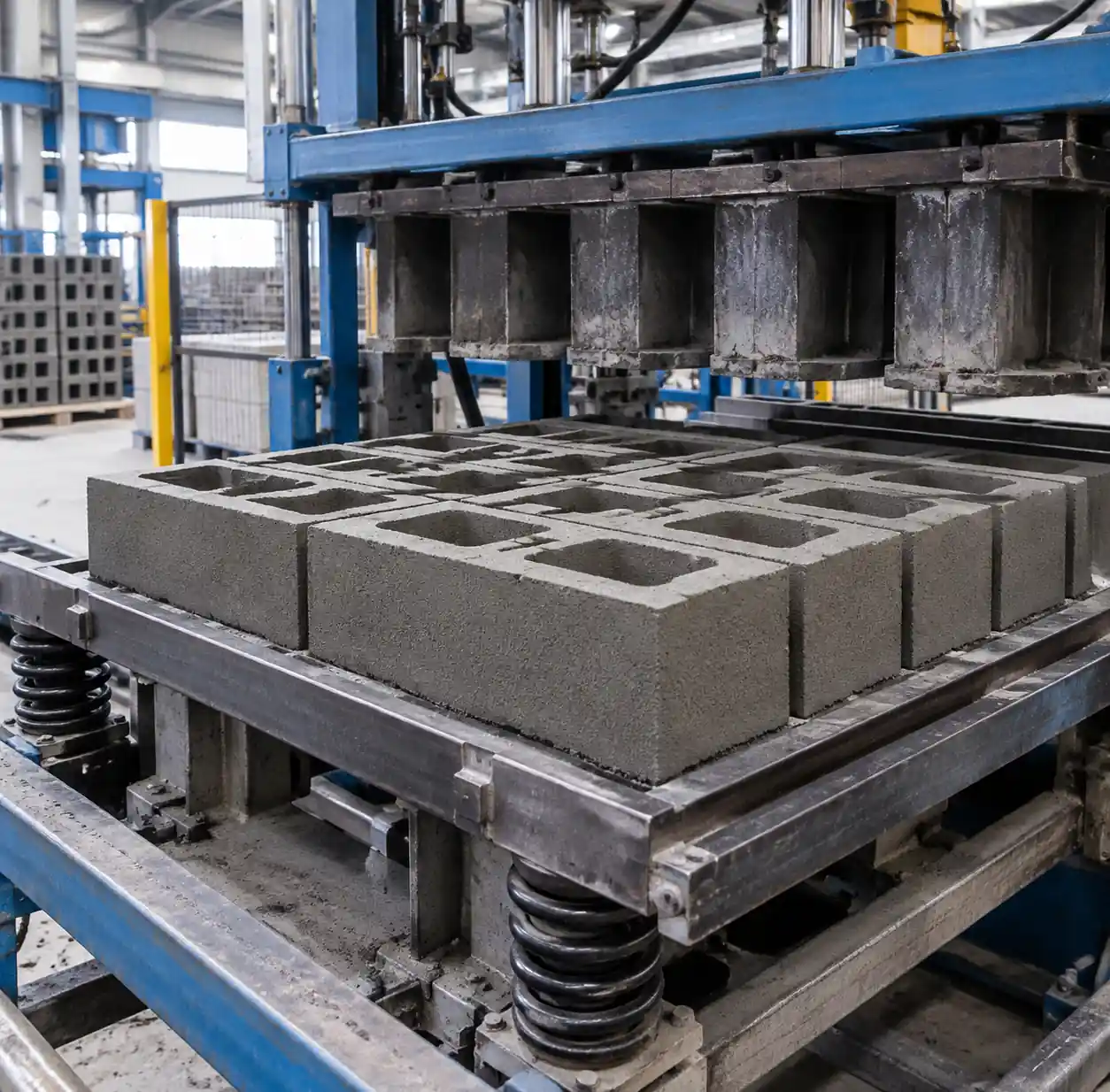
Manual block machines like the QT4-40 require 4-6 kW for basic vibration and hydraulic functions. These machines operate on single-phase 220V power in many markets, making them suitable for locations with basic electrical infrastructure. Daily energy consumption ranges from 32-48 kWh producing 2,500-3,000 blocks per 8-hour shift.
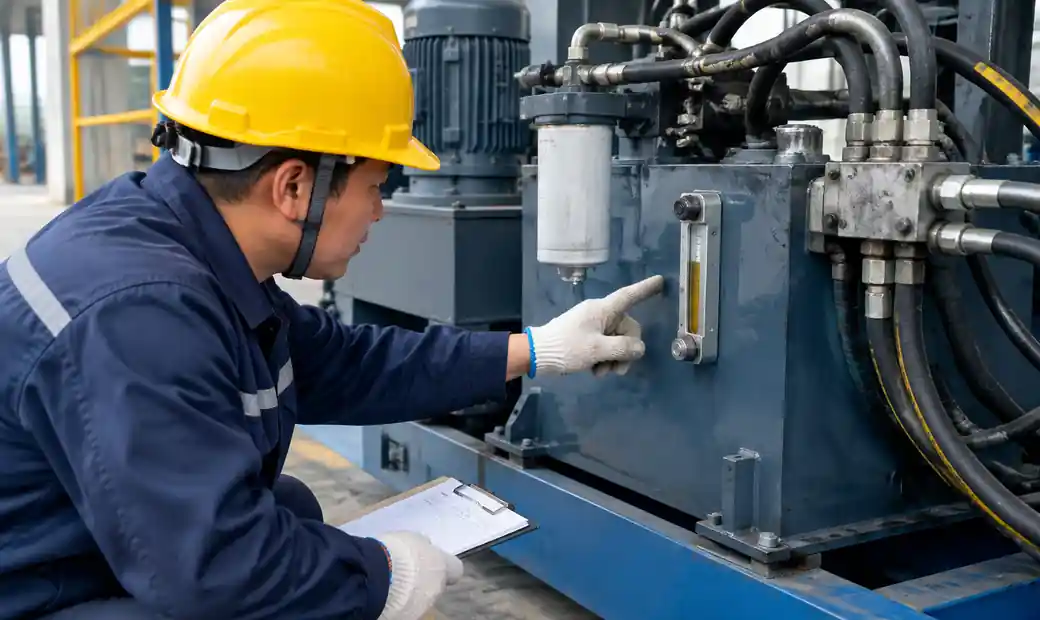
Semi-automatic models like the QT4-24 require 11-15 kW total installed power across hydraulic pump (7.5 kW), vibration system (2.2 kW), and material distribution. These machines demand three-phase 380V/415V power. Power factor typically runs 0.75-0.85, meaning a 15 kW machine draws approximately 18-20 kVA from your electrical supply. Voltage stability becomes critical—fluctuations exceeding ±10% cause hydraulic pump overheating and premature motor failure.
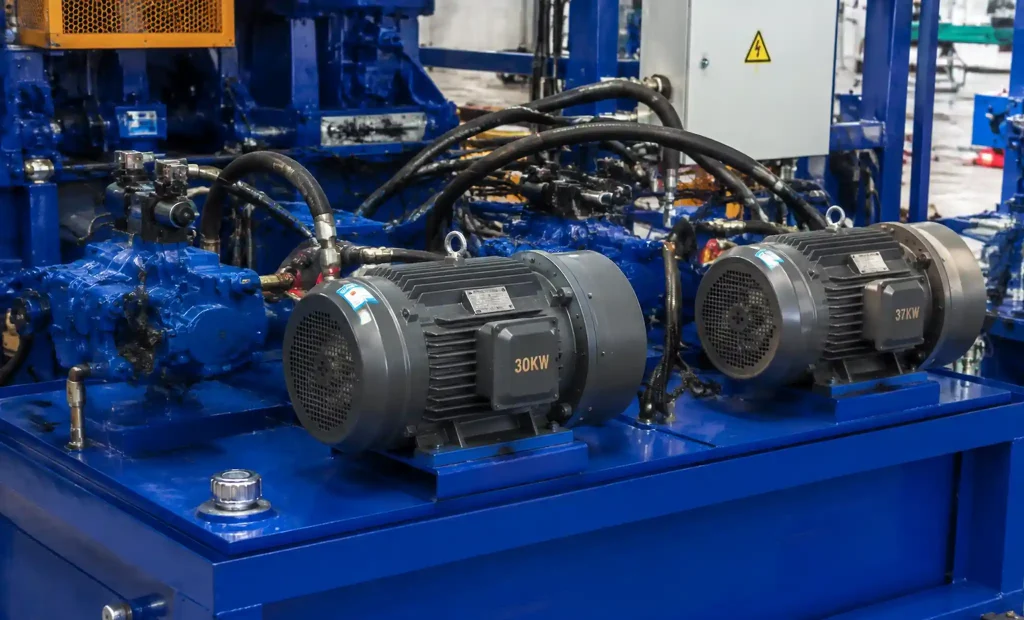
Automatic machines like the QT10-15 consume 28-38 kW across integrated systems producing up to 46,080 blocks daily. Starting current during hydraulic pump startup spikes to 5-7 times running current for 2-3 seconds, requiring generators sized at 50-60 kVA minimum. Daily energy consumption reaches 224-304 kWh per shift, translating to $17.92-45.60 in daily power costs at $0.08-0.15 per kWh rates.
Generator Sizing for Backup Power
Proper generator sizing prevents equipment damage and maintains production during grid outages. Generator capacity calculation: Generator kVA = (Motor kW × Starting Factor) / Power Factor
Starting factor depends on method: Direct-on-line (DOL) starting requires 5-7× capacity, star-delta needs 2-3×, while soft starters need only 1.5-2×. A QT4-24 with 15 kW power and DOL starting requires (15 × 6) / 0.8 = 112.5 kVA, rounded to 125 kVA standard size. Machines with soft starters reduce generator requirements by 40-60%.
| Type de machine | Installed Power | Recommended Generator | Estimated Cost |
|---|---|---|---|
| Manual (QT4-40) | 4-6 kW | 10-15 kVA | $1,200-1,800 |
| Semi-Auto (QT4-24) | 11-15 kW | 25-30 kVA | $3,500-5,500 |
| Semi-Auto (QT4-28) | 18-22 kW | 40-50 kVA | $6,000-8,500 |
| Auto (QT10-15) | 28-32 kW | 50-60 kVA | $8,500-12,000 |
| Auto (QT12-15) | 35-40 kW | 75-100 kVA | $12,000-18,000 |
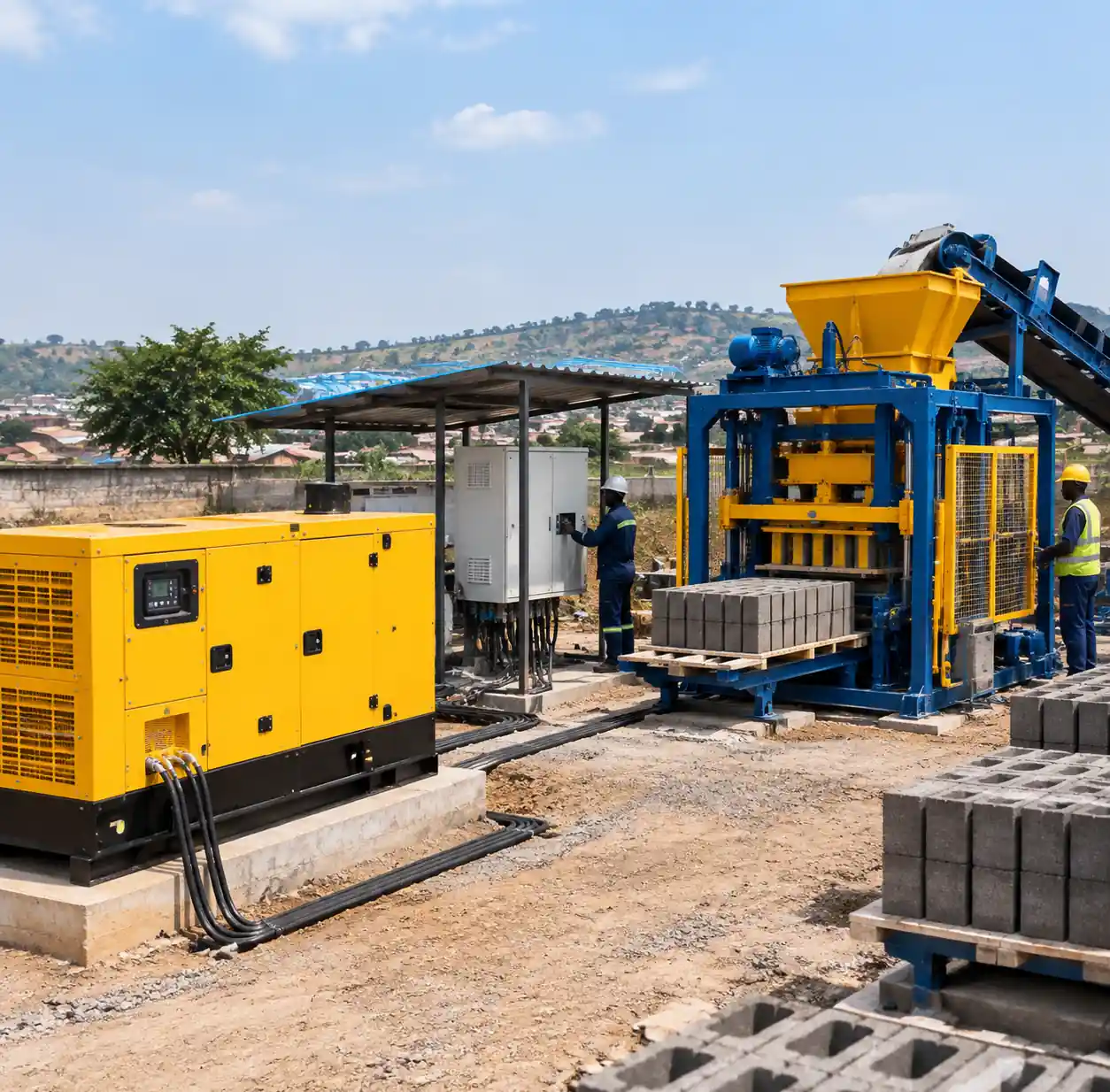
Industrial diesel generators with 1500-1800 RPM engines last 8,000-12,000 hours before overhaul. Automatic transfer switches (ATS) cost $800-2,500 but provide seamless 10-second power transition, protecting PLC systems from damage.
Diesel-Powered Block Machines: Off-Grid Solutions
Diesel-powered machines eliminate electrical infrastructure dependency. They prove economically advantageous where grid power is unavailable, unreliable, or prohibitively expensive to access.
Diesel block machines replace electric motors with diesel engines driving hydraulic pumps directly. The QTJ4-30 uses a 13.34 kW diesel engine generating 16-20 MPa hydraulic pressure for block molding and vibration. These self-contained units require no external electrical connection.
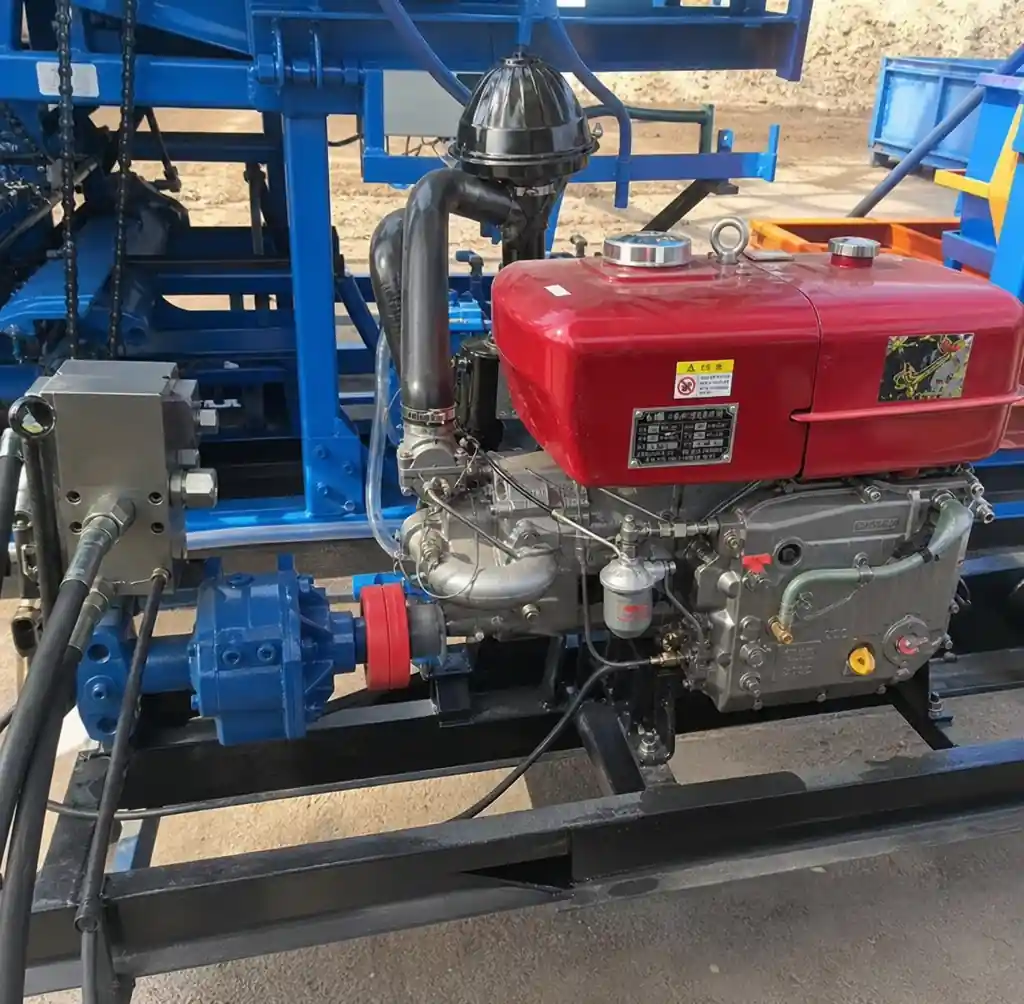
Real-world fuel consumption from Sub-Saharan Africa installations shows QTJ4-30 machines consume 3.2-4.0 liters per hour. An 8-hour shift producing 2,800-3,200 hollow blocks requires 25.6-32 liters diesel. At $1.30-1.65 per liter (July 2026 African markets), daily fuel costs range $33-53, translating to $0.0104-0.0189 per block.
| Cost Factor | Diesel Machine | Electric Machine | Electric + Generator |
|---|---|---|---|
| Equipment Cost | $7,500-9,500 | $6,000-8,000 | $9,500-13,500 |
| Daily Energy (2,800 blocks) | $33-53 | $16-24 | $22-38 |
| Monthly Energy Cost | $990-1,590 | $480-720 | $660-1,140 |
| Infrastructure Required | None | 3-phase connection | Grid + generator + ATS |
| Mobility | High | Low | Low |
Diesel machines cost $950-1,500 more upfront but save $5,000-12,000 in electrical infrastructure for remote locations. Break-even occurs within 6-9 months where grid connection exceeds $8,000.
Choose diesel when: grid electricity is unreliable (4+ hours daily outages), three-phase access costs exceed $6,000, production is mobile/temporary, or diesel logistics are simpler than electrical infrastructure in your area.
Power Stability and Quality Requirements
Electrical power quality directly impacts machine performance, equipment lifespan, and block quality. Block machines require voltage within ±10% of rated voltage. Symptoms of poor voltage quality include:
- Undervoltage (below -10%): Motors overheat, hydraulic pressure drops, vibration weakens, blocks fail compression tests
- Overvoltage (above +10%): Motor insulation degrades, relay coils burn out, PLC power supplies fail
- Voltage fluctuation: Inconsistent block density, vibration timing errors, mold positioning problems
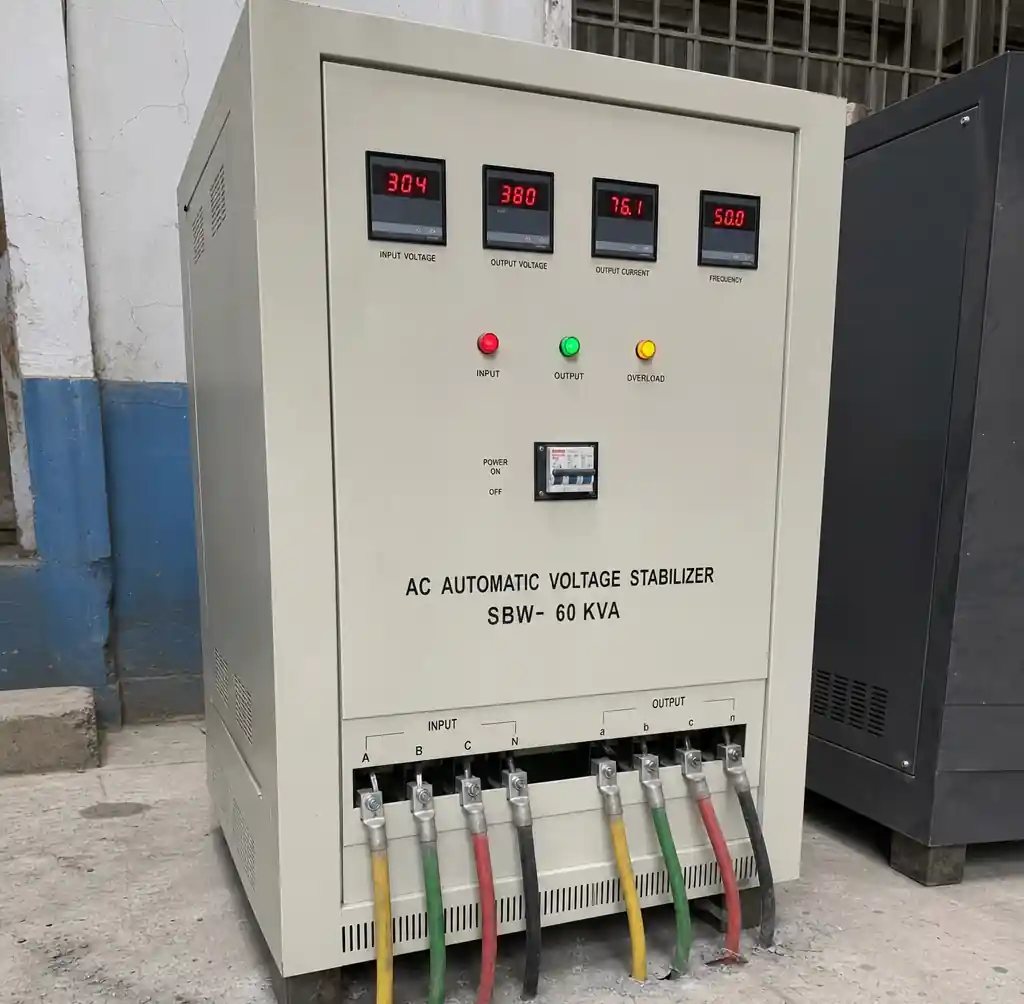
Weak electrical grids experience voltage drops during peak hours. A 380V system might drop to 320-340V when neighboring facilities start equipment, harming your production. Automatic voltage regulators (AVRs) maintain ±2% voltage stability regardless of input fluctuations, costing $600-1,800 depending on capacity.
Motor speed and hydraulic pump performance depend on stable 50 Hz or 60 Hz frequency. Vibration systems require precise frequency control—motors at 3,000 RPM (50 Hz) or 3,600 RPM (60 Hz) create optimal block density. Variable frequency drives (VFDs) provide frequency compensation and soft starting, reducing starting current by 60-70% while costing $800-2,200 per motor.
Electrical Infrastructure Cost Analysis
Total electrical costs extend beyond machine purchase. Grid connection infrastructure varies significantly by machine type and location distance from three-phase power.
| Infrastructure Component | Manual | Semi-Auto | Fully Auto |
|---|---|---|---|
| Service Entrance | $1,200-2,000 | $2,500-4,000 | $4,000-6,500 |
| Transformer (if needed) | $0-2,500 | $2,500-5,000 | $4,000-8,000 |
| Feed Lines ($20-35/m avg) | $300-1,000 | $600-1,500 | $800-2,000 |
| Distribution Panel | $400-700 | $800-1,500 | $1,500-2,800 |
| Motor Control/Protection | $500-1,000 | $1,700-3,100 | $3,400-6,300 |
| Grounding & Labor | $1,100-2,100 | $2,300-4,500 | $4,300-8,000 |
| Total Infrastructure | $3,500-7,300 | $10,400-18,600 | $18,000-33,600 |
Operations more than 100 meters from three-phase supply face prohibitive infrastructure expenses making diesel alternatives economically compelling.
12-Month Operating Cost Comparison (Semi-auto, 4,000 blocks/day, 25 days/month):
- Electric Grid: 30,000 kWh/year × $0.12 = $3,600 + $300 maintenance = $3,900/year
- Diesel: 8,400 liters/year × $1.45 = $12,180 + $800 maintenance = $12,980/year
- Hybrid (70% grid, 30% generator): $2,520 grid + $3,654 fuel + $500 maintenance = $6,674/year
Electric power costs 70% less annually than diesel with stable grid access. However, factor production losses during outages to calculate true economics for your location.
Practical Power Planning Strategies
Successful block producers match power solutions to operational reality. These strategies reduce both capital requirements and operating risks.
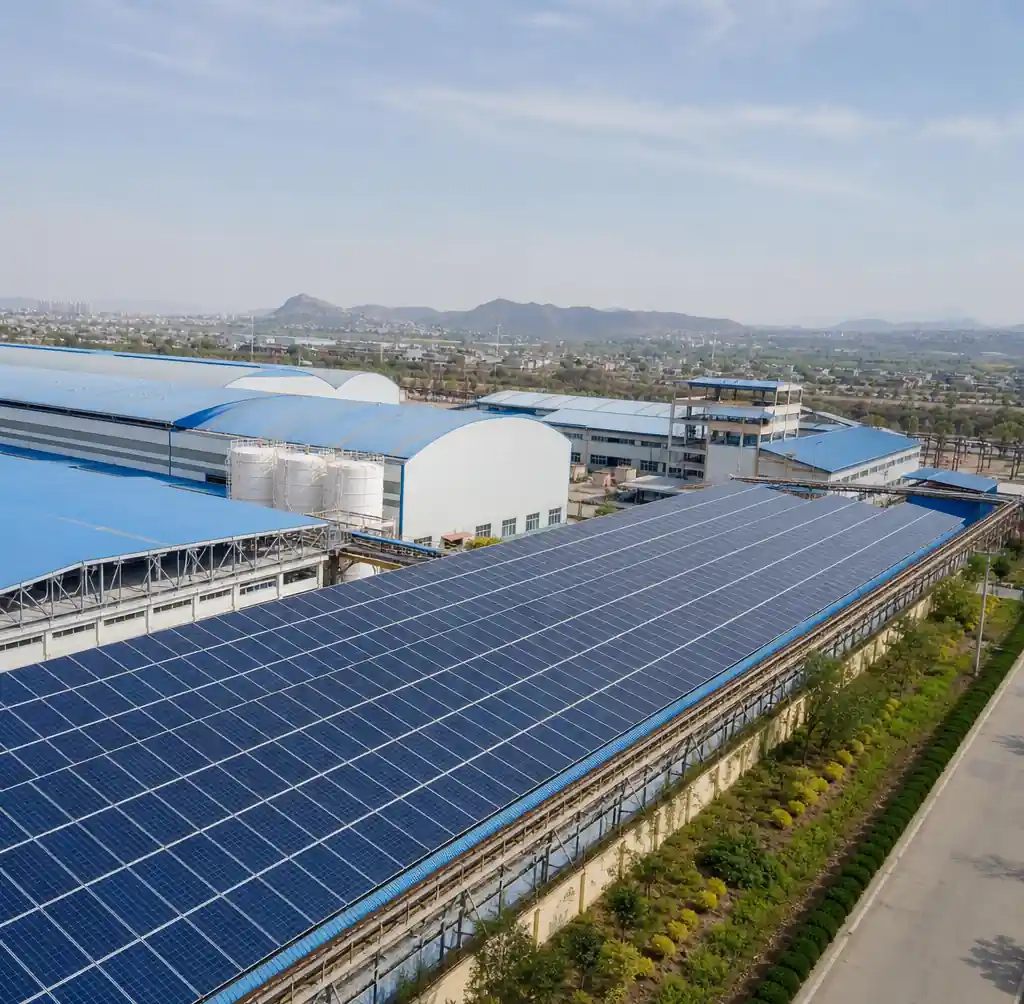
Hybrid Power Systems: Primary electric with diesel backup maintains 40-60% production during grid failures versus complete shutdown. Install 30-40% capacity generator for essential functions at reduced production rate. Solar-assisted systems with 5-10 kW arrays offset daytime consumption by 20-35%, reducing monthly bills $150-300 with 3-5 year payback in sunny regions.
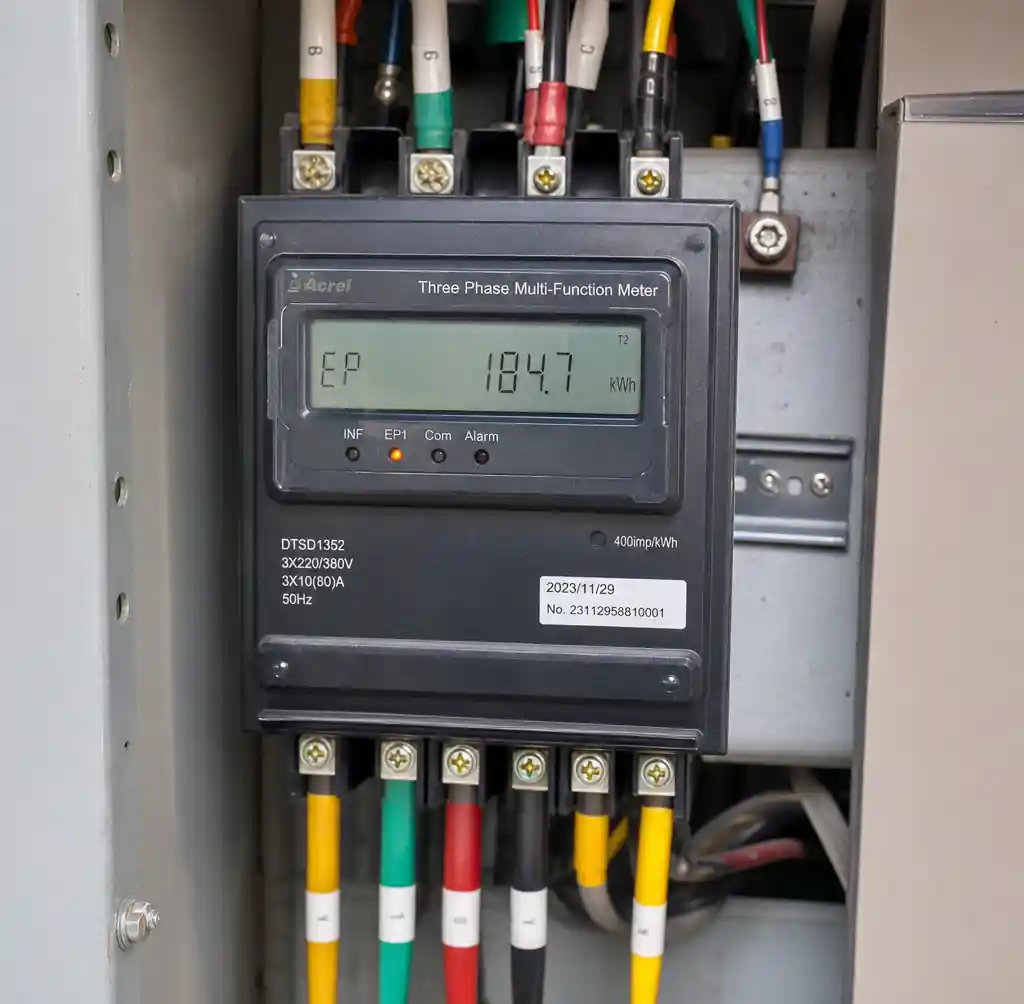
Load Management: Sequential motor starting reduces peak demand from 35 kW to 20 kW, allowing smaller generators. Program hydraulic pumps to start first, then vibration motors after 10-15 second delays. Negotiate time-of-use rates offering 30-50% discounts for night production when grid voltage is most stable. Power factor correction using capacitor banks improves power factor from 0.75 to 0.95, reducing current by 20% and lowering utility penalties.
FAQ
What size generator do I need for a QT4-24 semi-automatic block machine?
A QT4-24 with 15 kW total power requires a 25-30 kVA diesel generator if equipped with soft starters, or 40-50 kVA for direct-online motor starting. Include an additional 20-30% capacity margin if running concrete mixers or conveyors simultaneously. A 40 kVA generator costs approximately $6,000-8,500 for quality industrial units.
Can I run a block machine from single-phase household power?
Manual block machines with 4-6 kW motors can operate from single-phase 220V power using phase converters or single-phase motors. Semi-automatic and fully automatic machines require three-phase power for efficient operation. Attempting to run three-phase machines from single-phase power through converters results in 30-40% power loss, motor overheating, and equipment damage. Install proper three-phase service or choose diesel alternatives.
How much does electricity cost per block produced?
Electricity cost per block depends on machine efficiency and local rates. For semi-automatic machines producing 4,000 blocks per day using 100 kWh, at $0.12/kWh electricity rates, energy cost is $0.003 per block. Manual machines use less power (0.002/block), while fully automatic machines range from $0.004-0.006 per block due to higher automation energy requirements.
Are diesel block machines more expensive to operate than electric?
Diesel machines typically cost 2.5-3.5× more per operating hour than electric machines in regions with stable grid power. However, diesel eliminates $8,000-15,000 in electrical infrastructure costs for remote locations and maintains production during grid outages. Total cost of ownership favors diesel when grid reliability is below 85% or connection costs exceed $6,000.
What happens if voltage is too low for my block machine?
Low voltage (below -10% of rated) causes motors to draw excessive current while producing less power, leading to overheating, reduced hydraulic pressure, weak vibration force, and low-quality blocks that fail compression testing. Continued operation damages motor windings. Install automatic voltage regulators maintaining ±2% stability or shut down production until voltage recovers to safe levels.
Can I upgrade from diesel to electric power later?
Most diesel block machines can convert to electric operation by replacing the diesel engine and fuel system with electric motors and controls. Conversion costs $2,000-4,000 depending on machine size, requiring three-phase electrical infrastructure installation. Some manufacturers offer dual-power machines with both diesel and electric drive options, allowing you to switch based on availability and cost at any location.
Conclusion
Power requirements for brick making machines range from 4 kW for manual models to 40+ kW for fully automatic production lines. Your optimal power solution balances equipment capabilities, local infrastructure reality, and long-term operating economics rather than simply selecting the cheapest initial option.
Electric machines offer lowest operating costs in areas with reliable three-phase power, while diesel alternatives eliminate infrastructure dependency for remote or mobile operations. Hybrid systems combining grid power with backup generation provide production continuity in transitional markets experiencing infrastructure development.
Calculate total electrical infrastructure costs including service entrance, transformers, protection systems, and backup power before committing to equipment purchases. Work with experienced suppliers like Raytone Block Machinery to match machine specifications with your location’s power capabilities, ensuring reliable production from day one.
The right power solution protects your investment, maintains consistent production quality, and positions your operation for profitable long-term operation regardless of local infrastructure challenges.