





Setting up a fully automatic block plant is a major investment decision that requires careful financial planning and operational understanding. After managing multiple plant installations across three continents, I’ve seen firsthand how automation transforms production economics—but only when you account for the full picture. This guide breaks down real investment costs, realistic ROI timelines, and the operational factors that separate profitable plants from struggling ones.
Understanding Fully Automatic Block Plant Systems
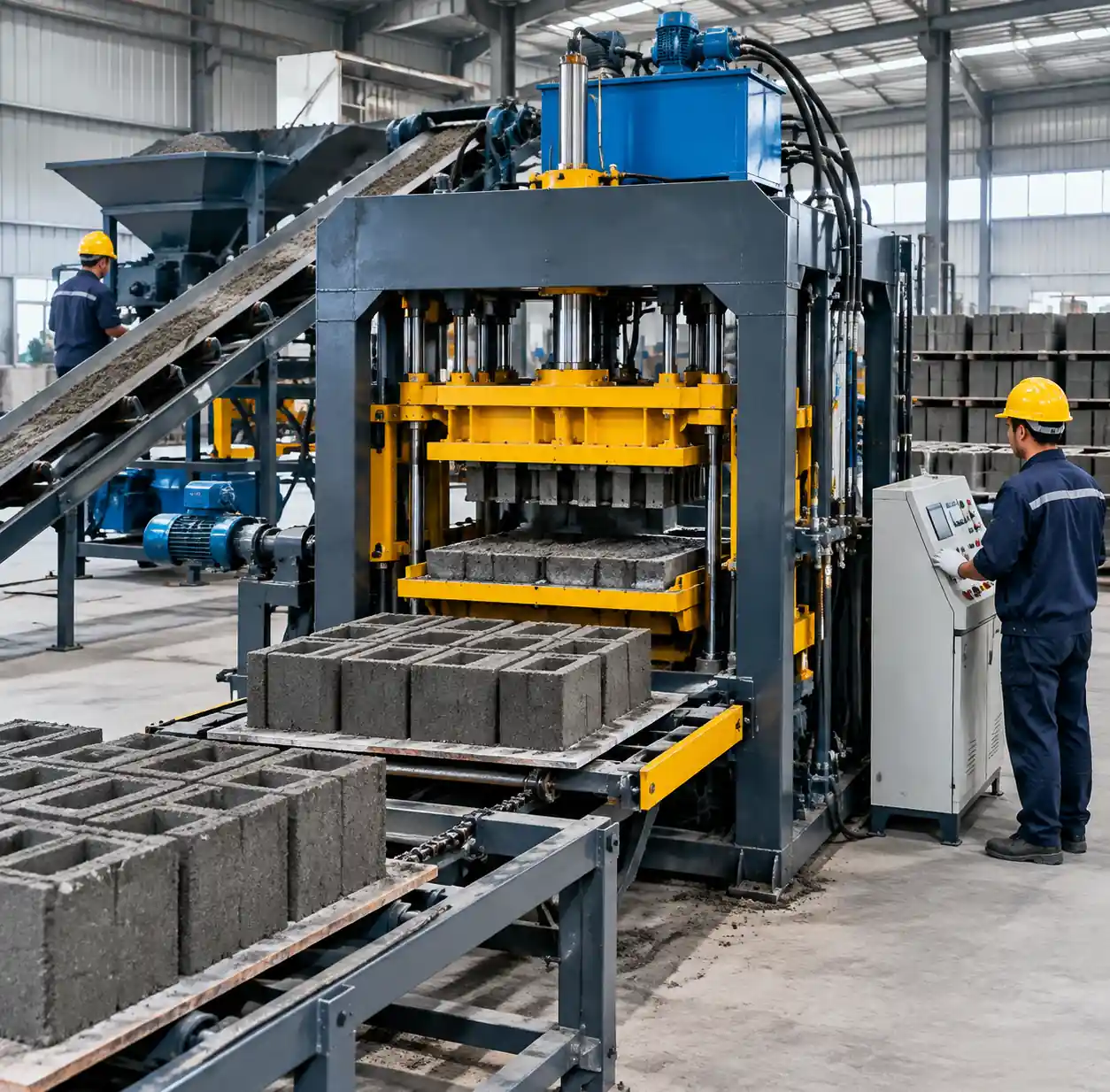
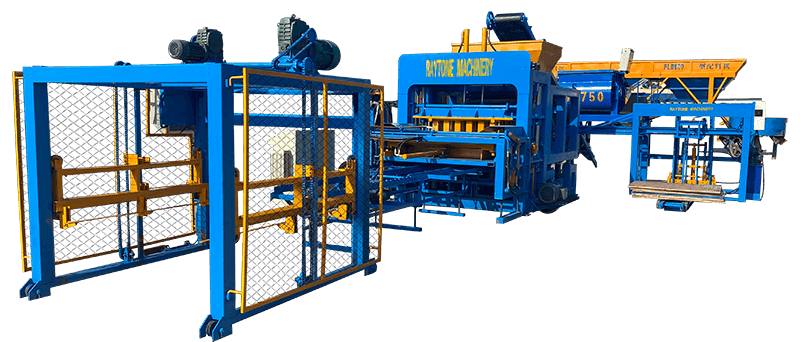
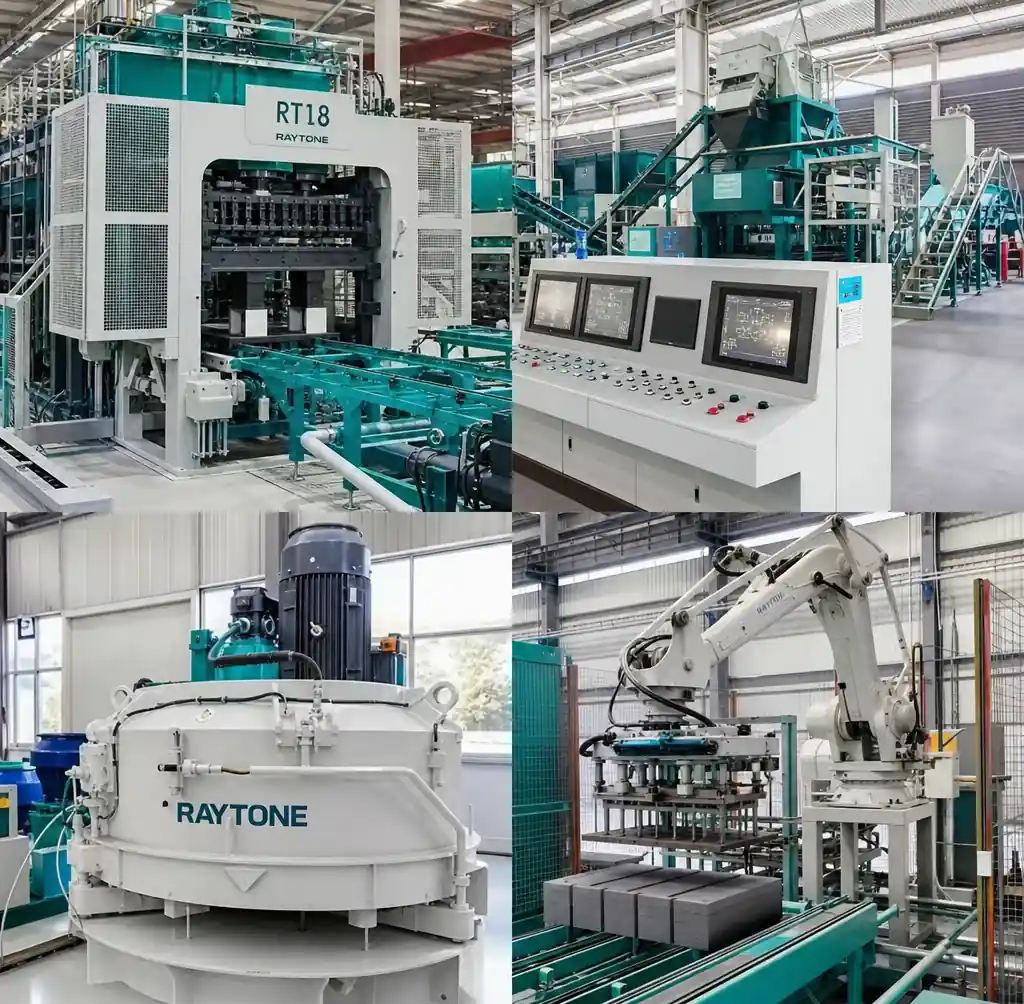
A fully automatic block plant eliminates manual handling from batching through stacking. The system integrates a PLC-controlled batching plant, planetary mixer, hydraulic block machine (typically QT10-15 or QT12-15 capacity), automatic brick separator, and robotic stacking with finger car systems. Unlike semi-automatic setups requiring 8-12 workers, automation reduces labor to 3-4 operators managing quality control and material supply.
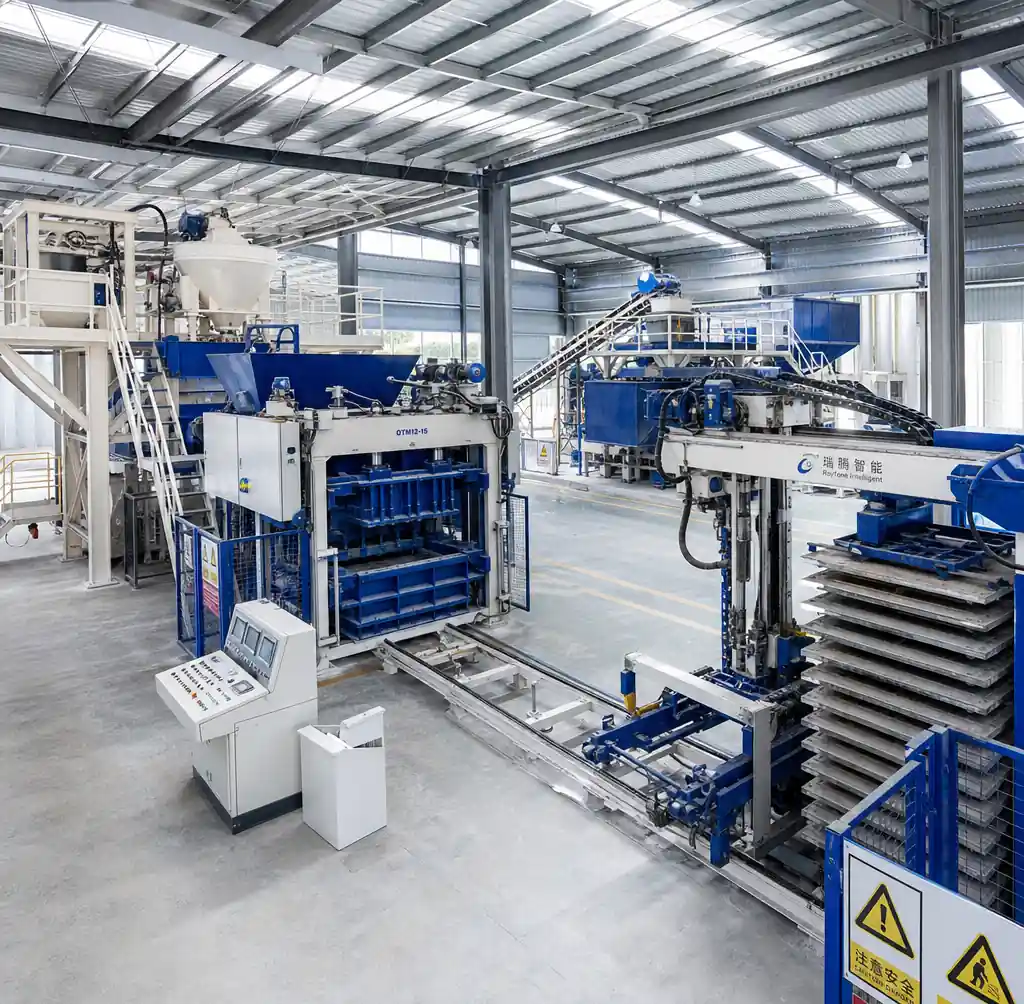
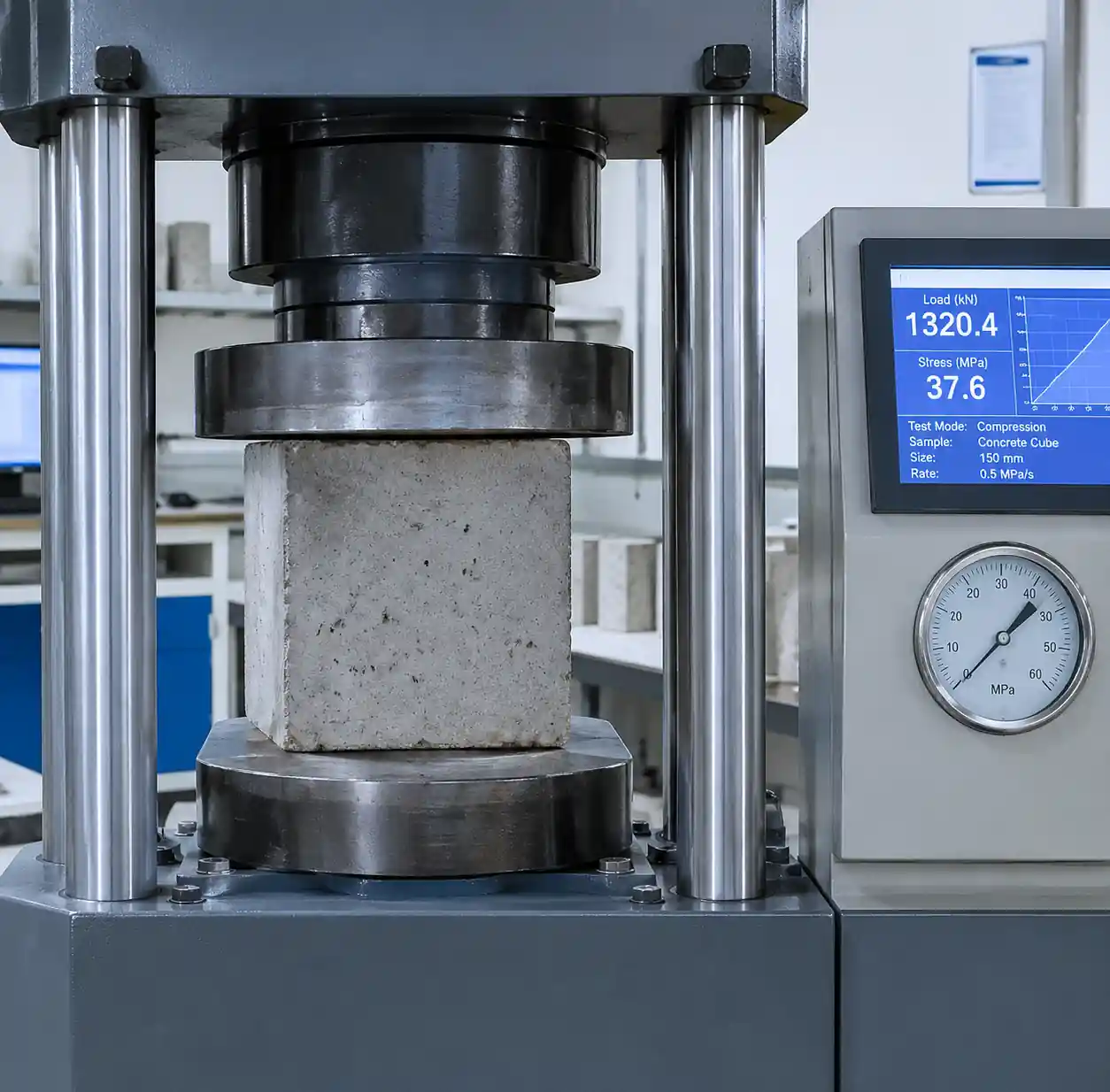
The automation advantage shows in consistency. Manual operations produce 8,000-12,000 blocks per 8-hour shift with quality variation. Fully automatic lines deliver 20,000-30,000 blocks with dimensional tolerance under 2mm—critical for modern construction standards and export markets demanding ISO certification. For a detailed comparison of automation levels, see our guide on automatic vs semi-automatic vs manual block machines.
Complete Investment Breakdown
Real project costs extend far beyond machinery quotes. Here’s what a 20,000-block-per-day plant actually requires:
| Investment Category | Cost Range (USD) | Percentage of Total | Critical Notes |
|---|---|---|---|
| Main Production Line | $180,000 – $280,000 | 40-45% | Includes QT10-15 machine, batching system, mixer, conveyors, stacking robot |
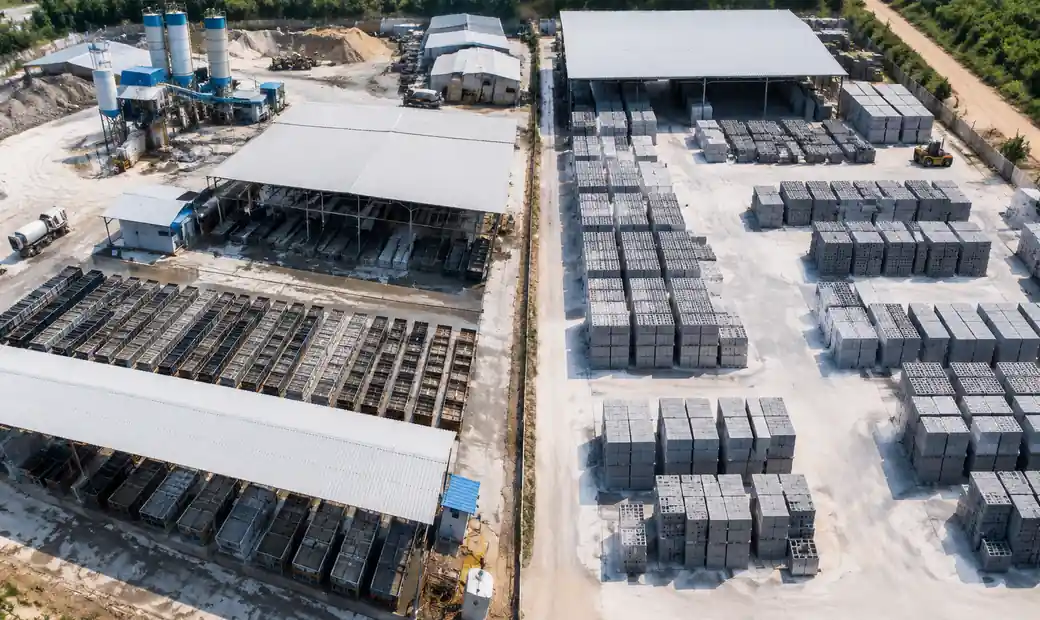
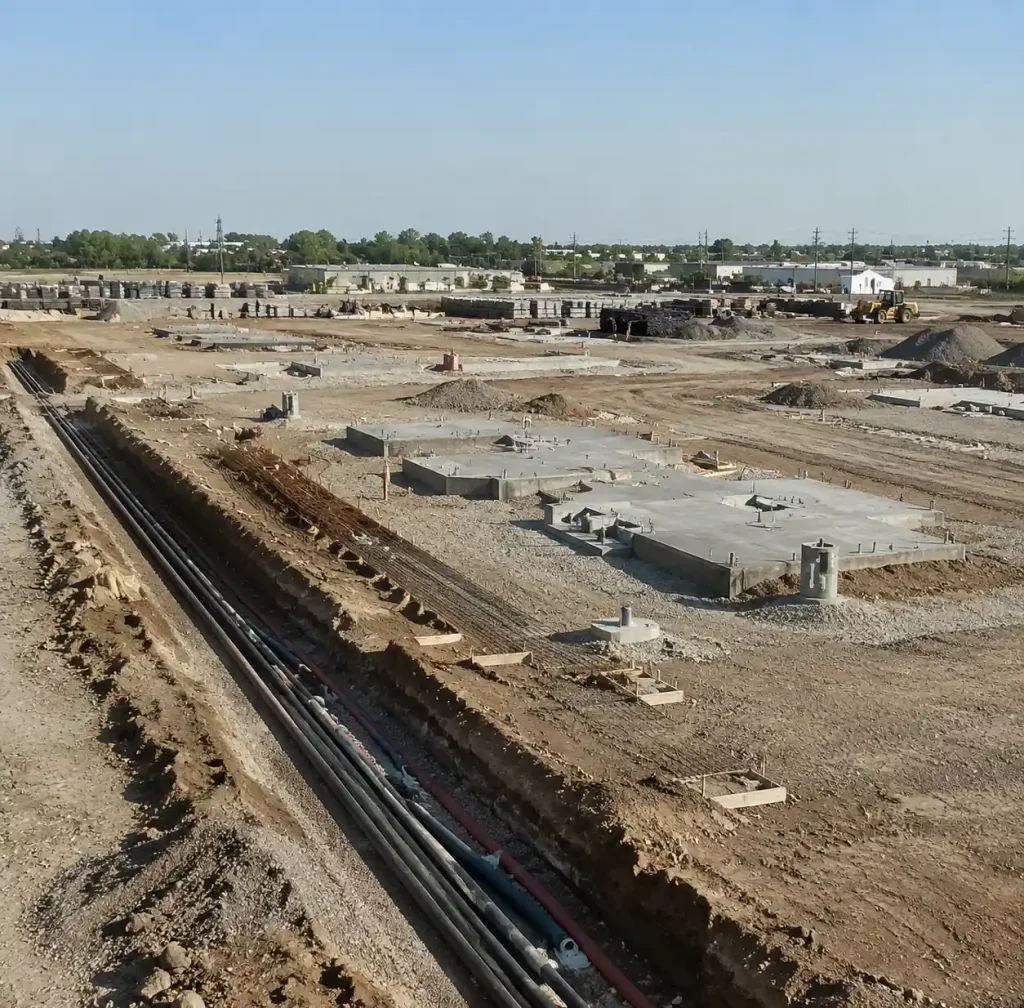
| Land & Site Preparation | $30,000 – $80,000 | 8-12% | 5,000-8,000 sqm land, leveling, drainage, electrical infrastructure |
| Building Infrastructure | $40,000 – $70,000 | 10-12% | Production hall, curing area cover, office, material storage sheds |
| Molds & Tooling | $15,000 – $35,000 | 4-6% | Standard hollow block, paver, and specialty molds; budget 3-5 mold sets |
| Equipos auxiliares | $25,000 – $45,000 | 6-8% | Forklift, pallet handling, material loaders, tools |
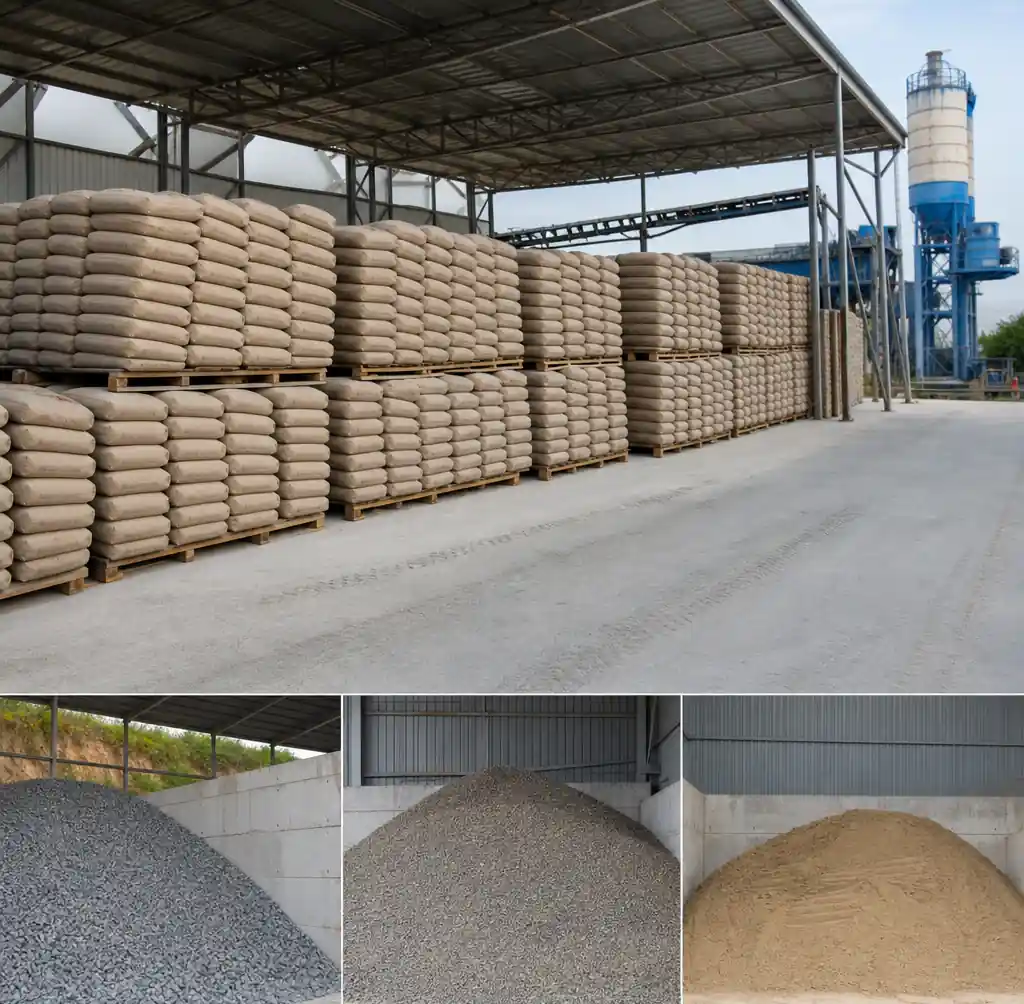
| Initial Raw Materials | $20,000 – $35,000 | 5-7% | First month cement, aggregate, sand inventory |
| Installation & Training | $12,000 – $18,000 | 3-4% | Technical commissioning, operator training, trial production |
| Permits & Licensing | $8,000 – $15,000 | 2-3% | Environmental clearance, business registration, quality certifications |
| Working Capital Buffer | $50,000 – $80,000 | 12-15% | 2-3 months operating expenses for cash flow stability |
| Total Investment | $380,000 – $658,000 | 100% | Varies by location, land costs, and local labor rates |
Land costs create the widest variance. In Southeast Asian industrial zones, prepared land runs $15-25 per square meter. African locations might offer $5-10 per sqm but require more site development investment. The working capital buffer isn’t optional—undercapitalized plants struggle with raw material purchasing and often shut down before reaching profitability.
Production Capacity and Output Analysis
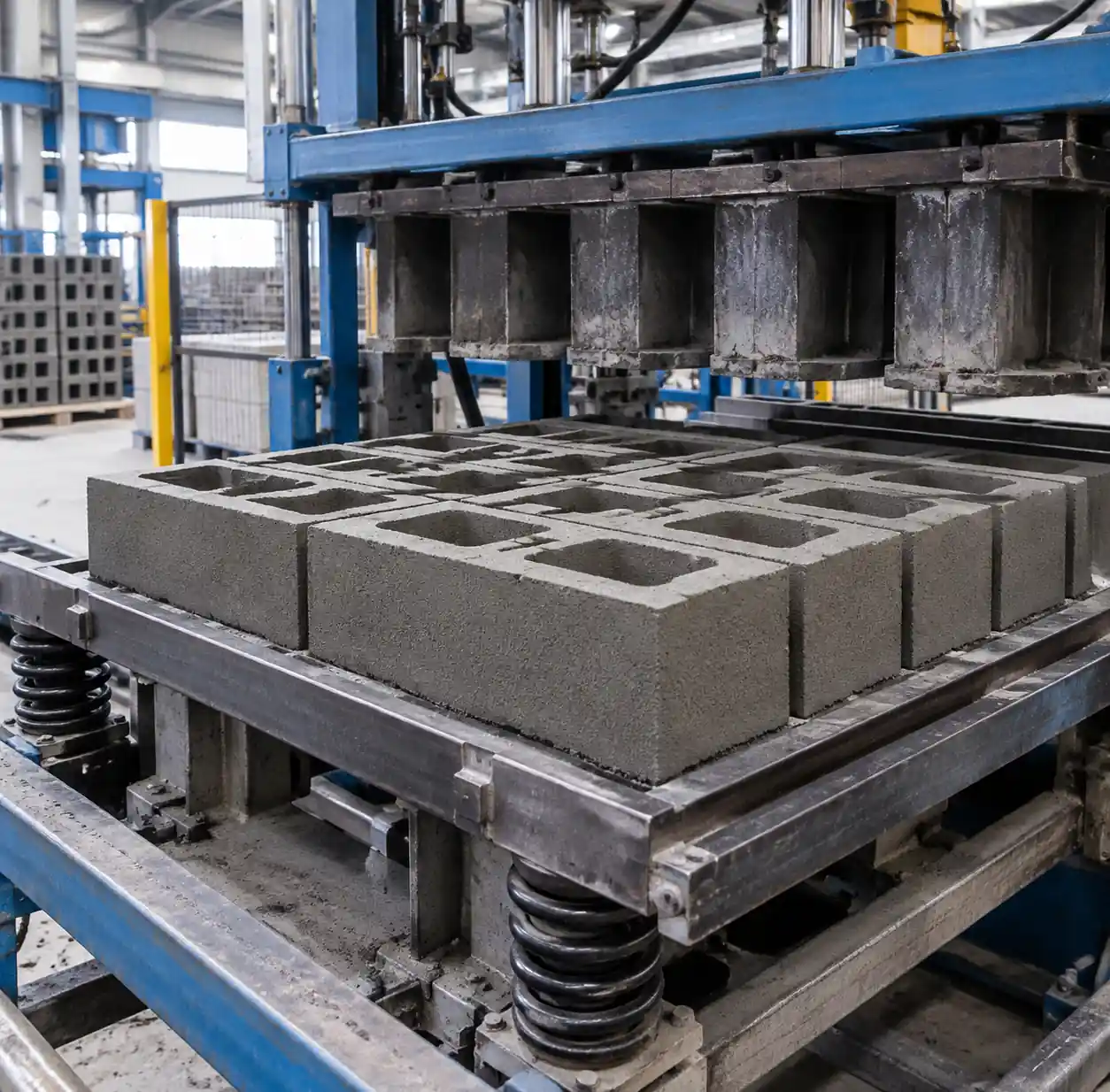
Capacity ratings on equipment brochures rarely match field reality. A QT10-15 machine rated at 10 blocks per cycle theoretically produces 28,800 blocks in 24 hours (40-second cycle time, 24-hour operation). Real-world production accounts for mold changes, material preparation delays, and maintenance windows.
| Production Scenario | Daily Output | Annual Output (300 days) | Capacity Utilization | Realistic Expectation |
|---|---|---|---|---|
| Single-shift (8 hours) | 12,000-15,000 blocks | 3.6-4.5 million | 40-50% | Common for startup phase, testing markets |
| Two-shift (16 hours) | 22,000-28,000 blocks | 6.6-8.4 million | 75-90% | Optimal for established demand, manageable wear |
| Three-shift (24 hours) | 28,000-32,000 blocks | 8.4-9.6 million | 90-100% | High demand only, increases maintenance costs 30-40% |
The 300-day production year accounts for maintenance shutdowns, public holidays, and raw material supply interruptions. Rainy season impacts vary by region—tropical climates may lose 30-50 production days annually due to aggregate moisture issues and curing challenges.
Block mix versatility matters for ROI. Plants producing only standard hollow blocks (400×200×200mm) face commodity pricing pressure. Adding paver blocks, interlocking bricks, or specialty products increases revenue per production hour by 25-45%. However, mold changeovers consume 45-90 minutes, so production planning must balance variety against efficiency.
Operating Costs: The Hidden Numbers
Monthly operating costs determine whether your plant generates profit or bleeds cash. Based on a 20,000-block-per-day operation running two shifts:
| Cost Category | Monthly Cost (USD) | Annual Cost (USD) | Notes |
|---|---|---|---|
| Cement (7% per block) | $42,000-48,000 | $504,000-576,000 | Largest variable cost; prices fluctuate 15-25% seasonally |
| Aggregate & Sand | $12,000-16,000 | $144,000-192,000 | Local sourcing critical; transport doubles costs beyond 50km |
| Electricity | $4,500-7,000 | $54,000-84,000 | 180-220 kWh per 1,000 blocks; rate varies 0.08-0.15 USD/kWh |
| Water | $400-800 | $4,800-9,600 | Recycling systems reduce costs 40-60% |
| Labor (3-4 operators) | $2,500-6,000 | $30,000-72,000 | Regional wage differences; skilled operators command premium |
| Maintenance & Spare Parts | $3,000-5,000 | $36,000-60,000 | 8-12% of equipment value annually |
| Mold Replacement | $800-1,500 | $9,600-18,000 | Steel molds last 80,000-120,000 cycles |
| Administrative & Overhead | $2,000-4,000 | $24,000-48,000 | Office staff, utilities, insurance, permits |
| Total Monthly Operating Cost | $67,200-88,300 | $806,400-1,059,600 | Cost per 1,000 blocks: $11.20-14.70 |
Raw material costs dominate at 75-80% of operating expenses. Cement price volatility creates the biggest profit risk—a 10% cement price increase cuts margins by 6-7%. Smart operators lock in quarterly cement contracts when prices dip and maintain 15-20 days inventory buffer. Learn more about raw materials for block making and sourcing strategies.
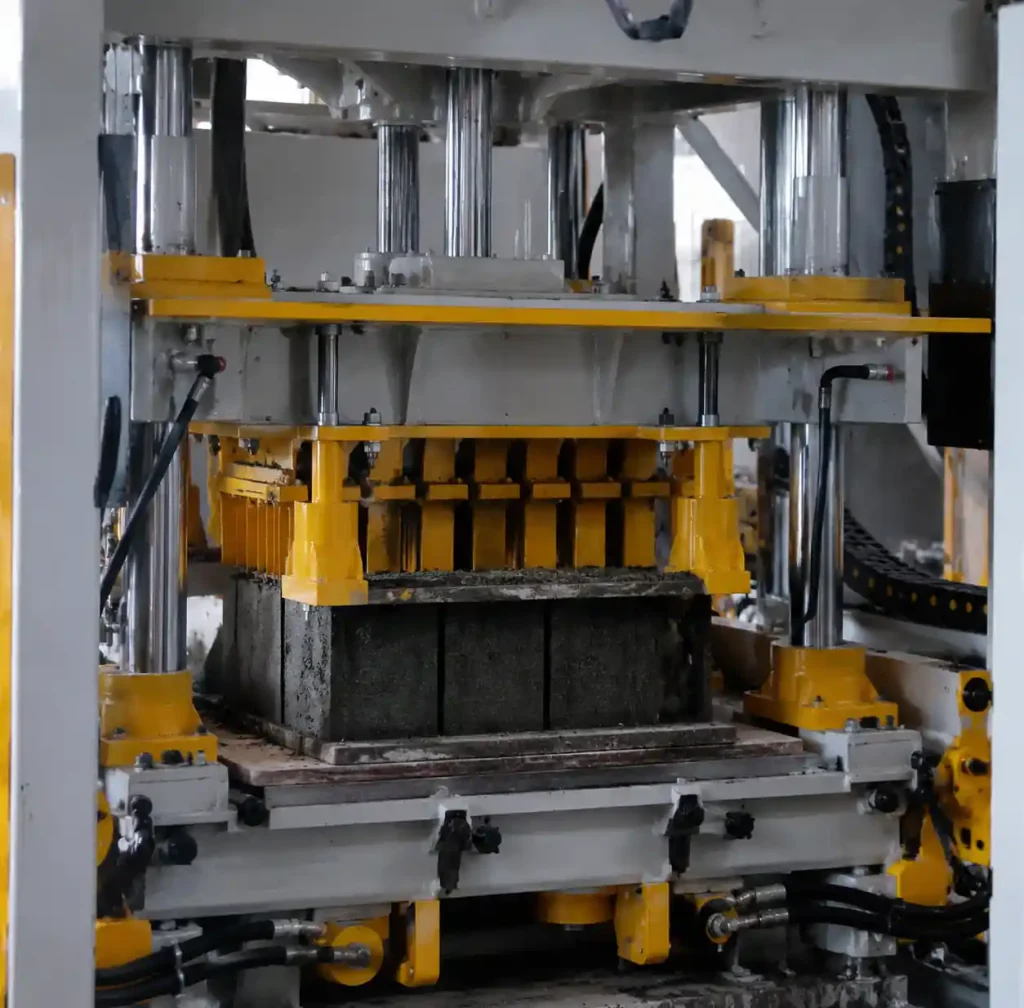
Energy efficiency separates profitable plants from marginal ones. Quality hydraulic systems consume 15-20 kWh per 1,000 blocks versus 25-30 kWh for outdated equipment. Over 6 million blocks annually, efficient systems save $18,000-30,000 in electricity costs alone. Understanding power requirements for brick making machines helps optimize energy costs.
Revenue Projection and Market Factors
Block pricing varies dramatically by region, product type, and market positioning. Standard hollow blocks in competitive markets face commodity pricing, while specialty products command premiums.
Pricing realities from actual markets:
- Standard Hollow Blocks (400×200×200mm): $0.35-0.65 per block retail, $0.25-0.45 bulk/wholesale
- Paver Blocks (200×100×60mm): $0.45-0.85 per block, higher margins but slower turnover
- Interlocking Blocks: $0.55-0.95 per block, premium positioning for quality projects
- Specialty Products (colored, textured, custom): $0.70-1.40 per block, niche markets
Revenue calculation for a 20,000-block-per-day plant running 300 days annually:
Conservative scenario (70% standard blocks at $0.35, 30% pavers at $0.55):
- Standard: 4.2M blocks × $0.35 = $1,470,000
- Pavers: 1.8M blocks × $0.55 = $990,000
- Total Annual Revenue: $2,460,000
Optimistic scenario (50% standard at $0.45, 40% pavers at $0.65, 10% specialty at $0.90):
- Standard: 3.0M blocks × $0.45 = $1,350,000
- Pavers: 2.4M blocks × $0.65 = $1,560,000
- Specialty: 0.6M blocks × $0.90 = $540,000
- Total Annual Revenue: $3,450,000
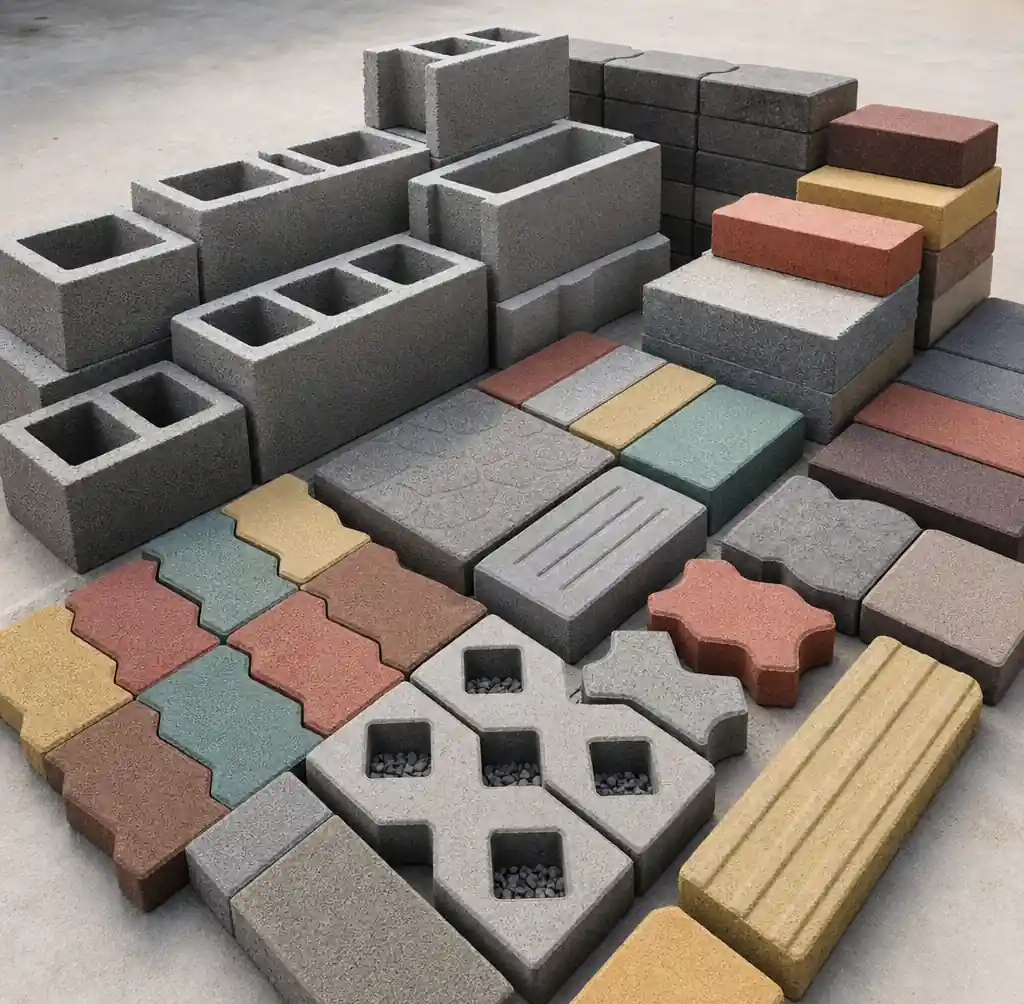
Market positioning determines which scenario you’ll achieve. Plants competing solely on price in saturated markets struggle with the conservative scenario. Those building contractor relationships, offering delivery logistics, and maintaining consistent quality reach optimistic projections.
Distribution strategy impacts profitability significantly. Direct sales to contractors yield 20-30% higher margins than wholesaler distribution but require dedicated sales staff and delivery vehicles. Most successful operations blend both channels—wholesale for volume stability, direct sales for premium products.
ROI Calculation Methods
Three calculation methods provide different perspectives on investment returns:
Simple Payback Period = Total Investment ÷ Annual Net Profit
Conservative scenario with $500,000 investment:
- Annual Revenue: $2,460,000
- Annual Operating Costs: $930,000
- Annual Net Profit: $1,530,000
- Simple Payback: 0.33 years (4 months)
This seems impossibly fast because it ignores loan interest, taxes, and assumes immediate full-capacity sales—unrealistic for startups.
Realistic ROI with Ramp-Up:
| Year | Capacity Utilization | Revenue | Operating Costs | Net Profit | Cumulative Profit |
|---|---|---|---|---|---|
| Year 1 | 45% | $1,107,000 | $418,500 | $688,500 | $688,500 |
| Year 2 | 70% | $1,722,000 | $651,000 | $1,071,000 | $1,759,500 |
| Year 3 | 85% | $2,091,000 | $790,500 | $1,300,500 | $3,060,000 |
With $500,000 initial investment, break-even occurs in Year 2 (18-24 months). By Year 3, cumulative profit reaches 6× the investment.
IRR (Internal Rate of Return) for 5-year horizon typically ranges 35-55% for well-managed automatic block plants—significantly higher than semi-automatic operations (20-30% IRR) due to lower labor costs and higher output consistency.
Financing Options for Block Plant Investment
Few operators fund plants entirely from cash reserves. Common financing structures:
- Bank Equipment Financing: 60-70% equipment cost financed at 8-12% annual interest over 5-7 years. Requires 30-40% down payment and collateral.
- Vendor Financing: Some machinery suppliers offer 12-24 month payment plans at 0-5% interest, requiring 30% deposit. Limited to equipment costs only.
- Government Industrial Development Loans: Available in many developing markets at subsidized 4-7% rates for manufacturing ventures creating employment.
- Partnership/Equity Investment: Split ownership with financial partners who provide 40-60% capital in exchange for profit share. Dilutes control but reduces personal risk.
Debt financing leverages returns. With 60% financing ($300K loan at 10% interest over 5 years), monthly loan payment is $6,374. The loan increases effective ROI on your $200K equity to 85-120% over 3 years versus 61-80% from cash-only investment.
Risk Factors That Impact Returns
Real-world risks that derail ROI projections:
Market Competition: New plants entering saturated markets face 18-24 month customer acquisition struggles. Pre-investment market research must validate demand exceeds existing supply by 20%+ minimum.
Raw Material Price Volatility: Cement prices fluctuate 15-30% annually. A sustained 20% cement price increase with inability to raise block prices cuts annual profit by $100,000-150,000.
Quality Consistency Issues: Automated equipment still requires skilled operators. Poor mixing ratios or inadequate curing produces weak blocks that damage reputation. Quality failures in the first year delay profitability 6-12 months.
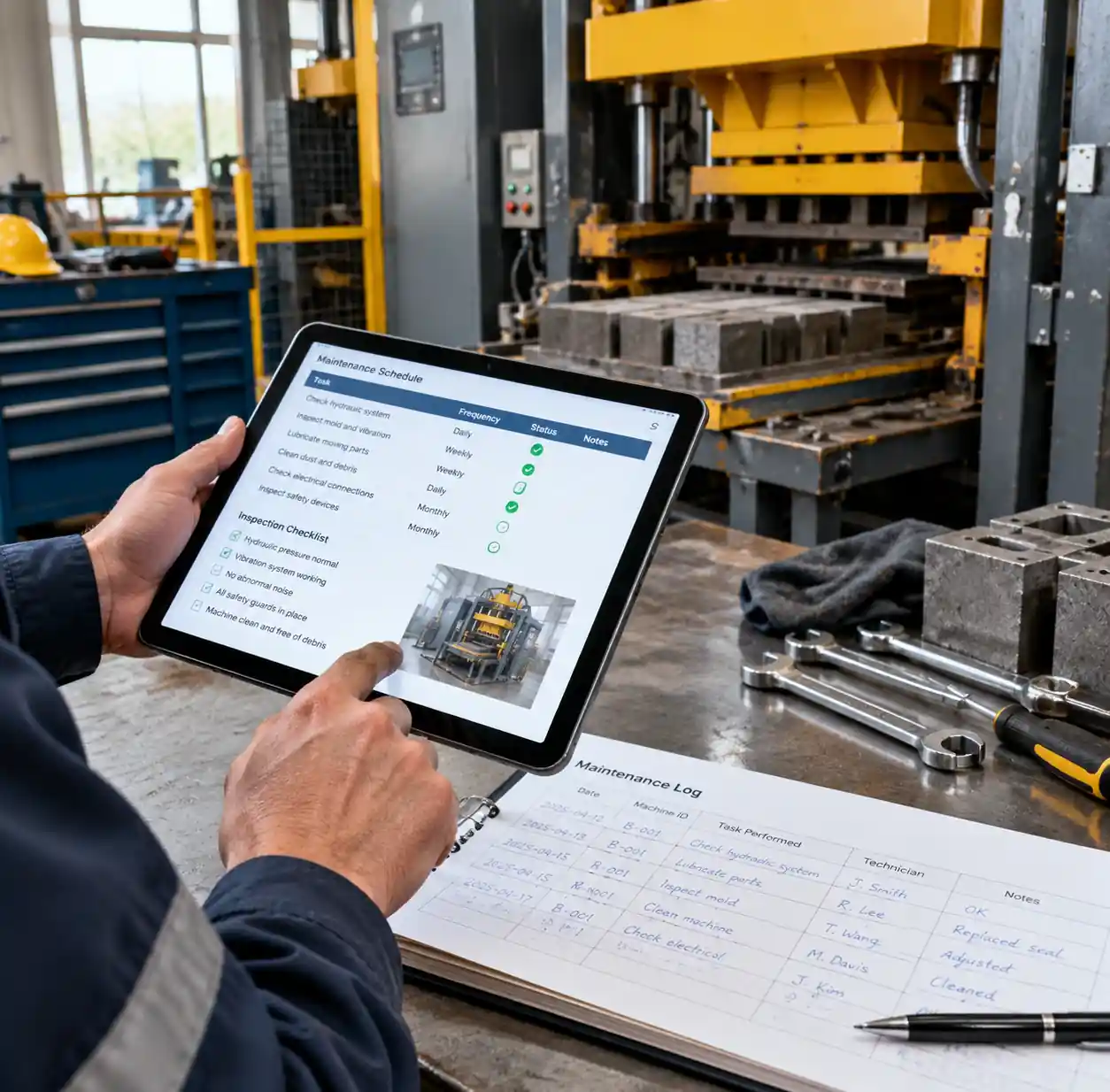
Equipment Downtime: Hydraulic system failures, PLC malfunctions, or mold damage can halt production 3-7 days. Preventive maintenance following manufacturer schedules prevents 70% of unexpected failures. Our comprehensive block machine maintenance guide covers essential preventive practices.
Regulatory Changes: Environmental regulations may require dust control systems ($15,000-30,000) or wastewater treatment ($20,000-40,000) post-installation.
Seasonal Demand Fluctuations: Construction activity drops 40-60% during monsoon seasons in tropical regions. Plants must maintain cash flow through 3-4 low-revenue months annually.
Preguntas frecuentes
How long does it take to install and commission a fully automatic block plant?
Installation timeline depends on site readiness. With prepared foundation and electrical infrastructure, mechanical installation takes 15-20 days. Add 7-10 days for system commissioning, PLC programming verification, and operator training. Full timeline from equipment arrival to commercial production: 25-35 days. However, site preparation (foundation, electrical, civil works) requires 45-60 days before equipment delivery, making total project duration 3-4 months from contract signing. Detailed steps are covered in our block making machine installation guide.
What’s the minimum order quantity to achieve profitable production?
Break-even production varies by cost structure, but automated plants typically require 10,000-12,000 blocks daily to cover fixed costs (labor, equipment depreciation, facility overhead). Below this threshold, semi-automatic or manual systems offer better economics. The automation investment makes sense when sustained demand exceeds 15,000 blocks daily, allowing single-shift operation with capacity for growth.
Can I start with semi-automatic equipment and upgrade to full automation later?
Technically yes, but economically questionable. Most semi-automatic systems can’t retrofit automation components cost-effectively. You’d essentially buy equipment twice. Better approach: start with a modular automatic system sized for current demand (QT8-15 or QT10-15), then add second production line when demand justifies expansion. This preserves initial investment while scaling capacity.
What are the main differences in ROI between automatic and semi-automatic plants?
Automatic plants show higher absolute ROI but require larger initial capital. For $500K investment, automatic plant generates $1.3-1.5M annual net profit. Semi-automatic plant at $180K investment produces $400-550K annual profit. However, automatic plant’s labor cost advantage (3 workers vs 10 workers) and higher quality consistency create 35-55% IRR versus 20-30% IRR for semi-automatic operations. Automatic makes sense for markets with high labor costs and quality-sensitive customers. For deeper analysis, read our block making business profitability and ROI analysis.
How does location impact block plant profitability?
Location determines three critical factors: raw material transport costs, market access, and utility prices. Plants beyond 50km from cement source add $2-4 per ton transport cost—meaningful on 7% cement content blocks. Proximity to major construction markets reduces delivery costs and enables faster order fulfillment. Electricity rates vary 0.08-0.18 USD/kWh regionally, impacting annual operating costs by $25,000-45,000. Industrial zones offer infrastructure advantages but higher land costs; rural locations provide cheap land but require self-funded utilities.
What production capacity should I target for my first plant?
Match capacity to validated local demand plus 20-30% growth buffer. Oversized plants operate at low utilization, destroying ROI through fixed cost absorption. Undersized plants miss market opportunities and face premature expansion costs. For most markets, 15,000-20,000 blocks daily capacity (two-shift operation) balances investment efficiency with growth headroom. Start-up phase runs single shift (40-50% utilization), ramp to two shifts as market develops, preserving expansion capacity without three-shift operations that accelerate equipment wear.
How important is after-sales support from the equipment manufacturer?
Critical for ROI protection. Hydraulic system failures, PLC errors, and mold damage require technical support—poor manufacturer response costs 5-15 production days annually ($15,000-50,000 lost revenue). Evaluate manufacturers on spare parts availability (local stock vs 30-60 day China shipping), technical support response time, and training quality. Raytone Block Machinery maintains regional service centers with 48-hour response times and comprehensive operator training programs—factors that separate profitable operations from struggling ones.
What’s the typical equipment lifespan and depreciation schedule?
Quality automatic block machines operate 12-15 years with proper maintenance. Depreciation schedules typically use 10-year straight-line depreciation for accounting purposes. Major components have varying lifespans: hydraulic system 8-10 years, PLC/electrical 10-12 years, structural steel frame 15+ years, molds 80,000-120,000 cycles (1-2 years for high-volume production). Annual maintenance costs run 8-12% of equipment value, increasing slightly in years 6-8 before major component overhauls.
Conclusión
Fully automatic block plant investment delivers strong returns when backed by proper planning and realistic projections. The $380,000-660,000 total investment typically achieves break-even within 18-24 months and generates 35-55% IRR over five years for well-managed operations. However, success requires validated market demand, adequate working capital, and operational discipline in quality control and cost management.
The automation advantage isn’t just production speed—it’s consistency, lower labor dependency, and scalability that create sustainable competitive advantage. Plants that combine automated efficiency with strong contractor relationships and product diversification consistently outperform equipment specifications and hit optimistic ROI scenarios.
Start with thorough market research validating demand 20%+ above local supply. Secure financing covering equipment plus 3-4 months working capital. Invest in operator training and preventive maintenance from day one. Build distributor and contractor networks before production starts. These fundamentals separate profitable block plants from abandoned investments. For comprehensive startup guidance, see our complete guide on how to start a brick making business.