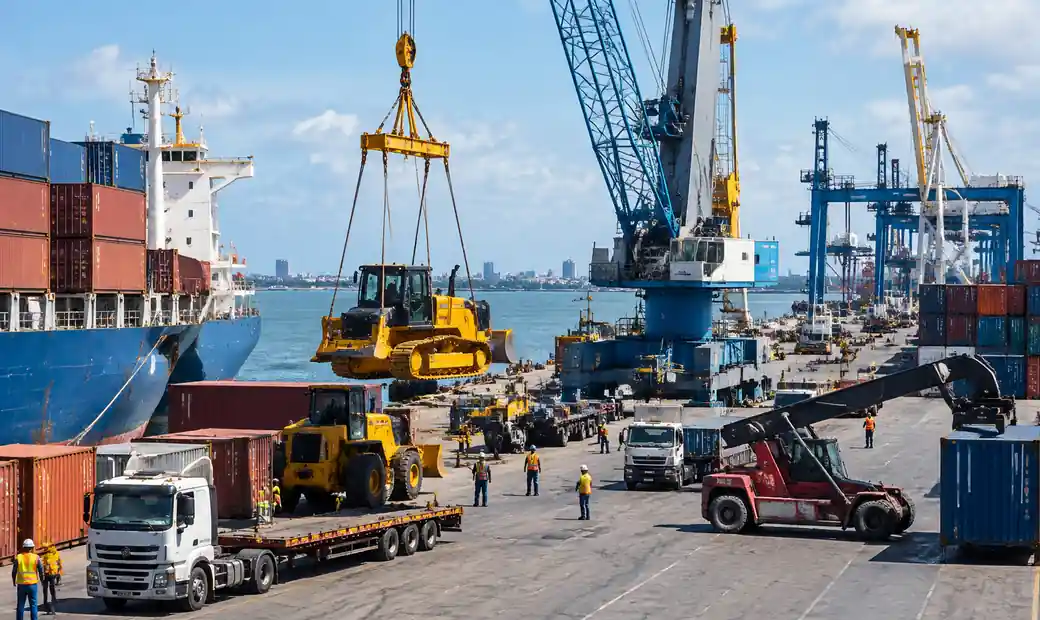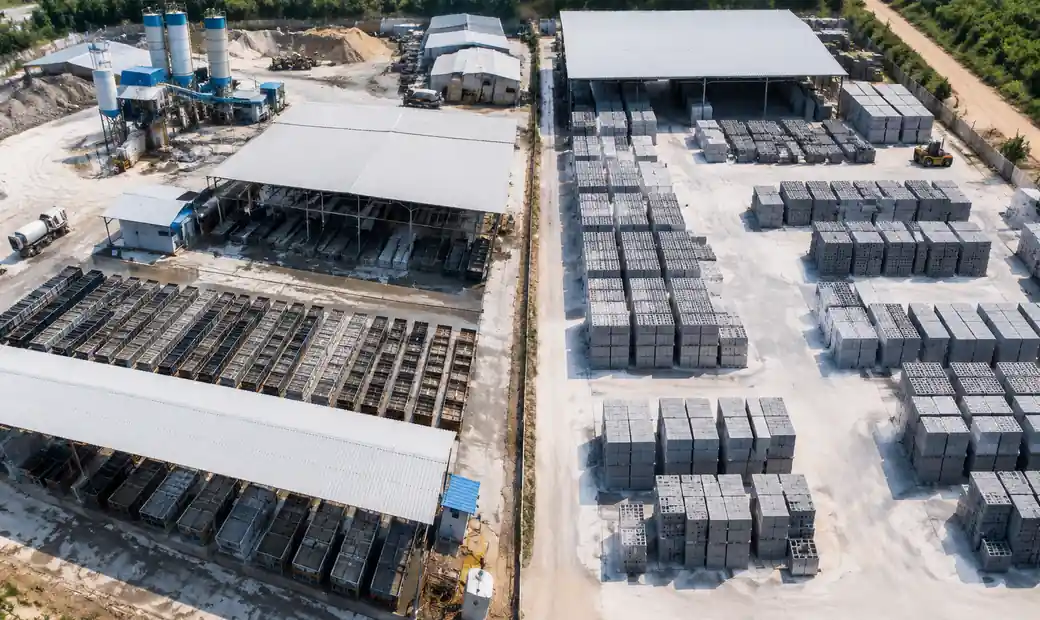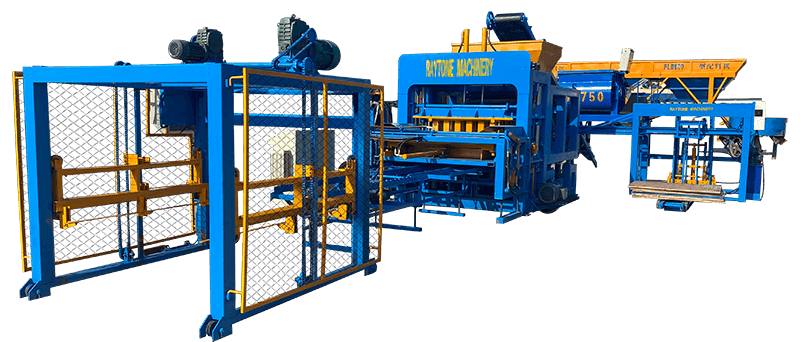






Most manufacturers lose money on block machines—not because they chose the wrong model, but because they never calculated the real ROI before purchase. They focus on the machine’s sticker price while ignoring daily operating costs, realistic production capacity, and local selling prices that shift with competition.
A $12,000 semi-automatic machine sitting idle 40% of the time delivers worse returns than an $8,000 manual unit running at full capacity. This guide shows you how to calculate ROI using the actual cost structure of block production, giving you the numbers needed to choose equipment that matches your capital and market conditions.

Understanding ROI vs. Payback Period
ROI (Return on Investment) and payback period measure profitability differently. ROI expresses profit as a percentage of investment over one year: ROI = (Net Profit / Total Investment) × 100. A $15,000 machine generating $18,000 annual profit delivers 120% ROI.
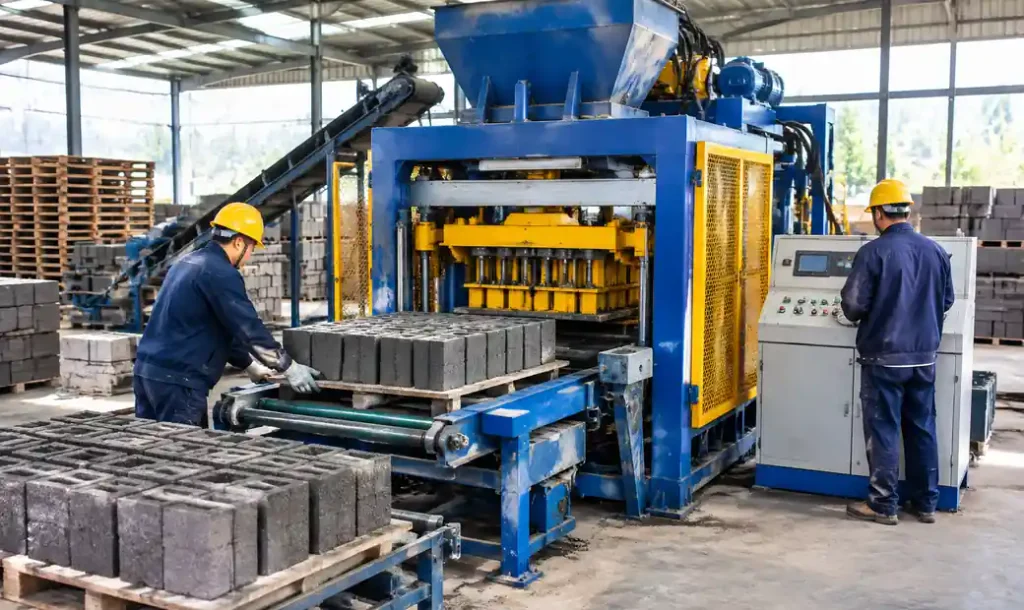
Payback period calculates months until cumulative profit equals initial investment: Payback Period = Total Investment / Monthly Net Profit. That same machine earning $1,500 monthly has a 10-month payback.
| Metric | What It Measures | Industry Benchmark |
|---|---|---|
| ROI % | Profit efficiency relative to capital | 60-150% annual for block machines |
| Payback Period | Months until investment recovered | 8-24 months for semi-automatic |
| Break-Even Point | Block output needed to cover costs | 40-60% of maximum capacity |
Total Investment: Beyond Machine Price
Machine FOB price represents only 45-65% of actual startup capital needed.
| فئة التكلفة | Manual | Semi-Automatic | Fully Automatic |
|---|---|---|---|
| Machine (FOB) | $3,000-$7,000 | $9,000-$18,000 | $28,000-$120,000 |
| Shipping & Import | $800-$1,500 | $1,800-$3,500 | $5,000-$18,000 |
| Installation | $500-$1,200 | $1,500-$3,000 | $4,000-$12,000 |
| Molds & Pallets | $600-$1,500 | $1,200-$2,800 | $3,000-$8,000 |
| المعدات المساعدة | $800-$2,000 | $2,500-$6,000 | $8,000-$25,000 |
| Working Capital | $2,000-$4,000 | $5,000-$9,000 | $15,000-$40,000 |
| Total | $7,700-$17,200 | $21,000-$42,300 | $63,000-$223,000 |
Supporting equipment includes concrete mixers and curing equipment. Working capital covers raw materials and labor for first 60-90 days.
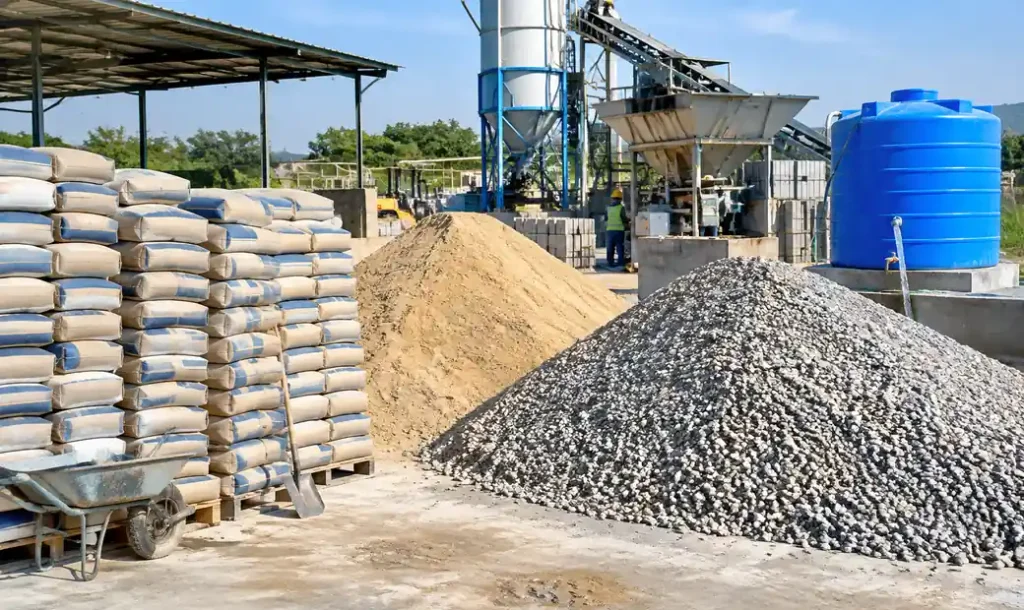
Production Cost Per Block
Accurate per-block cost determines profitability. Manufacturers using rough estimates consistently underprice by $0.10-$0.18.
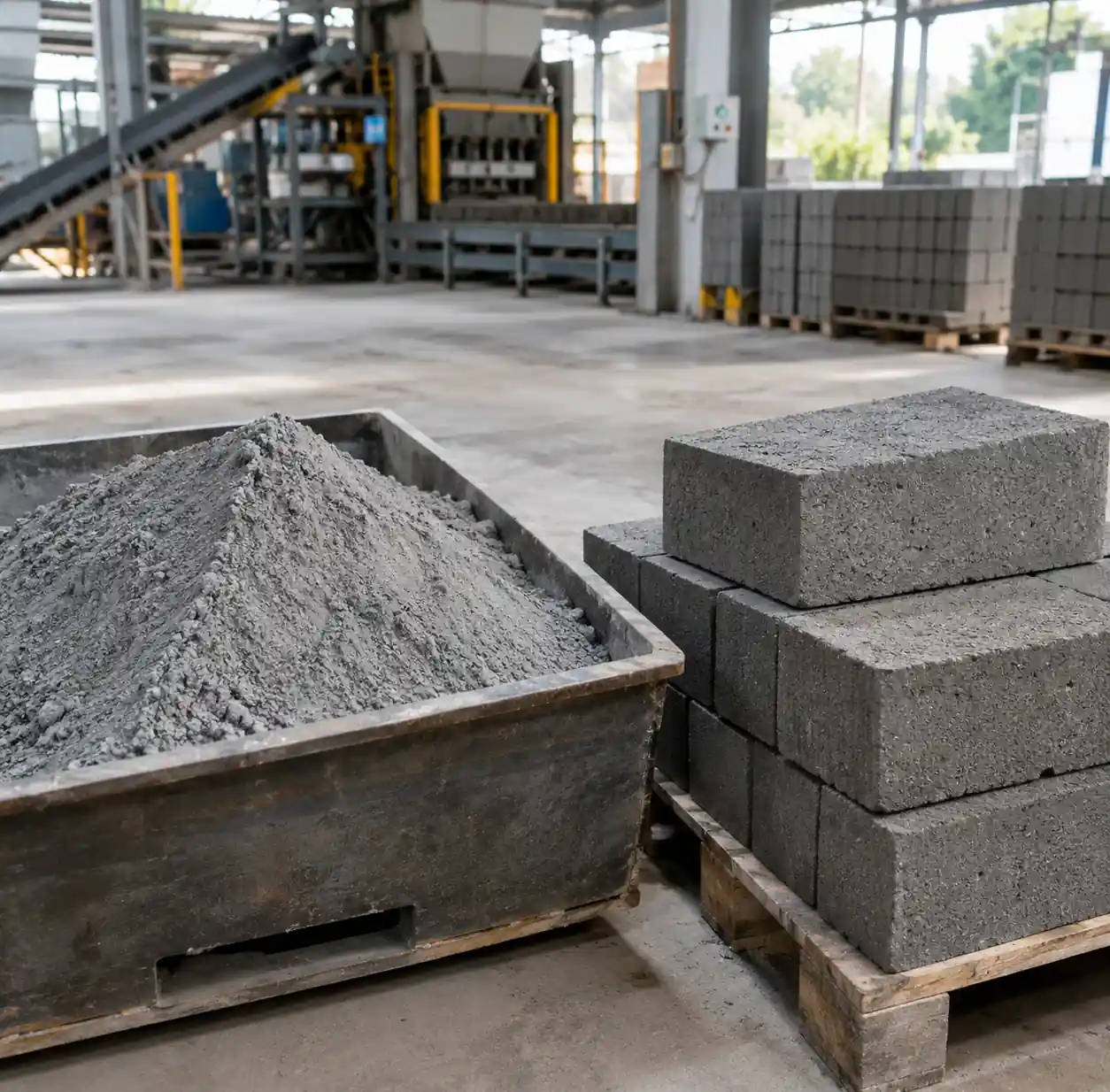
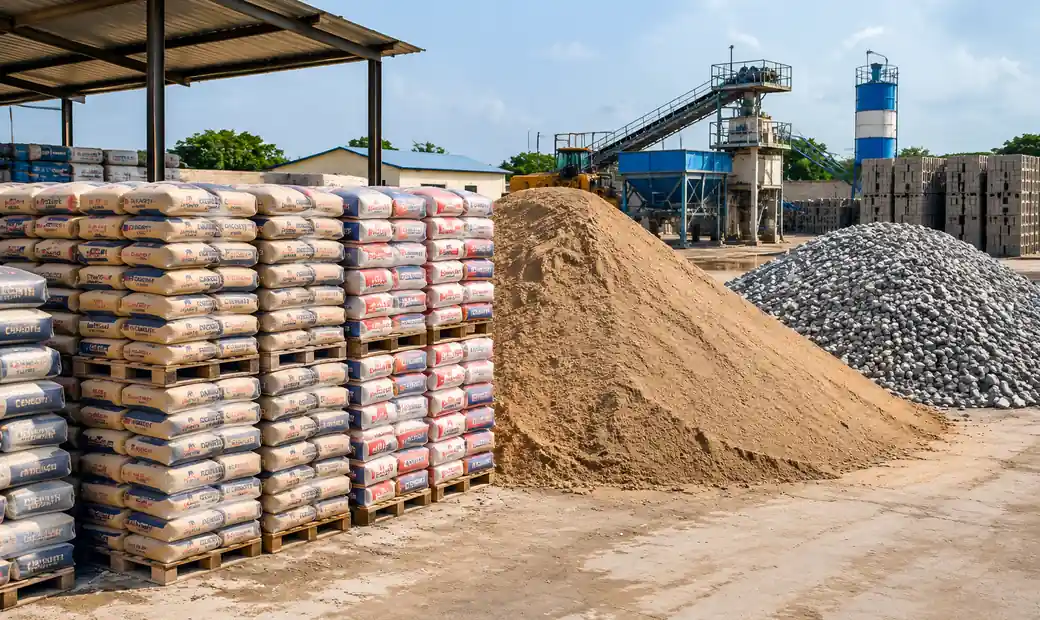
Raw Material Costs (400×200×200mm Hollow Block)
- Cement: 2.0-2.5 kg × $0.10-0.15/kg = $0.20-$0.38
- Sand: 12-14 kg × $0.01-0.02/kg = $0.12-$0.28
- Aggregate: 18-22 kg × $0.008-0.015/kg = $0.14-$0.33
- Water: 2-3 liters = $0.002-$0.009
Total materials: $0.46-$0.99 (average $0.58-$0.65)
| نوع الآلة | Operators | Labor/Block | Energy/Block | Total Operating |
|---|---|---|---|---|
| Manual | 4-6 | $0.02-$0.045 | $0 | $0.02-$0.045 |
| Semi-Auto | 2-4 | $0.006-$0.018 | $0.001-$0.003 | $0.007-$0.021 |
| Fully Auto | 2-3 | $0.002-$0.004 | $0.002-$0.005 | $0.004-$0.009 |
Complete Cost Example (Semi-Automatic, 40,000 blocks/month)
| Cost Component | Per Block | Monthly |
|---|---|---|
| Raw materials | $0.62 | $24,800 |
| العمل | $0.012 | $480 |
| Electricity | $0.002 | $80 |
| Depreciation | $0.025 | $1,000 |
| الصيانة | $0.008 | $320 |
| Transport | $0.015 | $600 |
| Total | $0.682 | $27,280 |
At $0.95 selling price: $0.268 profit per block (28.2% margin).
Step-by-Step ROI Calculation
Let’s calculate real ROI for a semi-automatic QT4-40 machine using verified 2026 market data.
Semi-Automatic QT4-40 Example
Investment:
- Machine FOB: $12,000
- Shipping & customs: $2,400
- التركيب: $1,800
- Molds (3 sets): $1,500
- Mixer JS500: $3,200
- Pallets: $900
- Working capital: $6,000
- Total: $27,800
Production:
- Capacity: 2,000 blocks/shift
- Operating: 22 days/month
- Utilization: 65%
- Monthly output: 28,600 blocks
Revenue: 28,600 × $0.95 = $27,170
Costs:
- Materials: $17,732
- Labor: $550
- Electricity: $99
- Maintenance: $280
- Transport: $420
- Total: $19,081
Monthly profit: $8,089
Payback: $27,800 ÷ $8,089 = 3.4 months
Annual ROI: ($8,089 × 12) ÷ $27,800 × 100 = 349%
At 50% utilization, payback extends to 5.2 months with 224% ROI. At 80% utilization, payback drops to 2.9 months with 417% ROI.
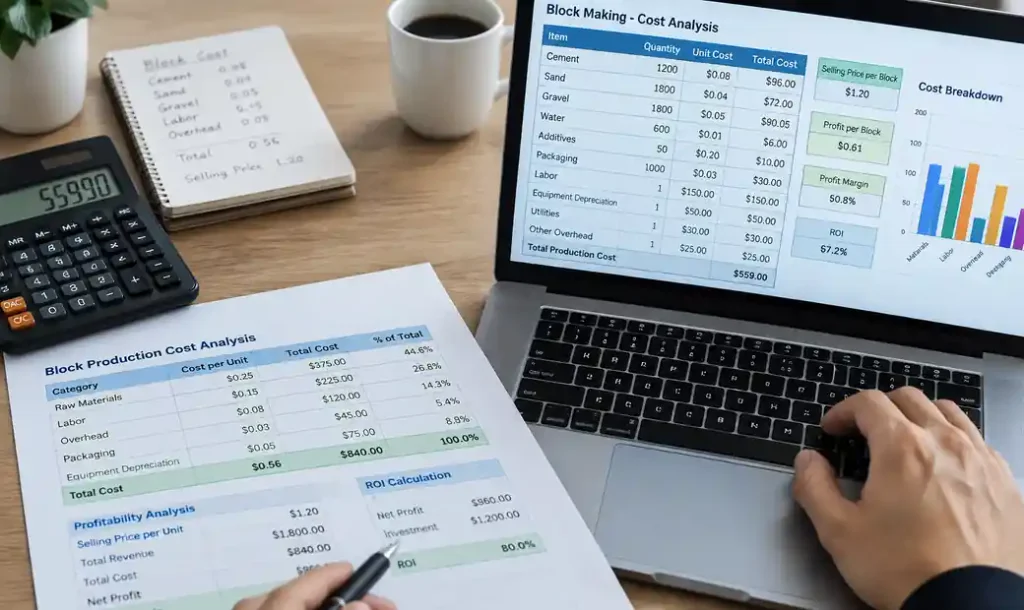
ROI Comparison by Machine Type
Different machines suit different scales. Choosing based solely on maximum ROI ignores operational constraints.
| Factor | Manual | Semi-Automatic | Fully Automatic |
|---|---|---|---|
| Investment | $7,700-$17,200 | $21,000-$42,300 | $63,000-$223,000 |
| Monthly Output | 12,000-18,000 | 22,000-40,000 | 100,000-300,000 |
| Monthly Profit | $2,400-$4,200 | $6,500-$12,000 | $28,000-$95,000 |
| Payback Period | 2-5 months | 3-4 months | 6-12 months |
| Annual ROI | 180-380% | 280-420% | 180-280% |
| Break-Even | 8,000-11,000 | 14,000-22,000 | 65,000-120,000 |
Manual machines deliver shortest payback but cap annual profit at $35,000-$55,000. Semi-automatic equipment provides best ROI-to-scale ratio for $80,000-$150,000 annual targets. Automatic plants need 65,000+ monthly blocks to justify capital intensity.
Key Variables Affecting ROI
Selling Price Impact
A $0.10 price change affects profit more than $3,000 machine savings. For 28,600 monthly blocks:
- At $0.85/block: Profit $4,661 (67% longer payback)
- At $0.95/block: Profit $8,089 (baseline)
- At $1.05/block: Profit $11,517 (42% faster payback)
Block prices vary $0.75-$1.45 by region and fluctuate 15-25% seasonally.
Capacity Utilization
Operating at 50% capacity doubles payback versus 80% utilization. Fixed costs remain constant regardless of output.
| Utilization | Output | Profit | Payback | ROI |
|---|---|---|---|---|
| 40% | 17,600 | $4,329 | 6.4 mo | 187% |
| 50% | 22,000 | $5,720 | 4.9 mo | 247% |
| 65% | 28,600 | $8,089 | 3.4 mo | 349% |
| 80% | 35,200 | $10,458 | 2.7 mo | 451% |
Utilization below 40% indicates market issues. Above 85% suggests undersized equipment.
Break-Even Analysis
Break-even identifies minimum monthly production to cover costs, helping determine if your market supports your equipment choice.
Formula: Break-Even = Fixed Costs / (Selling Price – Variable Cost Per Block)
Using semi-automatic example:
- Fixed monthly: $1,830 (depreciation $1,000 + maintenance $280 + minimum labor $550)
- Variable per block: $0.637 (materials $0.62 + electricity $0.002 + transport $0.015)
- Selling price: $0.95
Break-Even = $1,830 / ($0.95 – $0.637) = 5,847 blocks/month
At 2,000 blocks/day capacity, break-even needs just 2.9 days monthly (13% capacity).
| نوع الآلة | Fixed Costs | Variable Cost | Break-Even | Days to Break-Even |
|---|---|---|---|---|
| Manual | $950-$1,200 | $0.58-$0.66 | 3,800-5,200 | 4-7 days |
| Semi-Auto | $1,800-$2,400 | $0.62-$0.72 | 5,800-9,500 | 3-5 days |
| Fully Auto | $7,500-$12,000 | $0.54-$0.68 | 28,000-48,000 | 3-5 days |
Hidden Costs Reducing ROI
Maintenance & Spare Parts
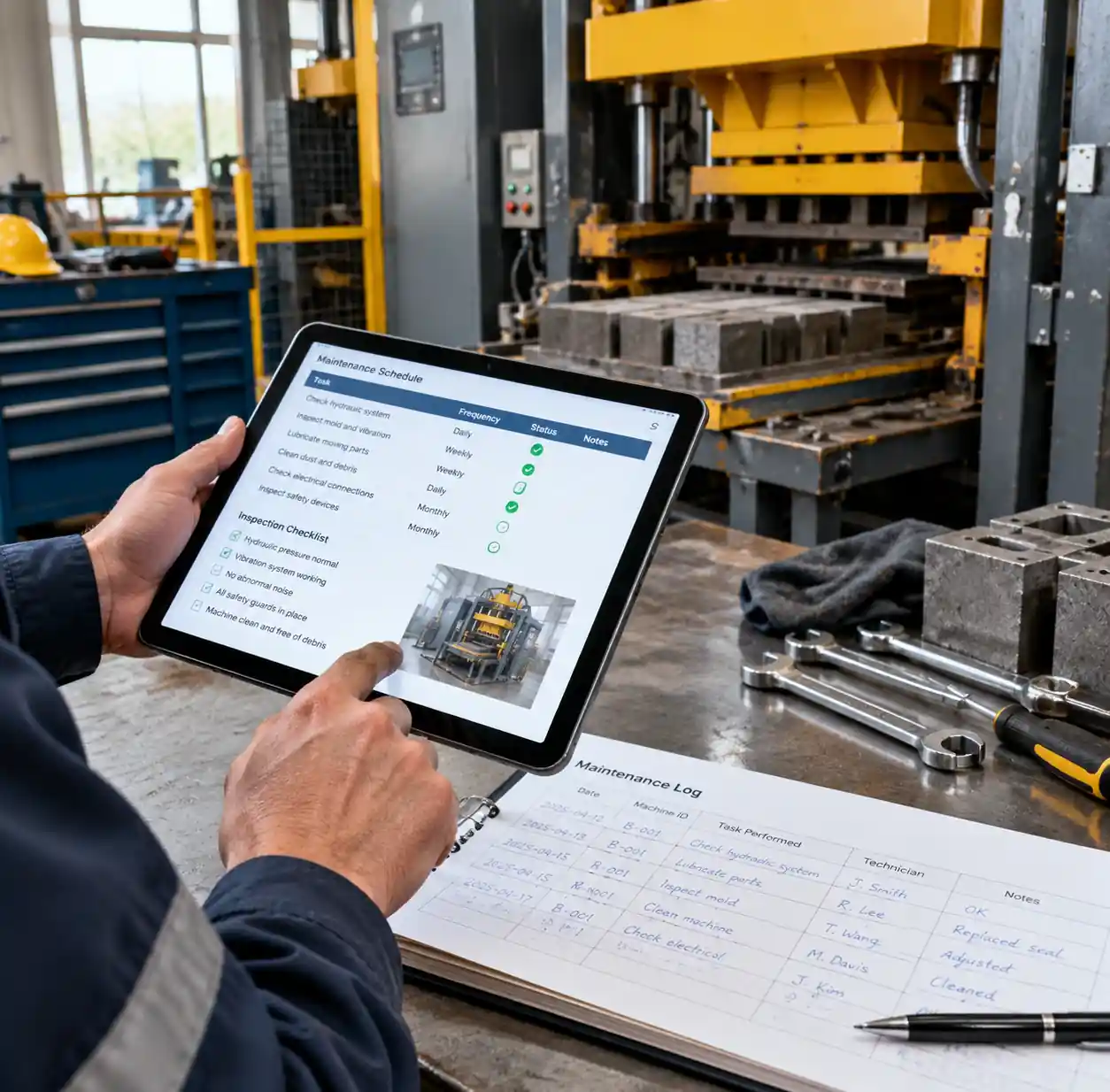
Machine maintenance costs 2-4% of machine value annually. Budget $800-$1,500 annually for semi-automatic, $2,500-$5,000 for automatic.
Mold Wear & Replacement
Quality molds produce 200,000-300,000 blocks before replacement ($400-$800). At 28,600 monthly, replacement every 7-10 months adds $50-$100 monthly.
Quality Rejection
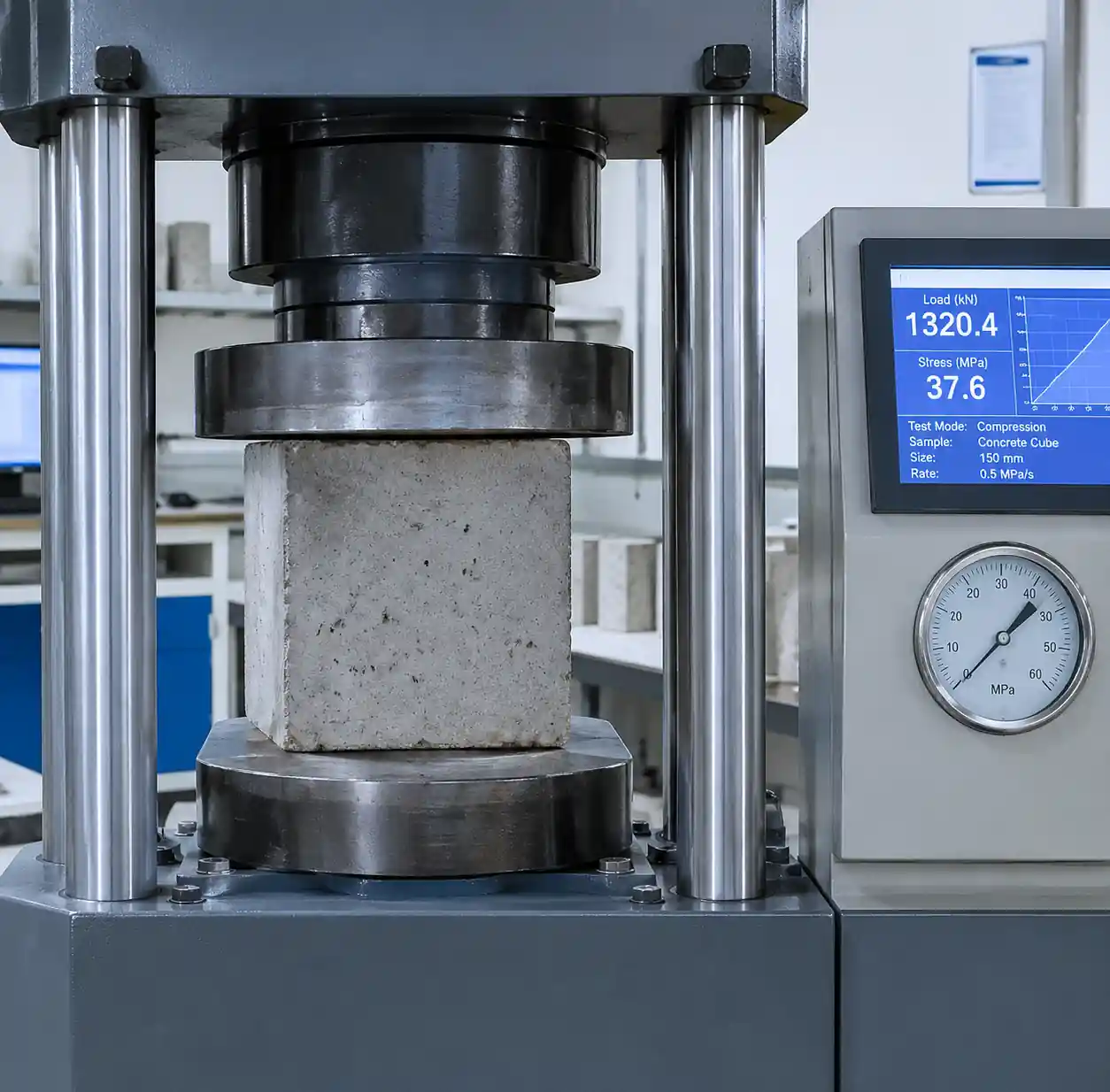
Well-operated plants reject 2-5% of production. At 3% rejection, 28,600 blocks waste $585 monthly. New operators experience 8-12% rejection, reducing profit by $1,600-$2,400.
Working Capital in Inventory
Blocks need 7-14 days curing before sale. At 10-day inventory, $19,448 stays tied up constantly, effectively increasing investment by $15,000-$25,000.
Maximizing ROI
Increase Capacity Utilization
Every 10% utilization increase reduces per-block fixed costs by 8-11%. Moving from 50% to 70% improves payback from 4.9 to 3.1 months.
Strategies:
- Expand sales territory to 30-50km radius
- Offer delivery within 50km
- Build relationships with 3-5 main contractors
- Stock 2-3 popular mold types
Optimize Material Costs
Materials represent 65-72% of expense. A 5% savings equals 18-22% profit increase.
Methods:
- Purchase cement directly from manufacturers ($3-$8/ton savings)
- Negotiate 3-6 month forward contracts during price dips
- Source aggregates within 15km (saves $2-$5/ton transport)
- Test alternative cement blends for 8-12% savings
Value-Added Products
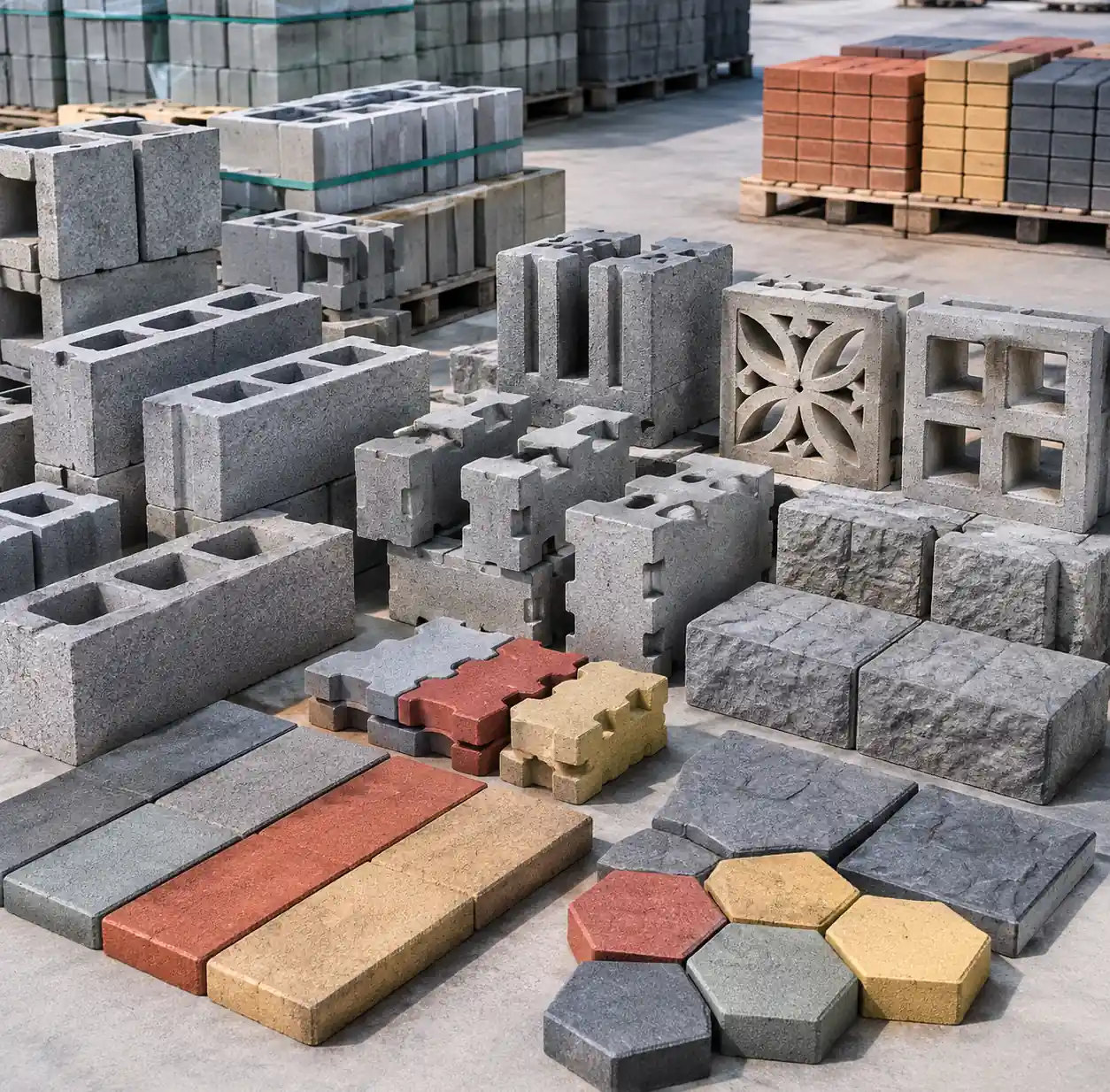
Standard blocks yield $0.27 profit. Specialized products command 35-80% premium.
| Product | Profit/Unit | Speed | Market |
|---|---|---|---|
| Standard hollow | $0.27 | 100% | High, consistent |
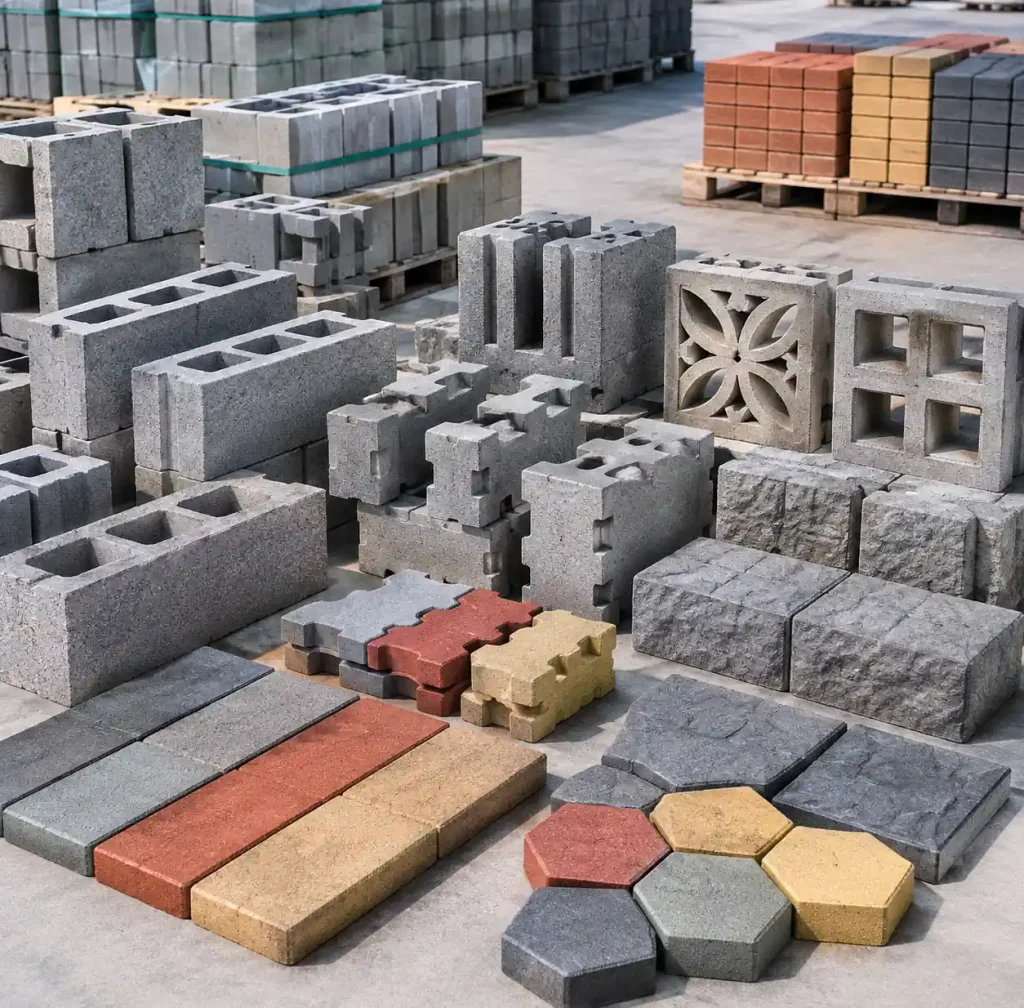
| Interlocking | $0.42-$0.58 | 95% | Growing, premium |
| Pavers | $0.38-$0.52 | 85% | Seasonal, govt |
| Colored | $0.45-$0.72 | 92% | Niche, high-end |
Interlocking production needs only mold changes ($600-$1,200) while increasing profit 56-115%.
الأسئلة الشائعة
What is a good ROI percentage for a block making machine?
Annual ROI of 150-300% represents strong performance for semi-automatic equipment, while 100-200% is realistic for fully automatic plants. Manual machines often exceed 300% due to low investment. Local market conditions impact achievable ROI more than equipment selection.
How long should payback period be?
Target 4-18 months: manual 2-6 months, semi-automatic 3-15 months, fully automatic 6-24 months. Payback beyond 24 months indicates overpriced equipment or insufficient demand.
What capacity utilization should I use in calculations?
Use 50-60% for first-year projections, 65-75% for years 2-3. New operations overestimate by 25-40%, causing cash flow problems. Only use 80%+ with confirmed contracts.
Should I buy used equipment to improve ROI?
Used equipment costs 40-60% less but introduces risks. Calculate using higher maintenance (5-8% annually), 30-50% shorter lifespan, and $2,000-$5,000 refurbishment budget. Makes sense when new equipment exceeds $25,000.
How do material price changes affect ROI?
A 10% cement price increase reduces profit margin by 3-5 points and extends payback by 0.4-0.8 months. Hedge through supplier contracts and pricing formulas passing 70-80% of increases to customers.
What’s the break-even production volume?
Calculate: Fixed Monthly Costs / (Selling Price – Variable Cost Per Block). Typical: manual 3,800-5,200 blocks/month, semi-automatic 5,800-9,500, automatic 28,000-48,000. Above 25% capacity indicates operational issues.
How much working capital beyond machine cost?
Budget 60-90 days operating expenses: materials ($12,000-$18,000 for semi-automatic), labor ($1,500-$2,400), contingency ($3,000-$5,000). Automatic plants need $25,000-$50,000 reserves.
Can multiple shifts improve ROI?
Two-shift operation increases output 80-90% while raising costs 45-55%, dramatically improving returns. However, requires consistent demand and doubles maintenance. Justify only after achieving 70%+ single-shift utilization.
الخلاصة
ROI calculation determines whether equipment generates wealth or consumes capital. Real profitability depends on local selling prices, material costs, competitive intensity, and demand stability—not just machine specifications.
Profitable manufacturers match equipment capacity to confirmed demand, maintain 65-75% utilization through customer relationships, and optimize per-block costs through supplier negotiations. Start with conservative projections: 50-60% capacity, mid-range prices, and include hidden costs.
Equipment delivering 18-month payback with realistic assumptions outperforms machines promising 6-month returns based on optimistic projections. For selection guidance matched to your production goals, explore our حلول شاملة or contact Raytone Block Machinery for customized ROI analysis.